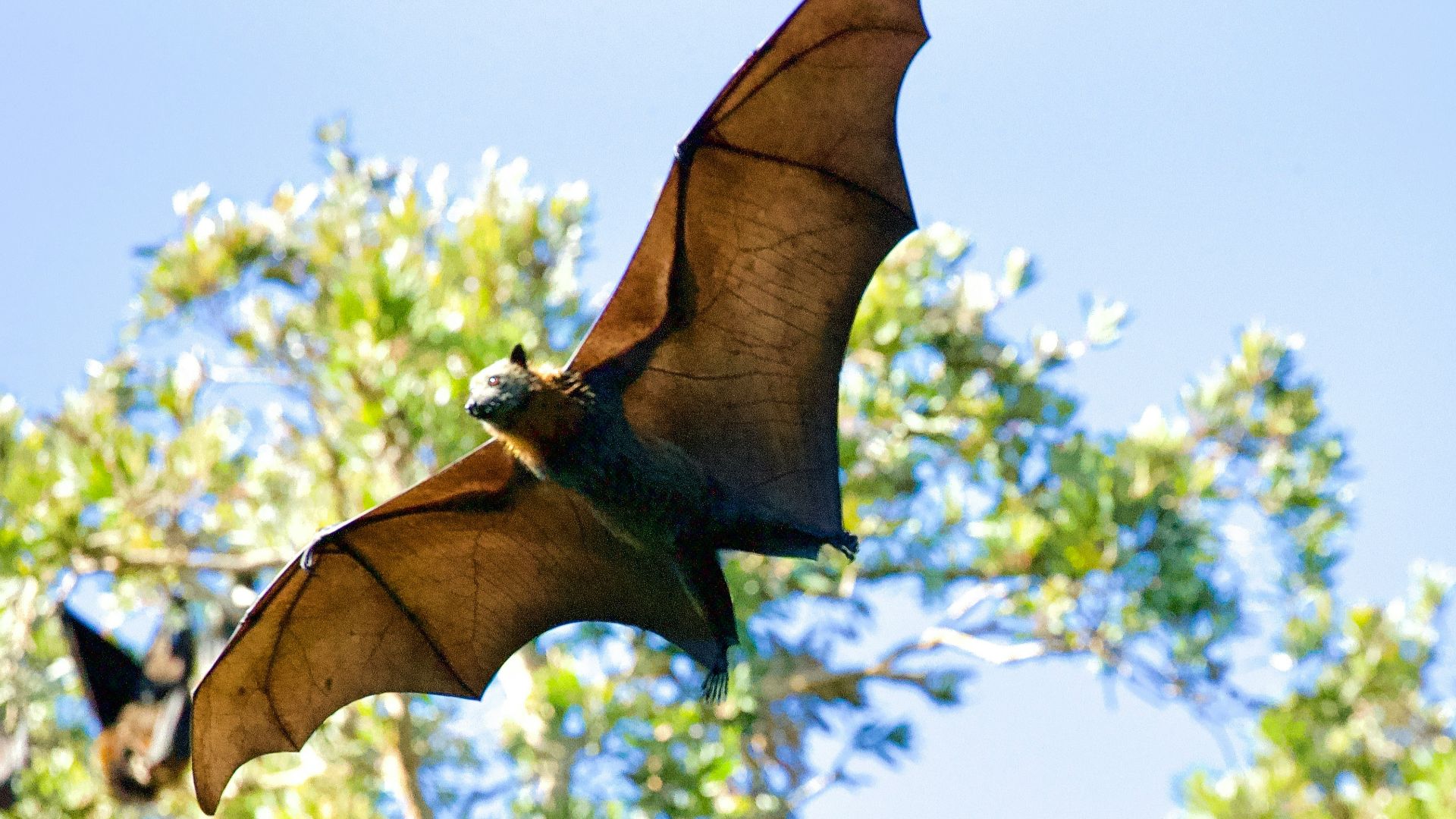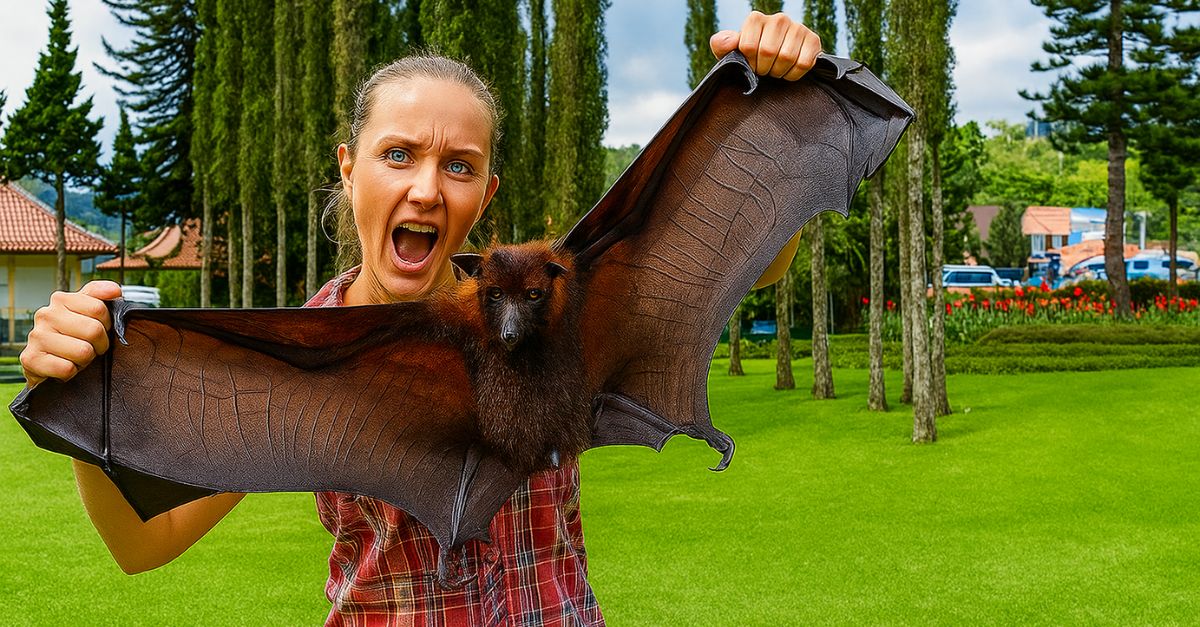
You’ve probably heard the saying “as blind as a bat,” right? It’s been repeated for centuries, but it couldn’t be further from the truth. Most bats can see just fine—and some even see better than we do once the sun goes down.
Researchers say their eyesight is perfectly tuned for twilight, helping them hunt, fly, and avoid obstacles with impressive precision. Let’s break down what science actually says about bat vision and why this old myth refuses to die.
Bats Aren’t Blind—They Have Functional Eyesight
Contrary to what most believe, most bat species are not blind and retain eyesight that is often more sensitive in low light than the human eye.
That means when you spot a bat darting past a streetlight, it’s not relying solely on echolocation; its eyes are doing plenty of work too. Bats combine their senses to give them an advantage in dim or shifting light, where humans would struggle.
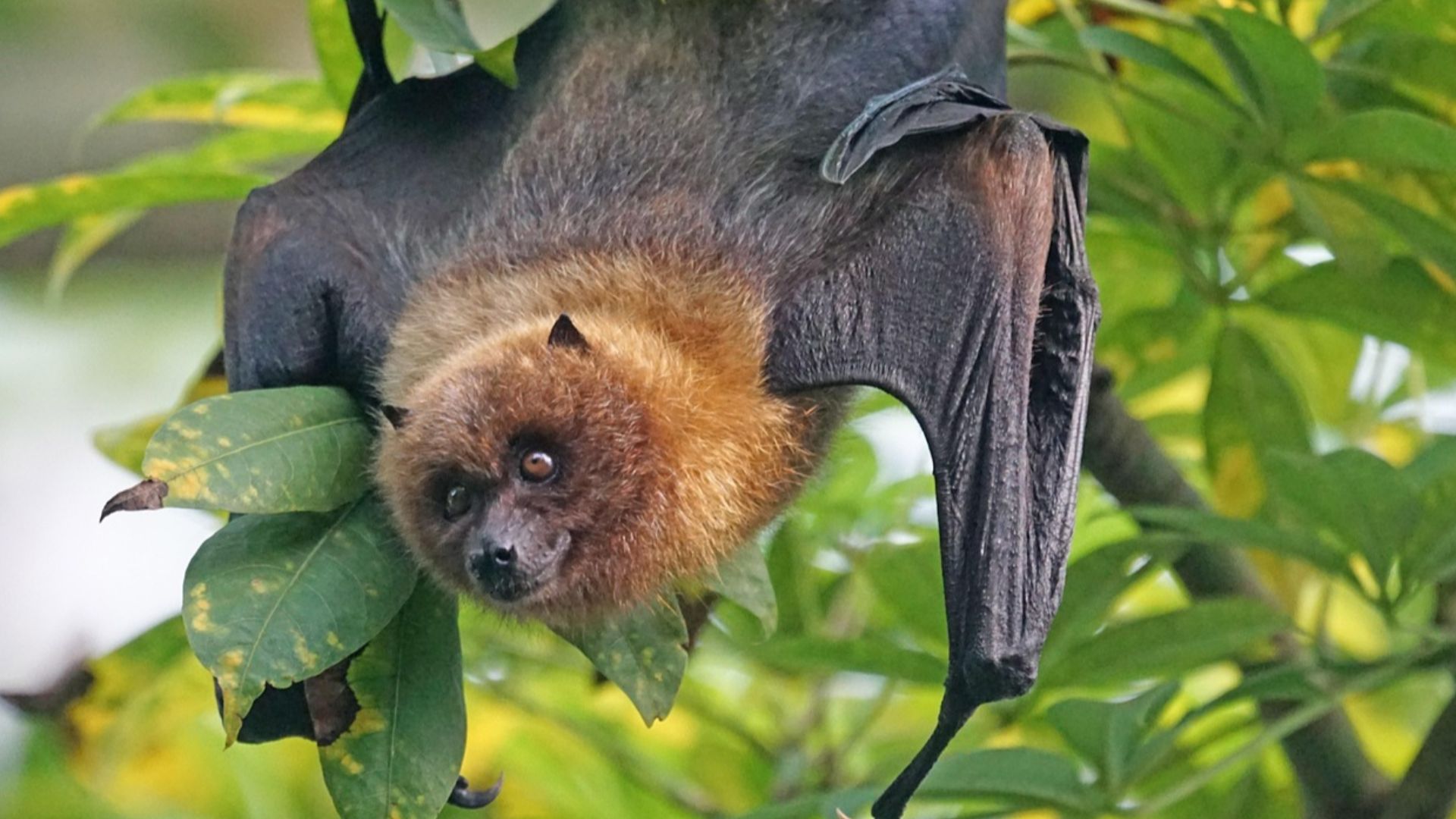
Some Bats See Ultraviolet Light And Low-Light Details
Research on opsin genes in over 100 bat species found that many retain the ability to see in the green-to-red wavelength range and even some ultraviolet light, though others lost short-wavelength sensitivity.
This means their vision is simply specialized. Their eyes are adapted for dusk and dawn, when spotting food or landmarks in dim light is critical for survival.
Echolocation Complements Their Sight
Echolocation might be bats’s most famous skill, but vision still plays a key role even in species that use sonar. Studies in Current Biology show bats rely on both senses when light is available, merging sound and sight to build a complete picture of their surroundings.
So, the next time someone says bats fly “blind,” you’ll know they’re using every tool nature gave them; eyes included.

Quick Facts That Might Surprise You:
Many bats have 300,000–800,000 light-sensitive rods per square millimeter in their retinas—humans average around 150,000.
The phrase “blind as a bat” first appeared in English in the early 1700s. Ironically, modern studies prove most bats see far better in the dark than we do.
Seeing Bats In A New Light
Bats aren’t flying blind—they’re fine-tuned for the dark. Their vision, combined with their remarkable hearing, makes them experts at thriving where we can barely see. The next time a bat zips past your porch light, remember: it’s probably seeing you more clearly than you see it.