
 Viktoria Slowikowska, Pexels, ModifiedLong before memory forms, the hands already carry a permanent signature that everyone carries around. Fingertips develop looping ridges while the body measures only inches long, shaped by forces too small to feel and too brief to remember. Those ridges endure heat, water, scars, and age, quietly recording the earliest chapter of human development in the womb. Science explains how these patterns appear with striking precision, tracing timing, pressure, and growth beneath the skin. Yet their evolutionary purpose proves harder to pin down than process. What remains unsettled is why they exist at all. That gap between certainty and mystery keeps challenging assumptions about evolution and what survival actually demands from the human body over generations worldwide.
Born Before Birth, Locked In For Life
Fingerprint patterns begin forming between the tenth and sixteenth week of pregnancy, when fingers are still shorter than two inches. Genes influence overall hand shape, but they do not dictate how the ridge patterns form. Instead, growth rates between the skin and underlying tissue fall out of sync, forcing the surface to buckle into ridges. Pressure from amniotic fluid, blood flow, and subtle fetal movements further alter the final layout of fingerprints. That combination explains why identical twins never share matching prints. Once established, the ridges anchor deep in the dermis, beneath the outer skin that sheds regularly. Another detail is that cuts and daily wear rarely permanently alter them. This early lock-in provides fingerprints with remarkable stability throughout a lifetime. With their formation explained, attention naturally shifts forward. If fingerprints persist so reliably, what advantage were they supposed to offer?

Grip, Touch, And Theories That Refuse To Settle
For decades, scientists argued that fingerprints exist to improve grip by increasing friction. Tests of that idea have produced mixed results. Experiments involving wet and dry surfaces show that ridged fingertips do not consistently outperform smooth ones. In several conditions, friction levels remain nearly identical. That inconsistency weakens the grip hypothesis as a primary explanation. Another long-standing idea points to touch sensitivity instead. Fingerprints might help the nervous system detect fine surface details rather than help objects stay in the hand. This shift reframes fingerprints as a sensory tool, not a mechanical one.
Support for that sensory view grew in 2025, when research published in eLife showed that fingerprint ridges help channel vibrations across the skin. As fingers slide over textured surfaces, those vibrations stimulate nerve endings more effectively. Even so, the evidence stops short of proving fingerprints evolved for that role. Many mammals perceive fine textures without similar ridge patterns. Among humans, ridge depth and spacing vary widely without clear links to dexterity. A useful trait is not automatically an evolved one. These theories describe benefits, but they fail to confirm fingerprints as an adaptation shaped by survival pressure, leaving the question unsettled.
A Developmental Byproduct, Not An Evolutionary Target
An increasing number of anatomists view fingerprints as biological side effects rather than intentional outcomes. Skin must stretch, attach, and stabilize as hands form. Ridges emerge as a mechanical solution to that growth, similar to wrinkles forming when a surface expands faster than its support. Evolution frequently tolerates features that neither help nor harm survival. No study has linked fingerprint types to strength, longevity, fertility, or environmental advantage. Across primate species, ridge density and patterns differ without correlating to lifestyle or habitat. The lack of selective pressure explains the enormous variation between individuals. Nothing required fingerprints to converge on a standard form. They persisted because they did not interfere. This perspective reframes evolution as a process that allows neutrality alongside optimization. That shift changes how scientists interpret human traits that exist without a clear adaptive payoff today.
What Those Lines Actually Tell Scientists Today
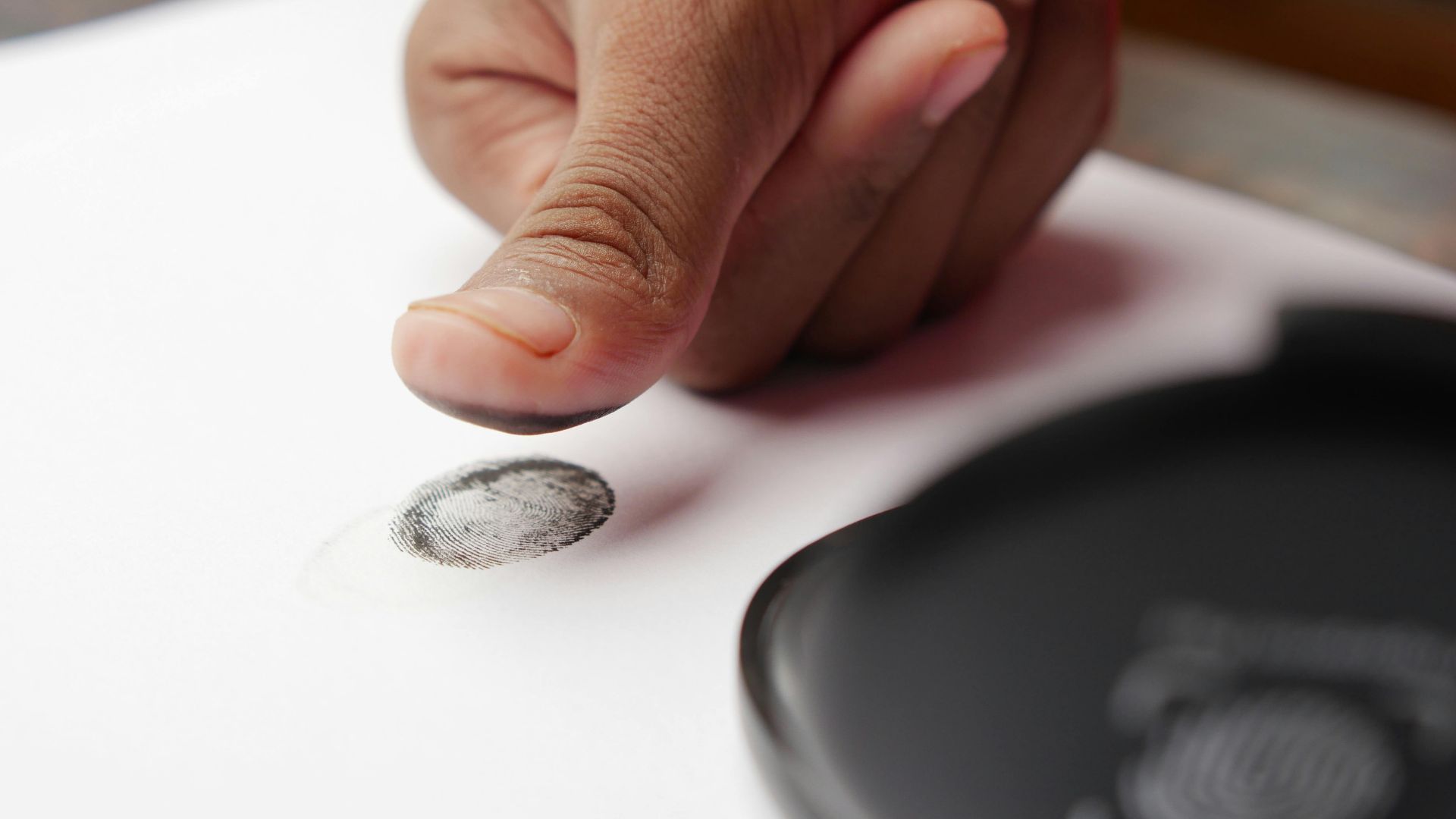
Although fingerprints lack a confirmed evolutionary function, they remain scientifically valuable. Dermatoglyphics, the study of ridge patterns, helps researchers understand early fetal development. Irregular ridge formations can indicate prenatal stress during critical growth windows. Certain genetic conditions show measurable associations with atypical ridge density or alignment, offering diagnostic clues without invasive testing. In forensics, permanence makes fingerprints reliable identifiers, but biology values them for different reasons. They capture how genetics and environment intersect before birth, recording randomness in a way few traits do. That insight reshapes how human variation gets interpreted. Not every feature must justify itself through survival. Some exist as evidence of how development unfolds under constraint.