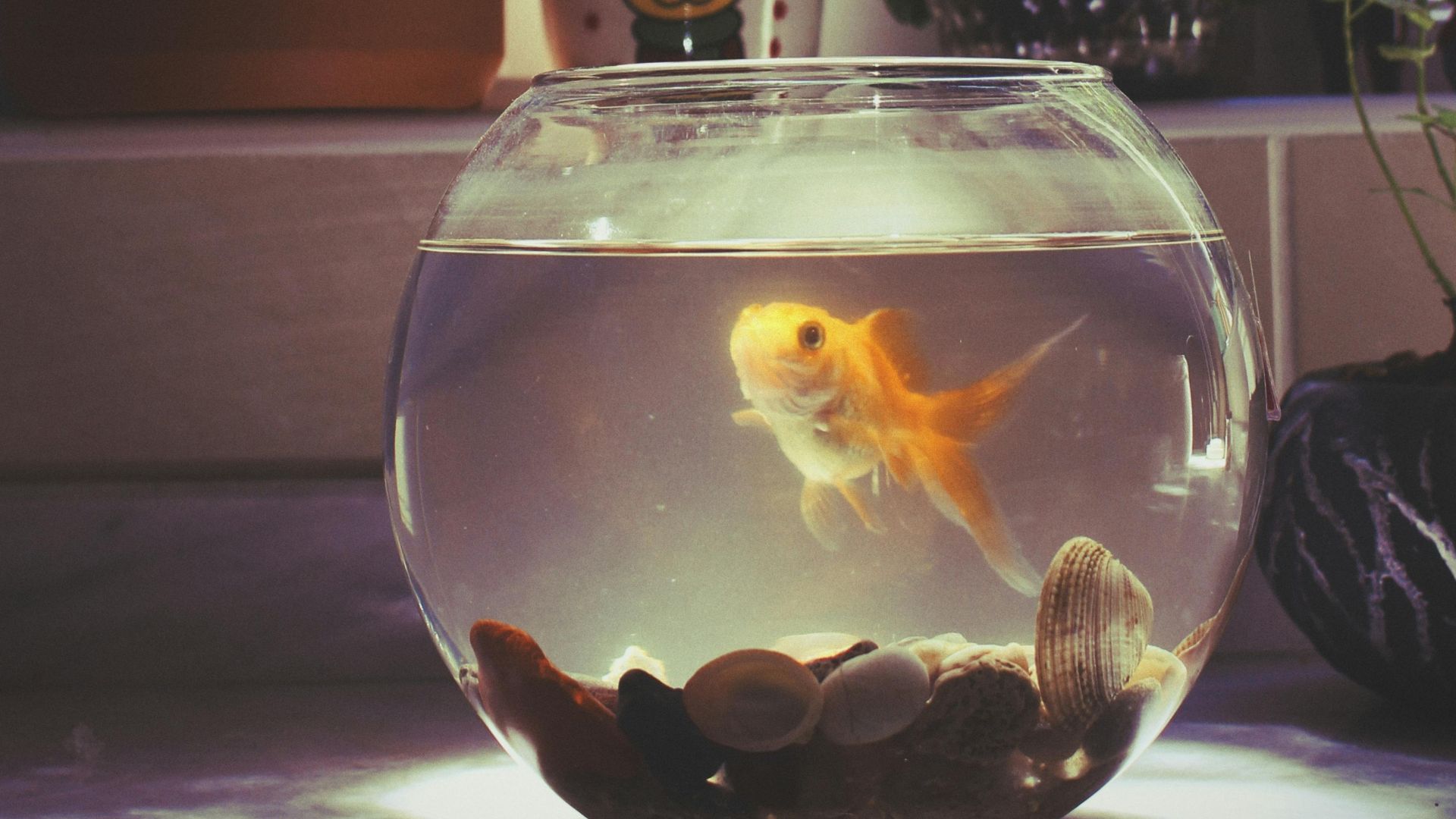
You've probably heard it countless times. Goldfish forget everything after just three seconds. This "fact" has become a cultural shorthand for forgetfulness, appearing in countless jokes and even inspiring the title of a romantic comedy.
But what if everything we thought we knew about these common pets was completely wrong? As it turns out, goldfish are actually much smarter than we've given them credit for.
How We Got It Wrong
The three-second memory myth likely originated from observing goldfish swimming in small bowls, where their repetitive circling created the impression they were constantly discovering their surroundings anew. This misconception took hold in popular culture, becoming one of those "facts" everyone seems to know despite having no scientific basis.
In reality, researchers have been disproving this myth since the 1950s. Early studies demonstrated that goldfish could be trained to respond to certain stimuli, suggesting memory capabilities far beyond three seconds.
But these findings rarely made headlines, allowing the myth to persist for decades. It wasn't until more sophisticated research in the early 2000s that scientists began to understand just how capable goldfish memory truly is.
What Goldfish Actually Remember
Far from forgetting everything in seconds, goldfish have demonstrated remarkable memory capabilities in controlled studies. Researchers at Plymouth University found that goldfish can remember complex tasks for up to three months.
In their experiments, goldfish learned to push levers for food rewards at specific times of day, showing not just memory but also time awareness. Even more impressive, goldfish can recognize individuals, both human and fish. They quickly learn which humans feed them, approaching familiar people while showing caution around strangers.
They can also distinguish between different sounds and colors, associating them with positive or negative experiences. Some people believe goldfish remember migration routes in the wild, navigating through complex environments using spatial memory.
Beyond The Fish Bowl
The revelation about goldfish memory has implications beyond correcting a simple misconception. It raises important questions about how we care for these animals. Standard fish bowls, which offer minimal stimulation, are now considered inadequate for creatures capable of learning, remembering, and potentially experiencing boredom.
More broadly, this case highlights how easily myths can persist despite scientific evidence to the contrary. The goldfish memory myth endured not because it was difficult to disprove, but because the truth wasn't as entertaining or easily shared.
It serves as a reminder to question "common knowledge" and recognize that even the simplest creatures may possess cognitive abilities we've underestimated.