 Georges De Keerle, Getty Images, Modified
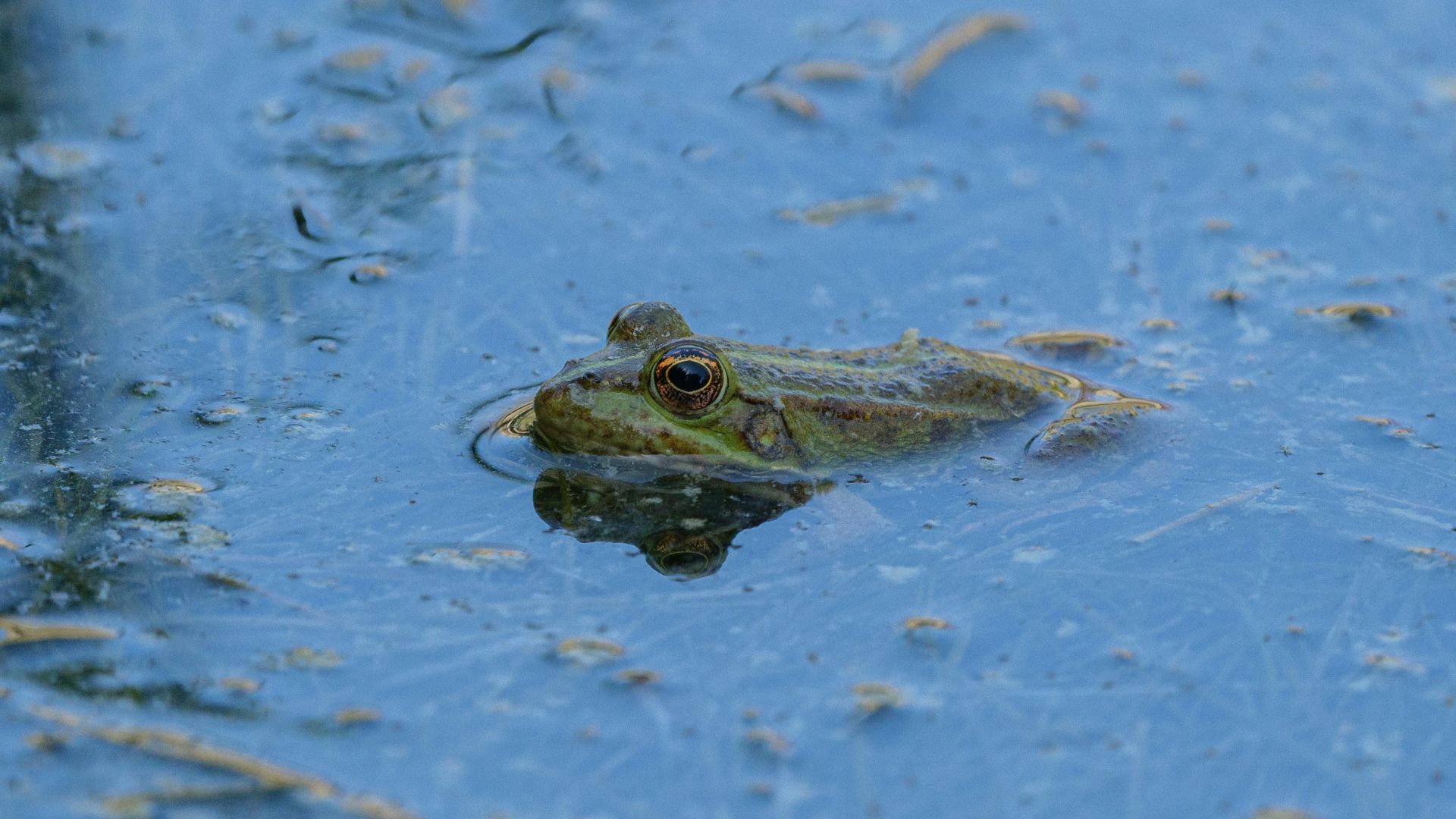
Long before winter seals the forest under ice, certain frogs begin preparing for a transformation that defies basic biology. The wood frog (Rana sylvatica), along with a few treefrog species like the gray treefrog (Hyla versicolor), Cope’s gray treefrog (Hyla chrysoscelis), and the spring peeper (Pseudacris crucifer), relies on a survival strategy that allows it to freeze nearly solid. As temperatures fall, they remain near the surface instead of burrowing deep like most animals. This choice is deliberate; the cold they invite triggers the physiological safeguards that make their survival possible.
During these early cold days, the frog’s body begins shifting toward freeze readiness. Liver cells flood the system with glucose, while urea builds up in tissues—both acting as potent cryoprotectants that protect biological tissues from freezing damage. BTW, these changes appear well before the frog stiffens. The reason for this is to allow their internal systems to prepare early, forming a biochemical shield that keeps ice from piercing cell membranes. Long before any freezing occurs, the frog’s internal chemistry is already working in its favor, ensuring that when the cold finally settles in, it doesn’t strike as a fatal blow.
Biology Rewritten By Winter
The real magic begins the moment the first ice crystals touch the frog’s skin. Instead of resisting, the frog allows the freeze to move through its body. Ice forms only in the spaces between cells, pulling water outward so the cells avoid lethal crystal buildup. As the process spreads, breathing fades to nothing, the heart goes still, and brain activity drops to a whisper. As much as 65–70% of the frog’s body water can turn to ice. Yet the stillness hides remarkable precision: glucose levels in vital organs surge, stabilizing fragile membranes and protecting them from catastrophic dehydration.
This ice management is anything but random. The frog uses specialized proteins to control where crystals first appear, guiding the freeze so it follows predictable patterns instead of spreading chaotically. Because of this selective freezing, organs like the heart and brain stay structurally intact even while encased in ice. With metabolic activity dialed down to almost nothing, the frog enters a form of suspended animation—halted but built to restart. That pause demands remarkable resilience, since extended freezing would destroy any creature not adapted for it. These frogs not only survive it but can remain in this frozen state for months.
How Do They Manage Extreme Winters?
Even during the deepest part of winter, the frog’s body undergoes micro-adjustments. Small temperature fluctuations cause limited cycles of freezing and slight thawing, each monitored by the frog’s chemistry. Cryoprotectant levels rise and fall accordingly, keeping cells stable despite the cold’s shifting intensity. This stability is key to their survival because it ensures that when the freeze lasts long enough to challenge the limits of their biology, the frog’s internal defenses remain active, even when every visible sign of life has stopped. To the outside world, they may feel like lifeless frogs, but internally know that they will bounce back.
Spring Restarts Its System
As temperatures begin to rise, the frog responds almost immediately. Ice retreats from its tissues, and the water that was once drawn out of its cells slowly returns. Organ by organ, the body reactivates. The heart often restarts first, beginning with isolated contractions that build toward a steady rhythm. Soon after, the frog’s lungs resume their function to draw air for the first time in months. This revival follows a precise sequence and avoids the shock that would accompany sudden rewarming in animals without such adaptations. Because water reenters cells gradually, the risk of rupture is dramatically reduced.
The reawakening is as controlled as the freeze. Excess glucose is metabolized or redistributed without a lingering chemical imbalance. Within hours, the frog regains muscular control. Its eyes are clear, and it begins moving through the leaf litter where it spent the frozen months. Despite its long suspension, there is no brain damage and no tissue scarring—something that continues to interest medical researchers. The frog resumes normal behavior as though winter had not pressed pause on its life, ready to move around the forest exactly as before. Males soon begin calling from vernal pools, their seasonal breeding rituals pressing forward with precision. Their rapid return to reproduction demonstrates how deeply this freeze-tolerance trait is embedded in their survival strategy.