
Human Oddities
Some experiences stick because they make no sense, even to science. A sudden feeling, a flash of memory, a laugh out of nowhere—they’re ordinary yet endlessly mysterious, quietly shaping how we experience life.

Yawning Contagion
You're sitting in a meeting when someone across the room opens their mouth wide in a telltale yawn. Within seconds, you feel that familiar urge creeping up, and before you know it, you're yawning too. This domino effect isn't just a coincidence.

Yawning Contagion (Cont.)
Despite yawning being as universal as breathing, researchers remain baffled by its true purpose. When we see someone yawn, specific brain networks responsible for empathy and social skills light up, yet no one knows why evolution would wire us this way.
 Photo By: Kaboompics.com, Pexels
Sleep Mystery
Every night, your consciousness gradually fades as your brain waves shift through distinct patterns. Apparently, neuroscientists can't pinpoint the exact moment when wakefulness becomes sleep. The transition involves complex changes in neurotransmitter levels and electrical activity. What actually triggers the "sleep switch" remains unknown.

Sleep Mystery (Cont.)
Even more puzzling is why this vulnerable state, where we're defenseless for hours, would evolve at all. Dreams add another layer of mystery to our nightly ritual. During REM sleep, our brains become almost as active as when we're awake, crafting vivid stories.

The Placebo Effect
Give someone a sugar pill, tell them it's powerful medicine, and their body generally responds as if they've taken the real thing. The placebo effect is so strong that in one migraine study, fake pills labeled as "placebo" reduced pain by 50% compared to taking nothing at all.
 Photo By: Kaboompics.com, Pexels
The Placebo Effect (Cont.)
The mechanism behind this mind-over-matter phenomenon remains largely mysterious. People know that it involves increases in feel-good neurotransmitters, such as endorphins and dopamine, as well as changes in brain activity. Nobody can explain how belief alone triggers these physical responses.

Hiccups
Evolutionary biologists face a genuine puzzle when it comes to hiccups: why would natural selection preserve such an apparently useless and potentially dangerous reflex? These sudden, involuntary contractions of the diaphragm serve no obvious purpose in modern humans. Even fetuses hiccup in the womb.
 Nicoleta Ionescu, Shutterstock
Hiccups (Cont.)
This action involves a neural circuit that bypasses normal breathing controls, suggesting it once served an important function. One fascinating theory links hiccups to our amphibian heritage. The same muscle contractions that cause hiccups closely resemble the breathing pattern used by tadpoles.
 Nicoleta Ionescu, Shutterstock

History's most fascinating stories and darkest secrets, delivered to your inbox daily.
Mystery Of Being You
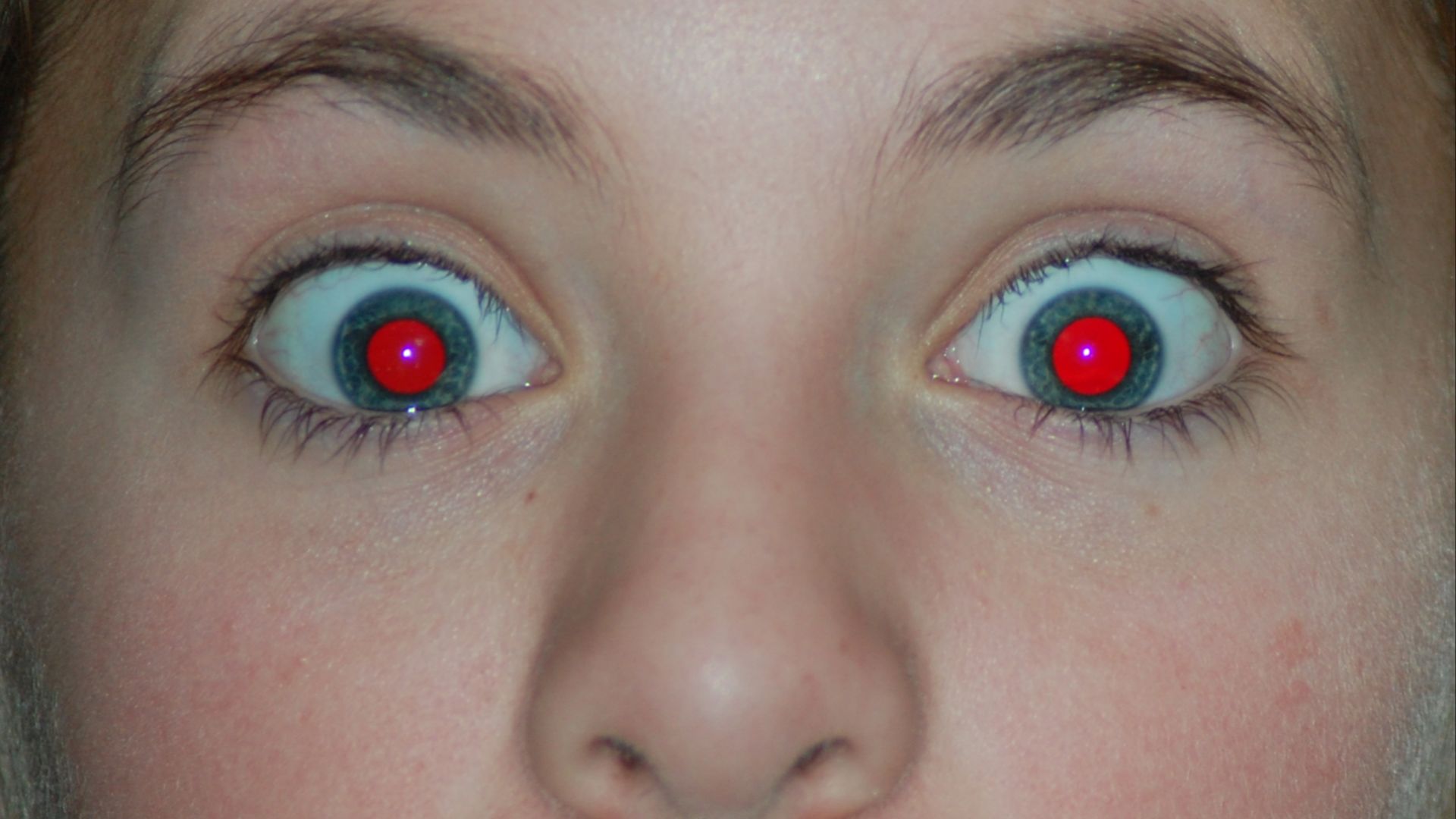
Right now, as you read these words, billions of neurons are firing in patterns that create your subjective experience of being you. This phenomenon—consciousness—represents what philosophers call the "hard problem": explaining how physical brain activity generates the rich, private world of thoughts.

Mystery Of Being You (Cont.)
No brain scan can detect the actual feeling of seeing red or tasting chocolate. Scientists can map which brain regions activate during different mental states, but they're nowhere close to explaining how electrical and chemical signals turn into conscious awareness.
 User:PeterPan23, Wikimedia Commons
Deja Vu
Suddenly, in the middle of an ordinary moment, reality seems to glitch. You're absolutely certain you've experienced this exact situation before, same place, same conversation, same feeling, even though you know logically that's impossible. This jarring experience makes you question time.

Deja Vu (Cont.)
Deja vu affects about two-thirds of people and reveals something unsettling about how our brains construct our sense of reality. For a brief moment, your brain's fact-checking system catches itself making an error in real-time, building that bizarre sensation of simultaneous familiarity and impossibility.

Time Perception
When you're bored, minutes crawl by like hours. When you're having fun, hours vanish like minutes. When you're in danger, seconds stretch into slow motion. This subjective experience of time shows that what feels like the most reliable aspect of reality is actually deeply personal and constantly changing.

Time Perception (Cont.)
Even more puzzling is how this perception changes as you age. A year to a five-year-old represents 20% of their entire life experience, while a year to a 50-year-old is just 2%. This mathematical relationship might explain why childhood summers felt endless while adult years blur together.

Laugh Logic
Here is a response that serves no obvious survival purpose but feels completely natural. Laughter is such a weird behavior when you think about it. Something strikes you as funny, and suddenly you're making rhythmic, involuntary sounds while your whole body shakes.

Laugh Logic (Cont.)
You're essentially having brief, controlled convulsions in response to certain mental stimuli, yet it's one of the most universal human experiences. People are 30 times more likely to laugh when they’re with others than when alone. Beyond its social functions, laughter also signals mutual vulnerability.

The Illusion Of Free Will
Every day, you make countless decisions—what to eat, what to wear, what to say—and it feels like you're freely choosing each option. Neuroscience experiments suggest that brain activity indicating a decision begins several hundred milliseconds before you become consciously aware of making a choice.

The Illusion Of Free Will (Cont.)
This suggests your sense of making free choices might be your conscious mind taking credit for decisions already made by unconscious processes. If your brain decides before "you" decide, what does that mean for responsibility, identity, and the sense that you're steering your own life?

Sudden Gut Feelings
You walk into a room and immediately feel uneasy, though nothing seems obviously wrong. You meet someone new and instantly trust them, despite having no logical reason. You're about to make a decision when something deep inside says, "Don't do it”.

Sudden Gut Feelings (Cont.)
These intuitive flashes happen so quickly and feel so certain that they make you wonder if your subconscious mind is processing information your conscious awareness completely misses. What's fascinating is that these gut instincts are often surprisingly accurate, especially in areas where you have experience.

Self Talk
Most people have an ongoing internal dialogue running throughout their day, commenting on situations, rehearsing conversations, or working through problems. When you pay attention, it raises an intriguing question: who exactly is talking, and who is listening inside your head?

Self Talk (Cont.)
This inner voice serves multiple functions, but its very existence suggests something more profound about the nature of consciousness. You're essentially having conversations with yourself, complete with different perspectives and viewpoints, as if multiple aspects of your personality are collaborating in real-time.

The Staring Sensation
You're sitting alone when suddenly you feel eyes on you, turn around, and discover someone actually is looking your way. This uncanny ability to sense unseen observation makes you question whether humans might have sensory abilities we don't fully understand.

The Staring Sensation (Cont.)
Despite no logical explanation for how you could detect someone's gaze, most people have experienced this phenomenon and trust it enough to act on it. Some researchers suggest you're unconsciously picking up peripheral visual cues or subtle environmental changes.