The Glitter Of A Fallen Empire
Before their tragic fall, the Romanovs ruled with unmatched wealth and splendor. Their crown jewels showed Russia’s strength and divine right to rule. But as revolution spread, these sparkling treasures turned from royal symbols into reminders of a doomed empire.
The Romanov Dynasty’s Rise To Power
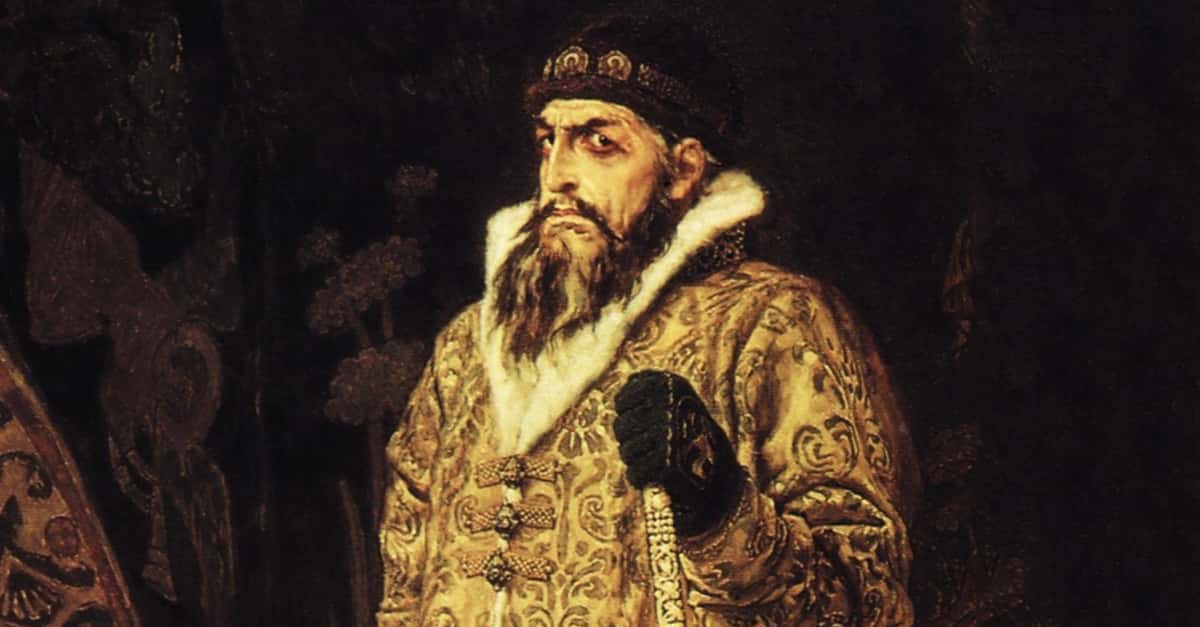
The Romanovs began their rule in 1613 after years of chaos. Mikhail Romanov, chosen as Tsar (Russian word for emperor) at just sixteen, started a dynasty that would rule Russia for 300 years. Their growing empire and ceremonies were always tied to their dazzling jewels.
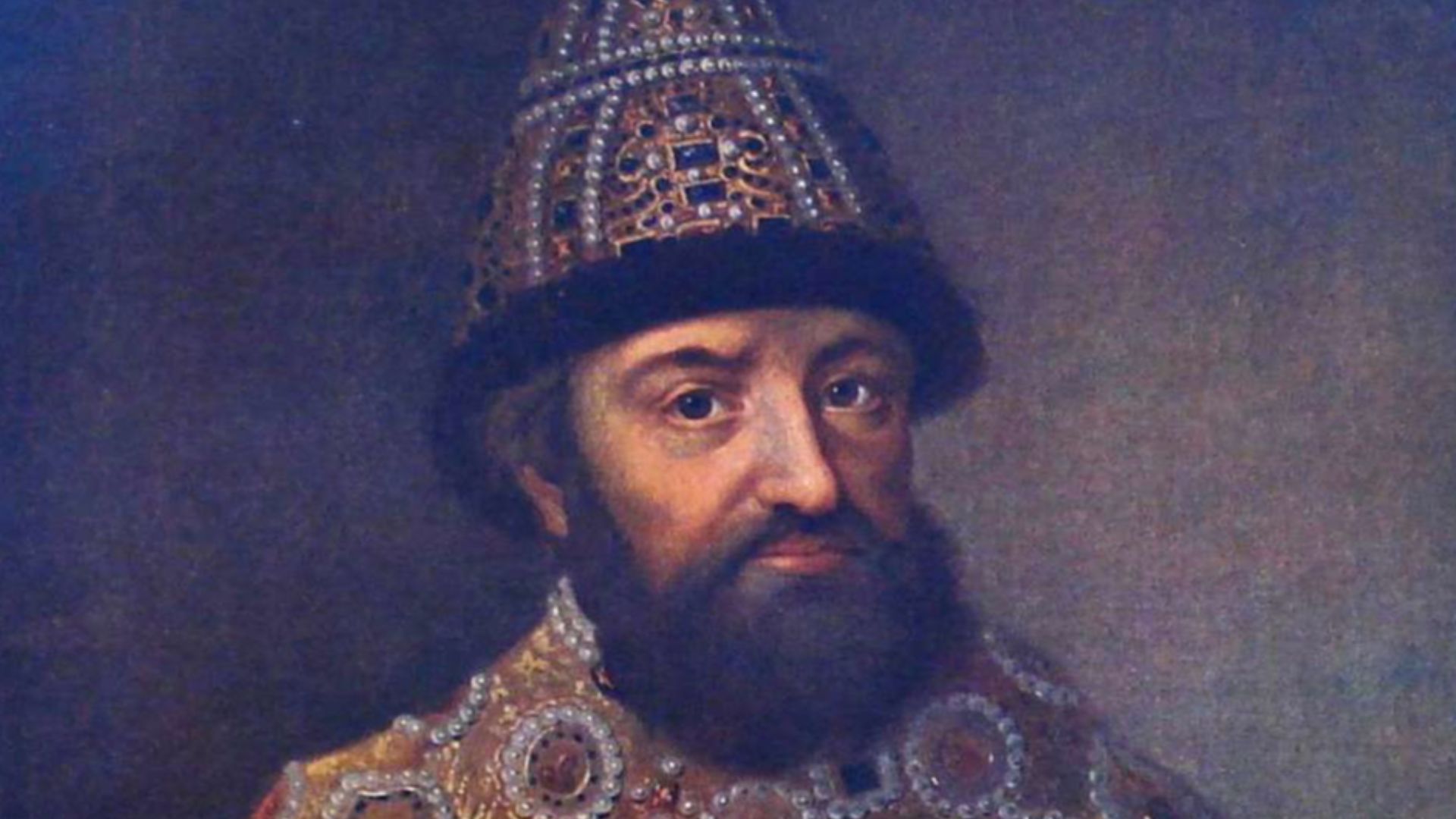 AnonymousUnknown author, Wikimedia Commons
Jewels As Symbols Of Divine Rule
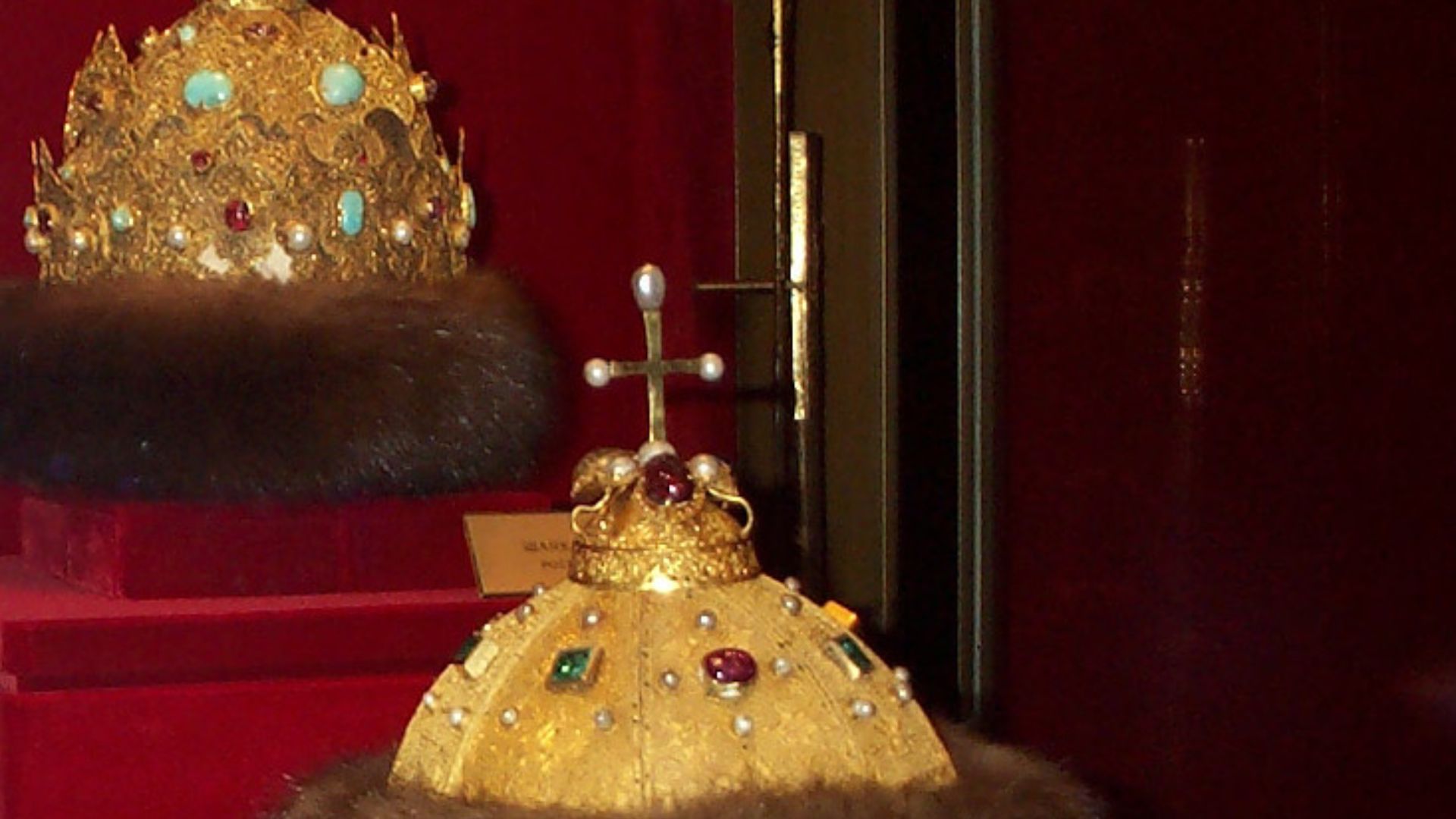
In imperial Russia, the crown jewels meant more than beauty. They represented the Tsar’s God-given authority and his promise to lead and protect the nation under the Orthodox faith. Each gem had meaning—diamonds for purity, rubies for courage, pearls for wisdom.
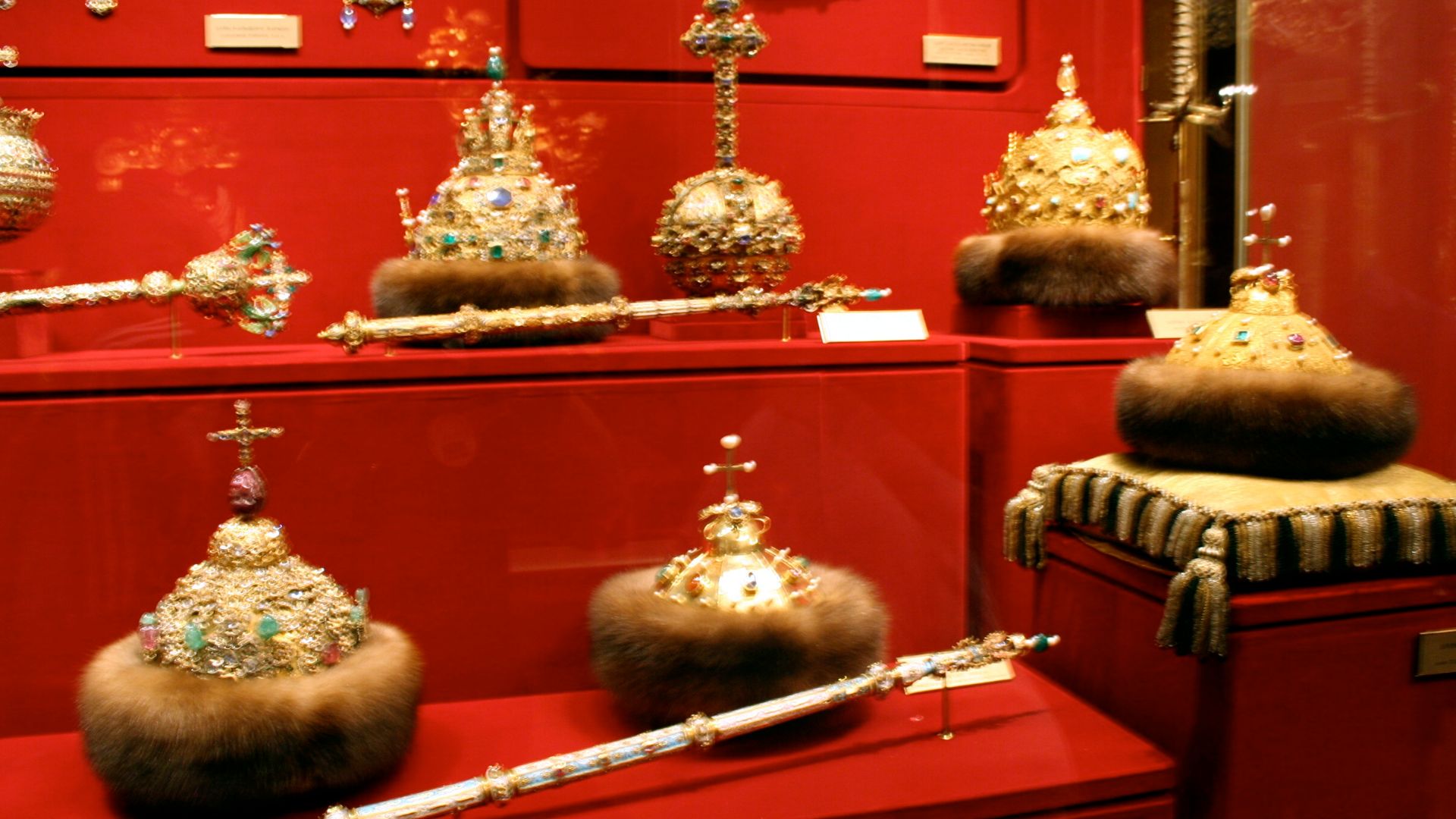 Ramón from Llanera, España, Wikimedia Commons
The Creation Of The Imperial Regalia
During the reigns of Peter the Great and Catherine the Great, Russia built a rich royal treasury. In the 1700s, Catherine officially formed the Imperial Regalia, hiring Europe’s best craftsmen to make everything from crowns to orbs fit for any empire.
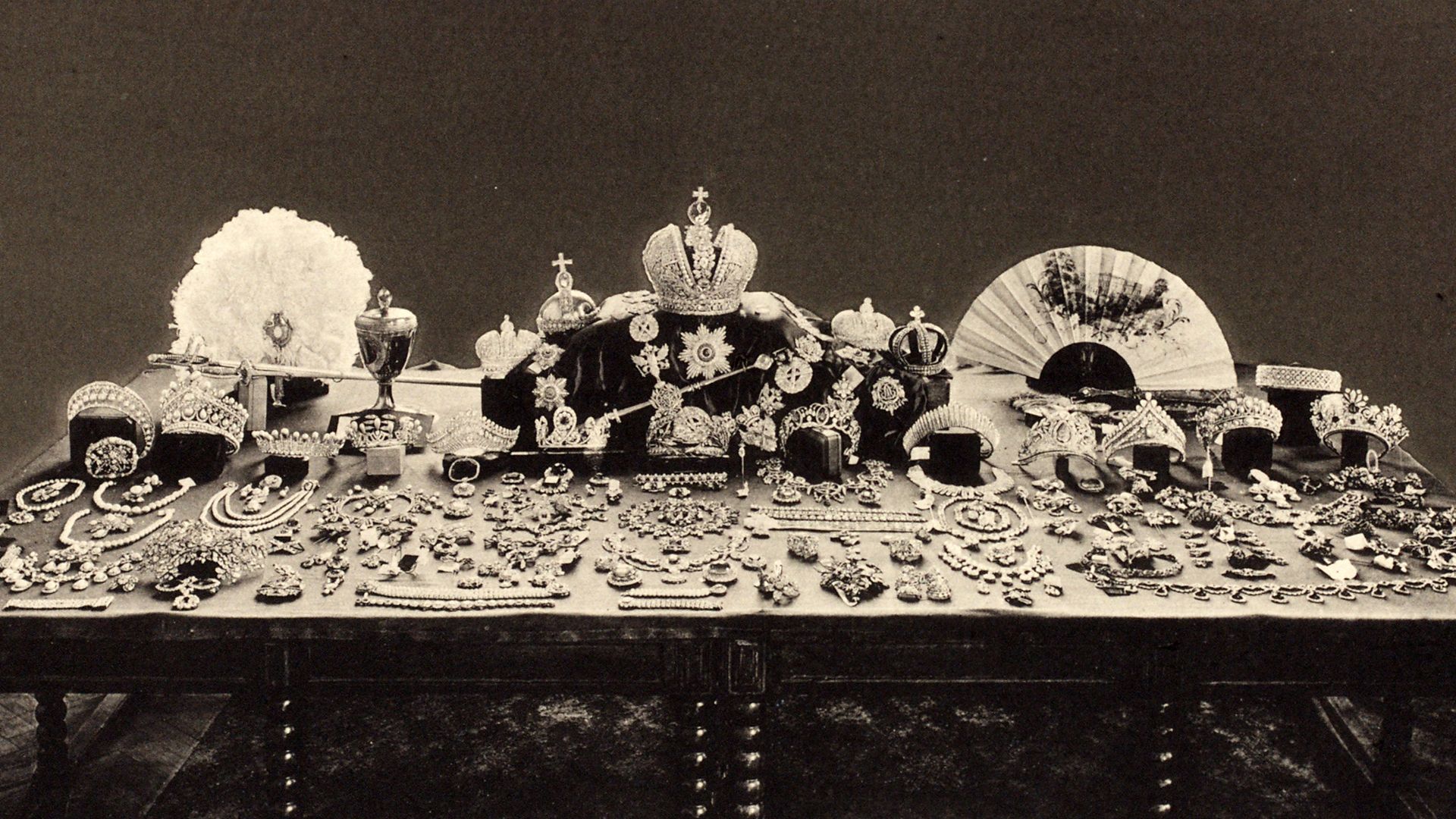 AnonymousUnknown author, Wikimedia Commons
The Jewelers Behind The Empire
Before Fabergé’s rise, master goldsmiths from across Europe and Russia created the royal regalia. Their detailed artistry shaped the empire’s image of power by blending Western technique with Russian style to produce the dazzling pieces that defined the Romanov court.
 Unknown photographer, Wikimedia Commons
The Great Imperial Crown
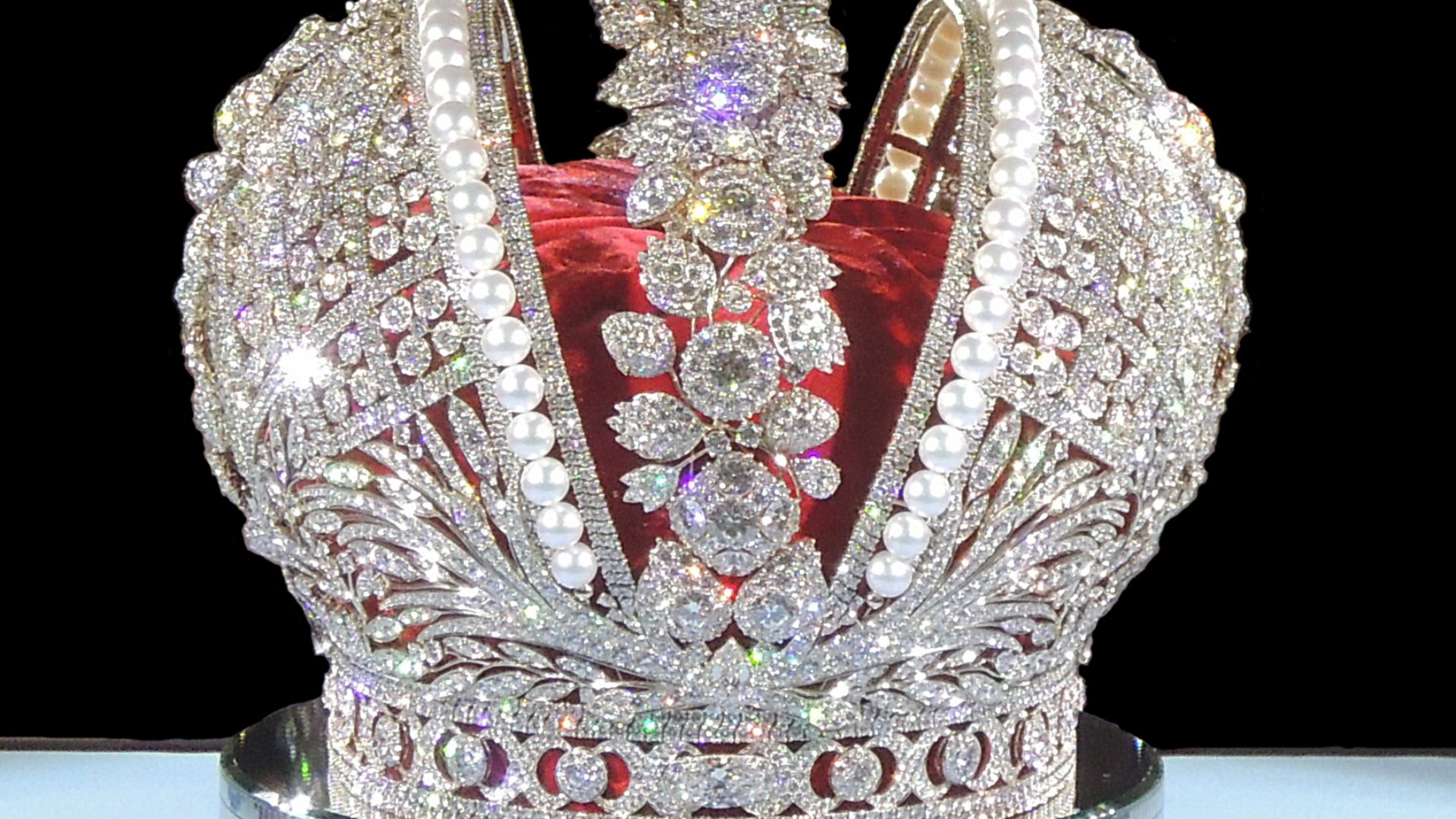
Made in 1762 for Catherine the Great’s coronation, the Great Imperial Crown sparkled with nearly 5,000 diamonds and a huge red spinel. Used at every coronation after hers, it represented both the glory and the heavy burden of absolute rule.
The Orlov Diamond And Its Mystique
The Orlov Diamond, a 189.62-carat gem once said to have decorated an Indian temple statue, became part of Russia’s Imperial Scepter—a symbol of royal authority. Count Orlov, Catherine the Great’s lover, gave it to her as a gift of love and power.
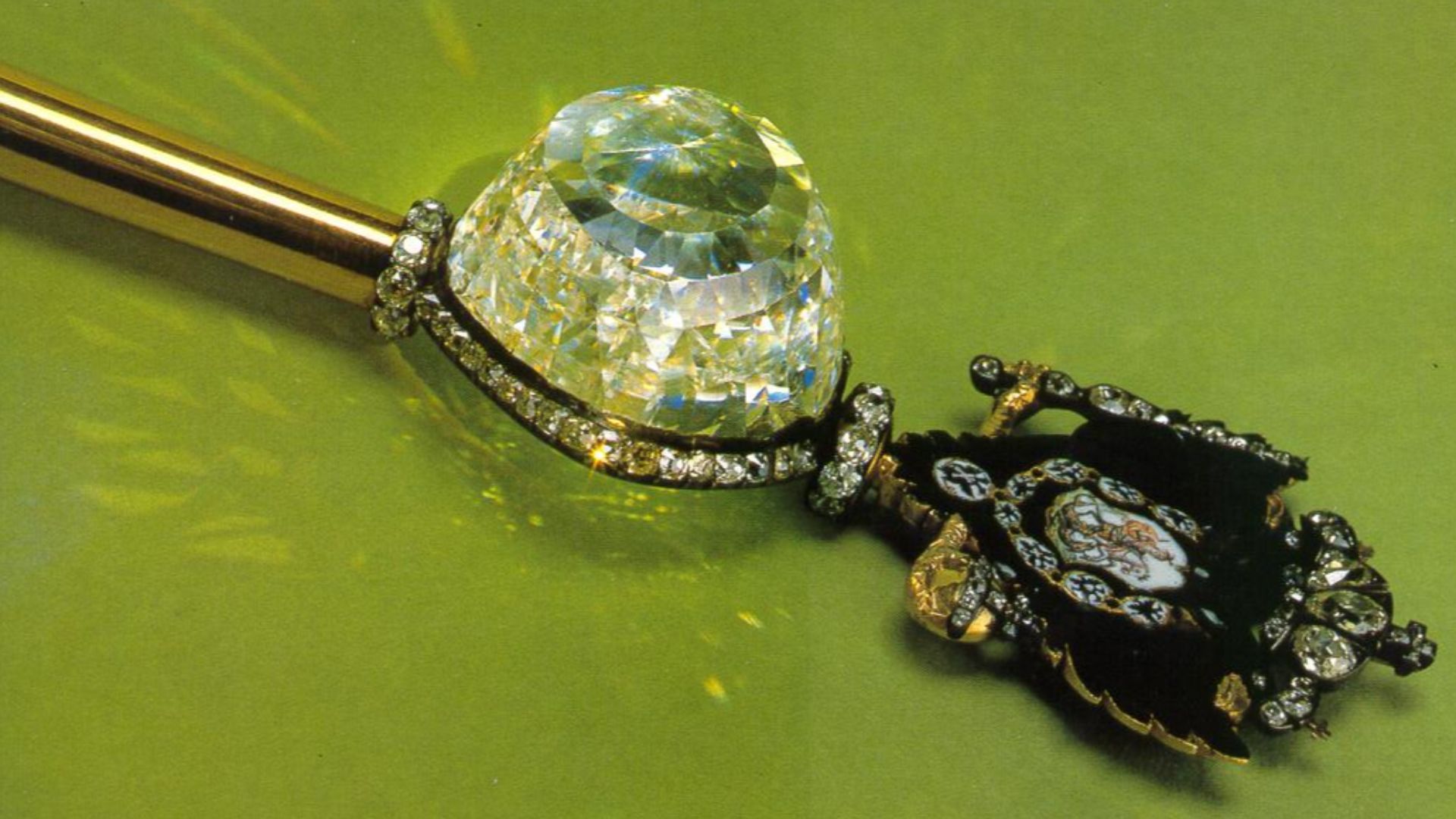 Elkan Wijnberg, Wikimedia Commons
The Fabergé Eggs Of The Romanovs
From 1885 to 1917, jeweler Peter Carl Fabergé designed ornate Easter eggs for the Russian Tsars. Each was decorated with gold, enamel, and tiny surprises hidden inside. These delicate creations reflected the royal family’s love of beauty and the luxury that once defined their world.
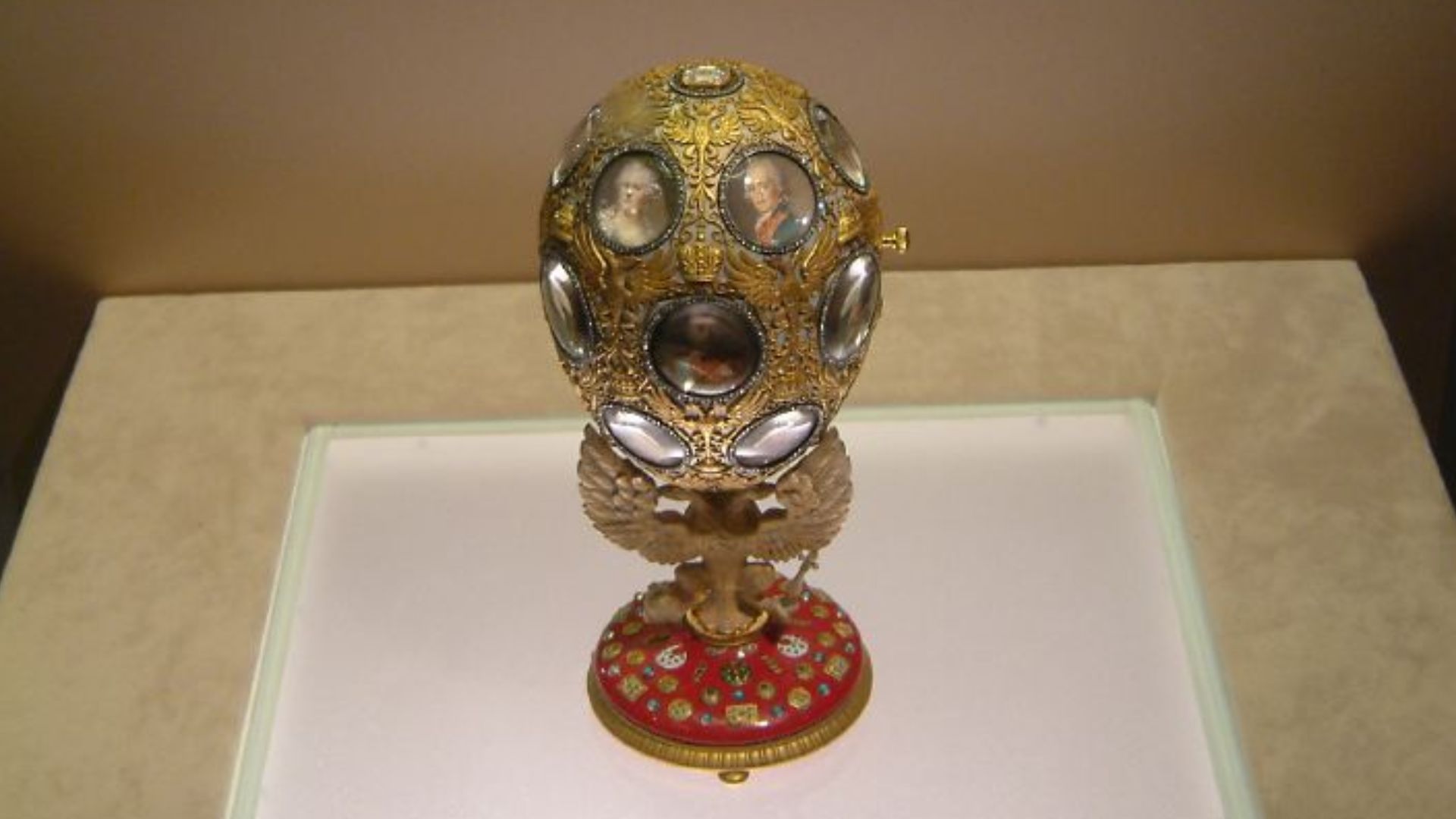
The Splendor Of Court Life
By the late 1800s, the Romanov court was a world of luxury. Diamond-covered gowns and shining tiaras filled the Winter Palace. Yet behind the sparkle was deep inequality—millions of Russians lived in poverty while the royal family celebrated.
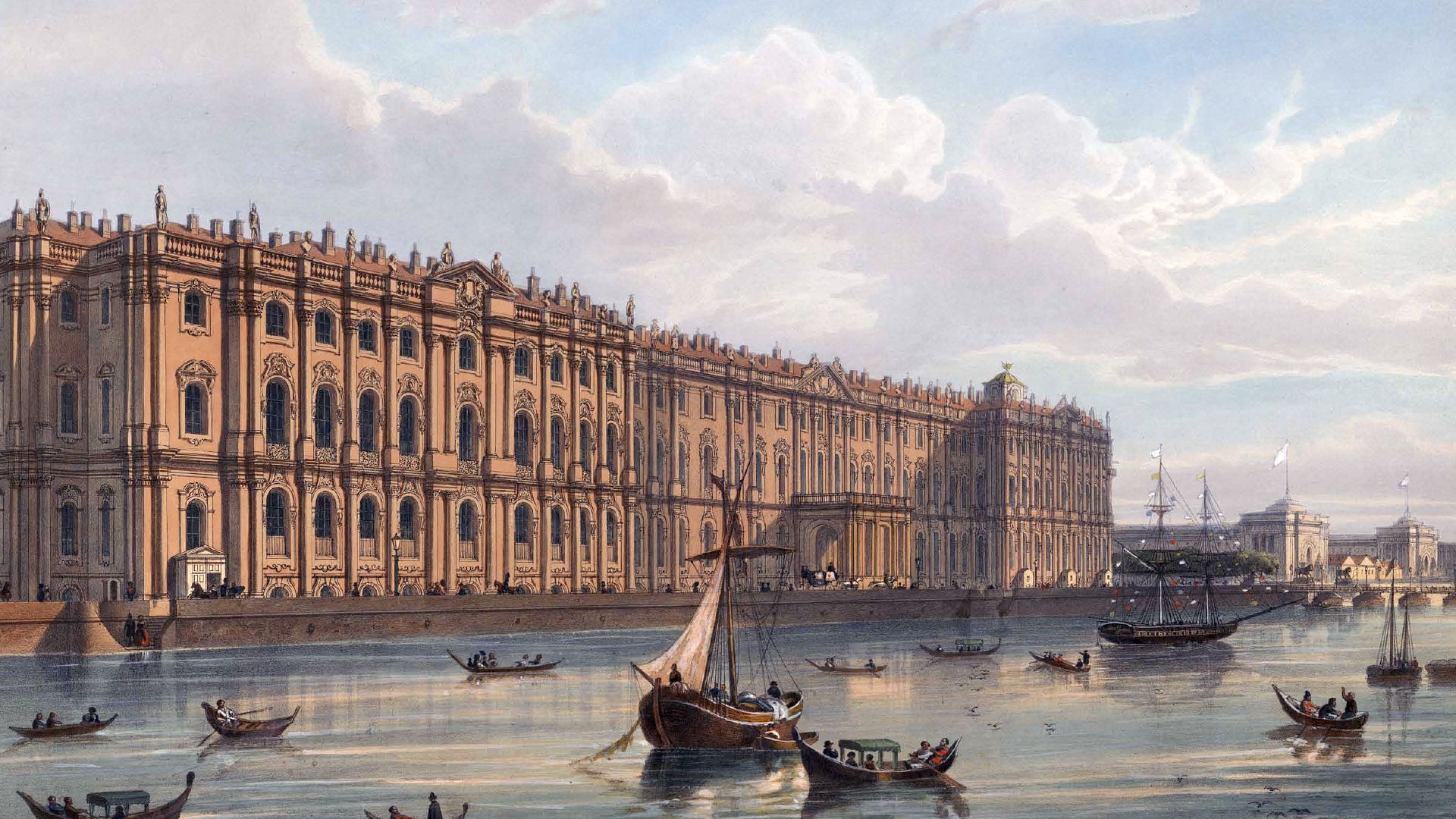 Joseph-Maria Charlemagne-Baudet, Wikimedia Commons
The Empire On The Brink
As factories spread and poverty worsened, anger toward the monarchy grew. Military losses and hunger made life unbearable for ordinary people. By 1917, the crown jewels, once proud symbols of empire, came to represent everything unfair about life under royal rule.
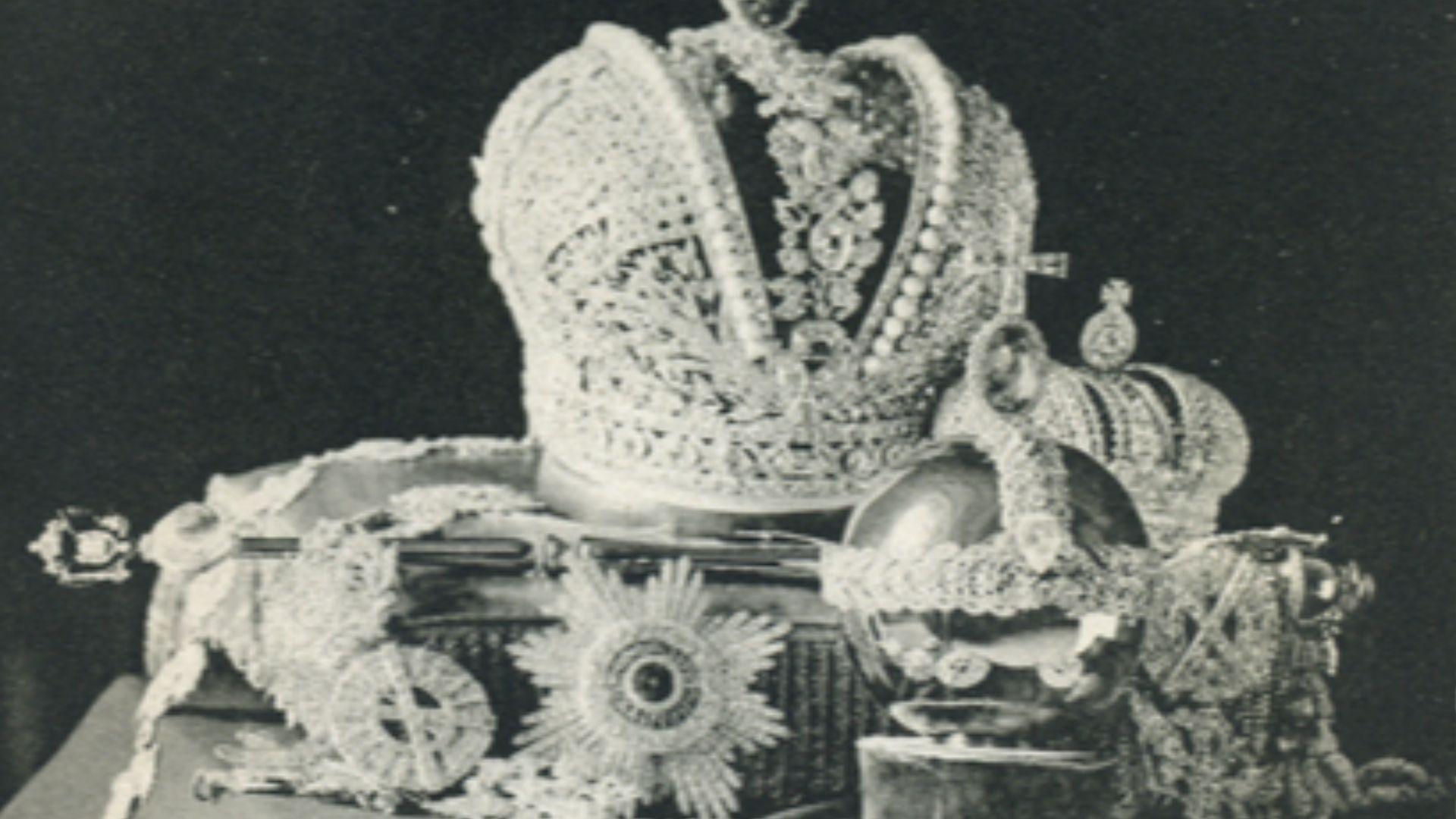 AnonymousUnknown author, Wikimedia Commons
The Fall Of Nicholas II
In 1917, Tsar Nicholas II—Russia’s emperor—gave up his throne after massive protests and war defeats. His family was placed under guard while officials rushed to hide the Imperial Regalia, the official royal jewels, fearing revolutionaries might steal or destroy them.
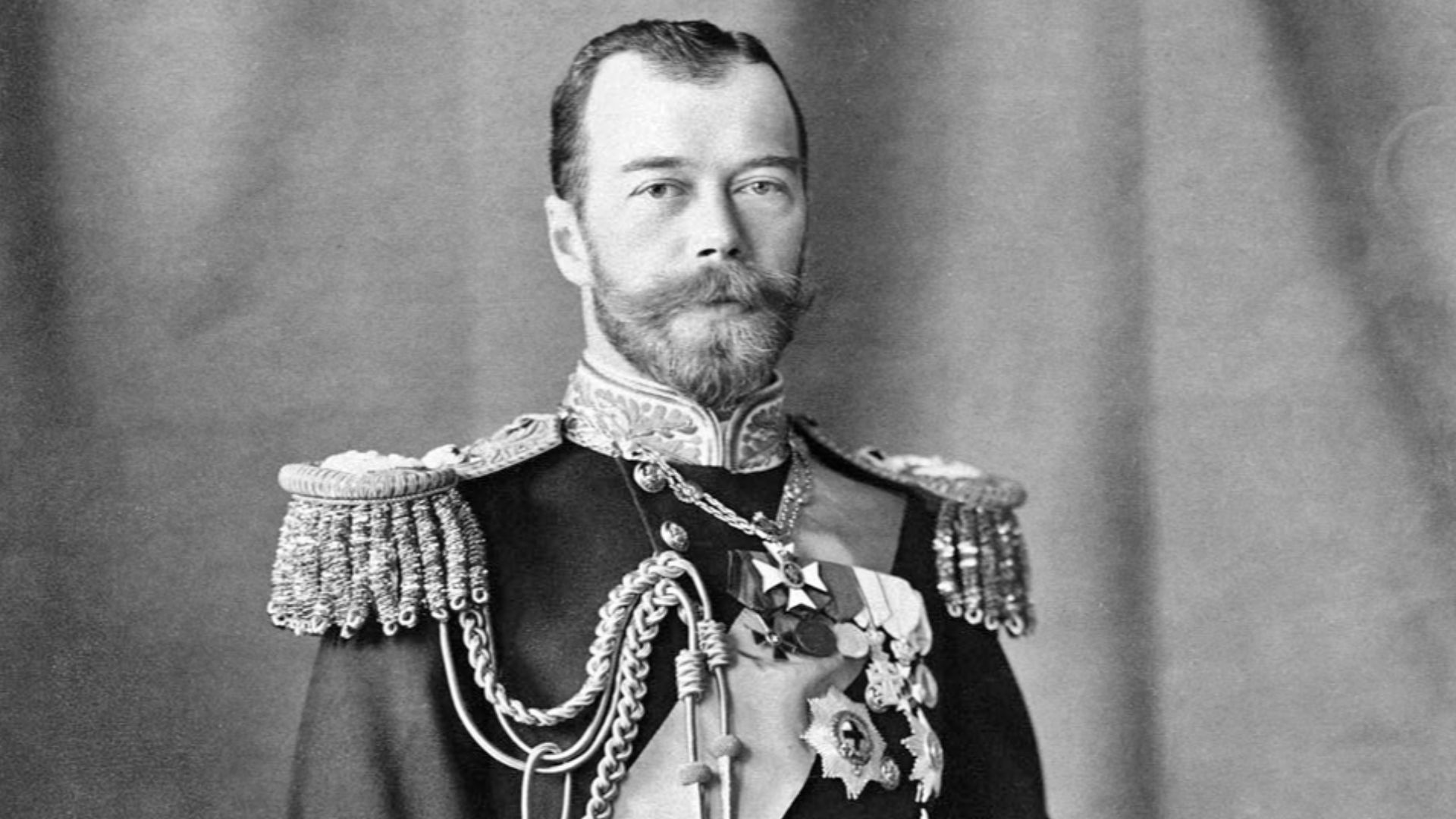 Boissonnas & Eggler, photographer, active 1902-1923, St. Petersburg, Nevsky 24., Wikimedia Commons
The Hidden Treasures Of The Tsarina
Empress Alexandra, Nicholas’s wife, tried to save her family’s jewels by secretly sewing diamonds and pearls into her daughters’ clothing. These hidden gems were meant as protection, but they later became haunting clues to the family’s tragic fate.
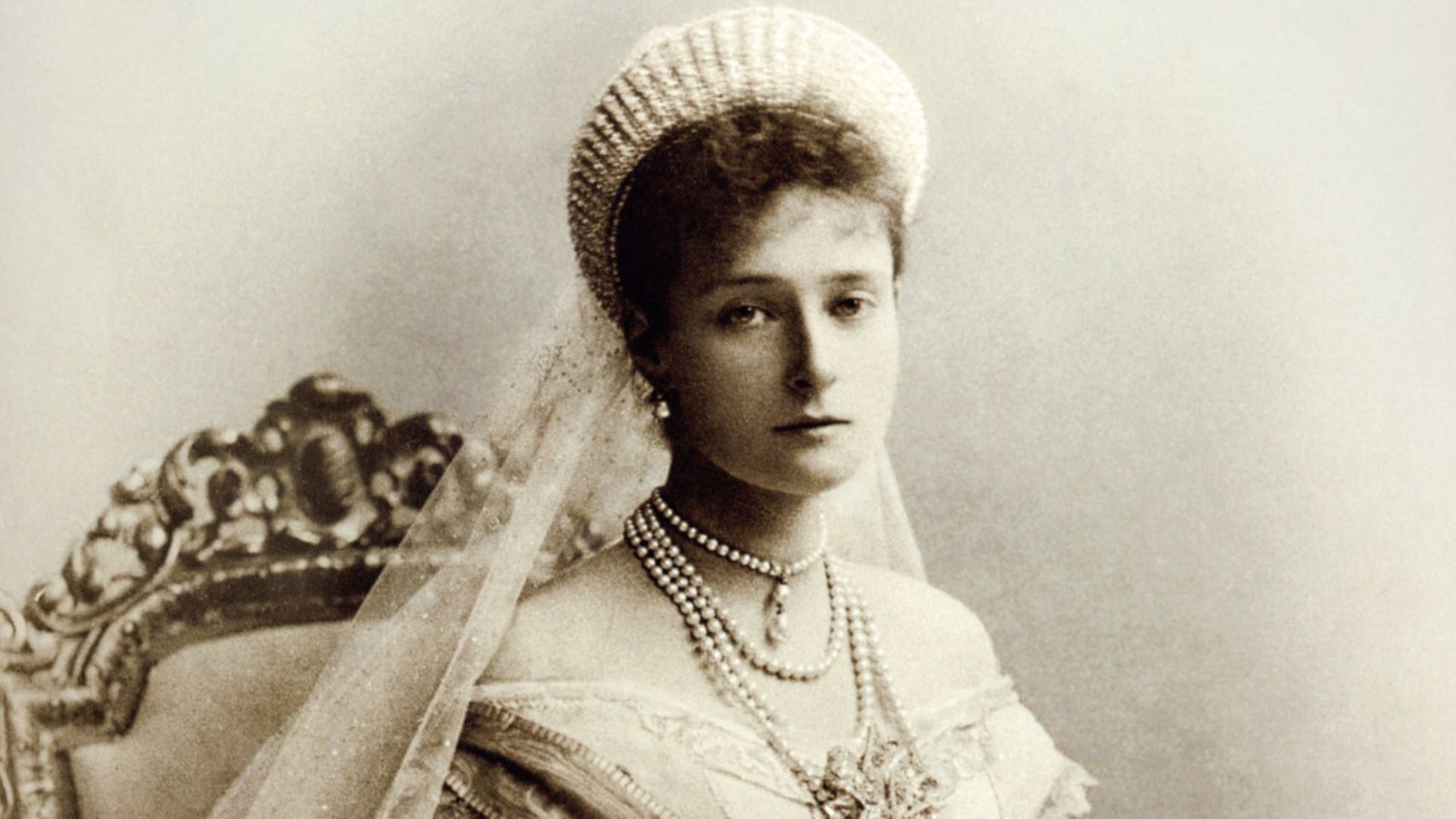 A. Pasetti, St. Pétersbourg, Nevsky 24., Wikimedia Commons
The Night Of Ekaterinburg
In July 1918, Tsar Nicholas II, Empress Alexandra, and their five children were executed by Bolshevik soldiers in Ekaterinburg. Investigators later found diamonds and pearls scattered near the burial site—proof of Alexandra’s desperate attempt to hide the family’s remaining jewels.
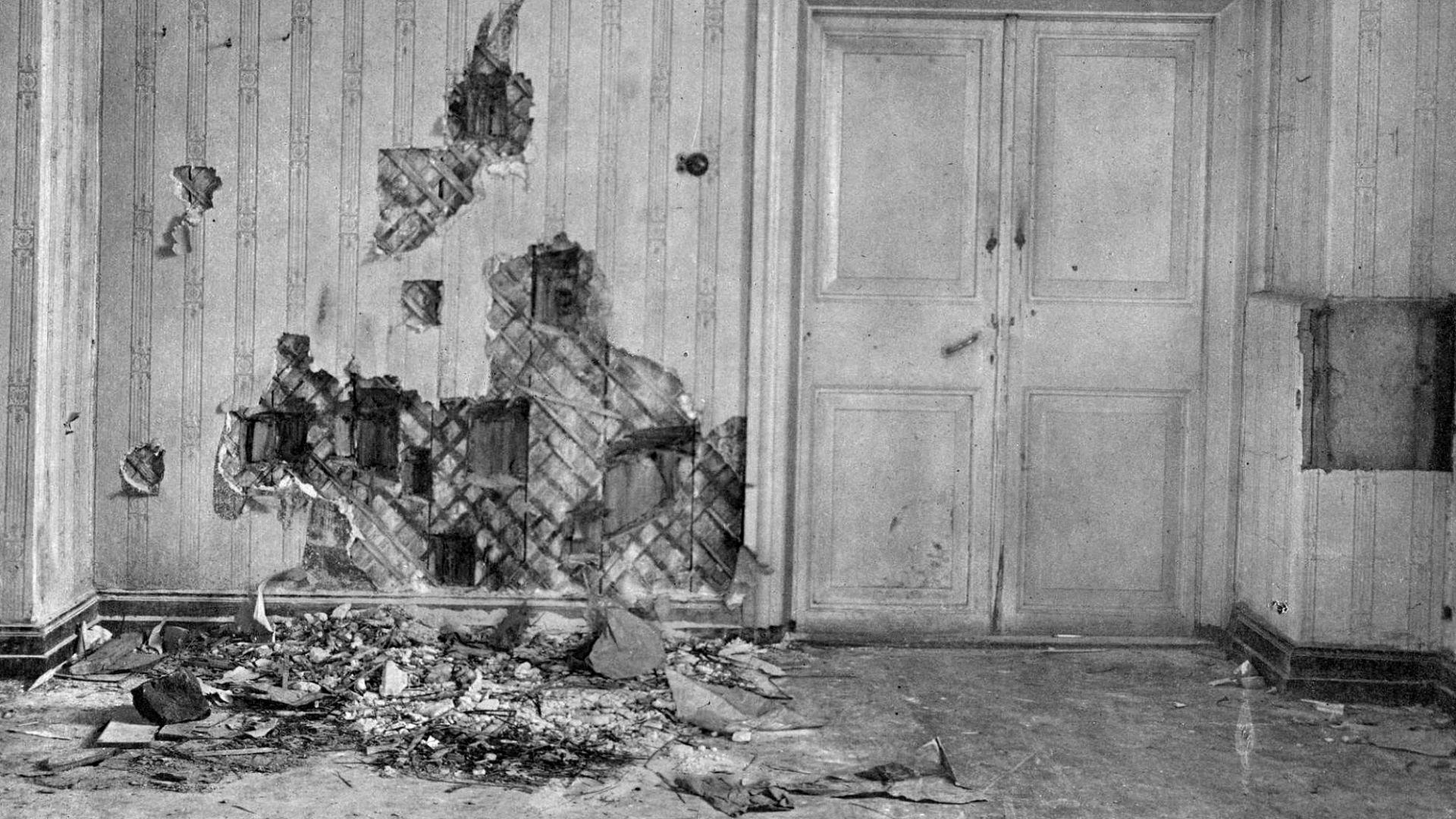 AnonymousUnknown author, Wikimedia Commons
The Bolshevik Seizure Of The Regalia
When the Bolsheviks took control of Russia in 1917, they claimed all royal property for the new government. Palaces were emptied, and the crown jewels were locked inside the Kremlin Armory, a secure state museum. Royal symbols now belonged to the people.
 Unknown, presumably official, Wikimedia Commons
Cataloging The Diamond Fund
In 1922, the Soviet leaders made an official list of all the royal jewels, called the Diamond Fund. Skilled jewelers photographed and recorded every crown and gemstone that survived. But many pieces had already been lost or melted down.
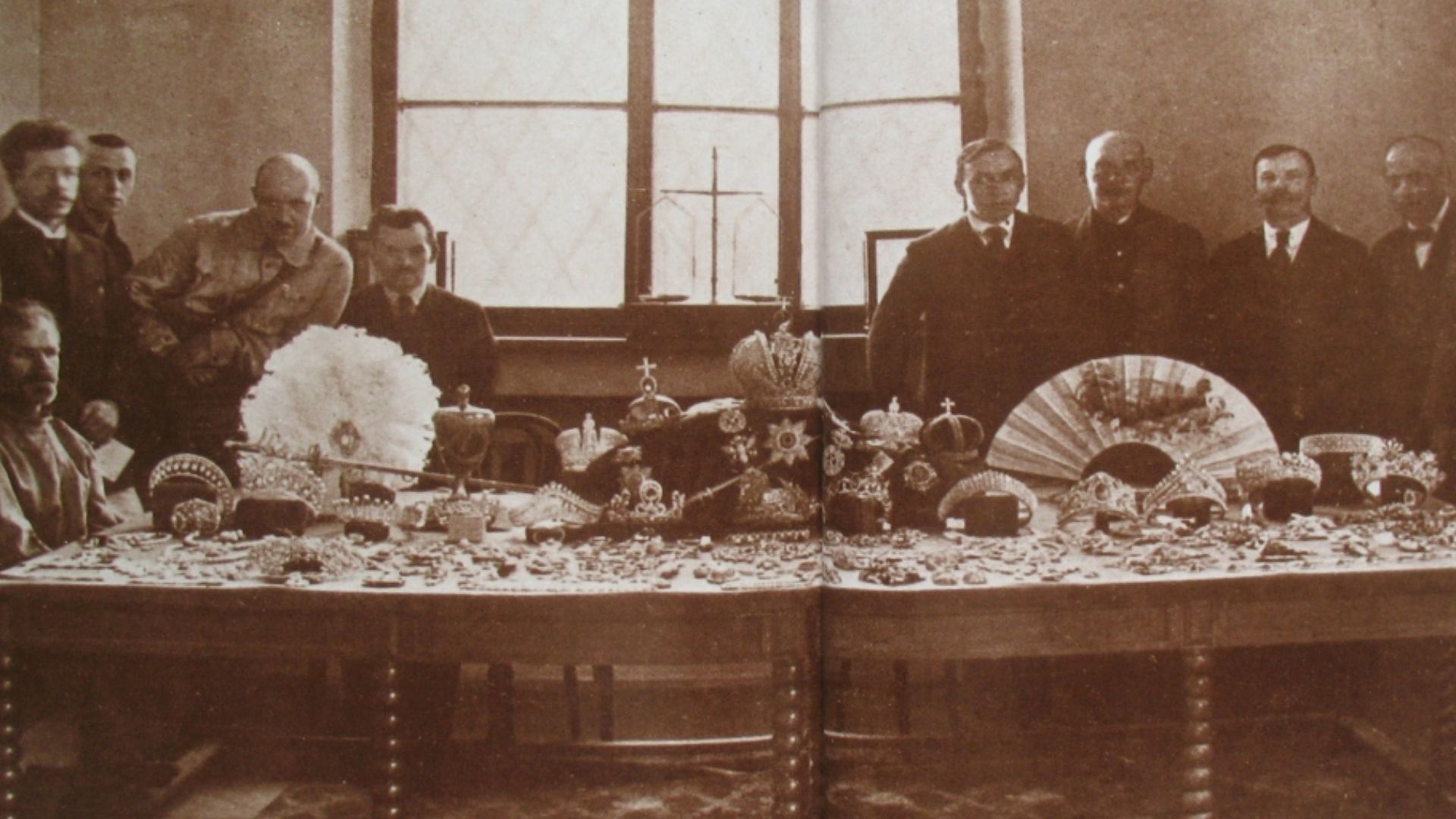 AnonymousUnknown author, Wikimedia Commons
The Vanished Treasures
Many famous items—jeweled crowns, Fabergé works, and royal ornaments—never appeared in Soviet records. Historians believe some were stolen during the chaos of the revolution or secretly taken out of Russia by loyal supporters and foreign traders.
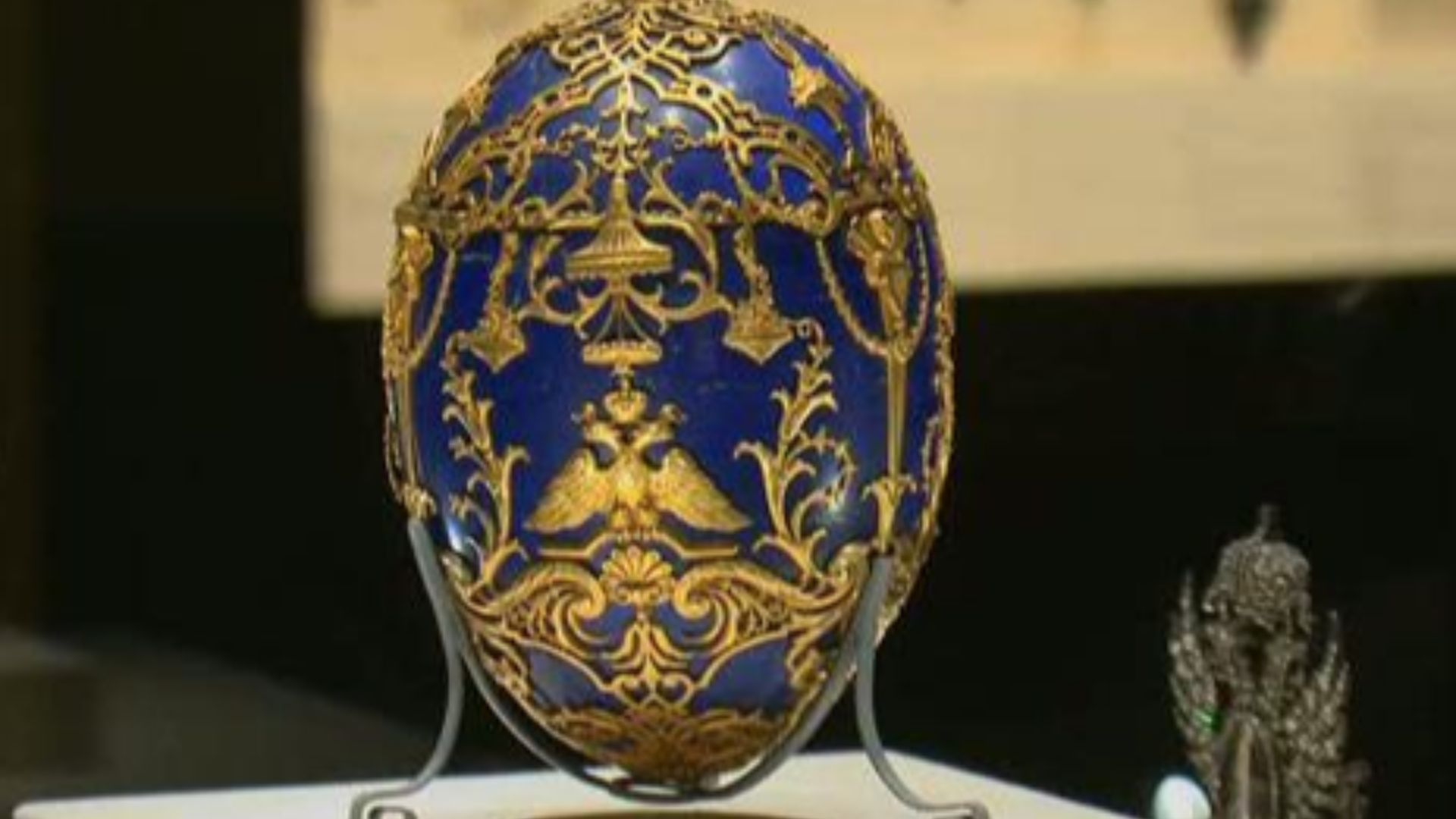 Photo: VOA - A. Greenbaum, Wikimedia Commons
Jewels Sold To Fund A New State
The new Soviet government was nearly broke. In the 1920s and 1930s, it began selling royal jewels in quiet auctions in cities like London and Berlin. Priceless gems once worn by emperors were sold to raise money for the communist state.
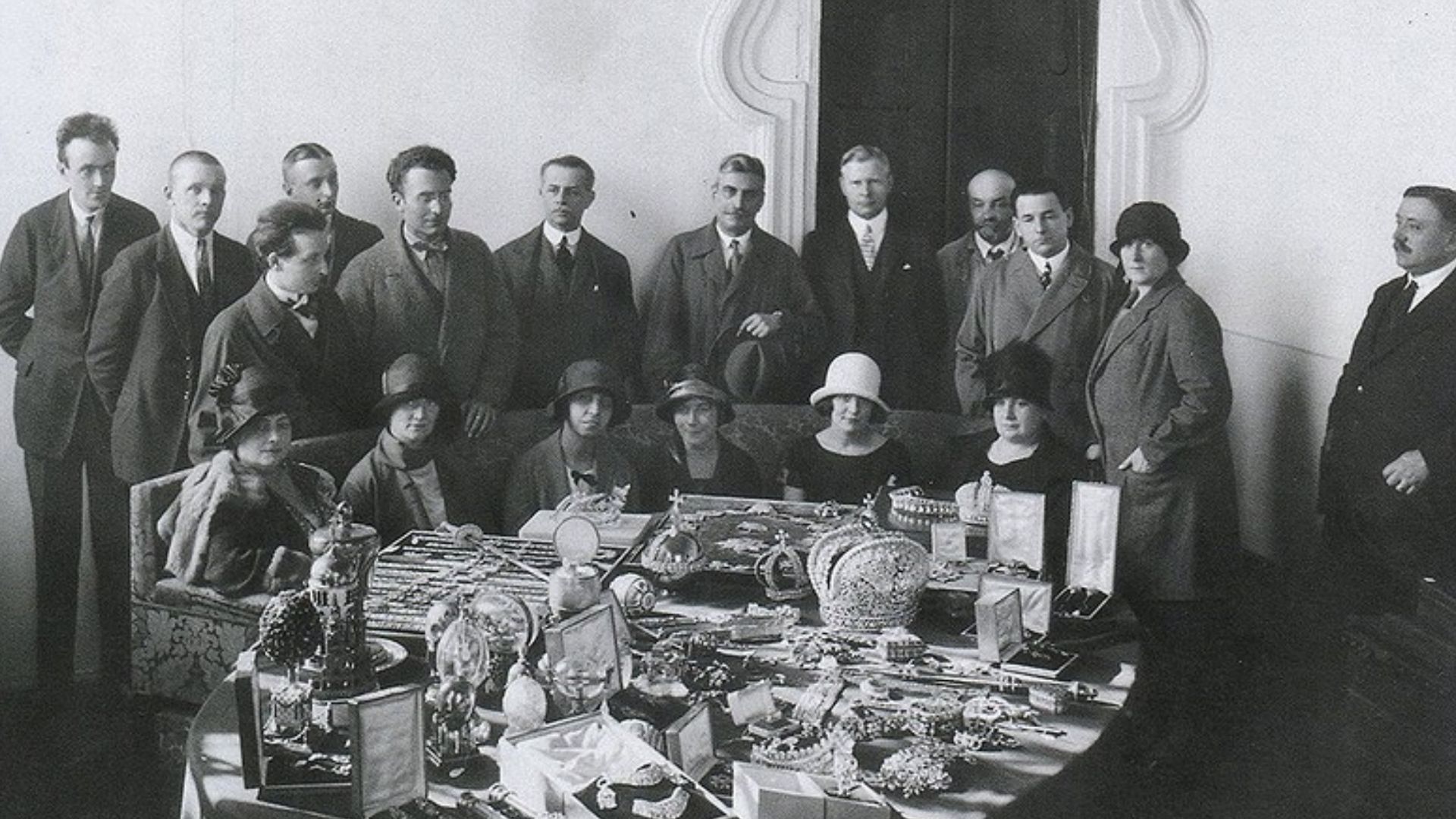 AnonymousUnknown author, Wikimedia Commons
Western Dealers And Collectors
Western businessmen, including American trader Armand Hammer, helped sell Romanov jewels to wealthy buyers in Europe and the United States. Some collectors valued the gems for their beauty, while others prized their dramatic history tied to a fallen empire.
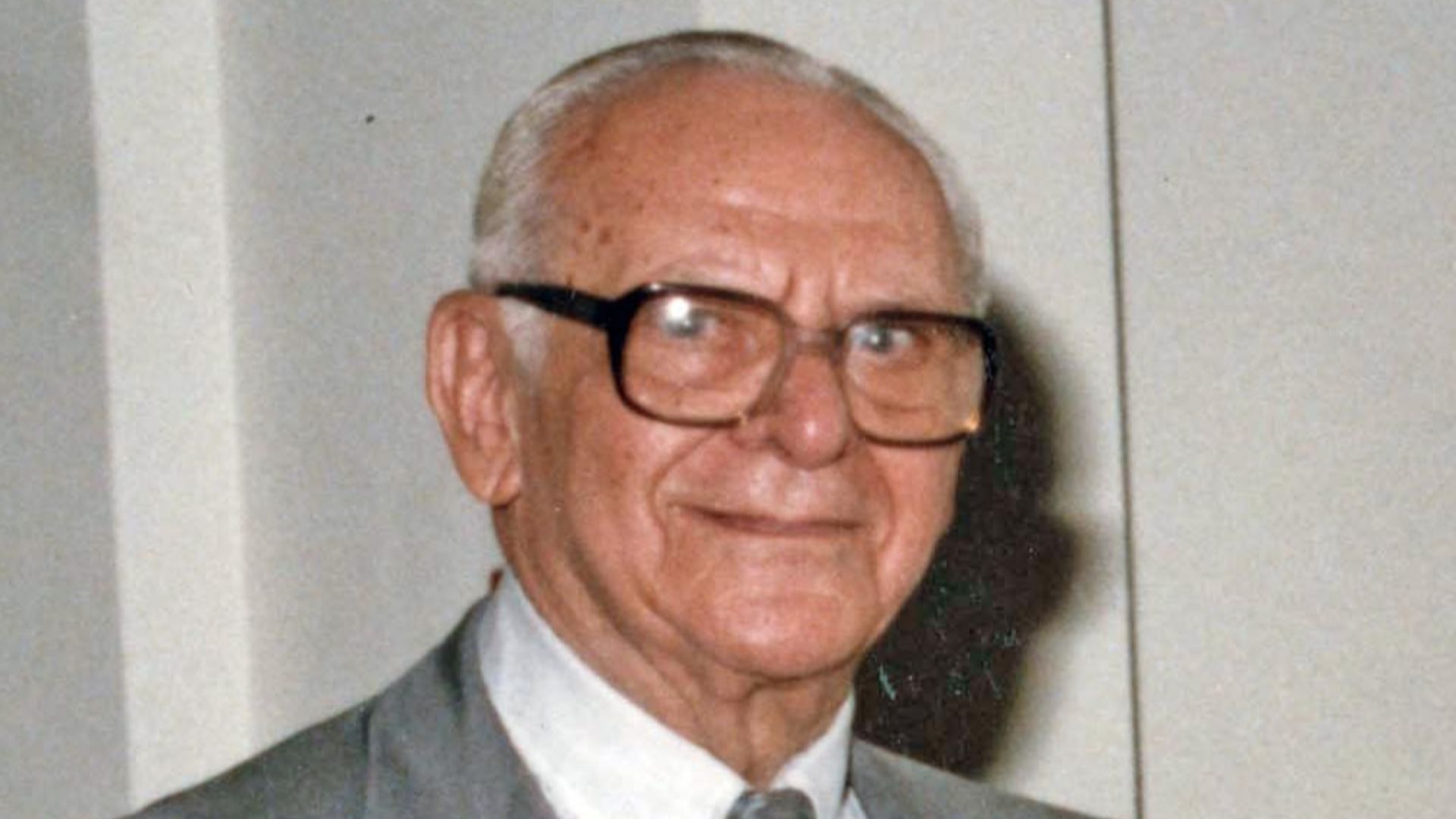 FDR Presidential Library & Museum, Wikimedia Commons
The Treasures Kept In The Kremlin
After the revolution, many royal jewels were lost, but some of the most important pieces—like the Great Imperial Crown and the Orlov Diamond—remained safe in Moscow’s Diamond Fund. Hidden deep inside the Kremlin, these treasures are tightly guarded and rarely shown.
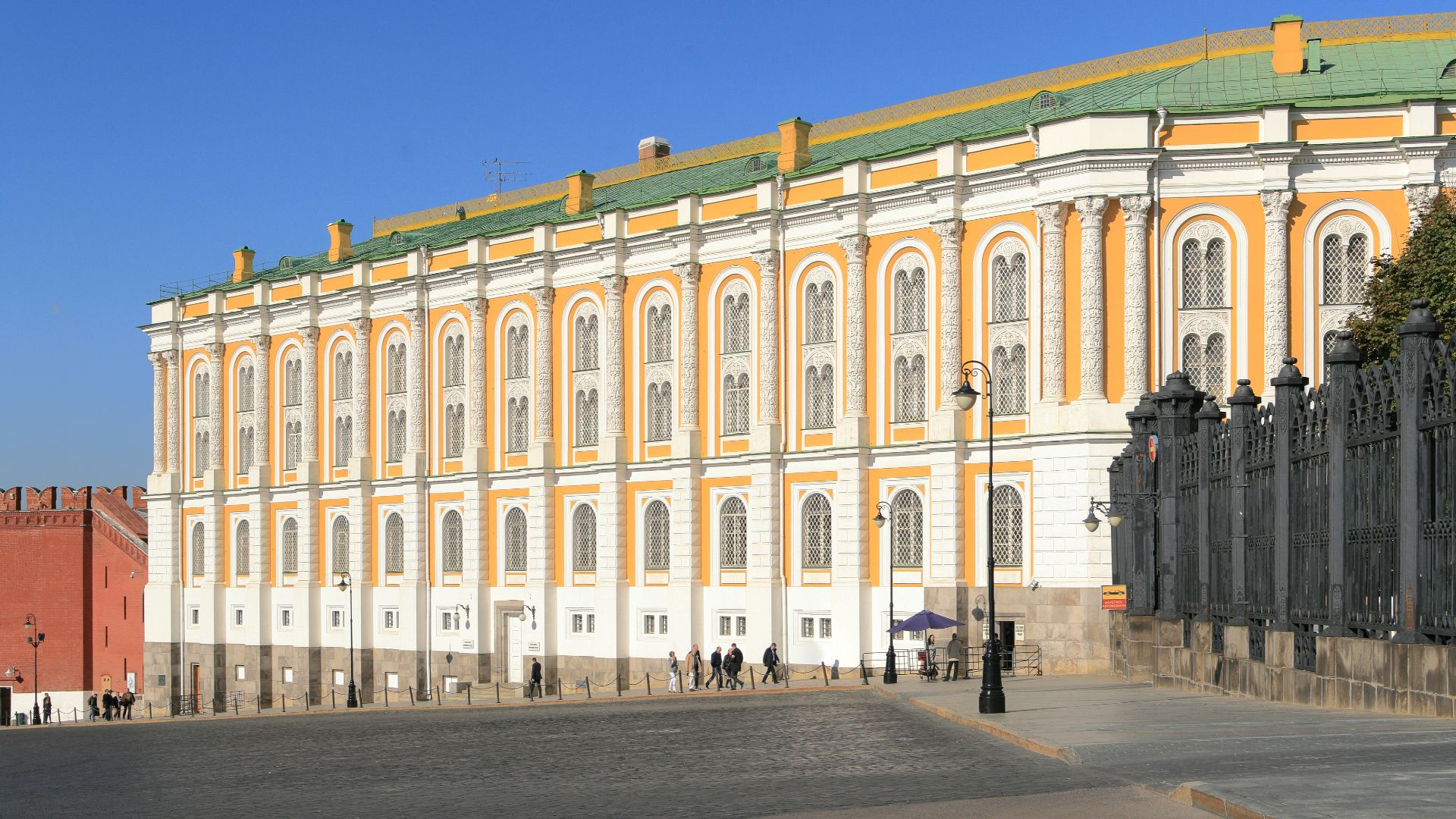
Romanov Heirs In Exile
After the revolution, surviving Romanov relatives fled across Europe. They tried to reclaim parts of their family fortune through court cases and private searches. But the Soviet government refused to return anything, claiming the jewels now belonged to the people.
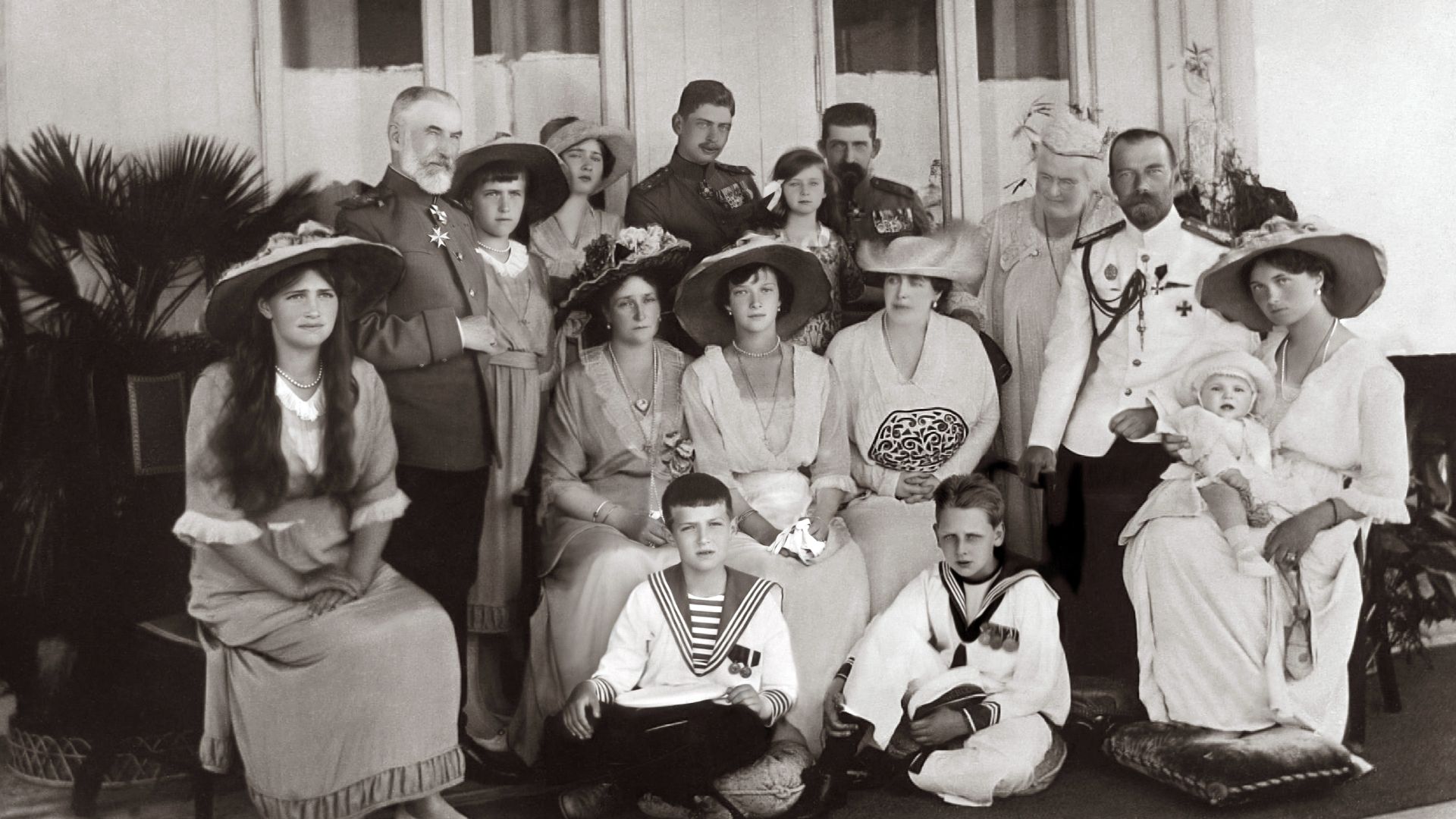 Unknown authorUnknown author, Wikimedia Commons
The Western Fascination With The Lost Jewels
The mystery of the Romanov jewels inspired countless retellings in Western culture. Films like Anastasia (1956) and The Last Czars (2019) brought their story to life by blending romance and tragedy. Additionally, exhibitions in London and New York still draw crowds eager to glimpse the surviving treasures.
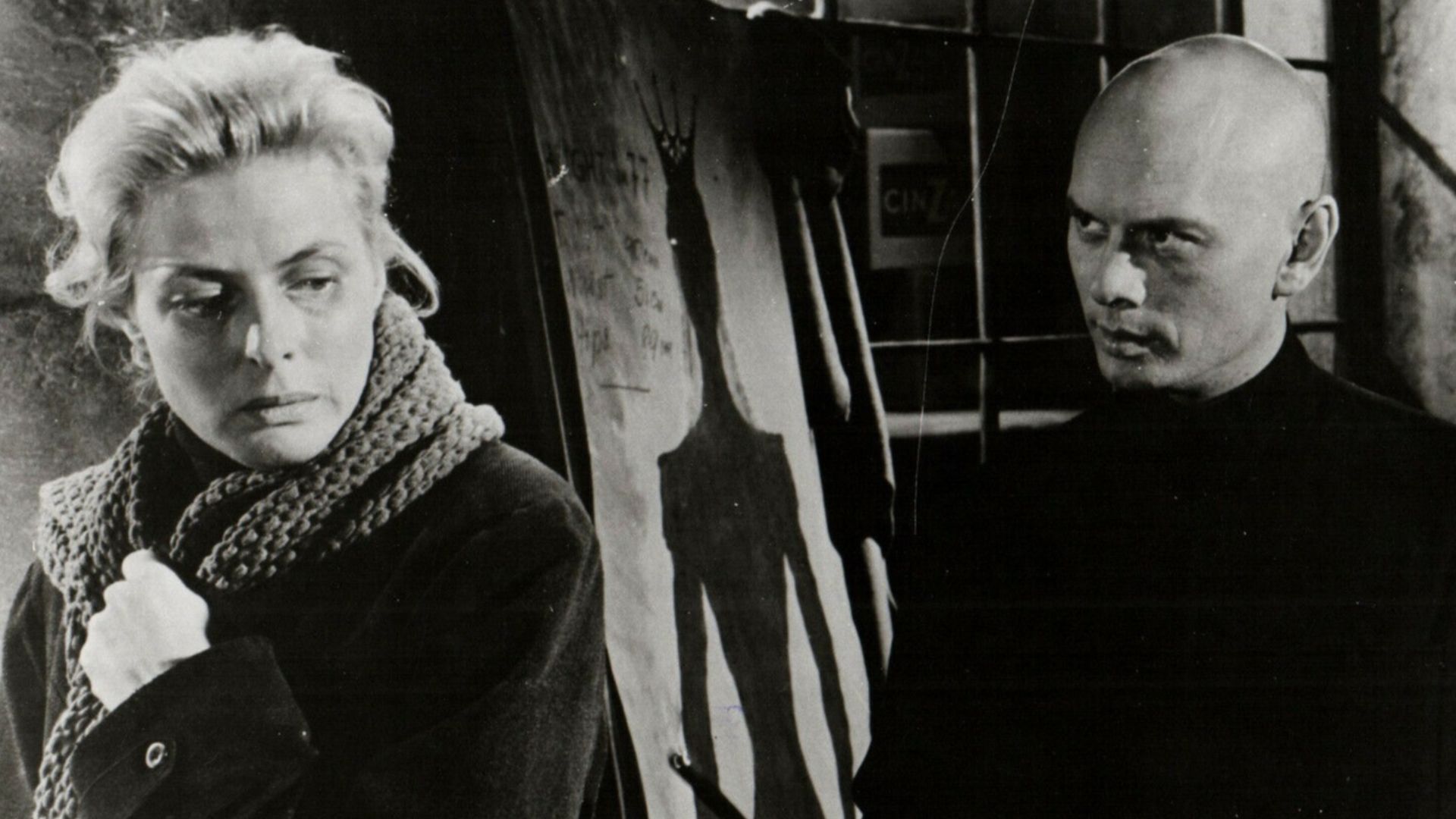 BBC Television Service, Wikimedia Commons
Rediscovered Relics Of The Romanovs
Over the years, a few real Romanov jewels reappeared in auctions or private collections. Each find sparked excitement, as experts compared old photos and designs to prove they were genuine pieces once owned by the Russian royal family.
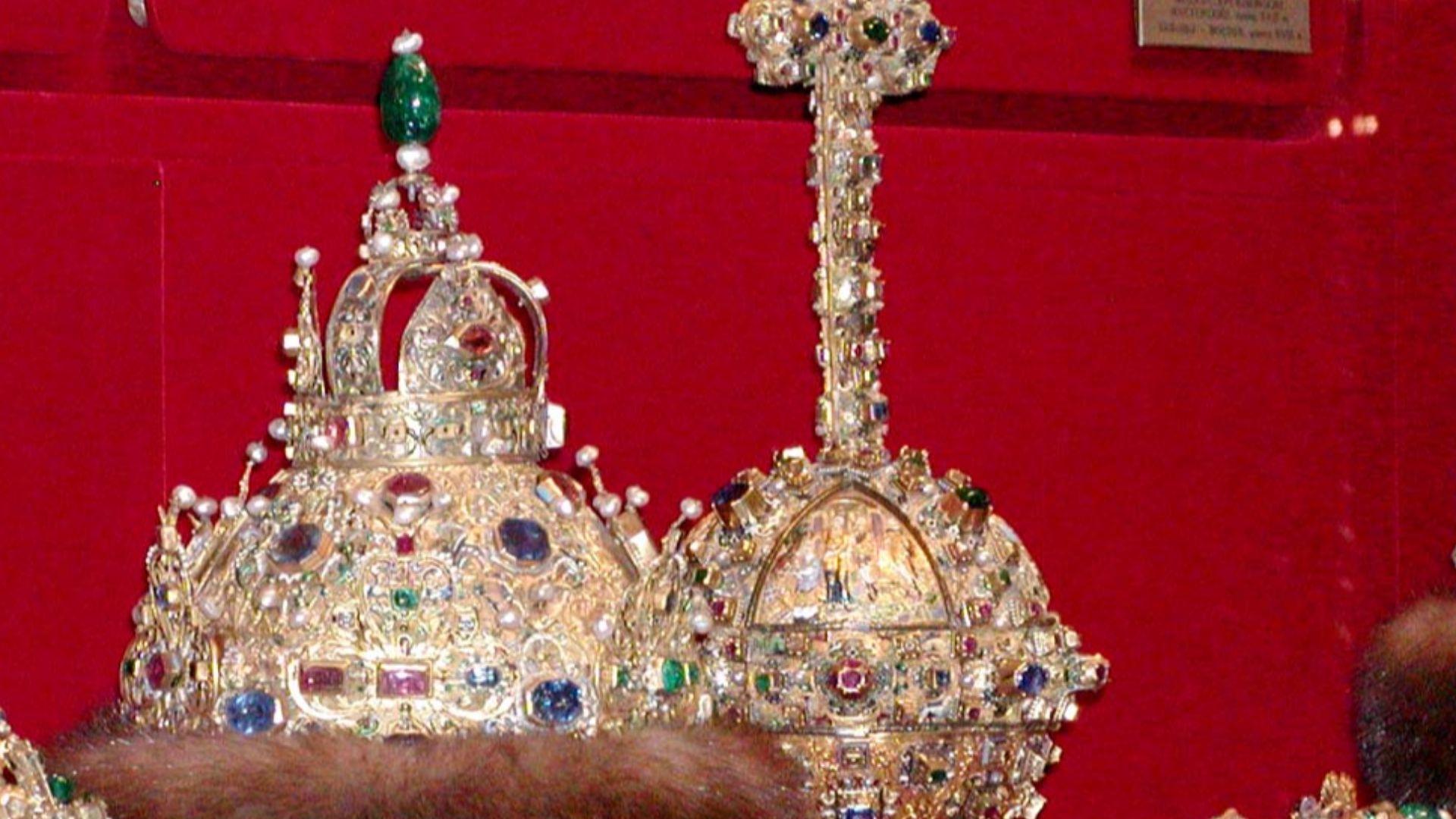 User:Stan Shebs, Wikimedia Commons
Myths, Fakes, And Forgeries
After the revolution, chaos allowed fake Romanov jewels to circulate widely. Forgers produced convincing copies that fooled collectors and even museum experts. Many imitations still exist today, and historians continue to debate which pieces are genuine royal treasures and which are clever fakes.
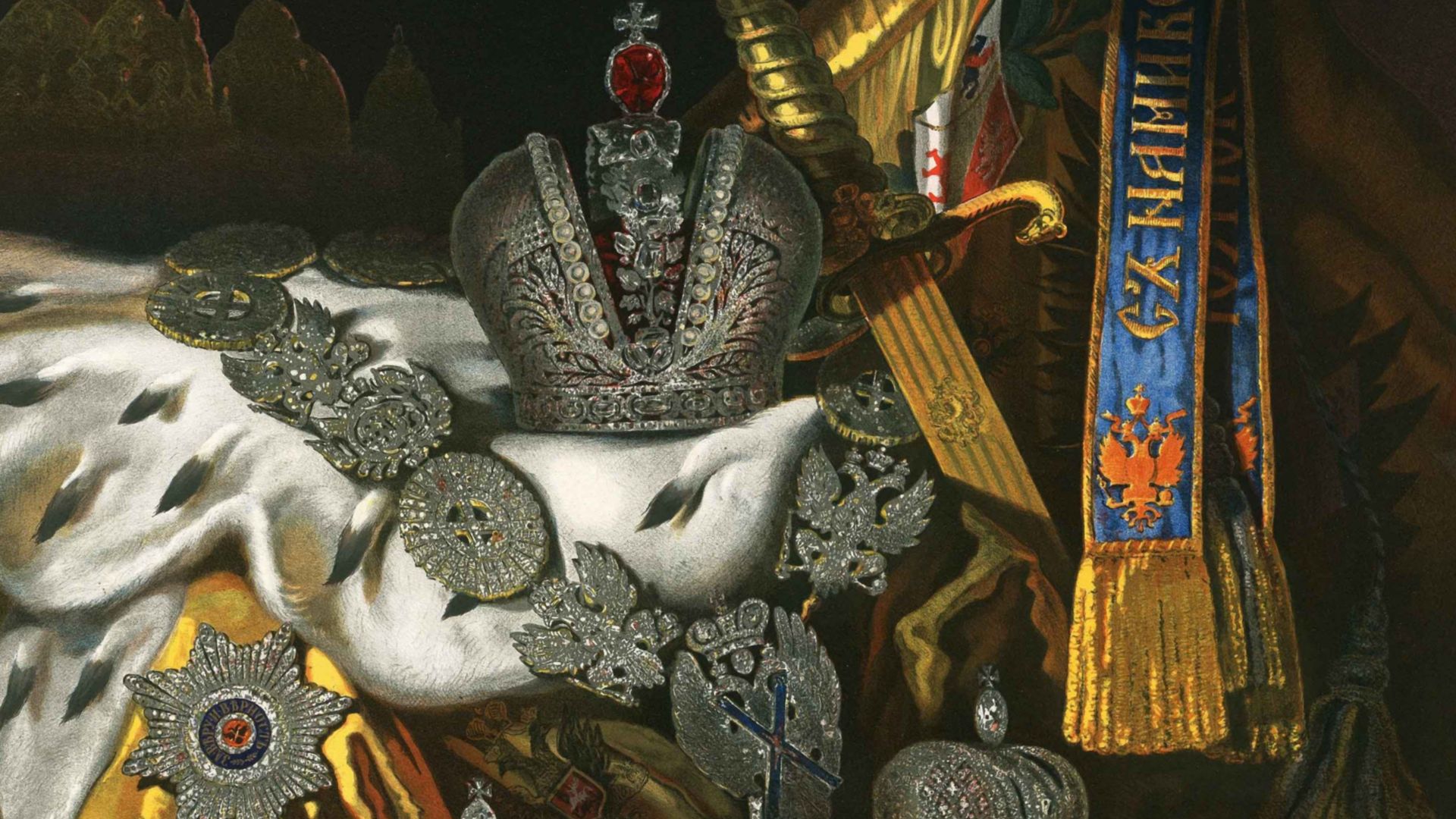
The Science Of Authentication
Modern historians trace Romanov jewels using gem analysis, metal stamps, and old photographs. These tests have confirmed the authenticity of several rediscovered items, including a sapphire brooch and diamond tiara once worn in the Winter Palace.
What The Jewels Leave Behind
The story of the Romanov jewels is more than one of wealth and loss. Each surviving gem connects the present to a vanished world of power and elegance. Though time has changed their meaning, their light still tells the story of an empire that glittered—and fell.