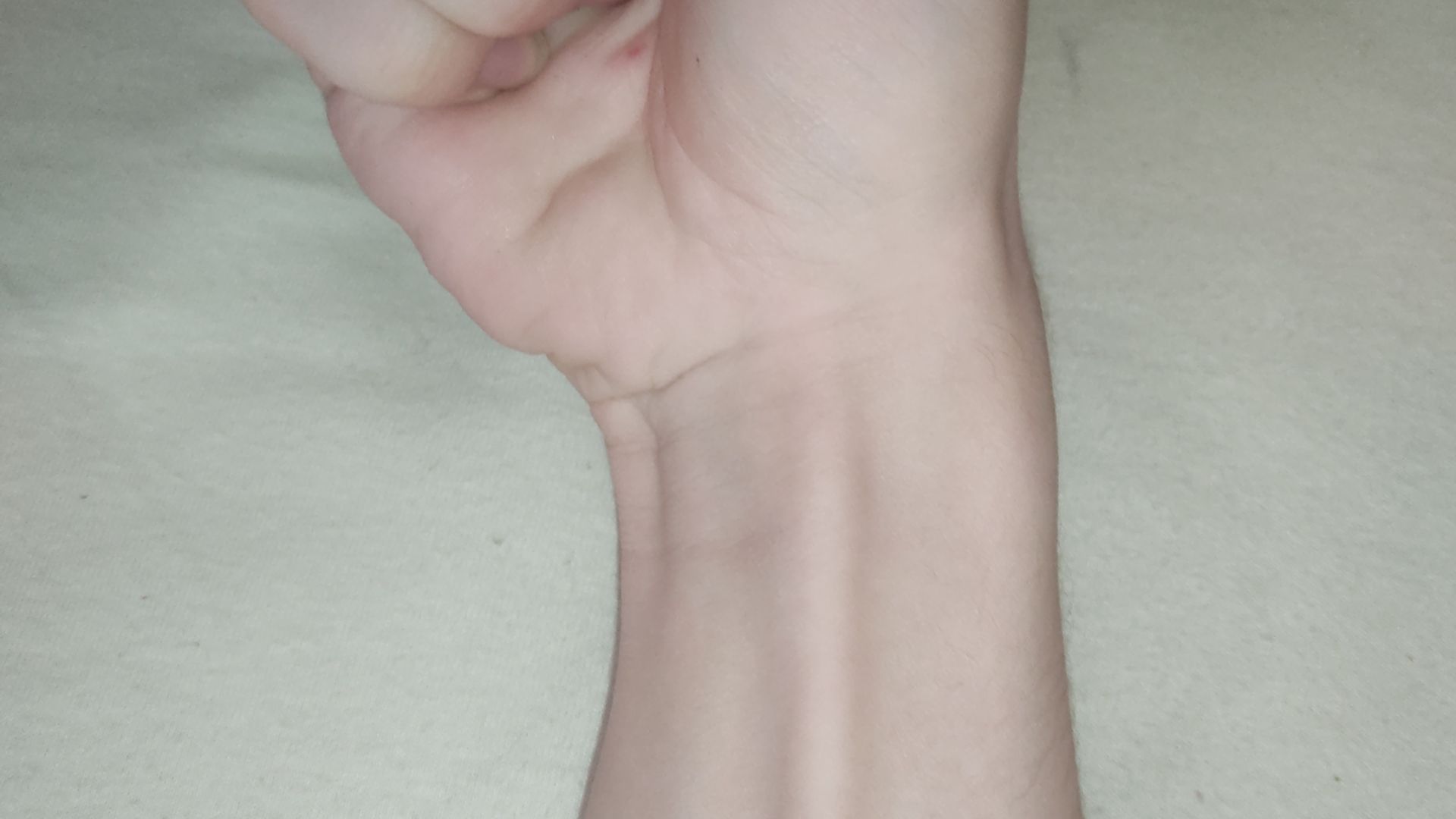

If you place your thumb and pinky together and gently flex your wrist, you might notice a thin cord rise beneath the skin of your forearm. It feels almost like a trick your body plays on you, appearing suddenly and just as easily disappearing when you relax your hand. That cord is known as the palmaris longus, a small muscle-tendon unit that has quietly puzzled anatomists for generations. For some people, it is clearly visible and easy to find. For others, there is nothing there at all. This difference can feel unsettling at first. In reality, it is one of the most ordinary examples of how variable the human body can be and still work just as well as another.
A Muscle That Time Made Optional
The palmaris longus has deep evolutionary roots, particularly when viewed through the lens of primate anatomy. In many non-human primates, especially those adapted to life in trees, this muscle plays a meaningful role in wrist flexion and sustained gripping. These movements are critical for climbing, hanging, and stabilizing the body while holding the branches. As human ancestors gradually shifted toward a terrestrial lifestyle, the mechanical demands placed on the wrist changed. Coordination took priority over raw gripping strength. Over time, the palmaris longus became less important for everyday survival.
As a result, the muscle entered a state known as relaxed selection. This means there was no longer strong evolutionary pressure either to preserve it or to eliminate it. In modern humans, the palmaris longus contributes little to measurable grip strength or dexterity. Studies published at ResearchGate consistently show that people born without it experience no functional disadvantage in daily tasks. This is why surgeons frequently remove the tendon for reconstructive procedures elsewhere in the body. Its absence does not weaken the hand or reduce endurance. Instead, it quietly demonstrates how the body can carry structures that are no longer essential, yet remain harmlessly present.
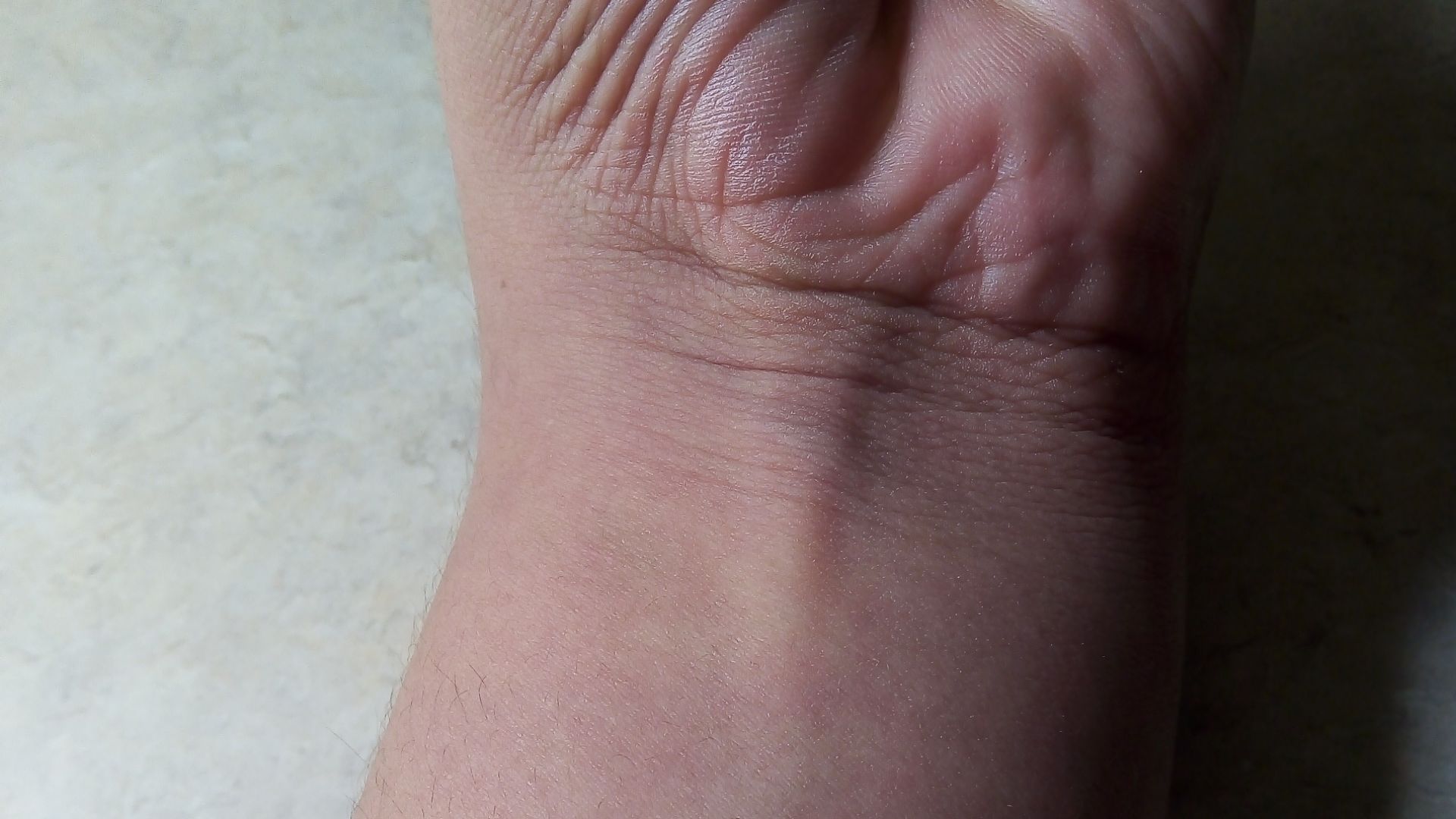 Couch-scratching-cats, Wikimedia Commons
Variation Without A Vanishing Act
Because the palmaris longus is absent in a significant portion of the population, it is often described as disappearing or as a part of evolution. However, this framing is misleading. Large anatomical searches documented on PubMed show that absence rates vary widely across populations, largely due to genetic and ethnic factors, not because the muscle is steadily fading out over time. In some groups, absence is relatively rare. In others, it is common. What matters is that these differences appear stable. There is no reliable evidence showing that the muscle is becoming less common in recent generations or that its absence is accelerating in modern humans.
This pattern is best explained by genetic polymorphism. In simple terms, a polymorphism exists when a species carries multiple versions of a trait without any impact on survival or reproduction. Once the palmaris longus lost its functional importance, natural selection no longer favored uniformity. Random genetic drift allowed that variation to persist. Crucially, this unfolds over long evolutionary timescales and does not signal an active, directional change across a few generations. The muscle is optional. Its presence or absence reflects inherited variation, not a slow march toward disappearance.
Redefining The Anatomical Norm
One lesser-known feature of the palmaris longus is how inconsistently it develops, even within the same human. It is not uncommon for the muscle to be present in one forearm and absent in the other, a phenomenon known as unilateral absence. This asymmetry reflects the muscle’s relatively weak developmental constraint compared to essential forearm flexors. While detailed timelines of individual muscle formation are limited, developmental research suggests that the palmaris longus differentiates less consistently than neighboring muscles, making its formation more susceptible to variation. Importantly, unilateral or bilateral absence has no measurable effect on grip strength or coordination, reinforcing that the muscle is not essential to core hand mechanics.