Ancient Greece In The Seventh Century BC
Nearly 2,700 years ago, Greece stood at a turning point. Old monarchies were fading, and powerful families began shaping public life. Even in death, burial customs reflected wealth, honor, and family reputation.
Where The Burial Was Found
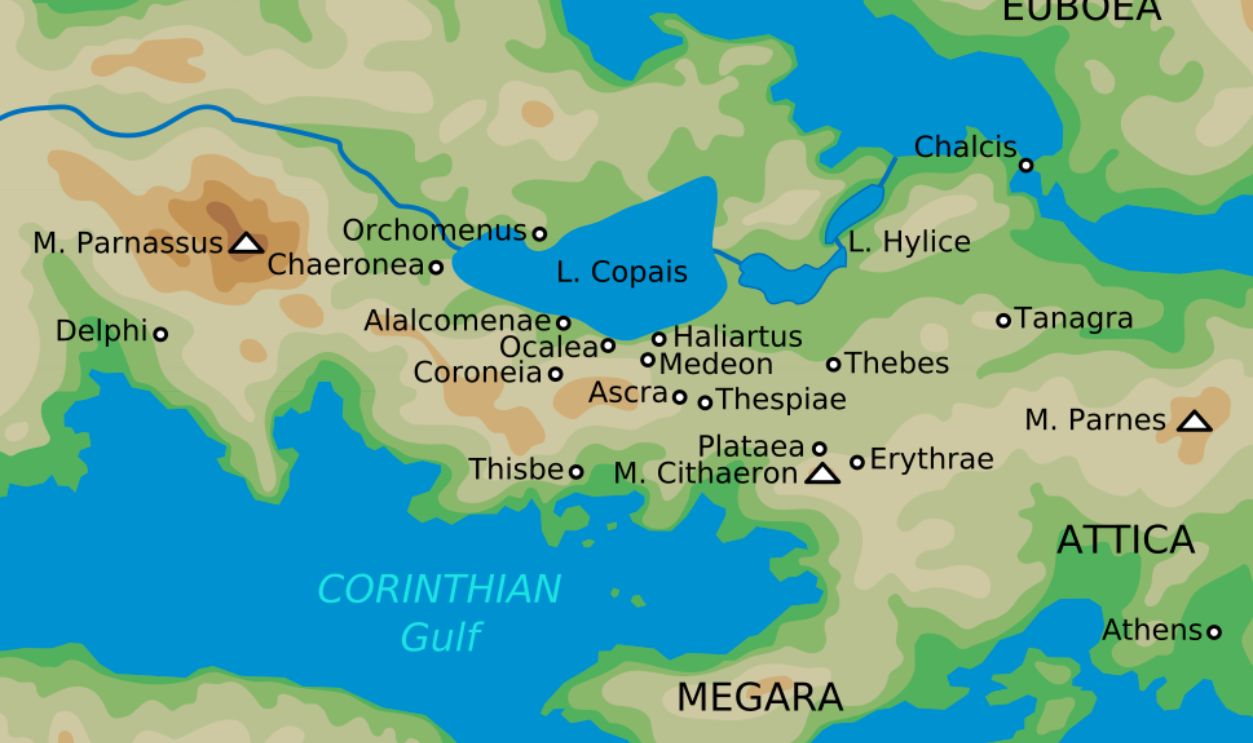
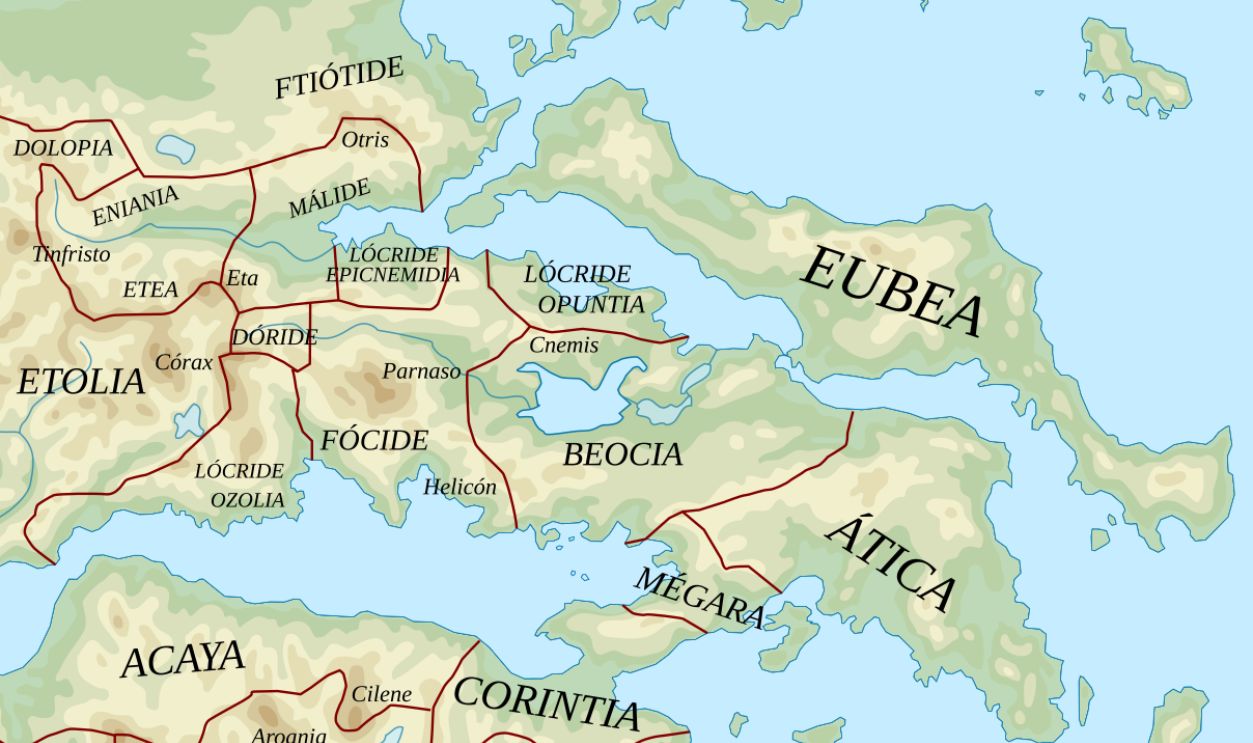
Within this changing world, Boeotia occupied a valuable position in central Greece. Fertile land supported agriculture, while nearby routes encouraged trade and movement. These conditions allowed communities to prosper and gave elite families the resources needed to maintain power and influence.

Life In Archaic Boeotia
Because status mattered deeply, everyday life followed strict social rules. Family background determined privilege and public respect. The same values extended to the dead. Funerals served as public expressions, using ritual and objects to communicate a person’s standing within the community.
 User:Petrouchka, Wikimedia Commons
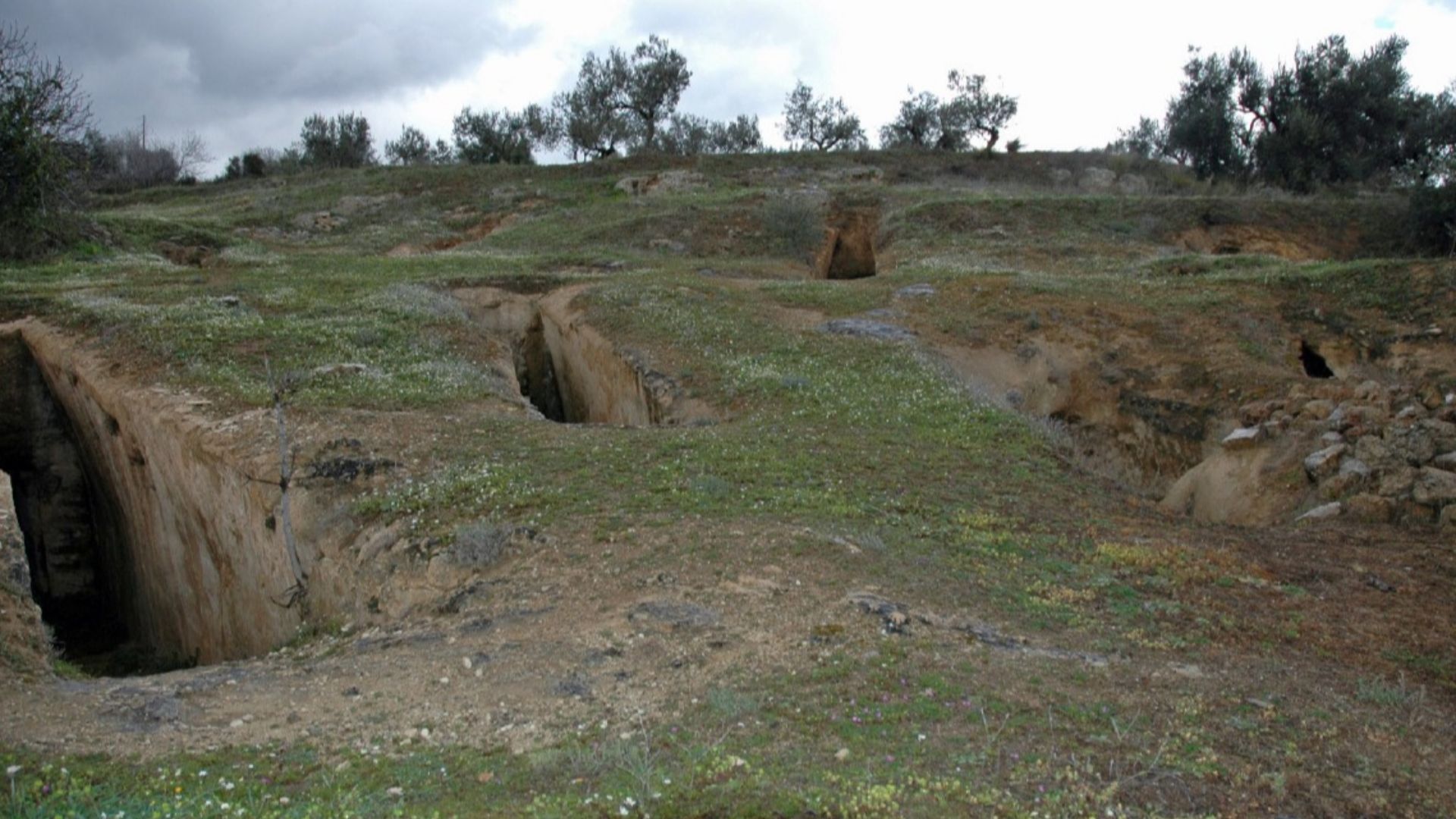
A Cemetery Used By The Elite
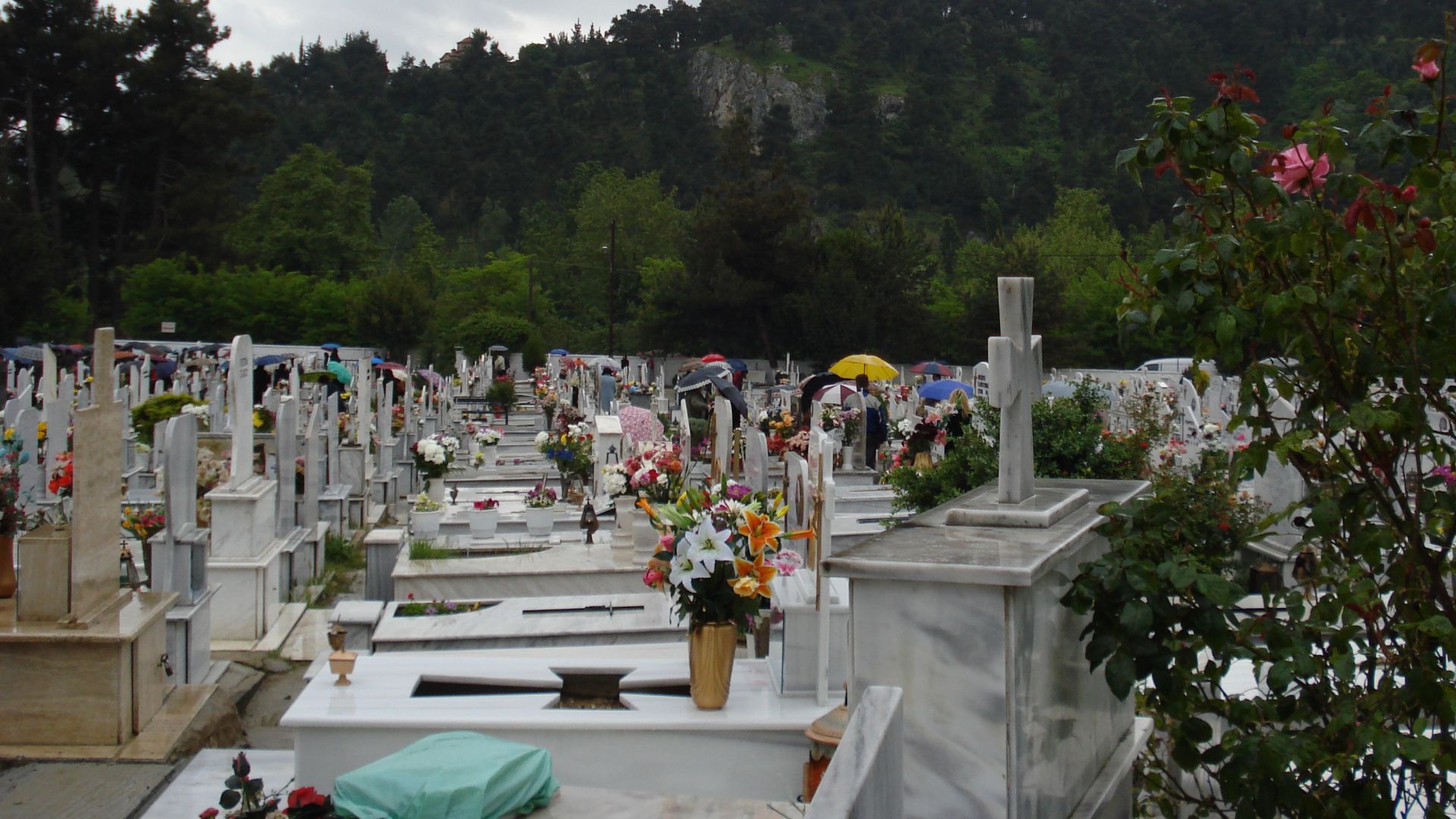
As a result, burial spaces carried meaning. This cemetery served wealthy families rather than ordinary residents. Graves contained valuable items and followed a planned layout. The site reflects deliberate choices meant to preserve status, memory, and family identity across generations.
How The Tomb Came To Light
The discovery began with plans for modern construction in central Greece. Greek law requires archaeological surveys before building, so specialists examined the land. What first appeared routine soon revealed an elite burial, setting the stage for a discovery that would challenge expectations.
 MinisterForBadTimes, Wikimedia Commons
Who Is Excavating The Site
The Greek Ministry of Culture leads the excavation as the legal authority over ancient remains, so regional archaeologists carried out the work under national heritage laws. Their involvement ensured the burial received protection, accurate recording, and proper treatment from the moment it was uncovered.

Tools And Techniques In Archaeology
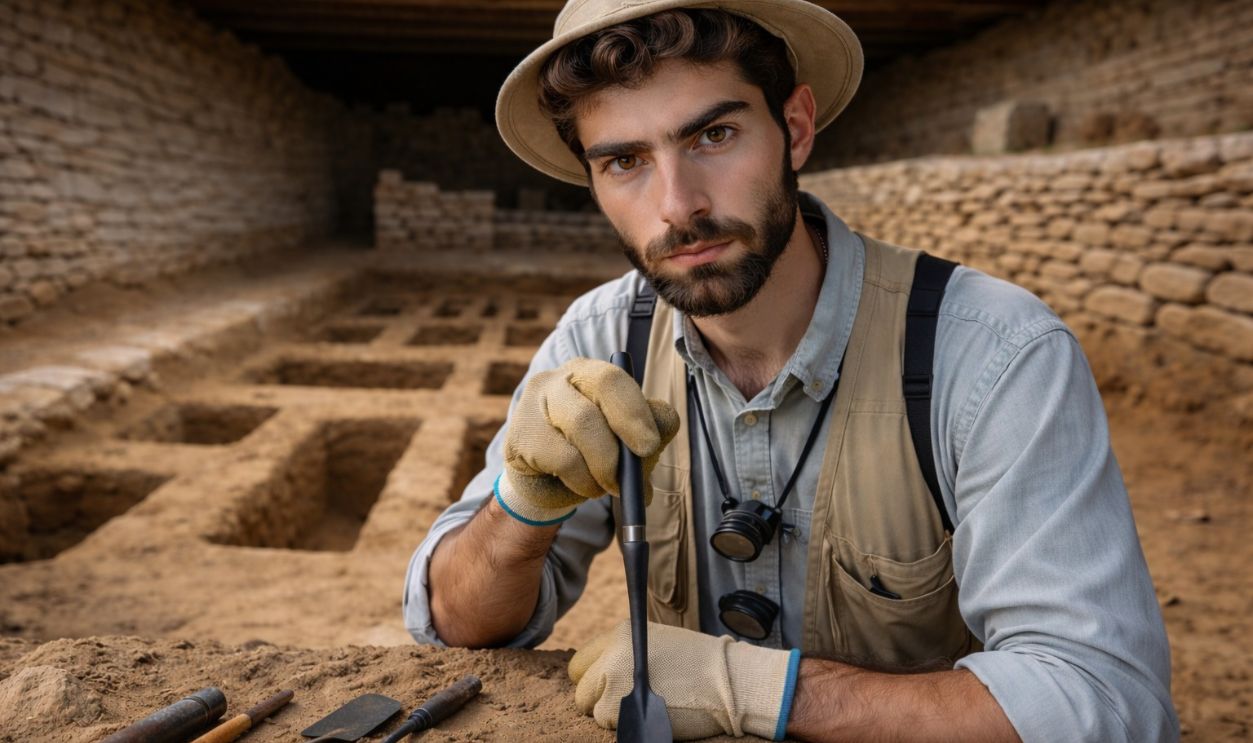
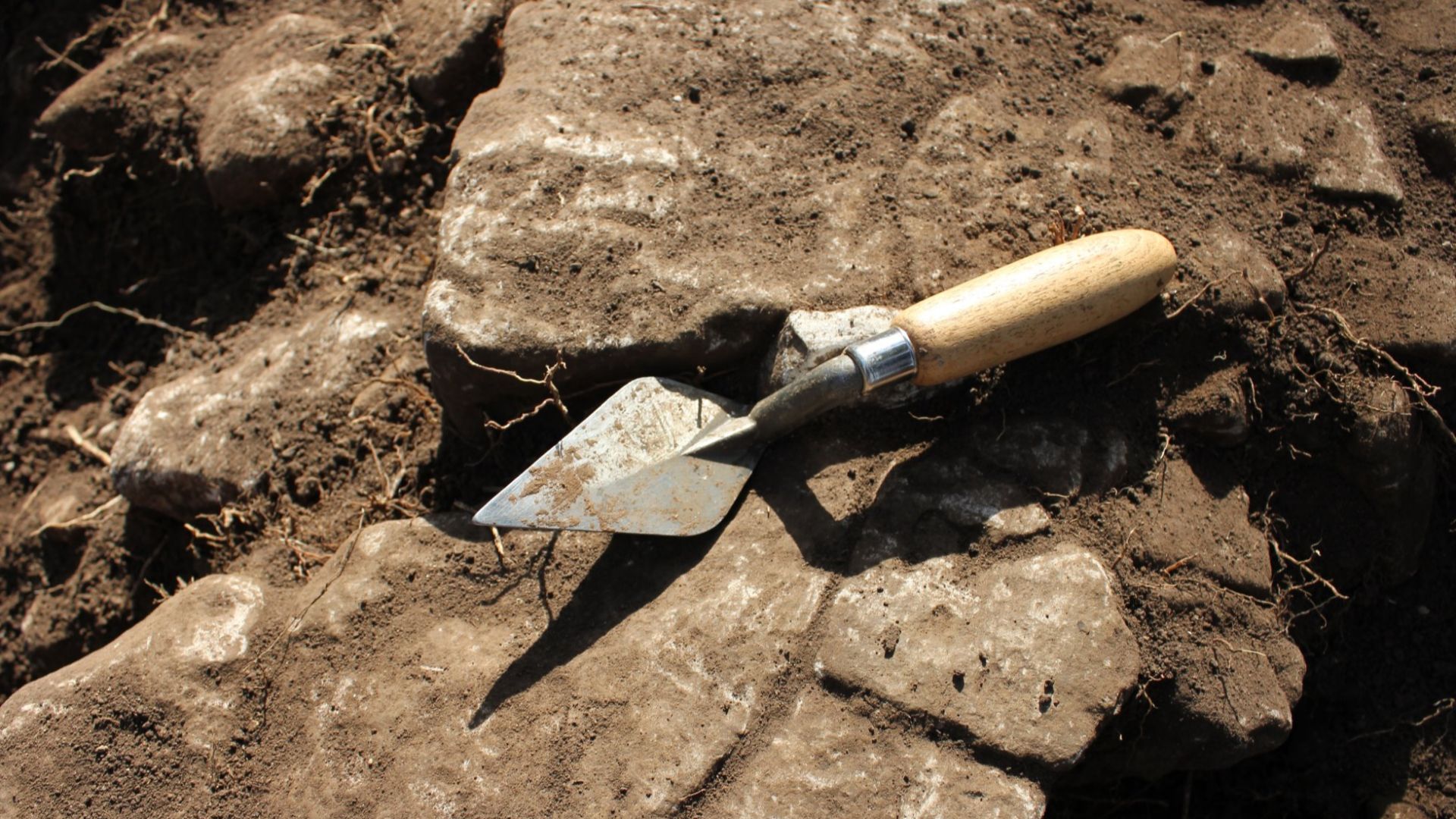
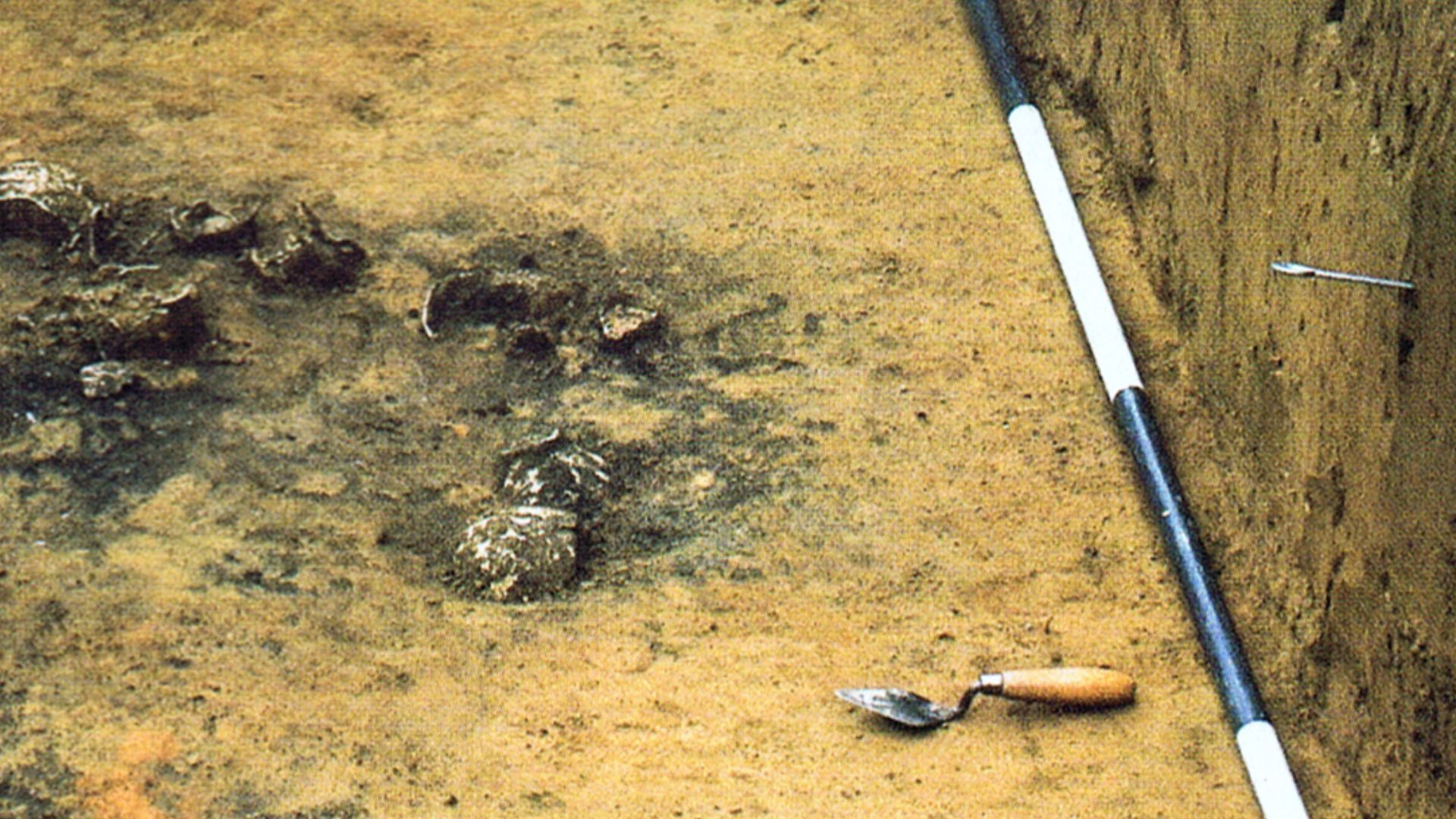
The fragile nature of the burial required careful excavation methods. Archaeologists used small hand tools instead of machines and measured and recorded object positions. Drawings and photographs preserved the layout, while Soil layers showed the order of burial events and helped explain how the grave was prepared.
 HeritageDaily, Wikimedia Commons
Understanding Pit Graves
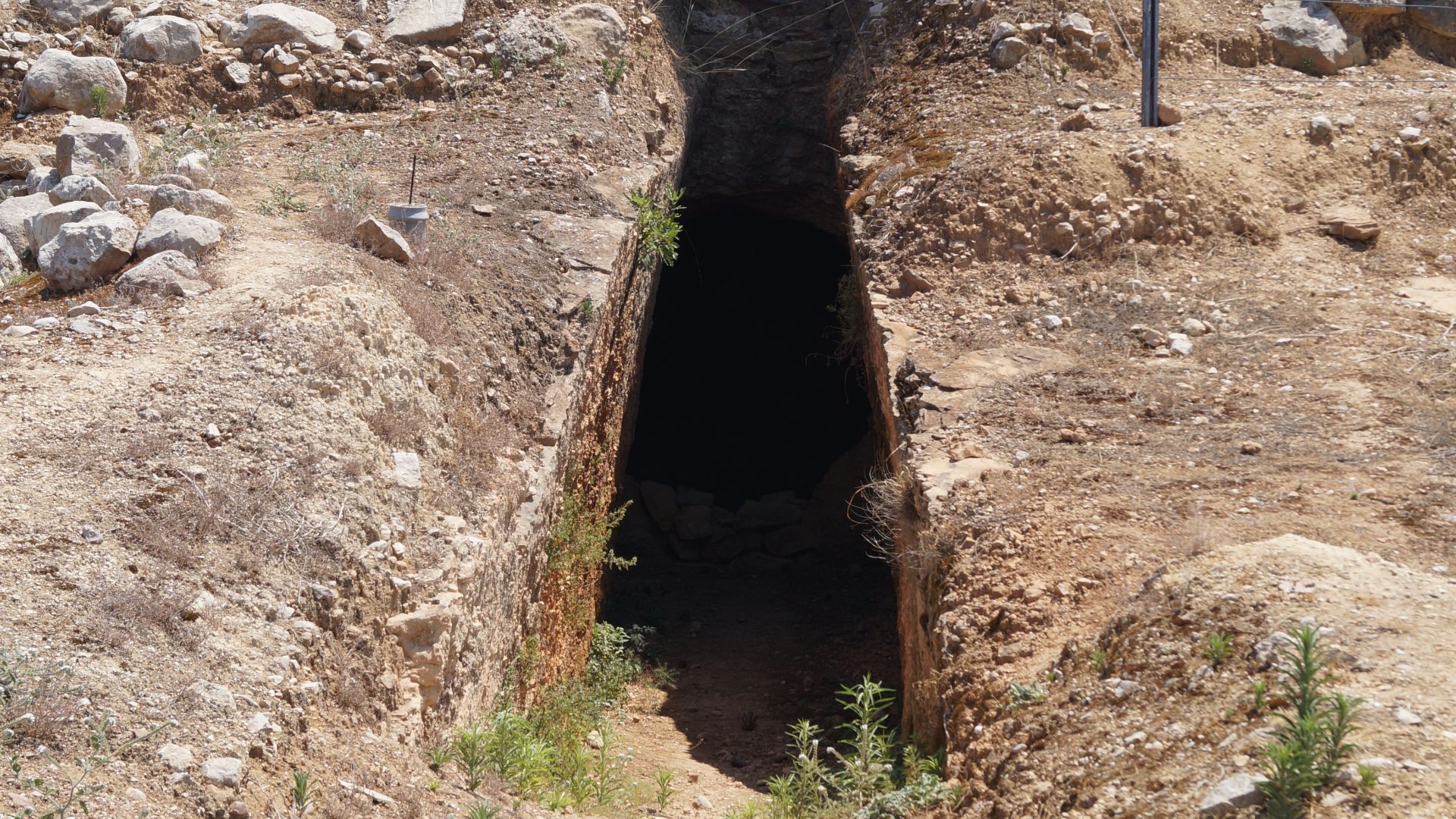
Within this context, the burial takes the form of a pit grave carved directly into the earth. Unlike stone-built tombs, meaning came from placement and objects. During the Archaic period, elite families often used such graves to express identity and rank.
Dating The Burials
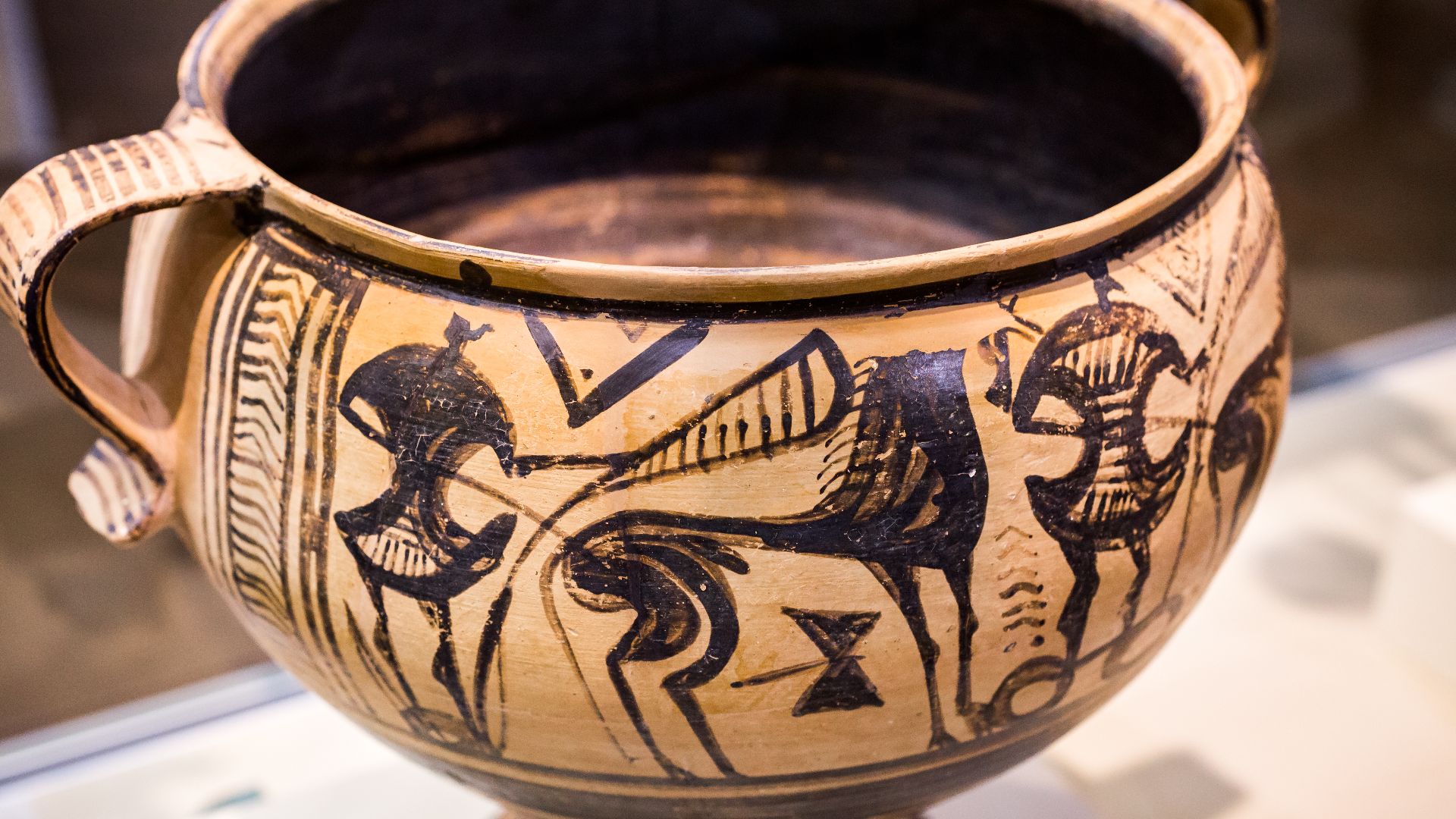
To establish age, archaeologists compared pottery styles, metalwork, and burial customs with known examples. These elements align with the seventh century BC. This dating places the burial within a period marked by political change and shifting social structures across Greece.
 ArchaiOptix, Wikimedia Commons

History's most fascinating stories and darkest secrets, delivered to your inbox daily.
First Glimpse Of The Burial
Once the grave reached full exposure, the remains of an adult woman appeared carefully arranged within the pit. Valuable objects surrounded her body. Near her head, one unexpected item drew immediate attention and challenged familiar patterns of elite Greek burial practice.
 Hartmann Linge, Wikimedia Commons
What Is A Diadem
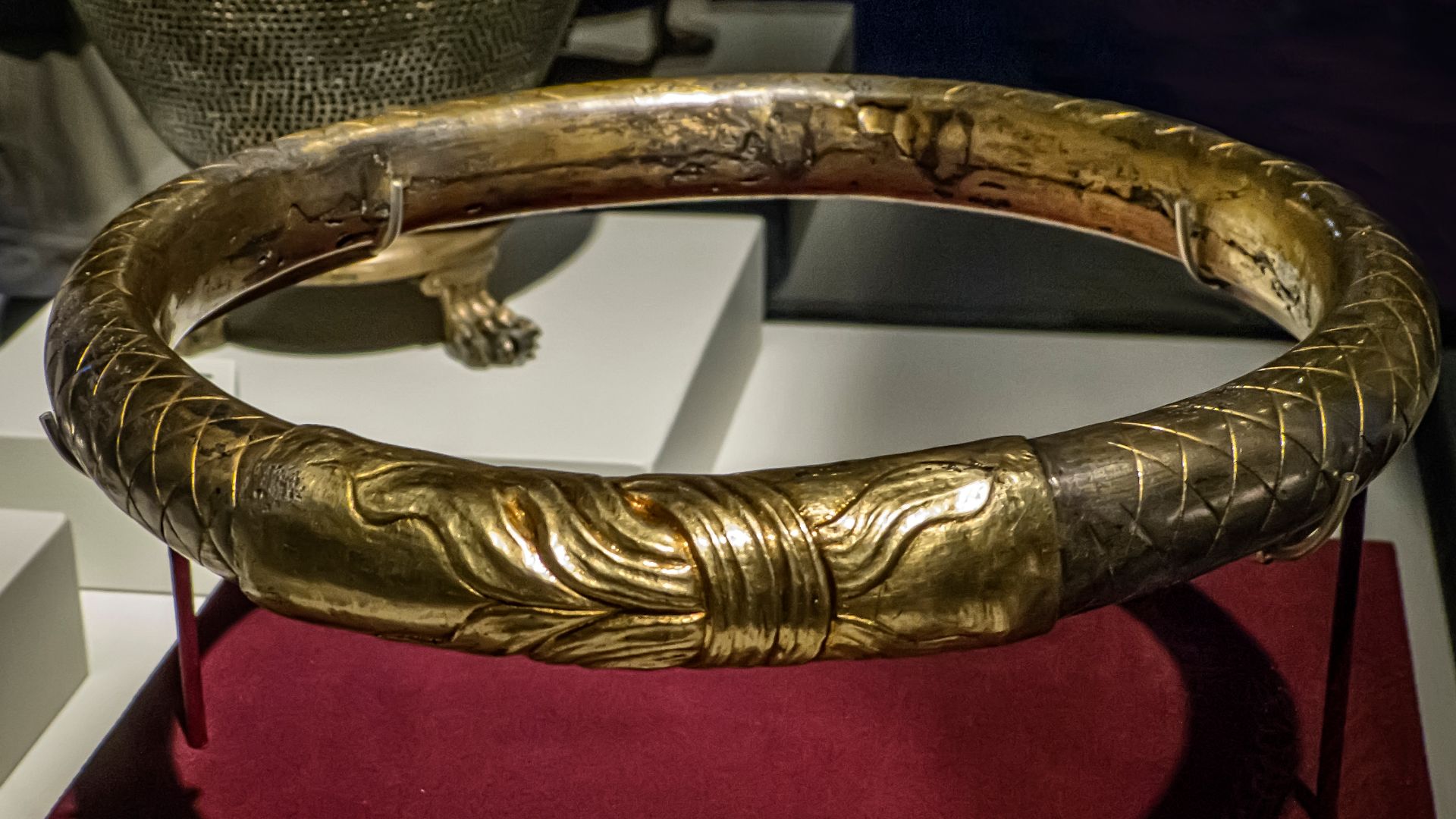
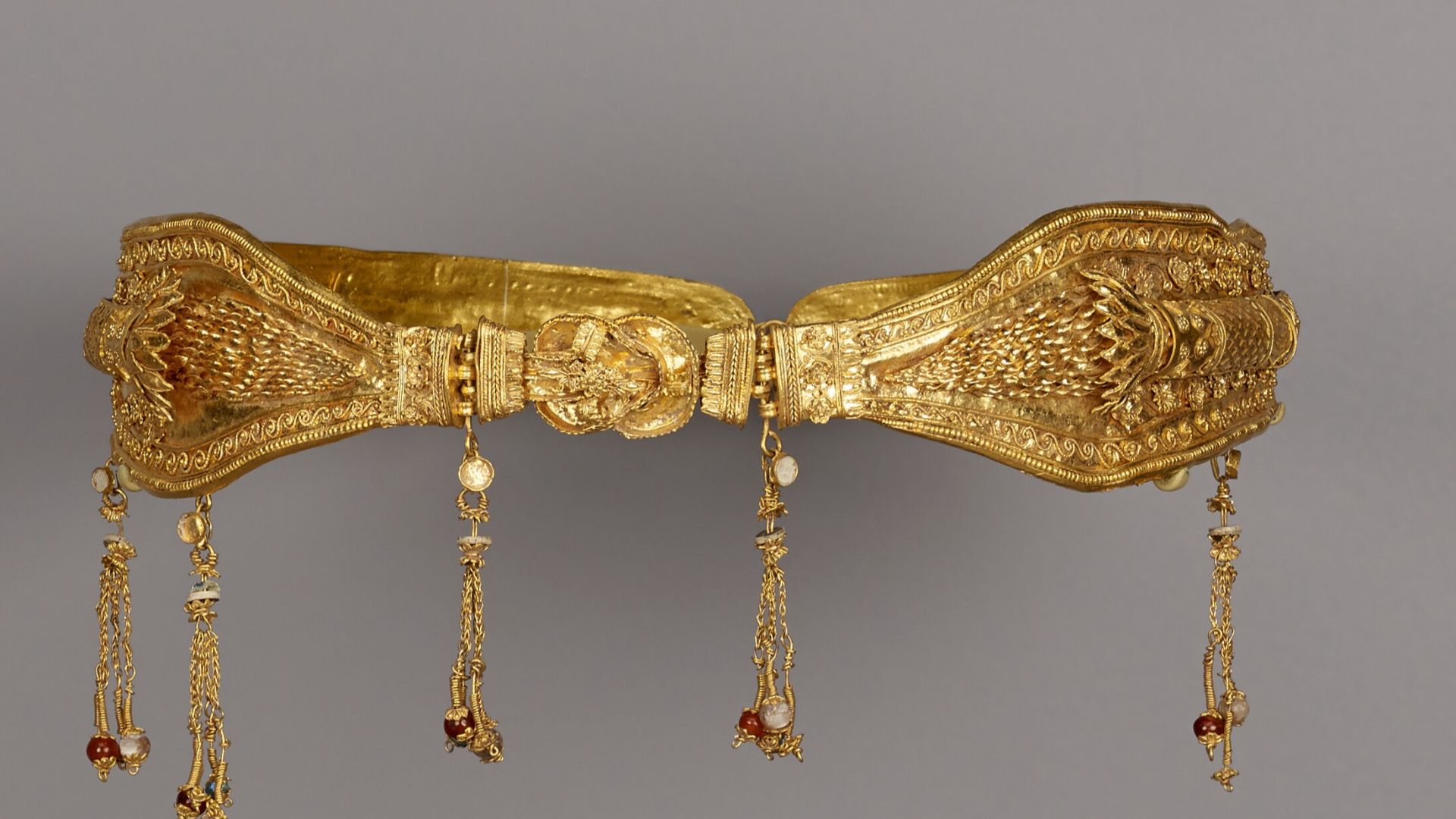
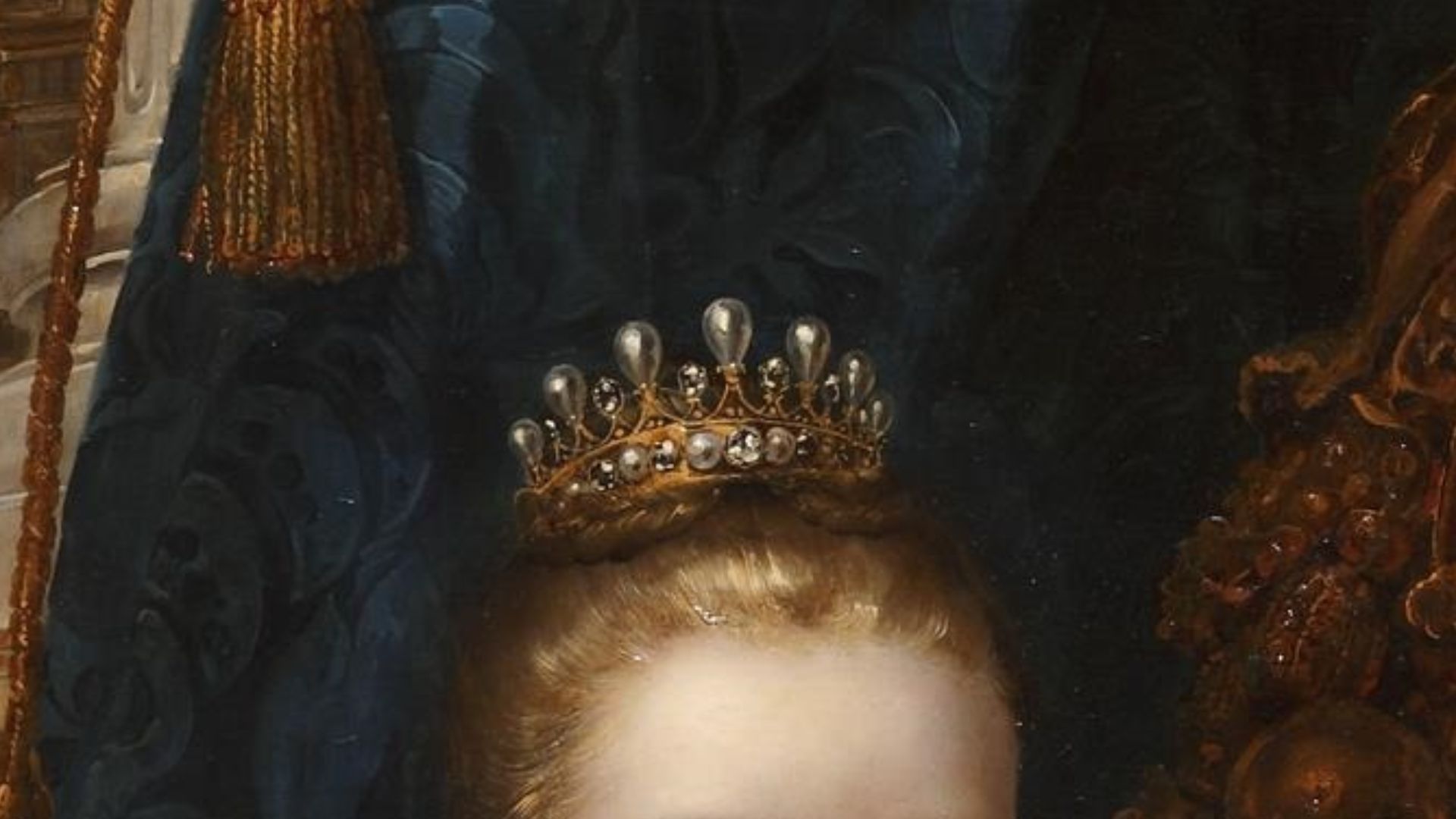
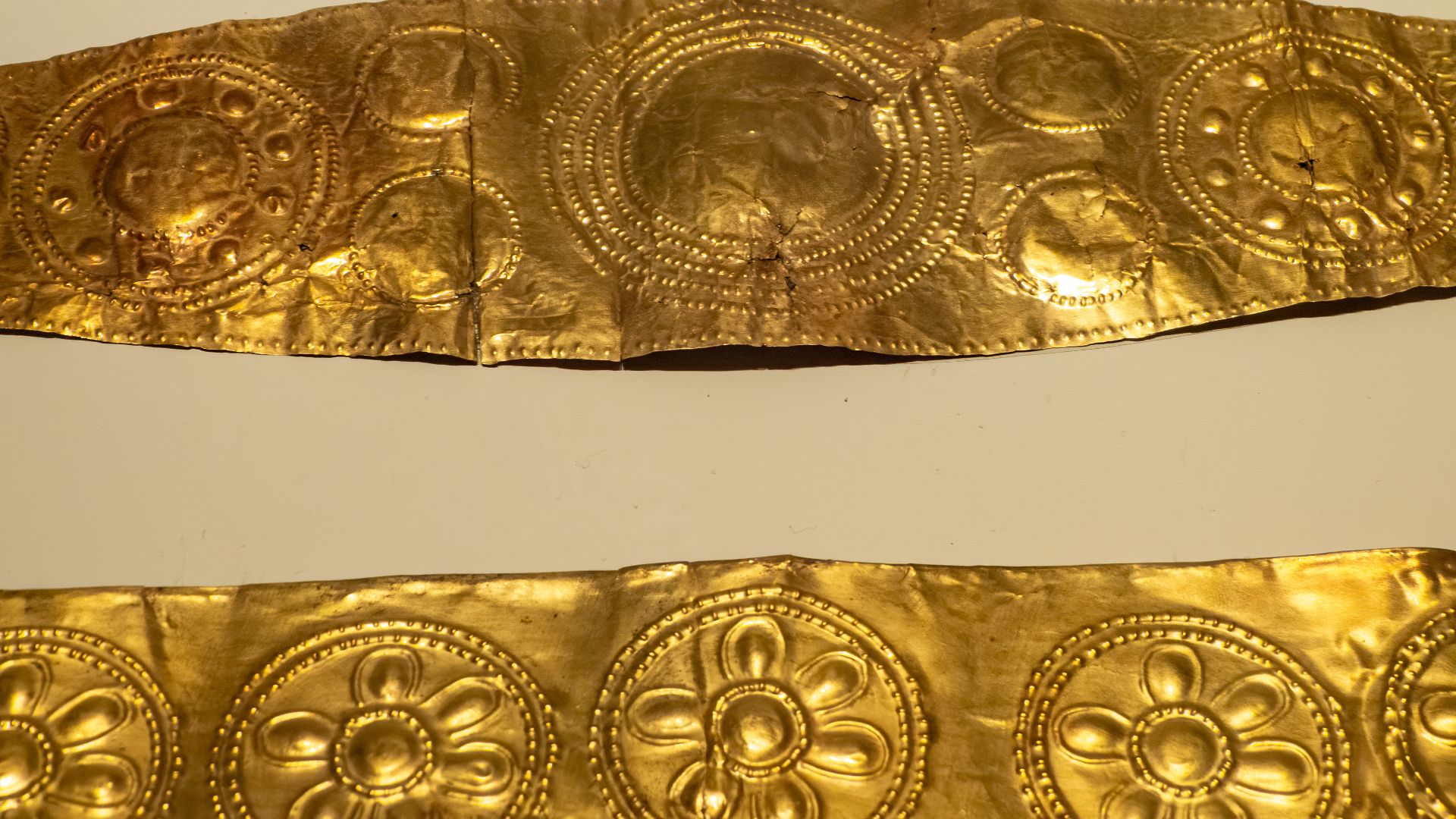
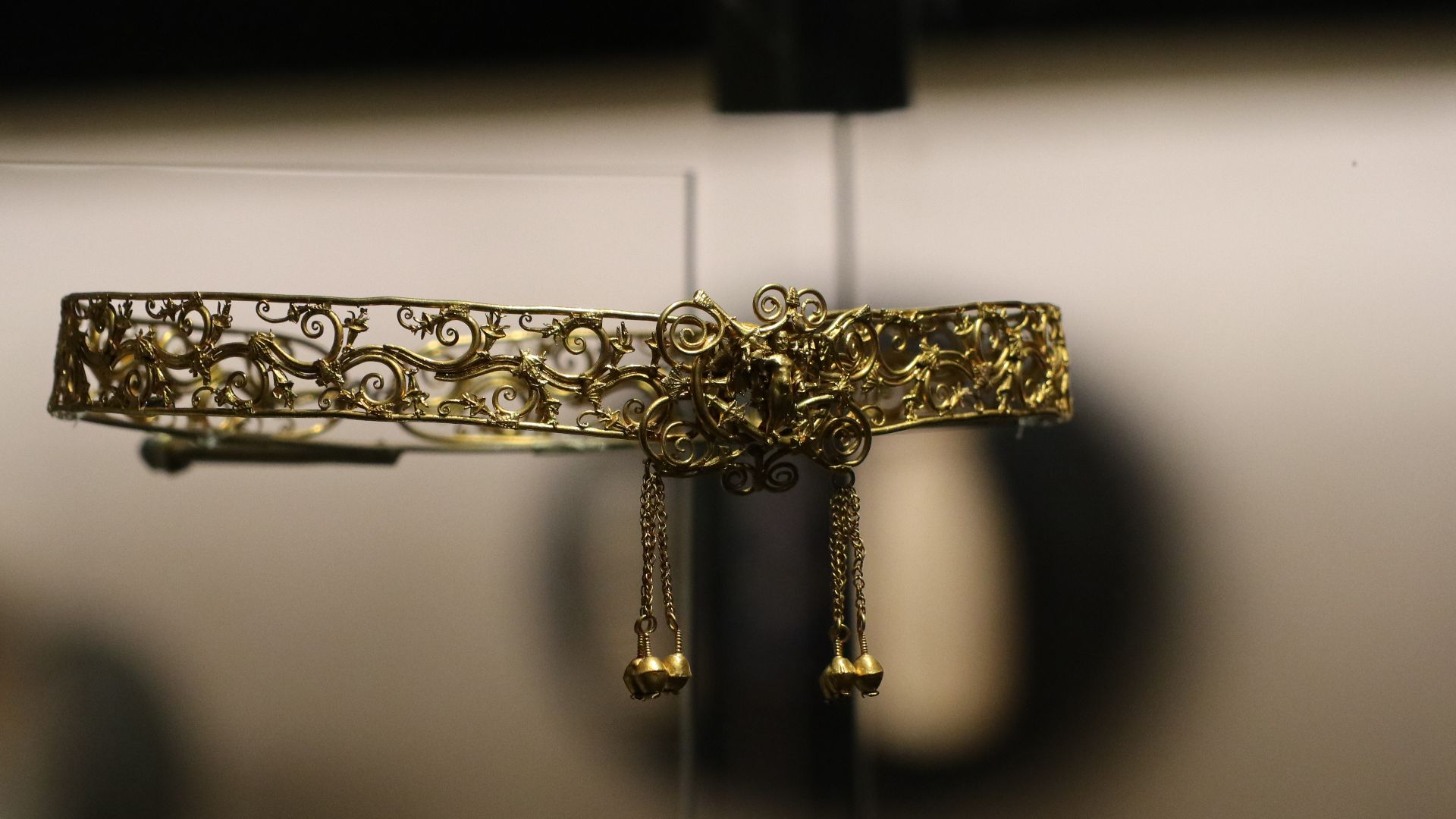
At the center of this burial lies a diadem, a type of crown worn by elite figures in ancient Greece. Diadems symbolized authority, lineage, and honor. They often appeared in art and ritual, marking individuals connected to power or noble families.
 Mary Harrsch, Wikimedia Commons
The Unusual Inverted Placement
What makes this burial exceptional is how the diadem was placed. Instead of resting upright, it lay upside down near the woman’s head. Archaeologists consider this highly unusual, since crowns typically reinforced status rather than contradict it within traditional Greek funerary customs.
 J. Paul Getty Museum, Wikimedia Commons
Symbolism Of The Rosette And Lions
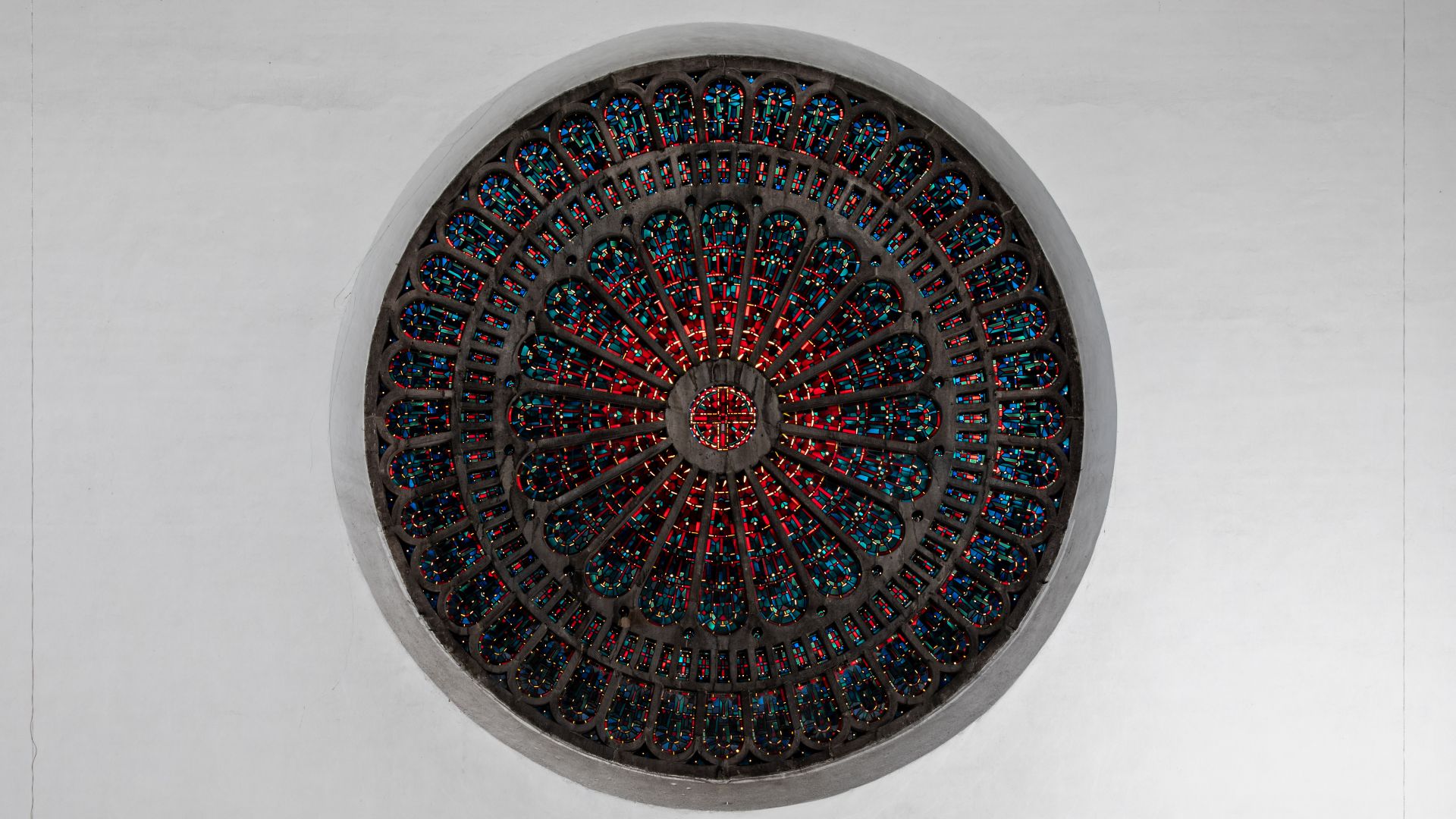
The diadem itself carries meaning through its design. Decorative rosettes symbolized life and continuity, while lions represented strength and authority. Such imagery often appeared in elite contexts. Together, these symbols suggest the woman once held significant social or political importance.
 Dietmar Rabich, Wikimedia Commons
Grave Goods Around Her Body
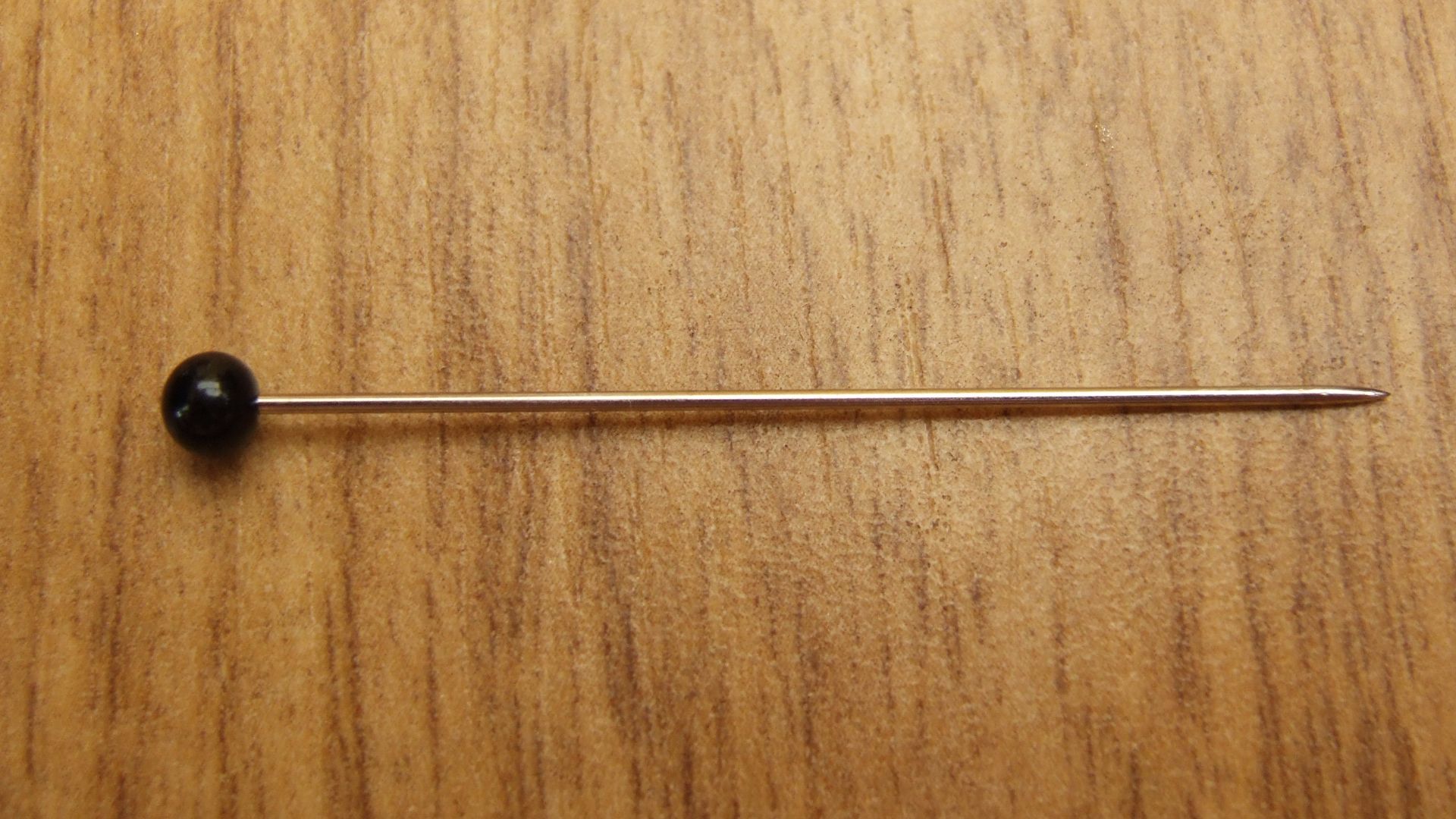
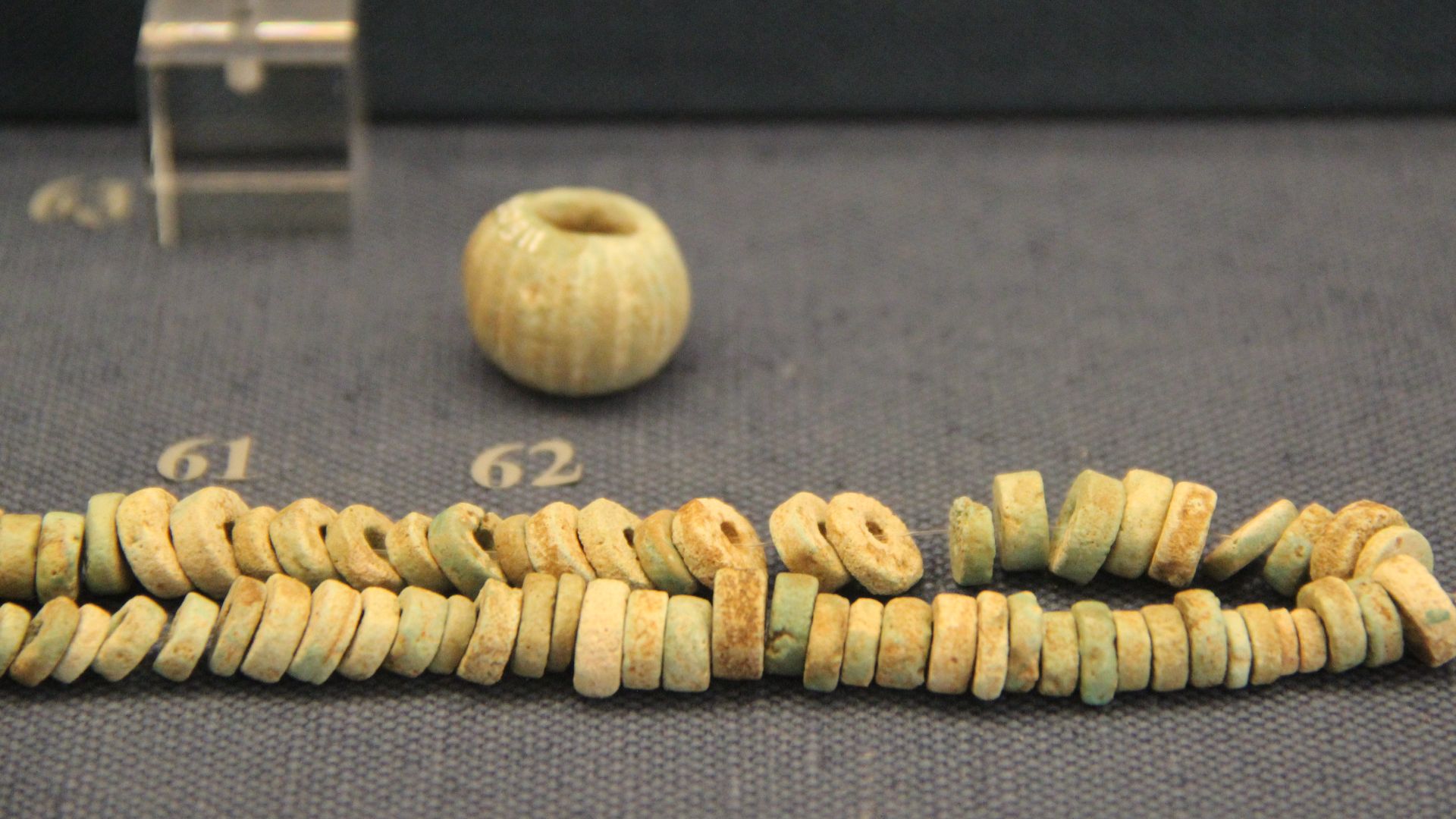
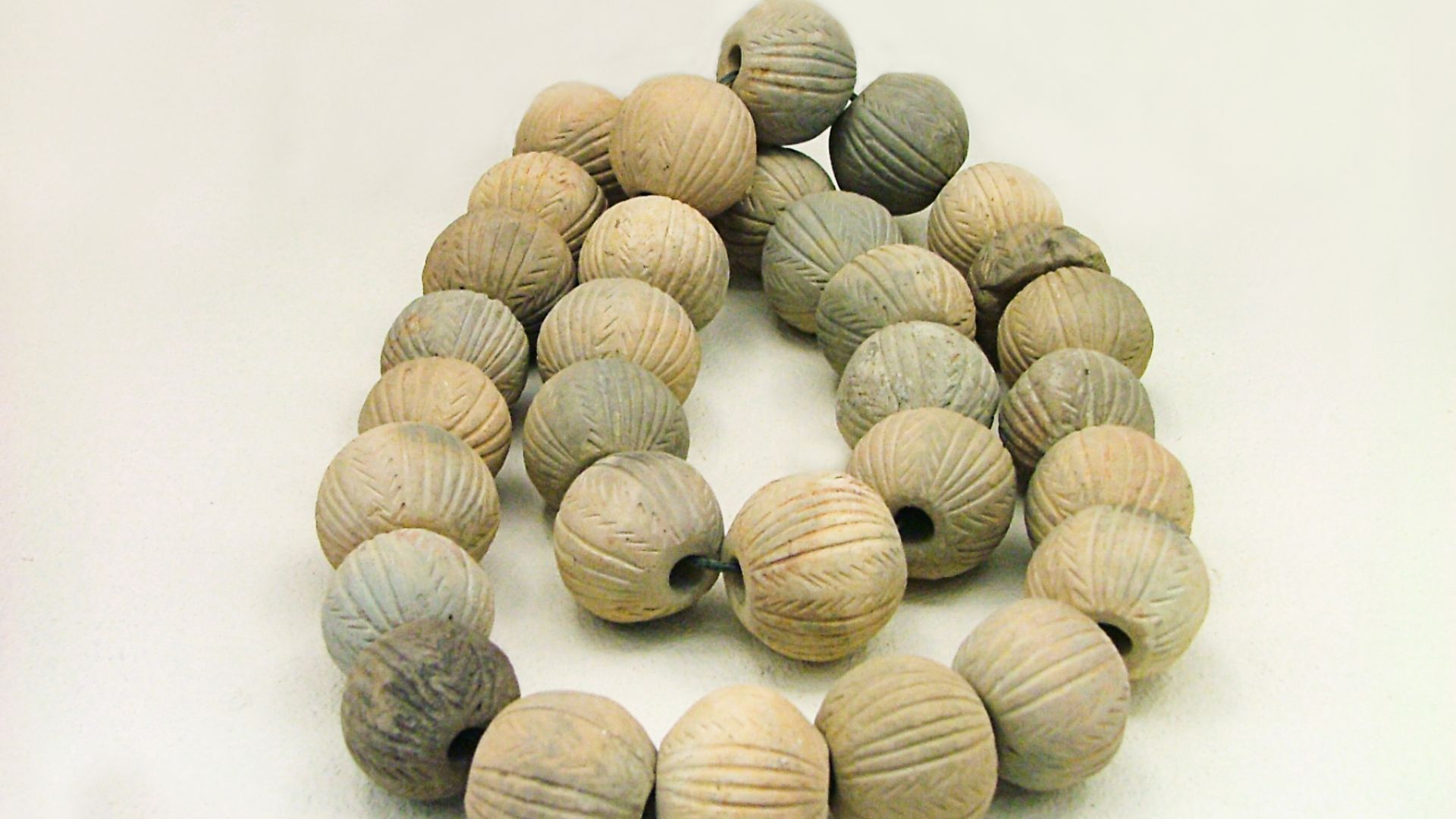
Beyond the diadem, the grave contained jewelry, metal pins, beads, and decorative items. These objects surrounded the body in deliberate positions. Each item reflected wealth and access to skilled workmanship, reinforcing that this burial belonged to someone of high social rank.
 Midnight Today, Wikimedia Commons
Interpreting Wealth And Status
Taken together, the objects point to an elite identity. The quality and variety of items suggest strong family resources and social connections. At the same time, the inverted diadem complicates that picture by hinting at change or an altered status at the end of their life.
 Gary Todd from Xinzheng, China, Wikimedia Commons
The Child’s Burial
Not far from the woman’s grave, archaeologists uncovered the burial of a young child, about four years old. The child was laid to rest with a small diadem. Such an object rarely appears in children’s graves, immediately raising questions about family and status.
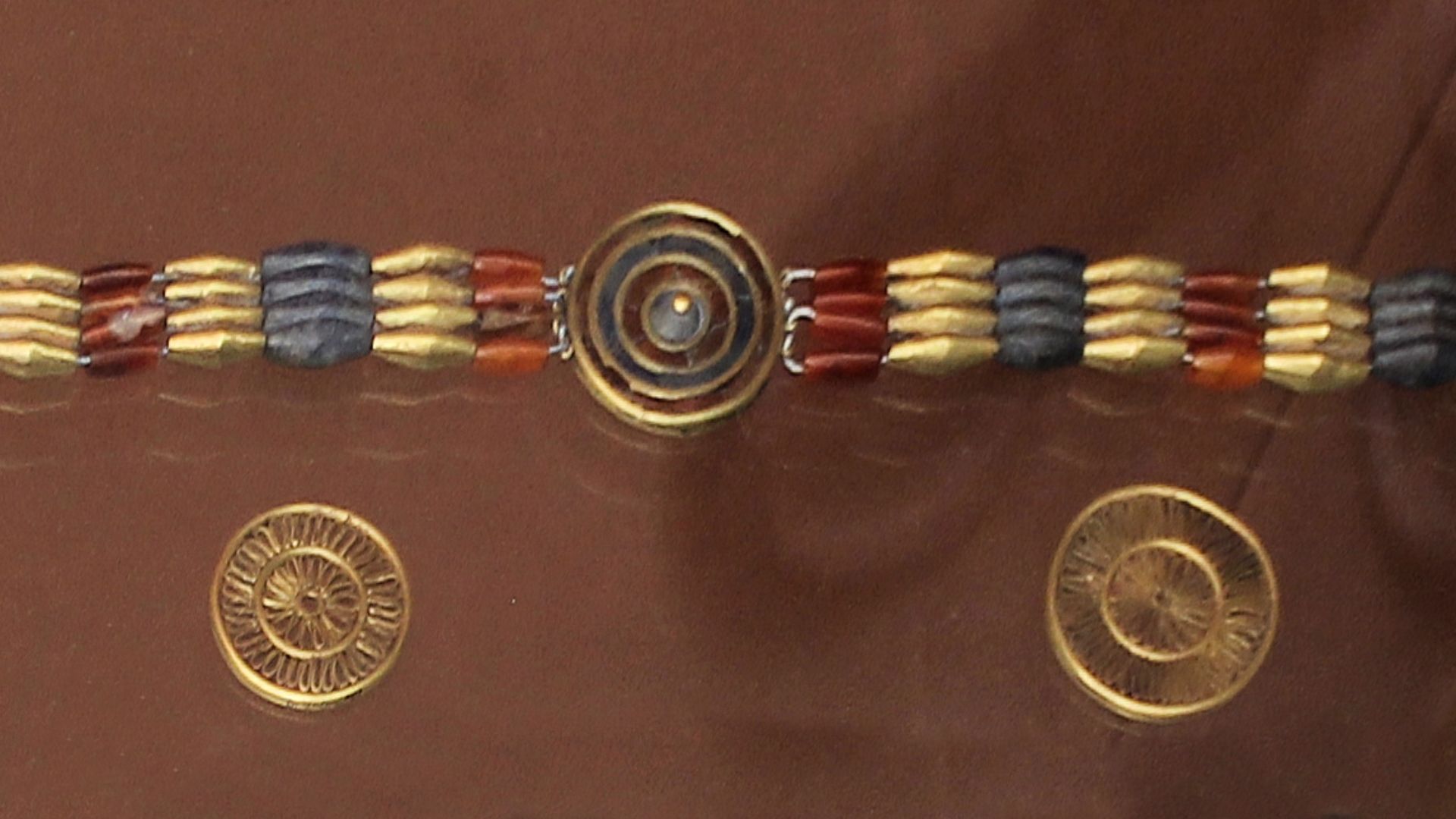
Comparing The Two Burials
When viewed together, the two burials reveal striking contrasts. Both include diadems, yet their placement and scale differ. The woman’s crown lay inverted, while the child’s appeared intact. These differences suggest intentional choices rather than coincidence within the same burial ground.
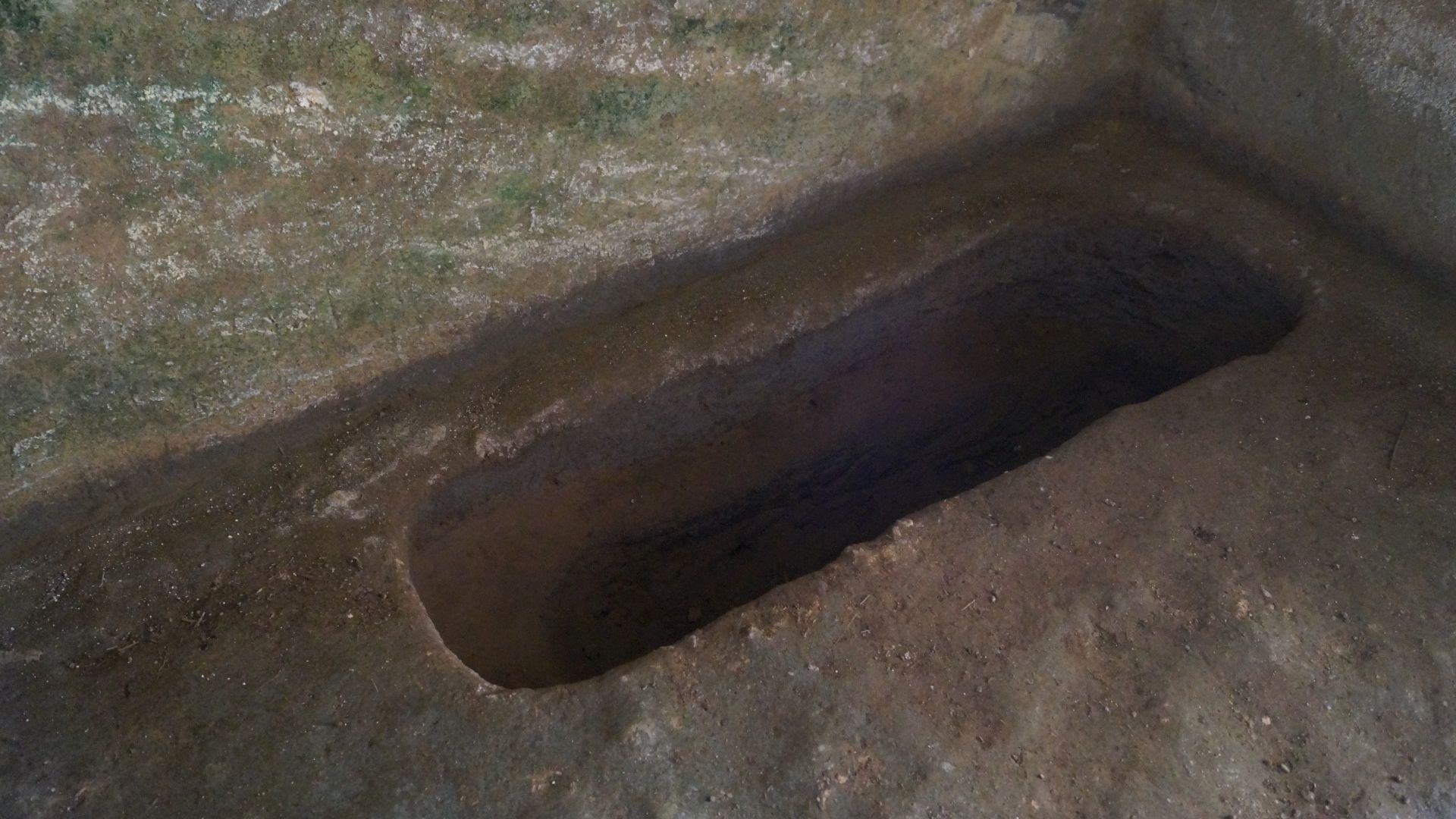
Possible Family Connections
Because of their proximity and shared symbols, archaeologists consider a family relationship possible. Elite families often buried relatives close together. The child’s diadem supports this idea, hinting that rank or lineage mattered from birth within this social group.
 Carlos Luis de Ribera y Fieve, Wikimedia Commons
Other Elite Graves In The Cemetery
Beyond these two burials, the cemetery holds dozens of high-status graves. Many contain jewelry and metal goods, though none match the inverted diadem. This broader pattern shows elite customs remained consistent, which made this burial stand out even more sharply.
 Heinz Schmitz, Wikimedia Commons
The Decline Of Hereditary Kingship
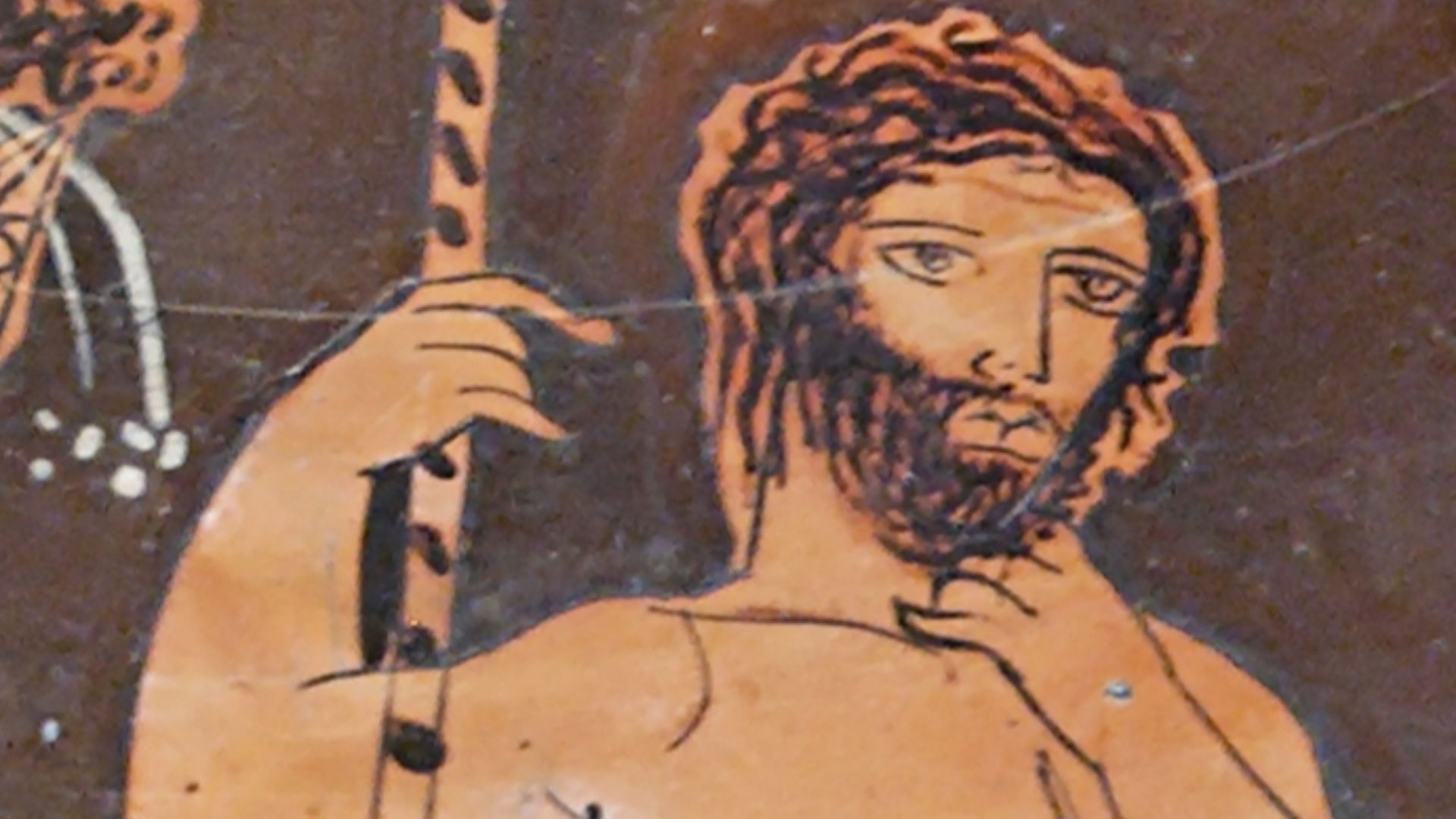
As aristocratic families gained influence, traditional kingship weakened across Greece. Authority shifted from single rulers to elite groups. This transition reshaped how power was displayed. Symbols once tied to kings began appearing in broader elite contexts, including burials linked to family prestige.
Aristocratic Rule And Social Change
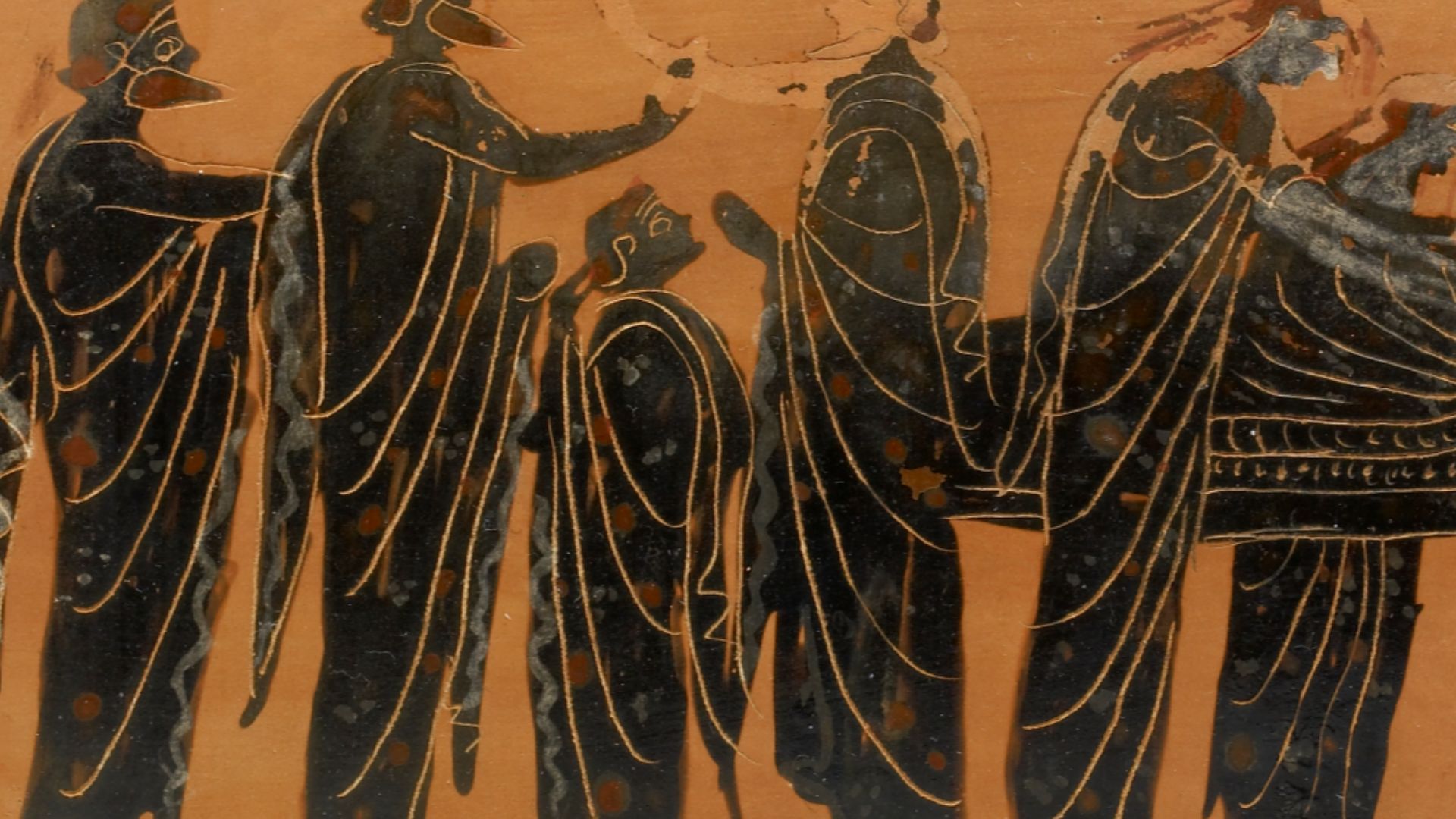
With power shared among elite families, competition increased. Lineage and reputation became critical, so public acts carried political meaning. Burial rituals also reflected this pressure by turning funerals into moments where families reinforced position, legitimacy, and continuity within a changing social order.
 Gela Painter, Wikimedia Commons
Meaning Of An Inverted Crown
Across ancient cultures, inversion often symbolized reversal or loss. Applied to a diadem, it may signal a fall from power or altered status at the end of their life. Archaeologists treat this placement as intentional, since accidental positioning contradicts the careful order seen elsewhere in the grave.
 Mary Harrsch, Wikimedia Commons
What This Burial Says About Identity
Together, the objects and their arrangement suggest identity remained central even in death. The burial presents a complex message. Wealth and rank appear undeniable, yet the inverted crown complicates that image to show a conflict between public honor and personal circumstance.
Female Status In Ancient Greece
In ancient Greece, elite women rarely appeared in historical records, yet burials reveal their social importance. Jewelry and crowns signaled family power rather than personal rule. This burial highlights how women embodied status and lineage, even within male-dominated political systems.

Legacy Of The Inverted Diadem
Many details about the woman remain unknown. Her name, family role, and reason for the inverted diadem were never recorded. Still, this burial changed how archaeologists understand power and ritual. One reversed crown shows how small details can reshape history.
 George E. Koronaios, Wikimedia Commons