
Here’s The Result Of Faith And Science Overlapping
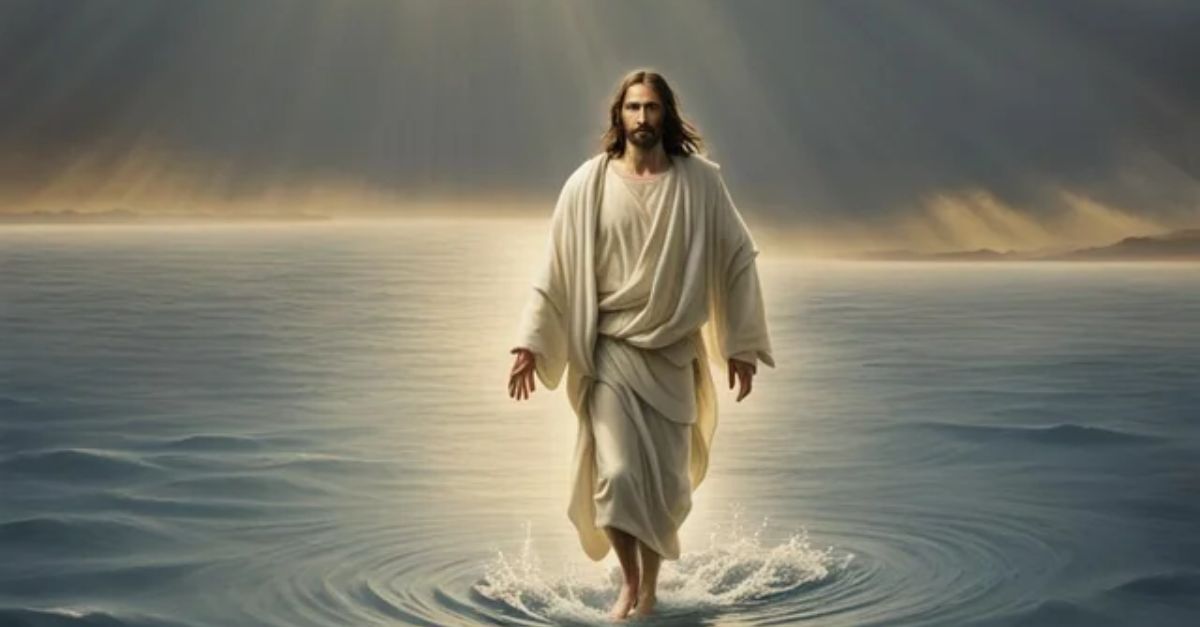
For centuries, the story of Jesus walking on water has sparked awe and disbelief in equal measure. Now, researchers digging into ancient clues, weather records, and geology think something remarkable may actually back it up.
Coastal Archaeology Team Investigates Biblical Walking On Water Event
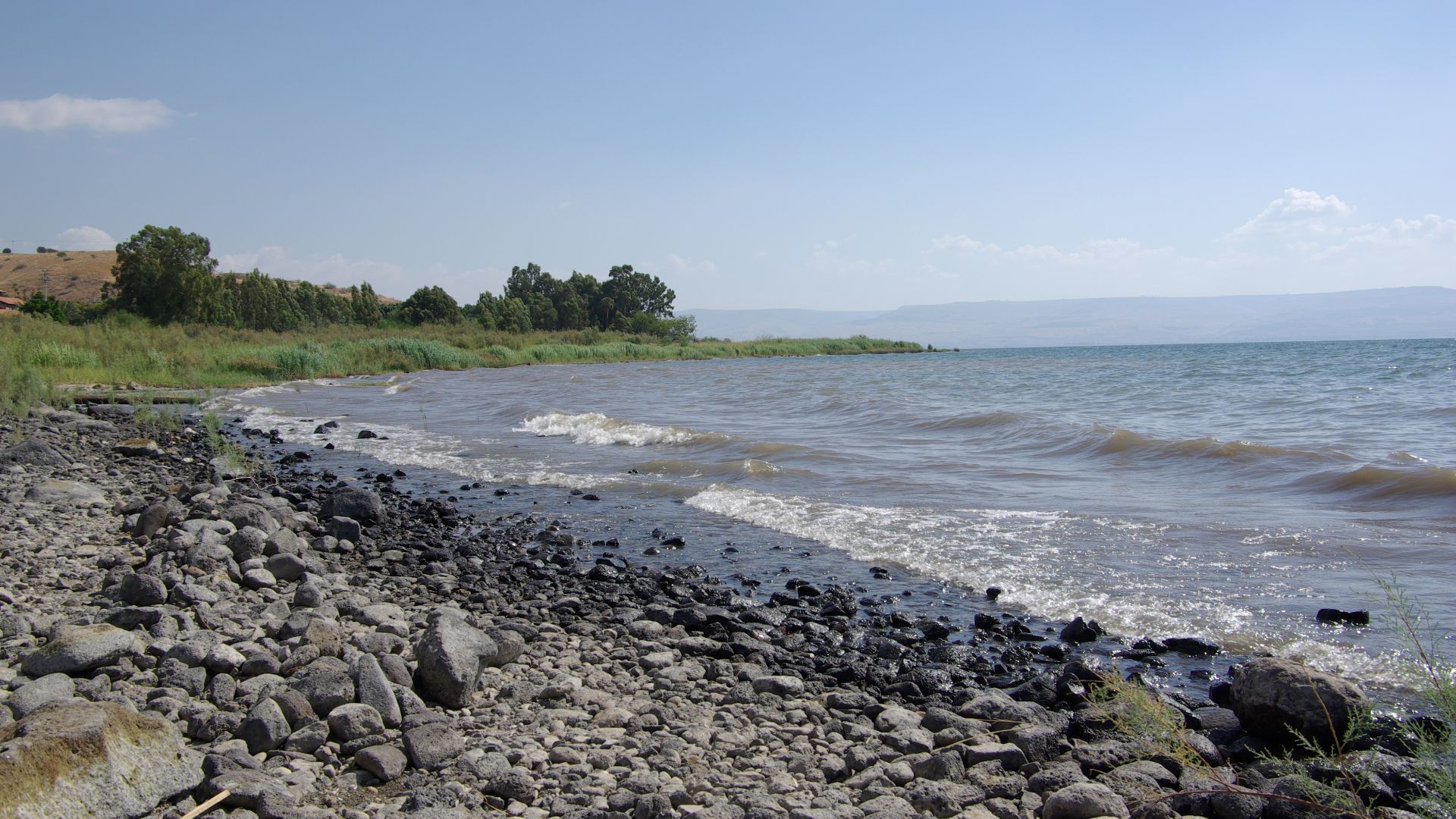
A group of coastal archaeologists began tracing the setting of this legendary moment, not through scripture alone but through sediment and shoreline evidence. Their focus? The Sea of Galilee. It’s here they believe the event unfolded, and the terrain might hold answers.
 Berthold Werner, Wikimedia Commons
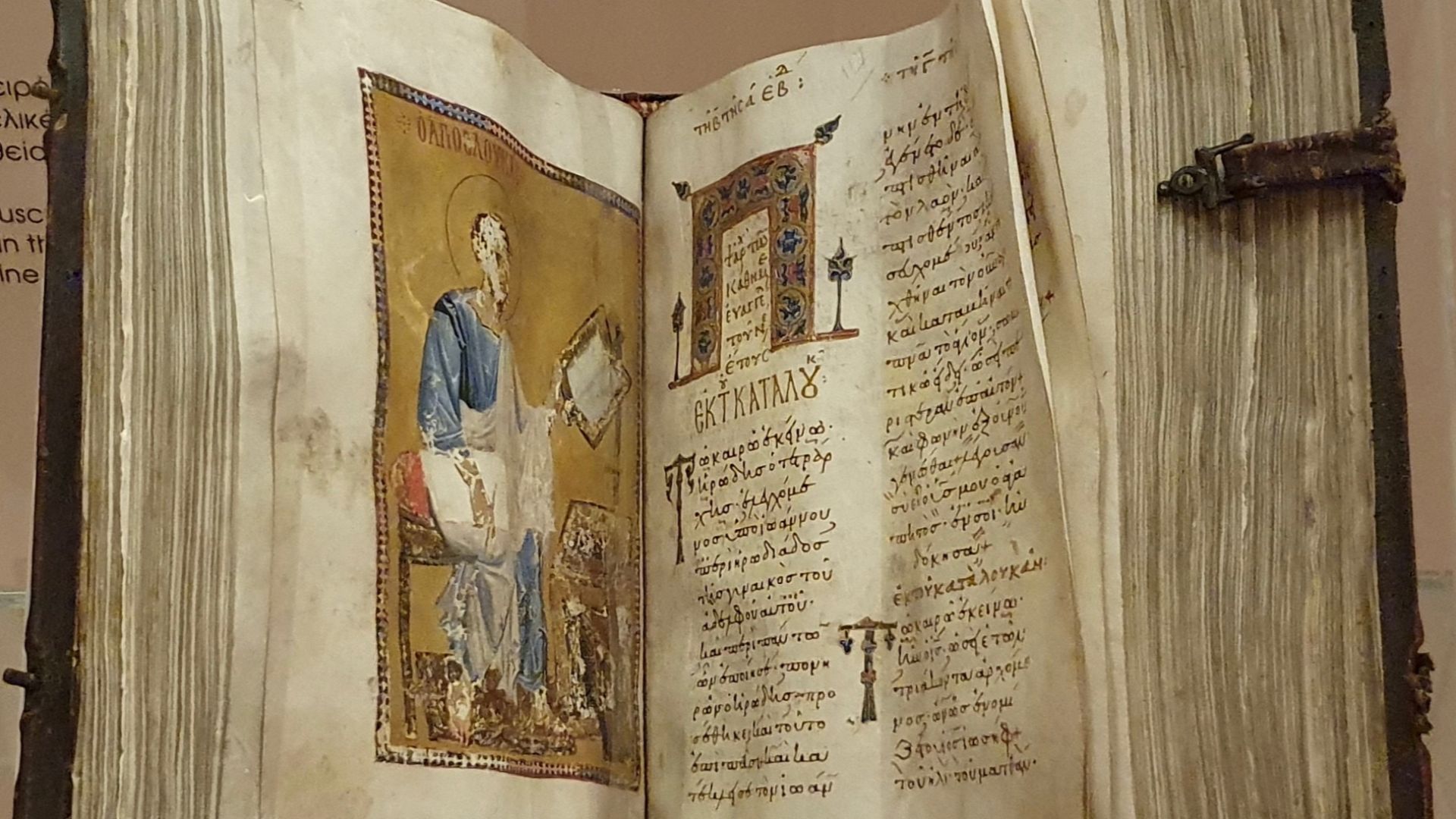
Ancient Greek Manuscripts Reveal Subtle Language Clues
When linguists revisited the oldest Greek versions of the Gospel, they noticed slight variations in how “walking” and “upon the sea” were phrased. Some translations suggested “along the sea’s edge,” a subtle shift that could change how the entire event is viewed.
 Yair-haklai, Wikimedia Commons
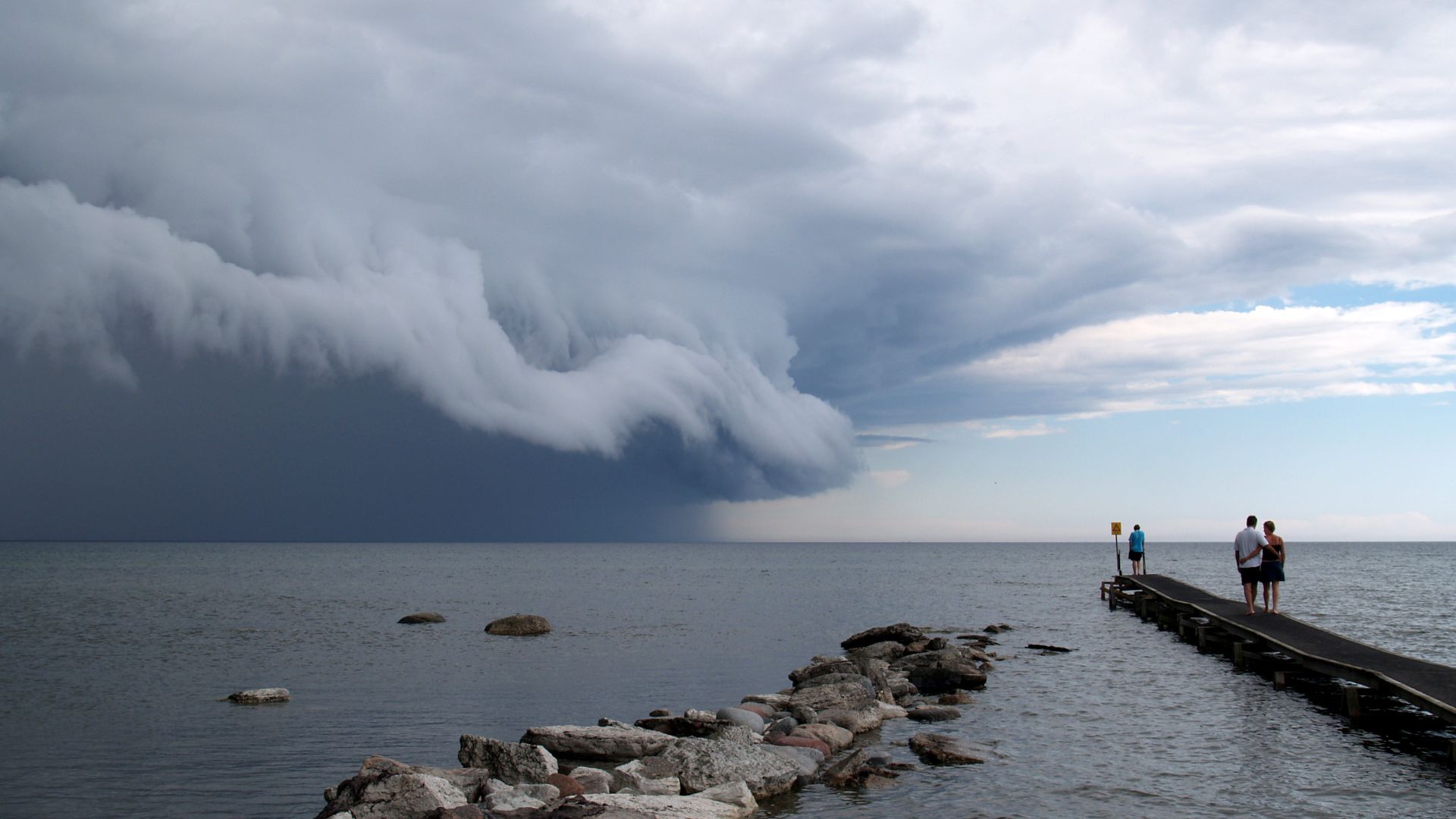
Sea Of Galilee Weather Patterns Recorded In First-Century Texts
Historians examined Roman and Jewish records describing frequent storms, sudden gusts, and eerie stillness across the Galilee. Those shifting weather patterns shaped local beliefs and could’ve played a part in what onlookers thought they saw during the night of the miracle.
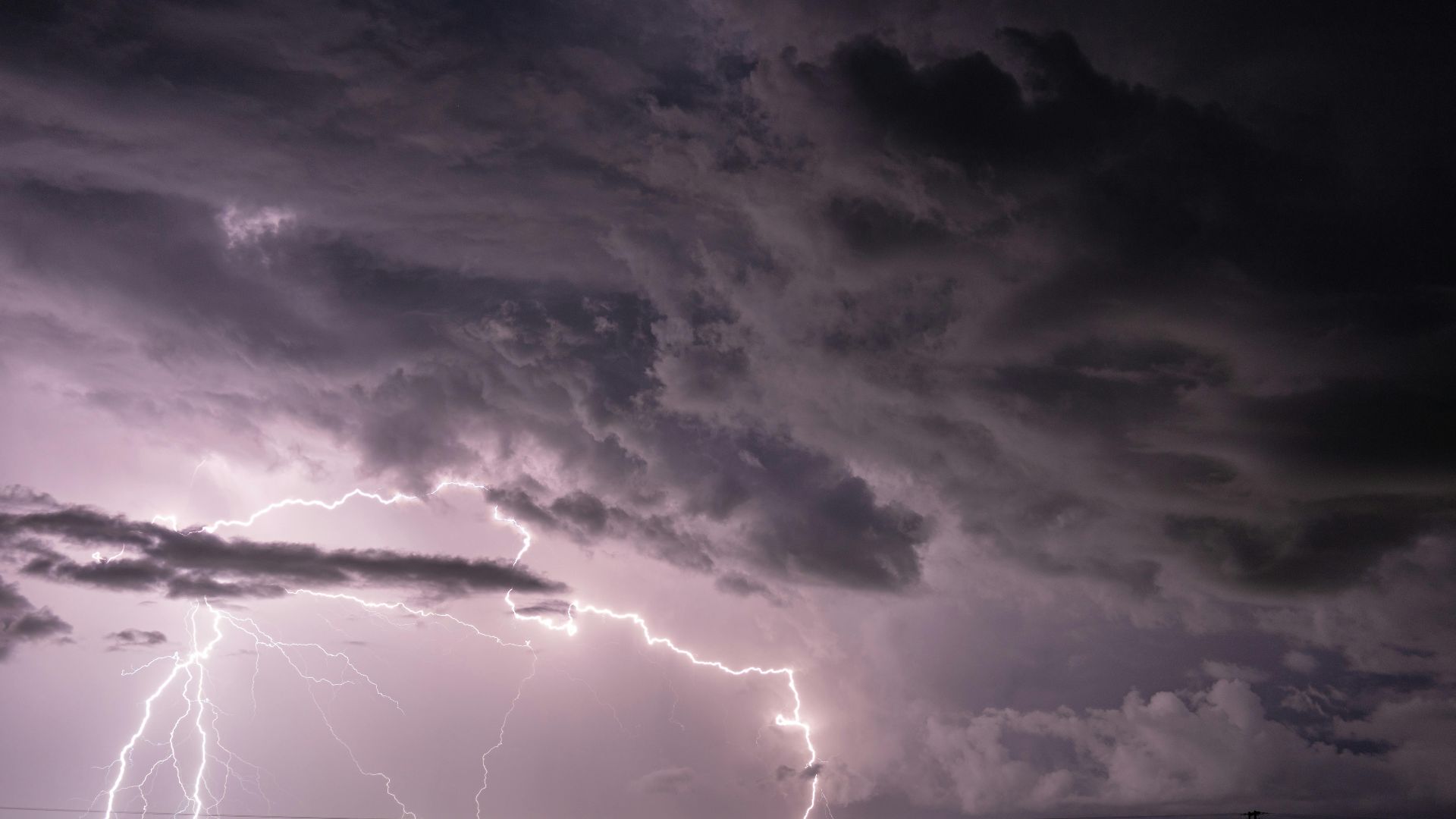
Satellite Imagery Maps Shoreline Changes Over Two Millennia
Modern satellite technology helped researchers visualize how the Sea of Galilee’s shoreline changed drastically over time. Areas that were once deep water now appear as shallow ridges or dried flats, reshaping theories about where Jesus and his followers actually stood.
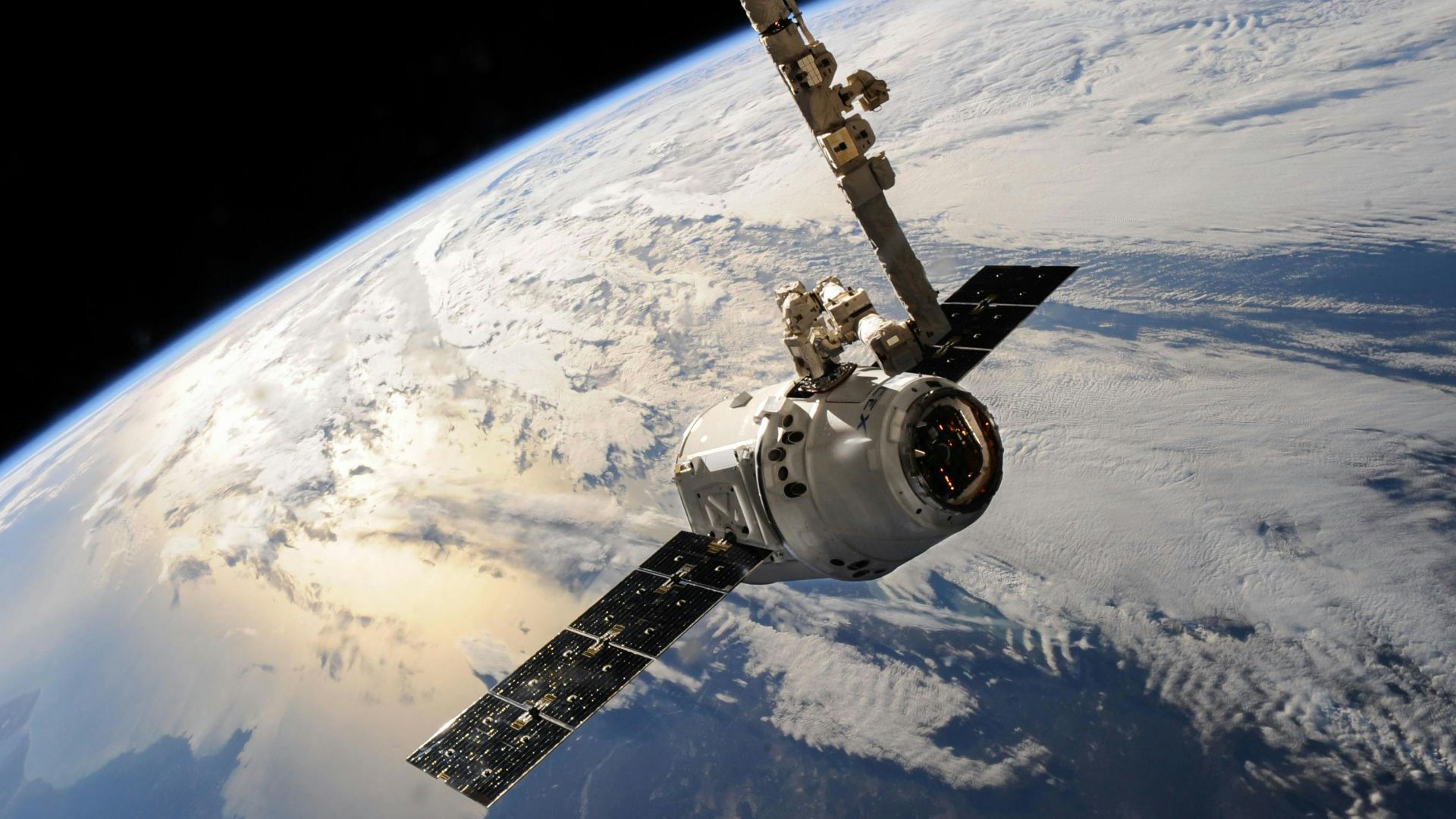
Geological Surveys Uncover Submerged Ridges And Sandbars
Digging deeper, geologists identified long, narrow ridges beneath the waters of the Sea of Galilee. These hidden sandbars sit just below the surface, which makes it possible that someone could appear to walk across the water from certain viewpoints.
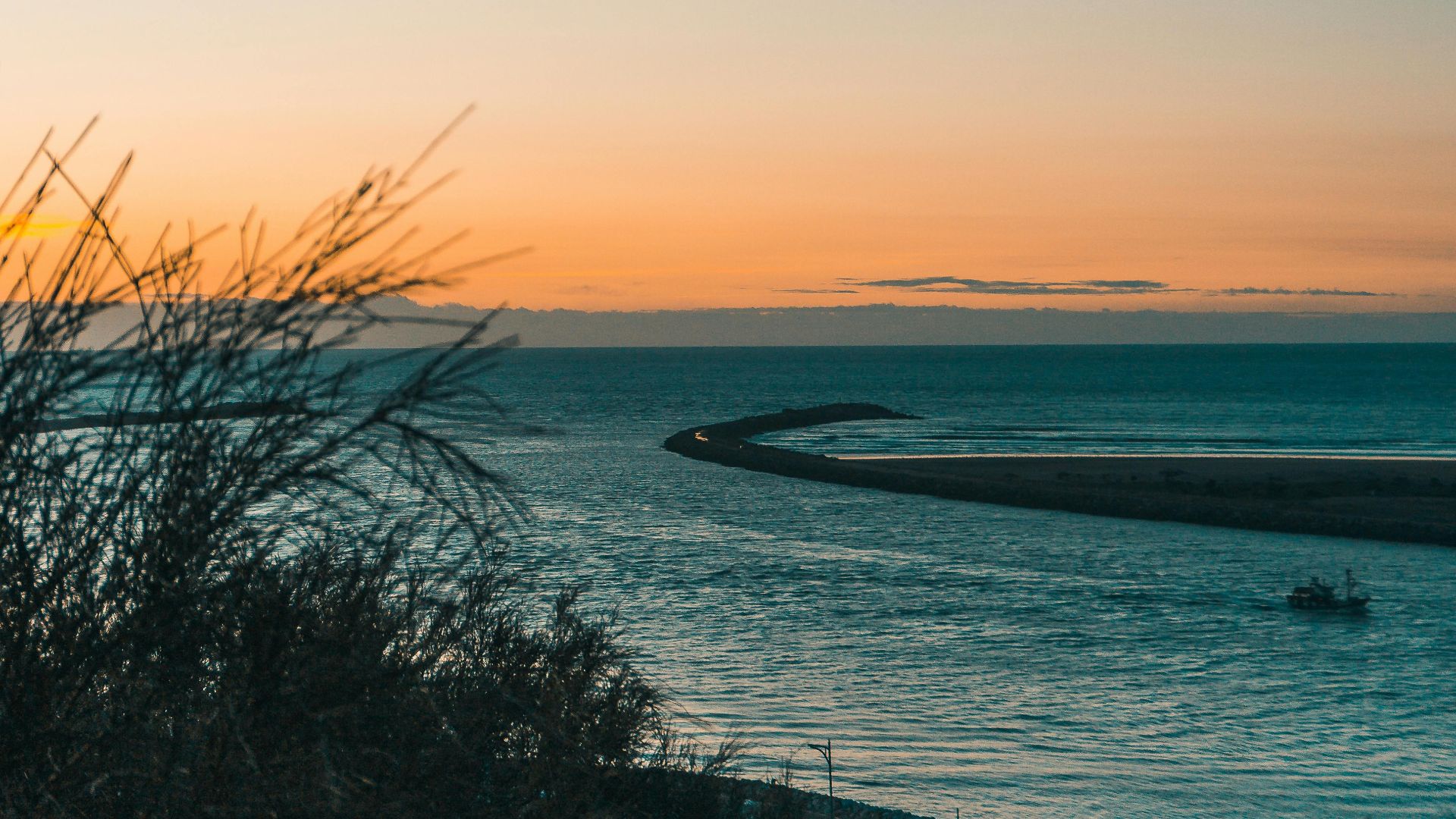
Severe Droughts Created Nearly Invisible Underwater Paths
Core samples revealed multiple drought periods when water levels dropped dangerously low. During such times, submerged ridges would have emerged as faint, nearly invisible paths. To someone viewing from a boat at dusk, the illusion of walking on water might seem divine.
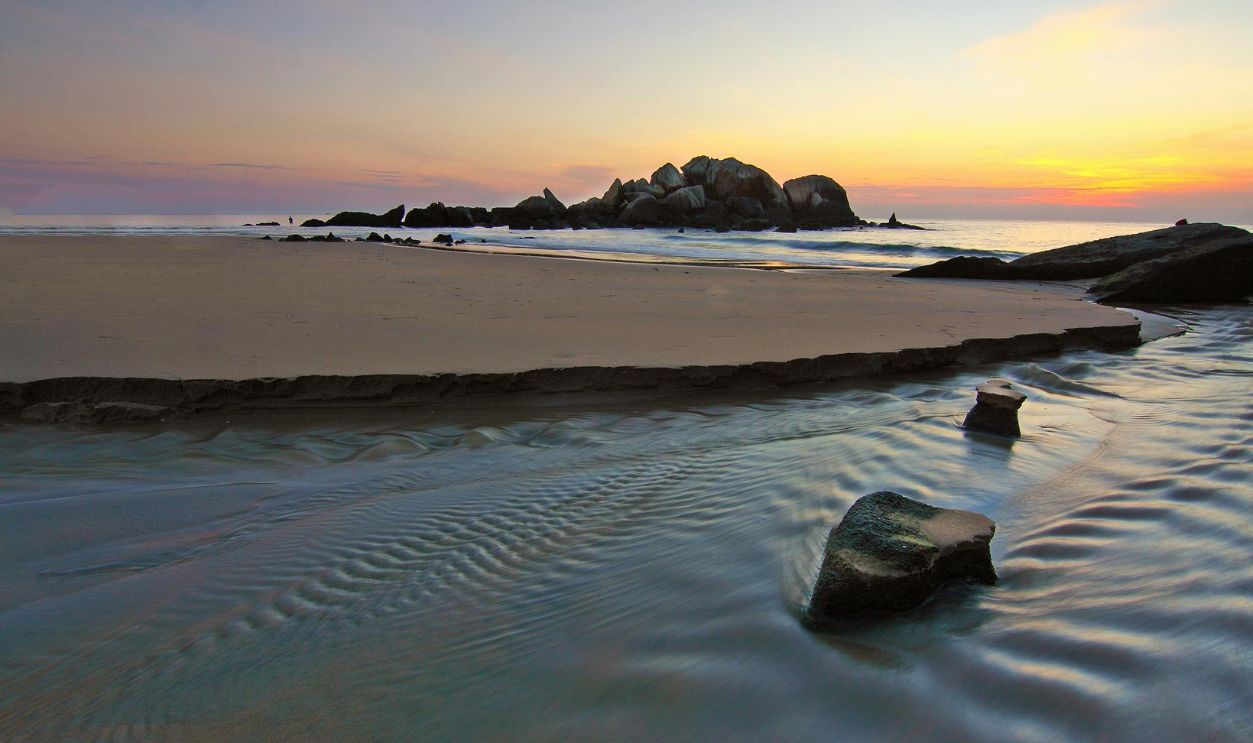
Water Level Fluctuations Could Explain Apparent Miracle
Records show the Galilee’s water levels fluctuated dramatically from season to season. Sudden drops exposed shallow bands of firm ground that were sometimes covered by waves and sometimes above the water. It’s possible the scene described in the Gospels captured one of these rare natural moments of illusion.
Historical Weather Reconstructions Show Possible Cold Fronts
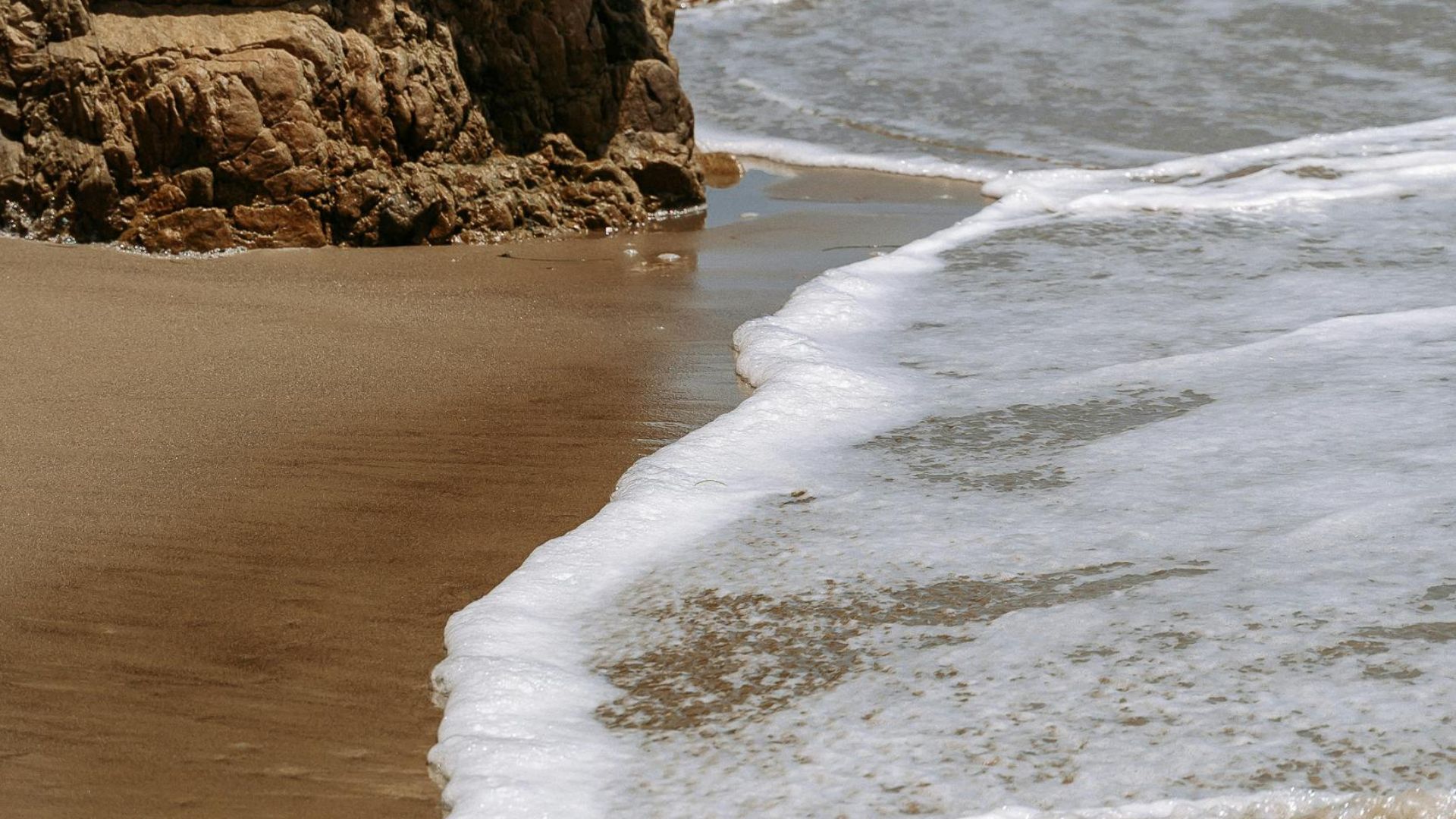
Another theory is that climate data reconstructed from pollen and mineral layers suggested abrupt cold fronts striking the region in the early first century. These conditions may have chilled the shallow waters enough to create thin, slushy surfaces that briefly supported weight before melting.
 Paul Groom Photography Bristol, Pexels
Salty Springs Fed Fresh Water Patches That Froze
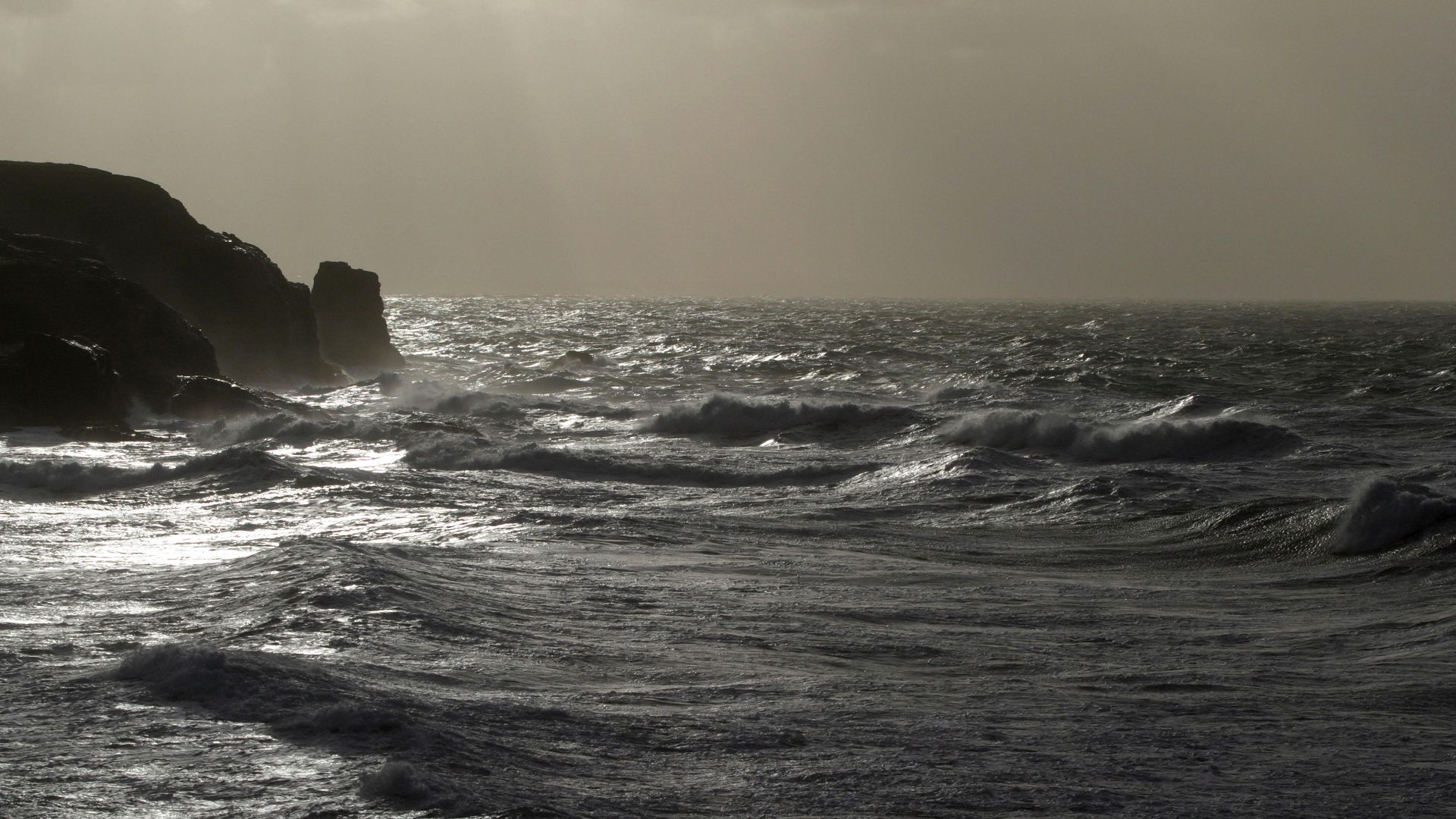
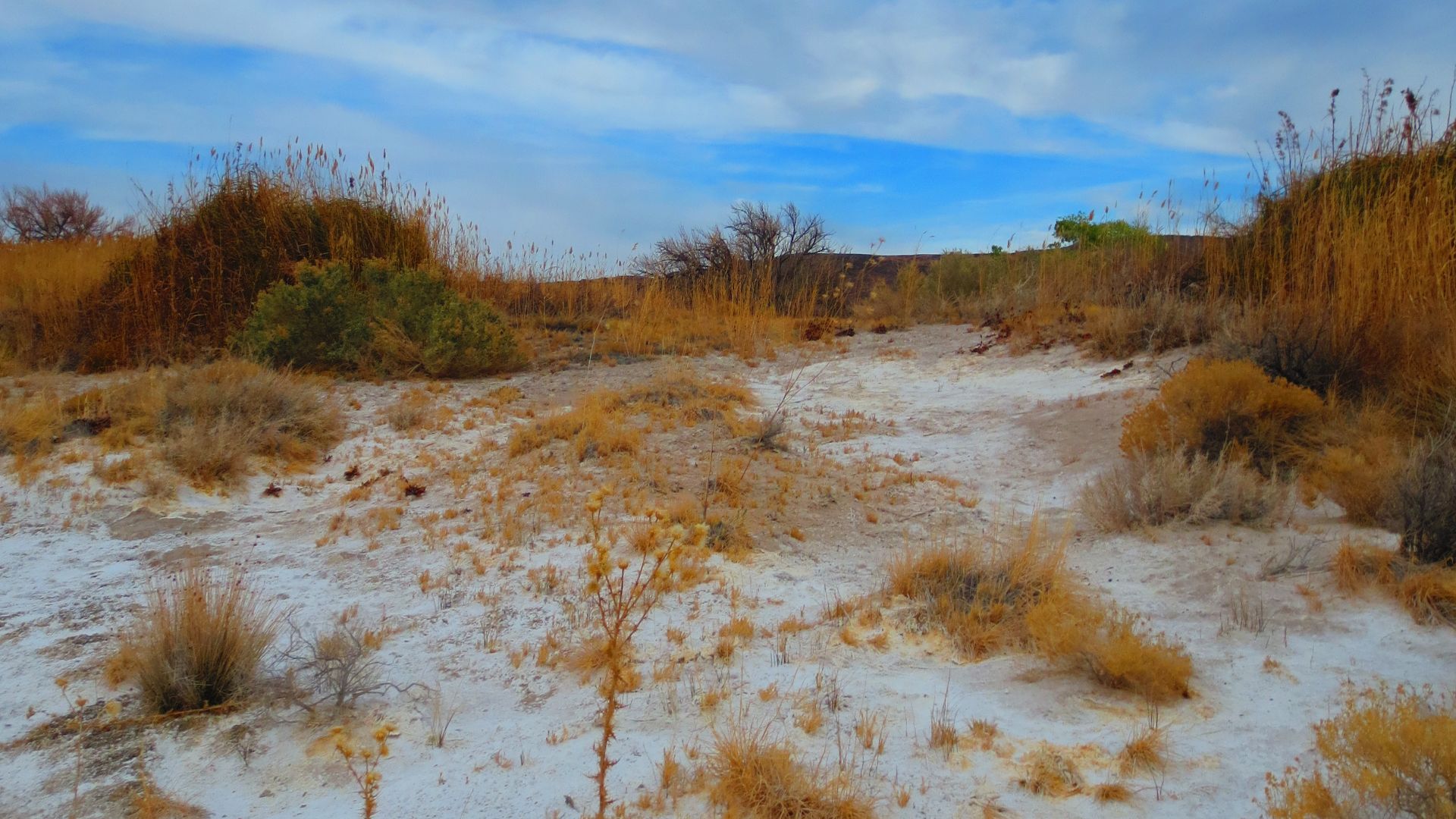
Beneath the lake, mineral-rich springs bubbled up and created strange mixes of fresh and saline water. Scientists theorized that when temperatures dipped, these pockets could freeze unevenly. The contrast might explain how sections of the lake appeared solid while others rippled freely.
 Pacific Southwest Region USFWS from Sacramento, US, Wikimedia Commons
Thin Ice Sheets Allow Modern Hikers To Walk On Lakes
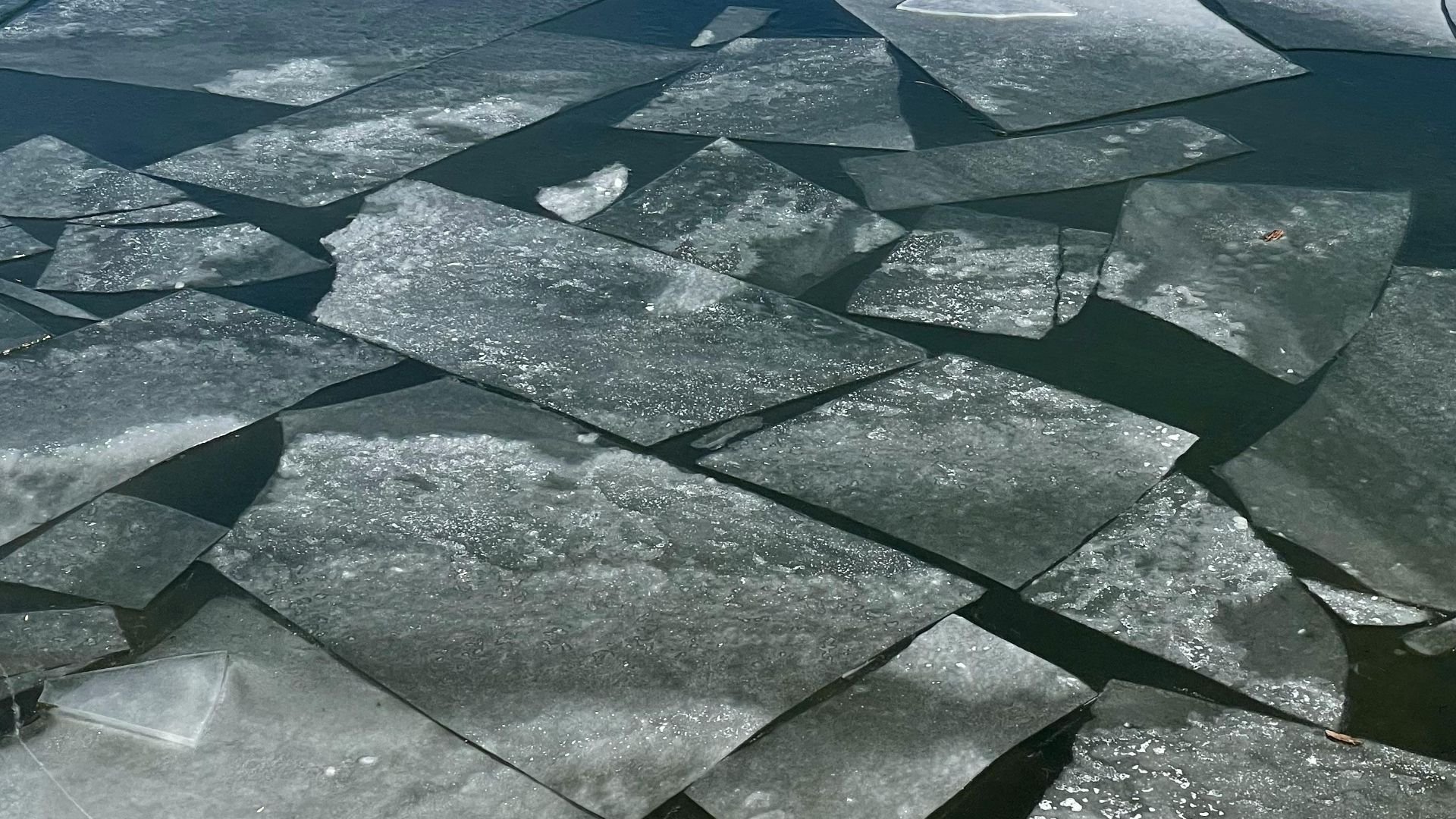
Modern experiments in the US showed similar effects. Under certain rare temperature and wind conditions, a thin crust of ice can form just thick enough to bear a person’s weight. From a distance, the sight looks almost supernatural.
Only Christian Scripture Preserves The Story
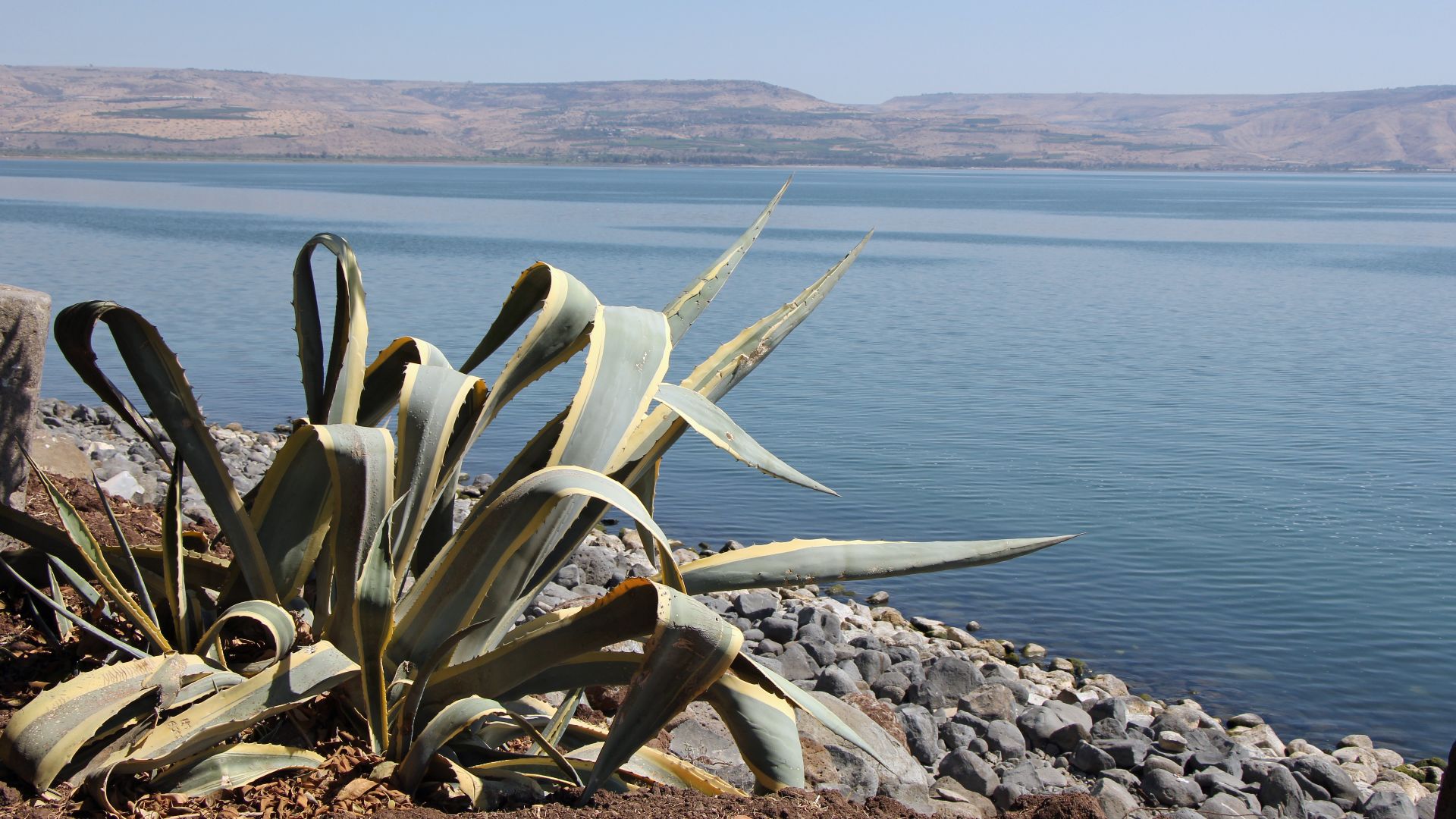
The Gospels describe a storm on the Sea of Galilee near Capernaum, where Jesus calmed the waves and walked upon the water. These accounts highlight Galilee’s geography and climate, portraying the event as a witnessed miracle preserved in Christian scripture and interpreted through faith.
 Eduard Marmet, Wikimedia Commons
Documentary Evidence Places Event At A Specific Galilee Site
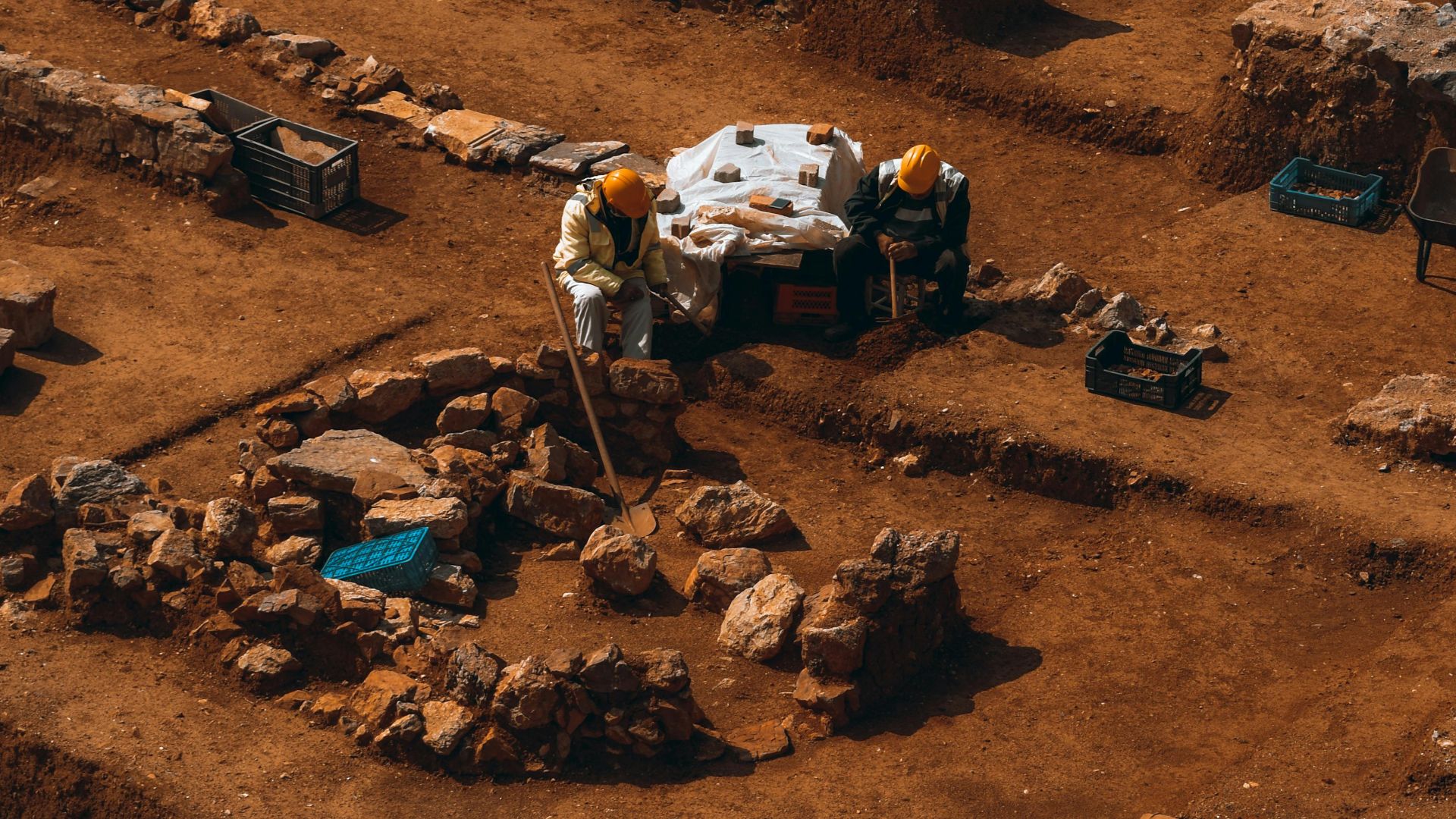
Archaeologists traced clues to the lake’s northwestern corner, near ancient Magdala. Excavations revealed fishing tools and docking remains consistent with first-century accounts. If Jesus walked anywhere, this shallow stretch might have been the stage for that extraordinary moment.
Disciples Rowed Three To Four Miles Before Encounter
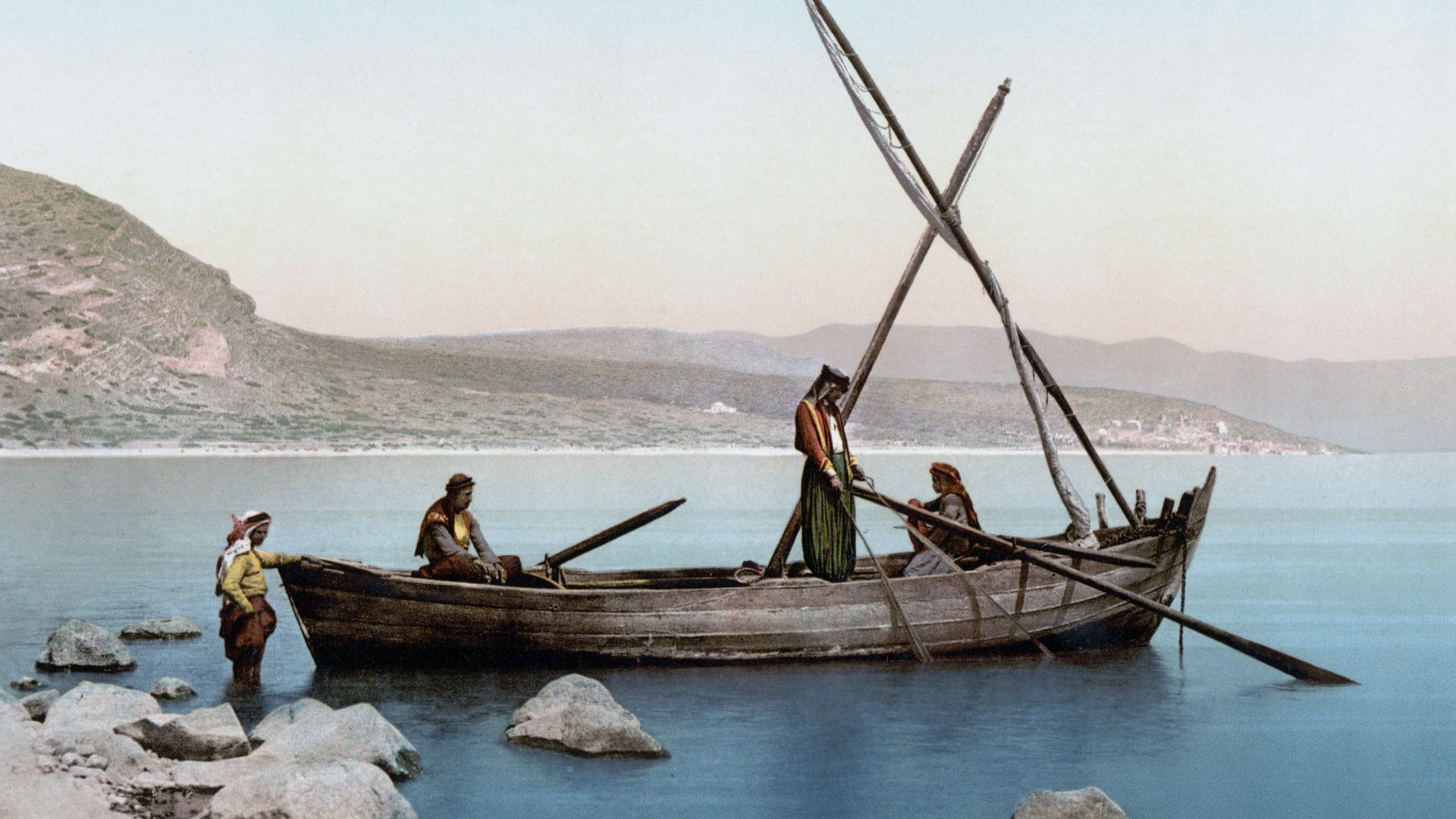
Biblical texts say the disciples had already rowed several miles before seeing the figure. Scholars have examined this distance, but no mapped sandbar zones support a natural explanation. Scientific discussions instead focus on rare ice-patch hypotheses rather than walkable sandbars.
 Unknown authorUnknown author, Wikimedia Commons
Reassessing The Role Of Wind In The Gospel Narrative
Biblical accounts mention strong winds before Jesus appeared, and modern meteorology confirms that sudden gusts can create chaotic wave patterns on the Sea of Galilee. However, no atmospheric simulations support claims that wind exposes shallow ridges or produces moonlit illusions of smooth movement over water.
Natural Phenomena Could Create Lasting Wonder Among Witnesses
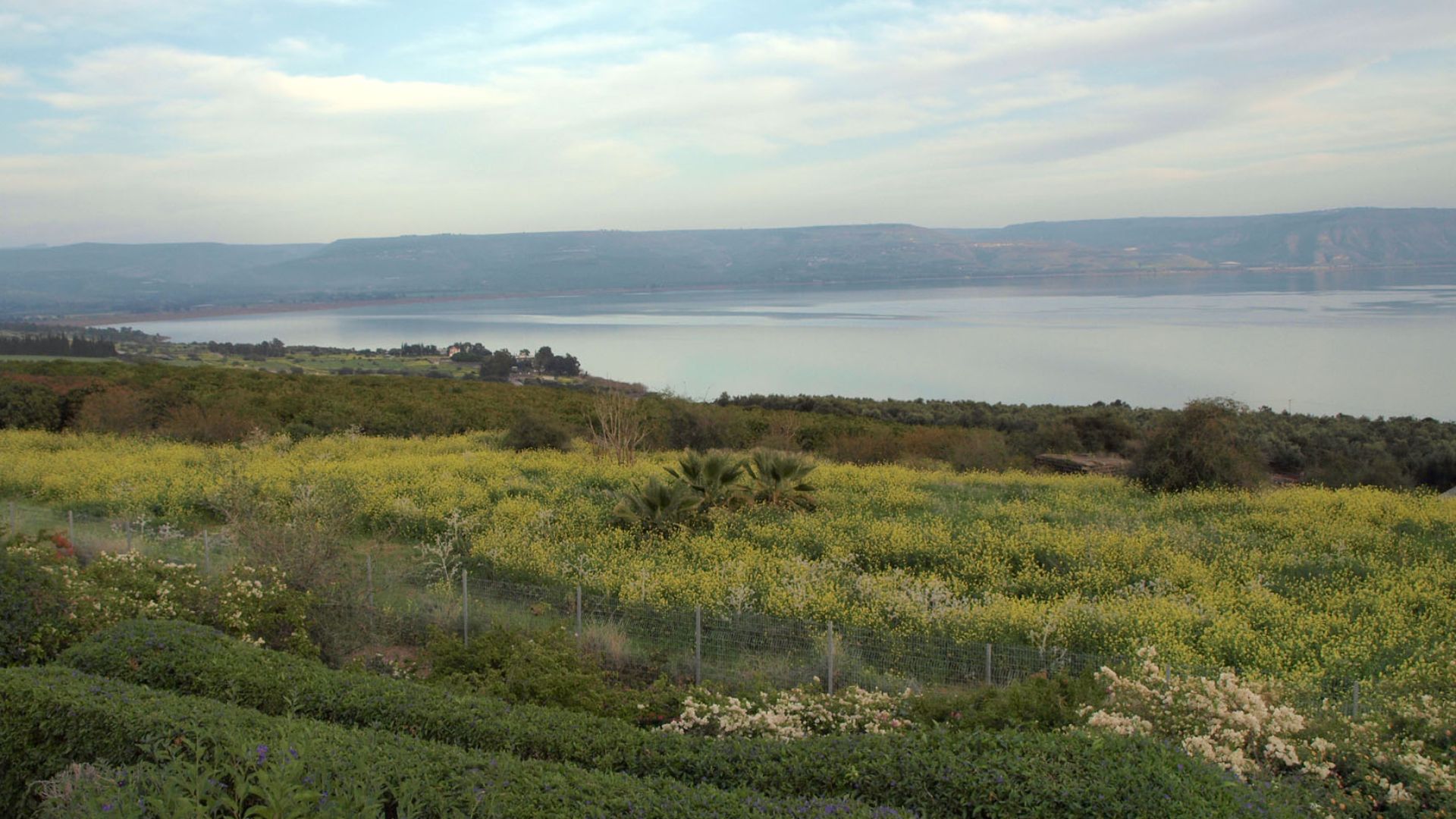
Even if nature played a role, the impact on those watching would’ve been profound. For frightened fishermen on a stormy night, seeing a figure calmly approach over shimmering water could easily feel divine—turning science and faith into one unforgettable story.
 Arnold Paul, Wikimedia Commons
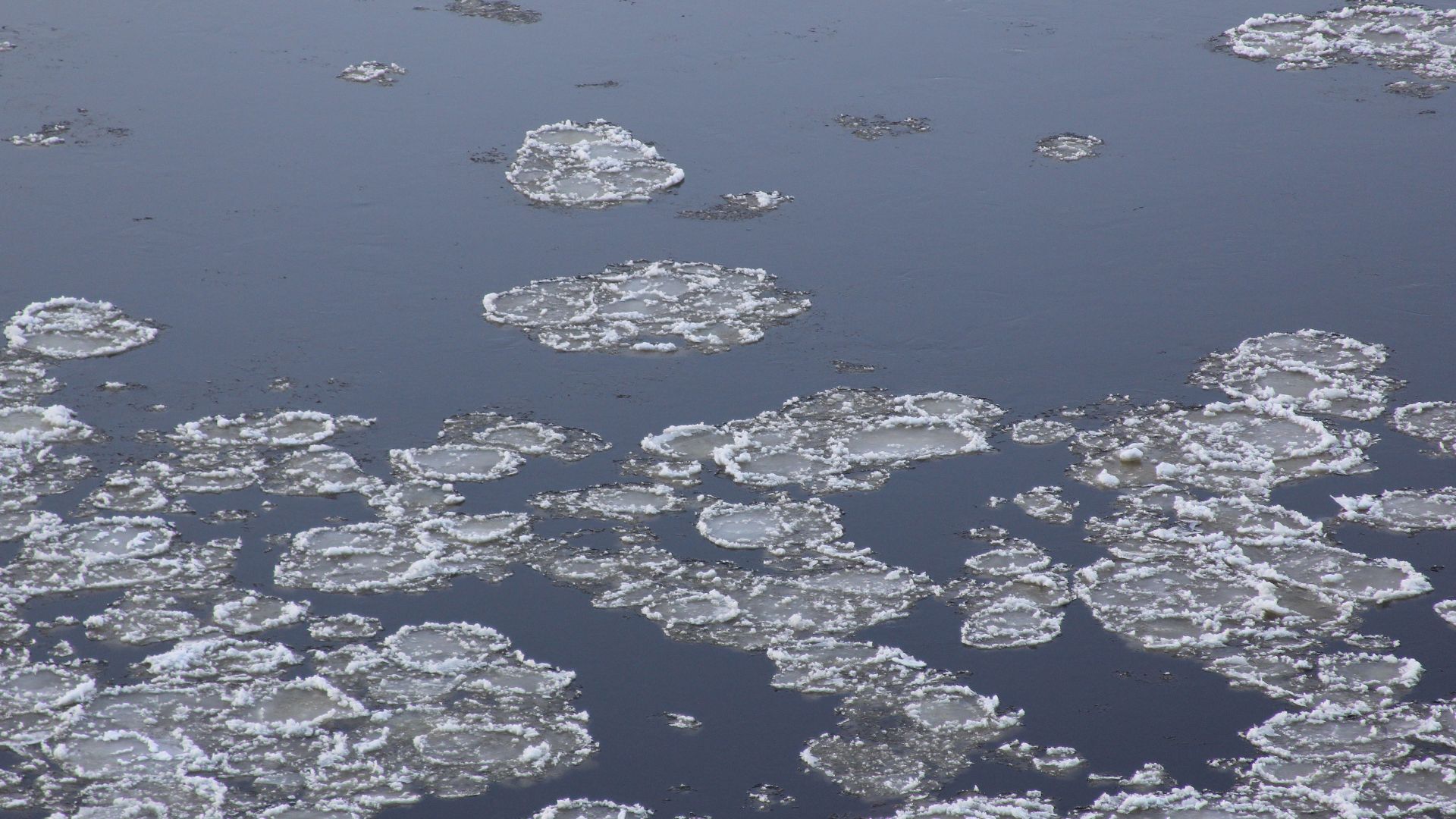
Floating Ice Theory Published In Journal Of Paleolimnology
When scientists first shared their “floating ice” hypothesis in the Journal of Paleolimnology, it caught global attention. Using ancient sediment data, they argued that a freak cold snap might’ve created floating ice patches, enough to make walking on water seem real to stunned witnesses.
 Alexander Gluschenko, Wikimedia Commons
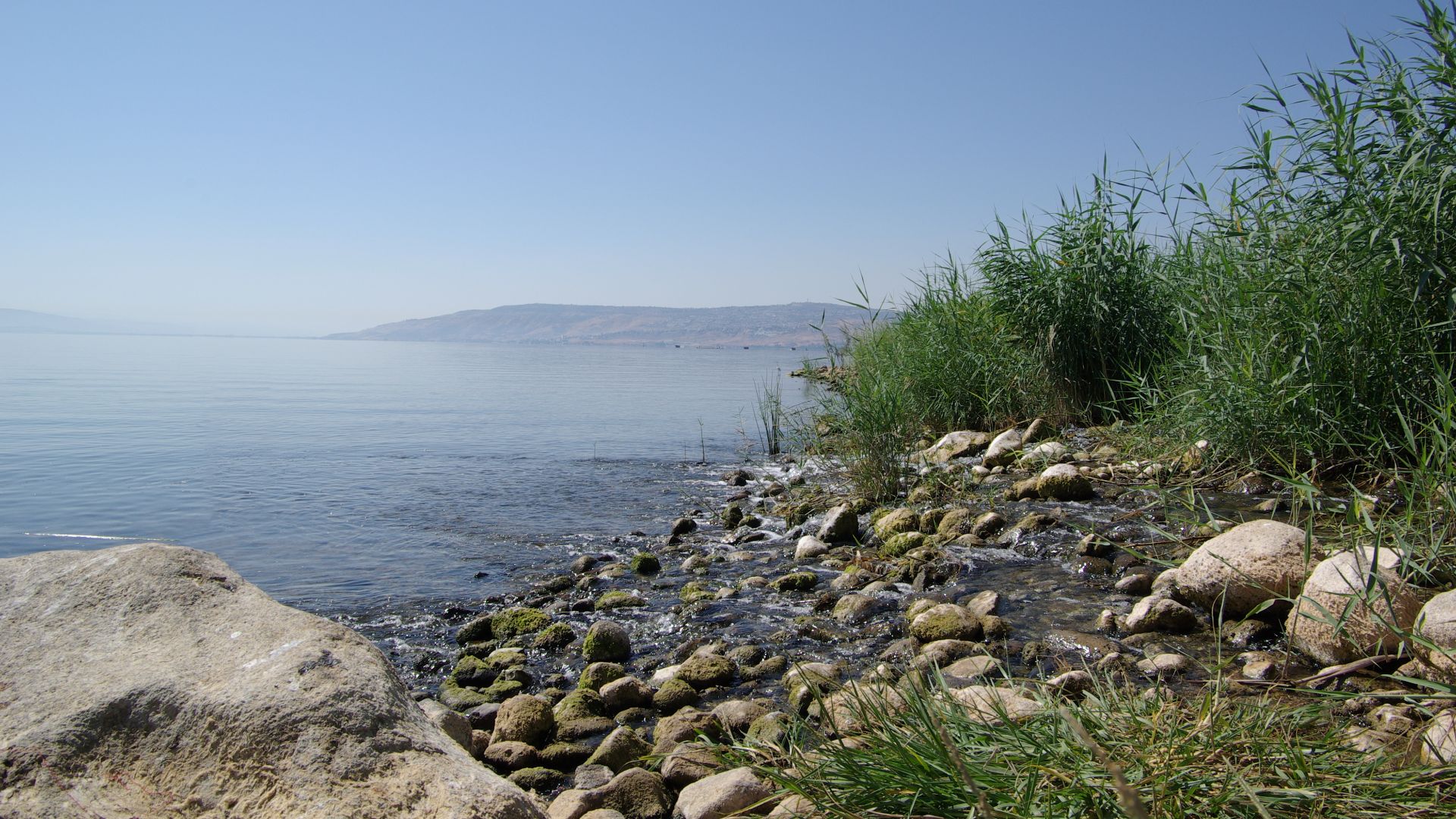
Tabgha Town Springs May Have Caused Ice Formation
Researchers looked into Tabgha, a small town where warm and cold springs converge under the lake’s surface. These mixed waters, under the right chill, could freeze unevenly. Such unpredictable layering might’ve made parts of the lake appear deceptively solid on that night.
 Berthold Werner, Wikimedia Commons
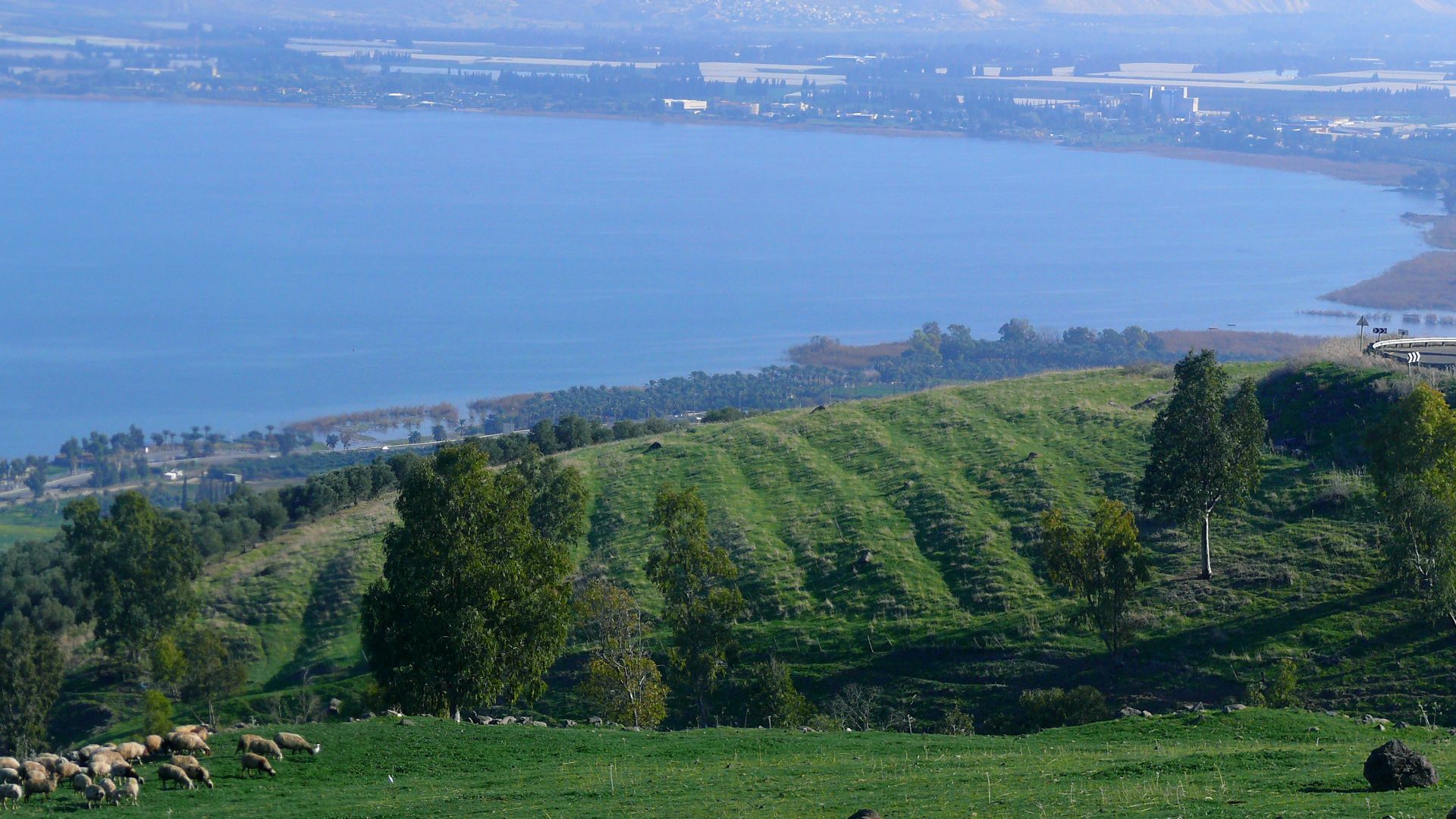
High-Resolution Maps Reveal Long-Term Seabed Changes
Modern surveys show faint ridges and submerged features along the Sea of Galilee’s shoreline, but these formations shift slowly through decades or centuries of sediment buildup. Archaeological sites demonstrate gradual burial and exposure cycles rather than rapid, short-lived pathways just beneath the surface.
 Zachi Evenor and User:MathKnight, Wikimedia Commons
Distance Vision Made Submerged Features Appear Miraculous
From a few hundred feet away, the human eye struggles to judge depth on moving water. Scholars believe that the disciples who were watching from their boat could’ve perceived shallow ridges as open waves, which turned a perfectly natural occurrence into what felt like divine intervention.
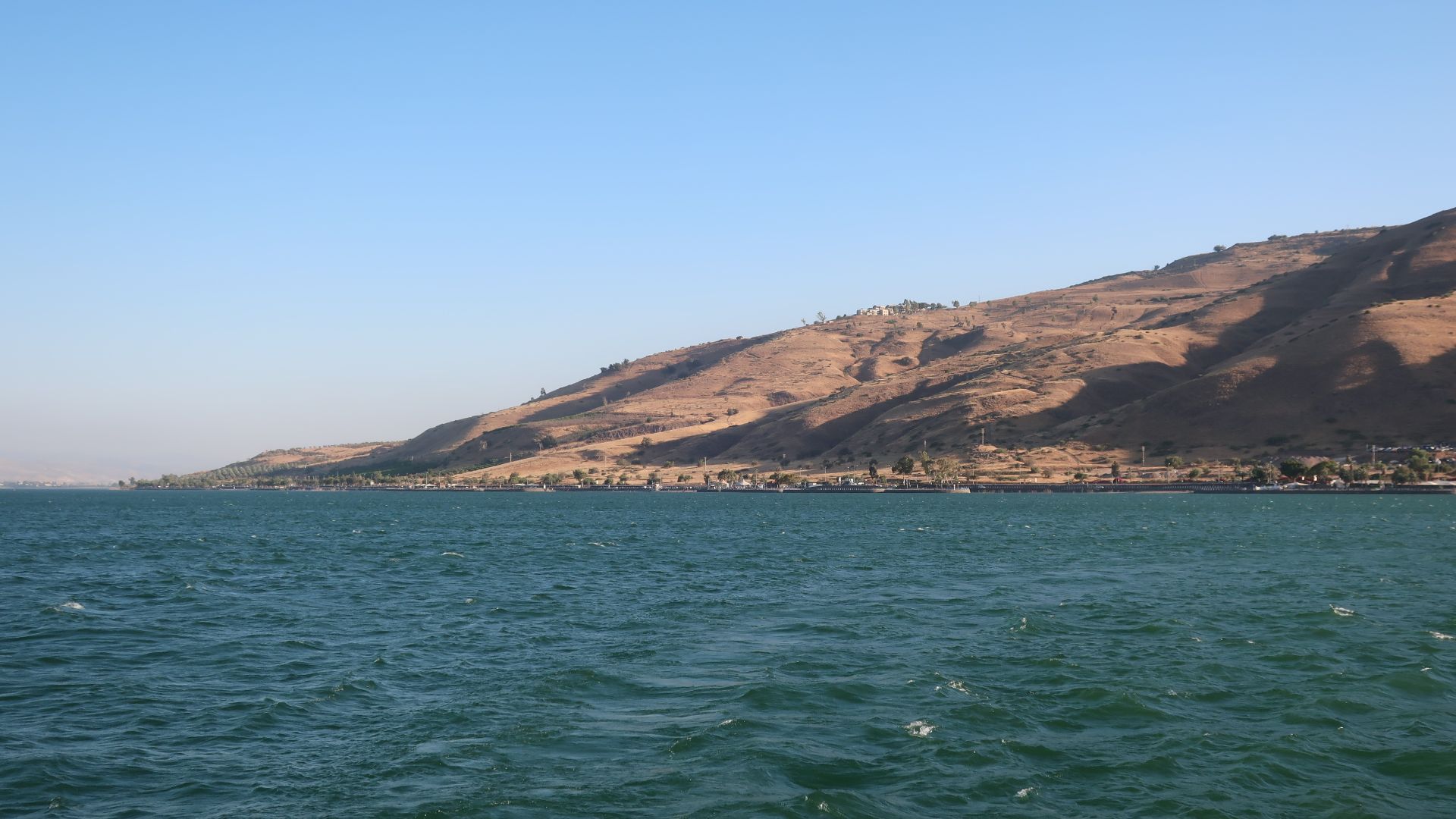
Geological Studies Offer Broad Context, Not Exact Dates
Sediment cores from the northern Sea of Galilee reveal long-term climate shifts, including cooler intervals and droughts during the Roman period. However, geological dating spans decades or centuries, meaning no strata can be tied to the specific years of Jesus’s ministry or directly linked to the Gospel accounts.
 Chris Gallimore chrisgallimore, Wikimedia Commons
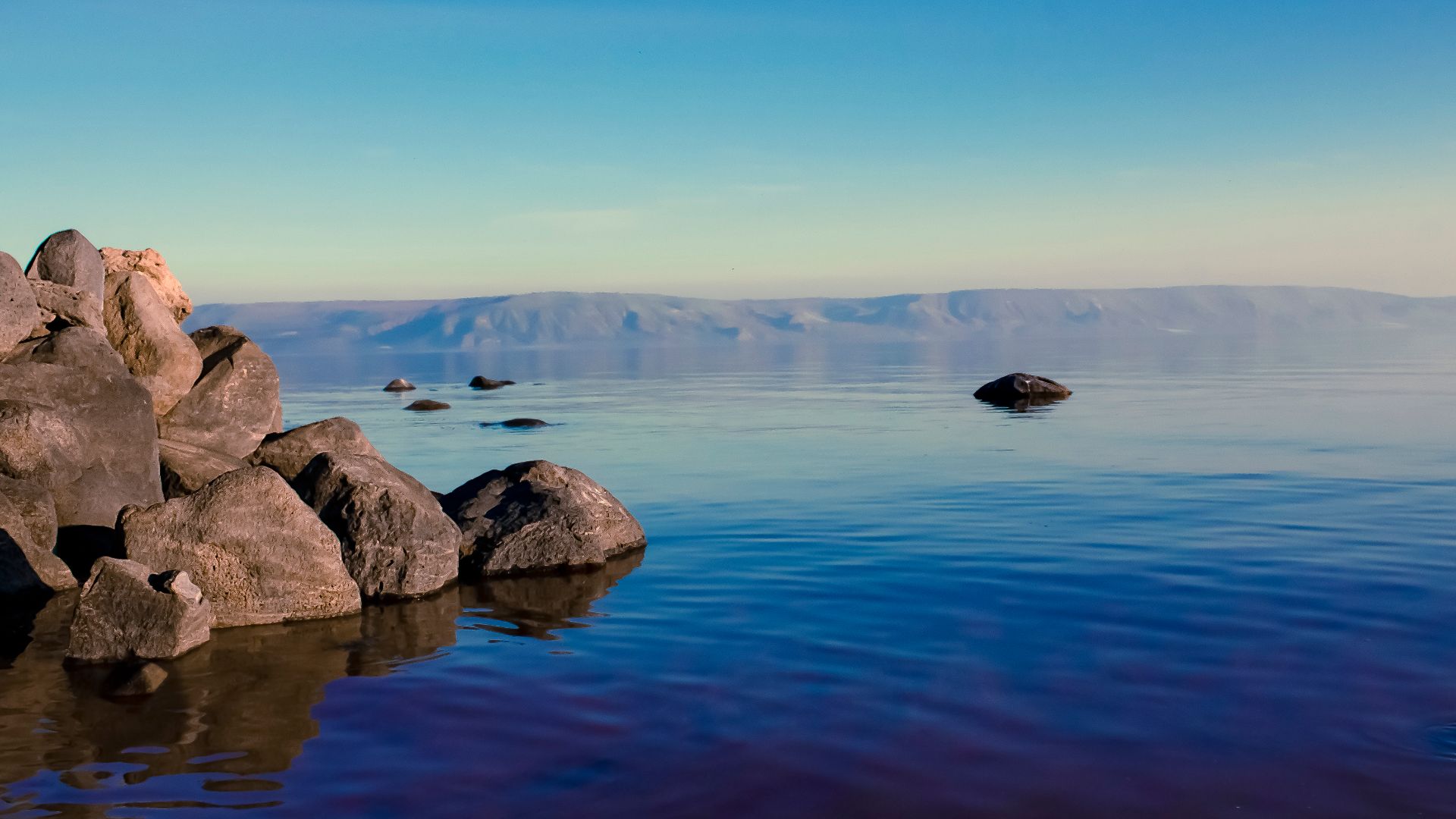
Climate Reconstructions Show No First-Century Temperature Dips
Paleoclimate data from regional caves, sediment cores, and marine records indicate generally warmer, wetter conditions in the eastern Mediterranean during the early Roman period. Broad climate models support this trend, but still, no sharp first-century temperature drops or conditions suitable for thin ice formation on the Sea of Galilee have been documented.
Divine Timing Could Arrange Rare Natural Occurrence
Believers suggest that if such a rare weather pattern truly aligned with Jesus’s presence, the timing itself might hold spiritual weight. A moment where nature and purpose converged perfectly could easily inspire followers to see something beyond coincidence.
Natural Explanations Deepen Rather Than Diminish Spiritual Meaning
For many theologians, finding natural context doesn’t strip away faith. Instead, it enriches it. The idea that divine power could manifest through the rhythms of nature adds another layer of awe—not contradiction, but a reminder of creation’s mystery.

Underwater Mapping Project Continues At The Sea Of Galilee
Today, scientists are still mapping the seabed using sonar and laser scanning. Each new layer reveals more about shifting sediment, spring outlets, and hidden ridges. These findings continue to blend archaeology and faith in fascinating, unexpected ways.
Research Invites Richer Appreciation Of Sacred Narratives
By peeling back layers of history and geology, researchers are showing that miracles and nature don’t have to stand apart. Understanding how these moments could’ve happened brings the stories closer to human experience while preserving their sense of wonder.
 National Cancer Institute, Unsplash









