
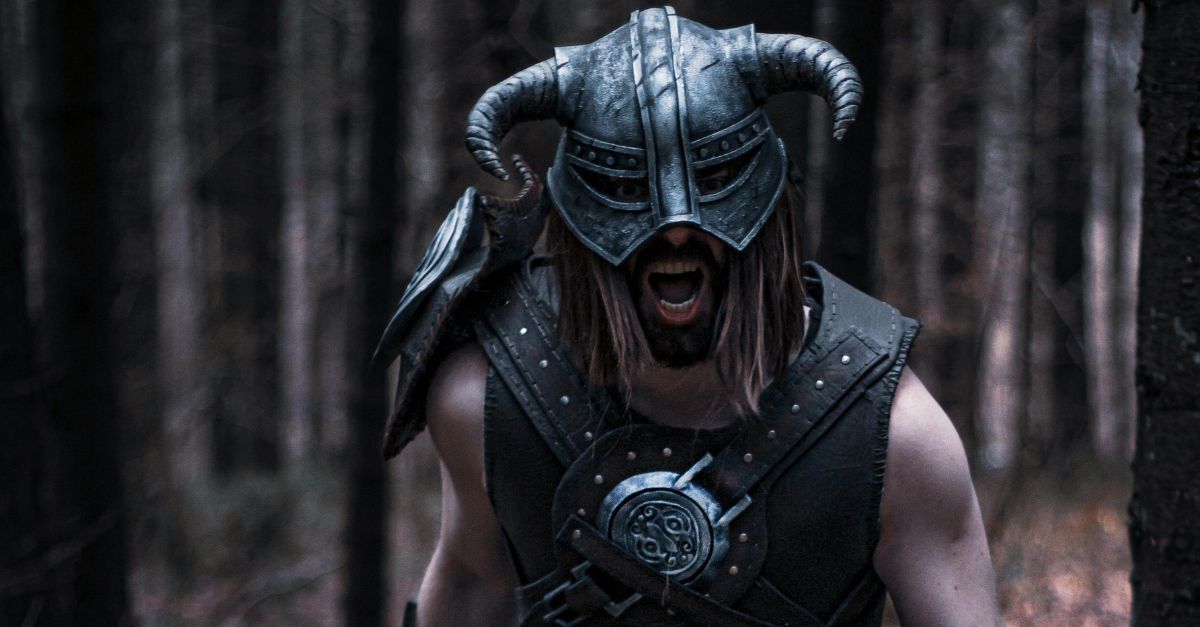
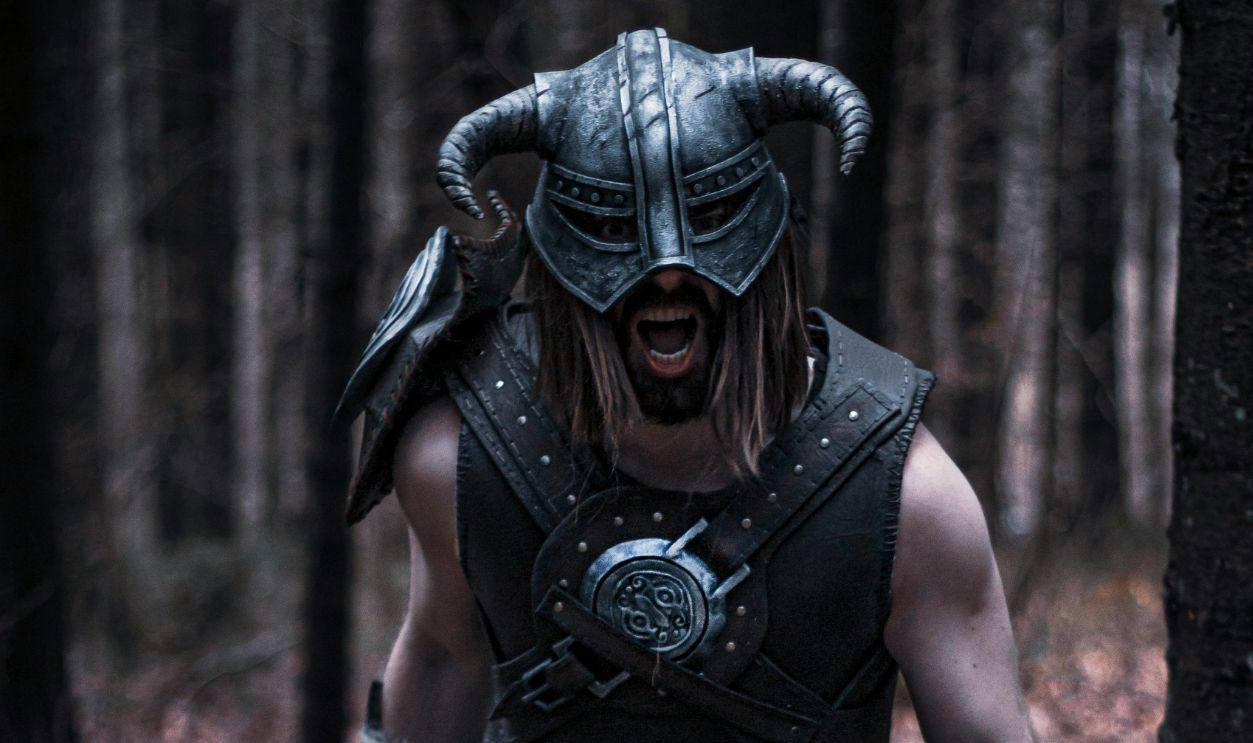
It’s strange how one of the world’s most recognizable historical images is also one of the least accurate. Everyone can picture it instantly: a towering Viking warrior striding across a windswept shore, draped in furs and topped with a helmet crowned by dramatic, curling horns. It feels almost cinematic—because it is. Yet when you begin tracing where this image actually began, the truth becomes more interesting than the myth itself. What we think we know about Viking helmets turns out to be a story crafted centuries later, stitched together by costume designers who took a creative liberty just to make them look strong.
Storytelling And A Very Theatrical Mistake
The misunderstanding didn’t erupt during the Viking Age but bloomed more than eight centuries later. In the late 1800s, Europe was deep in a romantic fascination with ancient warriors, and artists wanted drama more than accuracy. Painters began giving Vikings horned helmets because the silhouette looked powerful. Those curved horns instantly signaled ferocity to viewers who had little interest in archaeological fidelity. As the decades passed, the image hardened into cultural memory, eventually becoming so familiar that no one questioned where it came from or if it was true in the first place.
This theatrical embellishment reached its cultural peak in 1876 during the premiere of Wagner’s “Ring Cycle.” Costume designer Carl Emil Doepler leaned fully into the fantasy. This topped his Viking-inspired characters with elaborate horned helmets. It was a decision made for stage presence, yet it shaped global perception. Audiences left theaters convinced they had glimpsed ancient Nordic reality. Posters and later cartoons repeated the look with such consistency that the mistake became tradition. By the early 20th century, the horned Viking was no longer just a costume—it was folklore built on top of folklore.
The irony is that real horned helmets did exist, just not in the Viking Age. Archaeologists have uncovered horned ceremonial helmets from the Nordic Bronze Age, nearly 3,000 years old and completely unrelated to Viking warriors. These striking pieces were symbolic, perhaps connected to rituals or leadership roles, but they vanished long before Vikings sailed the seas. When 19th-century artists rediscovered images of these Bronze Age helmets, they likely blurred timelines, assuming they belonged to the same Nordic past. A misunderstanding became an aesthetic choice, and an aesthetic choice became a global misconception.
The Helmets Vikings Actually Wore
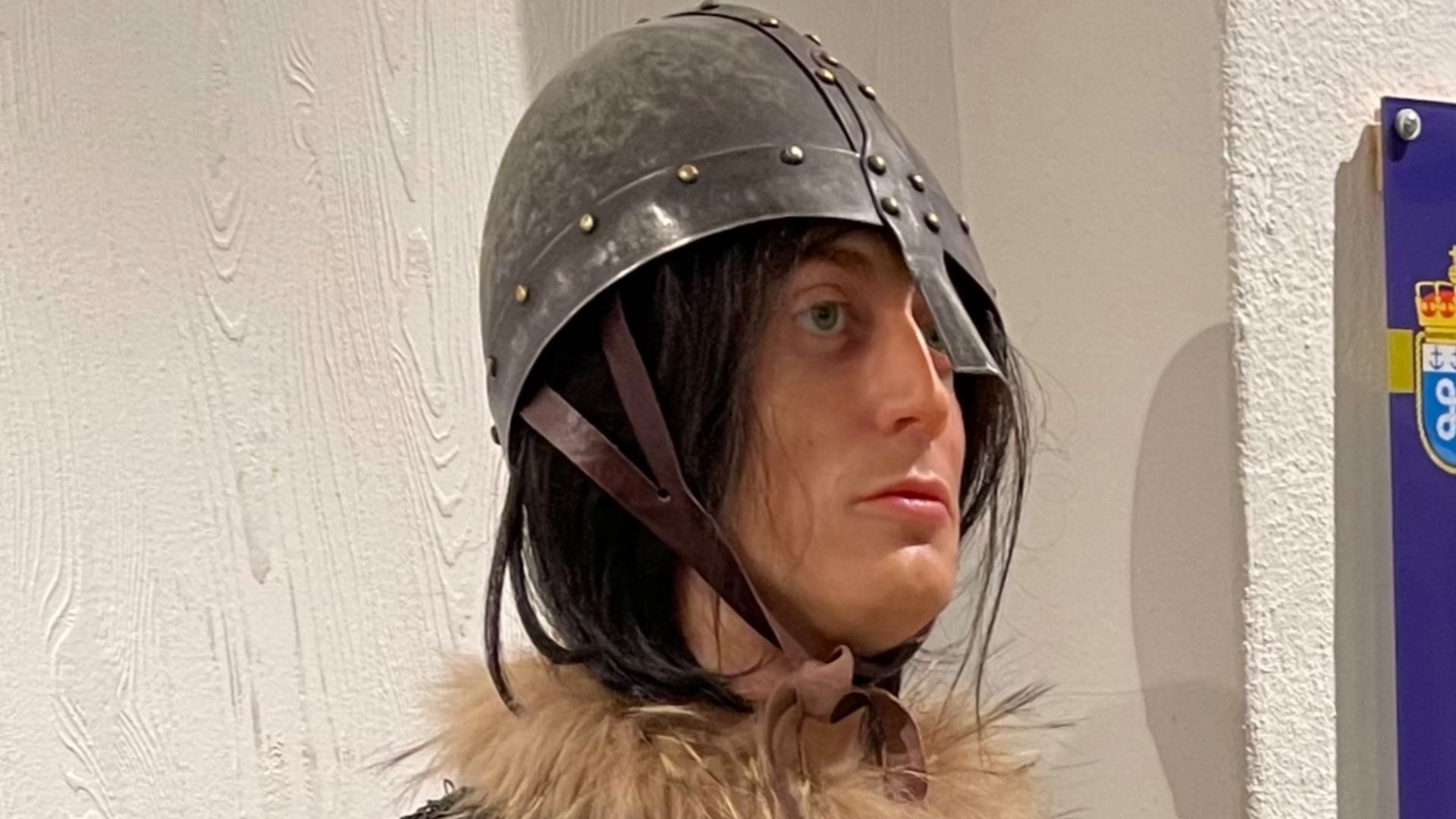
When we shift our attention to what Vikings truly wore into battle, an entirely different picture emerges. Archaeologists found that the only fully preserved Viking helmet ever discovered—the Gjermundbu helmet—is simple, functional, and horn-free. Made of iron, it features a rounded cap and protective eye guard, clearly built for combat rather than spectacle. The design is consistent with other fragments found across Scandinavia, all supporting what scholars already know: Viking equipment was practical, not theatrical. Any unnecessary decoration would have been a liability in warfare, especially something as cumbersome as protruding horns.
And yet, even without the horns, the reality of Viking gear remains captivating. Their craftsmanship brought together function with subtle beauty—intricate metal rivets and carefully shaped nose guards. One could even find some patterns forged into iron. This understated elegance reveals a society deeply connected to its craft, one that valued strength without needing theatrical flourishes. The truth, as it turns out, paints Vikings not as wild barbarians but as intentional, disciplined warriors who understood the balance between protection and performance. Their gear tells us a lot about survival.
Looking Beyond The Horns
Recent research offers a clearer picture of how Viking warfare actually unfolded, grounding their reputation in evidence rather than theatrical imagery. Analyses of skeletal remains from Viking battlefields—such as those at Repton in England and the mass graves at Trelleborg in Denmark—show injuries that match close-quarters combat techniques described in early medieval sources. It reinforced the practicality of their real equipment. Isotope studies of helmets and weapons reveal trade routes that stretched across Europe, which proves that Viking warriors relied on widespread metallurgical networks. Even the iron used in their helmets sometimes carried chemical signatures linking it to specific Scandinavian bog-iron deposits. This allowed researchers to trace production patterns that challenge older assumptions about how Viking armies were supplied.
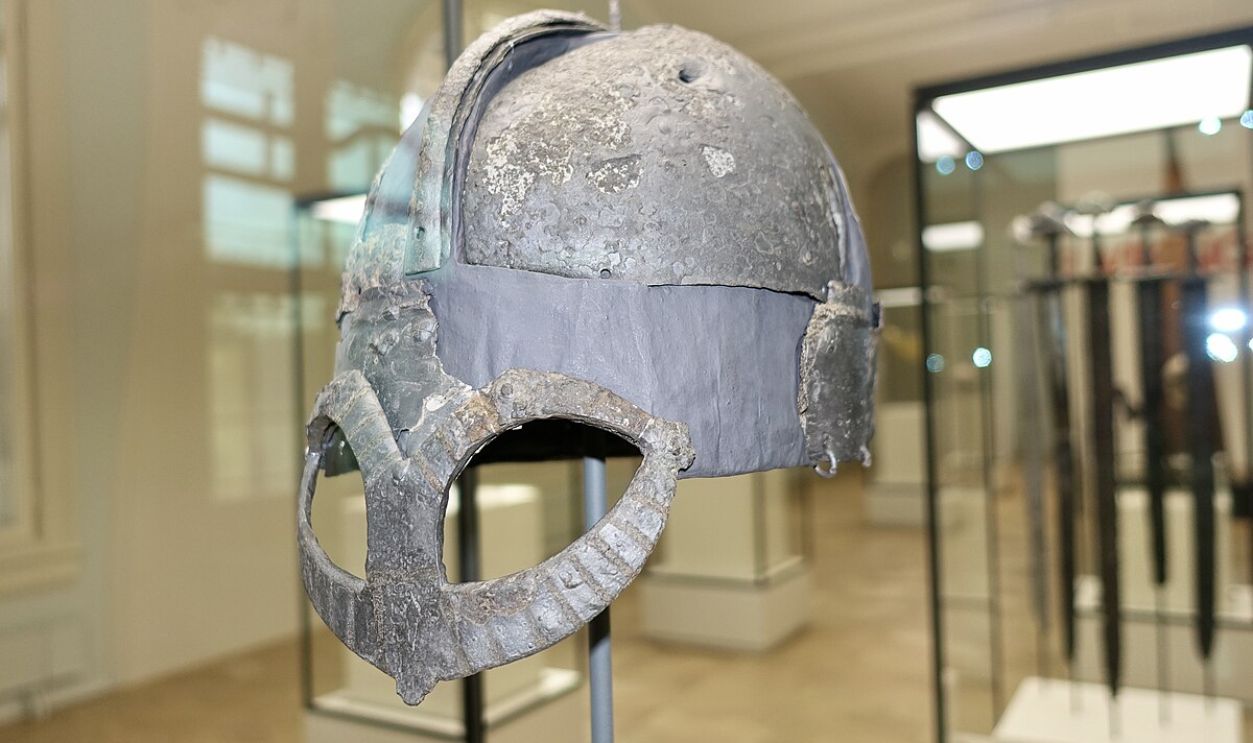









_Museum_Oslo._VIKINGR_Norwegian_Viking-Age_Exhibition_08_Iron_helmet_from_Gjermundbu_(Gjermundbuhjelmen)._Best-preserved_viking_helmet,_grave_find,_destroyed_in_funeral._Equestrian_warrior_950-1000._4664.jpg)