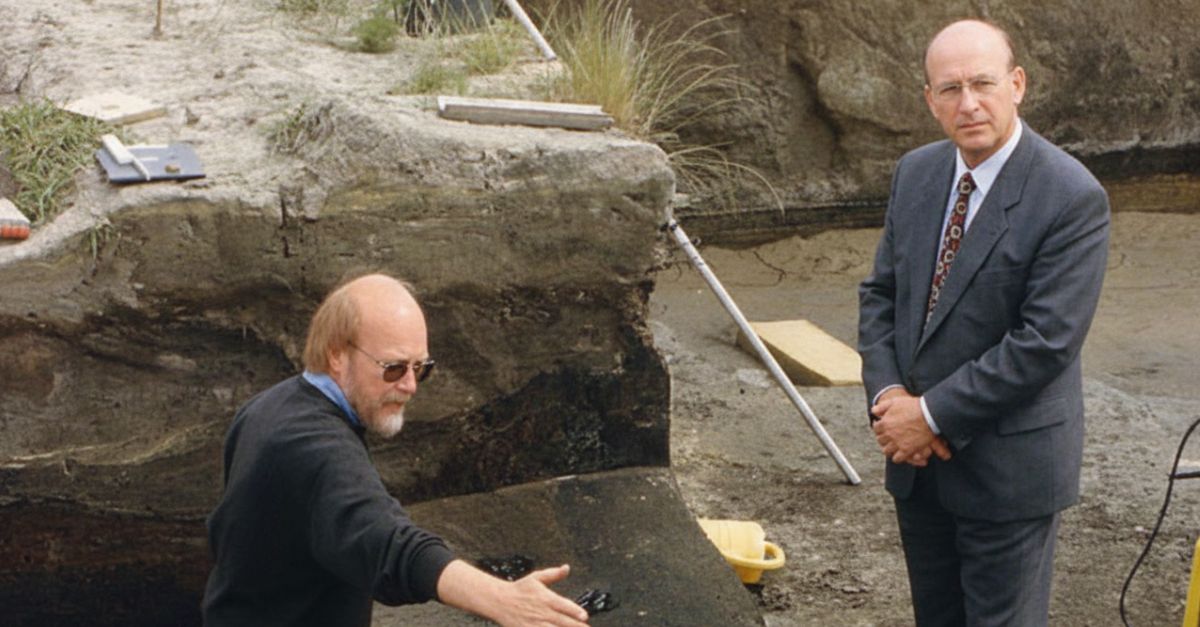
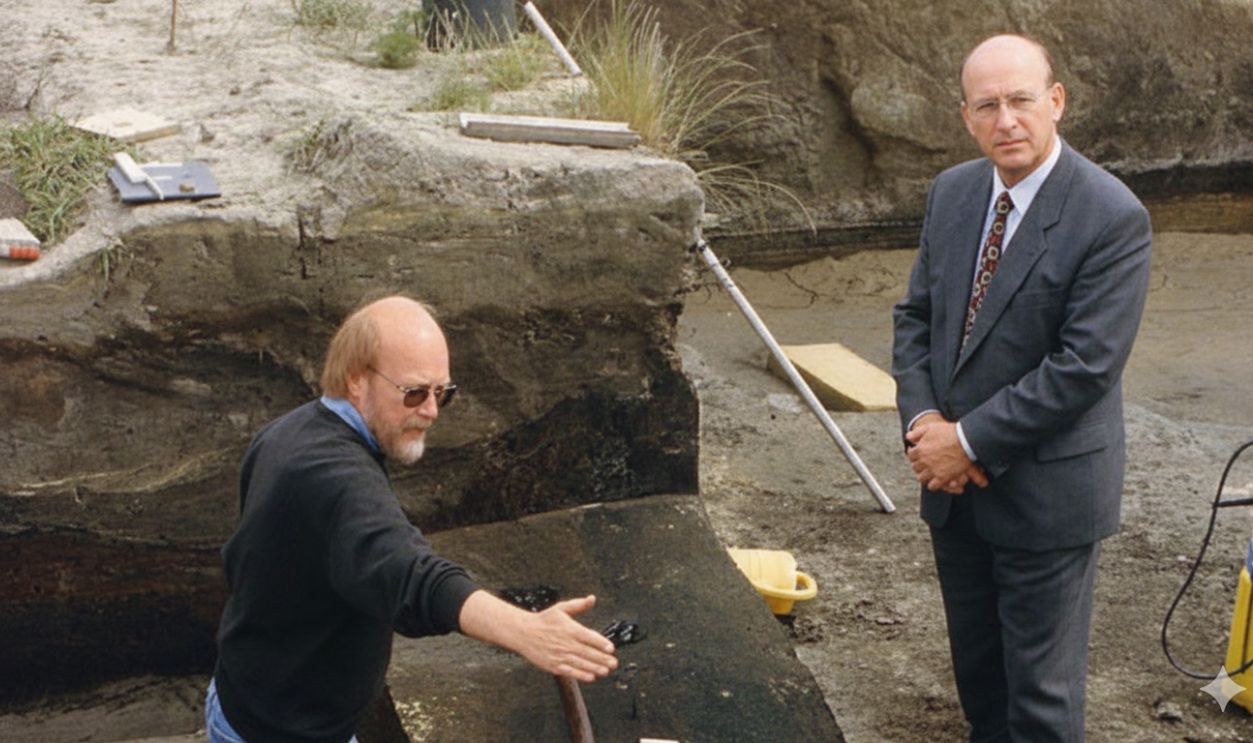
 P. Pfarr NLD, CC BY-SA 3.0 DE, Wikimedia Commons, Modified
The story begins in northern Germany, at the open-air marshlands of Schoningen site, where wooden spears, butchered horse remains, and quiet layers of sediment have long hinted at deep time. What changed everything was not a new artifact, but a molecular echo pulled from damp soil. Horse DNA, nearly 200,000 years old, survived where theory said it should not. That single recovery from the site quietly rewrote assumptions about preservation and the limits of ancient genetics. It also set the stage for challenges that stretch far beyond one site, because once a boundary falls, science must learn how to walk carefully on the other side and emerge victorious.
When Sediments Speak Instead Of Bones
The discovery itself was deceptively subtle. Geneticists worked directly with the horse bones themselves to target dense sections of the petrous bone (basal elements of the skull that form part of the endocranium) from excavated skulls. This material is known to shield DNA far more effectively than surrounding sediment or other skeletal elements. By extracting and sequencing DNA from the dense petrous portions of the horses’ temporal bones, researchers reconstructed near-complete mitochondrial genomes belonging to an extinct Middle Pleistocene horse lineage, with coverage levels reaching 82 and 94 percent. These findings help fill gaps in the early evolutionary history of horses as they link ancient lineages to later horses and show migrations of horse ancestors across continents. The guidance in such situations is to treat sediments as biological archives. Once DNA is proven to survive outside expected environments, excavation strategies must adapt to sample soils with the same care once reserved for fossils alone in such conditions.
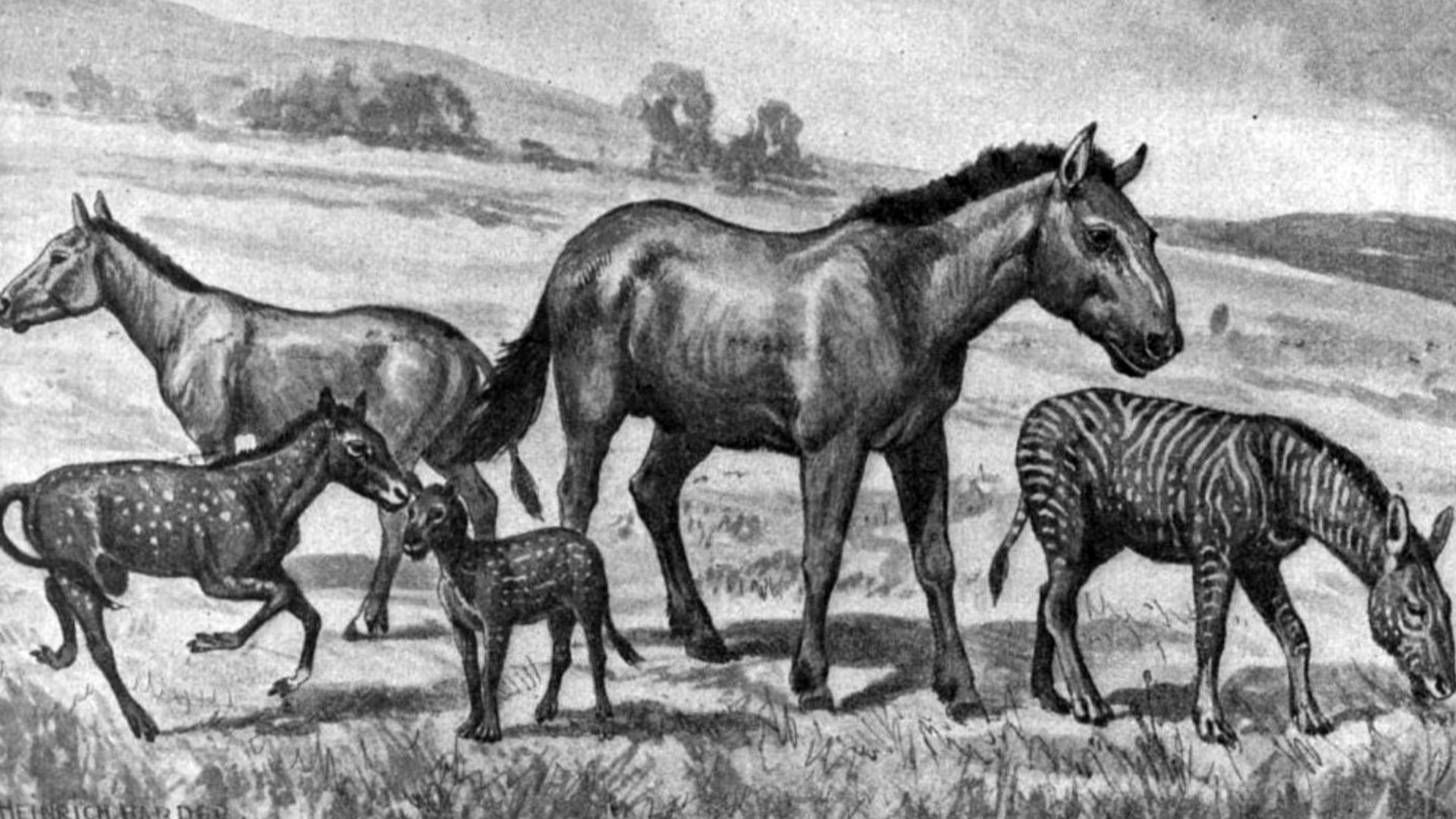 Heinrich Harder (1858-1935), Wikimedia Commons
Why Is The Site Important
The site gained international recognition in 1994 when archaeologists uncovered a remarkable cache of wooden spears. It was the oldest complete hunting weapon ever found. Dating to roughly 300,000 years ago, these finely crafted spruce spears were discovered alongside butchered horse remains and stone tools within ancient lakeshore sediments. The spatial arrangement of bones and artifacts revealed something profound: early humans weren't merely scavenging carcasses but actively planning and executing coordinated hunts. This evidence fundamentally changed our understanding of early human cognitive abilities and strategic thinking during the Middle Pleistocene.
The recent recovery of ancient horse DNA adds new dimensions to this already extraordinary narrative set in the past. By confirming which specific horse species were present and establishing biological continuity between the hunted animals and the sediments preserving them, the genetic evidence strengthens the archaeological story. It deepens our confidence in site interpretations and opens possibilities for understanding the paleoenvironment these early hunters walked through. It transformed Schoningen from a site of behavioral significance into one of combined archaeological and paleogenetic importance.
The Schoningen site sits within an ancient lakeshore environment, preserved through lignite mining operations that exposed these Paleolithic layers. This industrial intervention ironically created conditions for modern scientific discovery by revealing sediments undisturbed for millennia. The chemical composition proved crucial—clay minerals and organic compounds acted as molecular scaffolds, which protected DNA fragments from enzymatic degradation. Alkaline pH levels in certain layers inhibited nucleases (enzymes that break down nucleic acids). These factors combined to create a preservation microenvironment defying conventional expectations. The discovery challenges paleogeneticists to reconsider other open-air sites previously dismissed as too degraded for molecular work.
When Preservation Breaks The Rules
Archaeologists understand that open-air sediments are hostile to DNA, exposed to oxygen, microbes, and seasonal temperature swings. At Schoningen, the sediments tell a different story. Waterlogged layers reduced oxygen while minerals bound genetic fragments, and stable burial sealed them from repeated disturbance. The advice in such situations is restraint before replication. Not every open-air site shares these conditions, and assuming universal preservation risks wasted resources and false negatives. Each sedimentary context must be treated as its own experiment, with microclimate and hydrology studied before expectations are set. As attention grows, so does the risk of contamination, which becomes the second pressure point. Older DNA is shorter and easily overwhelmed by modern genetic material. The guidance here is procedural discipline from the people who have access to the site.
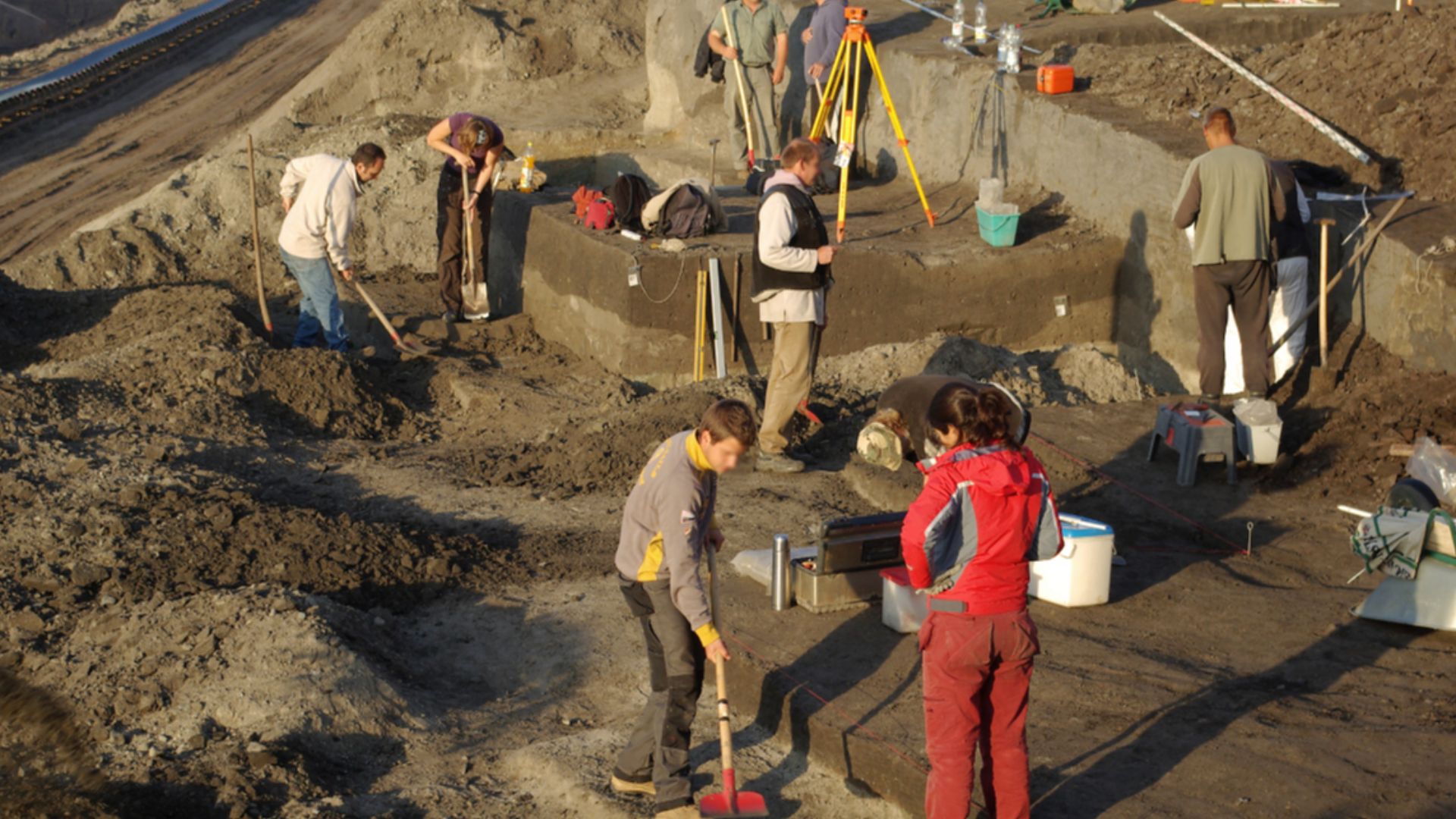 Jordi Serangeli, Wikimedia Commons