

A car backfires, and your shoulders jump. A shadow moves, and your eyes fly open before your brain catches up. That dramatic flash of white sclera around widened eyes feels automatic because it is. Even though humans share this startle reflex with other mammals, one that fires faster than thought and prioritizes protection, no other primate shows it quite like this. The eyes clamp down or widen to shield vision, facial muscles tense, and the body braces for impact. Long before traffic or movie jump scares, that reaction helped people survive claws and fast-moving threats. The traces remain. Pay attention, and the past comes rushing forward.
Sclera Signals And Group Vigilance
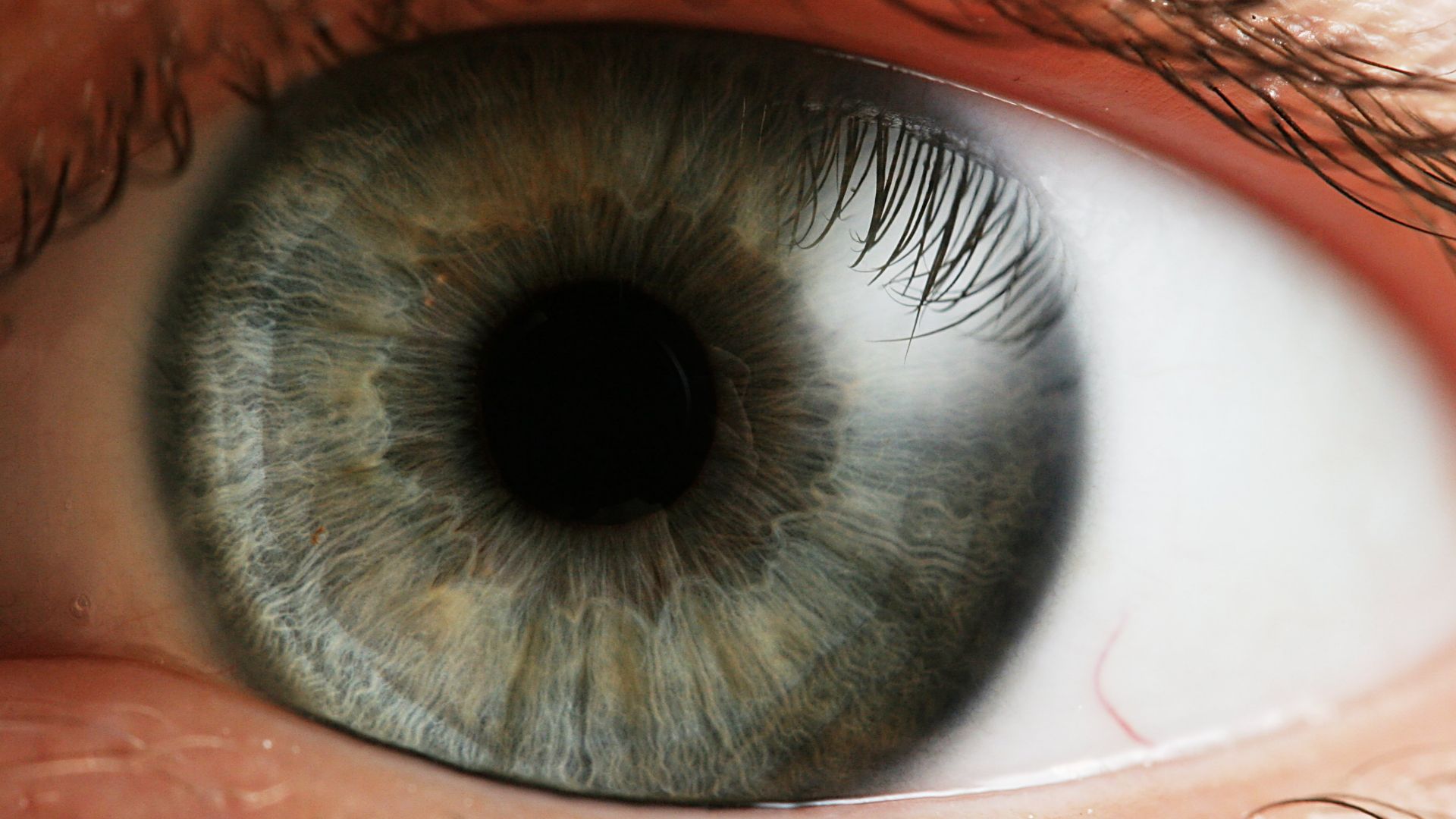
Fear communicates itself through primate eyes in remarkably consistent ways. A sudden threat triggers eyelid retraction, exposing more sclera around the iris to increase peripheral vision and light intake. Humans take this further, with uniformly white sclera that create a sharp visual flare noticeable across a room in an instant. Chimpanzees and gorillas show a similar widening response to reveal pale sclerae during alert states, though the effect is subtler at a distance. Underlying brainstem circuits drive this reaction by rapidly detecting edge motion, a survival mechanism shaped by ancestral threats from predators. In humans, high scleral contrast turns an individual alarm into a long-range social signal, amplifying shared vigilance within groups.
Within social primate groups, these signals carried clear survival value. A widened stare redirects attention faster than a vocal call, especially in dim light or chaotic settings. Evolutionary research links the response to predator detection, and this includes snakes striking low from dense foliage. A sudden eye flare pulls nearby gazes toward danger and multiplies the benefit of collective awareness when seconds matter. Humans extend this cue through highly visible sclera suited to open savannas. At the same time, other primates depend more on proximity and shared facial expressions. Even today, the reflex fires before conscious thought, to produce startle responses to harmless surprises. The underlying neural hardware remains largely unchanged.
Fear Faces And Neural Speed
The primate fear grimace pairs seamlessly with eye widening, lip tightening, or tooth baring in a brief flash. This expression spans species and cultures, recognized intuitively from deep evolutionary roots rather than learning. Great apes display homologous fear faces with widened eyes and muscular tension during startle events. Human infants reveal it through the Moro reflex, flinging arms outward in primal defense—a pattern echoed in young primates's grasping responses. Brainstem-driven speed bypasses cognition perfectly for below-eye threats like crawlers or snakes. Strong phobias of such shapes linger in humans and apes alike.
What unites these traits is subcortical lightning via brainstem and amygdala pathways. Primates potentiate startle responses to fear cues, mirroring human circuits for rapid, lifesaving reactions. This neural shortcut favored survival against ground predators far more than modern risks like vehicles. Facial cues always lead, body jolts follow, and the mind assesses only afterwards. Laboratory studies confirm that nonhuman primates exhibit eye and body responses akin to ours during tests. Human sclera simply amplifies the social signaling aspect, not the core reflex itself. Evolution refined it for cooperative primate troops and human bands, scaling with sociality.
An Ancient Alarm That Never Learned To Switch Off
This reflex remains potent across primates despite massive environmental shifts. Living in exposed habitats pushed groups to rely on shared vigilance, not sound alone. Visible fear cues allowed quick alignment when danger appeared, especially when silence mattered. Human sclera visibility enhances the shared factor here. Scleral whiteness correlates with social complexity across primates, but it differs in humans for larger groups since early humans depended on reading one another instantly in open terrain. A rapid, visible fear response helped groups move together without explanation. Emotional transparency strengthened trust under pressure.
That persistence has costs and curiosities. Startle reactions spike heart rate across primates. Even though this can feel embarrassing in safe human settings, if it happens in dangerous situations, the same wiring sharpens your attention and saves you when it counts. The reflex also reveals how evolution keeps what works, even when the environment changes. It does not optimize for comfort; it favors survival. Notice the next time a surprise hits to confirm this: The eyes tell the story first, just as they did thousands of years ago. Stay curious, watch your reactions, and see how often ancient fear still whispers directions.