

Rewriting Human Origins
Someone's hand pressed against a cave wall in Indonesia 67,800 years ago. They blew red pigment around their fingers, creating an outline that would survive millennia. That simple gesture just became the oldest known rock art on Earth.
 Lourdes Ballesteros, CC BY-SA 4.0, Wikimedia Commons, Modified
Discovery Announced
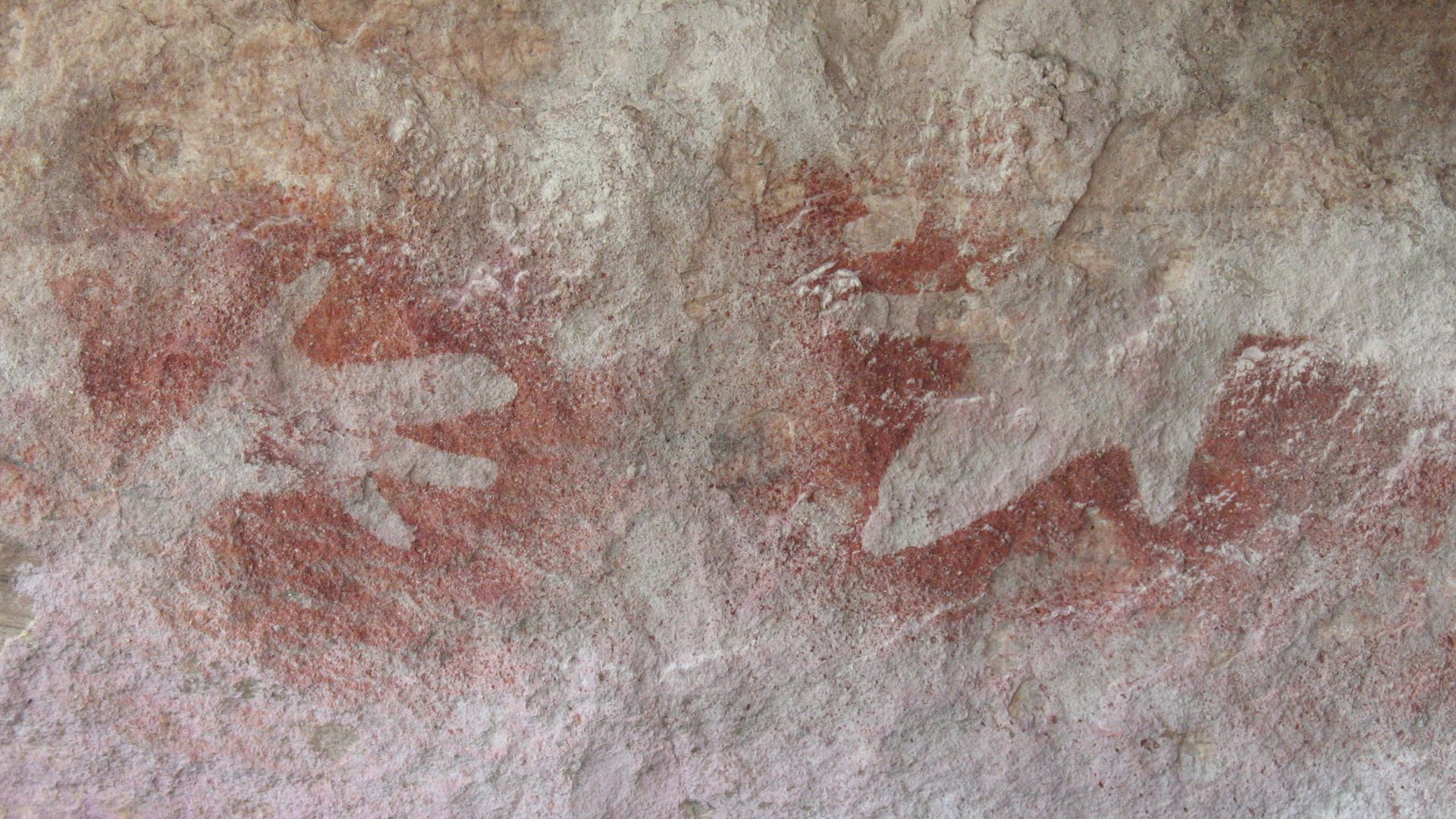
In January 2026, archaeologists detected something extraordinary hiding in plain sight. A faint hand stencil on a cave ceiling in Indonesia turned out to be at least 67,800 years old—the oldest known rock art attributed to modern humans.
 Unknown artistUnknown artist (Australian), Wikimedia Commons
Muna Island
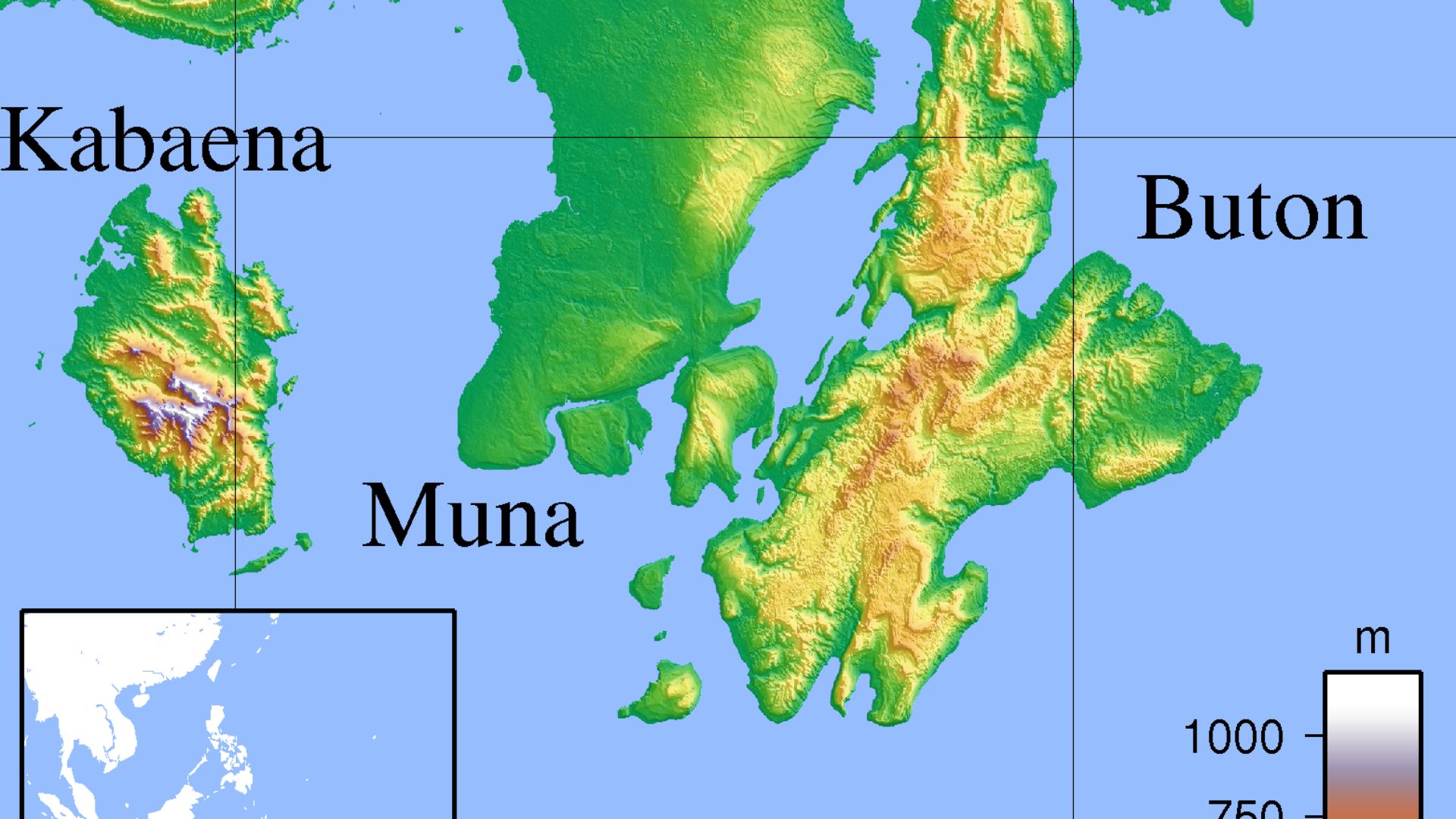
Off the southeastern coast of Sulawesi lies Muna Island, a limestone landscape within Indonesia's Southeast Sulawesi Province. This tropical island sits in the Flores Sea, part of the Wallacea biogeographical zone. The island's karst terrain is dominated by caves and rock shelters filled with calcium carbonate deposits.
Liang Metanduno Cave
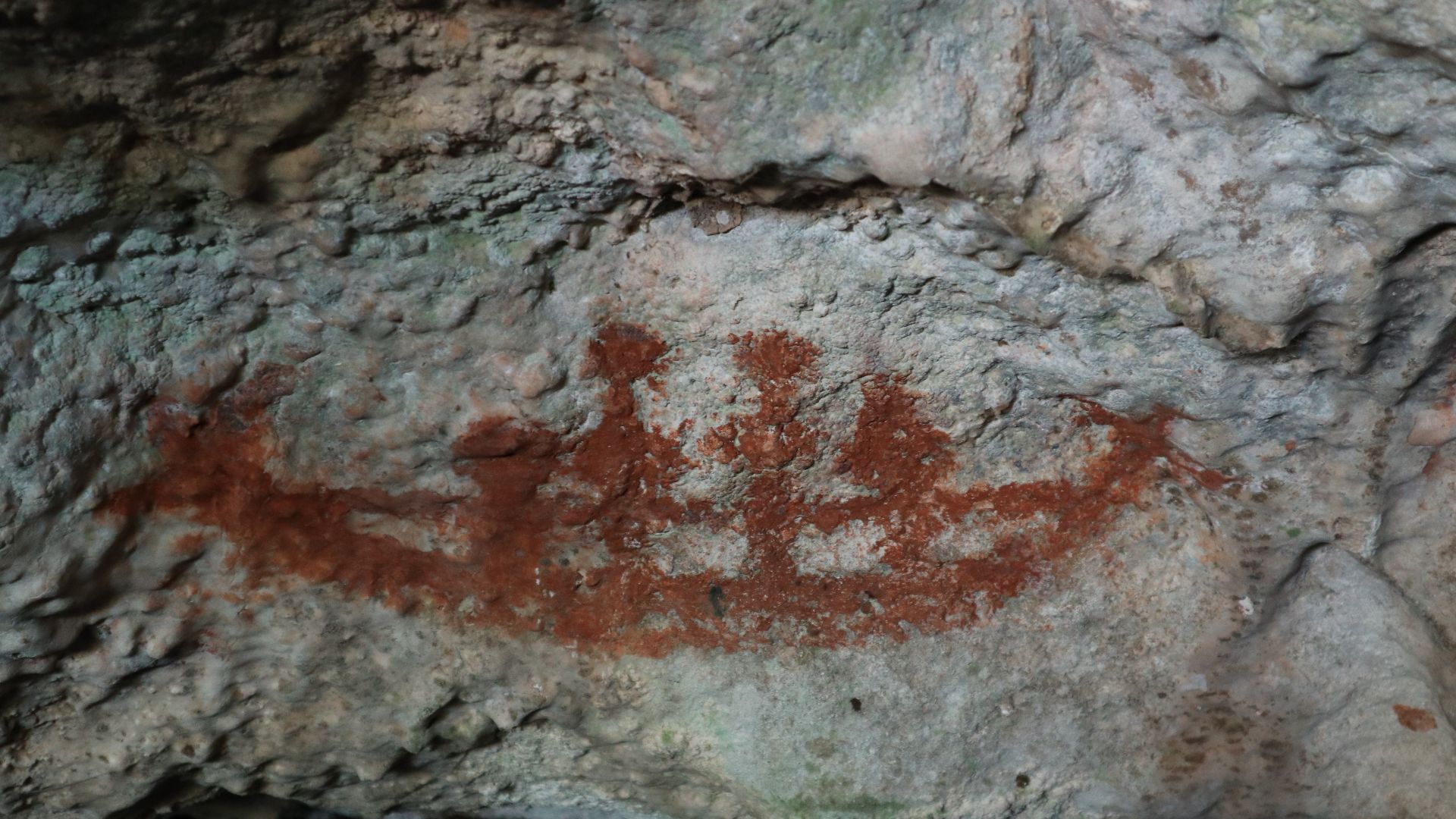
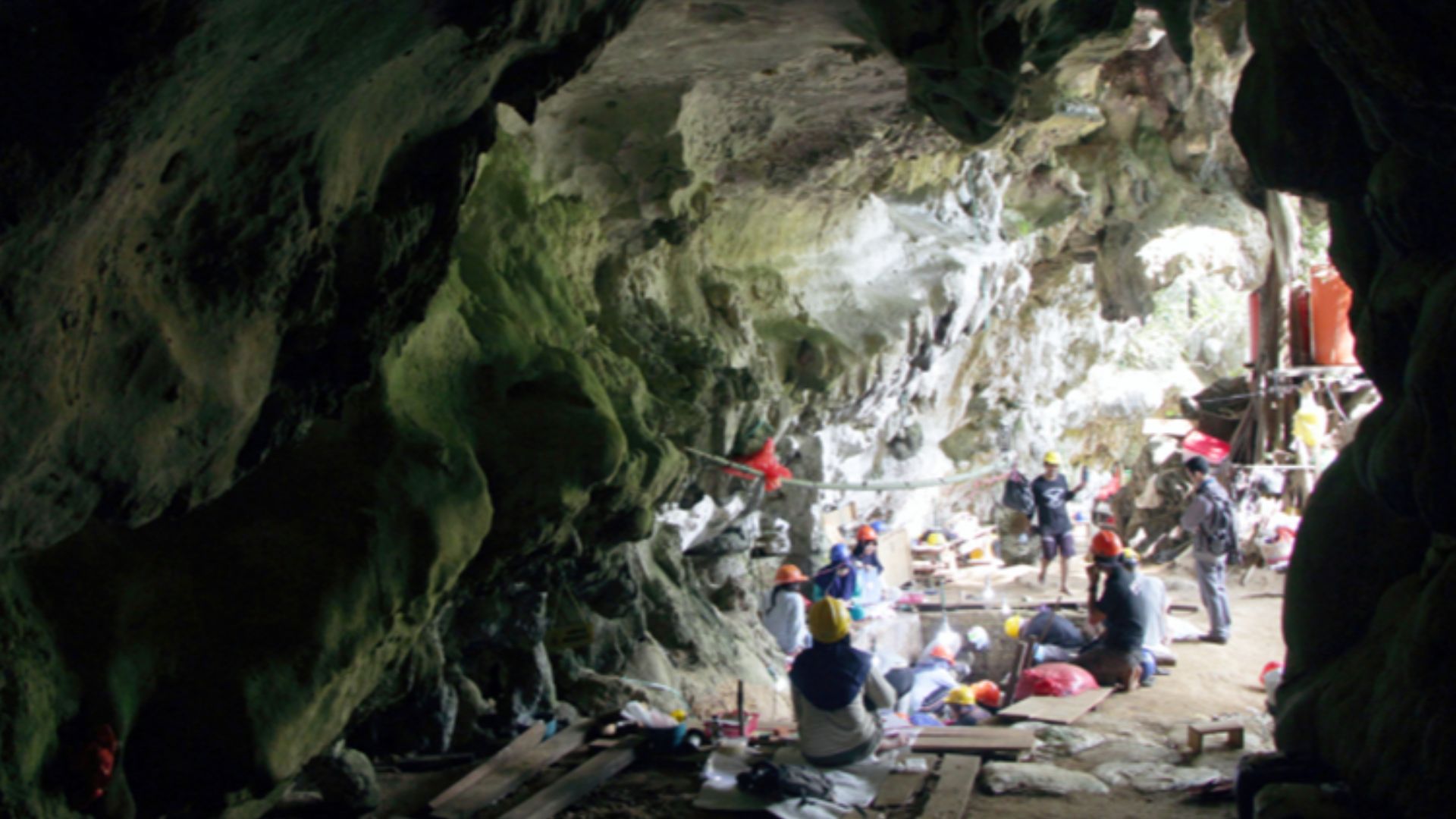
Locals have known about Liang Metanduno for generations, visiting it primarily to admire more recent paintings. These are colorful depictions of chickens, boats, and flying human figures created about 4,000 years ago by Austronesian-speaking farmers.
The cave stretches deep into the limestone, and the new discovery has shown human habitation here went back even further than we realized.
 Purnawibawa, Wikimedia Commons
Research Team
The discovery emerged from a collaboration between Indonesian and Australian scientists working together for over a decade. Adhi Agus Oktaviana from Indonesia's National Research and Innovation Agency led the fieldwork, while Maxime Aubert, a National Geographic Explorer and geochemist at Griffith University in Australia, developed the dating techniques.
 Chris Olszewski, Wikimedia Commons
67,800 Years Old
Since the art must have existed before the mineral crust formed on top of it, scientists established a minimum age of 67,800 years. This makes it more than 15,000 years older than previously dated Indonesian cave art and pushes back the timeline for modern human artistic expression by millennia.
 Yvon Fruneau, CC BY-SA 3.0 IGO, Wikimedia Commons
Previous Record Broken
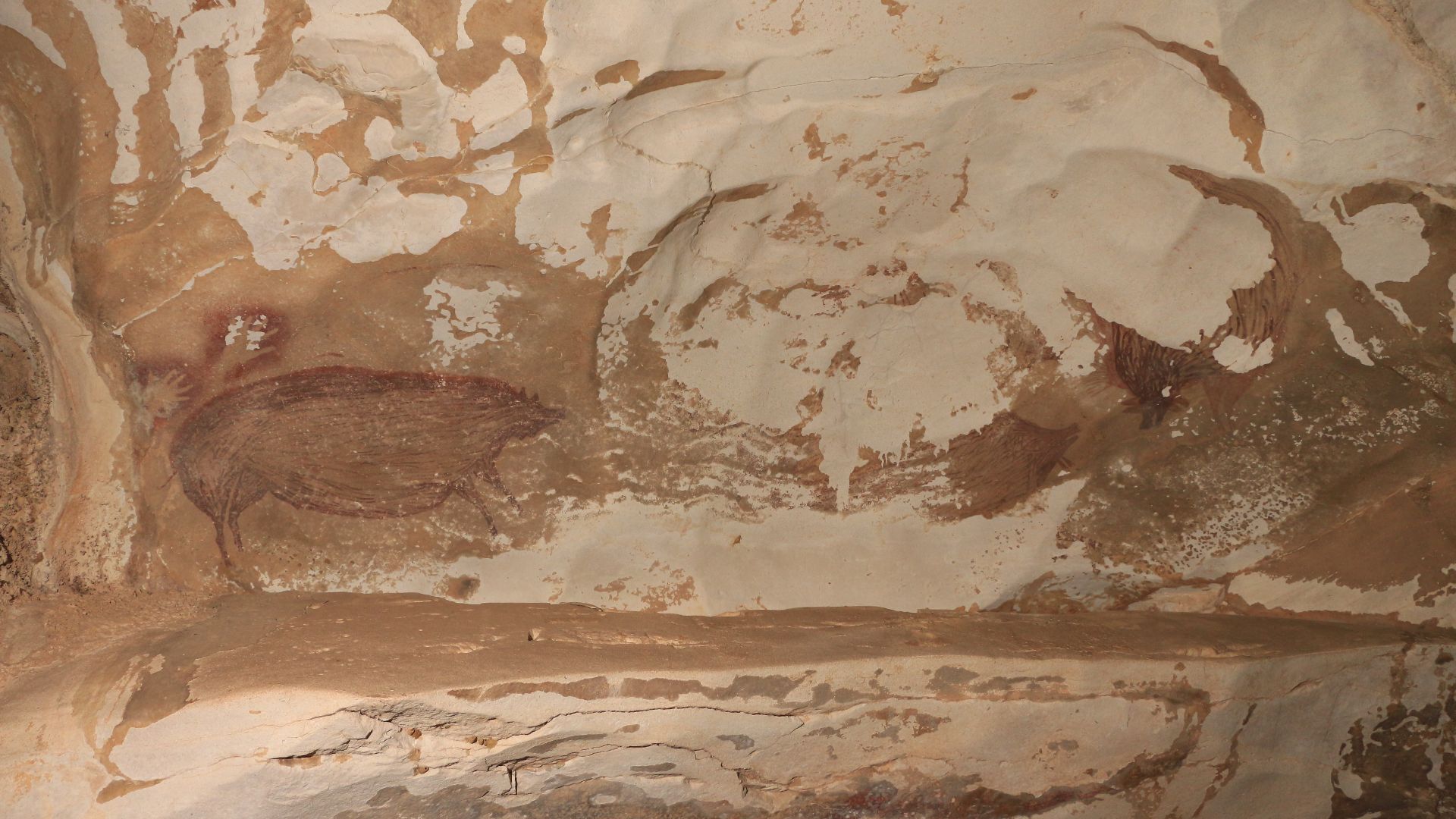
Before this discovery, the same research team held the previous record—a narrative hunting scene from another Sulawesi cave dated to 51,200 years old, depicting human-like figures with animal features interacting with a wild pig. That finding, announced in 2024, had already stunned the archaeological world.
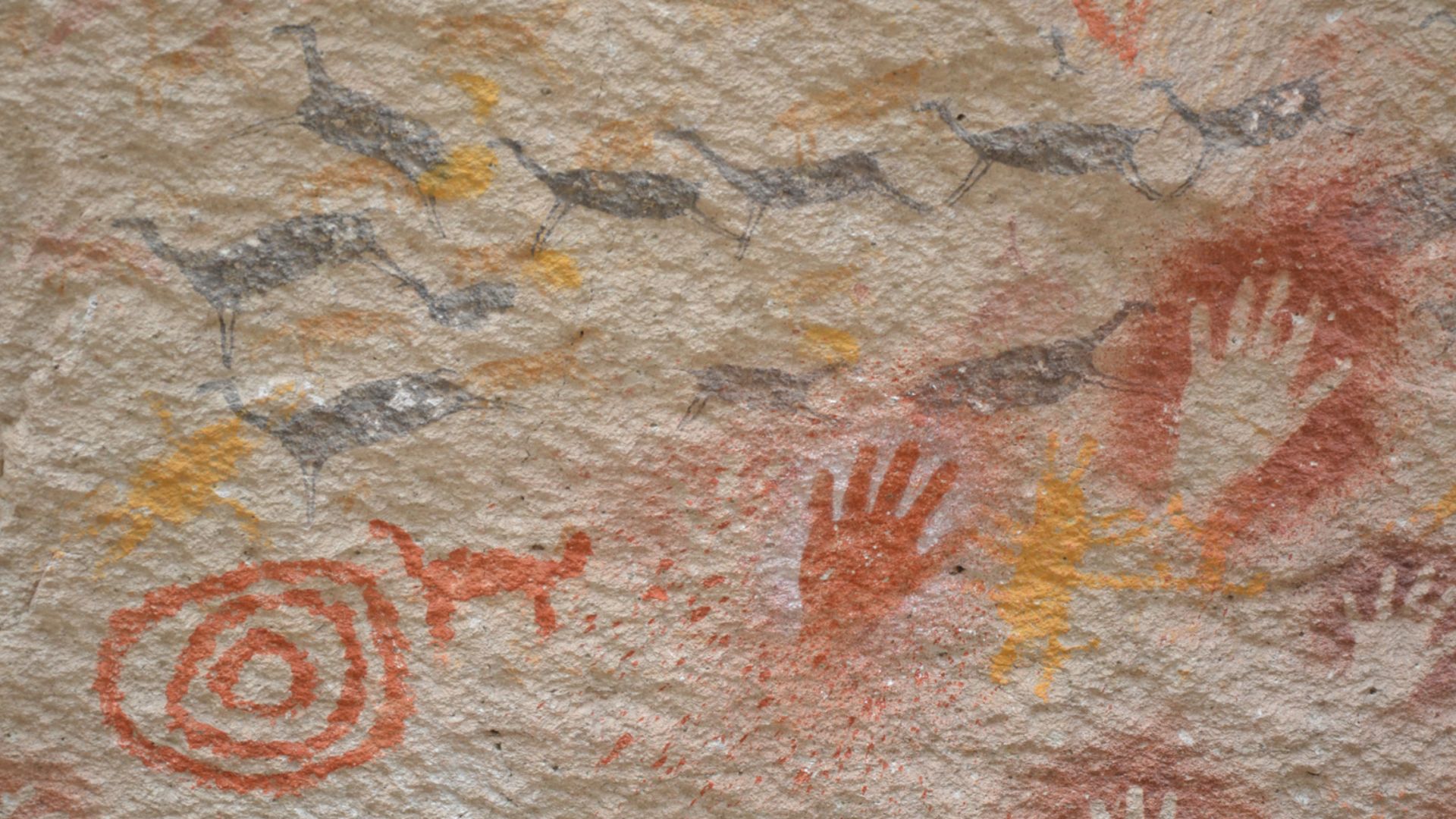 Carlos Zito, Wikimedia Commons
Hand Stencil Art
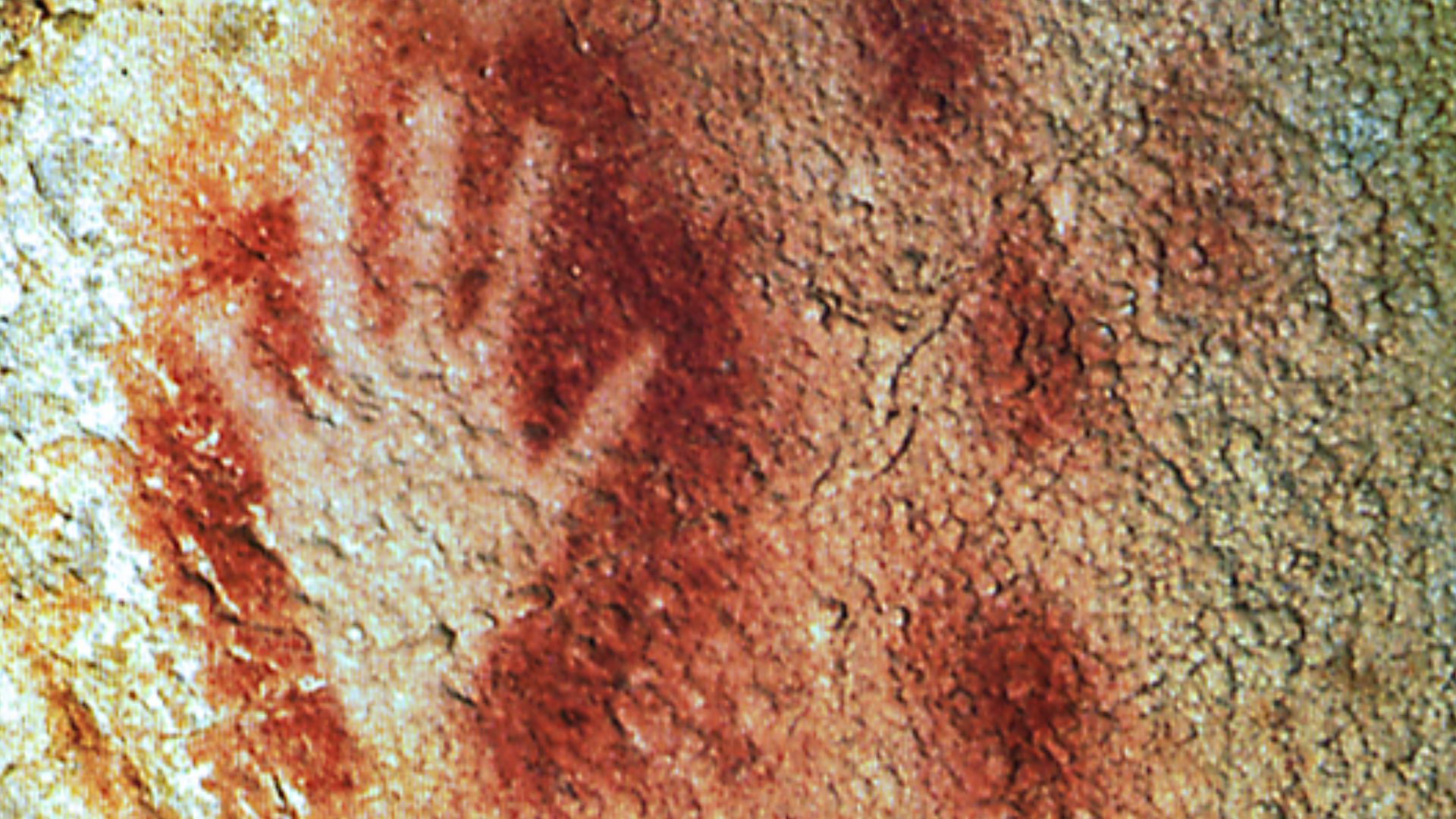
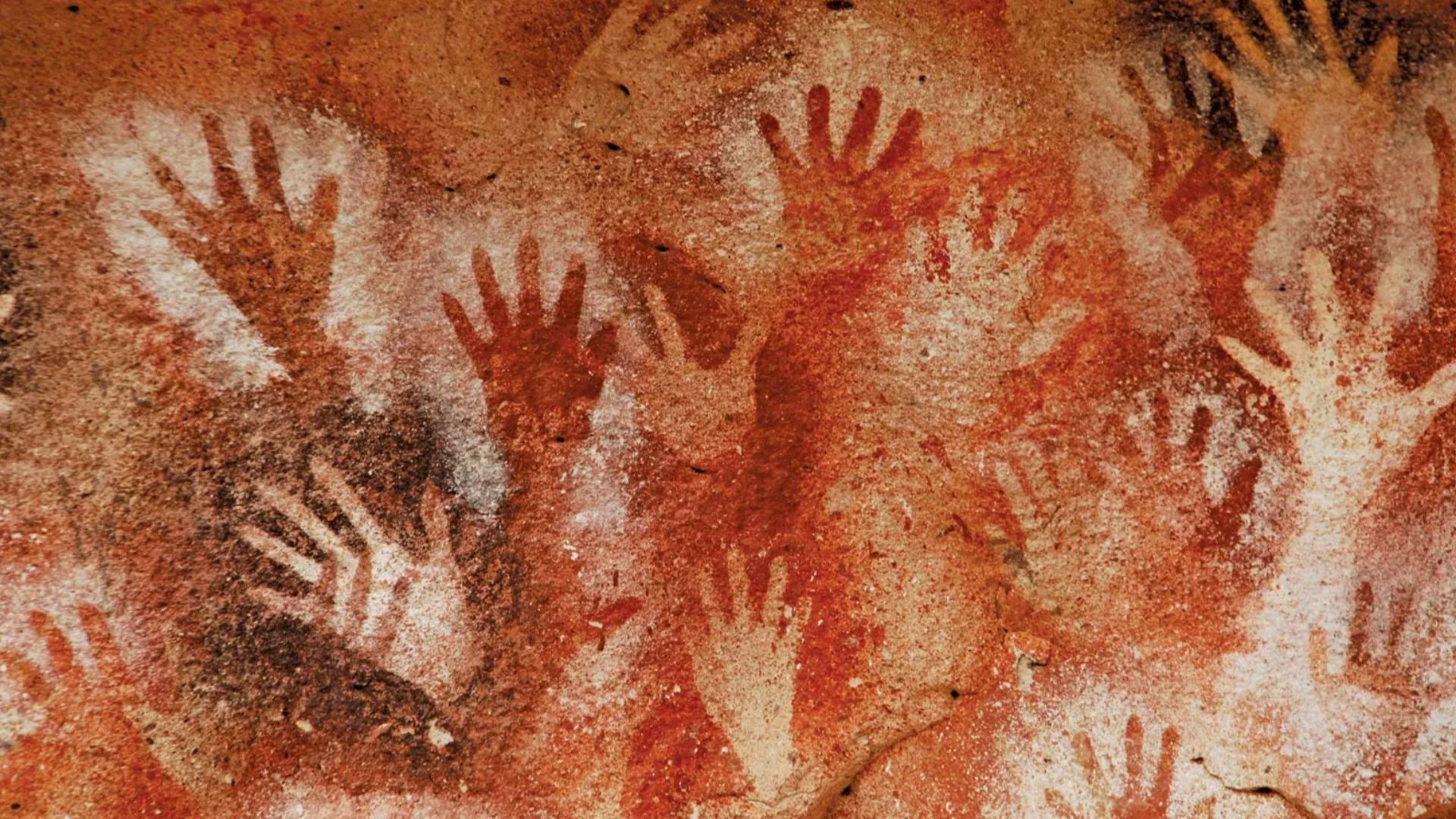
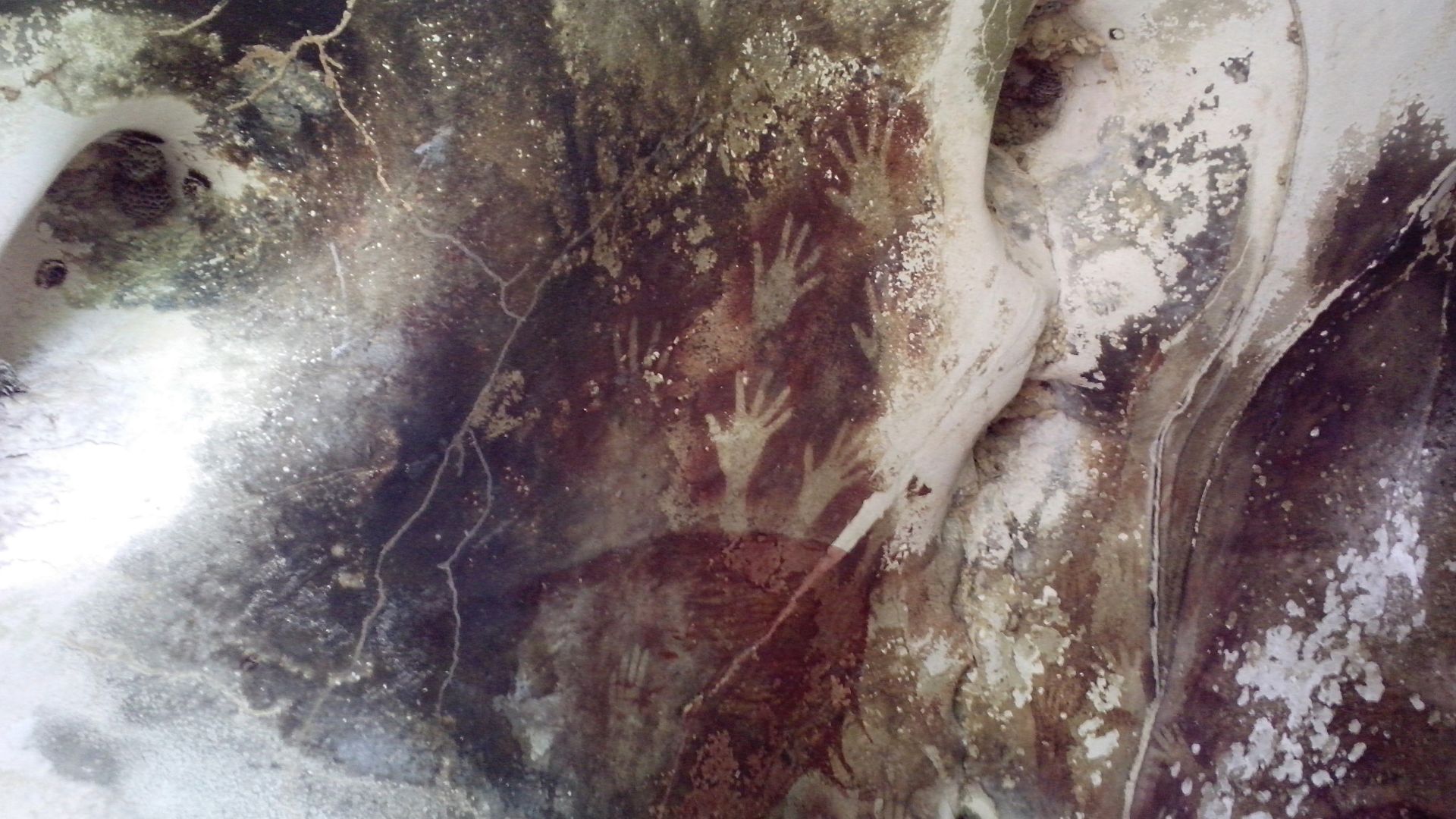
The artists created these images using a technique called negative hand stenciling, which is basically pressing a hand flat against the cave wall and blowing pigment around it, leaving an outlined silhouette. Only a small patch remains visible today.
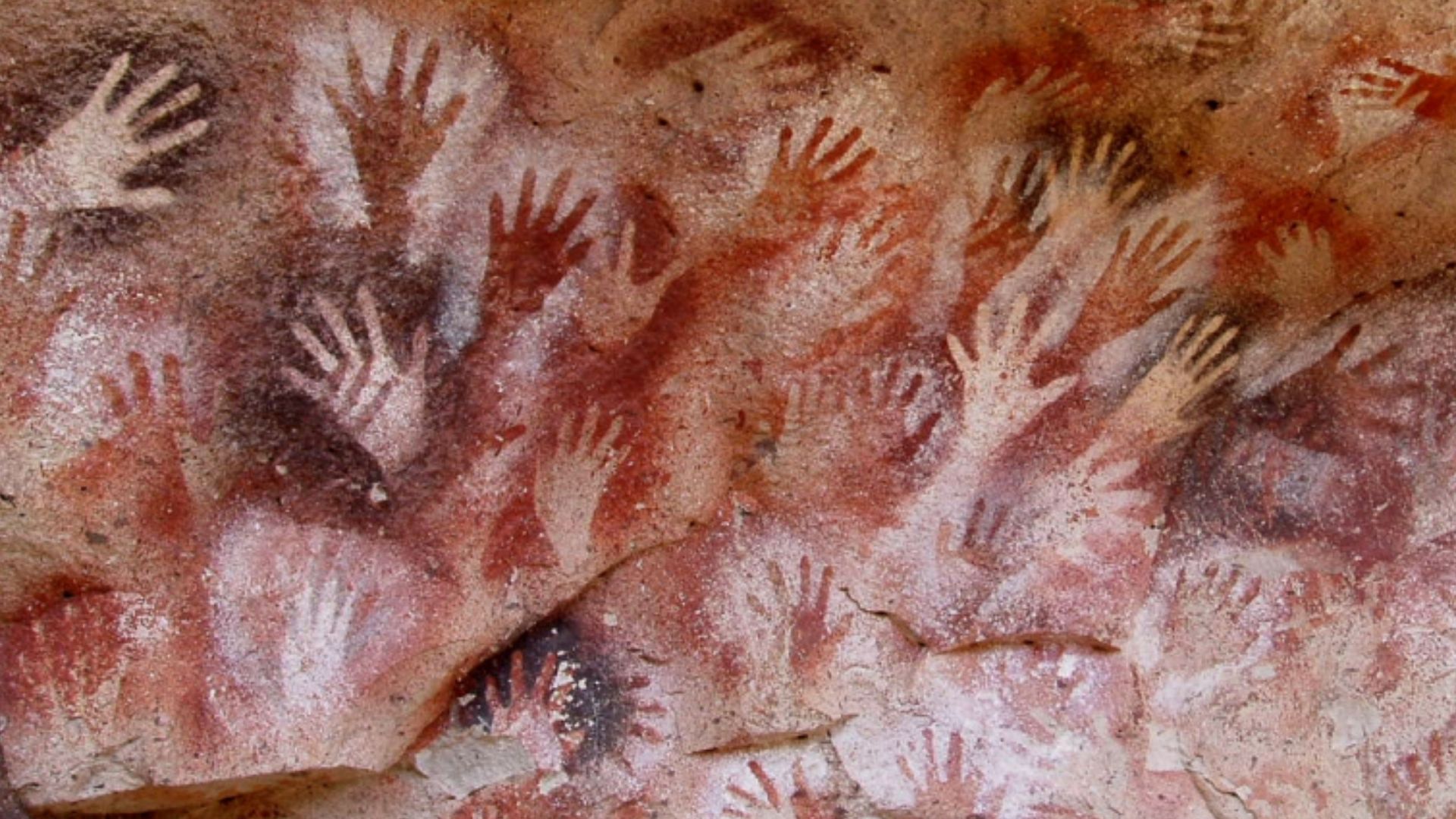
Pointed Finger Technique
What makes this stencil truly distinctive is a deliberate stylistic choice: one fingertip appears artificially narrowed, reshaped to look pointed like an animal claw. Artists achieved this either by applying extra pigment or by moving their hand during the blowing process. This exact style has been found only in Sulawesi.
 Cahyo Ramadhani, Wikimedia Commons

History's most fascinating stories and darkest secrets, delivered to your inbox daily.
Red Ochre Pigment
The ancient artists used ochre, a natural reddish-brown pigment derived from iron oxide found in clay. Unlike charcoal-based pigments used in European caves, ochre is inorganic and cannot be carbon-dated directly, which is why scientists had to date the mineral deposits formed over the art instead.
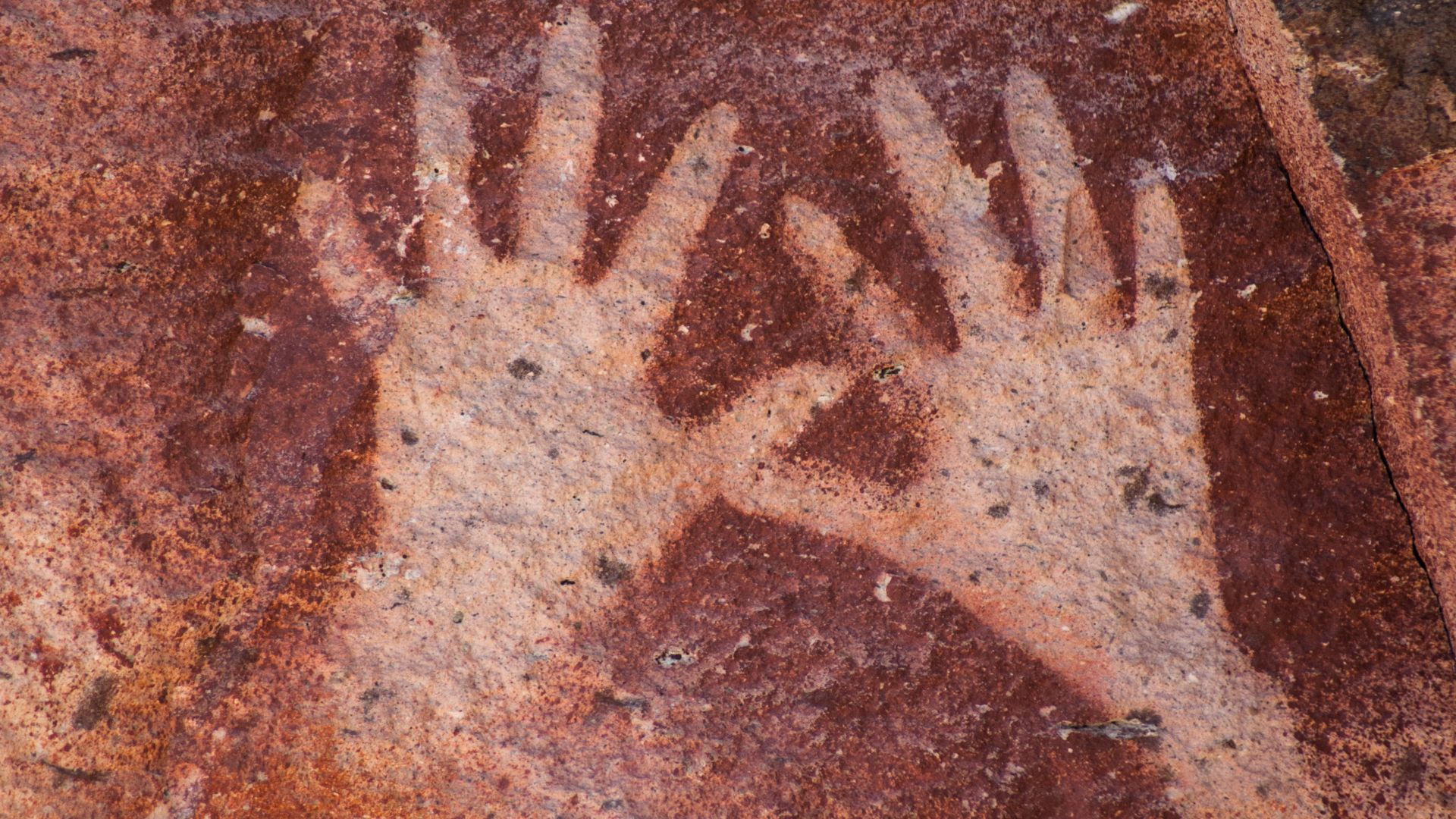 LuigiStudio, Wikimedia Commons
Dating Methods
Traditional radiocarbon dating doesn't work on mineral pigments like ochre, which presented a major obstacle for decades. European cave art could be dated because artists often used charcoal, but Southeast Asian rock art remained mysteriously undated. Scientists needed a completely different approach.
 Locutus Borg, Wikimedia Commons
Laser Ablation Technology
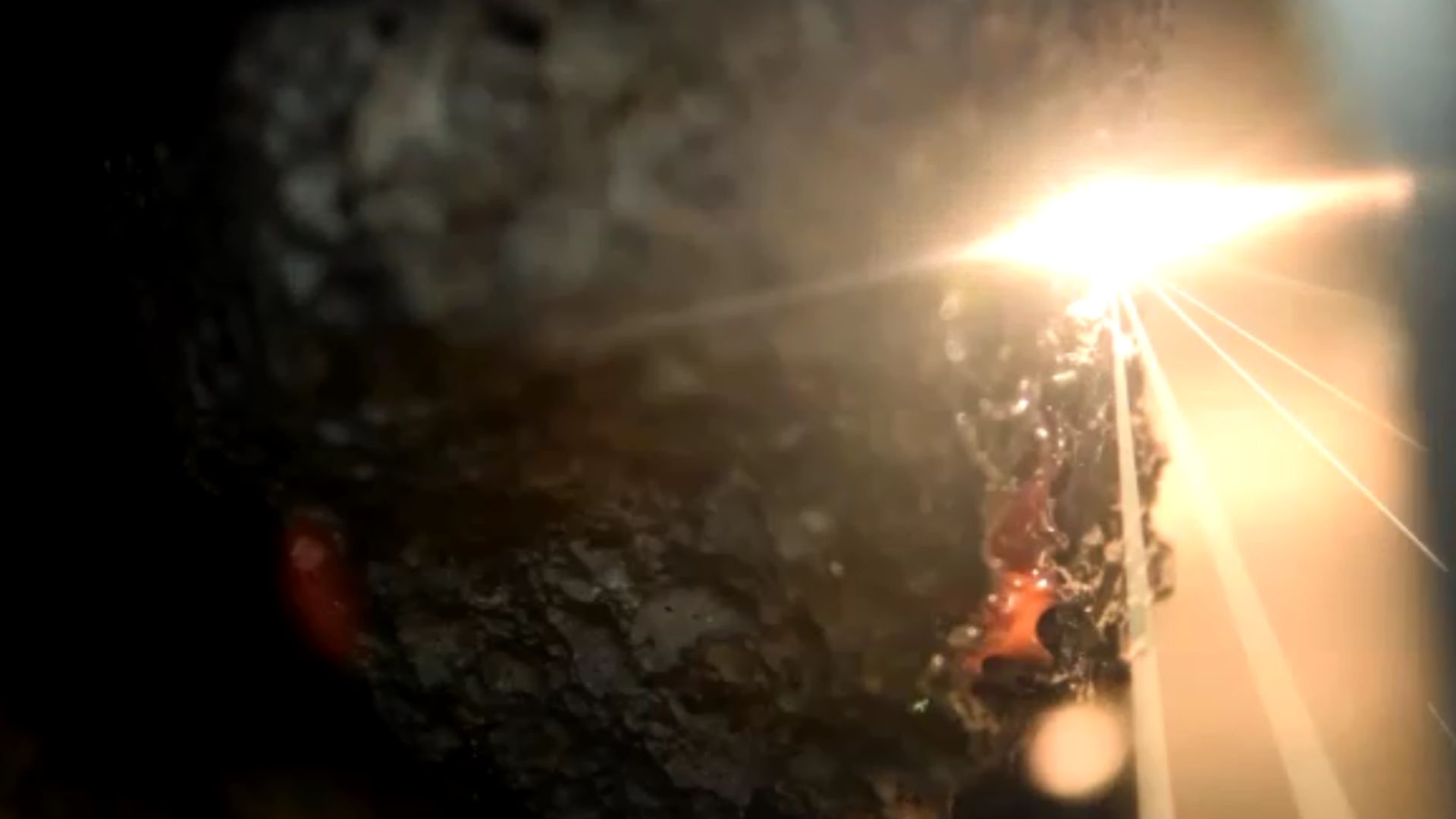
Imagine using a laser so precise it can vaporize microscopic amounts of rock without damaging priceless prehistoric art beneath. That's exactly what researchers employed here. The laser ablation method allows scientists to collect tiny samples from calcite deposits formed over the paintings.
 Travis Brashears, Wikimedia Commons
Uranium-Series Analysis
Here's how the science works: water seeping through cave ceilings contains dissolved uranium but no thorium. When this water deposits calcite over paintings, it traps uranium inside. Over thousands of years, uranium predictably decays into thorium at a known rate.
 Servalenthusiast, Wikimedia Commons
Wallacea Region
Thousands of islands scattered between mainland Asia and Australia form Wallacea, named after naturalist Alfred Russel Wallace, who identified this unique biogeographical zone in the 19th century. This archipelago has never been connected by land bridges to either continent, even during the Ice Age, when low sea levels exposed vast continental shelves that emerged elsewhere.
 London Stereoscopic and Photographic Company, Wikimedia Commons
Migration Corridor
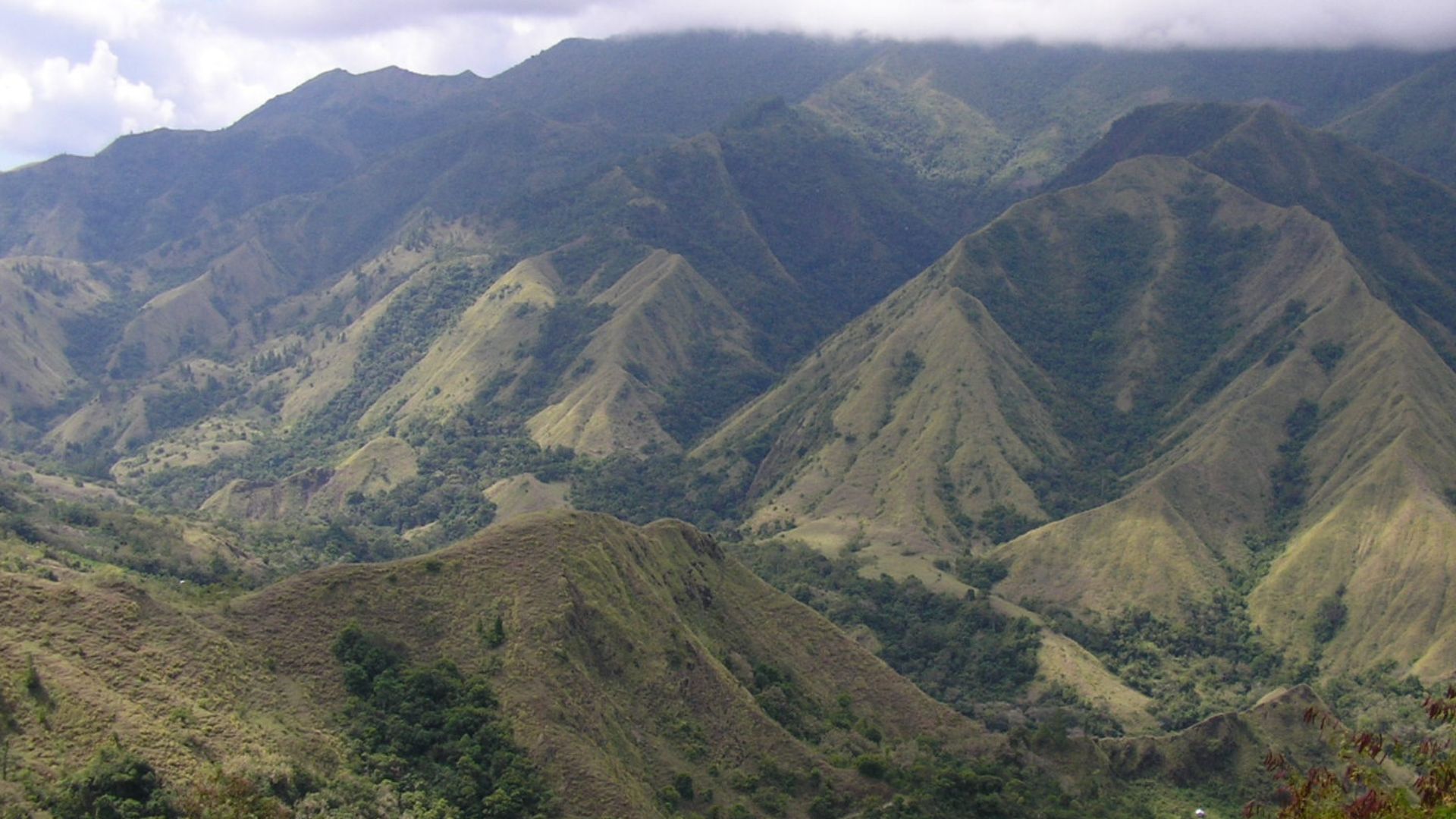
Sulawesi sits directly along the northern route that early modern humans likely traveled when migrating from Southeast Asia toward Australia and New Guinea. Archaeological evidence from this critical pathway has been frustratingly sparse, creating a massive gap in our understanding of human dispersal.
 Achmad Rabin Taim, Wikimedia Commons
Route To Australia
The ancient supercontinent of Sahul comprised of Australia, Tasmania, and New Guinea, and even at the height of the Ice Age, it was separated from mainland Eurasia. Population modeling suggests a small founding group of 1,300 to 1,550 individuals would have been necessary to establish viable populations in these most distant regions requiring coordinated voyages by hundreds of people over several centuries.
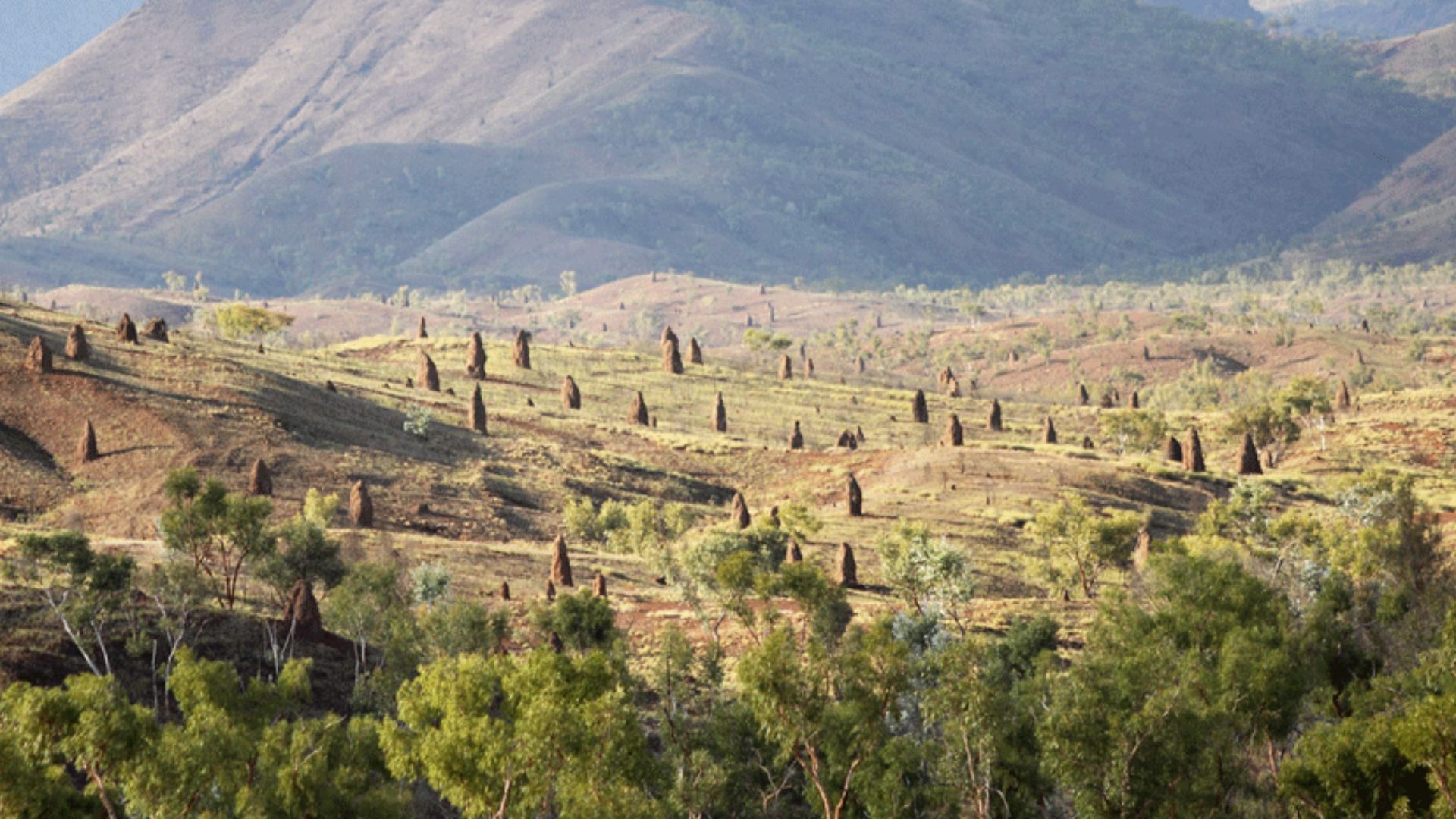
Sahul Settlement
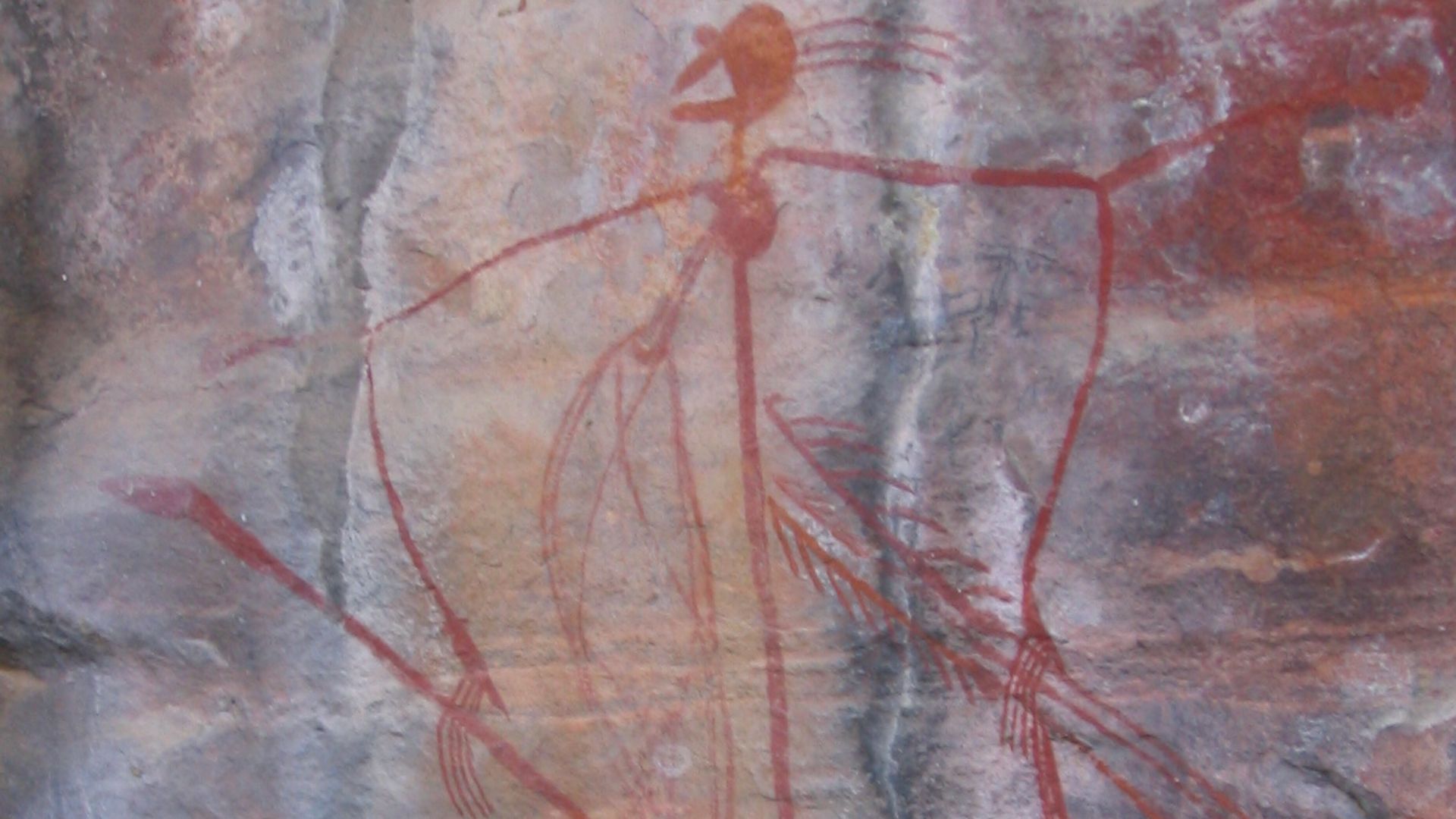
Australia's oldest archaeological site, Madjedbebe in the Northern Territory, contains artifacts dated to approximately 65,000 years ago, though some estimates push this to 68,700 years. The Muna hand stencil's age of 67,800 years places it right within this timeframe.
 Phil Whitehouse from London, United Kingdom, Wikimedia Commons
Advanced Cognition
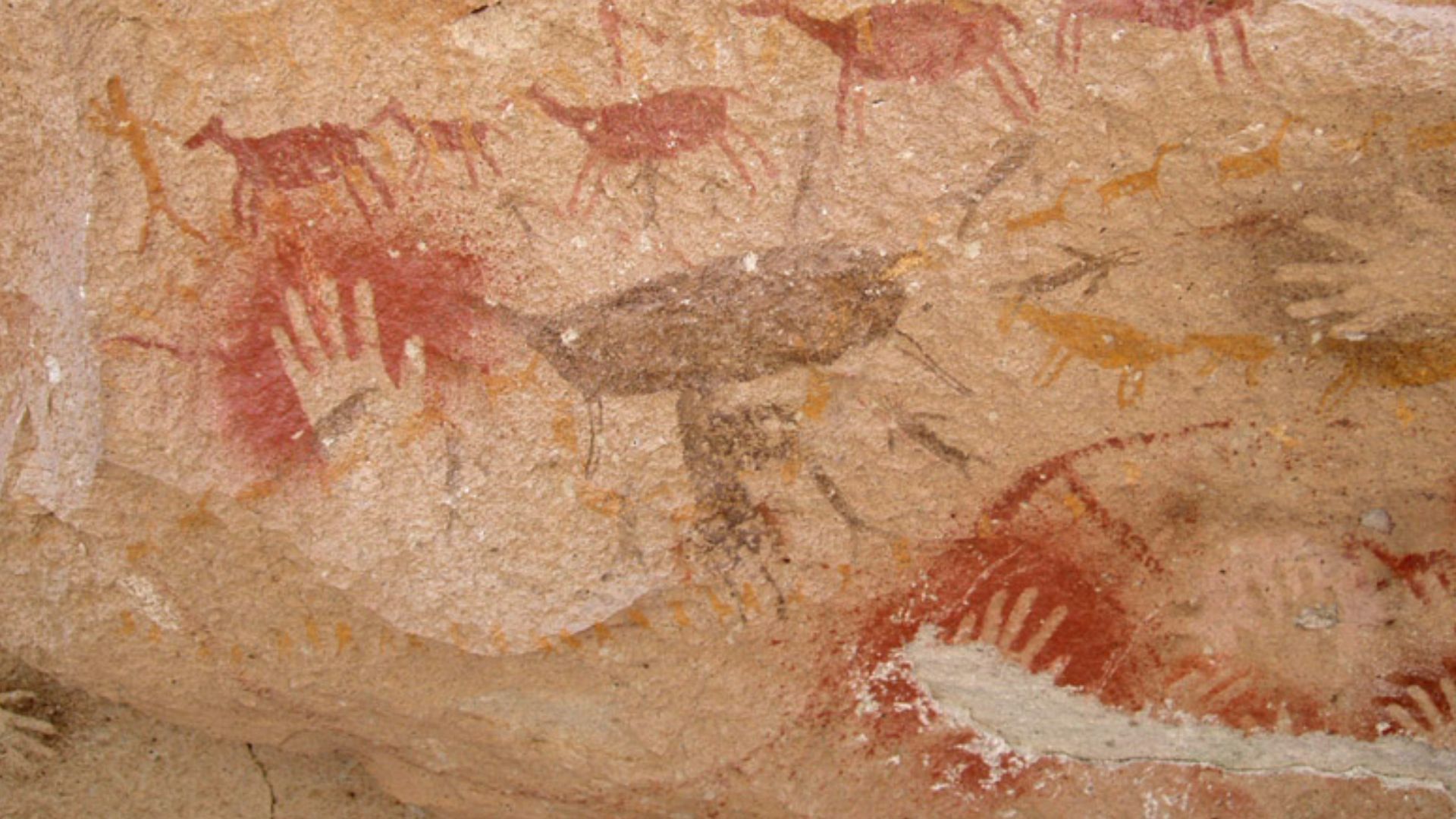
Creating this art required far more than manual dexterity or mimicry. The artists had to conceive of turning their hands into something else—deliberately modifying fingertips to resemble animal claws demonstrates imaginative, symbolic thinking. They needed to plan expeditions into complete darkness.
 Marianocecowski, Wikimedia Commons
Symbolic Thinking
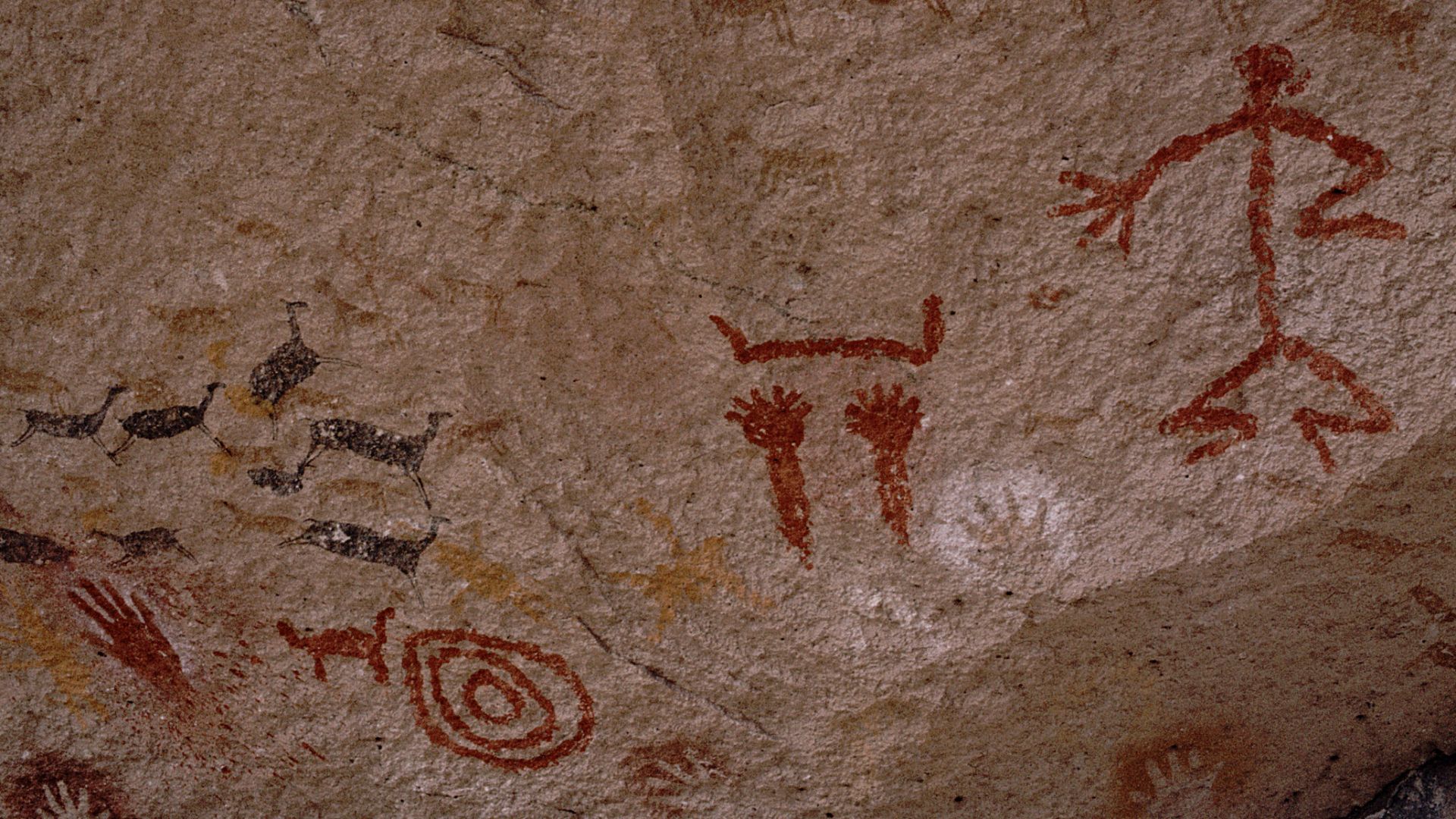
Why craft art deep underground where almost nobody would see it? The answer reveals something profound about human consciousness. These weren't decorative drawings for aesthetic pleasure. They represented symbolic behavior, possibly marking sacred spaces or recording ritualized experiences.
 Reinhard Jahn, Mannheim / nanosmile, Wikimedia Commons
European Art Comparison
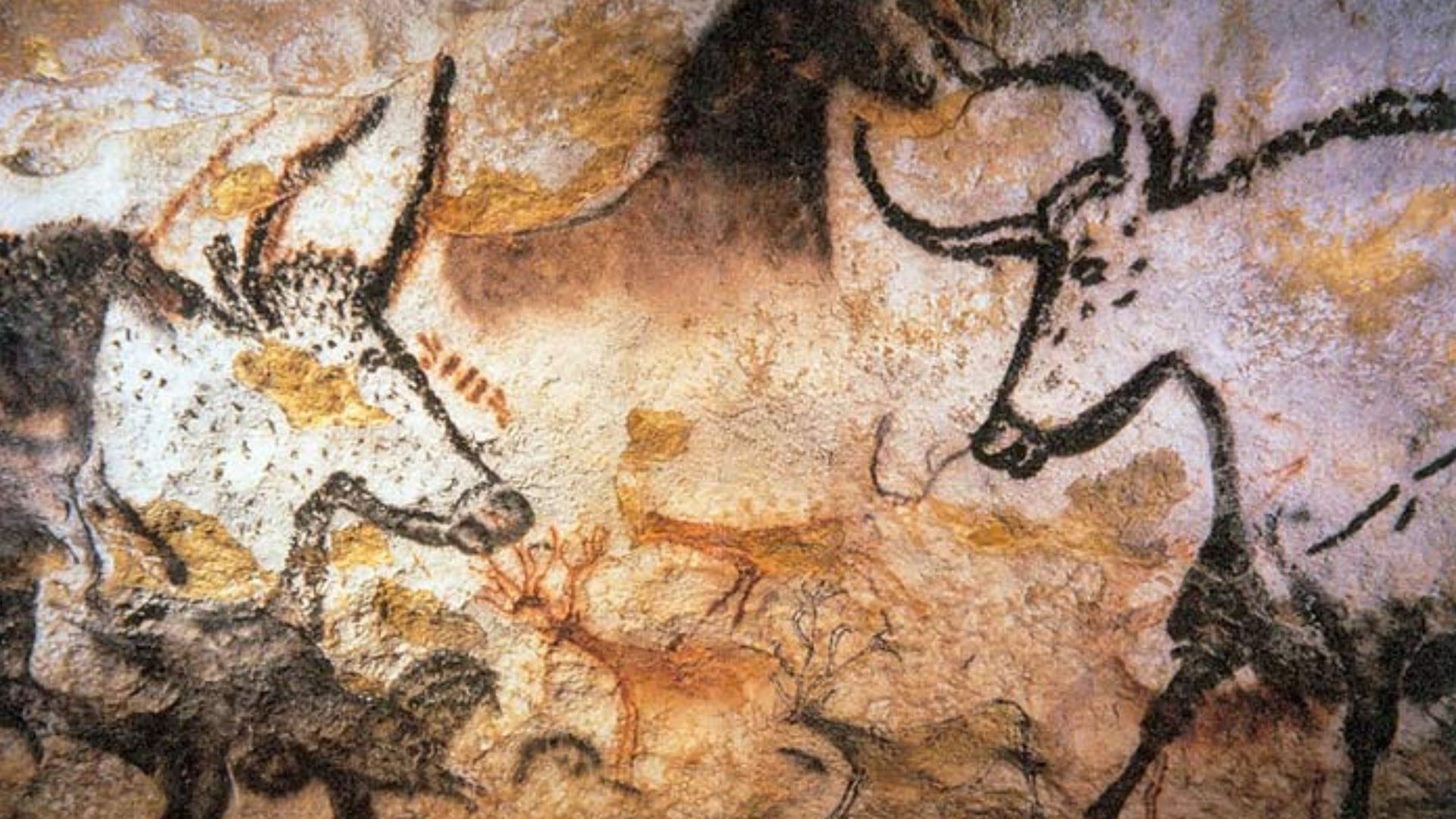
For generations, archaeology textbooks taught that true artistic culture exploded suddenly in Ice Age Europe around 40,000 years ago, with magnificent cave paintings in France and Spain representing humanity's creative awakening. Famous sites like Lascaux and Chauvet were held up as proof that Europe was where modern human cognition reached its peak.
Neanderthal Timeline
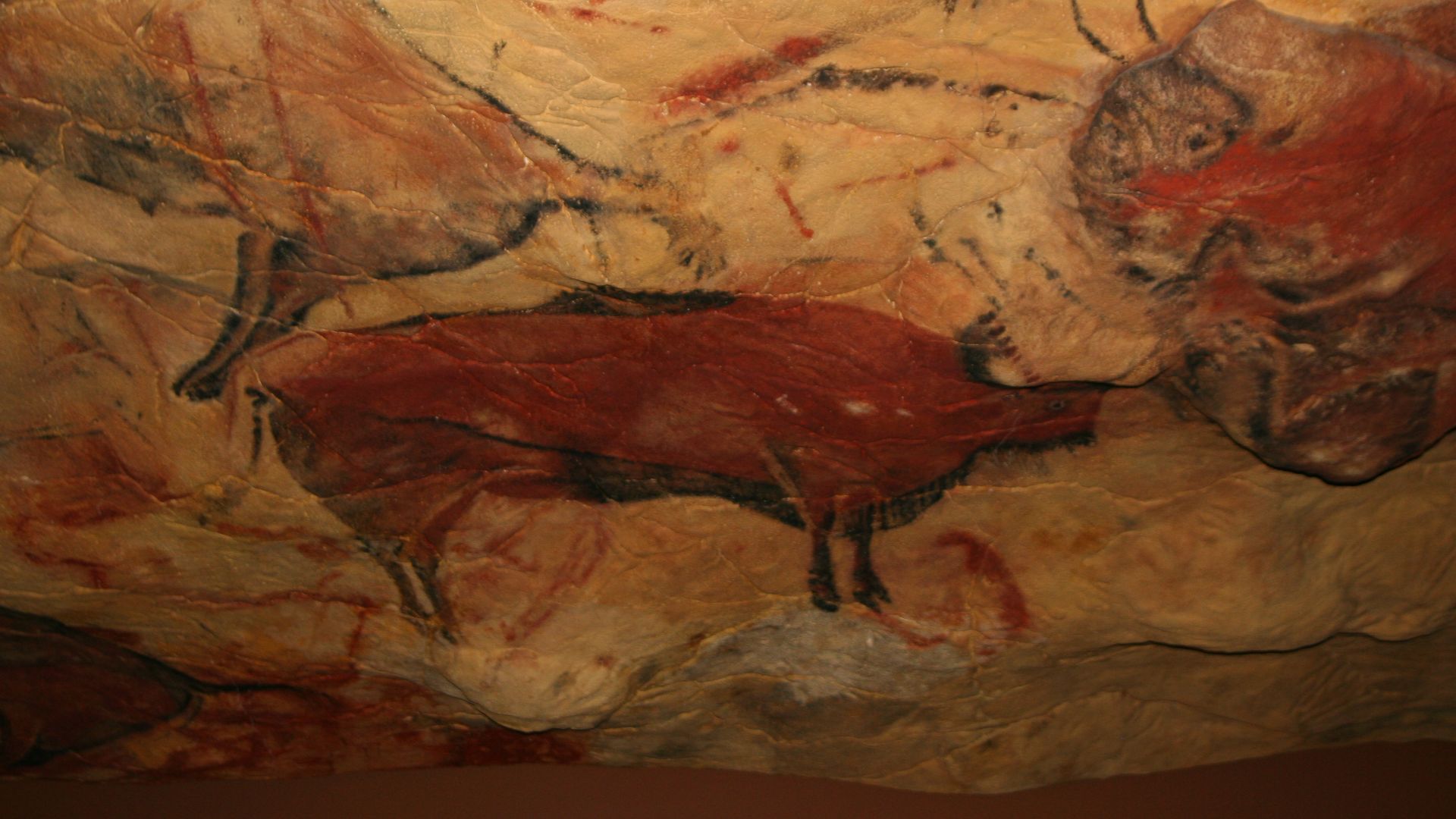
The oldest potential Neanderthal cave art in Spain dates to approximately 66,700 years ago, making it about 1,100 years older than some estimates but younger than the Muna stencil by current dating. However, Neanderthal art authorship remains controversial.
 User:MatthiasKabel, Wikimedia Commons
Indonesia's Rock Art
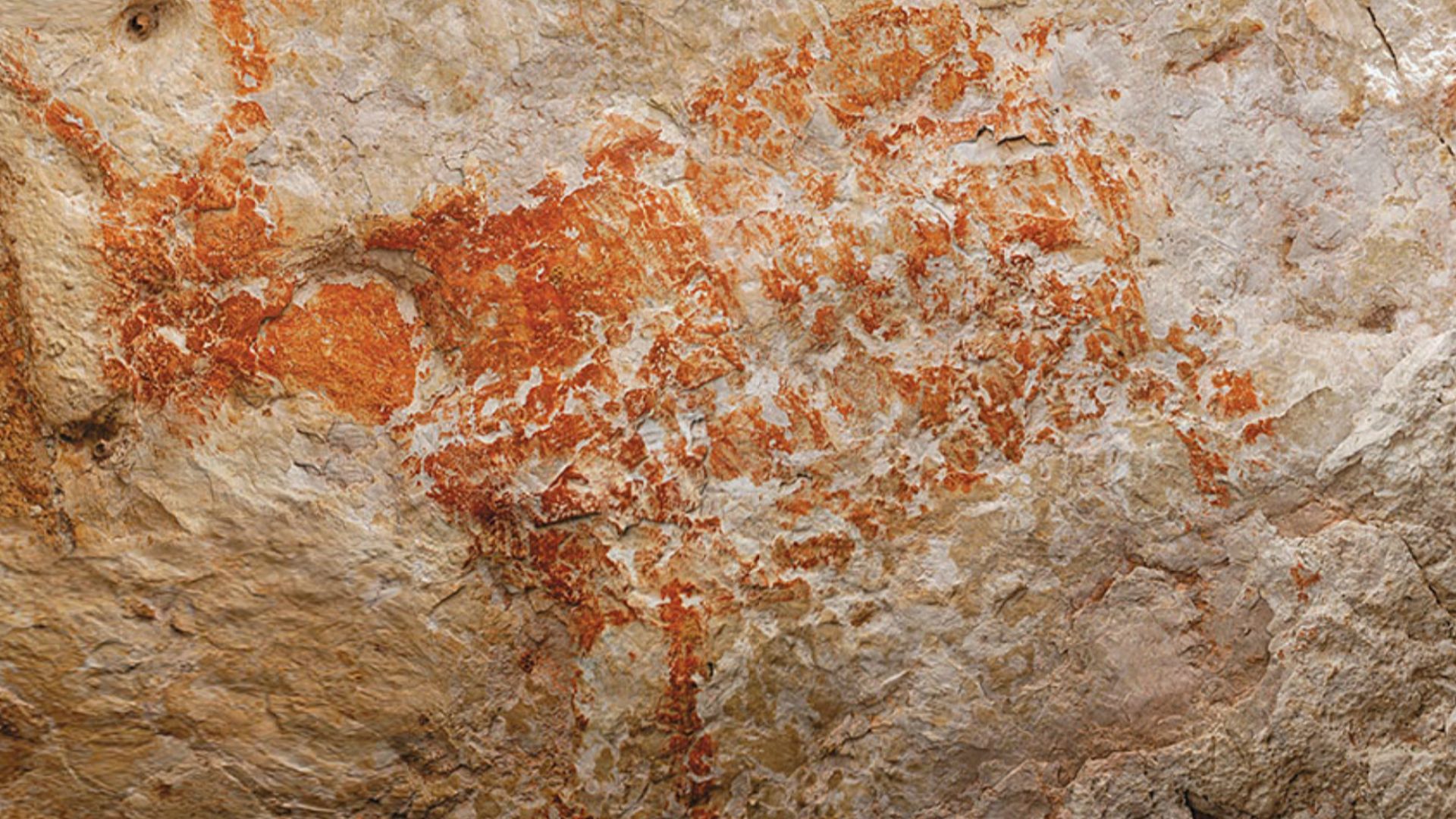
Beyond Muna and Sulawesi, cave paintings have been discovered in Borneo's Sangkulirang-Mangkalihat region, where hand stencils date back over 40,000 years. Each new dating effort pushes timelines deeper into the past, revealing that what researchers once dismissed as recent tribal art actually represents humanity's oldest continuous artistic heritage.
 @ photo Luc-Henri Fage, www.fage.fr., Wikimedia Commons
Maros-Pangkep Caves
On Sulawesi's southwestern peninsula, the Maros-Pangkep karst region contains over 300 limestone caves decorated with prehistoric paintings spanning tens of thousands of years. These caves first gained international attention in 2014 when uranium-series dating revealed their astonishing antiquity.
Therianthrope Paintings
In 2019, researchers announced finding the world's oldest known narrative art in Sulawesi's Leang Bulu' Sipong cave: a hunting scene featuring therianthropes or supernatural beings with human bodies and animal heads. Originally dated to 43,900 years old, improved laser ablation techniques later revealed it was actually 51,200 years old.
Future Research Prospects
Archaeologist Adhi Oktaviana has already identified potential sites on small, isolated islands between Sulawesi and Flores that might contain even older art, though funding remains a challenge. Researchers estimate that less than five percent of Indonesia's caves have been properly surveyed, meaning the Muna discovery likely represents just the beginning.
 Basran Burhan, Wikimedia Commons










.jpg)

