
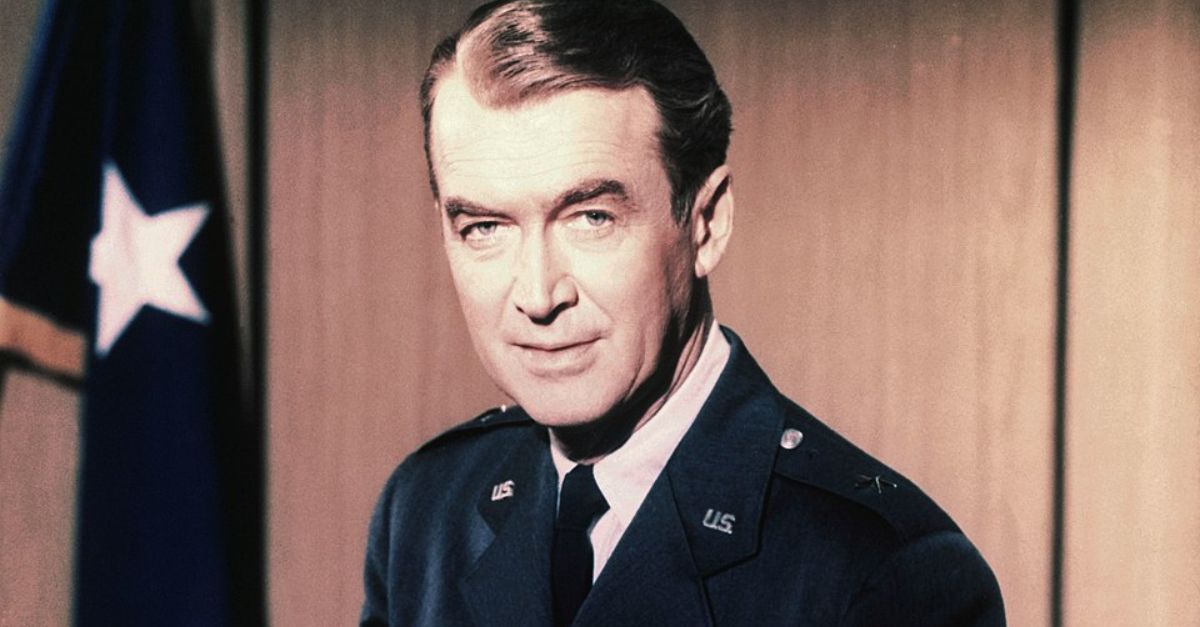
Duty Over Stardom
Stewart's choices defied Hollywood logic entirely. He chose the hardest path when easier ones lay before him. Audiences had no clue what their beloved actor was experiencing overseas during those missing years.
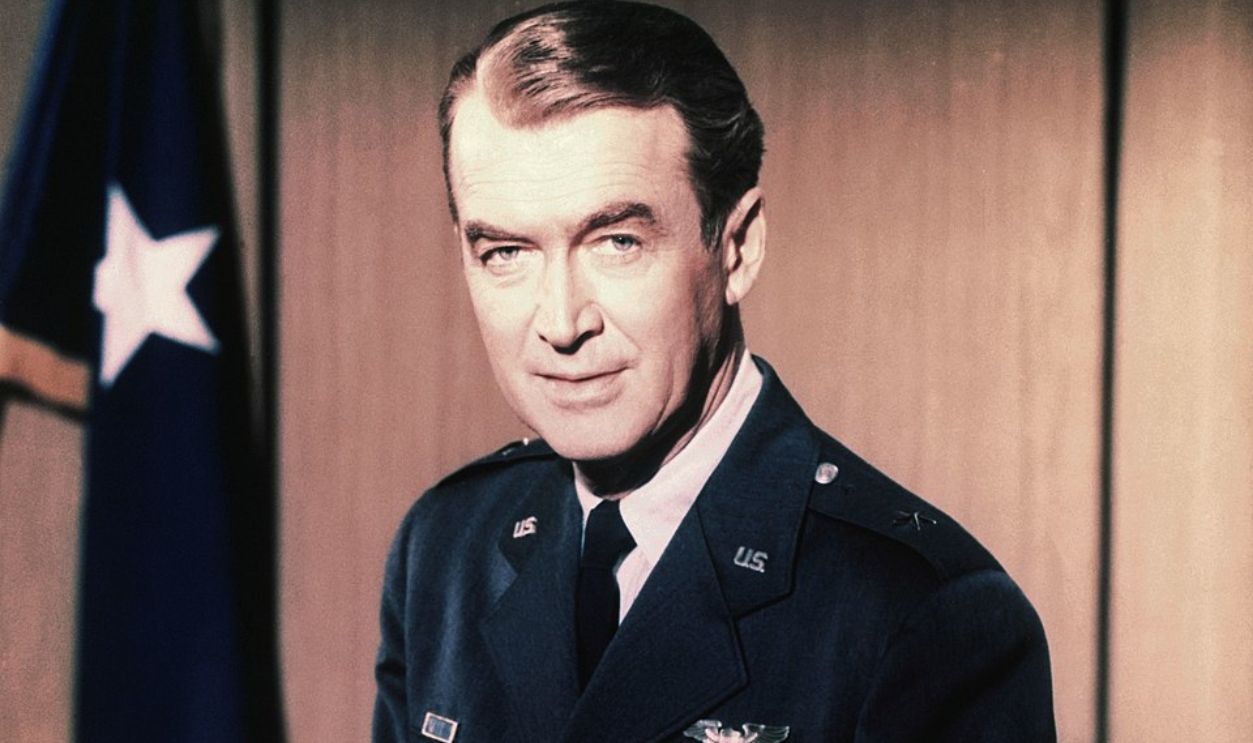 U.S. Air Force photo, Wikimedia Commons
Indiana Roots
James Maitland Stewart was born May 20, 1908, in Indiana, Pennsylvania, into a family where military service ran deeper than blood. Both his grandfathers fought in the Civil War—one rode with Union forces through Shenandoah Valley campaigns under General Philip Sheridan, while the other survived Gettysburg and Fredericksburg.
 Andre Carrotflower, Wikimedia Commons
Princeton Architecture
At Princeton University, Stewart initially pursued architecture, graduating in 1932 with a degree he'd never professionally use. The Depression made architectural jobs scarce, pushing him toward an unexpected path. His involvement in Princeton's Triangle Club drama productions revealed a natural talent for performance.
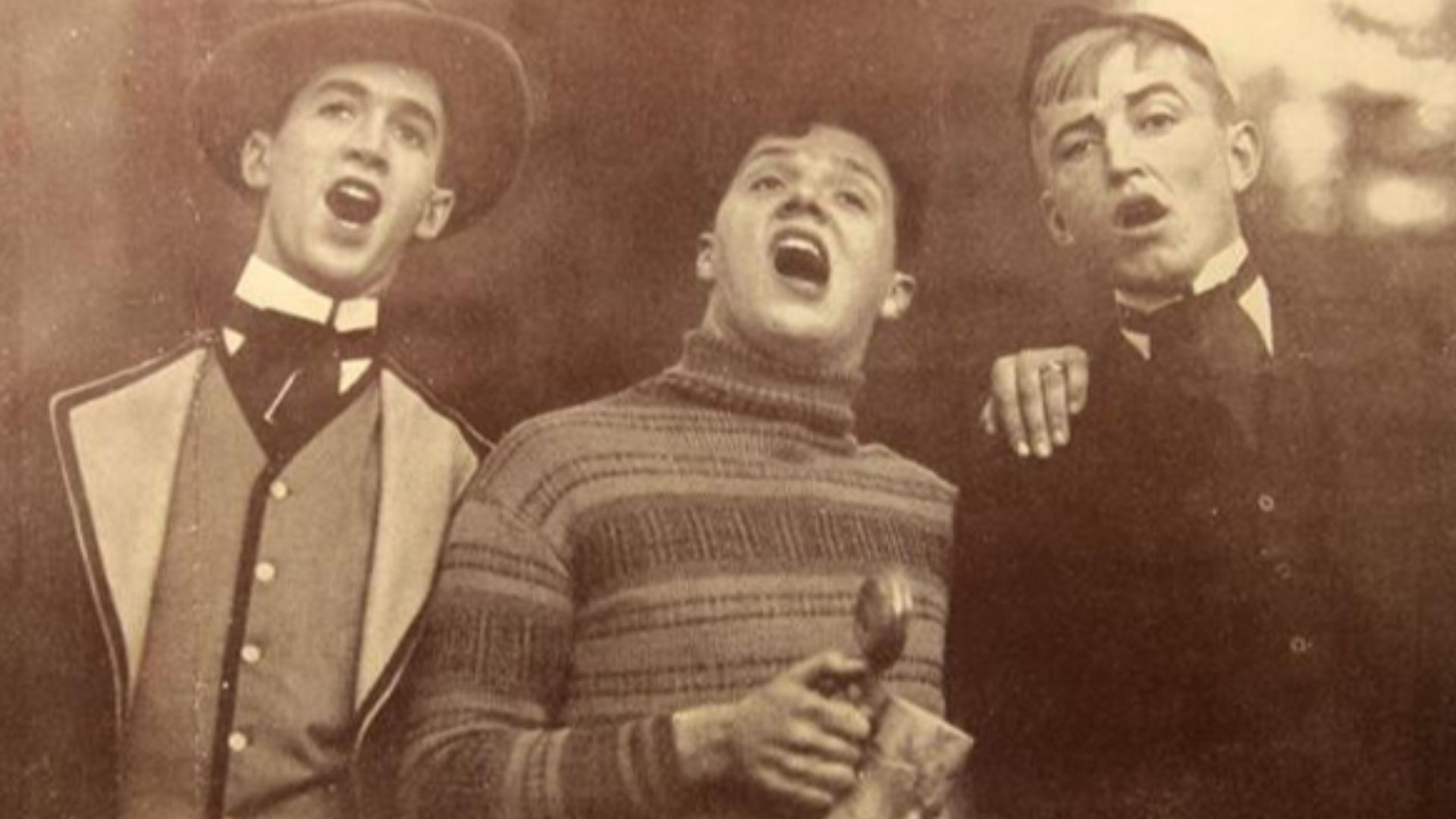 Princeton University Archives, Wikimedia Commons
Broadway Beginnings
Stewart's acting career launched on Broadway stages in 1932, not Hollywood soundstages. He made his debut in the play Carry Nation after a college friend invited him to join a theater group. The stage work honed his distinctive halting delivery and understated emotional depth.
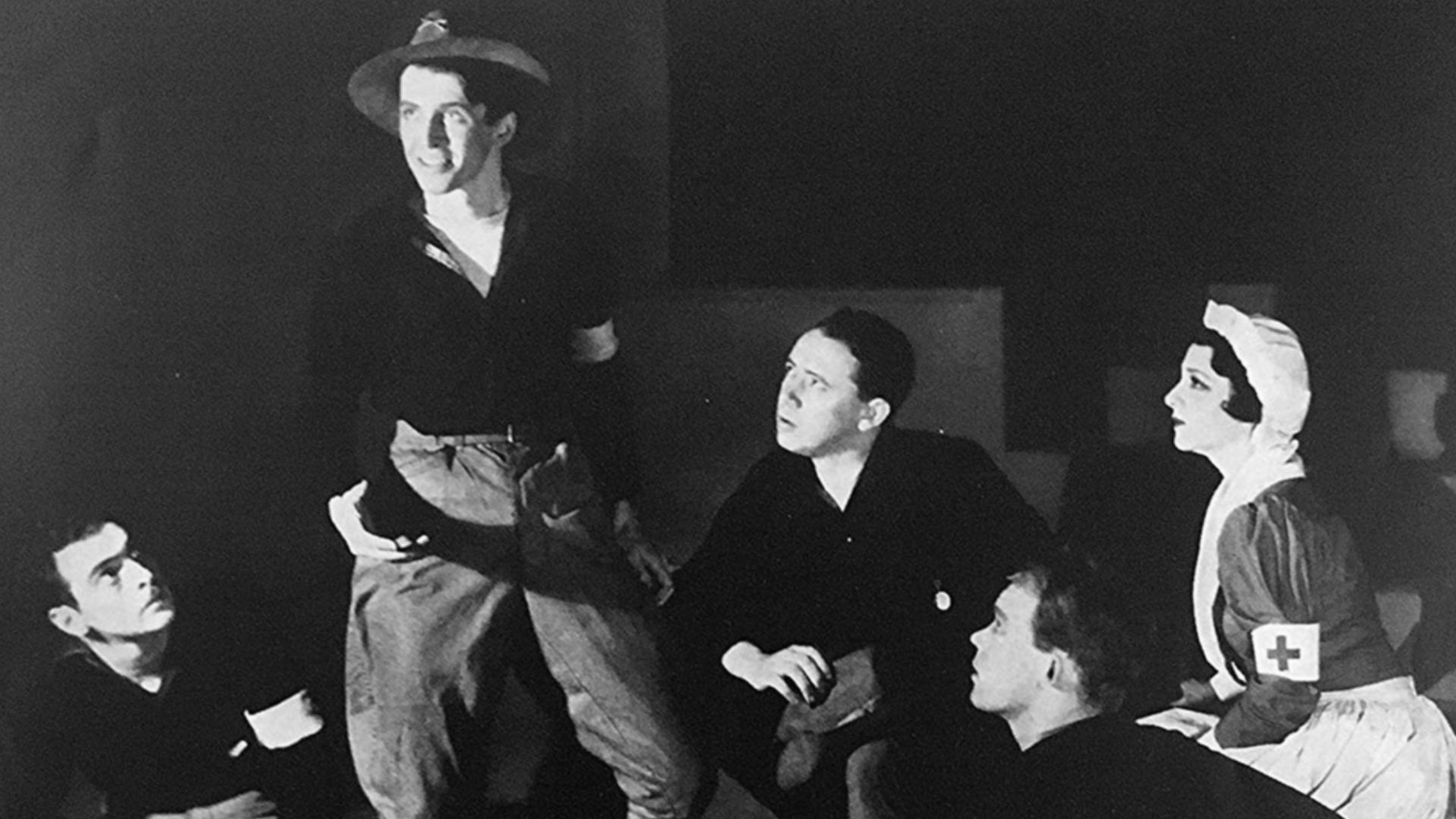 Unknown authorUnknown author, Wikimedia Commons
Hollywood Breakthrough
MGM signed this individual in 1935, launching him into 21 feature films throughout the 1930s alongside legends like Spencer Tracy, Clark Gable, and Joan Crawford. Director Frank Capra recognized something special in Stewart's blend of bashful humor and underlying strength after seeing him in Navy Blue and Gold.
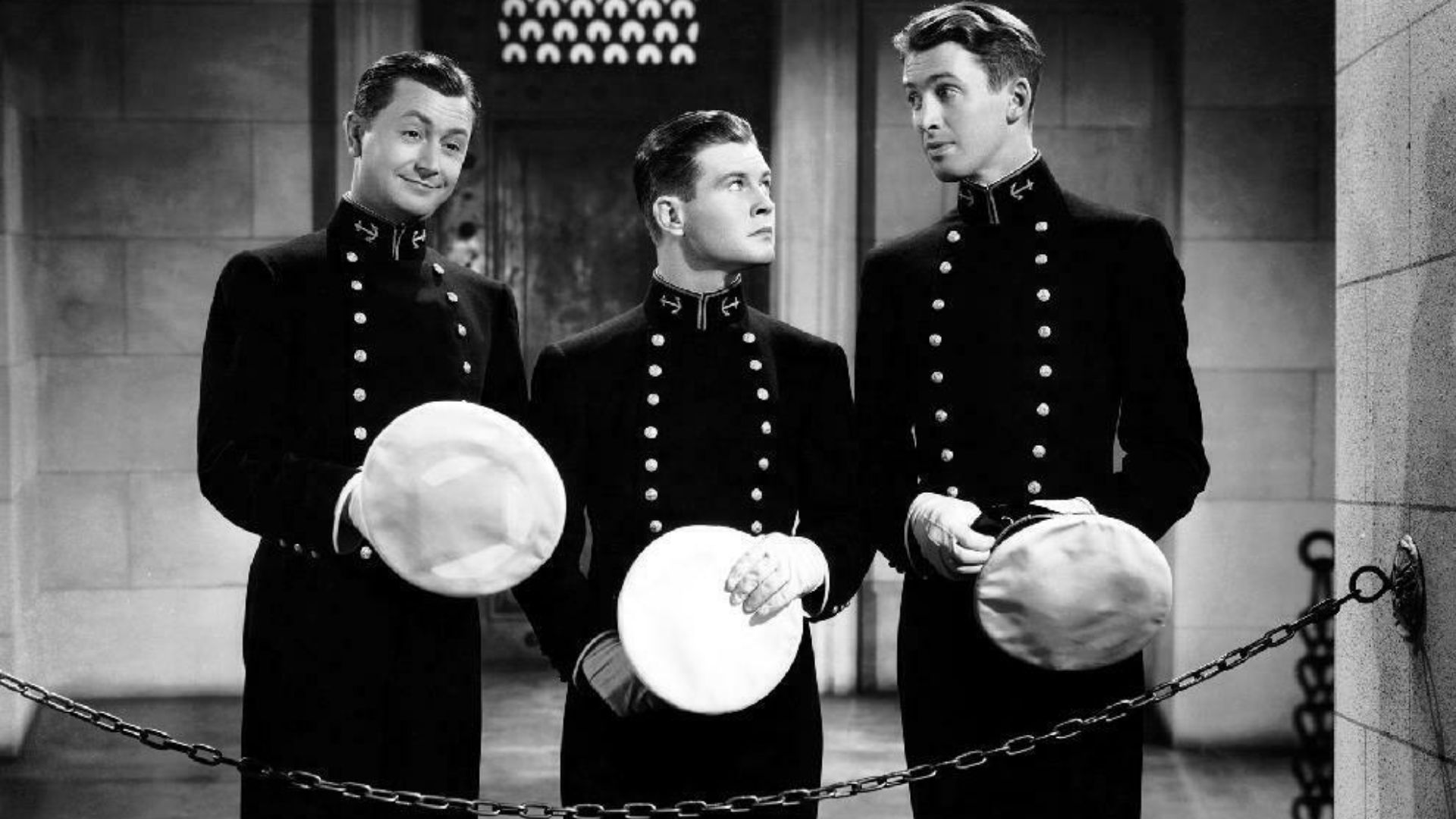 Metro-Goldwyn-Mayer, Wikimedia Commons
Mr Smith Success
Frank Capra's 1939 political drama Mr Smith Goes to Washington turned Stewart into a major star, portraying idealistic Senator Jefferson Smith fighting corruption. The film sparked controversy as politicians called it anti-American propaganda, and Ambassador Joseph Kennedy tried to suppress its foreign release.
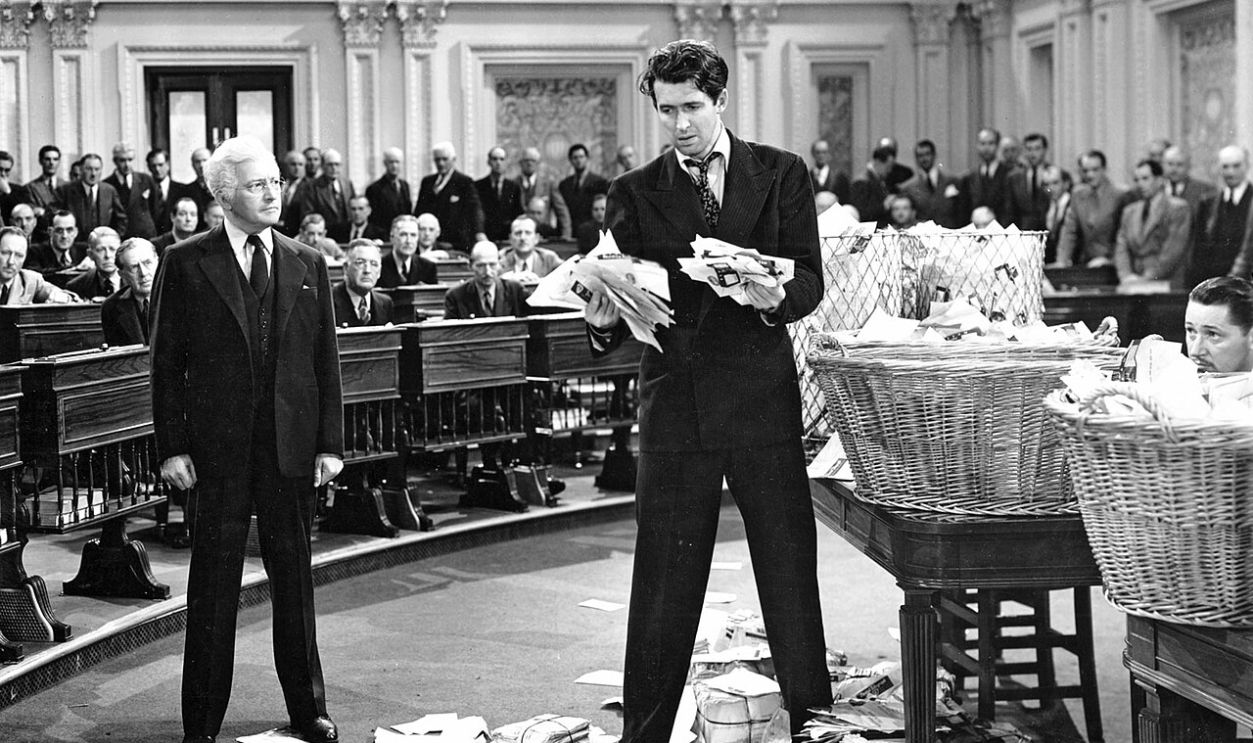 Columbia Pictures, Wikimedia Commons
Philadelphia Story Oscar
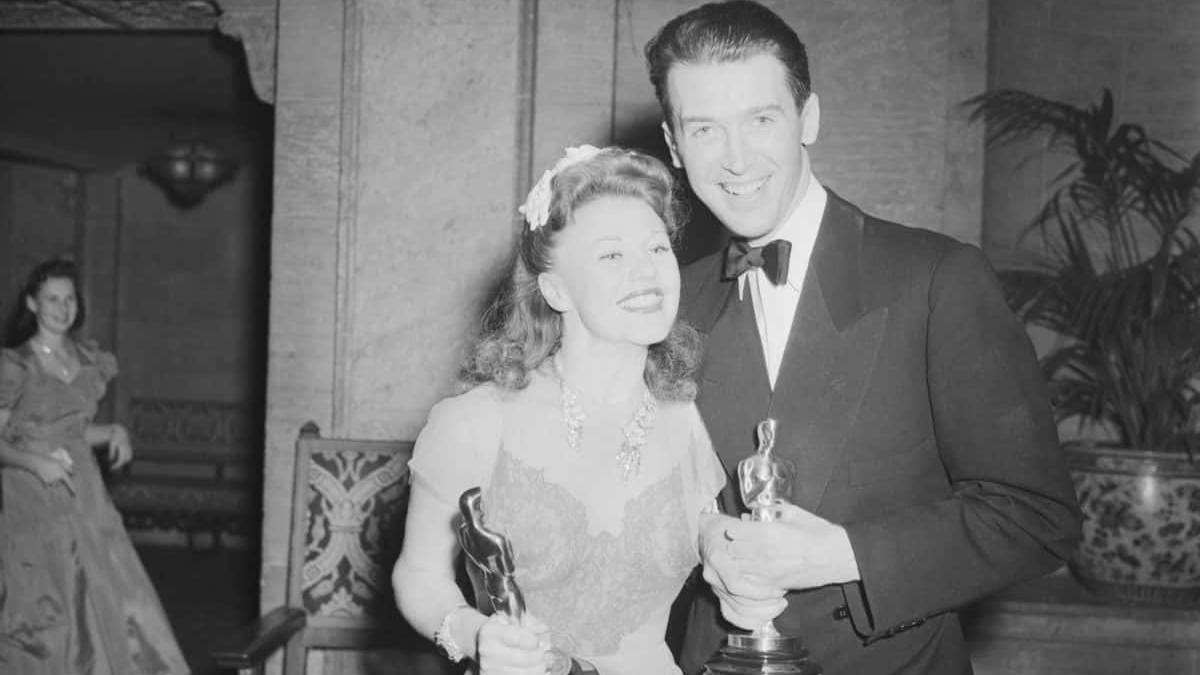
This man bagged the 1941 Academy Award for Best Actor for The Philadelphia Story, playing fast-talking reporter Mike Connor opposite Katharine Hepburn and Cary Grant. The romantic comedy became one of 1940's biggest box-office successes, earning widespread critical acclaim.
Aviation Passion
Long before war clouds gathered, Stewart became an accomplished civilian pilot, earning his private pilot certificate in 1935 and commercial license soon after. He purchased a Stinson 105 military trainer aircraft specifically to log flying hours, accumulating over 400 hours as he sensed America's inevitable entry into the coming conflict.
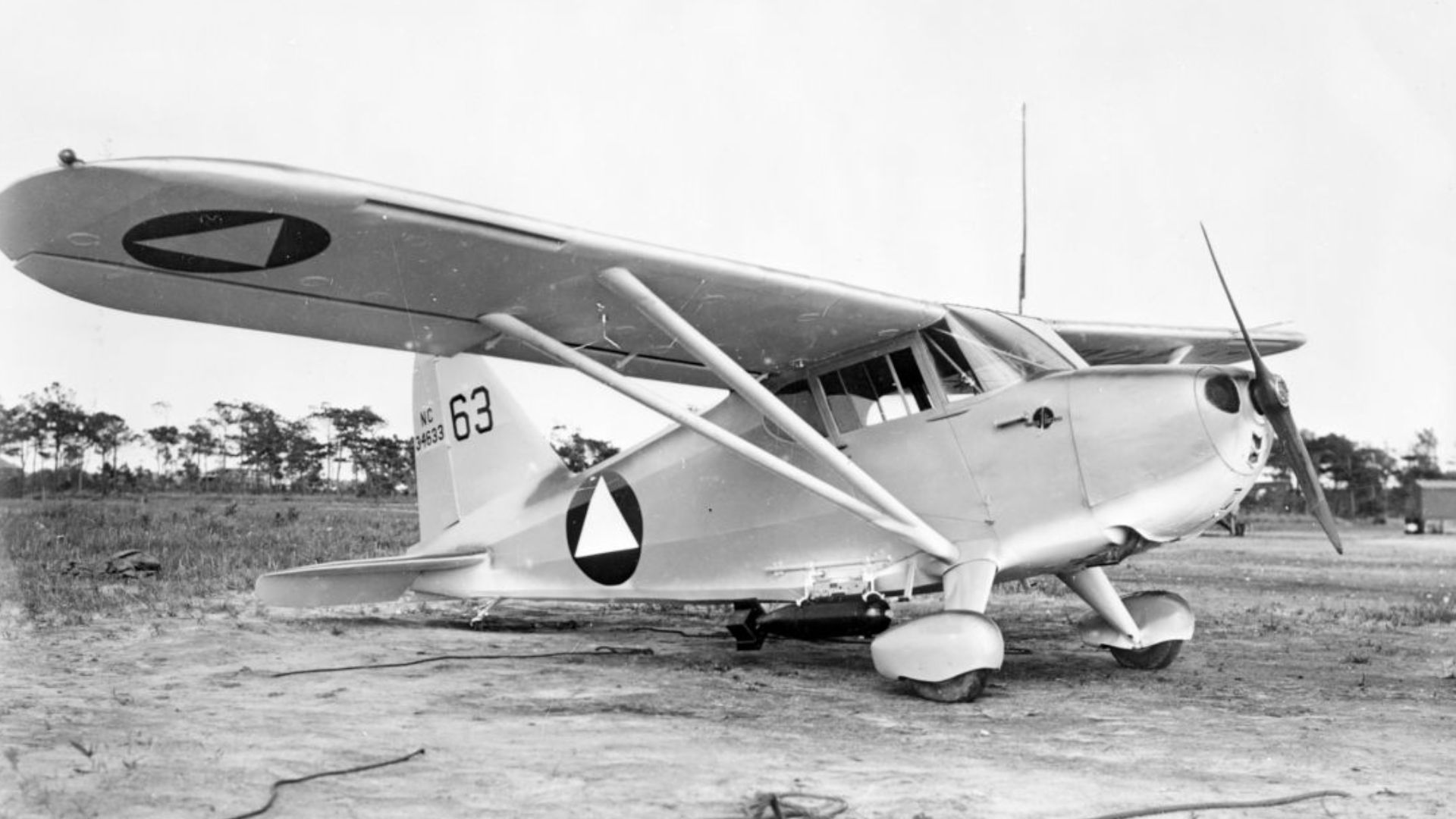 State Archives of North Carolina Raleigh, NC, Wikimedia Commons
Draft Rejection
When he appeared before Draft Board No 245 in West Los Angeles in February 1941, the 6'3" actor weighed only 138 pounds—five pounds below the minimum requirement for military service. At age 33, he was already approaching the age limit for Aviation Cadet training.
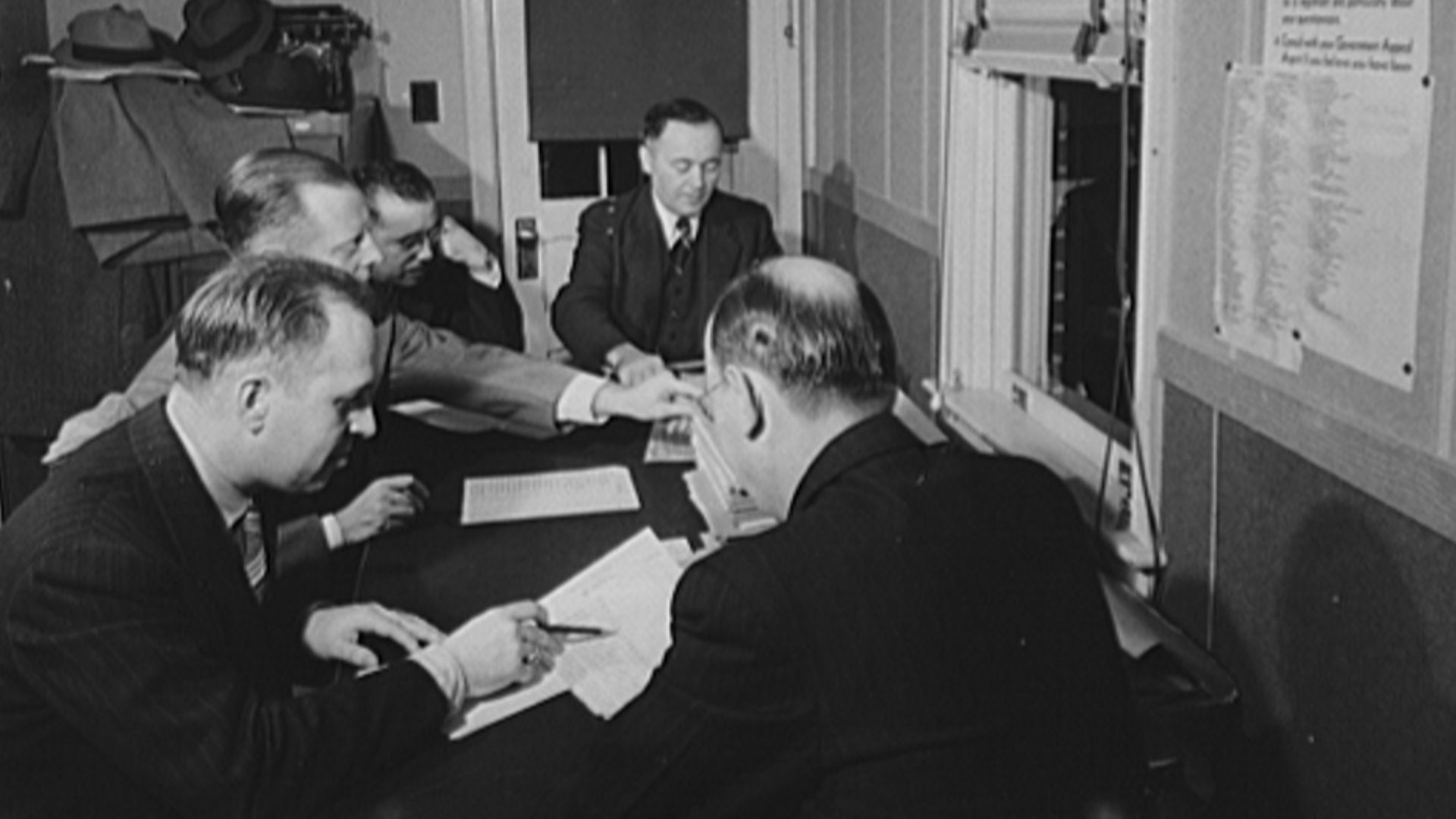 Marjory Collins, Wikimedia Commons

History's most fascinating stories and darkest secrets, delivered to your inbox daily.
Determined Enlistment
Stewart refused to accept rejection, returning home to consume every high-calorie food imaginable. He gained just enough weight to pass his second physical examination by a single ounce. On March 22, 1941, nine months before Pearl Harbor, he enlisted in the Army Air Corps as a private.
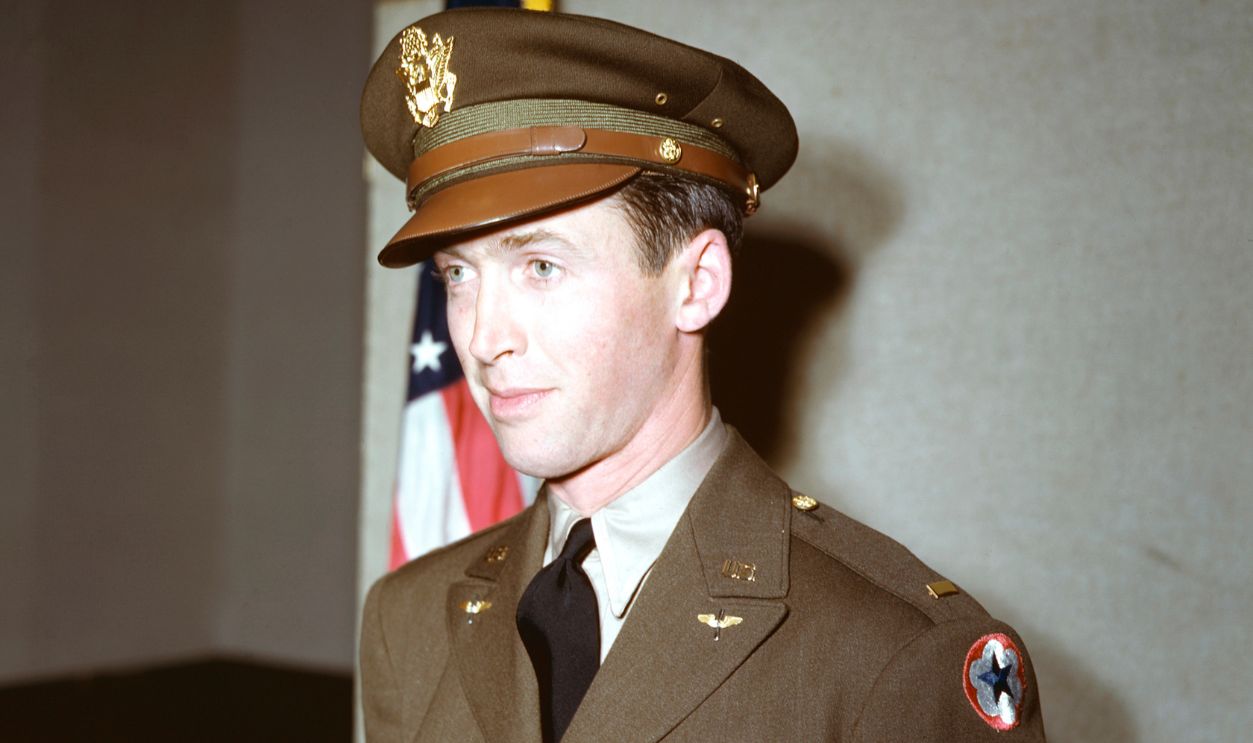 Silver Screen Collection, Getty Images
Flight Instructor
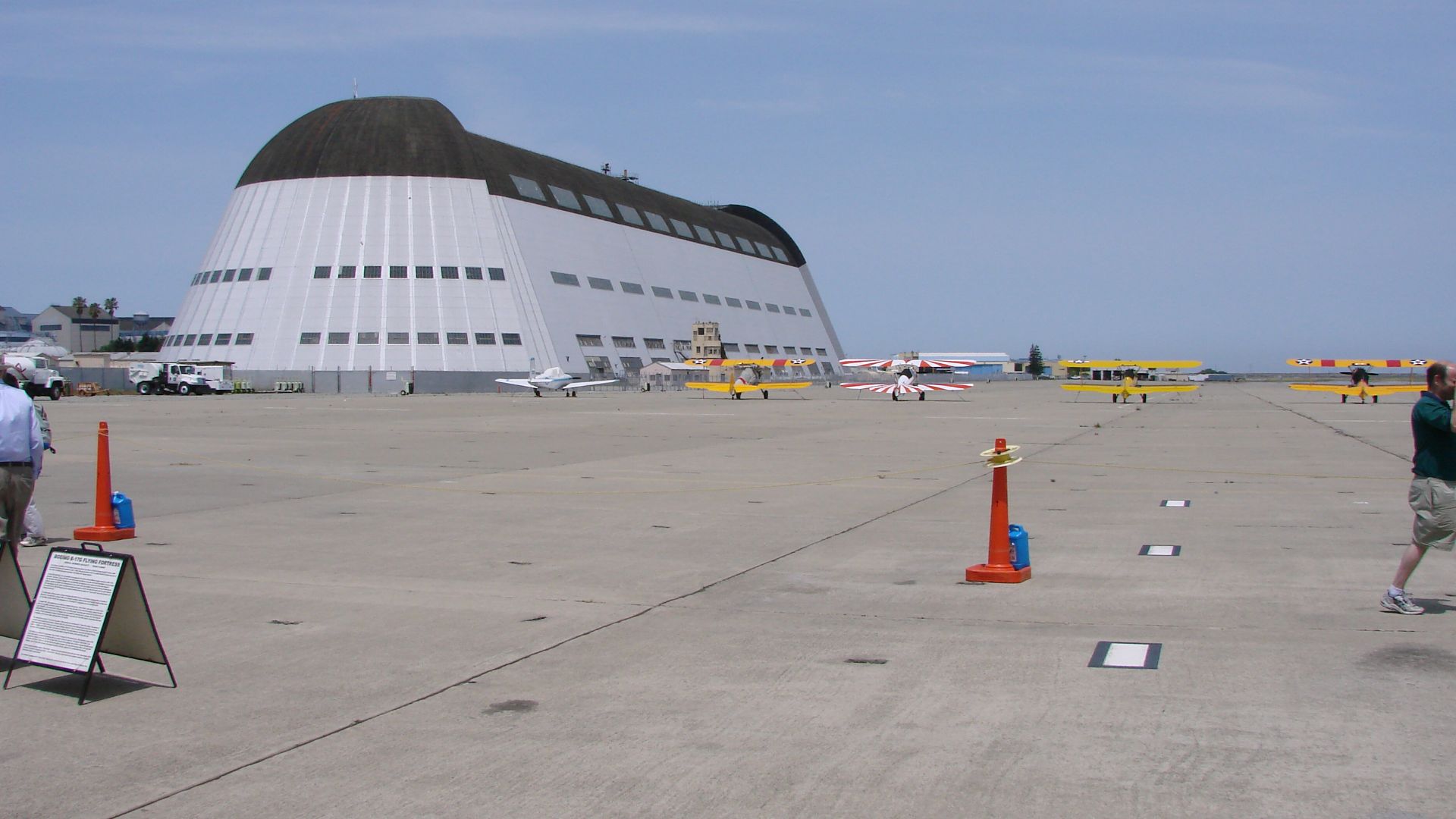
The individual reported to Moffett Field, California, where he spent nine months training and taking extension courses to earn his commission as second lieutenant on January 1, 1942. His extensive civilian flying experience and college degree qualified him for direct commissioning rather than standard Aviation Cadet training.
Combat Assignment Push
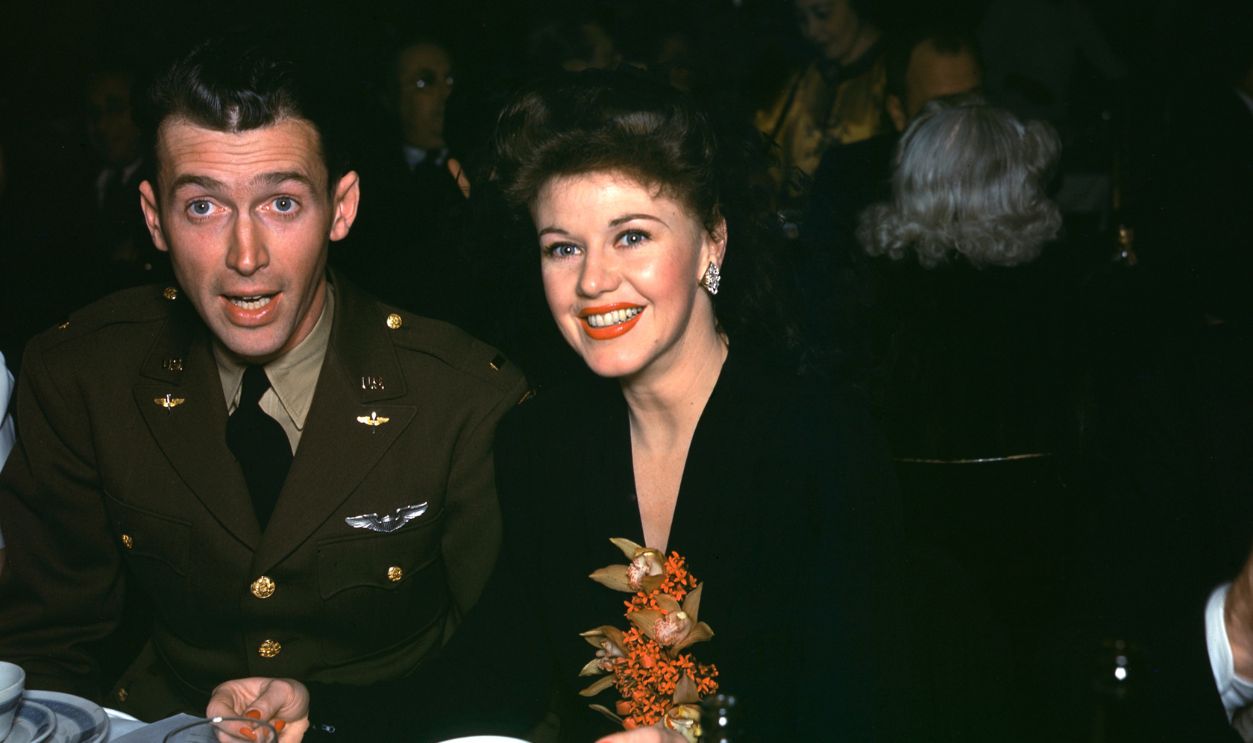
The Army Air Forces wanted to keep their celebrity aviator safely stateside, assigning Stewart to recruiting films, rallies, and endless instruction duty while his students flew into combat. He grew increasingly frustrated watching younger pilots deploy to England while he remained grounded in California.
 Silver Screen Collection, Getty Images
England Arrival
Captain Stewart arrived at Station 124 in Tibenham, England, during November 1943 as commanding officer of the 703rd Bomb Squadron, 445th Bombardment Group. The Eighth Air Force's "Mighty Eighth" was suffering devastating casualties in daylight campaigns.
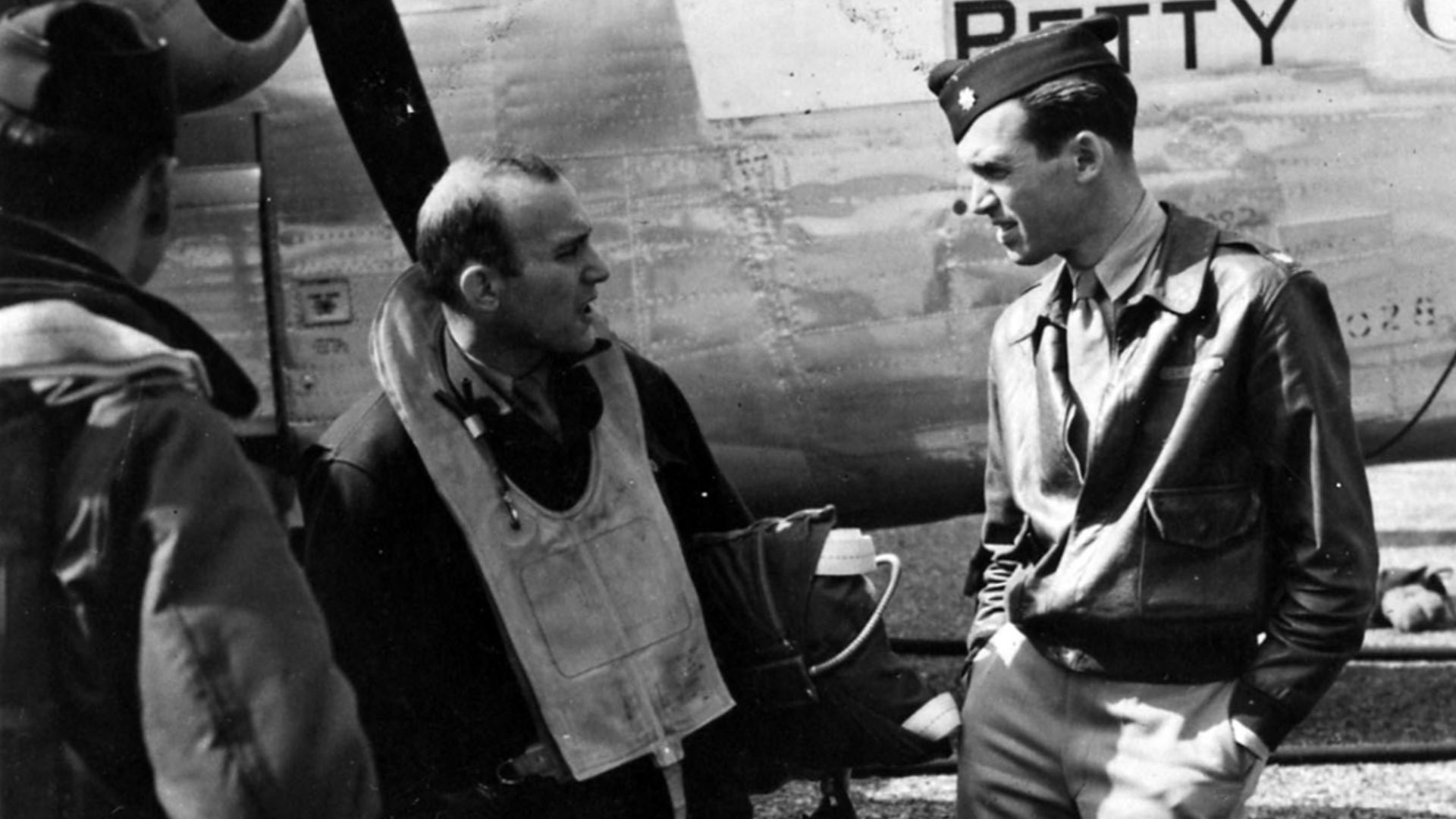 U.S. Air Force photo, Wikimedia Commons
B-24 Squadron Leader
He flew the B-24 Liberator, a four-engine heavy bomber with the highest production of any WWII bomber. The aircraft had unpressurized cabins where temperatures plummeted to minus-40 degrees Fahrenheit at altitude. Crews constantly knocked ice off oxygen masks while facing enemy fighters and anti-aircraft flak.
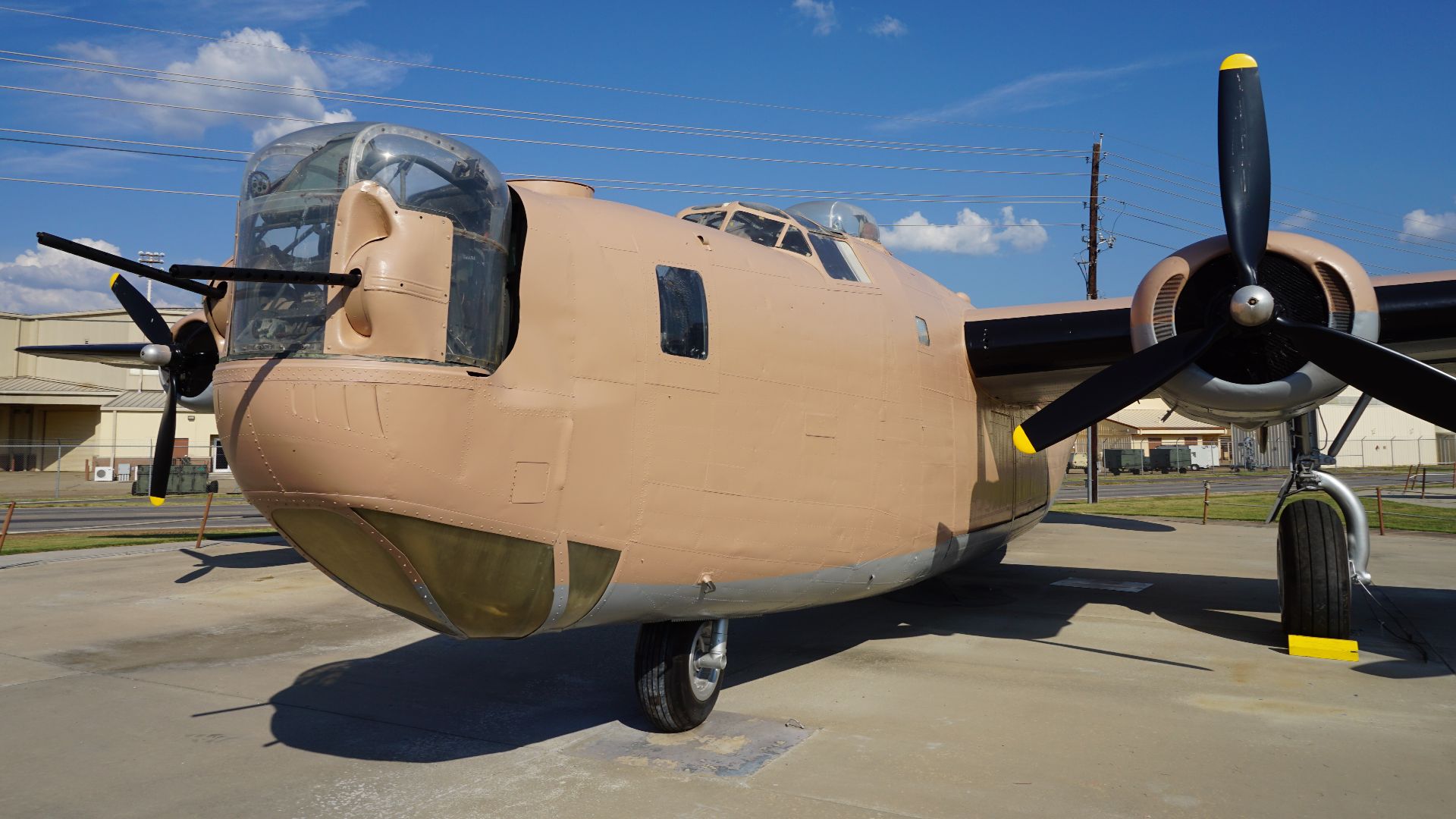 Michael Barera, Wikimedia Commons
Operation Big Week
Operation Argument, conducted in February 1944, nicknamed "Big Week," aimed to destroy German aircraft production. The Eighth Air Force launched B-17s and B-24s with fighter escorts into southern Germany. Stewart flew his tenth combat mission during this critical campaign, leading his group against heavily fortified targets.
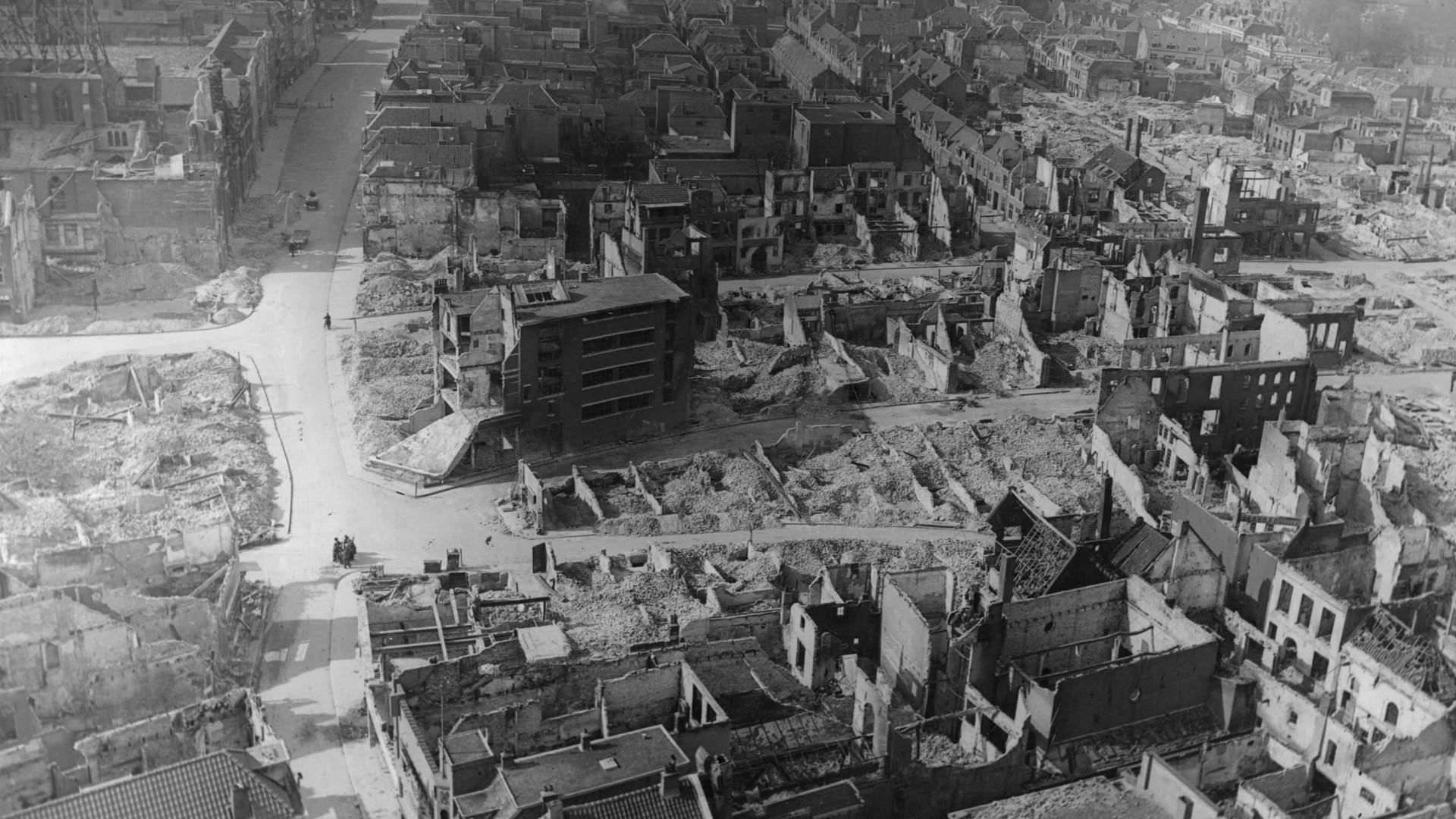 unknown photographer, Fotopersbureau Gelderland, Wikimedia Commons
Furth Mission
On February 25, 1944, Stewart copiloted "Dixie Flyer" over Furth, Germany, targeting Messerschmitt aircraft manufacturing facilities northwest of Nuremberg. At 18,000 feet, a German anti-aircraft shell pierced directly through the B-24's center between the pilot and copilot positions. The explosion's whiplash nearly lifted Stewart from his seat.
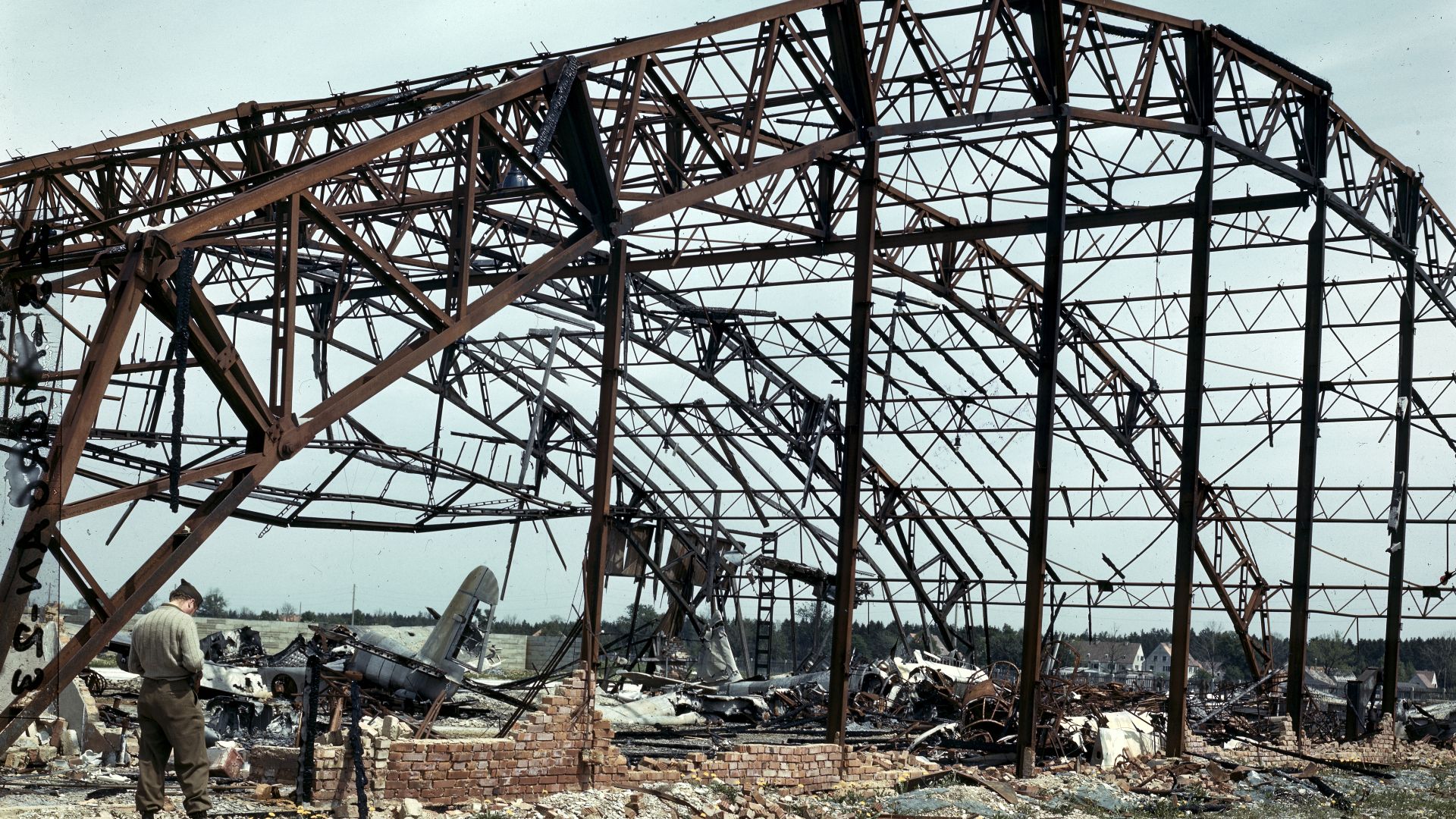 Morgan and Gaston, U.S. Army Air Forces photo 342-C-K-3440, Wikimedia Commons
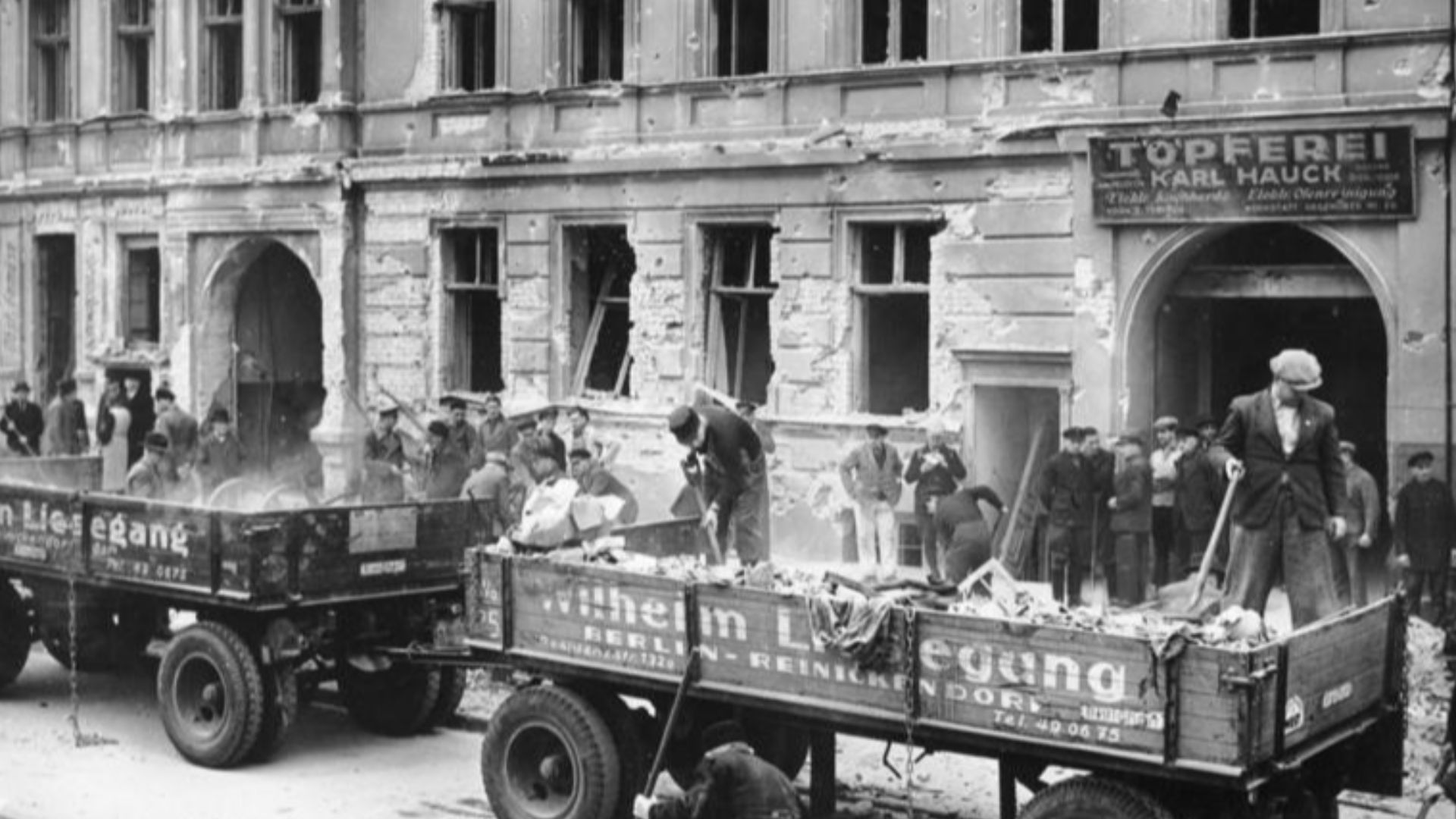
Berlin Raid
Previous Berlin missions had cost the Eighth Air Force over 1,000 men in just two raids. Stewart had been conspicuously absent from earlier Berlin attacks as commanders deemed him too valuable to risk. He fought to participate, ultimately leading the massive formation to Germany's capital.
 Unknown authorUnknown author, Wikimedia Commons
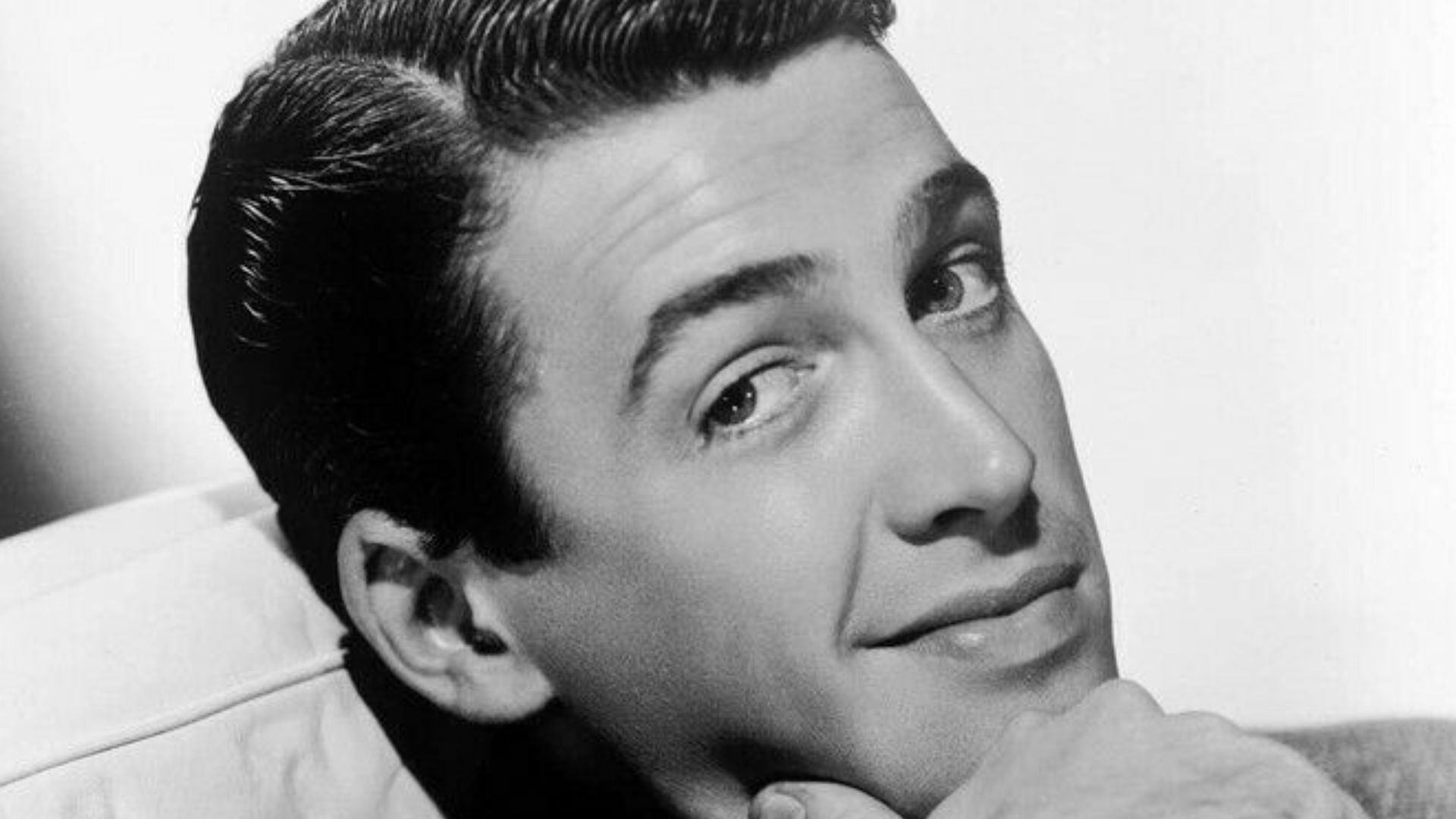
Battle Fatigue
After leading numerous high-casualty missions, Stewart was grounded in the battle's final months for being "flak happy"—the era's term for what we now recognize as Post-Traumatic Stress Disorder. Witnessing 13 planes and 130 men lost in single missions, many of whom he knew personally, took a devastating psychological toll.
 Metro-Goldwyn-Mayer, Wikimedia Commons
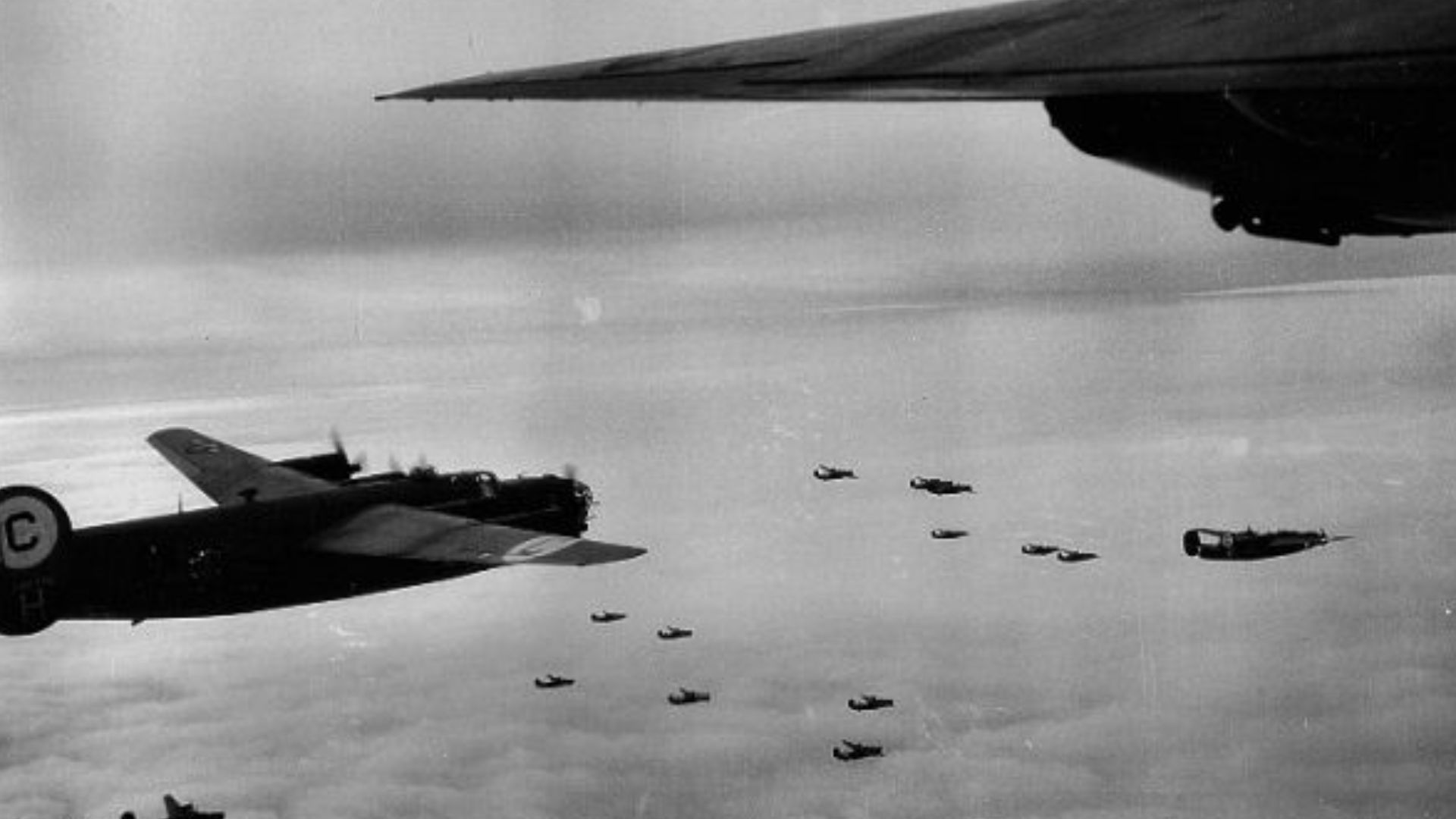
20 Missions Complete
Stewart officially completed 20 combat missions as a command pilot over enemy territory, though some sources suggest 21 total flights. His targets included Brunswick, Bremen, Frankfurt, Schweinfurt, and Berlin, Germany's most fortified industrial centers. He flew additional unofficial missions with the 389th Group's pathfinder squadron.
 assumed USAAF, Wikimedia Commons
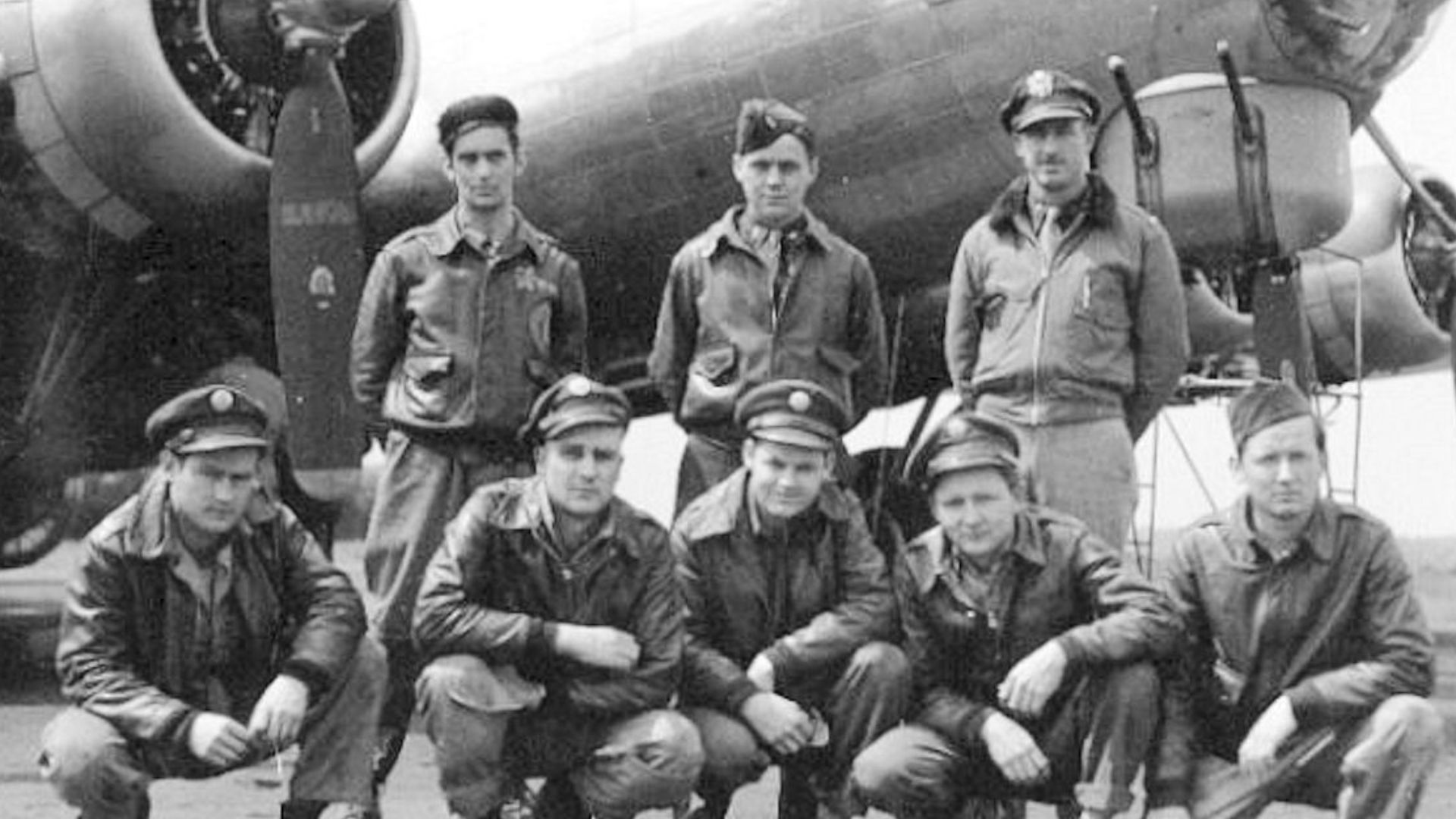
Colonel Promotion
By March 1945, Stewart had risen from enlisted private to full colonel, an extraordinary ascent in just four years of military service. He became the chief of staff of the 2nd Air Division, overseeing operations of multiple bombardment groups across England.
 United States Army Air Forces, Wikimedia Commons
Wonderful Life
Director Frank Capra offered this man the role of George Bailey in It's a Wonderful Life when both men found themselves unemployed after returning from wartime service. Capra had spent the battle producing "Why We Fight" propaganda films. Stewart hadn't worked in film for nearly five years since winning his Oscar.
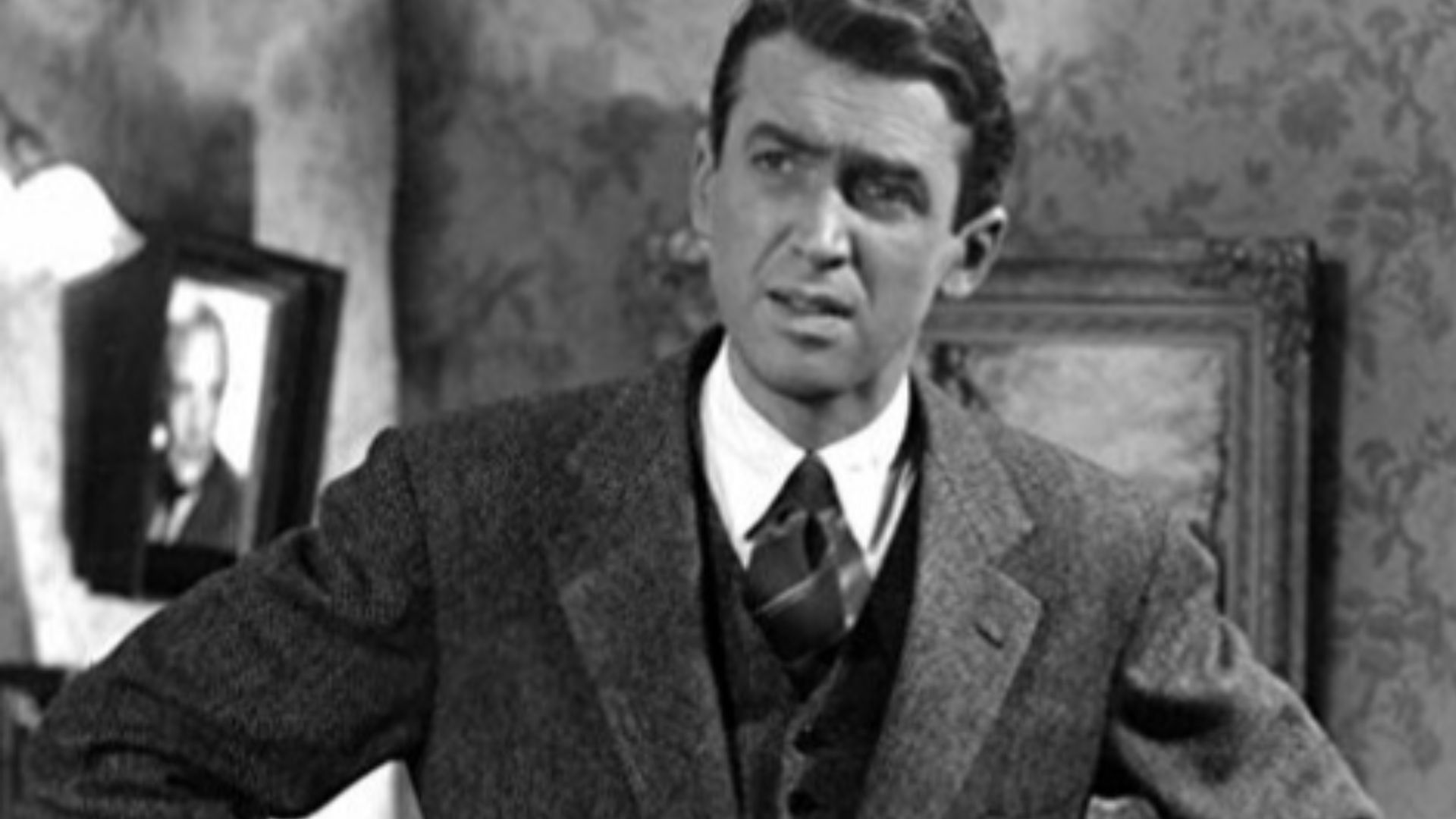 Joseph Walker, Joseph Biroc, Wikimedia Commons
Reserve Service Continuation
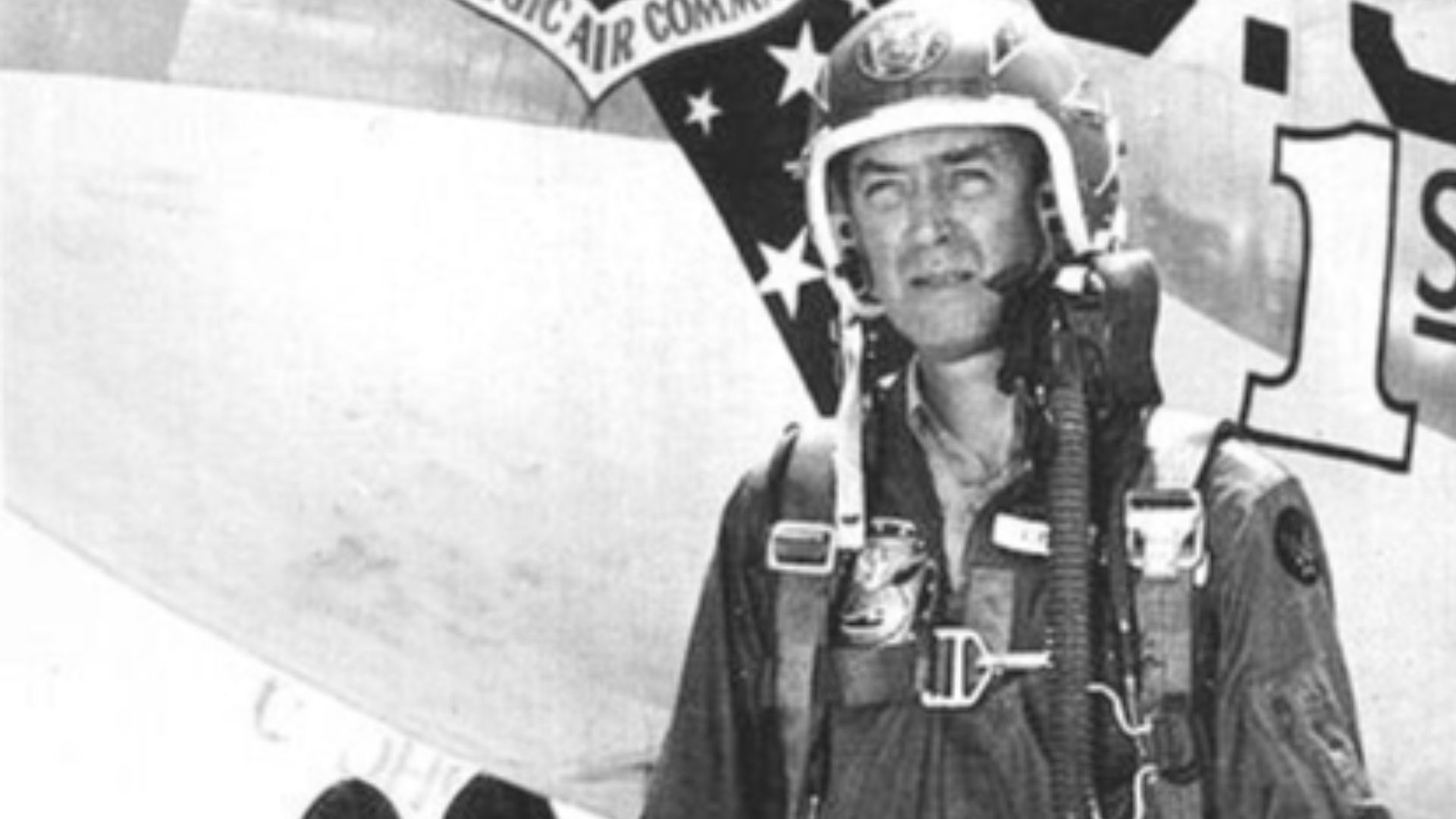
He remained in the Air Force Reserve after returning to civilian life, refusing to sever his military connection despite Hollywood's demands. Stewart continued training annually, transitioning to new aircraft, including the Convair B-36 Peacemaker and Boeing B-52 Stratofortress. In 1955, he starred in Strategic Air Command.
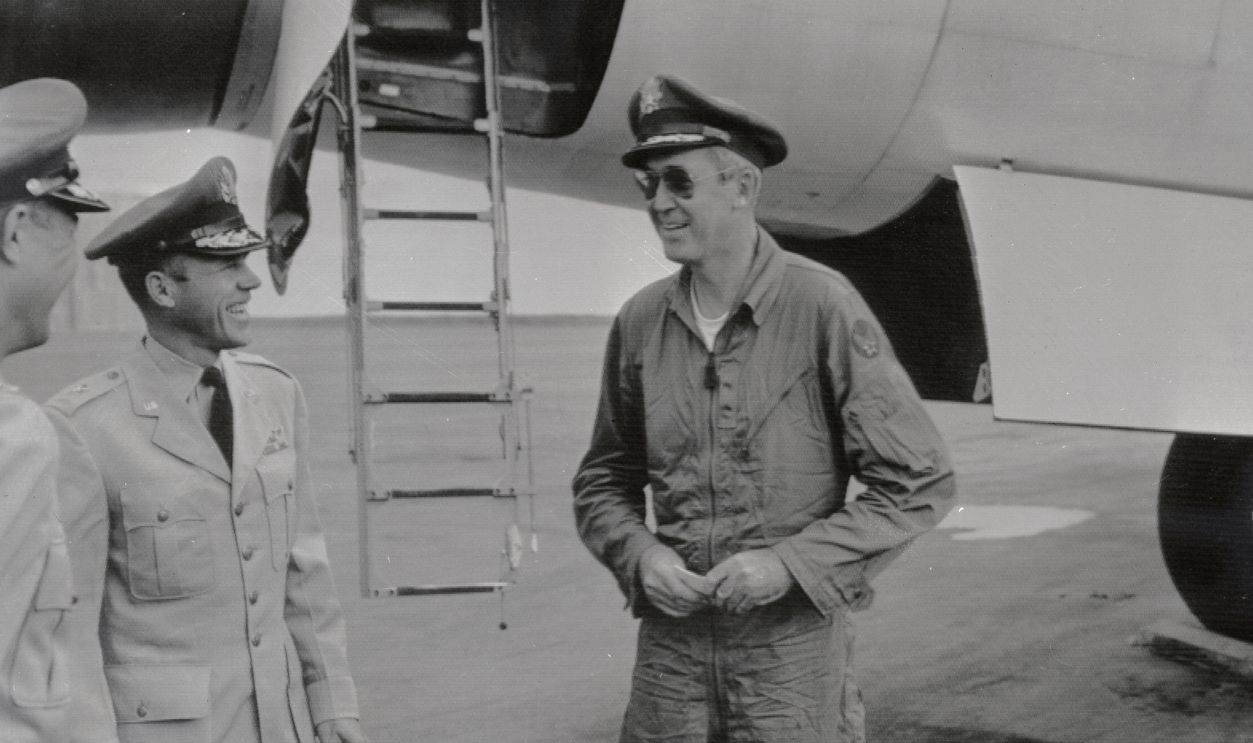
Brigadier General
Senator Margaret Chase Smith initially opposed Stewart's February 1957 nomination for brigadier general promotion, questioning whether an actor deserved such a rank. The Washington Daily News defended him, noting his active annual Reserve training and B-52 qualifications. On July 23, 1959, Stewart finally received his star.
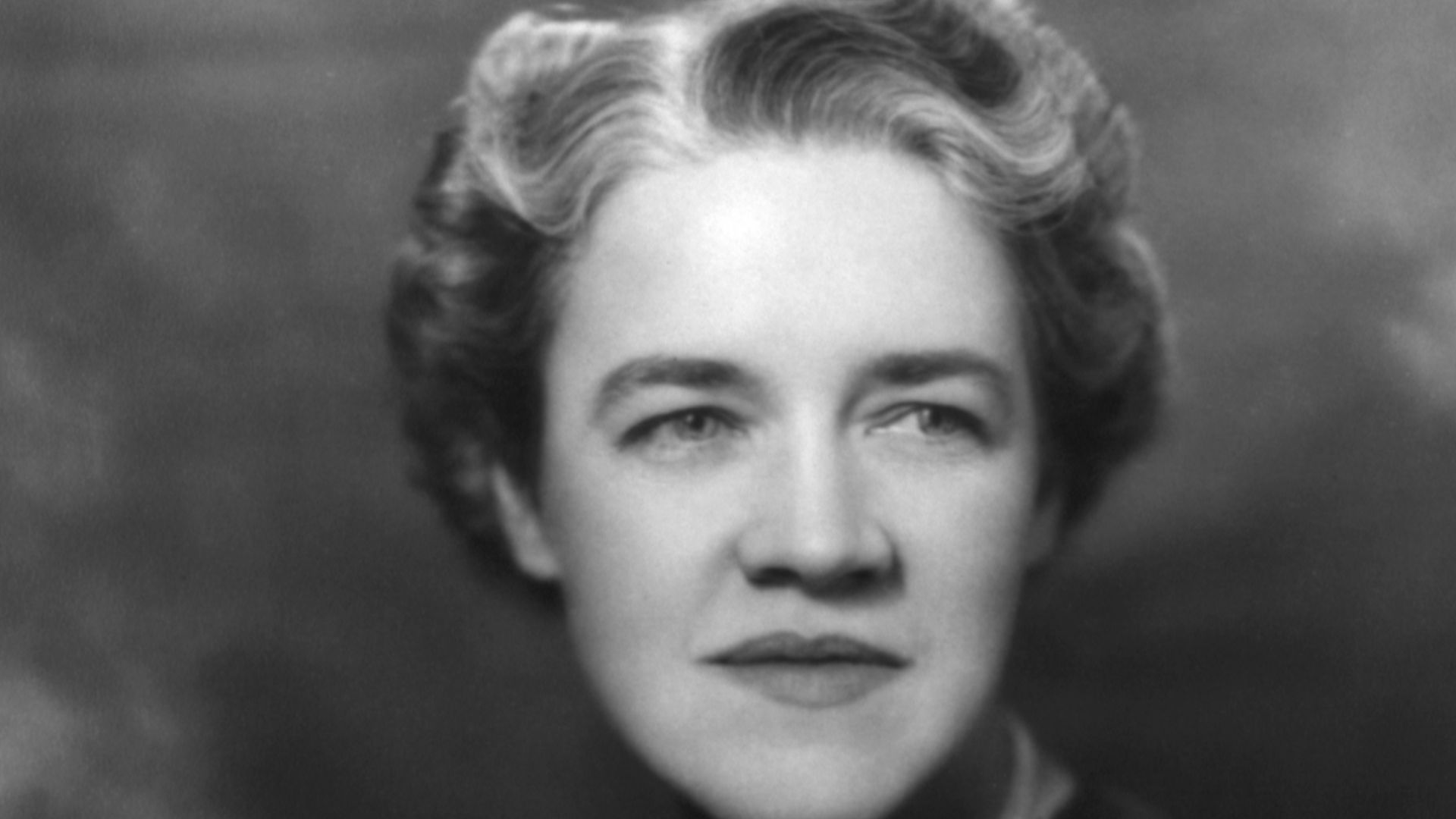 Unknown authorUnknown author, Wikimedia Commons
Vietnam Mission
In 1966, approaching retirement, Brigadier General Stewart requested a combat assignment during his two-week active duty reserve tour. On February 20, 1966, at Anderson Air Force Base, Guam, Stewart flew B-52F serial number 57-0149 on a combat strike against Viet Cong targets.
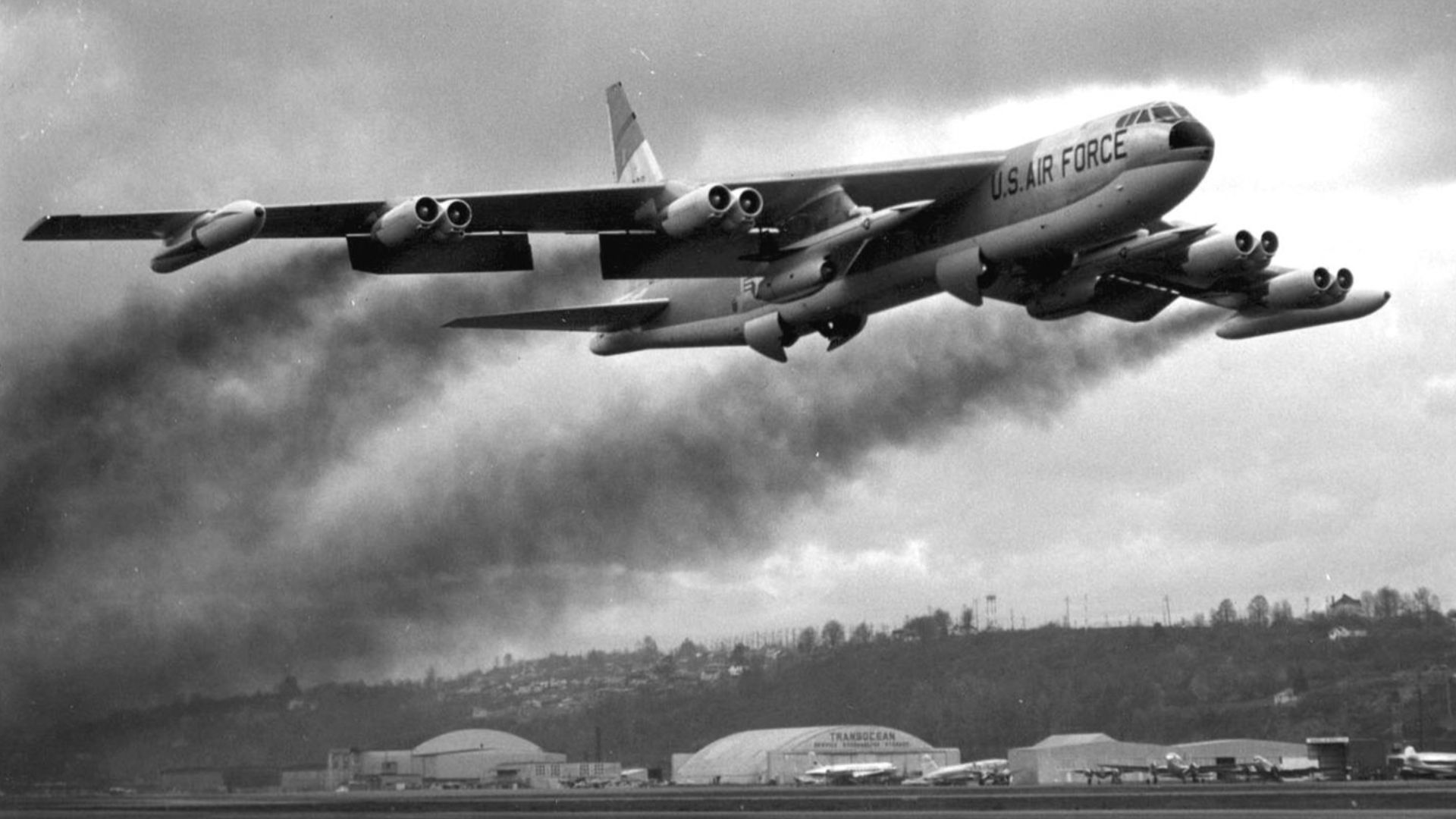 US Goverment, Wikimedia Commons
Silent Hero Legacy
Well, this man refused to discuss his combat experiences publicly for fifty years, forbidding publicists from mentioning his military service and declining all battle-related movie roles except 1955's Strategic Air Command. He believed battle wasn't something to celebrate or exploit commercially.
 Unknown authorUnknown author, Wikimedia Commons











.jpg)