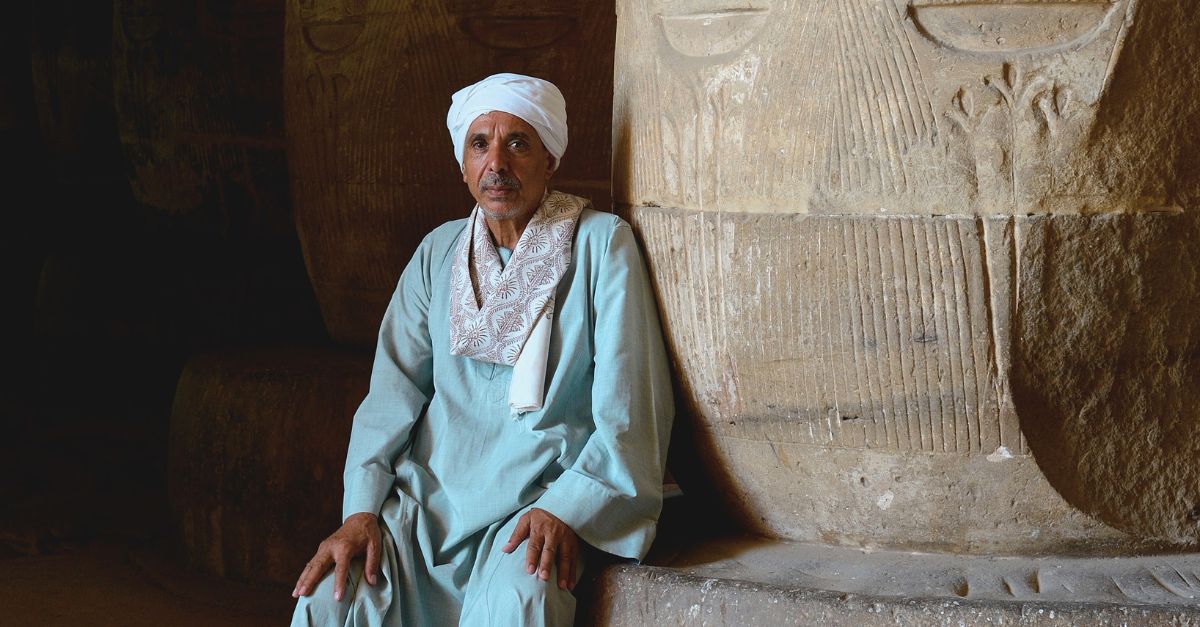
 Francois GOUDIER/Gamma-Rapho, Getty Images
Abydos has drawn pharaohs and pilgrims for millennia as Egypt's holiest burial ground, where proximity to Osiris promised divine favor in the afterlife. Excavators recently broke through sealed chambers, revealing sophisticated mudbrick vaults and decorative plasterwork depicting the goddesses Isis and Nephthys as eternal guardians. The building techniques speak to royal commissioning, yet every cartouche and inscription identifying the occupant lies damaged and illegible. Their disappearance transforms an already significant find into an archaeological puzzle that challenges researchers to identify the tomb's owner through architectural clues, artistic styles, and contextual evidence rather than convenient labels written in stone.
Architectural Features Reveal Royal Status
The burial complex consists of multiple interconnected chambers built from mudbrick with limestone elements. Ceiling heights and room proportions indicate careful planning by architects familiar with elite construction standards. Wall surfaces received multiple layers of fine plaster before artisans applied pigmented designs, a labor-intensive process reserved for high-status projects. Storage annexes branch off from the main chamber, likely intended for funerary equipment and provisions the deceased would need during their journey through the underworld and into eternal existence thereafter.
Surviving fragments of painted decoration show remarkable preservation in protected areas where sand infiltration created stable microclimates. The goddesses Isis and Nephthys appear in their characteristic mourning poses with wings spread protectively across chamber walls. Pigments typical of elite tombs, such as Egyptian blue and malachite-based greens, were likely used based on comparable examples, further confirming substantial financial investment. Moreover, the protective deities weren't merely decorative but served active spiritual functions and transformed the tomb into a perpetual ritual space where divine forces continuously worked on behalf of the deceased.
In keeping with elite construction traditions, names and titles were normally inscribed throughout burial chambers. Egyptian builders typically carved or painted the owner's names repeatedly throughout burial spaces to ensure recognition by both human visitors and supernatural entities. The complete absence of identifying inscriptions presents the investigation's central mystery. Ancient robber damage likely caused this anonymity, though the exact circumstances remain under study. Comparable structures at Abydos consistently feature extensive naming protocols, making this omission particularly striking and worthy of focused scholarly attention as teams work to understand what circumstances might produce such an unusual outcome.
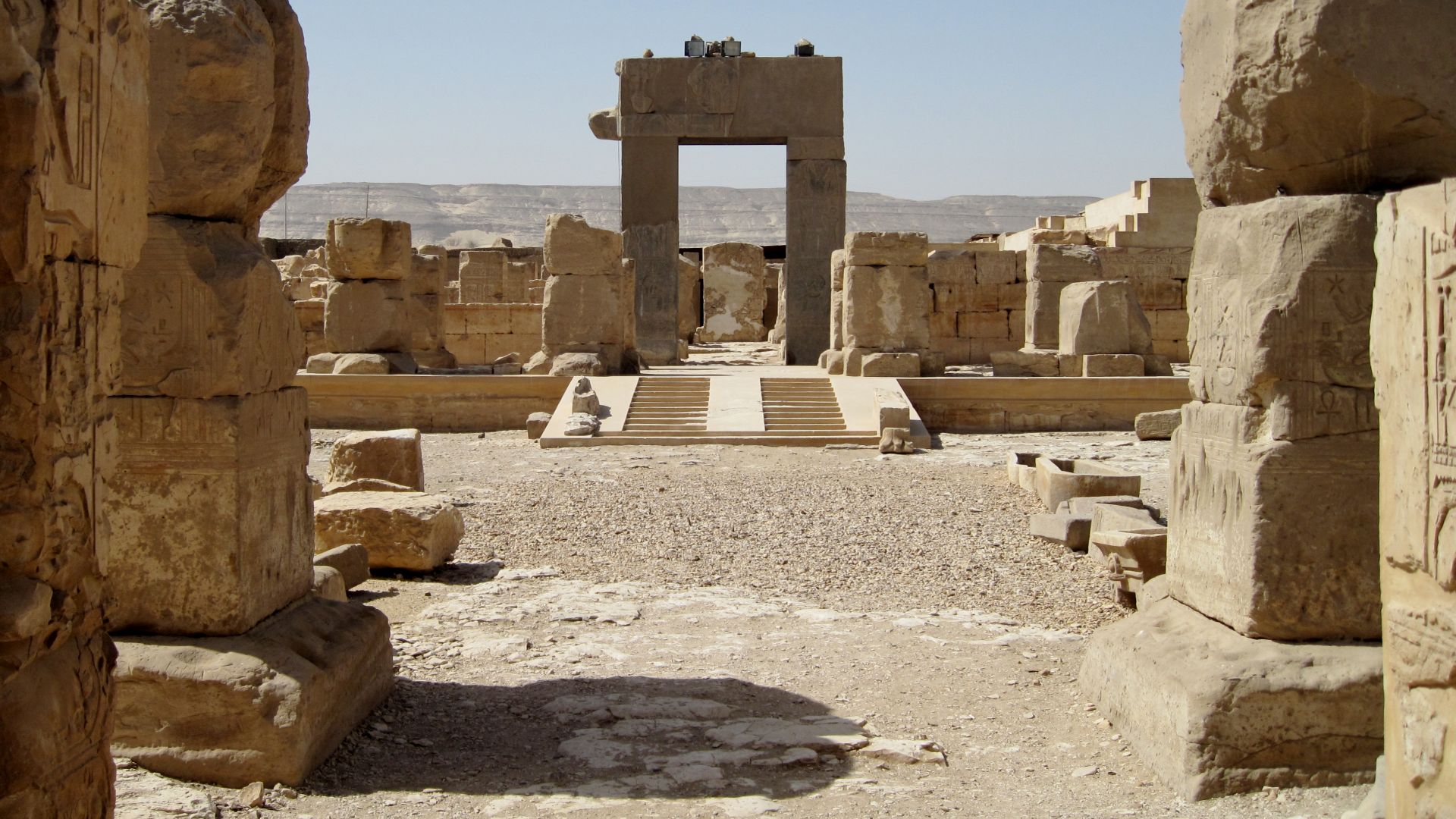 Olaf Tausch, Wikimedia Commons
Dating And Historical Context
Preliminary architectural analysis suggests construction during the Second Intermediate Period, a transitional era when building techniques evolved rapidly. Brick dimensions, bonding patterns, and vault construction methods align with known examples from roughly 1640–1540 BCE, though precise dating requires additional testing. This timeframe witnessed significant political upheaval as the Second Intermediate Period transitioned to the expansionist New Kingdom, potentially explaining why some burials received incomplete documentation or suffered later disturbance during this period of rapid change.
The tomb's location within Abydos' sacred landscape provides additional chronological hints. Elite burial zones shifted over centuries as available space filled and different dynasties favored particular areas. Mapping this chamber's position relative to dated nearby structures creates a temporal framework even without direct inscriptional evidence. Ceramic fragments, tool marks, and construction debris recovered during excavation also contribute chronological indicators that specialists can compare against established typological sequences developed through decades of systematic archaeological research across Egyptian sites.
Modern Investigation Techniques
Contemporary archaeology deploys technology that would have seemed miraculous to earlier generations of excavators. Ground-penetrating radar initially detected the sealed chambers before physical excavation began, allowing teams to plan their approach without destructive trial-and-error digging. Photogrammetry created detailed three-dimensional models from thousands of overlapping photographs, and helped preserve exact spatial relationships and surface textures digitally before any physical intervention risks damaging fragile original materials through handling or environmental exposure, ensuring long-term preservation.
This discovery reinforces that significant finds await patient researchers willing to work systematically through areas others consider exhausted. Every anonymous tomb challenges archaeologists to strengthen interpretive methods that don't rely on convenient textual shortcuts. The missing pharaoh's identity will likely emerge through collaborative analysis combining architectural history, art historical comparisons, and scientific testing rather than a single dramatic revelation, demonstrating how modern Egyptology functions as a genuinely interdisciplinary field where diverse expertise converges to solve complex historical puzzles.
 The Charles Machine Works, Wikimedia Commons