

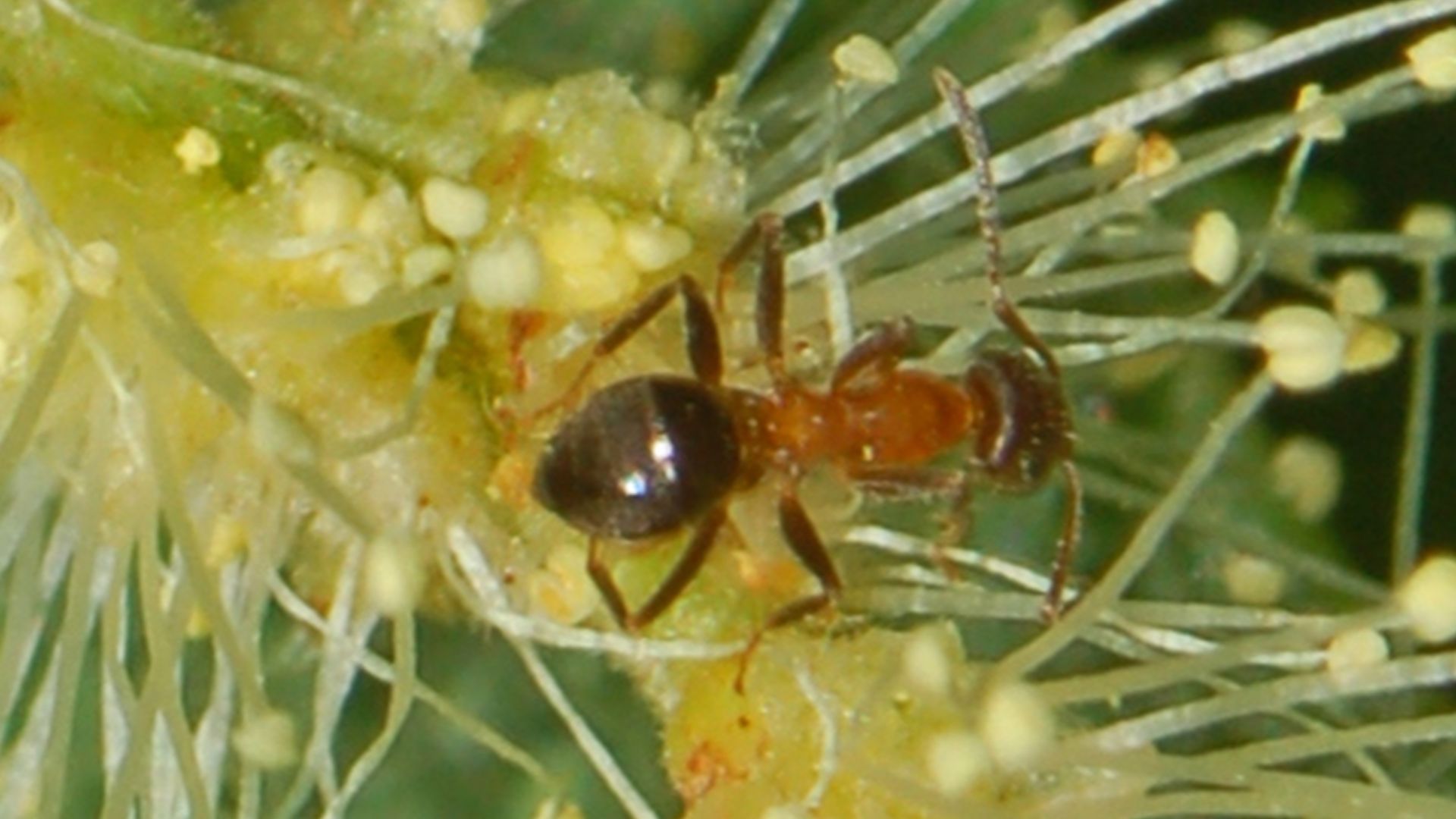
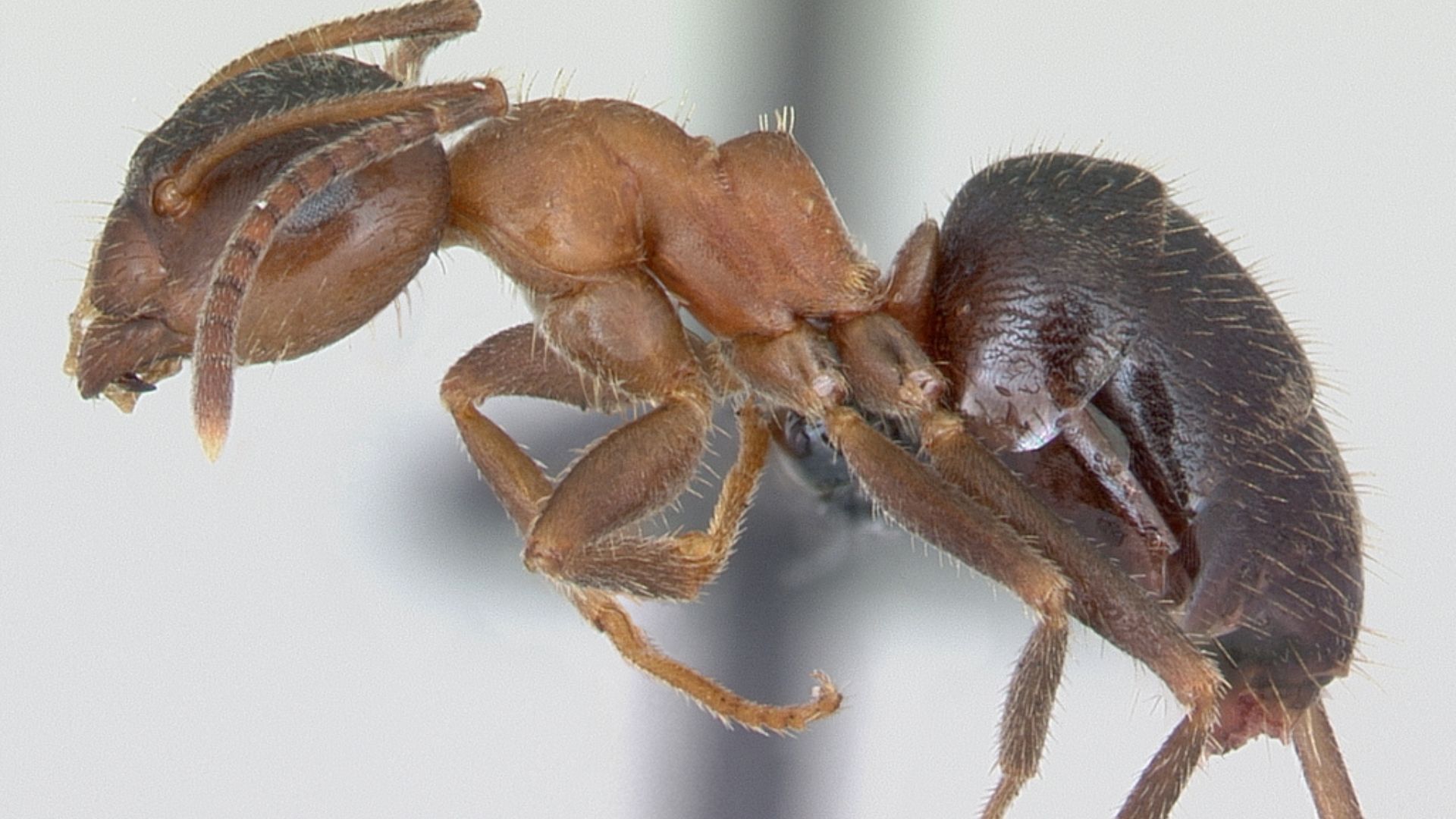
New York City feels like a place built for big, attention-grabbing creatures. Pizza rat, for example. Yet below the traffic and concrete, a small European ant species has carved out a surprising stronghold. Lasius emarginatus, identified in the city in 2011, has become a significant part of the local urban ecosystem. Known informally as the “ManhattAnt,” it thrives in places long thought to be the domain of NYC's infamous rats, including subway-adjacent spaces, utility corridors, sidewalk cracks, and building foundations. Its presence reveals how adaptable certain species can be and how urban environments unintentionally create new ecological niches.
Origins Of A European Ant In An American Mega-City
Lasius emarginatus originates from Europe, where it typically inhabits natural spaces such as woodlands, rocky slopes, and warm, open land. Its establishment in New York City became clear in 2011 when researchers surveying local ant species discovered a population that did not match any native North American ants. Subsequent genetic and morphological analysis confirmed that the species matched European specimens. Its introduction into Manhattan has not been traced to a specific event, but accidental transport through international trade remains the most plausible explanation. Once present, the species adapted quickly to the city’s dense, human-built terrain and began forming stable colonies across central Manhattan.
What made the Lasius emarginatus noteworthy from the start was the size and distribution of its discovered colonies. Instead of appearing in scattered, isolated pockets, the ants existed in multiple locations along the Upper West Side. Researchers collected workers from medians and sidewalk edges along Broadway, indicating that the species had already established a foothold. This early clustering suggested it was not a recent arrival but a population that had been growing unnoticed. Its rapid spread became even more evident in subsequent surveys, which found the ants expanding into nearby boroughs. The discovery underscored how easily small species can travel and settle within global trade hubs like New York.
 Hectonichus, Wikimedia Commons
How An Underground World Supports Their Survival
Urban conditions in New York differ sharply from the forests and sunlit rocks that Lasius emarginatus occupies in Europe, yet the city’s underground and semi-underground spaces provide suitable substitutes. The ants manage well in environments that swing between different heat levels and humidity ranges, allowing it to survive in cracks, utility tunnels, and shaded concrete structures. These areas remain relatively stable year-round, especially compared to surface conditions that swing between summer heat and winter cold. Access to small pockets of moisture and sheltered nesting spots helps the ants maintain large colonies even when weather extremes affect other insects.
Food availability further strengthens the ant’s ability to thrive beneath the city. Their diet includes the sugary honeydew released by sap-feeding insects and on proteins from dead invertebrates found near human activity. New York’s infrastructure inadvertently supports these resources by creating microhabitats favorable to them. Street trees, planters, and landscaped medians supply carbohydrate sources, while subway-adjacent debris and hidden crevices provide protein. This combination allows colonies to persist and grow without relying on a single food source. Their flexible diet makes them competitive with native ants that struggle in the harsher, more fragmented conditions of Manhattan’s built environment.
Expansion, Ecological Impact, And What The Future Holds
By the mid-2020s, Lasius emarginatus has become one of the ant species New Yorkers now see most frequently. Surveys documented its movement beyond Manhattan into the Bronx, parts of Long Island, and areas of New Jersey. Its spread demonstrates how well the species exploits small fragments of urban habitat that many native ants cannot use effectively. Although it does not form supercolonies like some invasive ants, it behaves aggressively toward other species, allowing it to dominate spaces where it becomes established. Researchers continue to monitor its expansion to determine the long-term consequences for local ant diversity and urban plant health.
Concerns about ecological impact center on competition and the insects the ants protect. As they tend to guard honeydew-producing insects, it can contribute to increased stress on urban trees and shrubs. Displacement of native ants may also alter nutrient movement in soil and leaf litter. While no major ecological disruption has been directly linked to the ManhattAnt, scientists stress that changes caused by invasive species often unfold gradually. As the ant continues to expand through the region, its interactions with plants, invertebrates, and other ants will shape how much influence it exerts.
 April Nobile, Wikimedia Commons