 Pavel Danilyuk, Pexels, Modified
Diego Matadamas-Gomora, a PhD candidate at Tulane University, spent months analyzing volcanic glass fragments excavated from the ruins of Tenochtitlan's main temple. His team examined 788 obsidian artifacts using portable X-ray fluorescence technology that identifies chemical signatures without damaging ancient objects. What emerged was a detailed map of trade routes spanning hundreds of miles across Mesoamerica between 1375 and 1520 CE. The findings appeared in the Proceedings of the National Academy of Sciences and mark the most extensive compositional study ever carried out at the Templo Mayor site. Researchers discovered that the Mexica Empire sourced obsidian from at least eight different geological locations.
From Ritual Offerings To Daily Tools
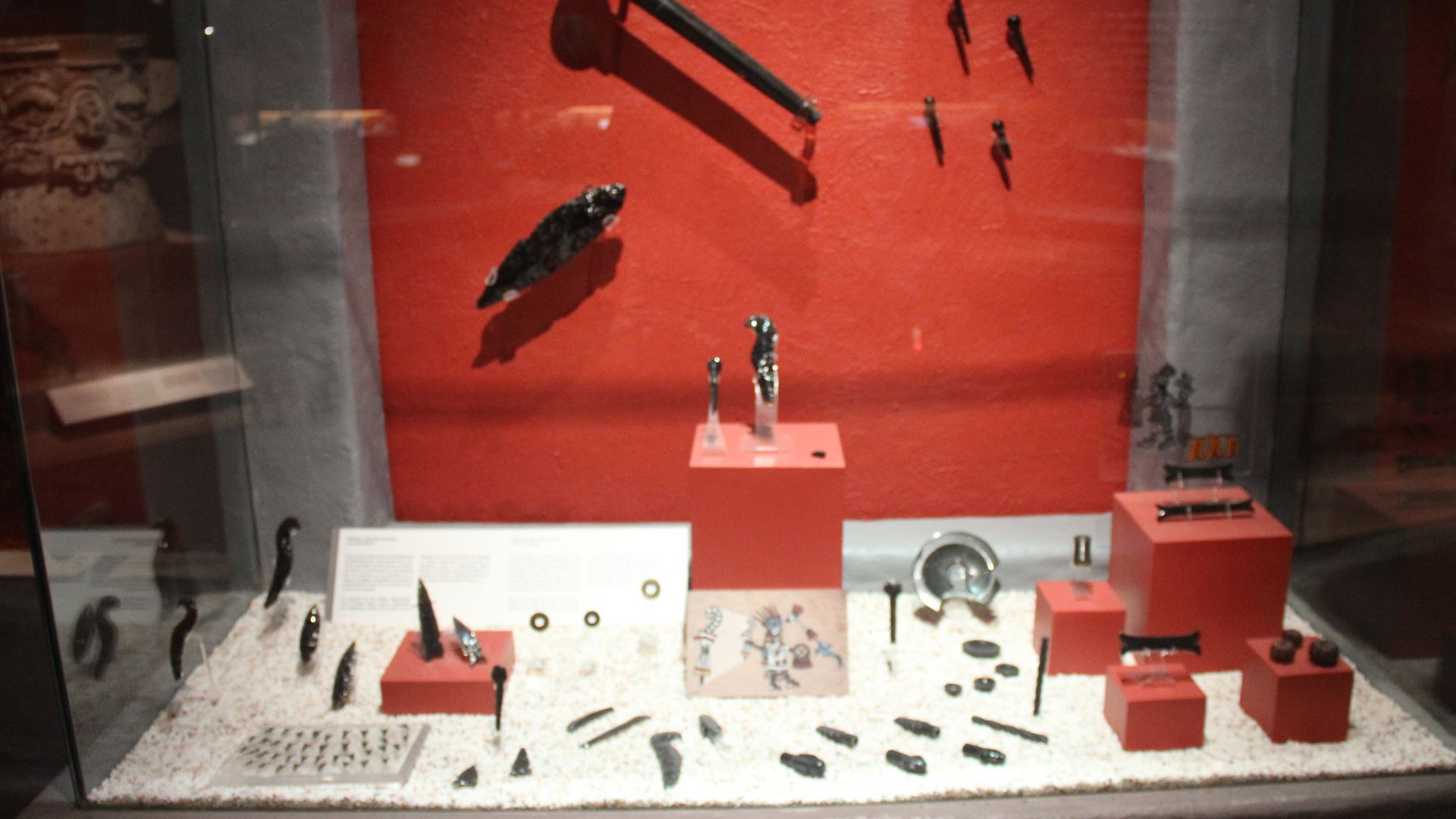
Eighty-nine percent of the analyzed artifacts came from Sierra de Pachuca, a mountain range in central Mexico known for deposits of distinctively green obsidian. This volcanic glass wasn't just valued for its sharp cutting edges—it carried profound symbolic meaning tied to Tollan, the mythical city of creation, and Quetzalcoatl, the feathered serpent deity central to Mexica religion. Ceremonial objects buried in temple offerings were crafted almost exclusively from this green material. Miniature weapons, jewelry pieces, and decorative inlays on religious sculptures all bore the characteristic emerald hue that marked them as spiritually significant. The remaining 10% of artifacts revealed something equally fascinating about daily life in Tenochtitlan. Obsidian from seven additional sources appeared primarily in utilitarian tools like blades and flakes used for cutting, scraping, and food preparation. These everyday implements came from Otumba, Tulancingo, El Paraiso, Zacualtipan, Paredon, Ucareo, and Oyameles, scattered across regions both inside and outside Mexica control.
 Gary Todd from Xinzheng, China, Wikimedia Commons
Markets Moved Goods Across Enemy Lines
The presence of obsidian from Ucareo proved particularly revealing because that region belonged to the Purepecha kingdom in West Mexico, longtime rivals who successfully resisted Mexica military expansion. Despite political hostilities, volcanic glass from Purepecha territory reached Tenochtitlan's markets and construction sites. Matadamas-Gomora explained that the diversity of obsidian types in non-ritual contexts suggests these materials arrived through market exchange rather than direct state acquisition from quarries. Common citizens purchased tools made from various obsidian sources at local marketplaces without elite intervention or control. This evidence points to sophisticated commercial networks operating independently of imperial politics, where traders crossed borders and negotiated deals even between hostile kingdoms.
Researchers also tracked how obsidian sourcing patterns shifted across 150 years of Mexica history. During Tenochtitlan's founding period from roughly 1375 to 1430 CE, both ritual and everyday objects showed greater diversity in their geological origins. Obsidian from Tulancingo and El Paraiso appeared frequently in all contexts during these early decades when the Mexica were still consolidating power and establishing their capital. After 1430 CE, following major military victories and political centralization, a dramatic change occurred in ritual practices. Green obsidian from Sierra de Pachuca became virtually the exclusive material for religious ceremonies and temple offerings. This standardization suggests growing control over spiritual practices as the empire strengthened its authority. Meanwhile, utilitarian tools continued showing variety from multiple sources, indicating that centralized religious regulation didn't extend to controlling everyday commerce or domestic material culture.
Science Behind The Discovery
The research collaboration between Tulane University and Mexico's Proyecto Templo Mayor of the National Institute of Anthropology and History employed portable X-ray fluorescence equipment that revealed each artifact's geochemical fingerprint. This non-destructive technique allowed scientists to test hundreds of objects without risking damage to irreplaceable archaeological materials. The team compared artifacts against 42 geological samples from known Mesoamerican obsidian outcrops, creating reference standards that pinpointed where ancient tools originated. Jason Nesbitt, associate professor at Tulane and study co-author, emphasized that this work demonstrates how modern archaeological science can decode ancient economic systems and cultural practices that left no written records. The Templo Mayor obsidian study reveals an empire far more commercially sophisticated than simple military expansion suggests. These volcanic glass artifacts scattered through temple ruins tell stories of merchants traveling dangerous routes, market vendors haggling over prices, priests selecting ceremonially pure materials, and ordinary families using imported tools in their daily work. They all contributed to the complex economic web that sustained one of the ancient world's greatest cities.
 Amadeus Torres, Wikimedia Commons