Captured American Moments
You could hear the hammering of mills, the chatter of crowded streets, and the distant echo of conflict. Life in the 1800s was messy, human, and unfolding. Every state had moments that quietly shaped the nation.
 William Marsh, Springfield, ILJulian Vannerson, Wikimedia Commons
California: 1849, Gold Rush Mining
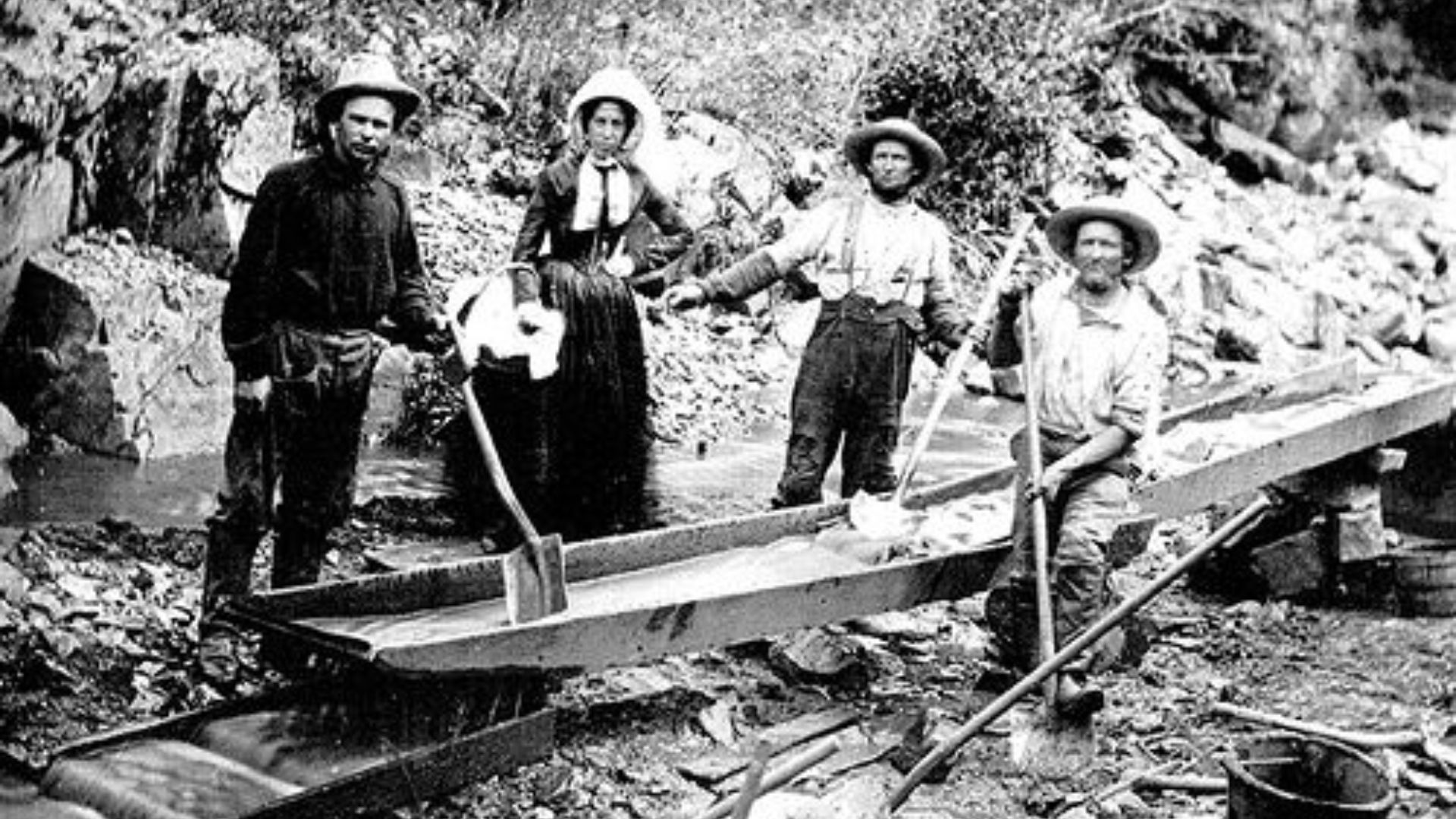
When James Marshall discovered gold flakes at Sutter's Mill in January 1848, he ignited a migration of over 300,000 fortune-seekers from six continents. An 1850 photograph captures this raw reality—a woman in a full-length dress stands beside rough-clothed miners, all wielding pans and shovels in muddy Sierra Nevada claims.
 Unknown authorUnknown author, Wikimedia Commons
Virginia: 1852, Railroad Network Expansion
The railroad stretched 206 miles, linking tidewater Virginia to western coal and timber resources. Locomotives hauled tobacco, grain, iron ore, and passengers across the state, converting sleepy agricultural communities into busy commercial hubs practically overnight.
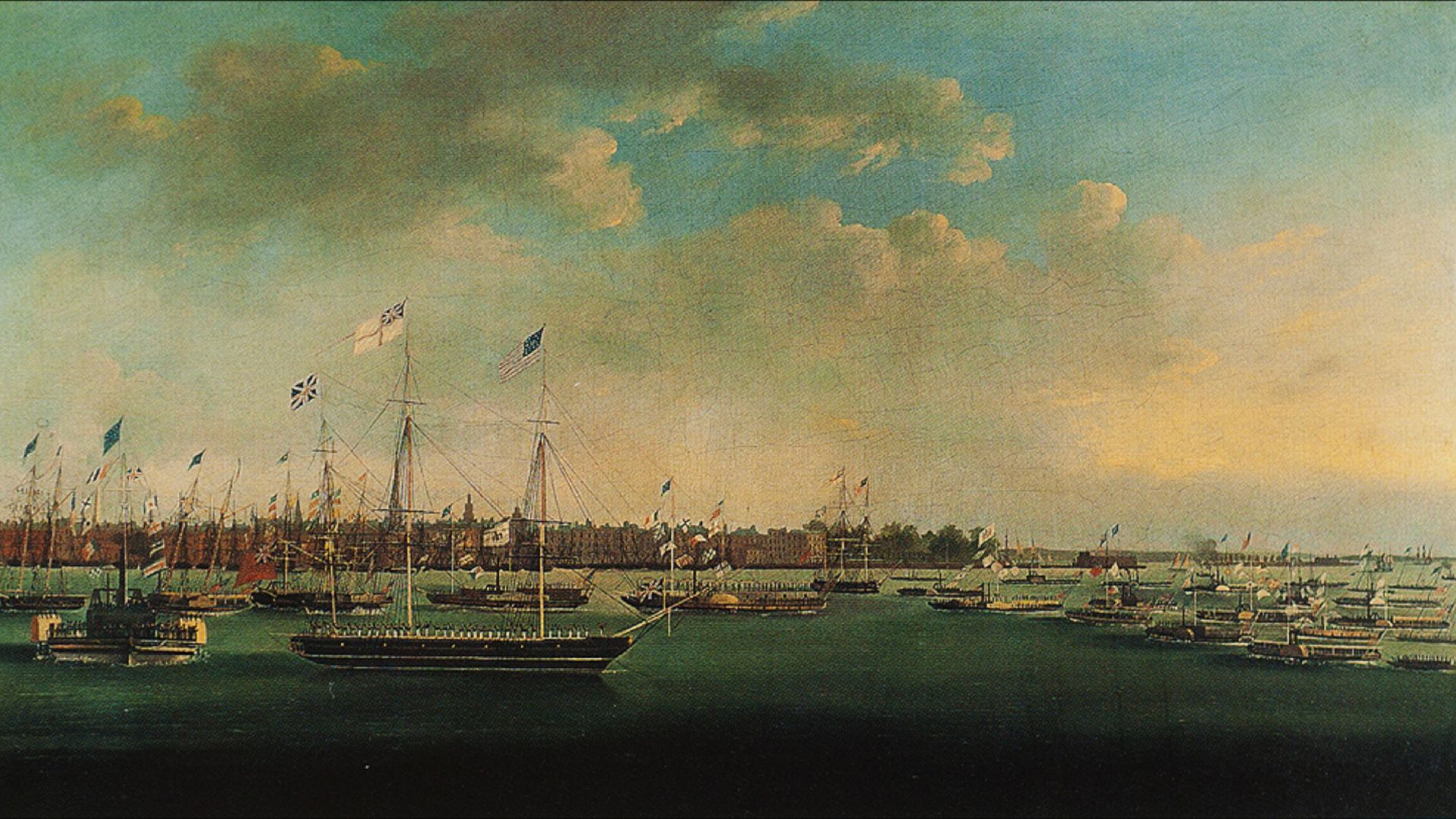
New York: 1825, Erie Canal Opens
Engineering ambition redrew America's economic map when Governor DeWitt Clinton's "ditch" connected Lake Erie to the Hudson River. Jubilant crowds gathered along decorated canal boats, waving flags as dignitaries ceremonially poured Lake Erie water into the Atlantic Ocean.
 Anthony Imbert, Wikimedia Commons
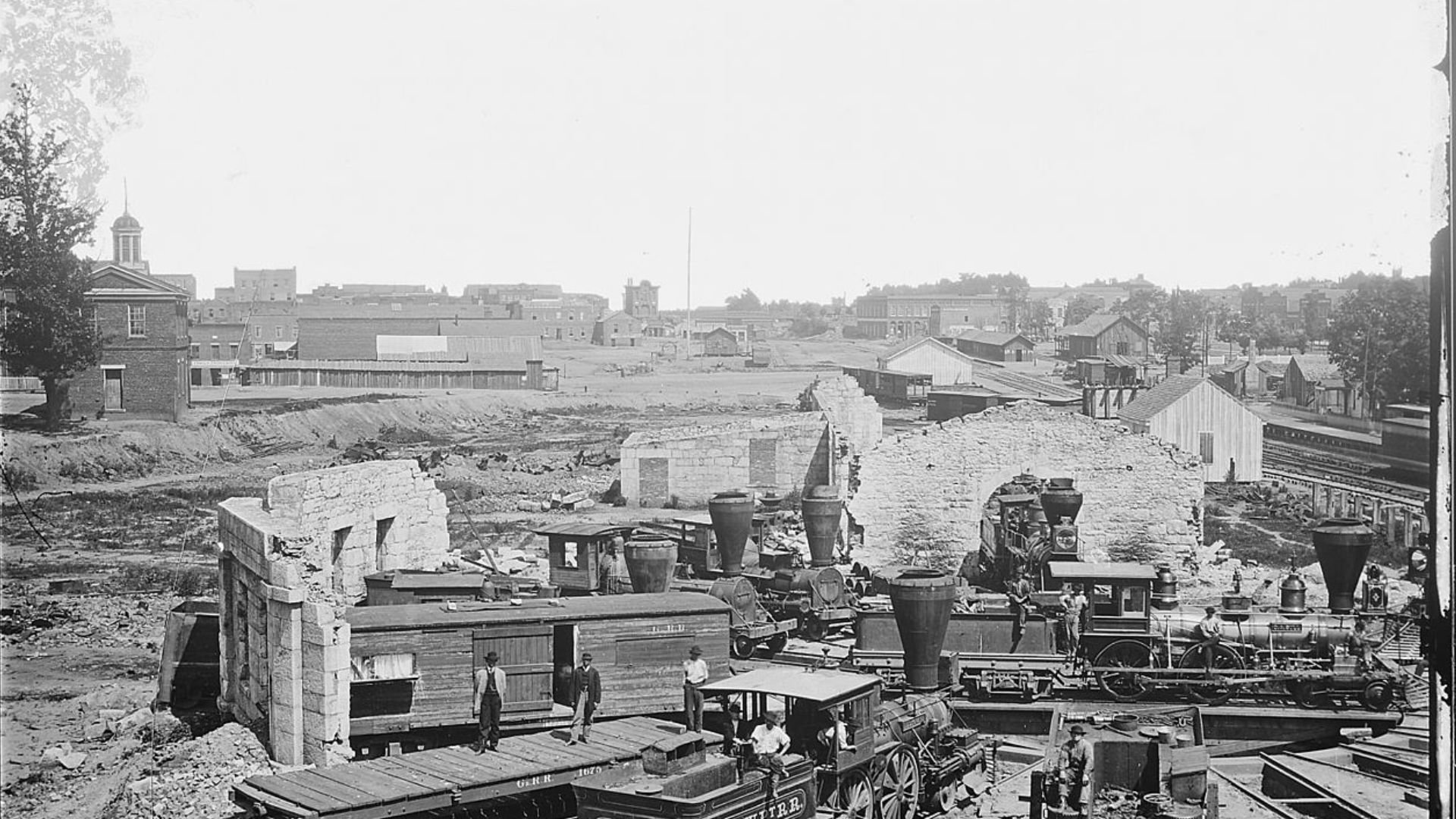
Georgia: 1864, Atlanta In Ruins
Sherman's army captured Atlanta and destroyed it. After Confederate forces evacuated on September 1, 1864, Union troops systematically demolished the city's industrial capacity over two months. A devastating 1864 photograph reveals the extent of the destruction; nothing remains but crumbled brick walls.
 National Archives at College Park, Wikimedia Commons
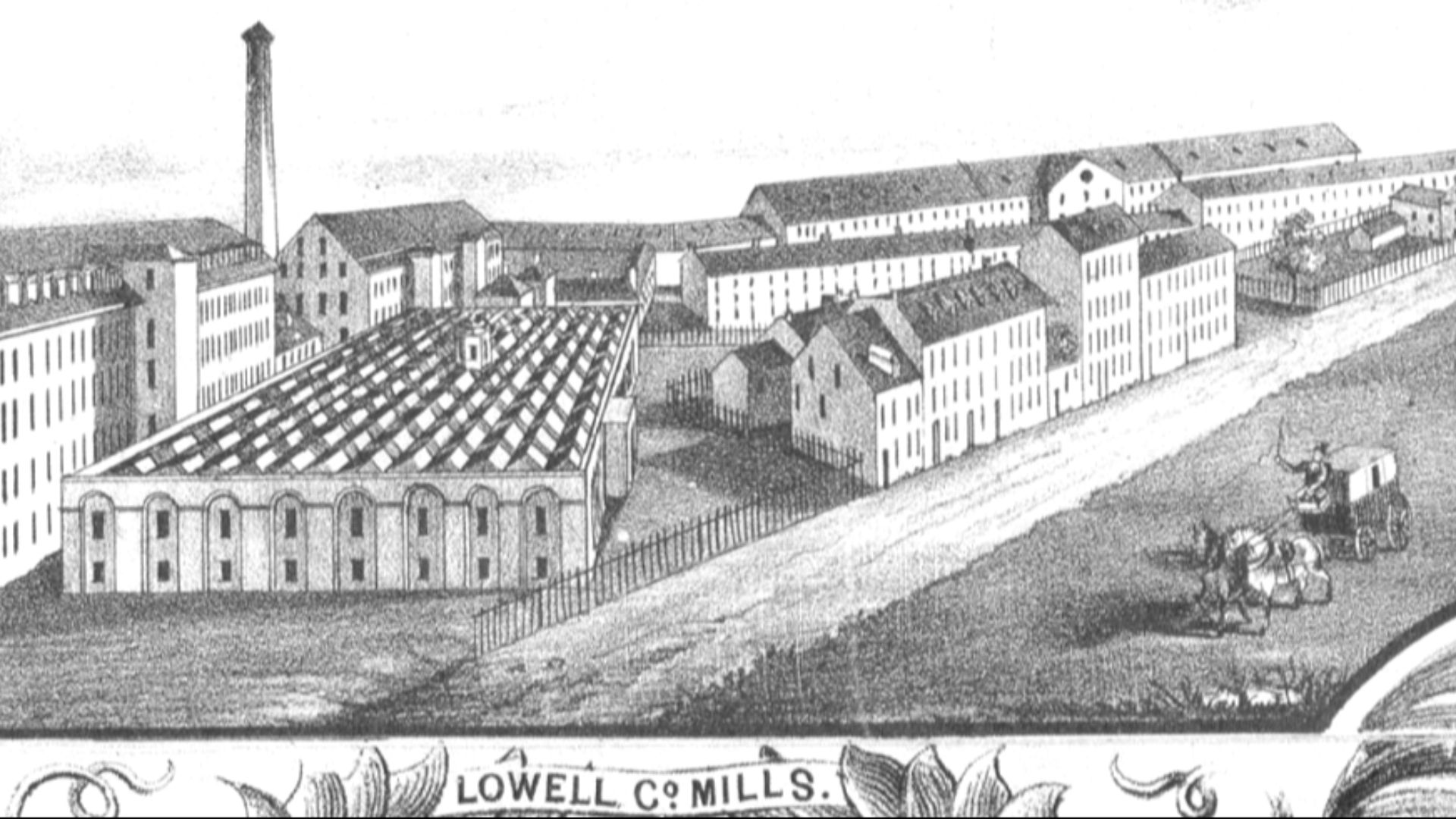
Massachusetts: 1850, Lowell Textile Mills
The future arrived along the Merrimack River in the form of massive brick factories that revolutionized American manufacturing. Lowell's mills pioneered the "Waltham-Lowell System," recruiting thousands of young farm women who lived in company boardinghouses and worked twelve-hour shifts operating power looms.
 Sidney & Neff, Wikimedia Commons
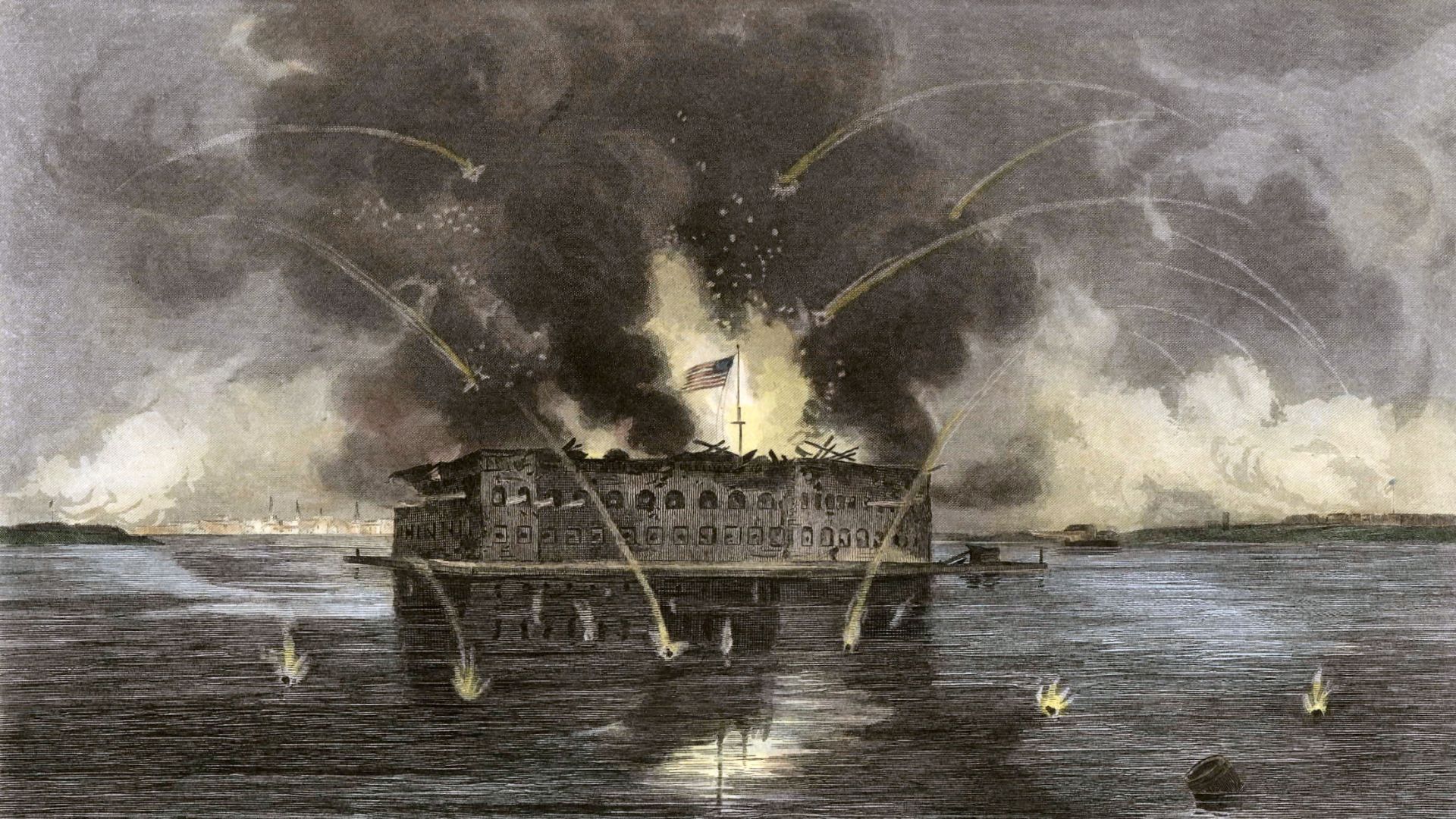
South Carolina: 1861, Fort Sumter Bombardment
At 4:30 am on April 12, 1861, Confederate artillery opened fire, and America split in two. An 1863 engraving captures the moment. Massive arcs of cannon fire and exploding shells illuminate the night sky above the beleaguered fortress, while smoke billows from Confederate batteries.
 George Edward Perine (1837-1885), Wikimedia Commons
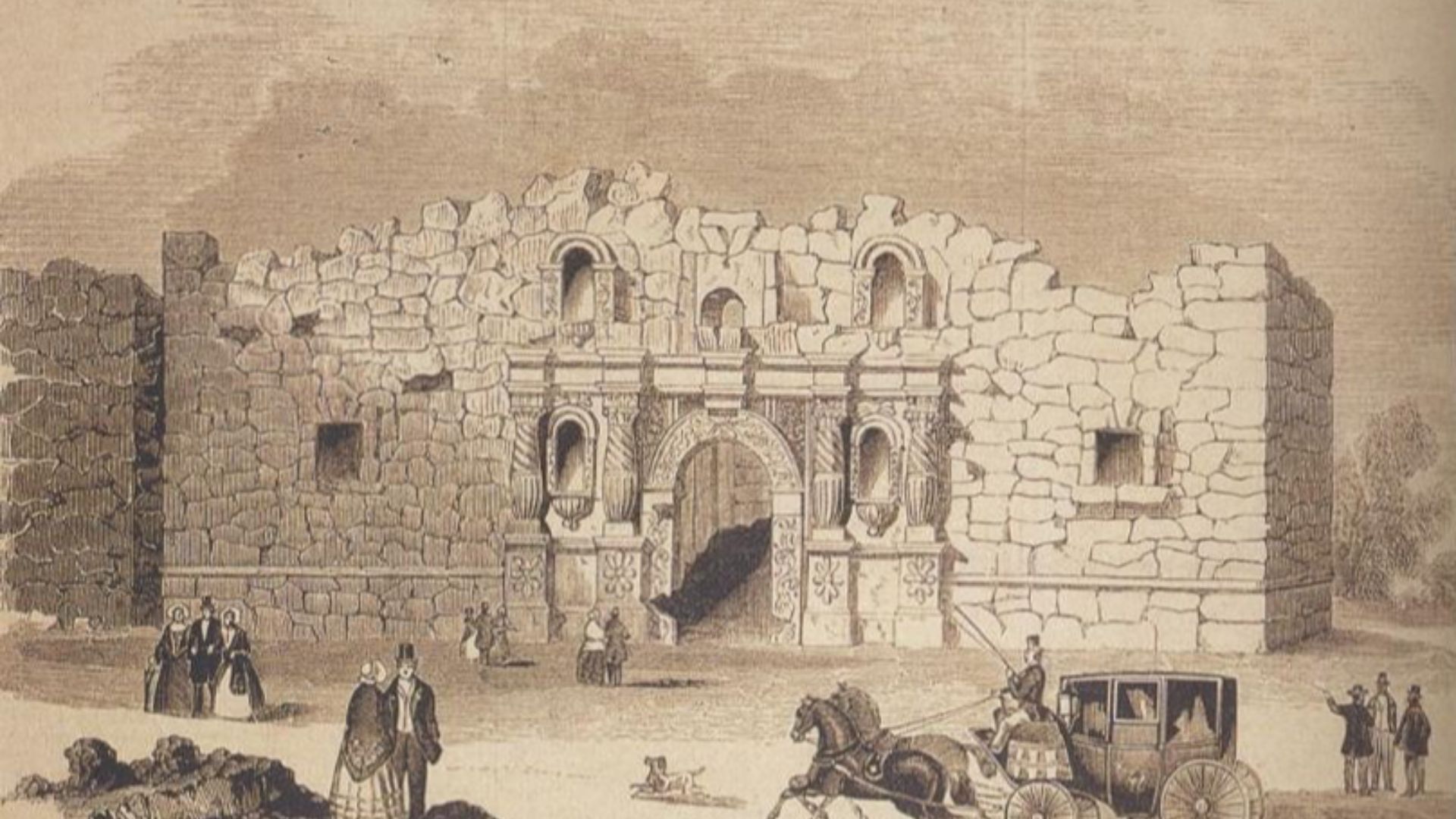
Texas: 1836, Alamo Under Siege
Thirteen days of defiance became Texas legend. An 1854 illustration shows the Alamo mission as it appeared just eighteen years after the battle. Approximately 200 Texian defenders, including Davy Crockett and Jim Bowie, faced General Santa Anna's 1,500-strong Mexican army.
 Unknown authorUnknown author, Wikimedia Commons
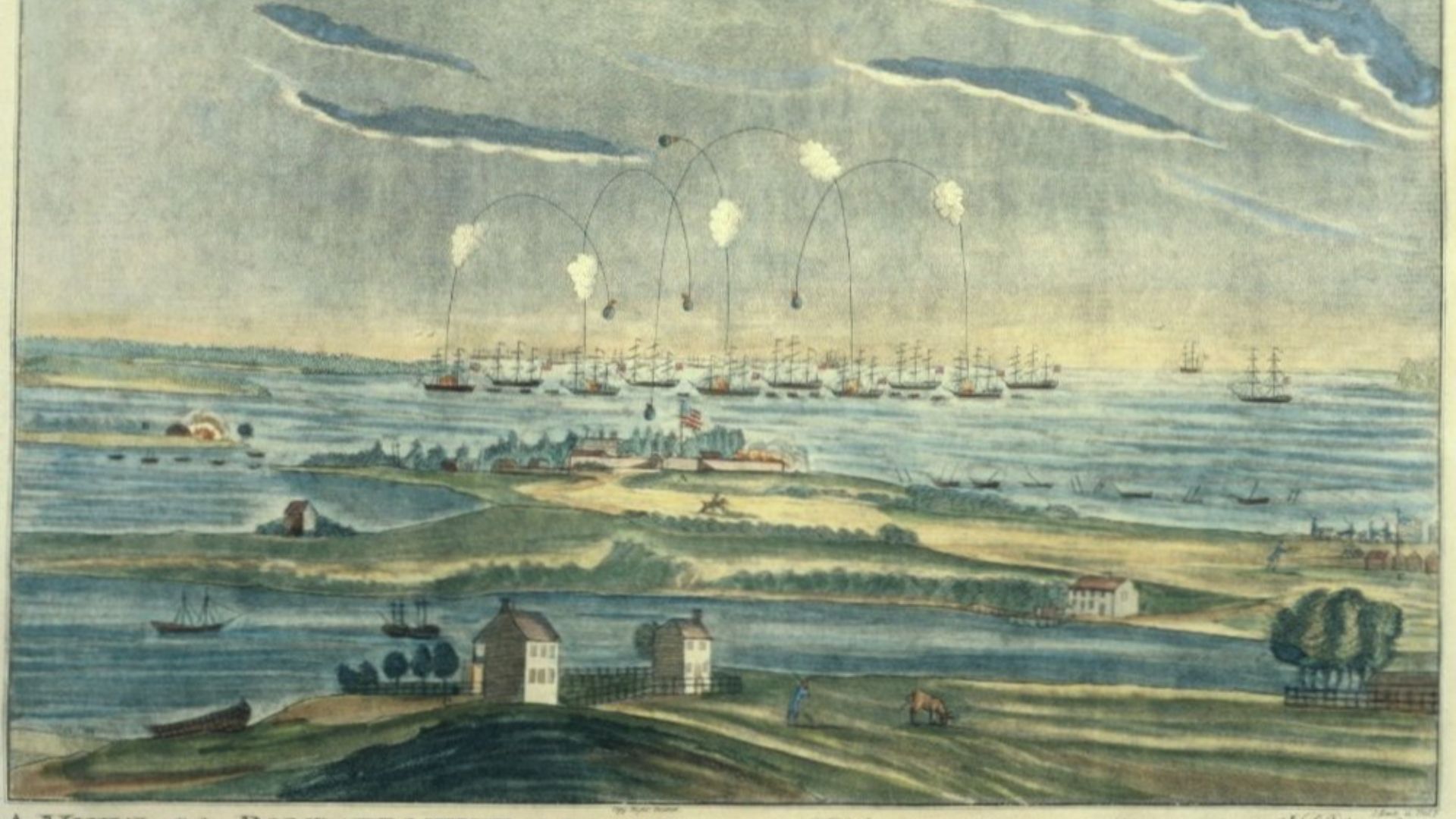
Maryland: 1814, Fort McHenry Attack
Francis Scott Key witnessed history from a British warship eight miles away. On September 13–14, 1814, British vessels released rockets during a twenty-five-hour fight. Fort McHenry's 1,000 defenders endured Britain's latest weapon—Congreve rockets that traced fiery arcs across the night sky.
 Original uploader was Dr.frog at en.wikipedia, Wikimedia Commons

History's most fascinating stories and darkest secrets, delivered to your inbox daily.
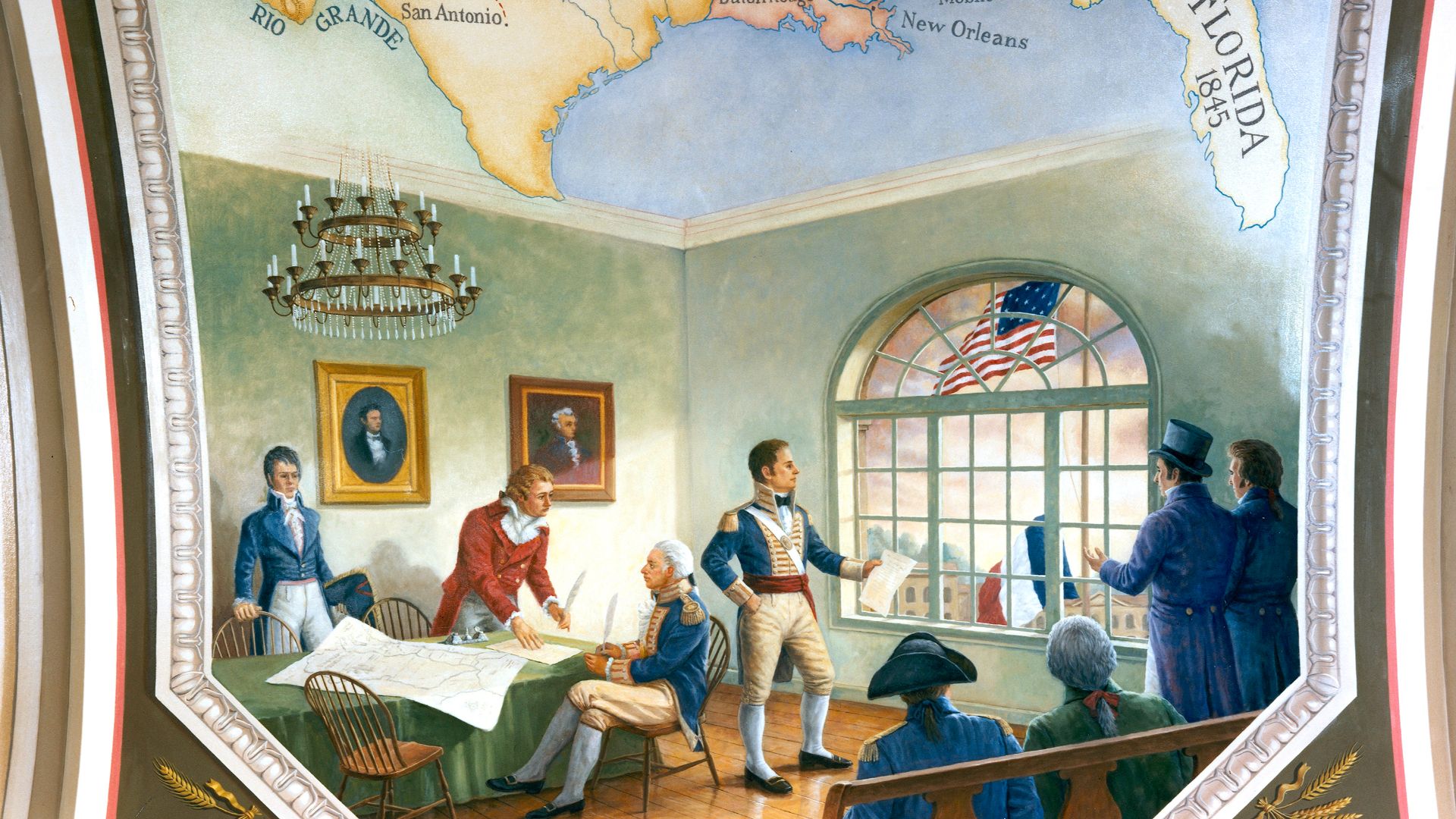
Louisiana: 1803, Louisiana Purchase Territory
Napoleon Bonaparte needed cash for European wars, so he sold Thomas Jefferson 828,000 square miles for three cents per acre. This is a painting in the US Capitol which depicts the Louisiana Purchase of 1803. It shows the third signing of the Treaty in New Orleans.
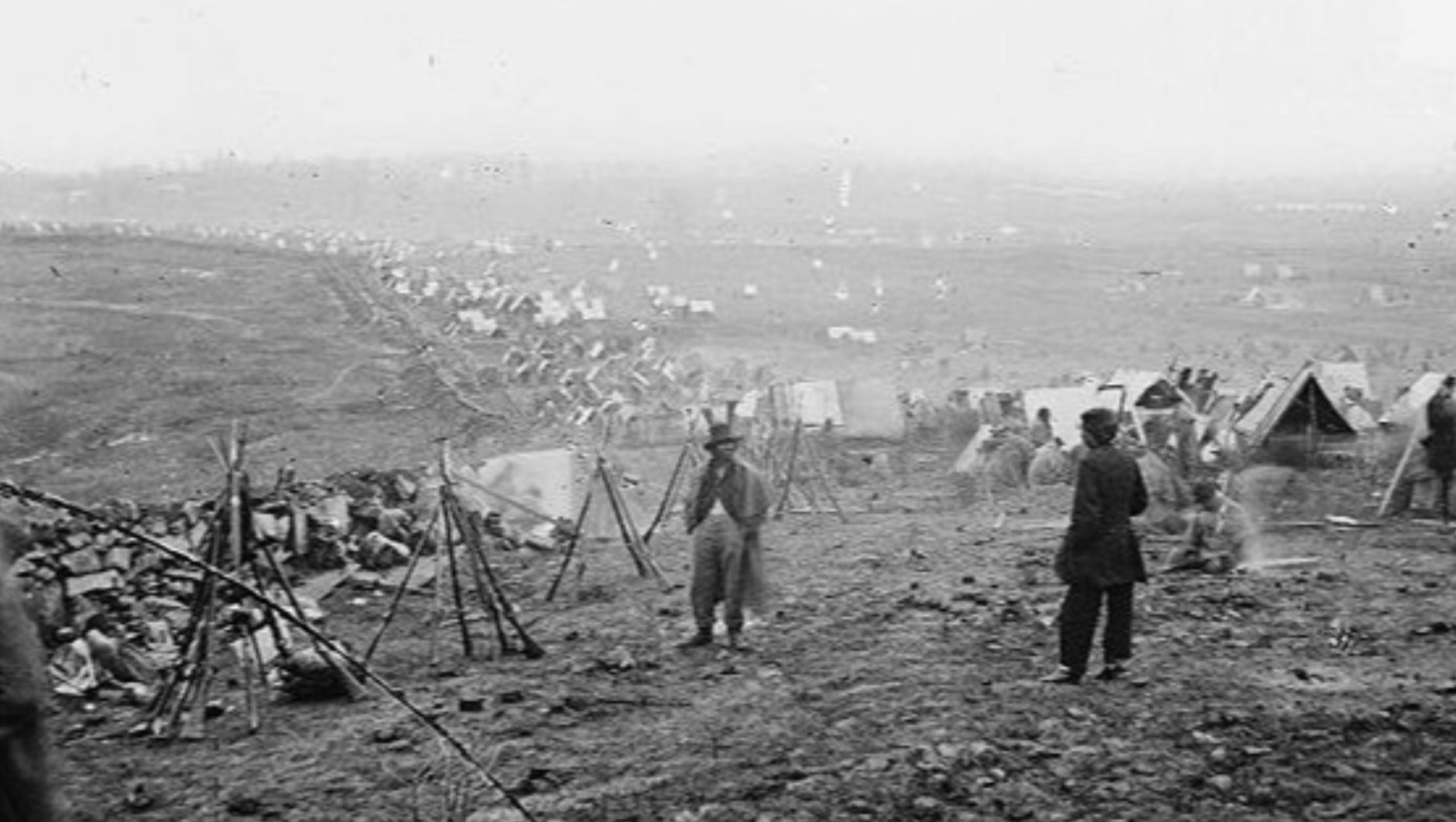
Tennessee: 1864, Nashville Military Occupation
Union forces turned Nashville into America's first modern military-industrial complex during three years of occupation. Union soldiers charged across winter fields toward Confederate earthworks, and cannon smoke obscured the sky, as Major General George Thomas's troops overwhelmed General John Bell Hood's army.
 Unknown authorUnknown author, Wikimedia Commons
North Carolina: 1865, Fort Fisher Falls
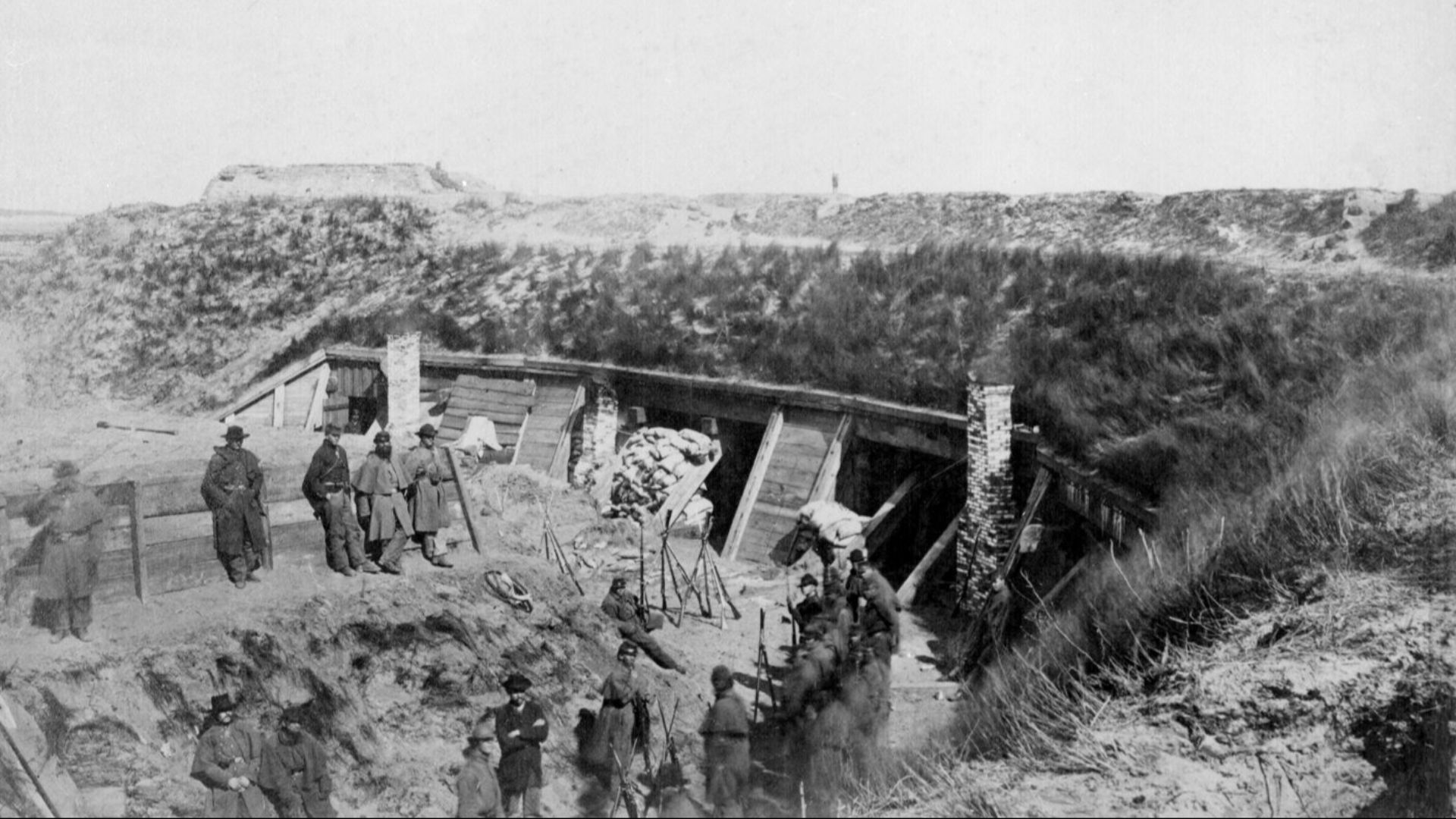
The "Gibraltar of the South" finally crumbled after the largest amphibious fight in American history until WWII. This image depicts the interior of the earthen defensive works—named the “Pulpit”—at Fort Fisher, taken after the fort was captured by Union forces in January 1865.
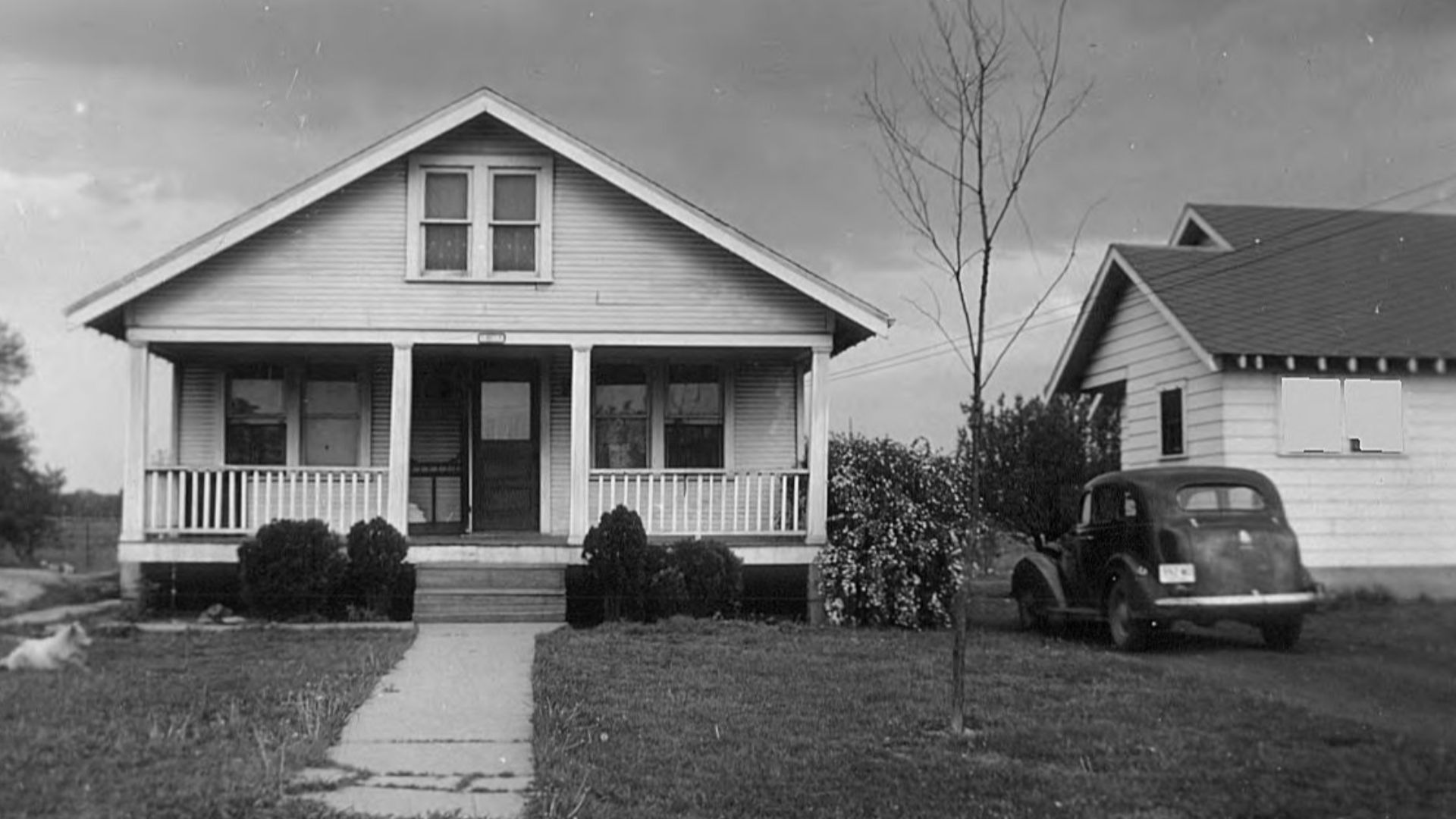
Ohio: 1803, Northwest Territory Statehood
On March 1, 1803, Ohio became America's seventeenth state, validating Thomas Jefferson's vision for western expansion. The new state encompassed former Native American lands acquired through the Treaty of Greenville in 1795, following the Battle of Fallen Timbers.
Illinois: 1858, Lincoln-Douglas Debates
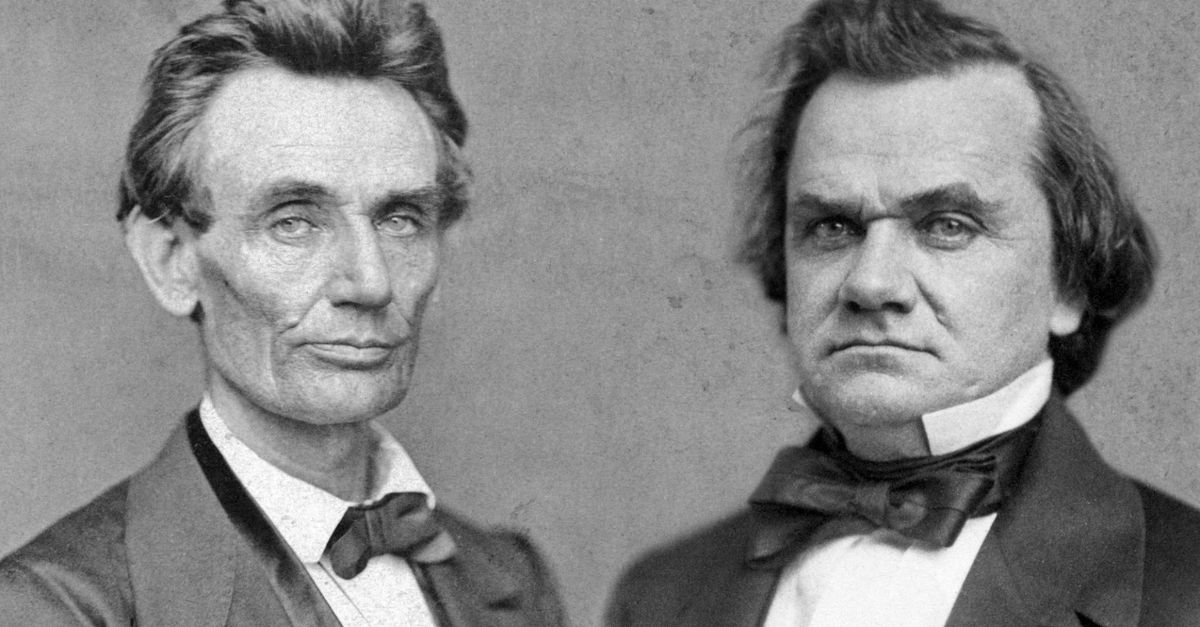
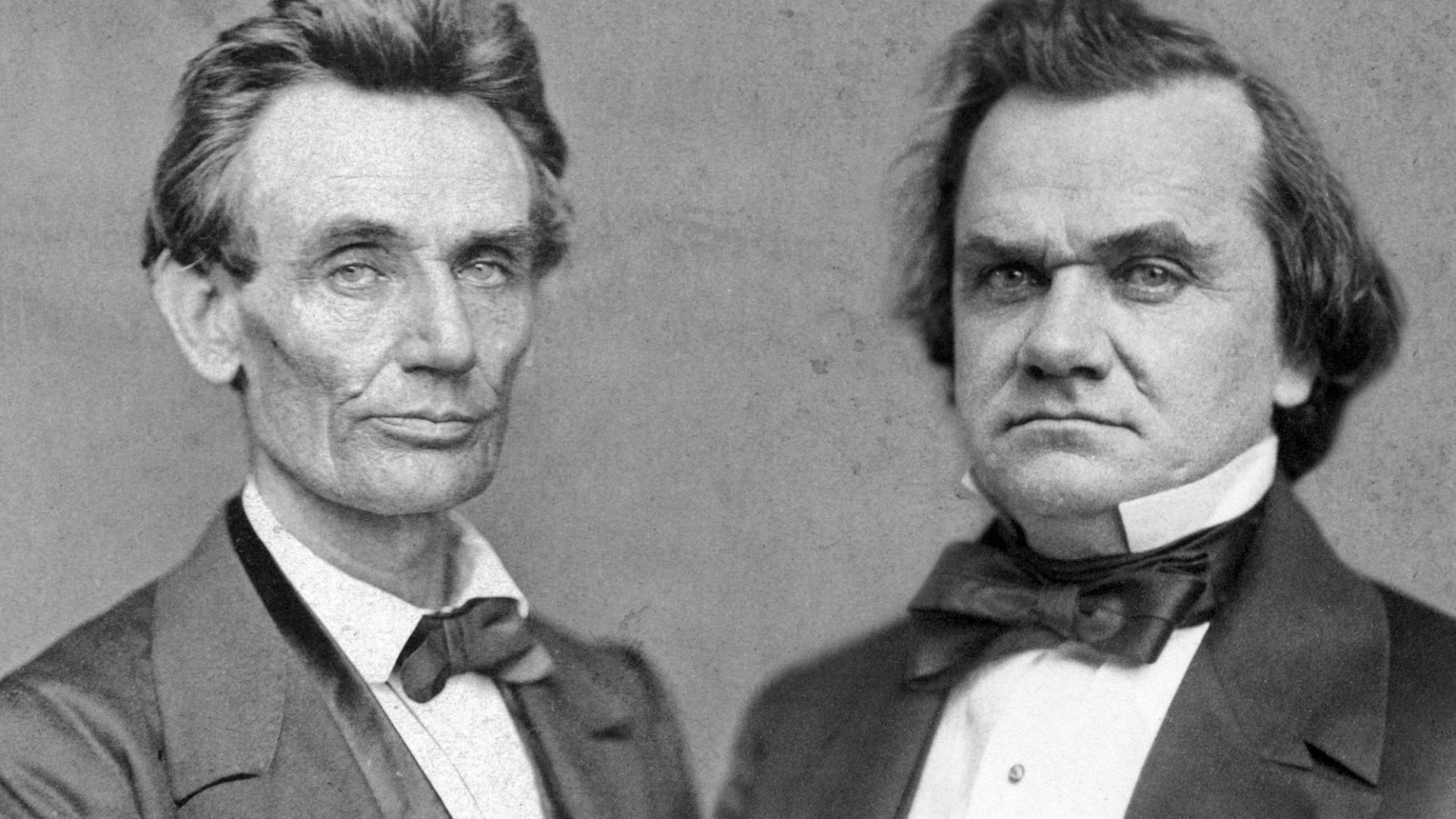
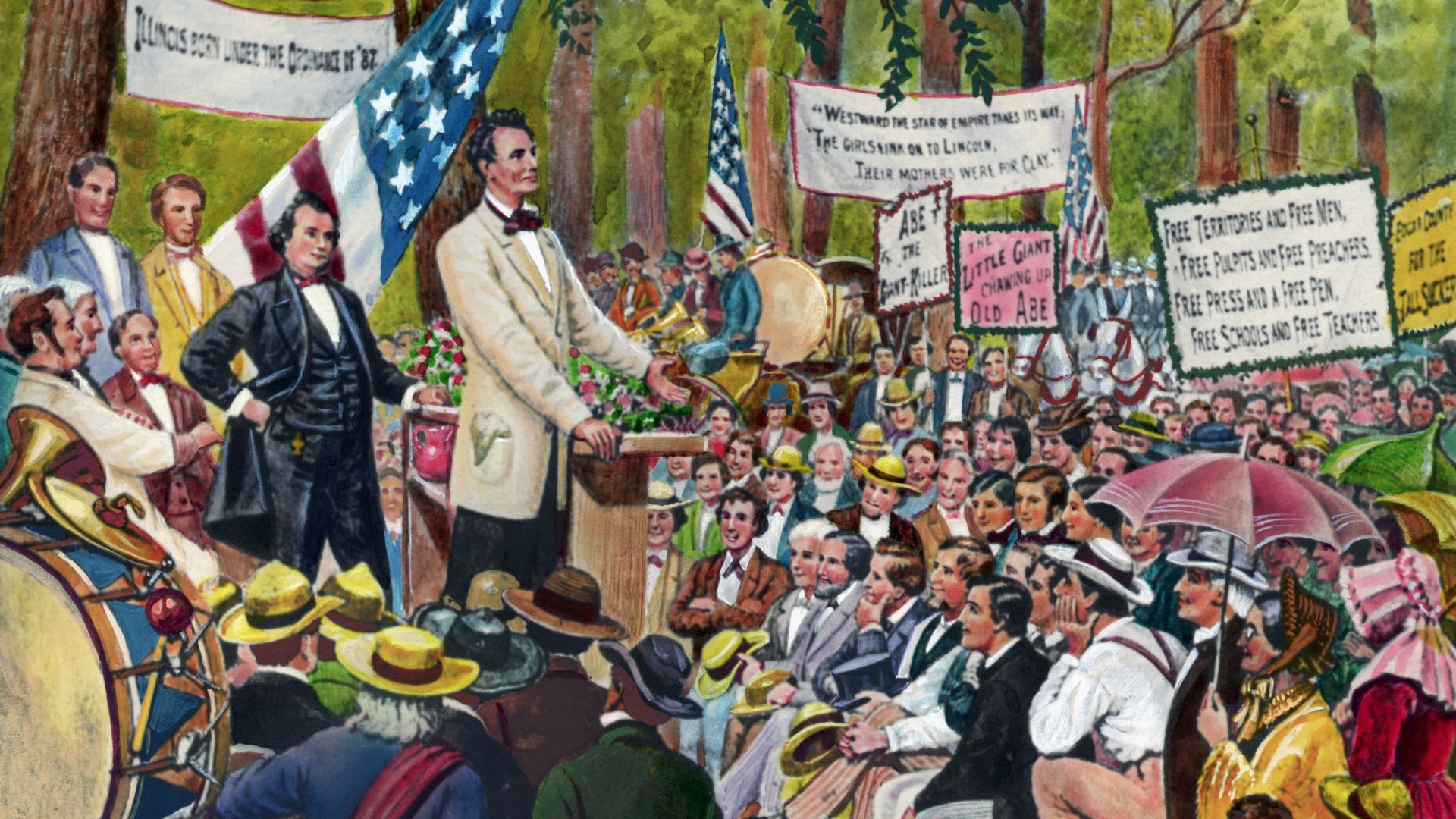
Seven debates electrified Illinois and changed American politics. Look at Abraham Lincoln standing tall among seated crowds in 1858, his gaunt frame towering over his rival, Stephen Douglas, during their legendary Senate campaign. Over 15,000 spectators gathered in Ottawa for the first debate on August 21st.
Kentucky: 1809, Lincoln's Birthplace
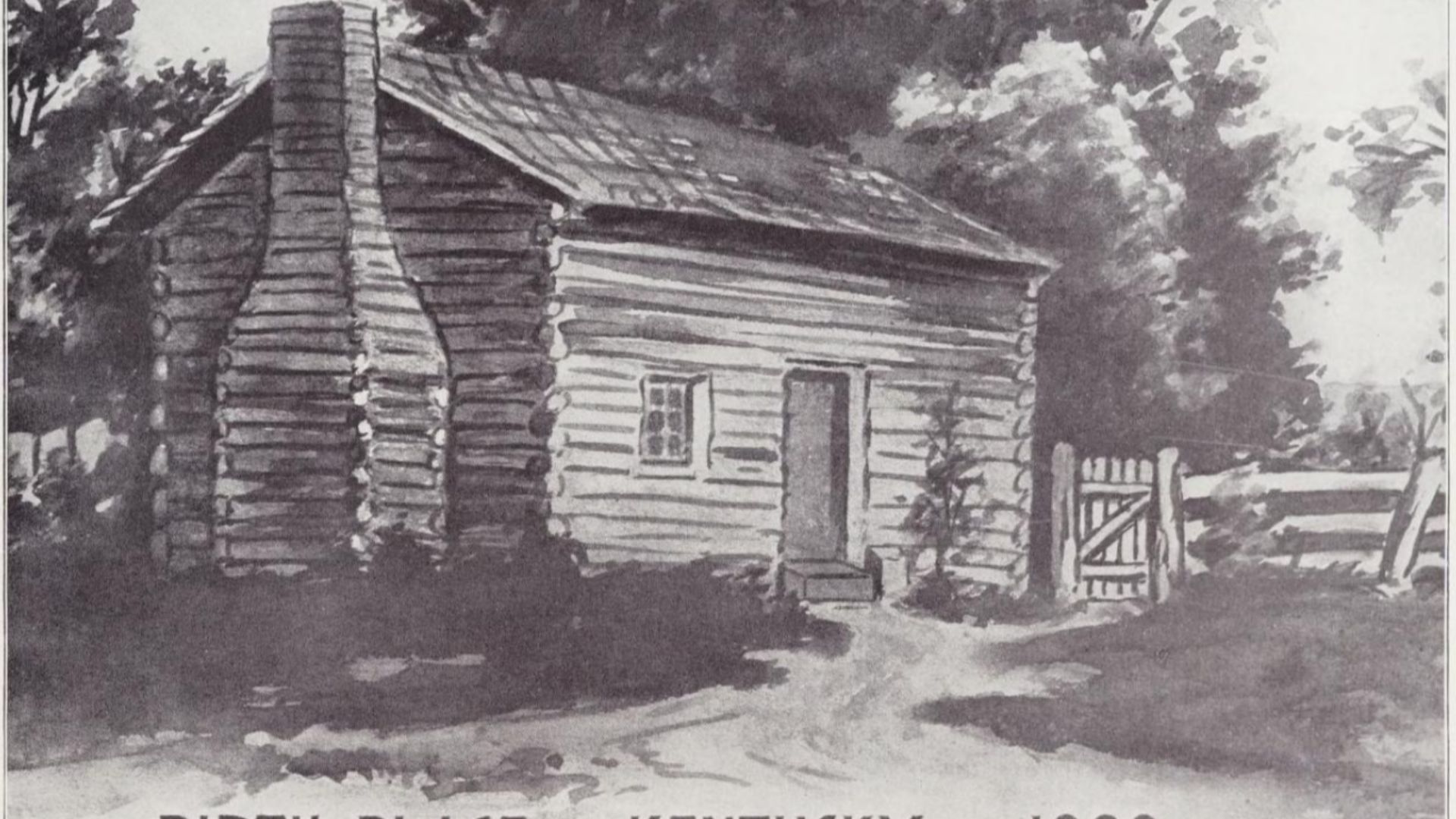
The primitive dwelling measured just sixteen by eighteen feet, with a dirt floor, no windows, and a single doorway. Thomas and Nancy Hanks Lincoln farmed this hardscrabble Sinking Spring Farm, part of Kentucky's impoverished frontier. The Lincolns abandoned Kentucky in 1816.
Michigan: 1837, Great Lakes Shipping
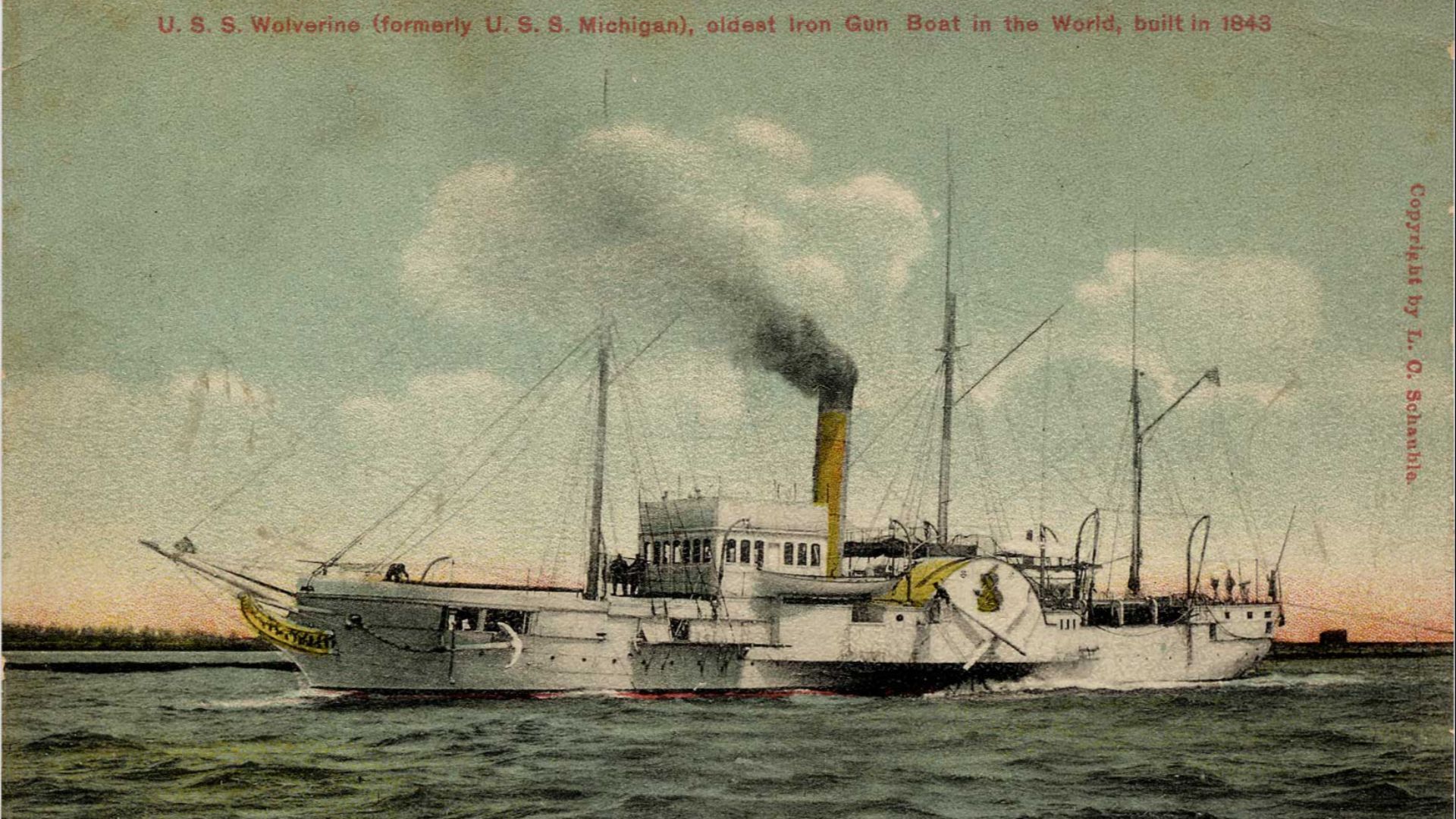
A rare photograph shows the USS Michigan (later Wolverine), launched in 1844 as the US Navy's first iron-hulled warship and the only American naval vessel on the Great Lakes. Michigan achieved statehood on January 26, 1837, after resolving the “Toledo War”.
 Unknown authorUnknown author, Wikimedia Commons
Alabama: 1861, Confederate Capital Montgomery
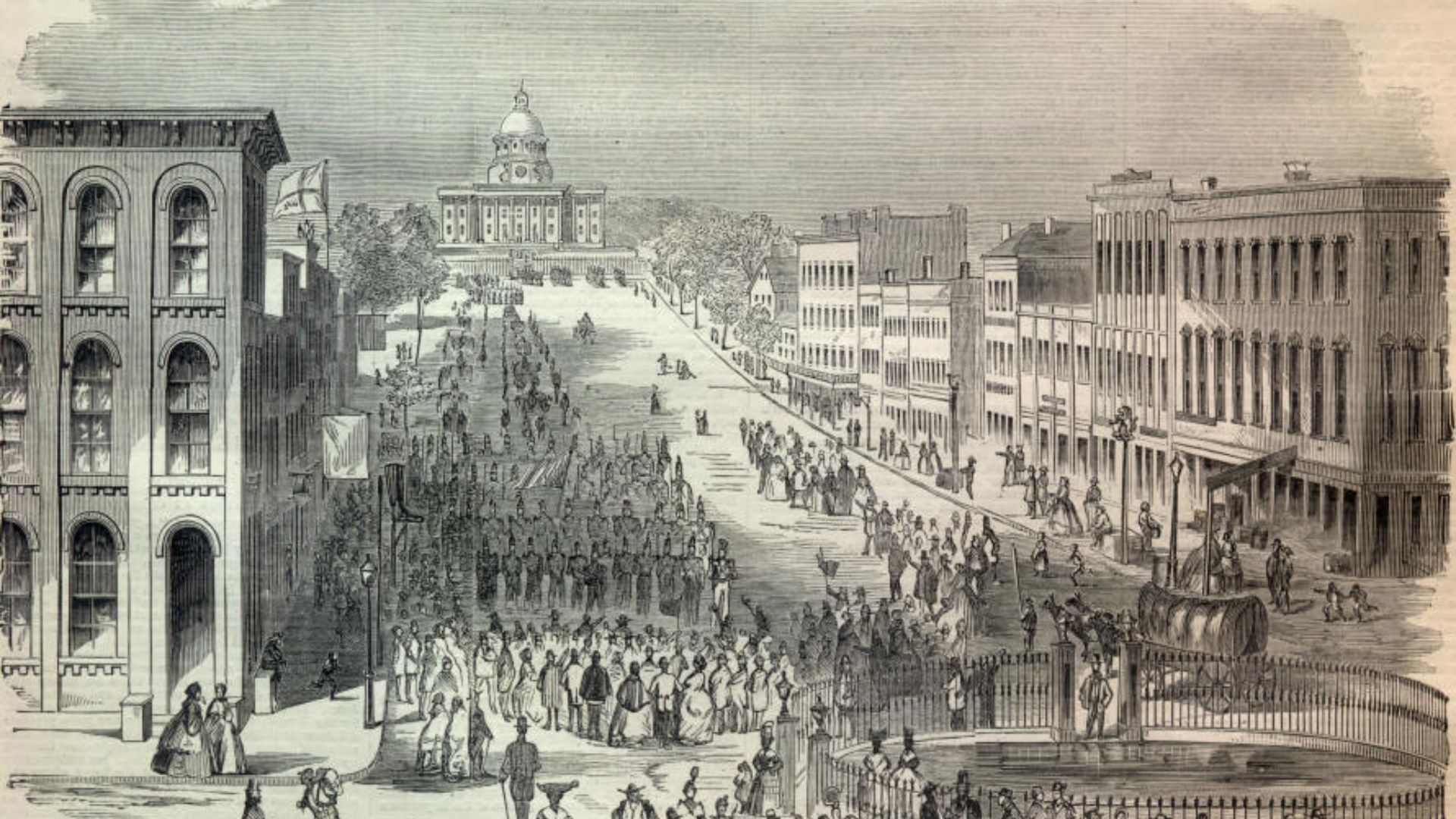
A stately photograph reveals Alabama's Greek Revival State Capitol in Montgomery. On February 4, 1861, delegates from six seceded states convened here to form the Confederate States of America, electing Jefferson Davis as president. Montgomery served as the Confederacy's first capital for just four months.
 Unknown authorUnknown author, Wikimedia Commons
Mississippi: 1863, Vicksburg Siege Warfare
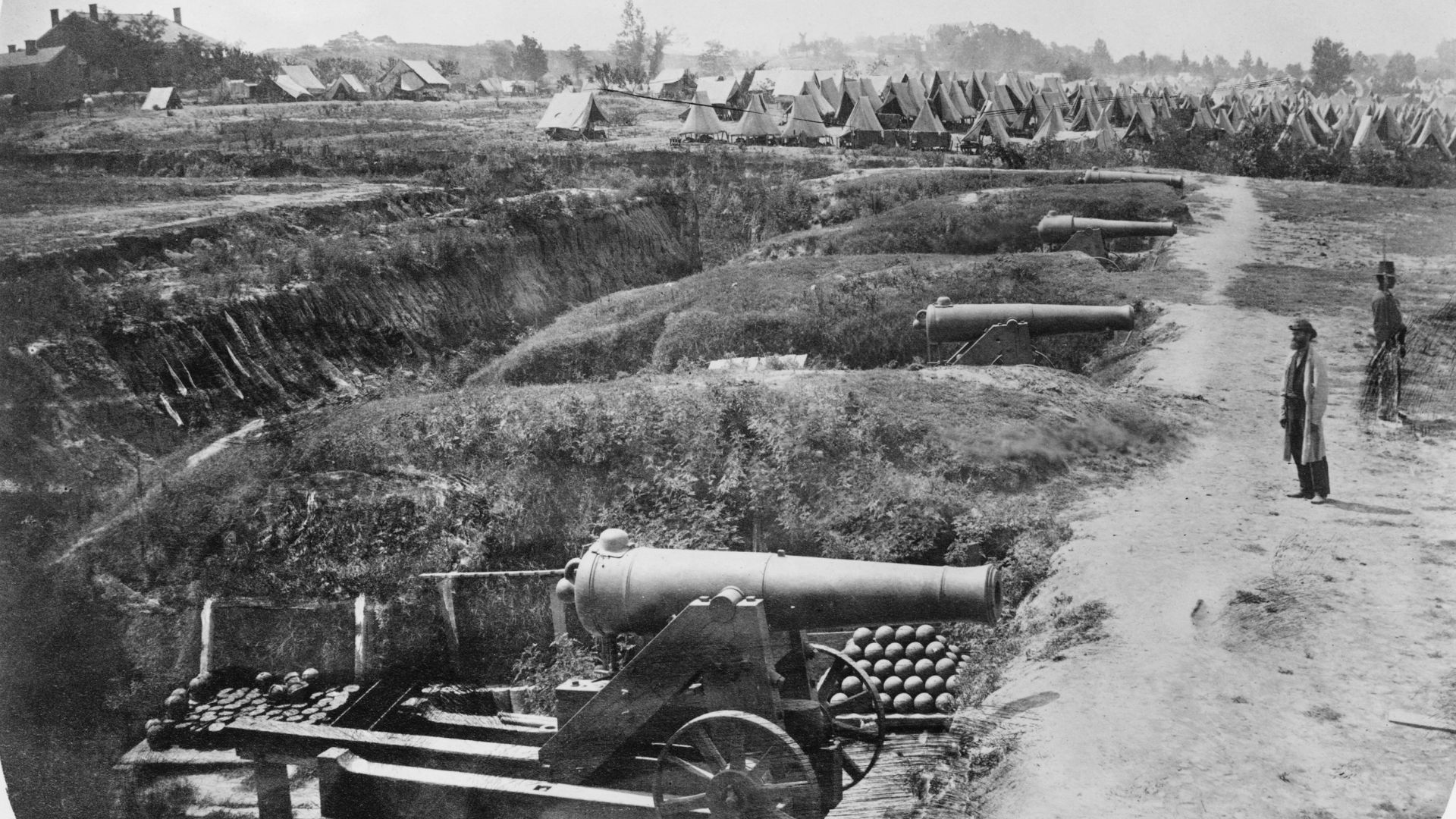
Vicksburg was strategically vital because the Confederacy used it to control traffic on the Mississippi River. Its capture by Union forces split the Confederacy and was a turning point in the battle. Citizens and soldiers alike sheltered in over 500 caves dug into Vicksburg's clay hills.
Wisconsin: 1856, Milwaukee Railroad Boom:
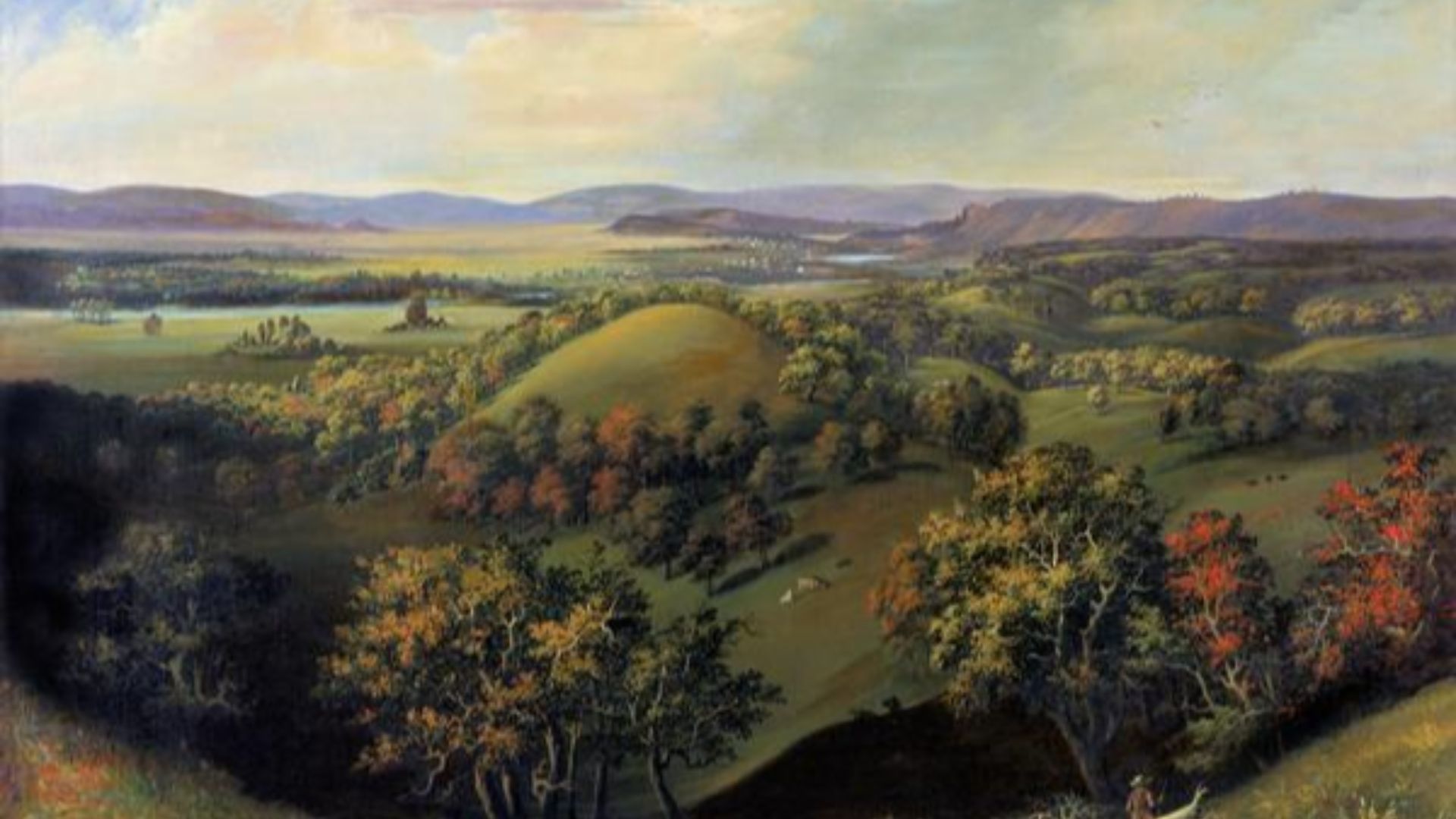
By 1856, rail lines radiating from Milwaukee linked Lake Michigan to inland farms and towns. The city became Wisconsin’s main rail hub, speeding grain shipments, fueling industry, and attracting workers. Tracks stitched together rural settlements.
 Samuel Marsden Brookes, Wikimedia Commons
Missouri: 1820, Frontier Settlements Expand
A vibrant painting shows Native American tepees alongside wooden structures as traders, trappers, and Plains Indians intermingle. Missouri's admission as America's twenty-fourth state in 1820 ignited the nation's most explosive debate over slavery's western expansion.
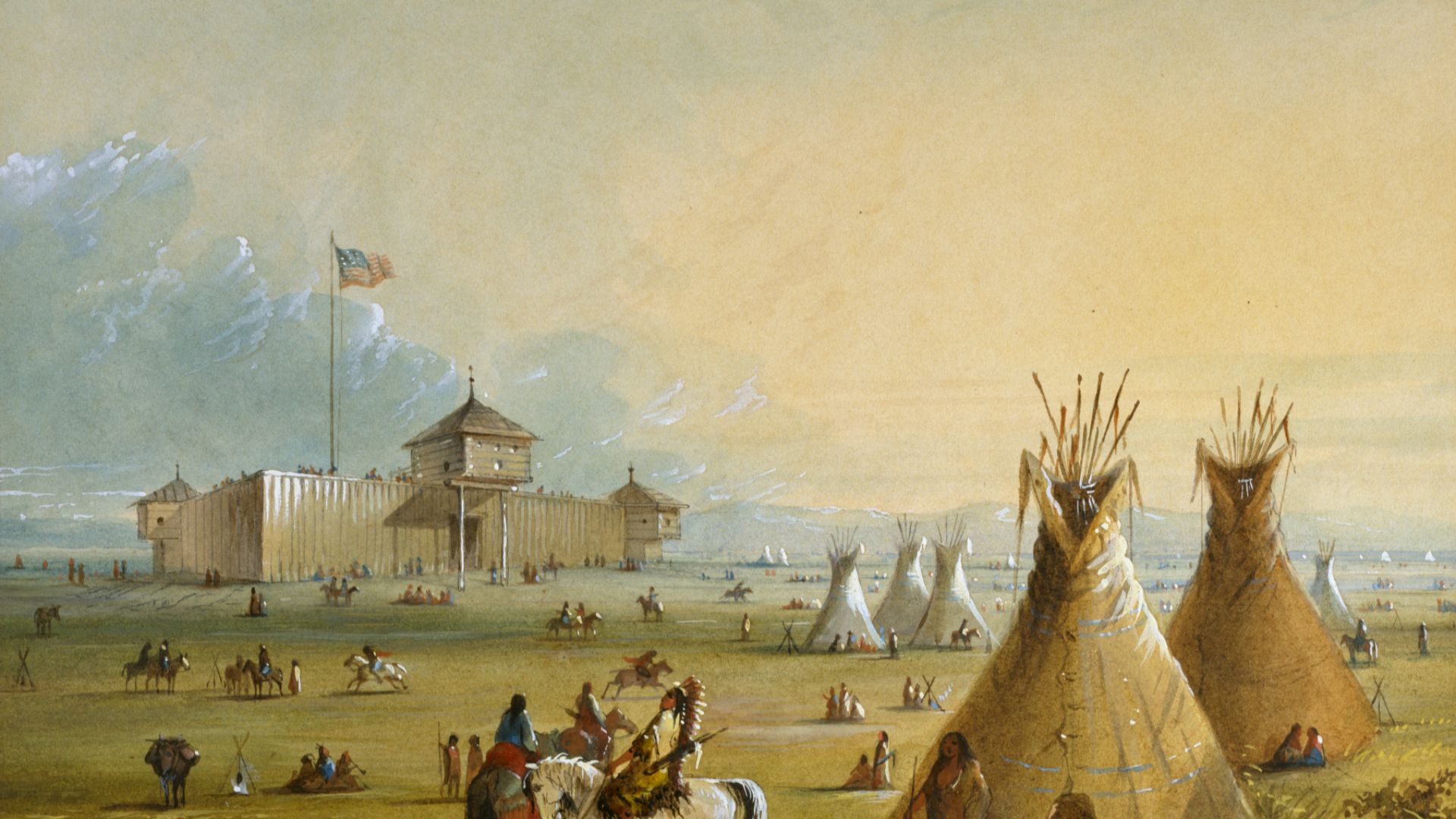 Alfred Jacob Miller, Wikimedia Commons
Iowa: 1846, Mississippi River Towns
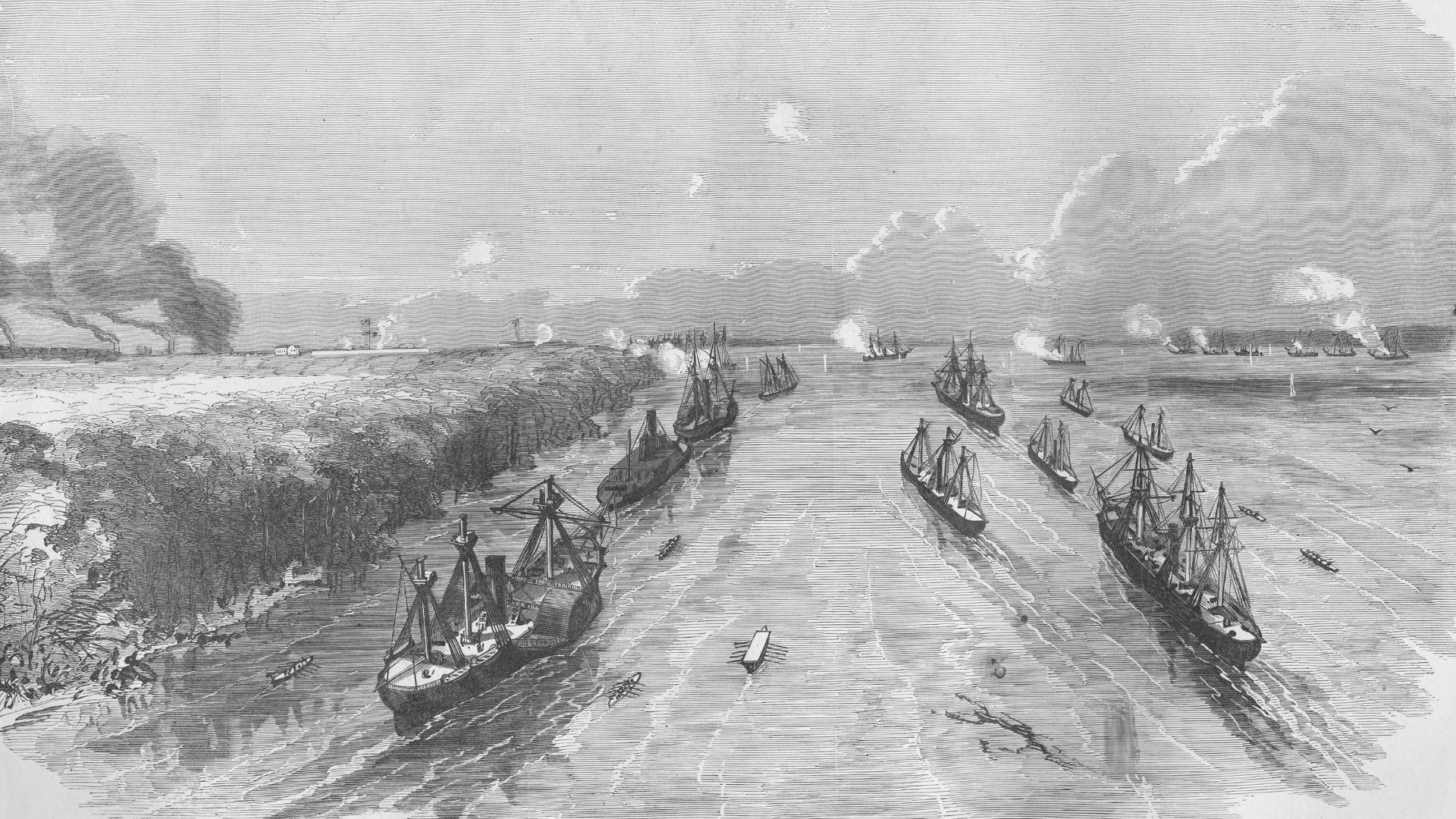
Burlington, Iowa's first territorial capital, was situated along the Mississippi River's western bank. Look at steamboats docked at wharves. Following the Black Hawk Purchase of 1833, settlers from Ohio, Pennsylvania, New York, and Virginia flooded into the Iowa Territory, founding several river towns.
Kansas: 1869, The Golden Spike
In 1869, the Union Pacific and Central Pacific railroads were joined at Promontory Summit, Utah, with the ceremonial Golden Spike. This milestone completed the first US transcontinental railroad, connecting coasts and reducing months‑long journeys to days.
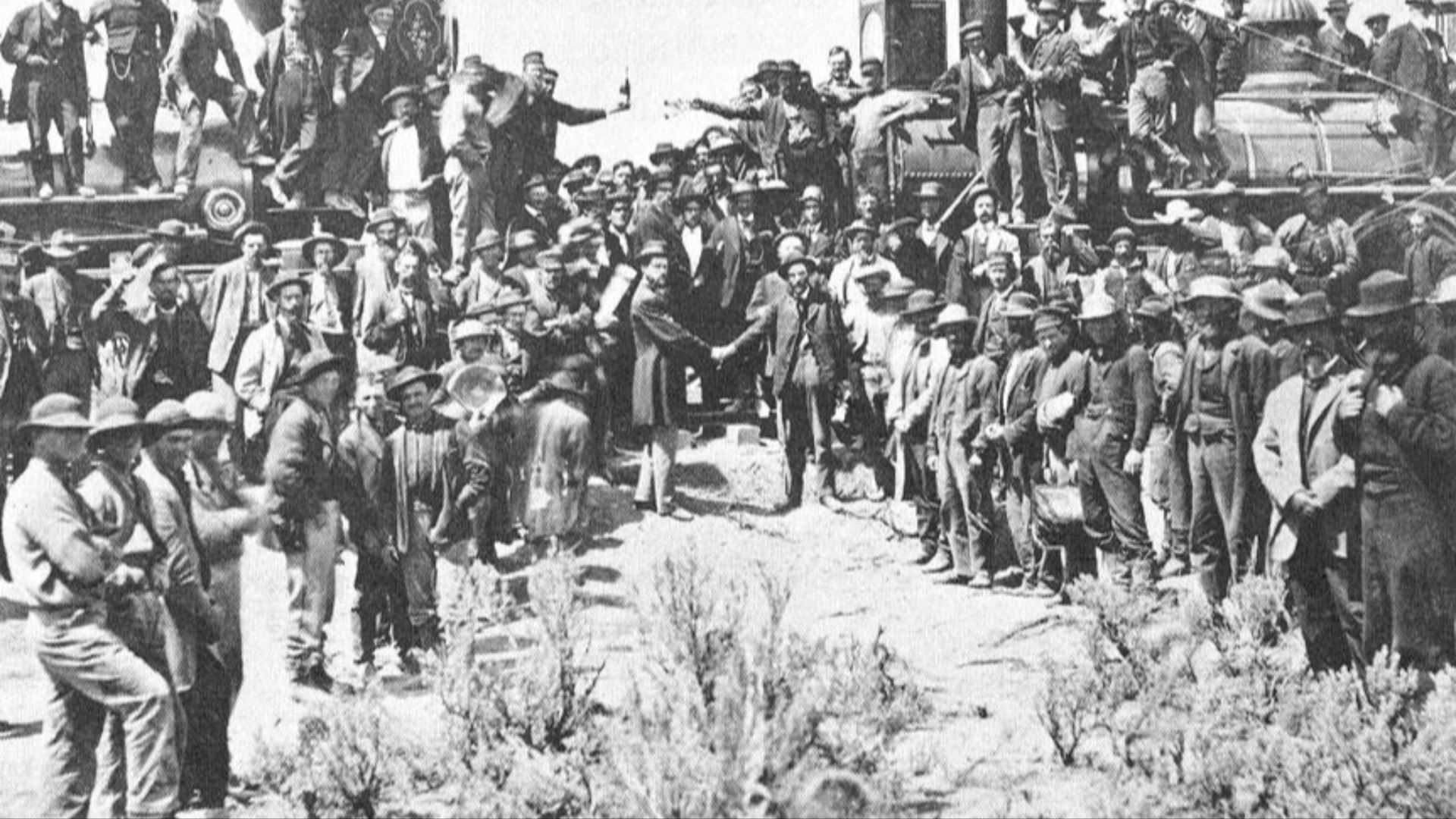 Andrew J. Russell, Wikimedia Commons
Connecticut: 1850, Industrial Mill Development
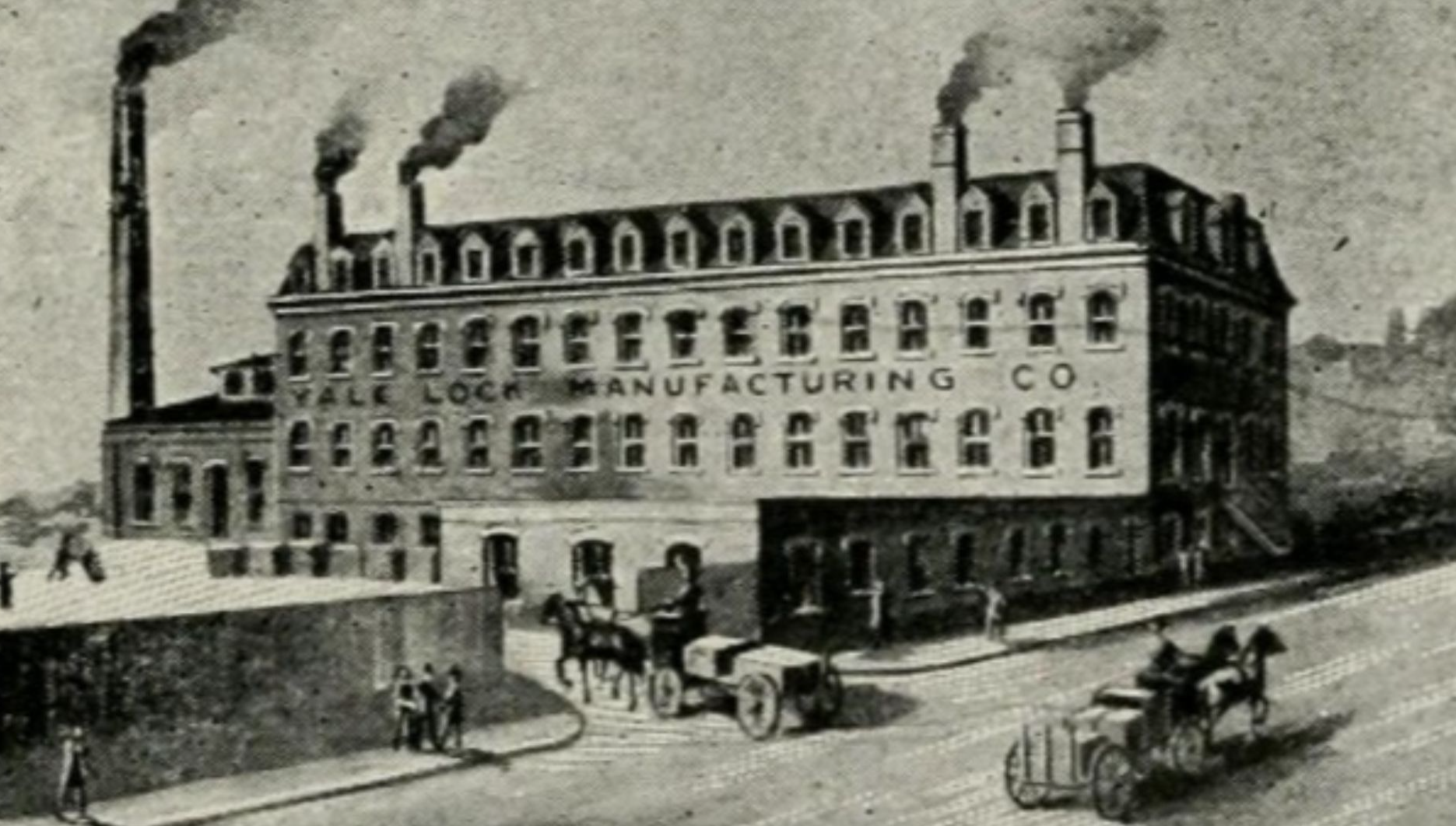
A detailed engraving depicts massive brick textile mills dominating Connecticut River towns—multi-story factories with hundreds of windows, smokestacks billowing, water-powered machinery changing New England. By 1850, Connecticut had evolved from an agricultural colony into an industrial powerhouse, particularly in Hartford, New Haven, and along the Naugatuck Valley.
Minnesota: 1862, Dakota War Conflict
This photo reflects events connected to the US–Dakota War of 1862, a six‑week uprising in Minnesota between Dakota (Sioux) people and US settlers and military forces, triggered by broken treaty promises and tensions over land and supplies.
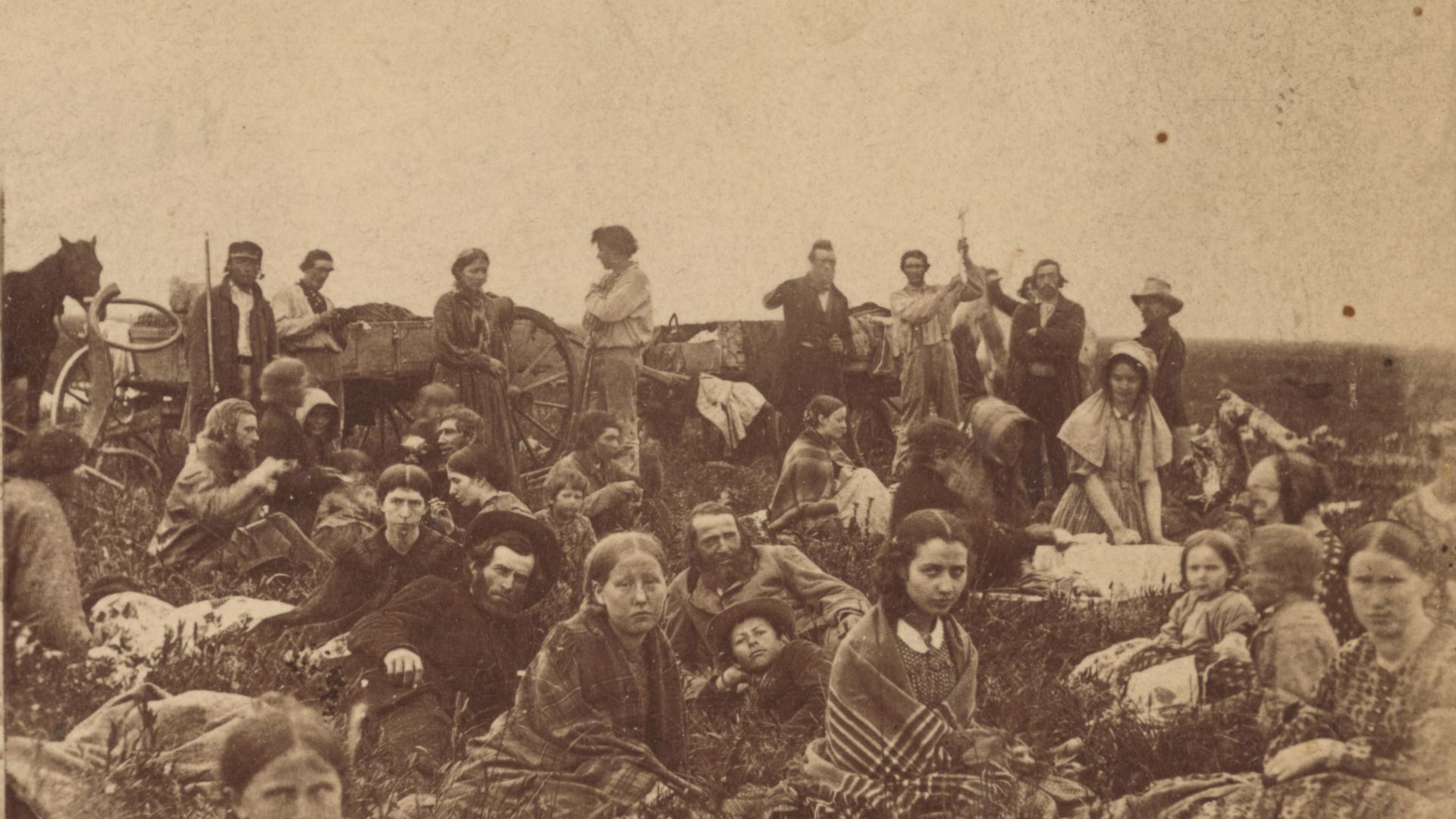 Photographer thought to be Adrian J. Ebell per copy at Denver Public Library, Wikimedia Commons
Oregon: 1850, Oregon Trail Migration
A sweeping painting captures covered wagons stretching to the horizon. Between 1843–1869, over 400,000 emigrants traversed the 2,170-mile Oregon Trail from Missouri River jumping-off points to Oregon's Willamette Valley. The grueling six-month journey claimed 20,000 lives.
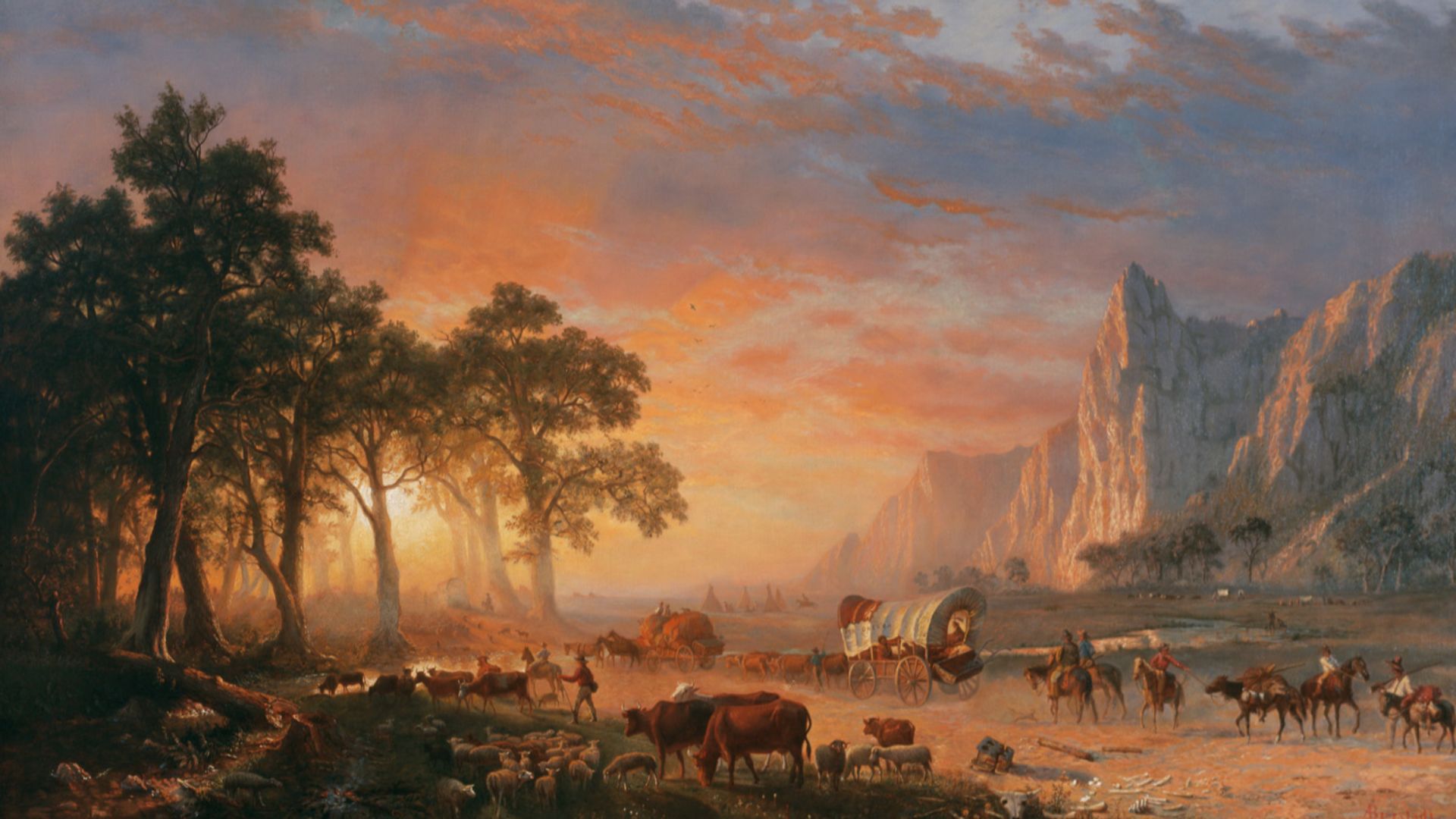 Albert Bierstadt, Wikimedia Commons
New Jersey: 1850, Canal System Development
Here is a part of the Morris Canal, a historic transportation waterway in New Jersey built in the early 19th century to carry coal and other freight across the state before railroads became dominant. The canal featured 23 locks and 23 inclined planes.
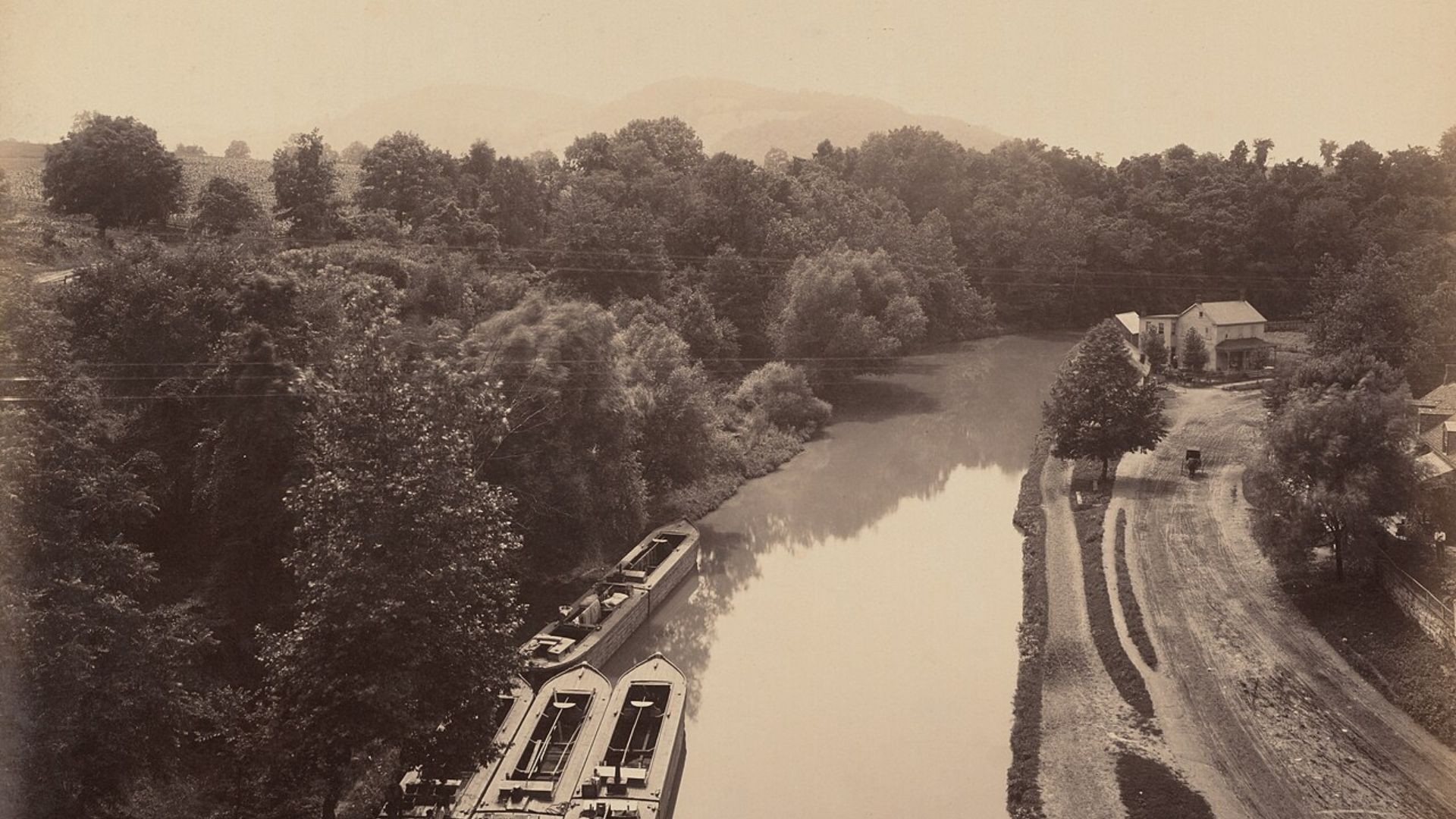 National Gallery of Art, Wikimedia Commons