
Most of us have to break our backs day in and day out just to make a living—but not all of us. Some of you out there are sneaky geniuses who can cheat the system in devious ways. And hey, if you’re like me and you’re NOT a genius, maybe reading these stories will give you some ideas…
1. Let Your Freak Flag Fly
Because some neighbors were flying “Black Lives Matter” flags, “Thin Blue Line” flags, and other message flags, our Home Owner’s Association decided last month that the only flag we’re allowed to fly is the U.S. flag—nothing else. The very next day, we got an email saying someone had reported our Pride flag (which had been up since 2016) and that we needed to take it down.
So we did and removed it. But when we read through the new rules, we noticed that removable lights are allowed with no restrictions—so we took advantage of that. We bought six colored floodlights and lit up our house in Pride colors. It’s a lot less subtle than our one flag, but a lot more fun—especially for anyone who was bothered by the flag and what it stands for.

2. Let It All Go
I work for a leisure company—think soft play, indoor soccer, laser tag. Before lockdown, our managers and senior leadership were negotiating a lease renewal for one of our parks. Things were mostly going fine, but the landlords were hard to get hold of. Then 2020 turned everything upside down. All our sites closed, and everything became chaos.
With everything going on, the lease talks slipped down the priority list, and nobody expected the landlord to try to evict us over an expired lease during that time. Especially since they were still getting rent, even though the site was closed—along with basically every other business and restaurant nearby. We were completely wrong. A few days ago, we got a letter saying we had seven days to leave and remove everything.
They also reminded us that anything left after seven days would become the landlord’s property. That part mattered a lot. A huge amount of work goes into installing our equipment in a new building, which makes clearing it out even harder. Add lockdown restrictions, no staff available, and most businesses shut, and it suddenly looked like saving our assets would be extremely difficult.
Losing a profitable site and all its equipment would be a major hit. But then it got worse. A few days into the seven-day eviction window, we found out the landlord had been advertising our park—to our competitors. And not just the building: he was offering it with ALL of our equipment still inside and set up. “Ready to go, just needs re-branding.”
That made it pretty obvious what was happening. The landlord evicted us to try to raise the rent and make money off our installed equipment, assuming we wouldn’t be able to clear the place out in time. We were furious. But the notice was clear: seven days to remove everything we owned.
So we did exactly that. Local businesses offered free storage space, a few people were able to come back in despite lockdown, and everyone spent the rest of the week removing, selling, or getting rid of anything connected to us. We didn’t even leave the light fittings. In other site exits, we often end up leaving thousands of dollars’ worth of disco lights in the ceiling because they’re such a pain to remove.
We also usually leave a lot of the build-out behind—things like bars and kitchens that stay intact and are still clearly recognizable. Not this time. This time was different. We pulled up the flooring we installed, took down non-structural walls we’d added to divide the space, stripped out the managers’ offices, and removed all artwork and lockers.
Now the landlord’s new deals are basically dead on arrival, and he’s left with a big renovation bill for new flooring and other work (unless a new tenant is willing to do it themselves, like we did). The silver lining is that the assets we managed to save—fridges, TVs, equipment, food, tables—were sold, and the extra cash (plus not paying rent) helped the business and covered staff wages. Then came the handover.
We handed in the keys, and it was probably the quickest handover we’ve ever had. The landlord clearly didn’t want any conversation, and there was definitely tension, but he didn’t say a word about the missing equipment. There were some complications when we went to get various deposits back, but he didn’t have a reason to keep them because the building was in excellent condition.
We’d done a lot of the maintenance ourselves, so it was actually in much better shape than when we took it over. We also cleaned up 99% of the mess from the teardown so he couldn’t charge us for cleaning. With a bit of pressure from our team, we got everything we were owed back in full.
The building is still vacant, and we haven’t heard of any buyers yet. For now, our company is still standing despite the closures. Staff are still employed, and everyone’s doing okay.

3. A Taste Of Your Own Medicine
When I was in my early 20s, I worked at a supermarket. I should mention I was a pretty reliable employee: I was never late, often showed up early, and hardly ever called in sick. In fact, at the time this happened, I hadn’t called in sick for nine months—and even then, the manager had actually sent me home.
This time was different. I’d been up all night swinging between burning hot and freezing cold, clearly running a fever, and I was throwing up constantly.
At around 2 a.m., I was sitting on the toilet with my head over the sink, feeling absolutely awful. I must have passed out, because the next thing I knew I lifted my head up and it was 7 a.m. I was supposed to start work at noon, but that obviously wasn’t going to happen, so I called the manager. Let’s call him Steve. Steve had a reputation for being a real jerk.
He never believed anyone who called in sick unless they were his buddies (usually other managers, never regular staff). Meanwhile, he called in sick all the time—and a lot of the time everyone knew it was really because he was hungover.
The conversation went like this:
Me: Hey Steve, sorry, I can’t come in. I’m sick.
Steve: With what?
Me: I don’t know. I think it might be the flu. I’ve been sick all night and I have a fever.
Steve: Don’t be ridiculous. If you had the flu you’d be completely wiped out. I need you in. Come in or you’re fired.
Me: I can’t. I just told you I can’t stop vomiting. I passed out.
Steve (angry): Either come in or bring a doctor’s note, or you’re fired!
In the UK, you’re allowed to self-certify for five days. That means you can tell your employer you’re sick and you don’t need a doctor’s note. If you’re sick for more than five days, then you need one. It’s also against the law for a manager to demand a doctor’s note during that self-certify period.
The problem was: I knew that, but I was scared. This was during the recession, and I couldn’t afford to lose my job. So I got dressed—almost passed out just trying to do that—and then dragged myself to the doctor’s surgery, about a 25-minute walk away.
I sat in the waiting room for a little over an hour, which honestly wasn’t bad for a walk-in. When I finally saw the doctor, she was furious that I’d come in. You’re not supposed to go to the doctor for a cold or flu, and she pointed out that I should have been able to self-certify and stay home.
So I explained what Steve had said—how he’d threatened to fire me if I didn’t come in or get a note—and that I couldn’t afford to lose my job. Her anger shifted instantly, and not at me anymore. She asked whether the company offered sick pay, and I said yes.
“He wants a sick note, does he?” she said. “Alright. I’ll give him a sick note.”
Steve was clearly just expecting something basic confirming I was ill. Instead, the doctor wrote something like:
“[My Name] has come to the surgery because Steve has insisted she come in, despite the fact that this is against the law and employees are allowed to self-certify. Due to being forced to make this unnecessary and unsafe trip while ill, with a fever of 39°C, and after nearly fainting in the waiting room, I am signing [my name] off for two full weeks to recover. Had [my name] been allowed to self-certify as the law allows, she may only have needed a few days, but due to straining herself, she now requires two full weeks. She is not to work until [date two weeks later].”
The doctor told me she would’ve signed me off for longer, but two weeks was the most she could do without more evidence.
So instead of being off for a couple of days, I was officially signed off for two full weeks—with pay.
On the way home, I stopped by work. One of the duty managers saw me and immediately asked what on earth I was doing there and told me to go home, because I clearly looked really unwell. I explained what happened. They helped me downstairs to Steve’s office and came in with me.
I handed Steve the note. He looked worried and tried to say, “I wasn’t being serious about firing you.” Sure—because when you angrily said it down the phone, it sounded very serious.
The duty manager then said they were going to drive me home. Steve looked like he wanted to argue, but he clearly knew he shouldn’t. The duty manager drove me home, made sure I was okay, and then went back to work.
Then came the best part. The duty manager told our union rep what had happened. Steve ended up in a disciplinary hearing, where he got a serious reprimand and a warning. Steve tried to claim he never threatened to fire me and that I was lying and had gone to the doctor on my own—but the duty manager said they heard him basically admit it when he told me he “didn’t mean it.”
I started feeling better after a few days, but I still enjoyed my two weeks off, fully paid, and made the most of the nice weather. Meanwhile, Steve had to work overtime because we were short-staffed.
So, thanks to the doctor, instead of missing a few shifts, I ended up with a fully paid two-week break—and Steve got a final warning—all because he insisted I get a doctor’s note, and I did.

4. Straight To Voicemail
My boss LOVES calling me at 6:15 AM to ask if I’d like to cover shifts for people who just called in sick. It happens all the time. One day I was tired of it, so I decided to call that same manager at 3:30 AM to ask if they needed extra help. He got really upset and tried to write me up for it. I showed the general manager the call timestamps I’d been getting. I don’t get those calls anymore.

5. Idle Hands
As part of our return-to-office plan, my company has been reassigning who can work from home permanently, who can be hybrid, and so on. I really wanted to be full-time work from home. I strongly dislike the office—it’s distracting, the commute is long, and I don’t see much benefit to being there. I’d simply rather be at home.
Back when we thought May would be the big return-to-office month, they started handing out the new work designations. I got labeled as in-office full time. That made zero sense to me. I’m on a team of eight people, and we’re all spread across different offices around the country. I’ve never had an in-person meeting or needed to do in-person work in three years at this company. And it gets even more frustrating.
Every other person on my team was designated to work from home. So I brought it up with my boss and asked to be WFH too. When I started at the company (when I lived in a different place), I worked from home for four months before I moved. And over the past 14 months, I’ve been remote as well—so 18 out of my 36 months here have been WFH. What I was told was that I “go idle” too often in chat for them to trust me working from home.
Basically, we have a company-wide IM system that shows you as available, idle, or in a meeting. If you don’t touch your keyboard for five minutes, you show as idle. They’ve decided to use that as a measure of who’s working and who isn’t. The thing is, like a lot of jobs, I don’t have tasks that take a full eight hours of focused work every single day. On a typical day, the work that actually needs my attention takes about 3–5 hours.
There just isn’t something to do every minute. My performance numbers actually improved when I worked from home—by the objective KPI metrics, I’m a better worker at home. In fact, in the KPIs where I’m not leading the team, I’m usually second. It’s not like I’m ignoring work or procrastinating. When something comes up, I work it until it’s done, or until I can’t go any further because I’m waiting on someone else—then I pause.
I’ve done that long enough that my queue stays pretty empty, because I’ve worked it down so that when something new comes in, I can handle it right away and finish it quickly. But since I have better ways to spend downtime than sitting at a cubicle and pretending to look busy, I’m somehow seen as a worse worker.
I was told that if not for the “idle” issue, they’d let me work from home. So I came up with a workaround. I wrote a short PowerShell script that virtually taps the period key every four minutes, starting at 8 a.m. and stopping at 5 p.m. Now I basically never show as idle. I do the same amount of work, and I still read, watch TV, or play video games on the side.
But I’ve got that nice green check by my name all day. I just had a meeting with my boss, and he said they’ve noticed I go idle a lot less than I used to, so they’re changing my designation to work from home—because of a tiny status icon in a chat app. And that’s my take on how easily some management decisions get reduced to the least meaningful metrics imaginable.
 Unsplash
6. Getting His Just Deserts
I’m a paramedic. A few months ago, we were coming back from a routine patient transfer when, at an intersection about four blocks from base, I noticed a woman sitting on the side of the road with her arms wrapped around herself and her head down. I nudged my partner who was driving, and we flipped on the lights. Her head snapped up and she looked terrified.
I got out, and she relaxed when she saw the ambulance. But when I got closer, my stomach dropped. I saw bruises on her wrists and other signs that pointed to domestic violence. She seemed hesitant to get up from the curb and come into the ambulance, so I figured I’d at least pull the cot out and give her something more comfortable than bare concrete to sit on.
A few details matter here. All the cots in my service are Stryker-powered cots. You’ve probably seen them—bright yellow with black handles and side panels. They have a motor and battery so we can raise and lower them with buttons instead of wrecking our backs lifting all that weight.
They usually work with an automatic loading system in the ambulance that lifts the cot to the right height and locks it in place when it’s inside. There’s a little red tab at the end of the track, just inside the doors, that you press down to release the cot so it can slide out. When you press it, it just frees the cot and the loading carriage it’s attached to—after that, it’s on you to control it until it reaches the unload position and locks again.
That can be tricky because these cots weigh around 125 pounds. Right as I hit the release tab, I heard lights and sirens behind me. I turned around and froze for a second: it was a city patrol car. That was odd, because we hadn’t asked for assistance yet, and we were outside city limits—in the sheriff’s jurisdiction.
We had only told dispatch we were stopping to check on a woman at that intersection. The woman said something like, “Oh God, he’s here,” and she moved fast—faster than me heading toward free food back at base. She bolted past me and basically threw herself into the ambulance, sitting on the bench seat.
The officer walked up, clearly angry. I connected the dots immediately and slammed the ambulance doors shut. Let’s call him Officer Steve—OS.
OS: Is that b— Is she in there?!
Me: Who?
OS: You know exactly who I’m talking about.
Me: You mean my patient? I’m afraid I don’t have a name yet.
OS: Open those doors. I need to talk to her.
Me: You’re not using my rig as an interview room. You can talk to her at the hospital.
We went back and forth like that for a few minutes. My partner eventually came back to see what was taking so long, heard me holding the line, and went back up front to call our chief. I kept doing my best “deny and delay” until a pair of deputies showed up (probably called in by the chief).
Great—now I had witnesses. Here’s the thing: we’d stopped on a slight uphill incline. I’d released the cot, and it wanted to roll backward. When I had to shut the doors quickly, I didn’t take the extra second to push the cot back against the stops and lock it in place.
With the deputies there, OS got right up in my face. “Move, or I’m going to have you charged with obstruction!” Fine. If that’s what you want.
I stepped aside, and he yanked open the double doors. Between the cot, the monitor, and the jump bag, there was probably close to 160 pounds being held back by those doors. The second they opened, all of it came sliding out and slammed OS square in the chest. He stumbled backward and landed hard on the ground.
One deputy laughed out loud. The other walked up, knelt beside OS, and said, “Your shift captain will be here in five. I wouldn’t be here when that happens, if I were you.”
OS got up, shot me a look, and stormed off. I can’t say much about what came after because the case still isn’t settled, and we all know how hard it can be for charges to stick to officers. The woman is living somewhere else now. The officer is still an officer. And I’ve been getting pulled over at least twice a week ever since.
But the video of him getting absolutely checked by that cot is still one of the best things I’ve ever seen.

7. Leaving A Paper Trail
This happened a few years ago, when my ex and I were in the middle of a really tense divorce and custody fight. Back when we were married, we’d had a couple conversations about how wealthy people sometimes hide assets to dodge taxes. I’ve never had anywhere near that kind of money, but somehow she got it in her head that I did, and she told her attorney I was laundering money and hiding income.
It was probably just something said in the heat of the moment, like these battles often are. I couldn’t even afford a lawyer, so I represented myself. Her attorney wasn’t a complete monster, but he was clearly coming after me, and he talked to me like I didn’t even deserve basic respect. Then one day I got a letter from him asking for an updated income declaration form and three years of financial records.
The list of what he wanted was huge. I own a communications tech company, and at the time it was still in the very early start-up stage. Money was already tight. I was trying to get the business going with zero financing, and I was finishing my MBA on scholarships and loans, so even paying for copies and postage—or driving 30 miles to his office—meant I’d be scraping by on the cheapest food for a week.
So I called him to explain. His response made my blood boil. He basically called me a liar and acted like there was no way I couldn’t afford it. I told him this was also taking time away from work I needed to do. And he replied—something I’ll never forget—“Well, according to your income declarations, you’re not that busy. What do you do all day?”
Then he told me that if he didn’t get the documents, he’d assume my previous filings were lies and would tell the judge, contact the DA, and alert the state tax agency and the IRS. Maybe it was an empty threat, but I’m not a lawyer. One of the services my company provides is eFax, and back then it wasn’t very common. So I asked him if he had a fax machine.
He said he had a fax/scanner/copier setup, and then added, “What law office doesn’t have a fax machine?” And that’s when I got an idea. “Okay,” I said, “I’ll put together what I can and fax it.”
You want three years of financials? Fine. I scanned to PDF every receipt I could find. A fast-food receipt from years ago? Sure, in it goes. A drugstore receipt that’s basically a scroll? Perfect. I downloaded every bank statement, every credit card statement, purchase orders from vendors, and every invoice I’d sent clients. I printed to PDF the full three-year accounting journal, monthly/quarterly/annual balance sheets, cash flow statements, and profit-and-loss reports.
Not only did I include three years of tax filings, I also added every letter I’d ever received from the IRS and the state tax agency, including all the inserts about taxpayer rights. It took a while, but I finished a few days before the deadline. I even made a cover page: black background with white text. And wherever I could, I dropped in divider pages in all caps, using the biggest bold font that would fit in landscape: 20XX RECEIPTS, 20XX TAXES, and so on.
I merged everything into one compressed PDF—150+ pages—and sent it through my eFax system. About every hour, I got an email saying the fax failed. Huh. Weird. But they were going to get this document. So I changed the settings to unlimited retries, so it would keep redialing until it finally went through. Still getting failure notices.
I figured I’d just delete the failure emails and keep the success one once it finally sent. Problem solved.
Two days later, a woman from his office called and asked me to stop faxing. That’s when I found out what was really happening: their fax/scanner/printer/copier had been printing nonstop. It kept jamming, kept running out of ink, and they had to keep turning it off and back on just to keep it going.
I told her her boss said I had to send it by the deadline or he’d call the DA and the IRS. Since I didn’t want the DA or the IRS contacted, I was going to keep sending until I got a success confirmation. I even suggested they simply stop printing until the fax finished, but she didn’t like that. She asked me to email the documents, and I told a small white lie—that my email wouldn’t allow an attachment that big.
I said unless her boss agreed in writing to cancel the request, or agreed to reimburse me for the cost of printing and shipping, I would keep faxing until they confirmed they’d received every page. She put me on hold, and then the attorney came on the line. He said to forget sending the financials.
But I wasn’t letting him off that easily.
I told him I needed that in writing, so I would keep sending the fax until he sent it. He said to stop faxing and he’d put it in writing, and I said to send it in writing first, then I’d stop. Long silence…click.
About 20 minutes later, I got an email from his assistant with a signed PDF letter saying I no longer needed to provide the financials.
The letter also threatened to pursue sanctions in court or sue me for interfering with their business. Funny thing is, every time I saw that lawyer after that, he never mentioned sanctions, lawsuits, or financials again.

8. Going Overboard On Overtime
This happened a few years ago when I worked at a coffee shop. My shift was 5:00 a.m. to 1:30 p.m., and a lot of days around 1:00, huge groups of kids on school field trips would pour into the area. The shop was in a major California city, really close to several museums. Because of that, I’d been picking up a lot of overtime to help my coworkers get through the rush.
Then my supervisor wrote me up for working too many overtime shifts without approval. She told me very clearly not to work overtime again, and that I’d lost my overtime privileges until corporate decided I could have them back. She also said that if I worked overtime before then, it could lead to more disciplinary action. The very next day, right as my shift ended, three big buses packed with kids showed up and completely filled the shop.
At exactly 1:30 p.m., my watch alarm went off and I went to clock out. The store manager who’d written me up the day before said, “Wait, where are you going?” I reminded her that I wasn’t allowed to work overtime, clocked out, grabbed the shift drink I’d made for myself right before the rush, and left. The next day, I was told my overtime privileges had been reinstated.

9. Feeling Hot Hot Hot
I used to own a wing place. Nothing fancy, but we had a solid lineup of wing flavors and a good beer selection. Every so often, people would come in and order the “suicide” wings (I like really spicy food, so these were legitimately hot). And of those customers, maybe 5–10% would always launch into the same joking, sarcastic routine: “These aren’t that hot. Can’t you do better?” Ha, ha, ha.
One of my favorite regulars was a dentist who also saw himself as a serious gardener. He offered to help us out by planting a ghost pepper bush (at the time, the hottest pepper in the world) so he could bring us whatever he harvested. He’d even purposely under-water the plant to make the peppers as spicy as possible. When he brought them in, I’d grind the peppers—seeds and all—into a thick paste, mix it into a batch of sauce, and keep it off to the side for the spice lovers who showed up and complained our sauce wasn’t hot enough.
I’d only serve them one wing. I made them wear gloves to eat it, so they wouldn’t get capsaicin burns on their skin. I’d also clearly warn them how intense it was going to be, hoping to talk them out of eating this culinary monster. But by the time we finished that whole speech, every single guy took it as a challenge and absolutely refused to back down.
So they ate it. The funny part about capsaicin is that it can take a moment to hit. Usually just long enough for someone to finish the wing and start smugly saying it wasn’t that bad… and then the heat would kick in. And once it started, it didn’t let up. The wing was free, but the cup of milk afterward cost $20. Not one person ever asked for a second wing.
And for what it’s worth, I never had a woman complain about the heat—sometimes they’d even ask if there was an even hotter level they could try.

10. Once More For Good Measure
This happened about three years ago while I was going through a U.S. airport. I walked through the metal detector, and something must’ve set it off because they needed to pat me down. After the full pat-down, I put my shoes back on and started walking over to grab my bag. Then a TSA agent stopped me and said, “You’ve been randomly selected—please step into the body scanner.”
I stayed polite, but told them I really didn’t want to use the body scanner and asked if there was another option. The agent said I could do a pat-down instead. I said, “Well, I literally just had a pat-down, so…” They got irritated and told me to choose one anyway. So I took a couple steps back to the same woman who had patted me down about 30 seconds earlier and got ready for it again.
While she was patting me down, I asked if she’d found anything new. She shot me a look, but then let me go.

11. Lazy Automation
One summer, I worked as a laborer at a plant nursery. Every day, I had to water about 15,000 plants by hand. I sketched out a quick, back-of-the-envelope idea for an irrigation system and spent the next few weeks building it, using some money my boss gave me. That system is still running 15 years later—and now it does all the work. But here’s the catch.
I basically automated my own job away and had to go find another one. A couple years later, I earned my engineering degree. Ever since, I’ve been convinced that engineers are naturally a bit lazy—in the best way—and will put in a lot of effort upfront just to make things easier later.

12. So Much Baggage
I work in the baggage claim department for a major airline. Every day, I end up listening to customers yelling and complaining. So I started borrowing one of the airport wheelchairs and sitting in it behind my desk. Problem solved. Customers who came in furious would see me in the wheelchair and instantly feel sorry for me. Was it wrong? Yes. Did I still do it? I’m embarrassed to admit it, but yes.
Suddenly, the customers who used to be so difficult turned into some of the nicest people. My blood pressure has gone down, and overall, I’m in a pretty good mood most of the time now.

13. Ticketing Tuition
In undergrad, if you park where you’re not supposed to, you get a ticket. I *always* parked where I wasn’t supposed to because everything else was full, and those spots were super close to my dorm or my classes. If you don’t pay the tickets, they start piling up and eventually get added to your tuition balance, so you have to pay them before you can register for next semester—or, if you’re a senior, before you can get your diploma.
But I was in the honors college and had a 100% tuition scholarship. So the parking tickets would get added to my tuition account and then, almost right away, disappear. They finally caught on about halfway through junior year, but by then I had literally covered an entire wall in my room with more than $2,000 worth of blue parking tickets.

14. Stop And Go
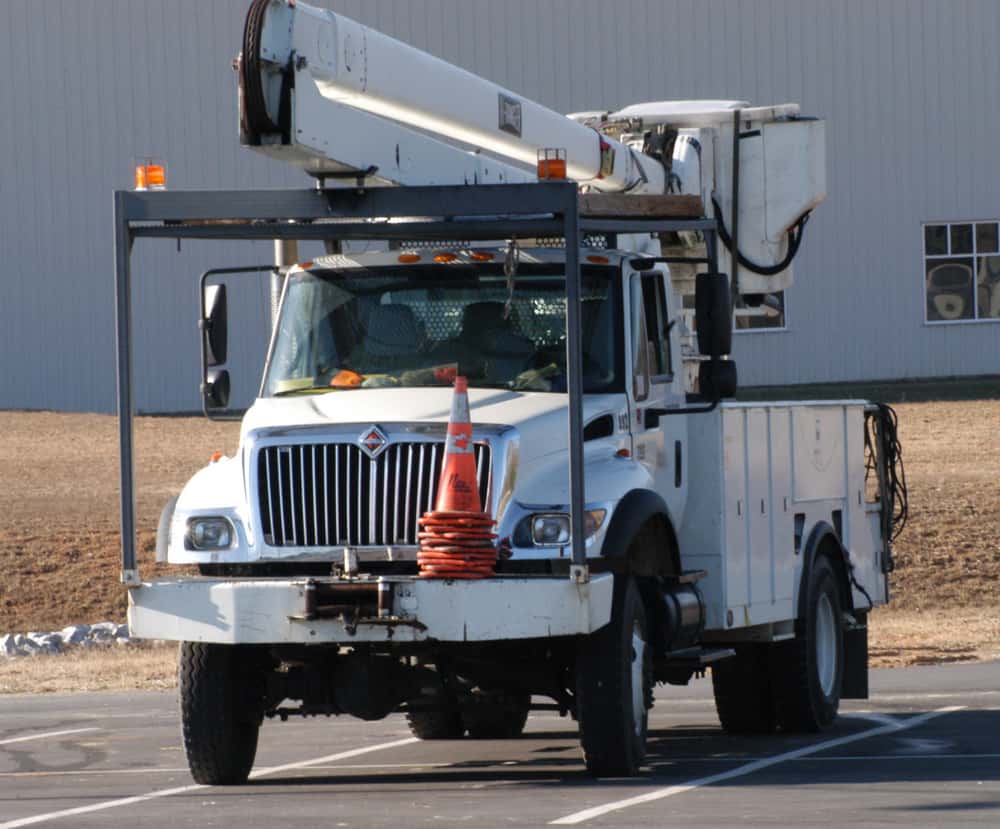
I worked for a company that gave me a utility truck, and one of the stats they tracked was how long the truck sat still with the engine running. The target was around 3%, but my route got changed to the downtown area of my city, so I was constantly stuck in traffic. Naturally, my idle percentage went up.
My supervisor started constantly bothering me about my idle time, which had climbed about 10–12% higher. After they decided to give me a “written verbal warning,” I became the most efficient no-idle truck in our branch. But I had a secret: I got it down to 0.00 by shutting the truck off at every stop sign, red light, traffic jam on the highway, drive-thru, and immediately when I arrived anywhere.
The problem was, the truck was charging two phones, a laptop, a tablet, and some other equipment. With all that power being used and the alternator not running enough to recharge the battery, the battery died—often. And company rules said I wasn’t allowed to jump-start the truck myself, so I had to call the company, and they’d send a tow truck to jump it. Every time, it took at least two hours to show up.
I ended up doing this multiple times a day, every day, until they assumed the truck had a problem. They’d send it to the shop, it would test fine, they’d give it back—and I’d do it again. Eventually they gave me a brand-new truck, and I started doing the same thing. I repeated this until they gave me a third truck, and then the manager called to ask what my day-to-day routine looked like.
I explained the basics and mentioned the whole “engine off at red lights, engine off in traffic,” and so on. He goes, “Why are you doing that?” I said, “My supervisor wrote me up for my idle time being too high.” He said, “That’s completely ridiculous.” He tossed the write-up, and I’m guessing he talked to my supervisor because I never heard another word about idle time—and I stopped worrying about it.
15. Under New Management
I worked for a company for 14 years. For about 12 of those years, I genuinely loved it. The job had two main parts. The first was the “sales” side, which really meant being out in the field at the customer’s location. It involved a lot of driving (and a couple of times, flying abroad) to work face-to-face with customers and deliver a high-quality product.
We weren’t the cheapest option, but we were the better product—and when it came to delivery, I was the strongest person on the team. Customers consistently gave me great feedback about my approach and how well I brought their vision to life. I got a lot of repeat business, and a lot of new customers came to us through referrals because people recommended the company based on their experience with me.
The second part of the job was office work, and that was my weaker area. I hated cold-calling random “potential customers” from phone book lists. If someone called us first and I answered, I was totally fine. But making the calls myself just wasn’t where I shined. That was really the only part of the job where I wasn’t great.
Because of that, I wasn’t asked to do much calling. Instead, I prepped product, helped design new product, and trained new staff (which eventually became one of my biggest responsibilities). I was also the go-to problem solver—jumping in wherever I was needed, and covering for sick employees whenever I could. I liked the owner and I liked the manager.
I also liked the staff around me. Overall, it was a great job. I was proud of the work, and I was good at it. The company did so well that the owner slowly expanded it over the 12 years I’d been there. I started about three months after he launched the business, so I’d been there through that growth. I worked out of my nearest office, but often traveled to other areas to train teams.
I was also “loaned out,” in a way, to other companies to train their staff. At one point I even guest lectured at a university, teaching medical students how to explain complicated things to people who don’t have the same background knowledge. After 12 years, I was on a decent salary—not huge, but I was happy. Then everything started to fall apart.
First, the owner decided to sell off part of the company—specifically the area where my local office was. He told me he’d love to keep me as his employee, but I’d need to work from another office. That would mean either moving or, at minimum, quadrupling my commute. The other option was staying where I was, but working for a new owner.
I chose to stay.
Before the sale was finalized, the new owner worked alongside us for a couple of weeks to see how things ran. At the time, none of us knew she was going to buy the business. We thought she was just another employee shadowing and learning. She came with me on field assignments and saw firsthand what I could do.
When the sale was announced and we found out she was the new owner, everyone was shocked. She made major staffing changes right away. The manager left to start her own business, since the new owner planned to manage things herself. A lot of staff were let go. The secretary, me, and a couple of newer hires were kept.
The newer hires were on the lowest hourly wages. Anyone who’d worked their way up to a decent level of pay was let go. Since most people were on zero-hours contracts, she could do it. Technically it was a “new company,” but to customers it looked like the same business—same trading name, same service, just a different registered company name and a different owner.
From the customer’s point of view, nothing had changed. For the first few months, my main job was training the remaining staff to replace the experienced people who’d been cut. I recommended a couple of hires I’d worked with before. I was upfront with the owner and told her one was a close friend and one was my girlfriend.
They were both qualified, and both were willing to join. My friend had just returned from a year of travel, and my girlfriend could only work during school holidays since she worked at a school. The owner interviewed them and hired them because we needed staff. Over the next two years, though, business started to slip—and the reason was simple.
The new owner tried to maximize profits by raising prices while lowering product quality. New customers didn’t always notice right away—they just thought we were expensive and not that impressive. But long-term customers who’d been with us for 10+ years noticed immediately. They were being charged more and getting less, or worse quality.
Instead of changing course, she raised prices again. Around 95% of our long-term customers left. New customers almost never became repeat customers. Complaints shot up. At the same time, staff turnover became constant. People would leave after a few months once they realized minimum wage wasn’t worth the stress.
Under the old owner, new employees typically earned about 2.5 times minimum wage. That made people care and want to stay. My girlfriend quit. My friend stayed, but started looking for something else. Then I got a phone call that changed everything.
The owner told me I needed to come into the office. That was unusual. I’d just finished a job on-site with a customer, and my next appointment was in two and a half hours—about a 30-minute drive away. The office was around an hour and ten minutes from both locations. If I drove back, I’d have maybe five minutes in the office before leaving again.
My mileage was paid on top of salary, so driving back was actually saving the company money compared to other arrangements. Plus parking at the second location was terrible, and I planned to arrive early, park, and read until my appointment. None of that mattered—she insisted I return. So I did.
When I arrived, she handed me a letter saying I was being called to a disciplinary meeting in a couple of days. I could bring a “witness” if I wanted. I was stunned. I was the top performer. I read her list of complaints and started preparing my response.
At the meeting, I didn’t bring a witness. Instead, I recorded the audio of the entire meeting on my phone without telling her. Where I live, that’s legal and doesn’t require consent. Her witness was a friend from yoga she’d hired for an office role after letting the long-time secretary go.
One by one, I responded to every point she raised. Some were weak, like: “You were unavailable for a week in August.” I explained I’d booked a week off for my cousin’s wedding across the country and turned it into a holiday.
Some were petty: “You were late on May 12th.” I asked, “Is that the day my car broke down and I called the office to tell you?” She said she didn’t know. I did—and I had the garage receipt dated May 12th.
Then came the serious one: she accused me of gross misconduct for supposedly breaking health and safety rules in how I delivered a product to a customer.
I hadn’t broken any rules. I knew exactly what I was doing—I’d been doing it for 14 years. She’d watched me do it multiple times and never said it was a problem, because it wasn’t. She’d even had me train staff using that exact method.
She ended by saying she didn’t want to lose me, but she couldn’t justify keeping such a “poor employee” on my current salary. She gave me two choices: sign a zero-hours contract and work for minimum wage, or be fired with two weeks’ notice. But I knew my contract.
I told her she’d owe me 12 weeks’ notice, since my contract guaranteed one week per year of employment, up to 12. She argued I’d only been her employee for two years, because the first 12 were under the old owner. I explained that the takeover counted as continuous employment and quoted the specific law and code.
She asked for a 30-minute break “to think about her offer.” She went to call her lawyer.
When she came back, she said that because she was firing me for gross misconduct, she didn’t have to give me any notice. If I wanted to switch to the zero-hours contract, I could do it that day. If not, she’d fire me—though she said she’d “be nice” and give me two weeks anyway. I asked for a couple of hours to go home and think.
She agreed, but I knew what she didn’t want me to realize: she wanted me to stay those two weeks because one of our few remaining major customers had a delivery scheduled with me, and they would only work with me. She’d tried sending others before and it always went badly—not because the staff were bad, but because the job was very specific and the customer expected it done perfectly.
I called her and said I was declining the zero-hours offer and leaving. She said she was giving me two weeks’ notice. I declined the two weeks.
I told her that if I was being fired for gross misconduct, then I clearly couldn’t be trusted to deliver product safely, and it would be best if I didn’t come back at all. That’s when she panicked and said she needed me for those two weeks. I acted like I was simply thinking about the company’s best interests. After all, you can’t have “unsafe” staff working with customers.
But I said if she wanted to reconsider the “gross misconduct” claim, I’d work my proper 12 weeks’ notice. Her options were 0 weeks or 12 weeks. She chose 12.
For those 12 weeks, I worked the same way I always had. I didn’t coast. I didn’t slack. I didn’t badmouth the company on my way out. I kept training staff and delivering product the same way that had earned praise for years. But I also contacted an employment lawyer.
During those 12 weeks, the owner barely spoke to me. She resented that I knew my rights and didn’t just accept what she said. She didn’t like that I could defend myself. She became petty—she “accidentally” broke my mug in the kitchen. And she paid for a spa day for everyone in the office…except me.
Instead, I was asked to work my day off and cover the phones while everyone else went. No one realized I hadn’t been invited until they arrived and I wasn’t there.
The funny part is, I’m a big bearded guy and I have no interest in a spa day. If she’d invited me, I would’ve thanked her and declined. But by excluding me on purpose, she only made herself look worse.
In the last two weeks, I trained my friend to take over my role. Then my final day came. The owner had nothing planned—no card, nothing, after 14 years with the company (two under her). The assistant manager, who had become a friend, bought me gifts but waited until the owner left to give them to me because she was worried about backlash.
The day after my last day, two things happened.
First, my friend—the one I’d trained to replace me—quit. He was on a zero-hours contract, so he didn’t need to give notice. He was upset about how I’d been treated, and he wasn’t willing to do my former salaried job for minimum wage. He hadn’t told me ahead of time. I only found out when he knocked on my door in the middle of the day, when he should’ve been at work.
Second, the owner received a letter saying I was bringing proceedings for unfair dismissal. My lawyer and I arranged for it to arrive the day after I finished. According to the office assistant, the owner went pale, started crying, and left the office to call her lawyer.
She denied it was unfair dismissal. She said it was gross misconduct. She tried to add new reasons for firing me. But the real situation was obvious: the business was earning less because of her decisions, and I was the highest-paid person—and the only one on a salary.
I had evidence I was a strong employee. I had evidence she tried to force me onto a zero-hours contract. She initially tried to deny that part, because the “gross misconduct” story doesn’t make sense if you’re also asking the person to stay. But once my lawyer sent her lawyer a transcript of the meeting and the recording, she knew she was in trouble.
Even so, she dragged it out for more than a year. I think she hoped legal costs would force me to drop it. But she misjudged that too: my lawyer was no-win, no-fee. Hers wasn’t.
She eventually settled out of court.
Afterwards, the assistant manager who’d become my friend quit a couple months later. She hated what happened to me and didn’t feel safe working for someone she didn’t trust. Several former customers contacted me to ask why I was gone. The owner had told them I’d “just quit.”
I told them the truth: I’d been fired as a cost-cutting move. They took their business elsewhere. A few even offered me jobs. One offered me part-time work and said they’d pay for me to go to college and earn the degree I’d need to join them full-time. It was a generous offer, but they were too far away for commuting, and I wasn’t ready to move.
In the end, I found a new job in a different industry where a lot of my skills carried over. I now earn more than I did before, work fewer hours, and work for better people. The old business is struggling.

16. The Door Was Wide Open
My father has worked for a Fortune 500 company since the 1970s. He worked his way up through software engineering and management and even earned patents that saved the company millions. He’s close to pension age, and all of a sudden HR started making his life difficult. He’d also noticed the same thing happening to some of his coworkers when they were nearing 60.
An HR woman called him into her office and claimed he wasn’t clocking in and out at the right times. My dad is an engineer and extremely detail-oriented, so he knew the accusation wasn’t true and asked her to prove it. A week later, they came back and admitted they couldn’t. He told them, “Of course you can’t. I’ve been driving the company carpool bus for 15 years. I’ve always got about 16 people who can confirm when I clock in, and I haven’t been late in 15 years.”
Then, a week later, HR returned with a new issue: they said they were going to fire him for letting people into the building without badging. My dad asked when and where this supposedly happened. They showed an incident where he held the door for his best friend—someone who’d also worked there since the 1970s—who had lost a foot due to type 2 diabetes and was in a wheelchair.
Before all this came to a head, my dad had taken the head of security to lunch and explained that it felt like the company was trying to push him out before his pension kicked in. So he made sure to get some footage of his own. When HR showed him the clip, my dad said, “So you’re going to fire me for holding the door for my best friend of 35 years after he had an amputation and is in a wheelchair? Fine—but then you’ll need to fire the CEO and yourself, too.”
Then he showed video of the HR woman holding the door for his friend—and the CEO doing the same. In the end, my father stayed with the company until he reached his pension.

17. A Picture’s Worth A Thousand Words
My co-worker—an absolute legend—pulled off some malicious compliance with security on one of our subcontractor jobs. The customer was a manufacturer of high-end electronic components. Security was strict, since a small 4" x 6" box could hold $250,000 worth of microchips. Our team was there for a week installing equipment, and we had to go through a security checkpoint every single time we entered or left the building.
One security guard—let’s call him Chad—decided my co-worker Steve was way more suspicious than the other four techs. So every trip in or out, Chad made Steve dump his entire backpack onto a table and sift through everything. On top of that, Chad insisted Steve show him the last five photos on his phone “to prove he wasn’t taking secrets.”
That might’ve been annoying but understandable—except Chad waved everyone else through with no inspection at all. Steve tried to stay upbeat, but you could tell it was getting to him. He leaned into being overly cheerful and a little snarky, with lines like, “Thanks, Paul Blart, for keeping America safe,” which had the rest of us laughing. Then Steve came up with an idea that would set him free for the rest of the week.
Wednesday rolls around, and Steve gets the usual extra scrutiny on the way in. At lunch, as we’re heading back toward security, Steve says he needs to use the bathroom. He comes out a few minutes later looking absolutely delighted. On our way out, Chad the mall-cop type stops us again and tells Steve to hand over his phone so he can check the camera roll. Steve happily passes it over.
Chad is immediately greeted by several very oddly angled photos of Steve’s bare backside.
“What the heck?” Chad yelps, tossing the phone down on the table. Steve goes, “Oh, sorry. I thought I might have a hemorrhoid and wanted to see how bad it was. Are my pictures okay? Is the facility safe?” After that, Chad never asked to check Steve’s stuff again. Well played, Steve.

18. Like Fort Knox
A few years ago, I was working at Subway when a man came in with his wife and two kids. I had all four sandwiches started when the man asked me for the bathroom code. The policy was that you had to buy something to get the code, but from the way he was clearly doing the “I really need to go” shuffle, it was obvious he was in a hurry.
I figured, obviously, either he or his wife was going to pay for the four sandwiches I’d already started. The next day, though, my boss pulled me aside and lectured me about how the code is on the receipt for a reason. She watched the security footage, saw me give him the code, and told me, “I don’t care who it’s for—friend, family, whoever—you do NOT give out the code under any circumstances.”
Later that night, I was working alone when a guy in a trench coat with long, greasy hair came in through the side door. He said, “Hey, someone got really hurt outside.” There was a line of customers, but I quietly grabbed the bread knife and went out to check. It wasn’t the best neighborhood, so you never really know.
Sure enough, he wasn’t kidding—someone outside was badly hurt. His face was bloody and he looked like he’d been through a lot. I called 9-1-1 and then went back to making sandwiches. After a while, a few police cars and an ambulance showed up. They handled things outside, and then one of the officers came in and asked me for the bathroom code.
And here’s the problem: about six hours earlier, my boss had told me not to give it out “under any circumstances” without a purchase. I kind of laughed and told him what I told everyone else: “Sorry, you have to buy something first. You can get a cookie for a dollar-something and the code will be on the receipt.” He didn’t realize I was laughing at myself and how awkward the situation was.
I didn’t really get a chance to explain, because the laugh and the refusal made him genuinely angry. He warned me three times to give him the code. Each time, I said I couldn’t, and the customers even backed me up, saying I was just doing my job. After the third warning, he shook his head and muttered something like, “I can’t believe you’re interfering with an ongoing investigation,” then used the radio on his shoulder to call for information.
About five minutes later, another officer handed me a phone. I answered, and my manager said, “Are you serious???” Long story short, the officer got the bathroom code—and a free bag of chips.

19. Putting My Finger On It
This happened about four years ago, when I took a summer job at my university. I’d worked with the professors before, and they asked me at the last minute to teach a summer workshop for 9th and 10th graders. With less than two weeks before the camp started, I had a pile of paperwork to finish, including the “clearances” saying I’m allowed to work with kids.
One of those was an official FBI background check, which meant they needed my fingerprints. I had to do the fingerprinting immediately to get the results back in time. Luckily, I managed to book an appointment for that Friday, which was just barely soon enough. That day I took the subway to campus, and it was unbelievably slow.
Honestly, I should’ve expected it—the subway here is always running late. Still, I ended up arriving a little behind schedule, so I literally ran to the station office and walked into the front room EXACTLY five minutes after my appointment time. I know it was exactly five minutes because, the moment I stepped inside, my phone buzzed with an email that said, “Your appointment has been canceled.”
I talked to the security officer behind the bulletproof glass, and after he checked my confirmation number, he told me it really had been canceled. Apparently, if you aren’t checked in within five minutes, the system automatically cancels it. That felt ridiculous, but I’m usually pretty patient, so I asked if I could just make a new appointment.
Nope—next openings were Monday or later. So I grabbed a coffee from across the street and came back to sit in the lobby, frantically Googling options while getting more and more stressed. I couldn’t find anywhere in the city that could fingerprint me before Monday. And then something happened that really set me off.
While I’m sitting there—now about 30 minutes past my original appointment—someone else walks in for fingerprinting. She shows up five minutes early. They take her in right away, and she’s out BEFORE her appointment time was even supposed to start. The whole thing took maybe two minutes. I pointed out to the officer behind the glass (as politely as I could) that someone clearly could take me right now, because her slot was already finished.
Why couldn’t I take that time? But he insisted that since my appointment was canceled, my registration info was “no longer in the system,” and I couldn’t be seen that day. That’s when an idea hit me. I asked him to confirm that arriving early wasn’t an issue, because then my appointment and registration information would still be in the system.
You can probably guess where this is going. I sat back down, pulled out my phone, and booked a new appointment. About ten minutes later, I walked back up calmly and said, “Hi, I have a new appointment to be fingerprinted. I’m about 72 hours early.” I’ve never seen such a tired, exasperated sigh. But he checked the new confirmation number, everything was valid, and within ten minutes I was walking out with my fingerprints done.

20. This Should Only Take A Minute
Many years ago, I worked at a car dealership. The service garage was small, and I was the only licensed mechanic. Every so often I’d run into issues with male customers—since I’m a woman, some of them would second-guess my diagnosis, stand at the bay door watching me work, then go out to the parking lot and “check” what I’d done.
I usually didn’t deal with customers directly, and I’d often have my apprentice pull cars in and out for me. But this particular morning we were slammed. The lot jockey and my apprentice were both tied up—washing cars for delivery and running out to a customer’s house. The service advisor left a work order and keys on the parts counter, so I went out through service to grab the car myself.
It was in for a service campaign—basically an update done with a scan tool. It takes about 10 minutes. The customer planned to wait and was sitting in the service area. The second he saw me holding his keys, he jumped up looking concerned. I was moving fast, so I walked right past him and out the door. I didn’t hear the conversation that followed, but the service advisor (also a woman) told me later it went like this:
Customer: “Who is that girl? Is she going to be working on my car? I don’t want her working on my car.”
Advisor: “The other tech is out at the moment, so it’s going to be quite a wait until someone else can look at your car.”
Customer: “That’s fine. I’ll wait for a guy. I don’t want that girl touching my car.”
Advisor (politely): “Understood.”
The advisor came back and told me, so I pulled the car back out, put the work order and keys on the counter, and went on with my day, completely unfazed.
Half an hour went by. My apprentice still wasn’t back, and I was happily working on something else, pulling other cars in and out. The customer started watching every person who walked through the door. A high school co-op student came in to get something signed. The customer’s keys were still sitting on the desk. By now it had been about an hour.
Customer: “Hey—why hasn’t my car gone in yet? Can’t you get this guy to do it?”
Advisor: “No, sorry. He’s a co-op student, so he isn’t allowed to drive the cars because of liability and insurance.”
Customer: “Just get someone else to bring it in and he can do the work. This was supposed to take 10 minutes.”
Advisor: “Sorry, sir. He’s a high school co-op student; he’s not approved to perform warranty work. Only licensed techs and apprentices can do the recall.”
Then the car jockey came back. The advisor handed him a different set of keys, and he brought another car into the shop for me. The customer was getting more and more upset.
Customer: “I’ve been sitting here for over an hour and I’ve watched five cars go in before mine. My appointment was for 8 a.m. This is ridiculous,” and so on. At this point he said he didn’t care who did the recall—as long as it was a man.
So the service advisor started listing the men who worked there, and calmly explaining why none of them could do it. “Well, there’s Harmon, but he’s the car jockey—he doesn’t do repairs. Then there’s Jeet, but he’s about 17. I wouldn’t want him doing the recall, personally. We could ask Mike, but Mike is parts—he doesn’t use the scan tool. The detailers are men, but they don’t do mechanical work…”
By now the customer was furious and demanded the service manager. The manager came out, led the customer into the garage, and—very old school—stood at the end of my bay with a cigarette and pointed at me. “That’s my best technician. Those guys take orders from her. You can either wait for her to finish what she’s working on and then ask if she’s still willing to do your work, or you can take your car somewhere else.”
The customer looked pretty shaken after that. He took his car and left about two hours after he first showed up. I don’t think we ever saw him again, which honestly wasn’t much of a loss. That manager always stood up for me and had my back. And the service advisor had this very dry, deadpan sense of humor—she knew perfectly well my apprentice wouldn’t be back for at least an hour, and that nobody else could do the recall anyway. And sadly, this wasn’t the first person like that we’d dealt with.

21. Read The Fine Print
This story is about a property I own but rent out. It might sound odd, but these days I honestly don’t think I could afford to live there myself—it’s become pretty exclusive. A long time ago, the property was part of a big farm. I bought my piece about 30 years ago, after the farm had already been divided up, but before anything around it was developed.
My land was near the old back entrance that connected to a dirt road. The more valuable plots were closer to the tarred road at the front. I originally bought a fairly big chunk because I planned to do some small-scale farming, but that never happened. Then, about 20 years ago, some of the owners got organized (I’ll call them the Organized Owners, or OO) and had the area declared a municipal suburb. That’s when things started changing… and not in a good way.
The municipality agreed to put in tarred roads, water, and electricity if a certain percentage of properties were developed. A construction company (connected to the OO) went around contacting owners who had land but no buildings, offering to build houses at a very, very reasonable price—if enough people signed up.
Around that time, one of the OO approached me and offered to buy half my property. I agreed. The money from the sale (about four times what I’d paid for the entire piece of land ten years earlier), plus a small bank loan, gave me enough to have a house built—actually a fairly large, nice one.
I lived there for a few years, and then my mom moved in with me. I planned to subdivide again and build her a house next door, but then something awful happened. An undiagnosed tumor took her before we could even start building. Not long after she passed, we moved out and began renting the house.
A few weeks before we moved, the OO I’d sold land to started talking about forming a Home Owners’ Association. I wasn’t interested, and I left soon after. About two years later, the same neighbor OO contacted me again. By then there were two ways into the area: the original tarred road near the old farmhouse (off a fairly busy main road), and my old “dirt road back entrance,” which was now a tarred entrance off a wide but quiet municipal road.
The HOA wanted to block off the old farm road to improve security and reduce through-traffic, and they wanted the road next to my property to become the main (and only) entrance. And they really wanted me to join. I said no—firmly—and eventually they accepted it, but said they wanted a welcome sign near the entrance.
The only practical place for it was on the edge of my property. Then they also wanted to build a small guard hut, have a guard there full-time, and put his shed on my land. We made a deal: they’d mow my lawn and pay me about $35 a month in exchange for the small piece of land they needed.
I was happy with that arrangement. The property was big, and it didn’t cost them much because they already had a gardening service for the HOA. This was over a decade ago. Eventually they succeeded in blocking off the other entrance, and the HOA started paying for a security guard to be stationed near my property, along with mowing my lawn and paying me enough for a monthly takeout meal or two.
Every so often, HOA members contacted me to try to get me to sign up, but I wasn’t interested. My property had the same tenant all those years, and things were going fine—until one genuinely frightening stretch about three years ago. Someone terrified my tenant’s young daughter by making strange noises and firing a gun near her bedroom window three or four times over about a month.
That scared my tenant, and I’m sure it scared the HOA too, because both of them came to me with a proposal: I would join the HOA, and in return they’d give me exemptions from HOA rules and monthly fees. On top of that, they’d build a wall around the entire neighborhood, with electric fencing and security cameras.
They said they’d wanted to do it for a while, but didn’t want to build the wall on property that wasn’t part of the HOA. I didn’t see a downside, so I agreed—something I later regretted. It took a little over a year to build everything, which is actually pretty fast. Then exactly one month after it was all completed, my tenant got an HOA warning about his dogs barking.
He told them the property was exempt. They told him the exemptions had been canceled, and he had 30 days to comply. He called me, and I opened the HOA mail I’d been ignoring (since I believed I was exempt). And that’s when I got the shock.
They’d retroactively canceled the exemptions. They claimed I owed late fees going back over a year, said the agreement was canceled, and argued they could backdate the cancellation because the HOA contract allowed them to use “small unused portions” of members’ land for the common good for free. They also demanded I repay the money they’d paid me for the easement during that time.
On top of that, they claimed I owed them for the gardening service mowing my lawn, and that I’d be fined for every issue my tenant didn’t fix. That kicked off a very expensive legal process. In the end, the judge told me something infuriating: most of what the HOA did was allowed.
In short, they could revoke the exemptions, but they had to give me 30 days’ notice. As I walked to my car, the neighbor OO (the one who’d bought half my land) told me I was foolish for not joining from the start, because I could’ve been a “founding member” (whatever that meant), and that next time I should understand what I sign before signing it.
Annoyingly, he was right. I should’ve read the contract more carefully. I also got curious about the “founding member” thing (spoiler: it meant nothing), so when I got home I pulled out the HOA contract and everything else they’d given me and started reading. I was determined to find every loophole I could. I didn’t even need to get past the first page.
Even though everyone uses the street address day-to-day, the city records identify property by a unique property number for official purposes. When my mom moved in, I’d subdivided the remaining land, but hadn’t built on it yet. And when I gave the HOA that easement years earlier, it was on the piece I’d set aside for my mom.
When the HOA set up the contract, they’d used the property number from that easement. The next afternoon, neighbor OO personally drove out (I lived about an hour away) to deliver two documents and have me sign for them: one saying my exemptions would expire in 30 days, and one saying the easement wouldn’t be needed after 30 days.
Maybe he was trying to be difficult, but it backfired. Exactly 30 days to the hour after their notice, I knocked on neighbor OO’s door (yes, he was HOA president) and had him sign for two documents from me. The first said I intended to build a house on my HOA property (which confused him). The second gave them 30 days to remove their guard shed, the parts of the boom gate on my property, and the sign.
He tried to talk, but I didn’t engage—I got in my car and left. Early the next morning, the HOA lawyer called and told me their structures would be staying because they were on an “unused” portion of my land. I told him I was building a house there, so it wouldn’t be unused.
I could practically hear the smirk when he said building a second house out of spite wouldn’t hold up in court. But I had a better response: that property didn’t have a house at all, and it was barely big enough for one. There wouldn’t be room for extra structures.
I told him to look up the property number and call me back. I’d sliced off the minimum legally allowed—just enough for a small house. It took them just under five days to get back to me. Their lawyer claimed the easement terms meant I couldn’t cancel without their permission, so I emailed him a photo of the document they’d sent me… canceling the easement.
That afternoon, neighbor OO invited me to lunch (his treat) to “talk it through.” I said, “No thanks.” He tried again two days later. “No thanks.” Other OO members reached out—some aggressive, some sympathetic. Same answer: “No thanks.” Eventually the lawyer called and asked if we could work out an arrangement.
He said he’d discuss exemptions in exchange for access. I said, “No thanks, and please don’t call me again.” About nine days before their 30 days ran out, a different lawyer called. He said he wanted to “negotiate a surrender” (his phrase). I agreed to meet him at his office the next day.
I already had documents drawn up. I handed them over, and he read them. His face went pale. My new easement offer included the basics of the old one, but I replaced “mow the lawn” with “bring the property up to HOA standards and keep it there,” since it was now inside the HOA.
That would cost them about $500 a month instead of ~$35, and it would increase with inflation (the old contract didn’t). If canceled for any reason, the HOA would owe a cancellation fee of about $7,500. The contract would automatically terminate 30 days after any disciplinary action or complaint against me, my tenant, or the property, and the HOA would pay all my legal costs if any court action was taken against me.
I’d also added a few deliberately extreme clauses so I could “concede” later and negotiate down—while protecting the things I actually cared about. The lawyer said it seemed unfair, but he’d show it to the HOA president. I reminded him that in eight days I’d have a crew ready to remove anything of theirs still on my land. The situation was far from settled.
That evening, the HOA president called, furious. He said he’d never sign my contract. I said, “OK.” Then he complained the monthly price was too high and should match the old contract. I pointed out that when I signed the old deal, the area was still developing and there was another entrance; now my entrance was the only one.
He said I was forcing them to sign something they didn’t want. I told him he was free not to sign. He complained some more and finally said I’d hear from his lawyer.
The next morning, “Surrender Lawyer” called and asked me to come sign the contract at their offices. I agreed. When I arrived, I found out he wasn’t a lawyer at all—he was a paralegal. He handed me the contract to sign. He laughed when I said I needed to read it first to make sure nothing had been changed, and muttered, “I’m sure you would.”
I read it. Nothing had been changed. Not one thing. The HOA president had signed it, with the paralegal as witness. I looked at him and said, “Why did he sign this? It was a terrible decision.” The paralegal said something I couldn’t believe: he’d started telling the president it was a bad idea, but the president told him he wasn’t being paid to think or advise, and to stop talking. So he did.
I asked, “Do you understand what he’s signed?” He nodded. He said he’d even suggested having a lawyer review it first, and the president refused—saying they’d already spent enough, and he’d sign now and sue later once the easement was secure.
This happened about a year and a half ago. It took about six months before the HOA fully realized how stuck they were. They wanted to sue, but their lawyers told them they couldn’t win. Even if they did, the best-case outcome was having the contract voided, and the lawyers didn’t think a court would even do that.
The lawyers did insist on one issue: the clause saying “the HOA pays my fees if action is taken against me” didn’t limit “action” to the HOA. As written, it could mean they’d pay my costs if anyone took action against me. They argued a court probably wouldn’t enforce it, because the agreement was clearly about the HOA. I told them I was willing to find out, since the HOA would definitely be the one taking action if they challenged it.
I eventually signed an addendum: the neighbor OO (HOA president) would personally pay my fees unless he held no HOA position, and the HOA would pay fees if the HOA took action against me. He resigned at the end of that meeting. That’s where the best part happened: I politely told him, in front of everyone, that he shouldn’t sign documents unless he understands them.
He did not look pleased.
During mediation (and you can’t imagine how relieved the lawyers were that the paralegal was handling it), it came out that if the HOA couldn’t control access through the boom gate—partly on my property—they’d be in breach of their own rules and could be dissolved. I also learned the security cameras were wired and all fed into the guardhouse/shed. So it was basically my way, or no HOA.
The first mediation was honestly pretty funny. The paralegal looked miserable at the start, and I suspected he’d been told to push against me, so I made things clear: I agreed to mediation, but not arbitration. If I felt things weren’t fair, I’d walk out and they could sue if they wanted.
The paralegal immediately seemed more relaxed, and things actually went smoothly.
I’m writing this after getting home from the latest mediation. I built a “paddling pool” for neighborhood dogs. I built it myself: dug a hole, packed stone, poured concrete. It was my first try, and it looked… honestly pretty bad. Which was exactly the point.
The HOA called a mediation meeting (they do that now instead of taking official action—because official action would trigger the easement termination). As politely as possible, they told me the pool was an eyesore right at the entrance.
I asked them to give me a list of what needed fixing and how, and bring it to the next meeting. The list was long. It basically required rebuilding the pool from scratch. I asked if there was any way to cut costs, and they said no.
So I thanked them, pulled out the agreement where they’d promised to “get the property to HOA standards” (highlighted), and handed it to them along with their list. I reminded them the HOA usually likes these things handled within 30 days. They started to argue until the mediator reminded them they couldn’t force me to comply without triggering the clause that ends the easement.
Their lawyers mostly don’t attend these sessions anymore. The HOA said they’d get it done.
I also learned a lot about neighbor OO. He sold his property about three months ago and is apparently moving to Australia. I found out the HOA successfully sued him for a lot of money they’d lost due to his mismanagement—apparently tied up with his personal grudge against me.
And yes, it turns out he really did have a grudge against me. I still don’t know what I did to set him off.
I’m not sure whether I’ll keep pushing the HOA. I think I’m close to breaking them to the point where the only thing stopping them from canceling the contract is the huge financial hit it would cause. A lot depends on how they treat me and my tenants going forward.
Also, I do like the monthly payments, so I’m motivated to keep things peaceful. But neighbor OO was right about one thing in the end: don’t sign documents unless you understand what you’re signing.

22. Not Playing Fair
In 2007, I was in a traffic accident on a highway ramp in Baltimore. Traffic went from the speed limit (55 mph) to a complete stop around the curve of the exit in about 500 feet, and it had just started raining. My Honda Accord and I managed to stop literally inches from the car in front of me. I barely had time to breathe a half-sigh of relief before I got rear-ended so hard that the can of tea in my waist-level console cupholder exploded all over the windshield.
I got out of the car and the person who hit me was bleeding and crying. She was driving a Saturn that was at least a decade old, and the old airbag had broken her nose and given her two black eyes. She was crying for real, too, because this was her only transportation. I grabbed an umbrella from my now oddly shaped backseat and held it over her while she sobbed, explained that her brakes had been locking up lately and she was actually on her way to the mechanic, and tried to text her boyfriend to come get her.
She was crying so hard she dropped her phone twice. Then an officer showed up, and it went downhill fast. This guy wrote her a ticket for “failure to control speed to avoid an accident” and “reckless endangerment,” plus a half dozen other things—enough that the fines would cost more than a replacement car and she could even lose her license. She was devastated.
I talked to her, reassured her it wasn’t her fault, and we managed to exchange insurance information. Fast forward two months: I’d had mild whiplash, but I’d healed up and was mostly fine. I had a new car and everything. Then I got a notice in the mail saying I was requested to be a witness for her ticket hearing—not required, but it would help. I knew what I needed to do.
I wasn’t going to let that officer tear into her. I took a day off work and showed up. I arrived at court dressed in my best civil-servant outfit (I worked for the state government then, so picture “serious,” and then triple it), and I even put on a little makeup to look respectable for the judge. I waited three hours for her case, because there was no chance I was going to risk being late.
The officer went first, describing all kinds of reckless driving that didn’t match what happened—especially for someone who definitely wasn’t there to see the crash, judging by how long it took him to arrive. Then the judge called me up. I stood, and the officer looked like a mix of stunned and irritated, like he hadn’t expected me to show. The poor girl was already crying and started crying harder.
I took the stand, got sworn in, and told the truth—the whole truth. I said we were going exactly the speed limit, and I knew because I’d checked my speedometer when I noticed how suddenly traffic was thinning. I said she’d been following at a reasonable distance, because I’d looked in my rearview mirror and she was well back.
I explained that it had just started raining after a dry week, so the road was slick, and I knew that because I’d almost slid into the car in front of me—only saved by my ABS. I said her wheels had locked up, because I heard the screech and saw the skid marks, and that she wasn’t at fault—especially since she was literally on her way to get her old braking system checked. Then I added the detail that mattered most.
I pointed out that the officer didn’t even show up until about 20 minutes later. The judge thanked me for doing my civic duty and coming in, and then dismissed her charges. Afterward, the poor girl gave me a quick hug.

23. Serial Codebuster
Back in ’95, Kellogg’s ran a contest where you’d find a code printed inside a box—cereal, Pop-Tarts, you name it. You’d call a 1-800 number and enter the code to see if you’d won. The slip-up on their end was that the codes weren’t randomized. That made it pretty easy for me to pull my little “scheme”—I’d keep calling back and entering the same code, but change the last digit by one each time until I hit a winning code.
The prize was just a baseball poster, but that was still pretty awesome to kid me.

24. Survey Says? Free Sandwiches
Arby’s used to have this deal where you could get a free regular roast beef sandwich if you completed the customer survey. So when my friends and I were really hungry, we’d buy something cheap—like an apple turnover, or whatever cost the least—knock out the survey quickly on a phone, and then use the receipt to claim a free roast beef. That was already a pretty great deal, but it got even better.
About half the time, the receipt would give us another customer service code for a new survey, which meant we could score another free roast beef. We even turned it into a competition to see who could get the most sandwiches.
 Wikimedia Commons, Lenin and McCarthy
25. A Gift That Keeps On Giving
I used to work selling tickets at a horse racetrack. Every week, the track ran two-for-one coupons in the newspaper. I’d look through tossed-out papers, cut out the coupons, and bring them to work. Most people showed up without a coupon, so I’d slip one into the register and keep the extra money. The register always balanced out.
But I didn’t stop there. I also chatted with the horse owners about how they thought their horses would do, and then I used that coupon money to place bets. Management could tell I was doing something, but they couldn’t prove it. On paper, everything checked out: my register was the only one that came out perfectly balanced every single day. And I won a lot of bets, too.

26. They Tipped The Scales
My senior English teacher in high school gave us the full grading scale and the list of assignments for the semester. A friend and I did the math and realized we only needed to work hard for a few weeks to guarantee a passing grade. After that, we stopped turning in most assignments and just focused on doing really well on the tests. She kept telling us we should turn things in and that she’d still give partial credit, but we chose not to.
By the end of the semester, she was handing out final grades. When she got to us, she set our papers on our desks and looked us straight in the eye. What she said next made us want to sink into our seats: “Because of you two, I’m going to have to change my grading system.” We both still got an A. I think my friend ended up a couple tenths of a percent higher because he turned in one extra assignment—classic overachiever.

27. The Wheels Are Coming Off
I’ve been a mechanic my whole working life so far, and this is still one of my favorite experiences. A customer came in complaining about a vibration. I put the vehicle on the lift and checked the front end, and I found a tie rod that was almost broken along with a bad rack and pinion. Basically, the passenger-side front wheel wasn’t properly secured to the steering system, and it was only a matter of time before it failed and the wheel stopped responding to steering input.
I told her what the repair would cost and explained that it wasn’t safe to drive. She asked me to put it back together so she could leave anyway. I told her I couldn’t do that, because if it failed after I let her drive off, I could be held responsible. She started yelling about calling the authorities, suing me, and how someone in her family “knew someone” connected to the local police chief.
She called the officers, and they showed up. I walked them through what I found, and they understood the safety issue. They told me to lower the car and let her leave. I did, and I also had her sign a statement saying she was refusing critical safety repairs. She drove off with a smug “see, I told you so” look on her face…until she left the property, got pulled over, and had the car impounded. They also cited her for reckless driving. I won’t lie—I was pretty satisfied watching it get towed away.

28. Flipping The Script
My friend, who’s Vietnamese, gets told “Speak English, you’re in America!” all the time. It really started to annoy him, so eventually he decided to do something about it. He looked up which Native American tribe originally lived on the land where he lives, went to the tribe’s cultural center, told the elderly woman working there he was tired of being told to speak English in America, and asked her to teach him how to say “white person/outsider/non-native” in the language, along with a few other sharp phrases.
Apparently it totally made her week, because she went all in and taught him quite a lot. After that, anytime some rude person tells him to speak English in America, he says, “Well, why don’t you speak [Native American tribe’s language]? We’re on [Native American tribe] land! You darn [Native word for outsider]!”
The stunned look he gets back never gets old. People just freeze for a few seconds, then react in funny ways—gasping, pointing angrily, or just turning around and walking off. And then it got even better. Eventually the story spread through my friend group, and a bunch of them—immigrants, or even just people who speak a second language—who sometimes get told the same thing are always eager for their chance to use that line.
Anytime one of them finally does, they immediately tell everyone they know, and honestly, it never stops being funny.

29. One Day More
I rented a car for five weeks while mine was getting fixed after an accident. The rental company had two policies I loved: no cleaning fee no matter how dirty the car got, and unlimited miles. That was perfect for me because I live out in the country, and anywhere I go is a drive. When my car was finally supposed to be done (Monday evening), I called the rental company on Sunday.
I asked how the return would work. They told me the return time was 5:30 p.m. Monday, but I could just leave the car at the repair shop and drop the keys in the shop’s dropbox. I said fine, and Monday night I picked up my car and left the rental keys in the box like they told me to. Then I get in my car and—of course—the check engine light is on. The shop tells me to come back tomorrow and they’ll fix it. I go home thinking I’m going to be stuck at the shop all Tuesday, since I don’t have another ride.
Tuesday morning at 7 a.m., the rental company calls me furious, saying they can’t get into the dropbox and the shop doesn’t open until 9. I told them I did exactly what I was instructed to do. They said they were charging me for an extra day anyway. Now I’m mad. I leave the house later and get to the shop at 8:50. The rental guys aren’t there.
I wait around until the shop opens, then I grab the rental keys and hand my car over to be fixed. Right on cue, the rental company shows up. They demand the keys, and I ask if I’m still being charged the extra day. One guy is inspecting the car while the other tells me yes, I’m being charged. The guy inspecting it walks over and says the car looks great and could be rented out immediately.
I had cleaned it the day before because I didn’t want to be inconsiderate. So I refused to hand over the keys. “If I’m being charged an extra day, that means it’s my car until 5:30 today, right?” That made him nervous. He said they needed the car back. I told them, “I’ll give you the keys right now if you don’t charge me for an extra day. But if you charge me, I’m using it.”
He wouldn’t change his mind, so I left. At that point I was annoyed and feeling petty. I went straight home. I live on a farm, and it’s been raining nonstop. So I got to work outside. By about 10 a.m., the car was absolutely COVERED in mud. This black car looked like it had been painted brown. I didn’t mess up the inside, because I’m not that kind of person. I drove the car back to the rental place.
I was pretty muddy too, even though I’d put trash bags on the front seat to keep things under control. I walked in looking like I’d been through a mud puddle. The guy who refused to drop the charge looked horrified. I told them, “This car is great for muddy roads! I’m going to keep driving it around for the rest of the day—I just stopped in to ask where you want me to put the keys at 5:30.”
I said it all with a big smile and the sweetest tone I could manage. I watched his shoulders drop as it sunk in, and he said if I returned the car right then, they’d cancel the extra-day charge because they needed to rent it out. I handed over the keys and took an Uber back to the shop, where my car was ready. No cleaning fee, and no extra day charge.

30. Going Back To Basics
My kids can be pretty picky eaters sometimes. My wife made some really good chicken soup, but the kids started complaining that there were veggies in it. They said they hate veggies, veggies make them feel sick, and they wanted my wife to pick them out of the soup. We tried telling them that good chicken soup needs veggies to taste good, but they were being stubborn.
I’m sure other parents can relate. I told the kids, “If you really hate the taste of veggies, I’ll make soup tomorrow, and you guys can make sure I only put in stuff you like.” They loved that idea…at the time. The next day, I filled the pot with water, set out all the usual soup ingredients, and called the kids over. I asked for their approval on every single item.
Chicken—yes. Salt—yes. Black pepper—no (“gross, too spicy”). Celery—no (“I can’t even stand the smell”). Onions—NO!!! And it kept going like that, with them rejecting parsley, bay leaves, and basically every other veggie. In the end, the pot had: chicken, water, salt, and noodles. Once the soup finished cooking, I served it up and they dug in all excited. A few funny faces later, one of them said, “It tastes weird. This isn’t very good.”
I said, “But I only put in what you approved. So I think from now on, I should make the soup, right?” They looked at each other and said, “Can we have Mom’s soup instead?” Since then, they haven’t complained about veggies being mixed into food. Sure, they still eat around a carrot or a green pea most of the time, but they get that it adds flavor.

31. Big Man On Campus
I worked as a server at a small, brand-new, family-owned restaurant. It was just a step below white-tablecloth dining, with a bar on one side and the dining room on the other. The owners were great, and they brought in industry pros to train us on how to treat guests well and boost our tips. To show how good that training was: on opening day, I accidentally dumped an entire tray of drinks down a woman’s back, and that family still came back several times—and they only wanted me to serve them.
The owner even brought her a parka the first time they returned. One technique we learned was to figure out—based on social cues—who was paying, and make sure that person had a great experience. For example, if a couple comes in and you think the man is paying, you go out of your way to make the woman feel like royalty. When the bill comes, she’s more likely to encourage a bigger tip. Shockingly effective.
One day, I’d just finished taking an order when I saw a family of four being seated in my section, so I went over right away to introduce myself. Here’s what I noticed: husband and wife (both dressed really nicely), their early-20s daughter (about my age), and who I assumed was her boyfriend—also dressed up in a suit and tie. It was pretty clear Dad was the one paying. But Mr. Future Executive interrupted the mom while she was ordering her drink to tell me he’d be ordering for the whole table.
If looks could do damage, the father could’ve taken out that kid—and probably ten people at the bar, too. Yeah, no, your night is not going how you planned.
So every time I came back to the table, I faced him, spoke only to him, and made a point of turning my back to the father. The daughter asked for something (I don’t even remember what), and without acknowledging her, I looked at him and asked, “May she have that?”
He barely managed a shaky “yes.”
When it was time for the check, I placed it right in front of him. They sat there for a while, and I kept stopping by, refilling drinks, checking in—while the bill just sat there untouched. I’m pretty sure Dad was letting him sweat. Eventually, Dad picked up the check and put his card in. When I brought back the receipt, I thanked the young man for coming in and walked away.
I was coming back from another table as they were getting up, and the young guy headed for the door so fast it was almost impressive. The other three were smiling, and the dad looked across the dining room, mouthed, “Thank you,” and gave me a look. I smiled, nodded, and kept moving.
I don’t remember the exact tip, but I do remember it was good. Really good.
Must’ve been a small wedding, because I never got an invite.

32. Too Much Information
To request time off, I have to fill out a sheet posted right under the schedule in the “break nook,” where everyone can see it. The form also asks *why* I need the time off. I don’t want the whole company knowing my personal business, so I left that part blank. I got in trouble for it and was even denied the time off.
They told me I *had* to put a reason. So I started writing super specific, totally made-up ones. A random Tuesday dentist appointment? Sure: “Gambling addiction counseling.” Need a Friday off because I’m just burned out and want a mental health day? Absolutely: “Medical screening.”
Eventually, someone asked me to stop filling in the “Reason” box.

33. Too Hot To Handle
I work in a hot sauce store in a busy outlet mall. We're a well-liked locally-owned business and have many loyal return customers, but at this particular location we also get a lot of tourists who are curious about our challenge items, or "Hot Ones" products. We have a large variety of samples available every day. Literally like 100 hot sauces, 50+ BBQ/wing sauces just out on the table, and we can pull another 50+ bottles or so from the fridge if one's open.
Every so often we get people who come into the store and ask to try the hottest sauce. They love jalapenos in their burritos and have eaten habaneros straight and they're ready to enter the ring, swallow some sauce and gain the admiration of a couple friends and bystanders at the cost of a stomach-ache. We usually try to guide them to the 10th hottest sauce in the store, burn them with it, and then move on to something mild or medium suited to their taste.
Today while I was selling items to people who were actually paying for things, a 10-or-so year old boy enters the store. Immediately, my stomach dropped. I always get wary when children enter the store alone because it is full of glass bottles. They usually dart straight for the shelves and pick something up, but this child came barreling towards me like a bullet.
While I make change for the couple buying some sauce, he calls out to me, "Excuse me!" in a horrendous whiny pitch. I ignore the rude interruption and continue my conversation with my customers. He parrots it again 12 times or so back to back as I thank these people and get them out of the store. Finally, I turn to him, "How can I help you?" Where the heck are this kid's parents?
"Hi, can I try the hottest sauce in the store." Not this again. I am not dealing with this, not with a 10-year-old kid. I explain to him that the hottest sauce on the table is Hellboy: Right Hand of Doom. It's spiked with a 6.66 Million Scoville extract, and honestly if you're not experienced with this kind of stuff, more than just a tiny bit can really mess up a good part of your day.
Take my word for it. I explain to him he has to be 19 years old to try it and sign a waiver (which is a lie, but I'm off in 30 minutes so screw this kid), and instead guide him to a tasty fermented habanero that he coughs his eyes out on before explaining to me that he could handle the Right Hand of Doom because his dad eats spicy peppers with him all the time.
"Okay." I say. He leaves, thank God. But my nightmare was just beginning. 15 minutes later, I'm interrupted by another customer. This time a gigantic woman in a blue blouse, and she's sat next to my sample table like a giant blueberry blocking up 20% of my floor space. "Excuse me!" Apple doesn't fall far. The customers I'm with are polite and excuse me to speak to her.
"You didn't let my son try the sauce!" I explain to her that it has extract in it several hundred times hotter than anything he has ever eaten and that it can cause him severe discomfort and that I will not let him try it in my store. I explain that she is free to purchase the sauce and have him try it at home if she so wishes. She explains to me that she married a Mexican man and that I wouldn't believe the things we ate in "New Mexico City" where he grew up.
When I asked what they had eaten there, she told me "Things hotter than anything we have in the store." At this point her daughter interrupts our conversation with, I kid you not, "Excuse me!" "What?" I'm getting annoyed. I was annoyed from the second I saw the kid and now he's back 20 minutes later with three of him. "Why do you sell Valentina, it's not even a hot sauce?" Jesus Christ. Aren't you from Mexico? It says Salsa Piquante on the freaking bottle.
It's 5:50, I'm off at 6. I've had enough. "How about this, you can try the sauce and if it's as mild as you think, I'll let him try it." She agreed and grabbed her sample stick. I reached for the Right Hand of Doom and unscrewed the cap. It's nuclear aroma sending memories of aches to my stomach. As she goes to dip the stick into the sauce, I warn her to "only take a small amount."
She grins at me and dips the stick all the way into the sauce. Trap card, witch. She slaps it into her mouth. Immediately she looks uneasy before she throws herself into pure agony. She is coughing, swinging her head back and forth, trying desperately to speak, but she cannot muster any words. She dropped her sample stick in all the chaos. After a solid few minutes of coughing and dry heaving, she manages a single word: "water."
I explain to her that water won't help her now. My relief walks through the door just in time to witness the finish. She tells me that the only reason she is coughing is because "it went down the wrong pipe." She then immediately vomits into our garbage can. She apologizes for "spitting up," like she didn't just rocket launch half a liter of chum into my trashcan. She then leaves without saying anything else.
I tossed out the trash with a smile on my face and clocked out.

34. More Than He Bargained For
Yesterday I decided to take my kids to an international chain restaurant. At this place, the kids’ meal comes with ice cream—but you have to serve it yourself. That became a problem because there weren’t any bowls next to the ice cream machine. So I thought, “No big deal. I’ll just ask an employee for some bowls.” And that’s exactly what I did.
He turns around and looks at the huge selection of bowls behind him—some tiny like sauce cups, some big like salad bowls, and a bunch of sizes in between. Then we both realize neither of us actually knows what size bowl the kids’ ice cream is supposed to go in. So he thinks, “Okay, I’ll just ask a manager.” He calls out, “Hey boss, what do we put the kids’ ice cream in?” Without even turning around, the boss says, “A bowl. What do you think?”
“Yeah,” the employee says, “but what size bowl?” The boss, with all the patience in the world, says, “JUST GIVE HIM A BOWL.” The employee looks back at the stack again, and then I can see the exact moment he gets a great idea. “Sorry about that, sir. I think it’s probably these,” he says, handing me two of the biggest bowls in the whole restaurant, barely holding back a laugh.
My kids were thrilled too. The manager walked by when we were about halfway done and made a sound like he’d just seen something surprising, but didn’t say a single word. We’re definitely going back.

35. A Little Leg Room
A few years ago, I was on a flight from LA to Singapore (16+ hours). I’m a tall guy—about 6'3"—so I don’t fit very well in economy seats. On most planes, my knees end up really close to, or even pressed against, the seat in front of me. That usually means the person ahead of me can’t recline, but it’s rarely an issue once they see how little room I’ve got.
On this flight, though, the man in front of me wasn’t okay with it. He tried to recline and couldn’t because my legs were in the way. He turned around, noticed what was going on, and asked something like, “Do you mind letting me put my seat back?” I told him, “I honestly would if I could, but I physically can’t. I’ll try to give you as much space as possible, but it won’t be much.”
That’s when he got angry and started shoving his seat back as hard as he could. Needless to say, it wasn’t pleasant for me. I asked him to please stop, and he said, “I’ll stop when I can put my seat back.” I figured I’d just wait it out—he’d get tired eventually. After about 10–15 minutes, he called a flight attendant over and demanded a new seat.
The flight attendant told him the flight was full and there weren’t any other seats available, so he’d have to deal with it. Then he got even more dramatic and demanded to speak to the pilot. The flight attendant went up front to check with the cockpit. Meanwhile, he kept pressing the seat into my knees, only pausing briefly to complain to the flight attendant.
A couple minutes later, the co-pilot came back (the man wanted the pilot and clearly wasn’t happy about it) and explained again that there were no open economy seats. The man kept insisting he needed a seat that could recline, that I should be upgraded, that this was unacceptable—making a whole scene. Finally, the co-pilot gave in and, looking at the man, said, “Sir, would you like to sit up in business class?”
The man stood up and muttered something like, “Finally.” And then the best part happened. The co-pilot said, “Sir, sit down. I wasn’t talking to you.” He turned to me and repeated, “How would you like a seat in business class?” To this day, I’ve never seen someone as furious as that man when I walked past him to my new business class seat (with free drinks).

36. Who’s The Dependapotamus NOW?
I’ve been living in Japan for a little over two years with my husband. He was born here, and we decided to move to his hometown. It’s a small city, but there’s enough to do that we don’t get bored. We’re an AMWF couple (Asian man, white female, for anyone who hasn’t heard the term). It’s not super common in Western countries, and in rural Japan it can sometimes feel like we’re some kind of rare, shiny Pokémon.
There’s a lot of staring, the occasional sneaky photo, and sometimes a quick chat if an older woman is brave enough to approach us. Eating at restaurants can be awkward because kids will twist around in their seats and stare at us the entire time with their mouths hanging open. There’s also a small U.S. base in this city, and the closer you get to downtown, the more American families you see.
People—both Americans and Japanese—constantly assume I’m in the military, which I get. Other than me, I only know about five mixed marriages here. When I’m out alone, locals will ask about my “American husband,” and I’ll answer in Japanese, “Watashi no otto wa nihonjin desu. Koko ni sunde imasu” (My husband is Japanese and I live here), or something similar.
Americans never ask about my marriage because they assume my spouse is American. When we’re together, we do “unusual couple behavior” like holding hands—seriously, it’s not sarcasm. Couples here rarely hold hands in public, and they definitely don’t say “I love you” in front of people. We also don’t go downtown often because parking is paid and finding a spot is a headache.
Anyway, we finally had a beautiful warm day for the first time in months, so we decided to fight for parking and walk around the shops. It was packed because the weather was great and winter was ending. The season for new American families to arrive had just wrapped up, so I’m sure it was a lot of people’s first chance in a while to just stroll around and shop.
We found a spot and headed toward the outdoor shops. We’re holding hands, chatting, laughing—normal stuff. Then I hear a loud “WOW” from an American woman about ten feet behind us. You should know there’s a stereotype here that Americans can be rude and loudly opinionated, so the volume alone made me turn around.
She was with two other moms, and each of them had a bunch of kids. They were staring at me, and maybe we just made eye contact at the wrong time. Then she said, loud enough for me to hear, “Seriously, another little homewrecker doing this in PUBLIC?” Lady, please—everyone can hear you.
We grabbed a table outside at Starbucks and started enjoying our drinks. Not long after, that same group walked up with their strollers like they had something to say. Let’s call the main woman “Onna” (woman in Japanese). Onna: “Excuse me, but you need to keep whatever you’re doing in your messed-up home. Doing that in public in front of families is disgusting and immoral. My kids don’t need to see such a bad example of marriage.”
I was completely confused, and so was my husband (he speaks English). Since when is drinking coffee outside some kind of crime? I asked, “I’m sorry… what did we do?” She said, “You know exactly what you’re doing,” and pointed at my wedding ring. I told her, “No, I don’t…” She replied, “Does your husband know about this? Is he on a ship right now? That’s so like a dependapotamus!”
Her friends laughed. If you don’t know that slang, it’s a mean term for a military spouse who supposedly lives off their partner and contributes nothing. And then it finally clicked: she thought I was a base spouse cheating on my American husband. I started laughing because she was accusing me of cheating on my husband… with my husband.
I said, “This *is* my spouse. I’m not in the Armed Forces, and I have a Japanese visa.” Onna looked my husband up and down. The two women behind her started apologizing, but Onna still didn’t believe me. She said, “No one would voluntarily live in this little town. Nice lie, but you’re not representing our community. You make all of us wives look bad! Who is your husband and what’s his rank? And I need your dependent ID. My husband is high-ranking, and he’ll make sure your husband finds out about your cheating.”
She even pulled out her phone like she was ready to take notes. I was offended—not only by the accusations, but because this town is actually a nice place and pretty welcoming to foreigners. I told her, “My husband’s name is Rei (not his real name), and he’s sitting right here. I’m not showing you any ID because I don’t have one, and you’re not the authorities. Our wedding bands match, and here’s a picture.”
I showed her a photo of us in traditional Japanese wedding clothes. Her eyes went wide. Her two friends and the kids had already started walking away. Then she escalated again: “Why are you in a relationship with *him*? You should be in a normal relationship and have a family with American kids.”
After that she said a few more things that were racist toward Asians. Which is wild, considering we’re in JAPAN and she was upset that I’m married to a Japanese man. My husband had stayed quiet through the whole exchange, and he told me we should leave. I agreed and stood up. I said, “Stop. What you’re saying is extremely offensive. I used to be part of the base community years ago, and what you’re doing goes against basic spousal conduct.”
She smirked and said, “Go ahead and tell people. My husband is an E-7, and everything will get swept under the rug. You can’t touch me.” So I did. This is a small community—if someone sneezes the wrong way, everyone hears about it by dinner. Later that day I ran into my friend who works on base and is well known as one of the main event coordinators.
I told my friend what happened and how uncomfortable my husband was with Onna’s remarks. My friend asked, “Did she look like so-and-so?” I said yes. My friend rolled her eyes and said, “She arrived a couple months ago and she’s already causing problems with rumors and drama. I’ll make sure what she said gets passed on.”
Half a year went by and I didn’t hear about Onna again, mostly because I backed away from making base friends here. I’ve only lived here a little over two years, and I’ve seen more drama from some of those families than I did in my entire high school experience. That is, until now. Last week, I ran into my friend again—she’s getting ready to move back to the United States.
We talked about her move and my family plans, and then she dropped a bombshell. She said, “Do you remember Onna—the one who accused you of cheating on your imaginary base spouse and insulted your husband?” I said, “Of course. I haven’t heard anything since.” My friend said, “Well, after that, I told my boss there was someone bothering and threatening civilians and demanding IDs, which isn’t allowed for someone in her position.”
Then she goes, “My boss was really interested because Onna was actually scheduled to interview in my department. I suggested we check her social media because we don’t tolerate that kind of behavior. It was easy to find her Twitter and Facebook—especially Facebook because we had mutual friends. It was shocking.”
She said Onna’s Facebook was private, but her Twitter was full of hateful posts and reposts, including stuff about hating the local area and insulting the Japanese language. They printed some of the worst examples and still brought her in for the interview.
Then my friend added, “And my boss is Japanese. So Onna comes in, and I’m in the interview too. I asked her to name three good qualities about herself, and she said something like ‘dependable, gets things done, and friendly.’ My boss paused, pulled out the tweets, and asked her to explain how she could serve the local community when she clearly hated it.”
My friend said Onna was stunned and claimed her account was hacked—even though the posts went back years. They thanked her for coming and told her they couldn’t hire someone with that kind of conduct. And apparently, once other spouses found the Twitter account, it got shared around different departments, and now nobody wants to touch her application.
I asked, “So all of that came from me telling you what she did?” My friend said yes—and then added, “Also, she’s kind of an outcast socially now because she cheated on her husband a couple months ago.”
So yeah. Because one person couldn’t mind their own business, she lost a job opportunity and had her online behavior exposed. The irony is that she ended up doing the exact things she was accusing me of.

37. Slapping On A Band-Aid
Before it was completely shut down, I got to take a private tour of a coal power plant in southeastern Virginia. At one point, the guide told me to watch out for a cord on the floor. It was plugged into a small window air-conditioning unit that had been duct-taped to a vent. Apparently, one day the plant started overheating, and they were going to have to shut everything down to repair whatever had failed.
They do have emergency backup systems for situations like that, but the plant was heating up faster than they could switch over. Someone on site had recently bought the little AC unit and still had it in the back of their vehicle. They ran out, grabbed it, plugged it in, and aimed it into one of the vents. Somehow, the cool air it put out was enough not just to slow the overheating, but to get the system back under control.
So instead of fixing the original problem, they taped the AC unit in place and just left it running nonstop until the day the plant finally closed.
38. We’re The Cool Interns
I was an intern at a big company one summer while I was home from college. Most of my work was importing data into Excel, cleaning it up, and creating reports. I came up with a pretty solid plan to cut my workload in half. After the first two weeks—once I understood what I was doing, set up the formulas, and basically automated 99% of the process—I was taking it easy.
I went from working a full nine-to-five to maybe an hour a day, at most. What used to take hours—finding the data, importing it, cleaning it, and reporting on it—turned into about two minutes of clicking once everything was set up. I also helped the other intern set up his files the same way so we could both run things quickly. We’d take long lunches and nobody really minded, because we were still getting way more done than the other interns.
Whenever someone asked, I’d jump in on special tasks too, but those were usually simple things like building something in Excel. Overall, it ended up being the easiest and most low-stress internship I’ve ever had.

39. The Fastest Stocker
I was working as a stock clerk at a supermarket, and whenever we had to restock the milk cooler, people would tear open a 12-pack of milk cartons and load them in one at a time. On my first day, I just set the whole 12-pack in the cooler, sliced the plastic along one side with my box cutter, and pulled the wrapping out from underneath. The look on the store manager’s face was total confusion.
After that, everyone started doing it my way.

40. Breaking The Bread
When I was in college, I worked at an Italian fast-food place that was known for its breadsticks. They came in frozen and needed time to thaw. To defrost them, we’d take a huge aluminum baking sheet, lay the breadsticks out in a single layer with no gaps, cover the tray with a plastic bag, and leave it in the walk-in overnight. The next day, you’d grab a pair of tongs and move every single breadstick to a new tray, flipping each one over. Then you’d cover that tray with the bag and let them sit on racks for a couple of hours before brushing on the garlic butter sauce.
It was such a tedious process that by the time you finished flipping the last tray, you were basically ready to start buttering the first one. The first time I got assigned that job, I really didn’t feel like doing it the slow way. Then I realized that if I put the second tray upside down on top of the first tray, flipped the whole thing over, and slid the first tray out, I’d end up with the exact same result. My boss couldn’t believe it when I turned a three-hour job into about 15 minutes. I got a $0.05/hour raise.

41. You’re A Mad Scientist!
We had to hold a thermometer in water in chemistry class. It was only a 20-minute experiment, but your arms get tired after a couple of minutes, and you can’t let the thermometer touch the bottom of the pan, or it won’t get an accurate reading. So instead of sucking it up and just holding the thermometer, my lab partner built a contraption out of lab books and paperclips to somehow hold the thermometer in the water without it touching the bottom.
It was the stupidest looking thing you would ever see in a lab class. At one point during our experiment, our professor walked over and said something that really stuck with me: “If it looks stupid, sounds stupid, but it works, then it isn’t stupid.” Of course, my lab partner and I joked that he wasn’t talking about the contraption but the intellect of my lab partner.

42. An Extravagant Tipper
I used to work at a restaurant that tracked our tip percentage, but didn’t really pay attention to much else. How many tables we got each night was based on that tip percentage, and there was even a regional leaderboard. We were allowed to buy food from the restaurant, but we weren’t allowed to ring ourselves up—which led my friend Jim and me to our best little discovery.
We’d “buy” a side of mashed potatoes from each other—a $2.00 side—and pay with a credit card. Then we’d tip each other $10–$12, which is a 500–600% tip. We only did it once in a while, not so often that it looked obvious, and within a few months we were the top servers in the entire region. Our average tip percentage was over 30%, which earned us some praise from management and the most tables per night in the whole restaurant.

43. Works Well In Groups
I pulled a lot of loophole moves in high school, which probably explains why I ended up an English major in college. I’ve always been really careful about word choice, and I’d do whatever I could to make assignments easier because of it. So when my Environmental Science teacher assigned a project to document every environmental safety act from 1980 to the present, I immediately started looking for a loophole.
Documenting the acts meant listing when each one was enacted, what it protected, and what the penalty was for breaking the rules. At the time, there were 22 acts total, and I definitely didn’t want to tackle the entire project by myself. Then I noticed something on the assignment sheet: it said we were allowed to do the project in a group. That’s when it clicked.
So I put together a group of 22 people—across three class periods—and assigned each person one act. Each student filled in the information using a template I gave them and emailed it back to me. I gathered everything, made a title page with all 22 names on it, and then emailed the finished project back out to everyone.
The look on my teacher’s face when we turned it in was priceless. He pulled me aside afterward and said the staff got a good laugh out of what we pulled off. And yes—we all got an A.

44. I Think, Therefore iPhone
I’d been wanting an iPhone for a while, but the only local carrier I could use was pretty bad—not just in terms of price, but also signal and coverage. Then, out of nowhere, a new carrier showed up and started selling phones through their website. Unfortunately, I hesitated too long, and they sold out just a couple hours after launch.
Being a stubborn nerd, I didn’t want to accept that. This part might sound strange to some people, but I build websites for a living. I have developer tools installed and I like seeing how other sites work, so I opened the browser inspector. Sure enough, the online store hadn’t actually removed the “Add to Cart” button—it was only hidden with CSS.
So I “unhid” it and started checkout, figuring it would run an inventory check and stop me. It didn’t. I made it all the way through and ordered my shiny new iPhone! A couple of days later, the carrier called, and I panicked, thinking they were calling me out. Instead, they just wanted to confirm addresses for new customers, and everything was fine.
Five years later I’m still a loyal customer, and I still feel bad for the person who missed out on an iPhone because the online store was sloppy enough to let my order go through instead.

45. Parking Lot Hero
I went to CSU Monterey Bay, and the parking enforcement there was intense. The school had over-enrolled, and there was basically nowhere to park around the off-campus housing. Each unit got two parking permits, but only one car could actually fit in the driveway. At the same time, you could have up to five people living in one unit. If all five had cars, they’d have to pay $120 to get an extra pass.
If parking enforcement caught you breaking the rules, the penalty was a $45 ticket. We were all seriously broke, so it was a pretty awful setup. They did have a guest pass system, where any student could generate a pass up to 10 times per semester—but technically only for visitors. To get a visitor permit, you’d click a link on your online profile, and it would generate a permit for that day and time with a special QR code on it.
After looking more closely at the system they used to generate those passes, we noticed the QR code was basically just the date and time the pass was printed, hashed into the code—nothing else. So I came up with a plan: I downloaded the raw HTML for the generated page, wrote a quick PHP script to randomize the time, loop through the next 50 days, and printed out passes for all my friends’ cars.
I chose not to sell permits to people who needed them. Instead, I made a standalone PHP program that could generate up to 10 passes at a time, so people could print them on their own. All they had to do was enter their car info, generate 10 printable pages, print them, and keep them in their car. I felt like a hero.

46. Insta-Cheater
I used to really love drinking soda when I was a teenager. Back in the mid-’90s, there was a 20-ounce cola promo where some bottles had an instant winner for a free cola printed under the cap. If you got a winner, you just handed the cap to the cashier and grabbed another drink. I can’t remember if it was Coke or Pepsi, but I do remember the cap was yellow for that promotion.
Anyway, I figured out a way to tell almost every time—if you held the bottle at the right angle, you could see the text on the underside of the cap reflected in the soda. Most of the time you could make out whether it said you’d won or “Sorry, try again.” We ended up getting a bunch of free colas that way when I was a kid; you only had to buy one to get the ball rolling.

47. Who Doesn’t Love Free Stuff?
About eight to ten years ago, I got an email welcoming me to Netflix. That was a little alarming, since I hadn’t signed up, so I contacted Netflix. They told me someone must have accidentally used my email address when they made the account. We had the same last name and the same first initial. I said, “No problem—surely you have some other contact info for them besides my email. Can you remove my email from the account and let them know so they can fix it?”
That immediately turned into a big issue. Netflix said they couldn’t remove my email because it was the only email on the account—and how could they even know the address was really mine? I said, “Give me your email address and start talking—I’ll email you the words as you say them.” Somehow that still wasn’t considered enough proof.
They acted like maybe I was actually in the other person’s Gmail trying to get Netflix turned off, or something along those lines. What they finally did was change the account password so that when the customer tried to log in again, they wouldn’t be able to, and they’d have to do a password reset by contacting Netflix, and then Netflix could confirm the correct email address. Except I kept getting Netflix emails, so that didn’t solve it.
I called again—same story, same result. I even changed the password myself several times using the “forgot password” link, since I could reset it through emails sent to me. That didn’t fix it either. I have no idea how they kept getting back in without updating the email address, and eventually I stopped trying to untangle it. The bottom line is: for the last eight to ten years, I’ve had Netflix on basically everything I own.
I’ve signed in on hotel TVs, used it on my phone, on my Xboxes—my kid uses it too. I always used the “Family” profile and told him to do the same. The entire watch history in “Family” is ours. The other profiles—“Fred,” “Softee,” and “Lylla”—built up their own history. I’d occasionally peek out of curiosity. But not once did a new show show up in the “Family” history that wasn’t because of me.
Then I woke up this morning to an email from Netflix saying this email address was no longer associated with that account, and to contact them if I had questions. So… thank you, Softee. It’s been an amazing run, and I honestly don’t know why you gave me free Netflix for nearly a decade, but I think you’re incredible.

48. The Good, The Bad, And The Bloody
Background: I work in a fast-paced healthcare setting where every minute matters, and my shift includes both male and female coworkers. We have lockers with opaque doors where we can store our personal items. When I’m in the office area, I leave my locker unlocked for easy access, and I’ve started keeping a box of tampons inside.
I’ve told my female coworkers that if they’re in a rush and need a tampon, they’re welcome to open my locker (as long as it’s unlocked and I’m in the office) and take one—no big deal. The other day, though, I got called into my boss’s office, and what he said caught me completely off guard. He told me a male coworker complained that me keeping tampons in my locker was “disgusting,” and that he didn’t like being able to see the box whenever my locker was opened.
My boss (also male) said some men are really sensitive about “this kind of thing,” and suggested I hide the tampons in a different kind of box so I wouldn’t offend anyone. I asked what the point was, because people would still see someone reaching into a “crackers” or “pop-tarts” box and pulling out a tampon instead of food.
He got irritated and said it was for the best and I needed to do it. Fine—so I did. I made a cover for the tampon box that read: “Mother Earth’s Bloody Nutrient Bars: with extra gooey, nutritious filling!” and I added a photo of a bloody bathtub. I put it on the box two days ago, and then I saw the male coworker open my locker (clearly trying to be sneaky).
He went pale when he read it, got angry, and then I received an email from my boss saying my cover “wasn’t funny” and that I needed to take it down. So I emailed HR a copy of the email, along with a summary of what happened and photos of the lockers, the box, and the cover. I also suggested the coworker sit somewhere that doesn’t give him a direct line of sight to my locker if it truly bothers him that much.
HR thought it was really funny and said I “followed my supervisor’s instructions,” so I was fine. Nothing else has happened yet, and mostly I’m just irritated that any time at work was spent on something this silly instead of patient care.

49. Taking Every Last Cent
I work in an office where we have an eight-week busy season with mandatory overtime (12–14 hours a day). During that time, the company reimburses us for dinner up to $13 per meal. We just have to submit an expense claim with receipts at the end of the busy season. The food options near my office aren’t great, so I usually brought dinner from home.
Still, after some long days, I was too tired to cook. So over the eight weeks, I bought about 10 dinners. Three of those came to $13.50 each—only 50 cents over the limit. That added up to $1.50 over. My manager said it wasn’t a big deal and told me to include them anyway. He signed off on my claim and everything.
A few days after I submitted it, Head Office emailed saying they rejected my expense claim and that I could resubmit once I removed the $1.50 overage. I replied that my manager had approved it and signed off. They wrote back saying overages aren’t allowed under any circumstances, and that the $1.50 had to be removed or they wouldn’t approve any of my meal expenses. The tone also got a bit snippy.
They ended the email by telling me I should “actually read the company policy next time.” Fair enough—they were right, and I was wrong. So I decided to read the policy very carefully before I redid my claim. Yes, it clearly says there’s a $13 maximum for purchased meals. But then I noticed something else: the policy also allows a $10 per diem for meals you bring from home.
So I happily removed the $1.50 overage and added $300 for the 30 meals I brought from home. Lesson learned: I should read the company policy more often!

50. Friends In High Places
This was back in the 80s. It was my first job, working maintenance at a local hotel. I’d been there part-time since I was 16, and when I turned 18 I got a notice for jury duty. I picked a week and told my boss. The hotel owner found out (he was always completely unreasonable with employees) and stopped me in the hallway. He told me I needed to do “whatever it takes” to get out of jury duty because he needed me that week for a big dog show.
You know—clogged drains and all that. He said if I wasn’t at work, I was fired. So I show up for jury duty on day one, and I get selected for a week-long trial. The judge asks if anyone has a reason they can’t serve. They go down the line, and when they get to me, I’m nervous—I’d never been in a courtroom before, and I was too scared to lie. I told the judge the owner of the place I worked said he’d fire me if I didn’t come back to work that day.
I explained that he told me to do everything I could to get out of jury duty or I’d be fired, but otherwise I was fine serving. The judge looked angry. He had me come up to the bench and asked for the owner’s name, the location, and a few details. Then he handed the court officer a paper and quietly said something. The judge still looked upset. I was told to go back to the jury box. I didn’t know what was happening—but I didn’t have to wait long.
About an hour later (while they were still picking the jury), the officer came back with the owner. He looked really shaken, and he was in handcuffs, being walked up to the front of the judge’s bench. The owner stood there while the judge questioned him, and he tried to apologize and talk his way out of it. Then the judge, looking even angrier, told him I would be serving on that jury for as long as needed, and he was not to retaliate against me in any way.
The judge went further: he said he was filing charges and would have the clerk check in with me regularly, and if I was fired or faced any discipline at work for any reason, he’d hold the owner in contempt for violating a court order and he’d spend time in jail thinking about how important jury duty is. Then the judge made him apologize to me—right there in court.
I ended up on the jury and served the full week. I went back to work the next week expecting some kind of backlash, but it never happened. I wasn’t fired, none of my shifts changed, and I even got paid for the time I was on jury duty. I didn’t ask questions about the pay. The clerk checked in a few times, and I was told to call the clerk’s direct number if anything happened.
Honestly, it was amazing. I was basically untouchable after that, and I stayed there until I saved enough money to go back to school.

51. Music To My Ears
A bar in my town used to have live bands all the time, until one of the neighbors complained about the noise. It turned out the zoning rules didn’t allow live music, and they almost got shut down. The owner looked over the rules and noticed the wording said they couldn’t have live music indoors… but they *could* have it outdoors.
So they moved the stage to the patio, where it would be even louder for the neighbors, and still totally allowed. They still have live music sometimes, but not nearly as often as they used to. Probably don’t want to test their luck.

52. Taking Out The Trash
I’ve never met anyone who said, “Oh good, a Homeowners’ Association.” We all have trash cans, but the sight of them apparently bothers some people, so I followed the new rule of “no bins visible from the street.” Then I found a notice saying my bins were left out, which was confusing, because I’m the only one who handles them—and I know I’m 100% compliant.
So I called and asked why I got the notice. The description said, “Bins in the driveway with lids off.” I asked if it happened to be a Tuesday, and of course it was. Pickup is Wednesday, and I was doing my weekly cleaning. I was literally using them, I explained as calmly as I could. “Oh, okay, I’ll remove the notice.” Great—but how do I keep this from happening again?
“Oh, uh… I guess notify us.” Okay, I said, I’ll notify you every time I use my trash cans. “Oh, that won’t be necessary…” Clearly, it is. That was five Tuesdays ago. Today, I called again right at 10 o’clock and told Alan I was about to use my trash cans. “You know what? I’m just going to put a hold on any trash can notices for you.” That would be great, Alan. That would be great.

53. Cheaters Never Prosper
I’m doing a computer science degree at university. We had a group project split into two stages. Part A was building an application and writing a report about it (50/50). In Part B, we got feedback from Part A and had to improve the work. Together, it was 100% of the module. It’s also important that we had to submit a Group Contribution Report (GCR).
In the GCR, each student says how much they think everyone contributed. I was randomly put into a group with four other people, and we each chose a section we wanted to handle. I was seen as the most confident coder, so I took on about half of the coding. I finished my part in the first three weeks and moved on to other coursework for different modules.
Not long after, the others asked if I could do their coding parts as well. At first I said no because I had other deadlines, but eventually I agreed—as long as it was reflected in the GCR. They all said that was fine. I pushed through the next few weeks doing extra work alongside my other modules. After a while it started to bother me, so I emailed the module organizer and explained I’d done a large share of the work.
They suggested that if people weren’t contributing, I could leave the group (taking my code with me) and do the report alone. But with only about a week left, that would have meant rushing the report and risking making mistakes. I didn’t want to do that. Then the group asked me to do even more. By that point, I honestly felt taken advantage of.
I could have put up with it if I still got the credit. When I added it up, it felt like I’d done the workload of about three people. The others started talking about all putting 20% each in the GCR “to make us look better as a team.” I refused. They reacted badly and started insulting me and telling me to go away.
I submitted my GCR as 60% for me and 10% each for them, and assumed that was the end of it. Then the module organizer emailed saying the rest of the group had put me at 0% and themselves at 25% each, and asked if I had proof of what I’d done. I’d put 150+ hours into coding and another 50+ into diagrams and the report, all while attending around 20 hours of lectures per week.
I wasn’t going to let that slide. I replied with a link to the GitHub repo we used and showed that all the commits were mine, which proved I’d written the code. Since we wrote the report in Google Drive, I also used the version history and screenshots to show my edits, proving I wrote about 20% of the report as well.
After reviewing it, the module organizer made an exception for our case and awarded me most of the credit. I think I got around 65, and the others got about 11 for Part A. They would’ve needed 69% to even pass the module. When they saw their marks, they completely lost it and started calling, emailing, and messaging me for hours.
I was out at the time and didn’t have my phone on me, so I didn’t respond. The module organizer sent another email to them explaining they had lied and he had evidence, so he corrected the marks. When I got back to my phone, I screenshotted the messages and saved the voicemails, including earlier ones where they’d told me to “go away.”
So I did. I sent the screenshots and voicemails to the module organizer and asked to leave the group. I said I understood it would mean more work, but I didn’t want to deal with them anymore. He agreed and escalated the messages to someone more senior. I left the group and decided to do Part B on my own. And that’s where things really changed.
I also took my code with me. I removed their access to it. I checked with the module organizer first, and he confirmed it was my work and that if I wasn’t in the group anymore, they couldn’t submit it. I wrote my Part B report from scratch. A few days before the deadline, I started getting messages from them asking me to come back because they “really needed me.”
They even offered to pay me. I screenshot that too and forwarded it to the module organizer so he knew what was going on, then ignored them. I submitted Part B two weeks early and got 100% overall for Part B, which is basically unheard of at my university. I didn’t realize they were still trying to get back at me.
Later that day, I received an email from the plagiarism and collusion officer—exactly the kind of email you never want. It said I was being called to a hearing because an external review found my work and my old group’s submission looked very similar. I was given both submissions as evidence so I could review them and prepare.
I emailed the module organizer asking if he would support me, because in cases like this they either penalize everyone or pick one side—they don’t just ignore it. He said he supported me. I prepared by going through hundreds of my commits from when the group still had access, trying to find the version closest to what they submitted. I found an exact match: zero differences, not even a single character.
At the meeting, the VP of Computing was there. My old group spoke first and claimed they’d done everything themselves. That went on for about ten minutes. Then it was my turn. I asked if I could share my screen. The VP agreed, clearly confused.
I shared my screen and showed the screenshots, including messages where they begged me to come back and offered money. Then I downloaded a fresh copy of what they submitted and a fresh copy of my matching commit, and ran both through a trusted comparison tool while explaining what I was doing. It took a moment, but it came back with 0 differences—exactly as expected. Everyone went quiet. One group member started to say, “but…” and stopped.
I was quickly told I could leave the meeting, since it was clear I wasn’t at fault. It turned out they’d cloned one of my commits and still had a copy saved locally when I removed their access, then submitted it and hoped it would be fine. Later, a friend told me the group failed the entire module. They had to retake it over the summer, which cost them their placement-year jobs. That meant they missed out on earning roughly £20k each for the year—while I kept my placement.

54. I Don’t Need You
I really disliked gym class—not because of the workout (I played hockey and football), but because there was never enough time to shower before the bell. So you’d end up smelling awful for the rest of the day. Because of that, I’d just walk the track with the girls instead. That drove my coaches crazy, so they failed me junior year and wouldn’t let me double up senior year, meaning I’d have to stay back.
I’d already picked a college and got accepted to a tech school. All I had to do was finish senior year. I thought I could work something out with the guidance counselor and the coach. Nope—neither one would budge. So I walked away thinking I was basically stuck doing a second senior year just to take one class. Then it hit me: could I just start college now? Were there other options?
I called the college admissions office and their guidance counselor and explained what was going on. Since it was a non-traditional school (no SATs), they told me I could start even without a diploma. I set up another meeting, hoping the high school admins would change their minds. No luck—they stuck to their decision and refused to move.
So I stood up and said, “Then I guess I’ll have to drop out. I’m not losing a year of college just to take gym.” The coach smirked and said, “You can’t go to college without a diploma.” I told them what the tech school had just explained about their policy. Their faces dropped.
The guidance counselor knew a dropout would make her—and the school—look bad when the state audited (it was a small school). Suddenly she started backpedaling, but I wasn’t interested. Later that night, the principal and vice-principal called to talk. I didn’t really care at that point, because I was already excited about starting classes in the fall.

55. Taking The Hard Road
This happened earlier today, and it was too perfect not to share. I work construction as the foreman on a new house build. The site is in a weird spot: the house is about 250 feet up a hill, and the only way up is a footpath. That means all our materials have to come up that path by hand. It’s a huge hassle to literally carry an entire house up a hill.
One thing that helps is we have two parking spots on the street at the bottom marked with official “No Parking” signs. The problem is there’s an elementary school about half a block away, and parents regularly (at least twice a day) decide it’s fine to park in our spots anyway. I’m pretty reasonable—if someone’s there and we don’t have a delivery coming or a truck that needs to park, I usually let it go.
But if we actually need the spots and someone’s parked there, I’ll politely ask them to move. Most of the time they do it right away. Until today.
I get a call from the lumber delivery driver saying he’s about two or three minutes out. This load is all the material to frame the roof—big lumber, lots of it—and it’ll easily take an hour to haul up the hill. So I really didn’t want this truck sitting in the middle of the street with hazards on for an hour when we have a perfectly good spot for him.
On my way down the hill, I notice a school parent sitting in her car with the engine running. I assume she’s waiting for pickup, so I walk up and politely explain that she’s in a no-parking zone and we need that space for a delivery truck.
She scoffs and snaps back, “I’ll just be a few minutes, and your truck isn’t here. Relax.” Before I can respond, the giant lumber truck comes around the corner. I wave him in and gesture toward him for the woman to see… and she rolls her window up to ignore me.
Alright then.
I put on my best “customer service” smile and wave through the glass. She lowers the window halfway and yells, “WHAT!” The truck is now pulling up beside her, and I ask again—more firmly this time—that she move, reminding her it’s a tow-away zone.
And then she gives me an idea.
She says, “Can’t you just unload around me? Seriously, it’s not that hard.” I smile, walk away, and a plan starts coming together. I tell the driver to park as close to her as possible and basically box her in between the porta potty on one end of our reserved area and the car parked just beyond the other end.
He grins because he instantly understands what I’m doing, and he perfectly blocks her into this little two-spot pocket. We unstrap the lumber and my crew starts hauling it up the hill. Meanwhile, I call parking enforcement—not because I was trying to get her in trouble, but because I wanted a record of why we had a truck partly blocking things so we didn’t get in trouble with the city.
The officer tells me she can be there in about 30 minutes. Great.
While we’re unloading, the woman’s kid shows up. And wouldn’t you know it—Mom suddenly realizes the truck is parked so close she can’t open her driver’s door to get out. What came next was honestly kind of satisfying.
She awkwardly climbs across her car and tumbles out the passenger side, shooting angry looks at me and the driver. She gets her kid into the back seat, then realizes she can’t leave. She storms over and says, “I’m in a big hurry. You need to move your truck right now so I can go.”
Before I can say anything, the driver smiles and goes, “Ma’am, we had to unstrap the load to unload it, and company policy says I can’t move the truck with an unsecured load. Sorry.”
That sends her through the roof. “Forget your policy! I have somewhere to be!” she yells.
Right then—perfect timing—parking enforcement shows up and parks behind the truck. She doesn’t notice the officer yet. While the officer is getting out of her car, I calmly say, “Can’t you just pull out around it? It’s not that hard.”
The look on her face when she realized I’d used her own line on her was priceless.
She yells, “Forget you!” and storms back to her car, climbing in through the passenger side again to get to the driver’s seat. Now the officer is walking up toward us, and before she can even introduce herself, the mom throws the car into reverse and floors it—smashing into the porta potty and knocking it over.
Then she throws it into drive and tries to hop the curb and drive up onto the sidewalk. The officer, the driver, and I just stand there staring as she gets halfway onto the curb and gets stuck. You can hear her yelling from inside the car over the idling truck.
The officer walks right up to her door and orders her out. Her face goes completely blank when she realizes she just did all of that right in front of an officer. She gets handcuffed, the officer calls for a second unit, and she’s sat down on the same curb she tried to drive over.
She keeps yelling at both officers, insisting we told her she could stay and that we never asked her to move. The officer replies that she was the one who was called when the woman refused to move in the first place, so she already knows exactly what happened.
While I’m explaining things to the second officer, my crew finishes hauling the rest of the lumber, the driver finishes his statement, and heads back to the yard.
By the end of it, she was charged with child endangerment (her kid was in the back seat the whole time), reckless driving, property damage (the porta potty), and driving on a suspended license. On top of that, her car got towed. The kid went home with his grandma, and she went to spend some time in a holding cell.
I honestly didn’t expect her to actually take my advice and “just pull out around it.” But I’m guessing next time she’ll think twice about parking in a tow-away zone… if she ever gets a license again.

56. Doing It By The Numbers
When I was 13 or 14, I decided I really wanted a PS3. My dad wouldn’t buy me one, but my uncle made me an offer I couldn’t turn down. He said if I worked at his sweets shop for the two months of summer break, he’d buy me a PS3 and a few games instead of paying me. For teenage me, with nothing else going on, that sounded perfect.
My uncle sold a specialty snack called a mini-samosa. They’re basically samosas, just smaller. He sold them by weight, usually in sealed 250 g and 500 g packs, since those were the most common sizes people bought. Making those packs became my job. At some point, my uncle had figured out that 250 g was about 28 mini-samosas, so 500 g was about 56.
So instead of weighing every packet, he told me to pack them by counting pieces. It was quicker and saved time. We also sold them loose for people who wanted bigger, smaller, or odd amounts. Around then, the government started airing those customer awareness PSAs (“Jaago Grahak, Jaago” for my fellow Indians), basically warning people to watch out for dishonest shopkeepers. That part matters.
One especially hot afternoon, it was just me and my uncle in the shop. Summer power cuts were common, so there were no fans or AC running. The shop was miserable, and everyone was already irritated. That’s when the main character of this story walked in.
Mr. Karan was a local and a regular. He came in looking annoyed right away. He noticed the fans weren’t running, then angrily grabbed a 500 g pack of mini-samosas and asked, “How many samosas are in this thing?”
“That’s 500 g,” I said.
“I said how many, NOT how much!” he snapped. Then he practically yelled, “Again—HOW MANY are in this?”
“56,” I answered right away, because, well, I packed them.
“How can you be so sure? You didn’t even count! You’re trying to cheat me!” he accused, getting louder. “Pack me 500 g from the loose ones, and don’t you dare cheat me again!”
I glanced at my uncle, sweaty and fanning himself with yesterday’s newspaper. He slowly nodded.
I put on a big smile. “Sure, sir. Whatever you want.”
I grabbed a bag, started adding mini-samosas to the scale, and counted them as I went. When it went a little over 500 g, I took the last samosa off and the weight dropped under 500. Then, while keeping eye contact with Mr. Karan, I crumbled that samosa and sprinkled the bits into the bag until the scale hit exactly 500 g.
Mr. Karan didn’t seem bothered by the crumbled samosa at all. Instead, he asked smugly, “So how many samosas now?”
“48,” I said, feeling pretty satisfied.
Here’s why: some time earlier, my uncle’s old chef had retired, and the new chef started making mini-samosas with a little more filling. They looked the same on the outside, but each one weighed a couple grams more. Since the price difference didn’t seem like a big deal—and he made them in bulk and sold them to other shops too—my uncle let it go. But those extra grams really added up on larger orders, and Mr. Karan learned that the hard way.
He looked embarrassed as he stared at the neat pre-packed samosas and then at his own bag. Finally, he asked if he could just buy the sealed pack instead.
My uncle finally spoke up. “No. My nephew packed that especially for you, exactly the way you asked. So that’s the one you’ll buy.”
Mr. Karan quietly took his bag, paid, and left. After that, he was much more polite on his future visits.
I thought about this story again yesterday—because my PS3 finally gave up and stopped working.

57. I Salute You, Sir
There are a handful of rules for saluting in the American Armed Forces. The when, why, and how get drilled into you from boot camp until the day you leave. Even the order in which salutes are rendered means something. With vehicles, there are helpful insignia and stickers that indicate an officer—like a colored sticker on the front windshield.
My base was small enough that just about everyone did sentry duty at the front gate at some point, including the gate that led into family housing. The job was pretty simple: stop each vehicle, check IDs, and wave them through. If it was an officer, you could usually tell ahead of time from those colored stickers. After verifying who they were, you’d salute and send them on their way.
One day on duty, I walked up to a vehicle with an officer’s sticker, but the only person driving was the officer’s wife. I handed her ID back, wished her a nice day, and waved her through. She paused, gave me a stern look, and said, “Where’s my salute, Petty Officer?” She was married to a higher-ranking officer and had clearly gotten the idea somewhere that people were supposed to salute her.
Some junior enlisted might’ve even been doing it because it’s easy to feel intimidated. I politely said, “Ma’am, salutes are only rendered to commissioned officers.” She pointed at the sticker on the windshield and snapped, “I have a sticker and you need to salute the sticker.” I replied, “I’m afraid that sticker isn’t an officer either.”
Frustrated, she drove off and left my post. My cover guy (the one watching my back) and I saw her head down the street and pull into the administrative building where the top brass worked. She marched in as fast as she could. We looked at each other with those half-smiles that said, “Yep, this is going exactly where we think it is.”
Later that day we got a new, official base-wide mandate: from now on, all enlisted would salute officer vehicle stickers, no matter who was actually in the car. Roger that. And that’s where the payback starts. It’s worth noting that when you salute an officer as enlisted, you salute first and hold it until they return the salute and drop theirs. Only then do you lower your hand. It’s a quick signal: you’re showing respect, and they’re acknowledging it.
Also, when you salute a group of officers, you generally direct it to the highest-ranking one. As far as I know, this brand-new “salute the sticker” rule didn’t include any guidance on where a 2004 Toyota Camry fits into the officer pecking order.
And if a car is empty, that sticker doesn’t magically come off. After the order went out, we all started saluting stickers. I made a point of directing my salute right at the sticker. I also started prioritizing sticker salutes over actual officers. Walking through parking lots became a whole event as I saluted empty cars on the way to wherever I was going.
More people saw it, and more people started doing it too. Not long after, the order was publicly rescinded—which, funnily enough, had the nice side effect of everyone going back to only saluting clearly identified officers. That also meant she never got any more unearned salutes. I couldn’t have been happier.

58. Buying Bargain Books
I used to work at Walden Books years ago. There was this guy who would regularly come in and buy the bargain books. Then he’d go home and come back later with the bargain stickers ripped off, trying to return them and saying he didn’t have a receipt. We’d end up having to give him store credit for the higher price the books rang up at.
After that, he’d come back another time and use the store credit to buy full-price books. Then he’d show up one last time and return those books with a receipt to get cash back. It always bothered me when he pulled this, because I could tell exactly what he was doing, and there wasn’t much I could do about it. Funny enough, that same guy ended up being my supervisor at another job later on, and he was actually a pretty cool person.
I never told him I knew about what he was doing, but honestly, even if I had, he probably wouldn’t have cared.

59. Step One: Nothing
In 1927, my grandfather started a new job at DuPont on a Friday. His first task was to separate a chemical that was suspended in another chemical. Someone handed him a beaker of the mixture and told him to get to work. But since it was late on a Friday afternoon, he didn’t do anything with it. He just put it on a shelf and went home. When he came back Monday morning, he found that the chemical had settled out and collected at the bottom of the beaker.
He showed it to his new boss, who decided my grandfather was a genius. That “process”—basically leaving the suspension alone—ended up becoming the first of his 47 patents.

60. I’d Rather Not Climb
Back in high school, a lot of us walked through this park to get to and from school. Part of the route cut into the woods because it was faster than sticking to the main trail. There was one spot where you had to climb a small but annoying hill. It wasn’t a big deal, but it still took about ten seconds of effort to get up.
You couldn’t really go around it—one side dropped off to a creek, and the other side was packed with thick trees. One summer, a group of us decided to just dig into the hill and level it out. There were about 14 of us, and it took three solid days to get it done. Those three days were tough, but honestly, it was worth it.
After that, it saved ten seconds of climbing every morning and afternoon, more than 150 days a year. And it wasn’t only us—hundreds of other kids used that same shortcut every day. Sometimes you have to do a lot of work now so your future selves can take the easier path.

61. Overflowing Points
On my iPhone, there was this one app that gave you “M Points” whenever you did certain things—like opening it for the first time each day, watching a news story, stuff like that. You could trade those M Points for all kinds of rewards, including Amazon gift cards. Five thousand M Points got you a five-dollar Amazon gift card.
A 10-minute video was worth around 300 M Points. The funny part was, you could just drag the progress bar to the end of the video and it would still give you the points. Basically, on the first day we found it, you could earn about $5 a minute. My buddy and I stayed up really late that night and ended up cashing out several hundred dollars’ worth of Amazon gift cards.
The next morning, they dropped the payout from 300 points to something like 100. It was still worth doing, since you could make about a third as much and it was basically free. The real shutdown was when they lowered it again to around 10 points—after that, it just wasn’t worth the time.
By the end of it, after about a week, we had bought two high-end gaming PCs almost from scratch. We already had a case and power supply for one of them, but the other was basically built for free thanks to that app. It was wild.

62. Table For Two
My wife and I were at a really fancy restaurant in NYC. They didn’t take reservations, just a waitlist. We showed up and were told it would be about a two-hour wait. That was fine—we expected it and had planned for it.
Right after us, a guy walked up, shook the host’s hand, and slipped him $200. Next thing I hear is, “Table for two for Thomas.”
Thomas is my name, and I’d asked for a table for two, so I said, “That’s me.” They seated us, and we ordered drinks and appetizers. About five minutes later, they came back and told us we were the wrong Thomas—but said we could stay since we’d already ordered.
But that wasn’t the end of it. Want to guess who the real Thomas was? The guy who paid two hundred dollars to skip the line.

63. Chop House Gets The Chop
Last month, Chop House—the Southeast Asian kitchen owned by Chipotle—mailed coupons to people in my neighborhood. One of the two coupons was for “One Free Rice, Noodle, or Salad Bowl,” and it didn’t have any restrictions. I live in an apartment building, and some neighbors tossed their coupons into the junk-mail recycling bin. They didn’t realize they were throwing away something really valuable.
Over the next few days, I checked the bins for discarded coupons. I ended up collecting enough to last me the entire month. With all the add-ins (4x meat, 2x or 3x veggies, 2x curry), my average bowl comes out to about $16. Multiply that by 30 coupons, and that’s roughly $480 worth of free food.

64. Waterpark Hustler
When I was 11, I went to a waterpark with my family. That day I really wanted Burger King, but my dad kept saying, “No way,” because we didn’t have the money for it. The waterpark had this setup where you could buy a bracelet for $4, then trade it in for an inner tube to float around on.
When you were done, you’d return the bracelet and get $1 back. It was the middle of the day, so people were constantly coming and going, and there was a huge line at the bracelet stand. That’s when I realized I might have a little opportunity.
I sold my bracelet to a guy near the back of the line for $3. He didn’t have to wait, and he saved a dollar, so it worked out for both of us.
Then I used that $3 to buy three bracelets from people who were trying to return theirs. I paid each of them what they would’ve gotten at the booth, but they didn’t have to stand in line. I took those three bracelets and sold them to other people at the back of the line for $3 each. I kept repeating the cycle for about half an hour.
I went back to my dad with $40 and told him exactly how I made it. Then I asked if we could go to Burger King now. He just laughed and said, “Yeah, you win.” Whoppers were on me that day.

65. Easy Profit
About 25 years ago, I made an $800 purchase with a credit card. The cashier accidentally ran the card twice. The credit card company called to ask about it, and I told them one of the charges was a duplicate. About 10 minutes later, another representative called, so I explained again that it was a duplicate charge. A few minutes later, I checked my balance and was surprised.
It turns out both reps removed the charge. So I ended up with an $800 credit on the account for a few months, until I closed the card and they mailed me a check. Was it legal? Probably not, in the end—but I still sleep just fine.

66. Guaranteed Savings
I bought my first HDTV in 2003 at a big-box store. The salesperson tried to sell me the extended warranty, but I said no because I didn’t have enough for both the TV ($2200) and the warranty ($450). He got pretty pushy and told me that without the warranty, I’d have to pay to ship the TV if it broke. The TV itself only came with 90 days on parts and one year on labor, and the whole thing felt like a high-pressure sale.
Then he dropped the TV price to $1700 if I agreed to buy the warranty. When I got the TV home, I read the manual and warranty details. I was surprised when I saw the fine print: it actually included two years of parts and labor, and they would come to my house if the TV was over 20". So I was basically paying $450 for two extra years of coverage, well past the initial break-in period.
The day after the TV was delivered, I went back to the store and told them I didn’t want the warranty. They refunded the $450. In the end, I got the TV for almost $500 less than the original price.

67. One Man's Trash...
I work in an office next to a Walmart, so I walk over there almost every day for lunch. Almost every time, I’ll spot abandoned receipts on the ground from people who toss them or leave them in their carts. Besides helping keep things a little cleaner, here’s the best part: I use Walmart’s “Savings Catcher” app and scan the receipt barcodes. The app checks prices against competitors and refunds me the difference if it finds a lower price elsewhere.
You can redeem the credit at Walmart.com. Over the course of a year, I saved enough to buy my kids a trampoline.

68. Finding The Pattern
In elementary school, we had to take a standardized test that lasted a full week. We each got a booklet—maybe 50 pages—and were told to complete pages 1 through 10. At the end of the day, we turned the booklet in. The next day, we got the exact same booklet back, did pages 11–20, and turned it in again. On the third day, we got it back again and did pages 21–30. This kept going all week, but from day one, I already realized there was an easy way to work the system.
I’d just flip ahead to the next day’s pages and look up anything I didn’t understand. It honestly felt like they made it way too easy.

69. The Professional
I’m a small-time landlord with just four tenants. Earlier this year, I rented to two sisters who never responded to my requests to add one sister’s husband to the lease, even though he was living there. Not a huge deal… except they also brought home a pit bull without permission. I *do* allow pets, and I’d already approved their other dog.
I asked politely in person and by email for months. They also didn’t respond when I asked if they were happy there and wanted to renew for the next year. I followed up… and followed up again. Then I emailed them notice that I’d start showing the unit two days later. I really do try to be a good landlord.
They had a newborn, so I scheduled all the showings within a two-hour window on the same night, so I’d be in their space as little as possible. Also, because they hadn’t answered, it was suddenly serious “crunch time” to find a new tenant. And my spouse worked the next two weeks during the evening showing hours.
So I had the fun inconvenience of bringing my two- and six-year-old kids with me to the showings—because I’m not a corporation, I’m a family landlord with kids. Try running business meetings with two little kids, right? Now imagine back-to-back showings every 15 minutes with prospective tenants who are also bringing their own kids.
To make it even tighter, this is an 800-square-foot, two-bedroom apartment with a cozy entryway. I arrive with my two kids…and then I learn something that makes my stomach drop. My tenants are still home, along with the husband, the newborn, and the other sister’s boyfriend. That’s seven people crammed into a small kitchen already.
Then the first prospective tenants start arriving—couples with kids, and some show up early so there are two groups at once. Now it’s 14 people in a small kitchen. And I’m a mom, so I go into “make it work” mode: holding my toddler, my older kid tucked under the dining table coloring, chatting with prospective tenants, and directing traffic while my actual tenants slowly get ready to leave.
In the U.S., it’s common for tenants to step out during showings. This was their first apartment, so I even emailed them ahead of time with what’s generally expected (like keeping the place reasonably tidy, and that they can leave for their own convenience).
They eventually do leave—after the boyfriend tells a prospective tenant that he ALSO lives there. I push through the exhausting night of showings. By the next day, I’ve chosen new tenants and had a lease signed. Great, right? Not exactly. The next night I get a voicemail from the husband (who is NOT my tenant).
I saved it and still replay it sometimes, because it gives me the same irritated little shiver. In the voicemail, he told me how terrible it was that MY children touched HIS infant’s things. For the record, they didn’t—I keep my kids busy—but some prospective tenants brought children too.
He went on about how they had to sterilize everything so the baby wouldn’t get sick, how inconvenient it was to have showings with only two days’ notice, how “unprofessional” it was that I brought my children, and he asked if I could be more professional in the future. You can probably hear the tone. They had no idea what was coming.
The next morning, I started issuing very professional Lease Violation Notices. One for the extra residents (husband and boyfriend). One for the extra dog. And a few more for building concerns I noticed during the showings. They ignored the violation notice, which I sent by certified mail and also by email.
So 30 days later, I got even more “professional” and issued a five-day notice to vacate. And I called their mom, who was listed as their emergency contact—because an eviction notice *is* an emergency. Their lease was due to end just a few weeks later, but it would have been “unprofessional” to ignore the violations until then…
Three days later, they suddenly sent all the information I’d been requesting, removed the extra dog, licensed the other dog, got the required pet insurance… Then they moved out on their lease end date. They also skipped their last electric bill and left the unit damaged. I sent a professional security deposit disposition statement and request for payment. They ignored that too—until I said I’d file in small claims court by X date for the amount owed *beyond* the deposit.
On X date, they replied that they “didn’t think it was fair” to pay for damages, or “pay any more money” toward their utility bill. Okay. Two months later, we were all sitting across from each other on uncomfortable courthouse lobby benches.
They were laughing about how they were going to get their full deposit back. I was quietly reviewing my notes for the judge and my stack of evidence—photos, videos, everything. It was my first time in court, and I wasn’t laughing. I was ready. An hour later, we’re back in the lobby, and their mom is trying to write me a check for the full judgment amount.
She doesn’t have a pen. Her kids don’t have a pen. I, however, have a pen. I cheerfully offer it. She writes the check, hands it to me, and then…I hold my hand out again. Yep, got my pen back too. I was proud of myself for not saying any of the snarky things in my head. You know why? Because I was being professional—from the moment he left that voicemail.
One last thing: yes, it would’ve been better if I hadn’t brought my kids. But if you have kids, you know sometimes they simply have to go where you go.

70. Turning The Rule On Its Head
This happened last week. I was swimming laps at an indoor pool near my house. I’m a woman who’s had a double mastectomy with no reconstruction, so my chest is flat. I’m completely comfortable with how I look, but I prefer to keep my scars covered in public. The problem is that most women’s swimsuits are made with extra room for a typical chest, so when I wear them, they’re loose and baggy.
For swimming in a backyard pool, I can just use a couple of safety pins to keep things in place. But for lap swimming, the suit balloons up like a parachute full of water and creates so much drag that it’s hard to swim. Tight competition suits don’t really work either, because they don’t cover enough where my scars wrap around my sides under my arms.
So instead, I wear running shorts and a tight, full-coverage, synthetic, dark-colored tank top. It works great. Last week, as I was leaving the pool, a staff member stopped me. He said they’d received a complaint that a woman was wearing a shirt in the pool—which is allowed—but didn’t have a sports bra underneath.
He told me their policy requires women who aren’t in swimsuits to wear a sports bra under their shirt. He explained the rule started because they’d had an issue with a woman coming in during family swim wearing only a thin white shirt with no bra. I politely explained that I’ve had a double mastectomy and don’t need a bra.
I said swimsuits don’t fit me well, and my top is dark and not see-through. And even if it were, all anyone would see are scars. He said he understood and felt bad, but management wanted the dress code followed. I explained that I was actually more covered than most people in the pool—and that I was basically wearing what he was wearing, minus the whistle. He had shorts and a tank top on, too.
Meanwhile, there were guys in tight swim briefs and women in bikinis. Next to them, I looked extremely modest. He apologized again but said he couldn’t make an exception. I asked for the rule in writing, and he gave me a printout. It did say exactly what he’d told me. Which brings us to yesterday—and my response.
I dug an old sports bra out of a bin and brought it with me. Other than that, I wore the same shorts and top. When I got in the water, I put the band of the bra around my head, with the straps sticking up like bunny ears. People in nearby lanes laughed once I explained why I was doing it. I started warming up with my kickboard, expecting a staff member to come over so we could clear up this whole thing.
Instead, a woman in business clothes walked over and told me I needed to take the bra off my head. I should add: this was adult lap swim—no kids were in the pool area. I explained everything and said I was following the rule exactly. I was wearing a bra, which is what the policy required. We went back and forth, with her insisting I knew it had to be worn “normally.”
I explained I couldn’t wear it the way other people do because I don’t have anything to fill it, and it would float up to my chin while I swam since there’s nothing to hold it in place. She suggested I use skin-safe glue. Absolutely not. I’m not going to glue an unnecessary piece of clothing to my body, and I told her that.
Finally, I said that unless she could point to the specific rule I was breaking, I wanted to finish my workout so I could get home to my kids and let the babysitter leave. She walked away. I swam for an hour with that bra balanced on my head (lots of adjusting, and once I had to retrieve it from the bottom of the pool), then showered and went home.
This morning I checked the email connected to my membership and saw a message from her. They aren’t changing their policies, but they’re giving me a special exception—as long as I keep wearing non-see-through tops.
I wish they’d just gotten rid of the silly bra rule, but I’ll take the exception. And if I ever see another woman dealing with a swimsuit that doesn’t work with a flat chest, I’ll make sure she knows she has other comfortable options.

71. Lights Out On This Relationship
I was living with my girlfriend and a roommate, and we agreed to split every bill evenly, even though each bill was in only one person’s name. That was the plan, anyway—but I stupidly “helped” my girlfriend with her share (meaning I ended up paying most of it myself). The rent was in my name, the electricity was in hers, and so on. Eventually I got fed up with her (constant arguments, smelly gerbils, never doing chores), and we broke up.
It got messy fast. She took forever to move out, making sure to squeeze out every last dollar she could before she left. Once she was finally gone, I immediately opened a new electricity account in my name. About a week later I got a confirmation letter—along with the electricity bill covering the last three months she’d been living with us. I opened it without thinking.
We couldn’t even pay it if we wanted to, because the bill was in her name. So I texted her:
Me: Hey, your electricity bill came. It’s $120, so come pick up $40 from each of us.
Ex: Um, where’s the other $40? We agreed I wouldn’t pay bills after I moved out.
Me: You were still living here during the time this bill covers.
Ex: This is ridiculous. I’m not paying anything. We had an agreement.
Me: Well… you can come get our part, or you can pay it yourself.
Ex: The way I see it, you can either bring me $120 or enjoy sitting in the dark lol.
Me: Fair point!
And that’s when I realized I actually had her. She didn’t know I’d already started a new account with the electric company.
She thought if she refused to pay, they’d shut off *our* power—so she could pressure us into covering her part, too. But that’s not what happened. A few weeks later, I got another letter from the electric company with her name on it—probably a late payment notice. I texted her to let her know, and she replied: “lol why are you so desperate to talk to me. You know what you have to do :)”
Then another letter showed up, again in her name—probably late fees. I didn’t open it. I messaged her, and she said, “I thought I told you to never talk to me again.” Fine by me! More letters kept coming, but this time from a different address. I Googled it and found out it was a debt collection agency. Not exactly a fun surprise. Too bad I “wasn’t supposed to talk to her,” right?
About two or three months later, she finally called me, basically yelling: “WHAT IS THIS—THESE PEOPLE ARE CALLING MY PARENTS’ HOUSE, I’VE GOT ALL THESE LATE FEES, DEBT COLLECTORS ARE CONTACTING ME!” I told her that if she wanted our portion of the original bill, she knew what to do :)
Once she realized she didn’t have any other options, she gave in and came to pick up the money.
My roommate and I didn’t pay her a cent toward the late fees, and I’m sure I looked pretty satisfied handing over my share for the very last time.

72. See No Evil, Speak No Evil
Gramps had just moved into a retirement park, and his lot backed right up to county land that was a protected nature preserve. His backyard was basically tiny, but he didn’t really care because he got a great view of the preserve. Still, he couldn’t help noticing that his next-door neighbor’s yard seemed to stretch a good eight feet farther back, which gave the neighbor a pretty nice little space.
Gramps tried to be friendly with the new neighbors, swapping phone numbers and all that. Then one day he saw that same neighbor putting in pricey pavers from his back door all the way to the old fence posts that marked the preserve boundary. Gramps watched as the neighbor pulled up three wobbly fence posts and moved them about two feet deeper into the preserve before hammering them back in.
After that, the neighbor started clearing the land like he planned to claim even more room for the pavers. Gramps had worked for the park service when he was younger, so he figured he should give the guy a heads-up about what could happen. He went out back to talk, but the neighbor got defensive right away. Before Gramps could even say much, the neighbor told him, “You’re new here, I’ve been here 10 years,” and to “mind your own business.”
So Gramps let it go. Nothing happened that year. But the next year, when most of the park cleared out for the summer up north (including that neighbor), the county came by to inspect the preserve. Gramps noticed them walking back and forth behind the neighbor’s place. They were pulling out maps, taking pictures, making calls—and before long, more workers showed up.
Turns out the neighbor had moved those posts more than once over the years, and his backyard was actually supposed to be even smaller than Gramps’s. On top of that, he’d put the pavers back there so he could park both his golf cart and a bright red sports car on them over the summer. So the county had to deal with the vehicles before they could do anything else.
They taped a notice to the front door and left. Gramps walked over to read it, and he couldn’t believe it. It said the neighbor was in violation for encroaching onto protected land. He had 30 days to move his car, rip up the pavers, and pay an $11,000 fine—for damage to endangered species habitat and for trespassing fees.
If he didn’t comply within 30 days, the notice said the golf cart and car would be towed and impounded, the pavers would be removed at his expense, and the fine would increase every day past the deadline. Well, 30 days came and went. About a week later, Gramps got quite a show: the county towed the car and golf cart, tore out the pavers, and hauled everything away. They also replaced the old fence posts and rope with metal posts set into buried concrete bases, connected by steel cables.
It took a few weeks to finish, but when they were done, the preserve boundary looked much more official. They even installed a few solar-powered cameras so the county could monitor wildlife (and any future trespassers) remotely. More notices went up on the neighbor’s front door too. By November, the snowbirds started rolling back in—including the neighbor.
That was Gramps’s second show of the season. The neighbor read through the stack of notices until he got to the first one, then ran out back and started yelling up a storm before rushing to his car to grab his phone and call the county to find out where his car and golf cart had gone. Gramps stayed inside to avoid him while the neighbor scrambled to unload, turn on the water and power, get the AC running, and handle everything else—while also trying to get someone at the county to finally pick up.
When he finally reached a real person, he put the call on speaker and started shouting about his car and golf cart. The call kept getting passed around, because nobody wanted to deal with someone yelling. In the end, he was told to come to the county office to sort it out.
A few days later, the neighbor caught Gramps outside and asked if he’d been around when the county “took his car and destroyed his backyard.”
Gramps said he had. The neighbor snapped, “Well why didn’t you call me when you saw them putting notices on my door? You had my number up north!” Gramps said he’d thought about it, but figured the neighbor would rather he “mind his own business,” so he didn’t.

73. Some Definite Food For Thought
This happened about a year ago, when I was still in high school. My calculus class was super laid-back—in a good way. There were about 20 of us, everyone got along, our teacher was relaxed but genuinely liked teaching, and the workload was light enough that we could joke around and still keep up and do well.
At some point that year, I got really into cooking. It helped me de-stress. The problem was, my family couldn’t possibly eat everything I made, so I started bringing extra food to school and basically “hosting” little Friday food days in my calc class, with my teacher’s approval.
I’m Vietnamese, and I live in a mostly white town. That matters here because a lot of kids around me mostly ate typical American or European food and weren’t really used to trying things from other cultures.
Around Lunar New Year, I wanted to bring in Vietnamese food to celebrate, because it’s a really important time for my family. I made a bunch of Bánh Da Lợn, which is a steamed layered cake and a traditional Vietnamese dessert. Some friends in my class heard I was bringing something traditional, and they decided to bring traditional desserts from their own cultures too, whether they celebrated Lunar New Year or not.
So we ended up with a whole spread—Indian, Korean, Filipino, Spanish desserts. It was honestly really fun, and I was excited that people wanted to celebrate with me.
Now, Bánh Da Lợn can definitely be an acquired taste, so when not many people ate it, I wasn’t offended. I knew not everyone would like it, and there was plenty of other food anyway.
But during lunch, a friend of mine (not in my calc class, but they knew I brought food sometimes) overheard a girl from my class complaining in the lunch line. Apparently she was saying negative stuff about how I “forced everyone to eat weird Chinese foods.” Later that day, I texted her and said I heard she didn’t like the food and asked why.
I genuinely don’t care if someone doesn’t like what I make—I cook for myself, and I only bring extras. But calling it “weird Chinese foods,” when she *knows* I’m Vietnamese, didn’t sit right with me. And her response was even worse. She texted back that it was rude of me to bring “weird ethnic foods” that nobody would like except me, and that I should’ve known better since most of the class was white.
I told her I bring food to share because I want to, and I’m not obligated to match her taste. If she doesn’t like it, she doesn’t have to eat it. Other people can bring food too, so if she wanted something different, she could bring something she liked. She replied that I shouldn’t bring “ethnic and foreign foods” and should stick to American food “because we’re in America.”
Seriously?
So fine—if that’s what she wanted, she could stick to American food. The next week, I brought in Oliebollen, which are Dutch doughnuts, and started handing them out at the beginning of class.
When I got to her desk, though, I didn’t give her one. I pulled out a loaf of Wonder Bread and set it on her desk and said, “Sorry, but those are Dutch—too ethnic. Here you go, all-American cuisine.”
Later she texted asking what my problem was. I told her that almost everything I brought in all year could be considered “ethnic,” and it bothered me that she only had an issue when the food wasn’t European. She’s allowed to not like Asian food, but if she’s going to complain about something being “ethnic,” she should keep that same energy when the “ethnic food” is from white cultures too. And either way, calling someone else’s culture “weird” isn’t okay.
After that, she didn’t complain about my food again.

74. Hitching A Ride
I worked as a medic in Salt Lake for a few years. One rainy day, my partner and I got dispatched to a pretty upscale neighborhood for a “chest pain” call. Chest pain means lights and sirens. We rolled up fast to a really nice house and saw a woman standing at the curb with two suitcases, already packed. That was a red flag. I shut off the siren but left the lights on for safety.
We asked if she was the one who called 9-1-1, and she said yes. She climbed into the ambulance, sat on the bench, and told us to start driving. I explained we needed to do a full assessment before we moved so we could treat her on the way and take her to the right place. She then admitted she didn’t really have chest pain—she just had a scheduled procedure at the hospital—and she wanted me to turn off the flashing lights so her neighbors wouldn’t notice and start asking questions.
That’s an abuse of EMS, and I told her that. Suddenly, her chest pain “came back.” So I said I needed to take her vitals and run an ECG. She protested again, pointing out her appointment was in less than 30 minutes. At that point I asked her directly: Do you need medical care, or do we need to involve the authorities?
I went ahead and did the full workup right there in front of her house, taking my time, asking enough questions to make her roll her eyes, and keeping those lights going so the neighbors would definitely see.
And she ended up late to her appointment, because we brought her in through the ER like any other patient—not through the front doors.

75. The Most Stylish Kid On The Block
Last November, I gave birth to our first baby. He’s the first grandchild in my family and the sixth in my husband’s. The thing is, all six grandkids are boys, and my mother-in-law has been desperate for a girl for a long time. From the moment we announced the pregnancy, she convinced herself I was having a girl. I told her that once we knew the gender, she’d be the first to hear.
When we told her it was a boy, she still insisted it was a girl. She even told my husband’s whole side of the family that it was a girl. I corrected her, but she told everyone I was just irritated because I wanted a boy first. She also told them we were naming the baby after her mom—which we were never going to do, because my husband can’t stand his grandmother. Then baby shower gifts started arriving, and I noticed a lot of them weren’t from our registry.
There were embroidered items with the grandmother’s name, too. Even though we had told people the gender and the name, and made it clear we weren’t lying about having a boy, everyone still believed her. Then the baby was born—and, surprise, it was a boy, just like we’d been saying the whole time. The “problem” for them was that we now had a bunch of “girly” clothes, pink onesies, and similar things.
So we’ve been putting him in those outfits—especially for family video calls and pictures for his side of the family. After last Saturday’s call, my mother-in-law called to yell at us, saying we were making the older relatives uncomfortable by not sticking to “masculine” colors for the baby. She said we needed to stop being childish, and that she only thought it was a girl because of the shape of my belly.
We told her we’re not changing what we dress the baby in—and she can just wait until the dresses fit. He’s going to look adorable.

76. Be Careful What You Wish For
This was a long time ago, but I remember it clearly. We moved into a community with tight space in between our house and our neighbors, and we didn't like them being able to see into our kitchen. We put up a bunch of plants, costing thousands, but my parents thought it would be worth it. A week later, my parents awoke to the shock of their lives. The plants were completely chopped down.
My father was furious and marched down to our neighbor’s house. He told my father the plants were on his property line, therefore he had total right to take them down. He warned that if anything were to go on his property again, he would report us to the authorities immediately. Later that day, my father called the company that put in the plants, and with the warranty we could have them replanted next week for no charge.
We made sure there was no way it was on our neighbor’s property. However, a few days later we caught him chopping them down at 2 am. We called the authorities about the issue, and after a chat with my neighbor he decided to call a professional and mark his property line. My father agreed. A few days later, I got home to find orange tape in my neighbor’s yard. Apparently, his fence was 11 FEET over our property line! We watched as he took down his fence, completely furious.
Within the next month, we were enjoying our new space and privacy in our backyard, and my neighbor ended up losing 1/4th of his backyard. My neighbor ended up having to pay almost 10k for the destruction of our property, and we got to plant our plants again.

77. The Proof Isn’t In The Pudding
My father passed on Father’s Day 2012. He was divorced and living alone, and I am an only child. So that means that I had to wrap up all of his affairs. This story centers around us trying to get his utilities canceled. I called in to see what we had to do to get them to cancel. The lady I spoke with on the phone said to send in his death certificate. I sent in the certified copy of it the next day.
The next month, I got another bill. I called again and a new woman answered. She said that because I wasn’t on the account that she had to speak with the account holder. I informed her that the account holder was dead…and then it got bizarre. She simply wouldn’t budge. I had to make an appointment with a supervisor so she could speak to “him” herself in person.
I showed up at the board of public utilities with another certificate and HIS ASHES IN THE CLEAR BAG that they returned his remains in. I plopped them down on the center of her desk and said when she talked to him to tell him that I loved him for me. The woman went pale, and then she committed a supremely stupid act. She flew out of her chair and called the authorities.
When they showed up, she claimed that I had attacked her. And yes, my dad’s remains were still sitting in the middle of her desk with the certificate. The officers questioned me as to why I would do that, and I told them the story. The supervisor’s boss was called in and they all stepped away from the desk for a private talk. While they were talking, the officers came over to talk to me.
They said that I shouldn’t take human remains out in public, but there were no laws that were broken. I said that I agreed with them that it was extreme, but she insisted on speaking with him in person. By then they were done talking between themselves. The supervisor’s boss kissed up to me and got it taken care of. But the story wasn’t over yet!
I had to call back a few days later to get utilities back to the house in my name. When the person on the phone saw the address and my name, I was immediately put on hold. The supervisor’s boss that finally helped me got on the phone. She sucked up to me and waived all of the fees that come with setting up utilities. Just as the call was ending, she informed me that she was again so sorry for the employee’s lack of compassion. She said that the employee was terminated and again she is so very sorry.

78. Hidden Deals
Back in the earlier days of Black Friday—before stores like Best Buy got really clever and secretive with their deals—there was often a short window where someone would leak the sale info, and the items would still be sitting on the shelves. I don’t remember the exact details, but they had some kind of system to stop you from buying something early and then price-matching it afterward.
Once that happened, I’d walk over to Best Buy, grab a bunch of things I wanted, and stash them inside their washers and dryers. I basically used any hiding spot that didn’t look like it got much attention. Then when Black Friday rolled around, I’d sleep in, show up around noon, and pull the doorbusters back out of a washing machine.

79. Just Fast Enough
At work, I go through parts and use two different kinds of tape and two different kinds of weave. I’ve finally gotten the rhythm down, and now I do each part one at a time, putting everything on in one go. Everyone else works through the whole order by steps—first they apply the tape, then they go back through again to do the weave. I asked to use the big table in the back of the shop and set up all the tape and weave tools there.
I finish each part all at once. The normal rate for an eight-hour shift is 1200, but I can hit 1800 in a day if I keep a smooth, steady pace. Most days, though, I take it easy on purpose and only do about 1300–1350 parts. That’s just enough above the rate to earn my incentive bonus. And since I’m known as someone who works quickly, the supervisors pretty much leave me alone at my big table in the back.
They don’t make a big deal if I have one earbud in, and they don’t really notice that I scroll through Reddit or do a lot of reading.

80. That Deserves A Promotion!
My brother-in-law works for a commercial construction company. At one point, he and a bunch of the crew had to strip the coating off a bunch of wiring because they needed to collect the copper inside. Everyone was stripping it by hand, but my brother-in-law put together a quick little gadget. After that, he could just feed in the wire, turn a crank, and the wire would get stripped about 50 times faster than anyone else. His idea really paid off.
His boss ended up promoting him that day. It wasn’t the first time he’d done something like that, and I guess the boss decided to put someone like that in charge.

81. Calculators In Math Class?
I used to sit in math class and write little programs into my calculator for whatever we were learning. It helped me remember the formulas, and it also meant my answers were always correct. My teacher didn’t like that during a quiz, so she handed me her own calculator to use instead. I still remembered the formula and typed in the same program.
I ended up finishing second or third in the class, and when she asked where my work was, I showed her I’d rebuilt the same app from memory. I got a 100 on that quiz, and after that she never doubted that I understood the material. It probably helped that I also wrote a few programs that made it easier for my teachers to grade tests and things like that. I wouldn’t be surprised if my high school still uses them.

82. Who Scans Quicker?
I worked at a library scanning new books into the system. The job involved moving stacks of books from one station to another. My coworker kept calling me lazy because I didn’t stand up while doing it. I can’t count how many times I explained that rolling chairs are literally made for this, and I was still at least three times faster than her at the same task.

83. Flashy Fast-Food Signs
I used to animate graphics for the LED signs at some well-known fast-food chains. Sometimes there was a library of 80–120 short videos that had to be resized or scaled down. I figured out how to set up a macro that remembered a few of my mouse clicks and keyboard shortcuts, and it turned what used to take four hours into something I could do with one button—then I could use that time to sketch out ideas for other projects.

84. The Weight Of The Work
At my last job at a truck suspension shop, we did inventory every December, and someone had to count all the washers and screws in every size. During my first inventory, I casually suggested they could just weigh 10 screws or washers, then weigh the whole batch and divide to get the total count. Everyone looked at me like I’d just revealed a secret.
What used to take a full day or two suddenly took about an hour.

85. Gallons Of Tea
In my teens, I worked at a local grocery store and got hired in the deli and bakery departments. Every morning, one person made salads, two people brewed the fresh gallon sweet tea, and two people put together and prepped the deli’s ready-to-go meals. Then one week, a rough flu went around and we were seriously short-staffed. I had a pretty good idea of how to keep things moving.
I grabbed a grocery cart and started brewing tea. While it brewed, I made the salads. Instead of carrying each gallon of tea to the other side of the store one at a time, I loaded them into the cart and kept brewing and stacking until it was full. Most days, by the time the cart was full, I’d finished the morning prep and could jump in to help the cook make breakfast and get ready for lunch.
The manager noticed and made that my regular morning job. Unfortunately for my co-workers, a lot of them were let go after that. I only knew of one person who was able to transfer to a different role in the store. I ended up leaving not long after.

86. Streamlined Testing
I was once set to test a certain piece of equipment on a ship. The test involved attaching the unit to a reader, then running loads of command-line commands. Then, one would have to make a copy of all the text, copy it into word, and save it as a real ugly report. There were hundreds of units, and they needed to be tested several times a year.
We did about 20 to 30 a day, and it would take several weeks to finish. I didn't know coding at the time, but always wanted to learn it. Within two months, I had made a program that could read three units at a time, automatically create a smooth pdf report, and save the report on our server, named with serial number and date.
The job was now to attach three units, then wait for about three minutes, detach, and attach new ones. Basically, I had 30 seconds of work, and three minutes of break. I could now test all the units in a day, though I would typically spread it out over a couple more days. When I left the company, I left the program on the test computer.
I got an email from an ex-colleague a few months later, saying they were using the program on several ships now. There wasn't any manual for the program, of course, but it was so straightforward that it wasn't needed.

87. Was That Too Fast?
I got invited to my friend’s annual apple-picking day—but my “efficient” idea ended up ruining the fun. It was supposed to be a full day of apples, kids running around, and filling up a truck for cider. I’m kind of lazy, so I suggested we speed things up by laying tarps on the ground. It worked a little too well: we finished in two hours when it usually takes all day. We didn’t even make it to the picnic lunch before we were done.
Basically, I totally spoiled apple picking for the kids.

88. The Budding Businessman
My brother gave my oldest nephew ten dollars a week if he finished all his chores without being reminded or complaining. One day, my brother gets home early from work and sees the neighbor’s kid tossing a bag in the trash. He asks what he’s doing, and the kid says he gets five bucks a week to handle a few chores. Turns out my nephew had outsourced his chores.

89. Brain Over Brawn
Years ago, when I was a student, I worked a job stocking shelves. The guys would carry the heavy boxes, set them on the floor, and then bend down every single time to stock the shelves. As a 100‑pound woman, it wore me out fast. One day, I got an idea: I put the box on an old desk chair and rolled it around. No more carrying, and no more bending.
The funny part is that instead of trying it too, most of the guys called me lazy and kept hauling the heavy boxes just to prove how strong they were. Now they use special rolling carts for the job.

90. A To-Do List
My boss nominated me to lead a project team not long after I joined the company. I had zero experience with project management, but he still expected me to lead a group of 12 people. These were people who were clearly sharper and had been at the company much longer than me. I’m more of a business/people person, which is why I work in HR.
At the first meeting, I asked everyone to share their plan, experience, and ideas. I pulled together the pros and cons, checked everything against the budget, mapped out a timeline with milestones, and lined up people we could consult at different points. Why did I do it that way? Because I like organizing things, keeping everyone aligned, and delegating clear next steps. After that meeting, I had the biggest surprise of my career.
The project went so well that I got promoted. I asked my boss why he picked me for it when I’d never done anything like that before. He told me it was because, during my first week, I kept pointing out that a lot of the work was poorly structured, had no clear guidelines, and could be improved a lot if we invested a little time in organizing it. In the long run, he said, it would make us much more efficient and keep everyone on the same page.
All because I couldn’t stand messy, disorganized work.

91. No More Empty Tubes
Here’s an urban legend I heard once. There was a factory that made toothpaste. One year, for some reason, an unusually high number of empty boxes ended up getting shipped out. To prevent that, the head of the company hired a couple of engineers to create a system that would catch any empty boxes so they wouldn’t go out with the ones that actually had toothpaste tubes inside.
The engineers designed a setup where, if a box weighed less than a certain amount, the line would stop and a worker would have to remove the box and restart everything. The person in charge loved the idea and put it in place right away. And from the start, the number of empty boxes being shipped dropped to almost zero.
Later, the head of the company wanted to see the system working, so he visited the plant one day and noticed a big fan sitting right next to the assembly line. Confused, he asked the plant manager why the fan was there. The manager explained that the workers got tired of stopping the line to pull off empty boxes, so they hooked up a fan to blow the empty boxes off the scale before the system could even detect that they were empty.
That simple shortcut turned out to be a faster, cheaper solution.

92. Working The Warranty
I used to work at a camera store that sold warranties. The pitch was simple: no matter how the camera broke, they’d repair it or replace it under the warranty. The problem was, the store would keep shipping the same camera out for repairs—sometimes for months—up to five times before they’d finally replace it. So if, say, your battery cover snapped off, you’d send it in and six weeks later you’d get it back.
But if it was really a manufacturing defect, the cover would just pop off again. And they still wouldn’t replace the whole unit or give you a different camera. So you’d be without your camera for months while it went back and forth. Meanwhile, the store kept selling that same defective model and the warranties for it. I got tired of doing that to customers. It felt dishonest. Then I read the warranty contract myself and found an interesting clause.
If the camera was so physically damaged that it was clearly beyond repair, we were allowed to take a photo of it and send the photo instead. That meant the customer could get a replacement right away. So when someone came in with a defect I’d seen a hundred times, I’d ask if they just wanted a new one. If they said yes, I’d tell them to take it out to the parking lot and run it over with their car. They’d bring the pieces back, I’d stack them on the counter, snap a picture, and hand them a new camera—one that actually worked.

93. Working Too Fast
I worked with a guy named Ethan who got blamed for a project’s failure and was let go, even though he was clearly competent. About a year later, the company I was at got sold and eventually shut down. While I was looking for new work, I talked with a recruiter who’d also worked with Ethan, and he said he was trying to help him land a new role too.
Ethan had taken a contract job to digitize and update old mechanical drawings in the company’s new software. From what I heard, he wrote a bunch of macros, set up a solid workflow, and finished the whole job in about a month even though the contract was supposed to last six. Once the work was done, the company let him go and never planned to keep him on.

94. Mopping Up The Mess
I worked as an intern at a graphic design studio. Most of the time, they had me practice and handle basic tasks the lead designers were too busy to take on. One project was a real estate ad. It used a few simple templates, but the files were really scattered and hard to navigate. I’d spend five to ten minutes just trying to find the right layer for the photos, and I had to dig through way too much.
So I copied the files and made a separate one for each template. I labeled everything clearly, fixed the stacking so images wouldn’t clip into the ones underneath like they did before, and cleaned up the layout. After that, you could get in and out of a template in two to three minutes. I showed my boss the difference, and I loved his reaction—he just had that look like, “Well… wow.”
The next day, he told me that if I had already graduated, he’d hire me, because my work was better than what he’d been seeing from applicants. I took something overly complicated and disorganized and made it the complete opposite, and my boss was genuinely disappointed he couldn’t bring me on.

95. Cutting Whole Weeks
My first job out of college was a video editing internship, and we had this really complicated process to edit a 30–60 second video—so complicated that you could only finish about two a week. The biggest holdups were getting the graphics approved and waiting for exports. We also had a big backlog of footage because they’d have the on-camera talent film around 30 segments at a time.
So I spent one day knocking out all the graphics and getting them approved in one go, and then the next day I focused on editing the actual videos. Instead of wasting office time sitting there watching files export, I let everything run overnight for the graphics, dropped them onto all the footage the next morning, and then set the final videos to export.
I told my manager I’d be about an hour late, but that I’d have a few extra videos done. When I came back from lunch, the owner was really upset because it wasn’t finished before lunch, and he was giving my manager a hard time. I stepped in and said, “The first one is probably already done—but I can also have the next two months of videos finished for you by the end of the day.”
My manager immediately rolled that process out to the whole team, and I got hired as soon as the owner had an opening.

96. If It Ain’t Broke…
I used to work at a company with an unusually generous vacation policy. If you stayed 25+ years, you got 8 weeks of vacation plus 2 weeks of personal time. It was family-owned, but pretty big—we ran three shifts and had 250+ employees.
Enter Jimmy. Jimmy was a grizzled old guy who started there at 20. By the time I knew him, he was 63 and genuinely didn’t care what anyone thought.
Jimmy also knew how to make a certain specialized part for our product. The only other person who really knew it was one higher-up in the office. Then one day the plant owner comes out and announces he’s selling the business to a corporation. He’s older, ready to retire, and he promises things won’t change much. That promise didn’t last.
The new company comes in and immediately starts cutting benefits. First, they drop everyone’s max vacation to 4 weeks and completely eliminate personal time. If you’d already earned more than that, you had until December 31st to use it—and they wouldn’t pay any of it out. After that, they go through the office and “clean house,” letting go of people who are close to retirement. That included Jimmy’s backup—the other guy who knew how to make that part.
But then they also change one key rule: you no longer need vacation approved—you can just call in and take it. Jimmy is furious, and everyone knows it. Management also realizes he’s now the only person in the building who can do his job. So they hire a new kid and tell Jimmy to train him, probably to replace Jimmy as soon as they can.
So Jimmy does what a lot of people would do.
On the new hire’s first training day, Jimmy calls in and says he’s using all his PTO at once. Then he disappears for 10 weeks. We had a backlog of parts he’d already made, so it didn’t feel like a crisis at first. But during those 10 weeks, Jimmy applied for other jobs, got hired somewhere else, and started working there.
Ten weeks later, it’s the day Jimmy is supposed to come back.
He doesn’t.
They try calling him for two days. They even go to his house. Nothing. On day three, Jimmy finally calls and resigns—and management completely loses it. The part he made was specialized and tied to processes the original founder had locked down, so you couldn’t just hire someone off the street and get going.
In the end, they had to bring in the original owner as a contractor to teach new hires how to make the parts. And when he found out what the new company had done, he was furious. Last I heard, he charged them a seven-figure contract to train people and get production running again—and they had to pay it or shut down.
Moral of the story: don’t mess with people’s vacation time or their retirement.

97. Every Rose Has Its Thorn
I’m a florist. We had a bride and her mother show up at 9 am. They wanted to order a bridal bouquet, a mother of the bride orchid corsage, a boutonniere for the groom, and six smaller ones for the groomsmen. But there was just one thing. The wedding was scheduled for noon. Yep, three hours from then, and they wanted them ready by the time they were done with their makeup appointment at the beauty parlor a few doors down.
The bride was flipping through the sample book and pointing out the style and flowers she wanted. Think garden roses with long sweeping trails of stephanotis and variegated ivy, all three of which would require at least a week's advanced order with our suppliers. She was absolutely gobsmacked that we didn't carry extremely expensive and highly perishable flowers at all times.
Same with the orchid for the mom's corsage. My boss told them that since they didn't place an order beforehand they would be limited to what we had in stock, and simple styles that could be assembled quickly. The bride and her mom kept pointing at the book and arguing that we should have those specific flowers in stock.
My boss eventually took the book off the desk and tossed it behind the counter. The bride vacillated between tears and petulant whining that we were going to ruin her big day. My boss, who had a bone-deep loathing for brides in general, told her she had ruined her own day by not ordering her flowers before her actual wedding day.
The mom tried chewing out my boss for her lack of customer service skills. My boss told her that she was welcome to go down the street to Vons and ask their flower department to make their order with whatever they had in stock. The mom said she'd do just that, and reassured the bride that she'd have her flowers done by the time her appointment was over.
Both women stormed out. I figured that was that, but I was so wrong. My boss told me and the other girl to start on six simple corsages. Meanwhile, she threw together a ribbon-wrapped bridal bouquet with some white roses that were nearly past their prime and some. Sure enough, 20 minutes later the mother slunk back in and meekly asked if we were still able to assemble what they needed.
We did. We also charged her a very large rush fee.

98. Don’t Stop Believing
My dad was out of state for work, driving through some tiny town, when he went through an intersection. Out of nowhere, a cop pulled him over and gave him a ticket, saying he’d run a stop sign. My dad told him there wasn’t any stop sign, but the cop wouldn’t hear it. Frustrated, my dad went back to the intersection and saw there actually was a stop sign—hidden behind a tree and turned the wrong way!
Even more frustrated, he went into a convenience store and bought a disposable camera. The clerk chuckled because he’d seen the whole thing and knew exactly what was going on. Luckily, my dad had to be back there a few weeks later for another work trip. The cop probably figured someone with out-of-state plates would just pay the ticket, so he was surprised when my dad showed up in court, calmly showed the judge his photos, and walked out five minutes later with the ticket dismissed.

99. Pay It Backward
This happened a couple of years ago when I was in college. My friend—let’s call her Susie—and I were both starting our second year. So was her boyfriend, Brad. Susie found out she had herpes, and the only person she’d ever been with was Brad. Naturally, she was crushed when she realized that meant he’d been cheating. And then we learned she wasn’t the only one he’d passed it to.
Turns out there were at least five other women we heard about. Even worse, we found out Brad already knew he was positive and was still going around hooking up with people while telling them he was “fine.” His attitude was basically: someone gave it to him, so why shouldn’t he pass it along too? Yeah—Brad was a next-level jerk.
Susie was devastated and couldn’t shake how overwhelmed and upset she felt about what she now had to deal with health-wise. Around that time, there’s this old urban legend where a woman gets revenge by hiding (I think) shrimp in her cheating partner’s curtain rods when she moves out. That story has been on a bunch of “urban legend” TV shows. It just happened to come on late one night while Susie and I were watching TV.
It gave us a truly devious idea—Brad was going to regret ever meeting her. The only problem was, Brad had five roommates, so doing anything in the apartment wasn’t going to work. But then we remembered: Brad had a car. And Brad was too broke to afford a new one anytime soon. Susie knew the door code to unlock it, and I just happened to know how to remove certain car panels to get to little spaces where it would be nearly impossible to get shrimp out.
And he worked the early shift on Wednesday. Lucky for us, it was Tuesday night. So we went to the store and bought a bunch of clearance meat and seafood. We’re talking ground beef, shrimp, imitation crab, different kinds of fish, and deviled eggs. Oh—and it was September, and our little town was in the middle of a triple-digit heat wave. So there we were, in the middle of the night, when it was still around 90 degrees, getting to work.
Luckily, Brad lived in an apartment complex with no security cameras, and the other tenants didn’t care about two women messing with a car at 1 AM. Sure enough, the door code still worked. We popped out these little covers on the inside of the door panels that gave access to the interior. In went the tiny shrimp. Then we removed plastic panels from the wheel wells, and in went some ground beef and deviled eggs. Next was the lift gate. Anyway—you get the idea.
We put the car back together and left. Over the next few days, the smell got worse and worse. The apartment complex manager actually asked him to move the car off the property because of the odor. Our town also had some pretty aggressive feral cats roaming around, and they loved hanging around his car. So not only did it stink, but he also risked getting messed with by those cats. He basically had to keep the windows cracked at least a little all the time.
The best part is that Brad and I had the same major, so for the next three years I saw him a lot. He became notorious for having the worst-smelling car on campus. He couldn’t afford to replace it, nobody would buy it, and no matter how many times he got it cleaned, the smell never went away. No one could figure out where it was coming from. And even if they had, most of the panels would’ve needed to be replaced, because the only access points were tiny holes.
To this day, people still ask him about it on Facebook. Like if he offers to pick someone up, they’ll ask if he finally got a new car. Nope—still the stink-mobile. He works at Starbucks now, so that car isn’t going anywhere anytime soon. Kind of like his herpes. I like to think of this as my ultimate Sherlock-Holmes-level petty revenge/prank. I’ll never top this one—it was my masterpiece.

100. No Parking Zone
I lived in a duplex that shared one big driveway with another duplex. Parking was sometimes tight, but most of us worked together and made it work—except for one woman. Two days after my husband and I moved in, she left a note on my car telling me not to park there because she didn’t like me being “in front of her door.”
I was at least 15 feet from her place, and it was the only spot where I could park without blocking anyone else. I left her a note back explaining that. That night at 11 PM, she banged on our door and yelled at us, calling me a slur and demanding I get rid of my car. We eventually shut the door. After that, the rude notes kept coming, and we ignored them.
I checked with my landlord to make sure I was parking in the right spot, and he said yes and told me to ignore her. Then she started blocking that part of the driveway. So every day when I got home, I had to get out, move her things, and then park. It became even more of a hassle after I broke my elbow.
She used her trash can, a pedestal with a birdcage on it, and a bench to block the space, and I had to move all of it to park. I started picking the items up and carefully moving them closer to her porch. Then she found a new trick: she started smearing Vaseline on them. I grabbed the trash can one day and ended up with a big, greasy handful. Sure enough, everything else was coated too.
After that, I decided to use my foot to nudge everything back toward her side instead. Nothing was damaged or knocked over—just moved. But she called law enforcement and claimed she saw me vandalizing her things: throwing them into her house, kicking things over, and smashing them into the ground. The officer showed up already upset.
He seemed to think I was the teenage girlfriend of the guy who lived there, not the adult on the lease. He pounded on the door yelling, “Sheriff’s department! Come outside!” We went outside, and he pointed at me and asked, “Are you the girlfriend!?” I bit my tongue, even though it felt pretty insulting.
He lectured me, saying my behavior had to stop and that “in [town] we don’t tolerate this kind of disrespect,” and kept going. But once we finally got a chance to explain what was actually happening—about 15 minutes later—his attitude changed fast. He realized our neighbor hadn’t told him the truth. We told him we were sorry he got pulled into a petty parking situation.
He said he’s been called for even more ridiculous things, and told us that if she blocks the driveway again, we should call them instead of moving it ourselves—so we’re protected from any more false accusations. He also said to call anytime she harasses us. The landlord sent her a firm letter telling her to stop.
Then we got another nasty note from her saying she didn’t want us parking there because we were “trash,” and claiming my “druggie psychopath girlfriend” was running around vandalizing—along with a bunch of other insults. We called law enforcement again, they spoke to her, and the landlord sent another firm letter. Hopefully, that’s the end of it.

101. I Didn’t Get The Email!
The property management company for my HOA insisted I’d received emails that I never actually got. So I asked them to show proof that I’d received them. I’m a software engineer, and at the time I’d just finished building an enterprise email delivery system—basically an in-house Constant Contact. I also knew the CAN-SPAM rules inside and out. I understood exactly how their setup should work.
Then the property manager said, “I know how email works. You wouldn’t understand.” In that moment, I couldn’t let that slide—I had to set the record straight. I calmly walked through how email delivery really works and how you can track sends, bounces, and opens. I spent about five minutes laying out my background and why I was confident they never sent the emails they claimed I received. When I was done, the HOA board agreed to waive the fines.

102. Hotel Havoc
I used to work as a front desk agent at a boutique hotel. One day, a guy who was clearly very full of himself came in with an online reservation he’d booked at a surprisingly cheap nightly rate. From the start, he gave me a hard time about everything—insisting he shouldn’t have to show a credit card since he’d prepaid, and snapping, “Um yeah, I’m pretty sure I can find the elevators. I’m not stupid.”
He was just being rude across the board. About 10 minutes after I checked him in, he came back down and demanded a bigger room with a king bed and a view, even though he’d booked a standard queen online. Since we had kings available, I switched him. Then, 10 minutes later, he came down again to complain about the room size.
He told me, “I’m only going to give you one more chance to make me happy,” and asked for the general manager. After a lot of back-and-forth with my manager, we ended up giving him our nicest suite and free parking because we’d supposedly “given him trouble.” And he got all of this at a ridiculously low rate—like $40 a night. But somehow, it got even worse.
Here’s the part that really got me: not long after all that, while heading out to dinner, he casually told us he wouldn’t even be in the room for most of his stay because he was visiting friends and would be staying at their place. Seriously? At that point, I decided I was done going out of my way for him.
So every time I saw him leave the hotel—which was often, like 3–4 times a day—I reset his room keys. It was especially satisfying when he came back late and tired and had to drag himself down to the front desk to get them fixed. By the end of his stay, he was clearly frustrated. I’m pretty sure he won’t be staying with us again.

103. The Cost Of Cheating
We dated for four years, and I truly believed we had a strong relationship. We were both established professionals, both owned homes in the same neighborhood, and both had daughters living with us. Her daughter was 11 and mine was 16 when we met. We’d even planned to get married, build a house, and raise the girls together.
We started planning the new build because she’d recently been diagnosed with a neurological illness that would eventually require a wheelchair, so we needed a home that would be accessible. While we were in the planning phase, I began doing landscaping and construction work on her house to increase its resale value. Altogether, I put about $30K into it, and I ran everything through my construction side business for taxes, permits, and documentation for resale.
We had an agreement that I’d be paid when the house sold. I created invoices for every single project, but I didn’t press her because that was the deal. About six months later, we were looking at property and finalizing drawings for the new house when I started getting sick. I couldn’t eat, I was constantly vomiting, and I was passing blood.
Then I noticed my stomach looked swollen, which made no sense because we both ate really clean and worked out every day. So I went to the doctor and started getting tests. Around the same time, she began having some minor cognitive issues, and stress at work was making things worse, so she took a lesser role at the company and a $20K a year pay cut.
After a month of tests and a biopsy, I found out I had a golf ball–sized tumor in my stomach and would need chemotherapy. I started chemo and radiation, and as you’d expect, it made me extremely sick. She helped at my place on weekends and stayed over more, to the point where she and her daughter were at my house more than at theirs.
That’s when I suggested we put one of our houses on the market and move in together until the new house was built. I had strong supplemental insurance and long-term coverage, and between that and selling one home, we’d be fine—and it would take some financial pressure off her. Instead, it completely backfired.
Not long after that conversation, she became distant. Her daughter stopped coming over to hang out with mine, and she always had a reason we couldn’t get together. She stopped driving me to treatments and stopped staying over. Then she finally said it—by text. A sentence I’ll never forget: “I love you, but I can’t see myself taking care of someone this sick long-term, and I don’t think we should see each other anymore.”
A text message. It crushed me. I’ll be honest—she was the first woman I’d truly opened up to and planned a future with since my wife passed away when my kids were 1 and 3. Still, I tried to handle it like an adult. I told myself to understand her position and accept what I couldn’t change. The next day, I gathered all her things, packed them neatly, loaded them into my truck, and brought them to her house to leave on the back porch while she was at work so we wouldn’t have an awkward encounter.
As I walked around back under the porch cover, I sat down on a box and happened to look through the back living room. What I saw is something I wish I could erase. She was having sex with a man she’d introduced to me as a lifelong friend. I’d had dinner and drinks with him and his girlfriend. We’d even vacationed with them.
I never confronted her about it. Later, I simply texted and said I’d leave her things on my porch for her to pick up whenever she wanted. Eight or nine months later, his now ex-girlfriend told me they’d broken up because he admitted he’d been sleeping with my partner—starting around the time we were finishing the drawings for the new house.
That’s when I got angry. I’d finished chemo and radiation for the time being and was feeling better. While catching up on long-neglected paperwork, I found the file with $32,680.00 in unpaid, long overdue invoices. I sent it straight to my attorney to start lien proceedings on her home.
It turned out the timing mattered, because she was about to list the house. With interest—by then about 19 months overdue—the total was substantial. Between the amount owed, the agreement to settle it at the sale, and attorney fees, she ended up with roughly $10K after selling the home and paying off her mortgage.
She had to back out of buying another house and moved in with her oldest daughter and two grandkids. She also had to leave her job and go on disability. I ran into her a little over a year ago, and she looked like she’d aged 20 years, and she was in the wheelchair we’d talked about. We spoke politely for a minute, then I excused myself and went on with my day.
A few days later, her younger daughter called and mentioned I’d run into her mom, and asked if we could hang out sometime. I gave a vague answer, thanked her for calling, and moved on. Then my ex called about a week later and apologized for how she left me. I kept it cordial and brief, thanked her, and hung up.
After that, she started texting, and it went on for weeks. Eventually she asked if I could ever see us getting back together. I replied: “I can’t see myself taking care of someone that sick long-term. Remember the box on your back porch? Did you think your ‘lifelong friend’ brought that over from my house? Good luck to you. Goodbye.”

104. Cheaters Never Prosper
I knew my ex-wife was cheating, but I didn’t let on that I knew. I took her out to dinner and, as casually as I could, asked who she’d been spending time with while I was at sea. She barely worked, so I figured she had to be doing something with her time. She never mentioned the guy who’d been staying at my house for almost two months—the same guy she ended up calling the police on just to get him to leave because I was coming home in two days. So I quietly slid a copy of the report from that incident across the table and watched her fall apart when she realized she’d been caught, and I didn’t have to say a word.
 Pinterest
105. They Said I Owed Them $28,000
When I quit my job, they told me I owed them twenty eight thousand dollars.
Not for damages. Not for theft. For “training reimbursement.”
I had worked there three years. I trained other people. I built their internal systems. I practically lived in that office. But when I accepted another offer, HR called me in with a printed contract and a smile that did not reach her eyes.
“You signed this,” she said. “If you leave before five years, you repay the cost of your professional development.”
The professional development was a two day webinar and a binder.
They gave me thirty days to pay.
I went home in a panic. Twenty eight thousand dollars might as well have been a million. I reread the contract. It looked airtight. Legal language everywhere. Paragraphs stacked like bricks.
Then I noticed something.
The document referenced a specific training program by name.
A program I never attended.
The webinar I took had a different title.
I dug through old emails. Calendar invites. Expense reports. I found the receipt for the webinar. Four hundred and ninety nine dollars.
The contract said twenty eight thousand.
I emailed HR asking for an itemized breakdown of the training expenses tied to my name.
They sent me a spreadsheet with line items that included airfare to a conference I never went to, hotel stays in cities I have never visited, and a certification exam I did not take.
They assumed I would just panic and pay.
Instead, I replied all and copied the CFO.
I politely asked why I was being billed for flights to Denver when I was in the office that week presenting quarterly reports.
Silence.
Two days later they called me back in.
The tone was different.
They said there may have been “clerical errors.”
They offered to reduce the amount to twelve thousand “as a gesture of goodwill.”
That was when I stopped being scared.
I told them I would be consulting an attorney.
I did not have an attorney.
But I did have something better.
Access.
Before I left, I still had active permissions to the internal knowledge base. The training reimbursement policy was stored there. Buried in a section no one reads.
And inside it was a clause that said reimbursement only applied if the employee requested and approved the training in writing.
I never requested anything.
They assigned it to me.
I downloaded the entire policy archive with timestamps showing the document had been quietly updated three weeks after I gave notice.
The old version was still cached in the system.
Guess what it did not include.
The five year repayment clause.
They had added it after I resigned.
I printed both versions.
I walked into HR and set them on the table.
Then I said something very calmly.
“If you pursue this, I will be filing a complaint for wage theft, fraudulent billing, and document tampering. And I will be sending these files to every employee you have ever trained.”
The room went quiet.
The HR manager looked at the CFO.
The CFO looked at the floor.
By the end of the day, I had a written statement saying I owed nothing.
A week later, three other former employees reached out to me.
They had received the same bill.
I sent them everything.
Two months after that, the company quietly removed the training reimbursement policy entirely.
Last I heard, their legal department was very busy.
I never paid a dollar.

106. The HOA Told Me My House Was the Wrong Shade of Beige
The letter said my house was “non compliant.”
Apparently my beige was not the correct beige.
I had lived there six years. Same paint. Same trim. Same everything. But suddenly the Homeowners Association decided my shade violated community guidelines.
They fined me fifty dollars a day until I repainted.
The approved color list included three options.
Eggshell Mist. Sand Drift. Coastal Wheat.
I drove to the hardware store and grabbed samples.
They were almost identical to what I already had.
I emailed asking for clarification on what exact code my house violated.
They sent me a highlighted paragraph from the handbook and a payment portal link.
So I read the entire handbook.
All eighty seven pages.
Buried in the landscaping section was a line about “uniform aesthetic continuity including exterior features visible from the street.”
Exterior features.
Not just paint.
The HOA president’s house sat on the corner. Bright white fence. Custom stone mailbox. Decorative shutters that were not on the approved list.
I walked the neighborhood and took photos.
Twenty three violations.
Different fence heights. Unapproved light fixtures. Visible trash bins. Decorative garden statues that absolutely did not scream uniform aesthetic continuity.
I organized everything into a neat little folder.
Then I submitted formal violation reports for every single house.
Including the president’s.
Within a week, the neighborhood Facebook group was on fire.
People were furious. Why were they suddenly being cited for things that had been there for years?
The HOA scheduled an emergency meeting.
I attended.
When they called my name about the beige, I stood up and said I was happy to repaint as soon as the community resolved the twenty three outstanding aesthetic violations I had documented.
I handed out copies.
The president’s face turned red when someone asked about his custom shutters.
The treasurer whispered something to him.
Someone else asked why their fence was being targeted now after ten years.
The room shifted.
They called for a recess.
When they came back, the fines against my house were “under review.”
Two weeks later, I received another letter.
It said the board had voted to suspend enforcement of exterior color violations pending guideline revisions.
Translation.
They were not touching my beige.
Three months later, new guidelines were issued.
They included a clause requiring unanimous board approval before issuing fines for paint color.
The president resigned shortly after.
My house is still the same shade.
I could not tell you whether it is Eggshell Mist or Sand Drift.
But apparently it is just fine now.