The Silence After Frank
My name is Margaret, I'm 72, and I thought the worst part of widowhood would be the silence. After nearly fifty years of marriage, my husband Frank passed away this spring from what doctors called 'complications from heart failure.' It happened so suddenly that sometimes I still expect to hear his key in the door or his gentle snoring from his favorite recliner. Our home feels cavernous now—every footstep echoes, every cup I place in the sink sounds like a cymbal crash.
I find myself turning on the TV just for background noise, even though I'm not watching it. Frank's reading glasses still sit on his nightstand, and I can't bring myself to move them. His coffee mug remains in the dish rack where he left it that final morning.
I've started talking to his photographs, telling him about my day as if he might answer back. The church ladies bring casseroles and offer sympathetic smiles, but they eventually leave, and then it's just me again in this house of memories. I was prepared for grief—the crying jags in the grocery store when I see his favorite cereal, the empty space in our bed that I still can't sleep on.
But this silence? It's like a physical presence, following me from room to room. If only I knew then that this deafening quiet would soon be the least of my worries.
Unexpected Visitors
David has been coming by almost daily since Frank passed. At first, I was touched by his sudden attentiveness—my son bringing homemade lasagna (though I suspect his wife made it), checking my medication, and asking if I need help with anything around the house. But something feels... off.
Yesterday, he spent twenty minutes explaining how I should consider 'downsizing' and how he could 'help manage' Frank's life insurance payout. When I mentioned I was thinking of taking a cruise next year with some of it, his smile tightened like a rubber band about to snap. 'That's not very practical, Mom,' he said, in that condescending tone he's developed lately.
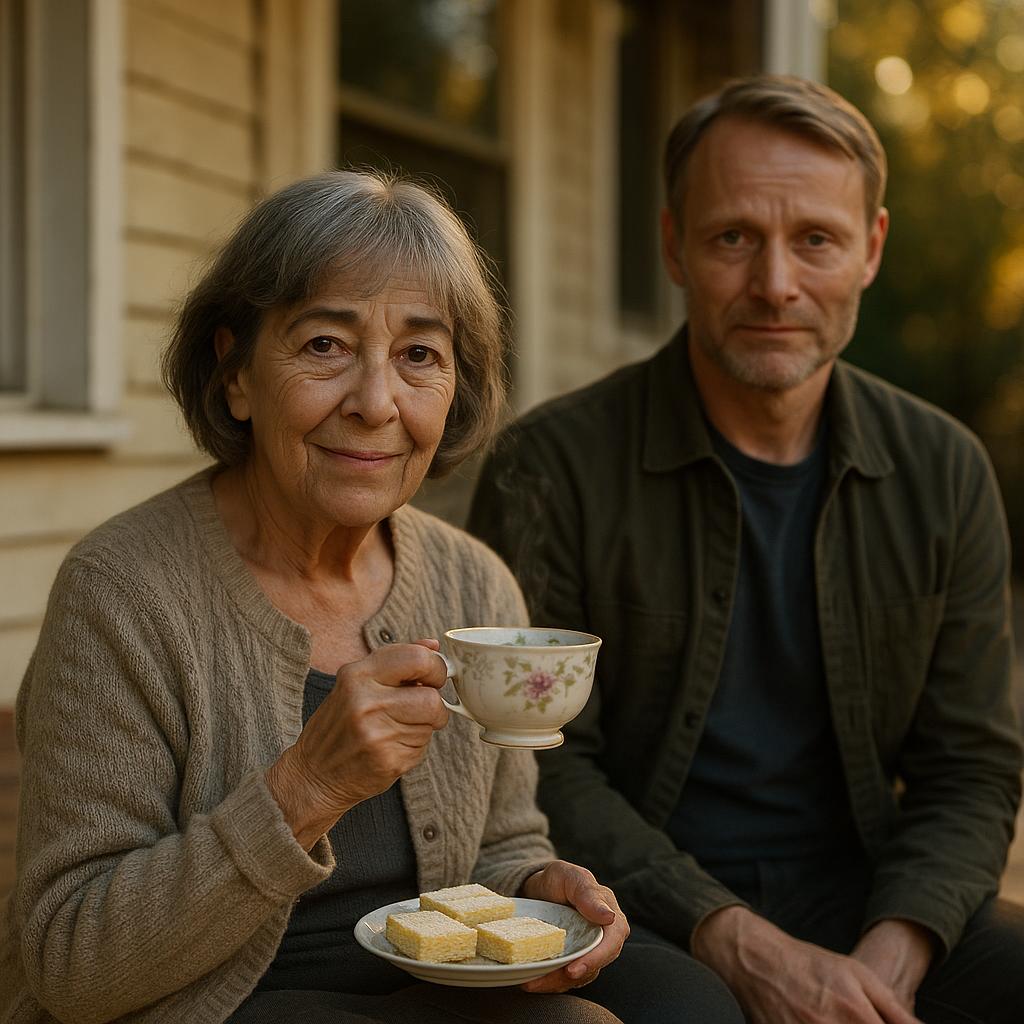
My neighbor Elaine dropped by this morning with Earl Grey tea and lemon squares—Frank's favorite. As we sat on the porch, she casually mentioned seeing David's car parked outside our house at 2 AM several times in the weeks before Frank died. 'I thought maybe Frank needed help,' she said, stirring her tea.
'But he never came to the door... just sat in his car for almost an hour.' A chill ran through me that had nothing to do with the autumn breeze. I remembered Frank complaining that his heart medication was making him feel strange—different than the doctor had described. I dismissed it then.
Now, I'm not so sure. When I hear a strange buzzing sound coming from the kitchen wall later that afternoon, I assume it's just the house settling. I couldn't possibly know that what I'd find behind that panel would change everything.
The Buzzing Wall
The buzzing started three days after David's strange late-night visit. At first, it was barely noticeable—a faint hum coming from somewhere behind the kitchen cabinets. I tapped the wall, thinking maybe the pipes were acting up again. Frank would have known exactly what to do.
He always handled these things. 'Just the house settling, Margaret,' I told myself, trying to channel his practical voice. But by the fourth day, the buzzing had become impossible to ignore, like an angry bee trapped inside the drywall. When I mentioned it to David during his daily check-in, his reaction struck me as odd.
'You're probably just hearing things, Mom,' he said, not even bothering to investigate. 'Grief can do that.' He patted my shoulder like I was a confused child. 'I can take care of it for you this weekend.' Something in his tone made my skin prickle. The way his eyes darted toward the kitchen wall.
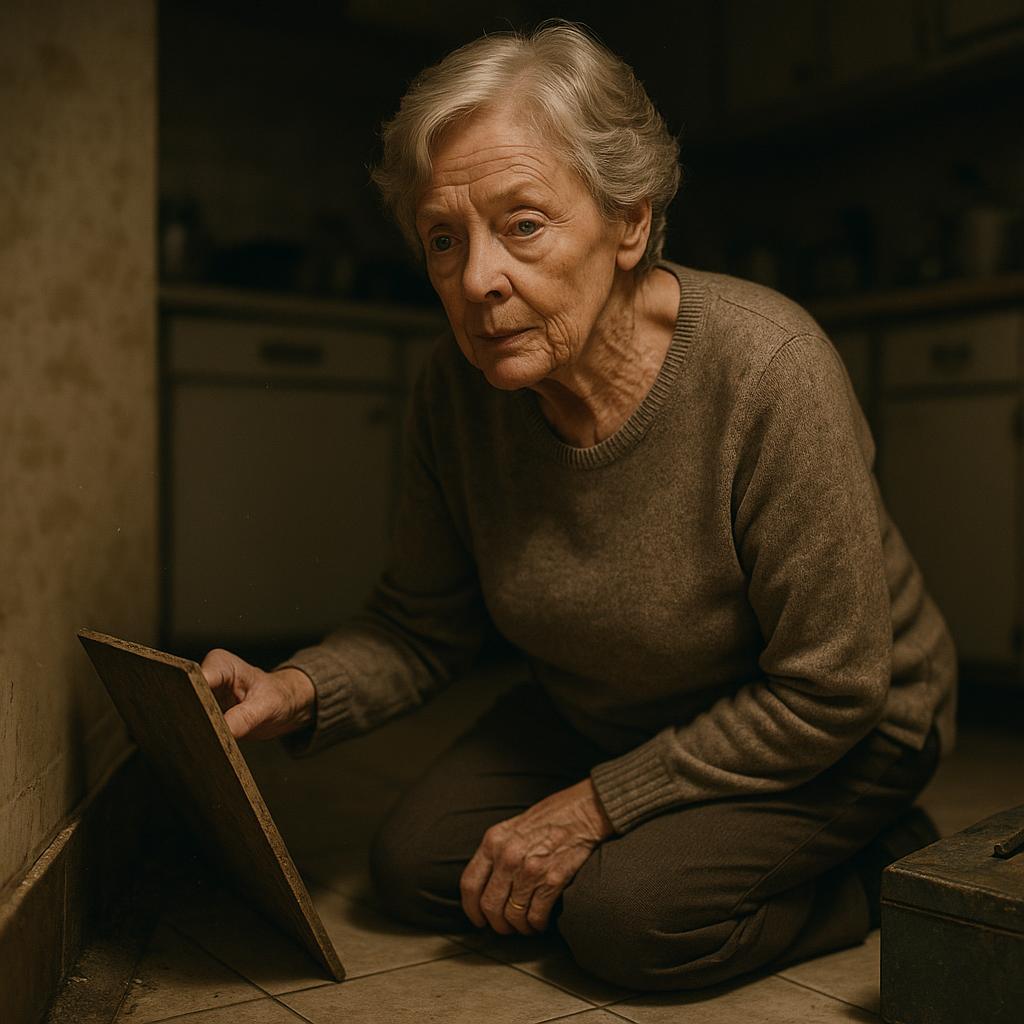
The slight tension in his jaw. I smiled and nodded, but after he left, I found myself staring at that wall, the buzzing now seeming almost deliberate. Like it was trying to tell me something. That night, I couldn't sleep. At 2 AM, I stood in the kitchen with Frank's old toolbox, running my fingers along the wall until I found a loose panel near the baseboard.
Something inside me—maybe Frank's voice in my head—whispered that I shouldn't wait for David to 'take care of it.' What I found behind that panel would make me question everything I thought I knew about my son, my husband, and the true nature of the silence I'd been so afraid of.
The First Device
I couldn't wait for David to 'take care of it.' Something about his dismissive attitude made my stomach knot up. With Frank's old Phillips screwdriver clutched in my arthritic fingers, I carefully removed the loose panel near the baseboard. The buzzing grew louder as I pried it away, my heart thumping in my chest.
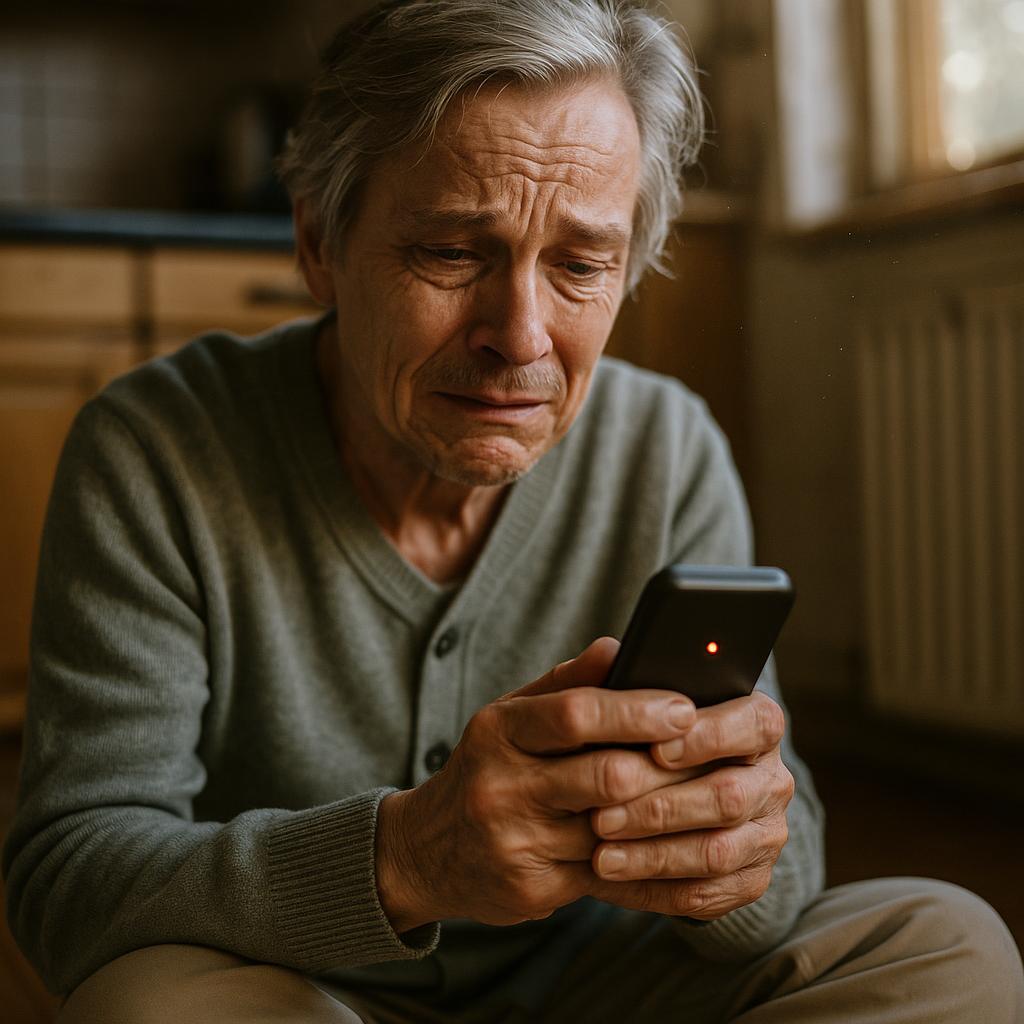
That's when I saw it—a small black device no bigger than a deck of cards, nestled among the wires and insulation. It had a tiny blinking red light, like a malevolent eye watching me. This was no mouse, no loose wire. This was... a recording device? My hands trembled as I carefully extracted it from its hiding place.
It was sleek, professional-looking—not some cheap gadget from a late-night infomercial. Who would put such a thing in our wall? And why? I turned it over in my palm, feeling suddenly violated. Our home—the sanctuary Frank and I had built over five decades—had been invaded.
My first thought was of David and his strange late-night visits. But then another possibility crept in: had Frank installed it? Was he spying on me? After fifty years of marriage, had trust eroded so completely? I sat on the kitchen floor, the device blinking accusingly in my hand, tears welling in my eyes.
Little did I know this small black box was just the beginning—the first thread in a tapestry of secrets that would unravel everything I thought I knew about my family.
Memories of Frank's Paranoia
As I held the small black device in my trembling hands, memories of Frank's peculiar behavior in his final months came flooding back. How he'd suddenly start whispering mid-conversation, glancing nervously at the walls. I'd attributed it to his declining health, but now...
The way he'd become obsessed with home security, installing new locks and checking windows twice before bed. "Can't be too careful these days, Maggie," he'd say with a tight smile that never quite reached his eyes. And that drawer—the one in his desk he'd started keeping locked.
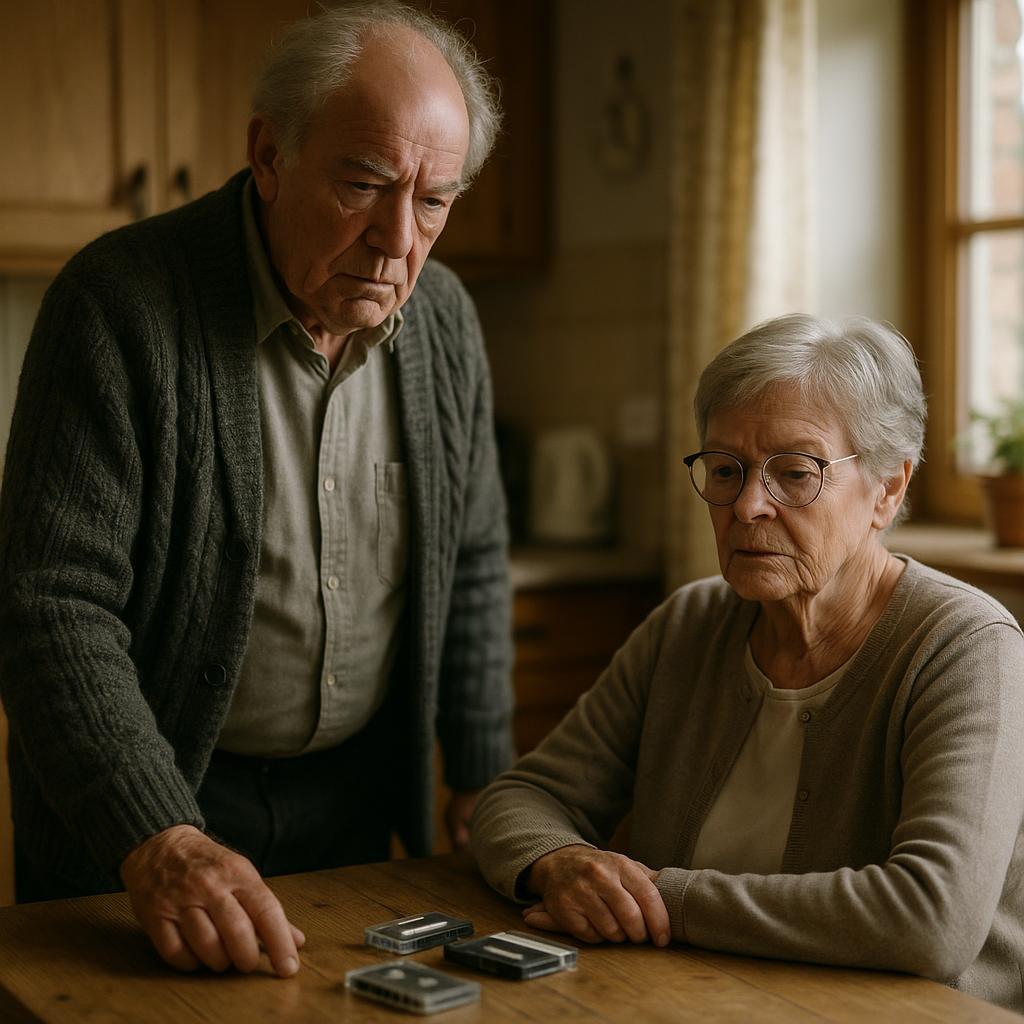
When I'd asked about it, he'd kissed my forehead and said, "Just some boring paperwork, nothing for you to worry about." But his eyes had told a different story. With the recording device still blinking in my palm, I picked up the phone and dialed George, Frank's bowling buddy of thirty years. My voice sounded steadier than I felt as I casually asked if Frank had ever mentioned concerns about our home security.
The silence on the other end stretched for several heartbeats. "Margaret," he finally said, his voice unusually grave, "I think we should talk in person. I'll come by tomorrow morning." As I hung up, a chill ran down my spine. George knew something—something Frank had shared with him but not with me. I glanced at the locked drawer across the room, wondering what secrets it held, and whether I was ready to face them.
The Hunt Begins
I couldn't sleep that night, my mind racing with questions about the device I'd found. At dawn, I made a decision. If there was one recorder, there might be others. With Frank's old toolbox in hand, I began a methodical search of our home—the home we'd shared for five decades, now feeling like unfamiliar territory.
I checked every vent, unscrewed light fixtures, and peered behind picture frames. My arthritic fingers protested, but determination pushed me forward. By mid-afternoon, I'd found a second device behind the hallway vent, its red light blinking steadily like some malevolent eye.
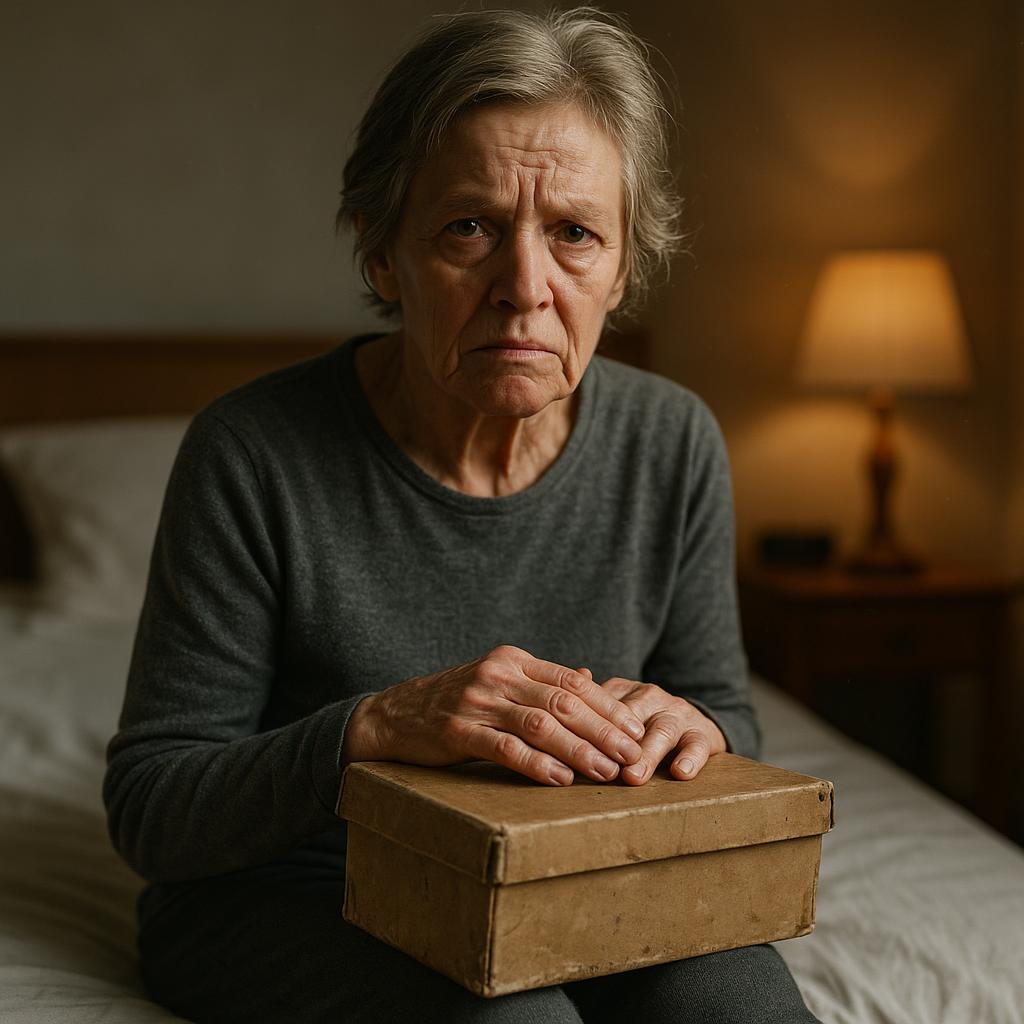
By nightfall, a third emerged from inside the bedroom lamp where Frank used to read his mystery novels. The irony wasn't lost on me—I was living in one now. I gathered all three devices in an old shoebox for Christmas ornaments, afraid to turn them off. What if someone was listening right now?
What if disabling them alerted whoever planted them? I sat on our bed—my bed now—staring at the box of intrusive little spies. Had Frank placed them to protect me? Or was someone watching us both? The house creaked and settled around me, and for the first time since Frank died, the silence wasn't what frightened me—it was what might be hidden within it. As I placed the lid on the shoebox, a terrible thought occurred to me: what if these weren't the only ones?
George's Visit
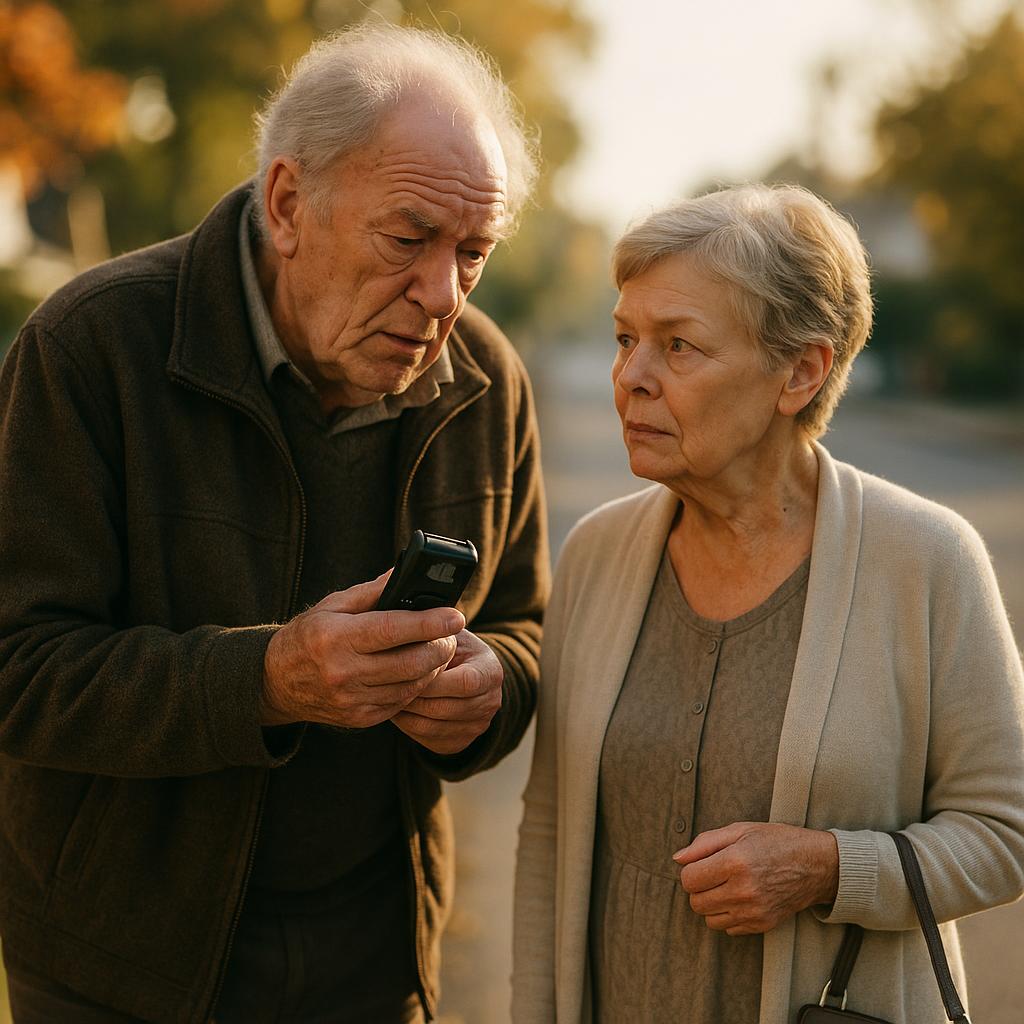
George arrived at 9 AM sharp the next morning, looking like he hadn't slept much better than I had. His eyes darted around my living room, scanning the walls and ceiling in a way that made my stomach tighten. When I showed him the shoebox with the three recording devices, his face drained of color, but there wasn't a trace of surprise in his expression.
"Have you told David about these?" he asked, his voice barely above a whisper. When I shook my head no, he visibly relaxed, shoulders dropping with relief. "Good. Keep it that way for now, Margaret." He picked up one of the devices, turning it over in his weathered hands.
"Frank mentioned some... concerns to me. But we shouldn't talk here." He glanced meaningfully at the walls. "How about we grab some coffee at Millie's Diner? The one down on Elm?" I nodded, suddenly feeling like a spy in one of Frank's mystery novels. As I grabbed my purse and cardigan, George leaned in close.
"Margaret," he said, his voice grave, "Frank wasn't paranoid. He was scared. And he had good reason to be." The chill that ran through me had nothing to do with the autumn air as we stepped outside. Whatever George knew about my husband's final months, I had a sinking feeling it would explain not just the recorders, but possibly Frank's death itself.
Conversations at the Diner
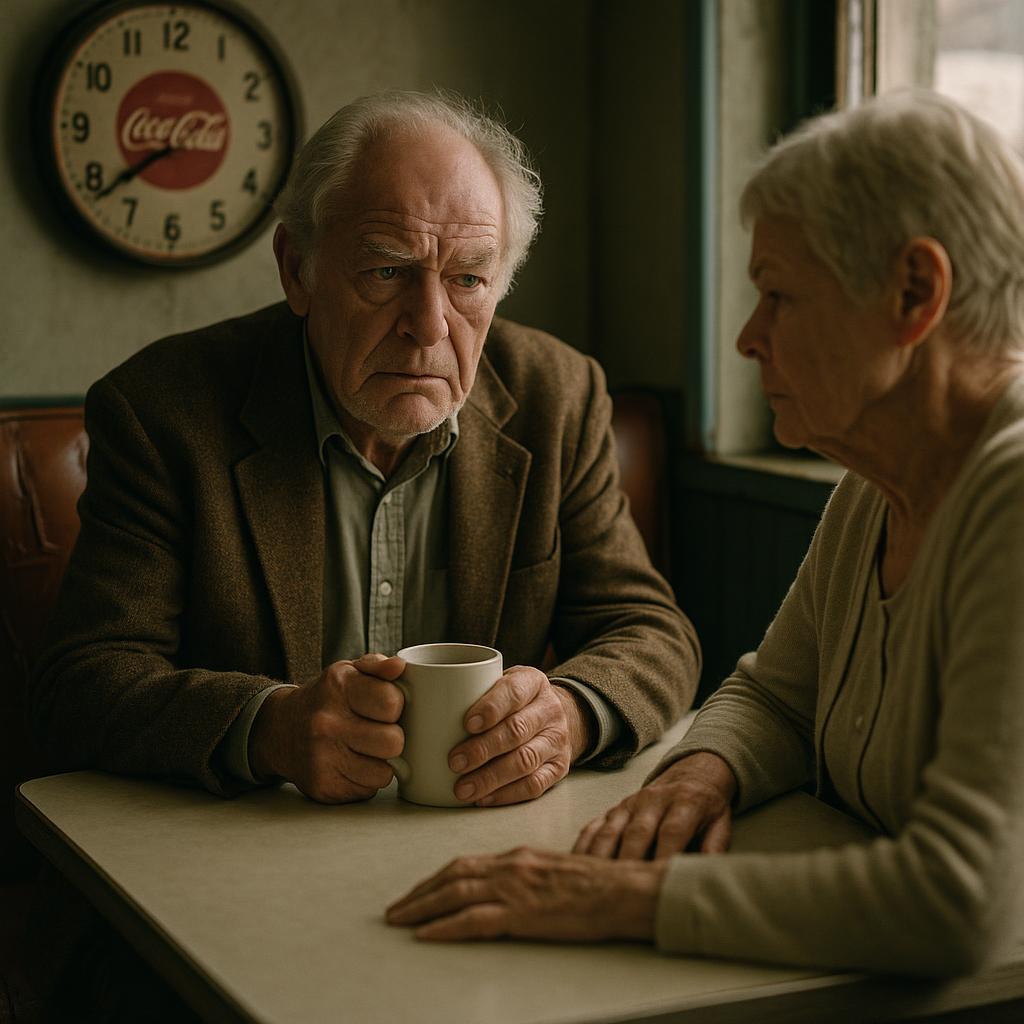
Millie's Diner hadn't changed in thirty years—same cracked vinyl booths, same faded Coca-Cola clock on the wall. George and I slid into a corner booth far from other customers, and he waited until our coffee arrived before speaking. 'Frank came to me about three months before he passed,' he said, stirring his coffee though he hadn't added anything to it.
'He made me promise not to worry you unless...' He trailed off, eyes darting to the window. 'Unless what, George?' I pressed. He sighed. 'Unless it became necessary.' When I told him about David's sudden interest in the house deed and Frank's life insurance policy, George's knuckles turned white around his mug.
'Has he asked you to sign anything?' he asked sharply. I mentioned how David had brought paperwork for me to 'simplify things,' claiming it would 'make everything easier' after my 'eventual passing.' George's face darkened. 'Don't sign anything, Margaret. Not a damn thing.' He leaned forward, voice dropping to a whisper.
'Frank suspected something wasn't right. That's why he installed those devices.' My heart hammered against my ribs. 'Suspected what?' I asked, though deep down, I already knew the answer—I just couldn't bear to say it aloud. George glanced around the diner before reaching into his jacket pocket.
'Frank gave me something to keep safe,' he said, sliding a small cassette tape across the table. 'He said if anything happened to him, I should make sure you heard this.'
Two More Devices
I returned home from Millie's Diner with George's warning echoing in my ears, the cassette tape tucked safely in my purse. Something inside me had shifted—a quiet determination replacing the fog of grief. If Frank had been protecting me, I needed to know from what... or whom.
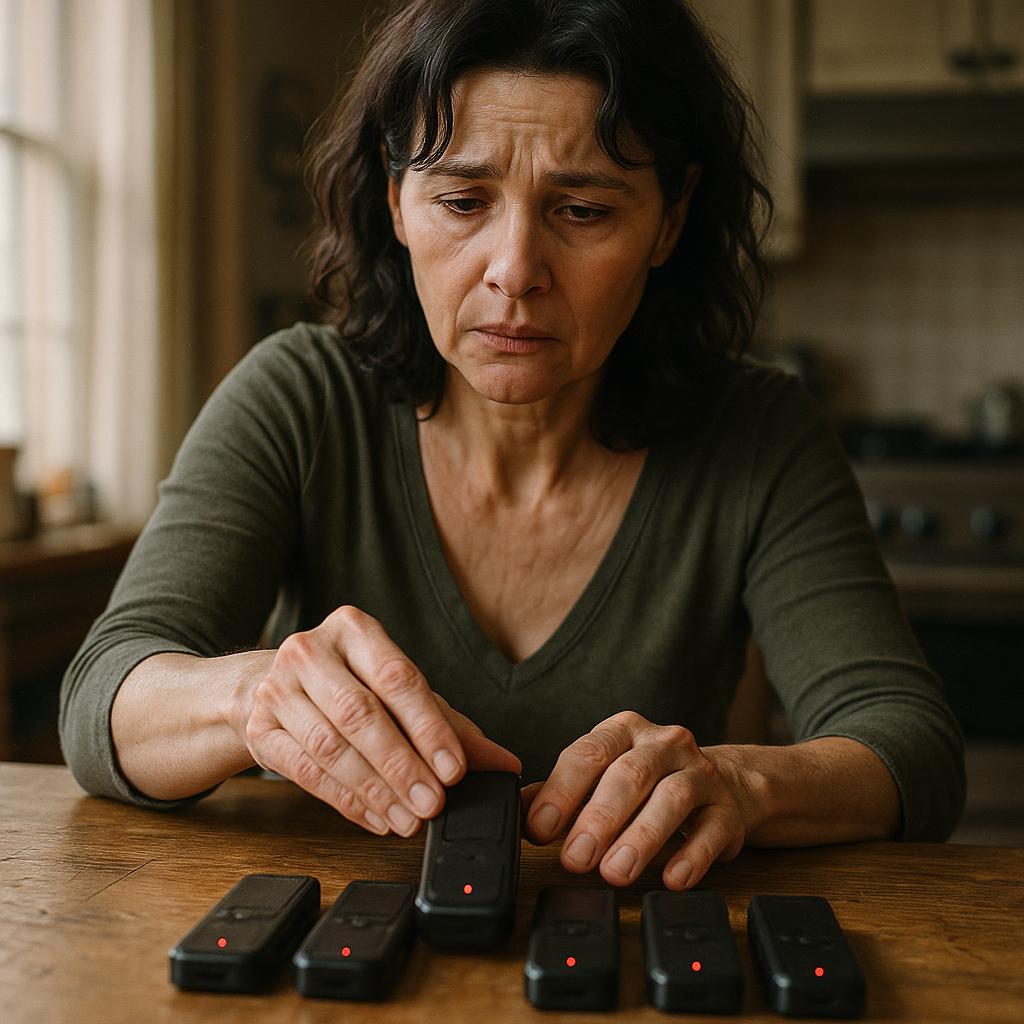
I resumed my search with renewed purpose, moving methodically through rooms filled with fifty years of memories. Behind our wedding photo in the living room—the one where Frank is looking at me instead of the camera—I found the fourth device, nestled in the hollow space of the ornate frame. My hands trembled as I carefully extracted it, the red light blinking steadily like a tiny heartbeat.
The fifth one was cleverly hidden inside the base of Frank's desk lamp in his study, where he'd spent countless evenings paying bills and reading. Five devices. Five silent witnesses to whatever had been happening in our home. I arranged them in a row on the kitchen table, these small black intruders that suddenly felt less like violations and more like Frank's final act of protection.
Had my husband been gathering evidence? Against our own son? The thought made my chest ache with a pain sharper than grief. I left the devices where they were, blinking their red eyes at me. If they were still recording, let them. Perhaps they'd capture the moment when the truth finally revealed itself.
I picked up the cassette tape George had given me, turning it over in my hands. Whatever was on this tape, Frank had wanted me to hear it—had made sure it would reach me if something happened to him. And something had.

History's most fascinating stories and darkest secrets, delivered to your inbox daily.
David's Unexpected Questions
The doorbell rang just as I was hiding the cassette tape in my knitting basket. David stood on the porch with a casserole dish and that too-bright smile that never quite reached his eyes. "Thought you might want some company, Mom," he said, brushing past me into the kitchen.
I noticed how his gaze lingered on the walls where I'd removed the panel. "You look tired," he commented, setting down the food. "Have you been sleeping okay?" Before I could answer, he launched into questions about Frank's final days. "Did the doctors ever specify what caused Dad's heart to fail?
Any medications that might have interacted badly?" His tone was casual, but there was something predatory in the way he leaned forward, watching my face. When I mentioned I'd been cleaning the house to keep busy, his posture changed instantly. "You shouldn't strain yourself," he insisted.
"Let me help. I could start with the kitchen—these old walls probably need attention." He gestured precisely toward the vent where I'd found the first device. "Maybe check the vents too. Dust builds up." My blood ran cold as I realized he wasn't offering help—he was searching for the recording devices.
I forced a smile, my hands trembling as I served him coffee in Frank's mug. "That's sweet, dear, but I've already handled those areas." Something flickered across his face—frustration? Panic? He recovered quickly, but not before I saw it. As he left that evening, he hugged me tighter than usual, whispering, "I worry about you alone in this big house, Mom.
We should talk about your future soon." I locked the door behind him, suddenly understanding with terrible clarity why Frank had been so afraid.
Frank's Locked Drawer
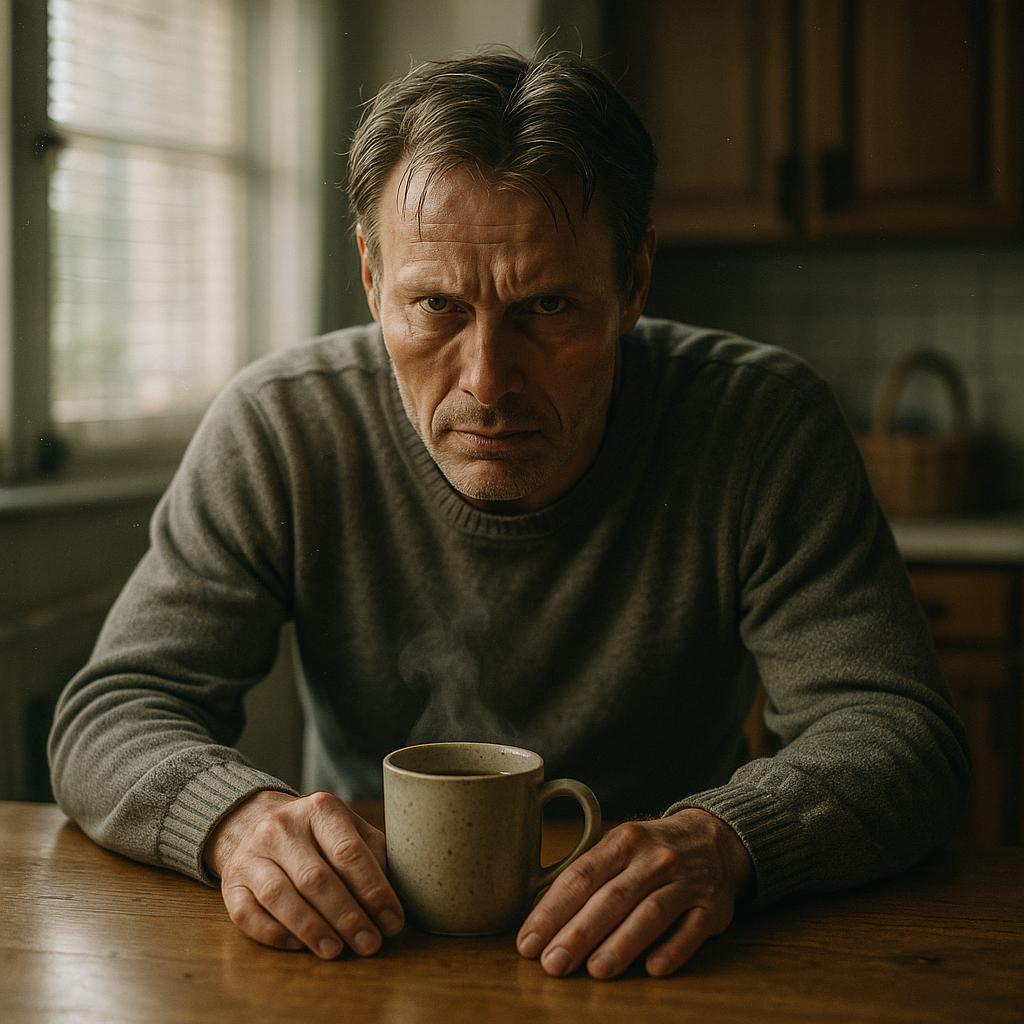
After David left, I sat in Frank's study, staring at the locked drawer that had haunted me for weeks. My hands trembled as I retrieved Frank's old wallet from the dresser where I'd kept it since the funeral. Inside, tucked behind his driver's license, was a small silver key I'd never noticed before.
It slid into the desk drawer lock perfectly. The drawer opened with a soft creak that seemed to echo through the silent house. Inside lay a leather-bound notebook, its pages filled with Frank's neat, methodical handwriting. My heart pounded as I flipped through entries spanning the last six months.
"March 15 - D visited unexpectedly. Checked medicine cabinet when he thought I was napping." "April 2 - Found D in study, claimed looking for tax forms. Drawer was locked, thank God." "April 28 - Heart medication tastes different. Saving pills in envelope behind loose brick in garage." Each entry grew more alarming, documenting late-night visits, hushed phone calls, and David's increasing questions about our finances.
The final entry, dated just three days before Frank died, sent ice through my veins: "If anything happens to me, the recordings go to George. He knows what to do." I closed the notebook, Frank's final warning clutched against my chest. My husband hadn't been paranoid—he'd been gathering evidence. And now I understood why the cassette tape George gave me might be the most important inheritance Frank left behind.
The Mysterious Package
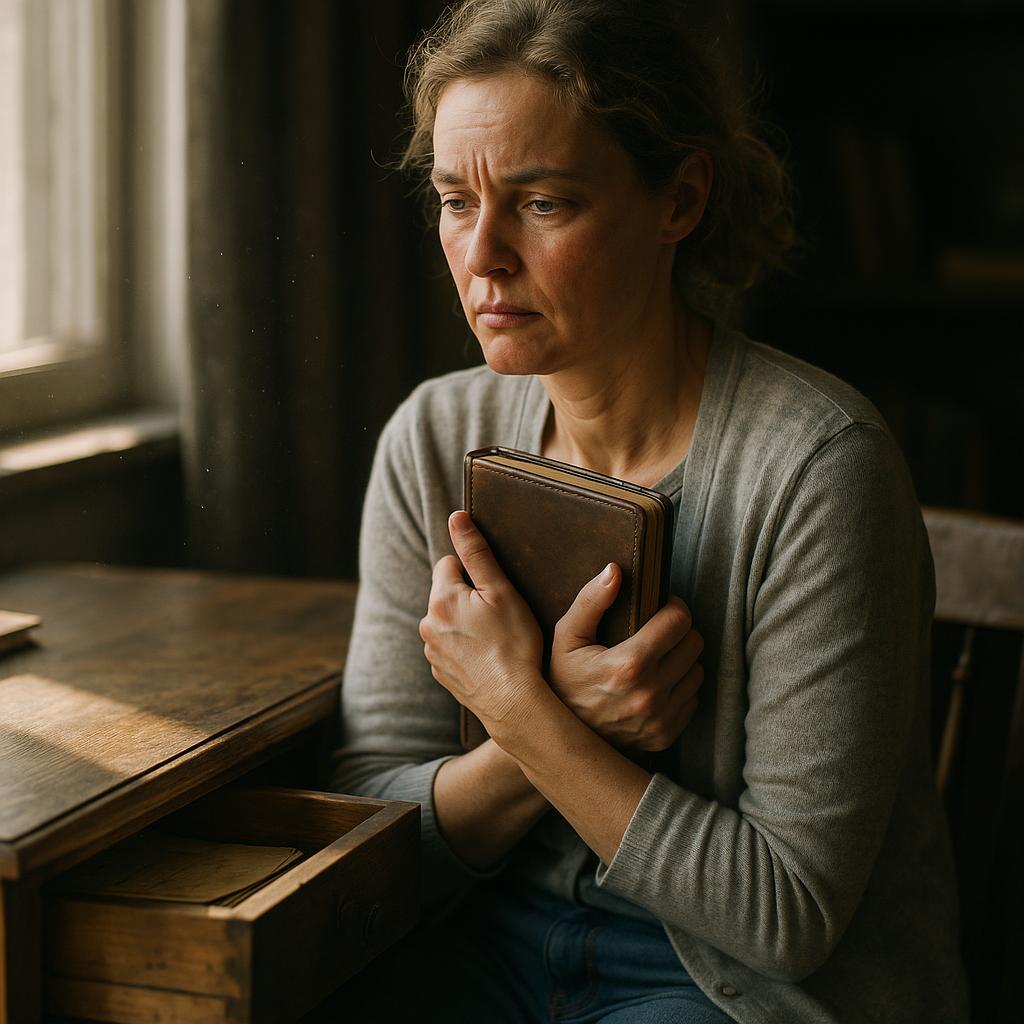
Two weeks after my disturbing discoveries, I found a small padded envelope in my mailbox. No return address, just my name and address in unfamiliar handwriting. My hands trembled as I carried it inside, setting it on the kitchen table where Frank and I had shared thousands of meals together.
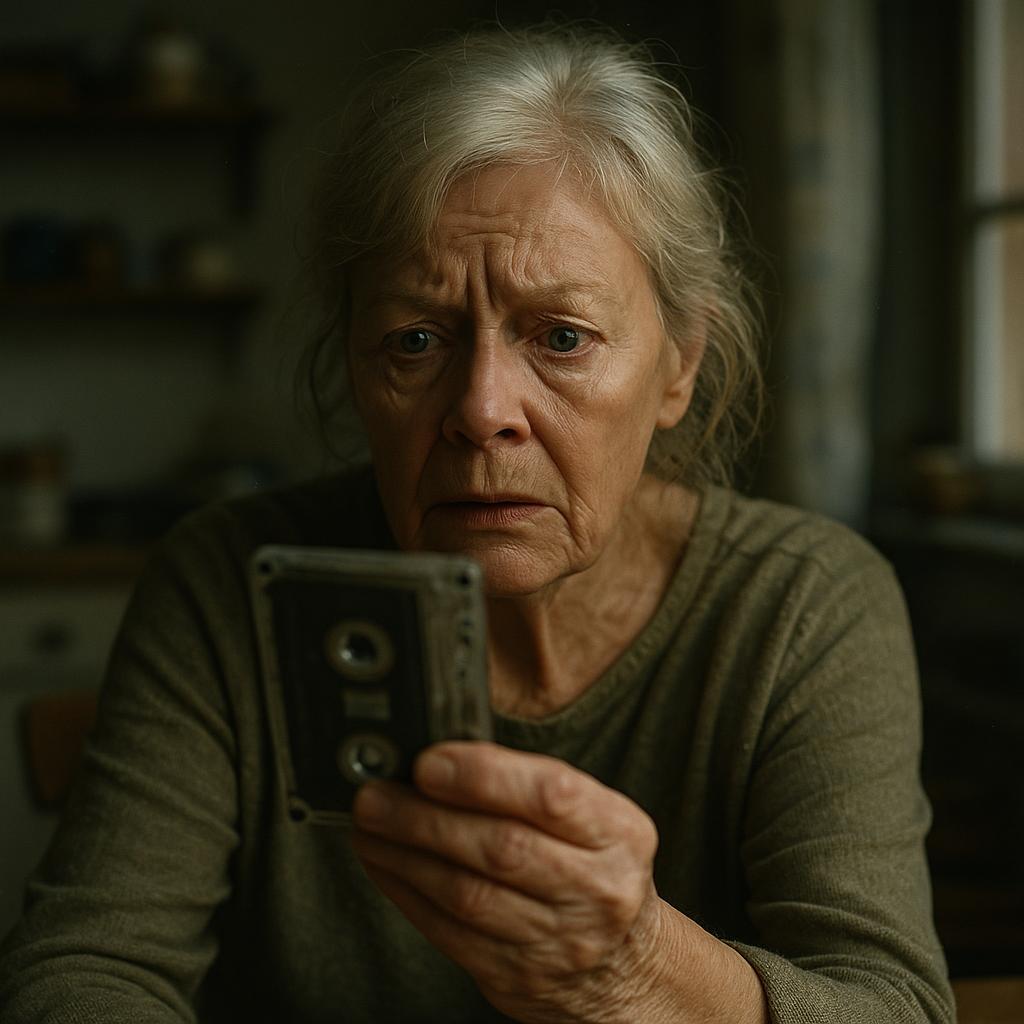
For nearly an hour, I just stared at it, afraid of what might be inside. When I finally worked up the courage to open it, I found a single cassette tape with a handwritten label: 'For Margaret—play immediately.' The handwriting wasn't Frank's, nor was it David's. My throat tightened as I realized this might be the evidence George had mentioned—the proof Frank had been gathering.
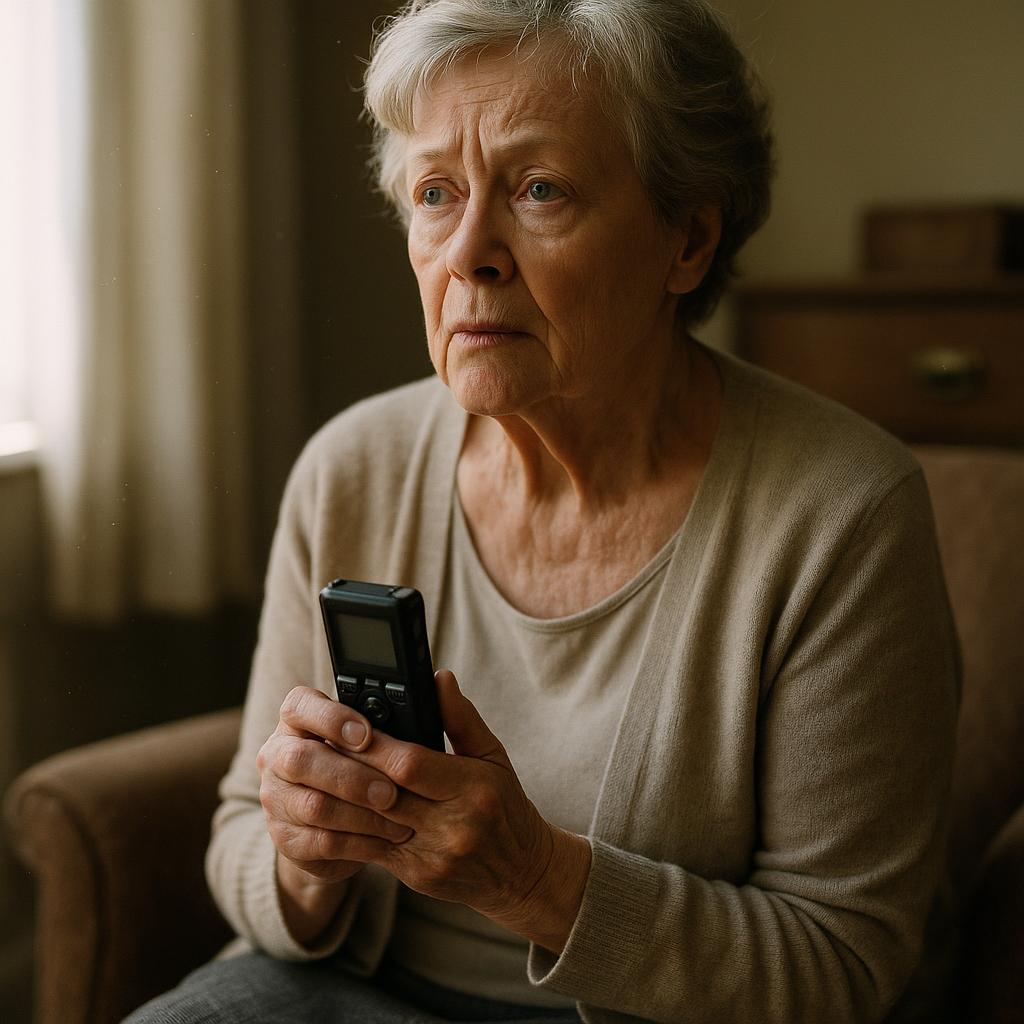
I rummaged through the basement storage, sneezing from the dust as I located our old tape player behind boxes of Christmas decorations. It took me three tries to get the ancient machine working, its mechanisms groaning in protest after years of disuse. As I pressed the play button, my living room filled with static, then silence, then... a voice.
My son's voice. The blood drained from my face as I listened, my knees weakening until I had to sit down. The words coming through that scratchy speaker would forever change how I saw the boy I had raised—and confirm my worst fears about what really happened to Frank.
The Voice on the Tape
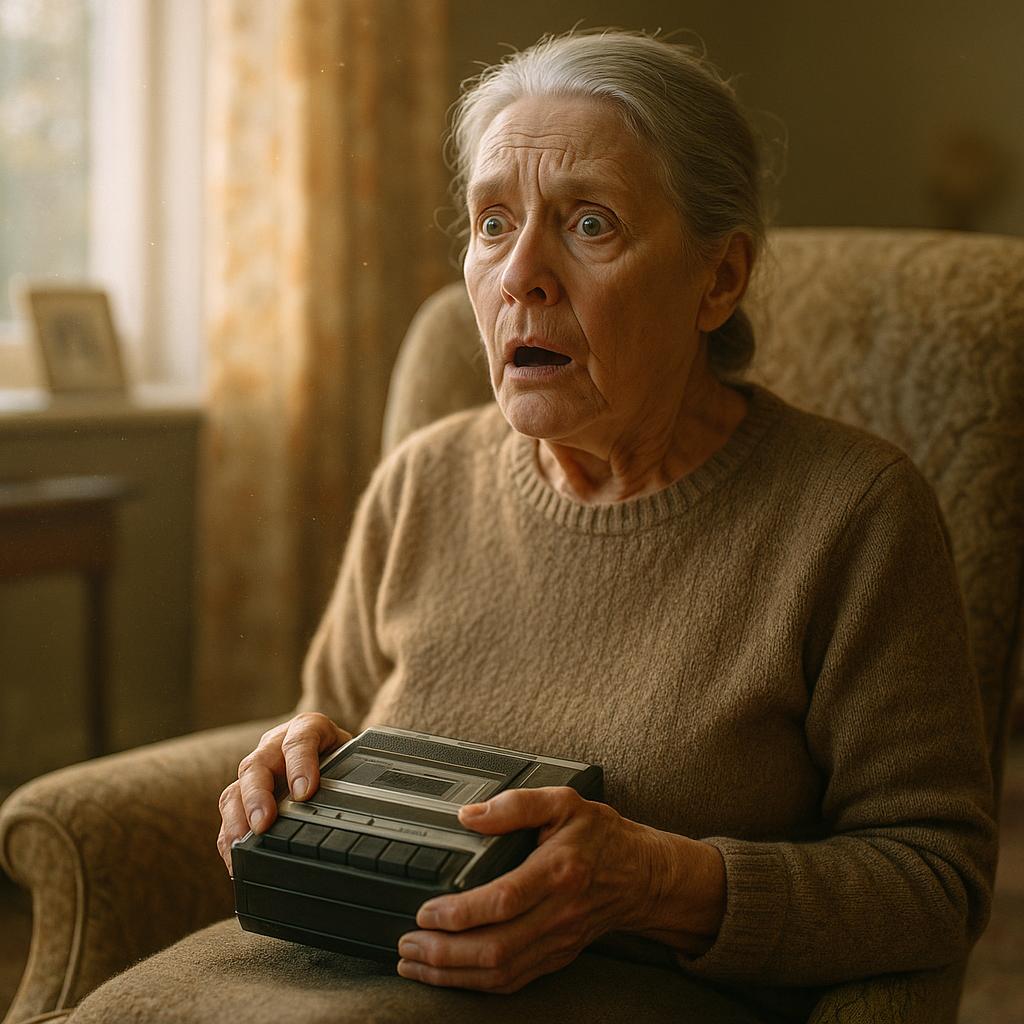
The static crackled through the speakers as I pressed play, my arthritic fingers trembling against the ancient buttons of the tape player. Then, cutting through the white noise like a knife, came David's voice—my son, my only child. "If I add it to Dad's pills slowly, he won't notice," he said, his tone so casual it made my blood freeze in my veins.
I clutched the armrest of Frank's favorite chair, the one I couldn't bear to get rid of after he passed. The voice continued, discussing life insurance payouts with clinical detachment. "Once she's gone, I'll have the house and the savings. No one will question it.
They'll just think it was old age." I hit stop, my lungs refusing to work properly. This couldn't be real. Not my David. Not the boy who'd cried when his goldfish died, who'd held my hand at Frank's funeral just months ago. I rewound and played it again. And again.
Three times I listened, desperately searching for some other explanation, some context that would make these words mean anything other than what they clearly did. But there was no mistaking it—my son had poisoned his father and was planning to do the same to me. The cassette ended with the sound of running water and a door closing.
I sat frozen in my living room, the afternoon sun streaming through the curtains Frank had helped me hang thirty years ago, illuminating dust particles that danced, oblivious to how my world had just shattered. The house felt suddenly vast and empty around me, yet somehow I wasn't alone—Frank was here, his final act of love protecting me from beyond the grave.
Denial and Doubt
I spent the entire night pacing our bedroom—the same room where Frank and I had shared whispered dreams for nearly fifty years. My mind refused to accept what my ears had heard. That voice on the tape—my David's voice—planning my death like it was nothing more than a grocery list.
I cycled through every possible explanation: Maybe someone had manipulated his voice? Those computer programs can do anything these days. Perhaps he was rehearsing for some community theater role? He'd done that back in high school. Or was it all some elaborate, cruel joke?
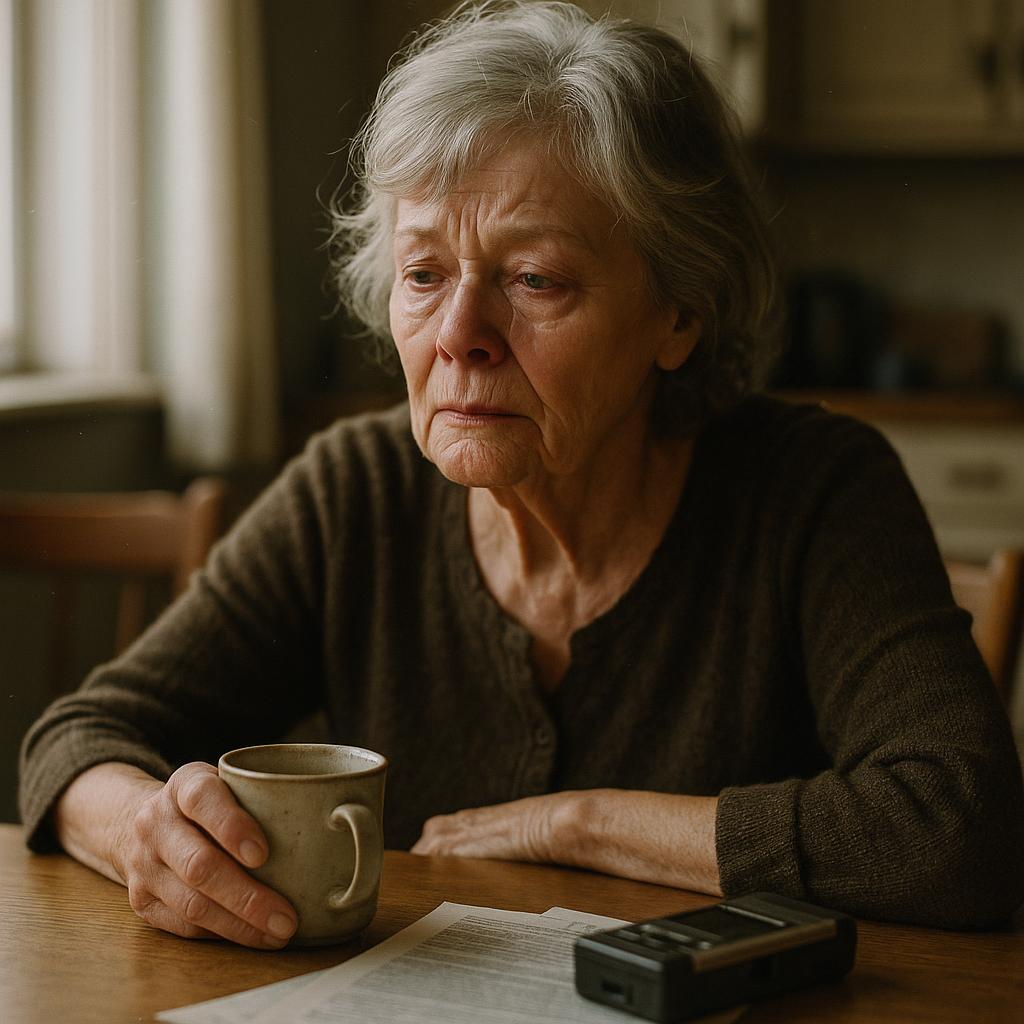
By dawn, I sat at the kitchen table, Frank's coffee mug empty beside me, my eyes burning from tears and lack of sleep. The weight of betrayal pressed against my chest until I could barely breathe. With trembling fingers, I dialed George's number. He answered on the first ring, as if he'd been sitting by the phone waiting.
"You heard the tape," he said. Not a question. When I managed to choke out a yes, his voice softened. "I'll be there in twenty minutes, Margaret. Don't call anyone else. Especially not David." The way he said my son's name—with such careful neutrality—told me everything I needed to know.
This wasn't a misunderstanding. This wasn't a prank. This was my reality now: the child I had raised from infancy had murdered his father and was planning to do the same to me. As I hung up the phone, I noticed something I hadn't before—the blinking light on one of the recording devices had stopped.
George's Confession
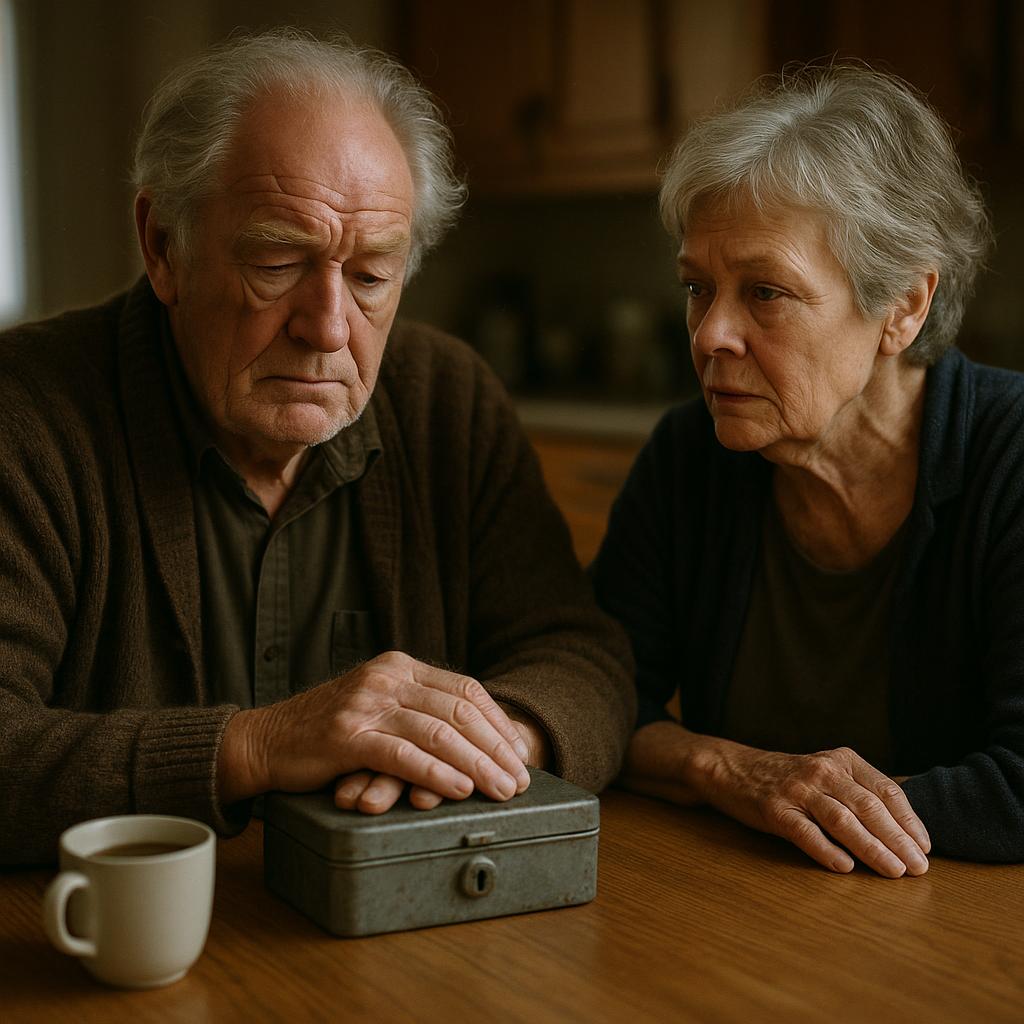
George arrived twenty minutes later as promised, his face etched with the kind of gravity that comes only from carrying a terrible burden. In his hands was a small metal lockbox, which he placed carefully on my kitchen table. 'Margaret,' he began, settling into Frank's chair with a heavy sigh, 'there's something I need to tell you.' Over the next hour, as my coffee grew cold beside me, George revealed the full extent of Frank's suspicions.
'He first came to me about six months ago,' George explained, his voice low. 'He'd noticed David acting strangely—hovering when he took his medication, asking odd questions about your finances.' George unlocked the box, revealing more cassettes, each labeled with dates. 'Frank was no fool, Margaret.
He noticed when his pills started looking different, when his symptoms got worse after David visited.' Tears welled in my eyes as George described how Frank had installed the recording devices himself, buying them with cash so they couldn't be traced. 'He didn't want to break your heart,' George said, reaching across to squeeze my hand. 'Not until he had proof.' The most devastating revelation came last—Frank had suspected he was being poisoned but chose to gather evidence rather than confront David directly.
'He made me promise that if anything happened to him, I'd make sure you got these recordings,' George said, his voice breaking. 'He was protecting you until the very end.' As I stared at the collection of tapes—Frank's final testament—I realized that my husband's love extended beyond the grave, leaving me a trail of breadcrumbs that might just save my life.
The Other Tapes
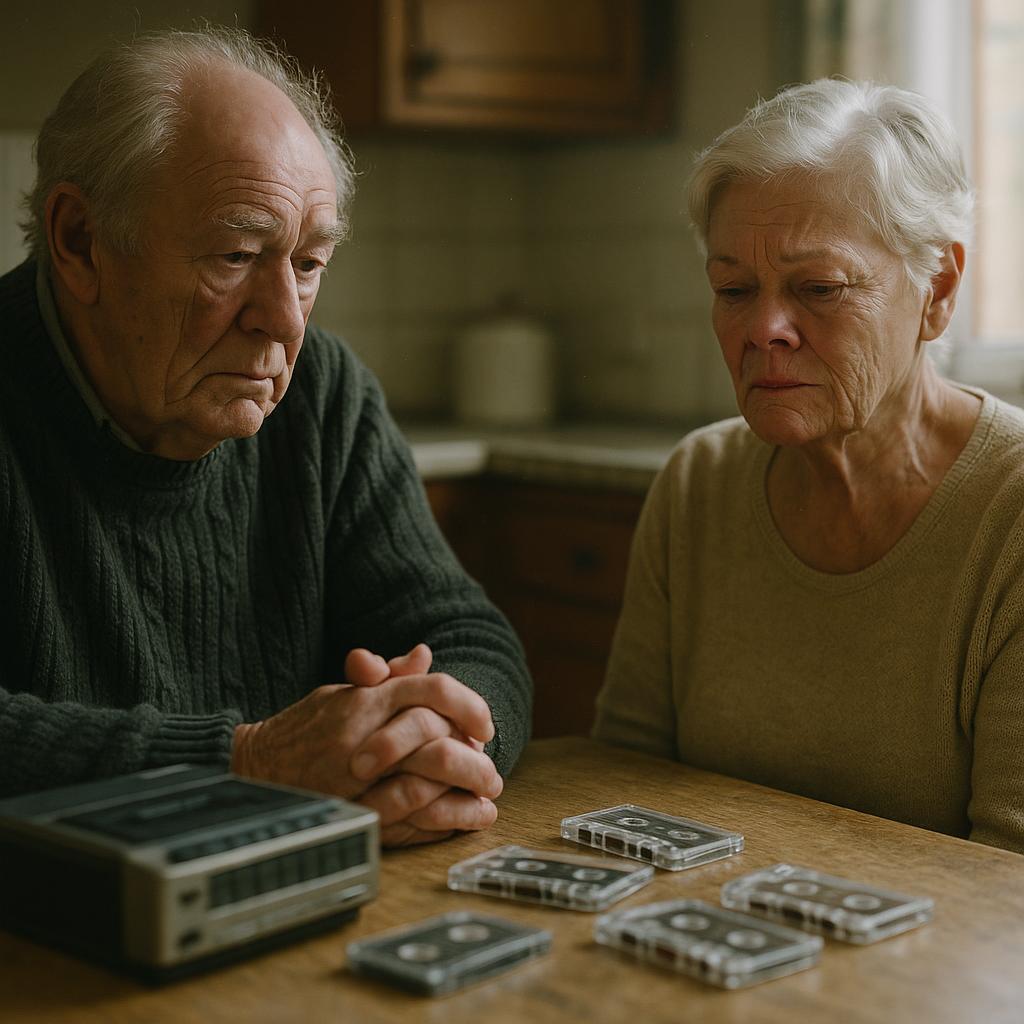
George's hands trembled slightly as he opened the lockbox, revealing five more cassette tapes neatly arranged inside, each labeled with dates spanning the past six months. 'Frank was thorough,' he said quietly. I felt my throat tighten as George inserted the first tape into the player.
For the next hour, we sat in my kitchen—the same kitchen where I'd baked birthday cakes for David for decades—listening to snippets of my son's betrayal. 'If we dissolve it slowly in water, it's practically untraceable,' David's voice said on one recording, clinical and detached. On another, he discussed dosages with someone whose voice was too muffled to identify.
'Just enough to weaken his heart further each time.' The third tape captured him laughing—actually laughing—while saying, 'Once Dad's gone, convincing Mom to sign over the house will be easy. She trusts me completely.' I pressed my hand against my mouth, muffling a sob that threatened to tear me apart from the inside. The betrayal wasn't just a wound; it was an amputation of something vital inside me.
The mother I had been for fifty years suddenly felt like a stranger, naive and foolish. The final tape was the most damning—David discussing the timeline for my own death after Frank's. 'Natural causes,' he said. 'No one questions when old people die.' George reached across the table and took my hand, his eyes filled with a mixture of sorrow and resolve.
'Margaret,' he said gently, 'we need to take these to the police.' But how do you report your own child for murder? How do you admit that the baby you once rocked to sleep is now plotting to put you in the ground?
The Accomplice
As George and I listened to the tapes again, a name caught my attention—Vanessa. My hand froze mid-air, coffee cup suspended. 'Wait,' I said, rewinding the tape. There it was: 'Vanessa thinks we should wait another week before increasing the dosage.' David had mentioned this woman a few times over the past year—his girlfriend, supposedly a pharmaceutical sales rep he'd met at a conference.
He'd always had excuses for why we couldn't meet her: she was busy, traveling for work, visiting family out of state. Now I understood the real reason. 'Frank mentioned her too,' George said grimly, pulling out his phone to show me a note Frank had left him. 'He suspected she might be providing the substances.' I felt physically ill imagining them together, heads bent over our kitchen table when I wasn't home, measuring out doses of whatever had stopped my husband's heart.
The betrayal was no longer just my son's—it had accomplices, plans, a whole architecture of deception I'd been blind to. 'We need to find out who she is,' I said, my voice steadier than I expected. 'She might be the key to proving what they did to Frank.' George nodded, already dialing his nephew who worked in IT.
'If she's in pharmaceuticals, she'd have access to things that wouldn't raise flags,' he murmured. 'Things that could make a heart condition suddenly worse.' As we waited for his nephew to answer, I stared at the family photo on my wall—David's college graduation—and wondered which was the real mask: the loving son I thought I knew, or the calculating killer on these tapes. And I couldn't help but wonder what kind of woman would help a man murder his parents for money.
The Impossible Decision
George's weathered face grew stern as he gathered the tapes into a neat pile. 'Margaret, we need to take this to the police. Now.' His voice left no room for debate. 'If David poisoned Frank's medication...' He couldn't finish the sentence, but he didn't need to.
The implication hung in the air between us—my husband's death might not have been natural at all. I stared at the evidence spread across my kitchen table, the same table where I'd helped David with his homework, where we'd celebrated birthdays and Christmases. My hands trembled as I touched one of the cassettes.
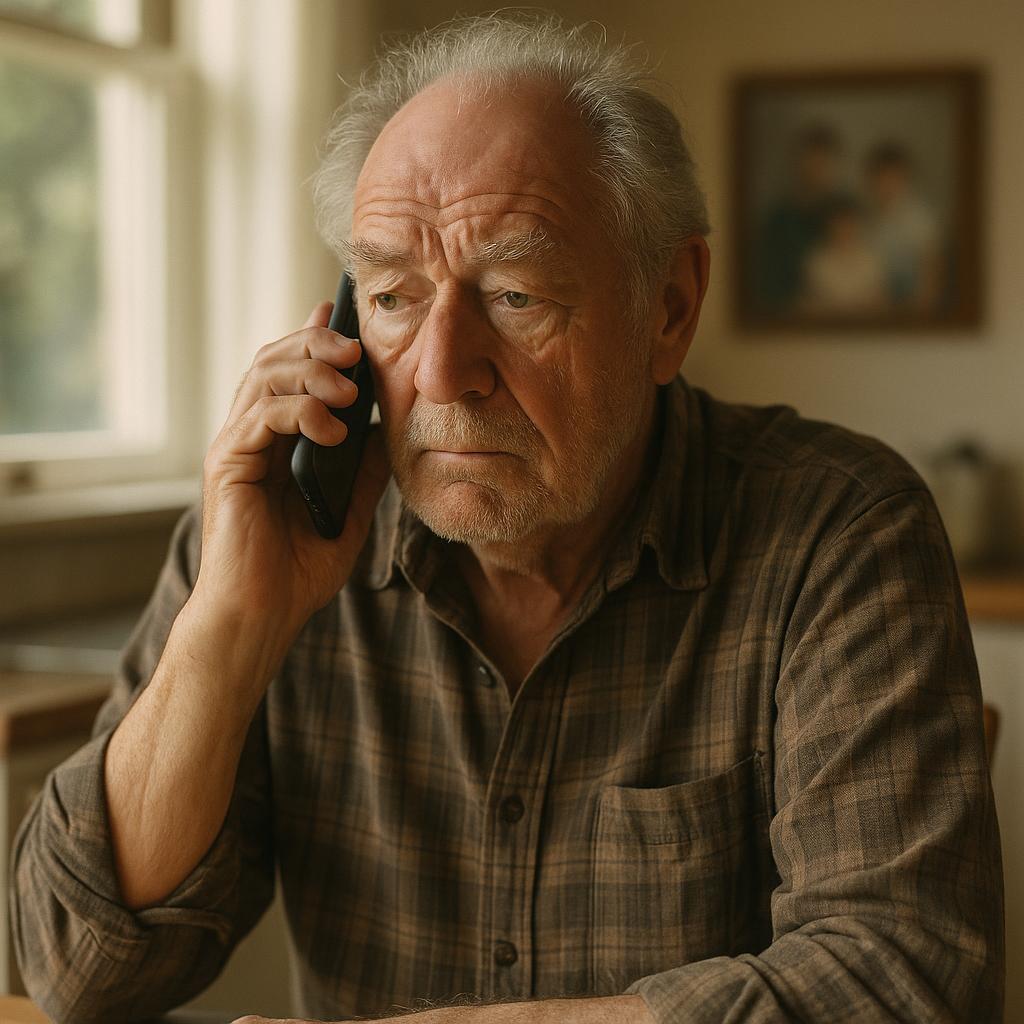
How could a mother turn her only child over to the authorities? But then again, how could I ignore what Frank had sacrificed to protect me? The phone's shrill ring cut through my thoughts like a knife. I answered automatically, my mind still swimming. 'Mom?' David's voice was cheerful, casual—as if he hadn't been plotting my death on recordings scattered across my table.
'I thought I'd come over for dinner tonight. Around six?' I caught George's warning glance, his slight head shake. 'That sounds... nice,' I managed, my voice surprisingly steady. As I hung up, the weight of what lay before me crushed down on my chest. In just a few hours, I would face my son—my would-be murderer—across this very table. And I had to decide: Do I protect the child I raised, or honor the husband who died trying to save me?
Legal Advice
With George's encouragement, I called Patricia Winters, the lawyer who'd handled our affairs since before David was born. My fingers trembled as I dialed, wondering how to phrase the unthinkable. "Patricia? It's Margaret Holloway. I need some... advice." I couldn't bring myself to say the words directly, so I posed it as a hypothetical.
"If someone suspected a family member had... contributed to a natural death, what kind of evidence would be needed?" Patricia's normally warm voice turned sharp with concern. "Margaret, are we talking about Frank?" The directness startled me—Patricia had always been perceptive. I glanced at George, who nodded encouragingly.
"I have recordings," I whispered, tears threatening. "And a journal. Frank was... collecting evidence." Patricia didn't hesitate. "Don't touch anything else. Don't confront anyone. I'm coming over right now." She explained that if Frank had been deliberately harmed, I had both legal and moral obligations.
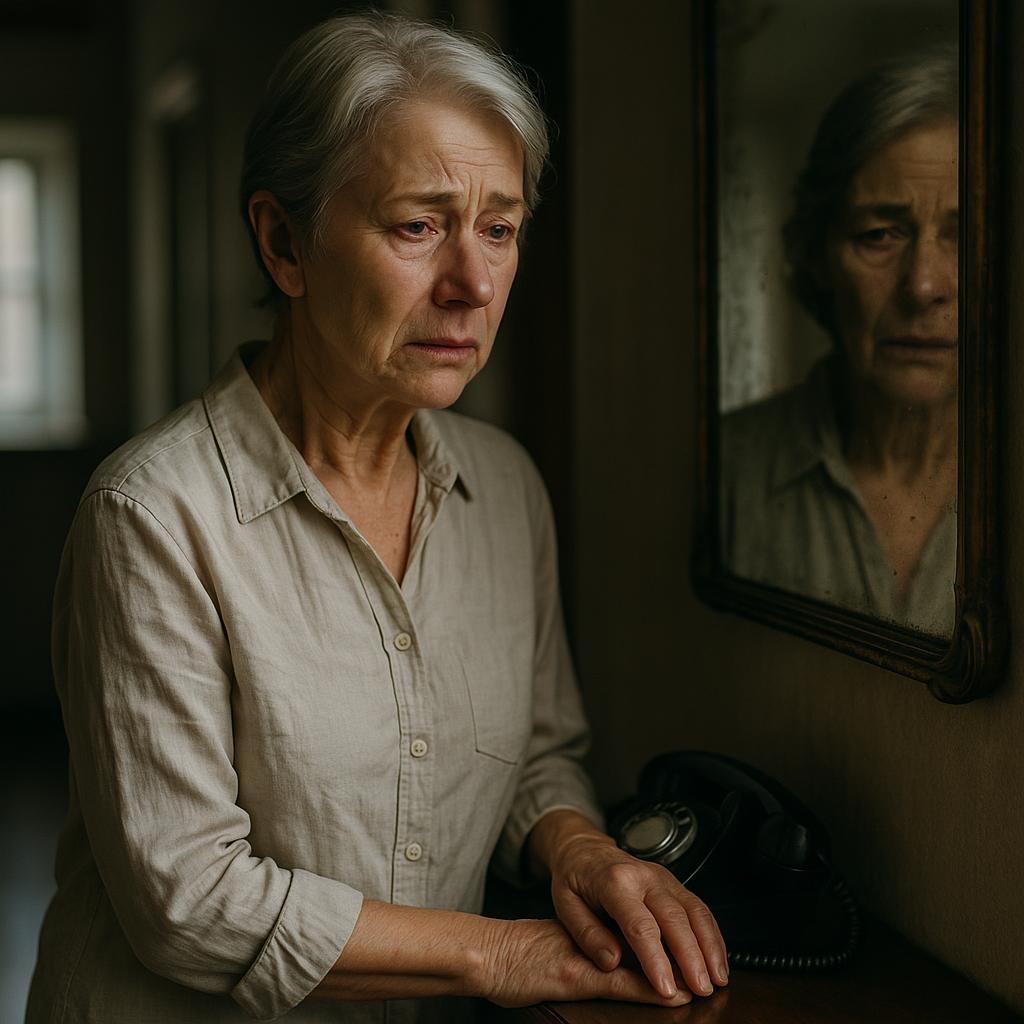
"The statute of limitations doesn't apply to murder, Margaret," she said gently. "And if someone did this to Frank..." She didn't finish the sentence, but the implication was clear—I could be next. As I hung up, I caught my reflection in the hallway mirror. The woman staring back looked older than her 72 years, her eyes haunted by knowledge no mother should ever have to bear.
In just thirty minutes, Patricia would arrive, and once I showed her those tapes, there would be no turning back from the path that might send my only child to prison.
The Last Dinner
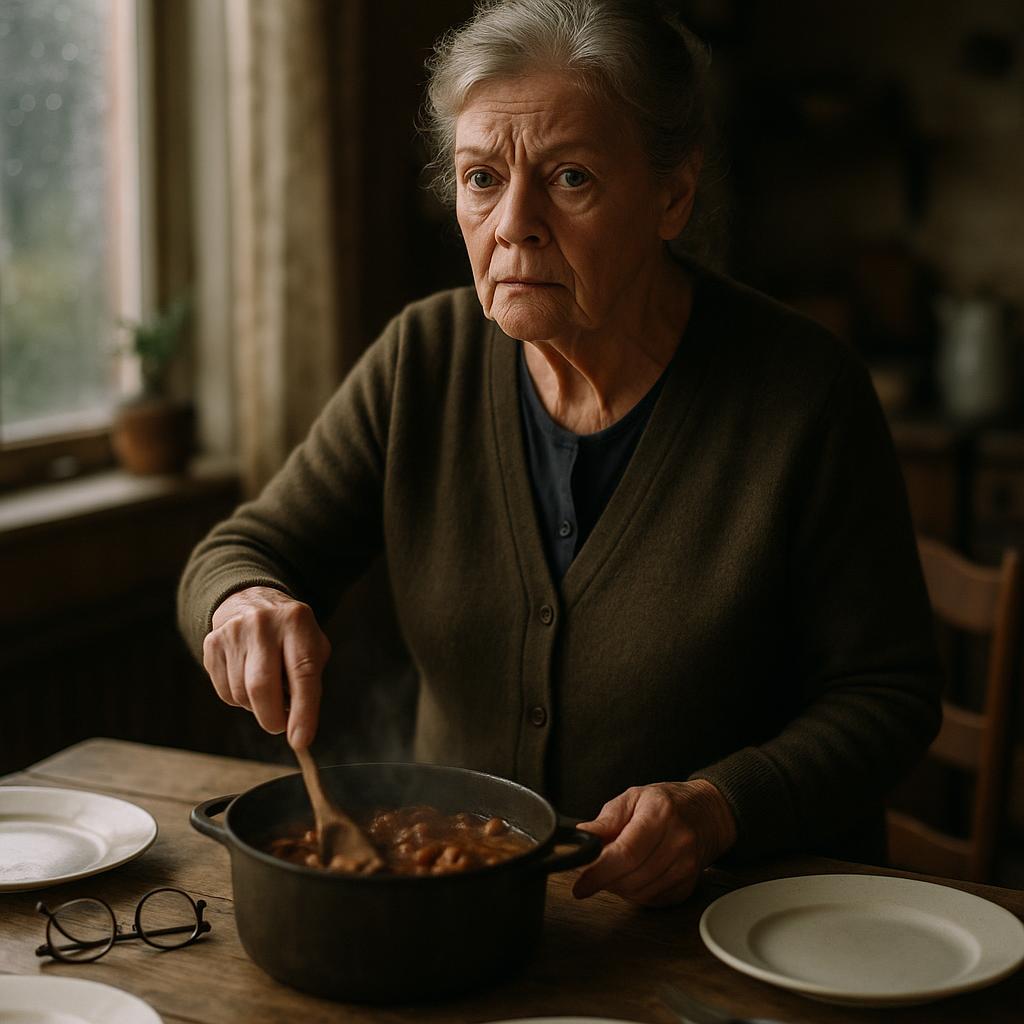
I stood in my kitchen, hands trembling as I stirred Frank's famous beef stew—the one he'd made every anniversary for fifty years. 'This is insane, Margaret,' Patricia had insisted, her lawyer's pragmatism cutting through my sentimentality. 'He could finish what he started.' But I needed to look into my son's eyes one last time, to search for any remnant of the boy who once made me Mother's Day cards with glitter that got everywhere.
I set the table for three, placing Frank's reading glasses beside his empty plate as if he might wander in any minute complaining about the news. George and Patricia reluctantly agreed to my plan, parking down the street in George's old Buick, their cell phones ready to call 911. 'Twenty minutes,' George had said firmly.
'Then we're coming in.' The cassette tapes sat hidden in my knitting basket, their terrible secrets waiting like loaded guns. As the doorbell rang, I touched the small voice recorder Patricia had insisted I wear beneath my cardigan. 'Just in case,' she'd said, showing me how to activate it.
I smoothed my hair, practiced my smile in the hallway mirror, and opened the door to my son—my only child, my husband's murderer, the man who was planning to poison me next. 'Something smells amazing, Mom,' David said, kissing my cheek as he stepped inside, completely unaware that this would be our last dinner as mother and son.
Face to Face
The doorbell rang at exactly six o'clock. David always was punctual—a trait he'd inherited from Frank. He stood on the porch with a bottle of red wine and that smile I'd once found so reassuring. Now it just looked like a mask. 'Hi, Mom,' he said, leaning in to kiss my cheek.
His cologne—something expensive and unfamiliar—lingered as he pulled away. I forced myself to smile back, acutely aware of the recorder hidden beneath my cardigan. 'I brought your favorite,' he said, holding up the wine. The same brand Frank and I had shared on our anniversary.
Had he chosen it deliberately? As we moved to the dining room, David froze, staring at the table. 'Mom,' he said slowly, 'why are there three place settings?' I busied myself with the stew, avoiding his eyes. 'One's for your father,' I said simply. David's expression shifted from confusion to concern, that practiced look of pity I'd seen at the funeral.
'Mom, Dad's gone,' he said gently, as if I were a child who didn't understand death. 'Maybe we should look into some grief counseling for you.' The tenderness in his voice made my stomach turn. Throughout dinner, I studied him—this stranger wearing my son's face.
I searched for any flicker of the boy who'd cried when he scraped his knee, who'd made me breakfast in bed every Mother's Day. Was there anything left of him in there? Or had he died long before Frank, replaced by this calculating imposter who could discuss the weather while plotting my death?
As David refilled my wine glass, his hand steady and sure, I couldn't help but wonder—was this the glass that would kill me if George and Patricia weren't parked outside?

The Tea Test
After dinner, I moved to the kitchen to prepare tea, my hands trembling slightly as I filled the kettle. This was the moment of truth. I'd watched enough true crime shows with Frank to know what I needed to do. 'Earl Grey or chamomile?' I called out, my voice steadier than I felt.
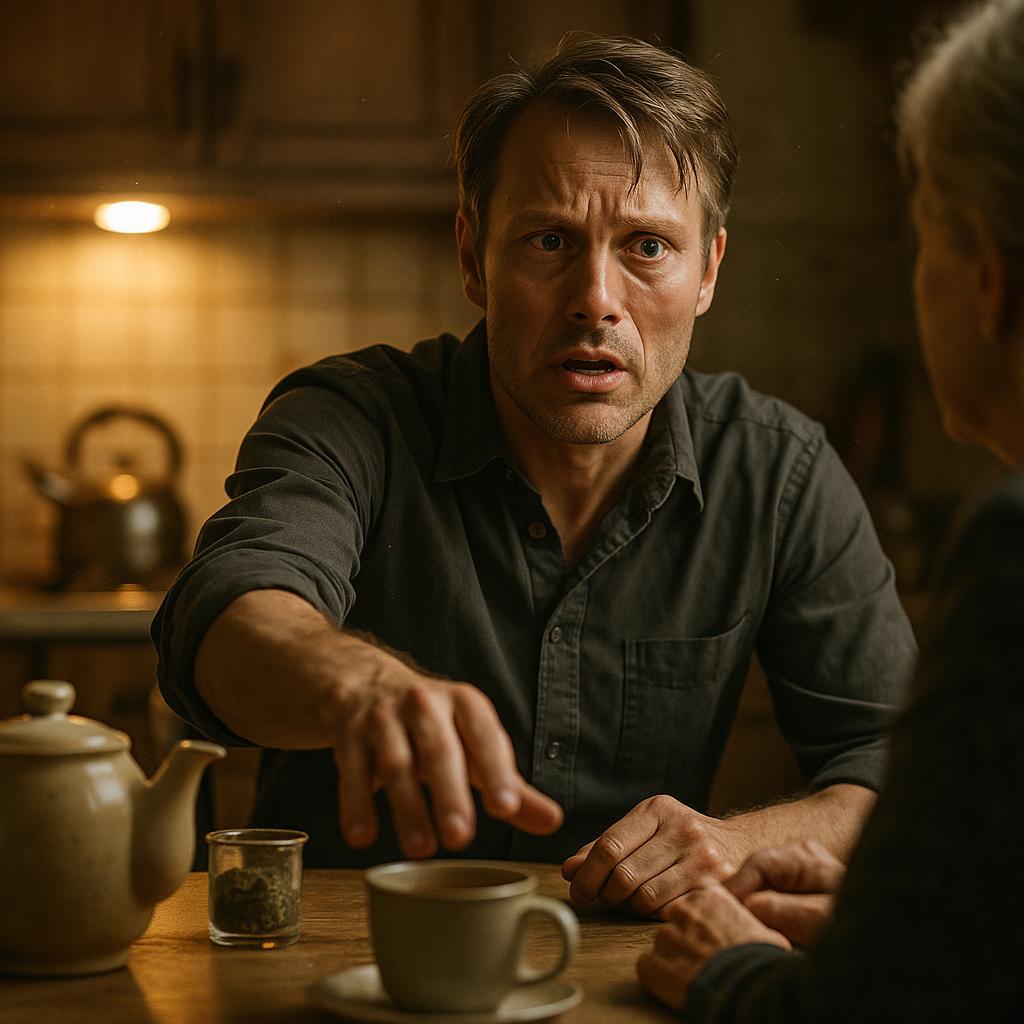
David chose Earl Grey—my favorite. I prepared two cups, adding sugar to mine, nothing to his. Then, when he was distracted by a text message (from Vanessa, perhaps?), I deliberately switched our cups, placing his untouched tea in front of my chair and mine in front of his.
I watched his face carefully as I sat down. At first, he didn't notice, continuing his story about work troubles. Then, mid-sentence, his eyes flicked to the cups. The change in his expression was subtle but unmistakable—panic flashed across his features. 'Wait, Mom!' he exclaimed, lunging forward so suddenly he nearly upended the entire table.
Tea sloshed over the sides of both cups. 'I think you've got my cup.' His voice was tight, controlled, but his eyes were wild. 'I, uh, I added honey to mine. You know I can't drink tea without it.' The lie came so easily to him. I looked down at the cup he was so desperate for me not to drink, the one he'd prepared specially for his mother.
'Did you?' I asked quietly. 'That's funny. I don't remember seeing you use honey.' His hand remained frozen in mid-air, reaching for the cup that might have been my death sentence. In that moment, as our eyes met across the table Frank and I had shared for decades, I felt my last desperate hope crumble away—the tapes hadn't lied.
The Confrontation
I couldn't bear it anymore. The weight of what I knew pressed against my chest until I could barely breathe. 'David,' I said, my voice surprisingly steady, 'I know what you did to your father.' The teacup froze halfway to his lips. 'What are you talking about?' he asked, but his eyes—Frank's eyes—darted nervously around the room.
'The recordings, David. The ones your father made before he died.' I watched as his face transformed like a time-lapse photograph—confusion melting into shock, then hardening into something cold and calculating I'd never seen before. 'Mom,' he said, his voice gentle but patronizing, 'I think you might be confused.
Maybe we should talk about getting you some help.' He reached for my hand, but I pulled away. 'Don't,' I whispered. 'I heard you discussing the dosages. Planning how to make it look natural.' He laughed then, a hollow sound that echoed in our dining room. 'This is ridiculous.
You're becoming senile.' When I mentioned George had the tapes, something changed. David stood so abruptly his chair crashed to the floor. 'Where are they?' he demanded, his voice no longer gentle. 'Where are the goddamn tapes?' In that moment, as my son loomed over me, his face contorted with rage, I realized Frank hadn't just left me evidence—he'd left me a warning about the stranger our son had become.
The Signal
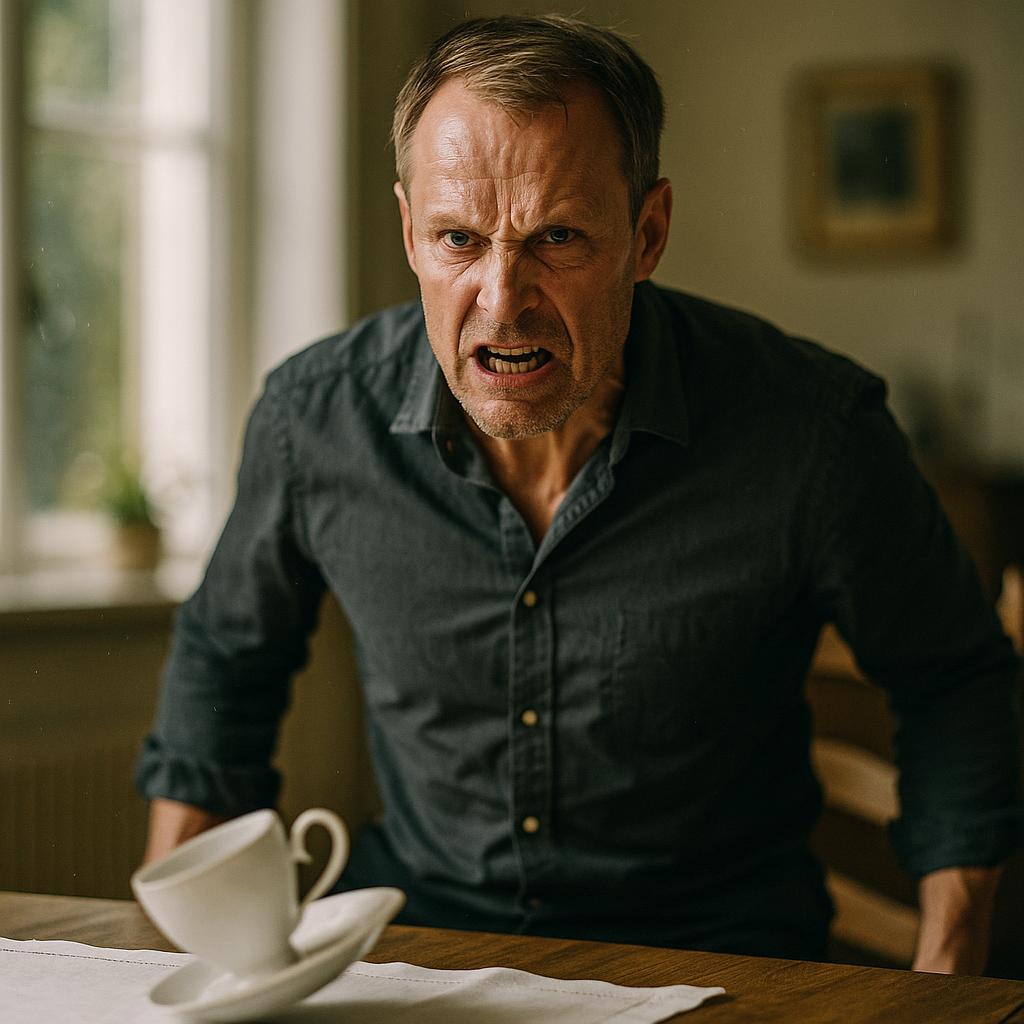
David's face transformed before my eyes, the mask of the loving son completely gone. 'Where are they?' he snarled, grabbing my wrist with such force I gasped. 'The recordings, Mom. Where did you hide them?' His fingers dug into my skin, and for the first time in my life, I was truly afraid of my own child.
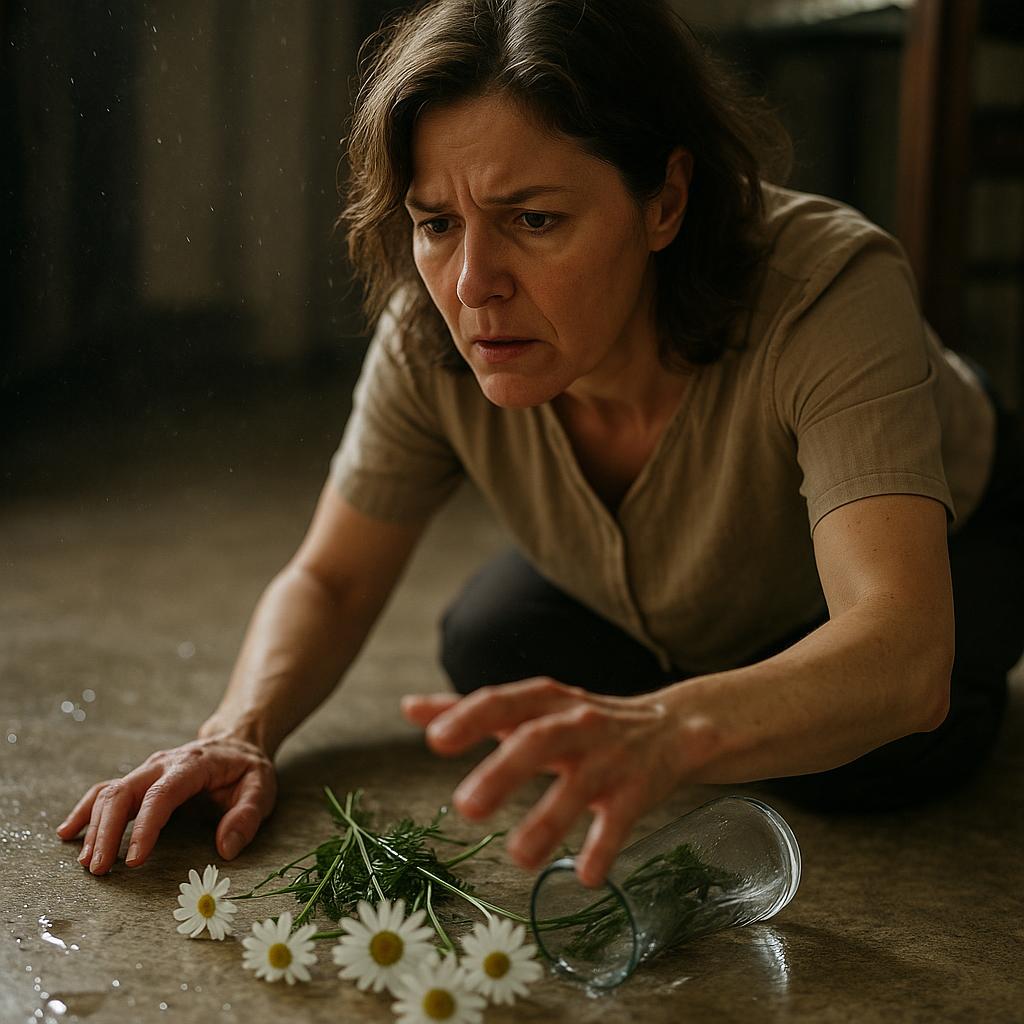
The stranger before me bore no resemblance to the boy who once brought me dandelions from the yard. With my free hand, I reached for the vase of daisies on the table—Frank's favorite flowers that I'd placed there this morning. 'David, you're hurting me,' I said, my voice trembling.
He tightened his grip, leaning closer. 'You don't understand what you're doing,' he hissed. 'This isn't just about you anymore.' In one swift motion, I knocked the vase to the floor. The crash echoed through the kitchen as water and glass scattered across the linoleum—our prearranged signal.
David's eyes widened, darting toward the sound, then back to me with dawning comprehension. 'What did you do?' he whispered, his voice deadly quiet. Outside, I heard car doors slamming, footsteps rushing up the walkway. David's face contorted with rage as he realized what was happening.
'You stupid old woman,' he spat, releasing my wrist and lunging toward the back door. But he was too late. The front door burst open, and I heard George's voice calling my name, followed by the unmistakable announcement: 'Police!' As officers flooded into my home, I wondered how we'd come to this—my son fleeing from my kitchen like a common criminal, and me, praying they would catch him before he disappeared forever.
The Confession
The detective asked David if he wanted to make a statement, and what happened next still haunts me. My son—the baby I'd once rocked to sleep through countless nights—straightened his shoulders and spoke with chilling clarity. 'I was helping Dad,' he said, his voice eerily calm.
'His heart was failing anyway. I just... accelerated the inevitable.' I felt my knees buckle as he described how he'd gradually increased the dosage in Frank's pills, speaking about my husband's death as casually as discussing a home renovation. When the detective asked about the recordings, David's eyes flashed with anger.
'Dad was always paranoid,' he scoffed. Then he looked directly at me, his expression hardening. 'You would have done the same if you truly loved him, Mom. Saved him from suffering.' I found my voice somehow. 'And me?' I whispered. 'Was I suffering too?' He didn't even flinch.
'You're wasting everything,' he replied coldly. 'The house, the savings—it could all do more good with me.' In that moment, I saw nothing of the child I'd raised in the man before me. This stranger wearing my son's face continued justifying his actions while I sat frozen, wondering where I'd gone wrong, how I'd missed the monster growing under my own roof.
As they led him away in handcuffs, he looked back once, and I swear I saw something flicker behind his eyes—not remorse, but calculation, as if he was already planning his next move.

The Arrival
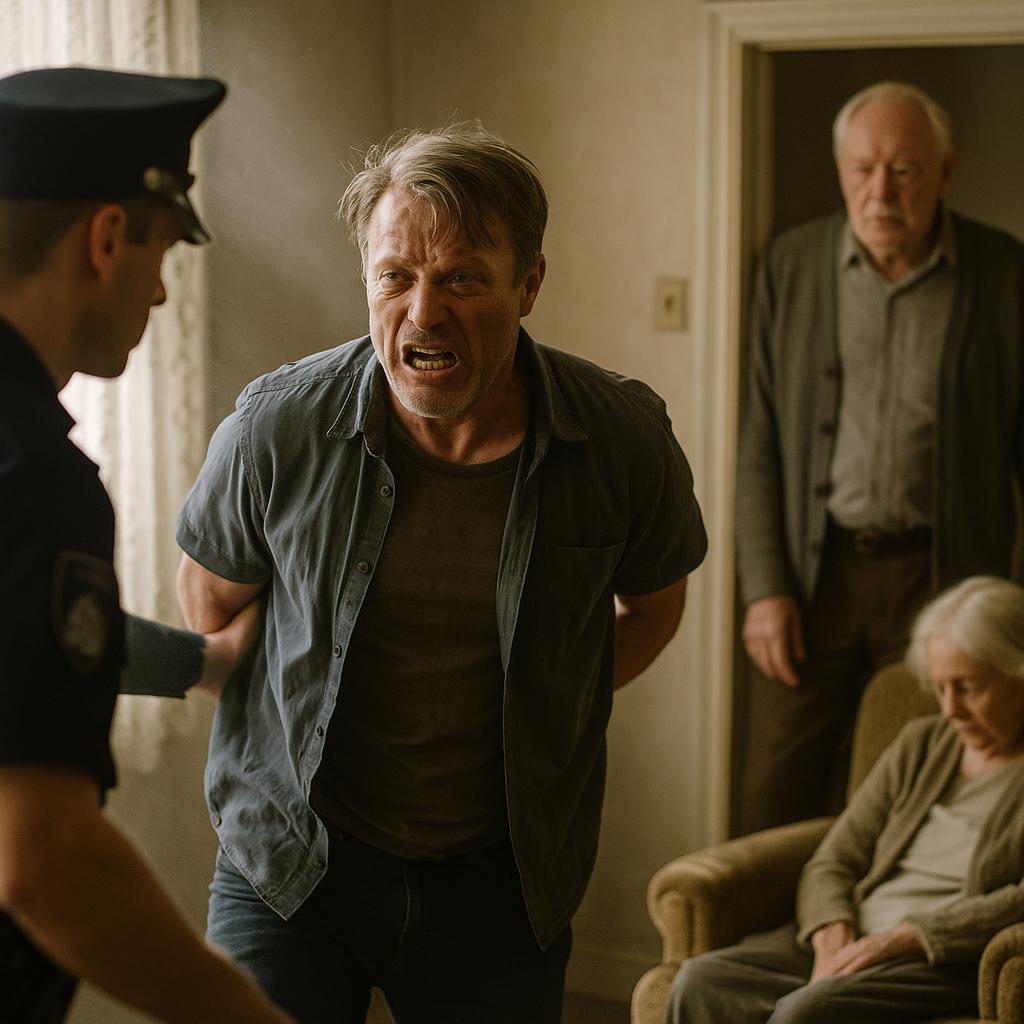
The blue lights strobed through my lace curtains like some macabre disco, casting strange shadows across Frank's favorite armchair. One moment I was confronting my son about planning my murder, and the next, my quiet home erupted into chaos. David lunged for the back door, his face contorted with a rage I'd never seen before.
But George—bless him—was already there, blocking the exit with surprising agility for a man in his seventies. "It's over, son," he said firmly. Officers poured in from the front, hands hovering near their weapons, responding to Patricia's call. The detective's voice cut through the commotion: "David Holloway, you're under arrest for the suspected murder of Frank Holloway." I watched in stunned silence as they handcuffed my only child—the baby I'd nursed through fevers, the teenager I'd taught to drive, the man who'd apparently decided I was worth more dead than alive.
My legs gave out then, and I collapsed into Frank's chair, the weight of fifty years of motherhood crushing me like a physical thing. As they read him his rights, David's eyes found mine across the room. "Mom," he called out, his voice suddenly small, like the little boy who'd once needed me to check for monsters under his bed.
"Tell them this is all a misunderstanding." But the only monster in this house was the one being led away in handcuffs, and no amount of maternal love could blind me to that truth anymore.
The Statement
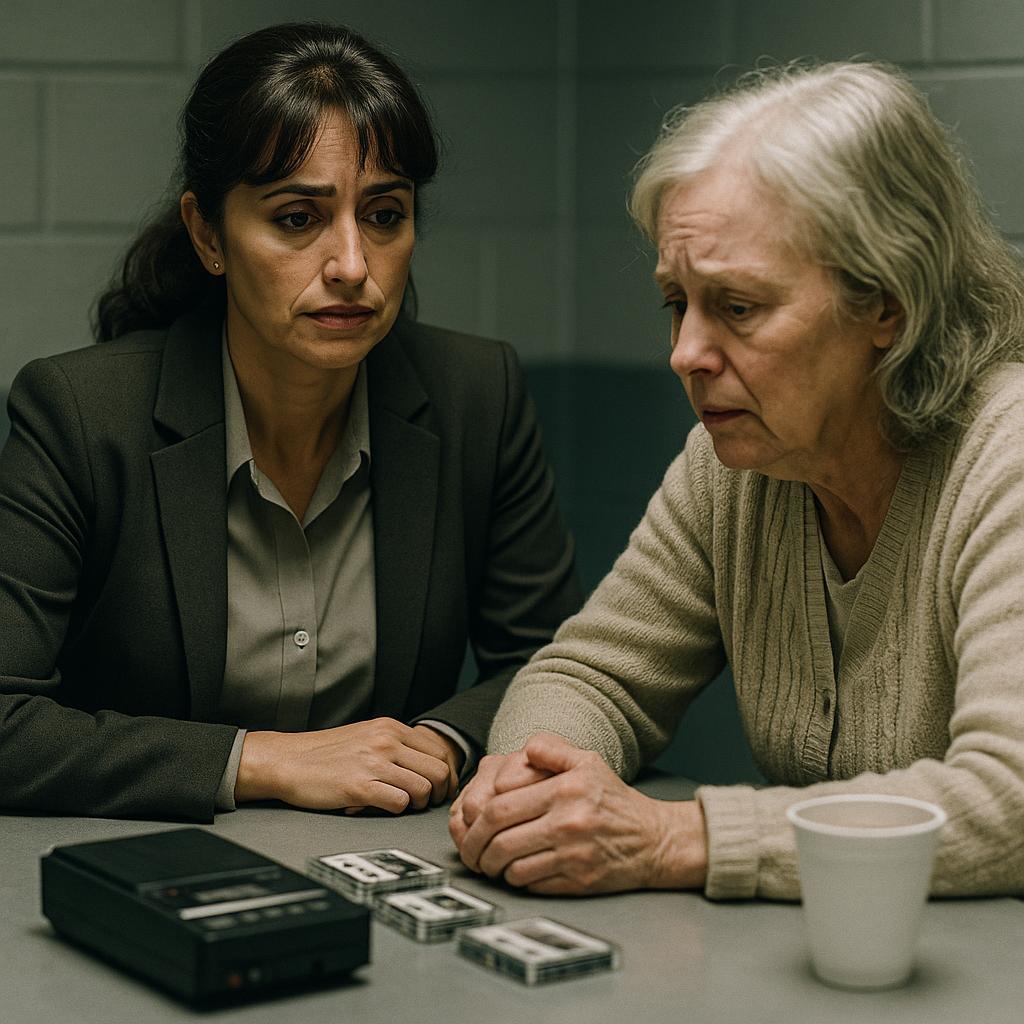
The fluorescent lights of the police station made everything look harsh and unreal, like I'd stepped into one of those crime shows Frank and I used to watch together. Detective Morales, a woman with kind eyes and no-nonsense posture, led me to a small room with a tape recorder of their own. My hands trembled as I placed Frank's cassettes on the table between us.
'Take your time, Mrs. Holloway,' she said, sliding a cup of lukewarm coffee toward me. For the next two hours, we listened together—my son's voice filling the room with casual discussions of dosages, timing, and my eventual demise. I watched the detective's expression shift from professional detachment to genuine concern as the evidence mounted.
'We'll need to exhume your husband's body,' she explained gently. 'The toxicology tests might tell us exactly what was used.' She outlined next steps: investigating David's finances, phone records, his relationship with this Vanessa woman. Then came the question I'd been dreading: 'Mrs.
Holloway, would you be willing to testify against your son in court?' The word caught in my throat like a fish bone. How does a mother agree to help send her only child to prison? But then I thought of Frank, installing those recorders, fighting to protect me even as he was dying.
'Yes,' I said, the hardest single syllable I've ever spoken. 'It's what Frank would want.' As I signed my statement, I realized something terrible—this wasn't just about justice for Frank anymore. It was about facing the possibility that the child I'd raised had never really existed at all.
The Search for Vanessa
Detective Morales leaned forward, her pen poised over her notepad. 'You mentioned someone named Vanessa on the tapes. Who is she?' The name sent a chill through me. I'd only heard it in passing, never met the woman. 'David mentioned her about a year ago,' I explained, watching the detective's expression carefully.
'They met at some pharmaceutical conference in Boston. He works in medical equipment sales, you know.' At the word 'pharmaceutical,' Detective Morales's head snapped up, her eyes suddenly alert like a hunting dog catching a scent. She exchanged a meaningful glance with her partner.
'Mrs. Holloway, did your son ever bring any... samples home? Medications? Anything unusual?' I shook my head, then paused, remembering something. 'He did mention once that Vanessa was some kind of research chemist. Said she was brilliant with compounds that were...' I struggled to recall his exact words, '...undetectable in standard screenings.' The room went silent.
Detective Morales set down her pen and pulled out her phone, stepping away to make a call. I could hear fragments: 'Priority one... pharmaceutical connection... possible source of the compound...' When she returned, her face was grim. 'We're dispatching officers to locate this Vanessa immediately.' She didn't say what we both knew—that this woman might have provided my son with whatever he used to kill my husband.
And possibly what he planned to use on me. As they collected my statement, I couldn't help wondering what kind of woman would help a man murder his parents, and what she might do when cornered by police.
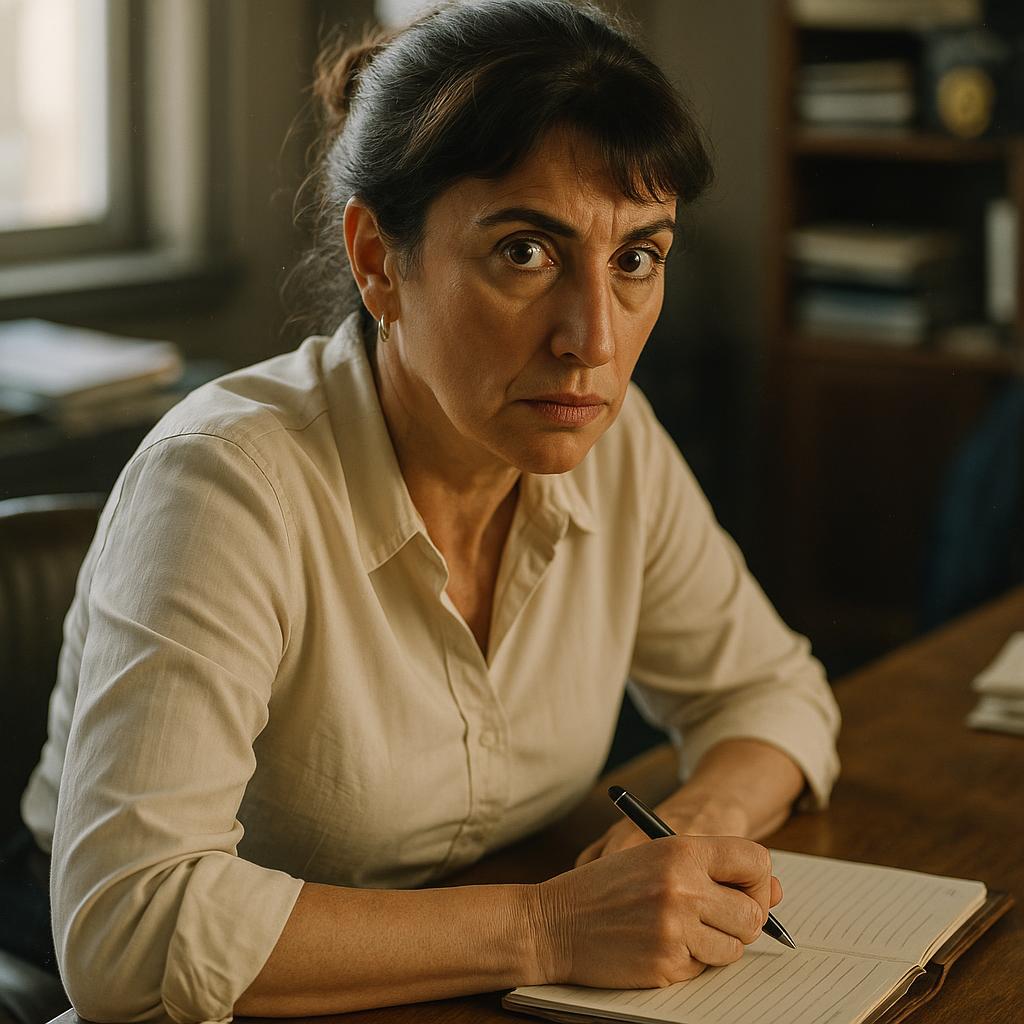
The Empty House
The house felt different when I returned from the police station at nearly midnight. Like it knew what had happened. Like the walls themselves had absorbed the truth of my son's betrayal. I stood in the entryway, my coat still on, listening to the silence that seemed heavier than before.
With trembling hands, I moved from room to room, methodically removing each of Frank's recording devices—these small black witnesses to our family's unraveling. I placed them carefully in a cardboard box labeled 'EVIDENCE' in Detective Morales's neat handwriting. When the last one was collected, I sank into Frank's recliner, the leather still molded to the shape of him.
'Well, Frank,' I whispered to the empty room, 'I did it. I did what you needed me to do.' For the first time since finding those recordings, tears came freely—not the desperate, confused tears of before, but something cleaner, like rain washing away debris after a storm. The strangest thing happened then.
A warm sensation spread across my shoulders, as if someone had draped a blanket around me. The scent of Frank's aftershave—Old Spice, the same brand for fifty years—briefly filled the air. 'I know,' I said, smiling through my tears. 'You're telling me I did the right thing.' I sat there until dawn, talking to my husband as if he were beside me, planning what came next in this unexpected final chapter of my life.
What I didn't realize then was that David's arrest was just the beginning—and that Vanessa was still out there, with all her dangerous knowledge and a very good reason to silence me permanently.
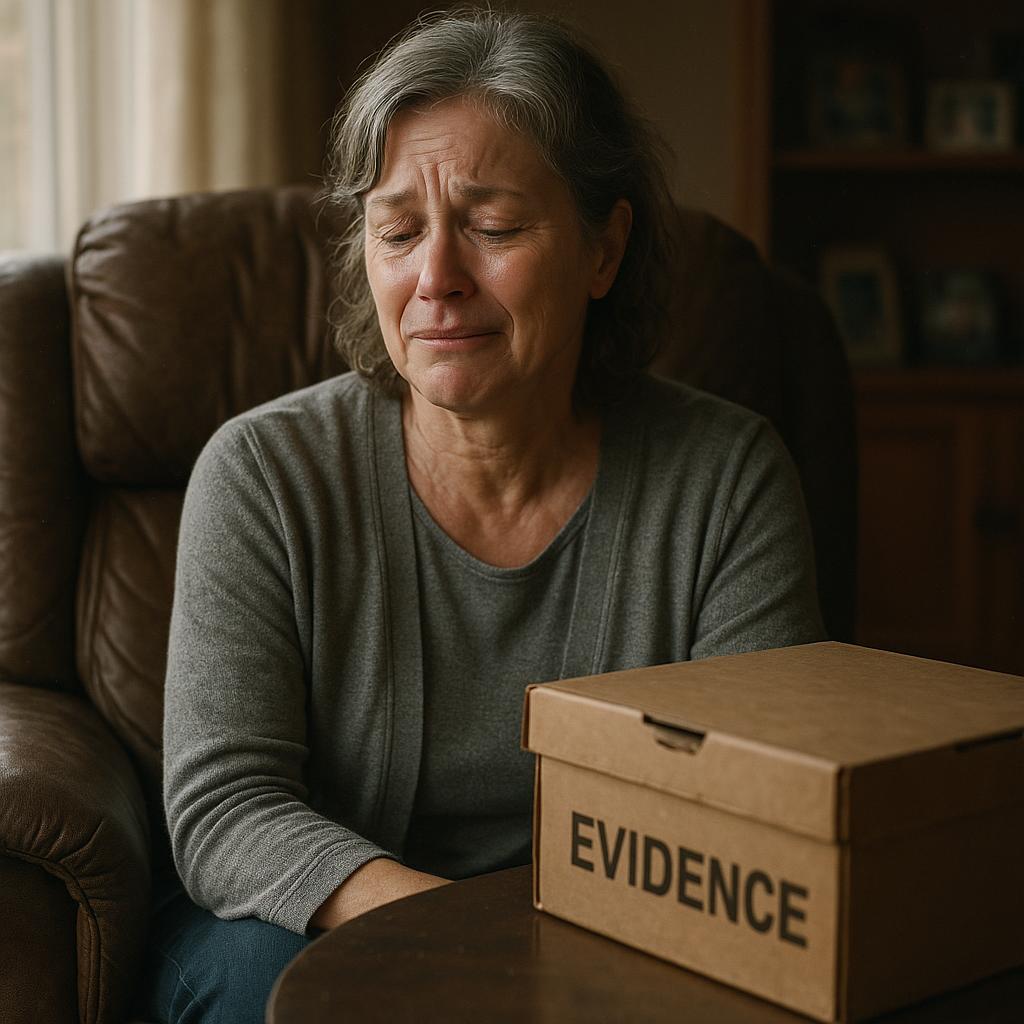
The Exhumation
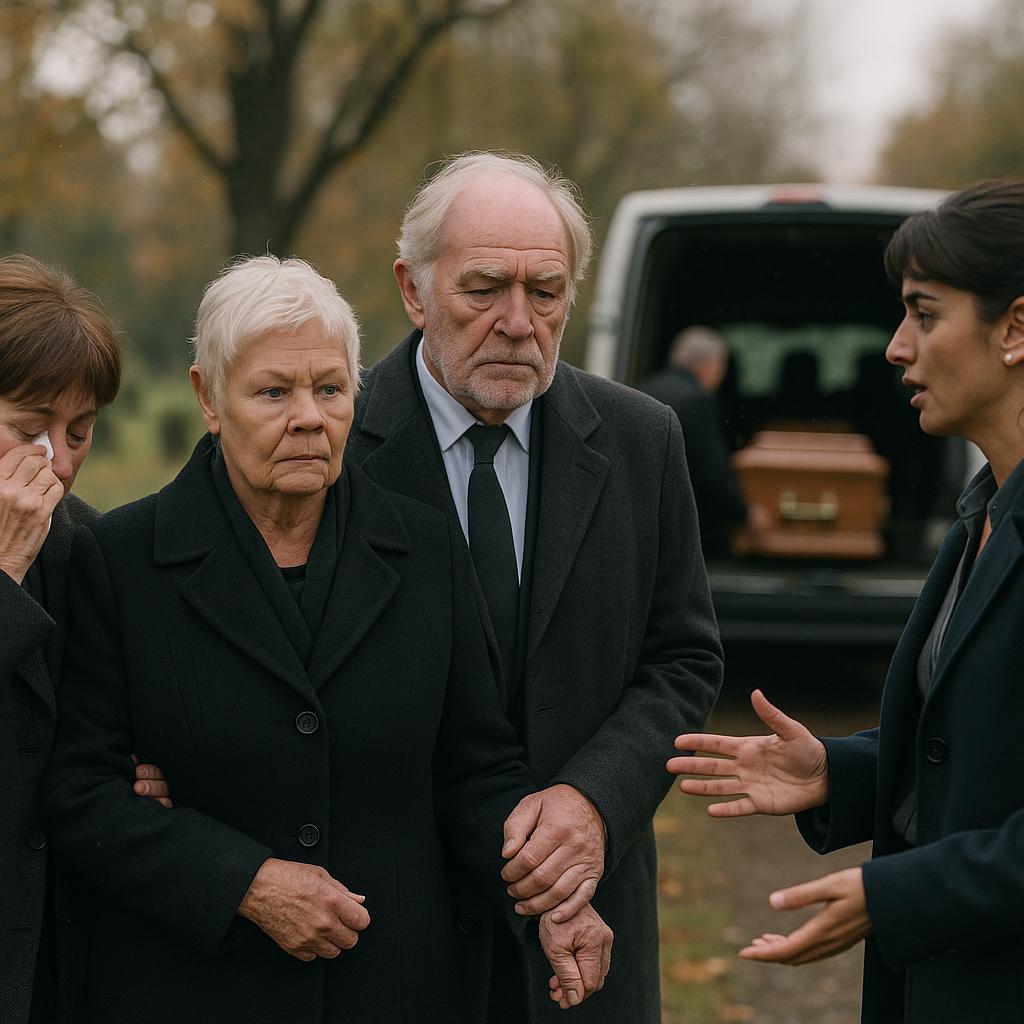
I never imagined I'd watch my husband's casket being pulled from the ground on a crisp autumn morning. The cemetery was quiet except for the mechanical whir of equipment and the occasional murmur from the small group of officials gathered around. George stood on my right, his weathered hand gripping mine with surprising strength, while Elaine supported my left side, occasionally dabbing her eyes with a tissue.
'You don't have to watch this, Margaret,' George whispered, but I shook my head. I owed Frank this much—to bear witness. Detective Morales approached as they loaded the casket into a specialized van. 'The lab will be thorough,' she assured me, her voice gentle but professional.
'It may take weeks for complete results, but we're already finding evidence.' She explained how the preliminary tests on Frank's medication bottles had revealed traces of a compound that, when combined with his heart medication, could trigger fatal cardiac events. 'It's sophisticated,' she added, her eyes narrowing. 'Not something an amateur would know how to use.' I thought of Vanessa, the pharmaceutical researcher my son had mentioned so casually, wondering if she knew she'd helped design my husband's death.
As the van pulled away, carrying Frank to a sterile lab where strangers would search his body for proof of murder, I felt a strange sense of relief mingled with my grief. The truth was finally being unearthed—literally—but I couldn't shake the feeling that somewhere, Vanessa was watching too, perhaps already planning her next move.
The Insurance Investigation
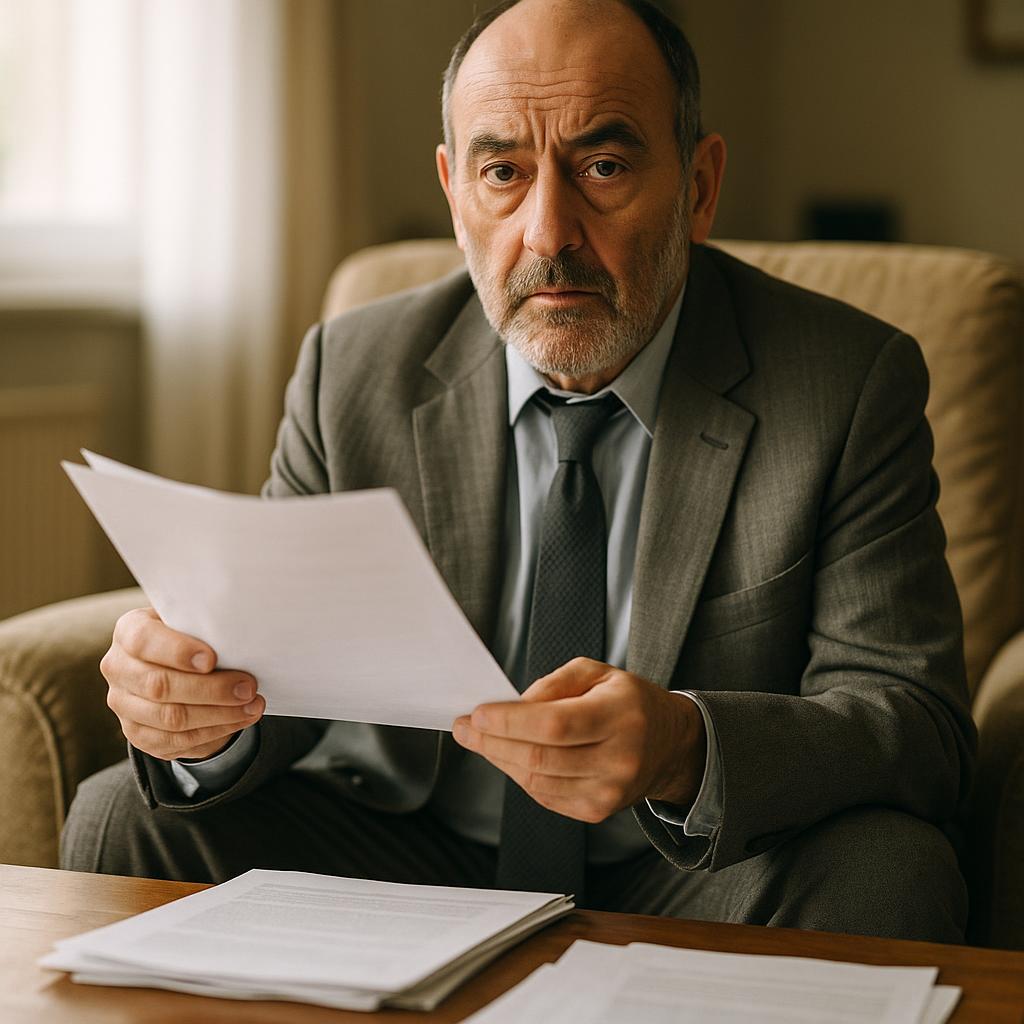
Mr. Harmon from Fidelity Life arrived at my home three days after David's arrest, his briefcase bulging with documents. 'Mrs. Holloway,' he said, settling into Frank's chair with a grimness that reminded me of funeral directors, 'I wish we were meeting under better circumstances.' For the next hour, he spread papers across my coffee table like a dealer at a macabre card game.
What he revealed made my blood run cold. David had taken out not one but three separate policies—one on Frank for $500,000, another on me for the same amount, and a joint policy worth $250,000. All listed him as the sole beneficiary. 'These signatures,' Mr. Harmon said, pointing to what was supposed to be my handwriting, 'they're forgeries, and not particularly good ones.' I stared at the crude imitation of my signature, wondering how many times my son had practiced it.
The most chilling detail came when Mr. Harmon explained the 'accidental death' riders. 'These clauses would double the payout if the deaths appeared accidental or from natural causes,' he explained, his voice carefully neutral. 'The policy on your husband was activated just six months before his passing.' I did the math in my head—over two million dollars if both Frank and I died of seemingly natural causes.
As Mr. Harmon gathered his papers, he paused. 'Mrs. Holloway, we've frozen all claims pending the criminal investigation. But there's something else—we found similar policies taken out on you with two other companies.' My son hadn't just planned my murder; he'd been betting on it, spreading his wagers like a gambler hedging his bets.
Finding Vanessa
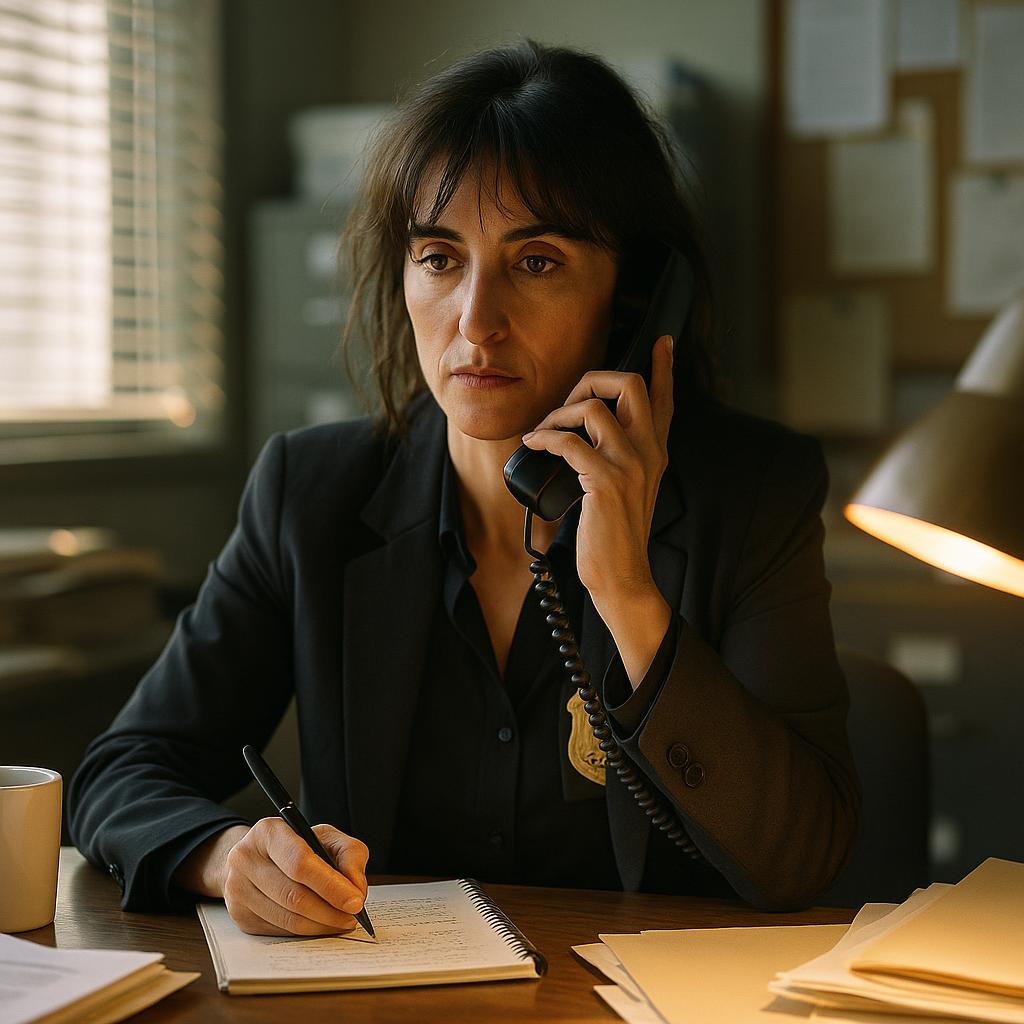
The phone rang at 7:15 AM, jolting me from a fitful sleep. Detective Morales's voice came through crisp and urgent: 'Mrs. Holloway, we found her.' My heart skipped as she explained they'd located Vanessa Laurent, a pharmaceutical researcher at Meridian Labs with a specialty in cardiac compounds.
I gripped the receiver tighter as Morales described the woman who had helped plot my husband's death—thirty-four, French-Canadian background, impeccable credentials. 'She denied everything at first,' Morales continued, 'claimed she and David were just colleagues who occasionally dated.' I could picture this woman—probably beautiful, certainly intelligent—sitting across from investigators, coolly dismissing her role in Frank's murder. But even the most carefully constructed facades crack eventually.
'She broke down when we showed her the toxicology results from Frank's exhumation,' Morales said. 'The compound matched experimental formulations she'd been researching—designed specifically to mimic natural heart failure and metabolize quickly, leaving minimal traces.' My stomach turned at the clinical precision of it all. This wasn't a crime of passion but of calculation—my son and his girlfriend playing God with chemistry sets.
Vanessa was now cooperating, Morales explained, trading information for leniency. She'd provided text messages, emails, even recorded conversations where David had discussed their 'inheritance plan' in chilling detail. 'She claims she never thought he'd actually go through with it,' Morales added, her voice heavy with skepticism.
I almost laughed at the absurdity—as if providing murder weapons came with plausible deniability. What terrified me most wasn't just that they'd killed Frank, but how close they'd come to succeeding with me—and I couldn't shake the feeling that even from behind bars, my son wasn't finished trying.
The Bail Hearing
Patricia warned me not to attend the bail hearing. 'Margaret, it will break your heart,' she said, her voice gentle but firm over the phone. 'Let me handle this part.' But how could I stay away? This was my son—the same boy whose scraped knees I'd bandaged, whose nightmares I'd soothed.
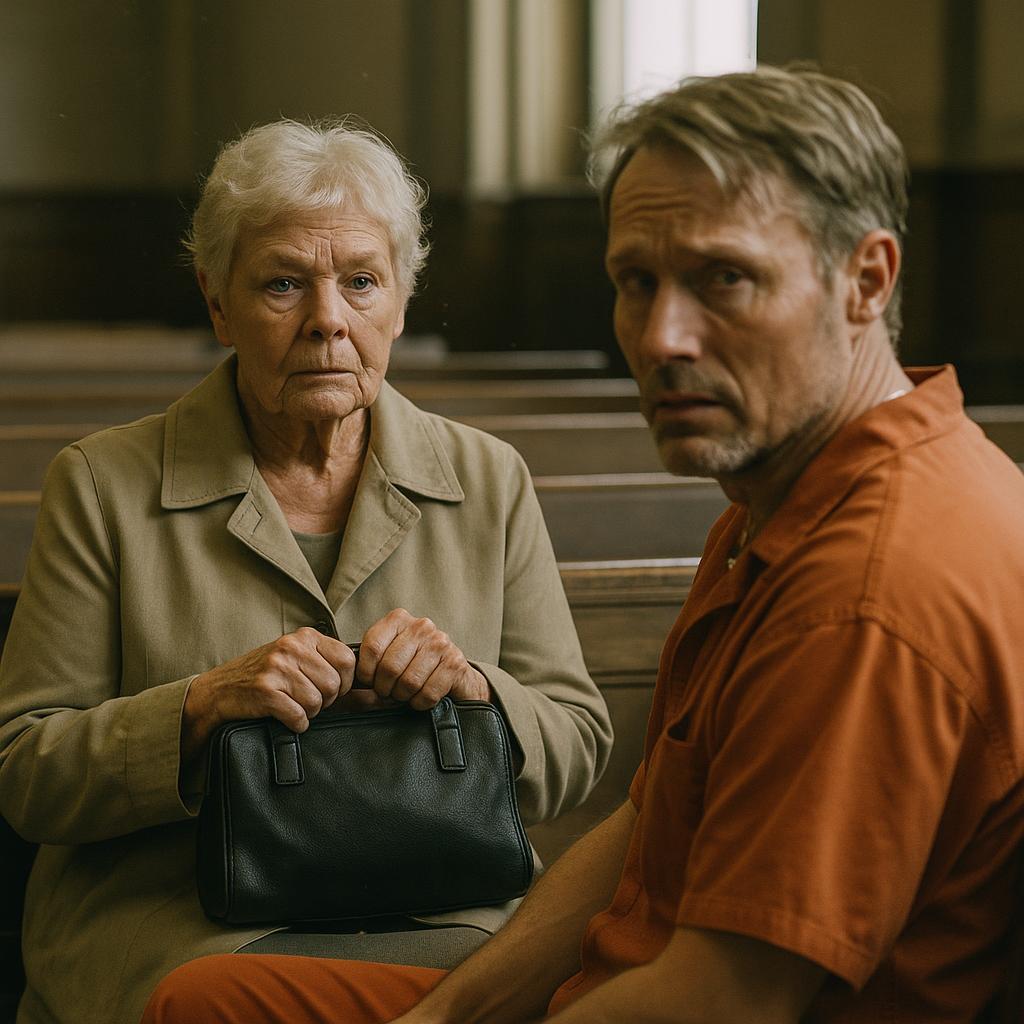
I needed to see him, to understand what we'd become. The courthouse was colder than I expected, or maybe that was just the chill that had settled in my bones since discovering Frank's recordings. I sat in the back row, my hands clutching my purse so tightly my knuckles turned white.
When they brought David in, I barely recognized him. Gone was the confident man who'd sat at my dining table planning my death. This David looked smaller, diminished in his orange jumpsuit, his shoulders hunched forward as if carrying an invisible weight. The prosecutor's voice echoed through the courtroom as she methodically listed the evidence: the recordings, the toxicology reports from Frank's exhumation, Vanessa's damning testimony, the forged insurance policies.
With each item, David seemed to shrink further into himself. Then, halfway through the proceedings, he turned and saw me. His eyes widened, a flash of hope crossing his face before morphing into something more desperate—a silent plea for the mother who had always fixed everything.
I held his gaze steadily, remembering Frank's final gift to me: the truth that had saved my life. When the judge denied bail, citing 'substantial risk to witnesses,' I didn't feel the victory or relief I'd expected—just a hollow ache where fifty years of motherhood used to live, and the terrifying realization that this was only the beginning of a trial that would expose our family's darkest secrets to the world.
The Media Circus
I never imagined my family tragedy would become entertainment for strangers. The morning after David's bail hearing, I opened my curtains to find three news vans parked across the street. By afternoon, there were seven, their satellite dishes pointed at my home like accusing fingers.
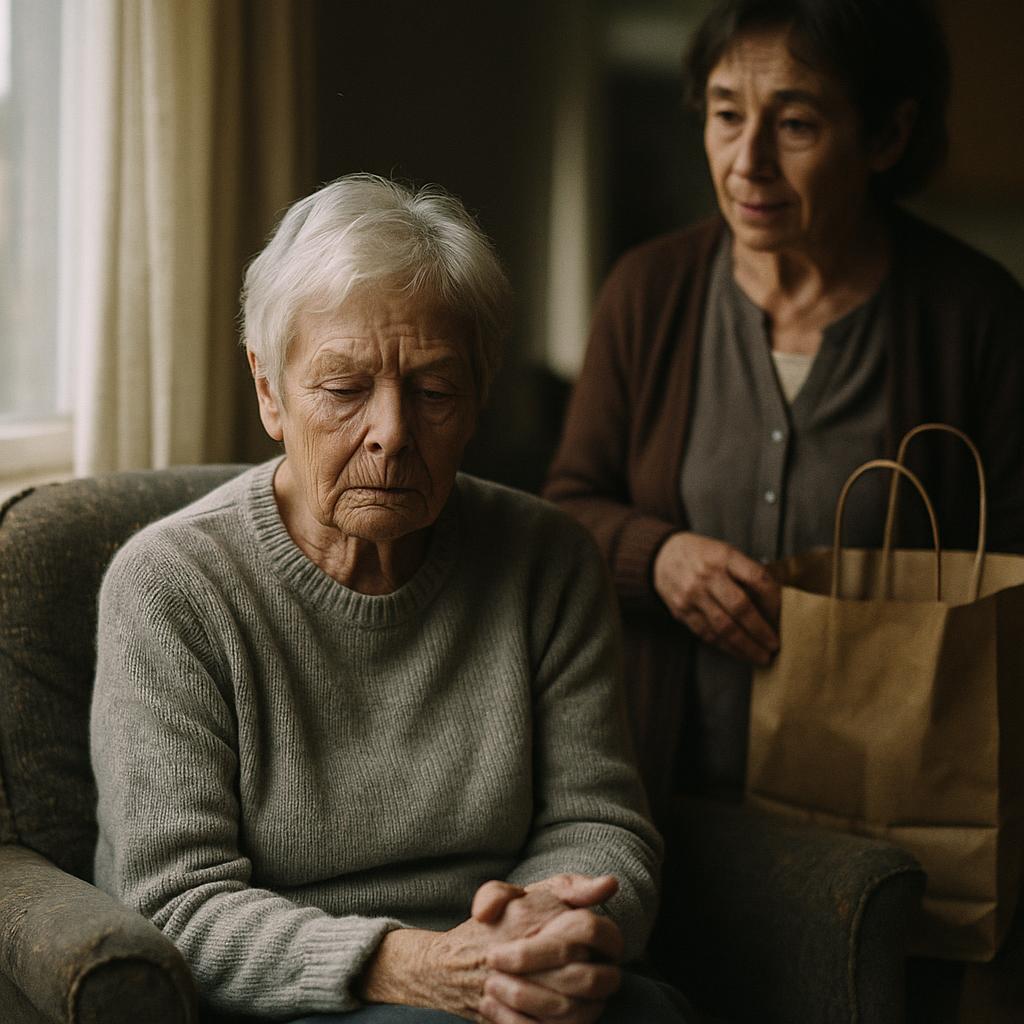
The headlines were brutal: 'Widow's Betrayal: Mother Turns in Son for Husband's Murder' and 'Killer Son's Million-Dollar Death Plot.' One tabloid even ran a decades-old Christmas photo of our family, with Frank's arm around David's shoulder, under the headline 'From Family Photos to Forensics.' My phone rang constantly until I finally unplugged it, unable to bear another reporter asking how it felt to discover my son was a murderer. Elaine arrived with groceries the second day, finding me huddled in Frank's chair, curtains drawn. 'This won't do, Margaret,' she declared, immediately organizing a neighborhood watch of sorts.
Within hours, my friends—people from church, Frank's bowling league, my knitting circle—created shifts to guard my driveway. George stood at the end of my walkway with arms crossed, turning away journalists with a glare that would have made Frank proud. Patricia brought over casseroles with notes attached: 'Don't read the comments sections.
Ever.' But even with their protection, I couldn't escape the sensation of being dissected by strangers who knew nothing about the fifty years of love that preceded this nightmare. The worst part wasn't the invasion of privacy—it was realizing that while the world was fascinated by the lurid details of Frank's murder, no one but me remembered how beautifully he had lived.
The Letter from Jail
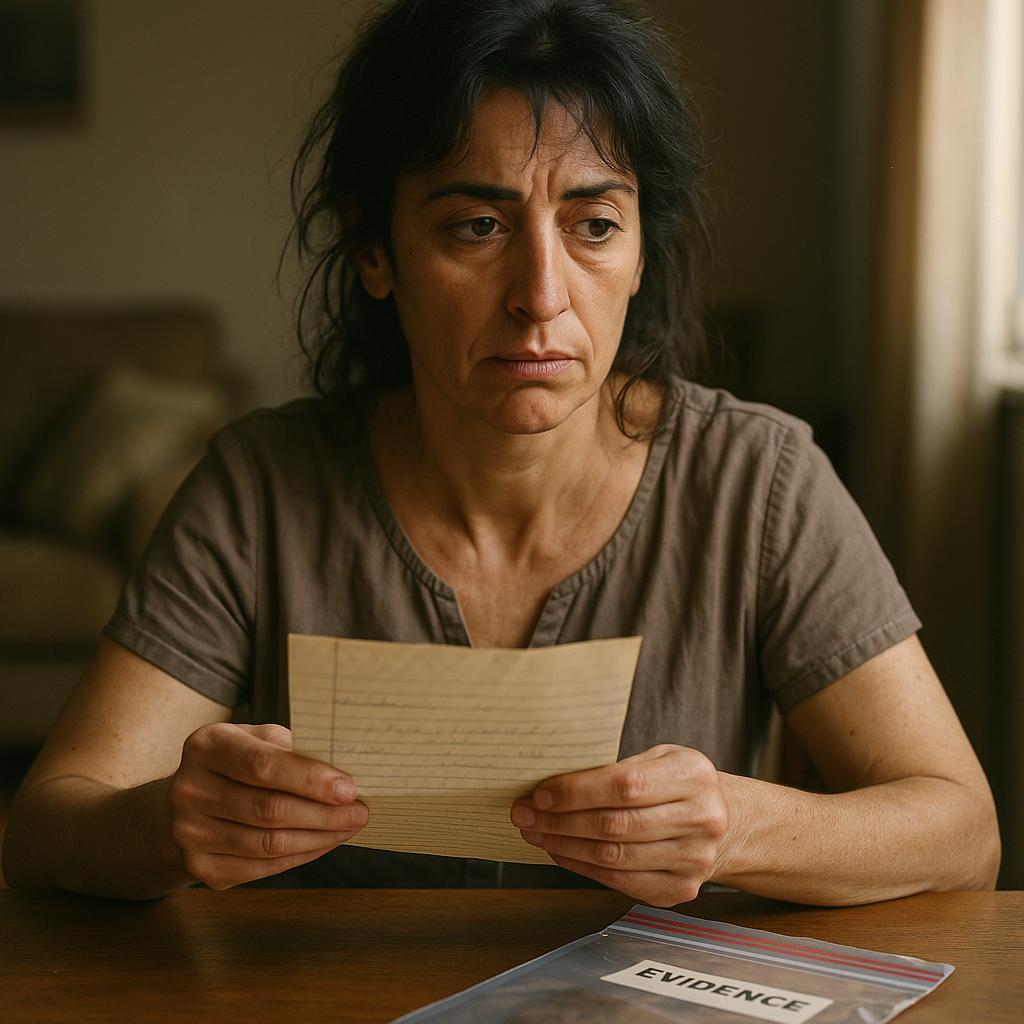
The manila envelope arrived on a Tuesday, my son's familiar handwriting making my heart lurch before I'd even opened it. 'From the desk of David Holloway,' the return address read, as if he were writing from a corporate office instead of a jail cell. Inside was a three-page letter, handwritten on lined paper that reminded me of the school notebooks I used to buy him each September.
'Dear Mom,' it began, and for a moment, I was transported back to simpler times. But as I read on, that fleeting warmth evaporated. 'I know you're confused right now,' he wrote, 'but you have to understand I never meant to hurt anyone.' The words twisted and turned like a snake—one paragraph expressing remorse, the next subtly suggesting I was partially to blame.
'If you testify against me,' he wrote on page two, 'certain family secrets might come to light. Things about Dad that you've worked hard to forget.' My hands trembled as I recognized the manipulation that had always been there, hidden beneath the surface of our relationship. How many times had he used my love as a weapon against me?
How many times had I let him? I didn't even finish reading before calling Detective Morales. When she arrived, I handed her the letter without comment, watching her face harden as she scanned its contents. 'Classic manipulation,' she said finally, slipping it into an evidence bag.
'He's trying to control the narrative.' As she left with my son's latest attempt to bend me to his will, I wondered what imaginary 'family secrets' he planned to fabricate about Frank—and whether anyone would believe him over the voice of a dead man who'd had the foresight to record the truth.
The Support Group
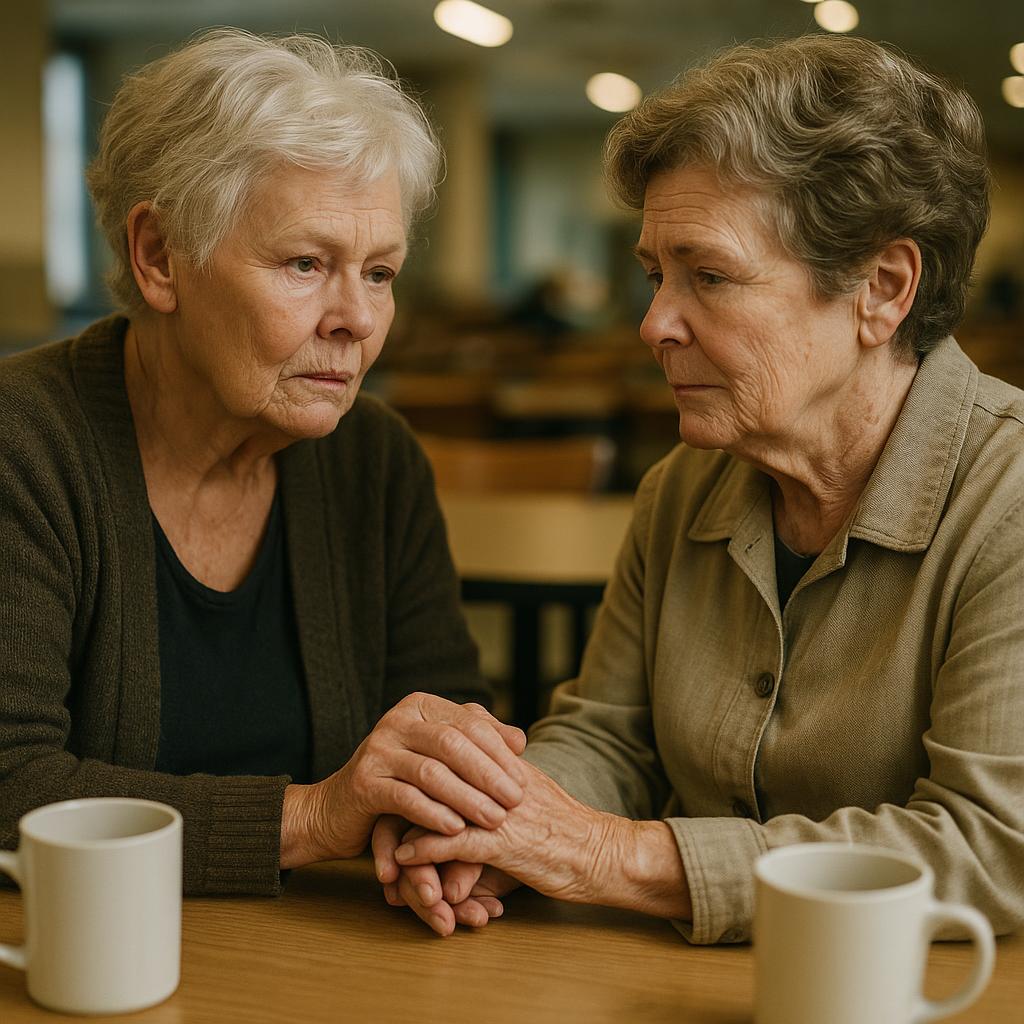
Patricia had been gently suggesting it for weeks, but I'd resisted. 'A support group?' I'd scoffed. 'For what? People whose children tried to murder them?' But after another sleepless night staring at Frank's empty side of the bed, I finally relented. The community center smelled like coffee and desperation when I walked in, my purse clutched against my chest like armor.
Six people sat in a circle of folding chairs, their faces etched with the same haunted expression I saw in my mirror each morning. 'This is Margaret,' the facilitator introduced me. 'Her son poisoned her husband and planned to do the same to her.' The bluntness was oddly comforting—no need to sugarcoat the horror here.
One by one, they shared stories that made my blood run cold: a brother who burned down his sister's house for insurance, a daughter who hired a hitman to kill her father. But it was Eleanor who made me gasp. 'My Cynthia poisoned Robert's heart medication,' she said, her voice steady despite the tremor in her hands.
'She thought I didn't know, but Robert suspected. He left evidence.' Our eyes locked across the circle, recognition flashing between us like electricity. After the meeting, we sat in the community center's cafeteria for two hours, comparing notes on our parallel nightmares.
'How do you bear it?' I asked her. 'Knowing the child you raised could do such a thing?' Eleanor reached across the table and squeezed my hand. 'The same way you're going to,' she said. 'One impossible day at a time.' What Eleanor didn't tell me then—what I would discover only later—was that her daughter's case had taken a turn that would soon mirror my own in ways that would make me question everything I thought I knew about David.
The Toxicology Results
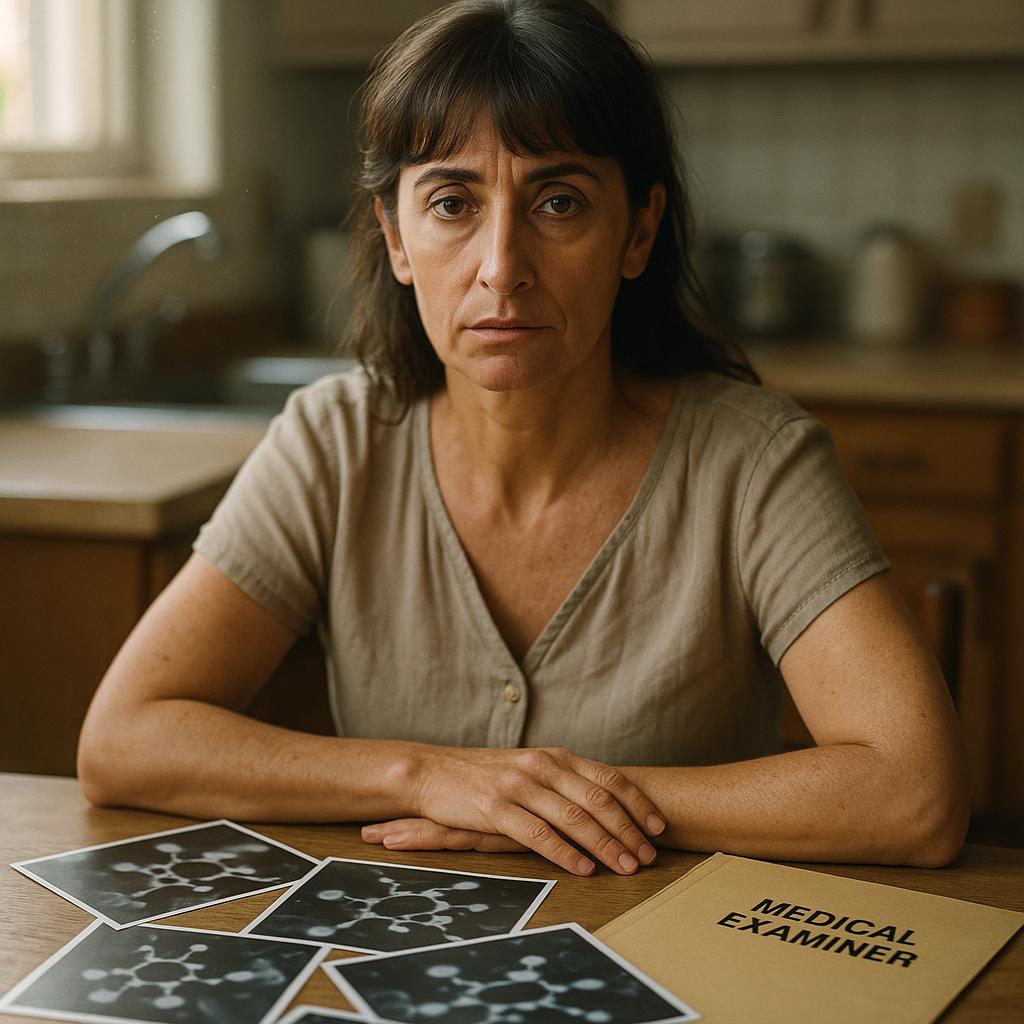
The manila envelope from the medical examiner's office sat on my kitchen table for nearly an hour before I found the courage to open it. When I finally did, the clinical language couldn't mask the horrifying truth: Frank had been murdered, plain and simple. The toxicology report confirmed traces of a compound called Cardiotoxin-B, a research chemical that, when combined with Frank's heart medication, created a lethal cocktail that mimicked natural heart failure.
'It's one of the most sophisticated poisonings I've seen in twenty years,' Detective Morales explained when she came to discuss the findings. She spread photographs of molecular structures across my table—evidence of my son's meticulous planning. 'This isn't something you can buy on the street,' she continued, her voice gentle but firm.
'It required pharmaceutical connections, specialized knowledge.' Vanessa's involvement suddenly made perfect, terrible sense. The district attorney was now pushing to upgrade the charges from second-degree to first-degree murder, citing the 'extraordinary premeditation and calculated nature' of Frank's death. As Detective Morales gathered the papers, she hesitated.
'Mrs. Holloway, there's something else you should know.' She pulled out another report, this one thinner. 'We found traces of the same compound in your multivitamin bottle.' My hand flew to my mouth. 'He'd already started poisoning me too?' She nodded grimly. 'If Frank hadn't left those recordings...' She didn't need to finish the sentence.
We both knew I would have been next—another tragic widow who 'passed peacefully in her sleep,' leaving her grieving son to collect millions in insurance money. What Detective Morales didn't tell me then—what I would discover only later—was that the compound had a signature as unique as a fingerprint, one that would lead us to places far darker than I could have imagined.
The Family Album
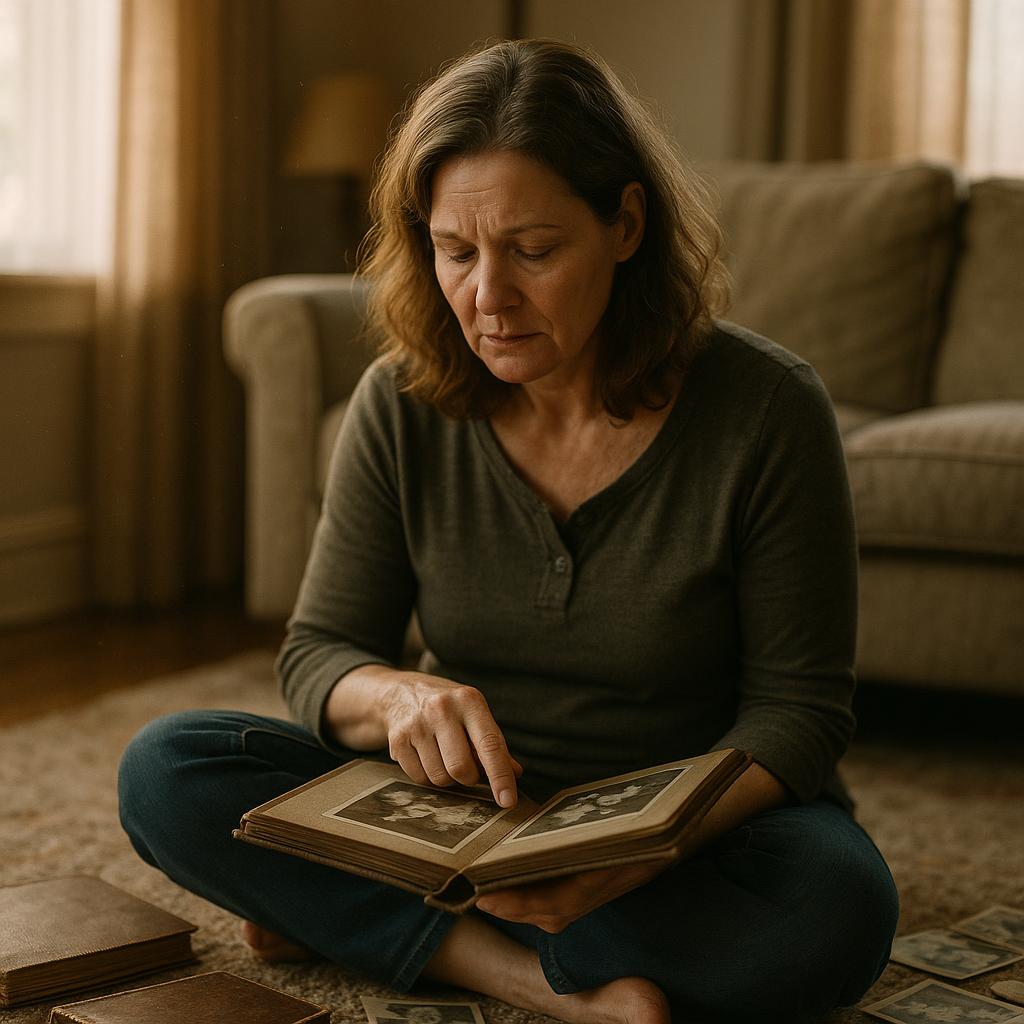
I found myself sitting cross-legged on the living room floor, surrounded by leather-bound photo albums that hadn't been opened in years. Each page turned felt like peeling back layers of a life I thought I knew. There was David at three, chocolate ice cream smeared across his grinning face.
David at ten, proudly holding up a science fair ribbon. David at sixteen, sullen and distant, barely tolerating Frank's arm around his shoulder. I traced my finger over each image, searching for the moment when my sweet boy became capable of murder. 'Where did we go wrong, Frank?' I whispered to the empty room.
When I reached David's college graduation photos, something made me pause. There he was in cap and gown, accepting his diploma with that confident smile I'd always been so proud of. But Frank—Frank wasn't beaming like the other parents. His eyes were narrowed, his mouth a tight line as he watched our son cross the stage.
I'd never noticed it before, but the camera had captured what my heart had missed: suspicion. Even then, years before the recordings and the poison, Frank had sensed something wasn't right. 'You always could see through him,' I murmured, touching Frank's face in the photograph.
I flipped through more recent photos—family Christmases, birthday dinners—studying David's expressions with new eyes. In each one, I now recognized the calculation behind his smile, the way his eyes never quite matched his expressions. The most chilling photo was from last Thanksgiving, just months before Frank died.
David stood behind us both, his hands resting on our shoulders in what I'd once thought was affection. Now I recognized it for what it was: possession. What terrified me most wasn't just discovering these warning signs too late—it was realizing that somewhere in these albums might be evidence of exactly when and why my son had decided we were worth more dead than alive.
The Plea Offer
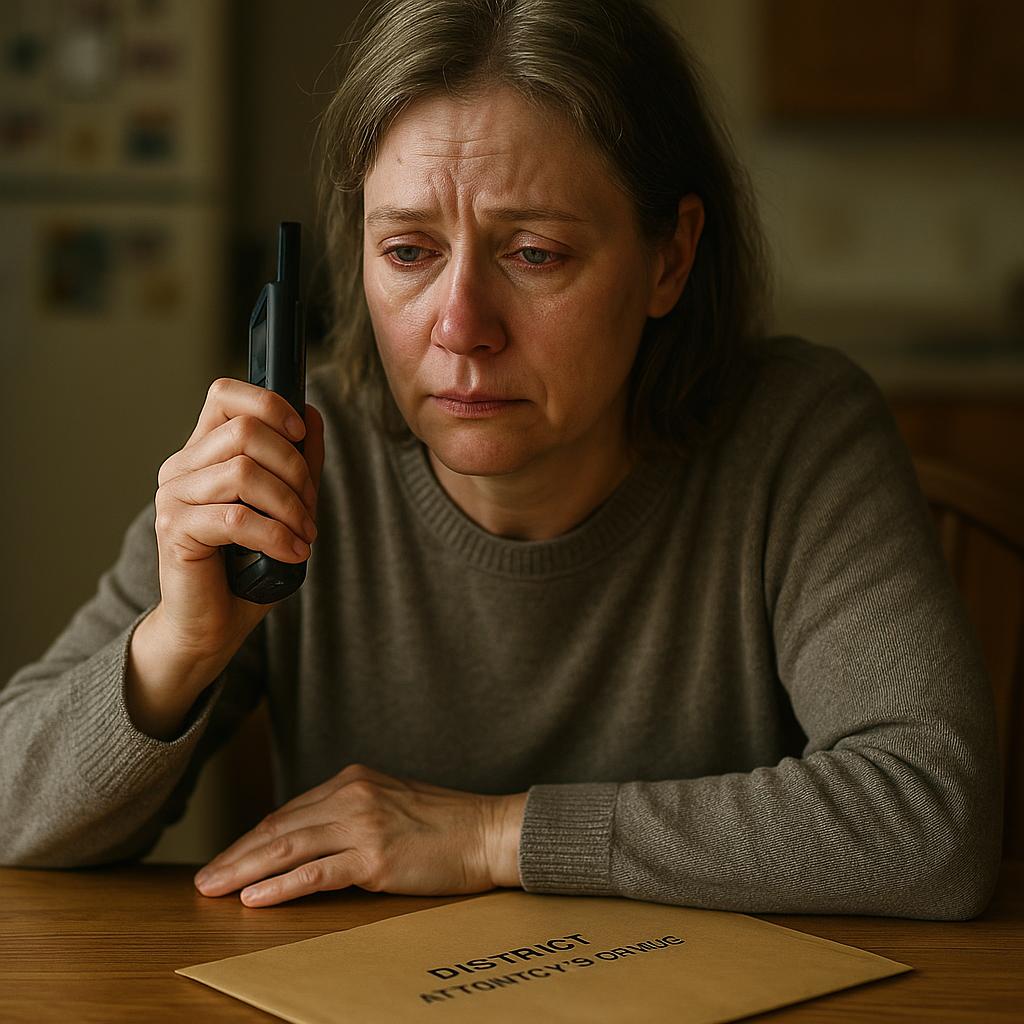
The manila envelope from the district attorney's office sat on my kitchen table for three days before I could bring myself to open it. When I finally did, the words blurred before my eyes: 'State vs. David Holloway - Plea Agreement Offer.' Twenty-five years instead of life.
Second-degree murder instead of first. As if Frank's death could be bargained down like a used car. My phone rang that evening—David's attorney, a slick-voiced man named Pearson who spoke as if he were doing me a favor. 'Mrs. Holloway,' he said, his tone dripping with practiced sympathy, 'I understand this is difficult, but David is still your son.
A mother's testimony for leniency could make all the difference.' I gripped the phone so tightly my knuckles turned white. 'A mother's testimony?' I repeated, my voice barely above a whisper. 'Did you listen to the recordings where he discussed poisoning me too?' The silence on the other end was brief but telling.
'Nevertheless,' he continued smoothly, 'blood is blood. Twenty-five years is a long time for a mistake.' A mistake. As if Frank's murder—and my planned death—were nothing more than a forgotten anniversary or bounced check. I hung up without another word, a cold fury settling in my chest where grief had lived these past months.
That night, I dreamt of Frank standing in our kitchen, pointing to the calendar on the wall. 'Twenty-five years,' he said in my dream. 'I would have given anything for twenty-five more years with you.' When I woke, my decision was made—but what I didn't know was that David had one more card to play, and it would force me to question everything I thought I knew about our family.
The Church Community
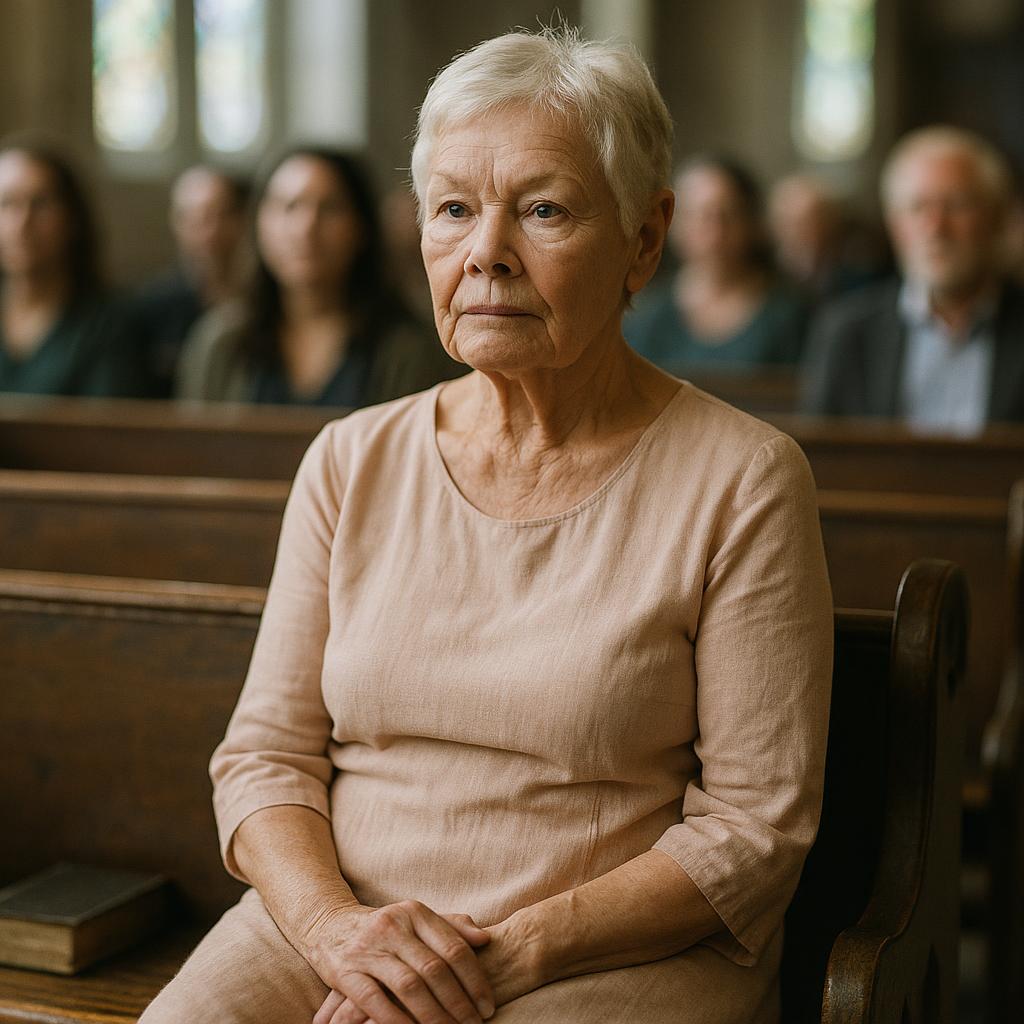
The first Sunday after David's bail hearing, I walked into First Presbyterian with my head high, though my heart felt like lead in my chest. The congregation parted like the Red Sea as I made my way to my usual pew—third row, right side, where Frank and I had sat for thirty years. Some rushed forward with hugs and whispered prayers, while others averted their eyes as if my tragedy might be contagious.
For weeks, my refrigerator overflowed with casseroles and baked goods, each delivered with tearful embraces and promises of continued prayer. But beneath the kindness, I sensed the unspoken questions, the morbid curiosity. 'How are you holding up, Margaret?' became code for 'Tell me more about your murderous son.' Pastor Williams visited on a rainy Tuesday afternoon, settling into Frank's chair with a Bible balanced on his knee.
'Forgiveness is the path to healing,' he said gently, his eyes full of well-meaning pity. I set my teacup down with a clink that seemed to echo through the silent house. 'Tell me, Pastor,' I said, my voice steadier than I felt, 'should Frank forgive the person who stole our golden years?
Should I forgive the son who would have watched me die the same way?' His mouth opened and closed like a fish out of water before he retreated to platitudes about God's mysterious ways and the burden of carrying anger. As he left, he pressed a pamphlet into my hand—'Finding Peace Through Forgiveness'—as if my son's betrayal could be resolved with a church brochure. What Pastor Williams didn't understand, what none of them could possibly grasp, was that forgiveness wasn't just difficult—it was impossible when the person who harmed you still believed they were justified in doing so.
The Pretrial Hearing
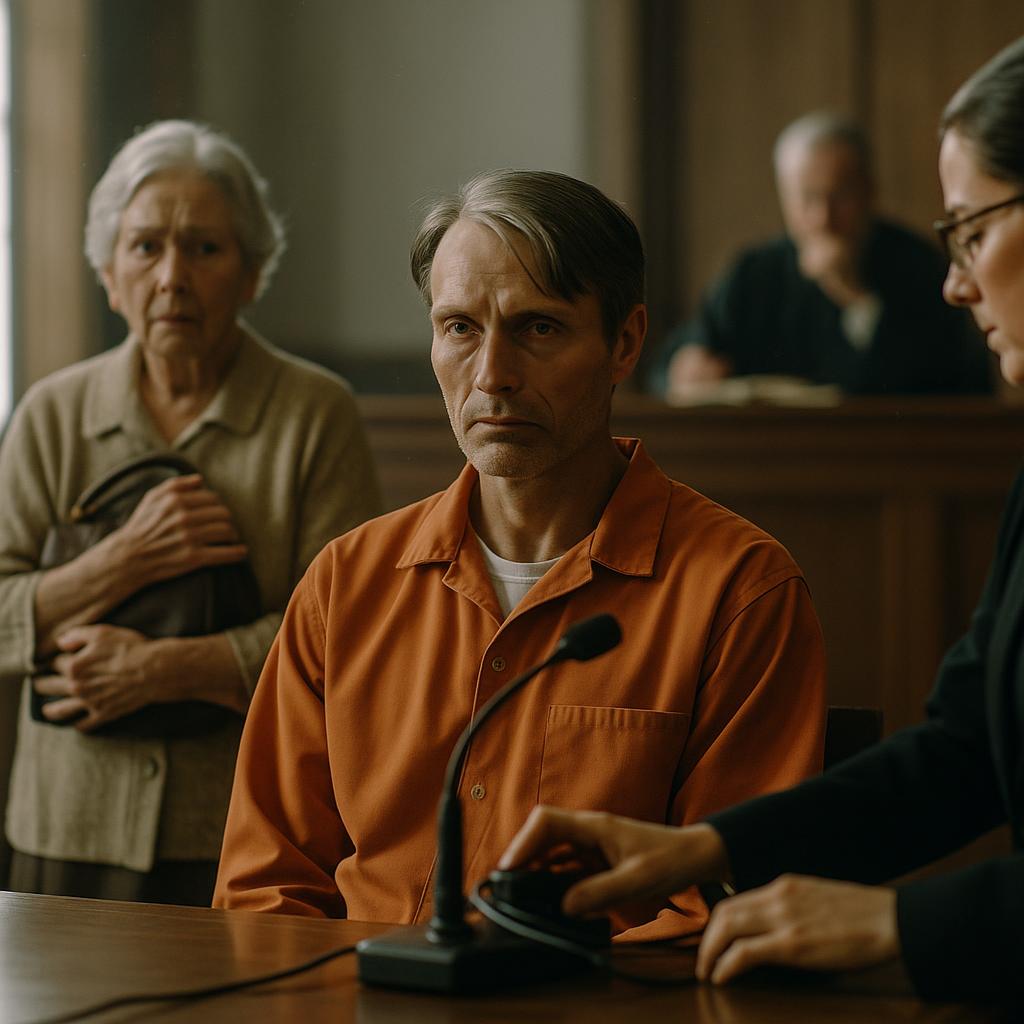
The courthouse felt like a theater of horrors as I walked in for the pretrial hearing. My hands trembled so badly I had to clutch my purse against my chest to hide it. Seventy-two years old, and here I was, about to face the son who'd plotted my death. When they brought David in, the shock nearly knocked me backward.
Gone was the polished, confident man who'd sat at my dining table discussing my 'future care.' This David was gaunt, his designer suits replaced by prison orange that hung from his frame like clothes on a scarecrow. Our eyes met across the courtroom, and for a split second, I saw something flicker there—was it remorse? Shame?
But then it vanished, replaced by that calculating look I now recognized all too well. The prosecutor, a no-nonsense woman with steel-rimmed glasses, methodically set up the audio equipment. 'The State would like to present Exhibit A,' she announced, and suddenly Frank's recordings filled the room.
David's voice—my son's voice—calmly discussing how to poison his father's heart medication. 'If I add it slowly, he won't notice the taste.' The courtroom fell so silent you could hear the ancient heating system clicking in the walls. I watched the judge's face harden with each word, his pen pausing mid-note.
When the recording ended, he looked directly at David. 'How do you plead?' he asked, his voice echoing in the stunned silence. David straightened his shoulders, looked directly at me—his own mother—and said without hesitation: 'Not guilty.' The audacity of it made my blood boil.
Not guilty? The evidence was literally in his own voice! But what happened next would shake the foundations of everything I thought I knew about my son's motives.
The Defense Strategy
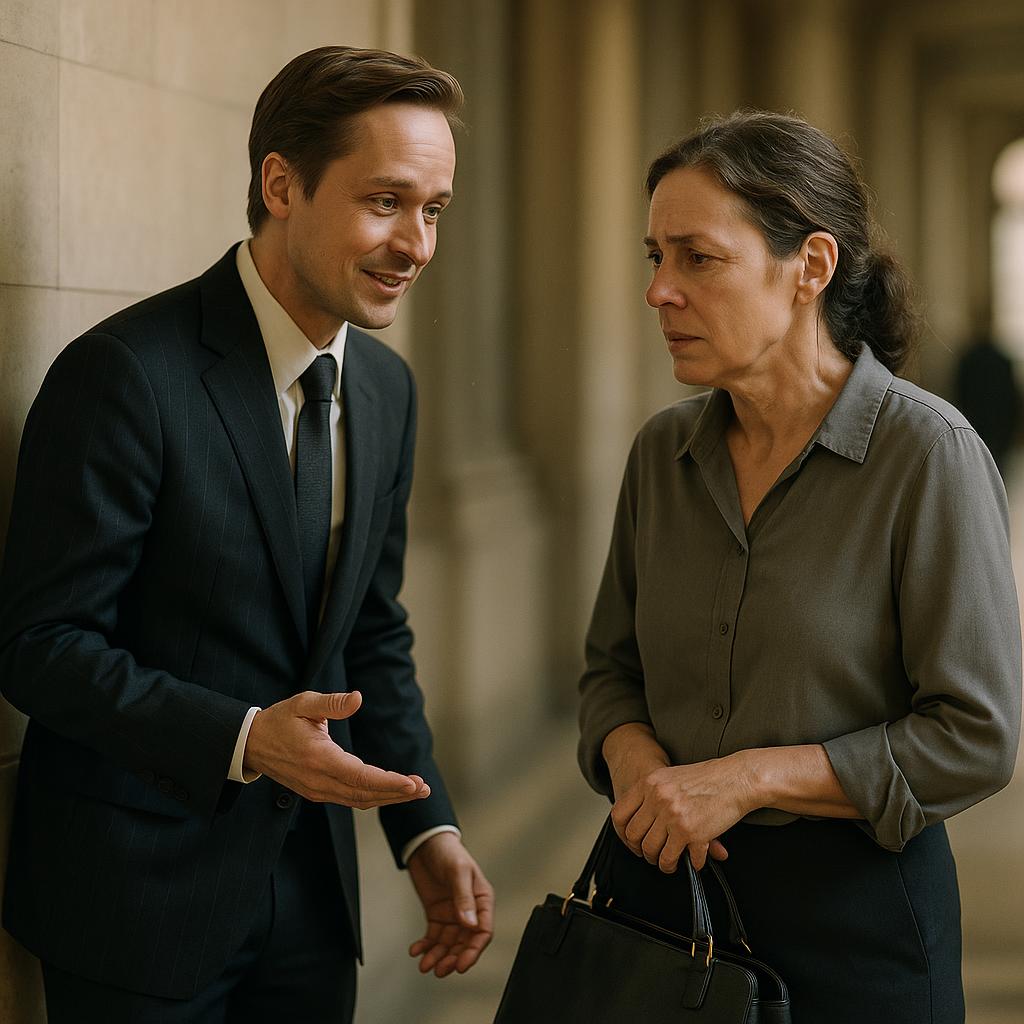
I was gathering my purse to leave the courthouse when David's attorney intercepted me in the hallway. Mr. Pearson—with his expensive suit and practiced sympathetic smile—had the audacity to explain their 'defense strategy' as if he were doing me a favor. 'Mrs.
Holloway,' he said, lowering his voice conspiratorially, 'I thought you should know what we're presenting to the jury.' The blood drained from my face as he outlined their plan: they would argue that Frank had been suffering from paranoid delusions in his final months, installing recording devices due to unfounded suspicions. 'The recordings,' he continued, his voice smooth as oil, 'were either doctored or completely misinterpreted.' I gripped the wall to steady myself. They were going to paint my Frank—my rational, loving husband—as a mentally unstable old man?
Pearson wasn't finished. 'We'll demonstrate that your husband died of natural causes, exactly as initially determined.' Then came the most outrageous claim: that I was being manipulated by George, who supposedly had financial motives of his own. 'Your friend,' Pearson said with a condescending smile, 'stands to benefit considerably from David's conviction.' The sheer audacity left me speechless.
They were going to drag not only Frank's memory through the mud but George's reputation as well. As Pearson walked away, pleased with himself for 'preparing' me, I realized with chilling clarity that my son hadn't just inherited Frank's blue eyes—he'd perfected Frank's talent for strategic thinking, but twisted it into something monstrous. What terrified me most wasn't just the lies they planned to tell, but the small grain of truth they would use to make those lies believable.
The Witness Preparation
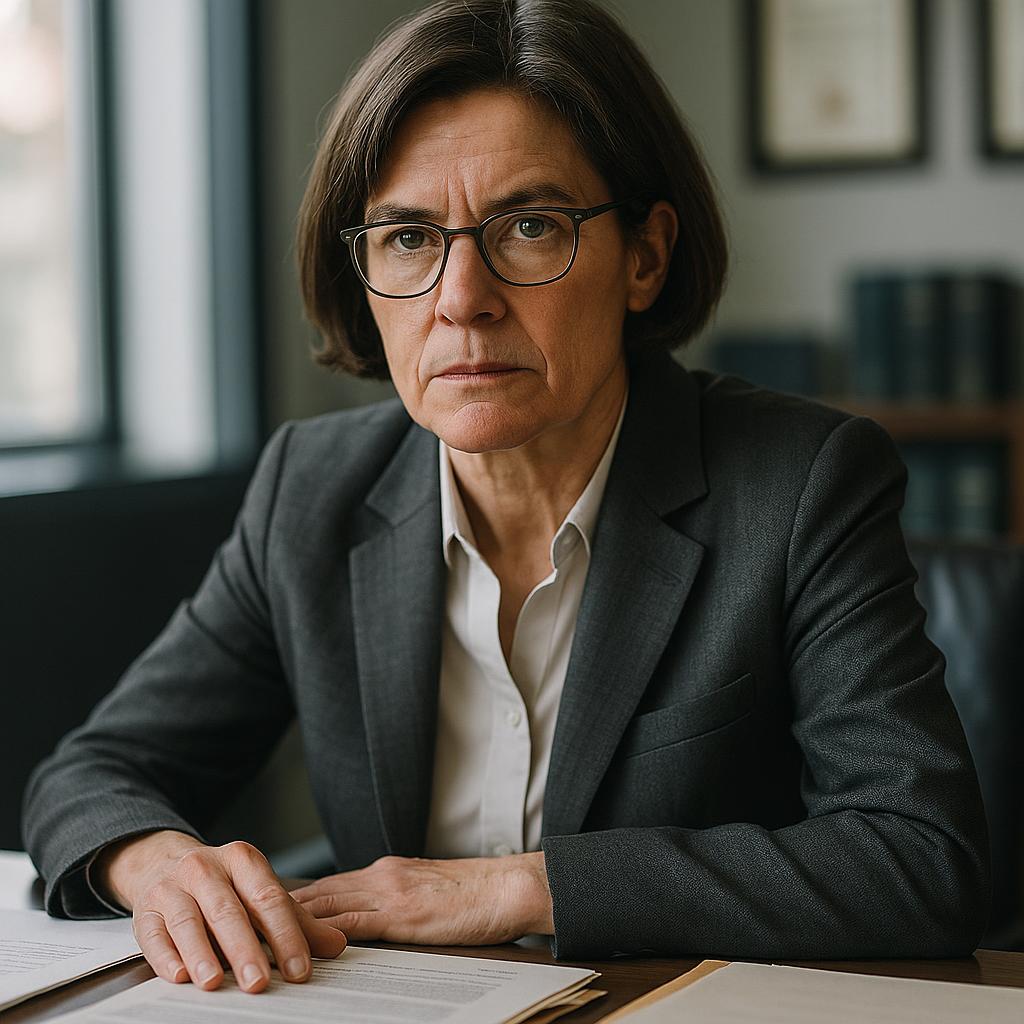
The prosecutor's office was colder than I expected, or maybe it was just the chill that had settled in my bones since this nightmare began. Prosecutor Winters—a woman with sharp eyes and a no-nonsense bob—spread files across the conference table like she was dealing cards in a high-stakes game. 'Mrs.
Holloway,' she said, her voice gentle but firm, 'the defense is going to try three tactics: they'll paint you as confused, they'll suggest you're blinded by grief, and they'll imply George manipulated you.' For four grueling hours, we rehearsed my testimony. She fired questions at me, sometimes gently, sometimes with the same aggressive tone David's attorney would use. 'And why didn't you notice your husband's declining health?' she snapped, making me flinch.
'Because David made sure the poison mimicked natural heart failure,' I answered, my voice steadier than I felt. When we finally took a break, she studied me over her reading glasses. 'Are you prepared to look your son in the eye and testify against him?' she asked.
I straightened my shoulders, feeling Frank's presence beside me as clearly as if he were still alive. 'I'm not testifying against my son,' I replied, surprising myself with the steel in my voice. 'I'm testifying for my husband.' Winters nodded, a hint of respect flickering across her face.
What she didn't tell me then—what I would discover only when I took the stand—was that David had prepared for my testimony in ways that would make me question not just his guilt, but my own sanity.
The Trial Begins
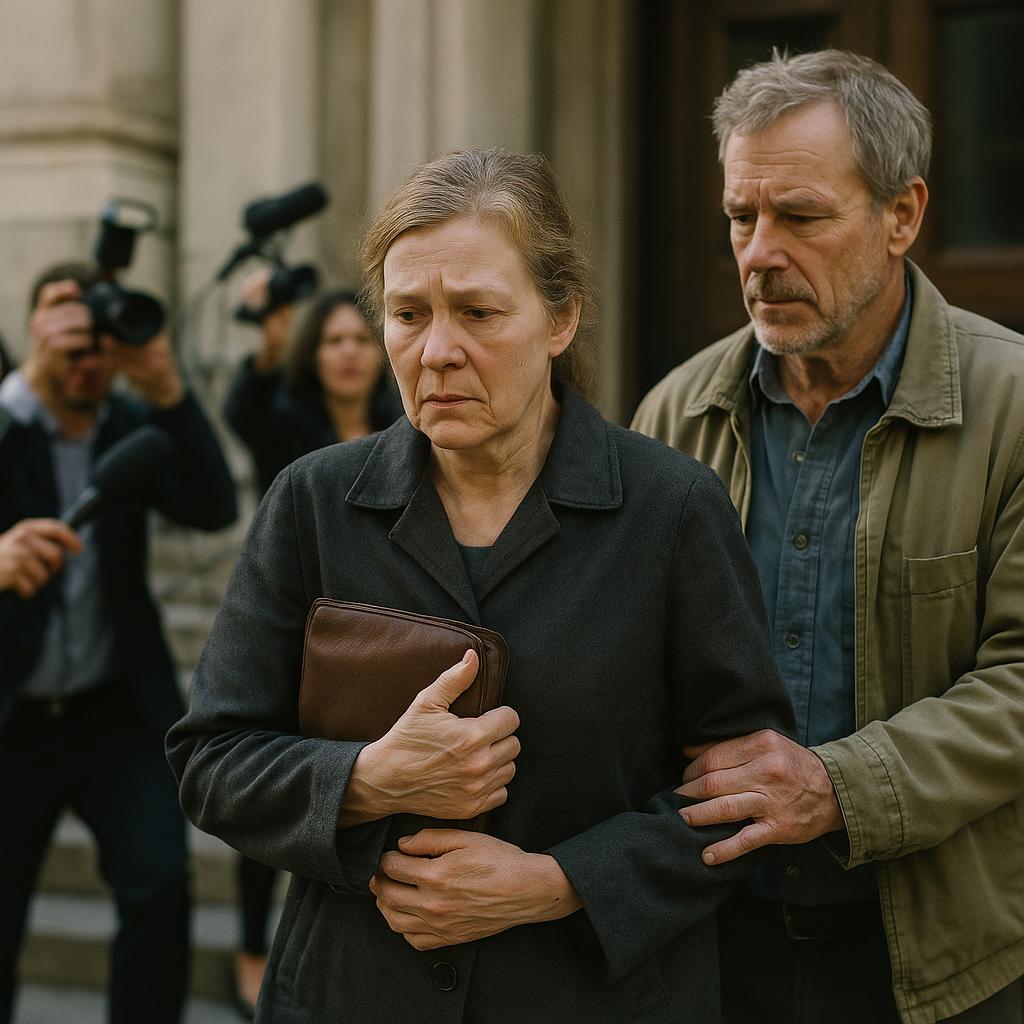
The morning of the trial, I stood on the courthouse steps, clutching my purse like a shield against the barrage of camera flashes and shouted questions. 'Mrs. Holloway! How does it feel to testify against your own son?' I kept my eyes forward, George's steady hand on my elbow guiding me through the chaos.
Inside wasn't much better—the courtroom packed to the rafters with strangers eager to witness our family tragedy unfold like some twisted reality show. Prosecutor Winters commanded the room during her opening statement, her voice unwavering as she laid out the evidence piece by piece: Frank's recordings playing through the speakers, the toxicology report confirming the poison in both Frank's medication and my vitamins, the insurance policies David had taken out without our knowledge. I watched the jury's faces shift from professional neutrality to barely concealed horror.
But when Defense Attorney Klein rose, the transformation in the room was palpable. 'Ladies and gentlemen,' he began, his voice dripping with practiced sincerity, 'this case isn't about a son who betrayed his parents. It's about a grieving widow manipulated by her husband's friend.' He pointed directly at George, sitting behind me.
'A man with his own motives for framing David Holloway.' I felt my breath catch in my throat as Klein continued spinning his web of lies, painting my Frank as delusional and George as a puppet master pulling my strings. What terrified me most wasn't just the audacity of their defense—it was how convincingly Klein delivered these falsehoods, and how intently some jurors seemed to be listening.
George's Testimony
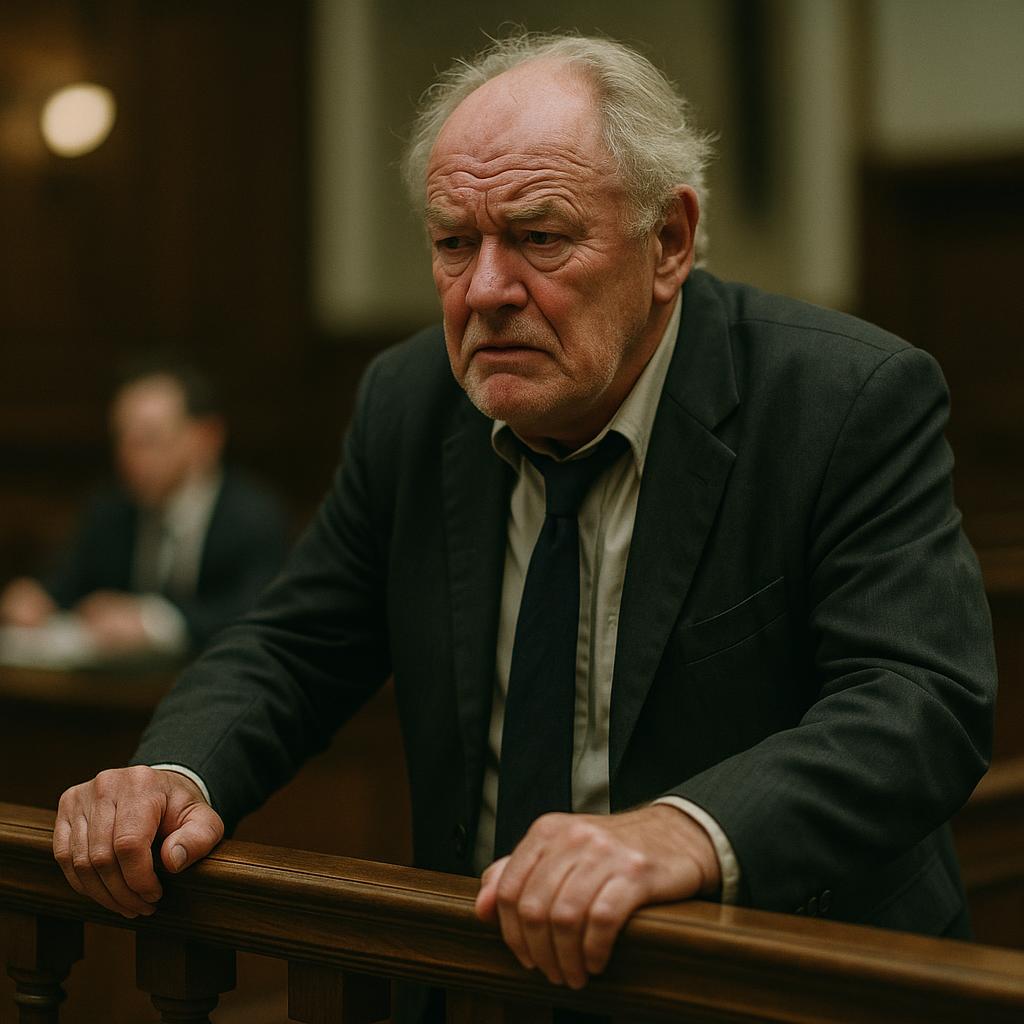
George took the stand on Thursday, his weathered hands gripping the railing as he was sworn in. I'd never seen him look so old—or so determined. For nearly an hour, he described his fifty-year friendship with Frank, their bowling nights, fishing trips, and how they'd been best men at each other's weddings.
'Frank came to me about six months before he died,' George testified, his voice steady despite the emotion in his eyes. 'He said he'd overheard David on the phone discussing medication dosages. He was scared, but he didn't want to break Margaret's heart without proof.' When Klein rose for cross-examination, the atmosphere in the courtroom shifted like a sudden storm.
'Isn't it true, Mr. Lawson,' Klein began with a snake-oil smile, 'that you've had feelings for Mrs. Holloway for years?' The gasps around me were audible. George's face flushed. 'That's ridiculous,' he snapped. Klein pressed harder, suggesting George had doctored the recordings himself to frame David and 'comfort the grieving widow.' I watched George's knuckles turn white on the witness stand.
'Frank Holloway was my best friend for half a century,' he said, his voice rising with each word. 'I would never dishonor his memory with lies. And I would never—NEVER—hurt Margaret by manipulating her grief.' The jury seemed moved by his raw emotion, but as George stepped down, I caught a juror in the back row exchanging a skeptical glance with another.
What none of us realized then was that Klein's attack on George was just the opening salvo in a defense strategy more twisted than I could have imagined.
The Expert Witnesses
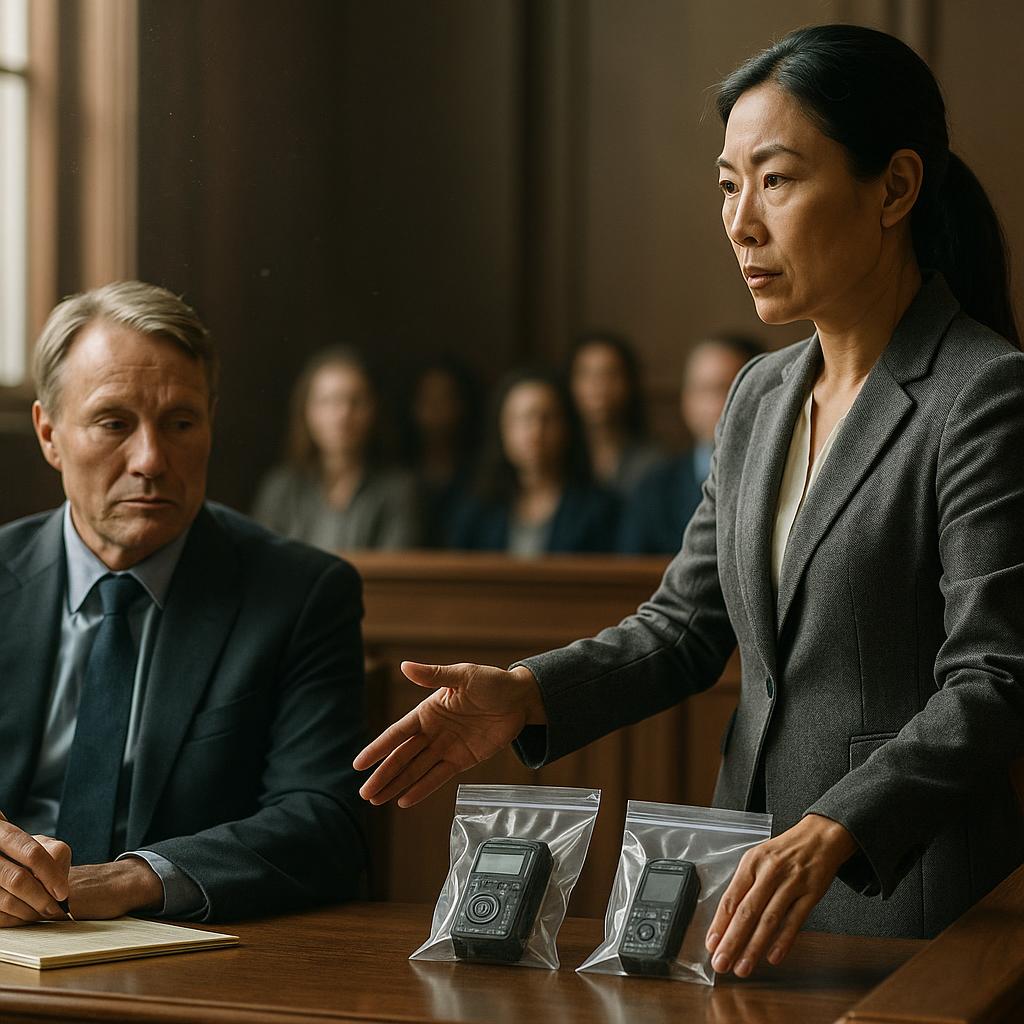
The courtroom fell silent as Dr. Elaine Chen approached the witness stand, her credentials in forensic technology scrolling across the prosecutor's presentation screen like credits to a horror movie I was living through. 'These recording devices,' she explained, pointing to the evidence bags containing Frank's hidden recorders, 'are Phantom X-7 models, typically used by private investigators and law enforcement.' She confirmed they'd been installed within the last year of Frank's life—exactly when he must have first suspected something was wrong.
'These aren't available at your local electronics store,' she added, her eyes sweeping across the jury. 'They require specialized connections to obtain.' When the toxicologist took the stand next, I gripped the edge of my seat so hard my fingers went numb. 'Cardiotoxin-B,' he explained, 'is what we call the perfect poison for someone with pre-existing heart conditions.' He described how it gradually weakens the heart muscle, mimicking natural deterioration so perfectly that most hospitals wouldn't detect it without specifically looking for it.
'Without prior suspicion,' he said gravely, 'it would be diagnosed as natural heart failure every time.' Throughout both testimonies, I couldn't help but watch David. My son—the boy I'd raised—sat there taking notes on a yellow legal pad as if he were attending a business conference, not his own murder trial. His face remained impassive, occasionally nodding at particularly technical points as if appreciating the expertise behind the very methods he'd used to kill his father.
What chilled me most wasn't just the calculated nature of Frank's murder, but the realization that if these experts were right, David had been planning this for far longer than any of us had suspected.
Vanessa's Deal
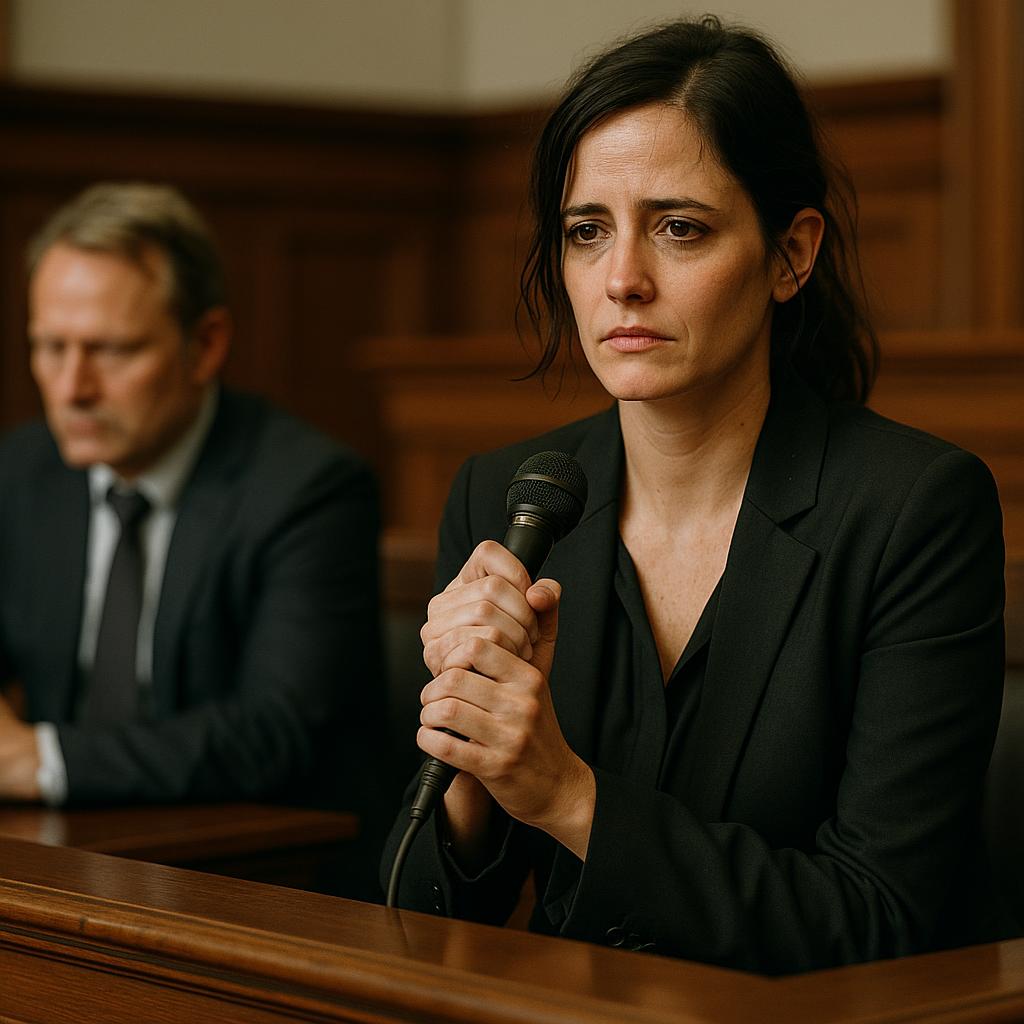
The courtroom fell into a hushed silence as Vanessa Laurent took the stand, her designer heels clicking against the polished floor. She looked nothing like I'd imagined – not some seductive temptress, but a nervous pharmaceutical researcher with trembling hands and smudged mascara. As part of her plea deal, she was testifying against my son, and what came out of her mouth made my stomach turn.
"David approached me at a conference," she explained, her voice barely audible. "He said he needed information about compounds that could mimic natural heart failure." She detailed how my son had calculated dosages based on Frank's exact weight and existing medication, how he'd tested different mixtures to ensure they wouldn't be detected. "He was... methodical," she said, choosing her words carefully.
"He kept a journal with timelines." Throughout her testimony, David refused to look at her, staring instead at his hands as if they belonged to someone else. But when Vanessa described their relationship – how David had promised her a future funded by insurance money – his jaw tightened visibly. "After his father," she continued, tears welling in her eyes, "he planned to use the same method on his mother." The prosecutor gently asked why she'd agreed to help.
Vanessa's answer chilled me to the bone: "He said it was mercy... that they were old and suffering." I wasn't old enough, apparently, to deserve the truth that my own son had decided my time was up. What Vanessa revealed next would make even the most skeptical juror's blood run cold.
My Day in Court
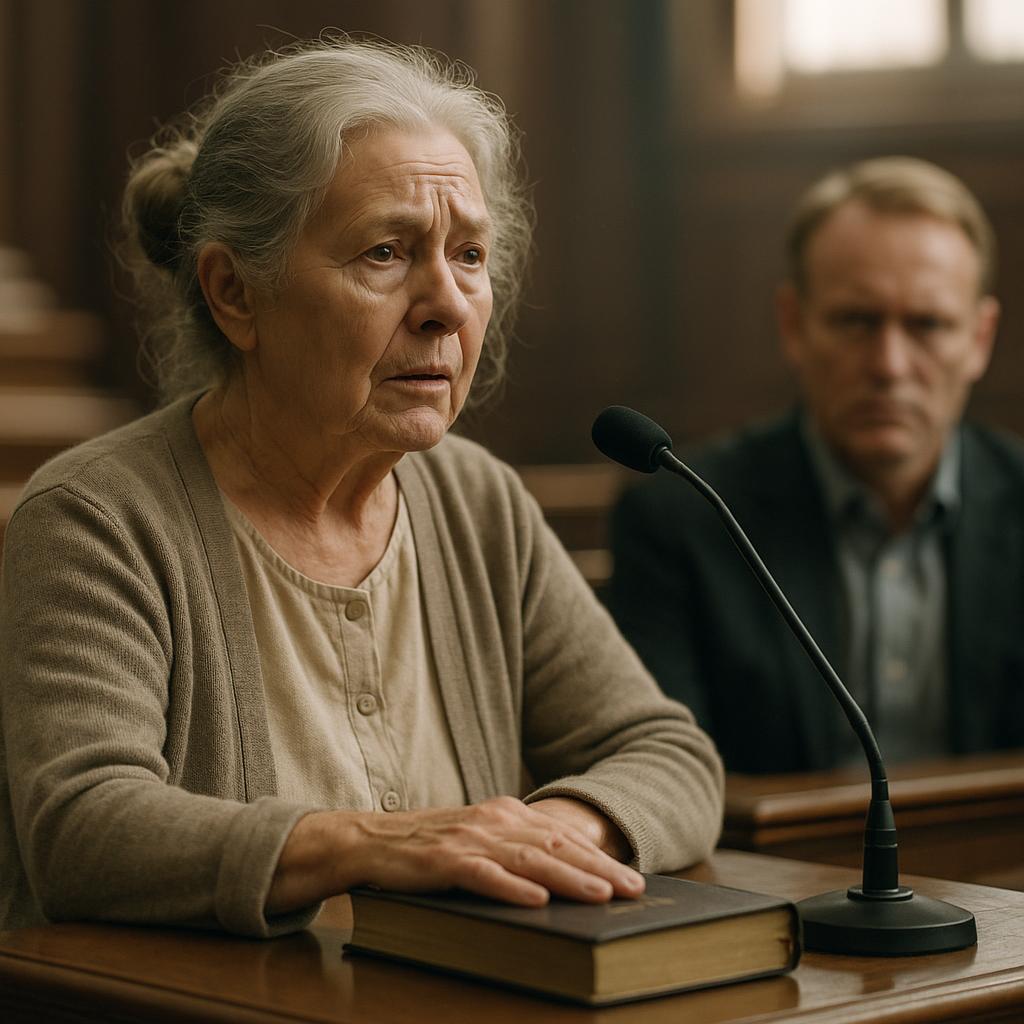
The courtroom fell silent as I approached the witness stand, my sensible shoes echoing against the marble floor. At 72, I never imagined I'd be testifying against my own flesh and blood, but here I was. As I placed my hand on the Bible and swore to tell the truth, I caught David's eye.
Nothing—not a flicker of remorse or shame. Just that calculating stare I now recognized all too well. Prosecutor Winters guided me gently through my testimony—finding the recording devices hidden throughout our home, receiving that devastating tape, the moment my world collapsed as I heard my son's voice planning not just Frank's death, but mine.
'He spoke about my death as casually as discussing the weather,' I said, my voice surprisingly steady. When Klein rose for cross-examination, his smile reminded me of a used car salesman. 'Mrs. Holloway,' he began, his voice dripping with false sympathy, 'isn't it possible grief has confused your recollections?
Perhaps Frank was recording you due to suspicions of...infidelity with George?' A collective gasp rippled through the courtroom. I straightened my shoulders, channeling fifty years of Frank's quiet strength. 'My husband trusted me for fifty years,' I replied, looking directly at the jury.
'The only person he didn't trust was sitting right there.' I pointed at David without hesitation. The look that crossed my son's face in that moment wasn't anger or shame—it was something far more disturbing: admiration, as if my standing up to him was somehow entertaining.
The Defense's Case
The defense's parade of character witnesses made me feel like I was watching a bizarre alternate reality show about my son. One by one, they took the stand—David's college roommate who tearfully described how David had paid his tuition when his scholarship fell through; his business partner who praised his ethical business practices; even his ex-wife (who I'd always thought despised him) suddenly singing his praises like he was up for sainthood. 'David visited his parents every Sunday without fail,' she testified, conveniently forgetting the months he'd disappeared when Frank first got sick.
The defense's expert, a smug man with too many degrees and not enough common sense, suggested the recordings could have been 'manipulated or edited'—though under Winters' blistering cross-examination, he admitted he hadn't actually examined the original tapes. 'Theoretical possibilities,' he stammered, his credibility crumbling. Throughout it all, David maintained that solemn, respectful expression I'd seen a thousand times—at business dinners, at church, at Frank's funeral.
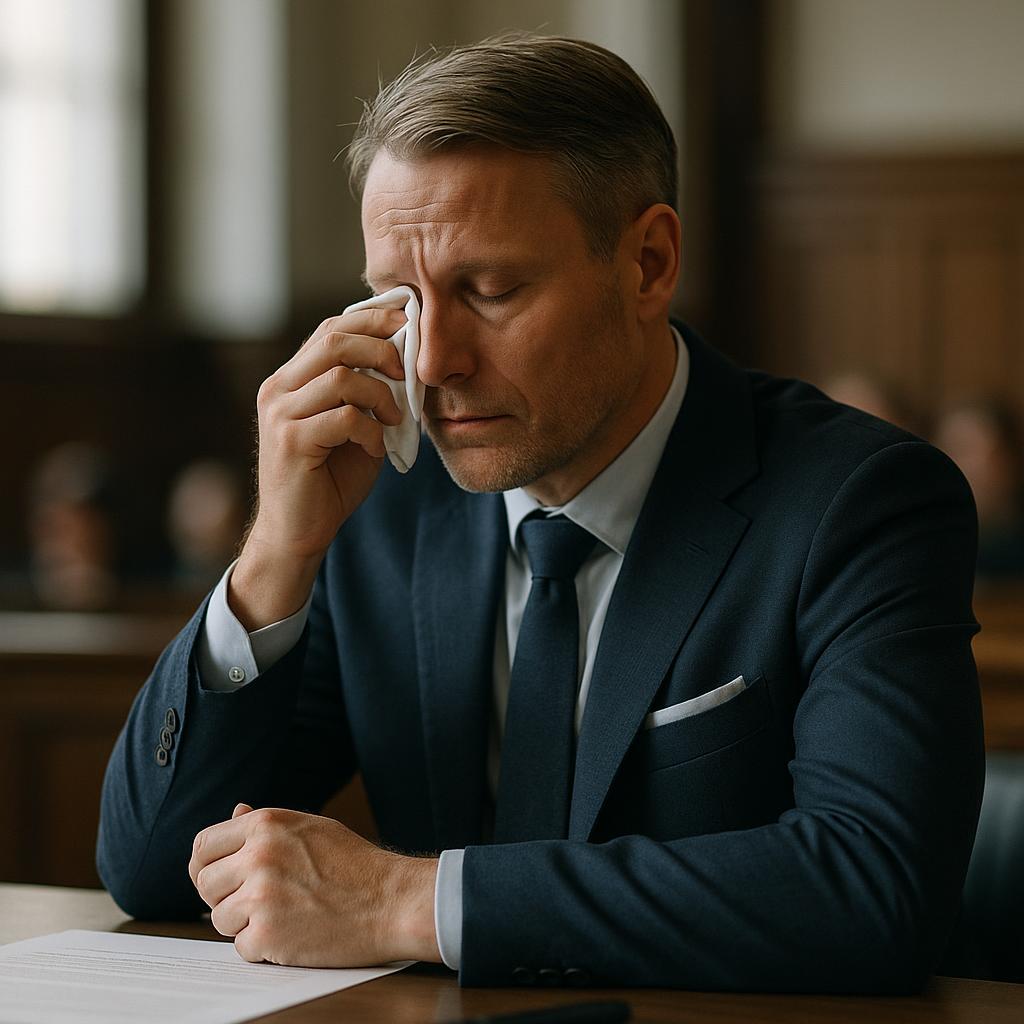
It was the same mask he'd perfected since college, the one that had fooled everyone, including me, for decades. Watching him sit there, hands folded neatly, occasionally dabbing at dry eyes with a handkerchief, I realized with a chill that I'd never actually known my son at all. What terrified me most wasn't just his capacity for deception, but how the jury seemed to be warming to this performance—until the prosecution revealed what they'd found in David's basement safe.
David Takes the Stand
The courtroom fell into a hush as David approached the witness stand. Against Klein's whispered objections, my son had insisted on testifying—a move that surprised everyone, including me. He looked almost like the boy I'd raised as he placed his hand on the Bible, his voice steady and clear.
'I loved my parents more than anything,' he began, his eyes scanning the jury faces before landing on mine. For the next forty minutes, David wove a tale so convincing I almost questioned my own memories. He spoke of Frank's 'increasing paranoia' in his final months, how my husband had become 'fixated on conspiracies' as his heart condition worsened.
'Dad was installing recording devices everywhere,' David explained, his voice breaking perfectly on cue. 'He thought the neighbors were spying on him.' When Prosecutor Winters asked about the damning recordings, David had an answer ready. 'That was me rehearsing for our company's murder mystery dinner,' he said, shaking his head sadly.
'Dad must have recorded it and misunderstood.' The performance was masterful—tears welling at precisely the right moments, voice cracking when mentioning Frank's name. When asked directly if he poisoned his father, David looked straight at me, a single tear rolling down his cheek. 'I would never hurt my father,' he said.
'I loved him.' For one terrible moment, I felt myself wavering. That's the thing about skilled liars—they make you doubt your own truth. But then I noticed something no one else seemed to catch: the slight twitch at the corner of his mouth, the same tell he'd had since childhood whenever he was lying about breaking curfew or stealing cookies.
What the jury couldn't see was the cold calculation behind those tears, or the way his fingers drummed silently against his thigh—not from nervousness, but impatience.

The Cross-Examination
Prosecutor Winters approached the stand with the calm confidence of a chess master about to call checkmate. 'Mr. Holloway,' she began, sliding bank statements across the exhibit table, 'could you explain these credit card debts totaling over $200,000?' The color drained from David's face as the jury examined his financial house of cards.
Winters methodically dismantled his carefully crafted persona—revealing mortgage defaults, gambling debts, and a lifestyle he couldn't afford. 'And these internet searches,' she continued, displaying his browser history on the courtroom screen, 'can you explain why you researched "inheritance laws" and "undetectable poisons" three months before your father's death?' David's lawyer half-rose, then sank back down, knowing the damage was done. I clutched George's hand as my son's mask began to slip.
When Winters presented the insurance policies—$2 million worth that Frank and I never knew existed—David's composure finally shattered like thin ice. 'You don't understand what it's like,' he snapped, his voice rising with each word, 'to watch your inheritance being wasted on medical bills and cruise vacations!' The courtroom erupted in gasps. I felt physically ill as the truth spilled out—our lives had been nothing but dollar signs to him, obstacles to the money he felt entitled to.
As the judge called for order, I caught a glimpse of the jury's faces. The sympathetic looks they'd given David earlier had transformed into something else entirely: horror, disgust, and the unmistakable look of people who had just witnessed a confession no clever defense could undo.
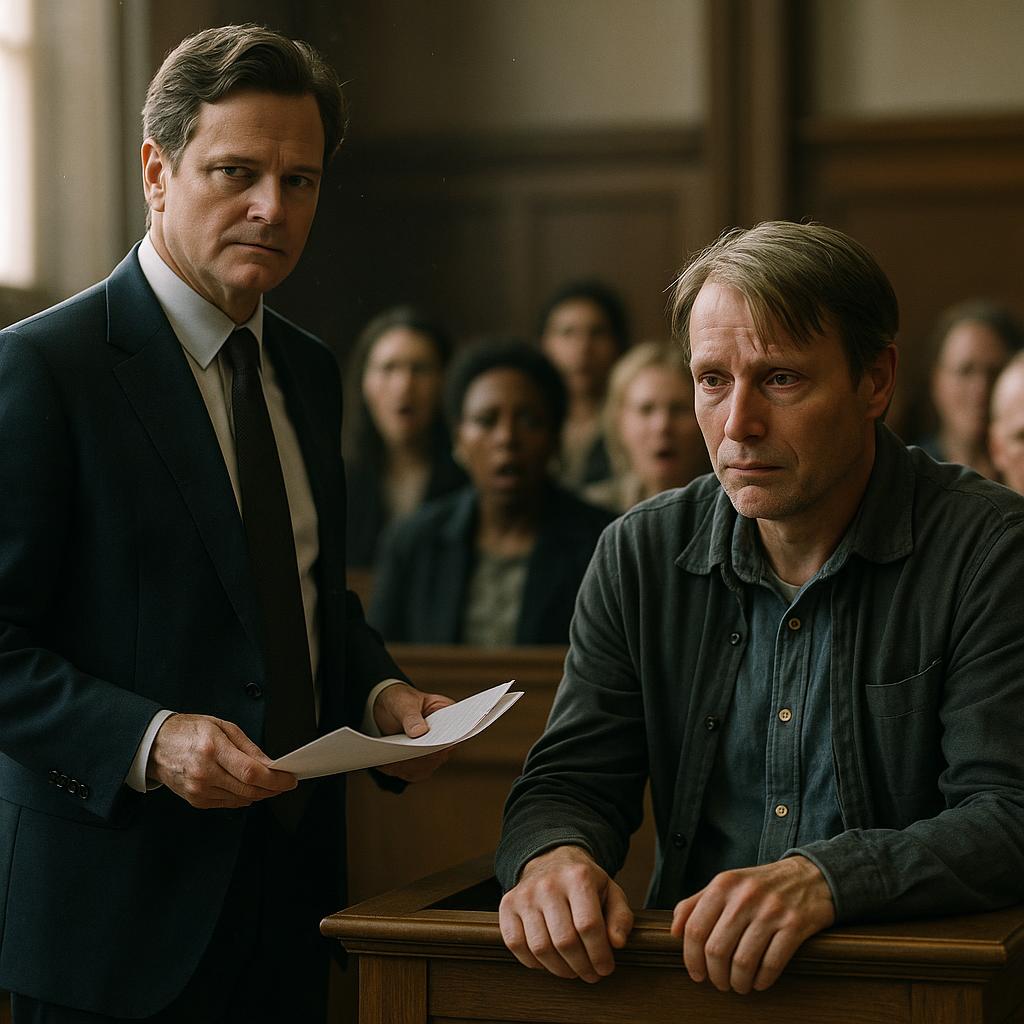
Closing Arguments
The courtroom was so quiet during closing arguments that I swear you could hear everyone's heartbeats. Klein stood before the jury, his expensive suit perfectly pressed, making one last desperate plea. 'Ladies and gentlemen,' he said, his voice dripping with manufactured sincerity, 'all we have here is circumstantial evidence and a grieving mother who's been manipulated.' He gestured toward me with a sympathetic smile that made my skin crawl.
'Shouldn't a son deserve the benefit of the doubt from both you and his own mother?' I gripped George's hand so tightly I'm surprised I didn't break his fingers. When Prosecutor Winters rose, she didn't waste time on theatrics. She simply walked to the evidence table, picked up the tape player, and pressed play.
David's voice filled the courtroom one last time: 'Once she's gone, I'll have the house and the savings. No one will question it.' Several jurors visibly flinched. Winters let the silence hang after the recording ended, then spoke directly to the jury. 'Frank Holloway's final act on this earth wasn't just dying,' she said, her voice steady and clear.
'It was protecting his wife from their own son. You owe it to his memory to deliver justice.' As the jury filed out for deliberation, David turned to look at me, and for the first time since this nightmare began, I saw something in his eyes I'd never seen before—not remorse, not anger, but something far more terrifying: nothing at all.
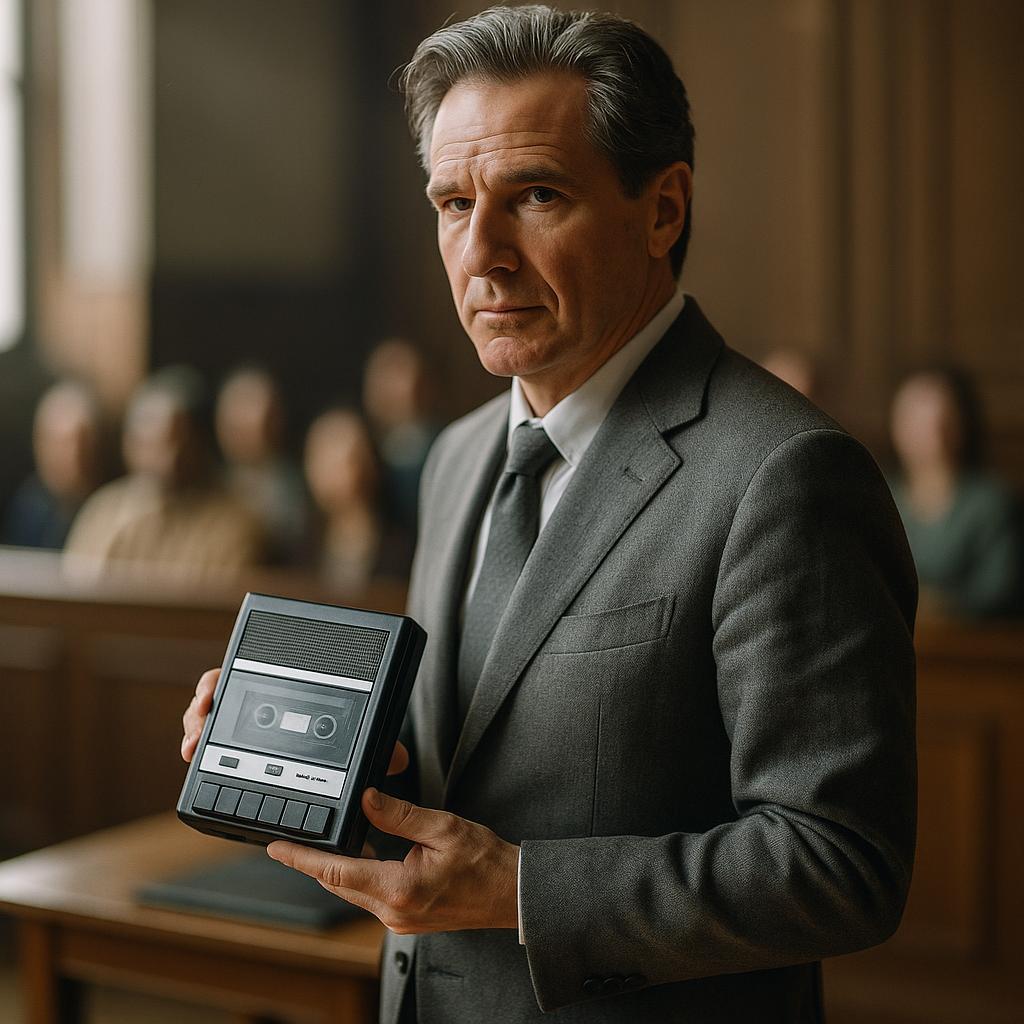
The Verdict
Three days. Three agonizing days of waiting while twelve strangers decided the fate of my son. The courthouse hallways became my second home, with George bringing me sandwiches I couldn't eat and coffee I barely tasted. When we finally filed back into that courtroom on Thursday afternoon, you could have heard a pin drop.
Reporters lined the walls like vultures, their pens poised to document our family tragedy for the evening news. I sat ramrod straight, my hands folded in my lap the way Frank always said made me look dignified. The jury filed in, not one of them making eye contact with David or me.
'Has the jury reached a verdict?' Judge Harmon's voice seemed to echo. The foreman stood, a middle-aged woman with kind eyes who now looked like she carried the weight of the world. 'We have, Your Honor. We find the defendant guilty of murder in the first degree.' The courtroom erupted in whispers, but I felt nothing—no relief, no vindication, just a hollow emptiness where my heart used to be.
David didn't flinch, though I noticed his manicured hands trembling slightly as they cuffed him. When the judge asked if I wanted to make a victim impact statement before sentencing, I simply shook my head. What could I possibly say that Frank hadn't already said through those recordings?
As they led my son away, he turned to look at me one last time. I expected hatred, perhaps even a plea for forgiveness, but what I saw in his eyes made me realize that the true sentence in this tragedy wasn't the one the judge would hand down—it was the life sentence of questions I would carry to my grave.
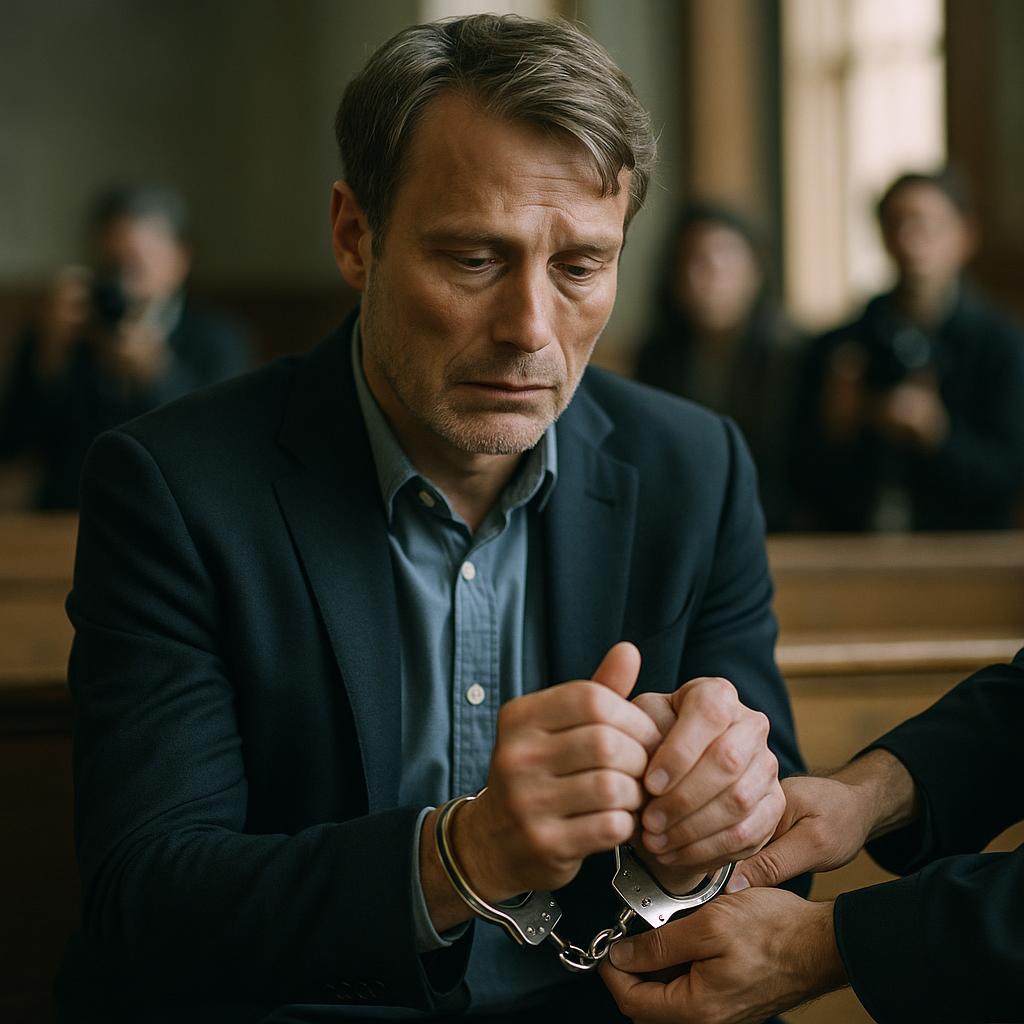
The Sentencing
The courtroom on sentencing day felt different—heavier somehow, as if the air itself carried the weight of what was about to happen. I wore Frank's favorite blue dress; he always said it brought out the strength in my eyes. Judge Keller, a stern woman with silver-streaked hair and reading glasses perched on her nose, looked directly at David as she delivered her verdict.
"Mr. Holloway," she began, her voice cutting through the silence, "in my thirty years on the bench, I have rarely encountered a crime that demonstrates such calculated betrayal of the most sacred trust." She methodically recounted how David had poisoned his own father, planned my death, all while pretending to be a devoted son. "The premeditated murder of a parent for financial gain," she continued, her voice hardening, "represents the ultimate perversion of family bonds." When she announced life imprisonment without possibility of parole, I didn't feel the relief I'd expected.
Instead, I felt a strange emptiness, like the final page of a book I never wanted to read. As they led David away in handcuffs, he turned back—just once—and our eyes met across the courtroom. What I saw wasn't my little boy who once needed me to check for monsters under his bed.
It wasn't even the man who had sat expressionless through his trial. It was a stranger wearing my son's face, and I realized with crushing clarity that I had lost him long before this moment. The true sentence wasn't just his—it was mine too, a life sentence of wondering where I had gone wrong, and whether I could have changed anything if I'd seen the truth sooner.
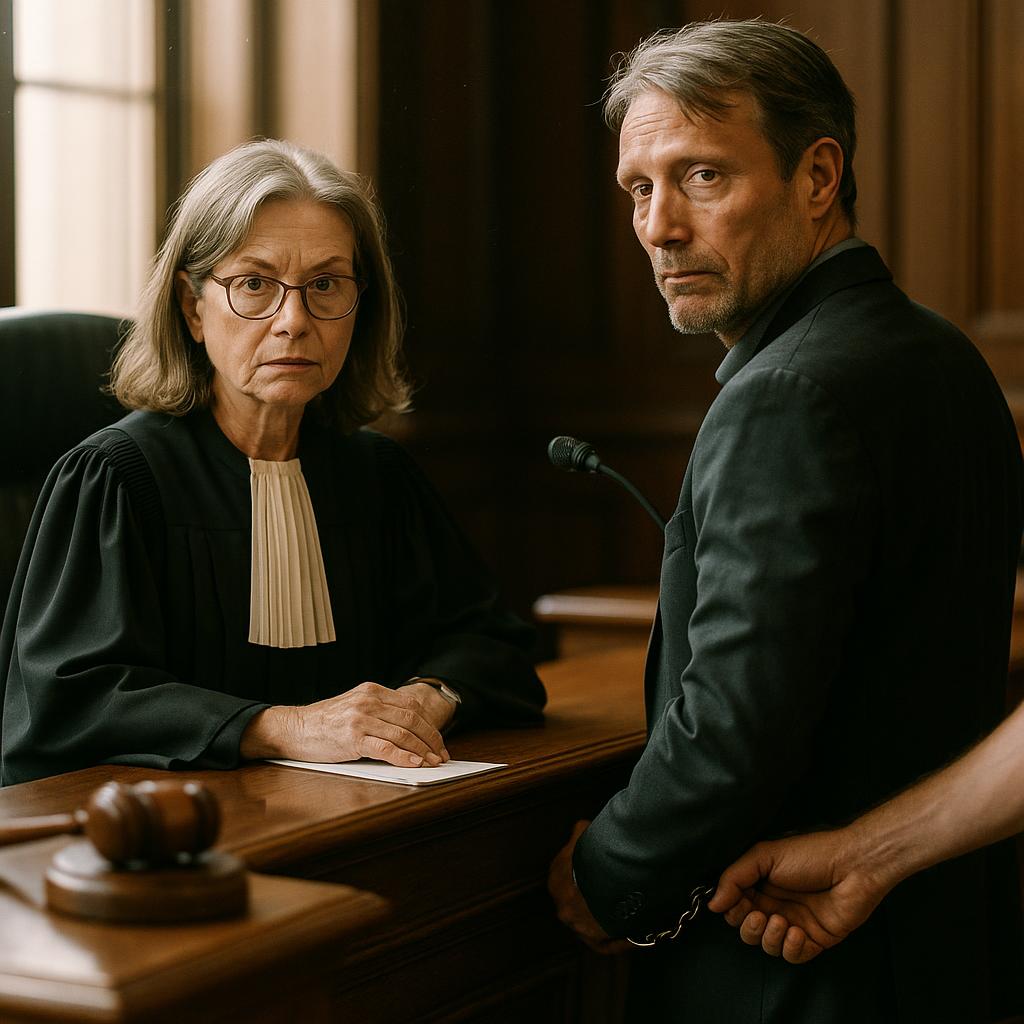
The Aftermath
The house feels different now. Emptier, yet somehow lighter. It's been three weeks since the gavel fell on David's sentencing, and the reporters have finally stopped camping at the end of my driveway like vultures waiting for roadkill. I've started the painful process of reclaiming my life—one room, one memory at a time.
Yesterday, I emptied David's childhood bedroom, my hands trembling as I folded Little League trophies and high school yearbooks into donation boxes. How do you reconcile the smiling boy in those photographs with the man who calculated how to end your life? I've converted his room into a reading nook, with Frank's favorite armchair by the window.
Sometimes I sit there with his cardigan draped over my shoulders, watching the neighborhood children play across the street, wondering where exactly our family story went so terribly wrong. George stops by every morning with coffee and muffins, pretending he was 'just in the neighborhood,' though I know his house is twenty minutes in the opposite direction. Elaine from my church group brings casseroles on Wednesdays and stays for Wheel of Fortune.
They're creating a rotation, these friends of mine, ensuring I'm never alone with my thoughts for too long. I'm grateful, even when their concerned glances make me feel like fine china that might shatter at any moment. Last night, I found myself talking to Frank's photograph, asking if he knew all along what our son was capable of.
The silence that followed wasn't the emptiness I once feared—it was a different kind of quiet, one filled with the strange peace that comes after surviving something you never imagined possible. What none of us realized then was that the true healing wouldn't begin until I opened the letter that arrived yesterday, postmarked from the state penitentiary.
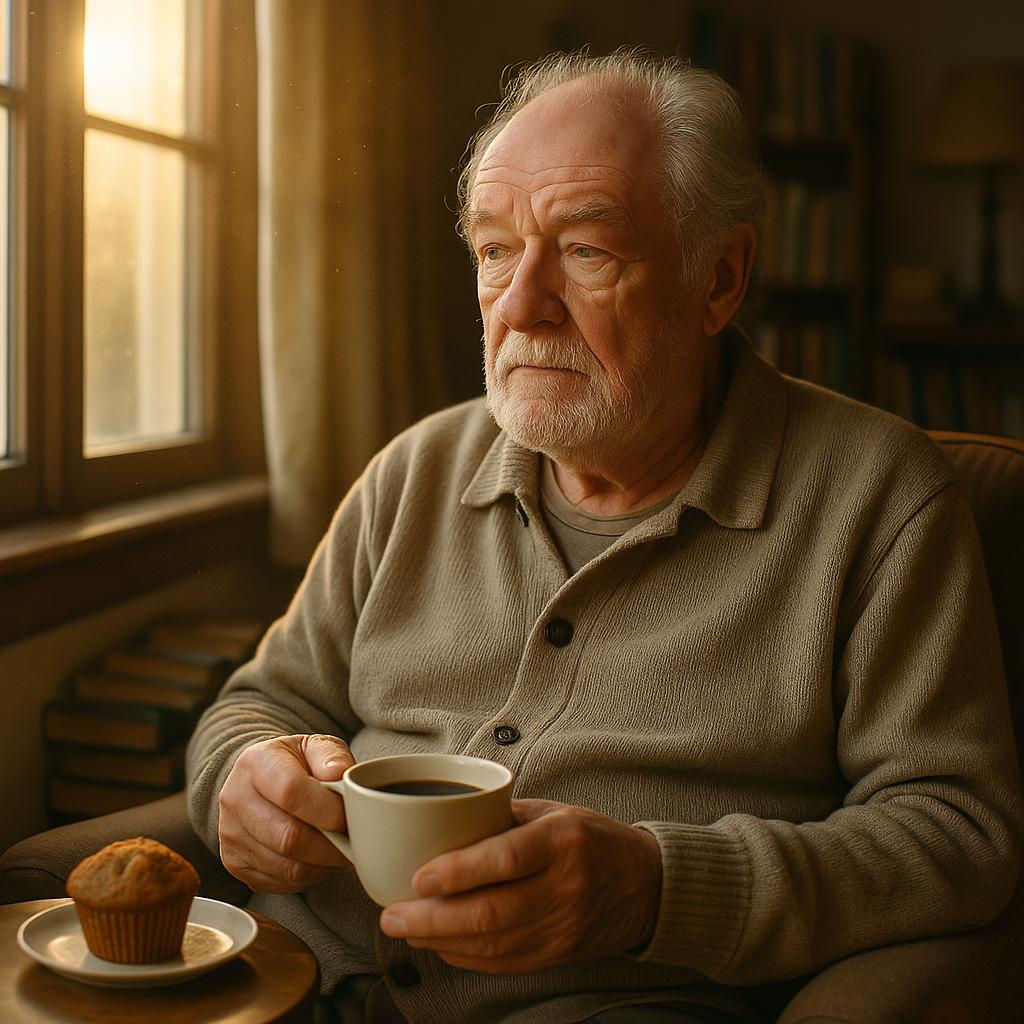
The Prison Visit
The letter from the prison chaplain sat on my kitchen table for three days before I could bring myself to respond. 'Your son has been attending services regularly,' it read in neat, compassionate handwriting. 'He's asked if you would consider visiting.' George nearly had a conniption when I told him I was going.
'After everything he did?' he sputtered over our morning coffee. But there were questions that haunted my sleepless nights, questions only David could answer. The prison visiting room was exactly what you'd expect—cold fluorescent lighting, plastic chairs bolted to the floor, and that distinct institutional smell of disinfectant masking despair.
When they brought David in, I barely recognized him. Gone was the confident, well-groomed son who'd sat in court calculating his defense. This man was thinner, grayer, with dark circles under his eyes and prison-issued clothing hanging loosely on his frame. 'Mom,' he said, his voice cracking slightly.
'Thank you for coming.' He launched into what sounded like a rehearsed speech about finding God, about redemption and forgiveness. I raised my hand to stop him mid-sentence. 'I didn't come for apologies, David,' I said, surprised by the steadiness in my voice.
'I came to understand why. Why your father? Why me? Was it always just about the money?' His eyes—Frank's eyes—met mine, and for a moment, I saw something I hadn't seen in court: vulnerability. What he said next would shake the foundation of everything I thought I knew about our family.
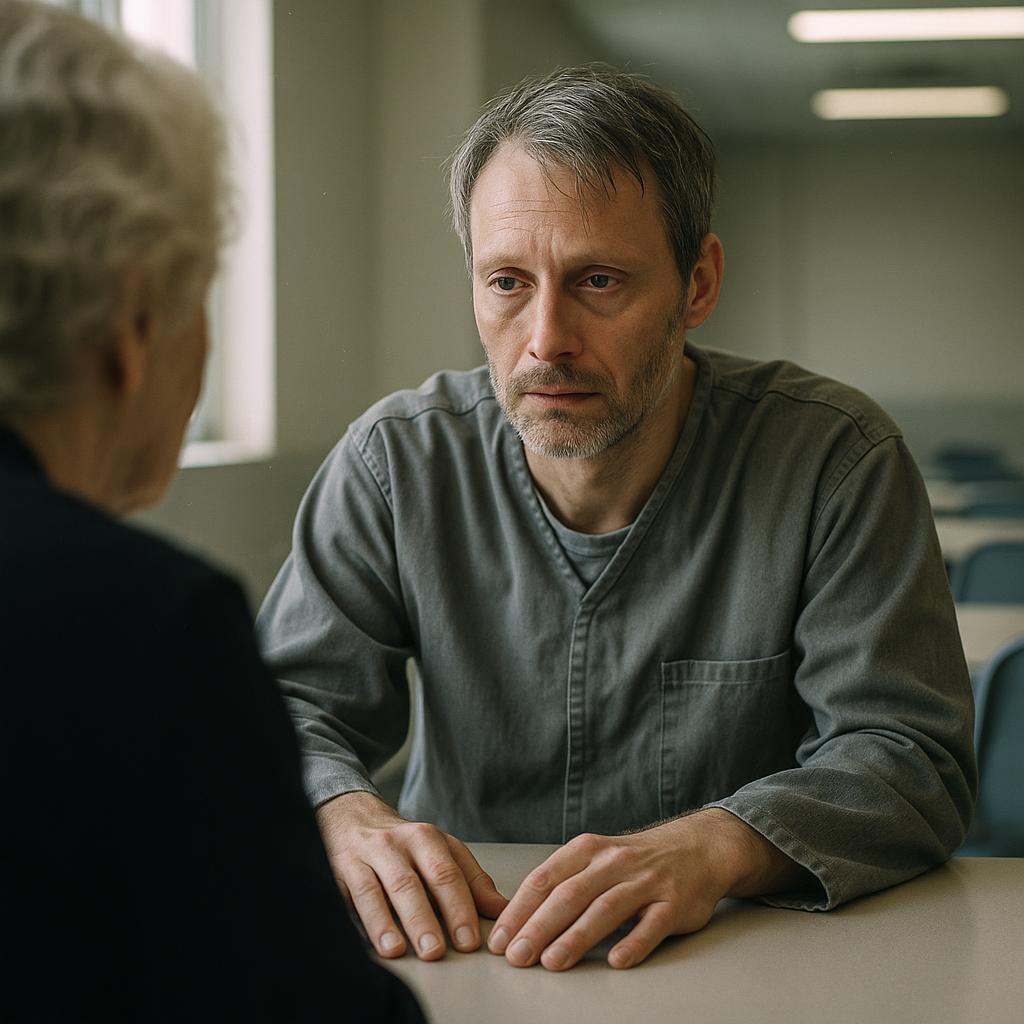
The Confession
David's hands trembled as he finally dropped the act. 'It started with small bets,' he confessed, his prison uniform hanging loose on his frame. 'Then bigger ones to cover the losses.' He described spiraling debts, loan sharks with threats, and the desperate calculation that led him to see Frank's life insurance as his escape route.
'Dad was so careful with money,' he said, a bitter edge creeping into his voice. 'All those years of pinching pennies, investing wisely—I saw it as hoarding what should have been mine.' When he described how he'd researched the perfect poison, I felt physically ill. The clinical way he spoke about dosages and timing revealed a stranger wearing my son's face.
'And me?' I asked, my voice barely above a whisper. 'Was I just another obstacle?' David looked at me then, really looked at me, perhaps for the first time in decades. 'I loved the idea of you—the parents who would give me everything. I just never learned to love the real people you were.' The raw honesty of it struck me like a physical blow.
As I gathered my purse to leave, he asked if I'd come back. I paused at the door, the weight of fifty years of motherhood on my shoulders. 'No,' I said simply. Walking out of that prison, I felt something unexpected—not closure exactly, but the first fragile threads of freedom.
What I couldn't have known then was that David's confession was incomplete, and the final piece of this tragic puzzle was waiting in a safe deposit box Frank had left for me to find.
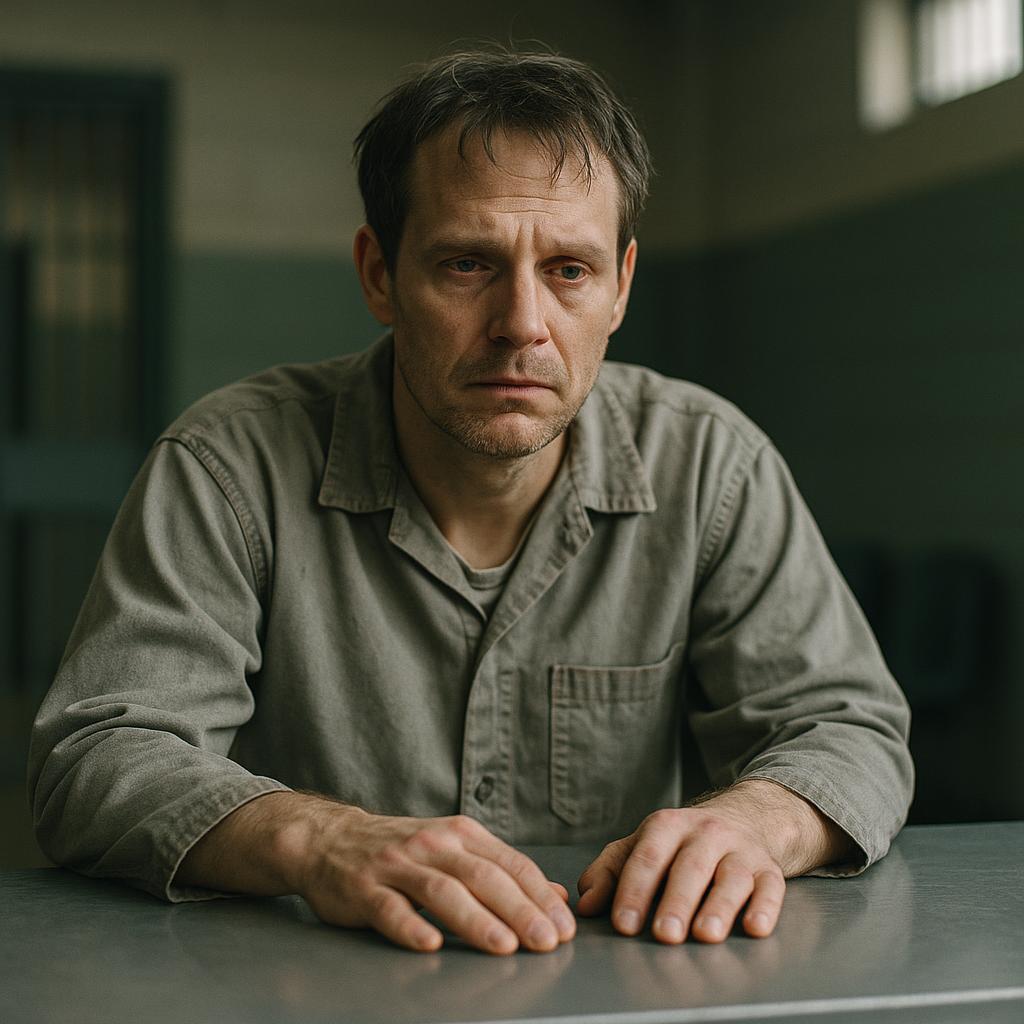
New Beginnings
The FOR SALE sign went up on a Tuesday, exactly one year after Frank's funeral. I stood in our driveway watching the realtor hammer it into the lawn, feeling a strange mix of grief and relief wash over me. Every corner of this house held fifty years of memories—Frank teaching David to ride a bike in the backyard, holiday dinners around our oak table, quiet evenings reading side by side.
But now those happy memories were tainted by betrayal, and the walls seemed to whisper with recordings I couldn't unhear. "You're doing the right thing, Margaret," George said, appearing beside me with another box labeled 'KITCHEN.' He'd been my rock through this nightmare, showing up every weekend to help sort through decades of accumulated life. I found a charming little cottage just three streets over from Eleanor, my friend from the Widows Beyond Betrayal support group.
It had a small garden perfect for the herbs Frank always wanted me to grow and enough distance from the old neighborhood to avoid the pitying glances that followed me at the grocery store. As we loaded the last of Frank's carefully wrapped fishing gear into George's truck, I ran my hand along our bedroom doorframe where we'd marked David's height every birthday until college. Some things I couldn't bring myself to pack—the family albums stayed behind, along with David's trophies and the dining set he'd always expected to inherit.
The weight lifted from my shoulders with each empty room, as if I were finally setting down a burden I'd carried too long. What I didn't realize then was that leaving this house behind was just the beginning of my liberation—and that the small blue envelope I'd discover tucked inside Frank's old tackle box would change everything I thought I knew about our marriage.
Frank's Birthday
Today would have been Frank's 76th birthday. I woke up early, put on my good blue dress—the one he always said made my eyes sparkle—and drove to the cemetery with a bouquet of daisies and his old tape recorder tucked in my purse. The morning air was crisp, just the way Frank liked it for his fishing trips.
I settled myself on the small bench beside his headstone, arranging the flowers in the built-in vase. "Well, Frank," I said, my voice stronger than I expected, "I've moved into that little cottage we always admired on Maple Street." I told him about my herb garden, about Eleanor from my support group becoming my closest friend, about George still bringing coffee every Tuesday morning. I played Frank's favorite Miles Davis record on the portable player I'd brought, imagining his foot tapping along as it always did.
When the last notes faded, I pulled out the tape recorder—the same model he'd used to save my life. "I'm recording this for you," I said, pressing the red button. "I want you to know I heard you. Loud and clear." My voice broke a little as I thanked him for his final act of love, for seeing what I couldn't, for choosing truth over comfort.
"You gave me a second chance at life, Frank," I whispered into the recorder. "And I promise not to waste it." As I walked back to my car, I felt lighter somehow, as if Frank's spirit had lifted some invisible weight from my shoulders. What I didn't realize then was that someone had been watching me from behind the oak tree—someone who would soon upend everything I thought I knew about moving on.
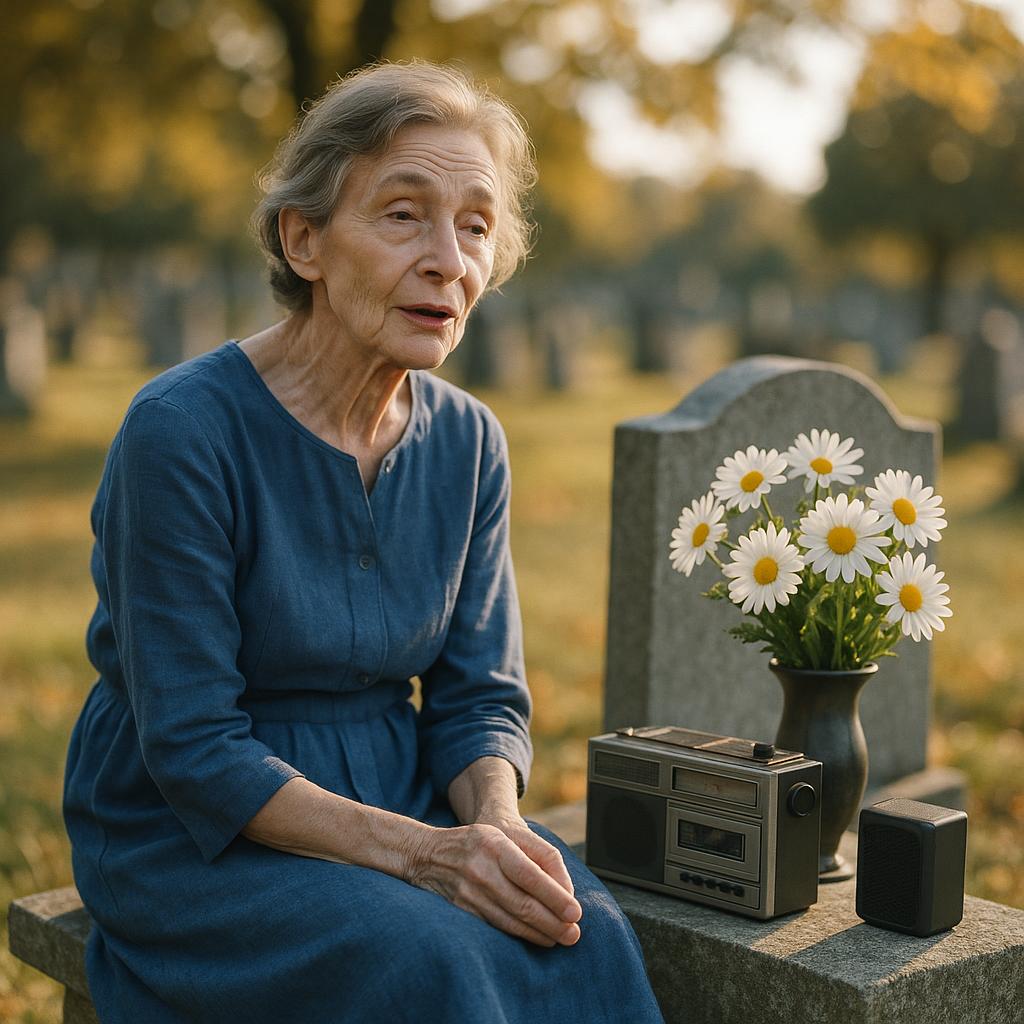
The Inheritance
Eighteen months after Frank's death, I found myself standing in front of a room full of seniors at the community center, my hands trembling slightly as I clutched my notecards. "Financial exploitation by family members is the silent epidemic no one wants to talk about," I began, my voice steadier than I expected. The volunteer coordinator had warned me that sharing my story might be triggering, but what she didn't understand was that each telling made me stronger.
I carefully edited out the most painful details about David, focusing instead on Frank's foresight—how his hidden recorders had saved my life. "Your greatest inheritance isn't your savings account or your china cabinet," I told a tearful woman whose son had emptied her bank account. "It's the truth that keeps you breathing another day." After sessions, people often approached me privately, whispering their suspicions about children or grandchildren.
I'd gently guide them toward resources I wished I'd had. George teases that I've become a "senior fraud detective," but I see it differently. In my support group for widows betrayed by family, I'm known as the one who always says, "Frank gave me two gifts: the truth, and a second chance to use it." What began as my personal tragedy has transformed into something larger—a mission to protect others.
Sometimes I wonder if Frank somehow knew that in saving my life, he was giving me a new purpose. What I never expected, though, was the phone call I received last Tuesday from a detective who said they'd found something in David's prison cell that changed everything about our family's story.