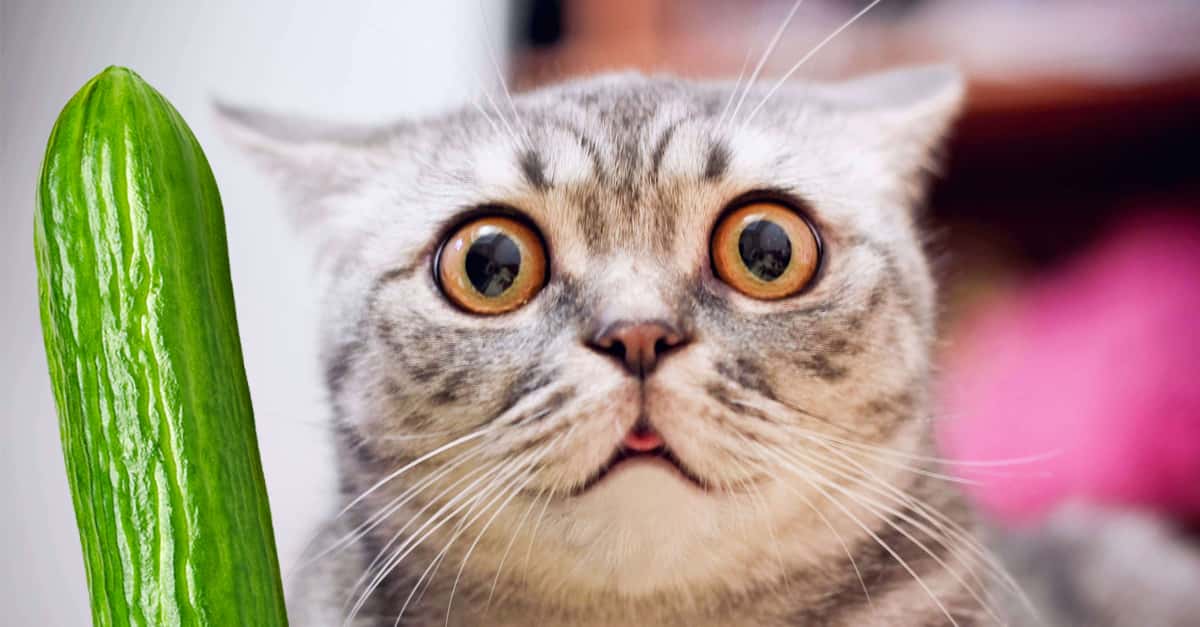
Of all the things cats offer their human companions, the charming contrast between graceful and full-on derpy may be the most entertaining. One moment, our kitties are preening like royalty but just a second later, they’re licking their private parts or falling off tables—or perhaps, in one of the internet's favorite scenarios, jumping away from cucumbers. Why are felines so scared of this humble green vegetable? What is it about cucumbers that strikes fear into the hearts of our beloved cats?

Why Are Cats Scared Of Cucumbers Editorial
Cats vs Cucumbers: The Truth is Out There
The truth is that we don’t know for sure, but there are a few compelling theories. First, if you’ve ever searched for a YouTube compilation of “Cats vs Cucumbers” videos, you’ll notice that most clips follow the same series of events.
Cat is drinking or eating. Sneaky human places cucumber behind innocent cat. Cat turns around and discovers “the green terror.” Cat jumps sky high.
The key part of this sequence is when the human places the cucumber behind the cat. This changes the cat’s environment. The cat thinks it has the lay of the land. This is their house—humans are just around to dole out kibble and clean the bathroom.
But when an owner places a cucumber behind their cat, they disrupt the cat's sense of dominance. How did that get there? Why didn’t I notice it before? Our feline friends are natural predators. They like to be the hunter, not the hunted.
Feline Fears and Creepy Cucumbers
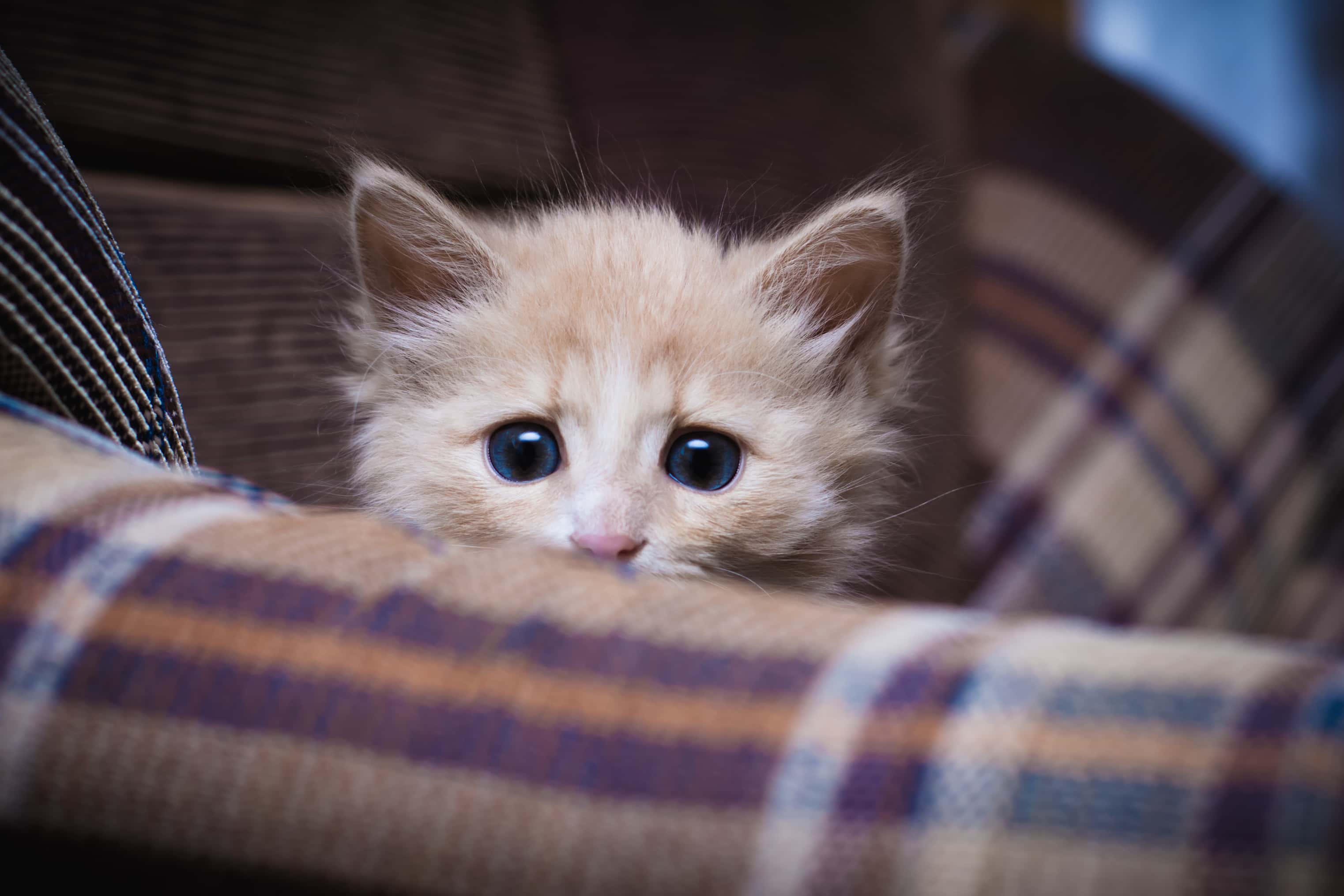
When humans reverse the natural order, cats get startled. So, our pets' fear is less about the cucumber and more about the sudden appearance of an unpredictable object. I mean, how would you feel if you turned around and saw that a green tube as long as your entire body had just randomly materialized behind you?
Like most animals, cats don’t like it when something startles or surprises them. Finishing a nice dinner and then turning around to see that a vegetable has apparently gained the ability not just to move but to stalk? Not the most soothing experience for our pets.
Surprise at an unexpected object is the most prevalent theory for why cats are so frightened of cucumbers—but some scientists believe in a stranger explanation.
Cats, Cucumbers, and…Constrictors?
Just like their human friends, cats receive genetic traits and behaviors from their ancestors. You may have inherited your uncle’s overbite. Your cat may carry parts of their extended families inside of their furry little bodies and funny little brains.
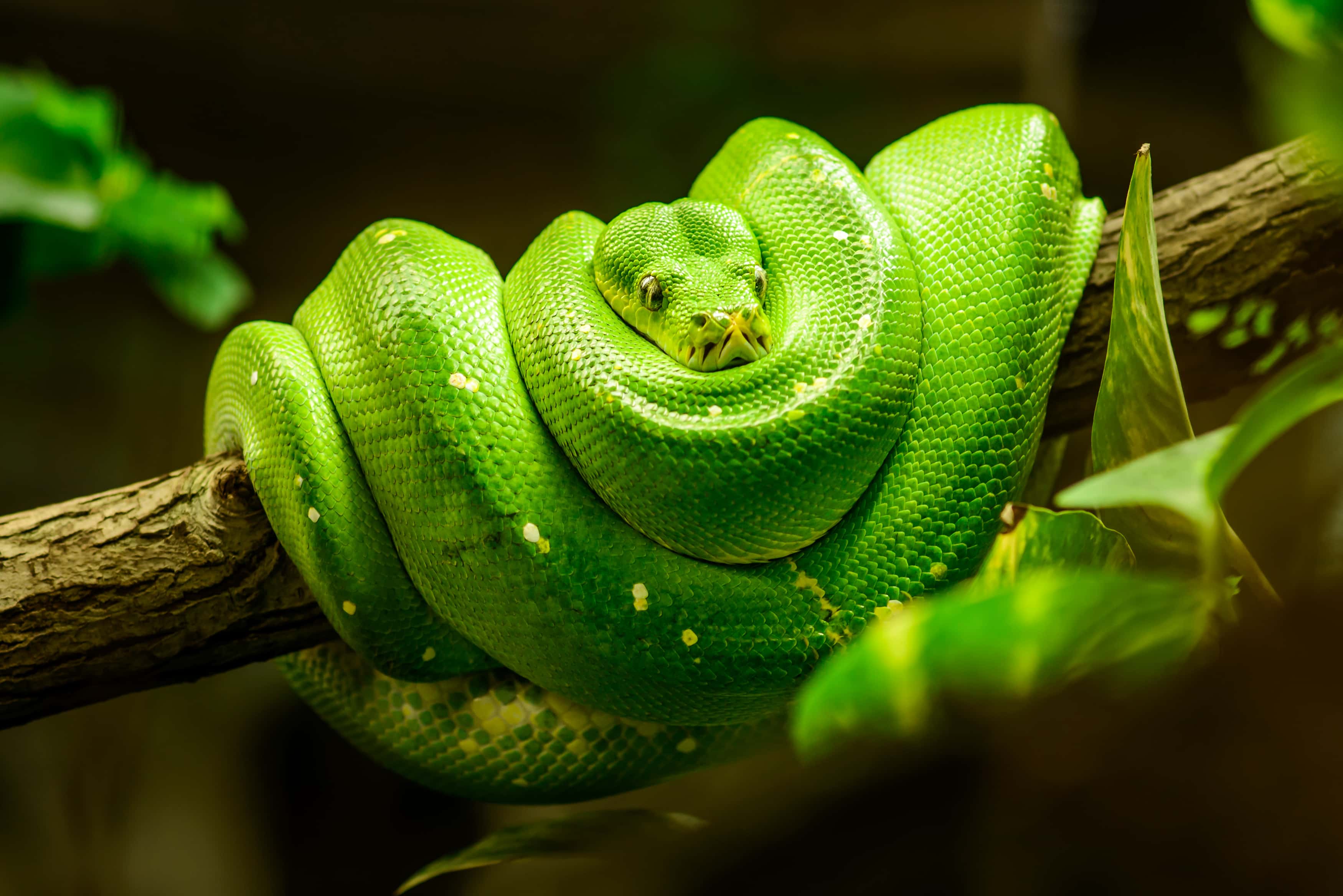
So even though most housecats probably haven’t encountered too many snakes, something that looks snake-like sends a curious signal to even the most domesticated cat’s brain: Code Green! This is not a drill! Get out of there, soldier!
Yup, some scientists believe that cucumbers terrify cats because their length, shape, and because their color resembles one of the natural world’s most dangerous predators: the snake.
Slowly Place the Cucumber Back in the Fridge, Ma’am
I get it. Watching videos of a usually elegant animal lose their mind because of a vegetable is pretty entertaining. But if you’re tempted to quietly place a cucumber behind your own pet, resist the temptation, put that cucumber in a salad, and give your cat some pets instead.
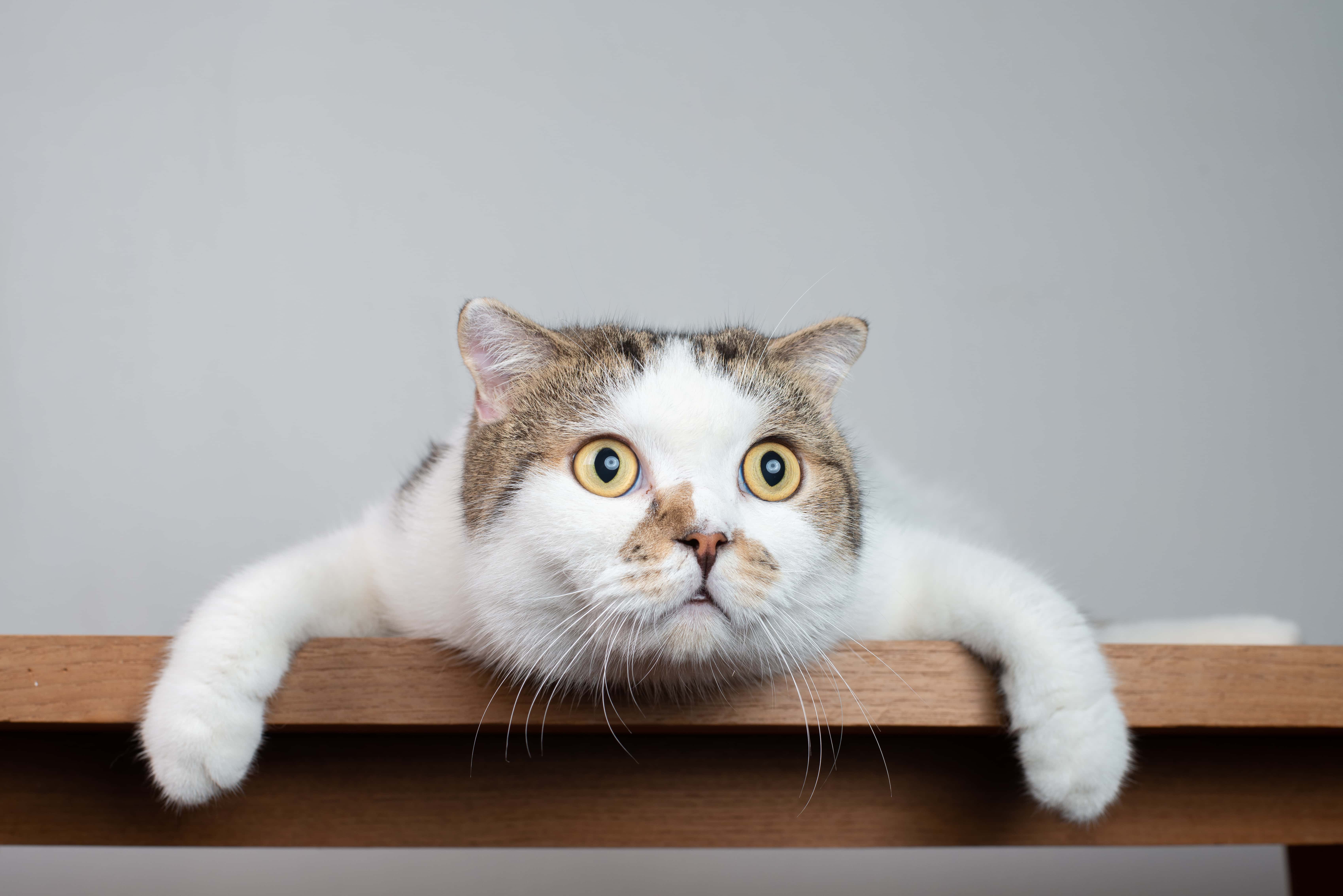
It turns out that those hilarious reactions—acrobatic jumps, raised hair, puffed tail, skittering paws—are actually signs of intense stress. Animal behaviorists don’t find these viral videos very funny. Instead, they see an animal experience a “startle response.” In other words: kitty is not in on the joke and, to be frank, they’re terrified.
What’s worse, startled cats can easily become injured or even experience long-term negative side effects. For example, if a cat was eating under a table when their owner snuck the cucumber behind them, it might automatically jump up and hit its head. Repeat this cruel prank too often and your cat could experience prolonged stress.
Lesson Learned: Cats are for Petting, Cucumbers are for Eating
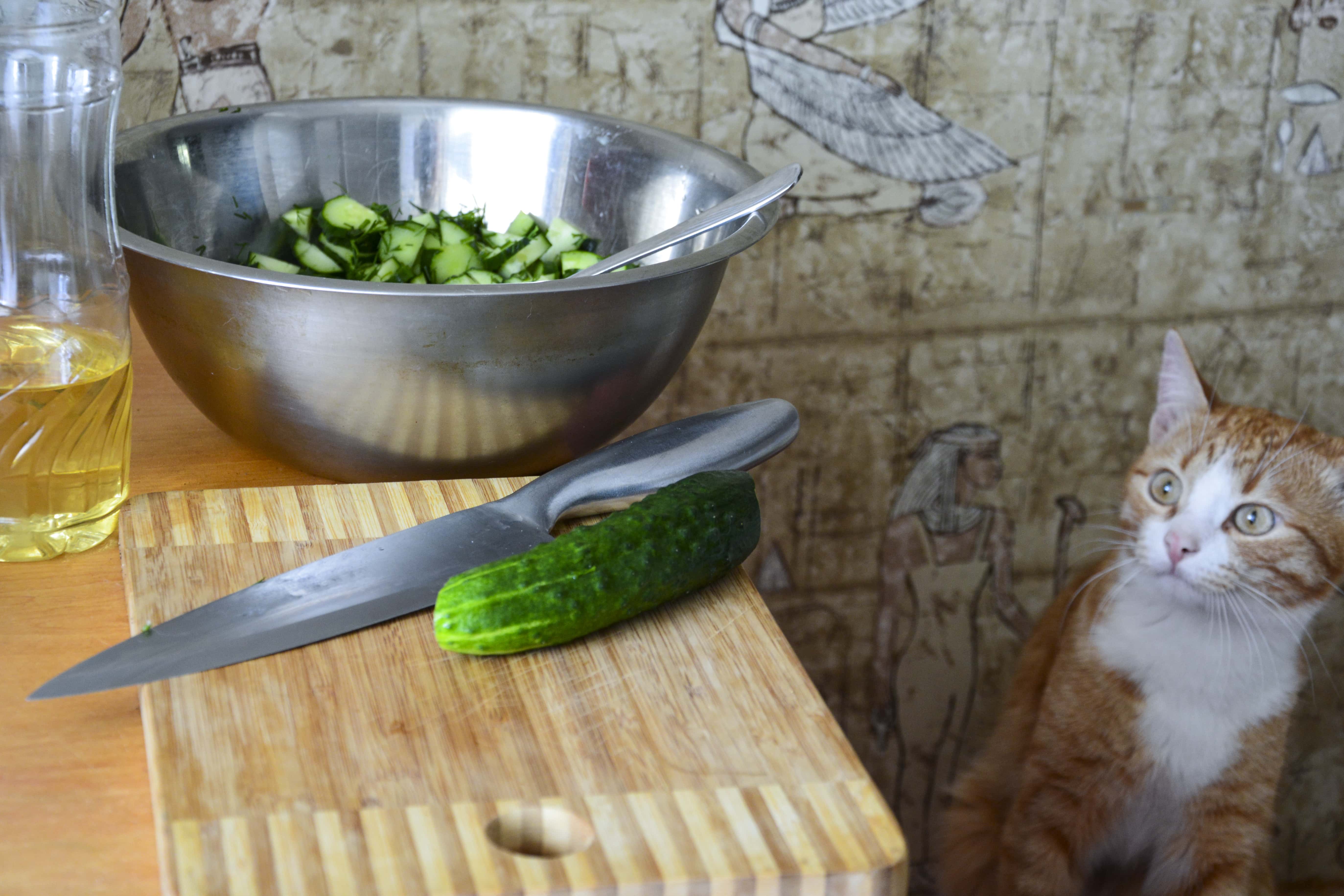
You’re at home on a weeknight, about to get out the chopping board and make some Greek salad for dinner. You open the fridge, look in the vegetable crisper, and pull out the green terror itself, the dastardly cucumber. Your cat, meanwhile, is eating from its bowl, just minding its business.
Resist temptation and put that cucumber where it belongs: your plate. Besides, even leaving behind the psychological and potentially physical damage of this mean-spirited joke, scaring your cat with a cucumber is also a waste of a perfectly good vegetable.
So next time you’re looking for something fun to do with your cat, may I suggest playing with them, giving them an appropriate amount of cat grass, or treating them to some fancy food? Or, if you really need a cucumber to spice up your night, learn to make your own pickles. Even better? You can do so while occasionally leaning over and giving your kitty the rubs they deserve.