
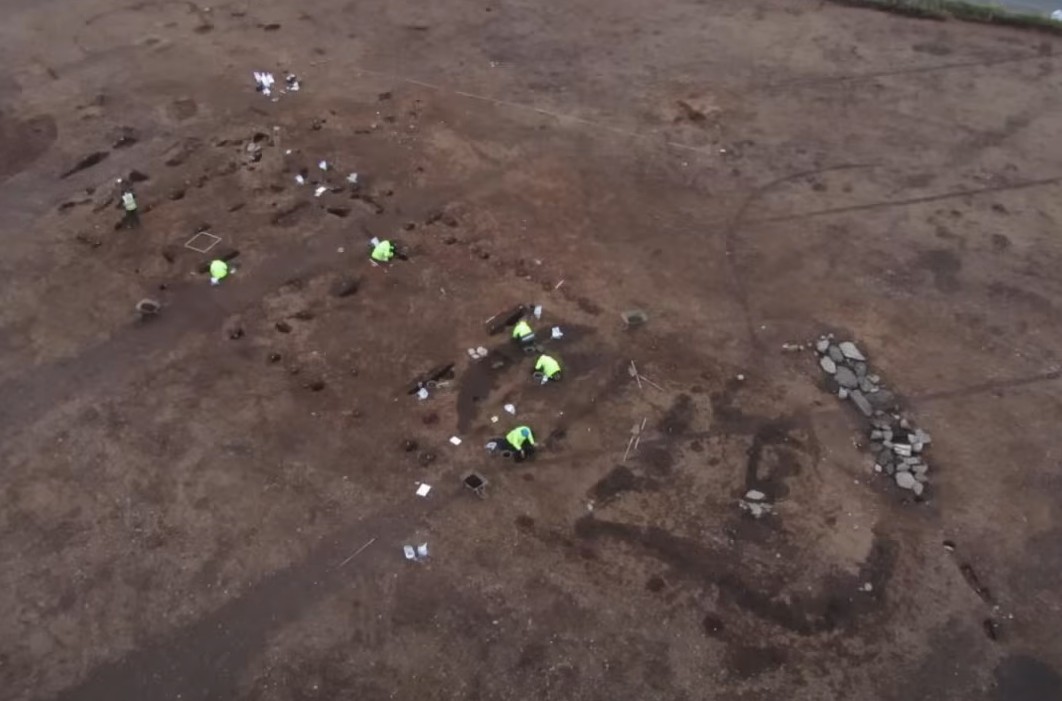
In 2025, archaeologists from GUARD Archaeology dug underneath a series of planned football pitches near Carnoustie High School and found traces of Scotland’s biggest and oldest Neolithic timber hall, from around 4000 BC, a thousand years before Stonehenge existed.
A Monumental Hall Much Older Than Stonehenge
The structure was an impressive 35 metres in length and 9 metres wide, built of oak with massive twinned timber posts supporting a lofty roof. Wattle-and-daub walls and internal partitions testify to a sophisticated building layout unlike most other Neolithic buildings.
 GUARD Archaeology via New Archaeology Discoveries from July 2025, Inside Archaeology, YouTube
A Smaller Companion Building.
The site also contained a smaller timber hall next to the main one. This one was roughly 20 metres long and over 8 metres wide, a very rare pairing for early Neolithic Scotland. While the larger hall was probably intended for ceremonial functions, the smaller one had hearths, hazelnut shells, and burned cereal grains showing a pattern of domestic life.
Ceremonial And Ritual Importance
Archaeologists uncovered deliberately buried stone artifacts under the larger hall. Items like Arran pitchstone fragments, garnet-albite-schist axe heads, and highland smoky quartz all point to a ritual or symbolic use for the hall. The location on high ground near natural walking routes suggests seasonal gatherings, especially autumn feasts when hazelnuts were harvested.
 New Archaeology Discoveries from July 2025, Inside Archaeology, YouTube
A Gathering Place Through Generations
Around 3800–3700 BC, a smaller hall was built within the footprint of the first one, and ritual deposits continued until about 3600 BC. Even after further building stopped, the site was still a seasonal gathering place until around 2500 BC; clearly the hall was a place of long-term cultural importance.
A Bronze Age Hoard
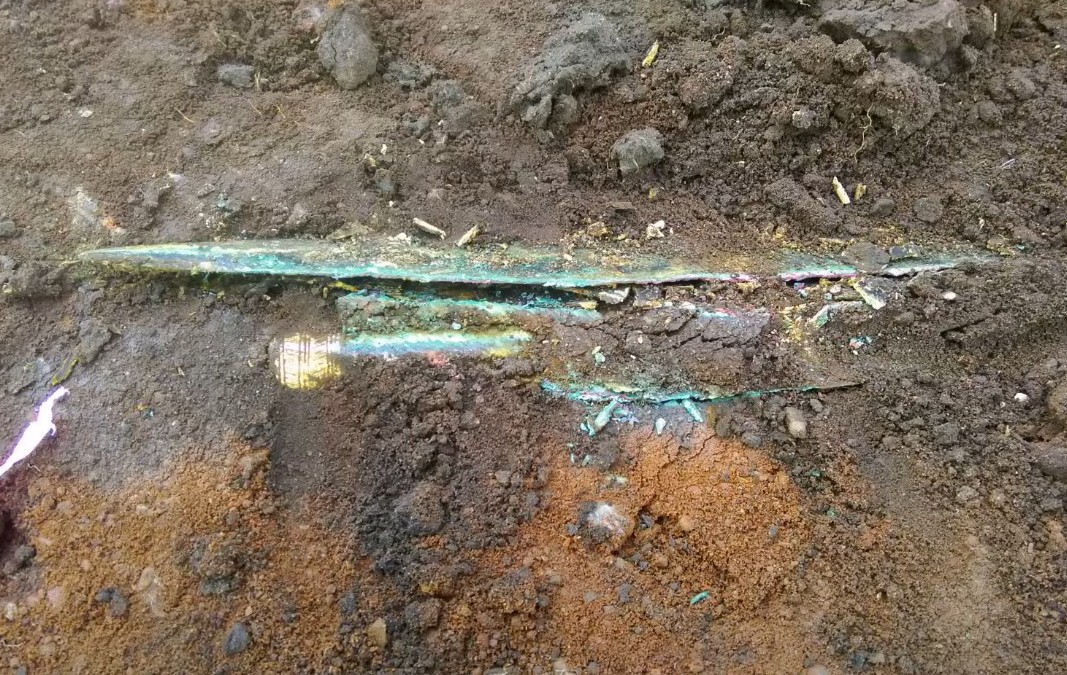
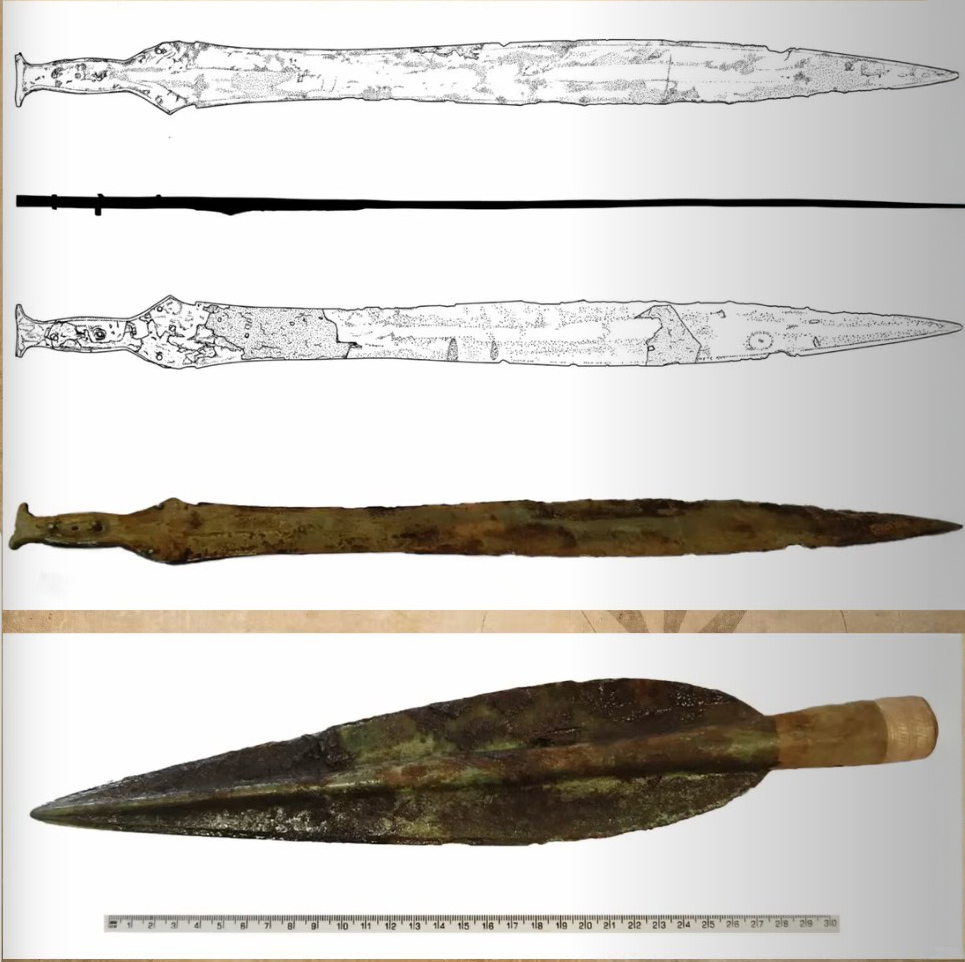
Centuries later, around 1400 BC, a smaller Bronze Age roundhouse was built on the site. Inside it, archaeologists hauled up a trove of rare artifacts: a bronze sword in a wooden scabbard; a gold-banded spearhead; and a swan‑neck pin. All of these artifacts were found carefully wrapped in wool and sheepskin. Their preservation was partly due to copper’s antimicrobial properties.
 GUARD Archaeology via New Archaeology Discoveries from July 2025, Inside Archaeology, YouTube
Quality Metalwork And Emerging Social Classes
The Bronze Age hoard includes metalwork that was most likely done in Scotland using raw materials imported from eastern England and maybe even the area around the Irish Sea. The hoard and its items are a telltale sign of wealth and status emerging in an otherwise modest domestic context.
Soccer Field Project Reveals A Priceless Treasure
This amazing discovery came about unexpectedly during a regular archaeological survey mandated by Angus Council before putting in school sports fields. A standard municipal development suddenly morphed into one of Scotland’s most amazing archaeological sites.
 Neolithic Timber Hall Carnoustie, Alan Hunter Blair, YouTube
The Discovery In Context
This spacious timber hall is the largest early Neolithic timber hall yet found in Scotland and adds to our knowledge on the planning, carpentry, and social structure of early farming communities. It adds great context to existing sites like Balbridie, but really stands out for its scale, dual‑hall layout, and long period of continuous use.
A Rich Neolithic Legacy
The discovery of the Carnoustie halls is a fantastic window on the organised ceremonial culture established by Scotland’s first farmers. Its architecture, regional connections, and eons of use certainly will force a re-evaluation of our assumptions about early Neolithic social structures and ceremonial practices.
You May Also Like:
The Carnac Stones In France Are Europe's Oldest Neolithic Monuments
Archaeologists discovered a perfectly preserved Bronze Age sword in a burial site in Bavaria.