He Did It (And Them) All
Shel Silverstein rose to fame as a cartoonis but he soon branched out, writing best-selling novels, chart-topping songs, and Broadway-busting screenplays. In the end, perhaps the only thing longer than his CV was his body count.
1. He Was Chicago Born And Raised
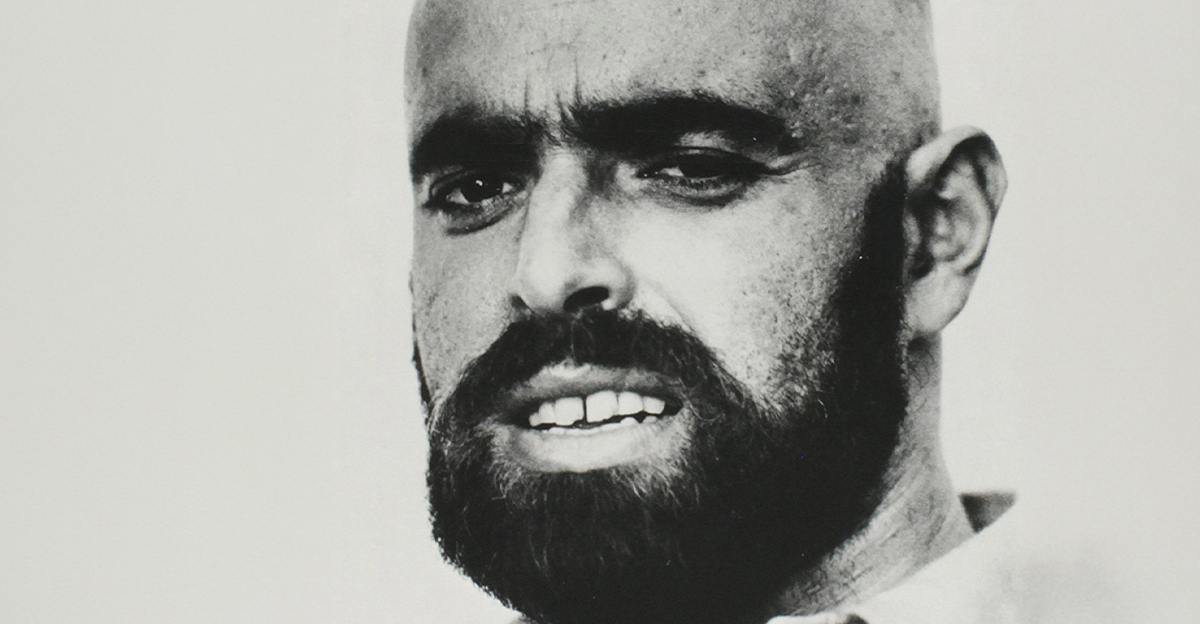
Shel Silverstein drew himself into existence on September 25, 1930, in Chicago—a city as tough and funny as he’d turn out to be. His dad, Nathan, had fled Russia’s hardships, while his mom, Helen, was born to Hungarian-Jewish parents. The family wasn’t fancy—but they had flavor.
 Alice Ochs (shown in "eBay (v2)"), Wikimedia Commons
2. His Parents Tried To Bake Success
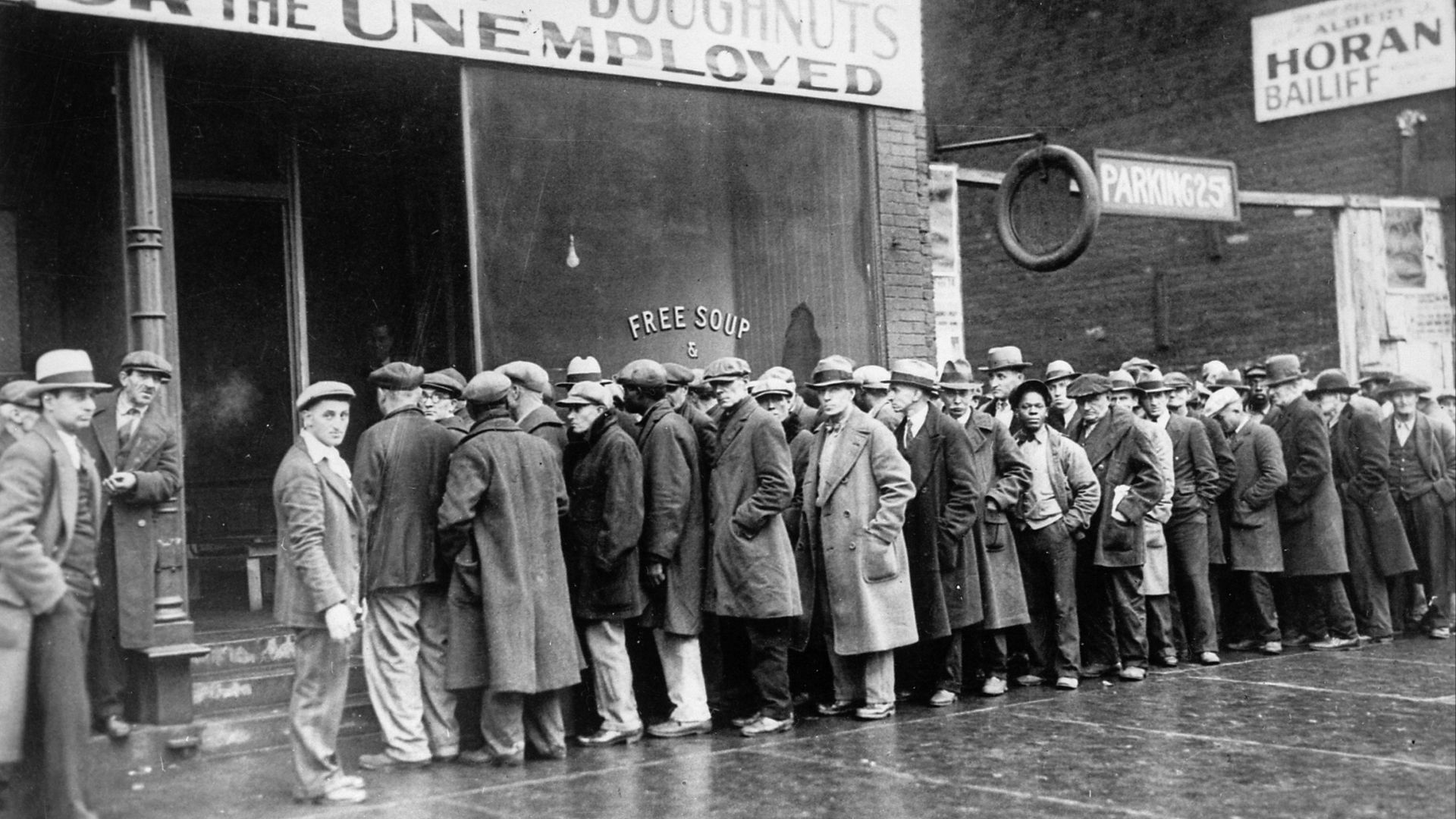
Before Shel Silverstein was penning poems, his parents were kneading dough. Nathan and Helen ran Silverstein’s Bakery—later renamed the Service Cake Company. But whatever they named it wouldn’t matter. The bakery had opened its doors in the middle of the Great Depression. Unfortunately, the only thing that rose was the bread.
The bakery barely survived. Silverstein was only good at one thing anyway.
 Unknown authorUnknown author or not provided, Wikimedia Commons
3. He Found Art After Striking Out
Silverstein had no choice but to go into the arts. He started drawing as early as five, tracing the comics of the cartoonist Al Capp. But his real motivation wasn’t artistic—it was hormonal. As he put it, “I couldn’t play ball. I couldn’t dance. Luckily, the girls didn’t want me…so I started to draw and to write”.
Turns out, he had a knack for it.
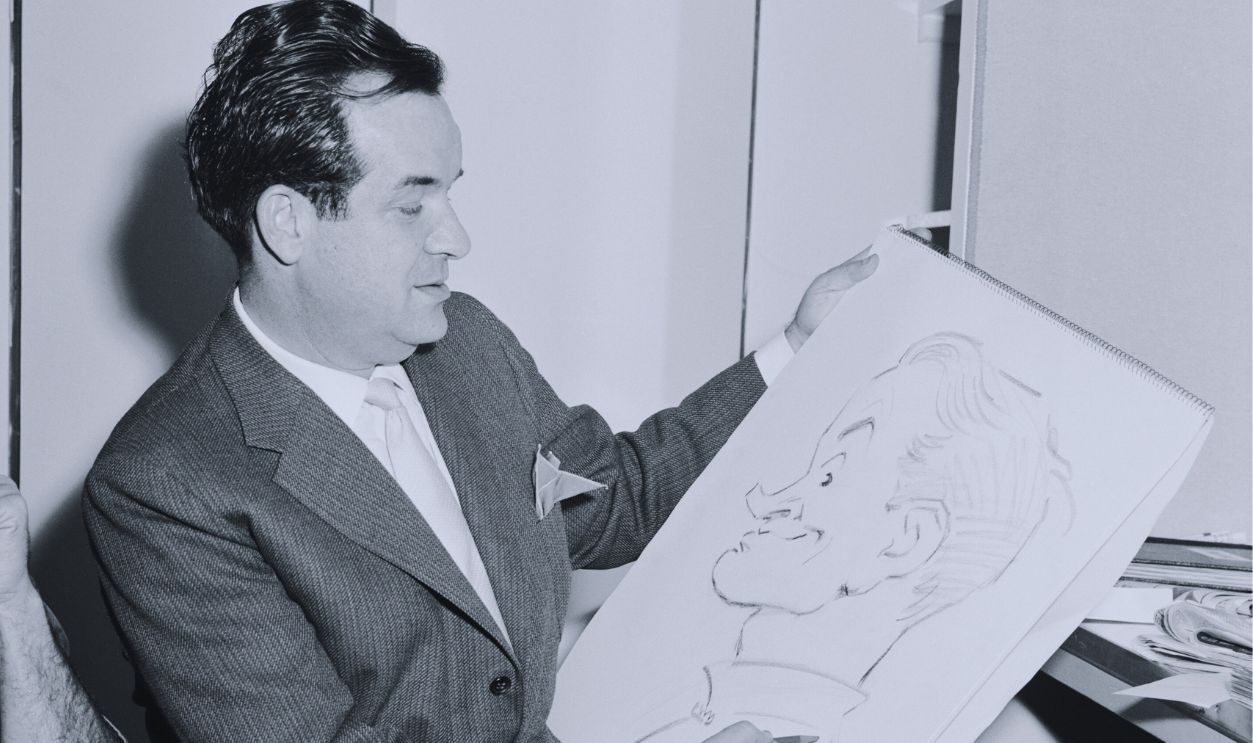
4. He Made His Own Style
Shel Silverstein learned the techniques of drawing from Al Capp. But the rest was all him. “I was lucky,” he later said, “that I didn’t have anybody to copy, be impressed by. I had developed my own style; I was creating before I knew there was a Thurber, a Benchley, a Price and a Steinberg”. His unique drawing style wasn’t the only thing that made him stand out.
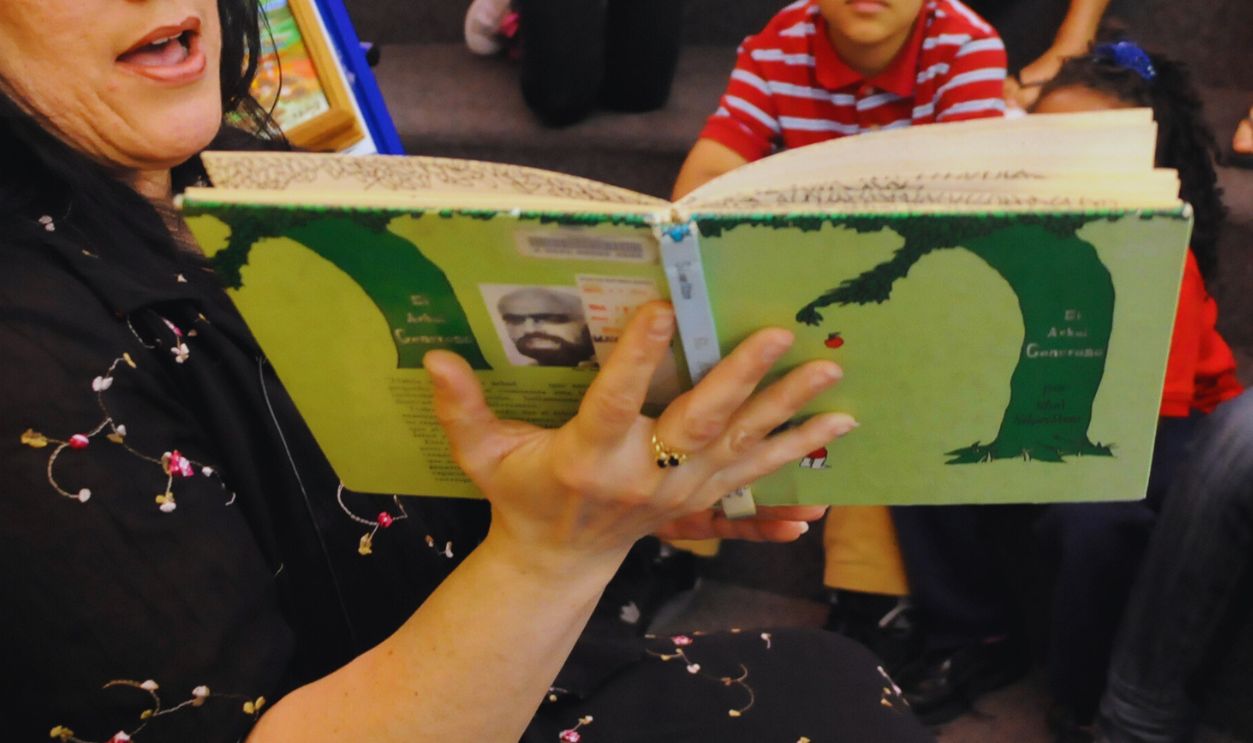 MediaNews Group/Reading Eagle, Getty Images
5. He Was A Poet—And Class Clown
At Theodore Roosevelt High, Silverstein distinguished himself for being something of “a loner who marched to the beat of his own drum”—and for being a total class clown. One of his former classmates recalled one of Silverstein’s early poetic works, “Ode to a Pig”. It was dedicated, not to a genuine swine, but to Silverstein’s basketball coach.
Thankfully, he excelled outside of school.

6. He Was A Little Nutty
In school, Shel Silverstein was a clown, but once the bell rang, he was a hustler. After school, Silverstein worked the stands at Comiskey Park selling peanuts—and, later, hot dogs—to baseball fans. It’s not clear what his grades looked like, but they were good enough to give him a chance at something better than shelling nuts for shillings.

7. He Got Kicked Out—Sort Of
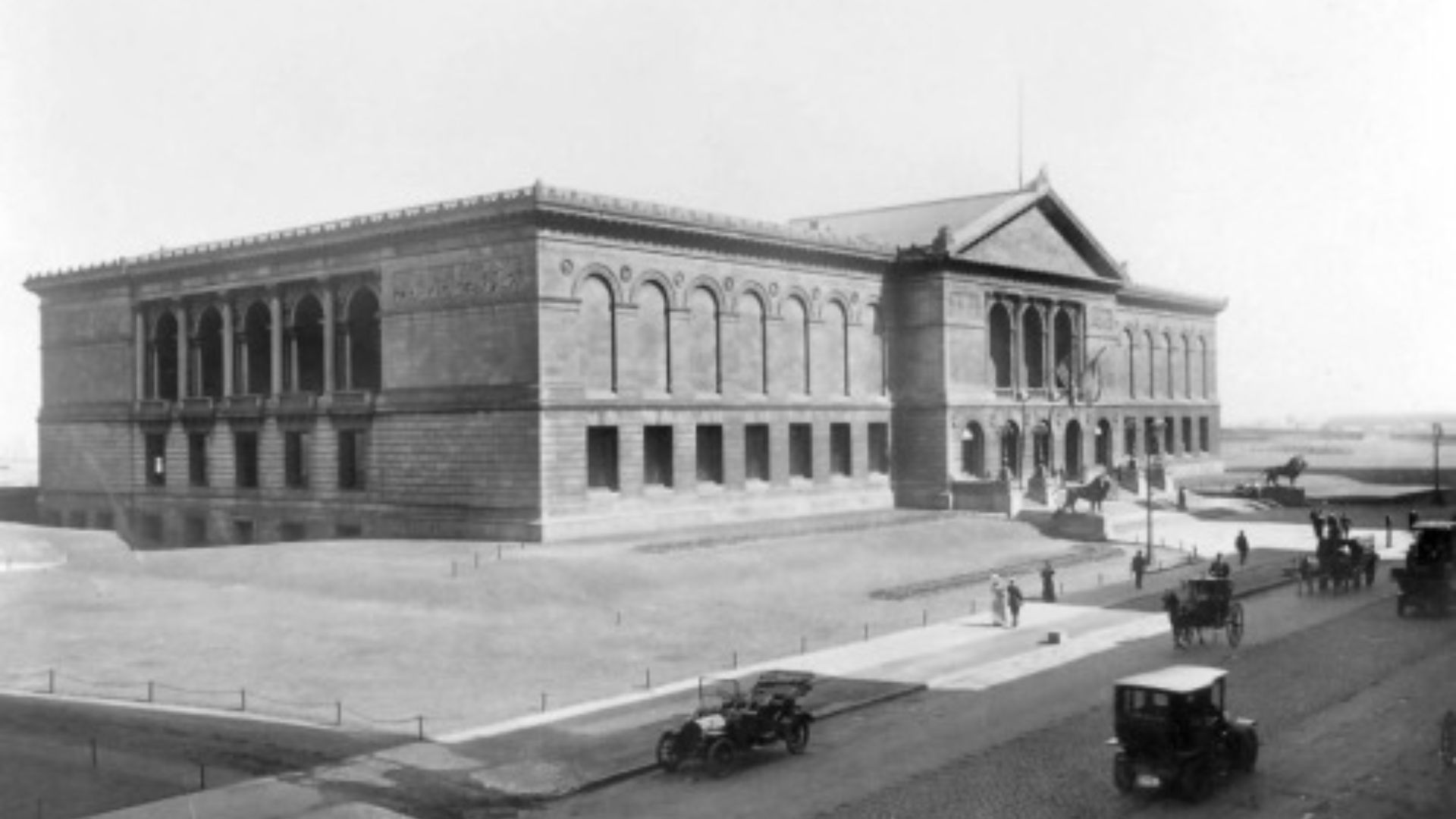
Silverstein’s college years are about as clear as one of his sketches—if he sketched with invisible ink. He claimed the University of Illinois at Navy Pier “put [him] on probation and then kicked [him] out”. But the actual records say otherwise. According to the books, Silverstein finished freshman year and transferred to the Chicago Academy of Fine Arts.
Either way, he didn’t stay put for long.
 Unknown authorUnknown author, Wikimedia Commons
8. He Took Out The Garbage
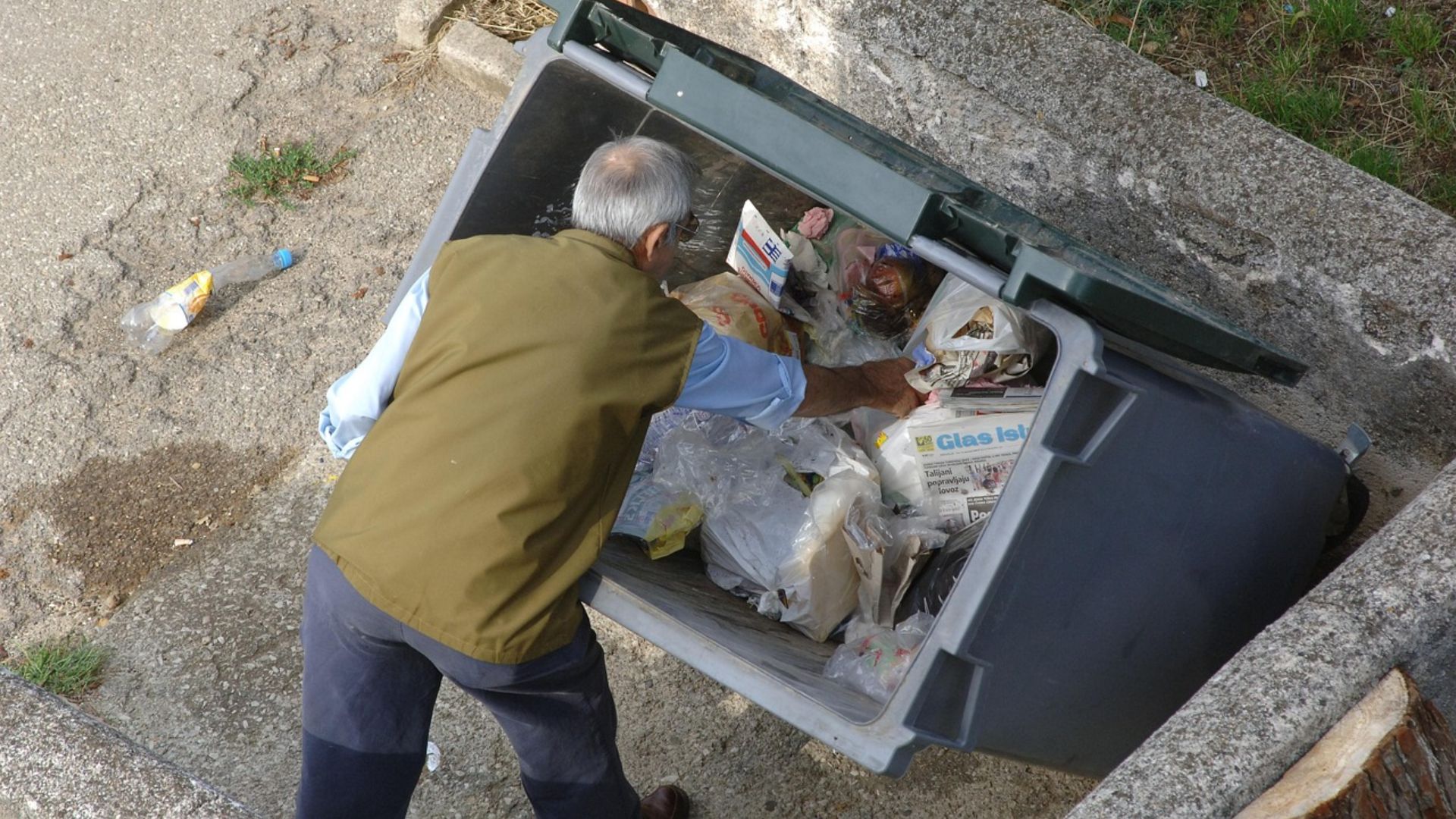
At Roosevelt College, Shel Silverstein found his calling…in the garbage. Sort of. Between 1950 and 1953, he drew and wrote for The Torch, the school paper, creating a satirical column that he called “The Garbage Man”. Despite the smell, the column was a hit. Even so, Silverstein thought he was wasting his time—and ink.

History's most fascinating stories and darkest secrets, delivered to your inbox daily.
9. He Chose Experience Over Education
Ever the contrarian, Silverstein saw college as a waste of ink. “It’s better to travel and experience the world than to stay in one place studying it,” he said. Silverstein should have been a little bit more careful about what he wished for.
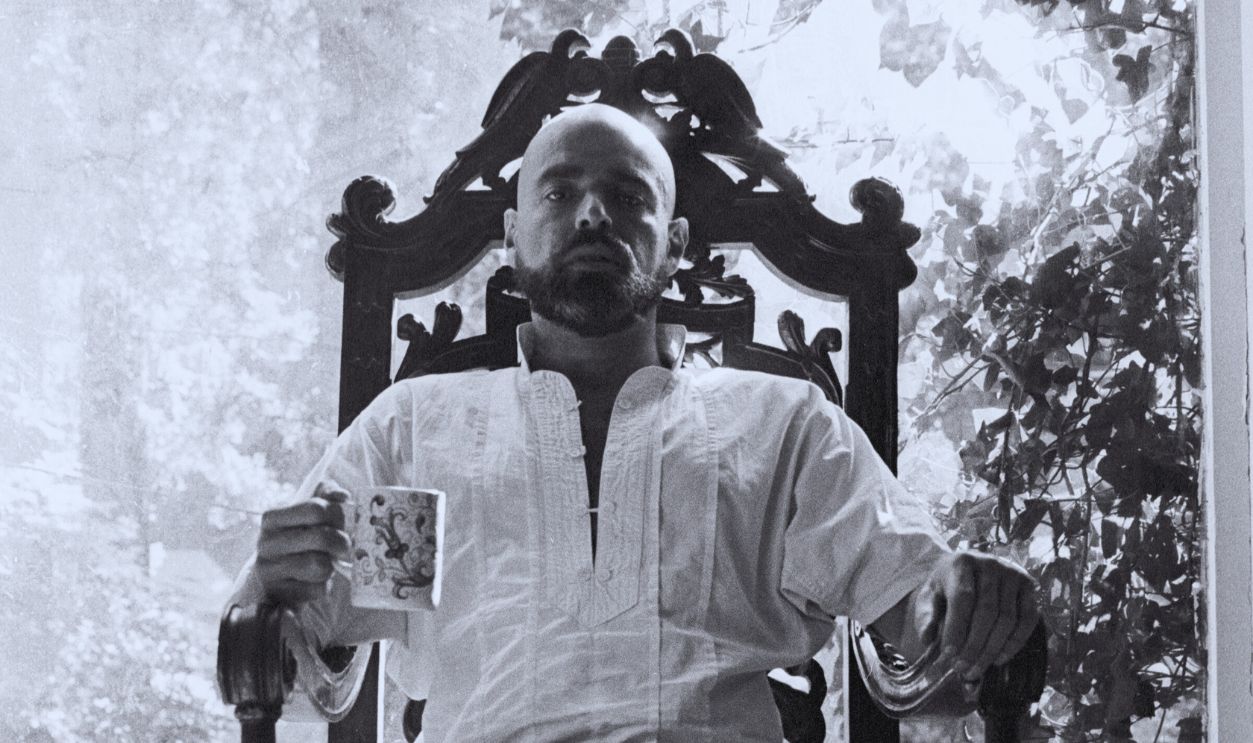
10. He Did Not Write This Draft
As a budding writer, Shel Silverstein knew all about drafts. But he was about to learn about the draft. In 1953, Uncle Sam sent Silverstein the dreaded draft letter. Before long, he was overseas, serving his country in places like Japan and Korea. He wasn’t exactly charging the battlefield.
 Expert Infantry, Wikimedia Commons
11. He Did A “Tour Of Doodles”
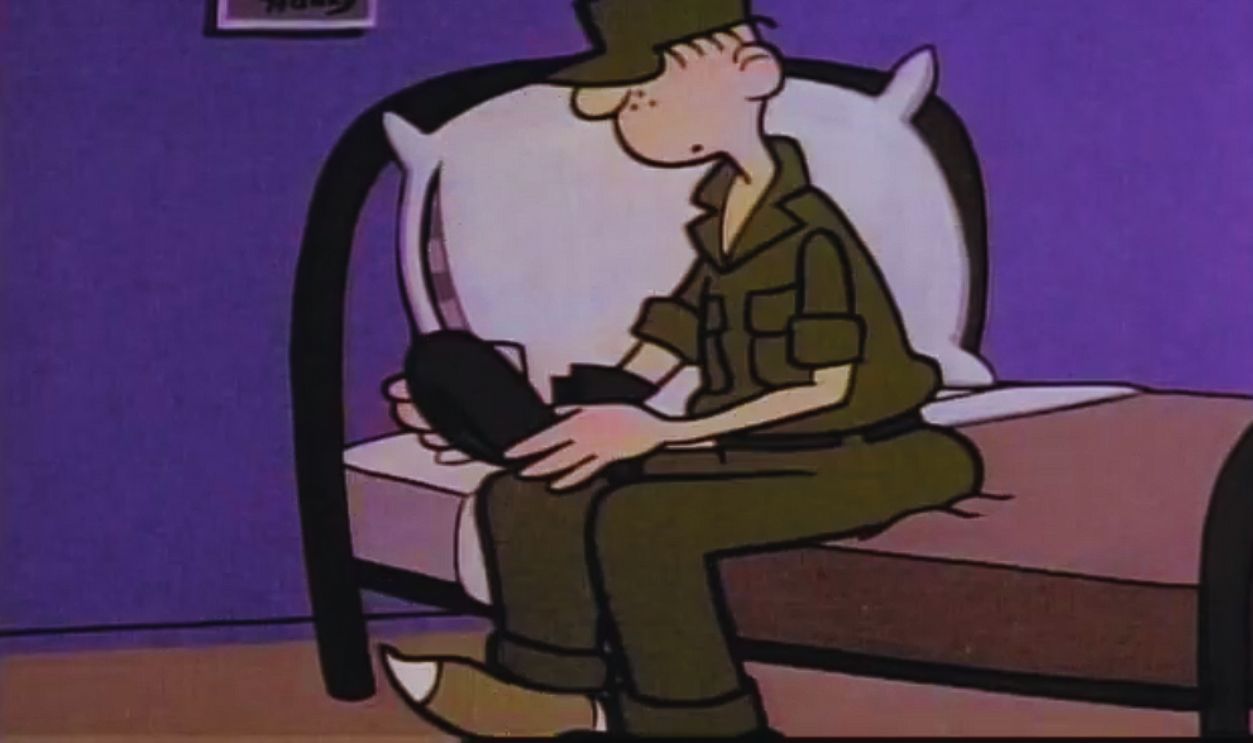
While serving in the US Army, Silverstein spent more time with a pen in hand than with a pistol. He served his country as a cartoonist for the Pacific Stars and Stripes. He would later compile his “tour of doodles” into his first book, Take Ten. When the book was republished as Grab Your Socks!, it became a paperback sensation.
His superiors, however, did not like his drawings.
 Screenshot from Beetle Bailey – “Grab Your Socks”, Paramount Cartoon Studios (1963)
12. He Nearly Got Court-Martialed
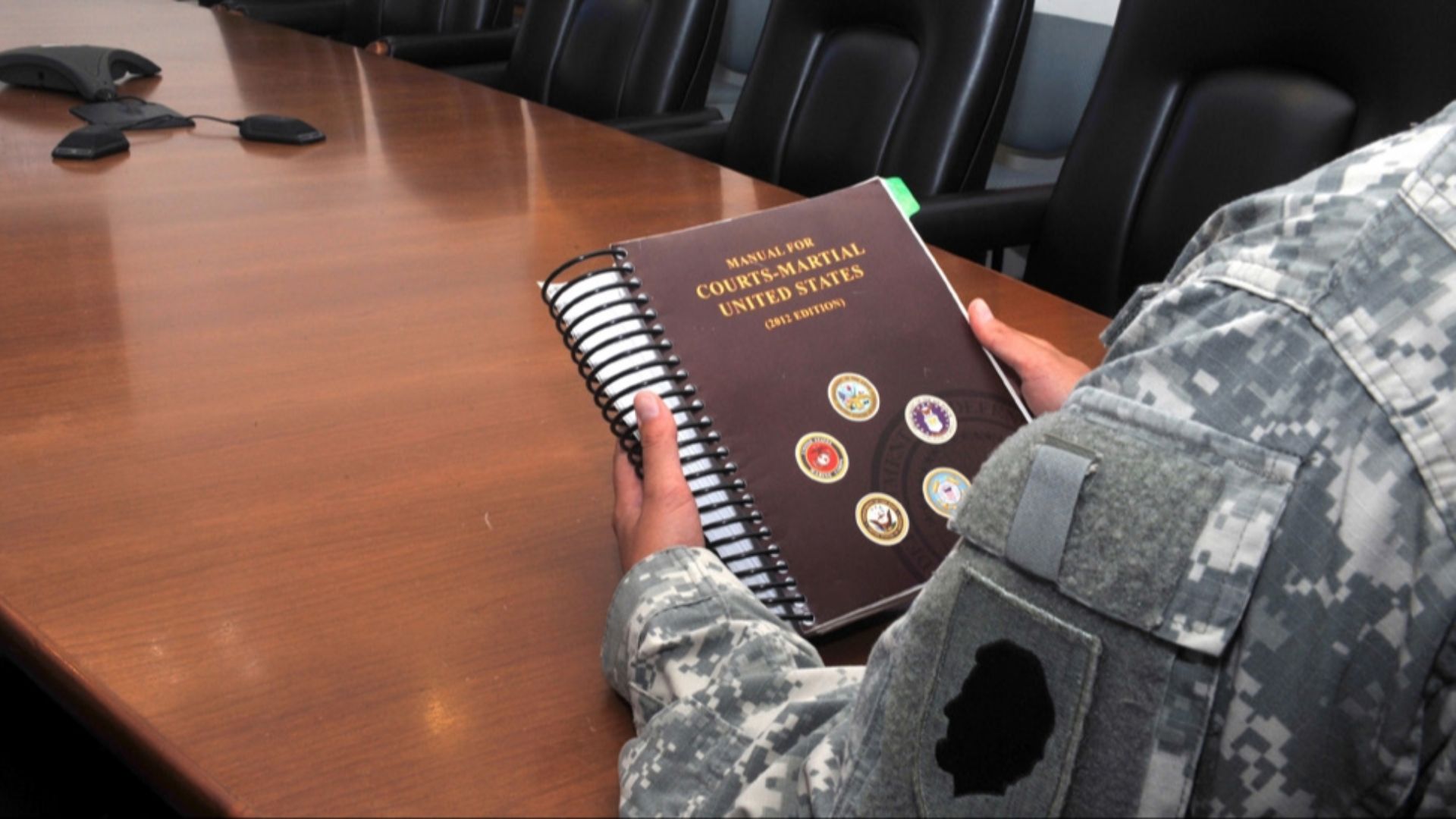
Silverstein’s cartoons for Pacific Stars and Stripes weren’t exactly up to code. One cartoon in particular implied that officers were taking uniforms for their families—an artistic choice that nearly earned him a court-martial. Still, Silverstein defended his time in uniform, saying “As much as I fought the Army while I was here, it[…]taught me things about life and gave me freedom to create”.
Civilian life would be the real fight.
13. He Came Home To Nothing
After his Army service ended, Shel Silverstein returned to Chicago. But work as a cartoonist was hard to come by, and he was feeling the pressure. “In Chicago,” Silverstein explained, “if you're an artist or a painter, your family has no respect for you”. The pressure he felt to make it big almost broke him. Instead, it drove him straight into a mansion.

14. He Walked Into The Playboy Mansion
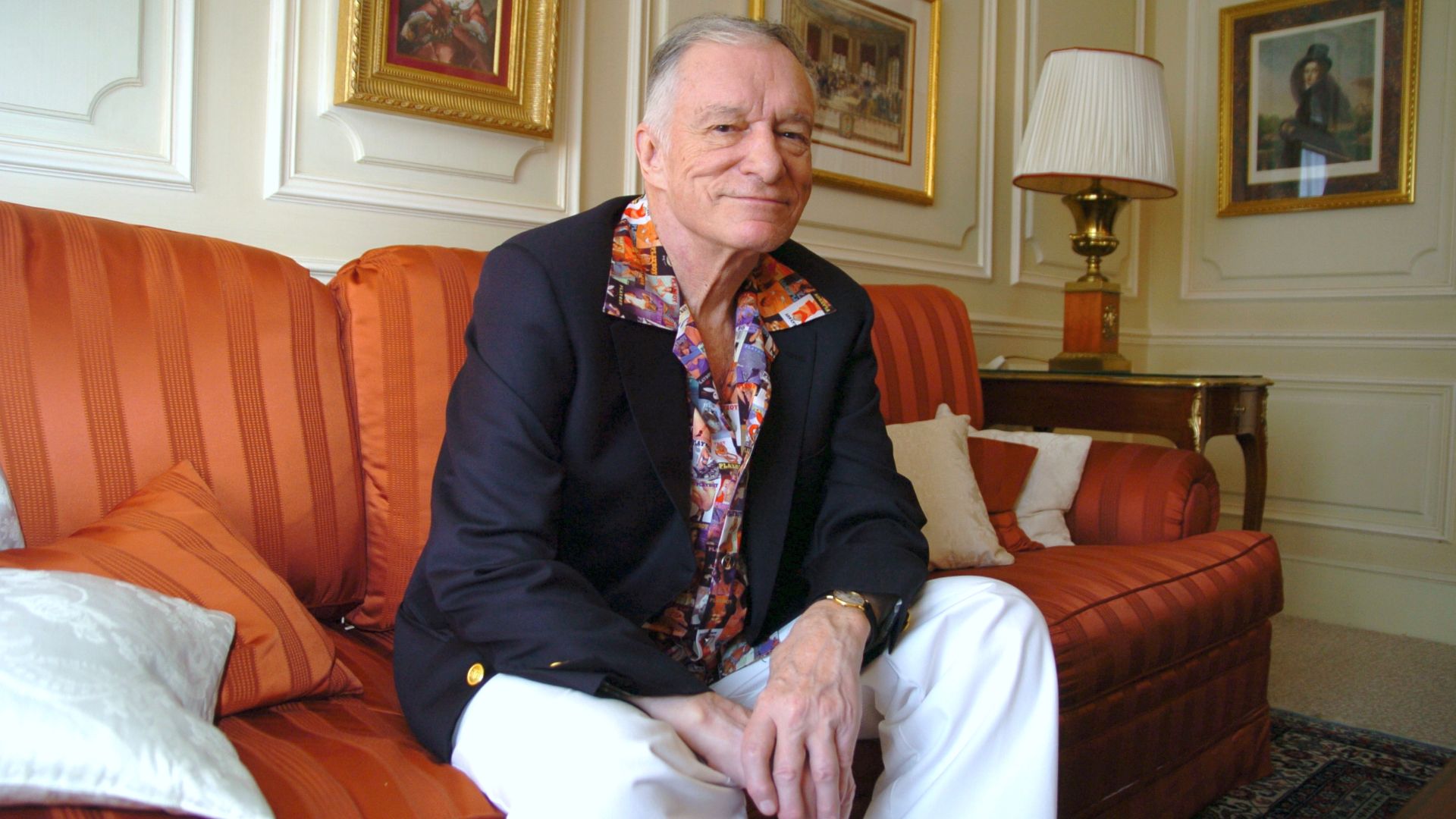
In 1956, short on his luck, Silverstein took a bold course of action. One that led him straight into the Playboy Mansion. Without so much as a phone call—and definitely no appointment—Silverstein strolled right into the most infamous bawdy house on earth. Once inside, he bumped into Hugh Hefner, lounging in his pajamas.
By the time the next issue hit the presses, Silverstein had his own byline. Within a year, he was one of Playboy’s leading cartoonists.
15. He Cashed Out
Shel Silverstein wasted no time adopting the “playboy” lifestyle himself. The moment he received his first paycheck, he cashed it in, and moved out of his parents’ house. For a while, he couch-surfed across Chicago, turning his late-night escapades into cartoons. Before long, he became a fixture at Hefner’s mansion and Playboy parties.
That is, when he wasn’t gallivanting all around the world.

16. He Became A World Traveler
Silverstein had become such a fixture at Playboy—both on and off the pages of the magazine—that he had his own illustrated series, “Shel Silverstein Visits…”. The funny and uncensored travel diary took him everywhere, from Haight-Ashbury to Fire Island, Mexico, Paris, and even a naturist camp in Pennsylvania.
Not all places sang to him, however.
17. He Soured On The Swiss
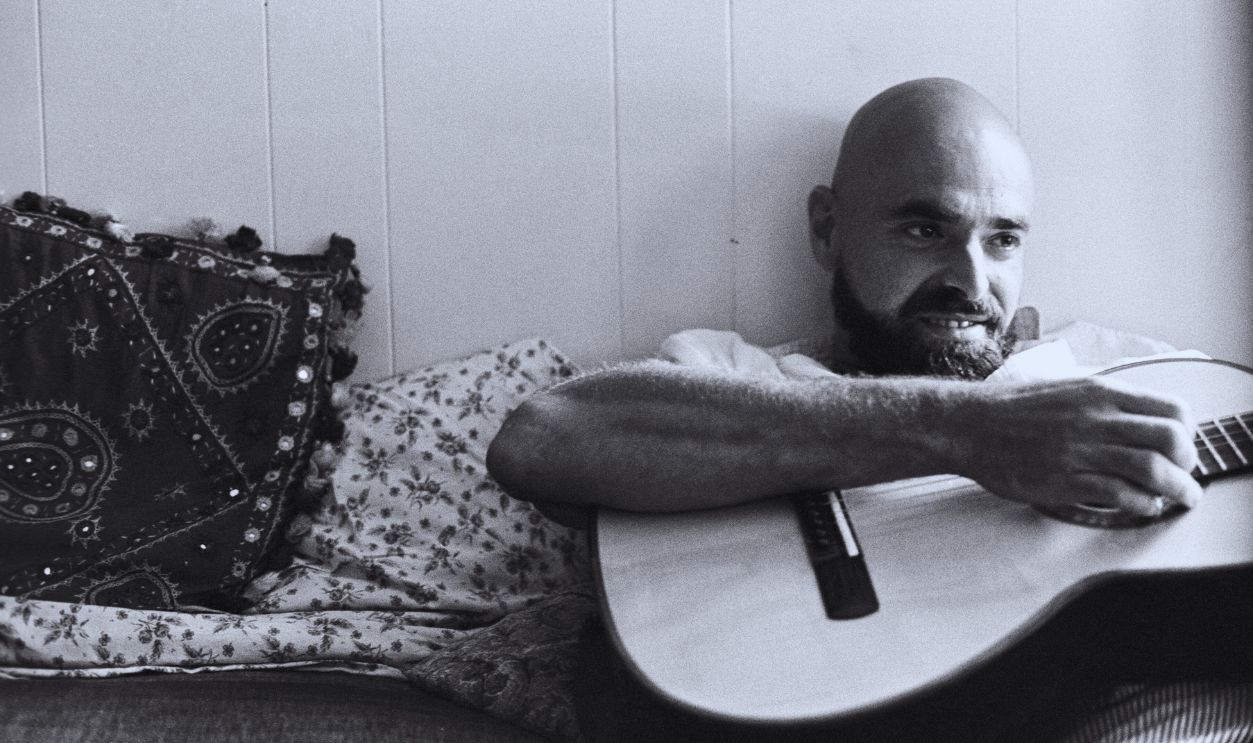
The “Shel Silverstein Visits…” series took the cartoonist-turned-writer to a sleepy Swiss village. But it was too sleepy for Silverstein. Bored out of his mind, Silverstein doodled himself grumbling, “I’ll give them 15 more minutes, and if nobody yodels, I’m going back to the hotel”.
Decades later, publishers compiled Silverstein’s dry-witted observations into a book, Playboy's Silverstein Around the World, with a touching foreword from Hefner himself.
 Screenshot from Dr. Hook & the Medicine Show: From Shel’s Houseboat, BBC Television (1973)
18. He Planned For The Hopeless
Silverstein didn’t just save his wit for the glossy (and saucy) pages of Playboy. In 1960, he published Now Here’s My Plan: A Book of Futilities. Its cover cartoon featured two chained prisoners with one saying, “Now here’s my plan”. Critics commented that Silverstein’s wit had turned dark. Silverstein, however, thought it was hopeful. “There’s a lot of hope even in a hopeless situation,” he said.
It was that kind of witticism that landed him his next big break.
 Screenshot from Shel Silverstein – “Daddy What If”, Columbia Records (1973)
19. He Found His Tribe At The Gate
Back home in Chicago, Shel Silverstein became a regular at the Gate of Horn—the city’s first folk club and “the social center for the hip crowd”. There, Silverstein caught the eye of musician Bob Gibson and the two became fast friends. Before long, Silverstein was finishing Gibson’s lyrics.
Together, they would write over 200 songs. His musical stylings were definitely unconventional.
20. He Pulled A Dirty Trick
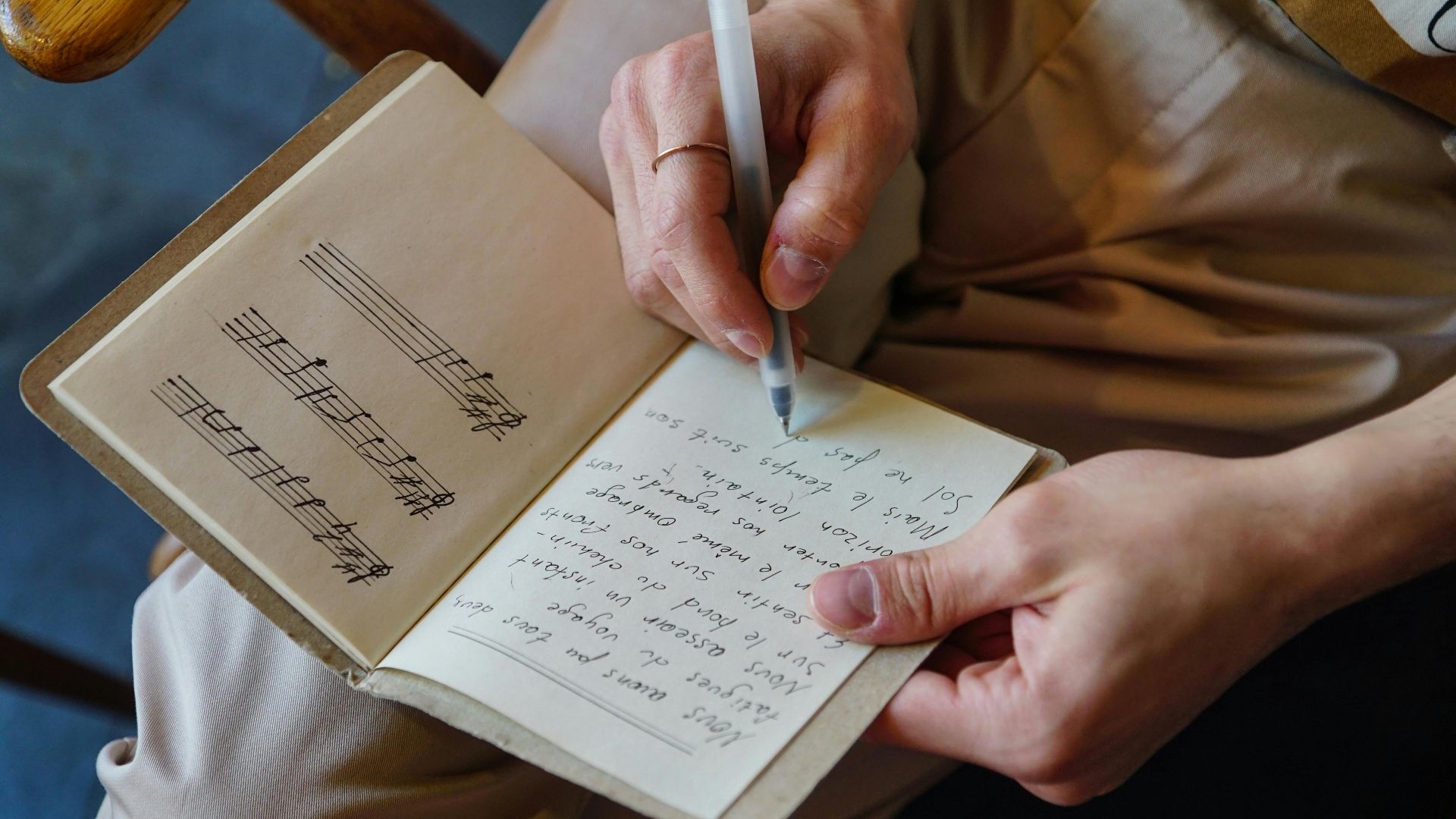
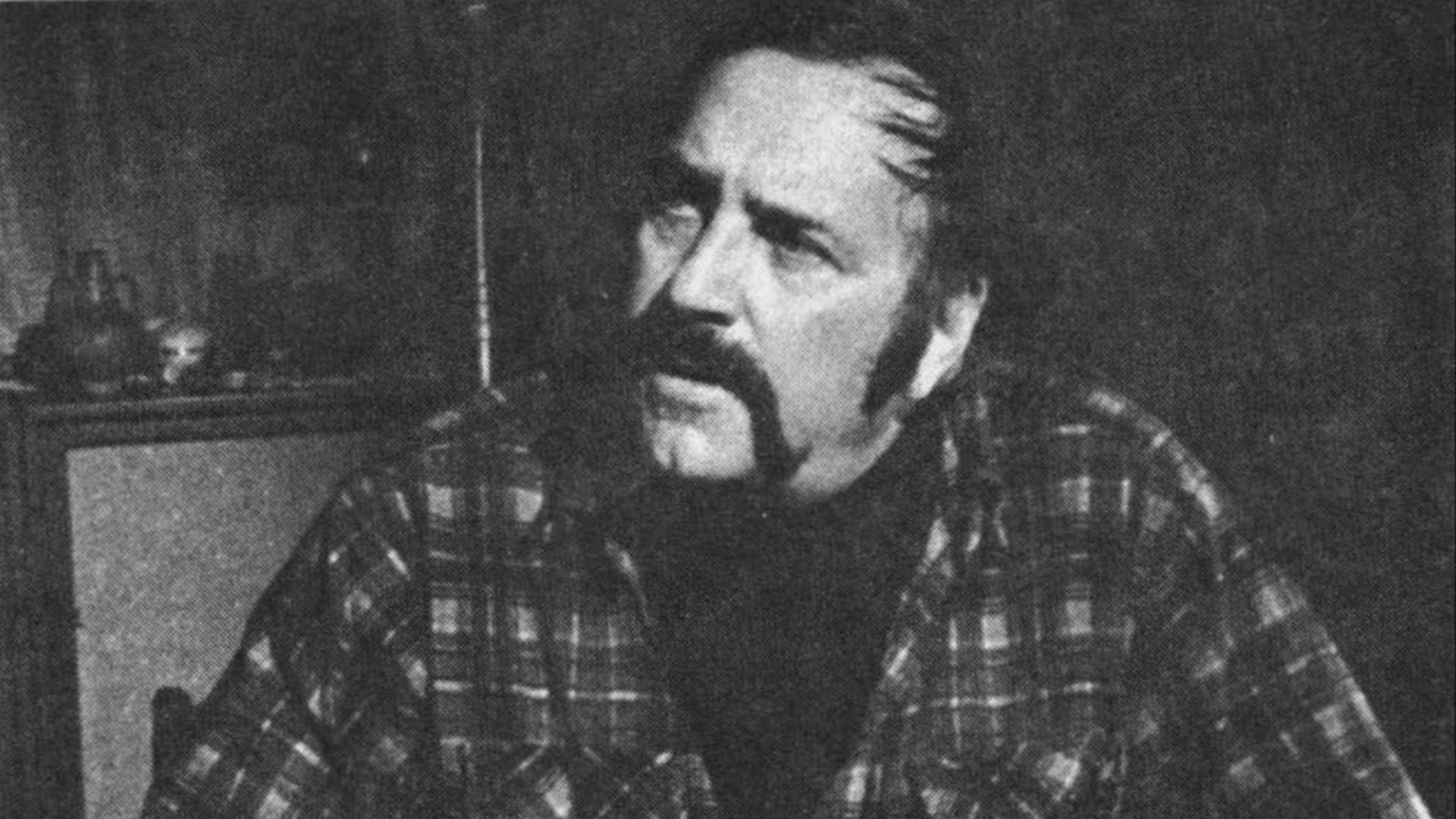
Silverstein blended his love of cartoons and drawing with his new musical career when he designed the cover art for Jean Shepherd’s 1959 album Jean Shepherd and Other Foibles. But Silverstein’s design had a secret message. Written backwards, and clearly concealed, Silverstein managed to slip in an insult: “Jean Shepherd is a dirty rotten, one-way sneaky [SOB]”.
If he was ever found out, it wouldn’t matter based on what happened next.
 Rochester Institute of Technology, Wikimedia Commons
21. He Became A Best-Seller
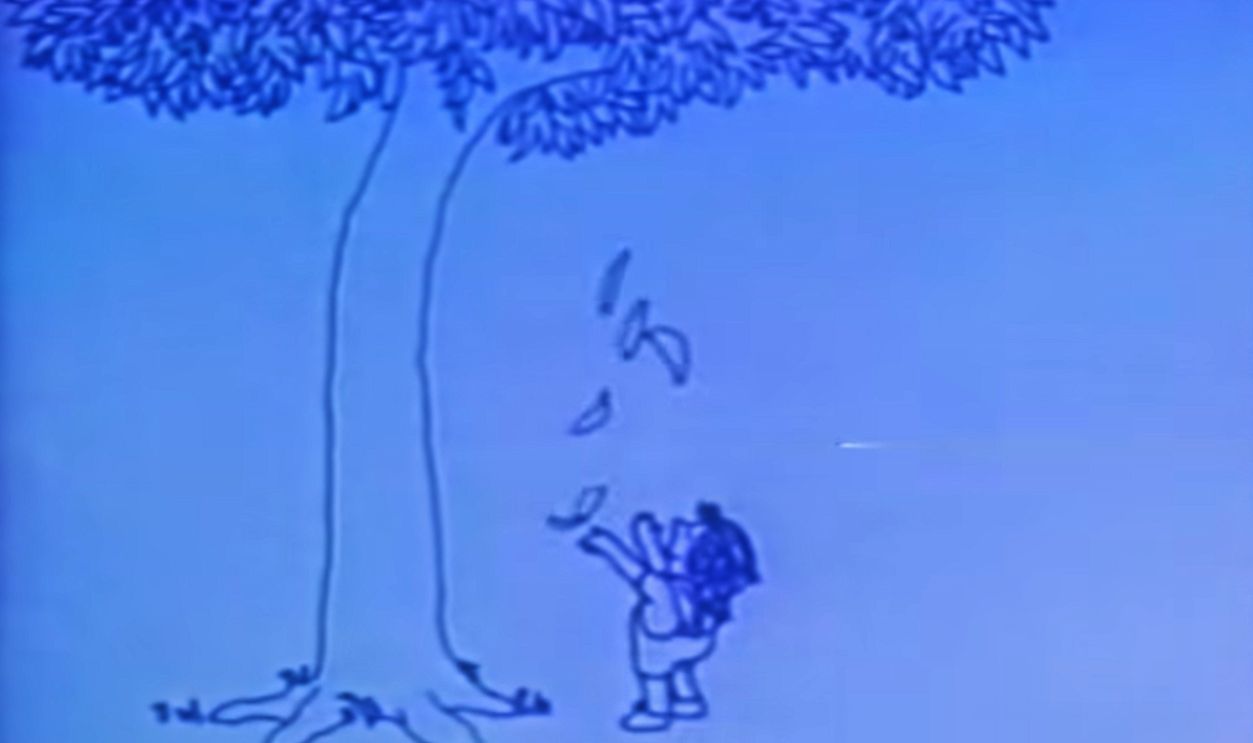
Shel Silverstein finished his novel, The Giving Tree, in 1960. But, despite his proven success, publishers wanted nothing to do with the new novel. They believed that it was “too dark for children and too simple for adults”. When the book finally hit shelves in 1964, it became one of the top “all-time best-selling hardcover children's books”.
His books for adults were even stranger.
 Screenshot from The Giving Tree, Weston Woods Studios (1973)
22. He Wrote A Book Of Bad Advice
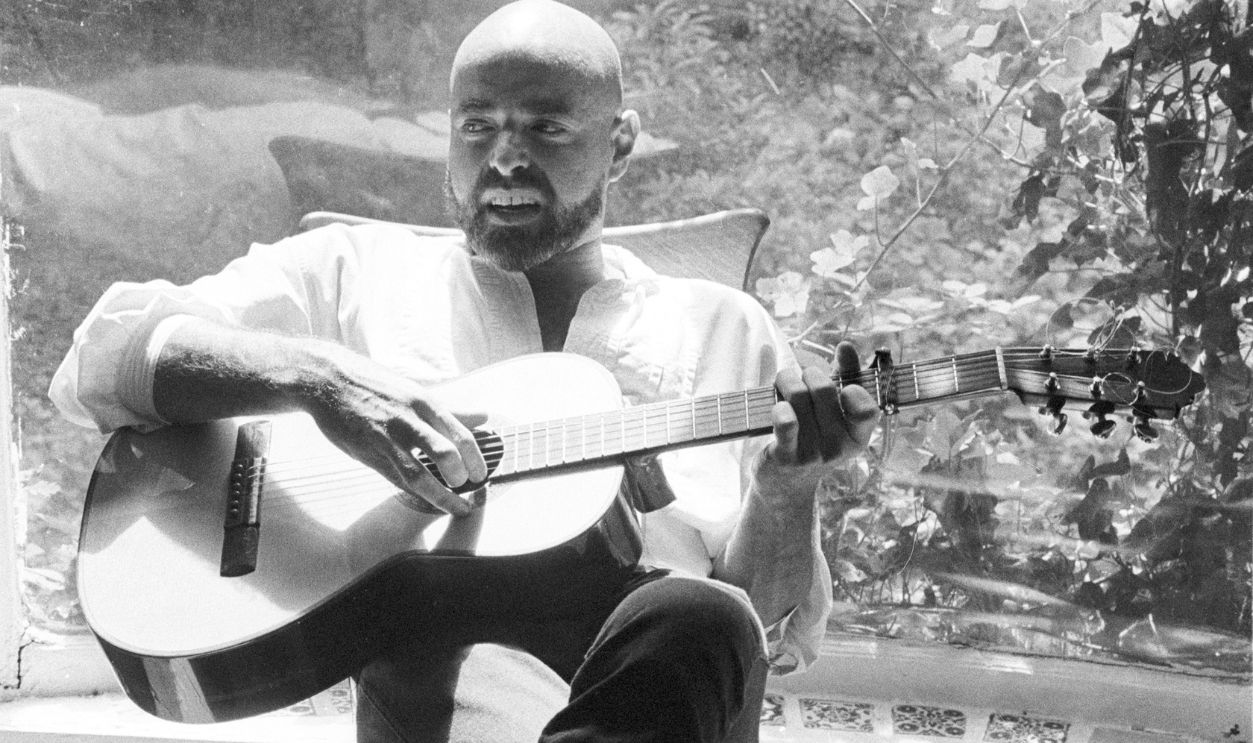
In 1961, Silverstein published Uncle Shelby’s ABZ Book. Various editions of the satirical book of bad advice were marketed, simultaneously, as, “A primer for adults only,” and, “A primer for tender young minds”. The “subversive” book taught kids all the wrong lessons—like how to play with matches or drink ink.
Trying to tame Silverstein into writing something straightforward would be a challenge.
23. He Was Dragged Into It
Silverstein’s editor at Harper & Row, Ursula Nordstrom, saw Silverstein’s potential for more. Behind his satire, she knew, was a big heart, bursting to write children’s poetry. Silverstein, however, wasn’t sold on the idea—until his friend Tomi Ungerer “practically dragged [him], kicking and screaming, into Ursula Nordstrom’s office”.
In fairness to Silverstein, he was a little preoccupied.

24. He Was A Relentless Romantic
Silverstein’s work wasn’t the only thing that got around. In a 2007 biography, A Boy Named Shel, Silverstein’s personal life was laid bare. The book revealed that Silverstein had “never married” but that he had done what only married couples should do “with hundreds, perhaps thousands, of women”.
He certainly had access to the most sought-after women of the time.
25. He Played At Playboy
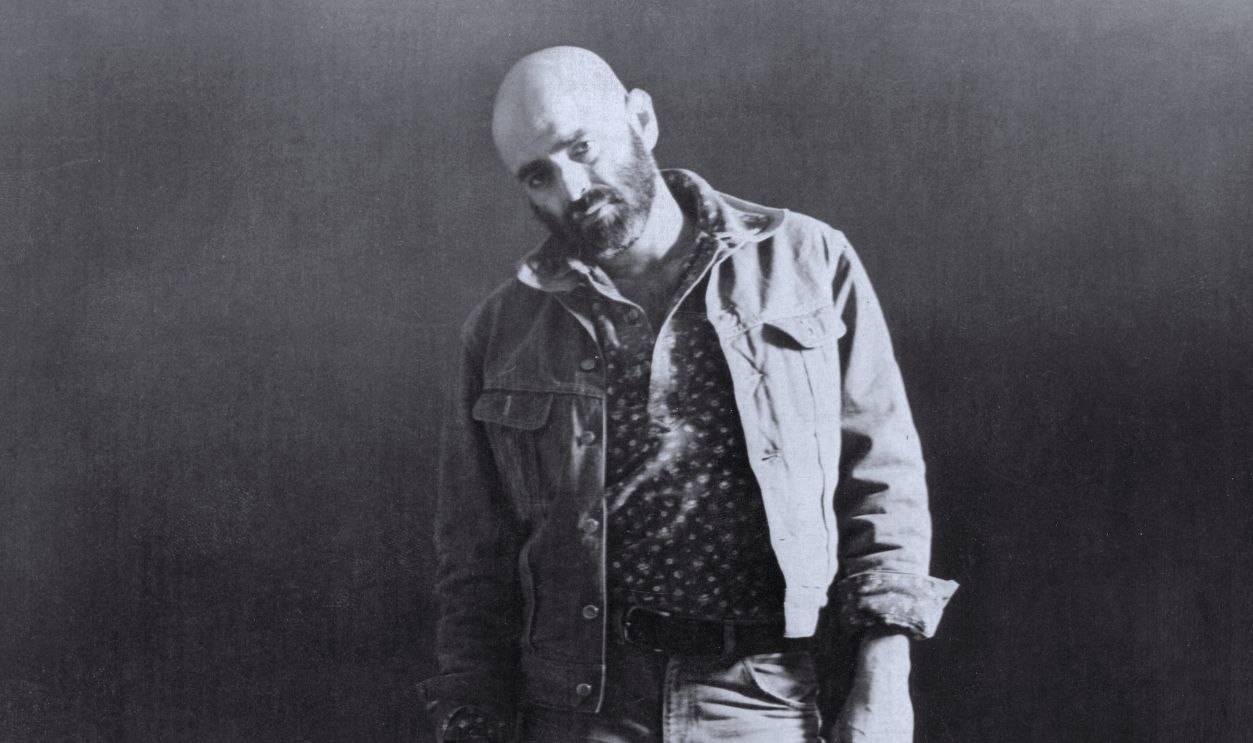
By 1968, Shel Silverstein had practically moved into the infamous Playboy Mansion. When an interviewer asked what it was like, Silverstein grinned and replied, “It’s about as swinging a place as anyplace could be. Not 24 hours a day, but there’s a lot more going on there than anyplace else I know”.
He wasn’t exaggerating.

26. He Kept A “List” Of Lovers
Diane Chandler, one of the famous “Playmates of the Year”, explained how Silverstein kept his bachelorhood intact at the mansion. Whenever a woman would get too emotionally invested, Silverstein would smirk and say, “Well, let’s see, where shall I put you on my list?” All of those romantic escapades, however, came with consequences.
Heartbreaking ones.

27. He Found Love And Loss
Not all of Silverstein’s romances were fleeting. At the Playboy Mansion (because where else was he meeting women?), Silverstein met Susan Taylor Hastings. By 1970, Hastings came as close as any woman had to tying Silverstein down when she gave birth to their daughter, Shoshanna Jordan Hastings. Sadly, nuptials were not to be.
Hastings passed the day before Shoshanna’s fifth birthday and the girl went to live with relatives in Baltimore. Meanwhile, her father buried his pain in work.
28. He Didn’t Believe In Tooth Fairies
Silverstein’s parenting style was about as gentle as his humor. He once refused his daughter Shoshanna money from the tooth fairy, insisting on “not sugarcoating the truth to kids”. But, when Shoshanna passed on at 11 from a cerebral aneurysm, Silverstein did all he knew how to do.
He poured his grief into A Light in the Attic, a book of poems and songs. His broken heart mended pretty quickly.
29. He Met A Muse In Key West
After losing his daughter, Shel Silverstein found new warmth, far from the vices of the Playboy Mansion. He began a relationship with Sarah Spencer, a Key West local who “drove a tourist train”. She inspired his song “The Great Conch Train Robbery,” and in 1984, they made music of their own: a son, Matthew De Ver.
His life finally seemed to circle back toward light.
 Sharon Hahn Darlin, Wikimedia Commons
30. He Was A One-Man Band
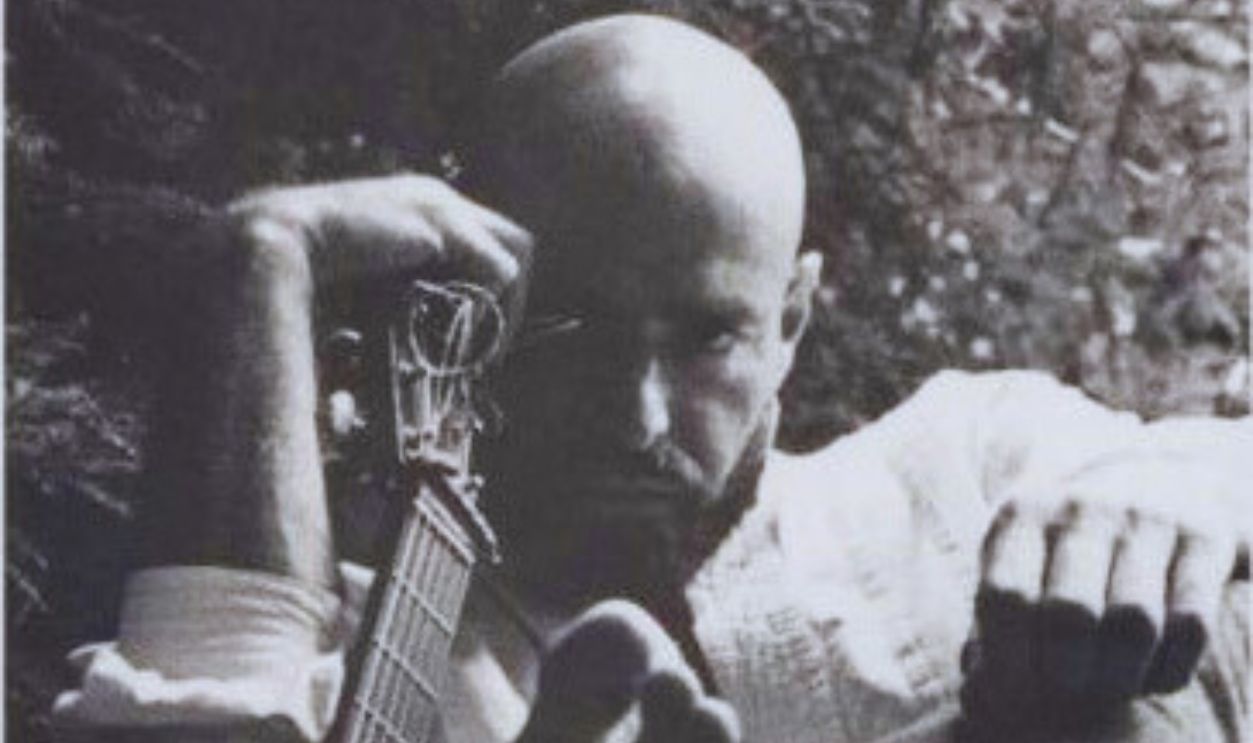
Silverstein didn’t just write songs for music legends like Johnny Cash—he played them himself. He mastered guitar, piano, saxophone, and trombone, using his gravelly voice as another instrument. As he told the Chicago Tribune in 1978, “Nobody gives me any static about my voice…They just aren’t charmed by it. But I like the way I sing”.
31. He Got Cash And A Grammy
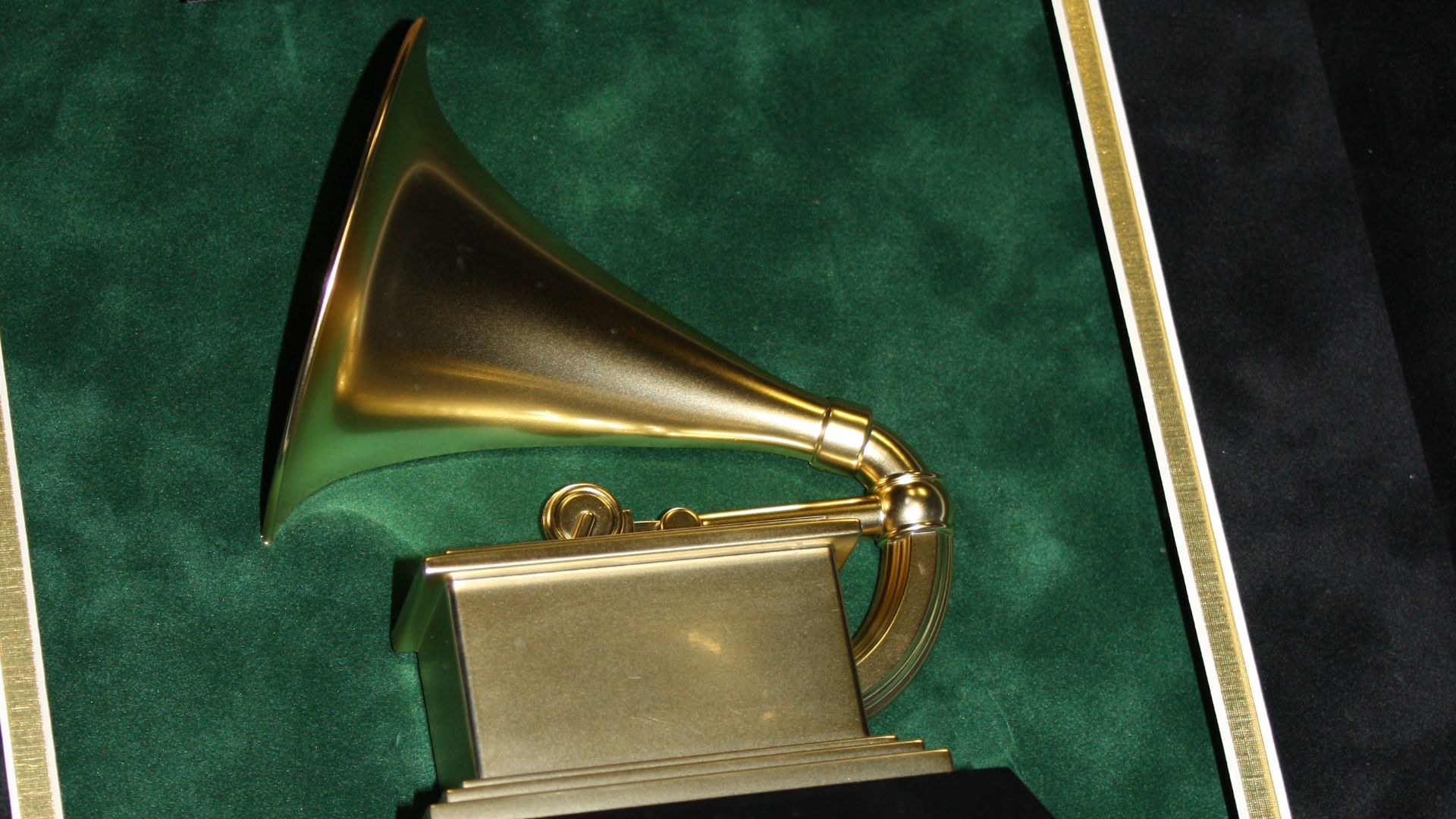
Shel Silverstein wasn’t just a poet and a lyricist—he was a hit factory. Over the span of his career, he wrote over 800 songs for other artists. After hearing radio host Jean Shepherd complain about “having a girl’s name”, Silverstein wrote “A Boy Named Sue”. When Johnny Cash recorded the tune, it reached the second spot on the Billboard Hot 100 and earned Silverstein a Grammy.
Everything he wrote seemed to sell.
 Jshreve95018, Wikimedia Commons
32. He Wrote Heavy-Hitters
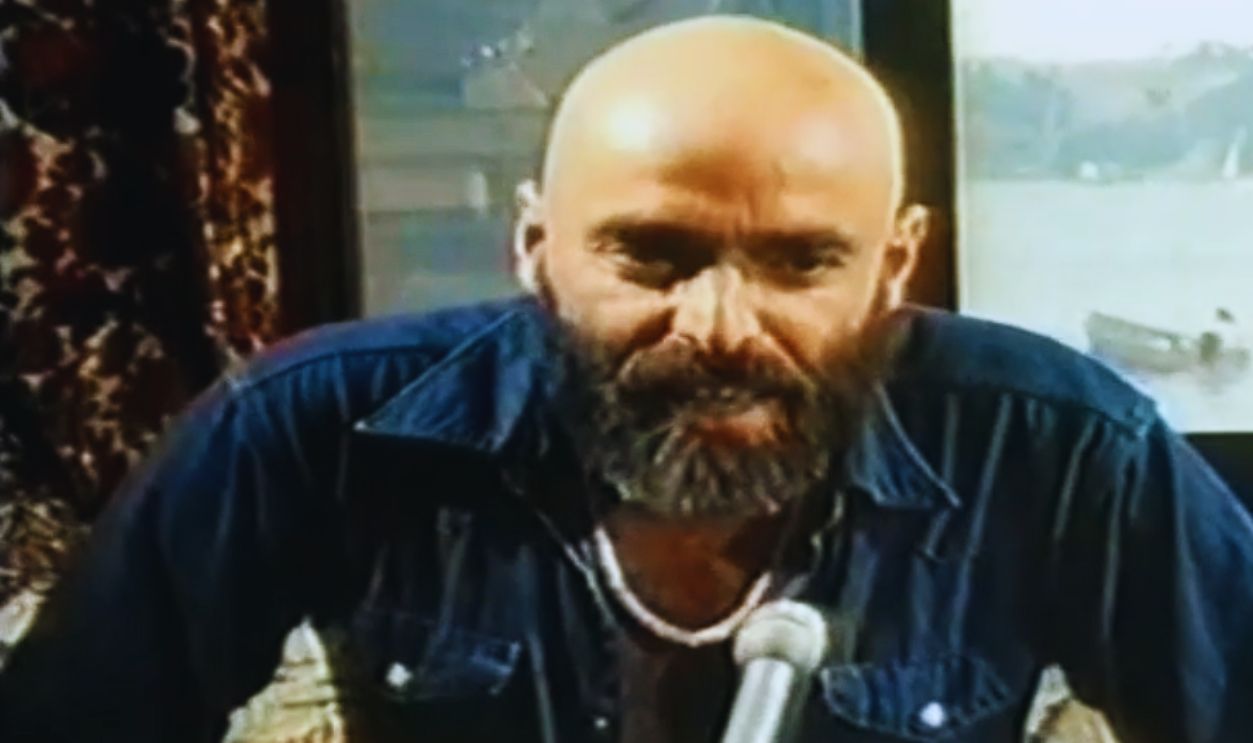
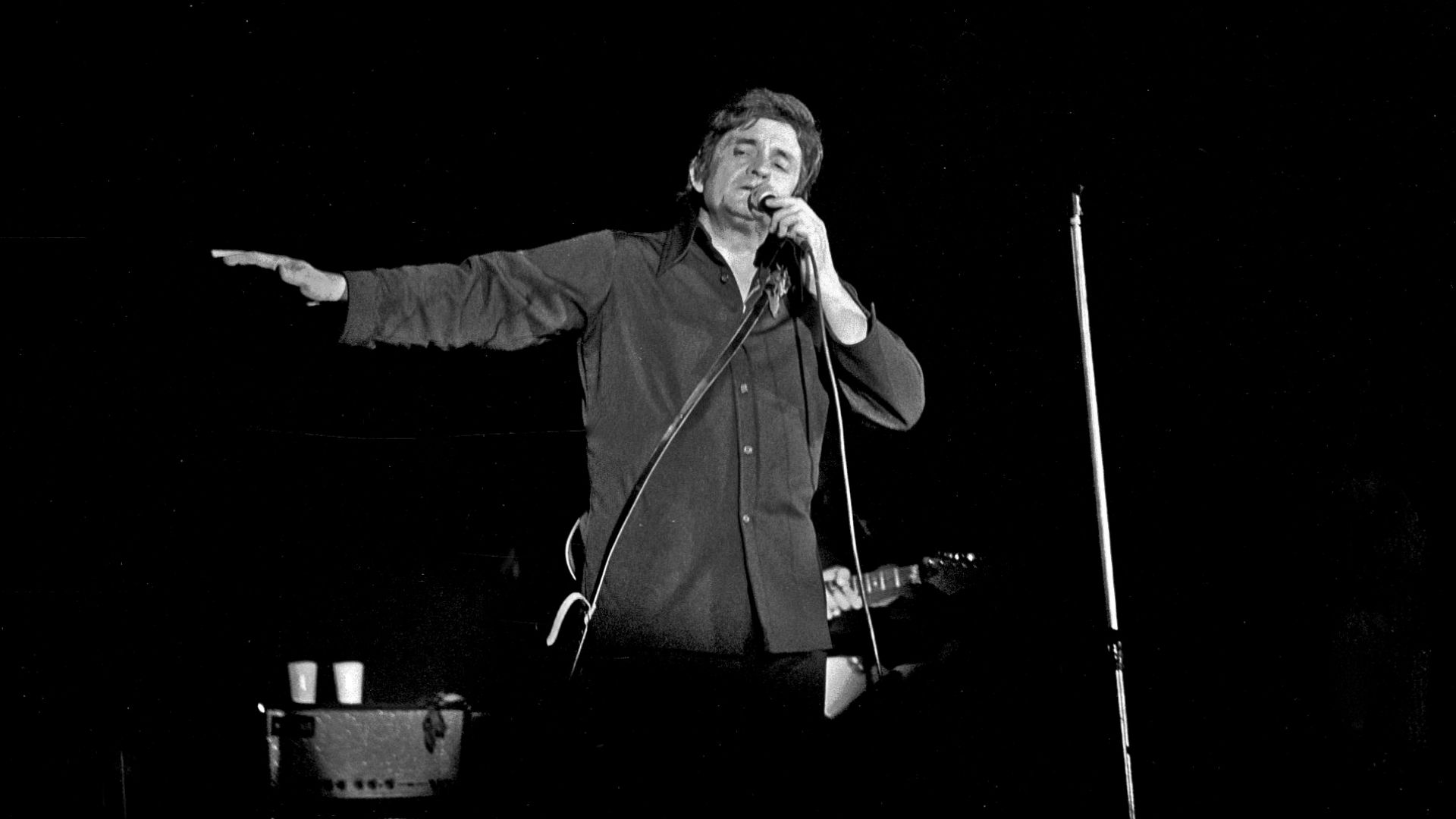
Silverstein’s songwriting credits read like a jukebox dream. For Dr Hook & The Medicine Show alone, he penned “The Cover of Rolling Stone,” “Freaker’s Ball,” and “Sylvia’s Mother”. He also wrote more hits for Johnny Cash, such as “25 Minutes to Go,” a minute-by-minute countdown to the gallows, and “The Unicorn,” a whimsical hit made famous by The Irish Rovers.
He was just warming up his wrist.
 Screenshot from Dr. Hook & the Medicine Show: From Shel’s Houseboat, BBC Television (1973)
33. He Brought Home More Gold
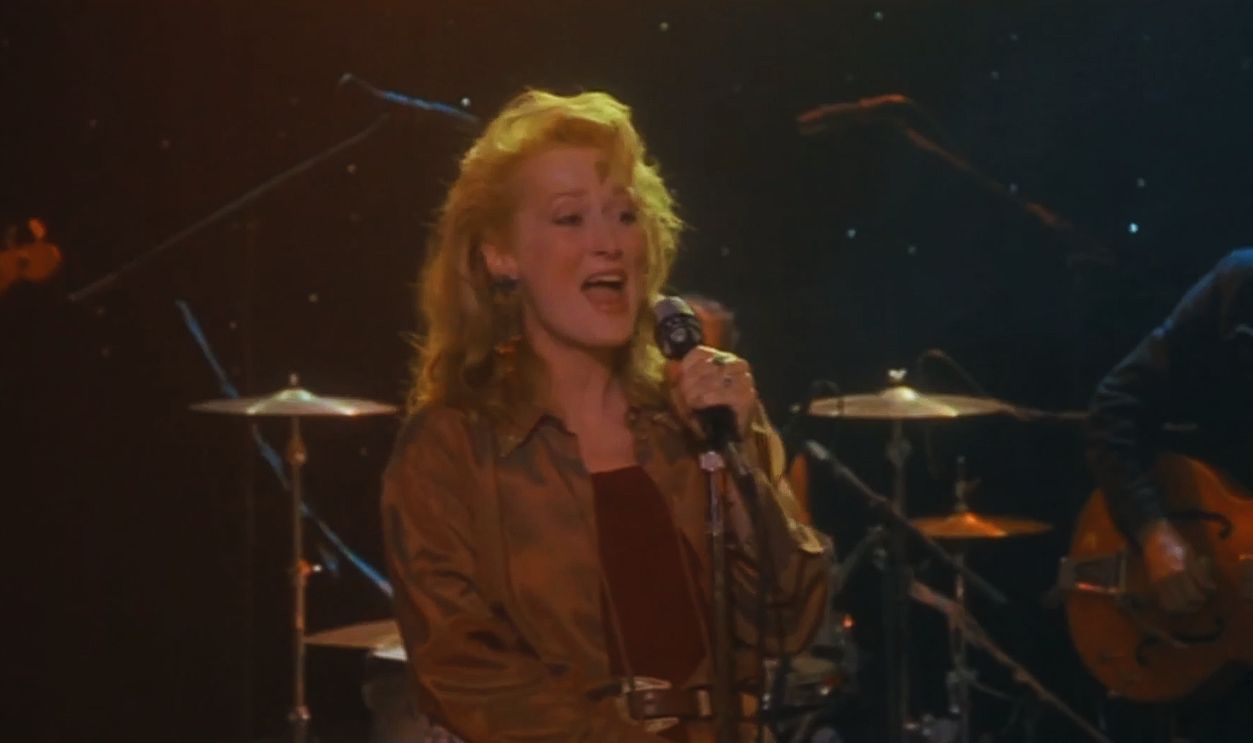
By the 1980s, Silverstein’s mantle was full of awards. He earned Oscar and Golden Globe nominations for “I’m Checkin’ Out” from the film Postcards from the Edge. Then he won another Grammy, this time for Where the Sidewalk Ends, his 1983 children’s record. His true passion for music, however, was not in writing pop hits.
 Screenshot from Postcards from the Edge, Columbia Pictures (1990)
34. He Was A Country Convert
Perhaps it was writing for Johnny Cash, or perhaps he was simply a country boy at heart, but Silverstein adored country music. “I love [country music],” he once said. “Again a lot of people say they hate it when they haven't even listened to it. You got to listen. Country music isn't that screaming stuff anymore. There's good things going on”.
And Silverstein wanted to be part of it.
 Heinrich Klaffs, Wikimedia Commons
35. He Was Done With The Doodles
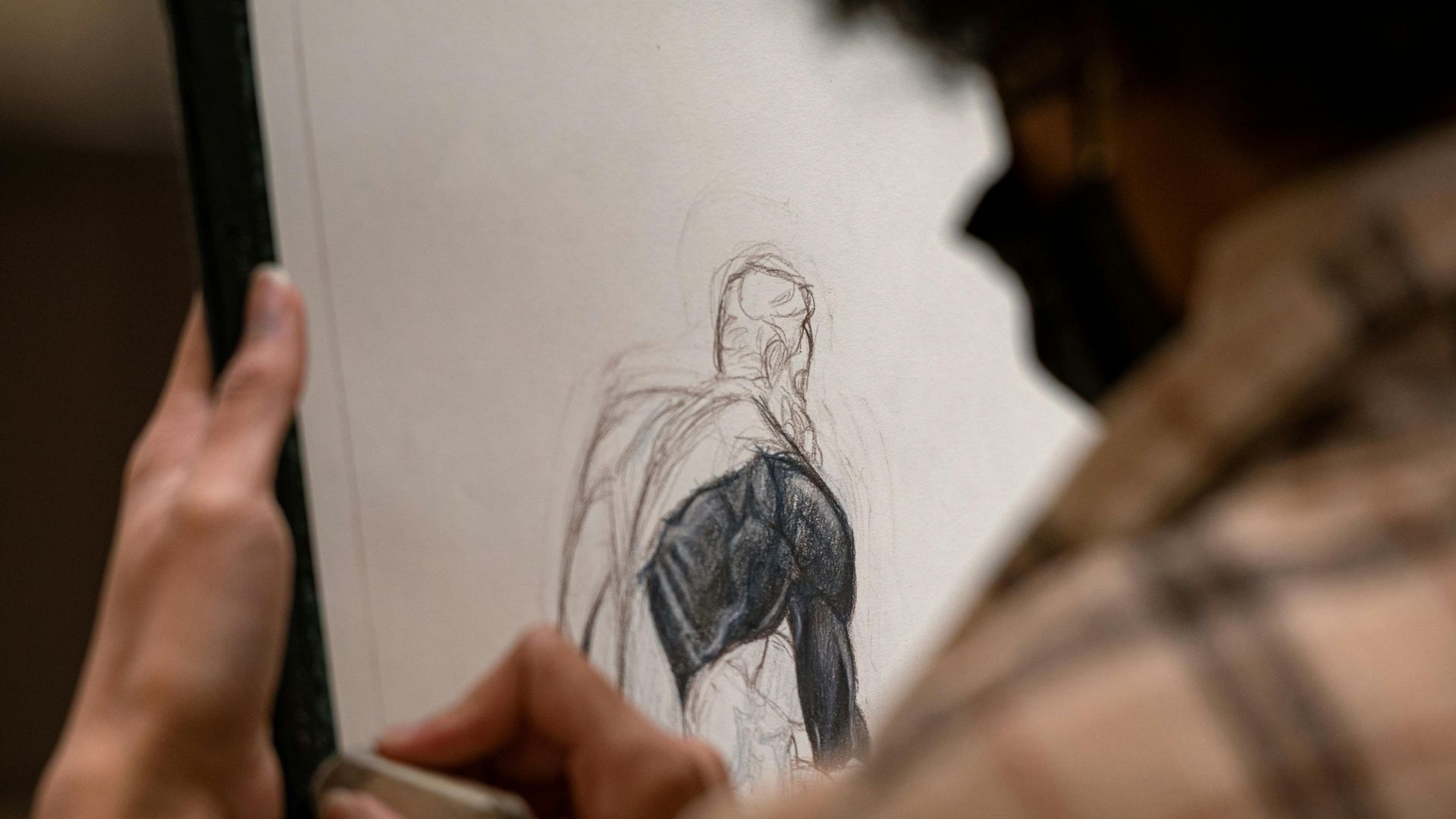
For all his success, Silverstein couldn’t sit still. “I’m not that satisfied with my work,” he admitted in 1968. “I have to find change in my work all the time to have any satisfaction…My drawing is really great now—and I’m sick of drawing”. He was, after all, his own harshest critic.
36. He Ignored The Critics
Silverstein guarded his writer’s ego carefully. “I never read reviews,” he told Publishers Weekly, “because if you believe the good ones you have to believe the bad ones too”. And it wasn’t just words for Silverstein. “Not that I don't care about success,” he quickly clarified. “I do, but only because it lets me do what I want”.
The only question was what did he want?

37. He Quit Talking Altogether
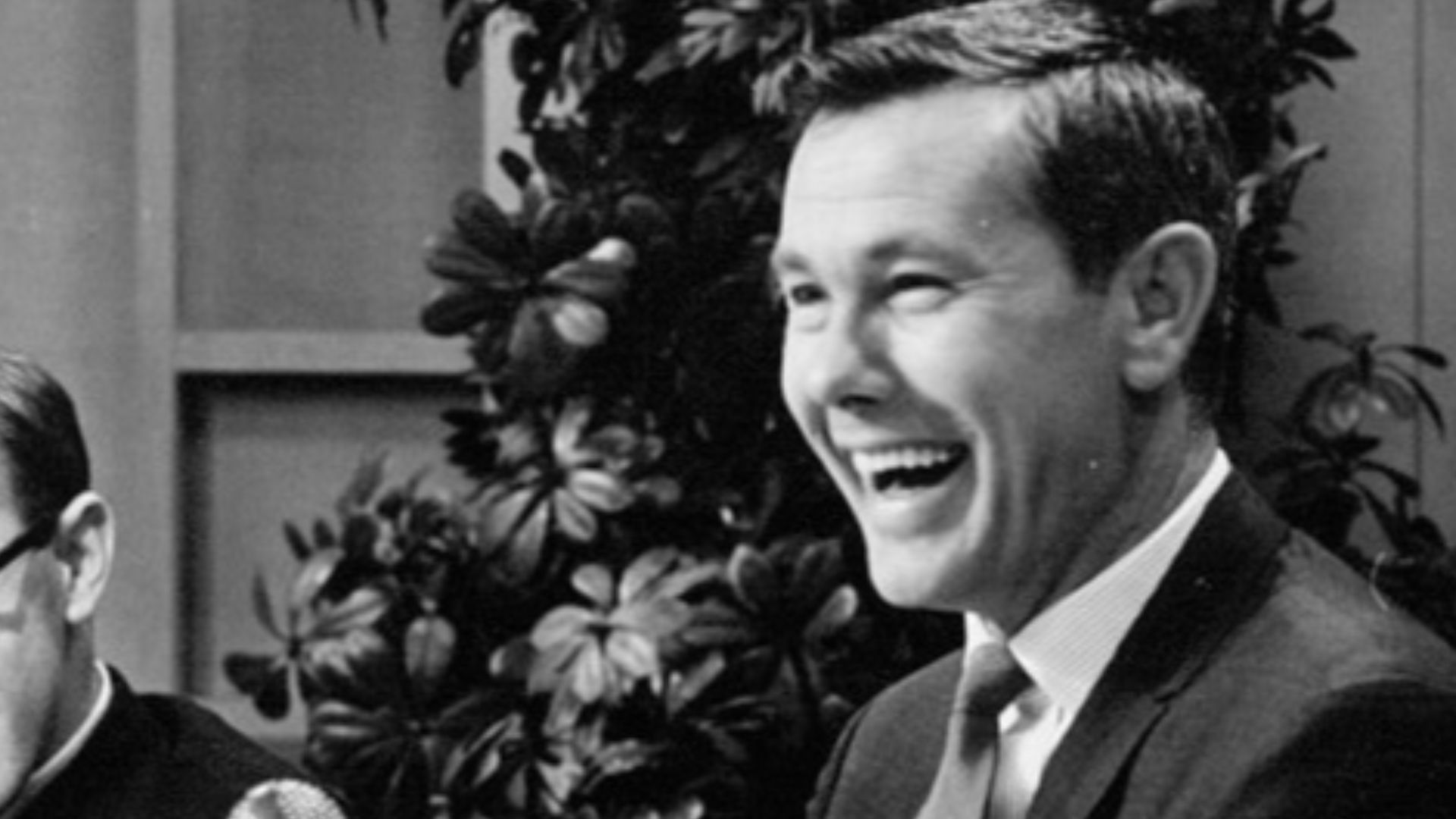
Silverstein’s words filled pages, songs, and theatres—but not interviews. By 1975, he had sworn off ever giving another interview, explaining, “Lots of things I won't do. I won't go on television because who am I talking to? Johnny Carson? The camera? Twenty million people I can't see? Uh-uh”.
Plus, he found a new spotlight.
 NBC Television, Wikimedia Commons
38. He Took His Talent To The Stage
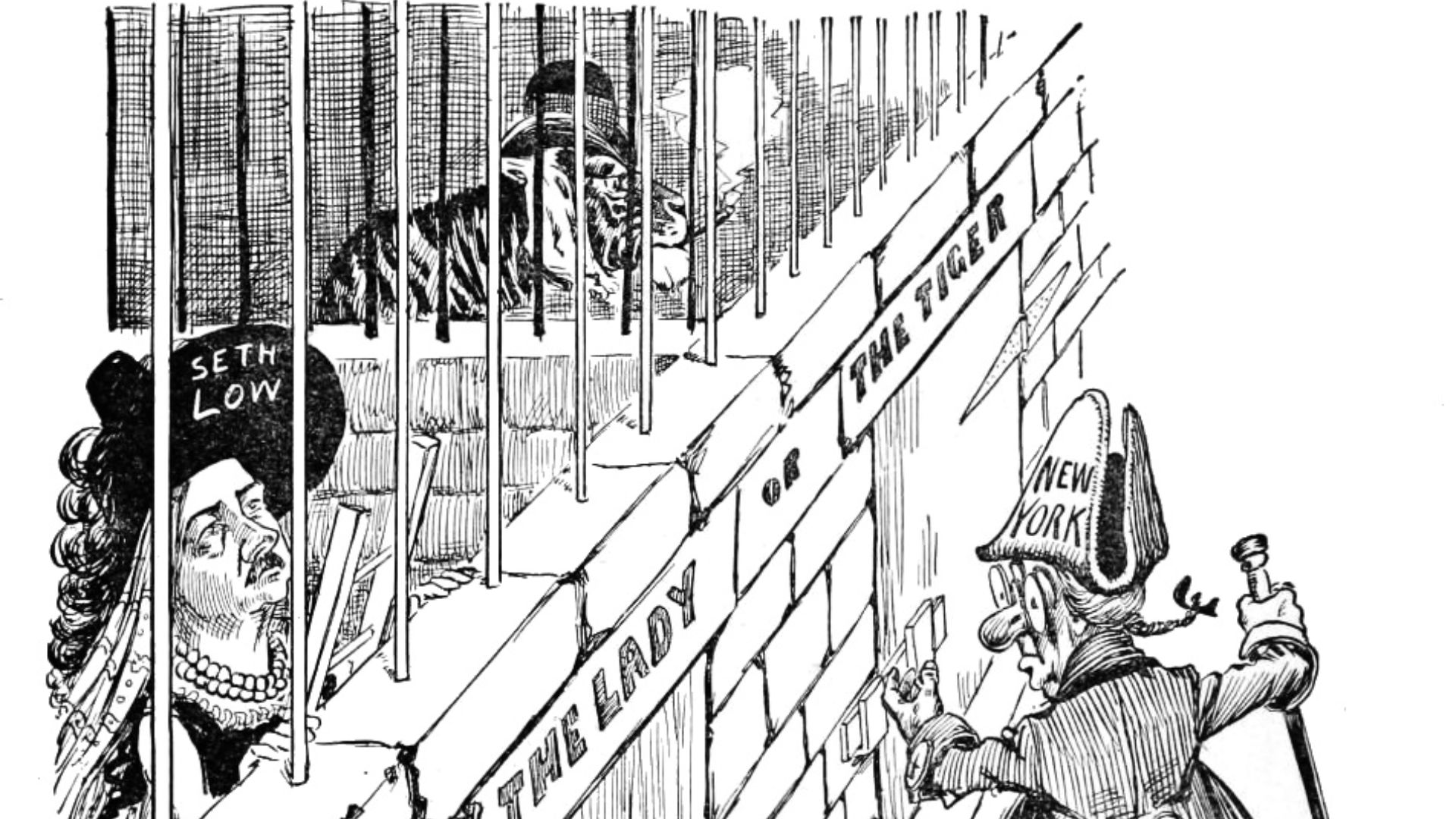
In the 1980s, Silverstein turned his restless energy towards one form of writing that he hadn’t yet conquered: the theater. But he would conquer by sheer numbers, writing more than 100 one-act plays, including The Lady or the Tiger Show (1981) and Remember Crazy Zelda? (1984).
Both debuted in New York, proving his knack for storytelling could fill a stage just as easily as a page.
39. He Wasn’t “Playing” Around
If anyone doubted whether a cartoonist-turned-novelist-turned-poet-turned lyricist could write for the stage, they were quickly proven wrong. The New York Times’ Frank Rich reviewed Silverstein’s Wild Life and suggested that his theater writing “may eventually prove his most fruitful career to date”.
But Silverstein had already moved on from the stage.

40. He Animated His Own Legend
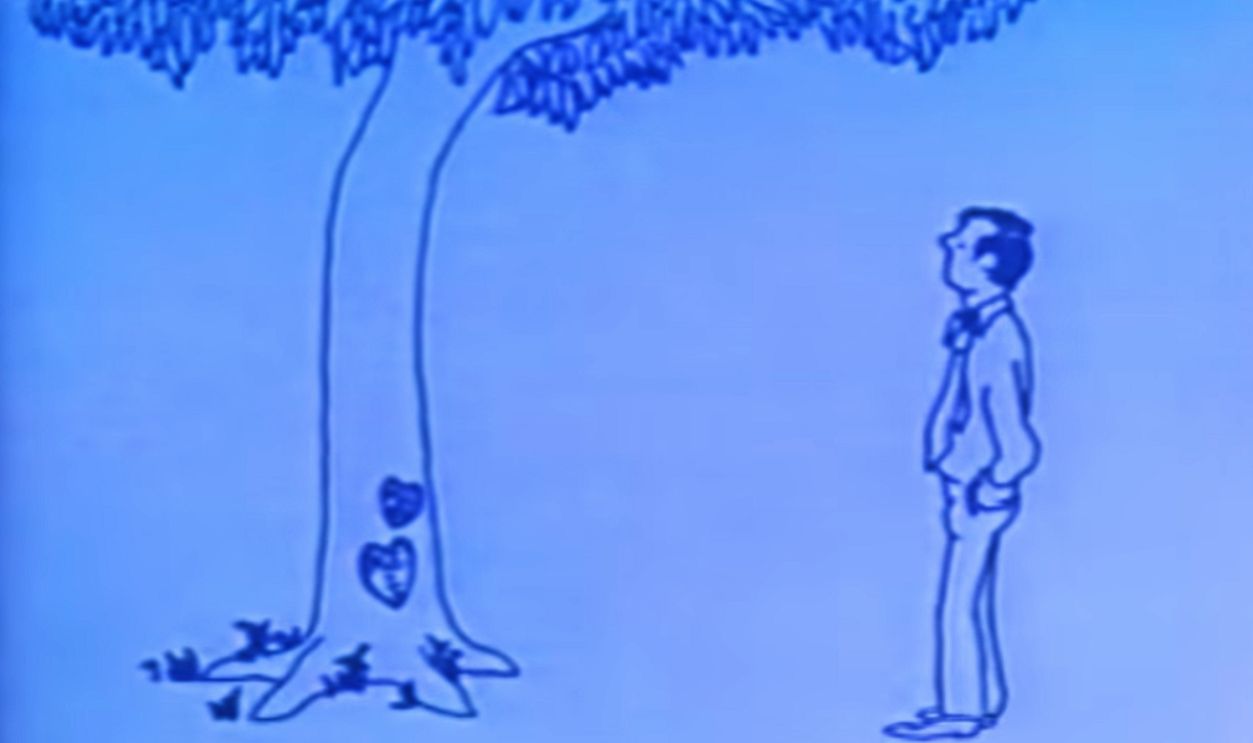
Given his own multi-media focus, it’s little surprise that Silverstein’s works were adapted for the screen. He even personally wrote and narrated an animated short of The Giving Tree, lending his voice to the narration. More than 40 years later, the film was remade, proving that Silverstein’s works transcended media and time.
Still, his true passion was for the written word.
 Screenshot from The Giving Tree, Weston Woods Studios (1973)
41. He Was Picky About Paper
Silverstein didn’t just write books—he designed them. He believed that the paper the words were written on were just as important as the words themselves. In fact, Silverstein was so specific about the folio that he “usually would not allow his poems and stories to be published unless he could choose the type, size, shape, color, and quality of the paper”.
He was something of a purist.

42. He Stayed Analog
Silverstein’s creativity thrived on pen and paper, not pixels. Even as other writers ditched the notepad for the desktop, Silverstein stuck to tradition. He never owned a computer and refused to give up his rotary phones. The times were changing—but Silverstein was not.
43. He Found His Haven In Key West
In his later years, Silverstein made his home in Key West, Florida, a warm weather refuge full of characters that rivaled his own creations. Locals often spotted him performing at Hog’s Breath Saloon and Capt Tony’s. A photo of him with Captain Tony still hangs there for literary and lyrical buffs to gawk over.
Towards the end, his wise words rung with truth.

44. He Accepted Life’s Problems
When asked about aging and ambition, Silverstein gave the kind of answer only he could: “You’re trying to solve the problems of youth, and then you’re middle-aged, and then you’ve got those problems, and then you’re old, and you can’t solve that problem”. His takeaway? “Function despite these problems”. [Which is exactly what he did.]

45. He Made A Confession
Despite making a new family, Silverstein still carried his old one in his heart. His friends recalled him confessing that “one of [Shel's] biggest regrets was that he hadn't been a better father to his daughter”. So, with his son Matthew, he tried to do better, spending long stretches in Key West and dedicating his 1996 poetry collection Falling Up to the boy who finally grounded him.
46. He Lived Clean And Calm
Despite what his Playboy years might have suggested, in the end, Silverstein was quite a settled man. His friend Pat Dailey swore he was a model of discipline. “He took extremely good care of himself,” Dailey said. “Every morning it was yoga, breakfast, and walking”.
Even his routine had the rhythm of a poem, but his final stanza was nearer than he knew.

47. He Passed Where He Belonged
Despite his habitual yoga and exercise, Silverstein’s final chapter came sooner rather than later. On May 10, 1999, his story ended in the most Silverstein way possible: quietly, at home in Key West, surrounded by his poems, cartoons, and stories. He was just 68.
He still had so much more to do.
48. He Became A Double Hall-Of-Famer
Even in the hereafter, Silverstein couldn’t stop collecting honors. He was inducted into the Nashville Songwriters Hall of Fame in 2002 and the Chicago Literary Hall of Fame in 2014. Few artists ever managed to bridge honky-tonk and highbrow quite like him.
49. He Still Had Something Left To Say
In 2011, 12 years after his passing, a posthumous collection called Every Thing On It hit shelves. Compiled by his nephew Mitch Myers, it gathered Silverstein’s unpublished poems and drawings. While promoting the book, Myers confessed to NPR that, during his life, Silverstein hadn’t been “sure how it would be received”.
Of course, readers adored it.

50. He Was A Recluse—And A Rebel
Time magazine’s eulogy nailed the paradox that Silverstein perfectly: Silverstein, they said, was “a recluse totally engaged in life”. He avoided fame, cameras, and interviews—but never people, ideas, or experiences. He hid from the spotlight only so he could shine brighter through his work. And he knew how brightly it shined.

51. His Art Was Good, So He Was Good
“Art is an extension of the man,” Silverstein once told a friend. “Anything a man does will reflect his thinking and will be his ideas”. Years later, in another interview, he reflected on his own art. “What I do is good. I wouldn’t let it out if I didn’t think it was”. He just hoped his readers felt the same.
 Screenshot from Shel Silverstein – “Show It at the Beach”, Columbia Records (1970)
52. He Left Readers Divided
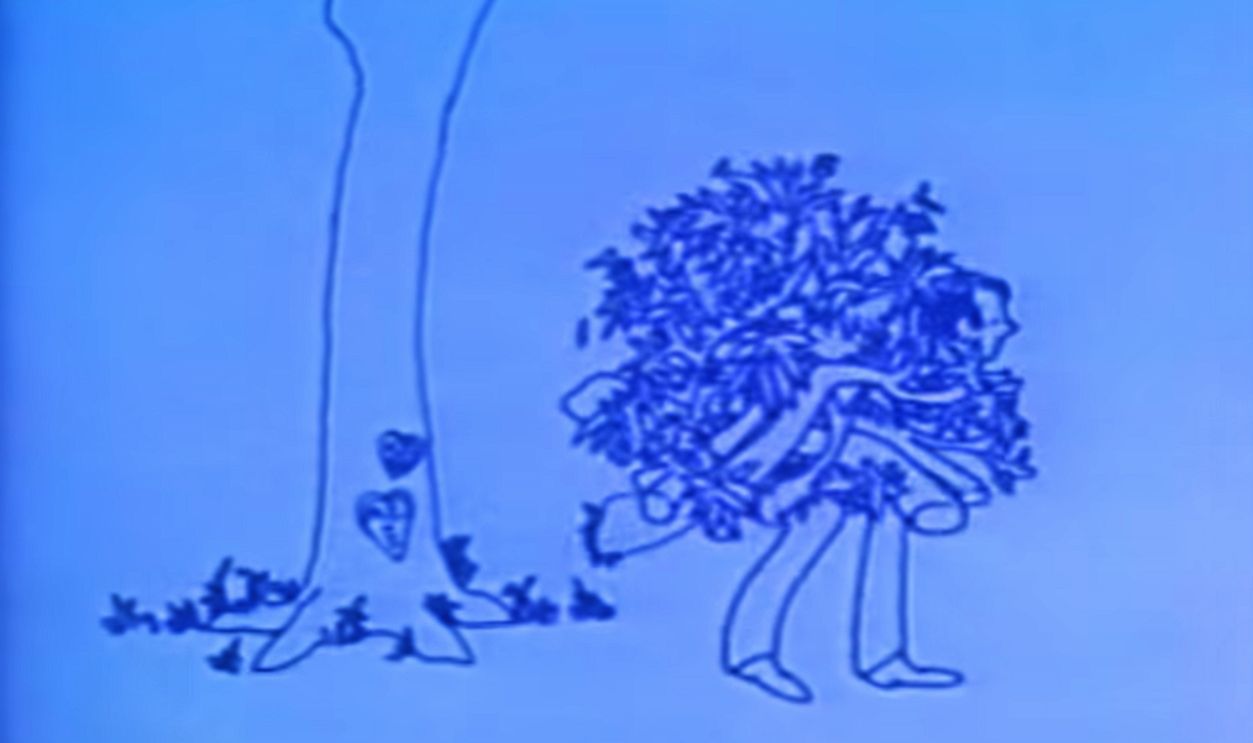
The Giving Tree is one of the most celebrated children’s books in the world—but it’s also one of the most controversial. While many see it as a heart-wrenching story about unconditional love and sacrifice, others think it leaves children with a darker message about selfishness and materialism. The moral of the story is still a source of debate and has even led to calls for the book’s censorship and banning in schools.
Regardless of whether one thinks the story is positive or negative, there is one thing that Silverstein hoped all readers would in his books.
 Screenshot from The Giving Tree, Weston Woods Studios (1973)
53. He Wanted Everyone To Find Themselves
Shel Silverstein’s final wish wasn’t for fame—it was for connection. “I would hope,” he said, “that people, no matter what age, would find something to identify with in my books, pick up one and experience a personal sense of discovery”. And readers still do, every single day.
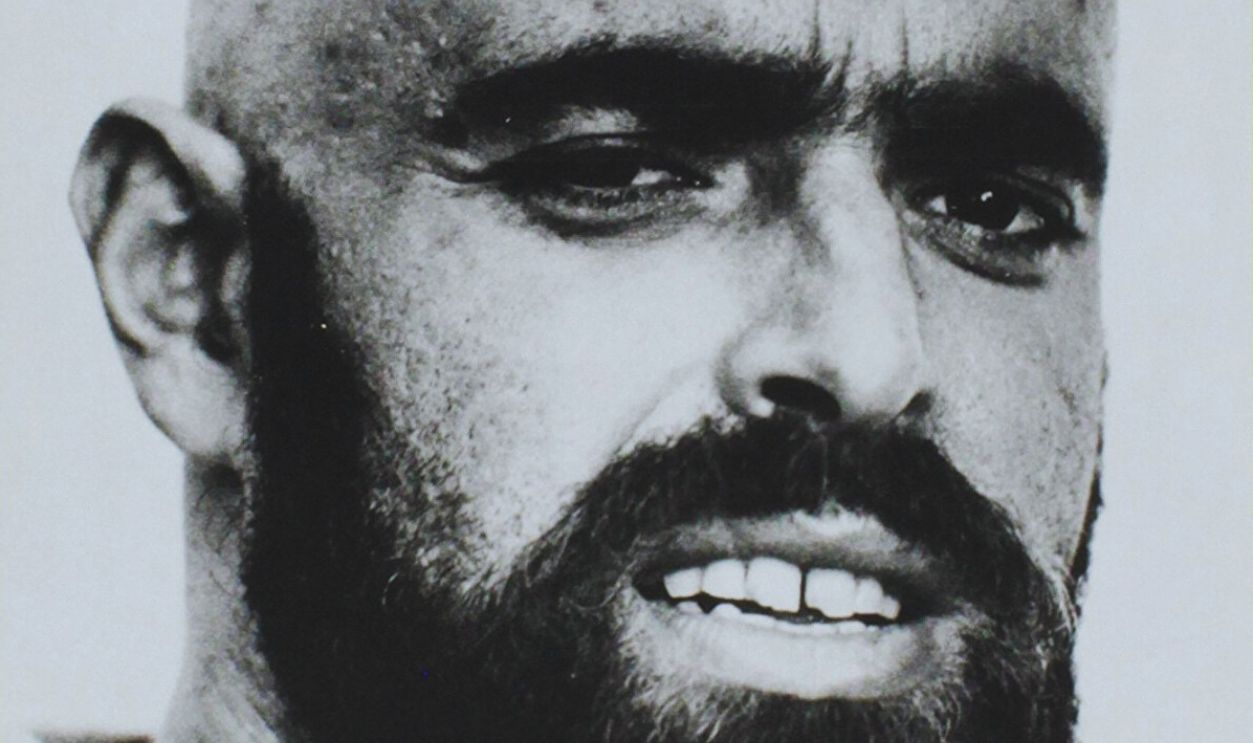 Jerry Yulsman, Wikimedia Commons
You May Also Like:
Wild Facts About Howard Hughes, The Most Eccentric Man In Hollywood
Brazen Facts About Truman Capote, America's Most Outrageous Writer