He Wrote The Classics—And The Controversies
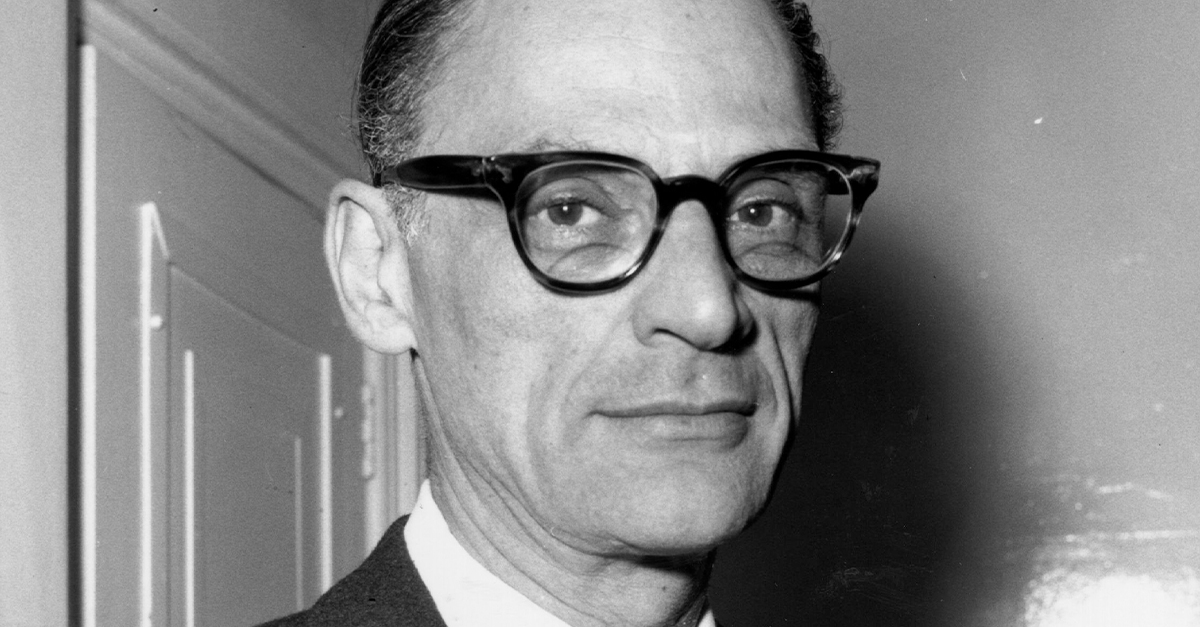
Arthur Miller was the American playwright behind seminal works like Death of a Salesman (1949), The Crucible (1953), and A View from the Bridge (1955). But, he’s probably most famous for his run-ins with the House Un-American Activities Committee, scandalous marriage to Marilyn Monroe, and tumultuous relationship with his son.
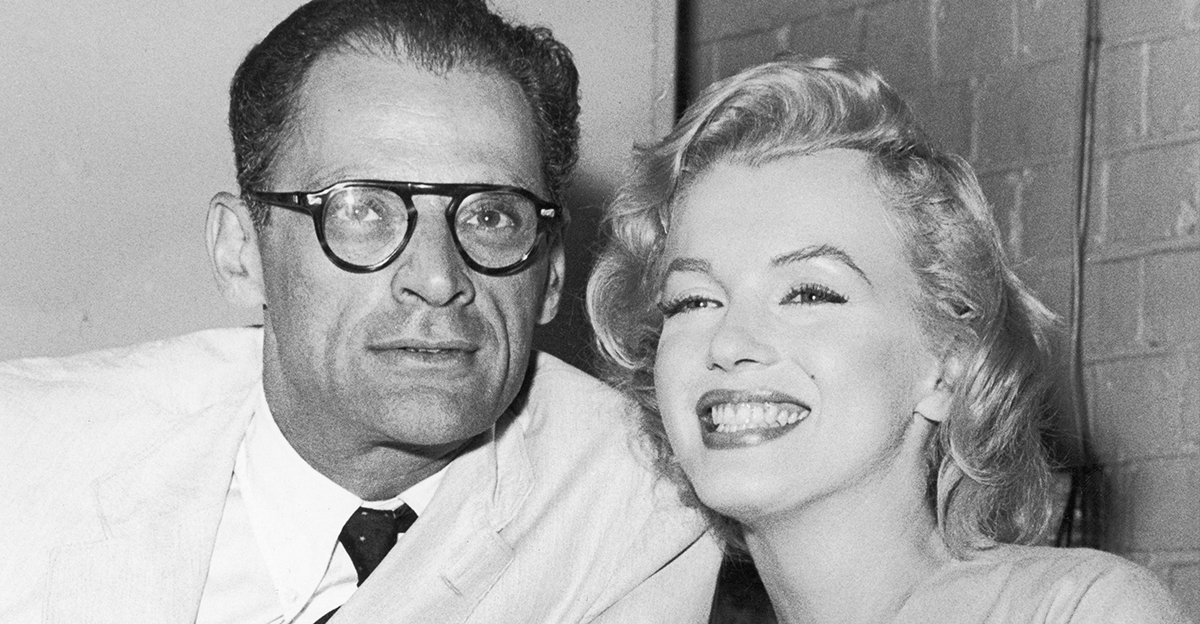 Fox Photos / Stringer, Getty Images
1. His Early Years Were Easy
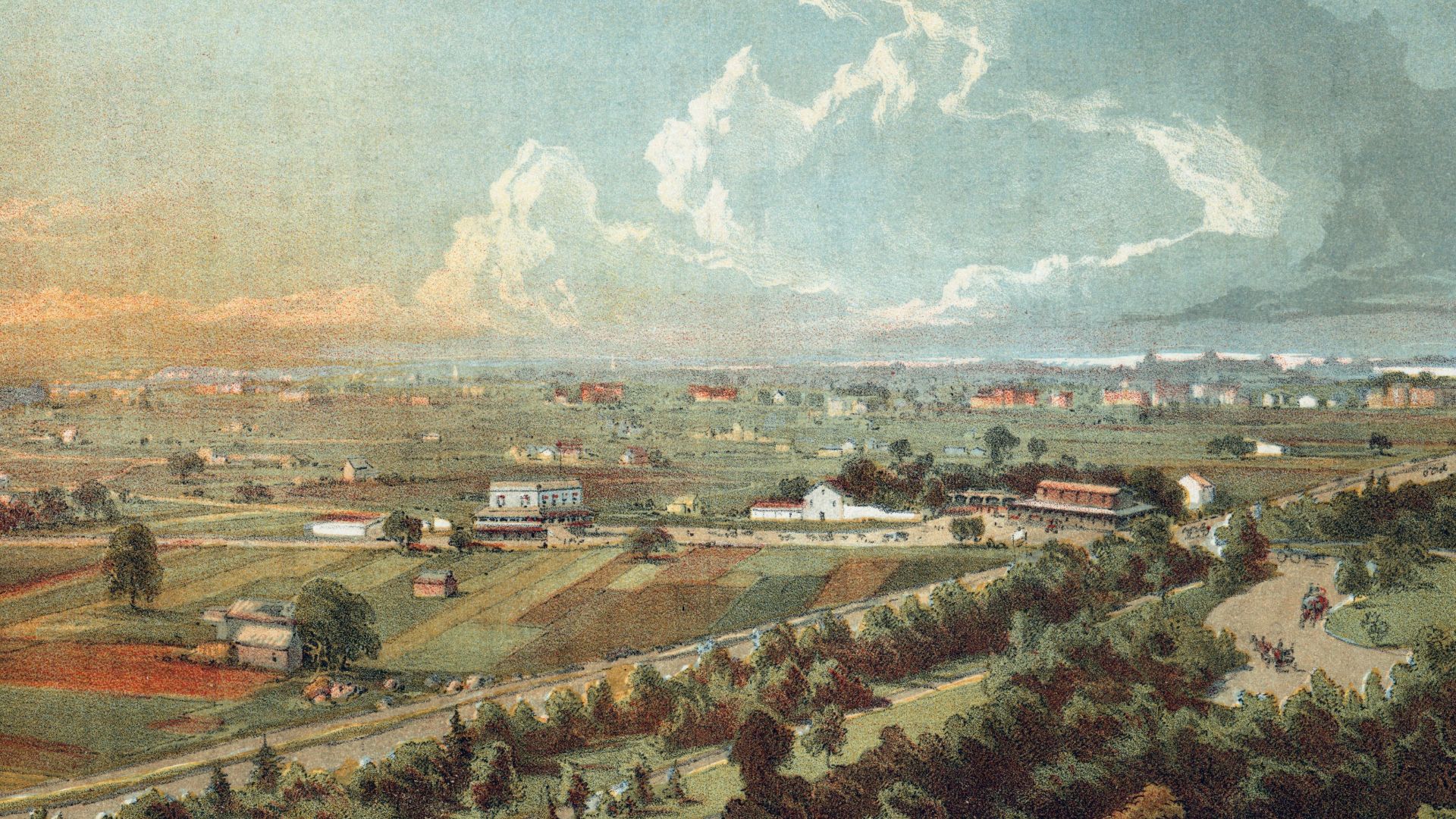
Arthur Asher Miller wrote his first chapter on October 17, 1915. Born in Harlem, Manhattan, he was the second of three children born to Polish-Jewish immigrants. His earliest years were his easiest ones, as his father ran a successful women’s clothing business. The next chapter in his life, however, would not be so easy.
 Scan by NYPL, Wikimedia Commons
2. He Went From Riches To Rags
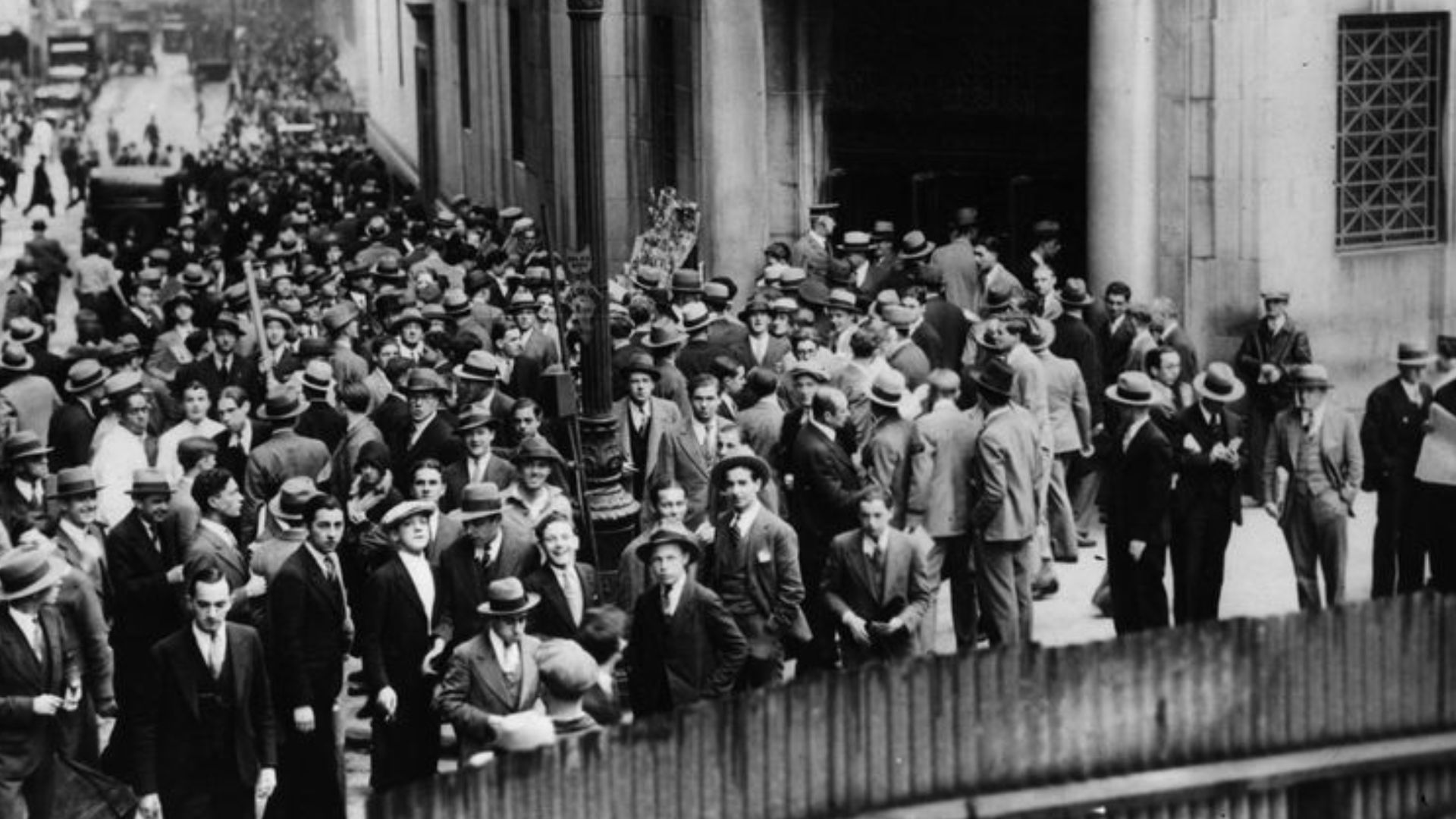
When the Great Depression kicked off with the stock market crash in 1929, Miller’s life changed dramatically. In an instant, his family lost nearly all of their material possessions. For young Miller, it was a lesson in the perils of the modern world. His “riches-to-rags” childhood experience would shape his writing forever.
 Chinmaya S Padmanabha, Wikimedia Commons
3. He Left Manhattan Behind
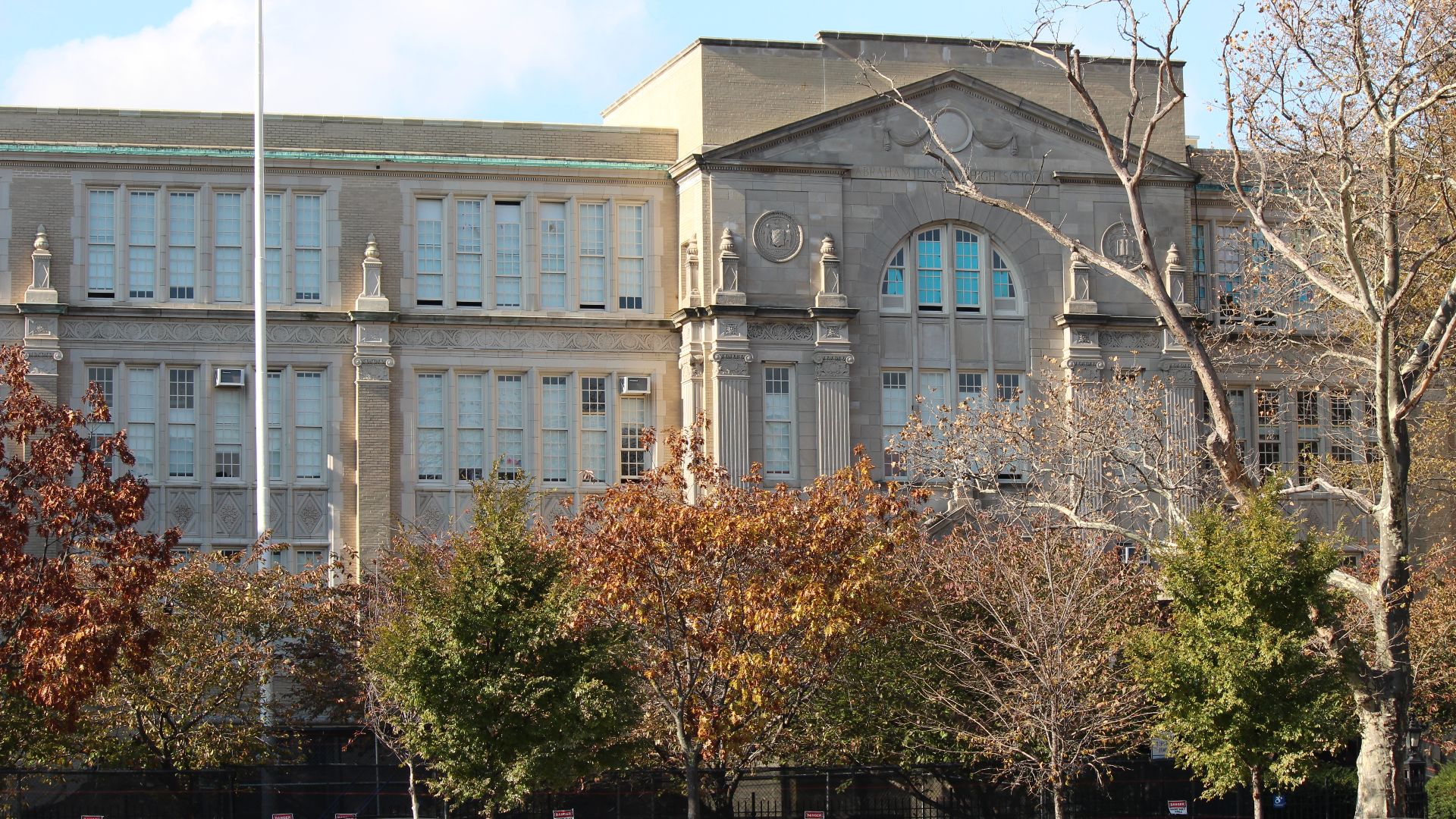
After their fortune evaporated, the Millers couldn’t afford to stay in their Manhattan digs. Instead, they shuffled off to Brooklyn, settling in Gravesend. There, Arthur Miller attended Abraham Lincoln High School, and dreamed of one day returning to the center of culture that he had left behind. But before he could do that, he had to work.
And work hard.

History's most fascinating stories and darkest secrets, delivered to your inbox daily.
4. He Put Bread On The Table
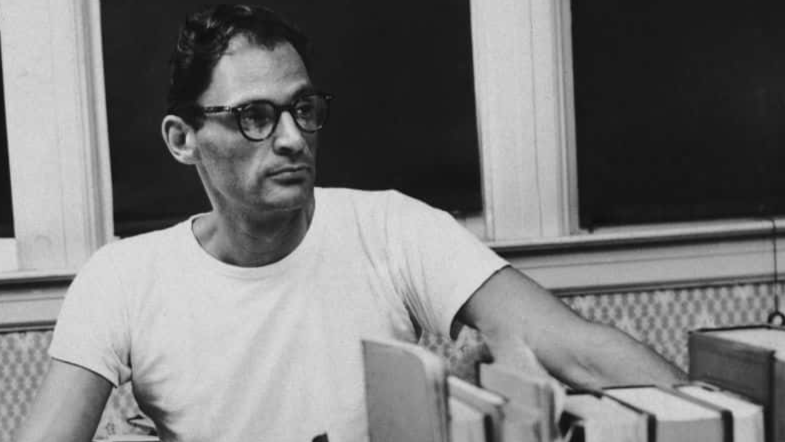
As he completed his high school diploma, Arthur Miller had to help his family make ends meet. So, to help put bread on the table, he…well, put bread on the table. Every morning before school, Miller delivered bread to the neighborhood. Later on, to pay for his college tuition, he took other odd jobs, including a warehouse gig.
Ironically, his familiarity with the plight of the working man would make him rich.
 New York Times Co., Getty Images
5. He Worked For The Student Newspaper
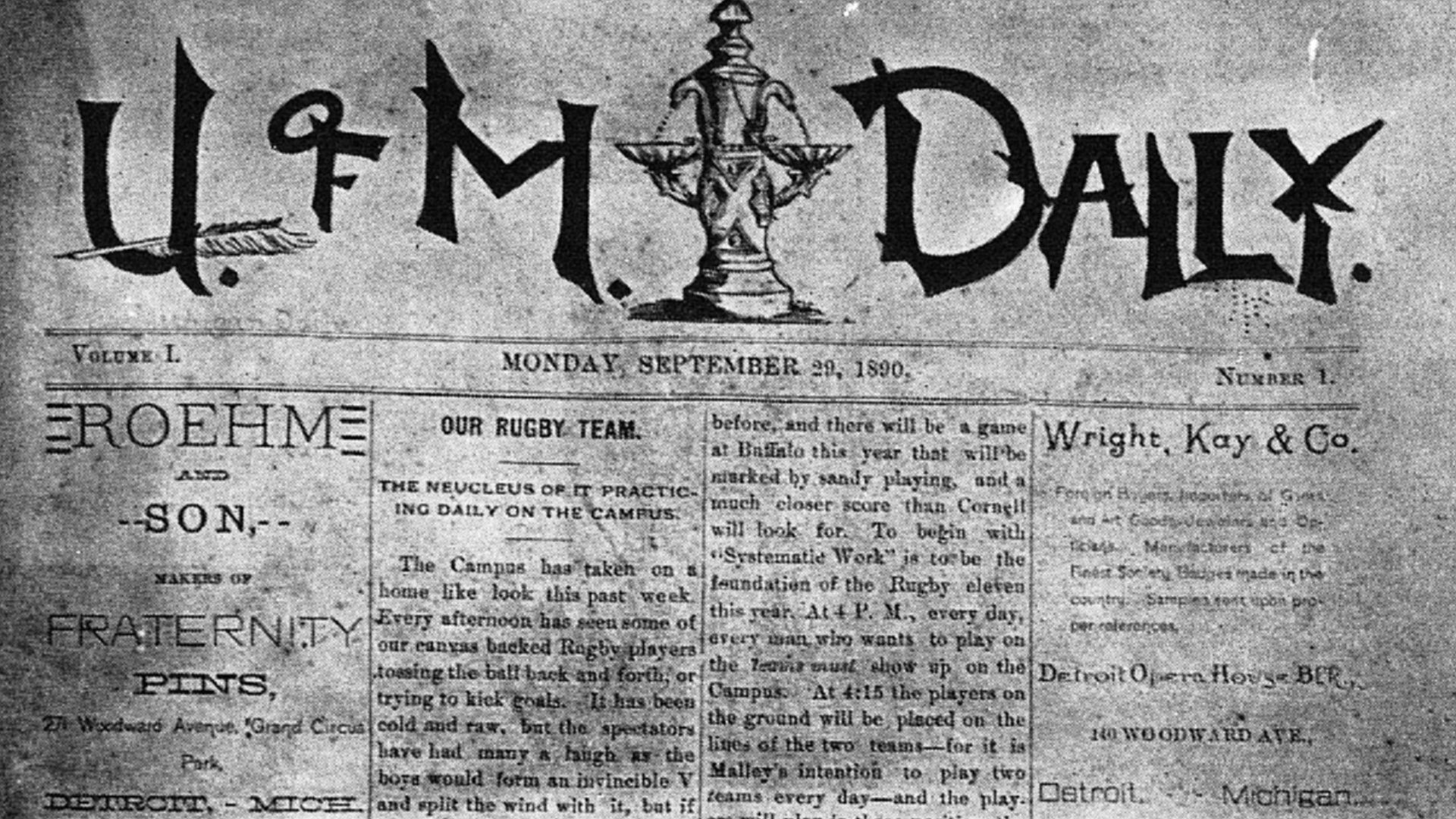
After graduating from high school and saving up enough money to cover his tuition, Arthur Miller enrolled at the University of Michigan. His plan, originally, was to become a journalist, and he even got work as a reporter and night editor for The Michigan Daily, the student newspaper.
His true talents, however, were in making stories up—not reporting on them.
 Unknown authorUnknown author, Wikimedia Commons
6. He Was No Villain
Even as a student studying journalism, Arthur Miller couldn’t ignore his true calling. While on spring break from his studies, Miller found the time to write his first play. No Villain, which Miller wrote feverishly in hopes of winning a $250 prize, plumbed the depths of a working family’s plight. The true-to-life play netted Miller the Avery Hopwood Award and hinted at his potential.
And, troublingly, his political leanings.
 U.S. State Department, Wikimedia Commons
7. He May Have Been A Communist Infiltrator
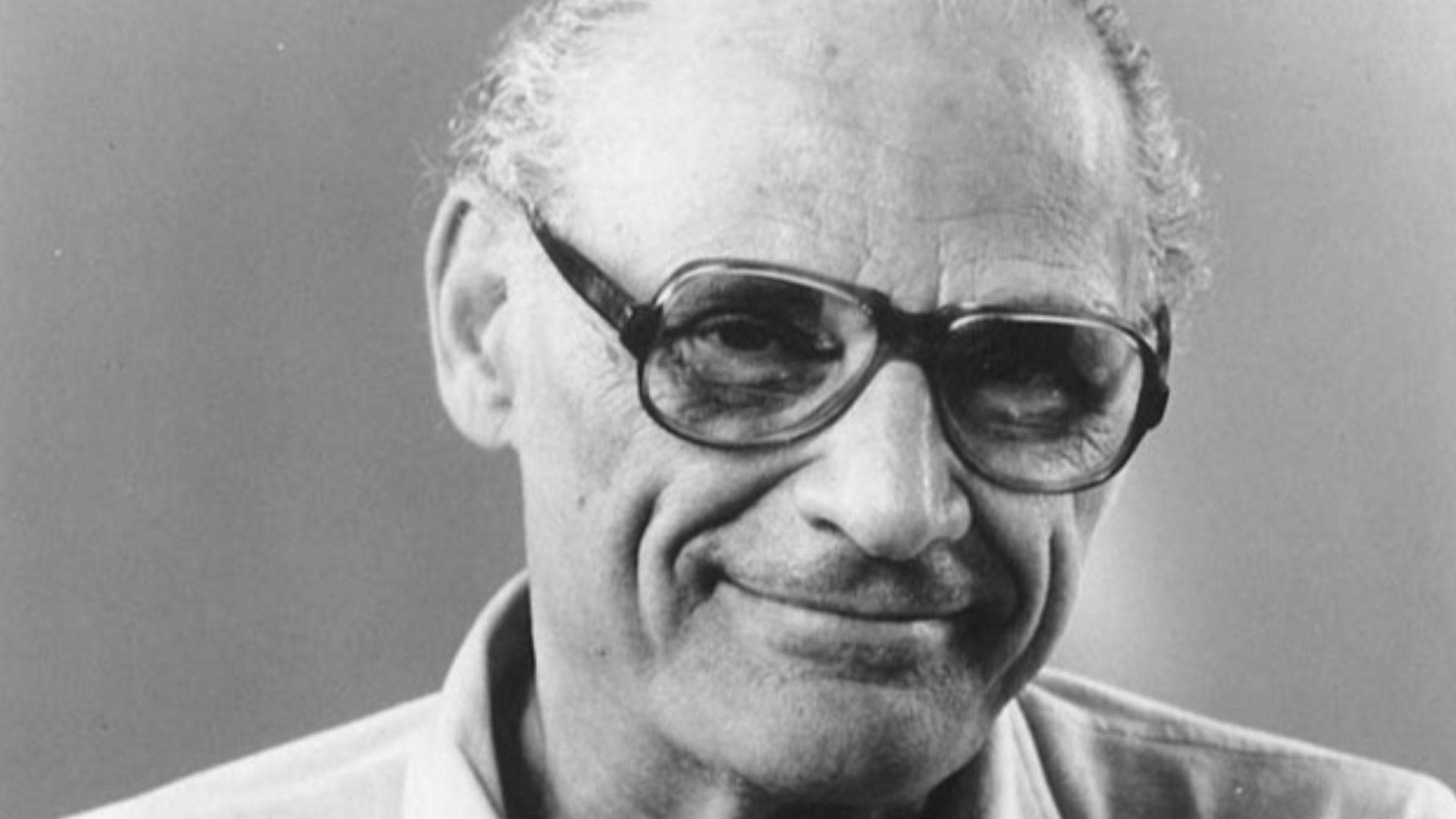
Arthur Miller completed his college education in 1938 with a Bachelor of Arts in English. No one doubted his way with words or his proficiency with a pen, but they had serious doubts about his political associations. After leaving the University of Michigan, Miller quickly became involved with the Federal Theatre Project, a short-lived initiative that was shut down by Congress in 1939, as it was worried that it had some communist associations.
It wouldn’t be his last Congressional run-in.
![Collectie / Archief : Fotocollectie Anefo
Reportage / Serie : [ onbekend ]
Beschrijving : Arthur Miller
Datum : 2 oktober 1961
Persoonsnaam : Arthur Miller
Fotograaf : Fotograaf Onbekend / Anefo
Auteursrechthebbende : Nationaal Archief
Materiaalsoort : Glasnegatief
Nummer archiefinventaris : bekijk toegang 2.24.01.09
Bestanddeelnummer : 912-9998](https://www.factinate.com/storage/app/media/factinate/2026/3/26/17745169438f203ece9af91a3f8a20b5d17197a555eaa47866.jpg)
8. He Found Love—Somehow
Even as a struggling artist, Miller found time for love. In 1940, just two years after graduating, he married Mary Grace Slattery. Verifiable details on how the couple met are hard to come by, but their marriage appeared to be a happy one. Together, the couple had two children, Jane and Robert, but once again, fate threatened to upend his happy home.
9. He Avoided The Draft
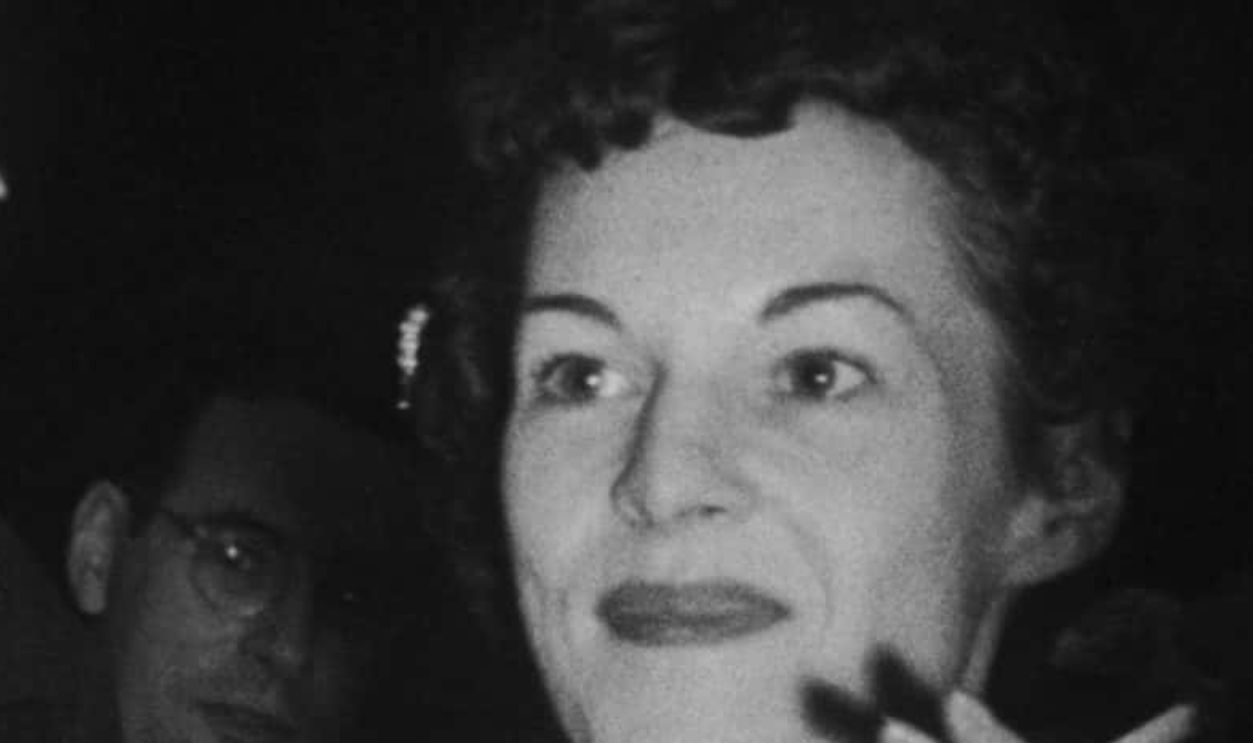
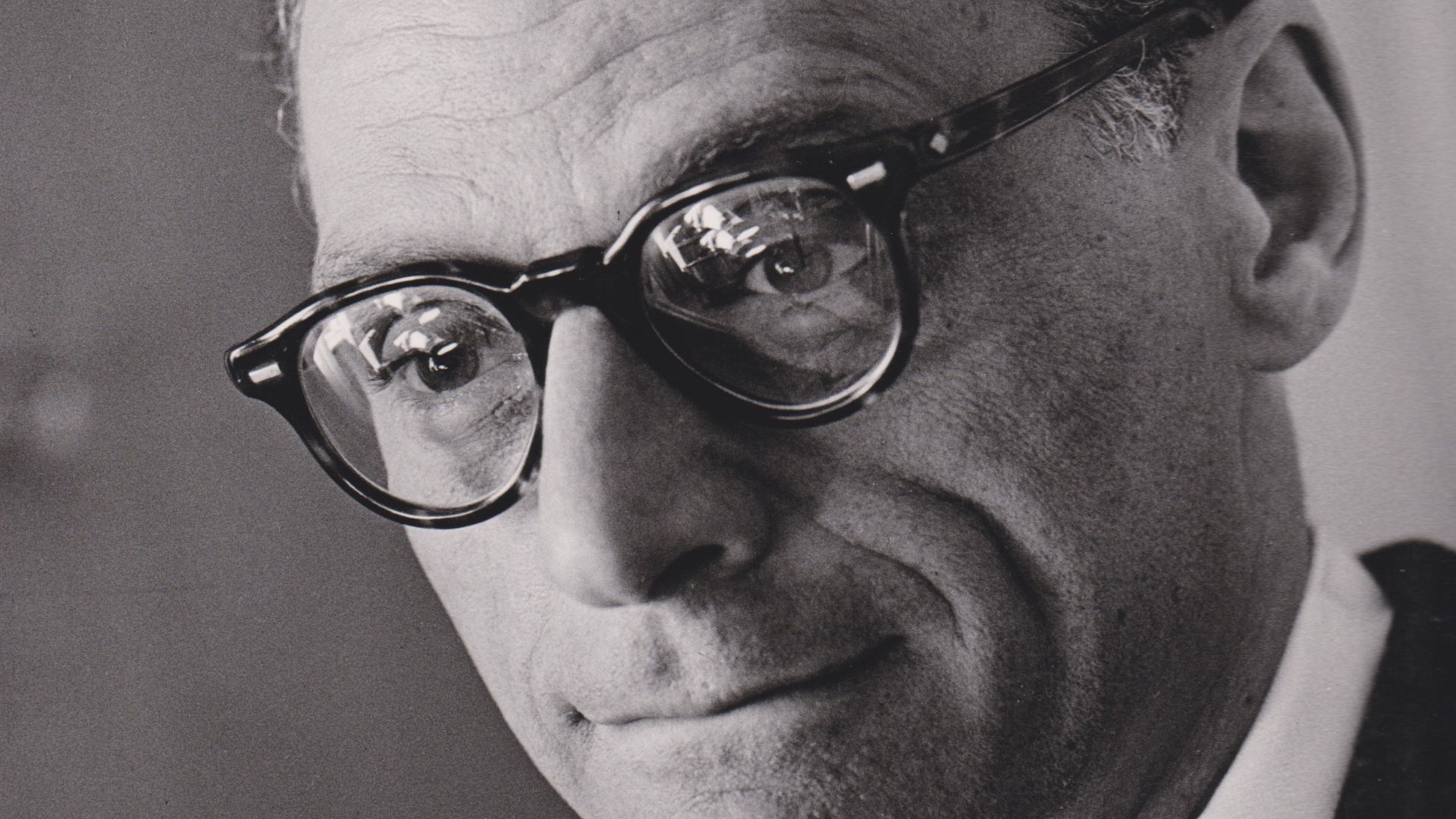
When the US entered WWII, countless thousands of young men had to shelve their dreams when they were drafted into the fight. Miller, fortunately, proved that the pen was mightier than the sword. Or, rather, that his old high school knee injury from football was worse than going AWOL. While his contemporaries donned the uniform, Miller dodged the draft.
But he would have to fight a battle of his own.
 Wolfgang Fischer, Wikimedia Commons
History's most fascinating stories and darkest secrets, delivered to your inbox daily.
10. His First Play Flopped Hard
Given his promising start with No Villain, there was considerable anticipation for Miller’s first Broadway production, The Man Who Had All the Luck (1944). And, when the play won the Theatre Guild’s National Award, it looked like it would be a huge success. Then the critics saw it—and panned it. The reviews were so bad that the play was shut down after just four performances.
Fortunately, redemption came fast.
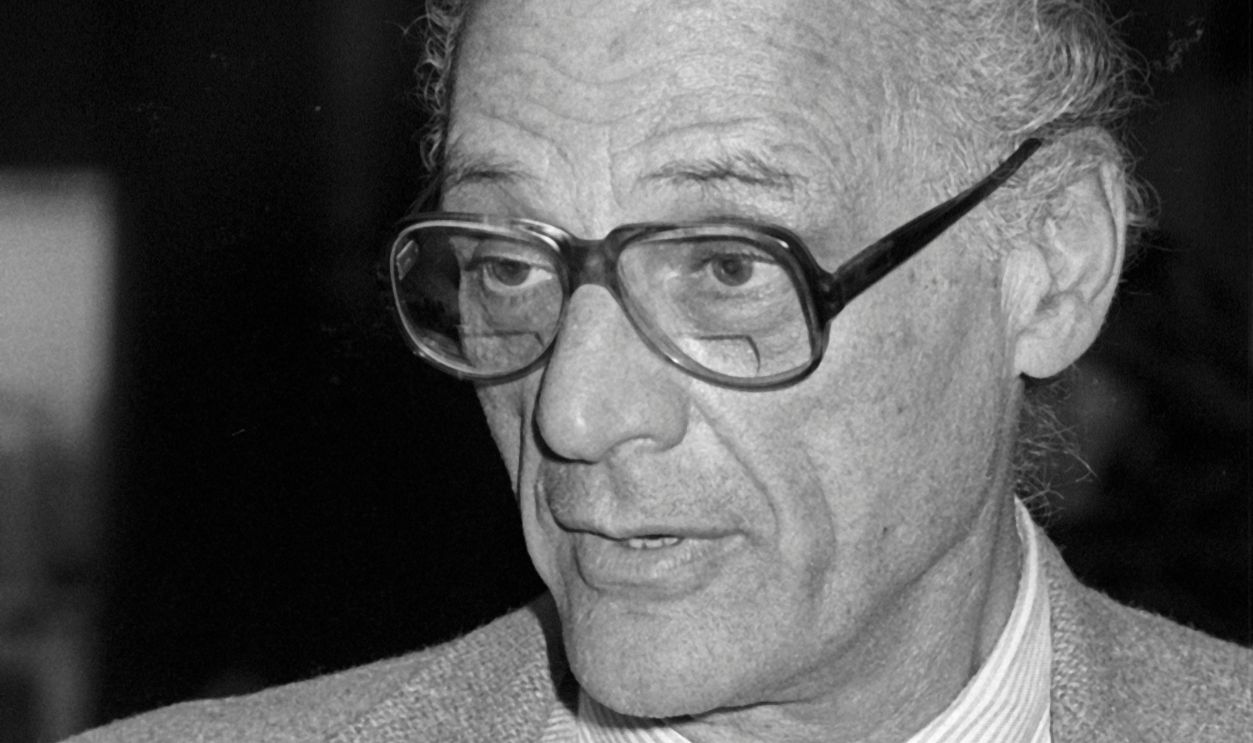
11. He Regained His Focus
In 1945, after his first Broadway flop, Arthur Miller returned to writing about what he knew. Capitalizing on the horrors emerging from the Holocaust, Miller published Focus—a novel ruthlessly examining the prejudice against Jewish Americans. The book became his first widely acknowledged success, earning him redemption after his disastrous debut.
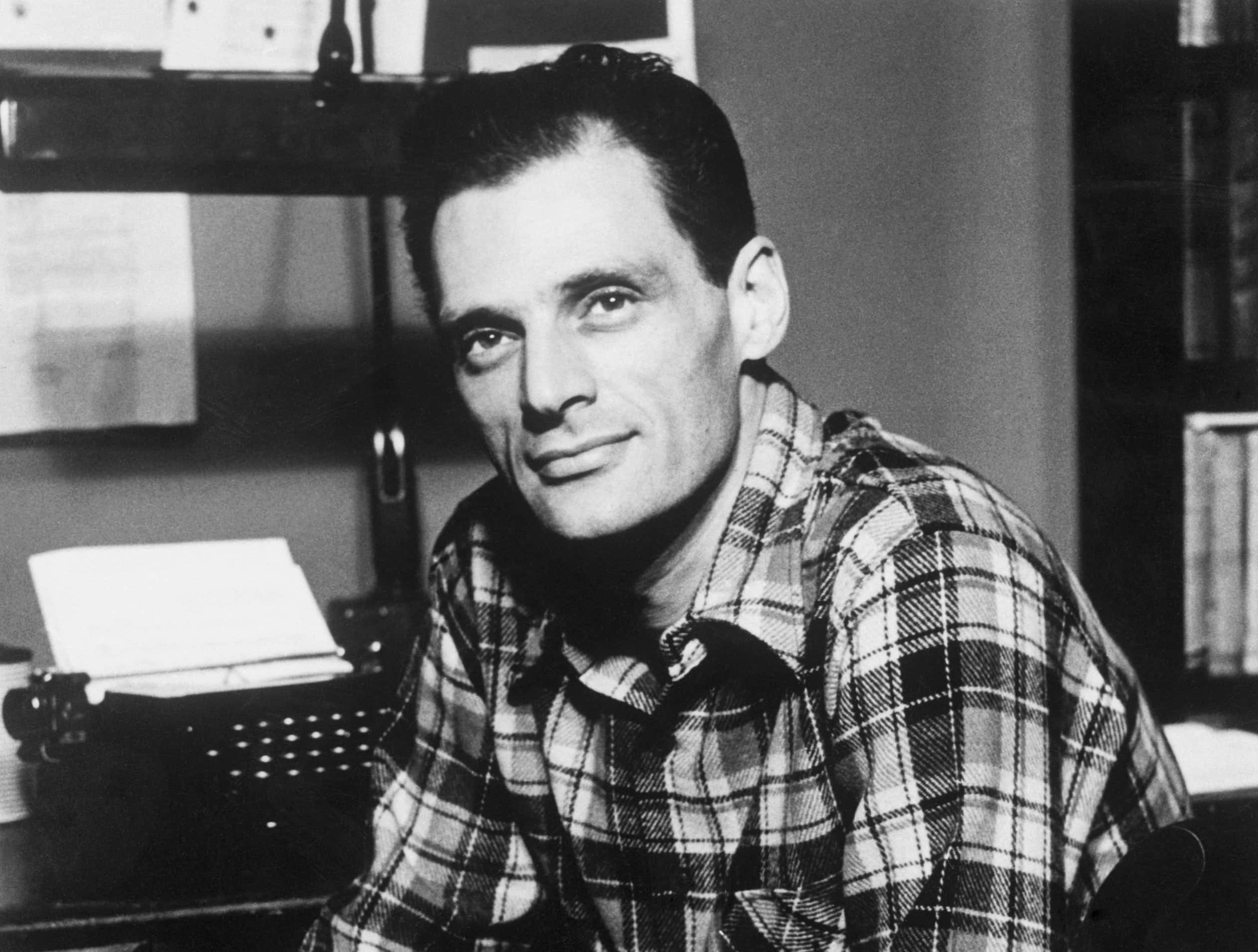
12. He Found His First Real Success
Miller’s fortunes continued to improve with All My Sons in 1947. The play, centered on a munitions manufacturer whose defective products deliver devastating consequences, struck a nerve with audiences. Far from a four-run flop, All My Sons was a stunning commercial success. Suffice to say, the critics took notice.
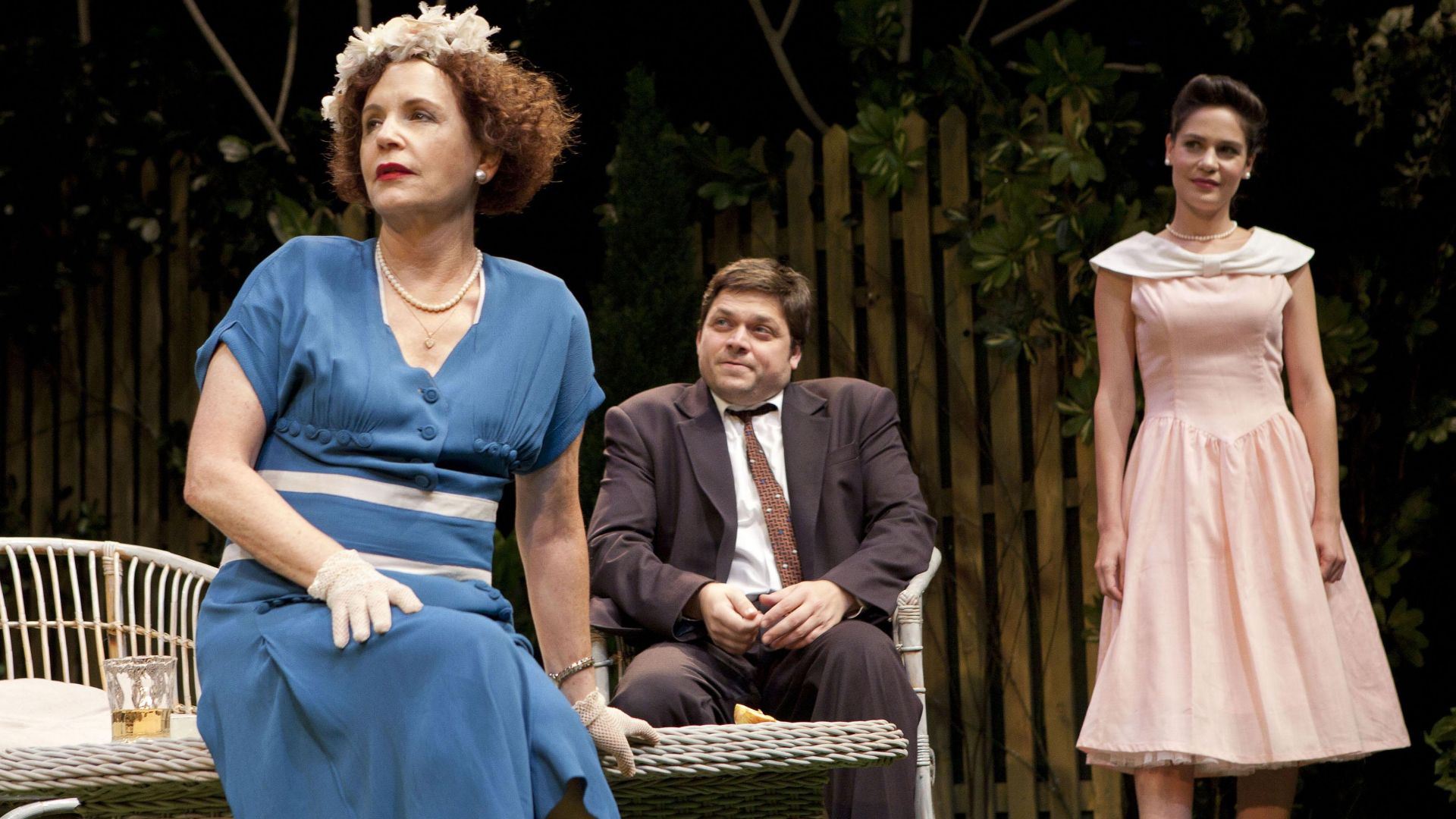 Gerard Alon, Wikimedia Commons
13. He Was The Best Author
For Arthur Miller, All My Sons wasn’t just a commercial breakthrough—it was the validation that he had craved. In addition to sweeping the Broadway box office, All My Sons earned Miller the Tony Award for Best Author. Just like that, he had cemented his place as a professional playwright and one of the best of his generation.
His masterpiece, however, was yet to come.
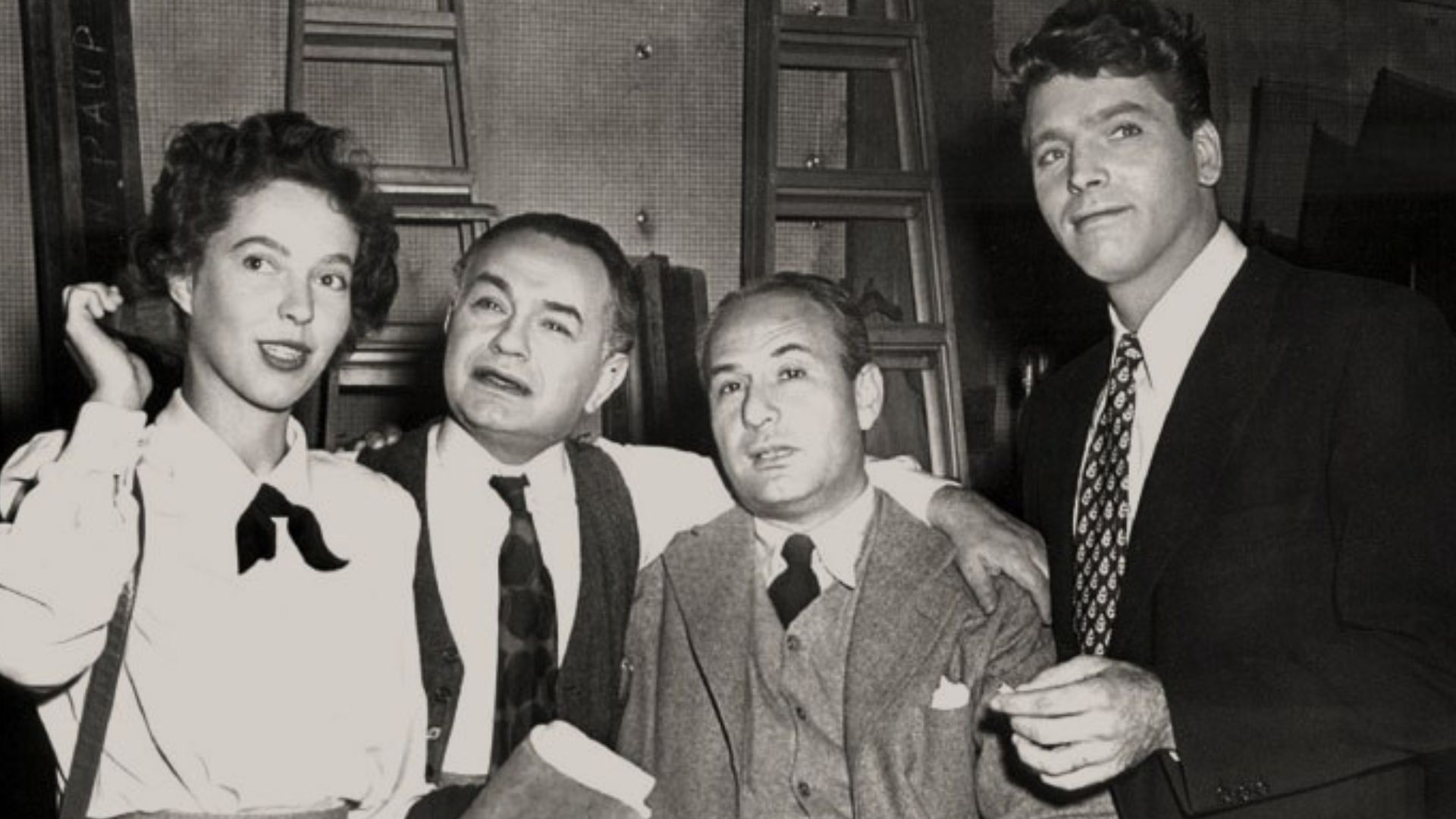 unknown (Universal Pictures), Wikimedia Commons
14. He Wrote A Classic In A Day
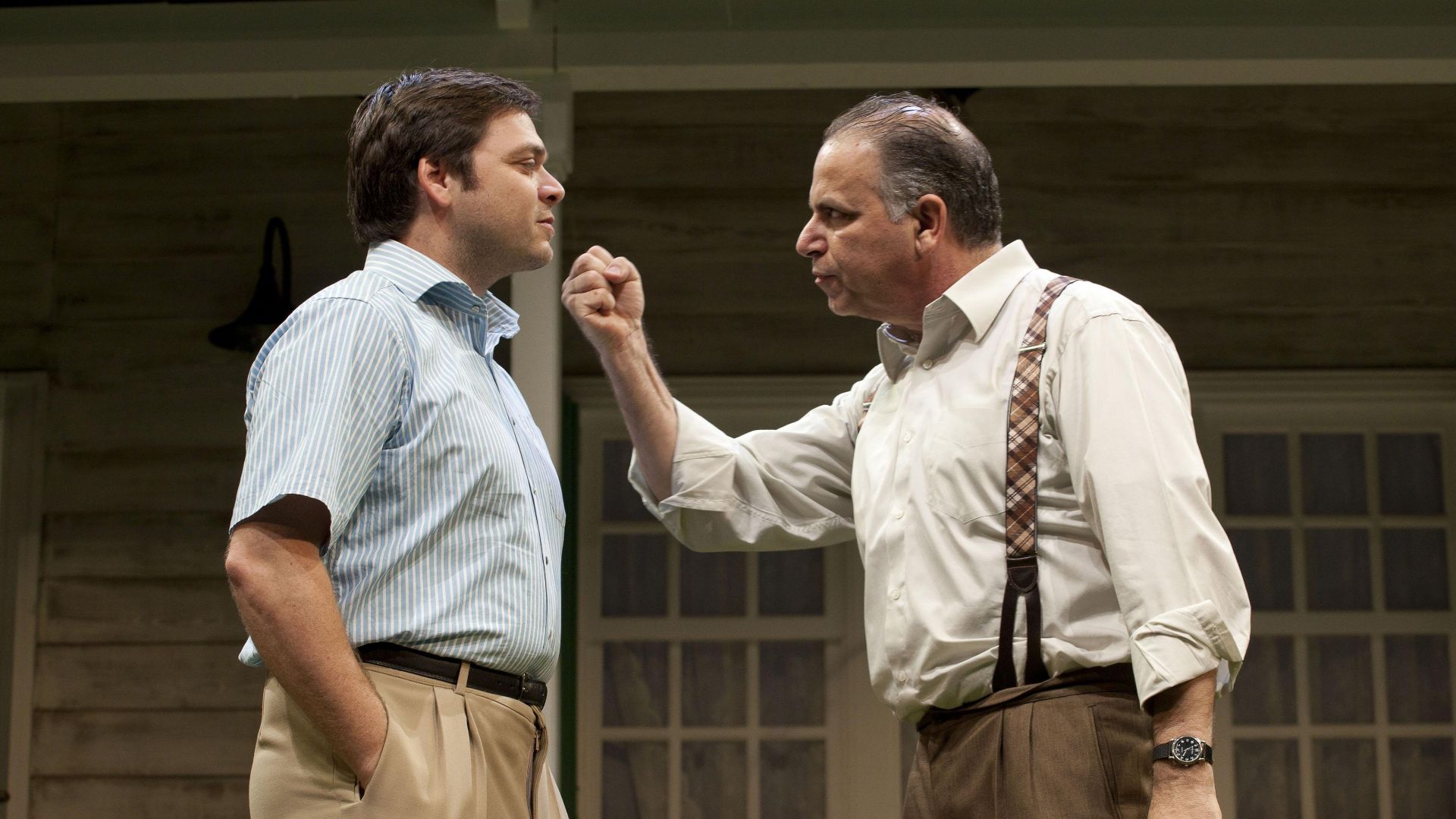
With the success of All My Sons, in 1948, Miller retreated from the noise of the city and built a small writing studio in Roxbury, Connecticut. There, alone and focused, magic happened. In less than a day, Miller wrote what would become the first act of his most recognizable play, Death of a Salesman.
The rest of the play came to him just as quickly.
 Gerard Alon, Wikimedia Commons
15. He Wrote For The Common Man
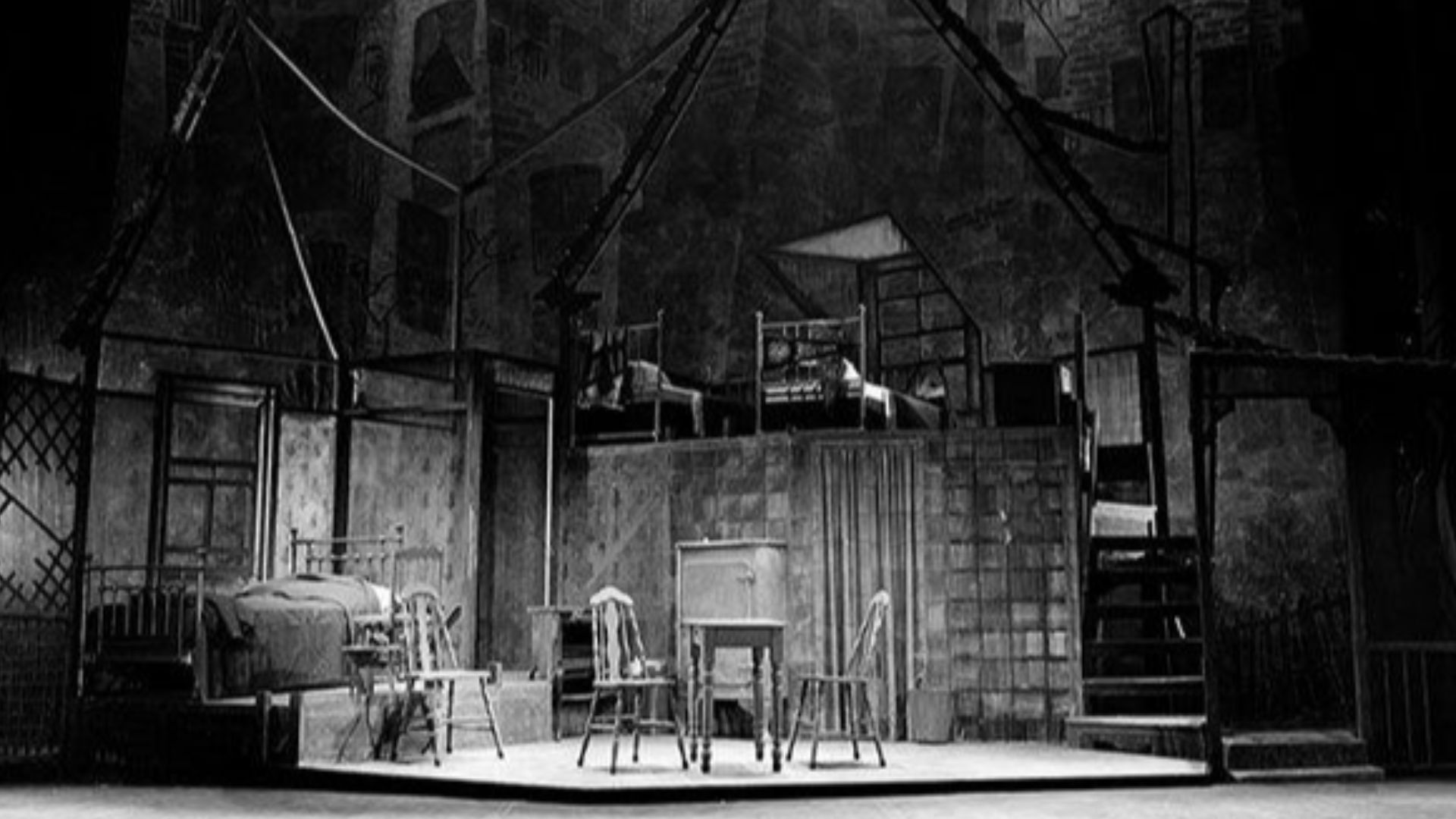
After his explosion of inspiration, Arthur Miller didn’t slow down. He completed the rest of Death of a Salesman in just six weeks. Given the subject matter, it’s no wonder Miller wrote it that quickly. Inspired by Miller’s early years working odd jobs, Death of a Salesman is a tragedy focusing on the plight of the common man, crushed by hollow promises and misplaced ideals.
It was his truest story yet—and his most successful.
 Chelsea Tenenbaum, Wikimedia Commons
History's most fascinating stories and darkest secrets, delivered to your inbox daily.
16. He Took Broadway By Storm
Miller’s Death of a Salesman was guaranteed to be a box office smash hit. The play premiered on Broadway in mid-February of 1949. With the direction of Elia Kazan and the emotive power of Lee J Cobb as the lead character, Willy Loman, the play filled theater after theater. From the opening curtain, it was clear the play wasn’t just another hit—it was a cultural reckoning.
And a literary crowning.
 Unknown authorUnknown author, Wikimedia Commons
17. He Swept Every Major Prize
Miller’s Death of a Salesman was such a rave hit with audiences that it had a jaw-dropping 742-performance run. And the critics loved it even more. The play earned Miller a rare honor, becoming the first play to win the Tony Award for Best Play, the New York Drama Critics’ Circle Award, and the Pulitzer Prize for Drama. Miller wasn’t just successful—he was untouchable.
But, he might have copied a line or two.

18. He Borrowed A Name
Thanks to Arthur Miller, the “Willy Loman” became synonymous with the “common man”. But, years later, Miller had to confess that he might have borrowed the name. In Timebends—Miller’s autobiography—he speculated that the name may have lodged itself in his subconscious after watching The Testament of Dr Mabuse, which featured a character named “Inspector Lohmann”.
Inspiration, it seemed, came from unlikely places.
19. He Had An Affair With Marilyn Monroe
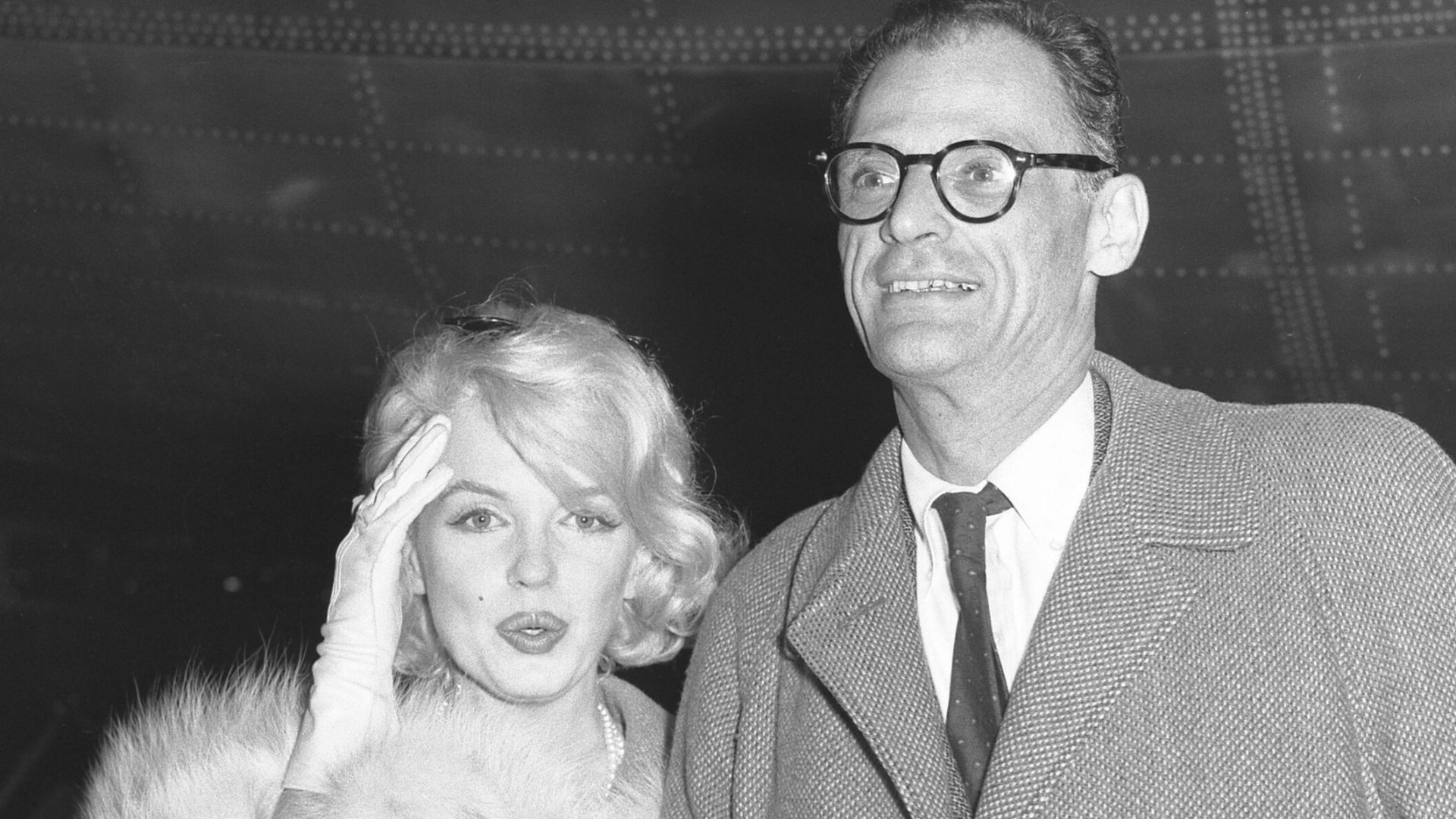
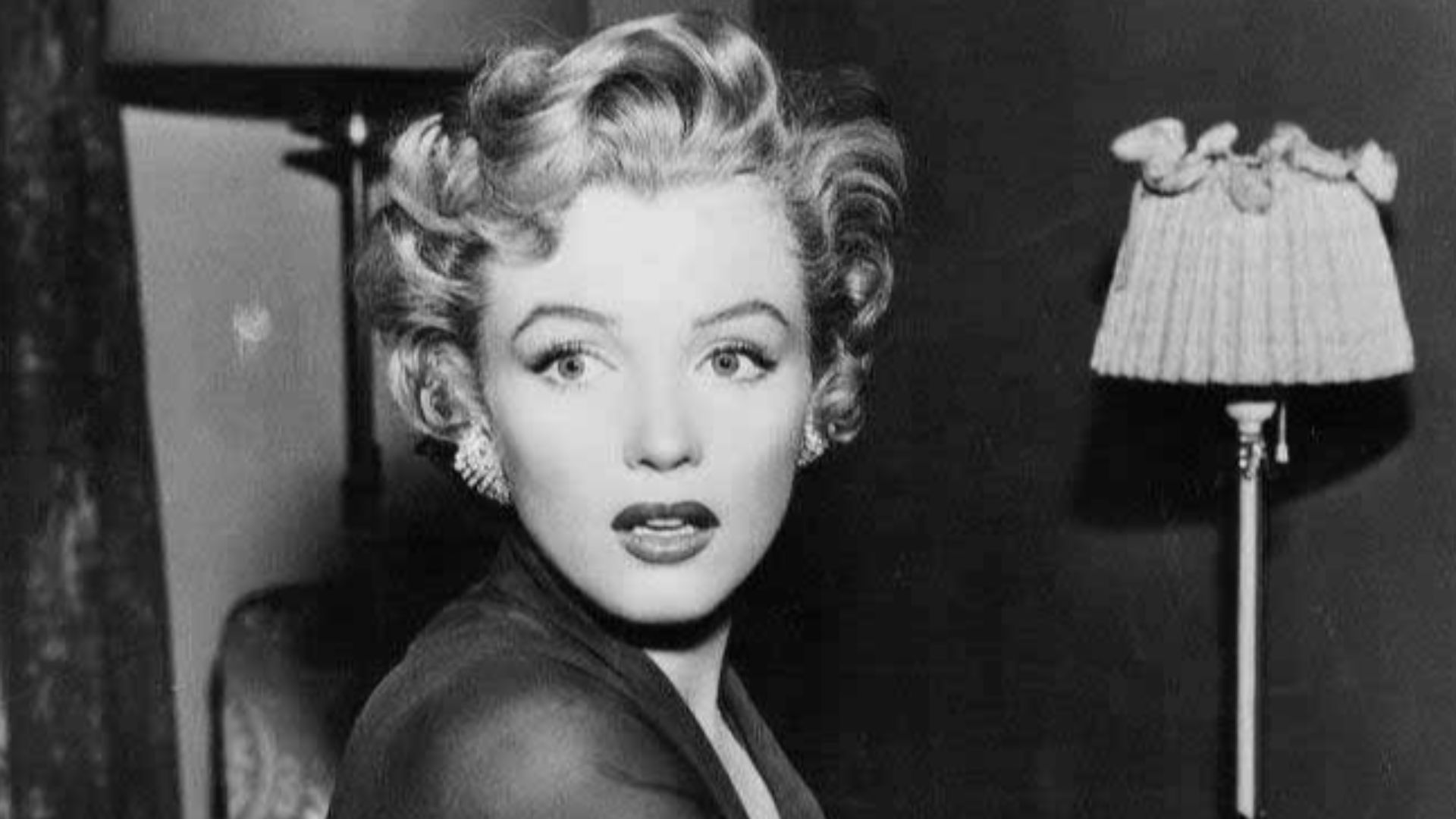
In 1951, Arthur Miller crossed paths with Hollywood’s hottest starlet: Marilyn Monroe. Just like every other man, Miller was defenseless against Monroe’s charms and beauty, and the two had a brief affair. Given that he was still married, the affair ended, but Miller and Monroe maintained contact afterward. Their three-act romance story was far from over.
 Los Angeles Times, Wikimedia Commons
20. His Friend Betrayed Him
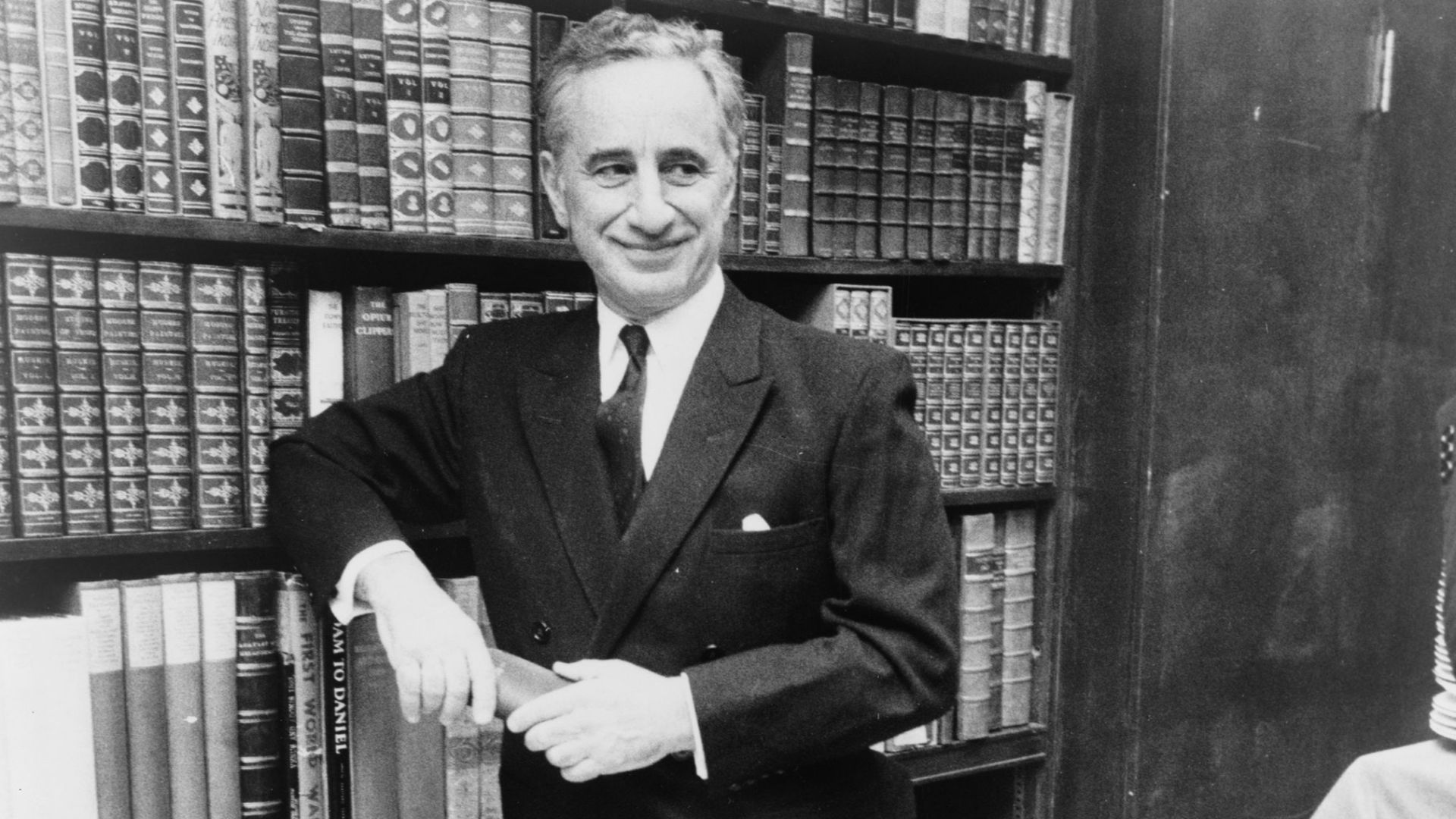
In 1952, Arthur Miller experienced his first real betrayal—and his first real brush with political trouble. Elia Kazan, Miller’s close friend and the director of Death of a Salesman, testified before the House Un-American Activities Committee. During his testimony, he named former colleagues as members of the Communist Party…Miller among them.
Miller’s friendship with Kazan ended as soon as his name left his lips. And betrayal became his favorite new theme.
21. He Went On A Witch Hunt
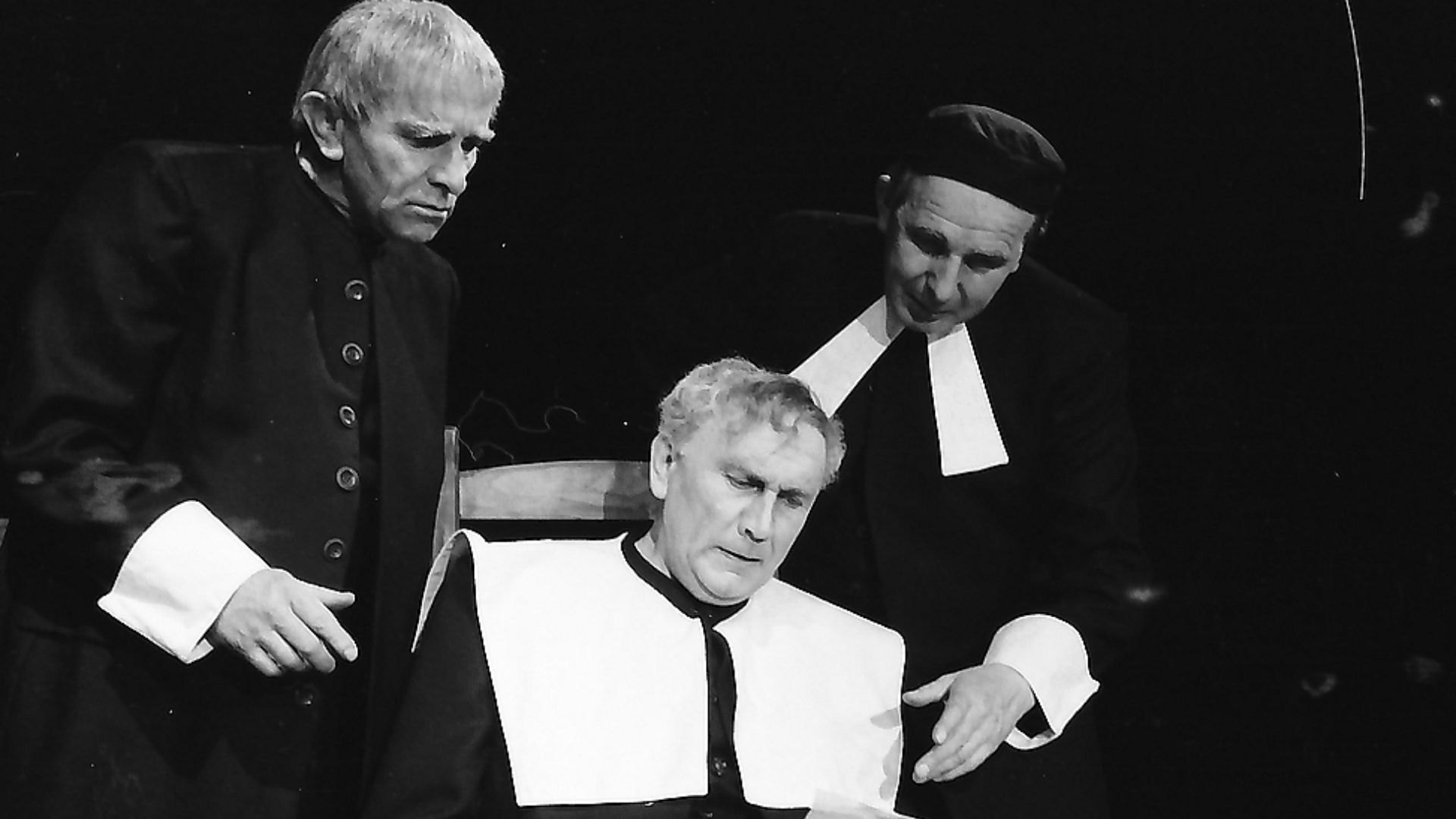
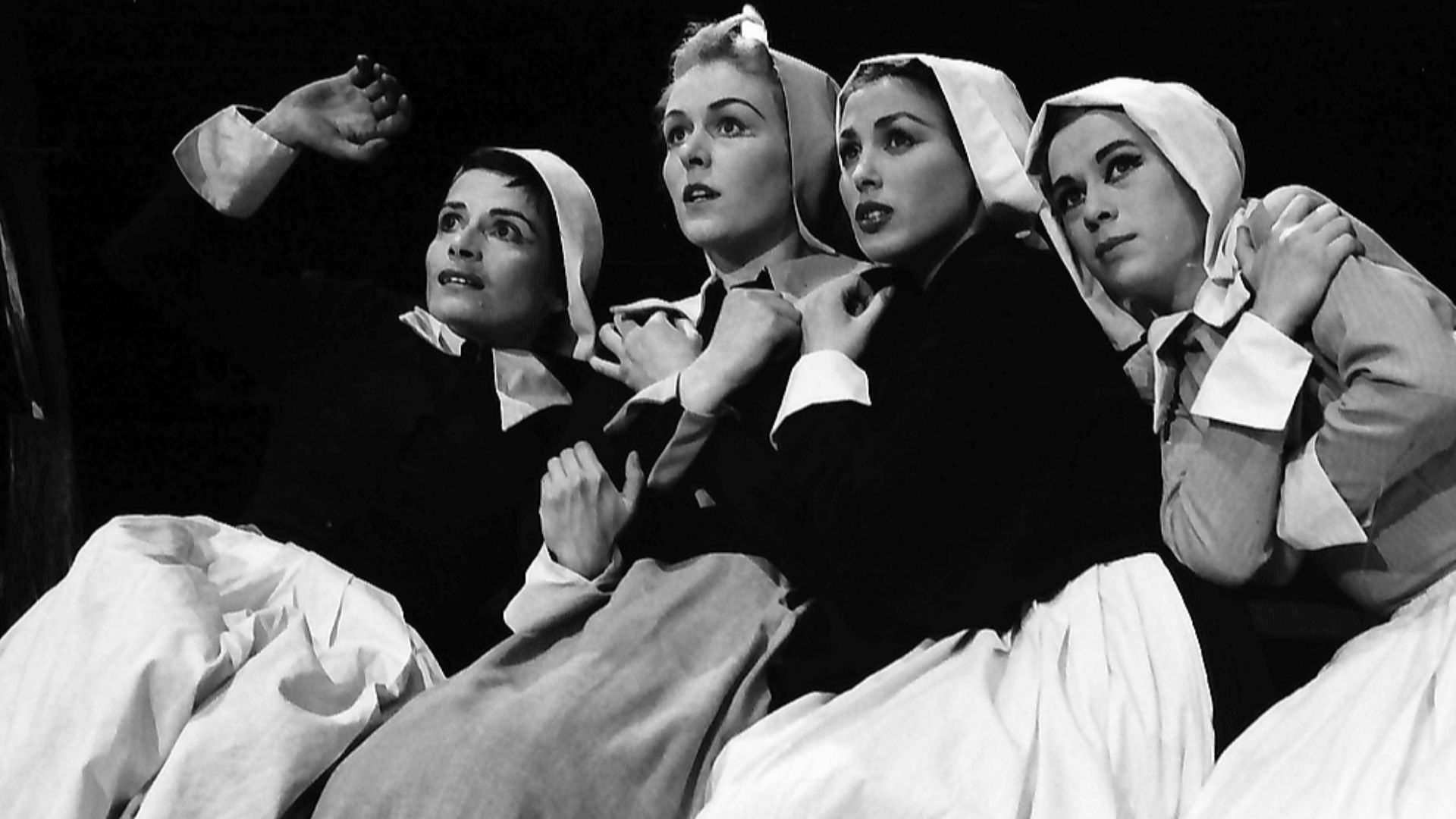
Reeling from Kazan’s betrayal, Miller went in search of a way to confront the growing political hysteria of his time. His pursuit brought him to Salem, Massachusetts, where he studied the witch trials of 1692 and discovered a perfect historical mirror for the paranoia that destroyed his friendship. Miller channeled his research and frustration with Kazan into The Crucible.
He wrote a play—but he got revenge.
 Willy Pragher, Wikimedia Commons
History's most fascinating stories and darkest secrets, delivered to your inbox daily.
22. He Wrote His Boldest Allegory
Premiering in 1953, The Crucible used colonial fear and accusation to expose contemporary ideological witch-hunts. The play resonated powerfully, earning a Tony Award for Best Play and becoming Miller’s most frequently produced work across the globe. However, there were some who saw right through Miller’s meaningful metaphors and evasive allegories.
 Willy Pragher, Wikimedia Commons
23. He Missed His Own London Premiere
In 1954, with The Crucible tearing up the Broadway box office, Arthur Miller prepared for the play’s much-anticipated London premiere. But he wouldn’t be able to attend. The US State Department blocked Miller from traveling to London, citing concerns over his “political activities”. While his work toured freely, Miller himself found borders suddenly closing around him.
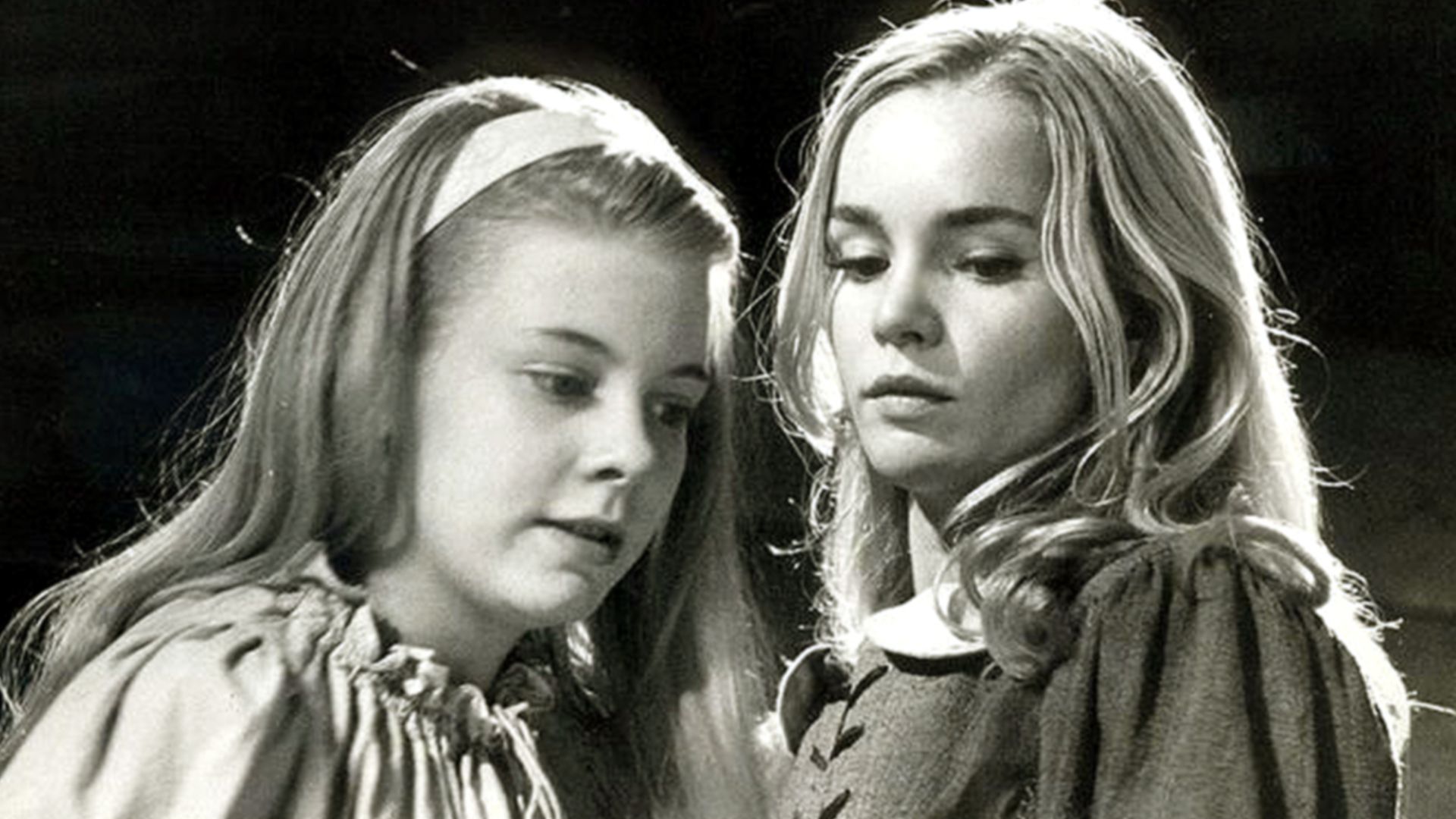
24. He Had A View From The Bridge
Arthur Miller was never one to back down—but he always let his words do the fighting. Sharpening his critique of the anti-communist hysteria against him, Miller wrote A View from the Bridge (1955). The story, focusing on a longshoreman who turns against his own, was a direct rebuttal of Kazan’s On the Waterfront. What Miller did next, however, was as hilarious as it was dangerous.
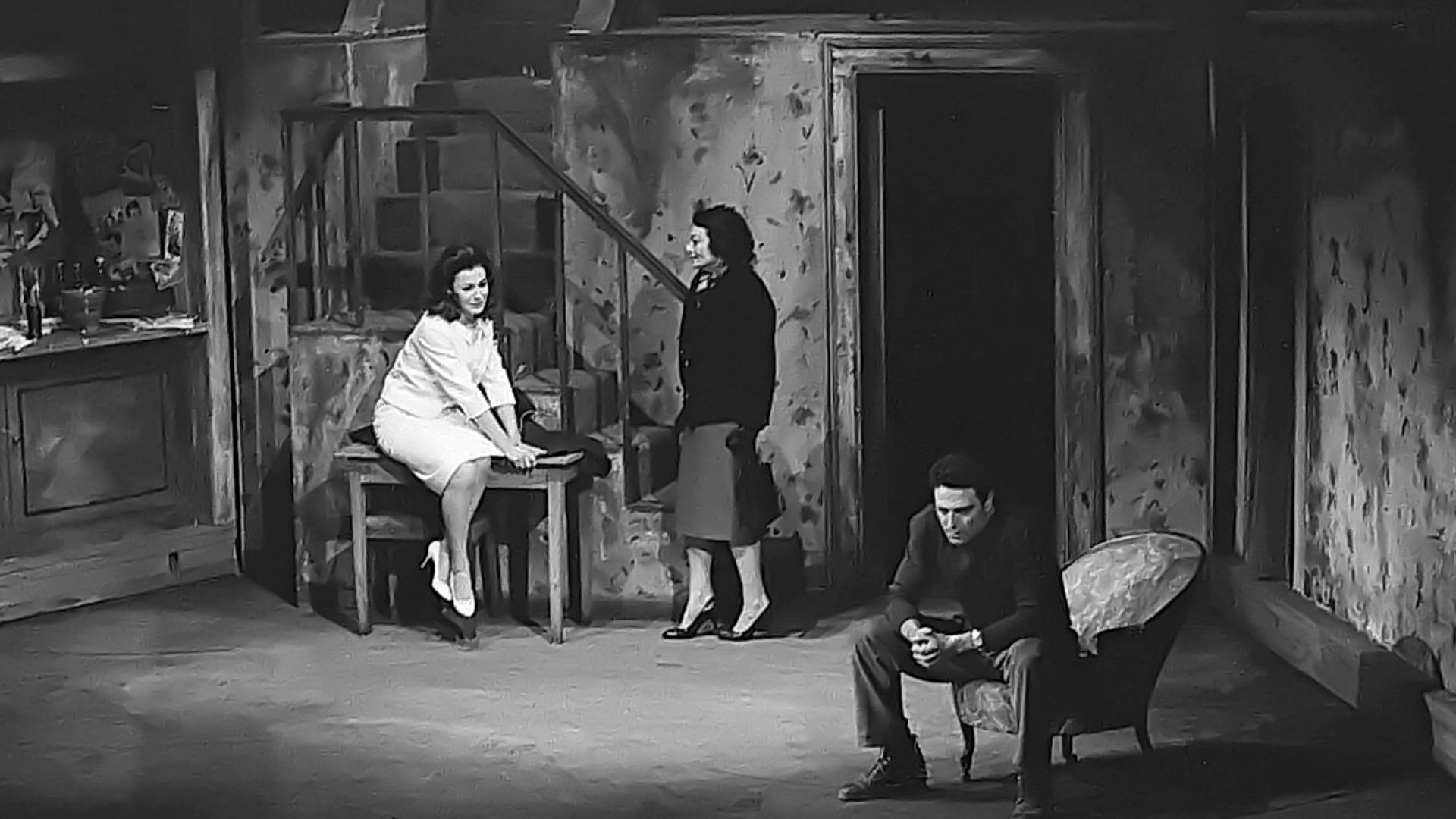 Pic, Roger (1920-2001). Photographe, Wikimedia Commons
25. He Thought Kazan Was A Snitch
After writing A View from the Bridge, Miller didn’t just sit on it. He immediately printed off a copy and sent it directly to Elia Kazan’s mailbox. When Kazan read the play, he jokingly offered to direct the film adaptation. Miller, however, was not laughing. He replied by saying, “I only sent you the script to let you know what I think of stool-pigeons”.
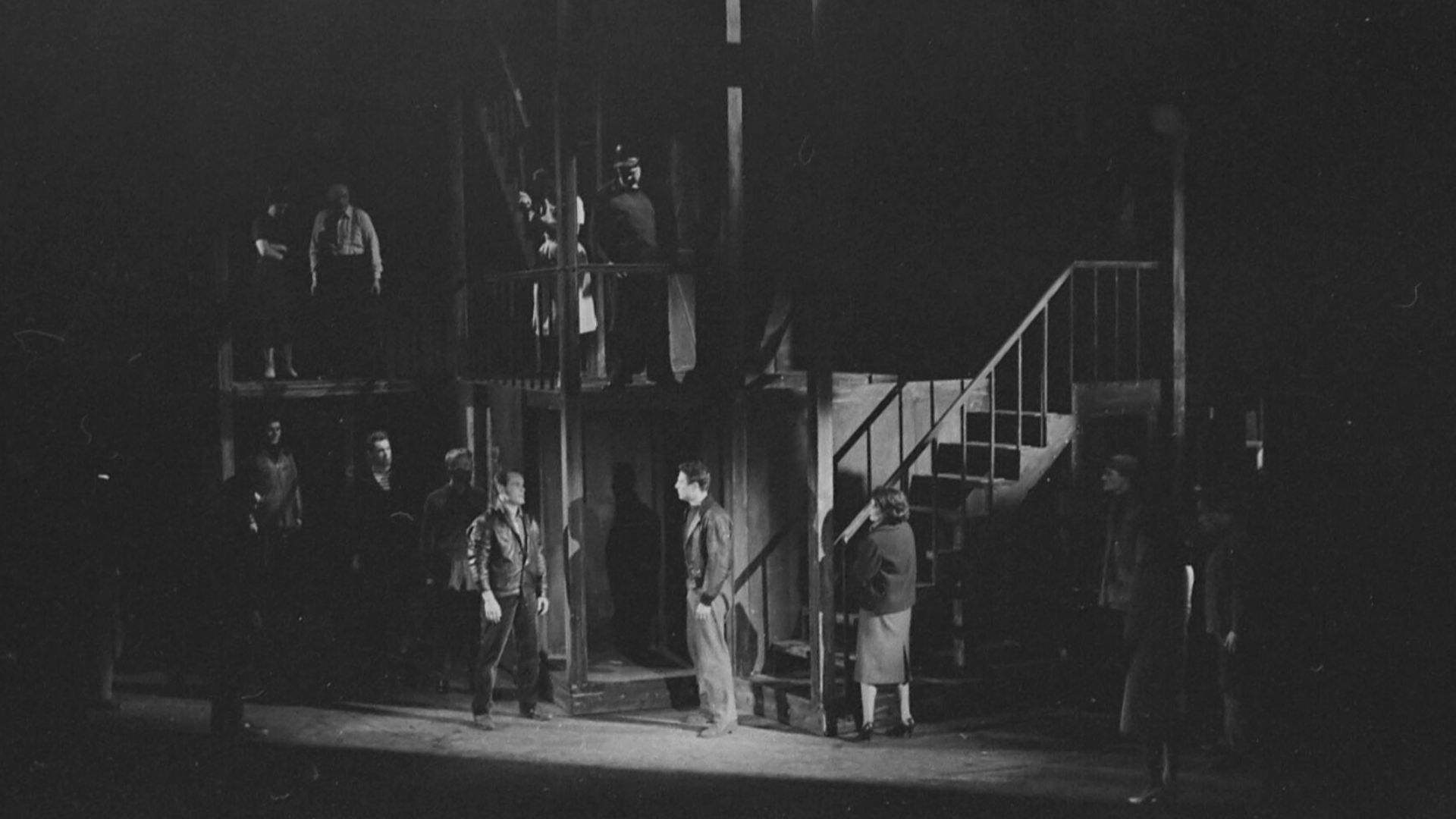 Pic, Roger (1920-2001). Photographe, Wikimedia Commons
26. He Ended His First Marriage
Miller’s friendship with Kazan wasn’t the only relationship of his that was on the rocks. In 1956, with the anti-communist hysteria against him intensifying, he divorced Mary Slattery in Reno, Nevada. She had been with him through his meteoric rise to fame and success and weathered the backlash with him.
Miller, however, loved another woman.

27. He Married The Most Famous Woman Alive
On June 29, 1956, shortly after divorcing Slattery, Miller stunned Hollywood and the world when he snagged the most eligible bachelorette on earth. At a Jewish ceremony at the Westchester County Courthouse, far from the paparazzi and tabloids, Miller tied the knot to none other than Marilyn Monroe. And it seemed to be love. Monroe had converted to Judaism simply to be closer to Miller and his family.
Perhaps too close.
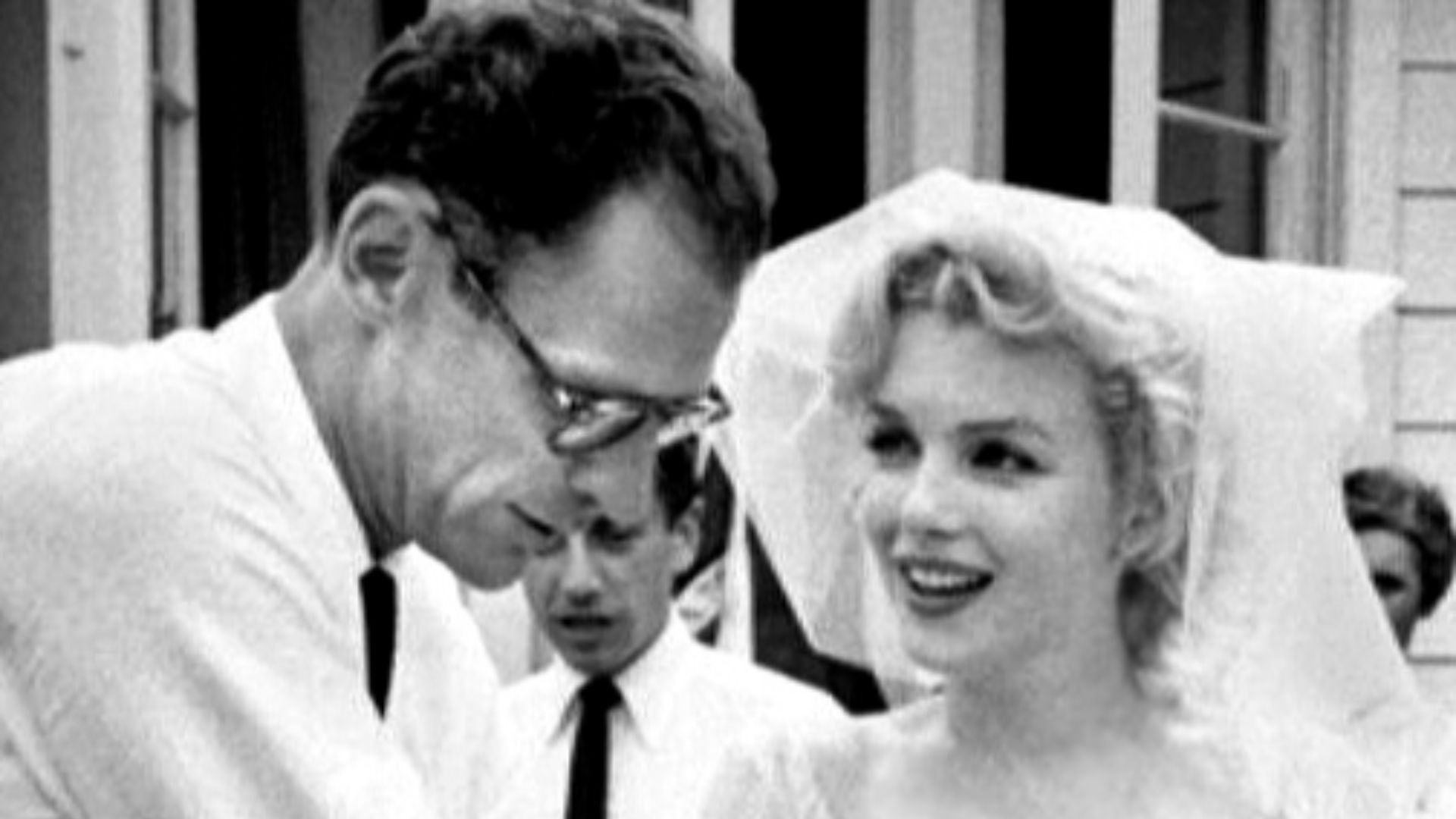 Macfadden Publications New York, publisher of Radio-TV Mirror, Wikimedia Commons
History's most fascinating stories and darkest secrets, delivered to your inbox daily.
28. He Gave His Testimony
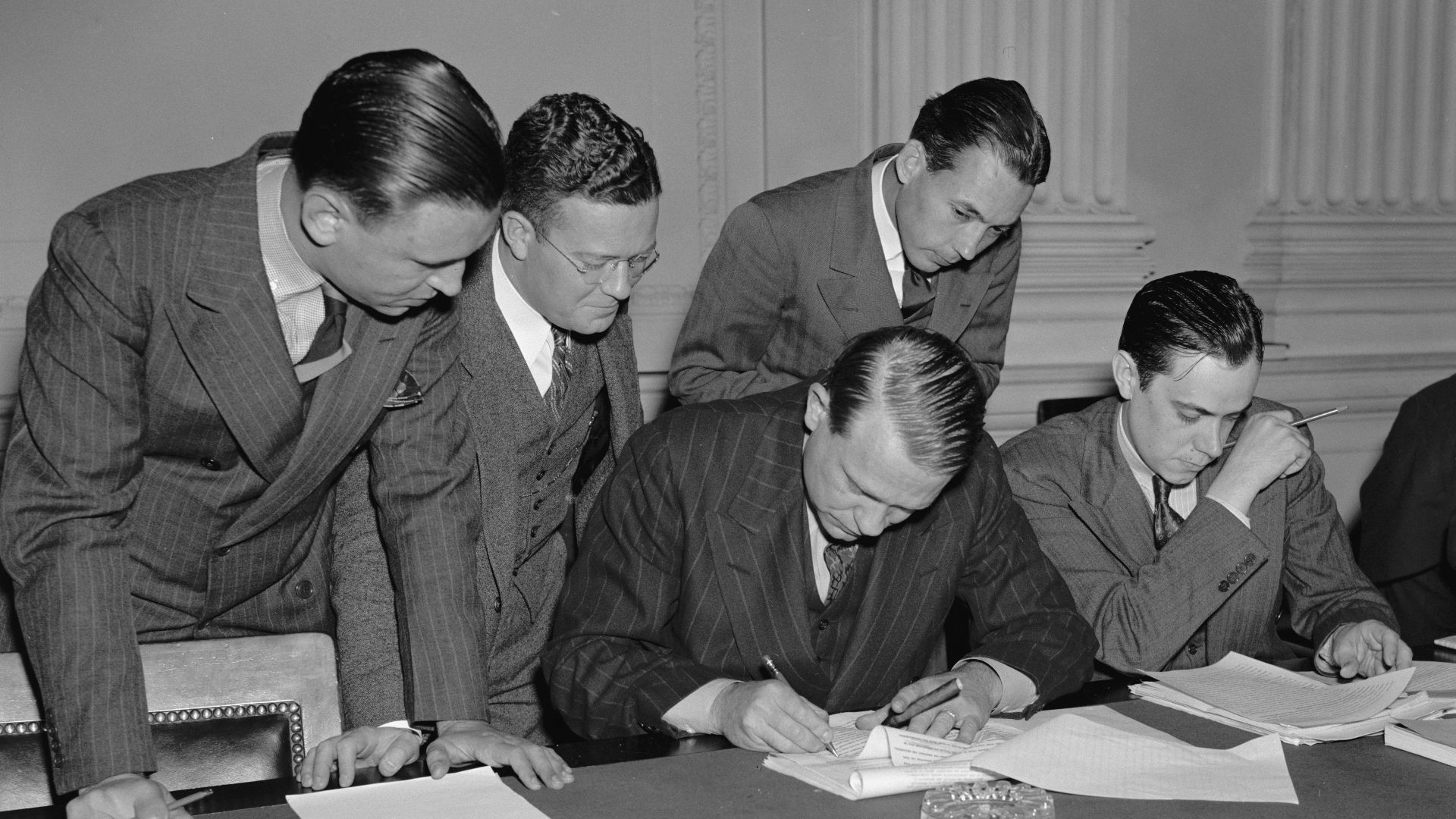
Later that same year, the anti-communist paranoia surrounding Arthur Miller reached dangerous levels. When the famous playwright received a summons from the House Un-American Activities Committee, he had no choice but to show up and testify. But he wouldn’t do it alone. When he appeared before the panel, Monroe appeared with him.
It was more than just a politically savvy move.
 Harris & Ewing, official White House photographers, Wikimedia Commons
29. He Didn’t Name Names
Miller’s testimony was as thrilling as any play he had ever written. With the camera flashes going off and the tape recorders running, Miller confessed that he had attended meetings with “Communist” writers. However, he proved his loyalty to his friends by refusing to name them, saying, “I could not use the name of another person and bring trouble on him”.
His act of defiance would cost him dearly.
30. He Paid For His Loyalty
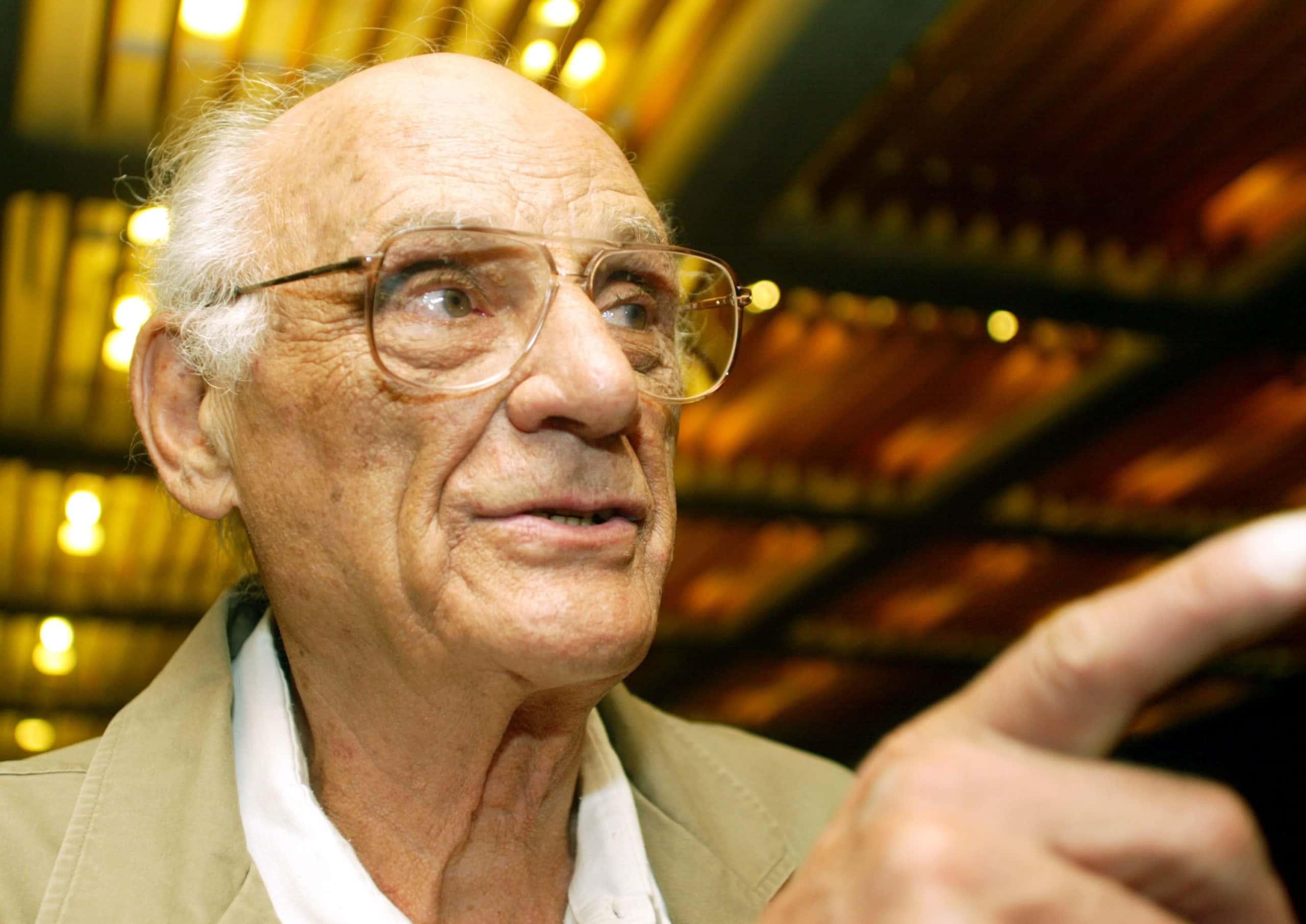
In May 1957, Miller’s refusal to cooperate with the HUAC came with consequences. A judge ruled that his refusal to name names put him in contempt of Congress. The price of his loyalty to his friends? A $500 fine and a suspended sentence. The real punishment, however, was getting onto Hollywood’s blacklist. Miller fought back.
31. He Appealed His Sentence
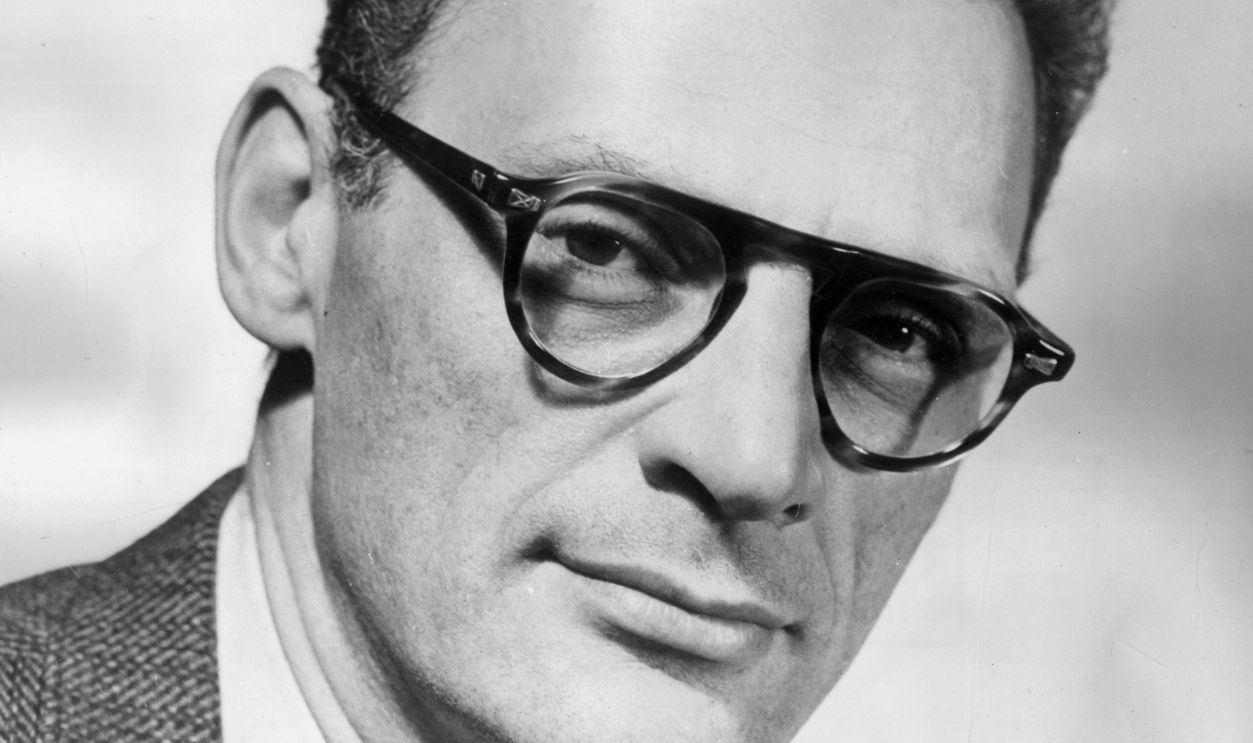
Miller’s political troubles didn’t end with the slap on the wrist. On August 8, 1958, Miller once again defied his enemies with a US Court of Appeals ruling that overturned his conviction. Moreover, the Appeals court found that the committee’s chairman had misled Miller. Even Hollywood couldn’t keep Miller on their blacklist for long.

32. He Was A “Misfit”
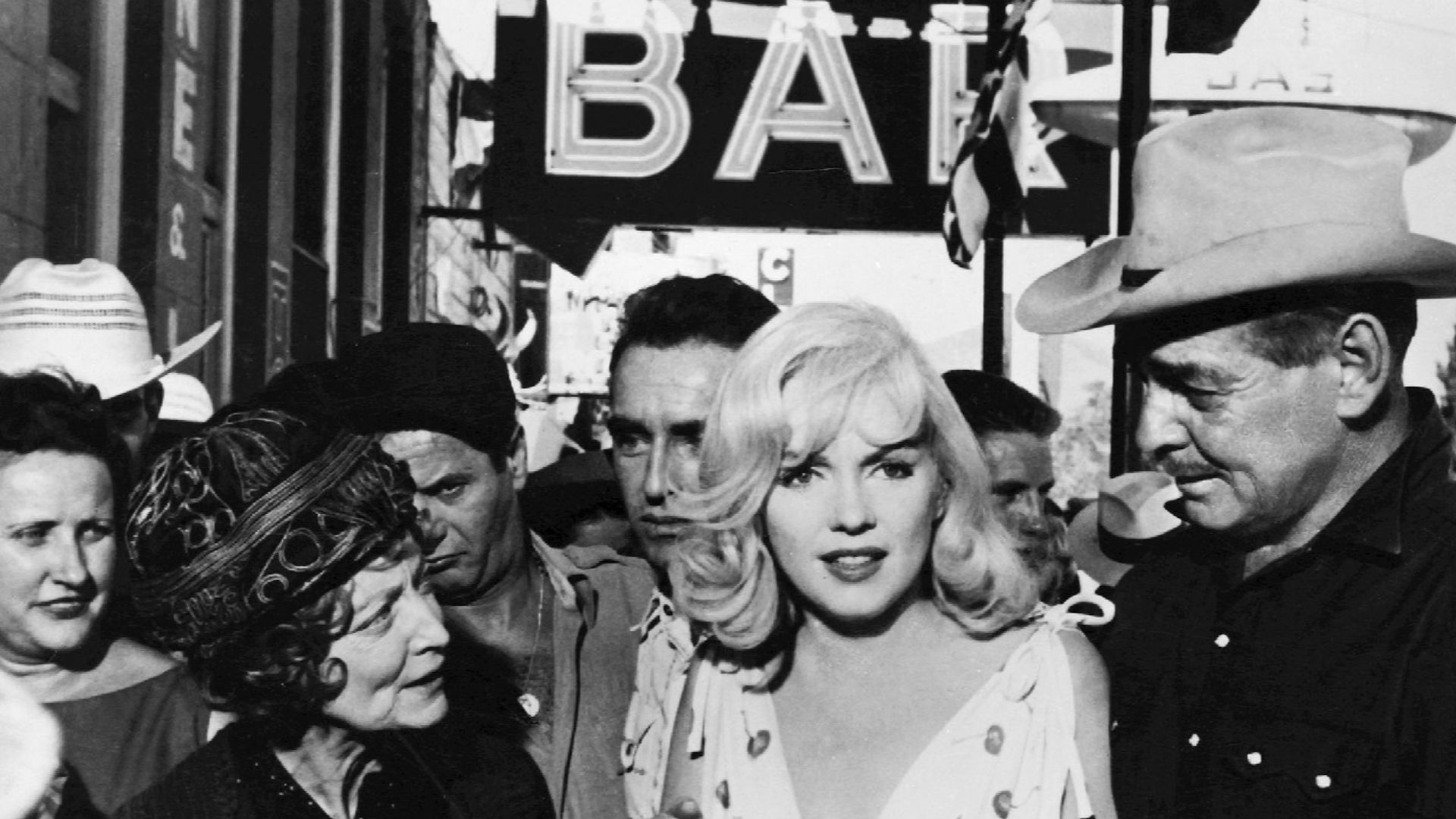
Whether they liked his political leanings or not, Hollywood couldn’t deny one thing: Arthur Miller could write. In 1961, Miller returned to film with a screenplay for The Misfits. The John Huston-directed film starred Miller’s wife, Marilyn Monroe, alongside Clark Gable. The “modern western” turned out to be Miller’s Hollywood swan song.
And the end of his marriage.
33. His Wife Was Up And Down
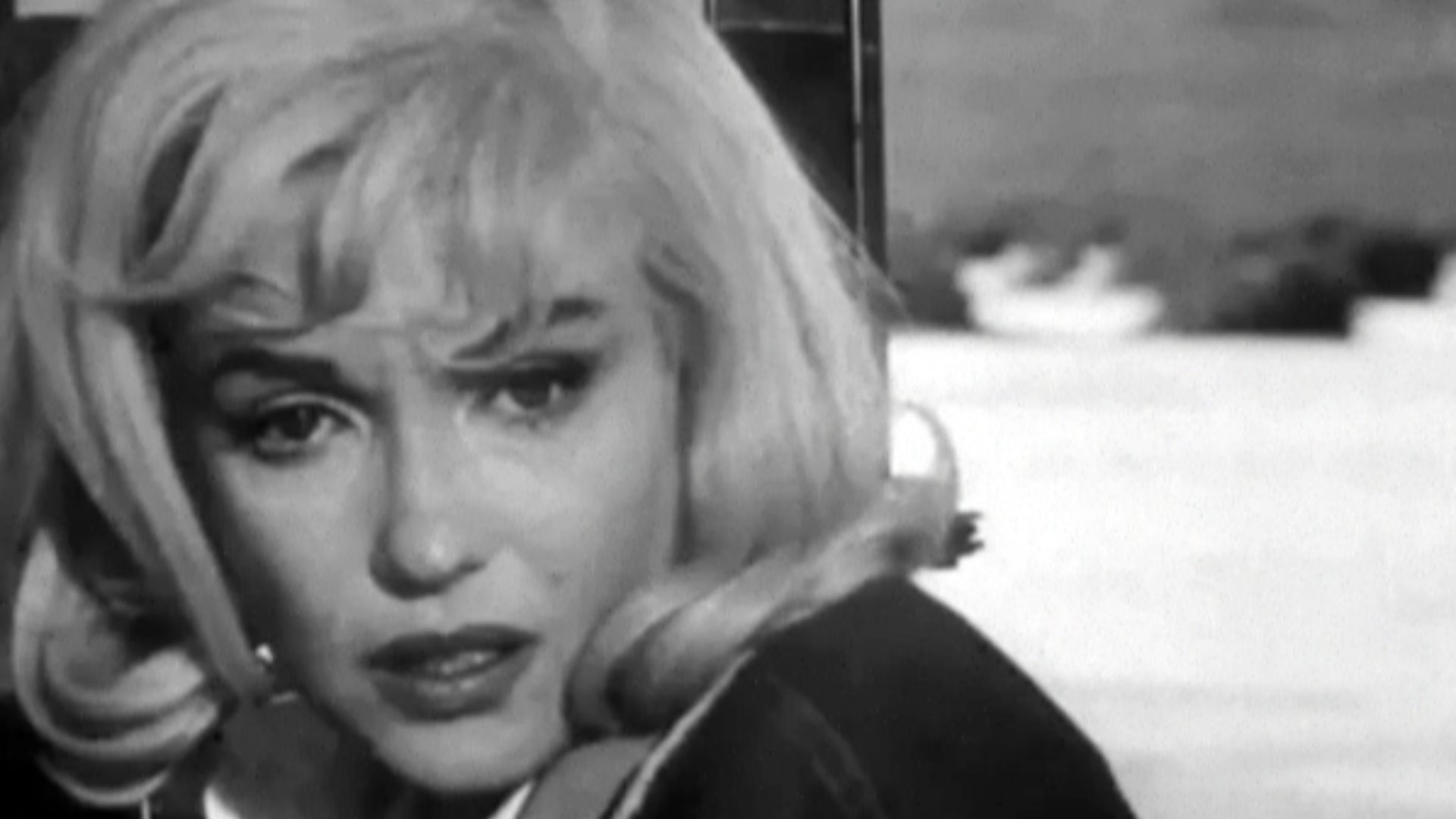
What should have been a personal and professional triumph for Miller turned into a nightmare. While filming The Misfits, Miller’s wife, Monroe, unraveled under the pressure. Throughout filming, the blonde beauty struggled with addiction to uppers and downers as Miller could only watch. What happened next was a twist ending fit for one of his tragedies.
 Macfadden Publications New York, publisher of Radio-TV Mirror, Wikimedia Commons
History's most fascinating stories and darkest secrets, delivered to your inbox daily.
34. He Lost Marilyn Forever
Despite their best efforts, Miller and Monroe couldn’t make their marriage work as the starlet struggled with addiction. Then, not long before the premiere of The Misfits, the couple stunned Hollywood when they decided to file for divorce. Less than two years later, Monroe was gone from Miller’s life for good when she suffered a likely overdose.
Miller’s heart was broken—but not frozen.
 Dell Publications, Inc. New York, publisher of Modern Screen, Wikimedia Commons
35. He Found Love Again
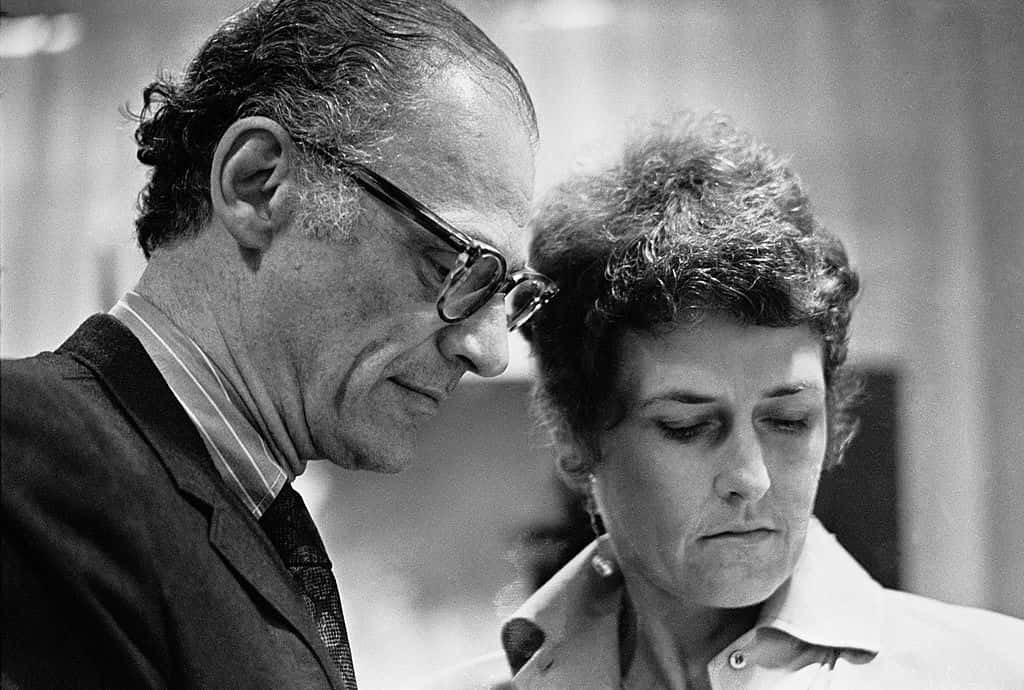
Miller’s heart broke for Monroe, but he never stopped loving. In February of 1962, the beleaguered playwright managed to find love again, this time marrying the photographer Inge Morath. Ironically, the two had met on the set of The Misfits, quietly forming a bond amid Miller’s personal chaos. Finally, it looked like Miller had found his happily ever after.
36. He Started Another Family
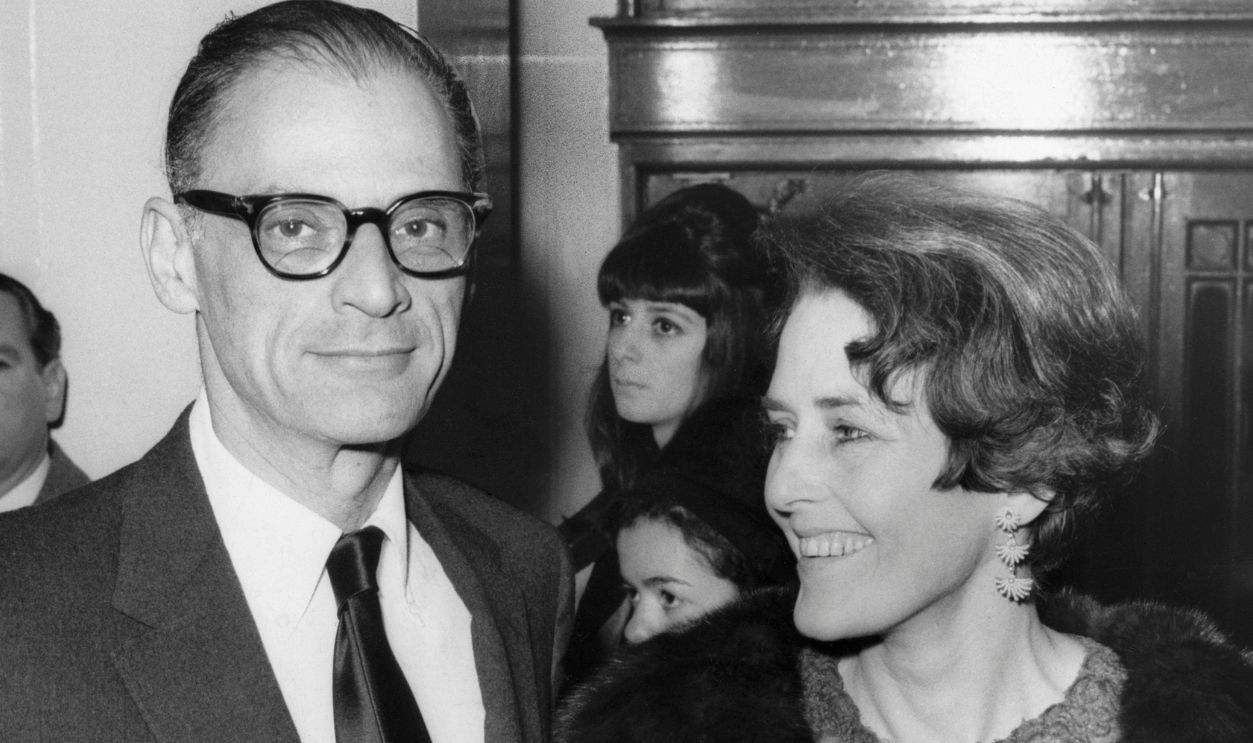
By all accounts, Miller and Morath had a happy marriage. At least, it was happy enough for Miller to want to have more kids. Four years into his third marriage, Miller had two children with Morath: Rebecca in September 1962 and Daniel in November 1966. On the surface, Miller appeared to have rebuilt his family life, returning to domestic normalcy after years spent under intense public scrutiny.
The reality proved far more complicated.
37. He Sent His Son Away
Miller’s third marriage wasn’t without its challenges. Daniel, his son, was born with Down syndrome. At a time when people understood little about the genetic disorder, it was more than Miller could take. So, despite Morath’s objections, Miller arranged for his son to be placed in a long-term care facility. Tragically, he never visited his son at the facility and only rarely even spoke of him.
When he did mention his son, it was just as bad as if he hadn’t.
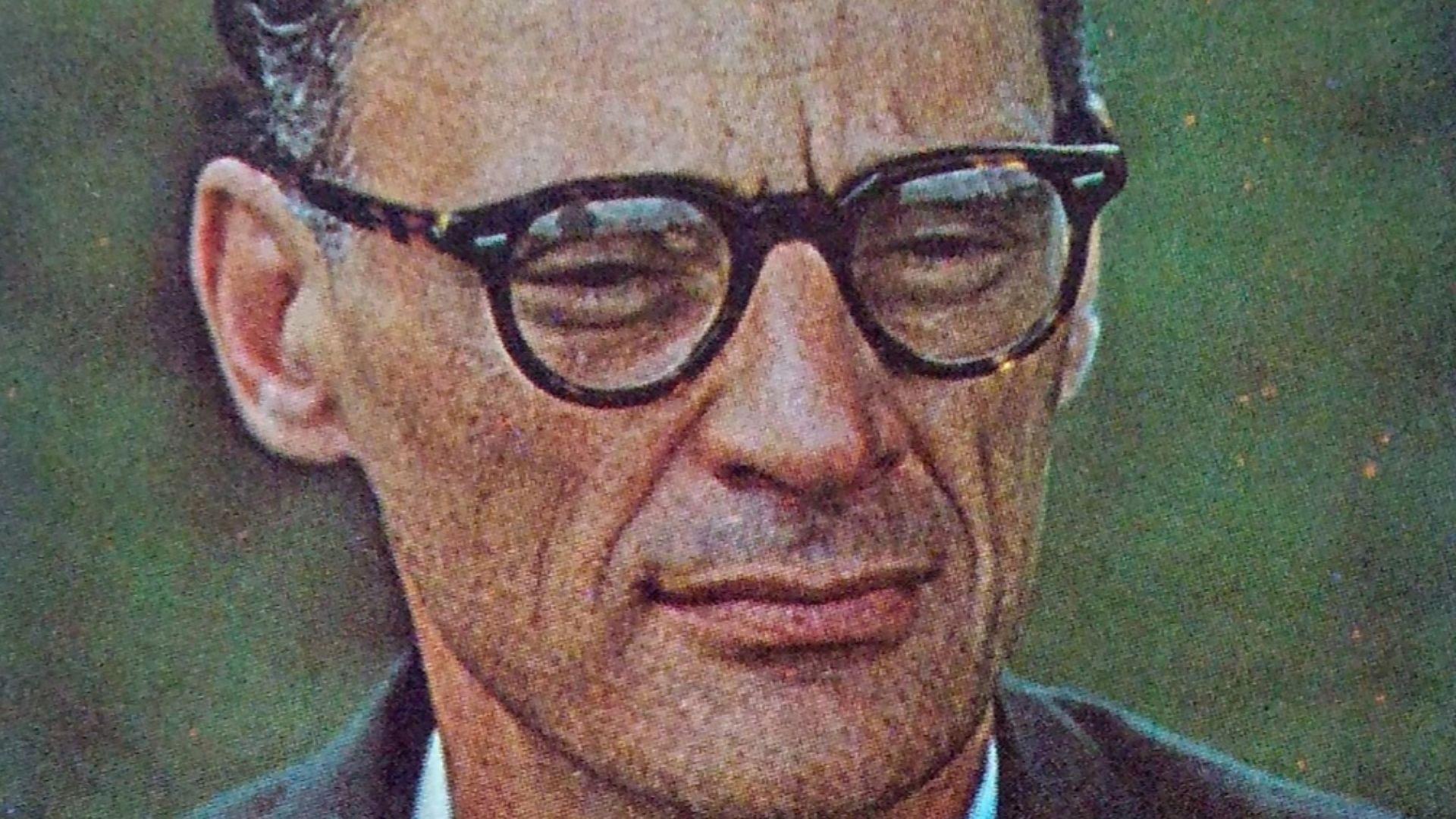 AldrianMimi, Wikimedia Commons
38. He Spoke With Detachment
On the rare occasions that Miller mentioned his son Daniel, he was anything but fatherly. “Well, he knows I’m a person,” Miller responded when asked about Daniel, “and he knows my name, but he doesn’t understand what it means to be a son”. The remark was as cold as any Miller had written for one of the villains in his plays.
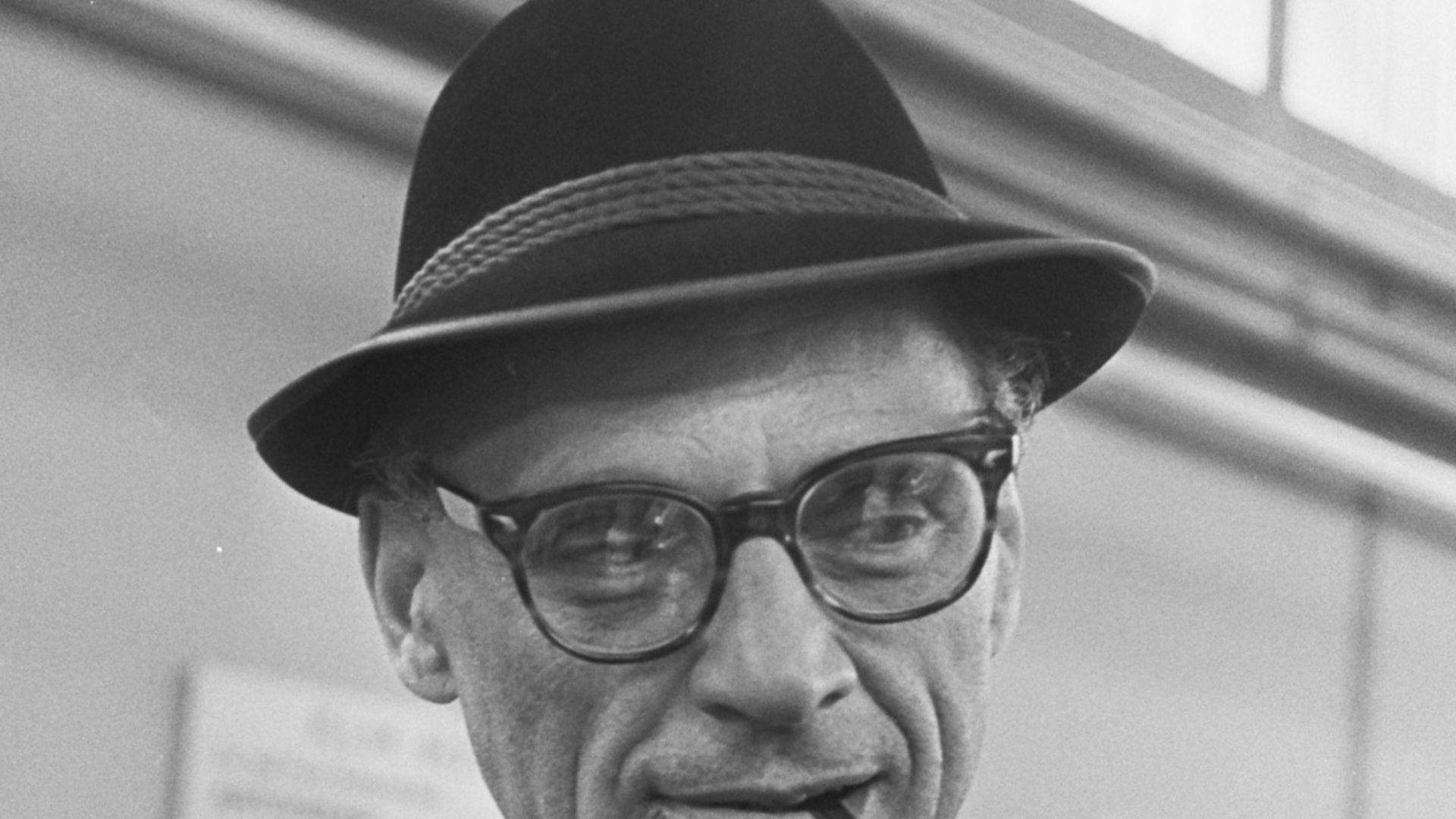 Eric Koch for Anefo, Wikimedia Commons
39. He Reopened Old Wounds
After Monroe, Miller might have remarried, but that didn’t mean that he had moved on. In 1964, Miller premiered After the Fall. Theater fans were delighted that the play reunited Miller with Elia Kazan, who directed the production. But it ignited controversy and drew sharp criticisms for the character “Maggie,” who audiences widely interpreted as a thinly veiled portrait of Marilyn Monroe.
It would take years for Miller to live that down.
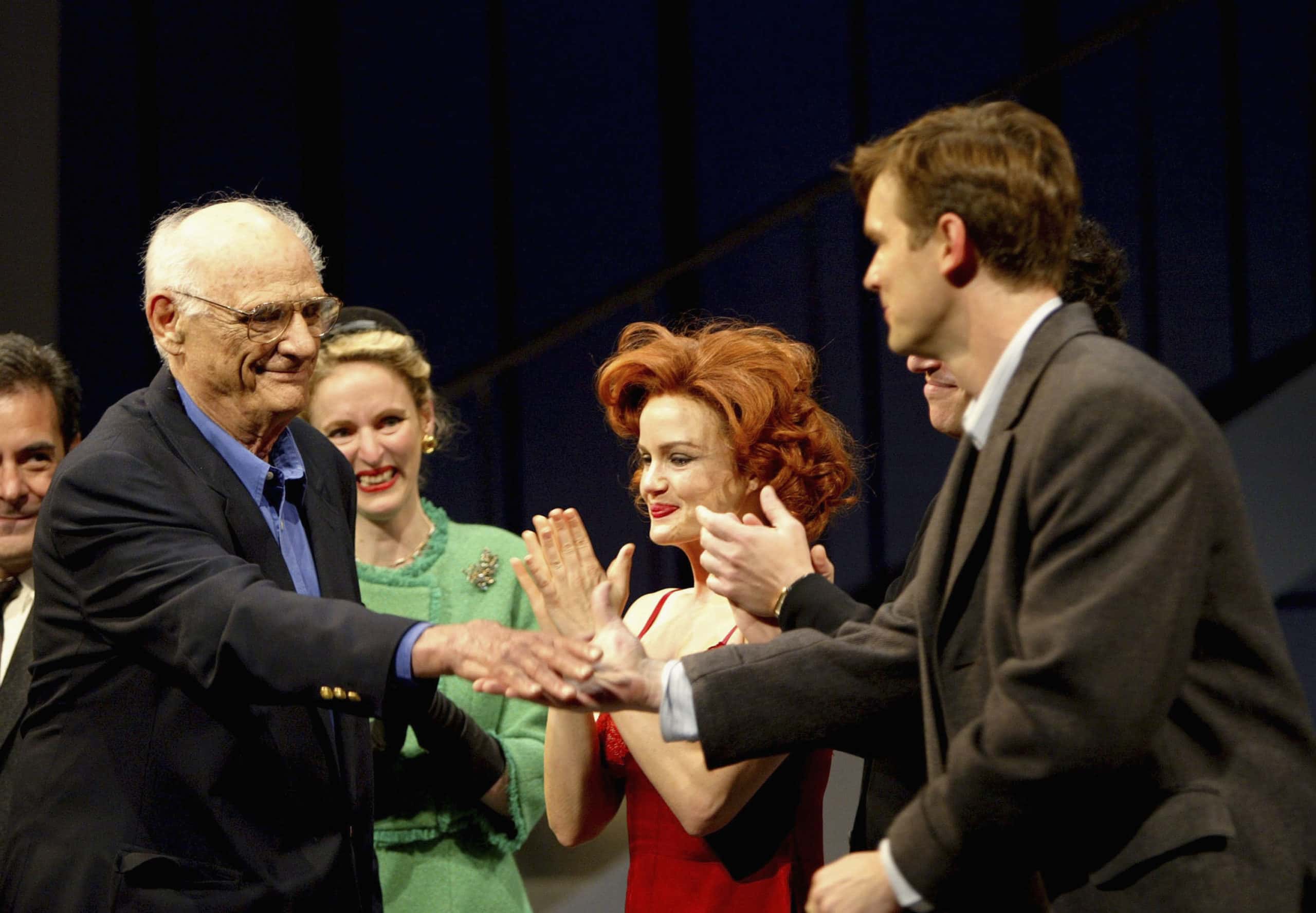
History's most fascinating stories and darkest secrets, delivered to your inbox daily.
40. He Proved He Still Had It
Four years after the After the Fall controversy, Miller reminded audiences of his enduring power. The Price (1968) was a powerfully moving play that harkened back to Miller’s heyday. In short order, The Price became Miller’s most triumphant play since Death of a Salesman. Having conquered Broadway (yet again), he set his sights further afield.
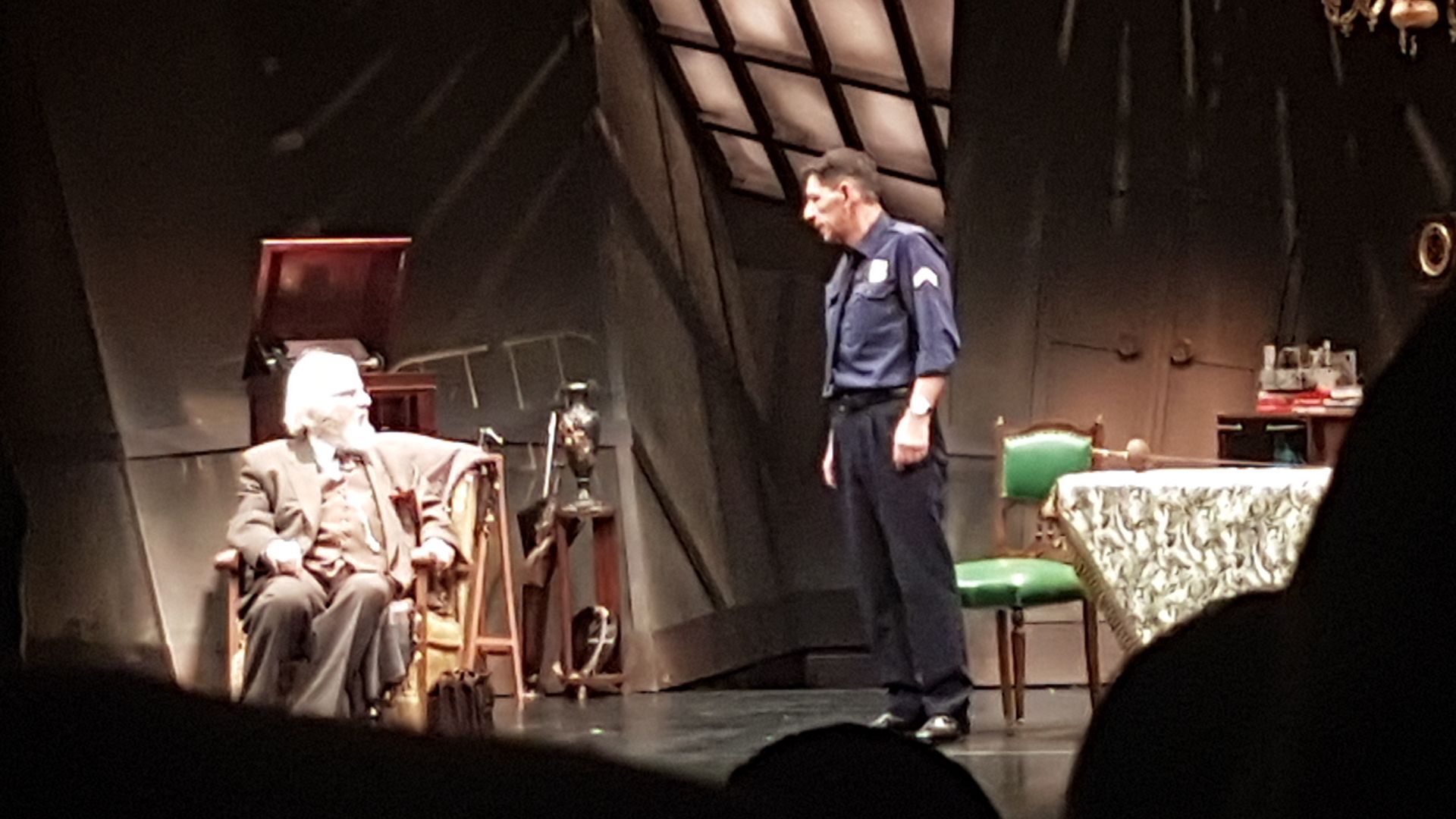
41. He Crossed An Iron Curtain
All throughout his career, Miller faced accusations of being a communist. Ironically, actual communists hated his guts. In 1969, the Iron Curtain dropped on Miller’s plays when the Soviet Union banned his works for the terrible offense of supporting dissident writers within the Soviet bloc. Miller’s foreign entanglements got even more complicated.
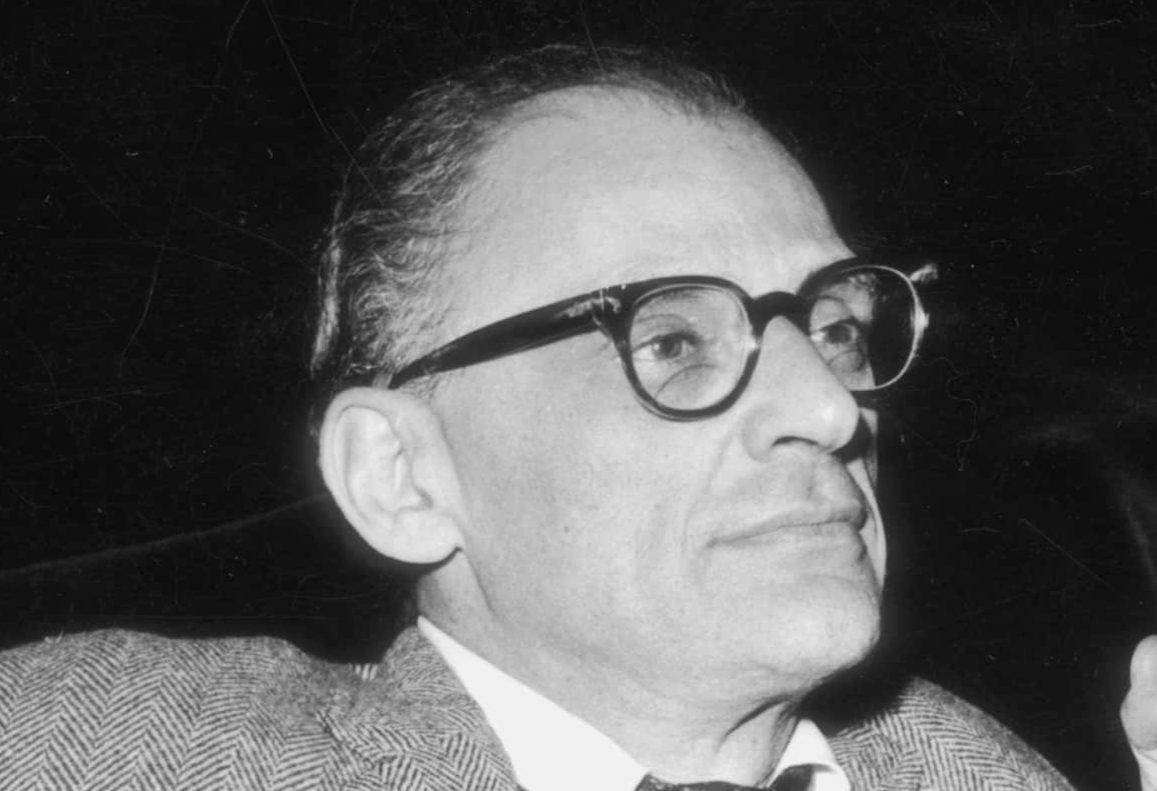
42. He Turned Life Into Essays
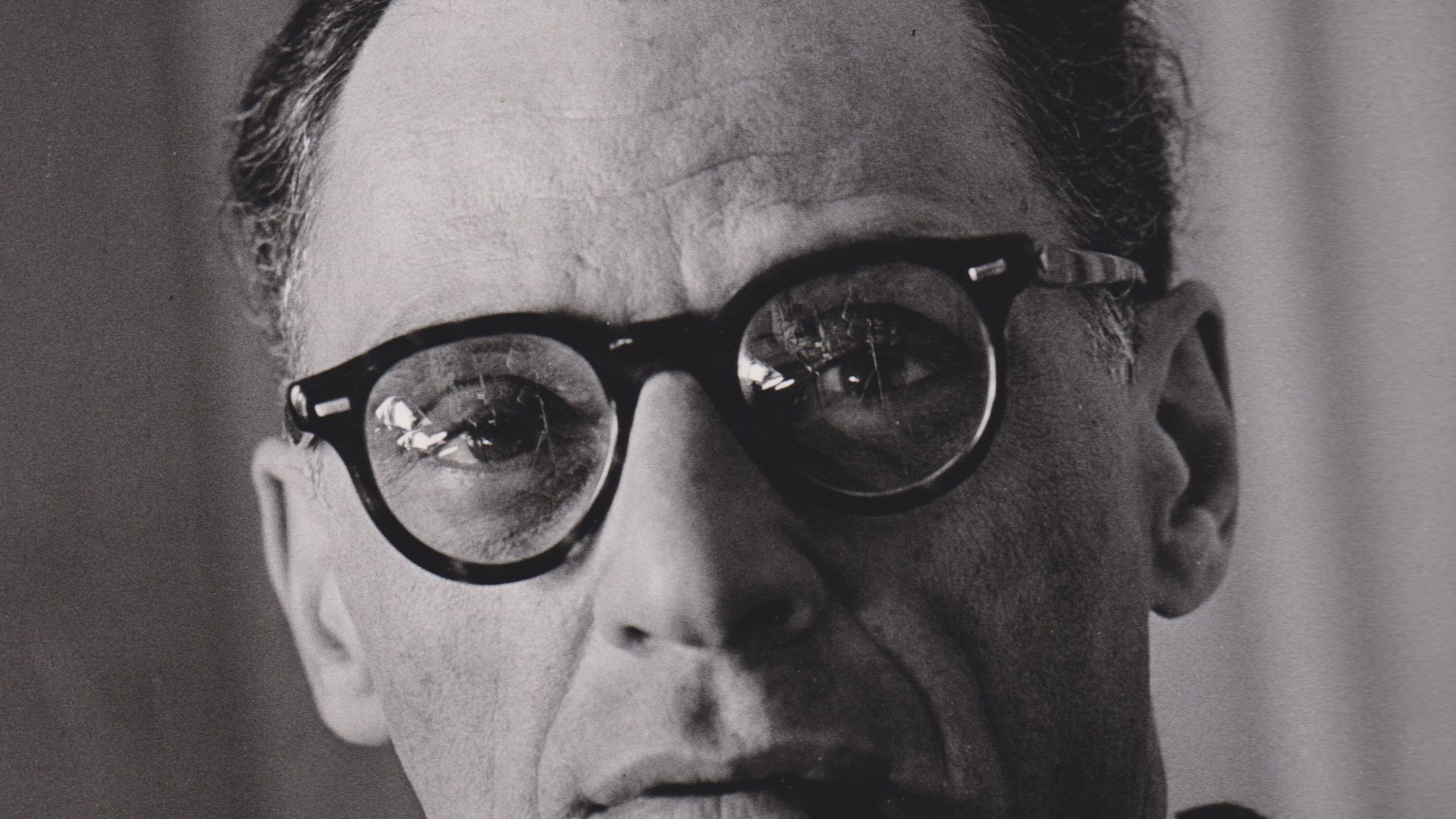
By the late 1970s, Miller increasingly reflected on art itself. He published collections of theatrical essays and collaborated with his wife Morath on travel and cultural books, including In Russia and Chinese Encounters. Blending Morath’s poignant images with Miller’s sharp words made for riveting reading—in any language, apparently.
 Wolfgang Fischer, Wikimedia Commons
43. He Was A Salesman In Beijing
When Miller directed a production of Death of a Salesman in 1983, he had no way of knowing that he had bridged a cultural divide. The production at Beijing’s People’s Art Theater was an unprecedented cultural exchange. Miller later chronicled the experience in Salesman in Beijing, blending his cultural commentary with his works of fiction.
His real life, however, was more dramatic than any play.

44. He Finally Told His Own Story
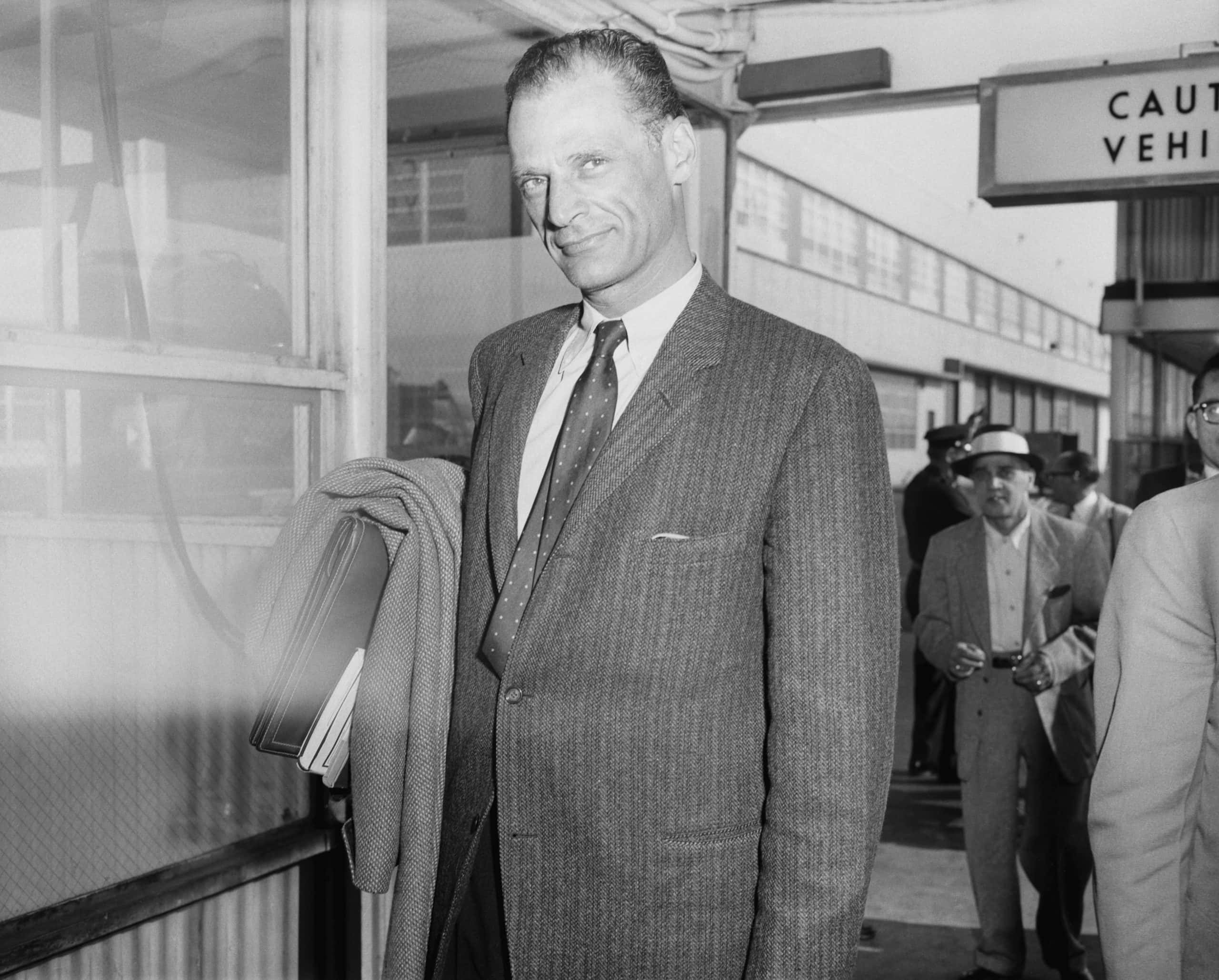
Miller published his autobiography, Timebends: A Life, in 1987. In it, he revisited his politics, his plays, his Hollywood productions, and most shockingly, his marriage to Marilyn Monroe. After all, he was known to never talk about her during interviews. Here, though, Miller was unflinchingly honest and resolutely candid, dishing the details on what it had been like to be married to Hollywood’s hottest—and most troubled—starlet.
45. He Never Slowed Down
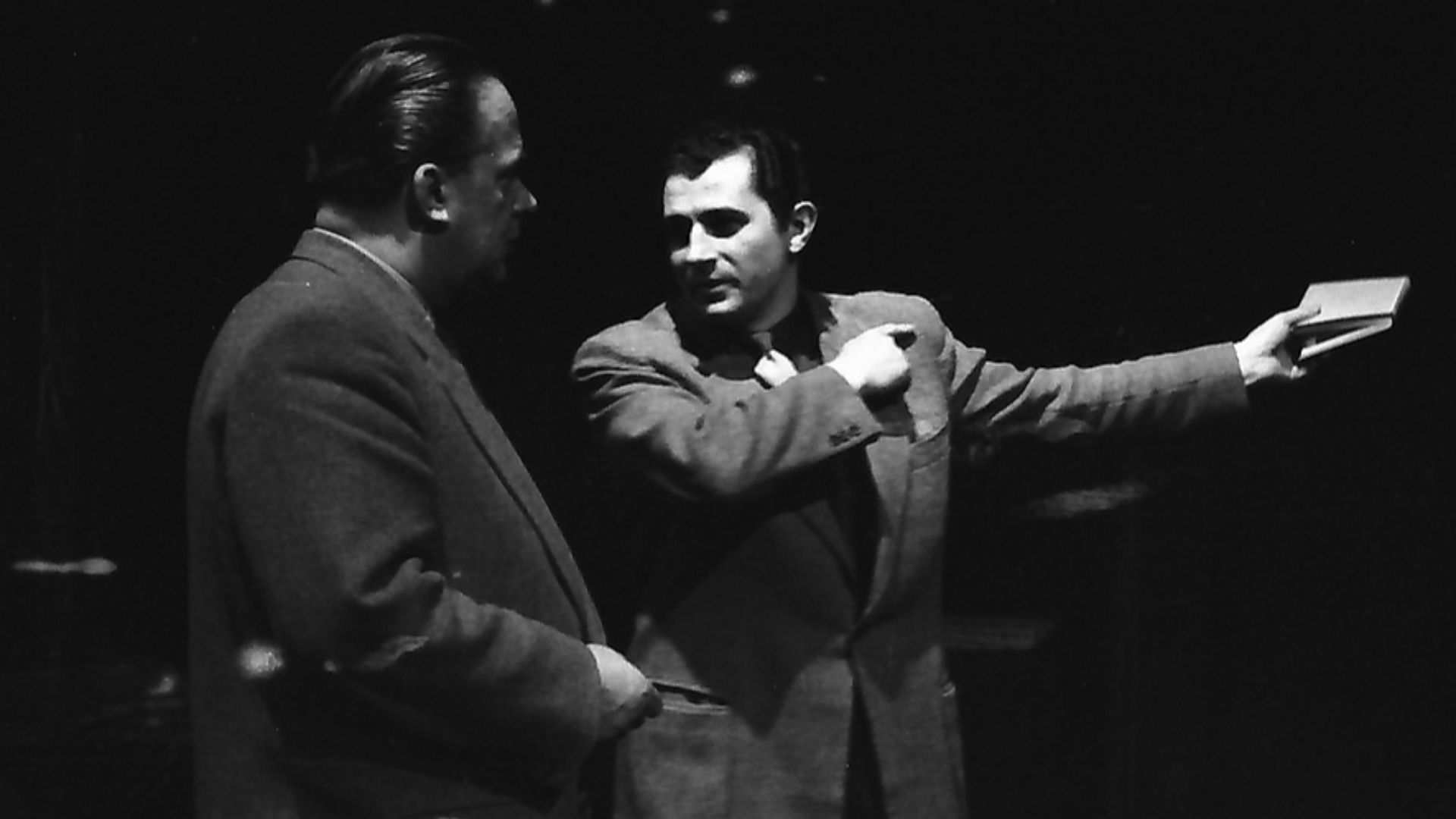
Even into the 1990s, Miller refused to coast on legacy. He wrote a string of new plays, including The Ride Down Mt Morgan, The Last Yankee, and Broken Glass. He also penned the screenplay for the 1996 film version of The Crucible, which starred his son-in-law, Daniel Day-Lewis, making writing a family business.
Sadly, his family wouldn’t be together much longer.
 Willy Pragher, Wikimedia Commons
History's most fascinating stories and darkest secrets, delivered to your inbox daily.
46. He Lost His Anchor
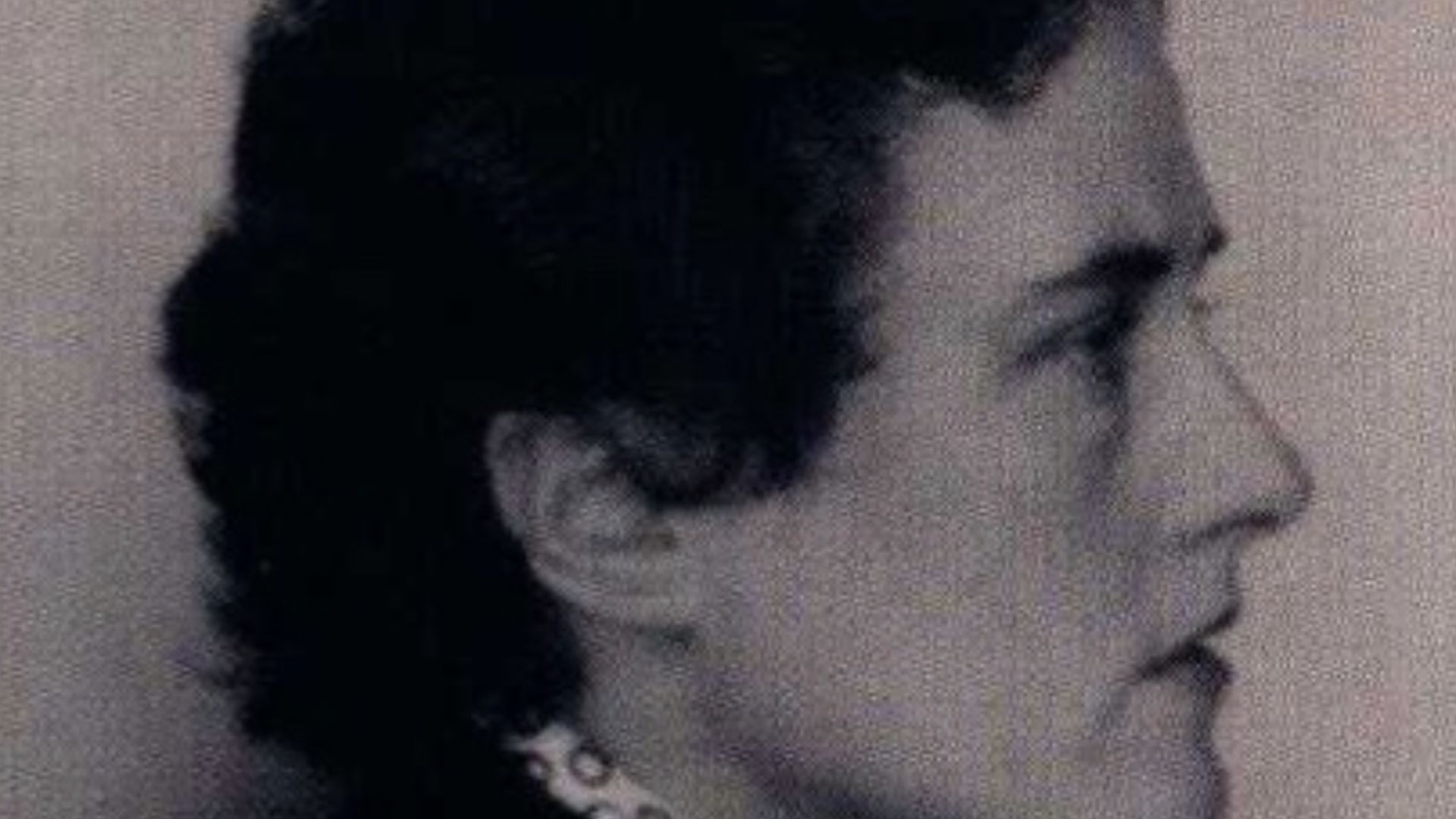
Miller’s third marriage really was the charm, lasting 40 years—and it could have lasted longer. Sadly, in 2002, Inge Morath succumbed to lymphatic cancer. Morath’s passing, however, did little to soften Miller’s heart towards his son. Miller later publicly stated he and Morath had only one child together. Worse yet, Daniel did not attend his mother’s funeral.
The divisions in the family went even deeper.
 User: Hanooz, Wikimedia Commons
47. He Was Seeing A Much Younger Woman
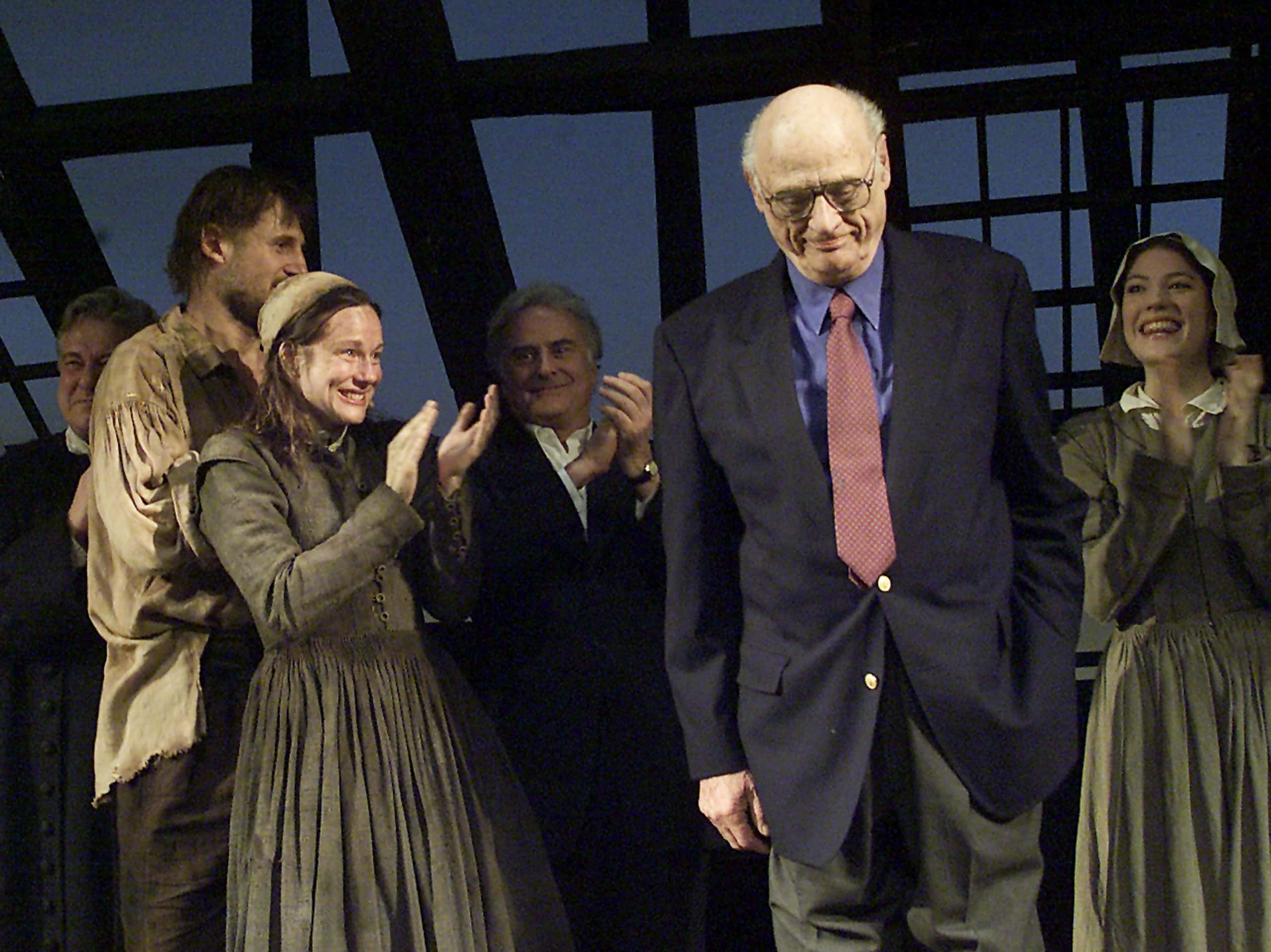
Just when the world assumed Miller’s story was winding down, he delivered one last twist ending. In late 2004, the 89-year-old playwright made a shocking announcement: He was living with Agnes Barley, a 34-year-old painter. The truly shocking news was that Miller had plans to marry Barley. Fate, however, had other plans.
48. He Closed The Final Curtain
On February 10, 2005, Miller wrote his final act and closed the curtain on a storied life. He had succumbed to complications arising from bladder cancer and heart failure, passing peacefully at his home in Roxbury, Connecticut. In one last twist, February 10, 2005 was exactly 56 years after Death of a Salesman first debuted on Broadway.
 Zvi Tiberiu Keller, Wikimedia Commons
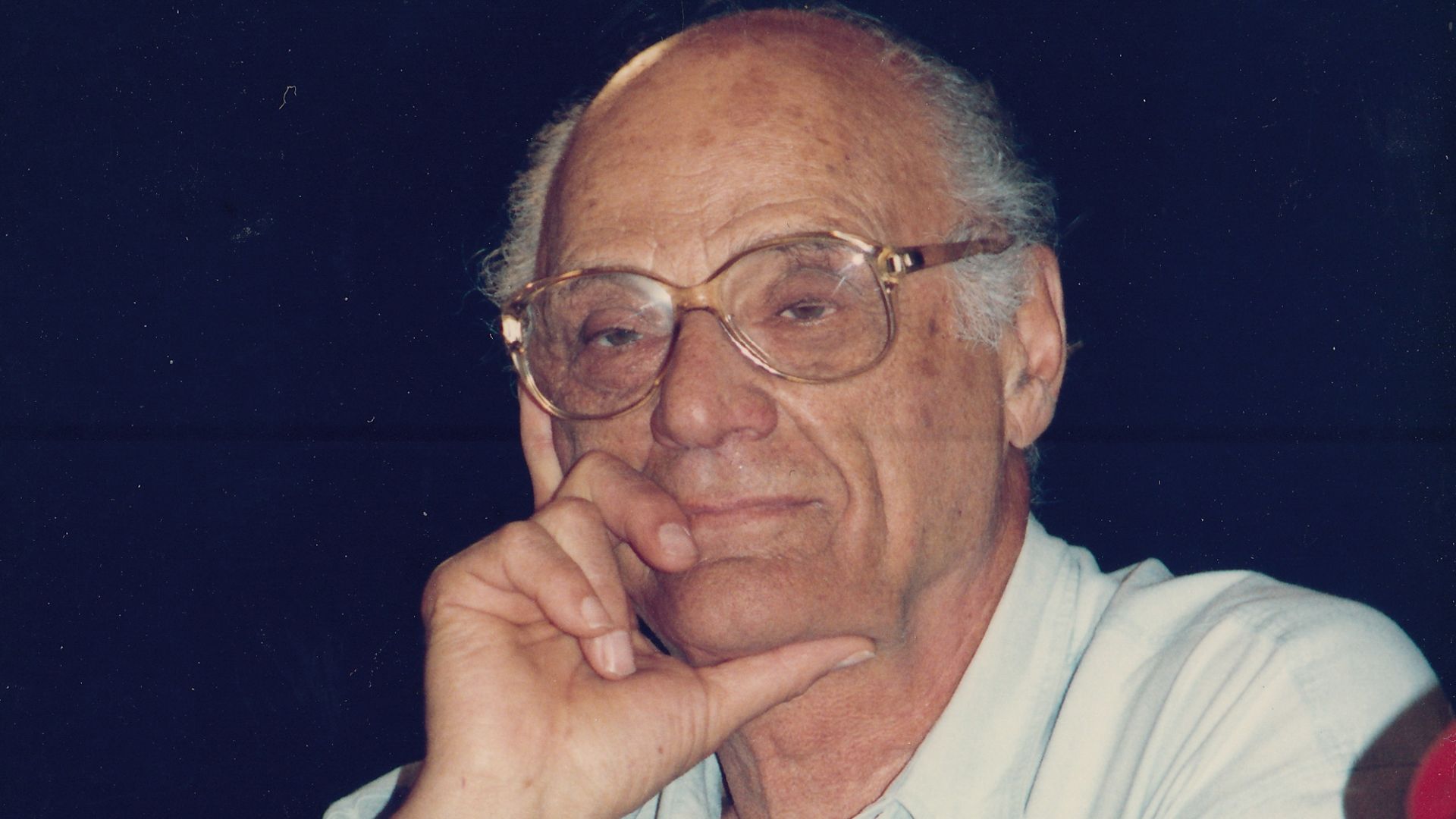
49. He Left A Complicated Legacy
After his life ended, Miller’s estate reflected the contradictions that defined him. Even though he had all but disowned his son, Daniel, his will spoke to the depth of his love and devotion to him. Despite only speaking harshly of his son, Miller named Daniel as an equal heir alongside his three other children. His truest legacy, however, would live on.
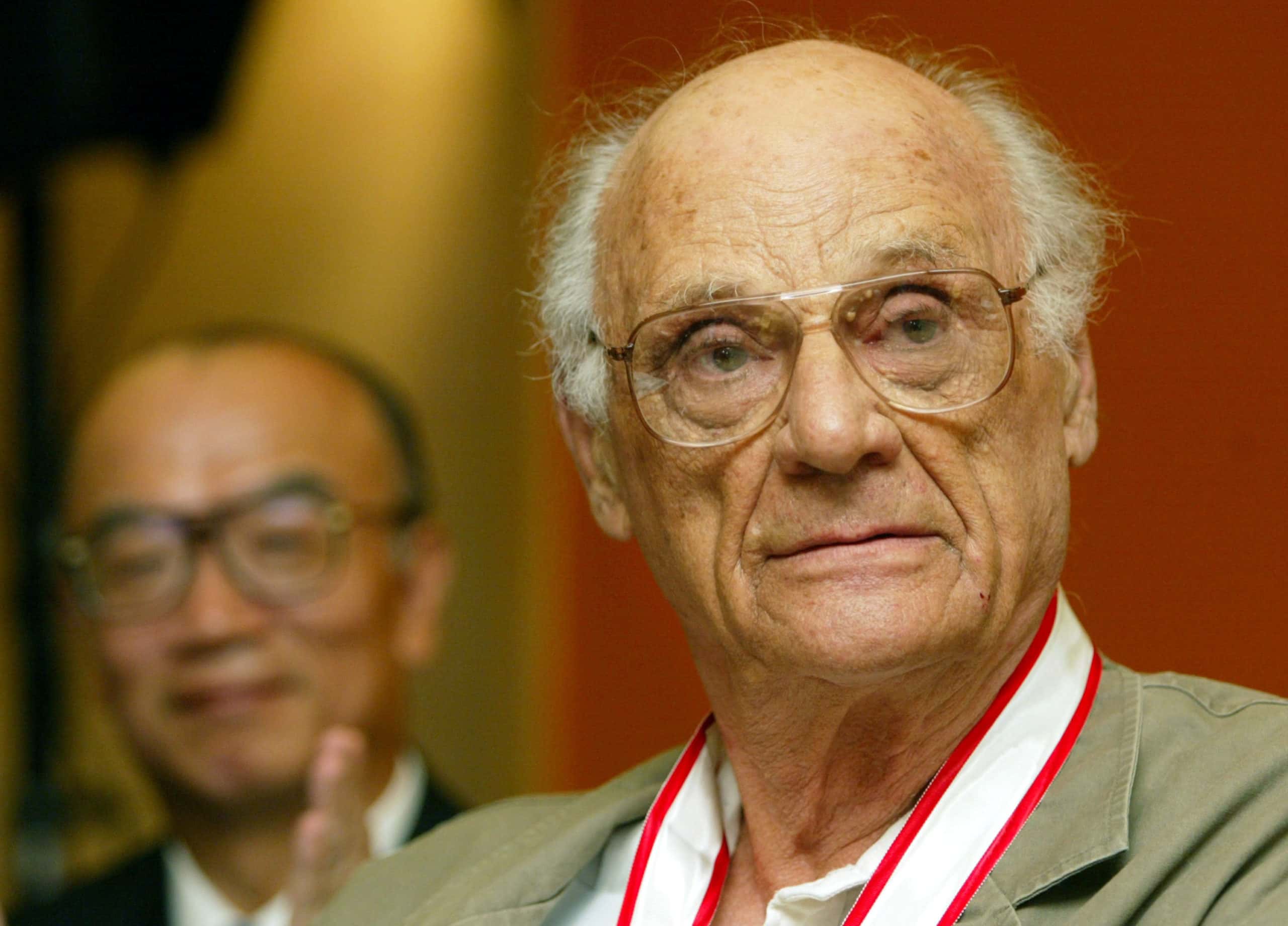
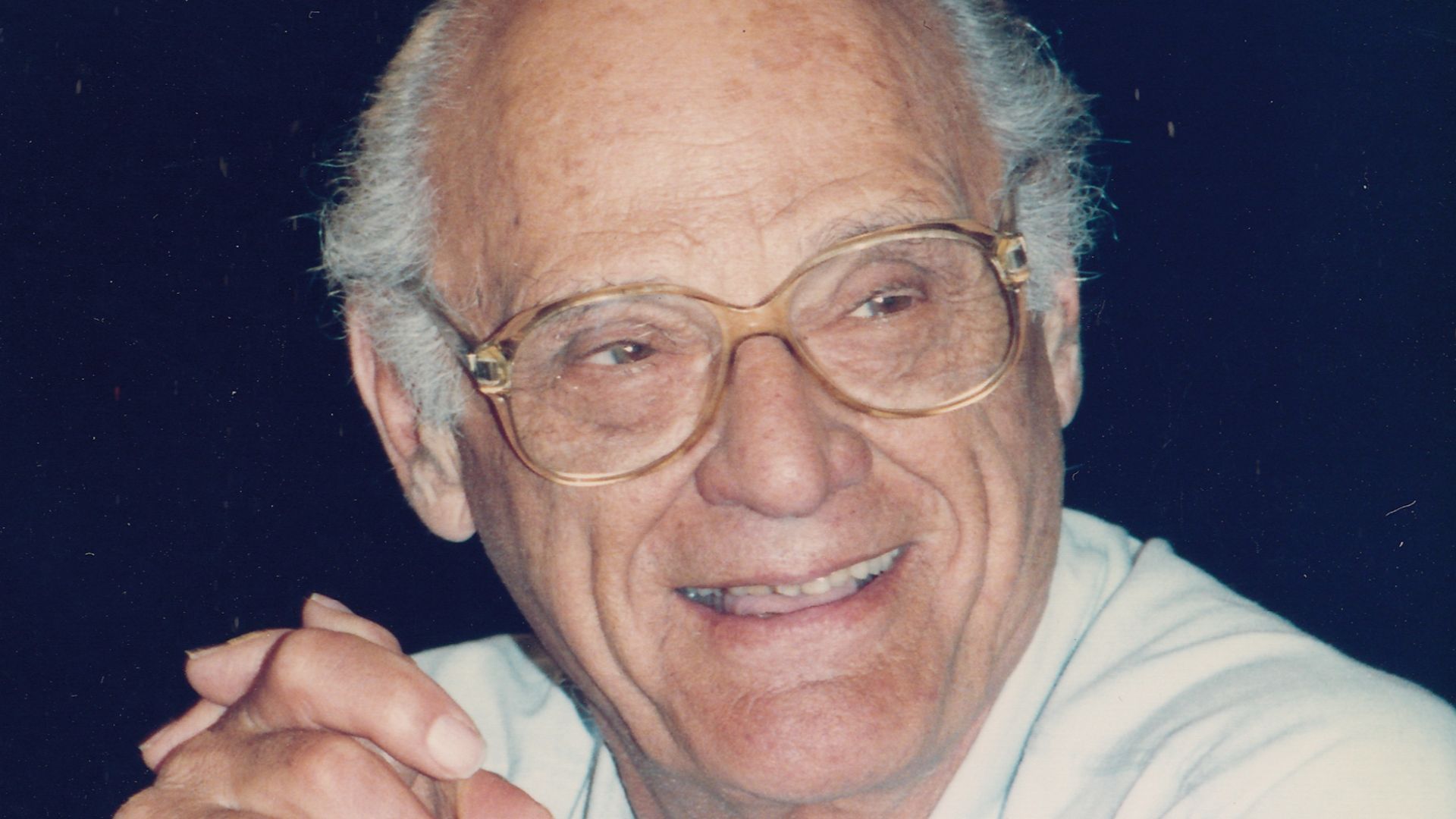
50. He Chose How He’d Be Remembered
Later in his life, Miller had received countless honors. The National Medal of Arts, the Praemium Imperiale, the Prince of Asturias Award—to name just a few. Yet, Miller chose how he wanted the world to remember him. Per his wishes, the Arthur Miller Theatre at the University of Michigan remains the only theater on Earth bearing his name.
 Zvi Tiberiu Keller, Wikimedia Commons
You May Also Like:
Orson Welles Was His Own Worst Enemy
Jean Peters Refused To Play Hollywood’s Game