The Invisible Grandchild
I was maybe seven the first time I realized my grandmother hated me. Not 'didn't prefer me' or 'wasn't warm'—actually hated me. We were at her house for Sunday dinner, and she was making her rounds through the living room where all us grandkids were playing. She stopped to ruffle Jake's hair, asked Emma about her dance recital, complimented Sarah's dress. Then she came to where I sat on the floor with my coloring book, and her eyes just... skipped over me. Like I was furniture. I remember looking up at her, waiting for something—a smile, a question, anything. She walked right past. My mom saw it happen. I watched her grip her coffee cup so hard I thought it would shatter, but she didn't say anything. She never did, not then anyway. Later, when I asked why Grandma didn't like me, Mom gave me this pained smile and said, 'She's just difficult sometimes, honey.' That non-answer became the soundtrack of my childhood. I learned early that some people can look straight at you and see nothing—and I never understood why I was the one she chose to erase.
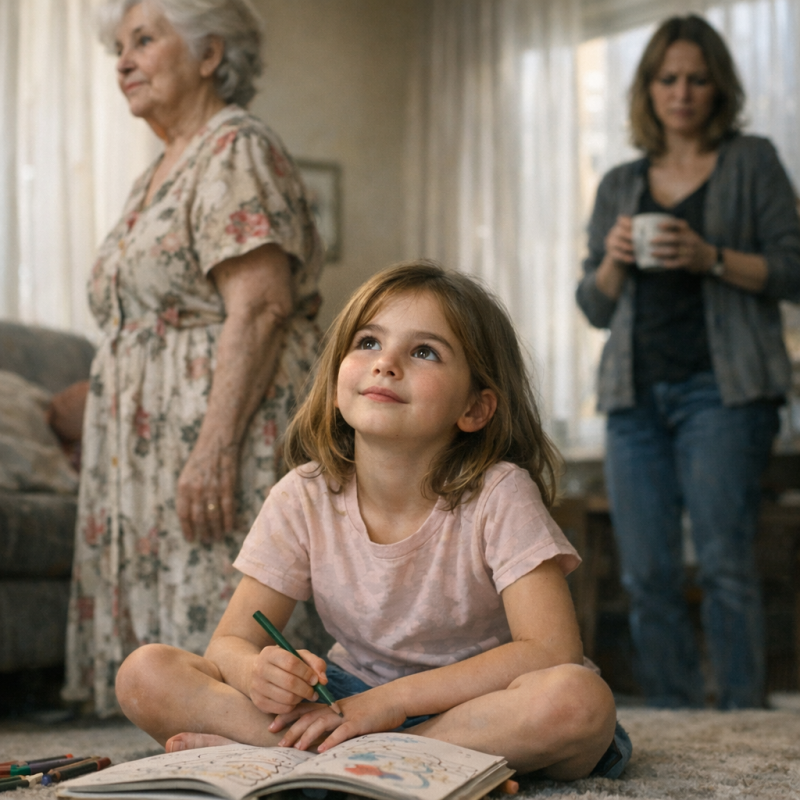 Image by FCT AI
Everyone Else Got the Warmth
The contrast was what killed me. I'd watch my grandmother light up like a different person around Emma and Jake. She'd pull Emma onto her lap, let her try on her jewelry, listen to every boring detail about school like it was the most fascinating thing she'd ever heard. With Jake, she'd laugh at his jokes, slip him cookies before dinner, call him her 'little gentleman.' I'd be sitting right there on the same couch, and it was like I existed in a separate dimension she couldn't access. One afternoon, Emma showed Grandma a drawing she'd made—honestly, it wasn't even good, just some stick figures—and Grandma taped it to her refrigerator, said she'd keep it forever. I'd brought her dozens of drawings over the years. I never saw a single one displayed anywhere. The worst part? I started thinking it was my fault. Maybe I wasn't funny enough, or pretty enough, or smart enough. Maybe there was something fundamentally wrong with me that everyone could see except me. Emma left that day with twenty dollars and a hug; I left wondering what I'd done to deserve silence.
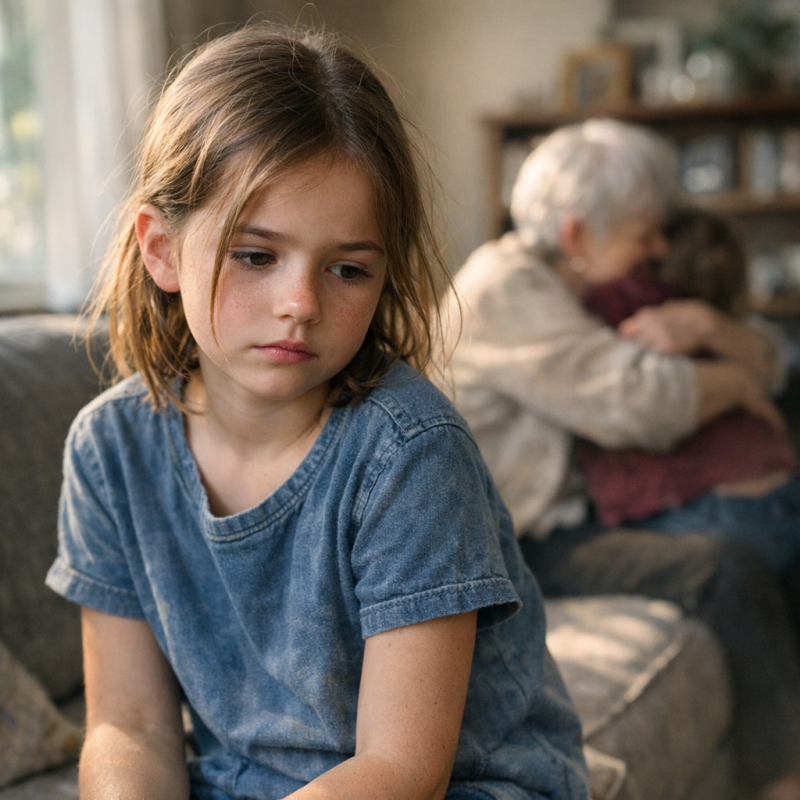 Image by FCT AI
The Trying Years
God, I tried so hard to win her over. I made her cards for every holiday, spent hours on them, drawing flowers and hearts and writing 'I love you, Grandma' in my neatest handwriting. She'd open them at the table in front of everyone, glance at them, say 'thank you' in this flat voice, and set them aside. I saved my allowance to buy her a porcelain bell at a craft fair once—she collected them, had a whole cabinet full. I was so excited to give it to her. She unwrapped it, looked at it for maybe three seconds, and put it on the counter. Never saw it again. I baked her cookies with my mom's help. I offered to help her in the garden. I brought her my best report card once, all A's—she glanced at it and set it down without a word. My dad watched these interactions with this helpless expression, like he wanted to say something but couldn't figure out what. Looking back, I think he was scared of her too. We all were. But none of that explained why I kept trying when it was so obvious she'd never care.
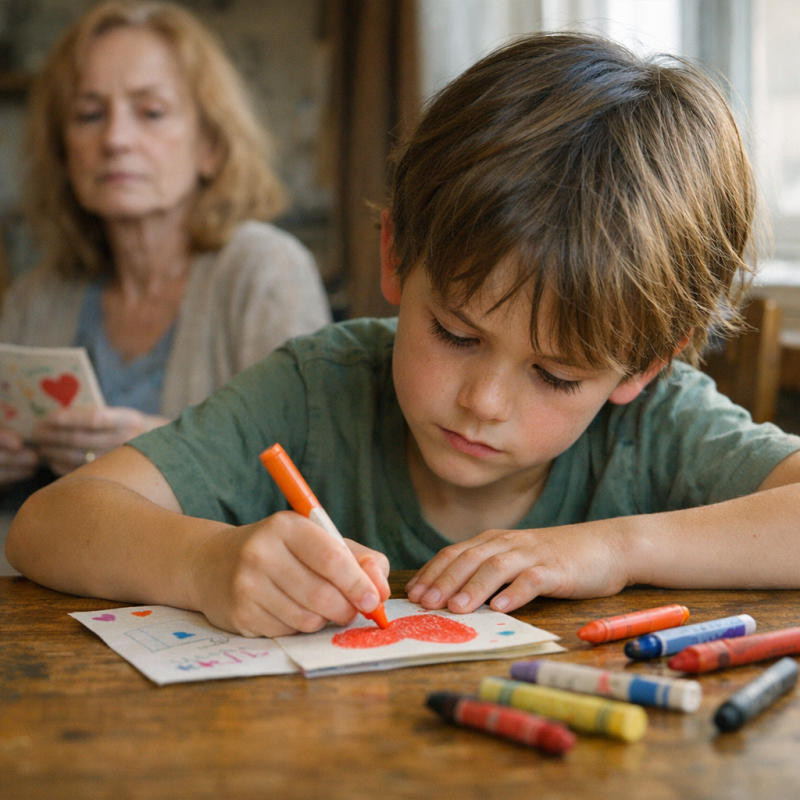 Image by FCT AI
The Look
There was this look she'd give me sometimes. I didn't have words for it as a kid, but it haunted me anyway. It usually happened when I'd walk into a room and she didn't expect to see me there, before she could rearrange her face into cold indifference. Her eyes would narrow slightly, her mouth would tighten, and something dark would flash across her features. It wasn't just dislike. It was deeper than that, more personal. Sometimes it looked almost like... pain? Or anger? I couldn't tell. But there was this intensity to it that scared me. I'd catch her staring at me across the dinner table with that expression, and I'd look down at my plate, my appetite gone. Once, I asked my mom if I looked like someone Grandma didn't like. Mom got this weird look on her face and said, 'Why would you ask that?' But she never actually answered. Years later, I'd recognize the emotion in old photographs, frozen on my grandmother's face in candid shots where I appeared in the frame. It wasn't just indifference in her eyes; it was something sharper, something I'd later recognize as blame.
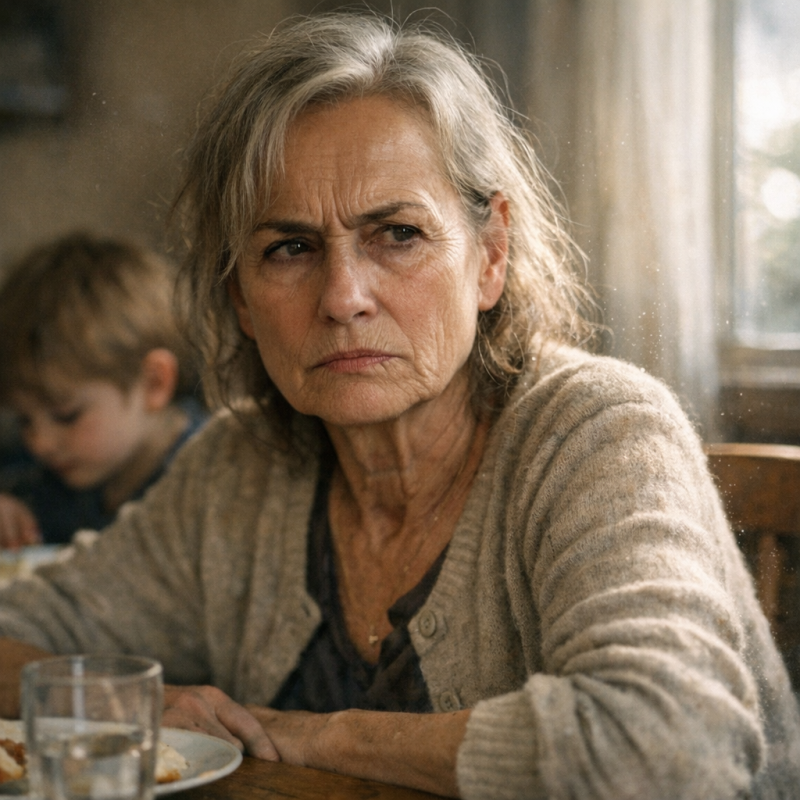 Image by FCT AI
Family Dinners
Family dinners were a nightmare. Grandma would serve everyone's plates herself—it was this whole production, her being the matriarch, making sure everyone had enough. She'd go around the table: Uncle Raymond, Aunt Patricia, my dad, my mom, Sarah, Michael, Emma, Jake. Then she'd sit down and start eating. I'd be sitting there with an empty plate, stomach growling, face burning with humiliation. It happened so often it couldn't have been an accident. The first few times, I thought maybe she just forgot, made an honest mistake. But it kept happening. Michael had to ask for my plate three times before she finally acknowledged I was sitting there. 'Oh,' she'd say, like she was genuinely surprised. 'I didn't see you.' How do you not see a child sitting at your table? My mom would get this tight look around her eyes, but she'd stay quiet, just reach over and serve me herself. Emma would look uncomfortable, push her food around her plate. But no one ever called Grandma out on it directly, not at the table. It was like we were all performing in this play where pretending everything was normal was more important than protecting me.
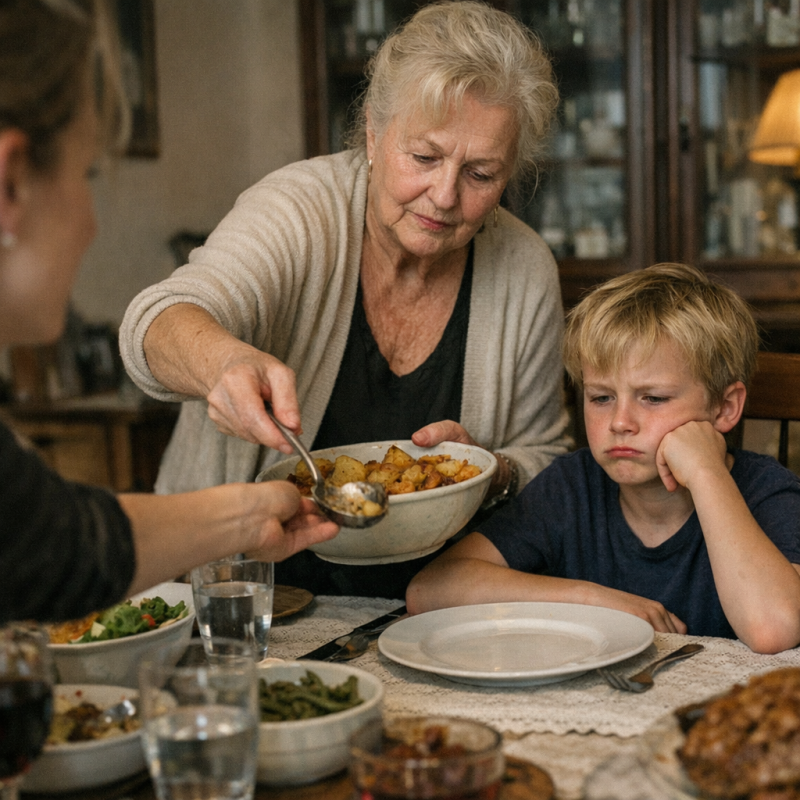 Image by FCT AI
The Confrontation That Went Nowhere
My mom finally confronted her when I was about ten. I wasn't supposed to hear it, but I was in the hallway outside Grandma's kitchen, frozen in place. Mom's voice was shaking but firm: 'You treat Claire differently than the other grandchildren. You ignore her, you exclude her, and it's hurting her.' I remember holding my breath, hoping this was the moment everything would change. Grandma's response was so calm it was chilling. 'I don't know what you're talking about, Linda. I treat all the children the same.' Mom tried to give examples—the forgotten plate, the ignored cards, the coldness. Grandma just kept her voice level, reasonable, almost amused. 'You're being oversensitive. Claire is fine. Maybe you're projecting your own issues onto an innocent situation.' I heard my mom make this small, defeated sound. She tried once more: 'She's your granddaughter. She deserves your love.' And Grandma said, 'I'm sure I don't know what you mean.' Just like that, she made my mom sound crazy, made my pain sound invented. 'You're imagining things,' she said, and somehow made my mother look like the unreasonable one.
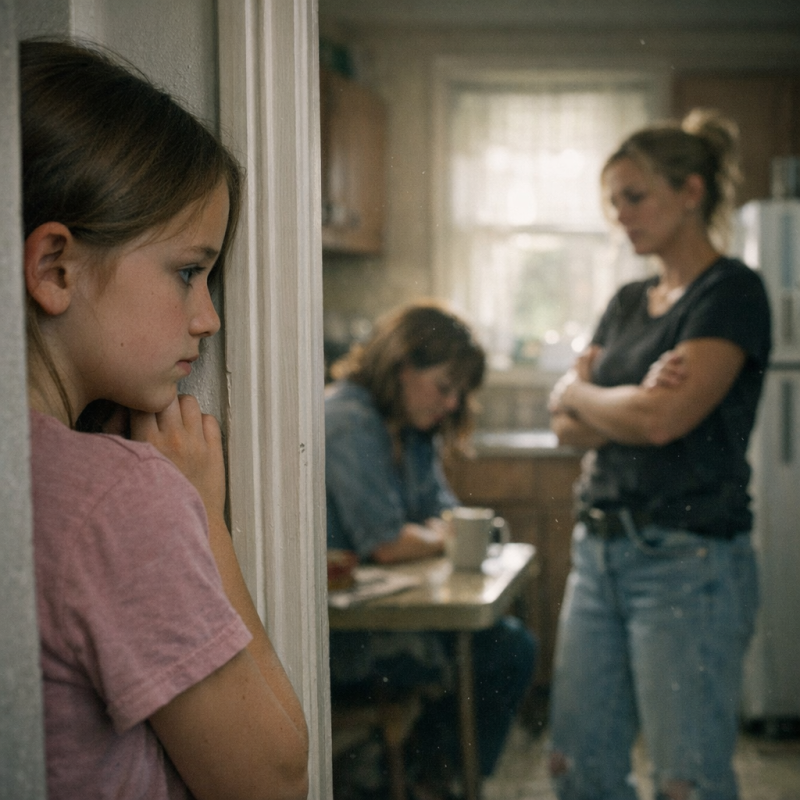 Image by FCT AI
The Theories
Over the years, different family members offered theories, trying to make sense of something that made no sense. Uncle Raymond thought maybe I was too quiet, that Grandma just connected better with outgoing kids. But Sarah was quiet too, and Grandma doted on her. My dad wondered if it was because I looked different from the other grandkids—I had darker hair, lighter eyes—but that seemed like such a shallow reason to reject a child. Aunt Patricia had this theory that maybe I reminded Grandma of someone from her past, someone she didn't like. 'Your grandmother holds grudges,' she said over coffee one day, like that explained anything. 'Maybe you just have an unfortunate resemblance.' But to who? No one could answer that. My mom shut that conversation down fast anyway, looked almost angry about it. None of the theories fit quite right. They were all searching for some logical explanation, some fixable problem, when the truth was probably simpler and worse: she just didn't want to love me. Aunt Patricia said maybe I reminded her of an old enemy, but no one could say who—or why that would justify cruelty toward a child.
 Image by FCT AI
Learning to Stop Trying
Somewhere around fourteen or fifteen, I just... stopped. Stopped trying to win her over, stopped hoping she'd change, stopped letting it gut me every time she looked through me like glass. It wasn't a dramatic decision, more like emotional exhaustion. I couldn't keep beating my head against that wall. When we'd visit, I'd be polite but distant. I stopped bringing her cards or gifts. I stopped waiting for her attention. Sarah noticed the change, asked me about it one night in our shared room. 'You seem different around Grandma now,' she said. I shrugged. 'I just don't care anymore.' That wasn't completely true—somewhere deep down, it still hurt. But I'd learned to bury it, to protect myself. My mom seemed almost relieved by my withdrawal, which was strange. Maybe it was easier for her when I stopped trying, stopped getting hurt so obviously. The wall I built wasn't made of anger or resentment. It was just... nothing. A blank space where my grandmother should have been. By fifteen, I'd built a wall between us—not out of anger, but out of self-preservation.
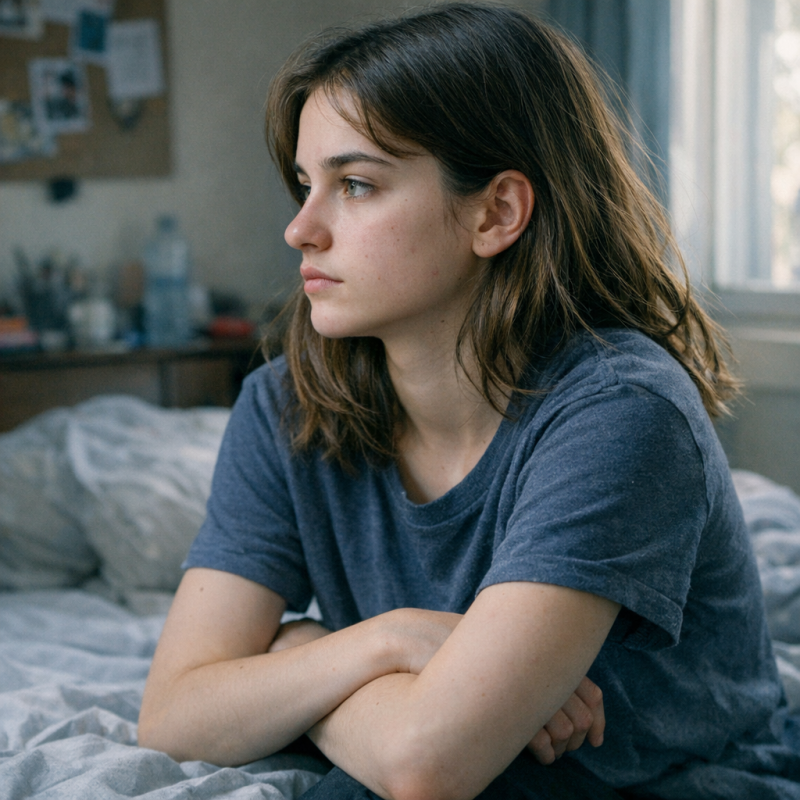 Image by FCT AI
The Photo Wall
I was twenty-six when I really saw the photo wall. I'd been in that living room a hundred times, but I guess I'd stopped looking—stopped letting myself notice the details that would hurt. But that day, waiting while my mom helped Dorothy in the bathroom, I just... looked. Really looked. There were photos everywhere, arranged in this careful gallery that obviously mattered to her. Emma as a baby, grinning with missing teeth. Jake in his soccer uniform, maybe age twelve. Cousin Melissa at her college graduation. Uncle Raymond's kids from his second marriage, who I barely knew. Every single grandchild, documented across decades. Different frames, different ages, but all there. I started counting without meaning to, moving along the wall like I was in a museum. Birthday parties, holidays, random Tuesday afternoons apparently worth remembering. My throat got tight. I counted twice to be sure. Seventeen framed pictures, spanning decades—and my face appeared in exactly none of them.
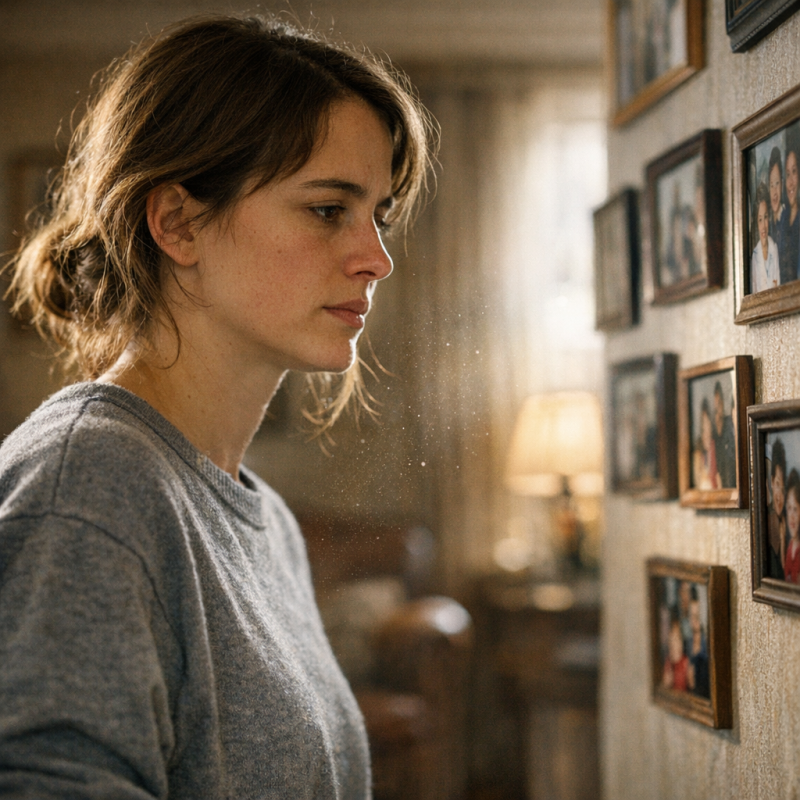 Image by FCT AI

History's most fascinating stories and darkest secrets, delivered to your inbox daily.
The Question I Stopped Asking
After that day with the photo wall, something shifted in me—or maybe settled is the better word. I stopped asking 'why.' Not out loud, anyway. What was the point? Dorothy was never going to sit me down and explain. My mom certainly wasn't going to volunteer answers. And honestly? Part of me didn't want to know anymore. Maybe it would be worse if there was a reason. Maybe the randomness of it was easier to live with than some specific, concrete thing wrong with me. I told myself I'd made peace with it, that I'd moved on. I had a life, a career, friends who actually liked me. I didn't need an elderly woman's approval. But you know how some questions live in your body even when you stop asking them out loud? It was like that. I'd be at dinner with friends, laughing at someone's story about their weird grandma, and I'd feel it—that hollow space where an answer should be. Or I'd see a grandmother and granddaughter shopping together, and there it was again. Some questions don't have answers, I told myself—but that didn't stop me from carrying the question everywhere I went.
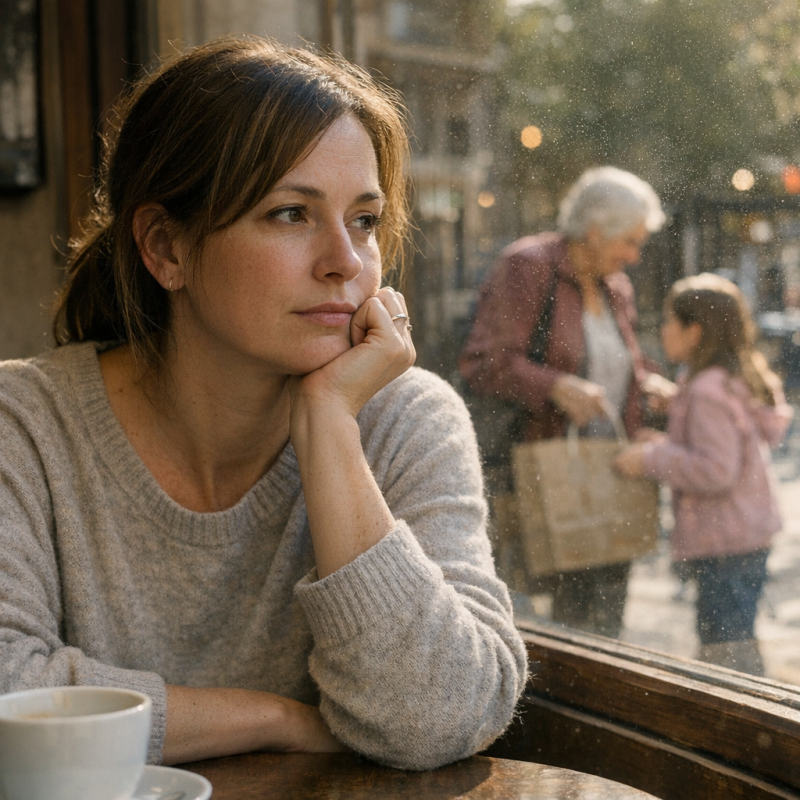 Image by FCT AI
The Diagnosis
Dorothy was seventy-five when they found the cancer. Pancreatic, stage four, the kind that doesn't negotiate. My mom called me at work, her voice doing that thing where she's trying to sound calm but you can hear the shake underneath. 'They're saying six months, maybe,' she told me. 'We should probably... I don't know, start preparing.' I felt what you're supposed to feel—that cold drop in your stomach, the immediate calculation of mortality. But underneath it was something else, something I'm not proud of. A kind of numbness, like hearing about a stranger's diagnosis. I went to the family meeting at the hospital. Uncle Raymond was there, already planning hospice care. Emma came straight from her shift at the pharmacy, mascara smudged from crying. Everyone was devastated, rallying around her, talking about making her comfortable. And I sat there feeling like I should cry, knowing I should feel more, but mostly just feeling obligated. I visited when I was expected to. I signed the cards. The doctors gave her six months; she lasted three years, as if spite alone could keep her alive.
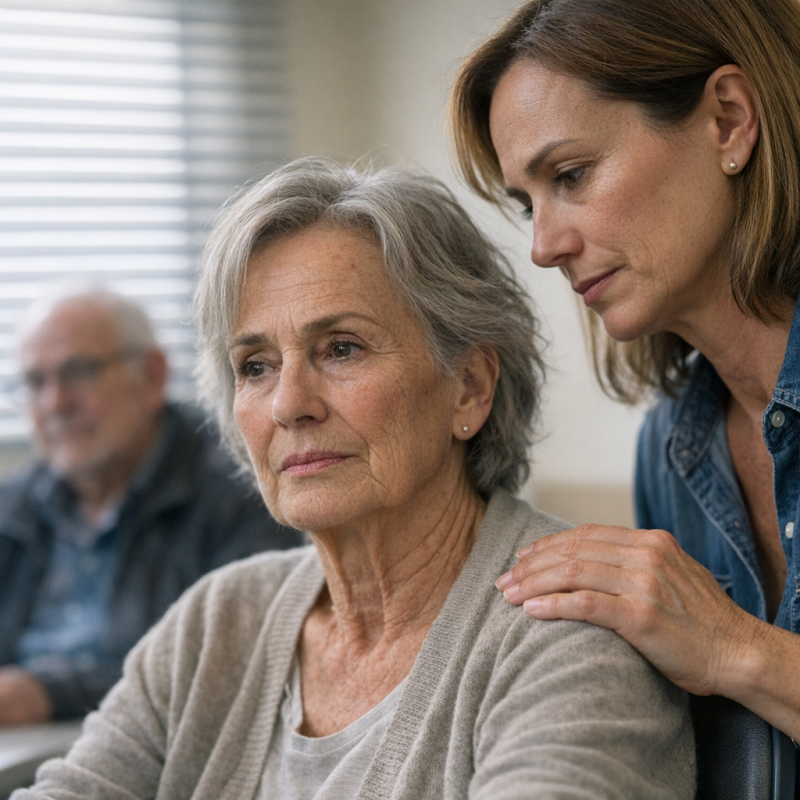 Image by FCT AI
The Bedside Vigils Begin
Those three years were strange. Dorothy was dying, yes, but dying slowly enough that it became routine. Emma started visiting every Tuesday and Thursday after work, posting photos on Facebook—'Afternoon tea with Grandma ❤️'—showing them holding hands, laughing. Jake drove in from Portland twice a month, spending whole weekends with her. I'd hear about it from my mom, these beautiful moments they were all having. 'Emma brought her old photo albums and they went through every picture,' Mom would say. 'Dorothy told her stories about when she was young. It was so sweet.' I'd nod and feel something crack inside my chest. One Saturday, I stopped by at the same time Jake was there. I stood in the doorway of her bedroom and watched them together. She was propped up on pillows, looking frail but animated, telling him about some trip she took to Mexico in the sixties. Her whole face was alive. He was holding her hand. When she saw me, her expression didn't change exactly—it just emptied. I watched them hold her hand and laugh at old stories, and I felt like a ghost in my own family.
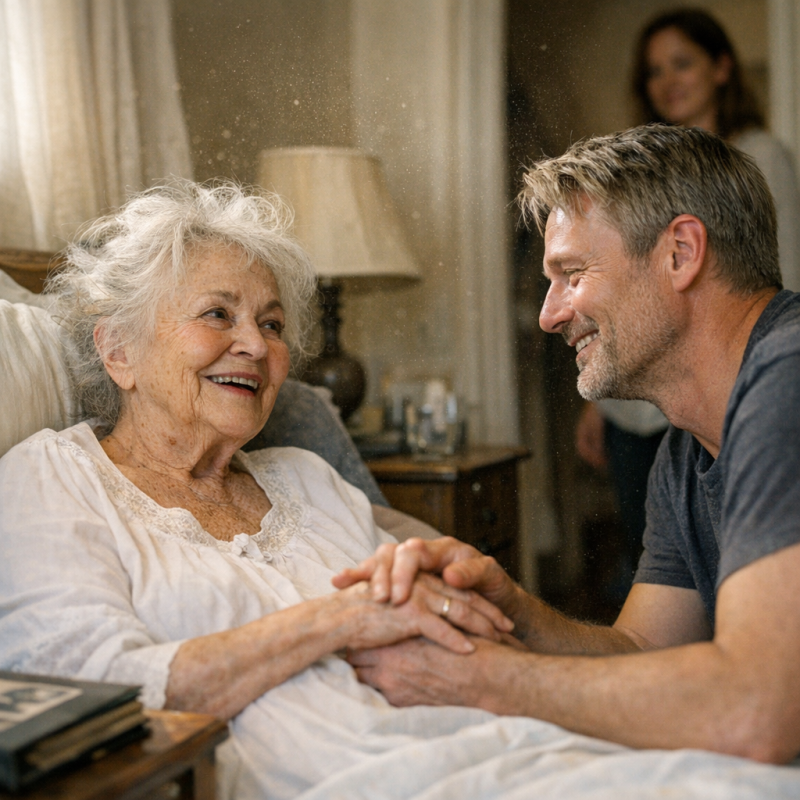 Image by FCT AI
The First Visit
I went alone two weeks after that, telling myself this was it—my chance for something real. She was dying, for God's sake. People reconcile on deathbeds. That's what happens in the stories, right? They get clarity. They make peace. I brought flowers, which felt stupid the second I walked in. She was awake, staring at the ceiling. 'Hi, Grandma,' I said, setting the flowers on her nightstand. 'I thought I'd come sit with you for a bit.' She didn't respond. I pulled the chair closer to her bed, sat down. Waited. The hospice nurse had said she was having a good day, mentally sharp. I tried again. 'The flowers are from that place on Fifth Street. I remembered you liked daisies.' Nothing. Not even a glance. I sat there watching her breathe, waiting for her to acknowledge that I existed, that I was her granddaughter sitting right beside her. Ten minutes passed. Fifteen. My hands were shaking. I sat beside her for ten minutes before realizing she wasn't going to look at me—not even at the end.
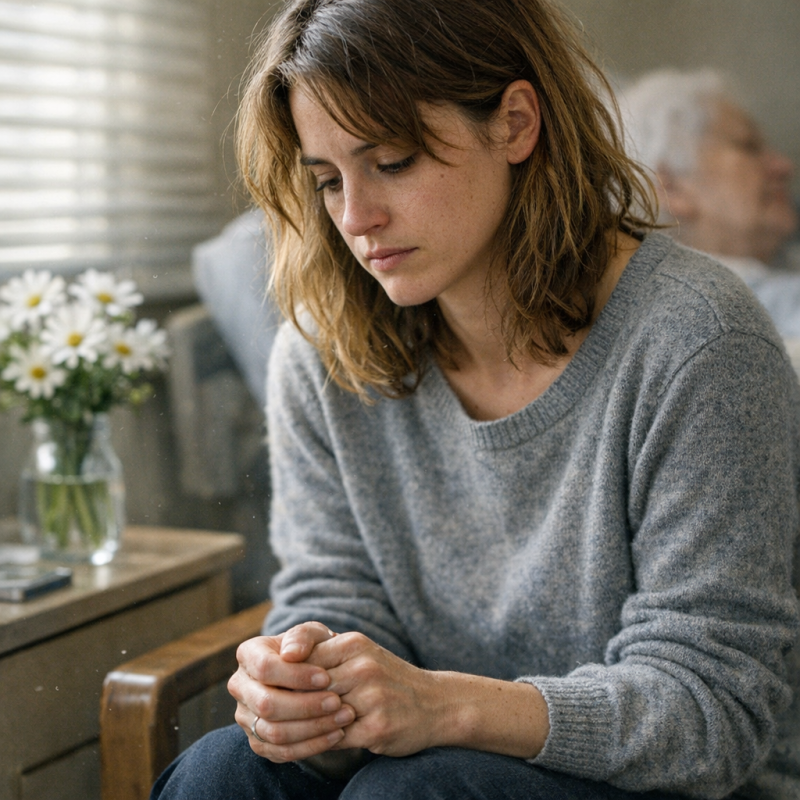 Image by FCT AI
The Selective Lucidity
The weird part was how her mind seemed to work selectively. I started noticing it on my visits. She'd be foggy and confused, and then someone else would walk in and suddenly she'd be bright and present. Jake came by one afternoon while I was there. Before he arrived, Dorothy had been staring at the wall, seemingly not tracking anything. The second he walked in, she lit up. 'Jakey!' she said, clear as anything. 'Come tell me about that new job.' And he did, and she asked follow-up questions, remembered details from their last conversation. She referenced his girlfriend by name. Then she started telling stories—specific stories, with dates and details. 'Remember that game in 2003 where you hit two home runs? Your grandfather was so proud.' Jake laughed. 'I can't believe you remember that, Grandma.' I was standing right there. After Jake left, I tried to talk to her again. 'Grandma, do you need anything?' She looked toward me with blank eyes. 'Who are you?' she whispered. She remembered Jake's baseball stats from 2003, but when I walked in, suddenly she couldn't remember my name.
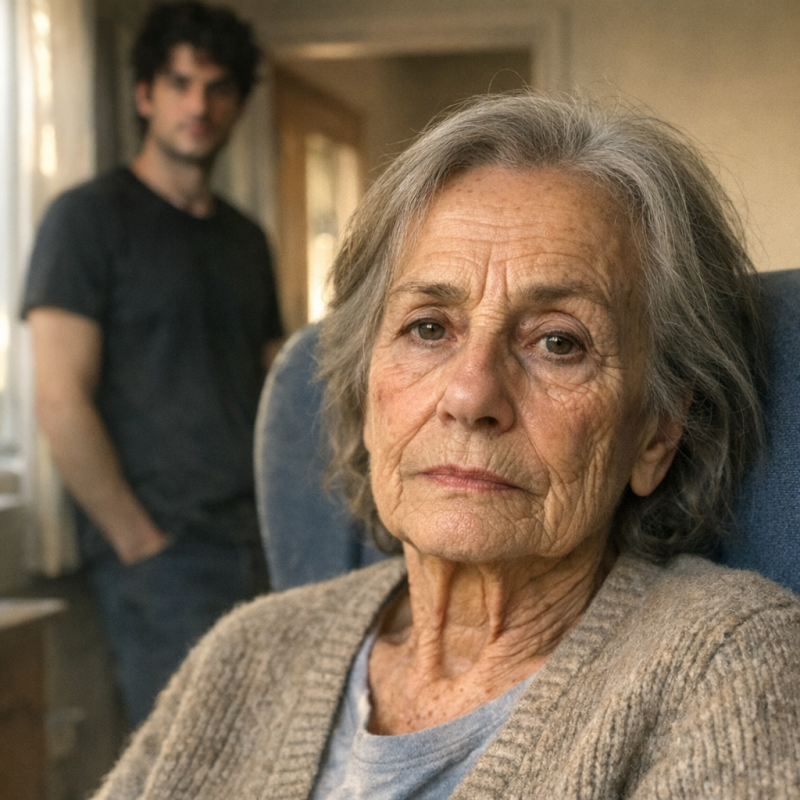 Image by FCT AI
The Stories I Wasn't Part Of
The stories got worse. Dorothy started spending her afternoons reminiscing, telling elaborate family tales to whoever visited. I made the mistake of being there when Emma came by one Thursday. Dorothy's face transformed when she saw her. 'Oh, honey, I was just thinking about that summer at the beach house. Remember?' Emma settled into the chair, smiling. 'Which summer, Grandma?' Dorothy launched into this detailed memory—the summer we'd all gone to Cannon Beach, she said. How all the grandkids had spent the afternoon building this massive sandcastle. She described the weather, what everyone wore, how they'd worked together. How she'd taken photos of all of them, so proud. Emma was nodding along, loving it. And I was standing there feeling ice in my veins because I was at that beach trip. I was twelve. I remembered that day specifically because I'd tried to help with the sandcastle and Jake told me to go away. Dorothy had watched it happen and said nothing. Now she was rewriting it, erasing me from a memory where I'd been miserable and invisible. She told Emma about the beach trip where 'all the kids' built sandcastles—I was there, and she'd ignored me the entire day.
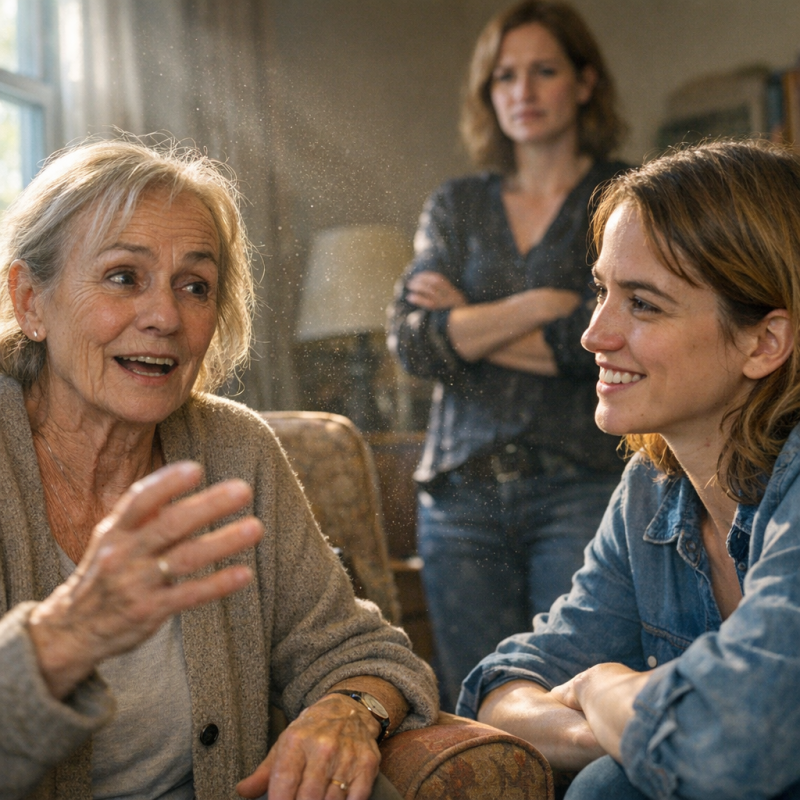 Image by FCT AI
The Nurse's Observation
Karen was one of the regular hospice nurses, maybe late thirties, competent and kind. I'd see her on my visits, and we'd exchange pleasantries. One evening, I was leaving Dorothy's room when Karen caught me in the hallway. 'Can I ask you something?' she said, and something in her tone made me nervous. 'Sure,' I said. She glanced back toward the room. 'It's probably nothing, but... I've noticed your grandmother's different when you visit. Compared to the other family members.' My stomach dropped. 'Different how?' Karen looked uncomfortable, like she was trying to be professional but also human. 'Just... her body language, her affect. She gets tense. It's subtle, but I've been doing this a long time.' She paused. 'I wondered if maybe you two had some kind of conflict? Sometimes families have complicated dynamics, especially at the end.' I didn't know what to say. This stranger had seen in weeks what my family had ignored for decades. 'She always seems tense when you're here,' Karen said, and I realized even strangers could see what my family pretended not to notice.
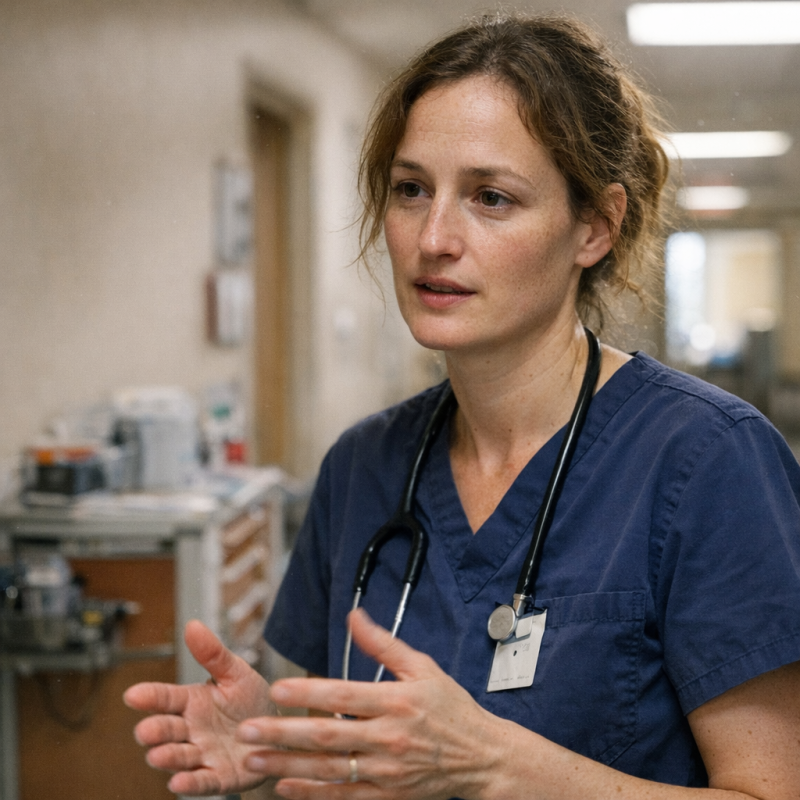 Image by FCT AI
The Last Attempt
I brought a photo album on what I knew would be my last visit. It was the kind of thing you see in movies—one last attempt at connection, at breaking through. I'd found pictures of us from when I was maybe seven or eight, images I barely remembered being taken. In one, Dorothy had her hand on my shoulder at some family barbecue, both of us smiling at the camera. I told myself maybe seeing proof of better times would remind her of something, anything. I sat beside her bed and opened the album, showing her that photograph. 'Remember this?' I asked. 'That was at Uncle Raymond's house. I was wearing that dress you bought me.' She looked at the picture for a long moment, and for just a second I thought I saw something flicker in her eyes. But then she looked up at me, her gaze passing right through me like I was made of glass, like I was nothing at all. No recognition. No softening. Just that same cold distance I'd known my entire life. I closed the album and set it on the chair. I showed her a picture of us from my childhood—she looked at it, then looked through me, and I knew this was truly the end.
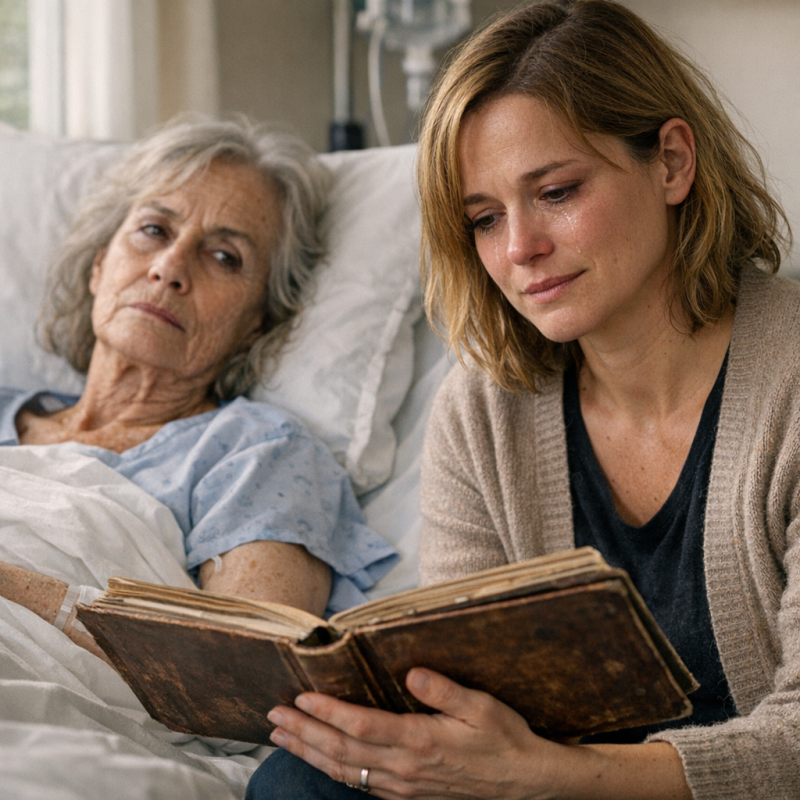 Image by FCT AI
The Decision to Stay Away
I called my mother from the parking lot, still sitting in my car. My hands were shaking. 'I'm not going back,' I told her. 'I tried one more time, and she... Mom, she looked right through me. Like I wasn't even there.' There was a long silence on the other end. I expected her to do what she'd always done—tell me to be patient, to try again, to give it one more chance. Instead, she just sighed. 'Okay,' she said quietly. 'Okay, Claire.' 'You're not going to tell me I should keep trying?' I asked. 'No,' she said, and her voice sounded tired in a way I'd never heard before. 'I don't think it would make any difference.' That's when I realized she'd known all along. She'd known every time she encouraged me to visit that nothing would change, but she'd needed me to figure it out myself. We sat in silence for a moment, and I felt something shift between us. 'I'm done,' I told my mother, and for the first time, she didn't try to convince me otherwise.
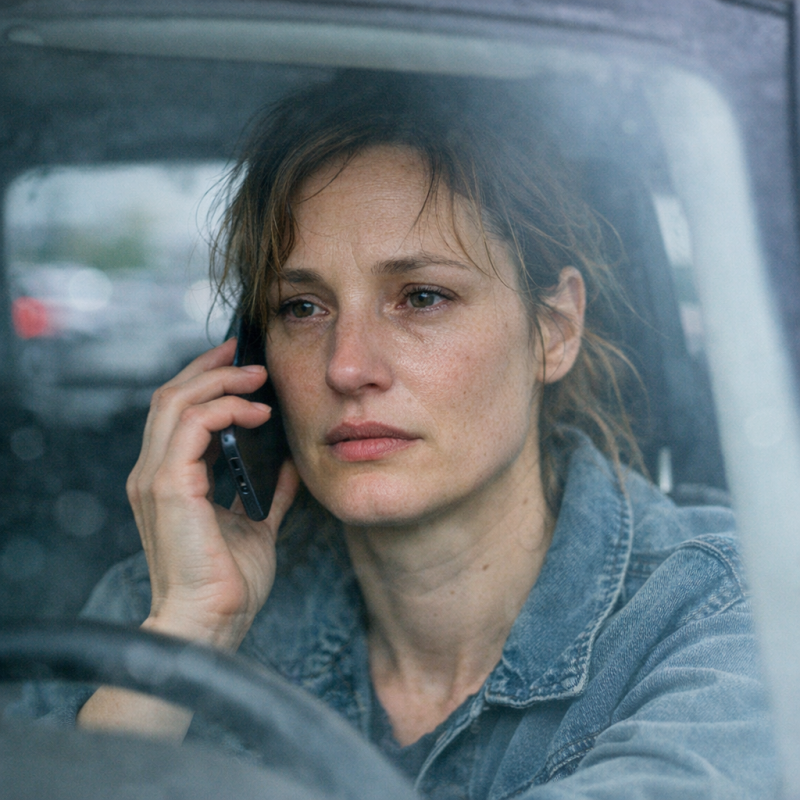 Image by FCT AI
The Vigil I Wasn't Part Of
The next three weeks played out without me. My family rotated shifts at Dorothy's bedside, maintaining the vigil I'd abandoned. Mom would text me updates: 'She's resting comfortably.' 'The nurses say it could be any day now.' 'She asked for more blankets.' Normal things, mundane things, as if I was just busy with work instead of deliberately absent. Michael called once, asking if I was sure about my decision. I told him I was. He didn't argue. Sarah texted a photo of Dorothy sleeping, and I deleted it without really looking. I went to work, came home, lived my life while death waited in a hospice room fifteen minutes away. People asked if I was okay, and I said I was fine. Grief is supposed to look a certain way—you're supposed to be at the bedside, holding hands, saying final words. But I was at Target buying paper towels when Mom texted that Dorothy's breathing had changed. I was making dinner when she sent that they'd called the family in. They sent me updates—'she's stable,' 'she's declining'—like weather reports from a world I no longer belonged to.
 Image by FCT AI
The Final Hours
Mom called me at 3:47 on a Tuesday afternoon. I was in a meeting, and I almost sent it to voicemail. Something made me step out and answer. 'She's gone,' Mom said. Just like that. No preamble, no softening it. 'It was peaceful. We were all here.' All of them. Emma, Jake, Patricia, Raymond, Michael, Sarah. The whole family gathered around her bed in those final moments, holding her hands, telling her it was okay to let go. I stood in the hallway outside the conference room, phone pressed to my ear, and felt absolutely nothing. Then everything. Then nothing again. 'Do you want to come see her?' Mom asked. 'Before they take her?' I said no. What would be the point? She'd been looking through me for thirty-two years. Death wouldn't change that. I went back into my meeting and took notes on a marketing presentation, and later I'd wonder what that said about me. But the truth was simpler than that. She passed away on a Tuesday afternoon with everyone she loved around her—which meant I wasn't there.
 Image by FCT AI
The Funeral
The funeral was everything you'd expect. Flowers everywhere, soft organ music, people in black sharing tissues. I sat in the third row between Michael and Sarah while Patricia gave the eulogy. She talked about Dorothy's generous spirit, her sharp wit, the way she always made everyone feel special. She told a story about how Dorothy had stayed up all night helping her study for exams in college, making coffee and quizzing her until dawn. 'She had this way of making you feel like you were the most important person in the world,' Patricia said, her voice breaking. People nodded and dabbed their eyes. Emma spoke next, talking about summer visits and homemade cookies and unconditional love. Raymond shared a memory about Dorothy driving two hours in a snowstorm to be there when his first child was born. Each story painted a picture of someone warm and caring, someone who showed up, someone who loved fiercely. I sat there listening to descriptions of a woman I'd never met. They spoke of her warmth, her generosity, her unconditional love—and I sat there wondering if we'd buried the same woman.
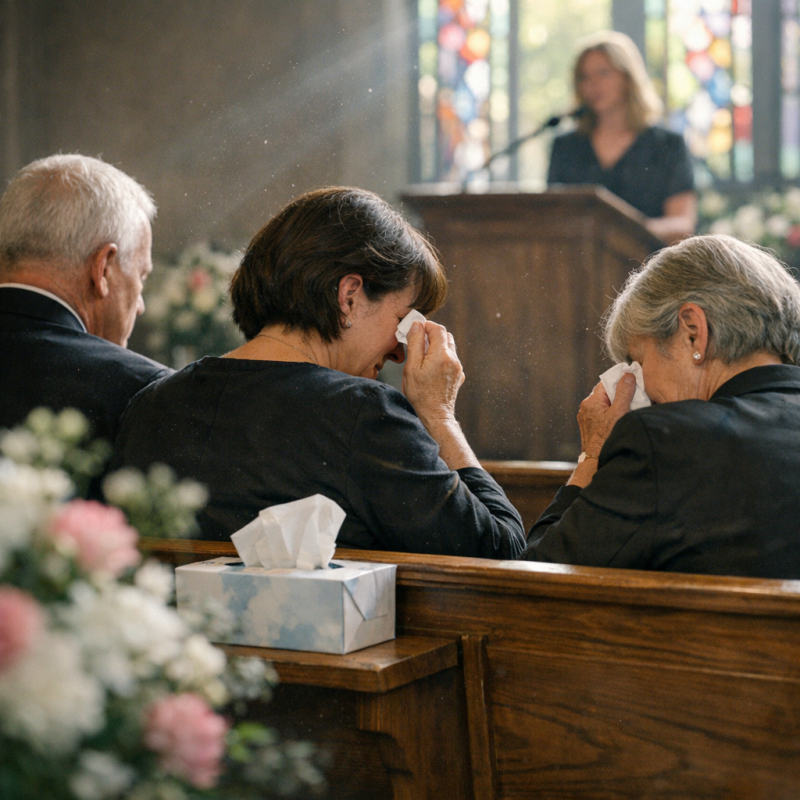 Image by FCT AI
The Reception
The reception was at Patricia's house, filled with casseroles and memories. People clustered in groups, sharing their favorite Dorothy stories. Emma talked about how Dorothy had helped her through her divorce, calling every single day just to check in. Uncle Raymond described how she'd taught him to make her famous apple pie, insisting he learn the recipe exactly right. Sarah mentioned the birthday cards Dorothy sent without fail, always with a handwritten note inside. Even my brother had stories—Dorothy teaching him chess, Dorothy attending his college graduation, Dorothy telling him she was proud of him. I stood by the food table with a plate I wasn't eating from, listening to the soundtrack of a relationship I'd never had. No one asked me to share a memory. No one expected me to have one. The absence of my participation wasn't awkward because it wasn't noticeable—it was simply understood that I wouldn't have anything to contribute. Everyone had a story about how she'd touched their lives—except me, and the silence around that felt louder than any eulogy.
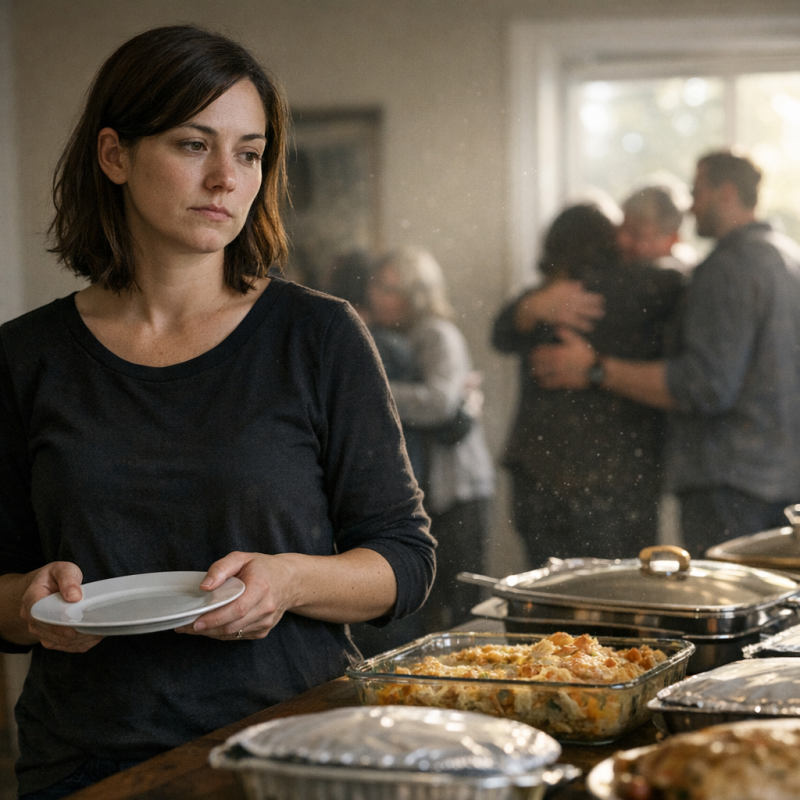 Image by FCT AI
The Will Reading
The lawyer's office was mahogany and leather, exactly what you'd picture. Mr. Henderson was professional and sympathetic, offering condolences before opening the file. The will was straightforward, he explained. Dorothy had been very clear about her wishes. He started reading: the house to Patricia, investments split between Raymond and Linda, personal items distributed among the grandchildren. Emma got the china. Jake got the grandfather clock. Michael got some bonds. Sarah got jewelry. The list went on, specific and detailed. I waited for my name. Mr. Henderson kept reading. More allocations, more distributions. Everything accounted for except me. When he finished, the room was silent. Mom looked at me, then at the lawyer. 'What about Claire?' she asked. Mr. Henderson checked the document, flipped a page, checked again. 'Claire isn't listed,' he said carefully. Emma's hand went to her mouth. Michael shifted in his seat. The lawyer looked uncomfortable, like he'd accidentally revealed something obscene. When the lawyer said my name wasn't listed, the room went silent—and I realized her hatred was so deliberate, she'd written it into legal documents.
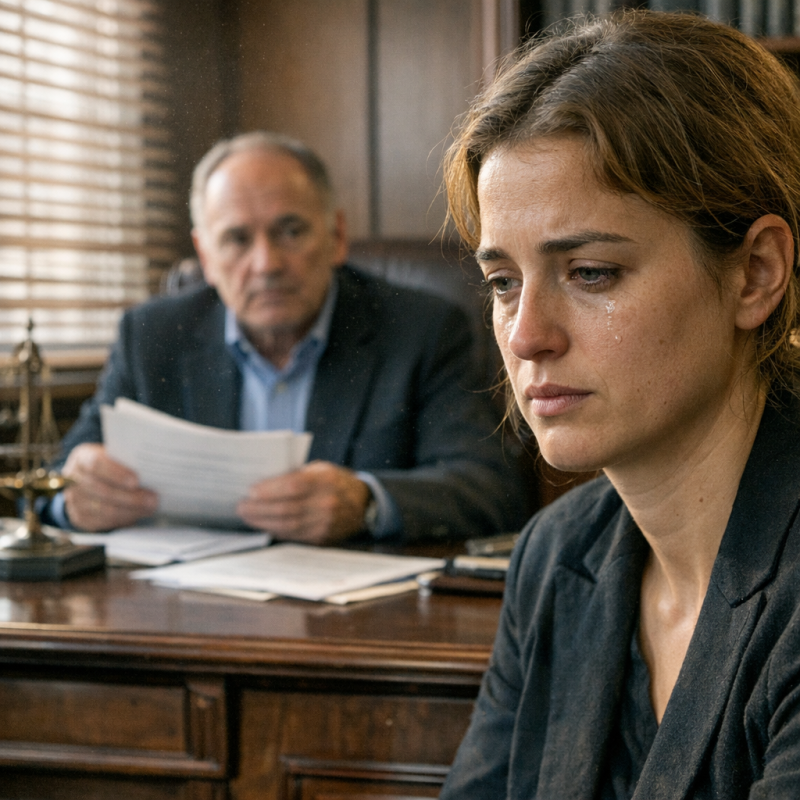 Image by FCT AI
The Specific Clause
Mom leaned forward. 'There must be some mistake. Check again.' Mr. Henderson was already pulling out another page. 'Actually,' he said slowly, 'there's a specific clause here. It's unusual, but it's very clear.' He adjusted his glasses. My hands went cold. Specific clause. That meant intentional. That meant she'd thought about it, planned it, instructed her lawyer to write it down. 'It states,' Henderson read, ''I intentionally make no provision for my granddaughter Claire Mitchell in this will, and this omission is deliberate and not to be construed as an oversight.''' The words hung in the air like smoke. Mom grabbed the document from his hands, reading it herself as if the words might change. But they didn't. They were there in black and white, legal and binding. Dorothy had made sure there could be no question, no ambiguity, no room for anyone to claim it was a mistake. She'd wanted everyone to know this was intentional. 'It's very clear,' he said, reading the clause aloud, and each word felt like a gravestone inscription.
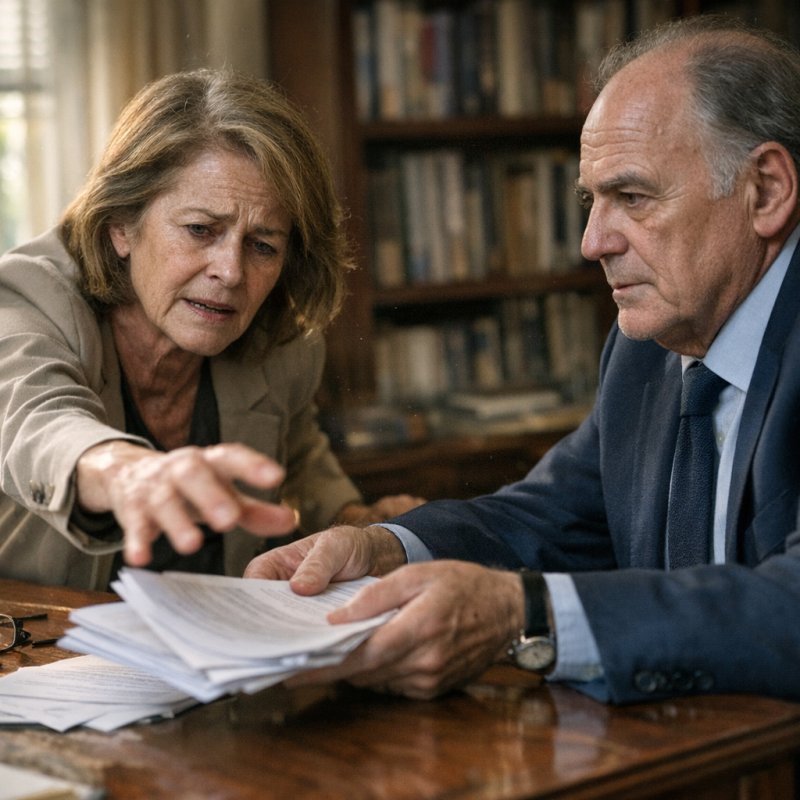 Image by FCT AI
The Family's Reaction
My family rallied around me in that conference room, which should have felt comforting. Michael actually stood up, his face red, and told Henderson this was 'the cruelest thing he'd ever seen.' Sarah put her arm around me and kept saying 'this is wrong' over and over. Emma showed up twenty minutes later—someone had texted her—and she looked at the will clause and called it 'unforgivable.' They were so angry on my behalf. So protective. I kept waiting for one of them to say something that would make it make sense, to explain what I'd done or what Dorothy had said. But when I asked directly—'Did she ever say anything about me? Did I do something?'—they all went quiet. Michael shook his head. Emma said she'd always thought Dorothy treated me differently but couldn't explain why. Sarah just looked confused. None of them knew. And somehow that made it worse, sitting there surrounded by people who loved me but couldn't answer the one question that mattered. Michael called it cruel; Emma called it unforgivable—but none of them could tell me why.
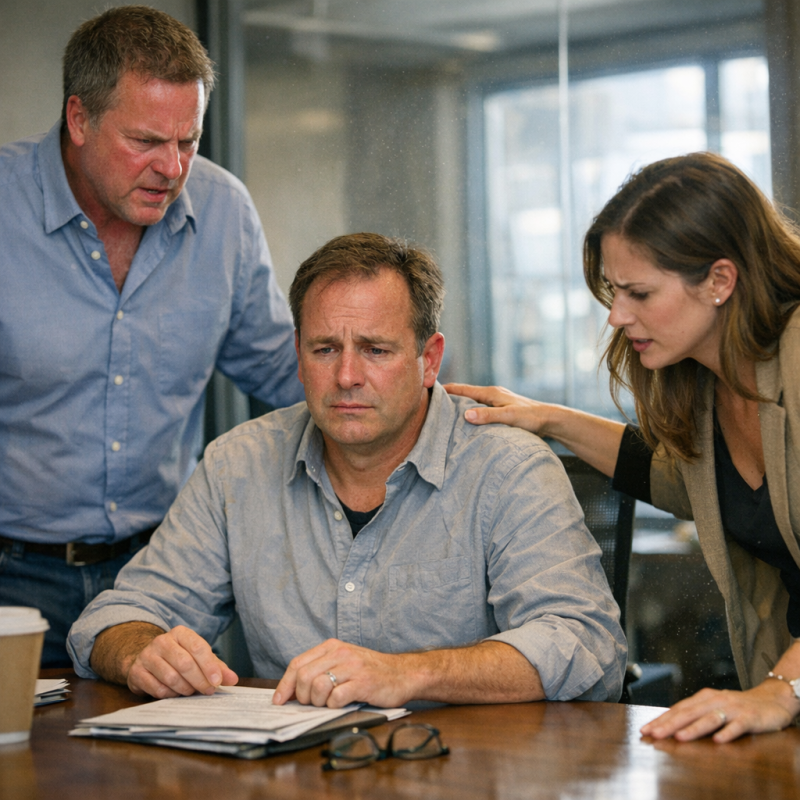 Image by FCT AI
Linda's Determination
My mother went silent for a long time after everyone left. We sat in her living room—me, her, and my dad—and nobody seemed to know what to say. Dad kept suggesting we just 'let it go,' that some things weren't worth understanding. He meant well. He always does. But Mom was staring at nothing, and I could see something shifting in her expression. 'No,' she finally said. 'No, I need to know why she did this.' Dad tried to argue—'Linda, she's gone, what does it matter?'—but Mom cut him off. She stood up, and I saw this determination I'd only seen a few times in my life, usually when she was fighting for one of us kids. 'There has to be a reason,' she said. 'People don't just hate their grandchildren for no reason. And if there was a reason, it'll be somewhere in her things.' Dad sighed but nodded. I sat there feeling oddly uncertain. Part of me wanted answers. But another part wondered if some doors should stay closed. 'There has to be a reason,' my mother said, and I watched her transform from grieving daughter to determined investigator.
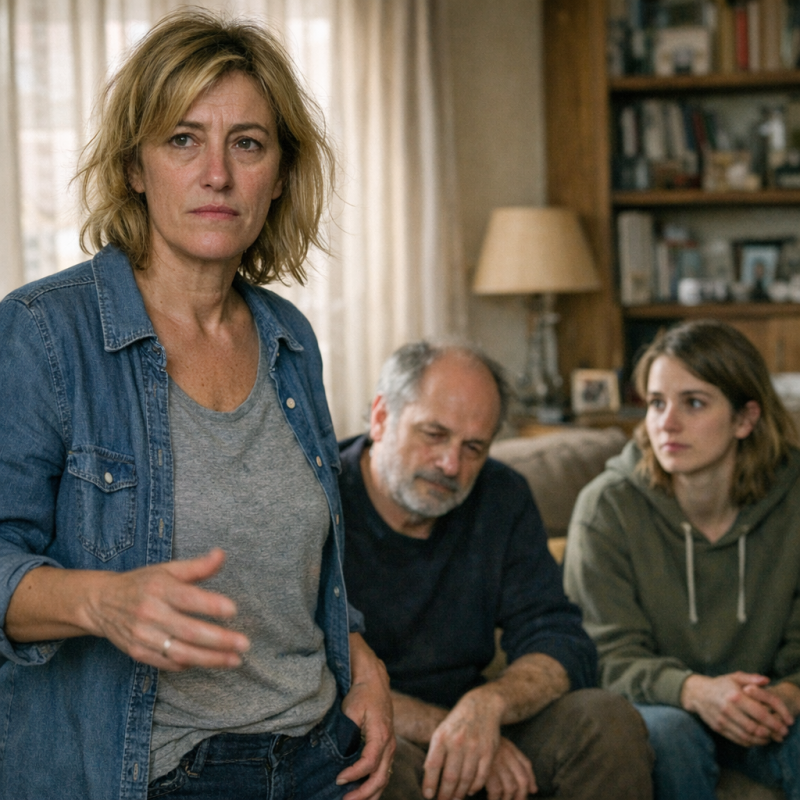 Image by FCT AI
Searching the House
We started at Dorothy's house two days later. Mom had a key, of course—she'd been checking on the place since Dorothy went into hospice. The house smelled like old potpourri and dust, exactly how I remembered it from childhood visits. We started in the living room, going through drawers and shelves. There were photo frames and knick-knacks, old receipts and shopping lists. Normal grandmother things. Mom found a drawer full of greeting cards we'd all sent over the years—birthdays, Mother's Days, Christmases. She kept pulling them out, checking signatures, and I noticed she was looking for ones from me. There were a few. Not many, but a few. Nothing hateful written on them. Nothing that suggested I'd offended her. We moved to the dining room, then the spare bedroom she used as an office. More of the same: bills, magazine subscriptions, church bulletins. The mundane debris of an ordinary life. It was frustrating, honestly. I'd expected something, anything, that would explain it. We sorted through decades of memories, but everything we found only showed the grandmother I'd never known—not why she hated me.
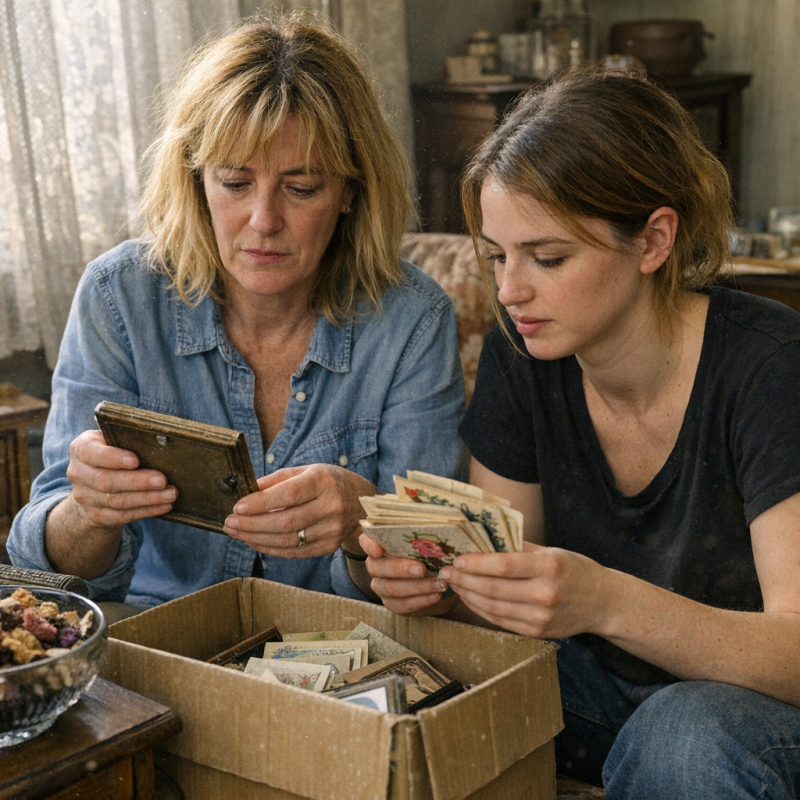 Image by FCT AI
The Photo Albums
Mom found the photo albums in the hallway closet, stacked on a high shelf. Six of them, leather-bound, meticulously organized. We sat on the floor and started going through them. There was Mom as a little girl. Family vacations. Christmases. Then the pages where my generation appeared—Michael as a baby, then Sarah, then Emma. And me. Except not me. There were photos from gatherings I clearly remembered attending. I could see the edges where someone had been cropped out. In one Christmas photo, there was a visible gap between Sarah and Michael, a space where someone should have been standing. Mom's hands started shaking as she turned the pages. 'I took this one,' she whispered, pointing to a birthday party picture. 'You were right there. You were wearing that blue dress.' But in the album, I was gone. Carefully removed. In some photos, you could see half of my shoulder or a bit of my hair at the edge, where the cropping couldn't quite erase me completely. It wasn't that she hadn't taken photos of me. She had. She'd just removed me afterward. Album after album showed family gatherings I remembered attending—and in every single one, I'd been cropped out or left unphotographed.
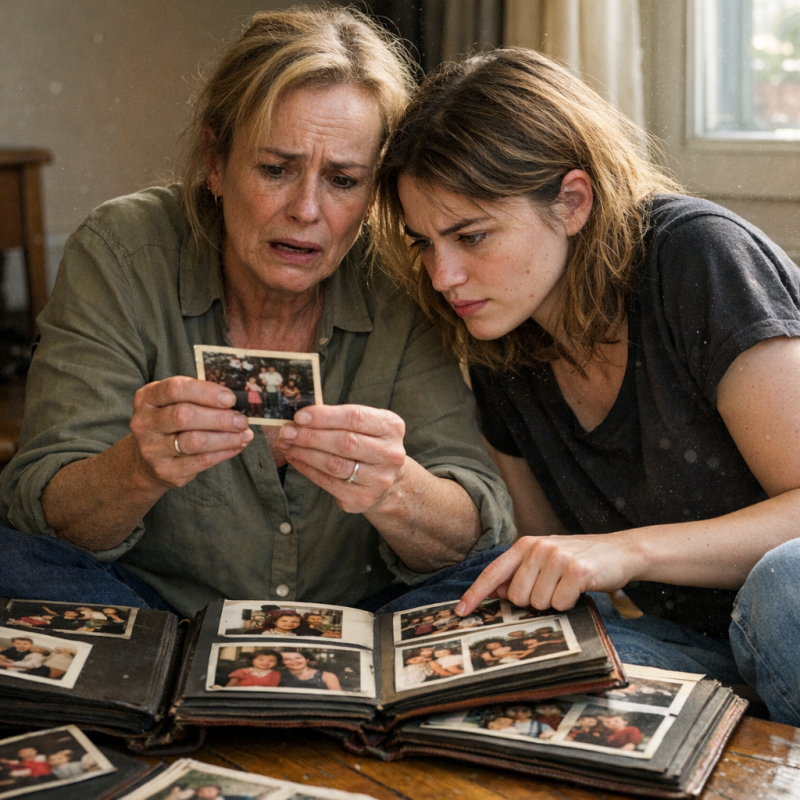 Image by FCT AI
The Old Letters
The letters were in a wooden box in her bedroom closet, tied with ribbon like something from an old movie. Mom untied them carefully, her hands still trembling from the photo albums. They were correspondence with relatives, friends from church, her sister in Minnesota. Chatty letters about daily life, health updates, garden successes. And grandchildren. So many mentions of grandchildren. Dorothy wrote about Michael's acceptance to college. About Sarah's dance recital. About how proud she was of Emma's art. She described their visits, quoted funny things they'd said, worried about their futures. I read over Mom's shoulder as she went through letter after letter. My throat felt tight. It wasn't just the will. It wasn't just the photos. She'd erased me from her entire narrative. In one letter from 2015, she wrote about 'Linda's three children' and described a family dinner where I'd definitely been present. But I wasn't mentioned. Not once. The erasure was complete, systematic. Every letter mentioned the grandchildren—their achievements, their visits, their futures—and reading them, I realized she'd erased me from her words too.
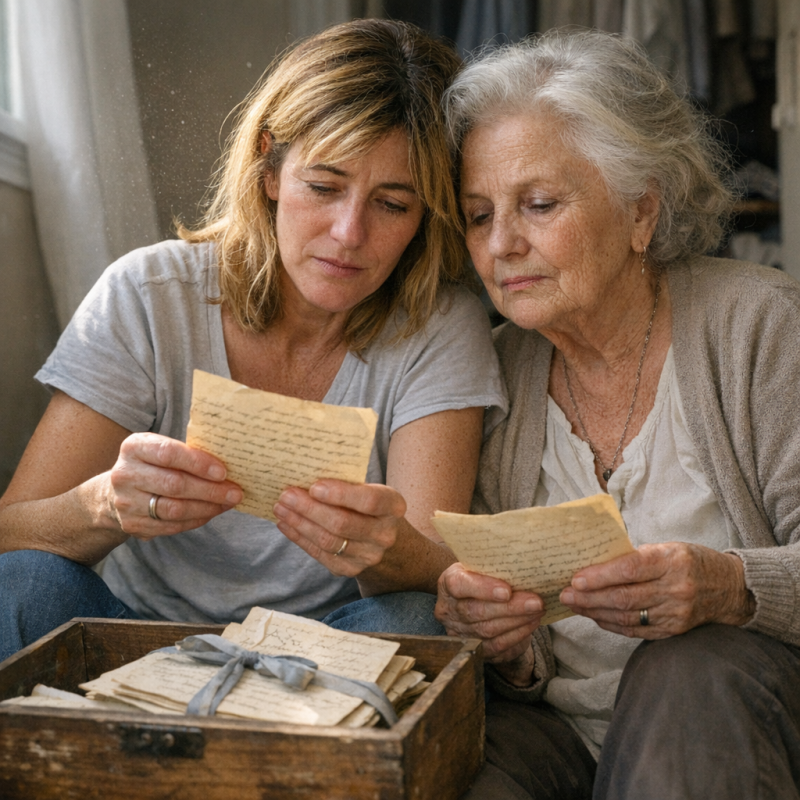 Image by FCT AI
The Locked Closet
We were about to give up for the day when Mom paused in Dorothy's bedroom. She was standing near the far wall, staring at what I'd always assumed was just part of the paneling. 'Claire,' she said quietly. 'When's the last time you were in this room?' I shrugged. 'Years ago. Maybe when I was a teenager?' She walked over and ran her hand along the wood. 'This is a door.' I came closer and saw she was right. There was a seam, barely visible, and a small keyhole where a knot in the wood should have been. It was designed to blend in, to look like nothing. 'I helped her paint this room once,' Mom said. 'She wouldn't let me near this wall. Said she'd do it herself.' We both stood there looking at it. A locked closet. Hidden in plain sight. I tried to remember if I'd ever seen it open, ever seen Dorothy going in or out of it. The closet had been there my whole life, but I'd never seen it open—and suddenly I wondered what she'd been hiding.
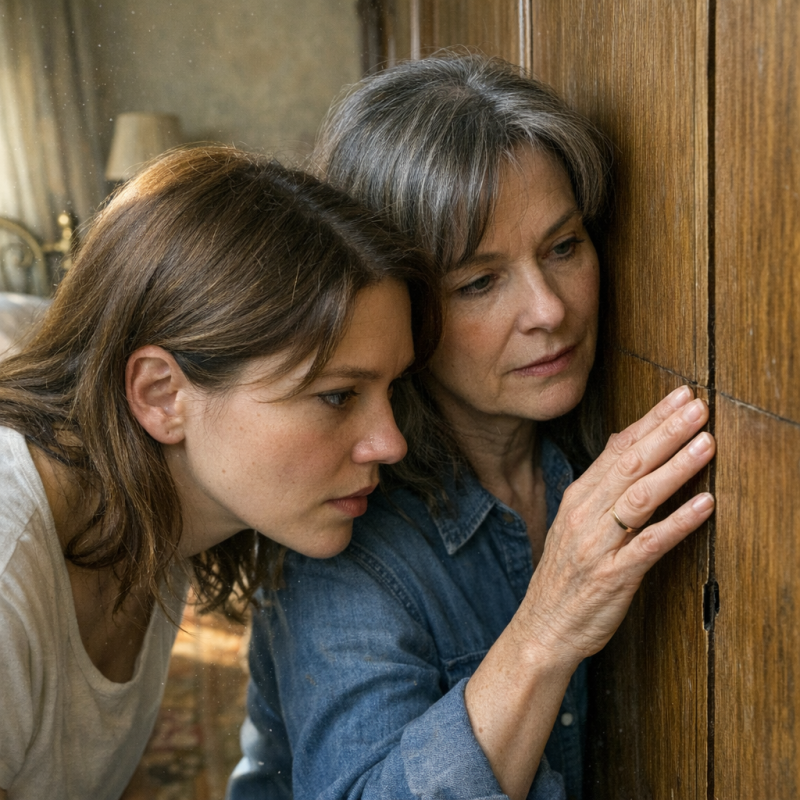 Image by FCT AI
Finding the Key
Mom started searching for a key. We went through Dorothy's nightstand, her dresser drawers, even checked under the mattress like we were in a detective movie. Nothing. She was about to start on the bathroom when she stopped at the jewelry box on the dresser. It was carved wood, nothing fancy. I'd seen it a hundred times. Mom opened it and started carefully removing items—a pearl necklace, some earrings, a few brooches. And there, at the very bottom, underneath her wedding ring, was a small brass key. Mom held it up to the light. It was tarnished with age, deliberately hidden beneath layers of other items. 'This has been here the whole time,' Mom whispered. She looked at the wedding ring still in the box, her mother's most precious possession, and then at the key. The symbolism wasn't lost on either of us. Whatever Dorothy had locked away, she'd considered it important enough to hide beneath the symbol of her marriage. The key was hidden beneath her wedding ring, as if whatever was in that closet mattered more than her marriage.
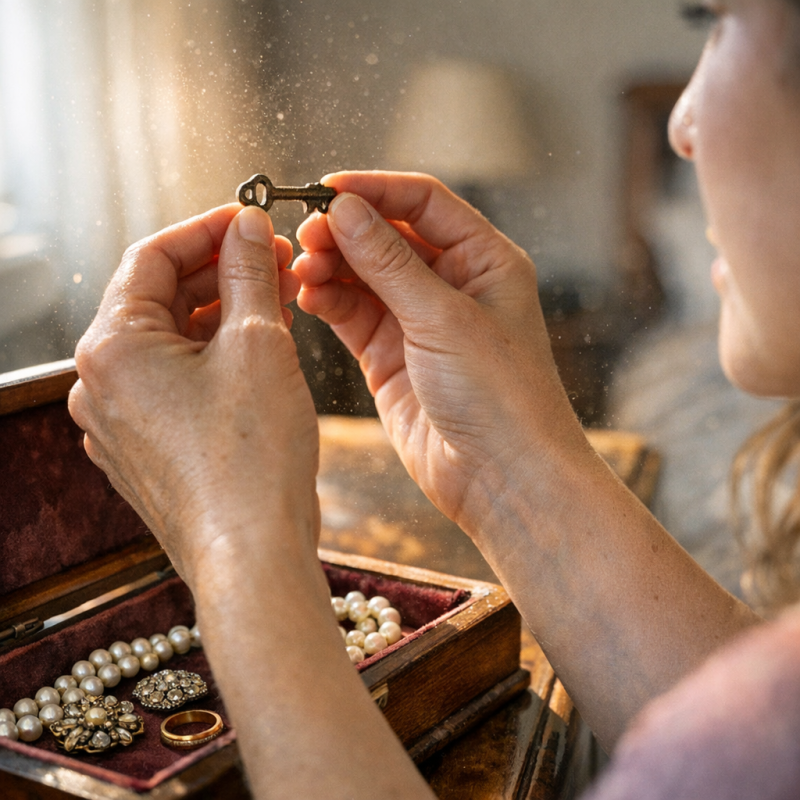 Image by FCT AI
Opening the Closet
The key fit perfectly. Mom's hand shook as she turned it, and we heard the lock click open. She pushed the door, and it swung inward with a creak. I expected chaos—boxes thrown in carelessly, stuff crammed into storage. But that's not what we found. The closet was small but meticulously organized. Shelves lined both sides, and on them sat labeled boxes, file folders, and items wrapped in tissue paper. Everything had a place. Everything was intentional. There were dates written on some boxes. Categories labeled on folders. It looked like an archive, like Dorothy had been a curator of her own secrets. Mom pulled the chain for the overhead light, and we could see more clearly. This wasn't someone hiding junk. This was someone preserving something specific, something she'd spent years maintaining. The way it was arranged—chronological, systematic—made my skin crawl. The closet wasn't storage—it was a vault, organized and deliberate, like a museum of secrets.
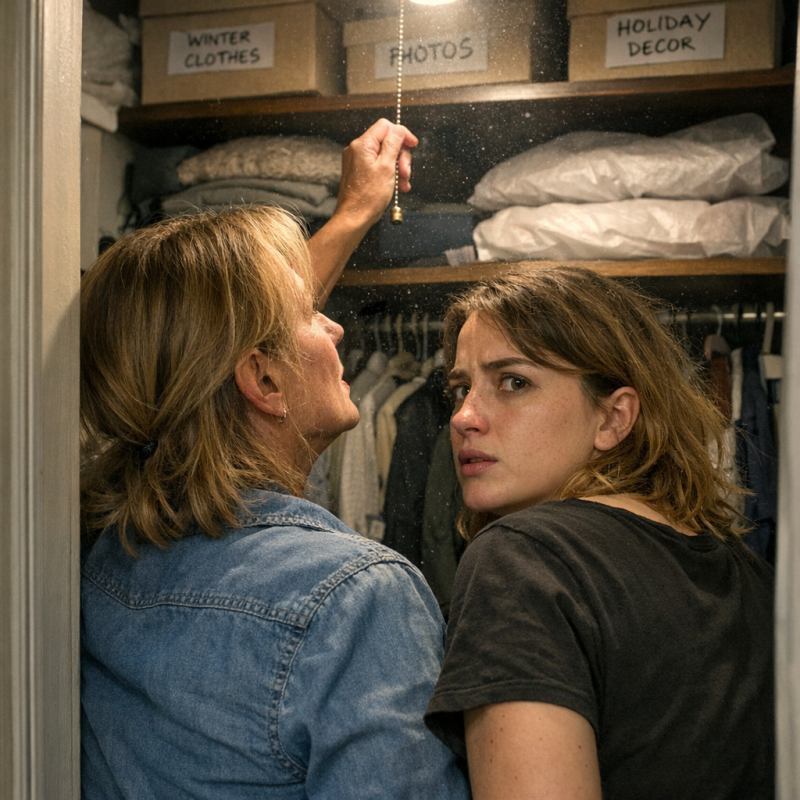 Image by FCT AI
The Other Boxes
We started methodically, the way you do when you're trying to convince yourself this is just an ordinary task. Mom pulled down the first labeled box—'Tax Records 1972-1979'—and we found exactly that. Neatly filed returns, stapled receipts, documentation of every deduction. The next box held greeting cards, organized by year, rubber-banded in stacks. Birthday cards my grandfather had given her. Valentine's cards. Anniversary cards from decades ago. She'd kept them all, preserved them like artifacts. There were boxes of old bills, paid and marked with dates. Warranties for appliances that had been gone for years. User manuals for televisions that hadn't existed since I was a child. Everything was labeled, dated, filed away with the precision of someone who couldn't bear to let anything disappear. It was tedious work, sorting through a dead woman's mundane preservation efforts, but it also started to unsettle me. This wasn't normal nostalgia. This was compulsive. Each box revealed someone who held onto everything, who documented and archived her entire existence like she was afraid of losing proof she'd been here. Tax records from the 1970s, preserved receipts, old greeting cards—Dorothy kept everything, which made me wonder what else she couldn't let go of.
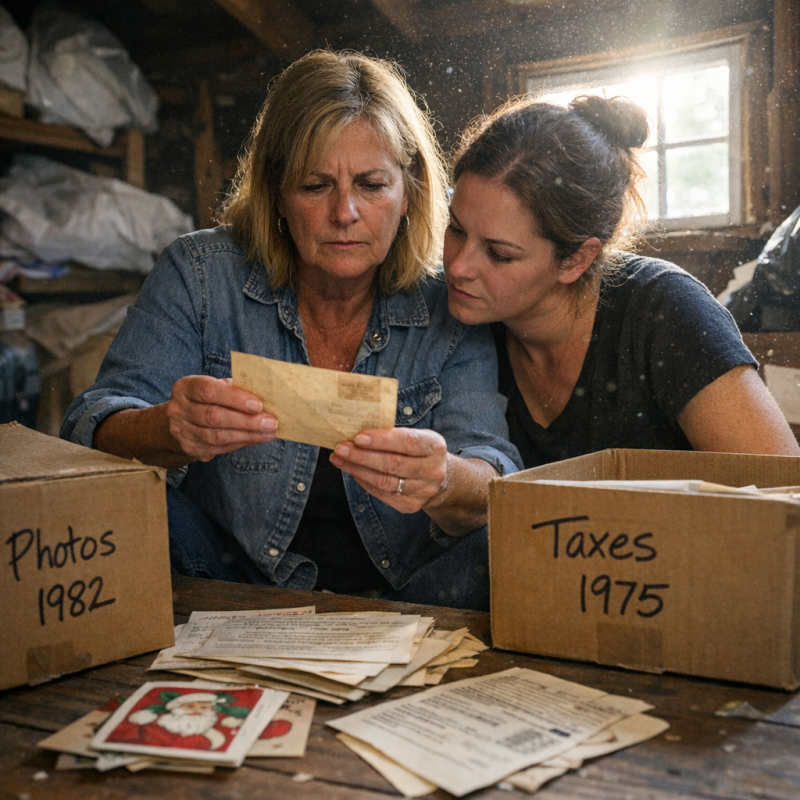 Image by FCT AI
The Box
We were maybe twenty minutes into the sorting when Mom reached toward the back corner of the closet. I was still looking through a box of old photographs when I heard her make a small sound—not quite a gasp, but close. I looked up and saw her pulling out a box that was different from the others. It was older, the cardboard softer and more worn at the edges. No label. No date written in Dorothy's careful handwriting. It had been tucked behind the other boxes, deliberately placed where you'd only find it if you were clearing out the entire closet. The way it was positioned—it wasn't storage, it was hiding. Mom held it in both hands, staring at it like it might burn her if she wasn't careful. Her face had gone pale in a way that made my stomach drop. She set it down on the floor between us but didn't open it right away. She just looked at it, her breathing shallow and uneven. I could see her hands trembling. Whatever was in there, she recognized it. She knew. This box wasn't labeled like the others, and when my mother pulled it out, her hands were shaking.
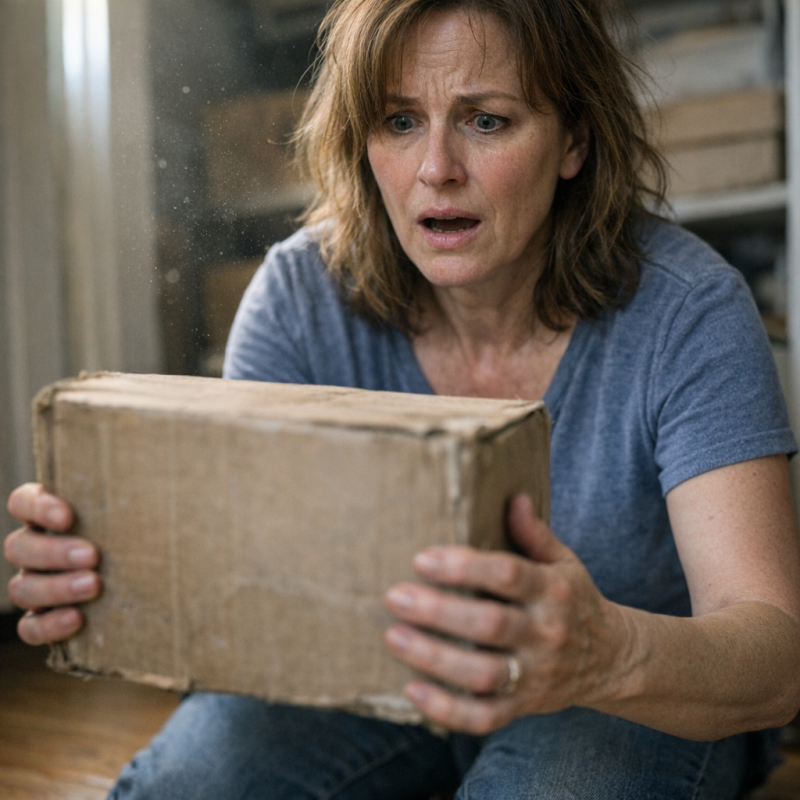 Image by FCT AI
The First Document
Mom lifted the lid slowly, like she was bracing herself. Inside were papers—not the casual kind, but official documents with letterheads and stamps. I could see the top sheet was from a hospital, the kind of form that's printed on security paper with watermarks. She reached in and began lifting them out carefully, setting them in her lap. There were birth records. Hospital admission forms. Documents with raised seals and official signatures. Some of them were yellowed with age, creased from being folded and unfolded. She started reading through them, her eyes moving rapidly across the pages. I leaned closer, trying to see what had her so focused, but she angled them away from me without seeming to realize she was doing it. Her breathing changed. It got faster, shallower. Her lips pressed together in a thin line. I watched her read the same document twice, then a third time, like she was trying to make sense of words that shouldn't exist. She pulled out the first document and stared at it so long I thought she'd stopped breathing.
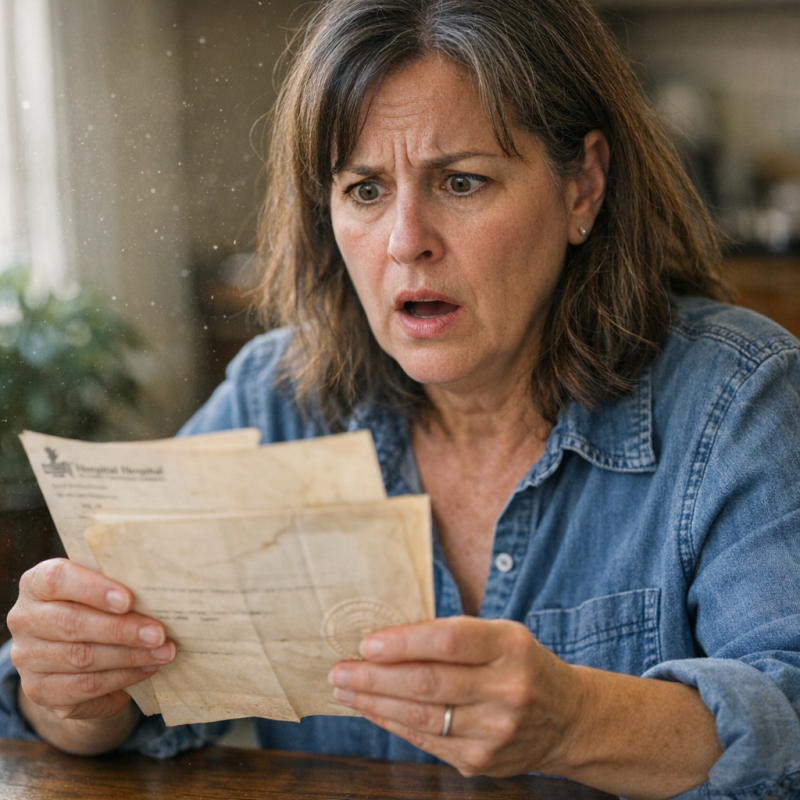 Image by FCT AI
Linda's Silence
'Mom, what is it?' I asked. She didn't answer. She just kept reading, her fingers gripping the paper so tightly the edges crumpled. I could see her eyes scanning back and forth, re-reading sections, her face getting paler with each pass. 'Mom?' I said again, louder this time. Nothing. She pulled out another document, then another, laying them out in sequence like she was building a case, trying to assemble proof of something she couldn't believe. Her hands were shaking badly now. I reached out to touch her shoulder, and she flinched like I'd startled her, but still didn't look at me. She just kept reading. 'What did you find?' I asked, my voice starting to break with frustration and fear. She shook her head, not in answer but like she was rejecting what she was seeing. It was terrifying, watching her process something I couldn't see, being shut out of whatever truth was unfolding in those documents. 'Mom, what is it?' I asked three times, and she still didn't answer—she just kept reading like she was trying to make the words say something different.
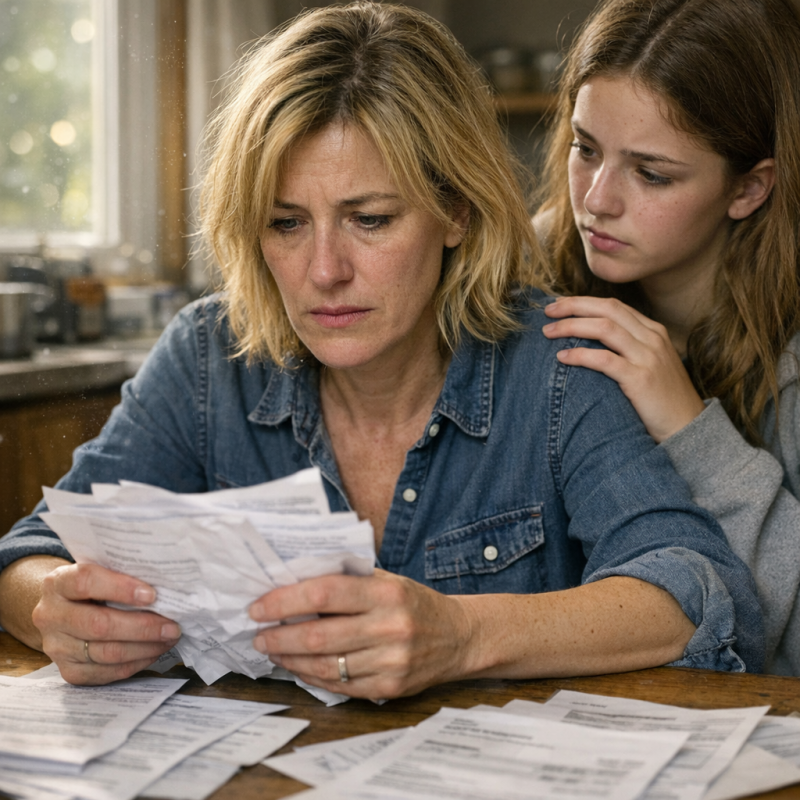 Image by FCT AI
The Birth Certificate
Finally, she held out a document to me without speaking. Her hand was shaking so badly the paper rattled. I took it from her, and it took me a moment to understand what I was looking at. It was a birth certificate. The official kind, with a state seal embossed at the bottom. I saw my name first—Claire Olivia—and my birthdate, the one I'd celebrated my entire life. For a second, I felt confused about why this was significant. Then I saw the other lines. Father: Unknown. That wasn't shocking—I'd never had a father in the picture. But then I looked at the mother's line. I read it once. Then again. My brain couldn't process what I was seeing. The name typed there wasn't Linda Morrison. It wasn't my mother's name at all. It was someone else. Someone whose name I'd never heard before in my entire life. I looked up at Mom, waiting for her to explain, to tell me this was a mistake or a clerical error. But she just stared at me with tears running down her face. My name was there, my birthdate was right—but the mother's name wasn't Linda.
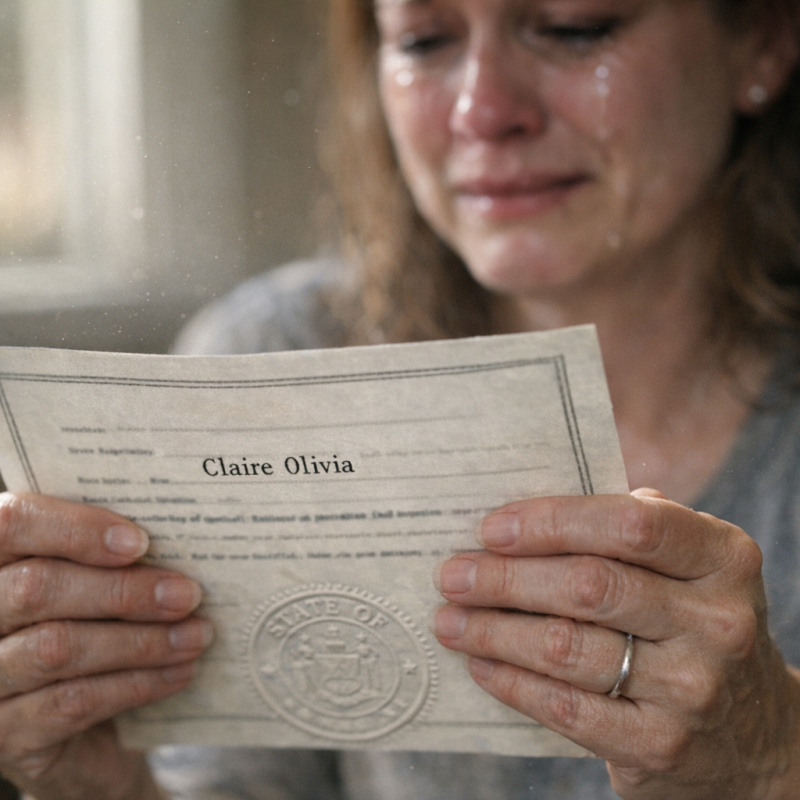 Image by FCT AI
The Name on the Certificate
I stared at the name on the certificate: Anne Catherine Morrison. It meant absolutely nothing to me. I'd never heard that name. Not once. Not in any family story, not in any casual conversation, not in any context whatsoever. I looked at my mother—at Linda—and waited for her to tell me who this person was. 'Who is Anne Catherine Morrison?' I asked, my voice sounding strange and distant to my own ears. Mom's face crumpled like I'd struck her. She opened her mouth but no sound came out. She looked down at the other documents in her lap, then back at me, then back down again. I could see her trying to form words and failing. The silence stretched between us, filling the small closet with something suffocating. 'Mom, who is she?' I asked again, louder. The birth certificate was still in my hands, the paper slightly damp now from my own sweating palms. I wanted her to laugh and explain this was some bureaucratic mistake, some mix-up from the hospital decades ago. But the way she was looking at me—like she'd been dreading this moment for thirty-two years—told me there was no mistake. The name meant nothing to me, but the way my mother's face collapsed told me it should.
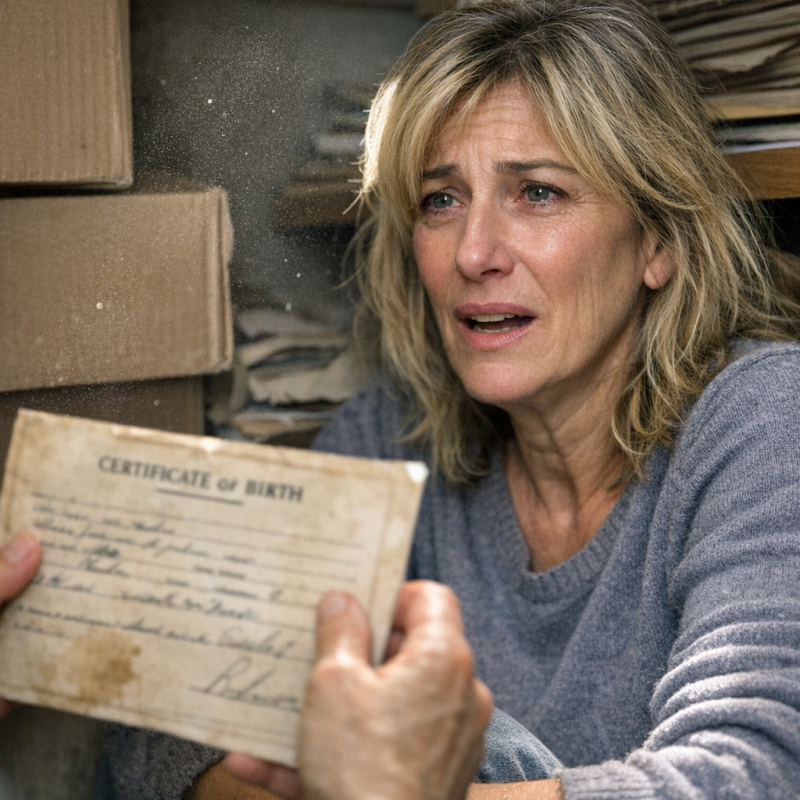 Image by FCT AI
Linda's Breakdown
She made a sound then—not quite a word, more like something breaking. Then she sat down on the floor of the closet, right there among the boxes and documents, and started crying. Not the polite, controlled crying I'd seen from her at funerals or during sad movies. This was something else entirely. This was the kind of crying that comes from somewhere deep and old, somewhere that's been locked tight for years. Her shoulders shook. Her breath came in ragged gasps. She put her hands over her face and sobbed in a way that scared me more than anything in the documents had. I knelt beside her, my hand on her back, completely lost. I didn't know what to do. I didn't know what to ask. The birth certificate was still in my other hand, this piece of paper that had somehow just detonated my mother's entire composure. 'I'm sorry,' she kept saying between sobs. 'I'm sorry, I'm sorry, I'm sorry.' But she didn't explain what she was sorry for. She just cried. She sat on the floor and cried in a way I'd never seen before—like grief for something that had been buried but never went away.
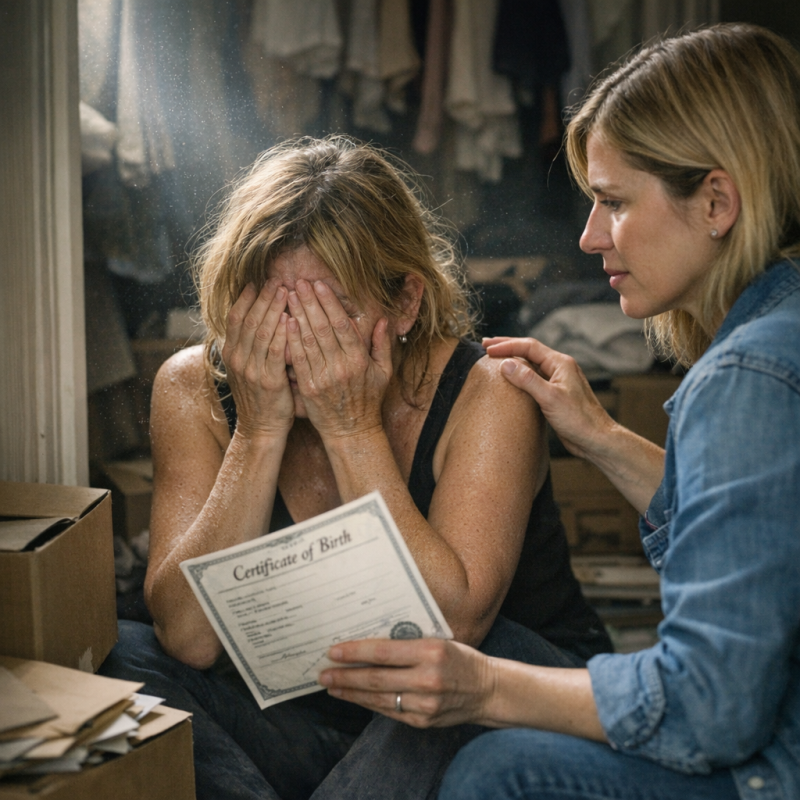 Image by FCT AI
The Hospital Records
While Mom tried to collect herself, her face buried in her hands, I turned back to the box. I needed to understand what had just happened, what information had broken her so completely. I pulled out more documents, spreading them carefully on the floor beside me. Hospital records. Admission forms. Medical reports from Mercy General Hospital dated late 1989. I found intake paperwork documenting a pregnancy, tracking prenatal visits, noting complications. Then delivery records—emergency procedures, blood loss, interventions. The medical terminology was dense, but I could piece together the basic narrative. A birth. My birth, according to the dates. But there was more. Consent forms. Transfusion records. Resuscitation attempts. And then, on the same admission, in the same set of documents, coded notations I didn't fully understand but could feel the weight of. Time of death listed. Next of kin notification. The pages were clinical, factual, but the story they told made my hands go cold. Someone had been admitted to deliver a baby. The baby had survived. The mother had not. The records showed a birth—my birth—but listed complications, emergency procedures, and a death in the same admission.
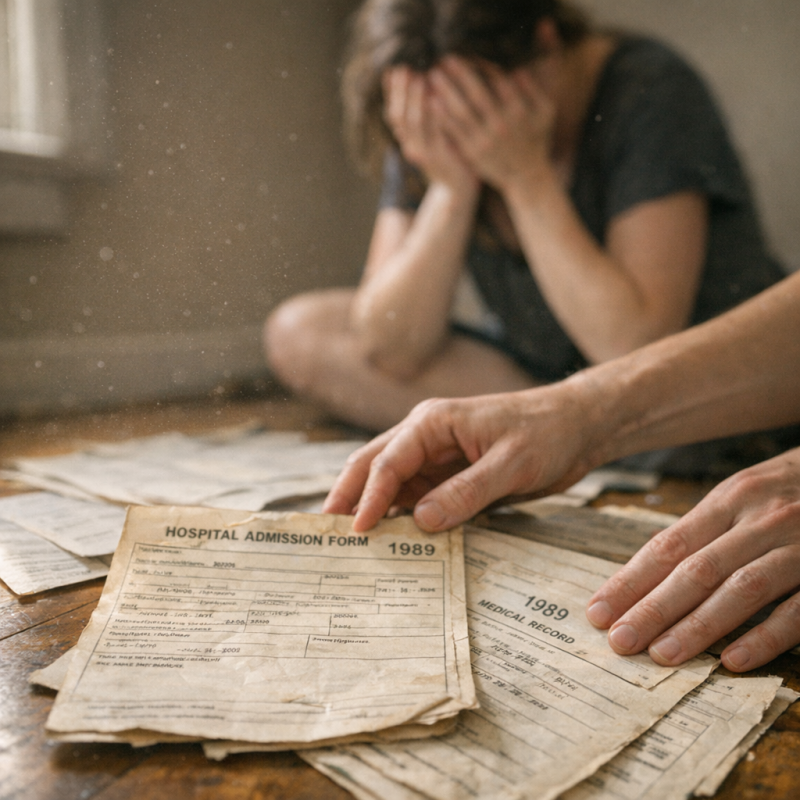 Image by FCT AI
The Death Certificate
I pulled out another document, this one heavier paper, embossed with an official seal. A death certificate. My hands were shaking as I read the name at the top—Anne Patricia Walsh. The date of death made my vision narrow. It was the same day I was born. The exact same date printed on my birth certificate upstairs in my file cabinet. The cause of death was listed as complications from childbirth, hemorrhaging, cardiac arrest. I looked at Mom, who was still hunched over on the couch, her shoulders shaking with silent sobs. 'Mom,' I said, my voice barely a whisper. She didn't respond. I read the certificate again, trying to make sense of what I was seeing. Someone named Anne Walsh had passed away giving birth on my birthday. At Mercy General Hospital. The same hospital where I'd been born. The pieces weren't quite fitting together, but the shape they were forming made my stomach turn. I thought about every cold look my grandmother had ever given me, every harsh word, every moment she'd treated me like I was something unwanted. She passed the day I was born—and suddenly I understood why my grandmother looked at me like I'd taken something from her.
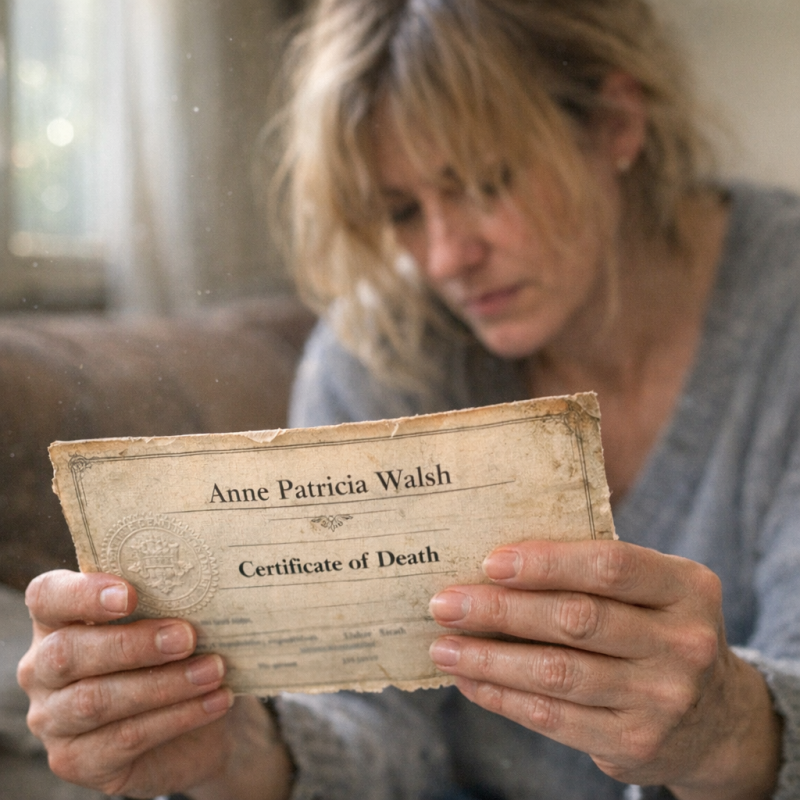 Image by FCT AI
The Letters to Linda
There were more papers in the box, and I pulled them out with trembling hands. A bundle of letters tied with a faded ribbon, all addressed to Linda Walsh in my grandmother's handwriting. The postmarks were from late 1989, before I was born. I untied the ribbon carefully and opened the first letter. Dorothy's handwriting was as sharp and precise as I remembered, her words clipped and commanding even on paper. 'Linda, we need to discuss the situation. This cannot become public knowledge. I've made arrangements.' Another letter, dated a week later: 'I've spoken with the doctors. Everything must be handled discreetly. The family's reputation depends on your cooperation.' A third: 'Anne doesn't understand what's at stake. You and I must make the difficult decisions here.' I flipped through more pages, my heart pounding. References to 'protecting the family,' to 'necessary steps,' to 'what must be done.' None of them explained exactly what was happening, but the tone was unmistakable—Dorothy had been orchestrating something, controlling a situation, managing a crisis. Dorothy's handwriting was sharp and certain: 'No one can ever know. This is the only way to protect the family.'
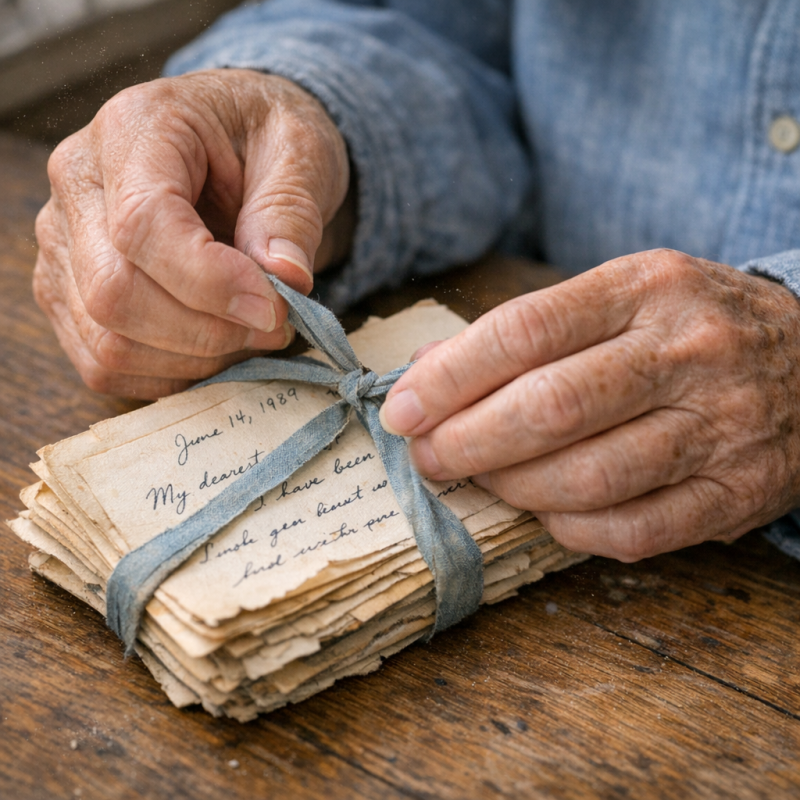 Image by FCT AI
Demanding the Truth
I stood up, my legs unsteady, still holding the letters. 'Mom,' I said, louder this time. She finally looked up at me, her face blotchy and streaked with tears. 'Who is Anne Walsh?' I asked, though part of me already knew the answer would destroy something fundamental. Mom shook her head, not in denial but in defeat, like she'd known this moment would come eventually and had been dreading it for decades. 'Claire, please,' she whispered. 'Please don't make me—' 'Don't make you what?' I interrupted, my voice rising. 'Don't make you explain why there's a death certificate in my grandmother's hidden box? Don't make you tell me why Dorothy has been writing letters about protecting the family and making arrangements? Don't make you explain why someone died on my birthday?' I was shaking now, the letters crumpled in my fist. Mom stood up slowly, looking older than I'd ever seen her. She opened her mouth, closed it, then took a deep breath. 'Tell me everything,' I said, and watched my mother decide whether to shatter what was left of my world.
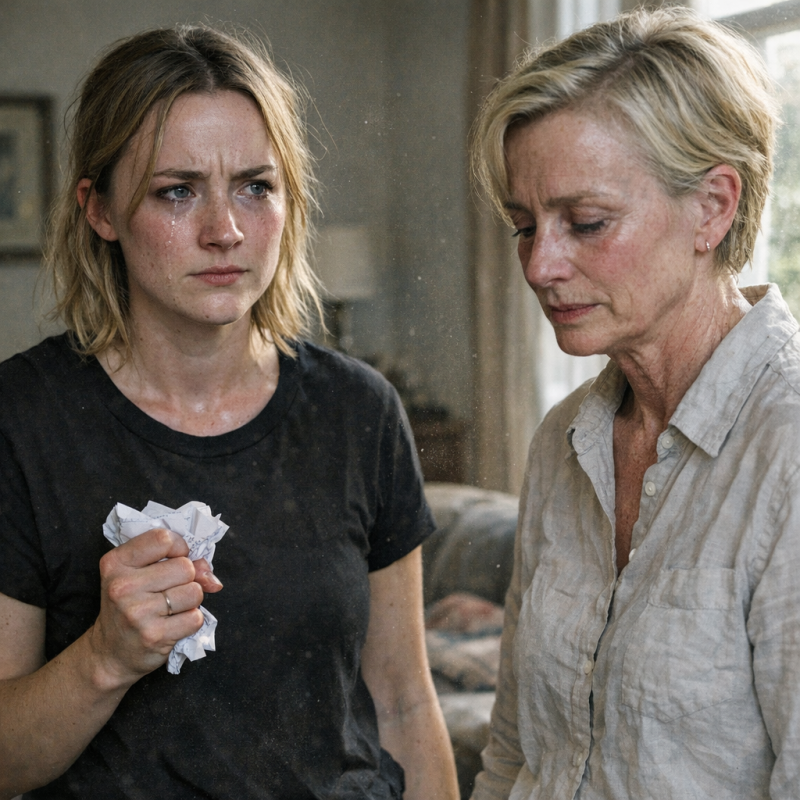 Image by FCT AI
The Sister
Mom walked to the window, her back to me, and when she finally spoke, her voice was so quiet I had to strain to hear it. 'I had a younger sister,' she said. 'Her name was Anne. She was beautiful and gentle and kind, and Dorothy...' She stopped, her shoulders tensing. 'Dorothy what?' I pressed, though my chest felt like it was caving in. Mom turned to face me, tears streaming down her face. 'Anne got pregnant when she was seventeen. She was terrified, didn't know what to do. Dorothy took control of everything—the doctors, the arrangements, all of it. Anne didn't want...' She trailed off, wiping her eyes. 'There were complications during the delivery. She hemorrhaged. They tried everything, but she was so young, and her body just couldn't...' Mom's voice broke completely. I couldn't breathe. The room tilted. 'You're saying Anne was my—' 'Your biological mother,' Mom finished. 'Yes. And she passed away bringing you into this world.'
 Image by FCT AI
Anne's Story
I sank back onto the floor, my entire body numb. Mom sat down across from me, her hands twisted in her lap. 'She was just seventeen,' Mom said again, like the age mattered, like it explained something. 'She was scared and alone, and Dorothy—' Mom's face hardened for the first time. 'Dorothy made all the decisions. Anne wanted to wait, wanted to think about her options, but Dorothy wouldn't hear it. She said the family couldn't handle the scandal, that Anne was too young to know what was best. She found the doctors, scheduled everything, told Anne exactly what would happen.' I thought about the letters, Dorothy's commanding tone, her insistence on control. 'Anne didn't have a choice?' I asked. Mom shook her head bitterly. 'Dorothy never gave her one. She railroaded that poor girl into decisions she wasn't ready for, and when it all went wrong during delivery, when Anne started bleeding and they couldn't stop it—' Mom's voice broke again. 'Dorothy stood in that hospital and blamed everyone. The doctors, me, fate, God. Everyone except herself.' Anne was seventeen, scared, and Dorothy made sure she had no choice—and when it went wrong, Dorothy blamed everyone but herself.
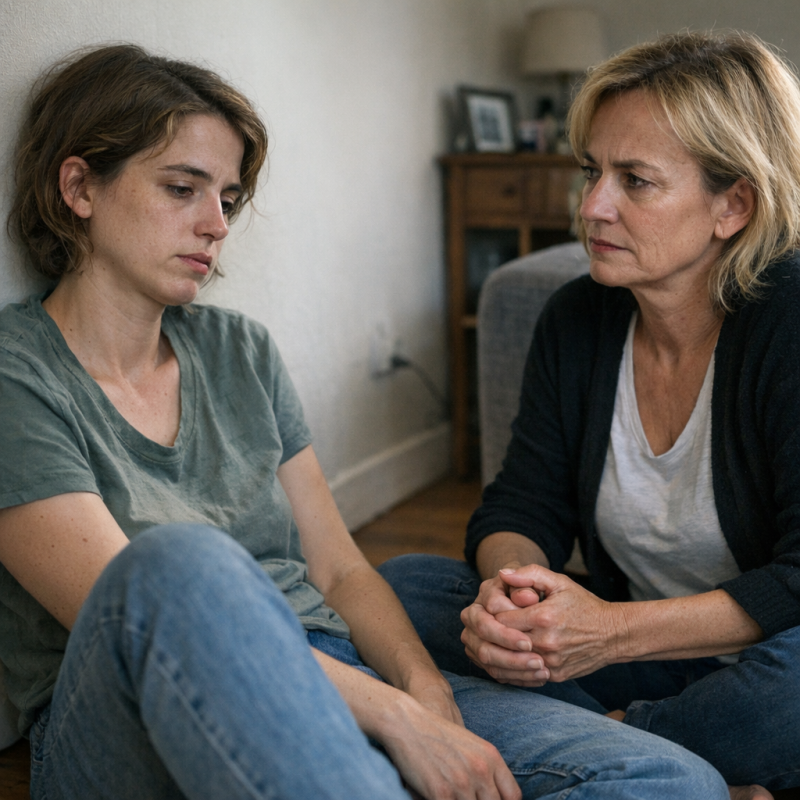 Image by FCT AI
The Forced Adoption
Mom stood up and walked back to the window, hugging herself. 'After Anne died, Dorothy moved fast. She had connections at the hospital, people who owed her favors. The story became that I'd had a baby—me, Linda, not Anne. All the paperwork was changed, records altered. Within forty-eight hours, you were legally mine.' I stared at her back. 'You adopted me?' 'Not legally,' Mom said quietly. 'There was no formal adoption. Dorothy just... made it happen. Made you mine on paper. Handed me a baby who was supposed to be my daughter, gave me a script about what to say if anyone asked, and told me the family's reputation depended on me playing along.' Her voice was hollow, exhausted. 'I was twenty-two years old, Claire. I'd just watched my sister pass away. I was in shock, grieving, and Dorothy stood over me in that hospital room with you in her arms and told me exactly what would happen next. No discussion. No choice.' I could barely process it. 'She forced you?' 'Yes,' Mom said simply. Dorothy didn't give me a choice—she handed me a baby and a script, and told me the family's reputation depended on it.
 Image by FCT AI
Dorothy's Blame
I thought about every cold moment, every cruel word, every time Dorothy had looked at me like I was something unbearable. 'She blamed me,' I said slowly. 'For Anne's death.' Mom turned, her face full of pain. 'Yes. In Dorothy's mind, you were the reason Anne was gone. Never mind that Dorothy was the one who'd controlled everything, who'd pushed Anne into a situation she wasn't ready for. Never mind that the doctors said the complications were unpredictable. Dorothy needed someone to blame, and she chose you.' I felt sick. 'But I was a baby. I didn't—' 'I know,' Mom said fiercely. 'God, Claire, I know. But Dorothy couldn't see it that way. She'd lost her younger daughter, her favorite, and in her twisted logic, you were the trade-off. Anne should have lived and you should never have existed. That's how she saw it.' Mom's voice dropped. 'And she spent the next thirty-two years making sure you knew it, even if you didn't understand why.' In Dorothy's mind, Anne should have lived and I should never have been born—and she spent my entire life making sure I knew it.
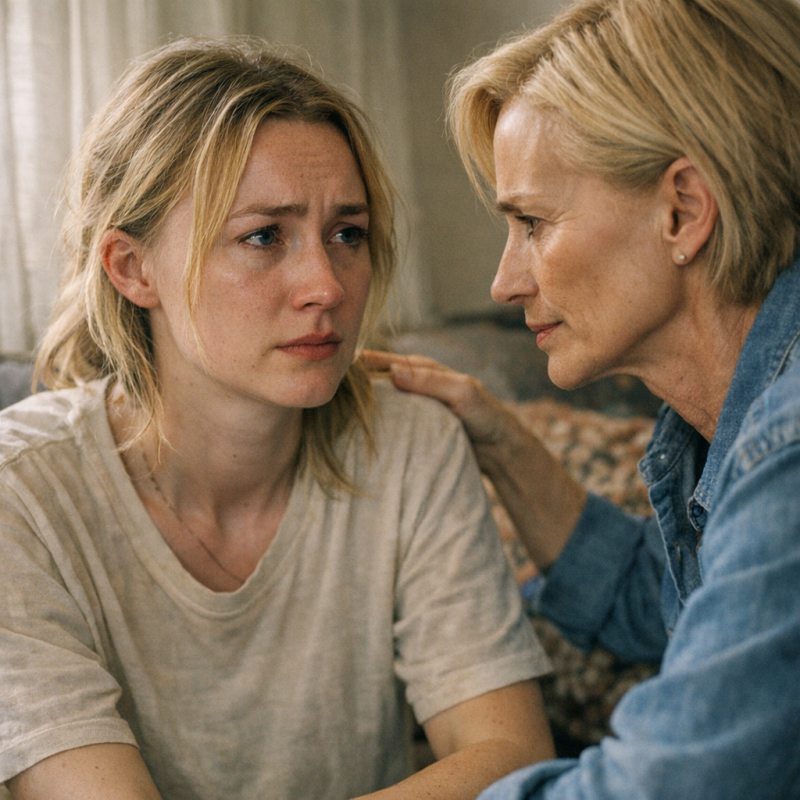 Image by FCT AI
The Full Truth
Mom came and sat beside me on the floor, both of us surrounded by the scattered papers of Dorothy's secrets. 'The full truth,' she said, 'is that Dorothy orchestrated everything that led to Anne's death. She pushed a terrified seventeen-year-old into decisions that cost her life. Then, instead of taking responsibility, Dorothy covered it all up, forced me to pretend you were mine, and spent three decades punishing an innocent child for existing.' Her voice was steady now, angry in a way I'd never heard before. 'You were blamed for Dorothy's choices, Claire. You were the living reminder of what she'd done—how her need for control and her obsession with the family reputation had killed her own daughter. And rather than face that guilt, she projected it all onto you.' I looked down at the death certificate in my lap, at Anne's name, at the date we shared. Everything made horrible sense now—the coldness, the will, the lifetime of rejection. I'd been carrying Dorothy's guilt my entire life, punished for being born. Dorothy destroyed Anne, forced me to carry the secret, and punished an innocent child for thirty-two years—all to hide what she'd done.
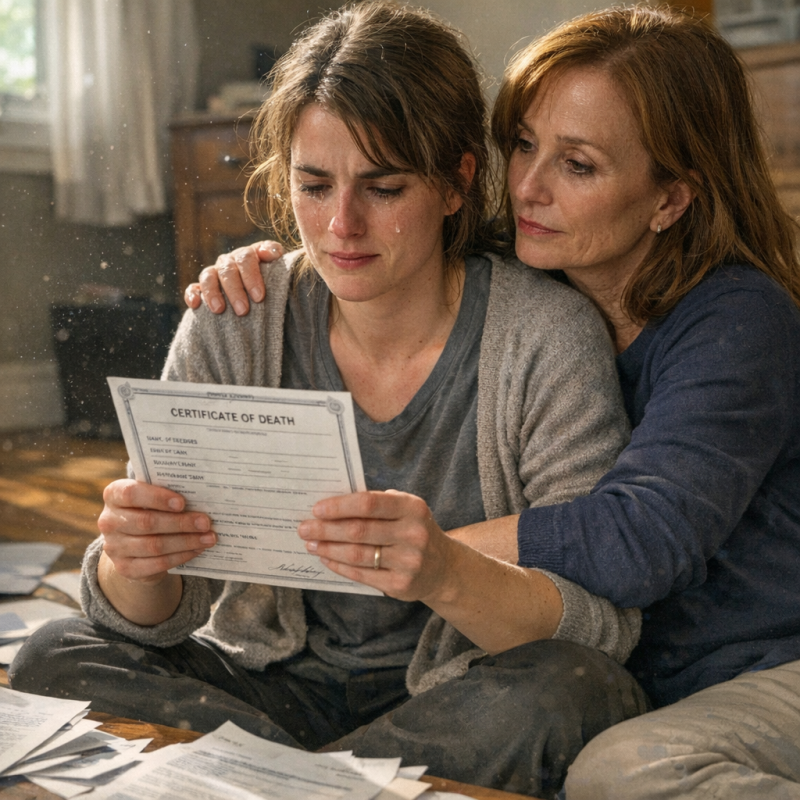 Image by FCT AI
The Reframing
I sat there surrounded by papers, and suddenly every single memory from my childhood clicked into place like pieces of a puzzle I'd been trying to solve for thirty-two years. The time Dorothy served everyone at Thanksgiving except me—I'd thought she forgot. The Christmas when she gave all the cousins gifts wrapped in gold paper while mine came in newspaper—I'd thought she ran out of wrapping. The birthday parties where she'd greet everyone warmly but look through me like glass. 'She wasn't forgetting,' Mom said quietly, watching my face. 'She was punishing you.' And God, I could see it now. The pattern wasn't random cruelty or absent-mindedness. It was systematic. Every cold shoulder, every overlooked moment, every time she turned away when I entered a room—it was all deliberate. She'd looked at me and seen her own guilt walking around in a child's body, and instead of dealing with that guilt, she'd tried to make me disappear through sheer force of will. Every ignored greeting, every forgotten plate, every cold look—they weren't random cruelty; they were Dorothy's guilt turned into a weapon.
 Image by FCT AI
The Will's True Purpose
I picked up the will again, the document that had started all of this, and suddenly understood it completely. 'The will wasn't about money,' I said. Mom nodded. 'It was her final punishment. One last chance to hurt you.' And she was right. Dorothy had left me nothing not because she'd forgotten me or because I'd done something wrong—she'd excluded me deliberately, carefully, with full intent. She'd written that will knowing exactly what it would do, how it would feel, how the whole family would witness my exclusion. Even knowing she'd be dead, she'd wanted to strike at me one more time. She'd orchestrated it so everyone would gather, read it together, see me singled out for rejection. It was cruelty from beyond the grave, control reaching out past death itself. The woman had spent three decades punishing a child for existing, and apparently that wasn't enough. Even dead, she wanted to hurt me one more time—and make sure everyone witnessed it.
 Image by FCT AI
Confronting the Family
I stood up, the papers still scattered around me, and made a decision. 'I'm telling them,' I said. 'The family needs to know.' Mom's face went pale. 'Claire, are you sure? They won't—' 'They've spent their whole lives thinking she was this perfect matriarch,' I interrupted. 'They need to know the truth.' Dad appeared in the doorway then, must have heard us talking. 'Think about what you're doing,' he said carefully. 'Once you tell them, you can't take it back.' I knew he was right. I knew this would blow up the family, that some of them would refuse to believe me, that Dorothy's carefully constructed image would shatter. But I also knew I couldn't keep carrying this alone. They'd all watched her treat me like dirt for thirty-two years. They'd witnessed every slight, every cold moment, every exclusion. Maybe some had even wondered why. They'd spent their whole lives worshipping a woman who destroyed her own daughter—and they deserved to know what she really was.
 Image by FCT AI
The Family Meeting
We gathered them all in Dorothy's house two days later—Emma, Jake, Michael, Sarah, Uncle Raymond, Aunt Patricia. They sat in her living room looking confused about why we'd called this meeting. I stood at the front with a folder full of documents, my hands shaking. 'I found something in Dorothy's closet,' I started. 'Something that explains everything.' I could see Emma rolling her eyes, probably thinking I was being dramatic again. So I pulled out the death certificate first, laid it on the coffee table. 'Anne didn't move to California,' I said. 'She died. Giving birth. To me.' The room went completely silent. Then I added the birth certificate, let them see the names, the dates, the truth written in official ink. 'Dorothy wasn't my grandmother,' I continued, my voice steadier now. 'She was my grandmother who forced her daughter into decisions that killed her, then spent thirty-two years punishing me for being born.' I laid the birth certificate on the table and watched my cousins' faces change as they started to understand.
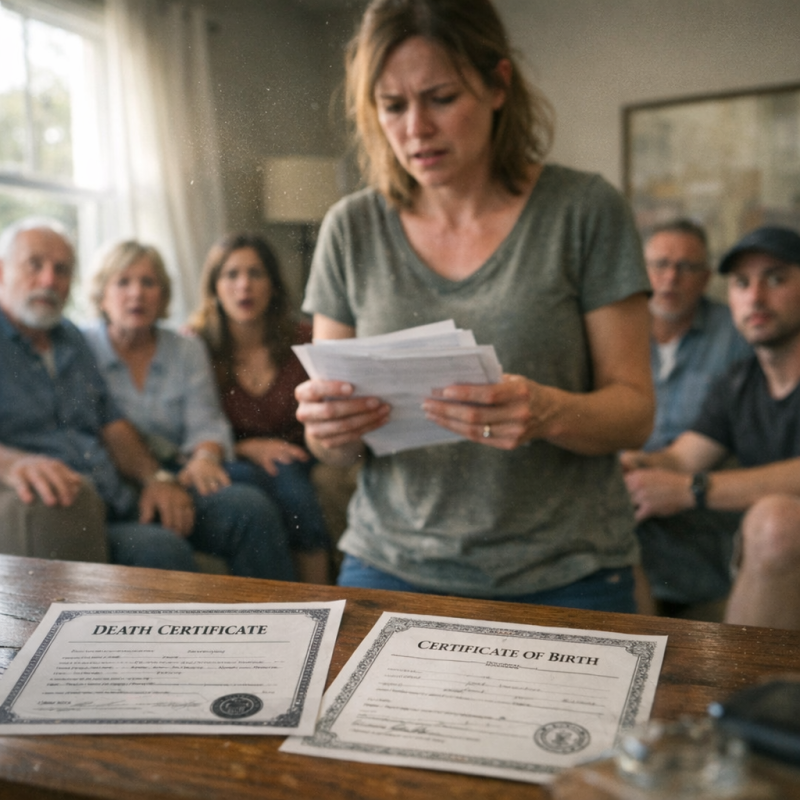 Image by FCT AI
The Family's Denial
Emma stood up first, her face flushed. 'No,' she said. 'Dorothy wouldn't—she couldn't have—' Uncle Raymond was shaking his head too, looking at the documents but not really seeing them. 'There has to be another explanation,' he insisted. 'Mom was strict, but she wasn't cruel.' 'She let a child die,' I said flatly. Aunt Patricia's voice cut through: 'We don't know that. We don't know what really happened.' They were circling the wagons, protecting Dorothy's memory, unable or unwilling to reconcile the grandmother they'd known with the woman who'd done these things. I watched them rationalize, make excuses, search for alternative explanations that would let them keep their perfect image of her intact. Emma picked up the birth certificate, stared at it, put it down. 'You're lying,' she said, but her voice wavered—because she knew Dorothy was capable of exactly this.
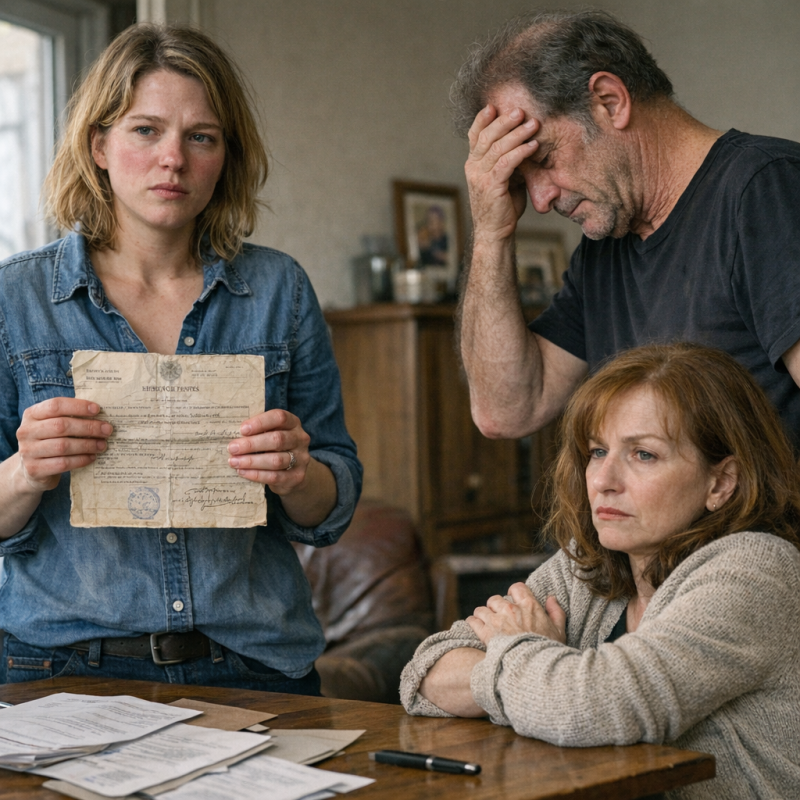 Image by FCT AI
Linda's Testimony
That's when Mom stood up, her whole body tense. 'I was there,' she said, and the room went quiet. 'I watched Dorothy bully Anne into keeping the pregnancy secret. I watched her refuse to get Anne proper medical care because she was worried about the family's reputation. And when Anne passed away, Dorothy threatened me.' Her voice broke slightly. 'She said if I didn't take Claire and raise her as my own, if I didn't keep the secret, she'd destroy my marriage and make sure I never saw my own children again.' Michael's face had gone white. Uncle Raymond looked like he might be sick. 'She made me lie for thirty-two years,' Mom continued. 'She made me watch her punish an innocent child—my niece, my sister's daughter—and I couldn't stop it because I was terrified of what she'd do.' She looked around the room at all of them. 'She threatened to destroy me if I didn't do exactly what she said,' Linda told them, and the room went silent.
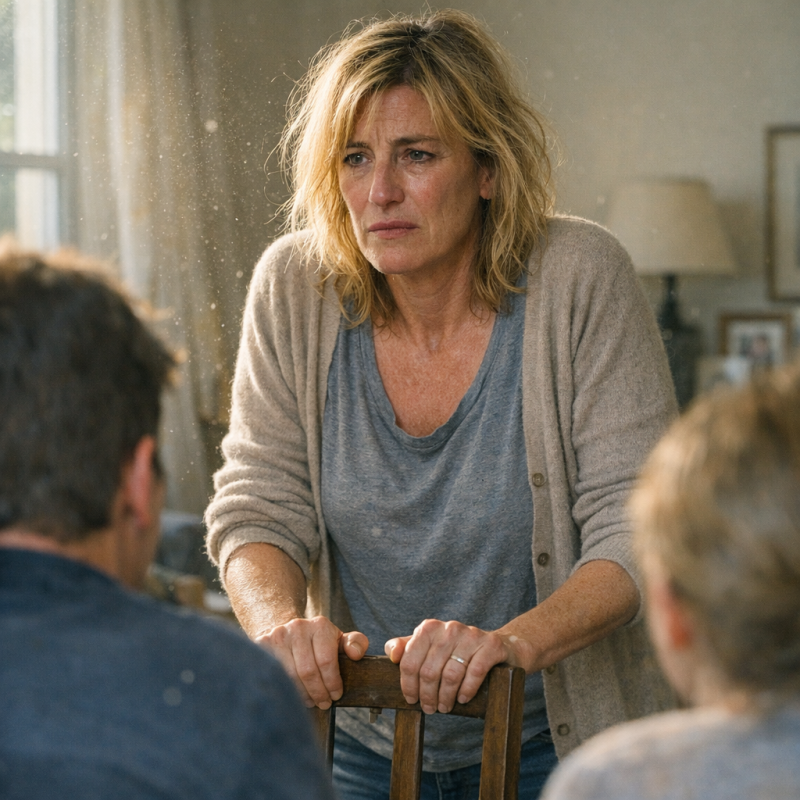 Image by FCT AI
The Family Fractures
That's when everything fell apart. Aunt Patricia grabbed her purse and headed for the door, Uncle Raymond right behind her. 'I'm not listening to this,' Patricia said. 'I won't let you destroy her memory.' But Jake stayed seated, staring at the documents. So did Michael and Sarah. Emma was crying now, still holding the birth certificate. 'Tell us everything,' Michael said quietly. So Mom and I did. We told them about the pregnancy, the secrecy, the hospital, Anne's death. We told them about Dorothy's threats, her control, her systematic punishment of a child. Some family members couldn't handle it—I watched two more cousins walk out halfway through. But others stayed, demanded every detail, needed to understand how the woman they'd loved could have done something so monstrous. The family was splitting right down the middle: those who could accept the truth and those who needed to preserve their memories. Some left immediately, unwilling to hear more; others stayed, demanding every detail—and I watched my family break apart over Dorothy's grave.
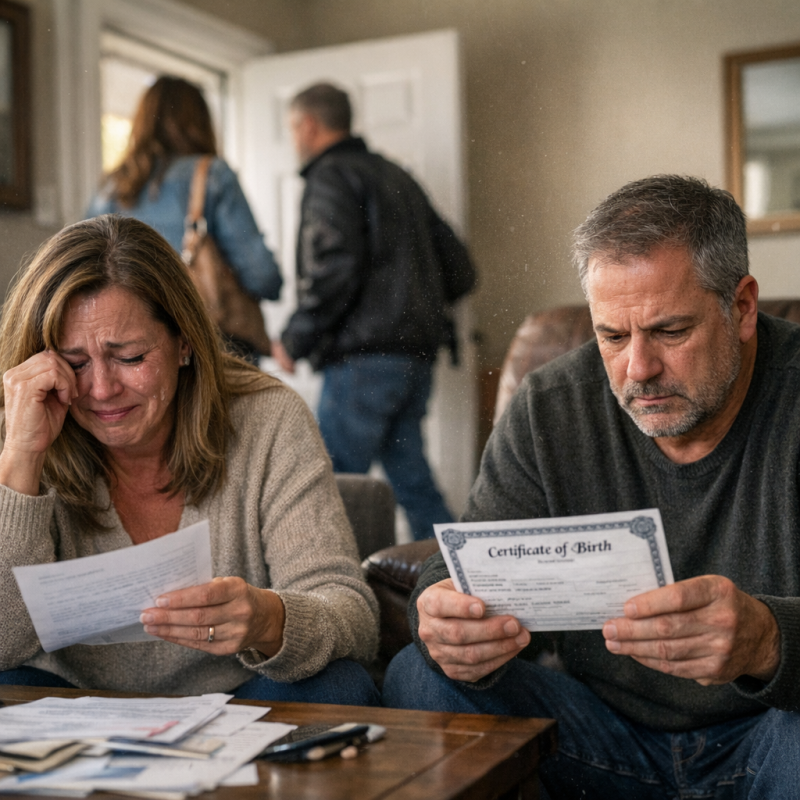 Image by FCT AI
Emma's Apology
Emma found me in the kitchen an hour later, after most people had left. Her eyes were red from crying. 'I need to say something,' she whispered. I braced myself for another defense of Dorothy, but instead she said: 'I'm sorry.' Her voice cracked. 'I saw how she treated you, Claire. At every holiday, every family gathering. I saw her ignore you, forget you, turn cold when you walked in.' She wiped her eyes. 'I told myself she was just old, or distracted, or that maybe you were imagining it. But I saw it. We all saw it.' Mom had come into the kitchen too, standing quietly by the doorway. Emma looked at both of us. 'I should have said something. I should have stood up for you. Instead I just... I let it happen because it was easier not to question her.' She was crying hard now. 'I saw how she treated you,' Emma whispered. 'I just didn't want to believe she'd do it on purpose.'
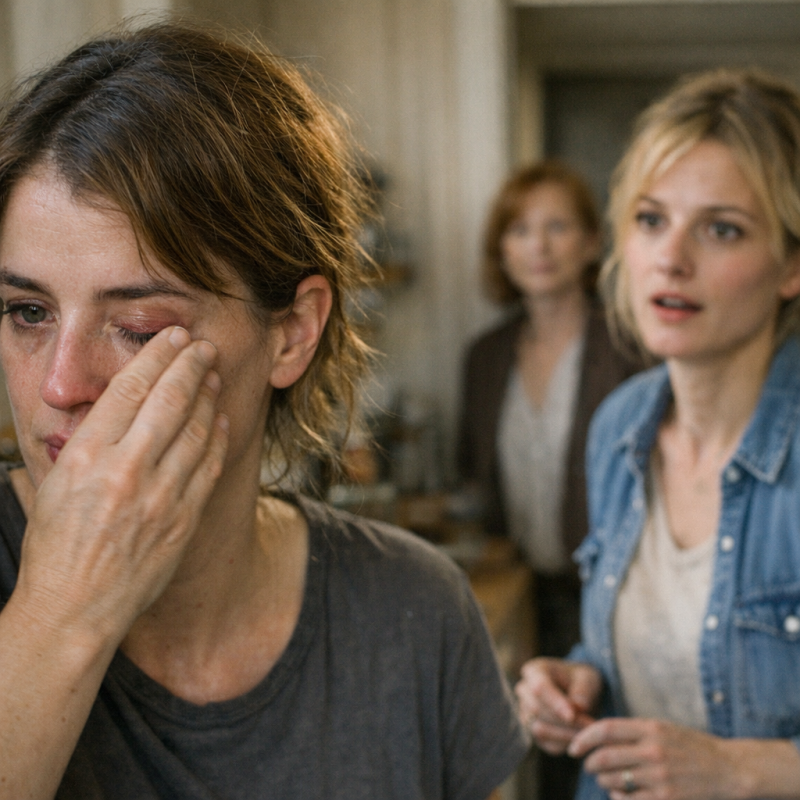 Image by FCT AI
The Final Piece
Mom sat down at the kitchen table, looking exhausted but lighter somehow, like she'd finally set down something heavy. I'd thought we were done. I'd thought I knew everything. But she reached across and took my hand. 'There's one more thing,' she said quietly. 'Something Anne told me before she left.' My chest tightened. I wasn't sure I could handle one more thing. 'She begged Dorothy to let her keep you,' Mom said, her voice breaking. 'She wanted you, Claire. She fought for you. Anne was willing to raise you alone, willing to face the shame and the gossip and everything that came with it.' Tears were streaming down Mom's face now. 'But Dorothy said no. She said it would ruin Anne's life, ruin the family reputation. She pressured her, wore her down, made the decision for her.' I felt like the floor had dropped out from under me. 'Anne wanted you,' Mom whispered. 'Dorothy decided you shouldn't exist. And when you did anyway—when I kept you—she made sure you paid for it.' Anne wanted me. It was Dorothy who decided I shouldn't exist, and when I did anyway, she made sure I paid for it.
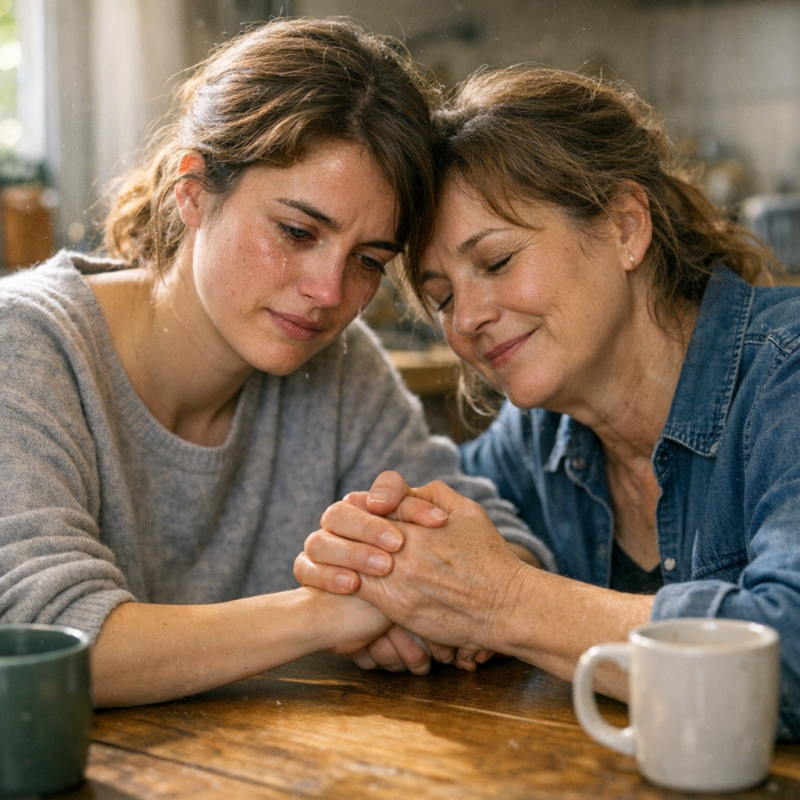 Image by FCT AI
Processing the Truth
The days after that conversation are kind of a blur, honestly. I'd wake up in the morning and for just a second, I'd forget. Then it would all come rushing back—the letters, the photos, the truth about why my own grandmother had hated me my entire life. Mom checked on me constantly. Dad came by with takeout and sat with me in silence, which somehow helped more than talking. I kept thinking about Anne, barely older than I am now, begging to keep her baby. I kept thinking about Dorothy, cold and calculated, deciding my mother wasn't allowed to want me. And then punishing me for existing anyway. It was liberating in a way—knowing it had never been about me, that I could have been perfect and it wouldn't have mattered. But God, it was devastating too. Because what kind of person does that? What kind of grandmother looks at an innocent child and decides to make her pay for someone else's choices? I finally had my answer, and it was worse than anything I'd imagined—but at least I knew it wasn't about me.
 Image by FCT AI
Reclaiming Her Story
Sarah came over about a week later with takeout and wine. Michael showed up twenty minutes after her with ice cream, like they'd coordinated without telling me. We sat on my living room floor like we used to as kids. 'So what now?' Michael asked gently. I'd been asking myself the same question. For thirty-two years, I'd carried Dorothy's rejection like it meant something about who I was. Like I was fundamentally unlovable, fundamentally wrong. But it was never about me. It was about Dorothy's guilt, her shame, her inability to face what she'd done. 'I think,' I said slowly, 'I need to figure out who I am when I'm not trying to earn love from someone who decided before I was born that I didn't deserve it.' Sarah squeezed my hand. Michael nodded. It wasn't going to be easy. You don't just shake off a lifetime of feeling like you're not enough. But for the first time, I felt like I had permission to try. I couldn't change what happened, but I could decide what it meant—and I refused to let Dorothy's guilt define me anymore.
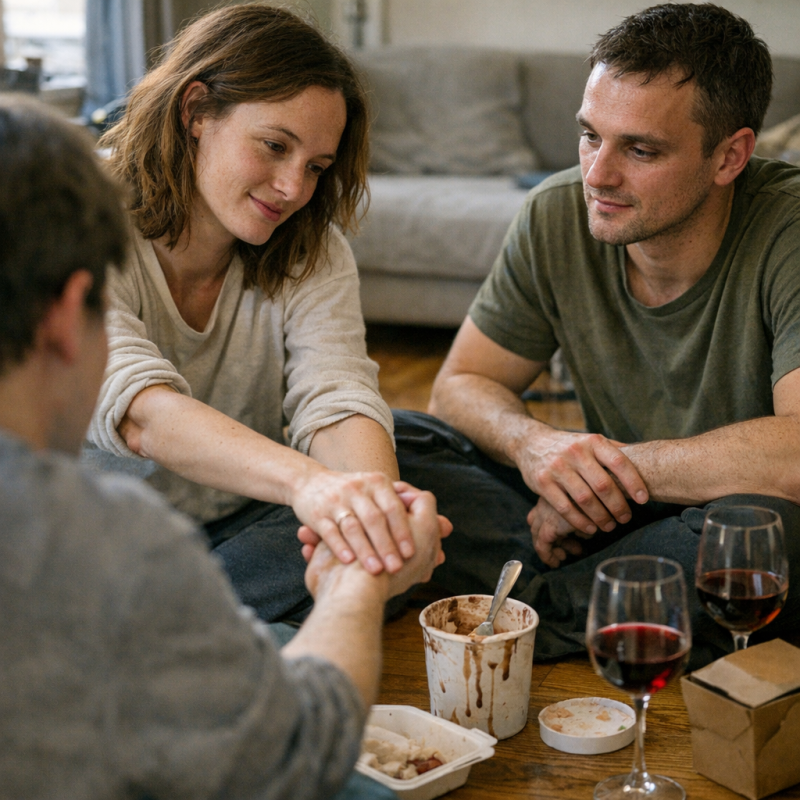 Image by FCT AI
The Weight of Knowing
Mom asked me a few weeks later if I regretted opening the box, learning the truth. I'd thought about that question every day since the funeral. There are moments—usually late at night—when I wish I could go back to not knowing. When ignorance feels like it would have been easier, kinder. I could have just accepted that my grandmother didn't like me and moved on without all this weight. But then I think about the child I was, the teenager, the young woman in her twenties. I think about how I twisted myself into knots trying to figure out what was wrong with me. How I carried that sense of not being good enough into every relationship, every job, every friendship. How I genuinely believed I was unlovable because the evidence was right there every Christmas, every birthday, every family gathering. 'No,' I told Mom. 'I don't regret it.' The truth is ugly and it hurts and I'll carry it for the rest of my life. But at least now I know it was never about me. I still sometimes wish I could go back to not knowing—but then I remember the child who thought she wasn't good enough, and I know that truth, however ugly, was worth the price.
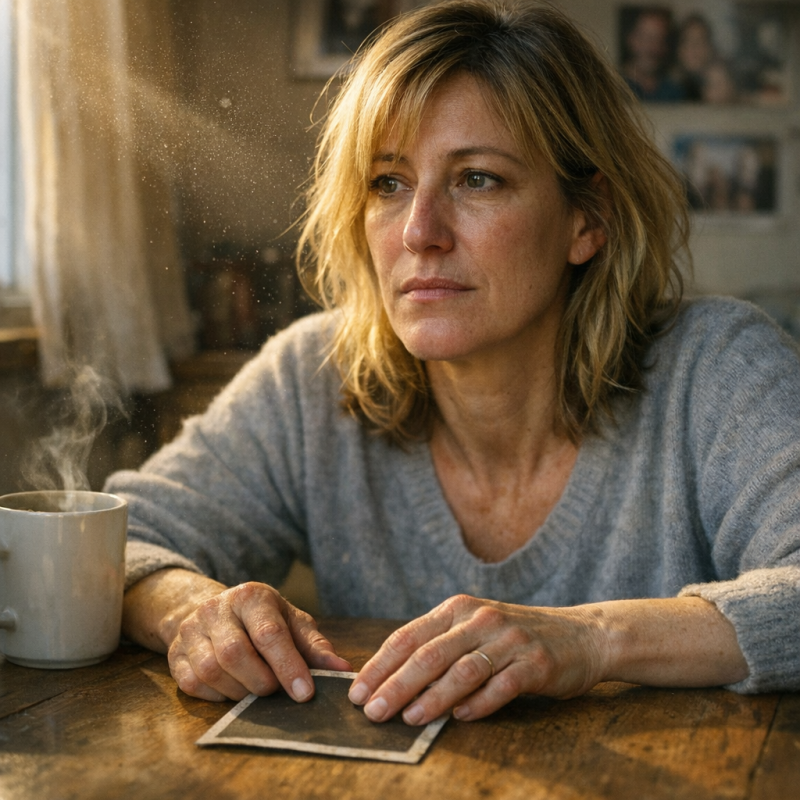 Image by FCT AI