The Ice Cream Incident
So this happened last Sunday at my parents' house, and I'm still kind of processing it. My little sister Lily was sitting at the kitchen table eating ice cream—chocolate with rainbow sprinkles, because she's five and that's apparently a requirement—when my Aunt Marissa walked in. Marissa's about six months pregnant, visibly showing, and honestly glowing in that way people always talk about. Lily looked up, smiled with chocolate all over her face, and held out her arms. 'Auntie, pick me up!' she said. Normal kid stuff, right? Marissa laughed and patted her belly. 'Sorry, sweetheart, not right now. The baby makes it hard.' I was scrolling through my phone, barely paying attention, while Mom wiped down the counter. Then Lily tilted her head and said, super matter-of-fact, 'You didn't last time.' The entire kitchen went still.
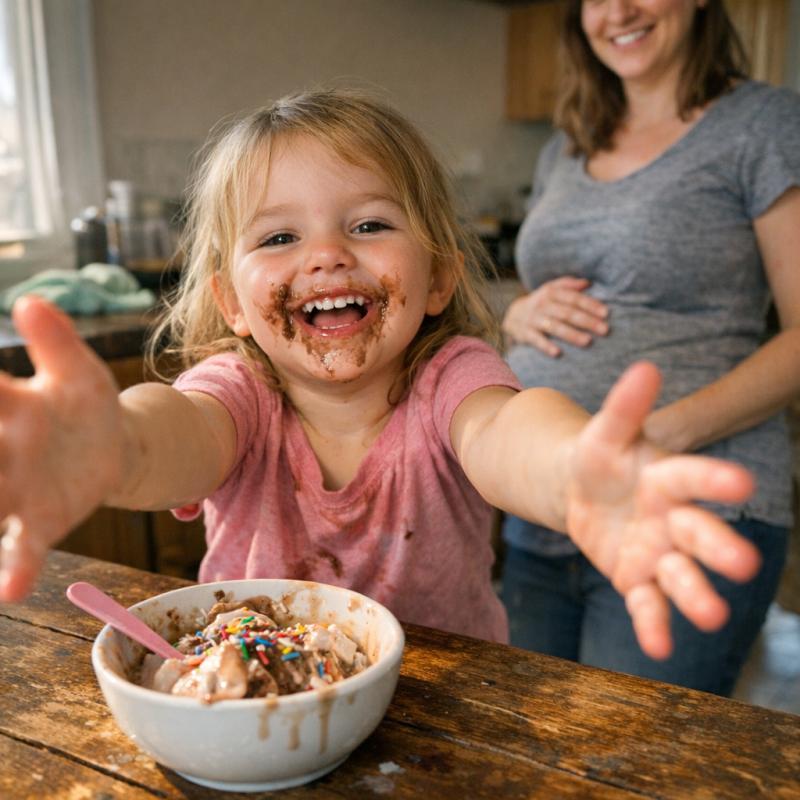 Image by FCT AI
What She Heard
Mom's hand froze mid-wipe. I looked up from my phone. Marissa's smile had completely vanished, replaced by this expression I couldn't quite read—somewhere between shock and pain. 'What did you say, honey?' Mom asked, her voice suddenly tight. Lily licked her spoon, oblivious. 'Last time. Auntie picked me up last time she had a baby in her tummy.' Mom and Marissa exchanged this look, the kind adults give each other when they're having an entire conversation without words. 'Lily, where did you hear that?' I asked, because someone needed to fill the horrible silence. She shrugged. 'I just knew.' Mom knelt down beside her. 'Did you hear someone talking about Aunt Marissa?' Lily nodded slowly. 'I think so. You were on the phone.' Marissa stood up abruptly, her chair scraping against the tile, and walked out of the kitchen without a word. Lily insisted she 'just knew,' and I realized she might have heard something none of us wanted repeated.
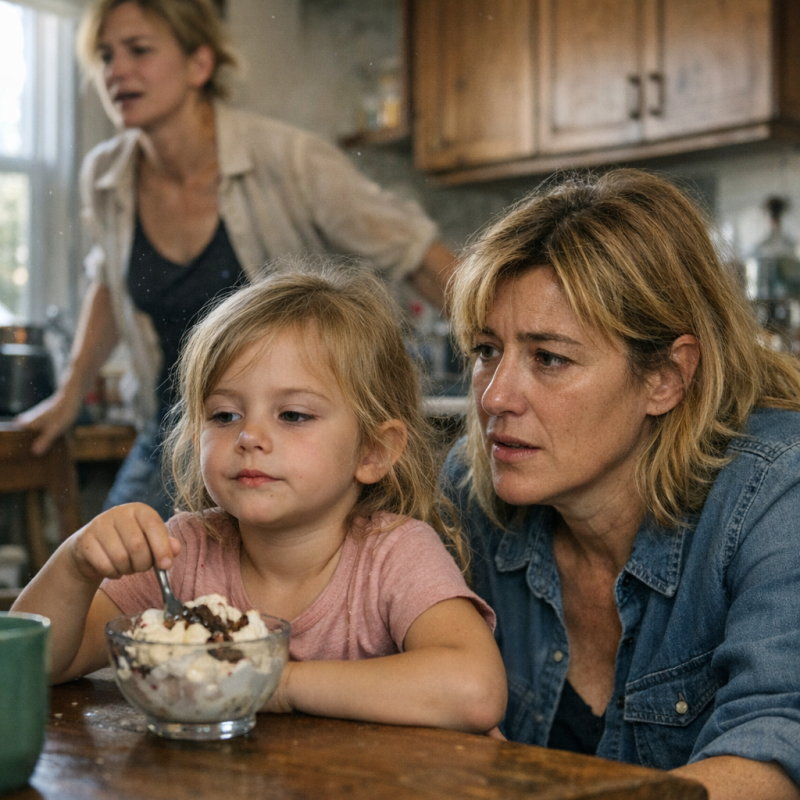 Image by FCT AI
The Back Porch
I found Marissa on the back porch, sitting on the steps with her arms wrapped around herself despite the warm afternoon. Her shoulders were shaking. I sat down beside her, not quite touching, not really knowing what to say. 'Hey,' I started lamely. She wiped her eyes quickly, trying to compose herself, but I'd already seen. 'I'm fine,' she said, which was obviously not true. 'Jordan, I just need a minute.' I nodded, feeling useless. 'What Lily said—' She cut me off. 'She shouldn't know about that.' The way she said 'that' made it clear there was something specific, something significant I was missing. 'Know about what?' I asked. Marissa just shook her head, tears still streaming down her face. Before she could answer, Dad came out, took one look at the situation, and gently told me to go back inside. He sat down where I'd been and put his arm around her. Marissa whispered, 'She shouldn't know about that,' and I realized I didn't know about 'that' either.
 Image by FCT AI
What Mom Finally Said
That night, after Lily was in bed, Mom sat me and Dad down in the living room. Her face was serious in a way that made my stomach clench. 'You need to understand what happened today,' she began. Then she explained: last year, around fourteen months ago, Marissa had been pregnant. She'd lost the baby at twelve weeks. It had been devastating for her and Uncle Ben, and apparently Marissa blamed herself because she'd ignored some warning signs—spotting, cramping—thinking they were normal. 'She carried a lot of guilt about it,' Mom said quietly. 'Still does.' That explained the reaction, the tears, everything. I felt terrible for not knowing, but also relieved there was a logical explanation for Lily's weird comment. 'So Lily must have overheard us talking about it back then,' I said. Mom nodded, but hesitated. 'She was only four at the time, though. I didn't think she'd remember.' Mom said, 'Lily couldn't possibly remember it—she was only four,' but something in her voice told me she wasn't entirely sure.
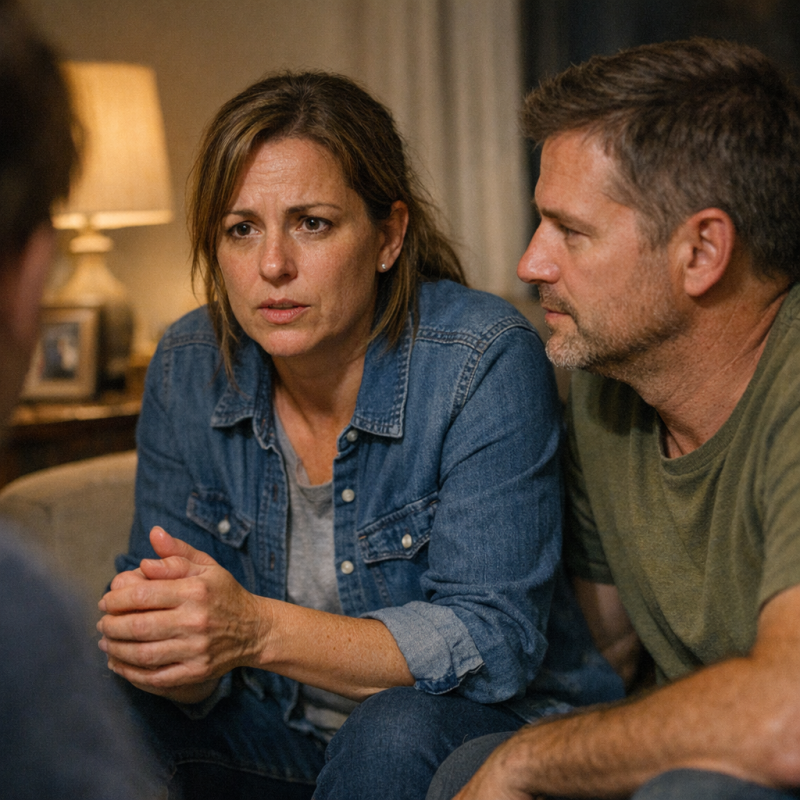 Image by FCT AI
Uncle Ben's Version
Uncle Ben showed up the next evening, ostensibly to drop off some tools Dad had borrowed. But after about ten minutes of small talk, he brought it up. 'So I heard about what Lily said.' He settled into the couch, rubbing his temples. 'Look, what your mom told you is true, but there's more context.' Dad leaned forward. 'Like what?' Ben explained that when Marissa miscarried, it hadn't been a simple process. She'd needed a D&C procedure and developed an infection afterward. 'She was hospitalized for three days,' he said, his voice tight. 'High fever, the whole deal. It was scary.' I sat there processing this new information. Three days in the hospital. That wasn't something that happened quietly. 'Was Lily around during that?' I asked carefully. Ben thought about it. 'Your mom was watching her a lot that week. Marissa was obviously not able to, and I was at the hospital constantly.' Suddenly I wondered how much of that chaos Lily had actually witnessed, how many stressed phone calls and whispered conversations had happened while she played with her toys nearby. Ben said Marissa was hospitalized for three days, and suddenly I wondered how much of that Lily actually witnessed.
 Image by FCT AI
Lily's Bedtime Routine
That night was my turn for Lily's bedtime routine. I read her the usual stories—something about a dragon and a princess—then tucked her blanket around her. As I was about to turn off the light, I hesitated. 'Hey, Lil? Can I ask you something?' She nodded, clutching her stuffed rabbit. 'Do you remember when Aunt Marissa was sick? Like, a long time ago?' Her face scrunched up in concentration. 'Kind of. I was littler.' I tried to keep my voice casual, gentle. 'What do you remember about it?' She was quiet for a moment, picking at her rabbit's ear. 'I remember Mommy was really sad. And you were home from college. Everyone was talking quiet.' That tracked—I had come home for a weekend during that time, though I hadn't known the full reason why. 'Do you remember Aunt Marissa?' I asked. Lily nodded slowly. 'I remember her crying a lot,' she said, and I realized she'd been paying attention all along.
The Warning Signs
I couldn't sleep that night, so I did what any rational twenty-two-year-old does at two in the morning: I started googling. 'Early pregnancy loss symptoms.' 'Miscarriage warning signs.' 'Post-miscarriage complications.' The articles all said the same things—spotting, cramping, fever if there's an infection, emotional distress. Standard medical information, really. But then I thought about what Lily had actually said to Marissa: 'You didn't last time.' Last time what? Last time she was pregnant? Last time she picked Lily up? I pulled up my notes app and typed out everything I could remember about that weekend fourteen months ago. The hushed conversations. Mom's red eyes. The way everyone had been so careful around certain topics. And then I thought about Lily's other comments. How specific they'd felt. How she'd mentioned the phone call. How she'd seemed so certain. The symptoms matched exactly what Lily had warned about—that Marissa hadn't picked her up, that something had been different—and I couldn't shake the feeling she'd said them too precisely.
 Image by FCT AI
Grandma Jean Arrives
Grandma Jean arrived Wednesday afternoon with her usual fanfare—a bag of cookies from the bakery and opinions about everything. But after the pleasantries, she got right to it. 'So your mother told me about the incident with Lily.' She settled into her chair, looking at me directly. 'What exactly did she say?' I recounted the whole kitchen scene, watching Grandma's face carefully. She didn't seem shocked, exactly. More knowing. 'And everyone's acting like it's strange she remembered?' Grandma asked. I nodded. 'Mom said she was too young to remember clearly.' Grandma made a dismissive sound. 'I raised four children. You know what I learned? They absorb everything. Every word, every tone, every crying session you think they're too distracted to notice.' Lily bounced into the room then, immediately climbing into Grandma's lap like nothing unusual had happened. Grandma hugged her tight, then looked at me over Lily's head with this intense, meaningful expression. She leaned in close and whispered, 'Children hear everything we think they don't.'
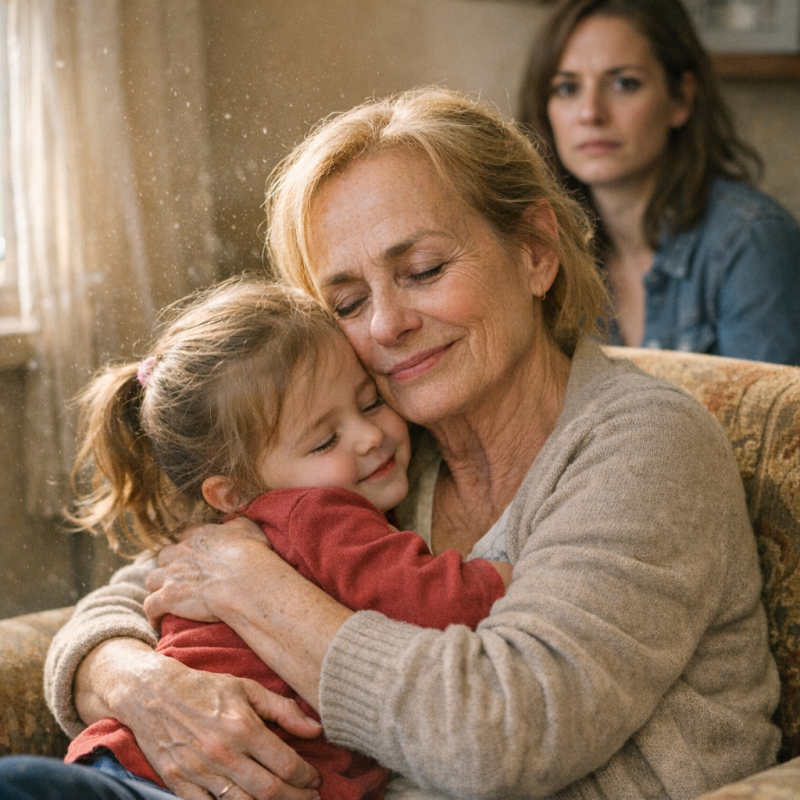 Image by FCT AI
The Second Comment
Thursday morning, I was making scrambled eggs while Lily drew pictures at the kitchen table. Mom and Dad were having coffee, talking about work stuff. Normal morning vibes. Then Lily looked up from her drawing and said, completely unprompted, 'Aunt Marissa should rest more because last time she didn't rest enough.' The spatula froze in my hand. Dad lowered his newspaper. Mom's entire body went still. 'What do you mean, sweetheart?' Mom asked, her voice unnaturally calm. Lily kept coloring. 'She needs to rest so the baby stays.' I watched my parents exchange this long, loaded look across the table. Dad opened his mouth like he was going to say something reasonable, something that would make this make sense. But Mom dropped her fork, and the clatter against her plate was so loud in the sudden silence. I saw the exact moment she decided this was more than coincidence.

History's most fascinating stories and darkest secrets, delivered to your inbox daily.
Dad's Theory
After Lily went to play in her room, Dad launched into his theory. 'She probably heard something on TV,' he said, stirring his coffee methodically. 'Those daytime shows, they talk about pregnancy complications all the time. Health segments, morning news.' He looked so relieved to have an explanation. Mom was doing dishes with more force than necessary. I leaned against the counter, wanting to believe him. It made perfect sense, honestly. Kids pick up everything from screens. 'What shows?' Mom asked without turning around. 'Lily doesn't watch anything unsupervised. We have parental controls. She watches Bluey and Daniel Tiger.' Dad frowned. 'Maybe at Grandma's house?' 'Mom doesn't watch medical shows either,' I added quietly. Dad's theory was crumbling in real time. He ran his hand through his hair, frustrated. 'Then I don't know, but there has to be a logical explanation.' It made sense until Mom pointed out we don't watch medical shows, and Lily doesn't have unsupervised screen time.
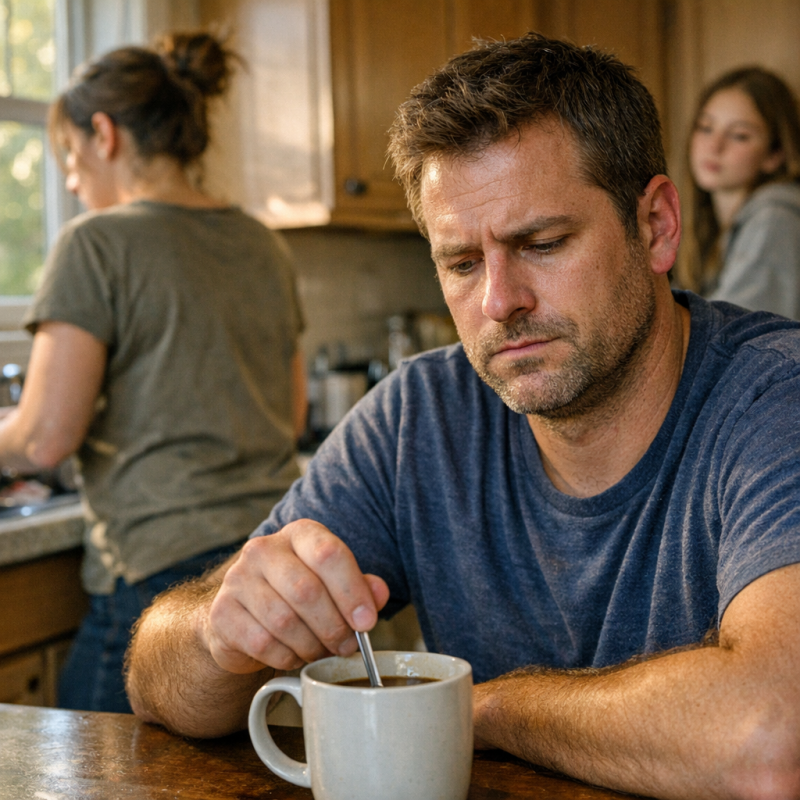 Image by FCT AI
Marissa Calls
Marissa called me Friday afternoon while I was folding laundry. Her voice sounded tight, controlled. 'Hey, so I've been thinking,' she started. 'I might skip Sunday dinner. Actually, maybe all family stuff for a while.' My chest tightened. 'Marissa, you don't have to do that.' 'I kind of do,' she said. 'Every time Lily looks at me, I see that expression on her face. That knowing look. It's messing with my head, Jordan.' I sat down on my bed, phone pressed to my ear. 'The doctor said everything's fine, right?' 'Yeah, but—' Her voice wavered. 'I can't keep wondering what she sees that I don't. What if she says something else? What if next time it's worse?' I didn't know what to say. She was genuinely scared, and I couldn't blame her. Uncle Ben was probably relieved she wanted distance, honestly. She said, 'I can't have Lily looking at me like that again,' and her voice cracked in a way that broke my heart.
 Image by FCT AI
Dr. Chen's Appointment
I drove Marissa to her OB appointment the following Tuesday. She'd asked me to come, said she needed someone there who wasn't Ben. Dr. Chen was this calm, competent woman who reviewed all the ultrasound images while we held our breath. 'Everything looks perfect,' she said, smiling. 'Baby's measuring right on track, heartbeat is strong, cervix looks good.' Marissa's shoulders dropped with relief. 'You're sure?' 'I'm sure,' Dr. Chen confirmed. 'Your hormone levels are excellent. No indicators of concern whatsoever.' We walked back to the car through the parking garage, and Marissa seemed lighter than she'd been in days. I thought maybe this would be the end of it, you know? Official medical confirmation that everything was fine. Then we got to the car, and Marissa stopped with her hand on the door handle. Her face had that worried expression again. As we left, Marissa whispered, 'What if Lily's right and they're missing something?'
 Image by FCT AI
The Preschool Teacher
Wednesday after work, I did something I probably shouldn't have. I went to Lily's preschool and asked to speak with Miss Patterson, her teacher. 'Has Lily been talking about pregnancy or babies lately?' I asked, trying to sound casual. Miss Patterson thought for a moment. 'Not that I recall in class discussions. She's usually pretty quiet during circle time.' Relief started flooding through me. Then she added, 'Oh, but she did draw something a few weeks ago during free art time. It stuck with me because it was unusual for her.' She pulled out Lily's folder from a filing cabinet. My hands felt cold. 'What kind of drawing?' 'Here,' Miss Patterson said, laying it on her desk. It was done in crayon, a woman with brown hair and a small figure beside her. Both had tears. The teacher said Lily drew a picture last month of 'Aunt Marissa's sad baby,' and I felt my stomach drop.
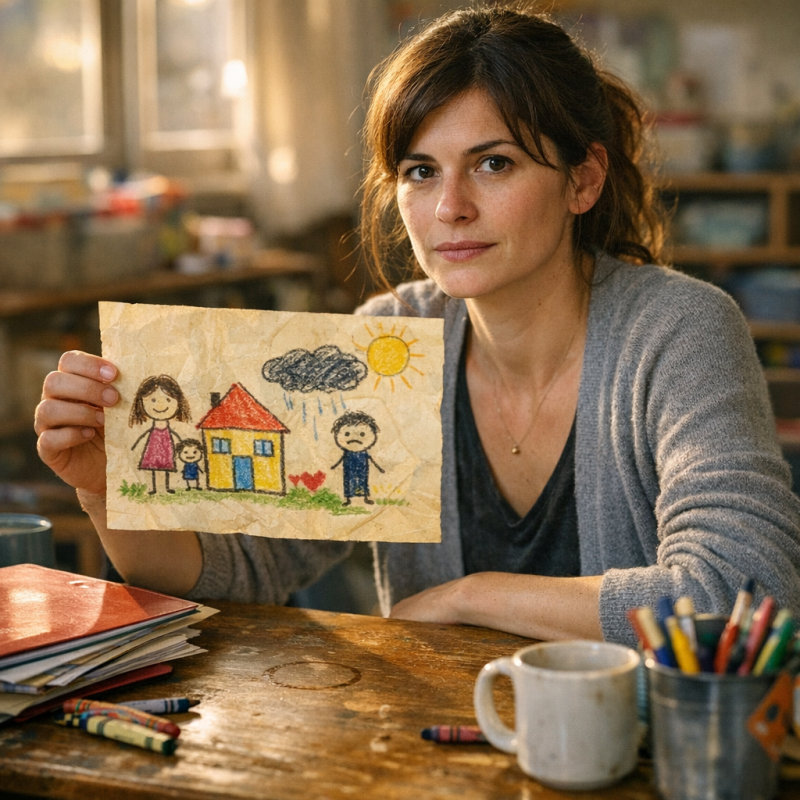 Image by FCT AI
The Drawing
Miss Patterson let me take a photo of the drawing. I sat in my car in the preschool parking lot, zooming in on the details. The woman was definitely pregnant—Lily had drawn a careful circle on her stomach. The tiny figure beside her was ambiguous. A baby? A person? The tears were unmistakable, though. Blue crayon streaks down both faces. I was about to put my phone away when I noticed something in the bottom corner. Lily had written her name the way she always does, with the 'L' backwards. And next to it, Miss Patterson had written the date when Lily made it. My brain took a second to process what I was seeing. I counted backwards from today. Then I pulled up my messages with Marissa, found the text where she'd first told me she was pregnant. The drawing was dated three weeks earlier. In the corner, Lily had written the date—three weeks before Marissa even announced this pregnancy.
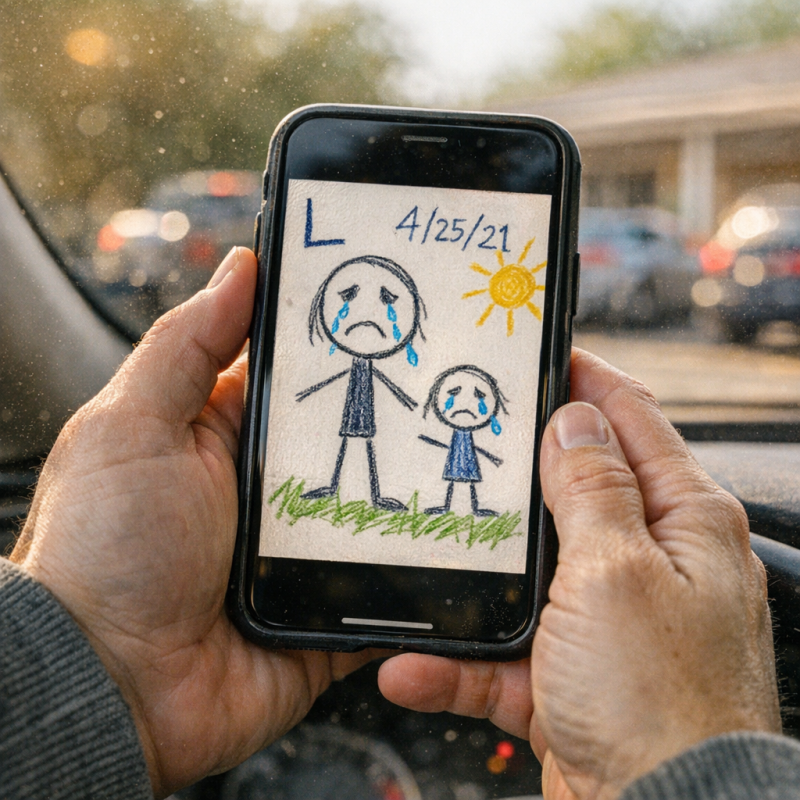 Image by FCT AI
Rachel's Perspective
Our neighbor Rachel caught me checking the mail Thursday evening. 'How's your aunt doing?' she asked, watering her petunias. I must have looked confused because she added, 'Marissa, right? The pregnant one?' 'She's okay,' I said carefully. Rachel nodded. 'That's good. I remember last year when she had that rough time. Your little sister was really affected by it.' Everything in me went still. 'What do you mean?' 'Oh, I heard Lily playing in your backyard, talking to herself about the baby that didn't stay. She was maybe four? Kids process things through play, you know.' Rachel said it so casually, like it was no big deal. My mind was racing. 'When was this exactly?' Rachel thought for a moment. 'Spring last year? April, maybe May?' Rachel said it was around the same time Marissa was in the hospital last year, and I realized Lily might have absorbed more than anyone knew.
 Image by FCT AI
The Family Meeting
Mom called everyone over Saturday night. Dad, Grandma Jean, Uncle Ben. Even I didn't know this was happening until an hour before. We sat in the living room like some kind of intervention. 'We need to discuss Lily's comments about Marissa,' Mom started. 'Ben and I have been talking, and we think it might be best if Lily doesn't see Marissa for a while.' Grandma Jean's eyebrows shot up. 'You want to isolate a five-year-old from her aunt?' 'We want to protect Marissa from unnecessary stress,' Uncle Ben said firmly. Dad shifted uncomfortably. 'Maybe we're overreacting. Kids say weird things.' 'Weird things that came true?' Mom countered. I stayed quiet, watching everyone's faces. The room felt like it was splitting down the middle. Team Protect Marissa versus Team This Is Ridiculous. Grandma Jean said, 'Or maybe we should be listening to what she's trying to tell us,' and the room divided instantly.
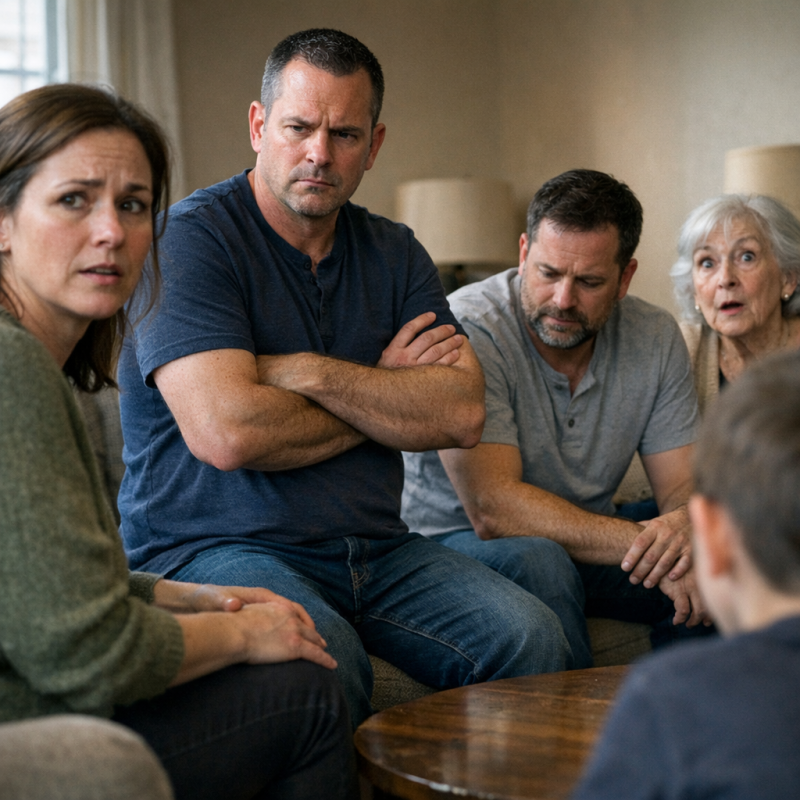 Image by FCT AI
Lily's Third Warning
We all decided to have dinner together three nights later—a peace offering, I guess, to prove we weren't shutting Marissa out completely. Mom made lasagna, Dad opened a fancy bottle of sparkling cider for Marissa, and Lily sat in her booster seat happily arranging her garlic bread into a smiley face. Everything felt almost normal until Marissa mentioned she'd been having some cramping but her doctor said it was probably nothing. Lily looked up from her plate, fork in hand, and said, 'You should tell the doctor about the hurting, not pretend it's normal.' The table went completely silent. Marissa's face drained of color. 'What did you say, sweetie?' she asked, her voice barely above a whisper. Lily just shrugged and took a bite of bread like she'd commented on the weather. Marissa excused herself quickly, mumbling something about needing the bathroom. I watched her rush out, one hand pressed to her stomach. Mom's eyes met Dad's across the table, wide and shocked. Then I saw her mouth silently to him: 'How does she know?'
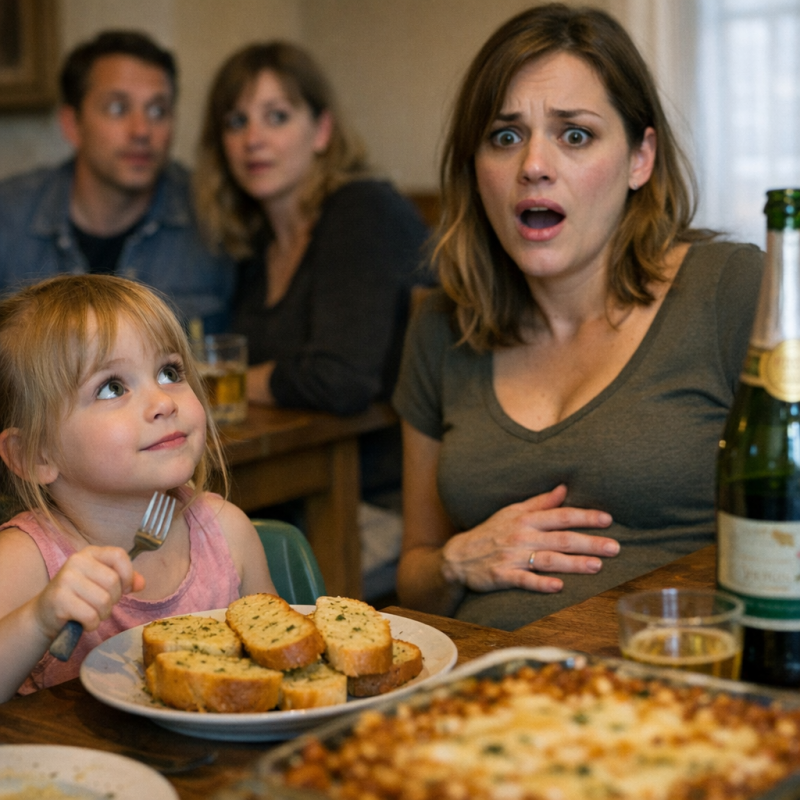 Image by FCT AI
The ER Visit
Uncle Ben called me at eleven that night. Marissa was at the ER with severe cramping, and he sounded completely panicked on the phone. I drove over and sat with him in the waiting room while they ran tests—bloodwork, ultrasound, the whole thing. He kept saying, 'She's been having pain for days but didn't want to worry anyone.' I didn't tell him what Lily had said at dinner. Didn't seem like the right moment. When the doctor finally came out, she said everything looked okay—the baby was fine, but Marissa had a minor placental issue that needed monitoring. 'Good thing she came in when she did,' the doctor added. 'If this had progressed without treatment, it could have been serious.' Ben exhaled like he'd been holding his breath for hours. I should have felt relieved, and I did, mostly. But sitting there in those fluorescent lights, I couldn't stop thinking about Lily's words. Tests came back normal, but the doctor said if she hadn't come in, it could have been missed—and I didn't know how to feel about that.
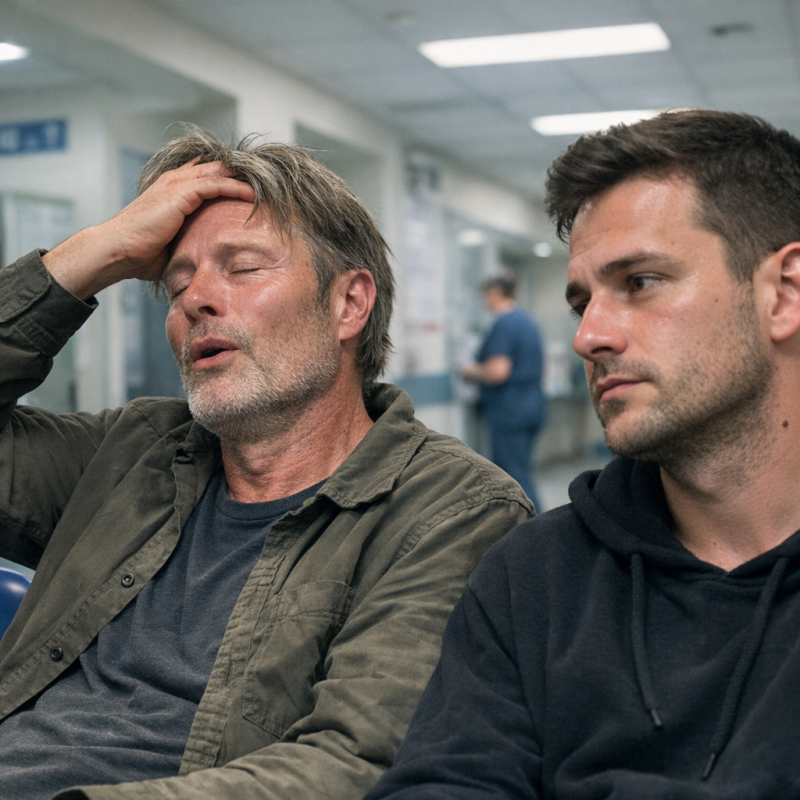 Image by FCT AI
Mom's Confession
I cornered Mom the next morning while she was making coffee. 'We need to talk about how Lily knows this stuff,' I said. She sighed and sat down at the kitchen table, looking exhausted. 'Marissa and I talked a lot after her miscarriage,' she admitted quietly. 'On the phone, in person. Long conversations about what went wrong, what the doctors said, all of it.' I waited. 'And?' She rubbed her temples. 'And Lily was usually playing nearby. In the living room while I was on the couch. At the kitchen table while I folded laundry. I thought she was too young to understand, you know? She'd be coloring or watching her tablet.' My stomach dropped. 'Mom, she was right there.' 'I know,' she whispered. 'I know that now. But she seemed so absorbed in her own world. I never thought...' She trailed off. I realized we'd all made the same assumption—that Lily was too little to process what she was hearing. She said, 'I thought she was too young to understand,' and I realized we'd all made that mistake.
 Image by FCT AI
The Recording
I was helping Dad clean out the storage closet that weekend when I found our old answering machine buried under a pile of cables. We haven't used it in years, but it still had the red light blinking. Out of curiosity, I hit play. Mom's voice filled the room, mid-conversation with Marissa—must have been a pocket dial or something. 'The discharge papers said to watch for cramping and bleeding,' Mom was saying. 'I still regret not pushing the doctors harder when you said something felt wrong.' Marissa's response was muffled, emotional. I was about to delete it when I heard something else in the background. A child's voice, humming. Not words, just that tuneless humming little kids do when they're playing. Lily. I rewound it and listened again, focusing on the background noise. Toy sounds. Movement. She'd been right there in the room the entire time, probably playing with her dolls while Mom and Marissa dissected medical details on speakerphone. In the background, I could hear Lily humming, and I realized she'd been in the room the entire time.
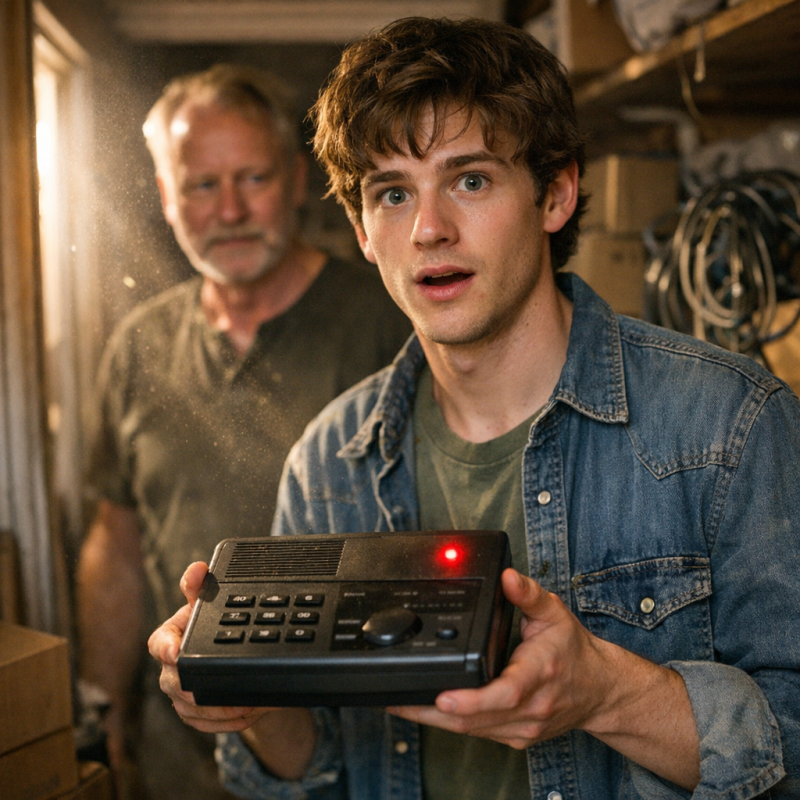 Image by FCT AI
Dad's Doubt
I played the recording for Dad and Grandma Jean that afternoon. Dad listened with his arms crossed, expression unreadable. When it finished, he shook his head. 'Okay, so she was in the room. That doesn't mean she understood what she was hearing. She was four years old during most of these conversations. Four-year-olds don't retain complex medical information.' 'She repeated it word for word,' I countered. 'That's parroting,' Dad insisted. 'Not comprehension. There's a difference.' Grandma Jean had been quiet, but now she leaned forward. 'Does it matter if she understood the medical details?' We both looked at her. 'What matters is that she heard her aunt was hurting. She heard worry in their voices, heard that something was wrong. Children pick up on emotion, even if they can't name it.' Dad opened his mouth to argue but nothing came out. Grandma Jean continued gently, 'She understood her aunt was hurting—and she remembers that,' and Dad had no response.
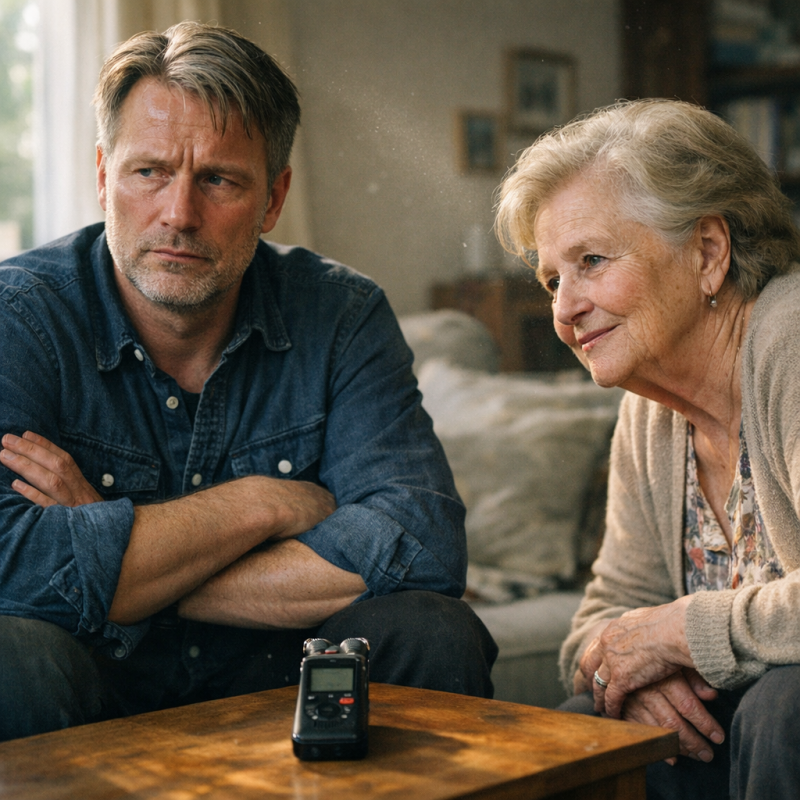 Image by FCT AI
Lily's Normal Day
I decided to spend a full day with Lily, just the two of us. I took her to the park, got her ice cream, played approximately seven hundred rounds of pretend veterinarian. She was completely, utterly normal. Giggled at the swings. Cried when she dropped her ice cream cone. Made up elaborate stories about her stuffed animals. There was nothing eerie or knowing about her. She was just a kid. At one point, while we were coloring at the kitchen table, she looked up at me with those big eyes and asked, 'Is Aunt Marissa mad at me?' My heart clenched. 'No, sweetie. Why would you think that?' She shrugged, going back to her drawing. 'She left when I was talking at dinner. And Mommy says I can't see her for a while.' I didn't know what to say. How do you explain to a five-year-old that she's accidentally traumatizing the adults around her? She asked if Aunt Marissa was mad at her, and I realized she had no idea what her words had done.
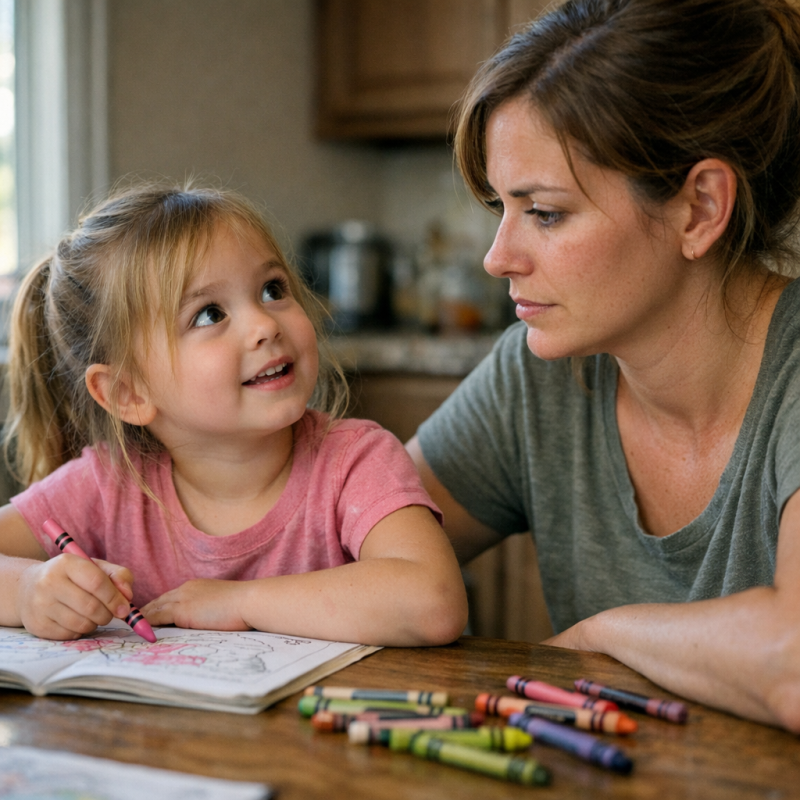 Image by FCT AI
Marissa's Fear
Marissa called me a few days later and asked if I could come over. When I got there, she looked exhausted, dark circles under her eyes. We sat on her couch with tea neither of us drank. 'I can't sleep,' she admitted. 'Every time I feel anything—a twinge, a cramp, even just normal pregnancy stuff—I panic. Because what if Lily knows something I don't?' I reached for her hand. 'The doctors said you're fine.' 'I know what the doctors said,' she replied, voice shaking. 'But Lily knew about the cramping before I even took it seriously. She knew I should tell the doctor. How did she know that?' I had no answer. 'I'm terrified of my own body now,' Marissa continued. 'I second-guess every sensation, wondering if it's a warning sign that a five-year-old can somehow detect but I can't.' Tears spilled down her cheeks. 'I don't blame her. She's a baby herself. But Jordan...' She whispered, 'What if she's right and I lose this baby too?' and I didn't know how to comfort her.
 Image by FCT AI
The Pediatrician
Mom made an appointment with Lily's pediatrician, Dr. Patel. She wanted to understand if this was normal behavior, if we should be worried about Lily herself. I tagged along, sitting in the cheerful office with its alphabet wall while Dr. Patel asked Mom questions. Lily played with blocks in the corner, completely oblivious. 'Children have remarkable memories for emotional experiences,' Dr. Patel explained. 'Even if they don't understand the content cognitively, they absorb the feelings attached to conversations they overhear. Anxiety, fear, concern—these get stored.' Mom nodded slowly. 'So she could remember specific phrases without understanding what they mean?' 'Exactly. It's like learning song lyrics in another language. You can repeat them perfectly without knowing their meaning. The emotional context tells her these words are important, so she retains them.' Dr. Patel examined Lily briefly, pronounced her completely normal and well-adjusted. But as we left, I kept thinking about it. The doctor said children often retain emotional memory without cognitive context, and I realized that might be exactly what happened.
 Image by FCT AI
The Fourth Comment
We were having lunch at Mom's house when Lily casually mentioned it. We'd been trying to act normal around her, not making a big deal of her comments anymore. Uncle Ben had stopped by with sandwiches from the deli, and Marissa was picking at hers, not really eating. Lily looked at her plate and said, matter-of-fact, 'Aunt Marissa, you should eat more protein because the baby needs it to grow right.' The room went still. It wasn't the scary kind of comment—it sounded like normal parenting advice, honestly—but there was something too specific about it. Uncle Ben pulled out his phone immediately. He scrolled for maybe thirty seconds before his face changed. 'What is it?' I asked. He turned the screen toward us—it was a photo of Marissa's hospital discharge papers from last year, the ones they'd given her after the miscarriage. There, in the 'nutritional guidance' section, was that exact phrase. Word for word. Uncle Ben looked at Marissa, then at Mom, then at me, and I watched him try to piece together how a five-year-old could possibly know something that specific.
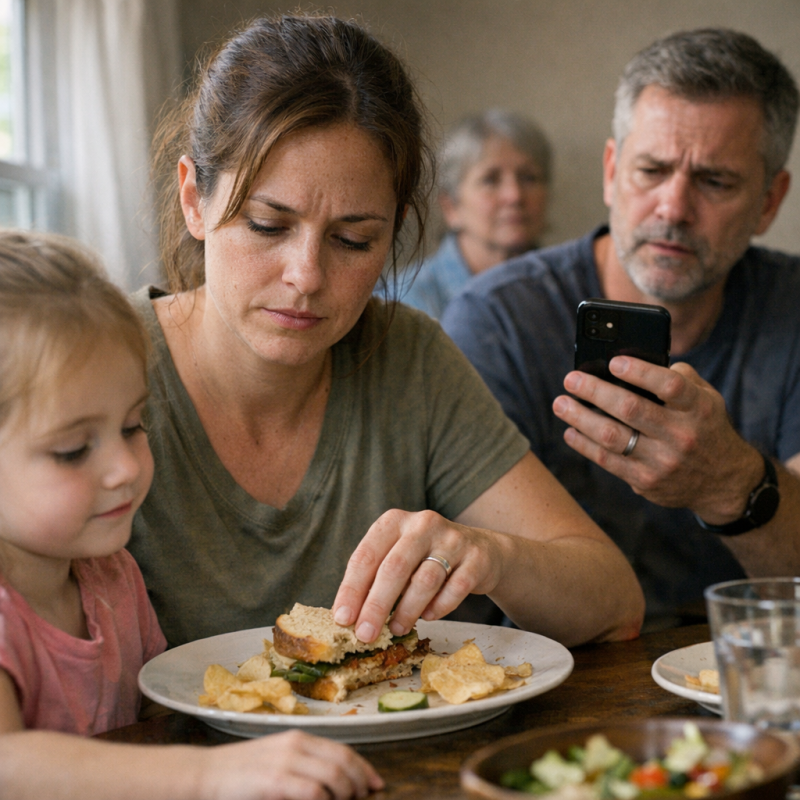 Image by FCT AI
The Hospital Records
I asked Marissa if I could see the full hospital records from last year. She hesitated, obviously not wanting to relive it, but I told her I had a theory forming. She pulled the folder from her bedroom closet—she'd kept everything, even though looking at it hurt. We sat on her bed and went through the pages together. The discharge summary was three pages long, full of medical terminology and follow-up instructions. And there it was. 'Patient minimized symptoms prior to admission'—the exact phrase Lily had used weeks ago when she told Marissa not to ignore warning signs. I felt my pulse quicken. Then I found another match: 'Monitor for signs of infection or fever.' Lily had said that too, hadn't she? At the park? I flipped through more pages, finding phrase after phrase that matched things Lily had said. It wasn't predictions. It wasn't intuition. It was repetition. The discharge summary mentioned 'patient minimized symptoms'—the exact phrase Lily used—and I felt something click into place.
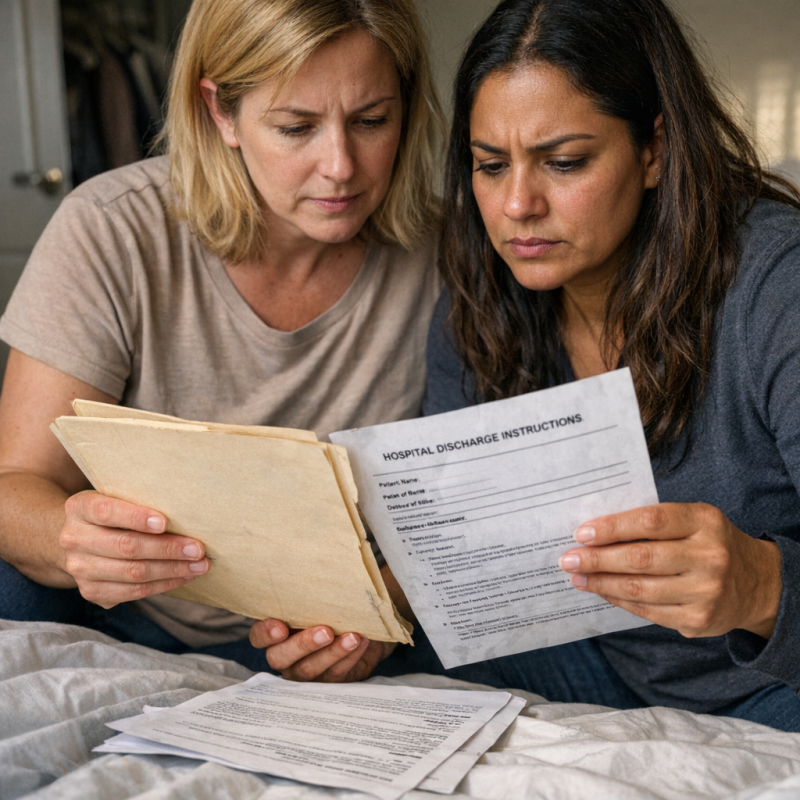 Image by FCT AI
Who Read Them Aloud?
I looked at Marissa carefully before asking the next question. 'When you came home from the hospital last year, did anyone read these papers aloud to you?' She frowned, thinking back. 'I was pretty out of it emotionally,' she said. 'Ben drove me home, but I wasn't processing anything. I just wanted to sleep and forget.' I waited. She kept thinking. 'Your mom came over that evening,' she continued slowly. 'She wanted to make sure I understood the discharge instructions, the warning signs to watch for.' My heart started racing. 'Did she read them to you?' Marissa nodded. 'Yeah, actually. I was too upset to focus on the words, so she read through the whole thing. Twice, I think, because I kept zoning out.' I felt the pieces sliding into place. 'Where were you when she was reading them?' Marissa's eyes widened and she said, 'Your mom did—she read them to me twice because I was too upset to focus.'
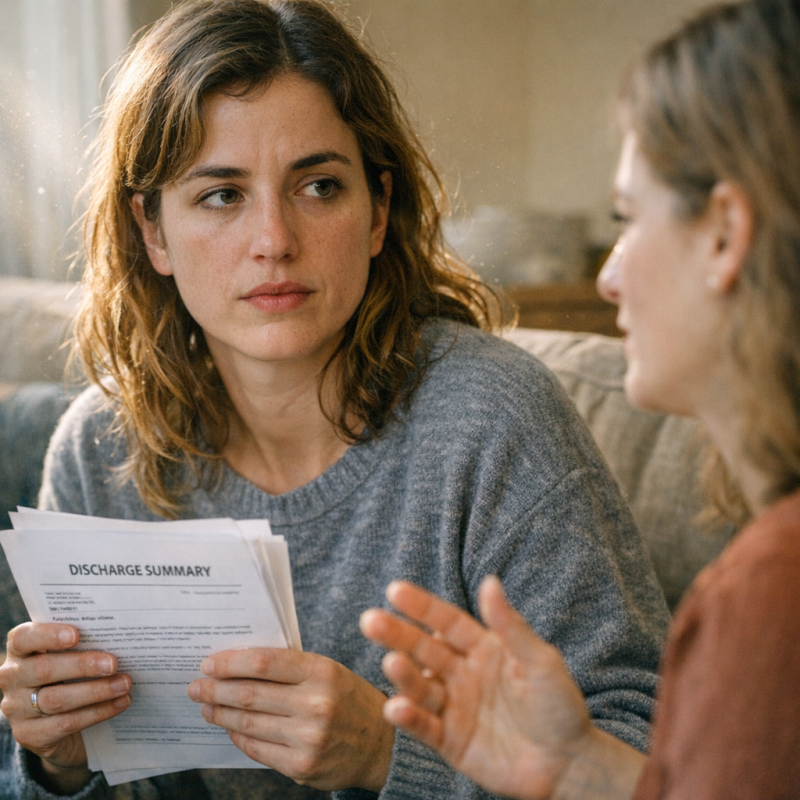 Image by FCT AI
Where Was Lily?
I found Mom in the kitchen that evening, washing dishes. Dad was watching TV in the living room. I tried to keep my voice casual. 'Mom, when you went to Marissa's house last year, after she got home from the hospital—where was Lily?' Mom looked confused by the question. 'What do you mean?' 'Like, physically, where was she when you were there?' Mom dried her hands slowly, thinking back. 'I brought her with me. Ben was exhausted, Marissa was a wreck, I didn't want to leave Lily with a sitter.' She paused. 'Why?' 'Do you remember what Lily was doing while you were talking to Marissa?' I pressed. Mom's face changed as the memory came back. She set down the dish towel. Her hands were shaking slightly. 'Oh my God,' she whispered. 'She was on the couch. Right next to us. I remember because she was coloring in that princess book, being so quiet and good.' Mom froze, then whispered, 'She was sitting right there on the couch—I remember because she was coloring.'
 Image by FCT AI
Testing the Theory
I needed to test my theory, so I set up a little experiment. One afternoon when Lily and I were alone, I casually mentioned something completely made up. 'You know,' I said while we were playing with her dolls, 'pregnant women need to make sure they have good placental stability. That's really important.' Lily didn't react, just kept dressing her Barbie. The phrase meant nothing—I'd literally invented it. But if my theory was right, if she was just parroting medical terms she'd heard, she'd repeat it eventually. I waited. Two days passed. Then we were at Grandma Jean's house for dinner, and Lily was showing Grandma her drawings. Out of nowhere, Lily said, 'Grandma, Aunt Marissa needs placental stability for the baby.' Grandma Jean looked baffled. 'What, honey?' 'Placental stability. Jordan said it's really important.' My grandmother looked at me, confused, and I felt a rush of vindication mixed with sadness. Two days later, Lily told Grandma Jean about 'placental stability'—the exact nonsense phrase I'd invented—and I knew she was parroting things.
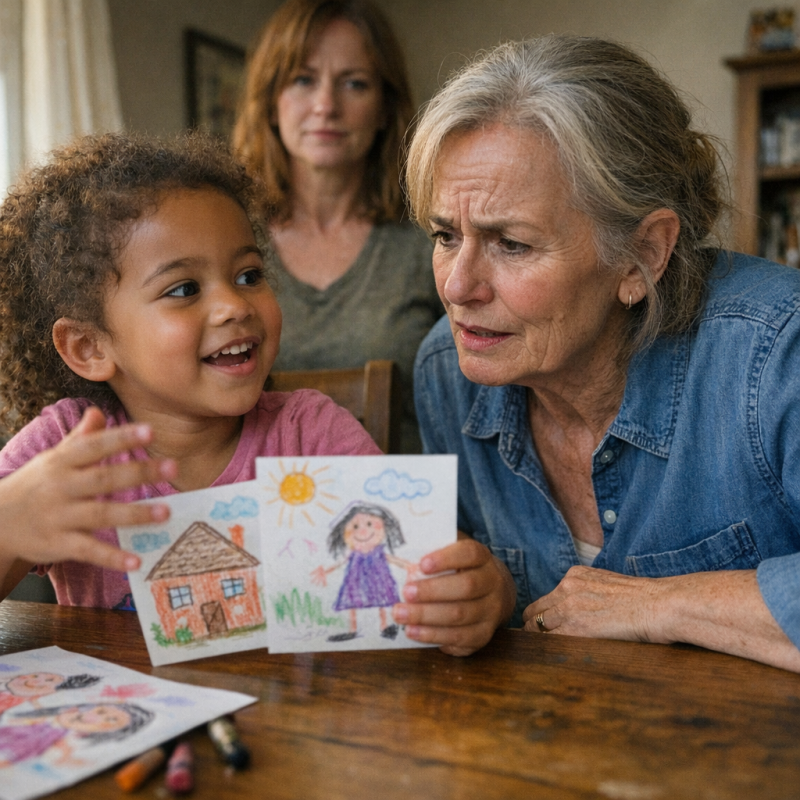 Image by FCT AI
Marissa's Relief
I explained everything to Marissa. We sat in her living room, and I walked through the whole theory—how Lily had been present when Mom read the discharge papers, how she'd absorbed the medical phrases without understanding them, how she'd repeated them later because they felt important. Marissa listened, and I watched her face transform. First came disbelief, then understanding, then something like relief. She started crying, but they were different tears than I'd seen before. 'She's not predicting anything,' Marissa said through the tears. 'She's just—she's just a kid who heard scary words.' I nodded. 'Exactly. She doesn't know what any of it means. She's just repeating phrases that felt emotionally important.' Marissa laughed, that slightly hysterical laugh of someone who's been carrying impossible weight. She hugged me hard. For maybe two minutes, she just seemed lighter. But then she pulled back, and her face crumpled again in a different way. But then she said, 'So I traumatized my niece by making her listen to all that pain,' and the guilt shifted entirely.
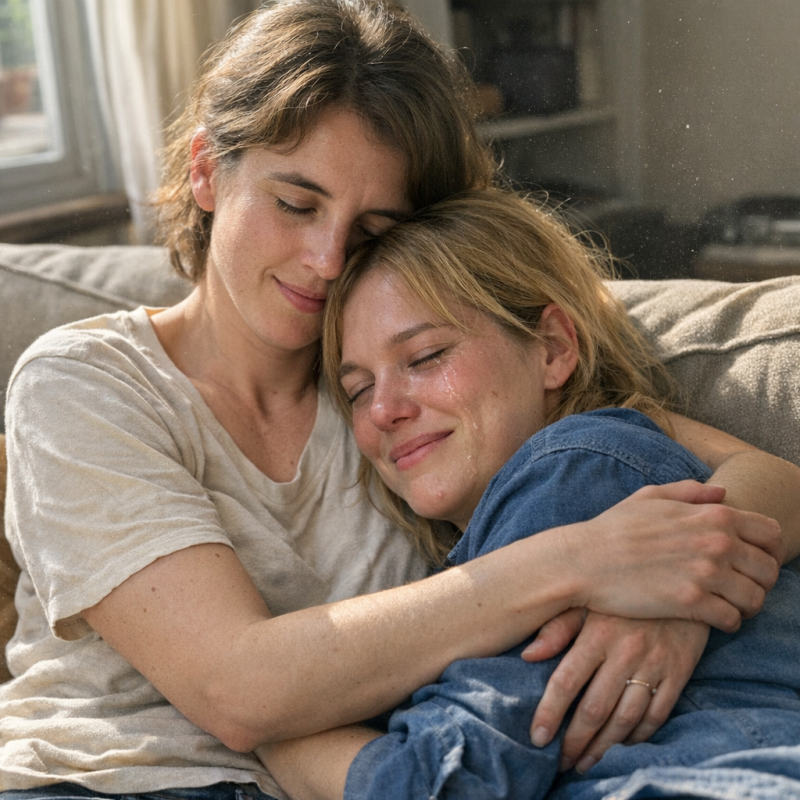 Image by FCT AI
Mom's Guilt
Mom completely broke down when she understood what had happened. Dad and I were both there, and she just kept apologizing, over and over. 'I should have protected her,' Mom said, tears streaming down her face. 'I should have sent her to another room, gotten a babysitter, something.' Dad put his arm around her, but she was inconsolable. 'I thought if she couldn't understand the words, they couldn't hurt her,' Mom continued. 'I thought she was too young to absorb any of it. I was so focused on helping Marissa that I didn't think about what Lily was hearing.' I sat with them, watching my mother reckon with this unintended harm. It wasn't malicious. It wasn't even careless, really. It was just an assumption—that incomprehension equals protection. That if a child can't cognitively process information, it can't affect them. But Dr. Patel had explained otherwise. Emotional memory lives in a different place than understanding. She said, 'I thought if she couldn't understand, it couldn't hurt her,' and I realized how wrong that assumption was.
 Image by FCT AI
But What Does Lily Remember?
I tried asking Lily directly what she remembered. I kept it gentle, casual, while we were coloring together one afternoon. 'Lily, do you remember when Aunt Marissa was sad last year?' She nodded, not looking up from her picture. 'What do you remember about it?' She shrugged. 'Everyone was worried.' 'Do you remember what people were saying?' Another shrug. 'I don't know. Grown-up stuff.' Her answers were vague, fragmented—no clear narrative, no specific memories. She couldn't recall the hospital or the conversations in any concrete way. But when I asked how it made her feel, she looked at me seriously. 'Everyone got really quiet,' she said. 'Like when something's wrong but nobody says what it is.' I realized she'd absorbed the emotional atmosphere more than any actual content. The tension, the sadness, the hushed voices—that's what stuck with her. She said, 'I just remember everyone was quiet, like now,' and I realized she associated sadness with silence.
The Other Kids
I started talking to other parents after that conversation with Lily. Just casual mentions at the playground, at school pickup, testing the waters. 'Has your kid ever said something they shouldn't know?' The responses floored me. Every single parent had a story. One mom told me her four-year-old asked if Grandpa's cancer was 'the bad kind' during a family dinner—exact words from a private phone call. Another dad said his daughter mentioned Uncle Mike's DUI before anyone had told the kids. A woman at the coffee shop said her son asked if Mommy was getting fired, repeating specifics from a conversation he'd supposedly been asleep for. They all had that same bewildered look when they told me, like they'd witnessed something impossible. 'I don't know how she knew that,' they'd say. 'We never told her.' But when I pressed gently about where the kid had been during those conversations, every parent paused. 'Well, she was in the next room, but…' Or, 'He was playing with his toys, not paying attention.' Every single one had a story about their child repeating something impossible—and it was always something they'd said aloud.
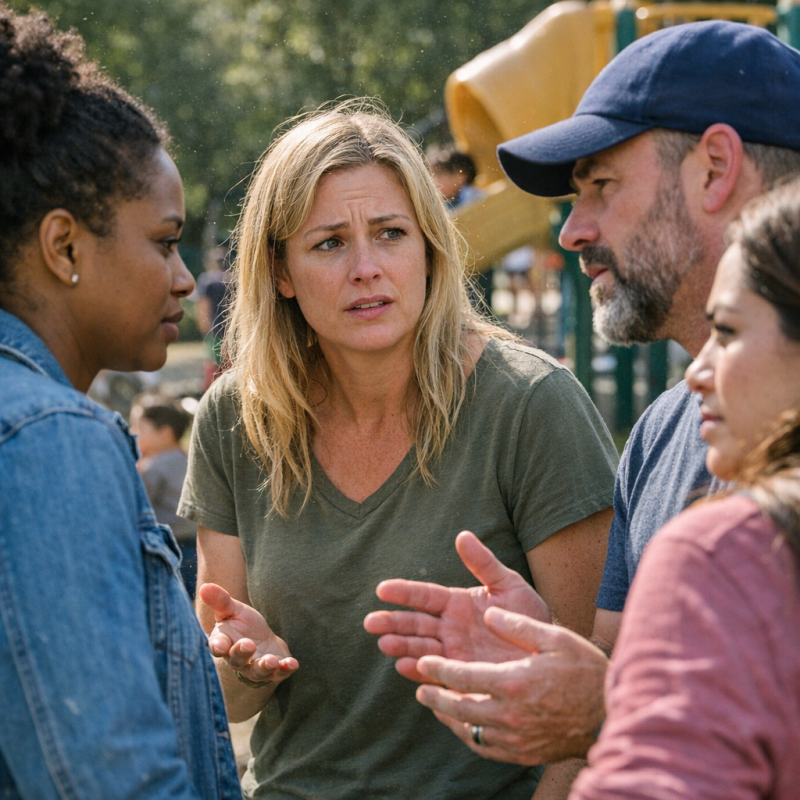 Image by FCT AI
Dr. Walsh's Office
Mom found Dr. Walsh through a recommendation from her book club. We went as a family—minus Lily—on a Tuesday afternoon that felt strangely formal. The office smelled like lavender and had those abstract paintings that are supposed to be calming. Dr. Walsh was younger than I expected, with kind eyes and a notepad she barely used. She let us talk for twenty minutes straight, just unloading everything. When we finally stopped, she nodded slowly. 'This is more common than you think,' she said. 'Children are extraordinary listeners, but they don't process information the way adults do. They collect fragments.' She explained how kids Lily's age absorb emotional content and vocabulary without understanding context. 'She heard medical terms and connected them to Marissa's sadness. To her, those words became tools for helping.' Dad kept nodding, taking notes on his phone. Mom cried a little. We committed to weekly sessions, learning how to communicate more carefully around Lily, how to explain things at her level. Dr. Walsh said, 'Children are always listening—we just forget they're translating differently,' and everyone nodded in recognition.
 Image by FCT AI
Lily's Version
Dr. Walsh met with Lily separately the following week, and I sat in the waiting room trying not to pace. When the session ended, Dr. Walsh invited me in to see what Lily had drawn. The pictures were scattered across the low table—bright crayon images that made my chest tight. There was Aunt Marissa with blue tears streaming down her face. Mom with a frowny mouth. Dad with his hand on his forehead. Not a single drawing showed an event or a place, just people and their expressions. 'Children Lily's age store memories differently than adults,' Dr. Walsh explained, holding up the drawing of Marissa. 'They focus on faces, on emotional cues. That's what feels important to them.' Lily had drawn herself small in the corner of several pictures, watching. 'She remembers how everyone felt,' Dr. Walsh continued. 'The narrative details—where, when, what was actually said—those fade. But the emotional imprint stays.' I stared at that tiny version of Lily in the corner, bearing witness to all our pain. She drew Aunt Marissa with tears, and the therapist said children store trauma as images, not narratives.
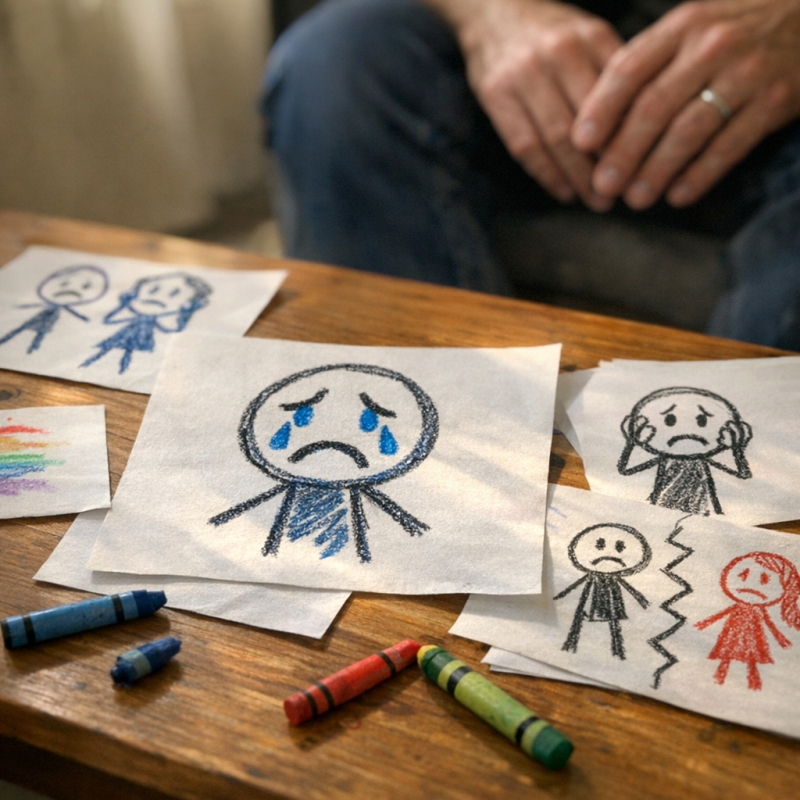 Image by FCT AI
The Apology
Marissa came over on Sunday specifically to talk to Lily. I watched from the doorway as she sat down on the floor where Lily was arranging her stuffed animals. 'Lily, I'm sorry I've been far away lately,' Marissa said quietly. 'I got sad and confused, and I didn't know how to be close to you.' Lily looked up from her toys, her little face serious. 'Did I do something wrong?' she asked, and my heart cracked. 'Did I say the wrong thing?' Marissa pulled her into a hug immediately. 'No, baby, you were trying to help,' she said into Lily's hair. 'You were being so sweet and trying to take care of me. I should have told you that.' Lily pulled back, searching Marissa's face. 'So you're not mad at me?' 'Never,' Marissa whispered. 'I was just sad about grown-up stuff, and I forgot to tell you it wasn't your fault.' Lily beamed—actually beamed—like she'd been holding her breath for weeks waiting to hear exactly that. Marissa said, 'No, baby, you were trying to help,' and Lily beamed like she'd been waiting to hear that.
The Fifth Comment
We were having lunch a few days later—just sandwiches at the kitchen table—when Lily looked at Marissa and said it. 'Aunt Rissa, you should keep checking because last time you stopped checking.' The air changed instantly. Mom's hand froze halfway to her water glass. I felt my shoulders tense, waiting for the spiral. But Marissa didn't flinch this time. She set down her sandwich and looked at Lily carefully. 'You're right, I should,' she said with this sad, gentle smile. 'That's actually really smart advice.' Lily nodded, satisfied, and went back to eating. Mom let out a slow breath. I realized I'd been holding mine too. Something had shifted in Marissa's face—not fear this time, but acknowledgment. Acceptance. Like she'd finally stopped running from what Lily's words represented and started hearing them for what they were: care without context, love without understanding. 'I'm seeing my doctor next week,' Marissa added, more to Mom than to Lily. 'Regular appointments from now on.' This time, instead of panic, Marissa smiled sadly and said, 'You're right, I should,' and I saw acceptance replace fear.
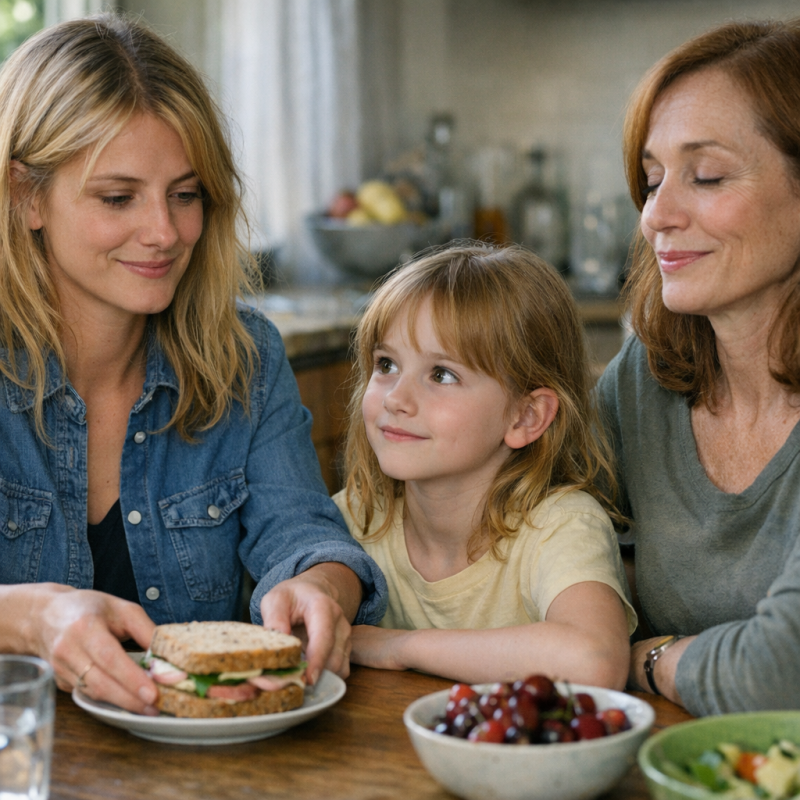 Image by FCT AI
Dad's Research
Dad went into full research mode after Dr. Walsh's explanation. I found him at the dining table one night surrounded by printed articles, his laptop glowing with open tabs. At dinner the next evening, he spread out his findings like evidence. 'There's a phenomenon called eidetic memory in some young children,' he explained, pushing his glasses up. 'Not photographic memory exactly, but the ability to recall sensory details—including overheard speech—with unusual accuracy.' He'd found studies about kids retaining entire conversations they'd appeared to ignore. 'They don't process meaning the same way we do,' he continued, 'but they can hold onto phrases, even complex medical terminology, especially if there's emotional weight attached.' Mom leaned forward, reading over his shoulder. The studies talked about how children under six often absorb language as sound patterns first, meaning second. How they might repeat adult conversations verbatim without understanding context. 'That's exactly what happened,' Mom whispered, touching one of the highlighted paragraphs. Dad said some kids retain entire conversations without understanding them, and Mom whispered, 'That's exactly what happened.'
 Image by FCT AI
The Recorded Conversation
I'd saved the voicemail from last year—the one Mom had left me during the worst of it. I hadn't known why I kept it until now. We gathered in the living room, and I played it on speaker. Mom's voice came through, tight with stress: 'Jordan, call me when you can. Marissa's in the hospital, they're running tests, something about hormone levels and we're just—we're worried.' In the background, barely audible, there was humming. A child's voice humming a little tune. 'That's Lily,' Marissa said immediately, sitting forward. We listened again. The humming continued through Mom's entire message, this tiny soundtrack we'd never registered. 'She was right there the whole time,' I said quietly. We played three more voicemails. In each one, if you listened carefully, you could hear her—playing, singing, moving around in the background of our crisis conversations. Mom's hand went to her mouth. She started crying, those silent tears that mean something's breaking open. 'She was right there the whole time, and we never thought to protect her from it,' Mom said, and we all just sat there in the weight of that realization.
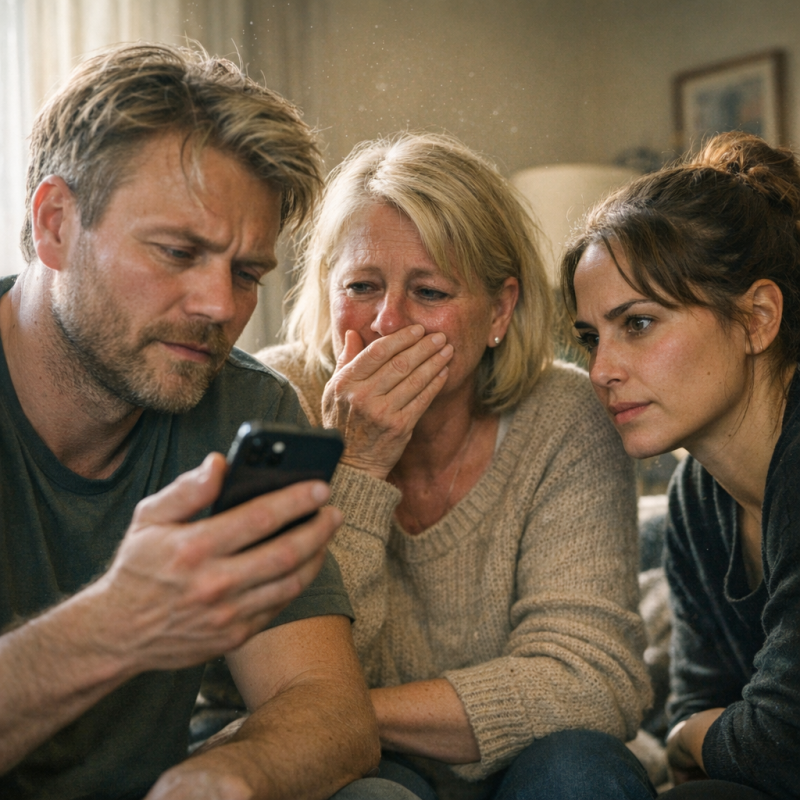 Image by FCT AI
What We Said Aloud
We made a list. All of us together at the dining table with a legal pad in the center. Every medical phrase Lily had said, we wrote it down. 'Hormone levels.' 'Keep checking.' 'Stopped last time.' 'The doctor said to watch.' Each phrase got traced backward. Mom remembered talking to her sister on the phone while Lily played blocks nearby. Dad recalled discussing Marissa's doctor appointments while driving Lily to preschool, thinking she was absorbed in her tablet. Uncle Ben sheepishly admitted he'd talked to Marissa about follow-up tests at a family barbecue while Lily was at the kids' table eating watermelon. 'She was ten feet away,' he muttered. We went through everything, matching each impossible thing Lily had known to a specific conversation. The pattern was undeniable. She hadn't known anything supernatural or unknowable. She'd just been there, listening while we assumed she wasn't, collecting our words like puzzle pieces without understanding the picture they made. Every single phrase matched something we'd said—and Lily had been within earshot every time.
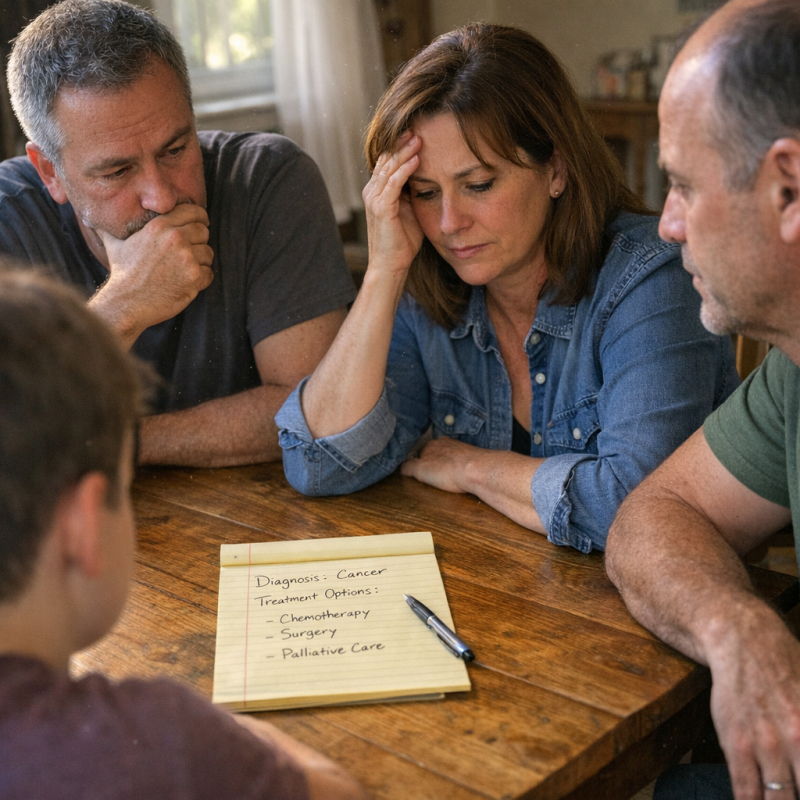 Image by FCT AI
Grandma Jean's Wisdom
Grandma Jean arrived the next morning with a tin of her shortbread cookies, looking completely unsurprised by everything we'd discovered. She listened to our list, nodded at each matched phrase, and said, 'Of course she was just repeating what she heard.' Like it was the most obvious thing in the world. Mom asked why she hadn't said anything earlier, and Grandma shrugged. 'You all needed to figure it out yourselves,' she said, pouring tea like we were discussing the weather. 'Children are sponges. Always have been. You forget they're listening until they remind you at the worst possible moment.' She smiled at me, that knowing grandmother smile. Dad looked defensive. 'We thought—' 'You thought it was easier to believe in supernatural nonsense than admit you'd been careless with your words,' Grandma interrupted gently. The kitchen went quiet except for the clock ticking. She took a sip of tea, set down her cup. 'The real question is whether you'll finally learn to guard your words around little ears,' and everyone fell silent.
 Image by FCT AI
The Pattern Becomes Clear
I spent that night replaying everything in my head, the whole sequence of events laid out like a timeline. Lily asking to be picked up wasn't manipulation or prophecy—it was connection. She'd heard us talk about hormones and doctors and watching carefully, heard the worry in our voices even when we thought we were being casual. She'd absorbed it all like background music, not understanding the notes but feeling the melody. And when she wanted to show love, to be close to Marissa, she used the language she'd heard us use about someone we loved. It was her version of 'I care about you.' She'd stitched together our concern and reflected it back as her own form of affection. A five-year-old trying to participate in adult care with a five-year-old's toolkit. The phrases weren't predictions. They were proof she'd been paying attention to who we loved and how we showed it. I wondered if we'd been so focused on what she was saying that we missed what she was really doing—trying to help.
 Image by FCT AI
Marissa's Next Appointment
I went with Marissa to her next appointment, three weeks later. She was different this time—more vocal, more specific about her concerns. When Dr. Chen asked how she was feeling, Marissa mentioned the heightened anxiety she'd been experiencing, the weird cramping she'd dismissed as normal. 'I probably wouldn't have said anything,' Marissa admitted, 'but everything that happened made me more aware.' Dr. Chen did an extra ultrasound, checked hormone levels more thoroughly than the standard appointment would have covered. She found a minor placental issue—nothing catastrophic, but something that needed monitoring. Manageable with rest and more frequent check-ins. 'Good thing we caught this now,' Dr. Chen said, making notes. 'Left unchecked, this could have caused complications in the third trimester.' In the car afterward, Marissa was quiet for a long time. Then she touched her belly and looked at me. The doctor said catching it now prevented complications later, and Marissa whispered, 'Maybe Lily saved us both.'
 Image by FCT AI
Lily's Question
Lily climbed into my lap one afternoon while I was scrolling through my phone, her little hands sticky with juice box residue. 'Jordan?' she asked, her voice small. 'Why was everyone sad when I talked about Aunt Marissa's baby?' I put my phone down. This was the conversation I'd been dreading and needing in equal measure. 'We weren't sad, exactly,' I started, choosing my words carefully now. 'We were confused.' She frowned, thinking hard. 'But I was trying to keep her safe. Like you guys do.' My throat tightened. She'd been listening to us demonstrate love and protection, and she'd tried to do the same thing. 'I know you were, sweetheart.' 'Then why did everyone get weird?' she pressed. 'Why did Grandma and Mommy look scared?' I realized she genuinely thought she was helping, and the adults had made it scary by reacting so strangely.
The School Presentation
Mom got a call from Lily's kindergarten teacher on a Tuesday afternoon. Apparently, Lily had done her family presentation that day—you know, the classic 'This is my family' poster board thing kids do. She'd included drawings of everyone, including one of Marissa with a round belly. During her presentation, she'd told the class about 'when Aunt Marissa needed extra help with the baby.' Just stated it matter-of-factly, like reporting that we have a dog or that Dad works downtown. No drama, no ominous predictions. Just a fact about something that had happened in our family. The teacher called because the phrasing seemed concerning, wanted to make sure there wasn't a health crisis she should be aware of. Mom explained the whole situation, probably laughing through parts of it. When she hung up, she was actually smiling. 'Ms. Rodriguez was so relieved,' Mom said. 'She thought we were hiding some tragedy.' The teacher called Mom afterward to make sure everything was okay, and Mom finally laughed instead of panicking.
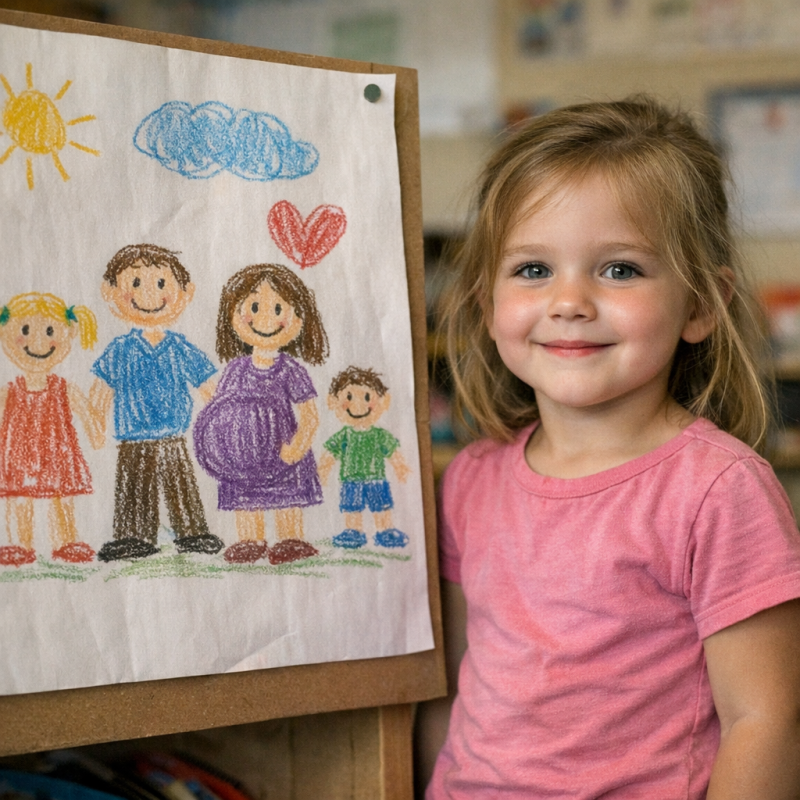 Image by FCT AI
Uncle Ben's Perspective
Uncle Ben came over for dinner and, after a few beers, admitted something I hadn't expected. 'I legitimately thought she was psychic for like forty-eight hours,' he said, looking embarrassed. 'Like, genuinely considered it.' Dad laughed. 'I googled 'children predicting pregnancies' at two in the morning,' he confessed. Mom topped that: 'I researched generational intuition and whether it could skip DNA.' We went around the table sharing our wildest theories. I admitted I'd wondered if Lily had somehow absorbed Marissa's anxiety through weird empathic osmosis. Everyone had reached for impossible explanations—anything to avoid the simple, uncomfortable truth that we'd traumatized a kindergartener with our careless conversations. 'We really chose supernatural powers over accepting that we messed up,' Uncle Ben said, shaking his head. We all laughed at how desperately we'd wanted an impossible explanation rather than accepting the simple truth.
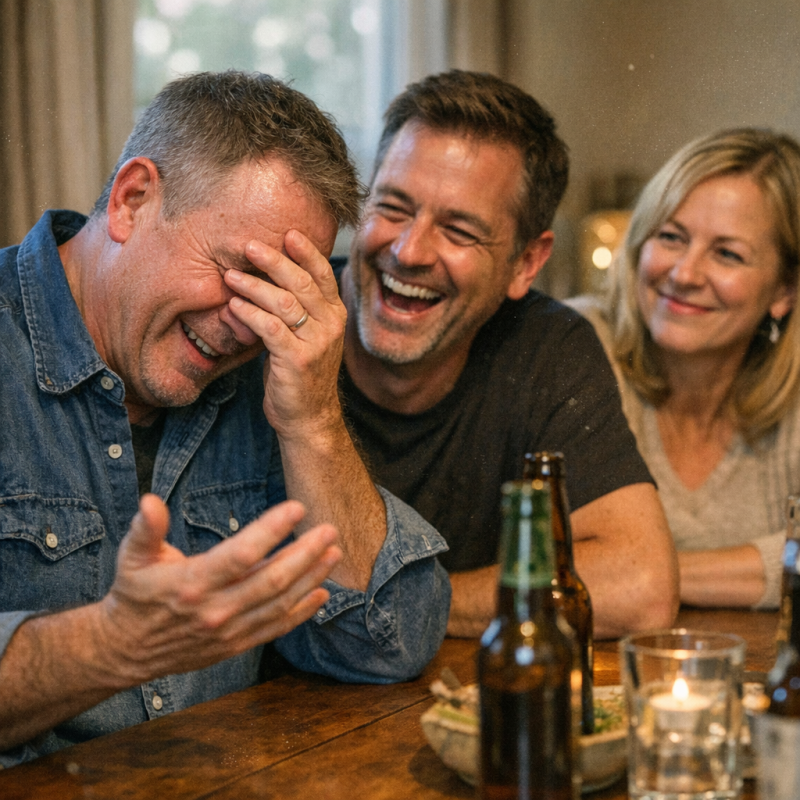 Image by FCT AI
The Bigger Conversation
Dr. Walsh called a family session two weeks later. Mom, Dad, and I sat in her office while she explained patterns of family narrative construction. 'When confronted with uncomfortable realities, families often create alternative explanations,' she said, her voice clinical but kind. 'In your case, accepting that Lily had been traumatized by overheard conversations meant accepting parental failure. That's difficult.' Dad shifted uncomfortably. Dr. Walsh continued, 'So instead, you collectively built a narrative where Lily had supernatural knowledge. That made her powerful rather than vulnerable. It made the situation mysterious rather than your responsibility.' Mom's eyes were wet. 'Creating the mystery was a defense mechanism,' Dr. Walsh said gently. 'But it also delayed addressing the actual harm.' She leaned forward, her expression serious. 'You made Lily supernatural because that was easier than admitting you traumatized her,' and no one could argue.
 Image by FCT AI
The Truth About Lily
I finally put it all together one night, sitting at the dining table with everyone. The complete picture, laid out clearly for the first time. Lily had been present—physically in the room, in the car, at the barbecue—during conversations about Marissa's pregnancy fears. She'd absorbed phrases without context: 'hormone levels,' 'the doctor said,' 'keep checking.' Medical terminology and parental anxiety, overheard and stored. When she wanted to connect with Marissa, to show love and care the way she'd witnessed us doing, she'd repeated those phrases. She wasn't predicting complications. She was mimicking concern, the way kids mimic everything adults do. She'd heard our worry and reflected it back as her version of caring. Every 'ominous' statement traced directly back to something we'd said within her earshot, transformed through a five-year-old's understanding of how to show love. She wasn't predicting anything—she was just a little girl who heard too much pain and tried to fix it the only way she knew how.
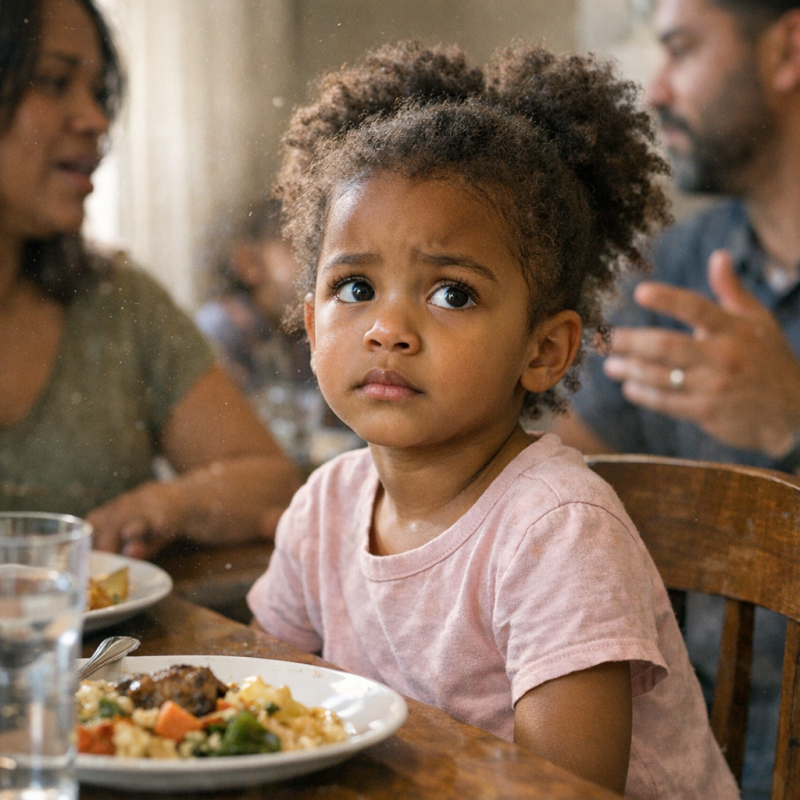 Image by FCT AI
Reframing Every Moment
We went through each thing Lily had said, one by one, like investigators examining evidence from a completely different angle. 'The baby needs to rest'—that was from when Mom told Dad that Marissa needed to take it easy. 'You have to check'—straight from Marissa's constant mentions of doctor appointments. 'Sometimes they don't stay'—God, that one hurt, because Lily had been right there when Marissa explained the miscarriage to us, thinking she was being discreet. Even the weird timing, the sudden intensity—it all lined up with when Marissa's anxiety had peaked and we'd all been walking on eggshells around her. Uncle Ben actually laughed, this pained sound, and said, 'She was trying to be us. To care like we care.' Mom wiped her eyes. Marissa just sat there shaking her head, looking gutted. Every phrase that had terrified us, that had made us question reality itself, was actually her trying to love Marissa the best way a five-year-old could.
 Image by FCT AI
What Lily Carried
Dr. Walsh called it 'secondhand trauma' during our family session. She explained that Lily had absorbed our collective anxiety about Marissa's pregnancy without the cognitive tools to process or contextualize it. Kids her age can't distinguish between their feelings and the emotional climate around them—they just soak it all up like sponges. 'She's been carrying weight that isn't hers,' Dr. Walsh said gently. 'She heard pain and felt responsible for fixing it, which is an enormous burden for such small shoulders.' Dad asked what we should do now, and Dr. Walsh laid out a plan: age-appropriate explanations about pregnancy loss, language coaching for all of us, and regular check-ins with Lily about her feelings versus what she overhears. 'The real work now,' she said, 'is helping Lily release what wasn't hers to hold.' We all nodded, committed. Mom squeezed Dad's hand. I felt this strange mix of relief and determination—like finally, finally, we had a path forward, and we all committed to that.
 Image by FCT AI
Marissa's Delivery Day
The call came at three in the morning—Uncle Ben's voice tight with controlled excitement saying Marissa's water had broken. We all converged at the hospital like some kind of sleep-deprived family invasion, Mom carrying the overnight bag they'd prepared, Dad with coffee for everyone, me trying to keep Lily entertained in the waiting area. She was wide awake, buzzing with nervous energy, asking a million questions about how babies come out and whether it hurts and how long it takes. Uncle Ben came out periodically with updates—five centimeters, seven, transition phase—each one making us collectively hold our breath a little tighter. Lily sat next to me, coloring in a hospital activity book someone had given her, but I could tell she was listening to every word. Around hour six, when things were really progressing, she set down her crayon and looked up at me. Her face was so serious, so worried. Lily squeezed my hand and whispered, 'The baby's going to stay this time, right?' and my heart broke for her worry.
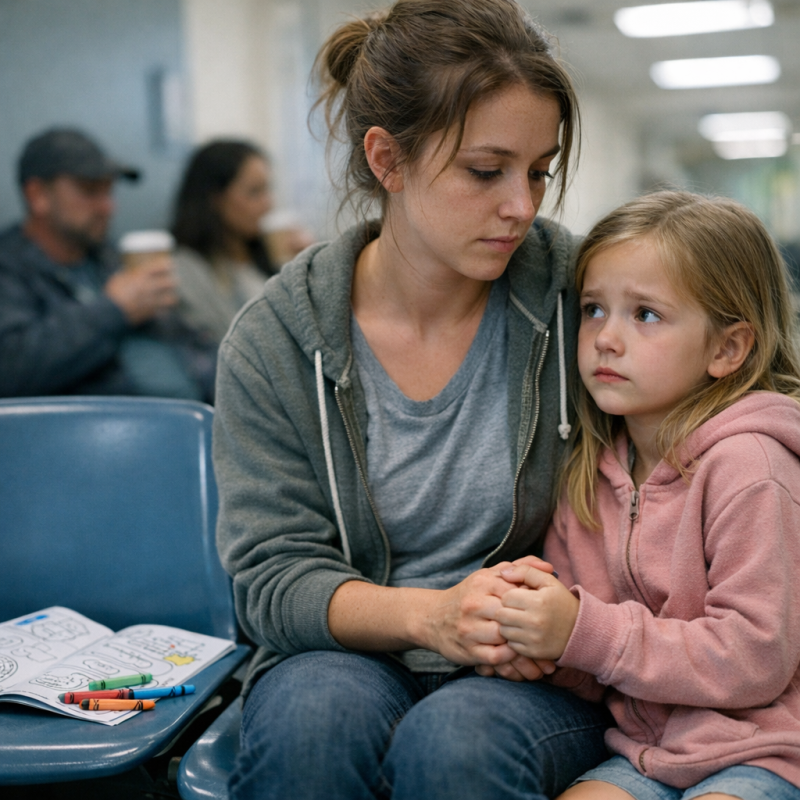 Image by FCT AI
The Long Wait
The waiting stretched on, that particular kind of hospital time that feels suspended and eternal. Lily got restless, then quiet, then started asking the questions we'd all been dancing around for months. 'Where do babies go when they don't stay?' she asked, looking right at Mom. 'Do they know their mommies wanted them?' Dad and I exchanged glances, but Mom surprised me. She put down her coffee and pulled Lily onto her lap, and she gave her an actual answer—not a deflection, not a 'we'll talk about this later,' but an honest, age-appropriate explanation about how sometimes babies aren't strong enough yet, how it's nobody's fault, how the mommies and daddies love them anyway. She told Lily that Marissa's other babies were loved, that they mattered, that being sad about them was okay. Lily listened so carefully, processing each word like she was filing it away somewhere important. When Mom finished, Lily nodded like it made sense of something she'd been carrying.
 Image by FCT AI
Healthy Baby Girl
Uncle Ben burst through the doors with tears streaming down his face, and we knew before he said anything. 'Healthy baby girl,' he managed, and the waiting room erupted. Mom sobbed into Dad's shoulder. I grabbed Lily and hugged her so tight. The relief was physical, like something heavy lifting off all our chests at once. We waited the obligatory hour while they got Marissa and the baby settled, everyone too wired to sit still, pacing and grinning and crying in turns. When they finally let us back, Marissa looked exhausted and radiant, holding this impossibly tiny bundle wrapped in hospital blankets. We took turns carefully, quietly, Uncle Ben hovering protectively over his whole world contained in that one room. Then they brought Lily in, and I watched her approach the bed like she was meeting royalty. She looked at the baby, then at Marissa, and whispered, 'She stayed,' and Marissa sobbed.
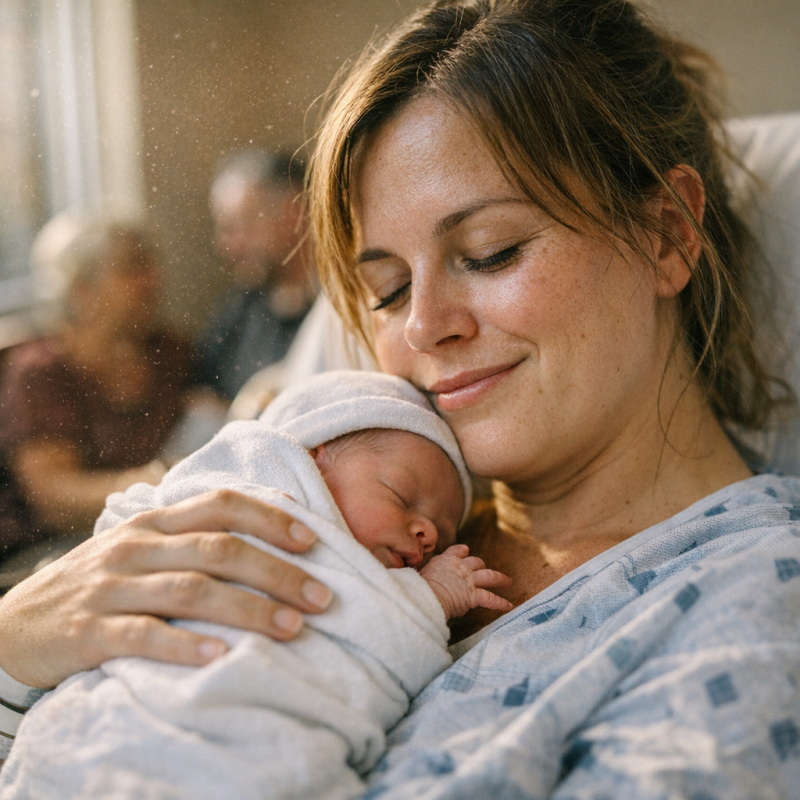 Image by FCT AI
Lily's Promise
Lily stood by the hospital bed, studying baby Grace with the focused intensity she usually reserved for science experiments and bug collections. She touched one tiny hand so gently, like the baby might dissolve if she pressed too hard. 'I'm going to help take care of her,' Lily announced with complete seriousness. 'I'll make sure she's safe and teach her stuff and check on her every day.' Her voice carried that same earnest care she'd shown Marissa throughout the pregnancy, that fierce protectiveness we'd so badly misunderstood. Marissa smiled through fresh tears, pulling Lily closer. 'You know what, sweetheart?' she said softly. 'You already did protect her. All those times you told me to rest and check with the doctor and be careful? You were taking care of her before she even got here.' Lily's whole face transformed, lighting up with this pure, proud joy. Marissa said, 'You already did protect her, sweetheart,' and Lily beamed with pride.
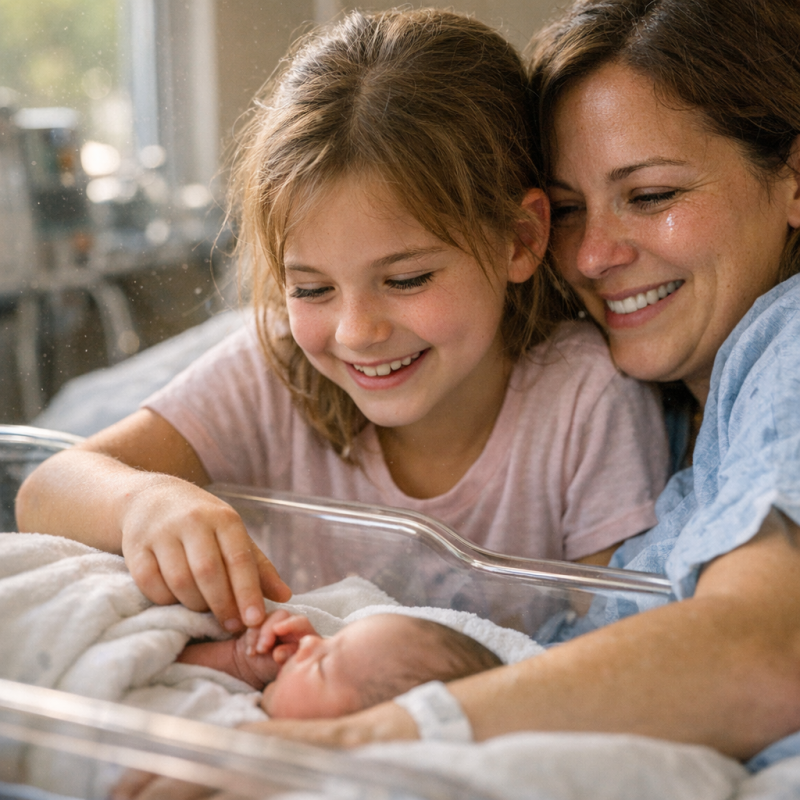 Image by FCT AI
The Naming
They'd been debating names for months—Uncle Ben wanted Eleanor, Marissa liked Claire, they'd cycled through a dozen options without landing on anything that felt right. But there in the hospital room, with all of us crowded around, Marissa looked down at her daughter and said, 'Grace. Her name is Grace.' Uncle Ben's eyes went soft, understanding immediately. Mom actually gasped. Marissa explained it to Lily, to all of us really—how they'd all needed grace these past months, grace to forgive themselves for the losses, grace to forgive each other for the misunderstandings, grace to accept that loving each other meant sometimes getting it wrong. She looked directly at Lily when she said the next part. 'Your fierce love reminded me what grace actually looked like,' she told her. 'How you tried so hard to keep her safe, even when we didn't understand.' We all understood then—the name wasn't just for the baby, and we all understood.
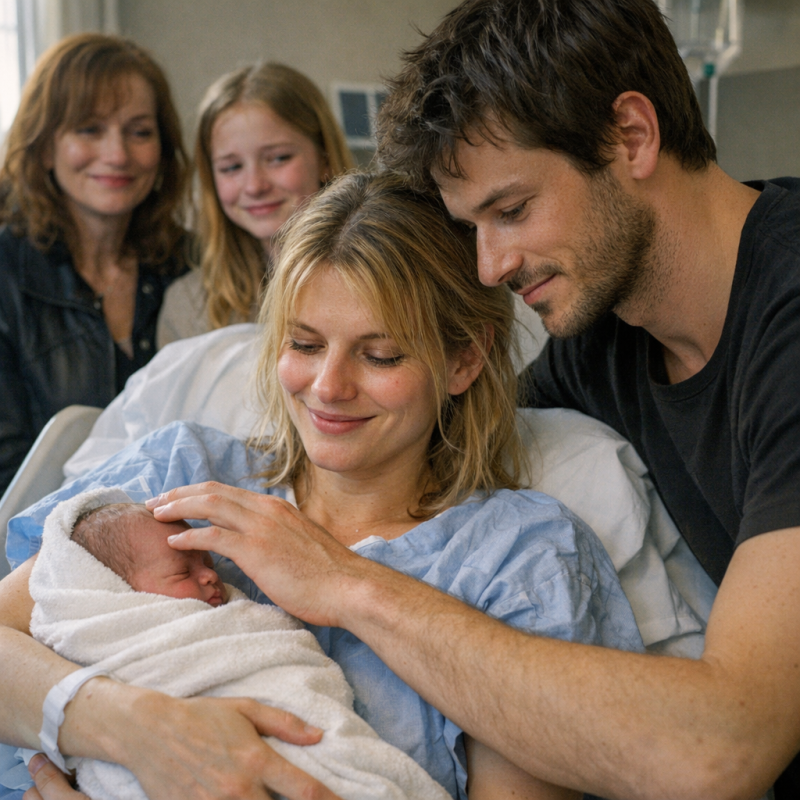 Image by FCT AI
Coming Home
Three days later, we helped carry baby Grace across the threshold into her actual home, Lily dancing ahead importantly to 'make sure everything was ready.' She'd appointed herself official helper, and she took the role seriously—fetching diapers before anyone asked, singing to Grace during fussy moments, reporting every tiny sound the baby made like she was documenting scientific data. Marissa and Uncle Ben looked exhausted but grateful, accepting Lily's help with the kind of patience they'd earned through everything we'd been through. We'd all gotten better at watching our words around Lily, at explaining instead of assuming, at including her in age-appropriate ways. But I noticed something as Lily leaned over Grace's bassinet, speaking in that gentle voice she reserved for important moments. She told Grace, 'I'm going to tell you everything I know,' and I realized that might not always be a good thing.
The New Rules
We had a family meeting about a week after Grace came home—all the adults, without Lily around. Mom put it bluntly: 'We need new rules about what we say when Lily's in earshot.' It felt weird at first, like we were censoring ourselves, but Marissa explained it differently. 'It's not about hiding things. It's about being intentional.' So we established guidelines. No heavy conversations—about health scares, relationship problems, financial stress—when Lily was present. If she asked questions, we'd answer honestly but age-appropriately, focusing on what she needed to know, not dumping adult anxiety on her. Uncle Ben suggested a signal for when someone was slipping, and we settled on a simple hand gesture. I watched everyone nod in agreement, actually committed to changing how we functioned as a family. Mom said she'd already started therapy to work through her own communication patterns. Marissa was seeing someone too. Even Dad, who usually dismissed that kind of thing, admitted he needed to do better. 'We're learning to parent consciously now,' he said quietly, and I realized this was the real happy ending.
 Image by FCT AI
Three Months Later
Three months later, I stopped by on a Saturday morning and found a kind of peace I hadn't felt in our family for a long time. Grace was thriving—chubby and alert, tracking faces with those big curious eyes. Marissa looked rested, or at least as rested as any new mom can look. Lily had started kindergarten and was flourishing, coming home each day with stories about her friends and her teacher, normal five-year-old stuff that didn't carry the weight of adult worries. Mom and Dad were there too, playing with Grace while Lily showed me her latest art project. The conversations were lighter. People asked how everyone was doing and actually listened to the answers. We talked about Grace's pediatrician appointments without spiraling into worst-case scenarios. We discussed Lily's school day without overanalyzing every interaction. It felt revolutionary and completely ordinary at the same time. Then Lily brought home a drawing of the whole family, and this time everyone was smiling.
 Image by FCT AI
What We Learned
Looking back now, I can see what we all missed in those tense weeks before Grace was born. We'd been so focused on finding some complex psychological explanation for Lily's behavior that we overlooked the simple truth: children absorb everything. Every worried whisper, every tense phone call, every anxiety-laden conversation we thought she wasn't paying attention to—she collected them all like puzzle pieces, trying to make sense of a situation no five-year-old should have to navigate. She wasn't psychic or manipulative or troubled. She was just a kid in a family that had forgotten to protect her from adult pain. The lesson wasn't about watching what we said around Lily specifically. It was about recognizing that our words and worries ripple outward, affecting everyone in ways we don't always see. We'd created an atmosphere of fear and let it seep into every corner of our lives, including into Lily's understanding of the world. The extraordinary explanation we'd been searching for? It was just ordinary family dysfunction magnified through a child's limited perspective. We'd spent so long looking for an extraordinary explanation when the ordinary truth was what we needed to hear all along.
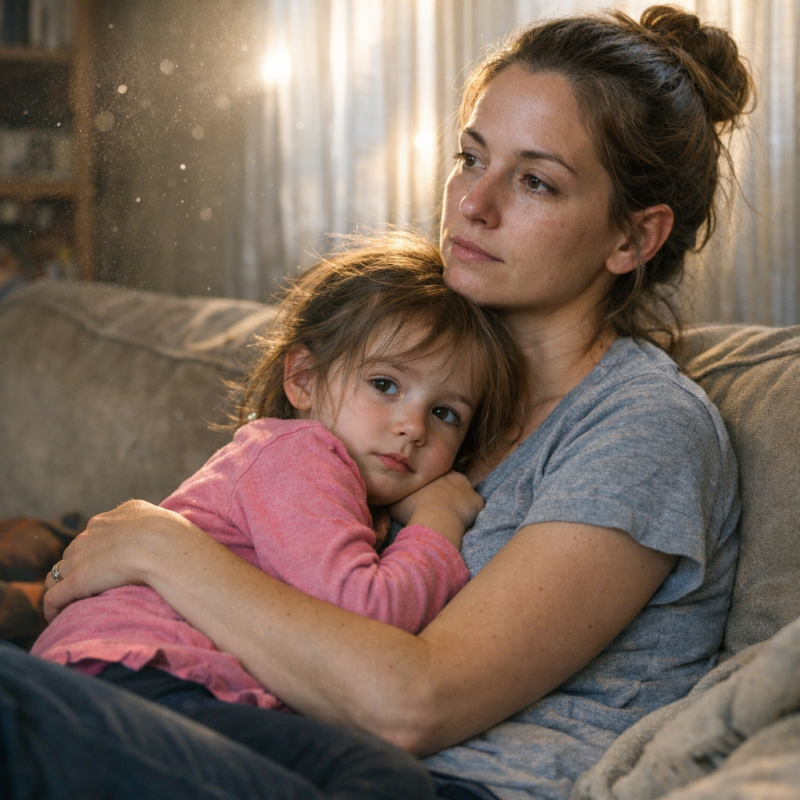 Image by FCT AI
The Same Request, Different Meaning
It happened at Grace's baptism, of all places. We were at Mom and Dad's house afterward, the whole family together, when Lily ran up to Marissa with that same bright expression she'd had six months earlier. 'Aunt Marissa, can you pick me up?' she asked, and for a split second, everyone went quiet—old reflex, old fear. Then Marissa smiled, no hesitation, no worry clouding her face. 'Of course I can, sweetheart,' she said, and she lifted Lily up easily, Grace sleeping peacefully in Uncle Ben's arms nearby. Lily giggled and wrapped her arms around Marissa's neck, and the relief that washed through the room was almost visible. This time there was no hidden meaning, no coded message, no anxiety translated through a child's voice. It was just an aunt and her niece, sharing a moment of uncomplicated affection. Mom started laughing first, then Dad, then all of us, this released tension turning into pure joy. As Marissa lifted Lily into the air, I saw them both finally free from the weight of what came before.
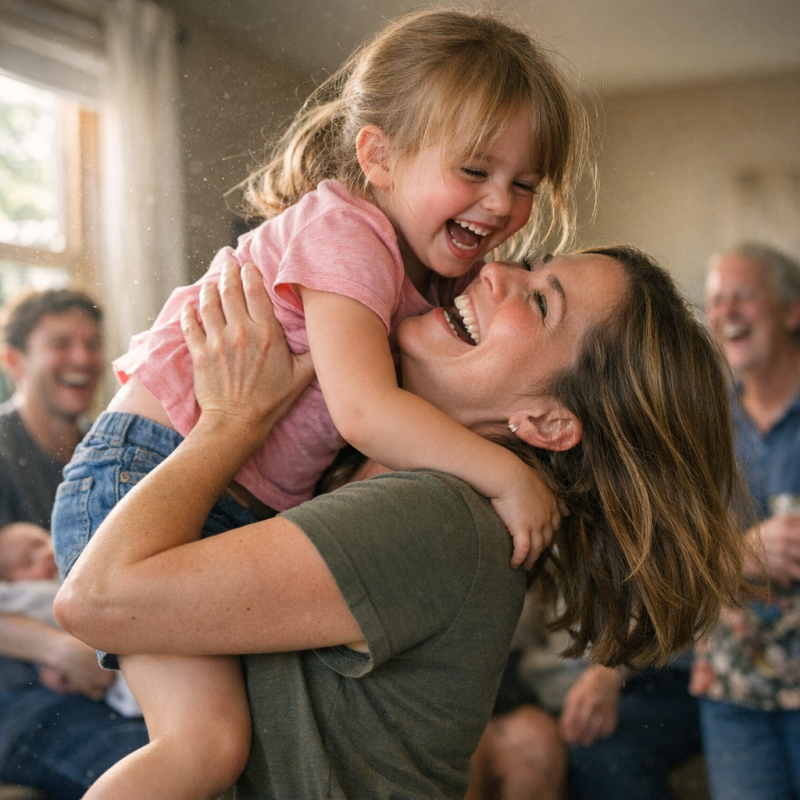 Image by FCT AI