The Job I Chose
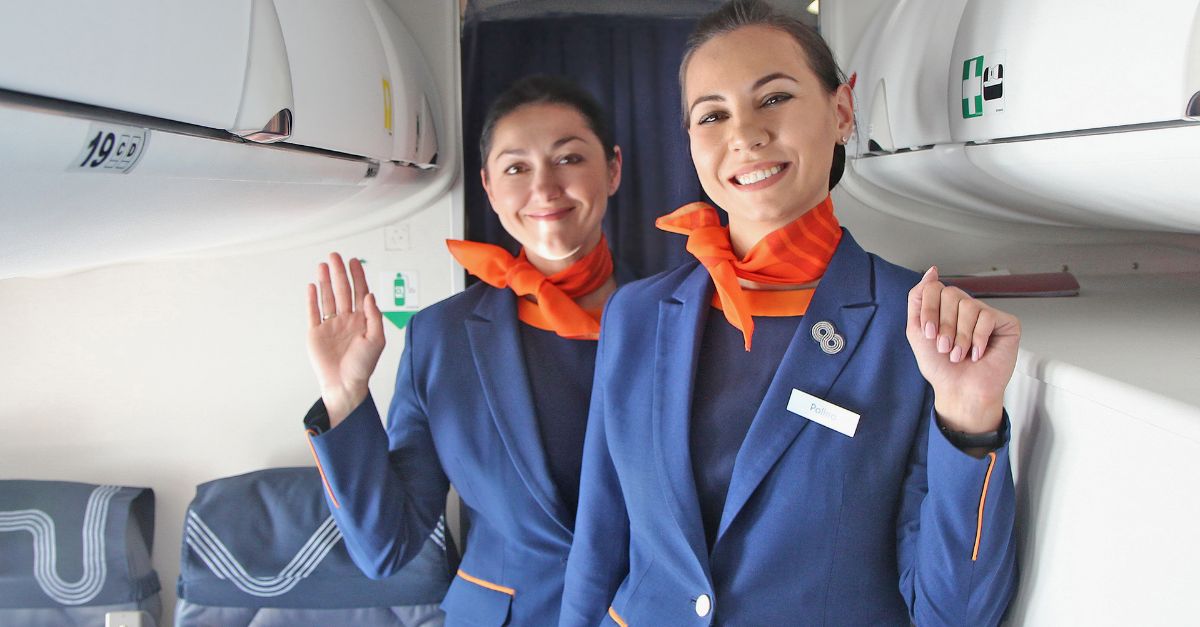
Eight years. That's how long I'd been a flight attendant when this whole thing happened, and honestly, I'd never regretted my choice for a second. People always assumed it was some glamorous job—traveling the world, staying in fancy hotels, meeting interesting people. The reality was a lot less Instagram-worthy. It was managing passenger complaints at thirty thousand feet, dealing with delays you had no control over, and smiling through the kind of exhaustion that settles into your bones. But here's what most people didn't understand: I genuinely loved what I did. There was dignity in it, in making someone's difficult day a little easier, in being the calm voice during turbulence, in remembering that woman's coffee order from her monthly business trips. I took pride in my work. I showed up, did my job with professionalism, and treated every passenger with the same courtesy, whether they were in first class or the last row by the bathroom. That mattered to me. It defined who I was. But on that particular Tuesday morning, I had no idea that everything I believed about my work was about to be tested in ways I never imagined.
 Image by FCT AI
Morning Briefing
The briefing room at five-thirty in the morning always smelled like burnt coffee and disinfectant. I arrived fifteen minutes early, like I always did, my uniform pressed and my name tag perfectly straight. Marcus was already there, reviewing the flight plan with that quiet efficiency he'd perfected over twenty years in the air. Diana checked the emergency equipment with the kind of thoroughness that made you feel safer just watching her. Then there was Lena, who'd only been flying for about six months and still got this excited sparkle in her eyes during pre-flight checks. I remembered having that same energy once, before the routine dulled it down to something steadier, more sustainable. We went through the standard safety protocols, checked the cabin supplies, confirmed our emergency procedures. It was all routine, comfortable in its predictability. I liked knowing what to expect, being prepared for the usual scenarios. The flight to Boston was a short one, barely two hours in the air. Easy money, as Marcus liked to say. As we finished the safety checks, Lena glanced at the passenger manifest and said, 'Looks like we have some VIPs today—hope they're the nice kind.'
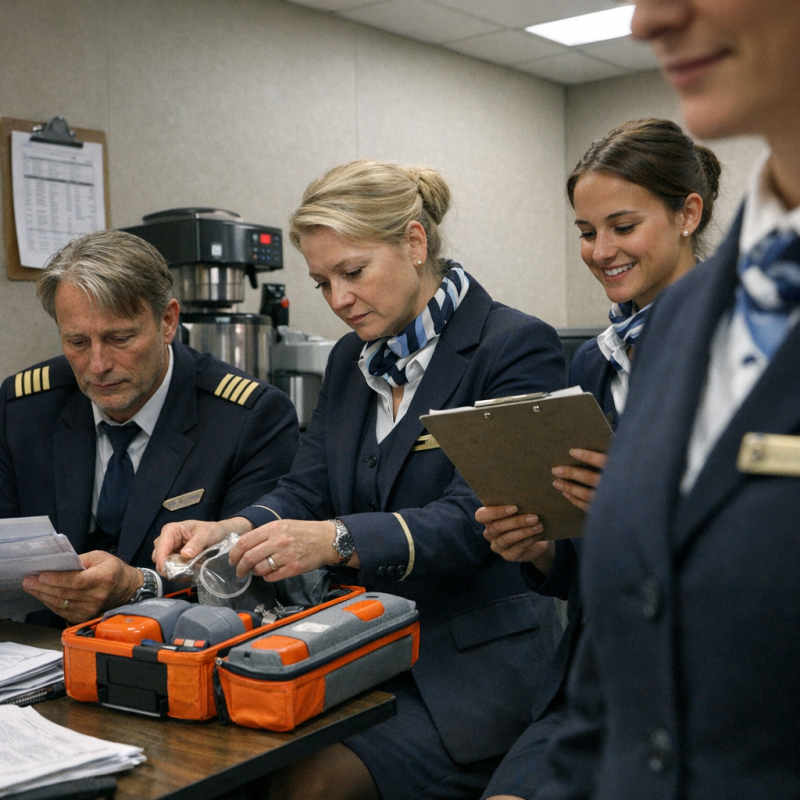 Image by FCT AI
First Impressions
You develop an eye for certain passengers after enough years in the air. The anxious flyers who grip the armrests during taxi. The business travelers who board with headphones already in, signaling they want zero interaction. The families with small children, already apologizing with their eyes before takeoff. Then there are the ones who walk onto the plane like they own it. Ethan was one of those. I noticed him immediately during boarding—eighteen, maybe nineteen years old, wearing a designer jacket that probably cost more than my monthly rent. His sneakers were the limited-edition kind people camped out for, and his watch caught the overhead lights in a way that screamed money. But it wasn't the clothes that caught my attention. It was the way he moved through the aisle, expecting people to shift out of his way without asking, like the world naturally rearranged itself around him. I gave him my standard greeting, warm and professional, the same one I'd given two hundred times before. His father followed quietly behind, observing everything with eyes that seemed to miss nothing, and when I greeted them, only one of them acknowledged my existence.
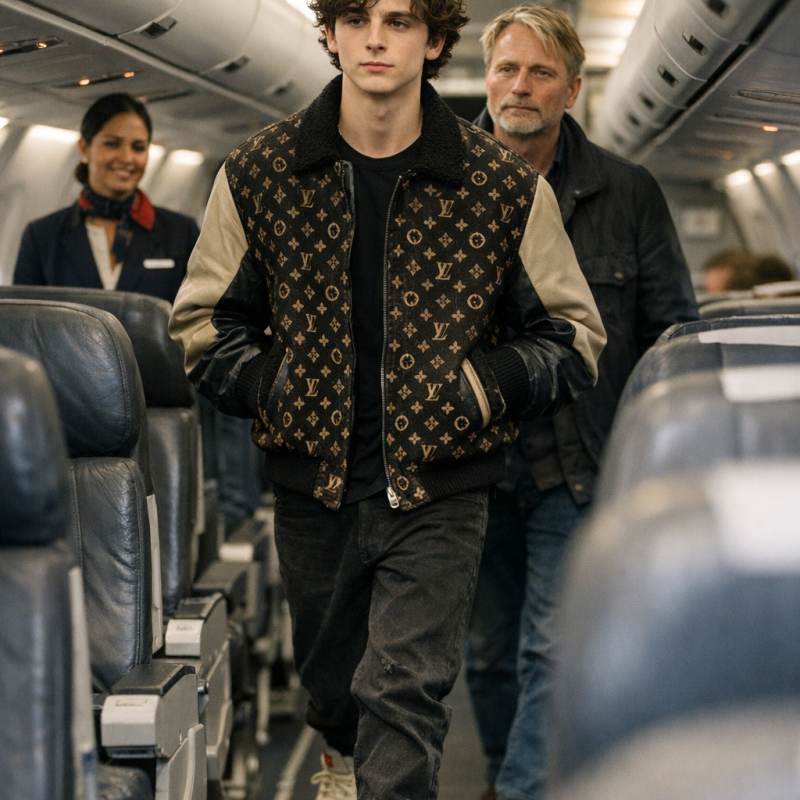 Image by FCT AI
Wrong Seat
Ethan stopped abruptly in the aisle when he reached row twenty-three. 'This can't be right,' he said, loud enough that passengers three rows up turned to look. 'There must be some mistake with my seat.' I kept my voice calm and pleasant. 'Let me check your boarding pass, sir.' He thrust it at me like I'd personally offended him. The ticket clearly showed 23B—middle seat, economy. No mistake. 'I'm sorry, but this is correct,' I told him, still smiling that professional smile I'd perfected over thousands of flights. 'This is economy,' he said, as if I might not have noticed. 'I don't sit in economy.' Behind him, his father stood perfectly still, watching the interaction unfold without saying a single word. No correction, no apology, nothing. Just watching. I explained that all seats in this section were economy, that I'd be happy to help him get settled, that we needed to keep the aisle clear for other passengers. The whole time, I kept expecting his father to step in, to smooth things over the way parents usually did. As I checked his ticket for the third time, I caught Robert's eye—and for just a second, I thought I saw something there, but he looked away before I could understand what.
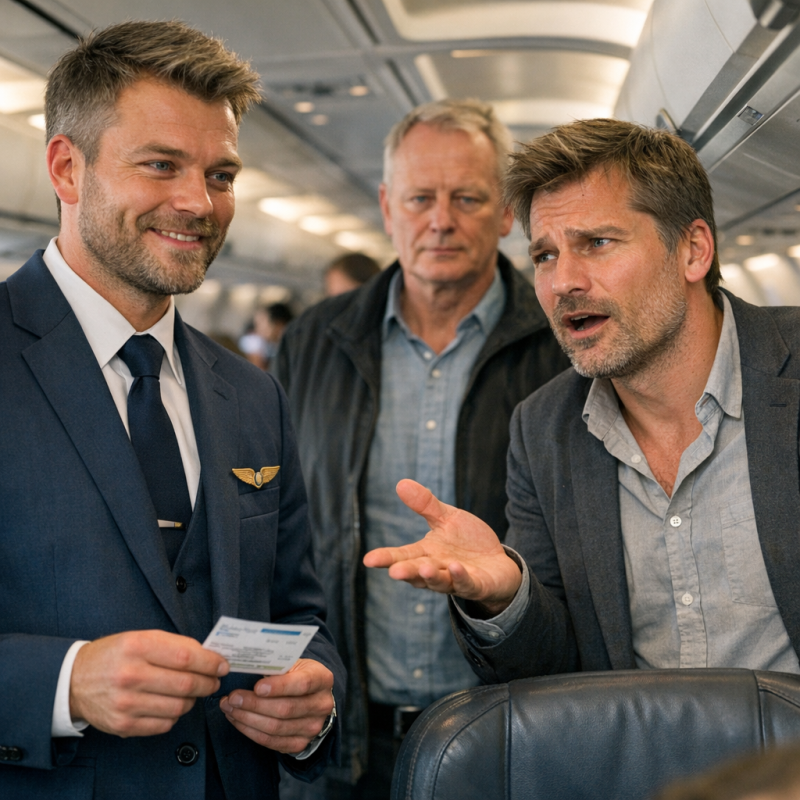 Image by FCT AI
The First Snap
We'd barely finished the safety demonstration when I heard it. That sound. You know the one—fingers snapping together, sharp and dismissive, the kind of gesture you'd use to call a dog. I turned around, already knowing what I'd see. Ethan, lounging in 23B, his hand still raised with two fingers pressed together, looking at me like I was supposed to have been watching him the entire time. 'I need water,' he said. Not 'excuse me' or 'when you get a chance.' Just a statement, like my entire purpose for existing was to fulfill his requests. I felt something hot flash through my chest, but I pushed it down deep where passengers couldn't see it. 'I'll bring that right to you, sir,' I said, my voice steady and pleasant. Professional. Because that's what I did—I stayed professional even when people treated me like I was invisible, like I was less than human. I brought him his water in a plastic cup, and he took it without looking at me, without a thank you, his attention already back on his phone. I told myself it was just one passenger, one flight—but something about the way he looked through me, like I didn't exist, made my stomach twist in a way I couldn't quite name.
 Image by FCT AI
Crew Concern
I was in the galley, gripping the counter a little harder than necessary, when Marcus appeared beside me. He had this way of reading a room—or in this case, reading me—that came from two decades of managing difficult situations at altitude. 'You good?' he asked quietly, his voice low enough that it wouldn't carry. I nodded, not trusting myself to say anything that wouldn't sound bitter. 'The kid in twenty-three,' Marcus said. It wasn't a question. He'd noticed. Of course he'd noticed. 'I can take that section if you want to swap,' he offered, and God, I appreciated that more than I could express. But I shook my head. I didn't want to give Ethan the satisfaction of knowing he'd gotten to me, didn't want to admit defeat barely an hour into the flight. Marcus studied me for a moment, then glanced toward the cabin. 'I've seen his type before,' he said quietly, 'but there's something off about this one—like he's performing for someone.'
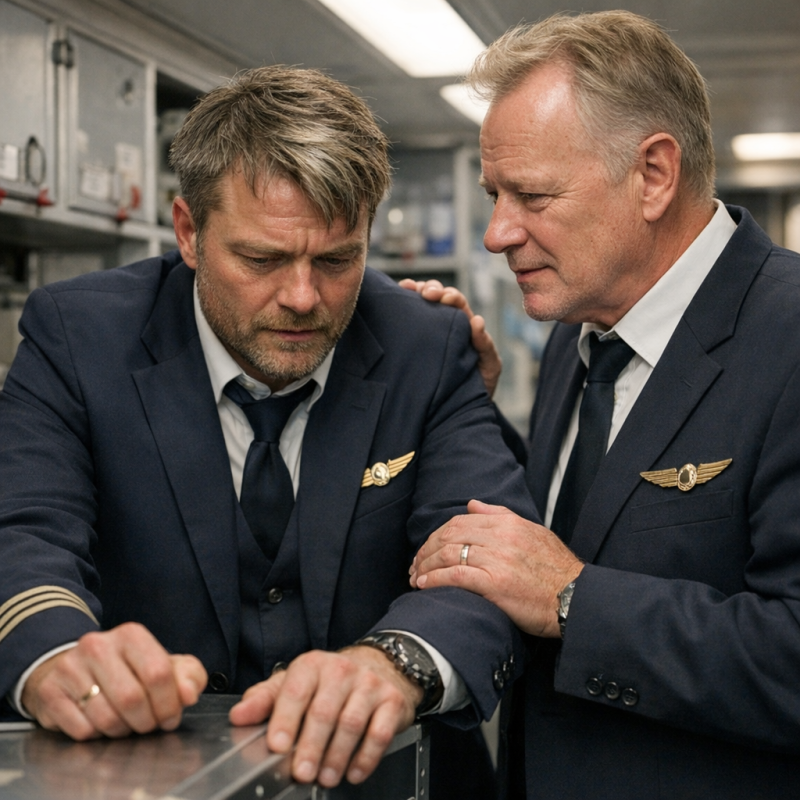 Image by FCT AI
Demands and Complaints
The call button went off six times in the first ninety minutes. Six times. Each one was Ethan. The water wasn't cold enough, so I brought him ice. The blanket I offered was the wrong color—apparently he preferred blue to gray, as if we kept a selection for passengers to choose from. The complimentary snack wasn't what he wanted. Could I check if we had something else? Something better? Each request came with that same entitled tone, that same refusal to make eye contact, like I was a servant who existed solely to cater to his whims. I maintained my composure through all of it. Smiled. Stayed polite. Brought him what I could and explained calmly what I couldn't provide. But inside, I felt something cracking, that professional shell I'd built up over eight years wearing thinner with each dismissive wave of his hand. Other passengers noticed. I could feel their eyes on me, a mix of sympathy and secondhand embarrassment. Each time I walked away from his seat, I felt the weight of other passengers watching, and I wondered how long I could keep my composure intact.
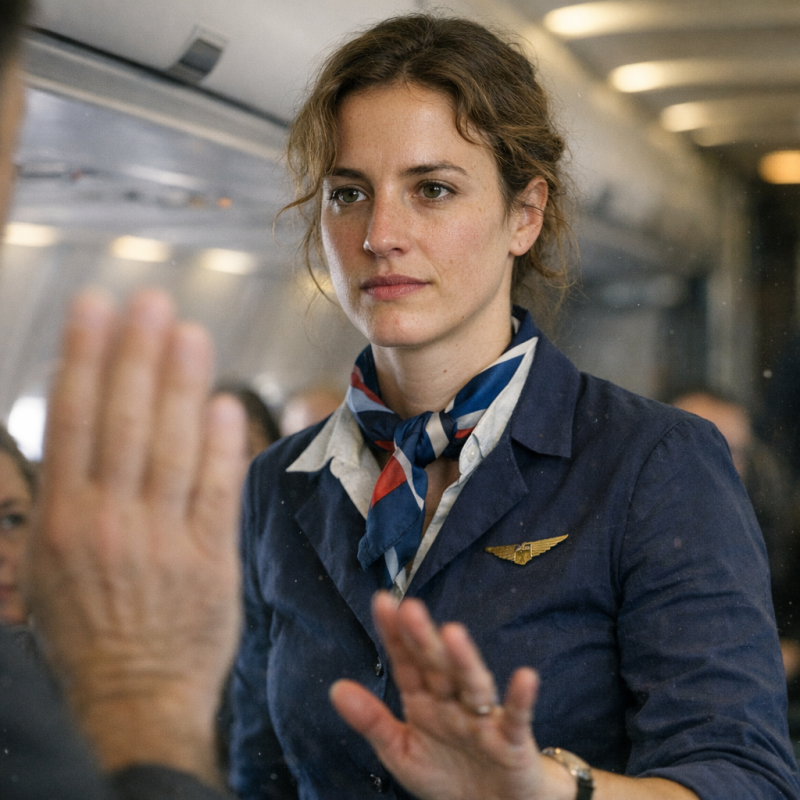 Image by FCT AI
A Passenger Speaks Up
I was picking up trash in the rows near Ethan when the woman in 24A touched my arm gently. Diana—I'd noticed her earlier because she'd been one of the few passengers who'd actually made eye contact and smiled when boarding. She had kind eyes, the sort of warm, knowing expression that suggested she'd raised teenagers of her own. 'I'm sorry you're having to deal with that,' she said softly, tilting her head slightly toward Ethan's seat. Her voice was quiet, meant just for me. 'It's okay,' I said automatically, that programmed response flight attendants give a thousand times. 'It's part of the job.' But she shook her head, her expression gentle but firm. 'No, honey. Being professional is part of the job. Being treated like that isn't.' Something in my chest tightened at her words, that validation I hadn't realized I needed. I wanted to say more, to thank her, but Ethan's call button chimed again behind me. Diana's jaw tightened. 'You're handling this better than I would,' she whispered, 'but honey, you don't have to take everything with a smile—some people need to be told.'
 Image by FCT AI
Turbulence
The seat belt signs chimed on just as I was collecting cups from row 22, and I felt the plane start that familiar shudder—the kind that means you need to get everyone secured, fast. I moved through the cabin quickly, checking overhead bins, making sure everyone was buckled in. The turbulence hit harder than expected, that stomach-dropping sensation that makes even experienced flyers grip their armrests. I was making my way back to my jump seat when I saw it: Ethan's call button, glowing insistently above his head. Then another light. Then another. He was pressing it repeatedly, like a kid playing with a toy. I caught Marcus's eye from the front galley—he shook his head, gesturing for me to sit down. Protocol was clear: during turbulence, crew stays seated. But Ethan kept pressing that button, the chime cutting through the cabin noise, and I could see other passengers starting to look. My jaw tightened as I gripped the seat back beside me, the plane jolting beneath my feet. Over the hum of the engines, I heard his voice cutting through—demanding, entitled, completely oblivious to the rules everyone else was following.
 Image by FCT AI

History's most fascinating stories and darkest secrets, delivered to your inbox daily.
Breaking Point Approach
When the turbulence finally eased and the captain turned off the seat belt sign, I took a breath and walked back to row 4. Ethan was scrolling through his phone, earbuds dangling around his neck, like nothing had happened. 'Yes?' I said, keeping my voice level. He glanced up with that same bored expression. 'Yeah, I'm starving. What do you have that's actually edible? Because that sandwich you guys served earlier looked like something from a gas station.' I felt heat creeping up my neck, but I kept my face neutral. 'We have snack boxes available for purchase, or I can bring you pretzels and—' 'Purchase?' He laughed, sharp and dismissive. 'You're kidding. My dad paid how much for these seats?' I listed his options again, slower this time, my hands clasped in front of me to keep them steady. He waved me off like I was a waitress at some restaurant he'd never return to, already looking back at his phone. When I turned to walk away, he laughed and said something that made my blood run cold: 'Wow, attitude too? Impressive.'
 Image by FCT AI
A Voice of Authority
I froze mid-step, my back still to him, every muscle in my body screaming to turn around and say what I was really thinking. But before I could even decide whether to respond, a voice cut through the tension—low, calm, and absolutely unmistakable in its authority. 'Ethan.' It was Robert. I turned slightly, just enough to see him leaning forward in his seat, his expression harder than I'd seen all flight. 'That's enough,' Robert said, his tone quiet but ice-cold. 'You're embarrassing yourself, and you're being disrespectful to someone doing her job.' Thomas, the businessman in the window seat, had lowered his tablet, watching with obvious interest. Ethan opened his mouth like he was about to argue, but Robert held up one hand. 'I mean it. Not another word.' I stood there, caught somewhere between shock and relief, my heart still hammering from Ethan's comment. Robert's gaze flicked to me briefly—apologetic, almost pained—before returning to his son. The entire row fell silent, and for the first time since boarding, Ethan looked genuinely surprised—like this had never happened before.
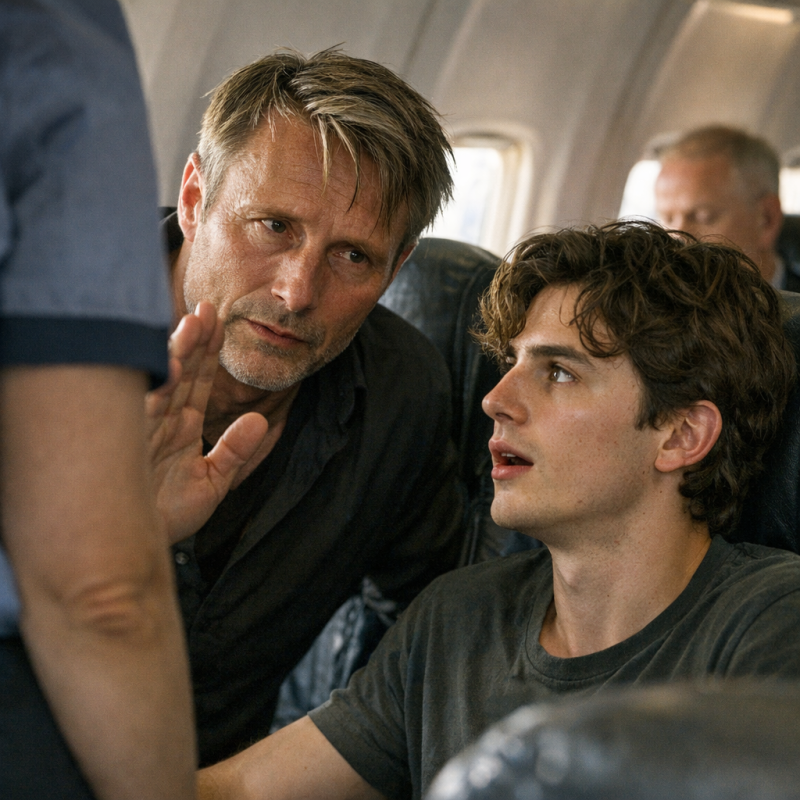 Image by FCT AI
Uncomfortable Silence
Ethan stared at his father for what felt like forever, his jaw working like he wanted to say something but couldn't find the words. Then, without a word, he shoved his earbuds back in, turned toward the window, and pulled his hood up over his head. Just like that, the entitled rich kid vanished, replaced by a sullen teenager who suddenly looked a lot younger than eighteen. I should have walked away immediately—gotten back to work, moved on to other passengers—but I was rooted to the spot, trying to process what had just happened. Robert caught my eye again and gave me the smallest nod, something between an apology and an acknowledgment. I managed a professional smile, the kind that says 'thank you but I'm fine,' even though my hands were still trembling slightly at my sides. The cabin felt different now, the tension that had been building for hours suddenly punctured and deflating into uncomfortable silence. Thomas had gone back to his tablet, and a few passengers nearby had returned to their books and screens, pretending they hadn't been listening. I stood there, caught between gratitude and confusion, unsure whether to thank Robert or simply walk away—and in that hesitation, I felt something shift.
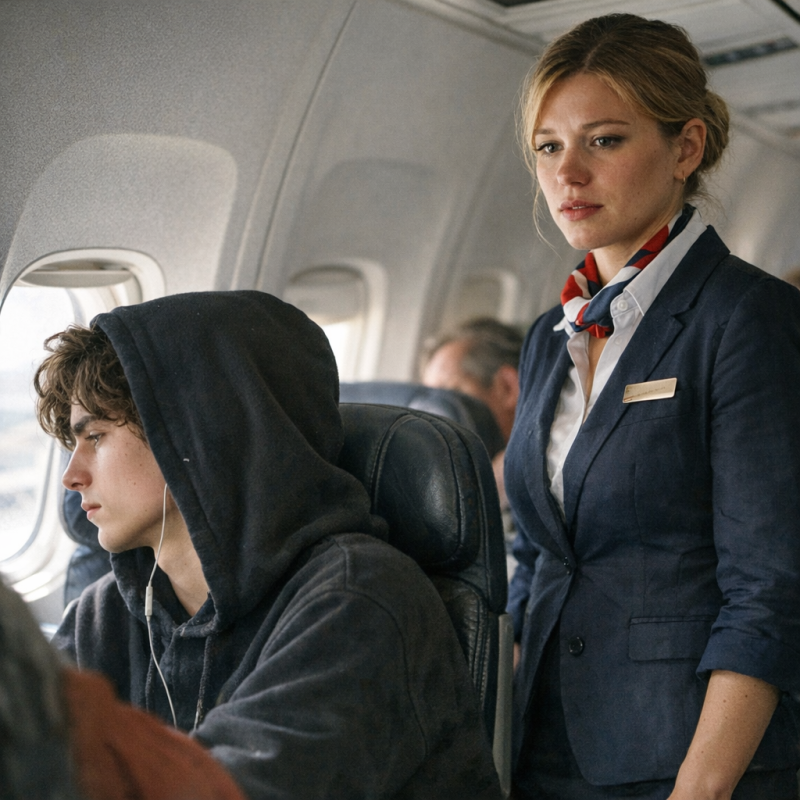 Image by FCT AI
The Apology
I was halfway down the aisle when I heard Robert's voice behind me, quiet enough that only I could hear. 'Excuse me—miss?' I turned back, expecting another request, another demand for something I'd have to politely accommodate. But Robert had stood up, stepping into the aisle, his expression genuinely apologetic. 'I'm sorry,' he said simply. 'For his behavior. For what you've had to deal with today.' The words caught me completely off guard. In eight years of flying, I'd heard a lot of excuses, a lot of dismissals, but actual apologies from family members? Those were rare. 'It's okay,' I started automatically, but he shook his head. 'No, it isn't. You handled that with more grace than most people would have, and you shouldn't have had to.' His voice was steady, sincere in a way that made me believe he actually meant it. I didn't know what to say. Behind him, Ethan remained facing the window, hood up, completely silent. 'I appreciate that,' I managed finally. Robert nodded, but he wasn't done. 'I meant what I said,' he told me, his voice low but firm, 'and I believe apologies should be more than just words.'
 Image by FCT AI
Galley Debrief
I retreated to the galley as soon as I could, my mind still spinning from Robert's words. Lena was restocking napkins, and Marcus was checking the beverage inventory, but they both looked up the moment I walked in. 'Okay, what happened back there?' Lena asked immediately. 'Because from where I was standing, it looked intense.' I leaned against the counter, exhaling slowly. 'The father intervened. Told his son to stop being disrespectful.' Marcus raised his eyebrows. 'Really? That's unexpected.' 'He apologized too,' I added, still trying to make sense of it. 'Like, genuinely apologized. Said his son's behavior wasn't okay.' Lena's expression softened. 'Well, at least someone has some sense. That kid's been a nightmare.' But Marcus was watching me thoughtfully, his arms crossed. 'And how do you feel about it?' I hesitated, because I honestly didn't know. Relief? Validation? Confusion about why it felt like there was more to it? 'I don't know,' I admitted. 'It felt... real, I guess. But also unexpected.' Marcus nodded slowly. 'That father,' he said thoughtfully, 'I've seen people like him—they don't just apologize unless they're trying to make a point.'
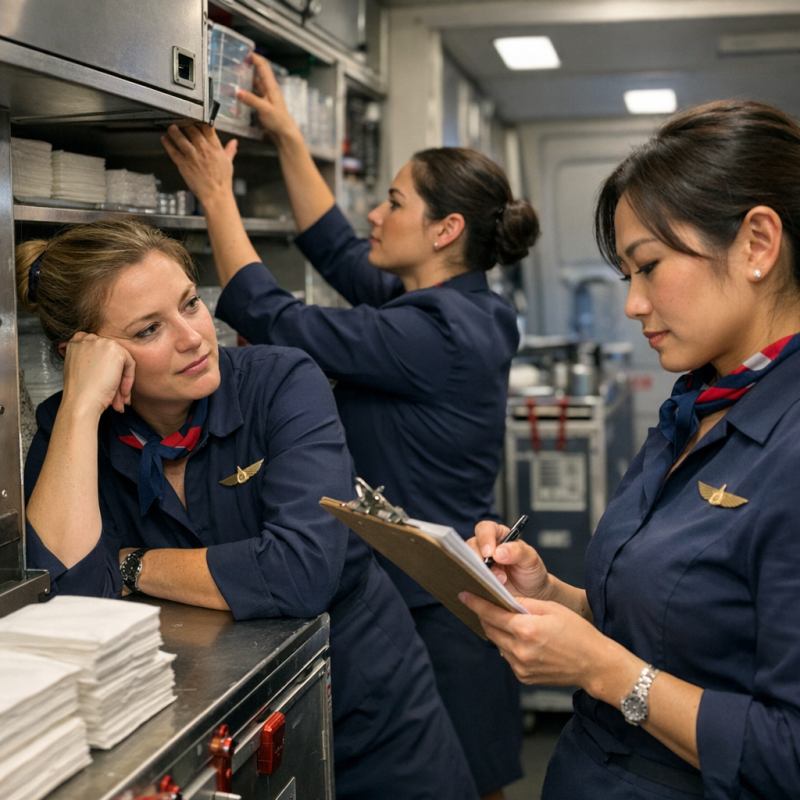 Image by FCT AI
The Rest of the Flight
The rest of the flight passed in an almost eerie quiet. Ethan never pressed his call button again, never made eye contact when I passed by his row. He stayed turned toward the window, hood up, headphones on, like he was trying to disappear into his seat. I went through the motions of my job with mechanical efficiency—collecting trash, offering drinks, checking on passengers—but my mind kept drifting back to that moment in the aisle. Robert's apology had felt genuine, but Marcus's words lingered too: people like him don't apologize unless they're making a point. What point, though? I cleared row 12, smiled at a passenger in 18C who asked for extra pretzels, helped an elderly woman retrieve her bag from the overhead bin. Everything normal, everything routine. But underneath it all, there was this low hum of unease I couldn't shake, like waiting for the other shoe to drop. I glanced toward row 4 as I passed—Ethan still facing away, Robert reading something on his tablet, both of them silent. But as we began our descent, I couldn't shake the feeling that this wasn't over—that something I didn't understand was still unfolding.
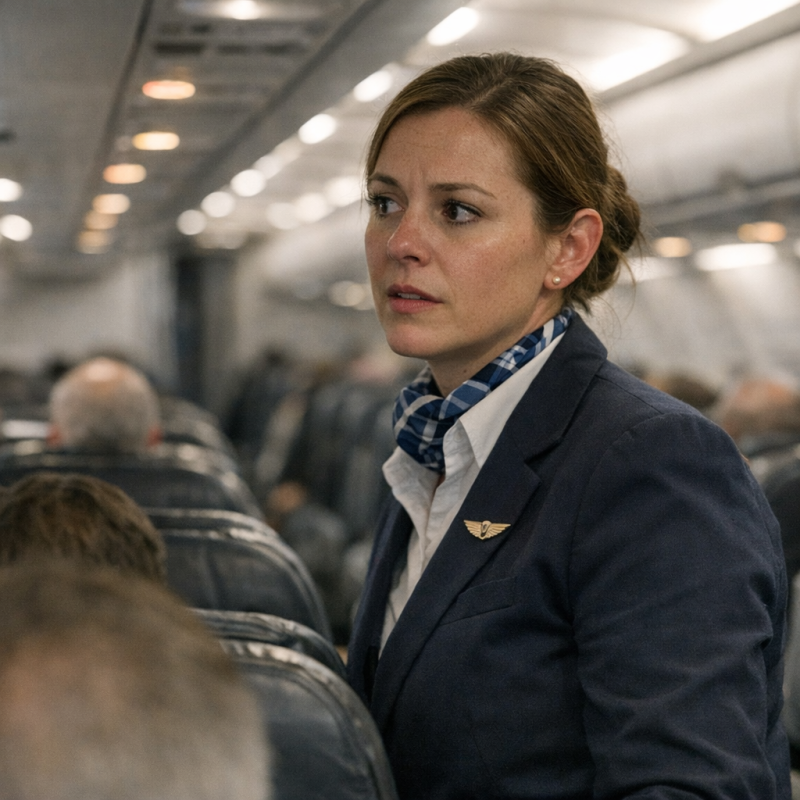 Image by FCT AI
Landing Protocol
The captain's voice crackled over the intercom announcing our final descent, and I shifted into landing protocol mode. I checked seat backs and tray tables, made sure overhead bins were secure, walked through the cabin doing that final sweep we do before touchdown. Everything routine, everything by the book. My body knew these movements so well I could do them half-asleep, which was good because my mind was still elsewhere. I caught Diana's eye as I passed row 24—she gave me a small, knowing smile, and I smiled back, grateful for that small moment of connection. Row 4 was quiet when I approached. Ethan was buckled in, still facing the window, though his hood was down now and his phone was tucked away. Robert had closed his tablet and was sitting upright, hands folded in his lap. He nodded politely as I passed, and I returned the gesture, professional and distant. The plane angled downward, that familiar pressure building in my ears. I made my way to my jump seat and buckled in, watching the cabin one last time. As the wheels touched down, I saw Robert lean over and say something to Ethan—something that made the boy's face flush red.
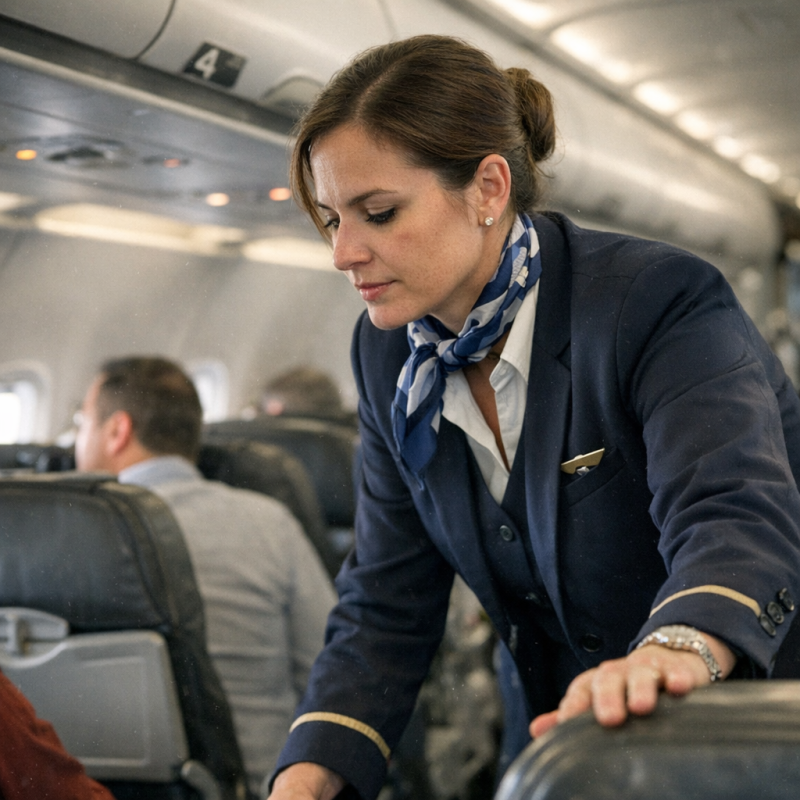 Image by FCT AI
The Wait
The seatbelt sign went off with that familiar ding, and the cabin erupted into the usual chaos—passengers jumping up, yanking bags from overhead bins, crowding into the aisle like the exit might vanish if they didn't move fast enough. I positioned myself near the door with Marcus and Lena, doing what we always do, thanking people as they filed past. 'Thank you for flying with us. Have a wonderful day. Safe travels.' The words came automatically, smile in place, even though my mind kept drifting back to row 4. I could see them from where I stood—Robert and Ethan still seated while everyone around them shuffled forward. They weren't frantically gathering their things or checking their phones. They were just… waiting. Deliberately letting others pass. My stomach tightened with something I couldn't quite name. Marcus noticed too—he gave me a quick glance, eyebrows raised slightly, but said nothing. The crowd thinned, row by row, until there were maybe a dozen passengers left. That's when I saw Robert lean over and say something to his son. Ethan kept his eyes down, refusing to look at me, but his father's gaze was steady—and when their turn came, he stepped forward with purpose.
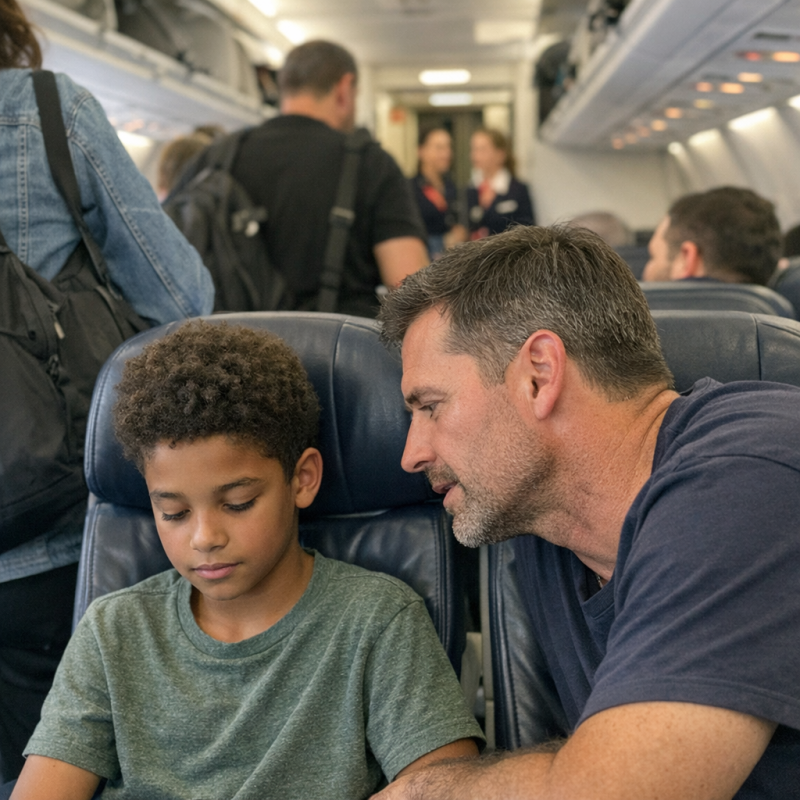 Image by FCT AI
What He Handed Me
Robert approached with that same composed expression he'd worn the entire flight, Ethan trailing a step behind him, head still down. I kept my professional smile in place, preparing to say the same goodbye I'd given a hundred other passengers that day. But instead of just nodding and walking past, Robert stopped directly in front of me. He reached into the inside pocket of his jacket—that expensive navy blazer—and pulled out what looked like a folded piece of paper, though it was thicker than that, more substantial. 'Thank you,' he said quietly, his voice low enough that only I could hear. 'For your patience and professionalism today. Please open this later, when you have a moment.' He pressed it into my hand, and I took it automatically, too surprised to do anything else. I wanted to ask what it was, what he meant, but he was already turning away, one hand on Ethan's shoulder, guiding him toward the exit. I stood there holding this thing, feeling the weight of it against my palm. The weight of it surprised me—it wasn't just paper—and as he turned to leave, I stood there holding something I didn't understand.
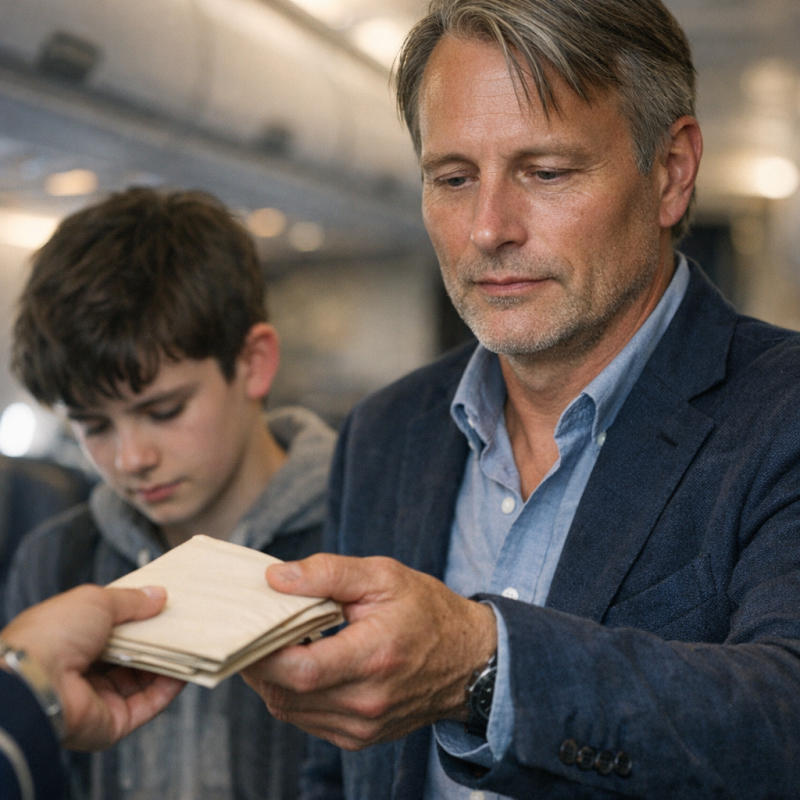 Image by FCT AI
Empty Cabin
The cabin was finally empty, just me and Marcus doing the final walkthrough, checking seat pockets for forgotten items, resetting the space for the cleaning crew. Lena had already headed to the galley to finish her paperwork. I'd tucked whatever Robert gave me into my apron pocket, that weight pressing against my hip like a reminder I couldn't ignore. 'You good?' Marcus asked, and I nodded, saying something about needing to finish up. He left me alone in row 12, and I finally pulled it out—a cream-colored envelope, expensive paper, my name written on the outside in neat handwriting. I unfolded it carefully. Inside was a handwritten note on letterhead and beneath it, a check. Not a small check. A check for twenty-five thousand dollars with a memo line that read: 'Full-year scholarship.' I read the note once, then again, my brain struggling to process the words. Something about recognizing excellence, about how my grace under pressure today reminded him why he valued true professionalism, about wanting to support my educational goals. My hands trembled as I read the words again, trying to understand why a stranger would do this—and what it meant that his son had been watching me the entire time.
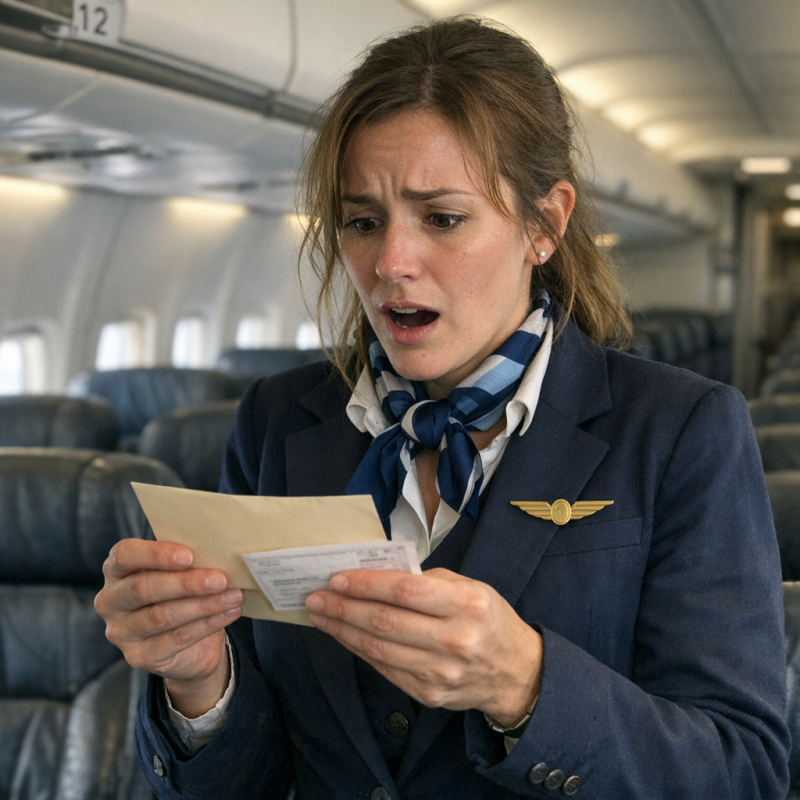 Image by FCT AI
Processing the Impossible
I must have read that note five times, standing there in the empty cabin, trying to make the words make sense. Twenty-five thousand dollars. For a scholarship I hadn't applied for, from a man I'd only met today because his son decided to treat me like furniture. The note was warm, almost admiring—something about 'exemplary service under challenging circumstances' and 'the kind of character that deserves investment.' He'd mentioned wanting to support people who demonstrated real integrity, who could handle pressure with grace. And that part about hoping this contribution to my education would 'help you become everything you're capable of becoming.' It should have felt like a miracle, like one of those random acts of kindness you hear about online. And part of me did feel that—this overwhelming gratitude that made my throat tight. Someone had seen me. Really seen me. Not just as the person bringing drinks and picking up trash, but as someone worth investing in. That felt incredible. But beneath the gratitude was a nagging question I couldn't silence: Why me?
 Image by FCT AI
Sharing the News
I found Marcus and Lena in the galley, both finishing up their paperwork, and the words just tumbled out. I showed them the note, the check, explained what happened. Lena's eyes went wide, and she grabbed my arm, reading over my shoulder. 'Maya, oh my god. This is incredible!' She was grinning, that genuine happiness for someone else's good fortune that made me remember why I loved working with her. She kept reading the note aloud, emphasizing certain phrases like 'exemplary service' and 'real integrity,' and I could feel some of her excitement starting to break through my confusion. But Marcus was quieter. He took the note from Lena's hands, read it carefully, looked at the check, then back at me. His expression wasn't disapproving exactly, just… thoughtful. Careful. 'This is amazing, Maya,' he said, and he meant it. I could tell he meant it. But then he handed everything back to me with a slight frown. 'Did he say anything else to you? Like, when he gave you this—did he explain why? What prompted it?' That question hung in the air, and suddenly Lena's excitement felt a little less certain.
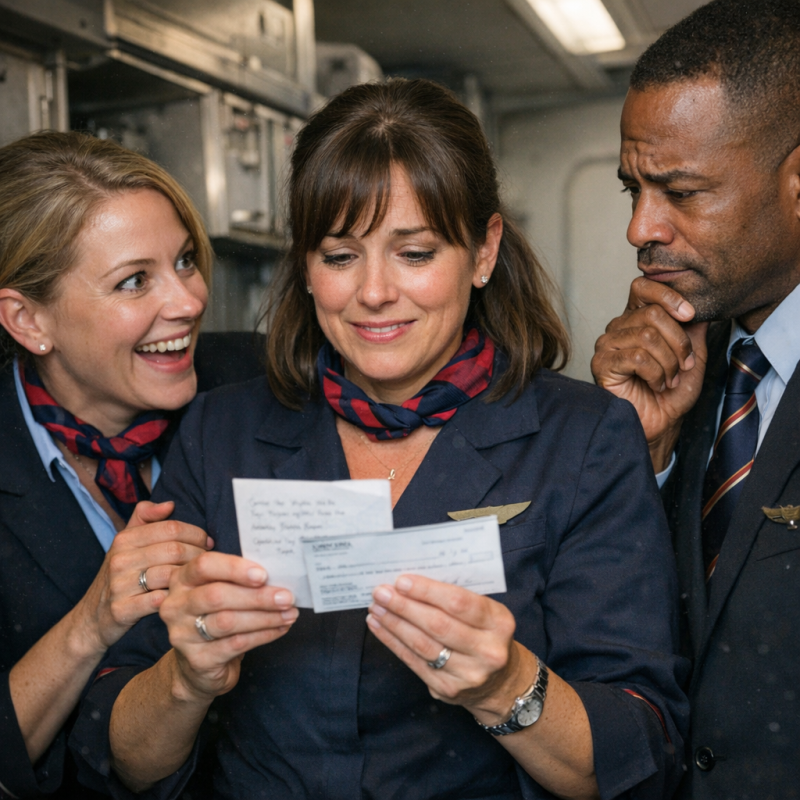 Image by FCT AI
Research Begins
That evening in my apartment, I couldn't stop thinking about Marcus's question. I made tea I didn't drink, stared at the check on my coffee table, and finally opened my laptop. Robert Sinclair wasn't hard to find—his company had a substantial online presence. Sinclair Consulting Group, specializing in customer service excellence training and organizational development. Big corporate clients, testimonials from Fortune 500 companies, photos of Robert speaking at conferences about service culture and employee development. The website was professional, impressive, exactly what you'd expect from someone who clearly had money to give away as scholarships. I clicked through to their 'About' section, read about their mission to elevate service standards across industries. There was even a page about their community investment initiatives—scholarship programs for service industry workers pursuing higher education. So this wasn't completely out of nowhere. He'd done this before, apparently. Given scholarships to people in hospitality, retail, food service. But as I scrolled through the descriptions, something felt off. The company website mentioned scholarship programs, but nothing about evaluating candidates in real-world scenarios—and that absence felt louder than anything I'd found.
 Image by FCT AI
The Follow-Up Email
The email arrived two days later, just as I was starting to wonder if the whole thing had been some elaborate fever dream. The sender was Grace Sinclair, identified in her signature as Robert's executive assistant and operations director. The subject line read: 'Scholarship Award - Next Steps.' My heart did this weird jump-skip thing as I opened it. The tone was professional but warm—she congratulated me on being selected, mentioned that Robert had been very impressed by my professionalism and character during his recent travel experience. Then came the part that made my palms sweat: she wanted to schedule a call to discuss the scholarship details, the application process for the educational program I'd be pursuing, and 'next steps in our partnership.' Partnership. That word stood out. It wasn't 'your education' or 'your scholarship.' It was 'our partnership,' like this was the beginning of something ongoing, something more than just handing over tuition money. She suggested three possible times for a video call the following week, asked me to confirm my availability, and signed off with 'Looking forward to connecting.' The tone was professional but warm, and yet something about the phrasing made me wonder if this was really about a scholarship—or something else entirely.
 Image by FCT AI
Confiding in a Friend
I needed to talk to someone outside of work, someone who wouldn't have the same investment in airline politics or crew dynamics. So I called Jess, my best friend since college, the one person who'd always given me straight answers even when I didn't want to hear them. I explained everything—the rude kid, the father watching, the scholarship, the follow-up email. She listened without interrupting, which meant she was taking it seriously. When I finished, there was this long pause. 'Okay,' she finally said, 'so first of all, twenty-five thousand dollars is life-changing, and you should absolutely be excited about that.' I could hear the 'but' coming. 'But?' I prompted. 'But Maya, think about it. This guy just happened to be on your flight with his badly behaved son, just happened to be watching how you handled it, and just happened to have a scholarship program ready to go?' Another pause. 'Maybe he really was just impressed,' she said, and I could picture her chewing her bottom lip the way she did when she was working through something. 'Maybe he really was just impressed,' she said, 'but Maya—people like that don't just hand out money without a reason.'
 Image by FCT AI
Accepting the Meeting
I spent two days crafting that email. Seriously—two days for what ended up being four sentences. I'd write something, delete it, write it again. Too eager. Too cautious. Too casual. Too formal. Finally, I just went with the simplest version: Thank you for your email. I'd be happy to meet and learn more about the scholarship program. Please let me know what works for your schedule. The cursor blinked at me for a solid minute before I clicked send. My hands were actually shaking. This was just a meeting, I told myself. A conversation. I could walk away at any time if something felt off. No one was forcing me to accept anything. I was just gathering information, being a responsible adult, doing my due diligence. That's what Jess would tell me to do, right? Get the full picture before making any decisions. But as I hit send, I couldn't shake the feeling that I was walking into something I didn't fully understand.
 Image by FCT AI
The Corporate Office
The building was downtown, all glass and steel, the kind of place where everyone walking through the lobby looked like they'd stepped out of a business magazine. I wore my nicest jeans and a blazer, which suddenly felt completely inadequate. Everyone else had tailored suits and leather briefcases and this air of belonging I couldn't fake. The security guard checked my ID against a list, handed me a visitor badge, and directed me to the thirty-second floor. The elevator was silent except for soft classical music. I caught my reflection in the polished doors—flight attendant trying to play corporate professional. When the doors opened, I stepped into a reception area that was all marble and modern art. Everything smelled like expensive furniture polish and ambition. The receptionist, perfectly composed in a crisp white blouse, looked up from her computer with a practiced smile. 'Ms. Martinez?' she asked. I nodded. The receptionist smiled and said, 'Mr. Sinclair has been expecting you,' and I realized I had no idea what that really meant.
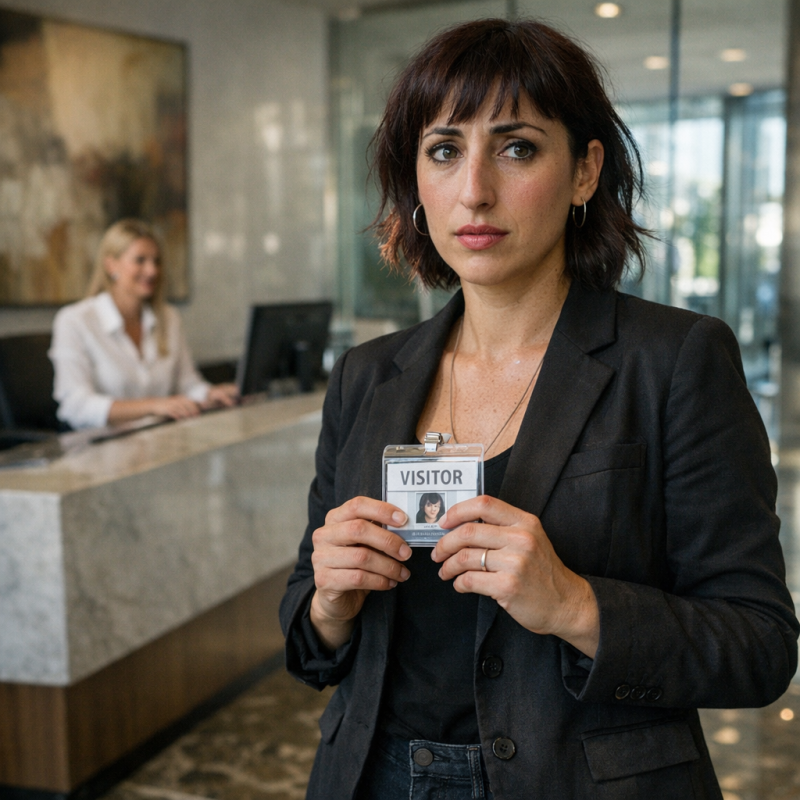 Image by FCT AI
Meeting Grace
Grace Sinclair wasn't what I expected. She was maybe fifty, with short silver hair and the kind of elegant presence that made you sit up straighter without meaning to. Her handshake was firm, her smile warm but measured. 'Maya, it's lovely to meet you in person,' she said, guiding me to a conference room with floor-to-ceiling windows overlooking the city. She offered coffee, asked about my flight schedule, made small talk that felt genuine but also carefully orchestrated. Then she got down to business. 'The Leadership Character Scholarship was established five years ago,' she explained, pulling up a presentation on the screen. 'We identify individuals who demonstrate exceptional character under pressure—people who maintain composure, empathy, and professionalism in challenging situations.' She clicked through slides showing previous recipients, diverse faces in graduation photos. The whole thing looked legitimate, impressive even. 'The program identifies individuals who demonstrate exceptional character under pressure,' Grace said, and something about the way she emphasized 'identifies' made my skin prickle.
 Image by FCT AI
Jordan's Story
That's when Grace introduced Jordan. He was younger than me, maybe twenty-seven, dressed business-casual with an easy smile. 'Jordan received the scholarship three years ago,' Grace explained. 'He's now one of our project coordinators.' We shook hands and he sat down across from me, clearly prepared to give his testimonial. 'The scholarship changed my life,' he said, and I could tell he meant it. 'I was working retail management, stuck, you know? Then I got selected, completed the program, and Mr. Sinclair offered me a position here.' He talked about the coursework, the mentorship, the opportunities. It all sounded amazing, genuinely transformative. But then I asked him how he'd been selected, and something shifted in his expression—just for a second. 'I was helping a customer who was being... difficult,' he said carefully. 'Afterward, I got an email.' Grace's smile never wavered. 'Mr. Sinclair has a gift for seeing potential,' Jordan said carefully, 'but the way he finds people—it's unconventional.'
 Image by FCT AI
The Scholarship Details
After Jordan left, Grace walked me through the actual terms. Full tuition for a sixteen-month leadership and customer service management program at a respected university. Monthly stipend for living expenses. No repayment required. No minimum GPA, though 'we trust you'll take it seriously.' The paperwork she slid across the table was straightforward, surprisingly simple for something worth tens of thousands of dollars. 'This seems incredibly generous,' I said, scanning the contract. 'We believe in investing in people,' Grace replied smoothly. 'Mr. Sinclair built this company on the principle that character matters more than credentials.' I read every line twice, looking for the catch. Where was it? What was I missing? The terms really did seem clean—no obligation to work for the company, no non-compete clause, nothing that would tie me down. Then, as I was about to initial the last page, Grace added something that made my pen pause. 'Of course,' Grace added almost as an afterthought, 'we do hope you'll consider opportunities with the company once you complete your studies.'
 Image by FCT AI
Asking the Hard Question
I set the pen down. 'Grace, can I ask you something directly?' She nodded, her expression open and encouraging. 'Why me? I mean, really. There are thousands of flight attendants. Hundreds of people handle difficult situations every single day. What made Robert Sinclair notice me specifically?' I needed to hear her answer, needed to see if she'd finally give me something real. Grace's smile remained perfectly in place, but her eyes became more guarded. 'Mr. Sinclair has developed quite an instinct for recognizing talent,' she said. 'He reviews many situations, many interactions. Something about your composure that day resonated with him.' It was the same non-answer I'd gotten before, just dressed up differently. 'But how did he even know about it?' I pressed. 'Does he just... watch people? Does someone report back to him?' Grace's expression remained pleasant but completely unreadable. 'He recognized something in you that day,' Grace said with a smile that didn't quite reach her eyes, 'that's all I can say.'
 Image by FCT AI
An Unexpected Ally
I excused myself to use the restroom, needing a minute to think. The hallway was empty, sterile corporate beige and abstract art. I was standing there, trying to decide if I was being paranoid or prudent, when a woman emerged from one of the offices. Mid-thirties, dark hair, professional but approachable. She glanced at my visitor badge, then down the hallway toward where I'd come from. 'You're meeting with Grace?' she asked quietly. I nodded. She moved closer, her voice dropping. 'I'm Claire, marketing manager. Look, I probably shouldn't say anything, but...' She hesitated, glancing around. 'The scholarship program is real, and it does help people. But Robert's methods—the way he finds candidates—it's not as simple as Grace makes it sound.' My heart started beating faster. 'What do you mean?' Claire checked the hallway again. 'If you're smart,' Claire whispered, 'you'll ask to see the full candidate evaluation reports—they keep records of everything.'
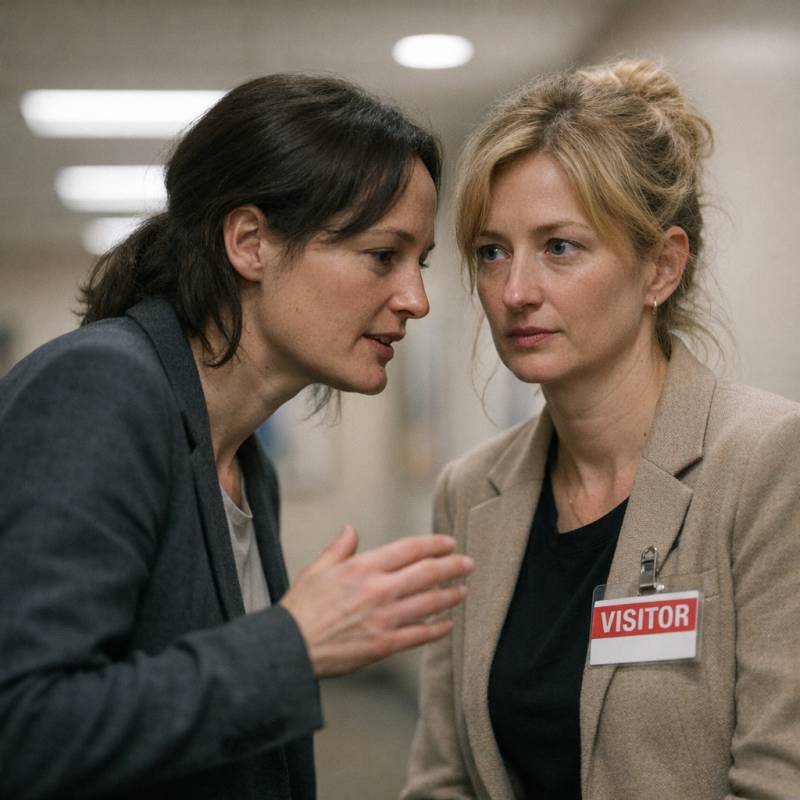 Image by FCT AI
Digging Deeper
I didn't sign anything that day. Told Grace I needed time to think, which she accepted with perfect grace and zero pressure. But the second I got home, I opened my laptop and started searching. 'Robert Sinclair unconventional hiring.' 'Leadership Character Scholarship controversy.' 'Sinclair Company recruitment methods.' Most results were standard corporate PR—awards, charity work, business profiles. But buried deeper, I found scattered forum posts and blog comments. One former employee mentioned 'unorthodox talent identification processes.' Another talked about 'field evaluations' without explaining what that meant. A business ethics blog had a whole discussion thread about companies that 'assess candidates in naturalistic settings.' The language was vague, careful, like everyone was dancing around something they couldn't quite say out loud. Then I found it—a post from two years ago on a business ethics forum. Someone had written a long analysis of emerging recruitment trends. One blog post from a business ethics forum asked, 'Is it ethical to test candidates without their knowledge?' and my stomach dropped.
 Image by FCT AI
The Second Guess
The more I thought about it, the stranger everything seemed. That whole flight kept replaying in my head—Ethan's entitled behavior, Robert's perfectly timed intervention, the way Grace appeared with that scholarship offer days later. It felt too smooth, too convenient. Like dominos falling in a pre-arranged pattern. I'd catch myself thinking: what if this was planned? What if I was being tested that whole time? But then I'd shake it off, feeling ridiculous. Who does that? Who orchestrates an elaborate scenario on a commercial flight just to evaluate someone? It sounded absurd, paranoid even, like something from a conspiracy theory subreddit. Companies have HR departments and formal interview processes. They don't stage elaborate dramas at thirty thousand feet. And yet. The timing. The precision of it all. The way Robert watched me so intently while I dealt with his son. I kept telling myself to stop overthinking, that I was just nervous about this new opportunity and inventing patterns where none existed. Real life doesn't work like that. Except I couldn't quite convince myself. I told myself I was overthinking it—that no one would orchestrate something so elaborate—but the doubt had already taken root.
 Image by FCT AI
Marcus's Warning
Marcus called three days later, which surprised me because we hadn't spoken since that day at the airport. 'I heard you got the scholarship,' he said, his voice careful. 'Congratulations. That's amazing.' There was a pause, long enough that I knew something else was coming. 'Listen, Maya, I need to tell you something. A few years back, I knew someone who got recruited into what seemed like an incredible corporate program. Mentorship, fast-track advancement, the whole package. Turned out the company had been... observing him. Testing him without his knowledge or consent. When he found out, he felt manipulated. Used.' My stomach tightened. 'What happened to him?' 'He left. Felt like he couldn't trust anything about the opportunity once he knew how it started.' Marcus exhaled. 'I'm probably being paranoid, and maybe this is completely different. Robert Sinclair has a great reputation. But I saw how he looked at you that day, and something about it felt calculated. Like he was evaluating you.' 'You think I shouldn't take the scholarship?' 'I'm not saying this is the same thing,' Marcus said, 'but when something feels too good to be true, Maya—it usually is.'
 Image by FCT AI
The Training Program Begins
I accepted the scholarship anyway. Maybe that makes me naive, but I couldn't walk away from an opportunity this big based on vague suspicions. The first training session was held in a sleek conference room at Sinclair Company headquarters—glass walls, modern furniture, that corporate-professional aesthetic that screams success. There were eight of us, all roughly my age, all looking slightly overwhelmed. During the introductions, I started noticing something weird. Everyone had these stories about being 'discovered' in unusual circumstances. One guy had impressed a Sinclair executive while working retail during a difficult customer interaction. A woman mentioned demonstrating leadership during a community crisis. Another had shown integrity in a situation involving a workplace ethical dilemma. None of them had applied through normal channels. They'd all been approached, like me, seemingly out of nowhere. The similarities felt too specific to be random. I leaned toward the woman who'd mentioned the crisis. 'What kind of crisis?' I asked, genuinely curious. She opened her mouth, then hesitated, glancing toward the program coordinator at the front of the room. 'Oh, just... you know, a neighborhood thing,' she said vaguely, suddenly very interested in her notebook. During introductions, one woman mentioned being 'observed during a crisis,' and when I asked her to elaborate, she quickly changed the subject.
 Image by FCT AI
Ethan Again
I ran into Ethan completely by accident two weeks into the program. I was leaving a session, heading toward the elevator, when I saw him coming down the hallway. My whole body tensed—muscle memory from that flight, I guess, bracing for entitled rudeness. But he smiled when he saw me. Actually smiled, warm and genuine. 'Maya, right?' he said, stopping. 'Yeah. Hi.' I kept my voice neutral, professional. Up close, in better lighting, he looked younger than I'd realized. Still had that boarding school polish, but something about his demeanor was completely different. Softer. Almost shy. 'How are you finding the program?' he asked, hands in his pockets, casual but not cocky. Nothing like the finger-snapping teen from the flight. 'It's great. Really valuable.' I studied his face, searching for traces of that other Ethan—the one who'd treated me like hired help. But I couldn't find him. This version seemed genuinely interested, polite, present. It was disorienting, like meeting someone's identical twin with a completely opposite personality. 'Good. That's really good.' He shifted his weight, uncomfortable. 'Listen, Maya. I'm sorry about the flight,' he said quietly, and the sincerity in his voice confused me more than the apology itself.
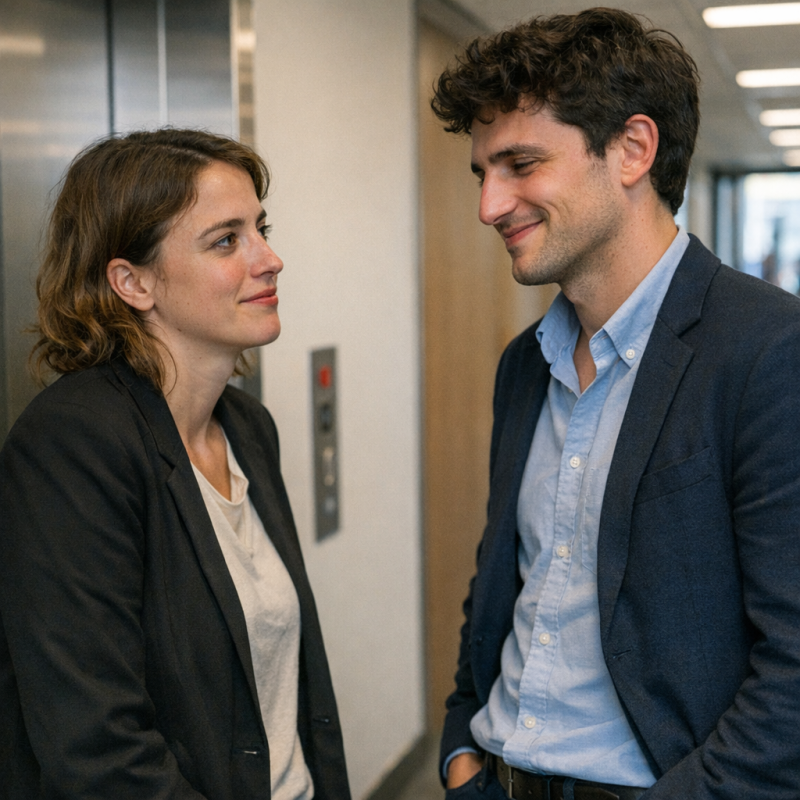 Image by FCT AI
Coffee and Questions
He asked if we could grab coffee. I almost said no, but curiosity won out. We ended up at the café on the building's ground floor, sitting at a corner table with overpriced lattes between us. Ethan seemed nervous, which made zero sense given his behavior on the flight. 'I owe you an explanation,' he started, stirring his coffee without drinking it. 'About how I acted. It wasn't... I mean, I'm not usually like that.' 'Could've fooled me,' I said, unable to keep the edge out of my voice. He winced. 'I know. I know how it looked. But there were reasons—' He stopped, shaking his head. 'What reasons?' 'It's complicated. My father...' Another pause, longer this time. He looked genuinely conflicted, like he wanted to tell me something but couldn't. 'Your father what?' 'He has his own way of doing things. Unconventional methods for evaluating people, finding talent. I can't really talk about it, but—' 'Can't or won't?' 'Both, honestly.' He met my eyes, and I saw something there. Guilt, maybe. Or discomfort. 'Just trust me that there's more to that flight than you realize.' He started to say something about his father, then stopped himself, looking uncomfortable—and I realized he was hiding something.
 Image by FCT AI
The Almost-Truth
I leaned forward, frustrated now. 'Ethan, you can't apologize and then refuse to explain. That's not how apologies work.' 'I know. You're right. I just...' He rubbed his face, looking younger than ever. 'My father has specific ways of identifying people with leadership potential. Real character, not just résumé credentials. He believes you can't assess someone properly in a standard interview—that you need to see how they handle themselves in authentic situations.' My heart started beating faster. 'What does that mean?' 'It means he looks for people who do the right thing even when it's difficult. Who maintain professionalism under pressure. Who treat everyone with respect regardless of circumstances.' The pieces were starting to click together in my head, forming a picture I didn't want to see. 'And the scholarship program?' 'It's for people he thinks have that kind of character. People who've demonstrated it in real situations.' He was being deliberately vague, dancing around something specific. 'People like you, Maya. You impressed him.' 'During the flight,' I said slowly. 'Yes.' 'When I was dealing with you.' He looked down at his coffee. 'Just know that he saw something in you,' Ethan said, 'and in this company, that means more than you realize.'
 Image by FCT AI
Late Night Research
I couldn't sleep that night. Kept replaying the conversation with Ethan, his careful non-answers, the guilt in his eyes. At two in the morning, I gave up and opened my laptop, searching with new keywords: 'Robert Sinclair leadership assessment,' 'authentic character evaluation,' 'unconventional talent identification.' This time I found more. An article from a business magazine about his management philosophy. 'Traditional interviews reveal what candidates want you to see,' he'd said in the piece. 'But character shows itself in unguarded moments—when people face genuine challenges and don't know anyone's watching.' Another article mentioned his controversial stance on recruitment transparency. A blog post from a former employee described 'field assessments' without elaborating on what that meant. Then I found a video of a panel discussion where Robert spoke about hiring practices. The moderator asked how he identified leadership potential. His answer made my blood run cold. 'You can't measure character in a questionnaire or during a rehearsed interview,' he'd said, speaking directly to the camera with absolute certainty. 'You have to observe people in real situations, facing real pressure. You have to see who they are when they don't know they're being evaluated.' One quote stood out: 'You can't measure character in an interview—you have to see it when people don't know they're being watched.'
 Image by FCT AI
Connecting the Dots
I grabbed a notebook and started writing everything down, laying it out like evidence. The flight: Ethan's over-the-top rudeness, his father watching every move I made, the way Robert intervened at exactly the right moment to witness my response. The aftermath: Grace's immediate appearance with the scholarship offer, the carefully phrased letter about 'demonstrating character under pressure.' The training program: everyone recruited through unusual circumstances, all involving some kind of test or challenge. Ethan's apology that wasn't really an apology, more like a confession he couldn't quite make. His guilty expression. His careful words about his father's 'unconventional methods.' Robert's philosophy about observing people when they don't know they're being watched. I stared at my list, connections forming like constellations in my mind. Each point by itself could be coincidence. But together? The pattern was too clear, too precise. Robert hadn't just noticed me on that flight. He'd been there deliberately. And Ethan's behavior—God, had that been deliberate too? A performance designed to test me? The way Robert watched everything, the timing of his intervention, Ethan's sudden silence, the scholarship appearing so quickly—it all felt too coordinated to be coincidence.
 Image by FCT AI
Confronting Grace
I walked into Grace's office the next morning without an appointment. She looked up from her computer, surprise flickering across her usually composed face. 'Maya, I wasn't expecting—' 'I need to know the truth,' I said, staying on my feet. 'About how I was really selected for this scholarship.' Her expression shifted, became carefully neutral. Professional. 'You were selected based on merit, as I've explained—' 'Grace, please.' I placed my notebook on her desk, my list of connections visible. 'The timing. The circumstances. Robert Sinclair being on that specific flight. His son's behavior. The scholarship offer appearing within days. It's all too coordinated to be coincidence, and we both know it.' She stared at the notebook for a long moment. When she looked up, something had changed in her face—a crack in that professional veneer. Her shoulders sagged slightly. 'Maya, I...' She paused, choosing her words carefully. 'My role is limited in these matters. I facilitate the process, but I don't design it.' My pulse quickened. 'So there is a design.' 'I think you should speak with Mr. Sinclair directly,' Grace said, her professional mask finally slipping, 'he's the only one who can explain.'
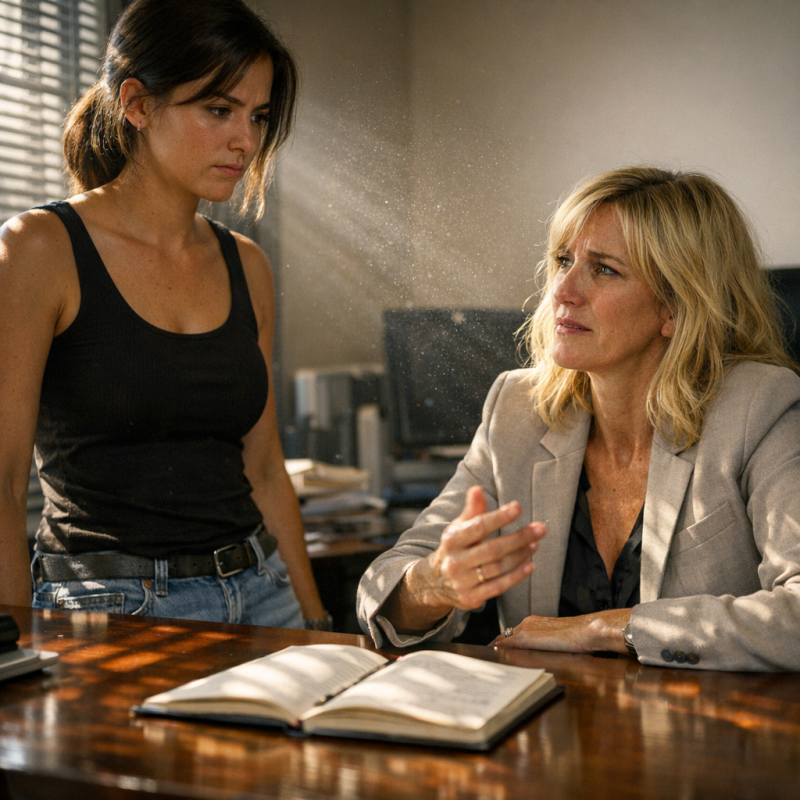 Image by FCT AI
The Meeting Request
The email came that afternoon. Brief. Professional. Robert Sinclair would meet with me Friday morning at ten. Three days to wait. Three days of my mind spinning through every possibility, every scenario. I practiced what I'd say, then scrapped it and practiced again. How do you confront someone with that kind of power? Someone who'd essentially admitted—through Grace's careful deflection—that I'd been manipulated from the start? I told myself to stay calm, professional. To remember that I'd earned my place here regardless of how I'd been selected. But underneath that rationality, anger simmered. He'd used me. Tested me without my knowledge or consent. Played with my life like I was some kind of experiment. By Thursday night, I couldn't sleep. I kept replaying that flight, seeing it differently now. Robert's careful observation. Ethan's over-the-top rudeness. The perfectly timed intervention. Every moment suddenly felt staged, rehearsed, designed. Friday morning, I dressed carefully. Professional but not submissive. Confident but not aggressive. In the elevator to his floor, my hands shook slightly. I didn't know if I was about to have my suspicions confirmed or discover something even more unsettling—but either way, I couldn't turn back now.
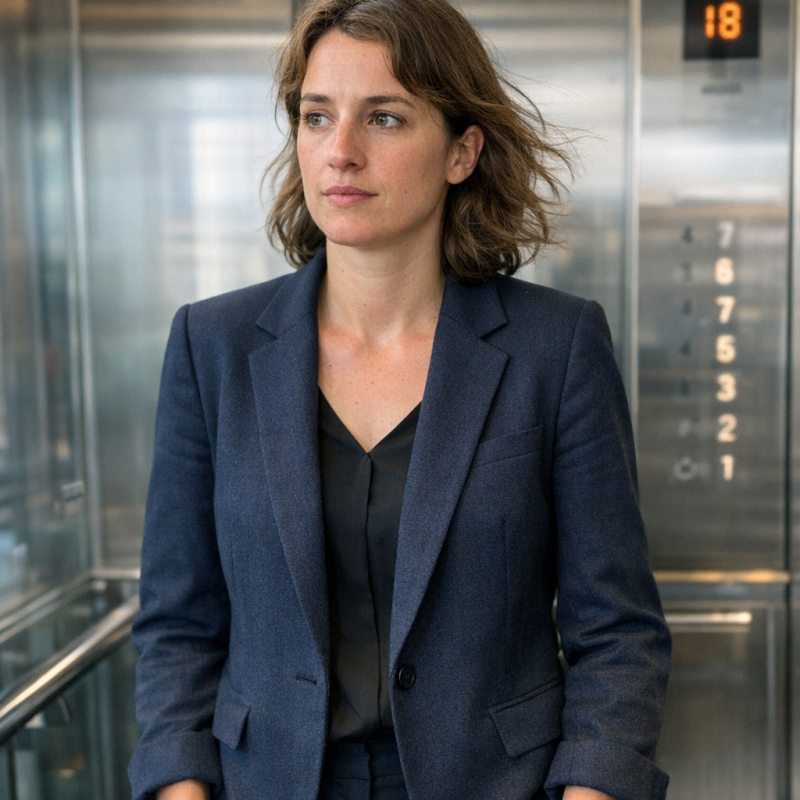 Image by FCT AI
Face to Face
Robert's office was exactly what I'd expected: floor-to-ceiling windows, minimalist furniture, the kind of space that projected power without shouting about it. He stood when I entered, gestured to a chair across from his desk. His expression was unreadable. 'Maya, thank you for coming.' I sat, spine straight, meeting his eyes. 'I'm here because Grace suggested you're the only person who can explain what really happened.' He nodded slowly, settling into his own chair. 'You're right to want answers. You deserve them.' The acknowledgment caught me off guard. I'd expected deflection, corporate speak, maybe even denial. 'I've built my career on understanding people,' he continued, his voice measured. 'Not their résumés or their rehearsed interview responses, but who they actually are when circumstances test them.' My throat felt tight. 'And that flight?' 'That flight revealed exactly what I'd hoped to see.' He leaned forward slightly, his gaze direct. 'Most people perform in interviews. They present a carefully constructed version of themselves. But true character shows itself in authentic moments, under genuine pressure.' The room felt smaller suddenly. 'What happened on that flight,' he said carefully, 'was not an accident—and I think you've already figured that out.'
 Image by FCT AI
The Philosophy
Robert stood, walking to the window. 'Traditional recruitment methods are fundamentally flawed,' he said, his back to me. 'People research companies, practice their answers, present whatever version of themselves they think will get hired. What I learn from that process is how well someone can perform—not who they actually are.' I watched him, my anger mixing with something like fascination. 'For leadership positions especially, I need to know how people respond to unexpected challenges. To rudeness. To pressure. To situations where there's no script and no time to craft a perfect response.' He turned back to me. 'A controlled interview tells me nothing about whether someone will maintain composure during a crisis, or stand firm when challenged by difficult personalities, or treat people with dignity even when they're being treated poorly themselves.' It made a twisted kind of sense. I could see the logic, even as I recoiled from it. 'So you create situations,' I said slowly. 'Real situations, with real stakes and real people. You observe without their knowledge, see how they respond when they think no one's evaluating them.' 'Exactly.' His expression didn't change. 'So you use real people,' I said slowly, 'in real situations, without their consent or knowledge—to test them?'
 Image by FCT AI
The Admission
He returned to his chair, meeting my eyes steadily. 'I do. I have. Multiple times.' The admission landed like a stone between us. No deflection, no corporate euphemisms. Just the truth, stated plainly. 'The flight wasn't the first time,' he continued. 'I've staged scenarios in restaurants, hotel lobbies, business conferences. Anywhere I might observe how someone handles authentic pressure.' My stomach twisted. 'And everyone involved? They're just... props in your experiments?' 'The people who participate—family, colleagues—they know their role. But the person being evaluated, yes, they don't know. That's essential. The moment someone knows they're being watched, they perform.' He leaned back slightly. 'But here's what I want you to understand: the opportunities I offer afterward are completely genuine. The positions are real, the support is real, the career advancement is real. I'm not manipulating people for entertainment. I'm identifying talent that traditional methods miss.' I thought about the scholarship, the training program, everything I'd gained. It was real, valuable, transformative. But it had been built on deception. 'The question is,' he said, meeting my eyes, 'whether you believe that the end justifies the means—and whether you still want what I'm offering.'
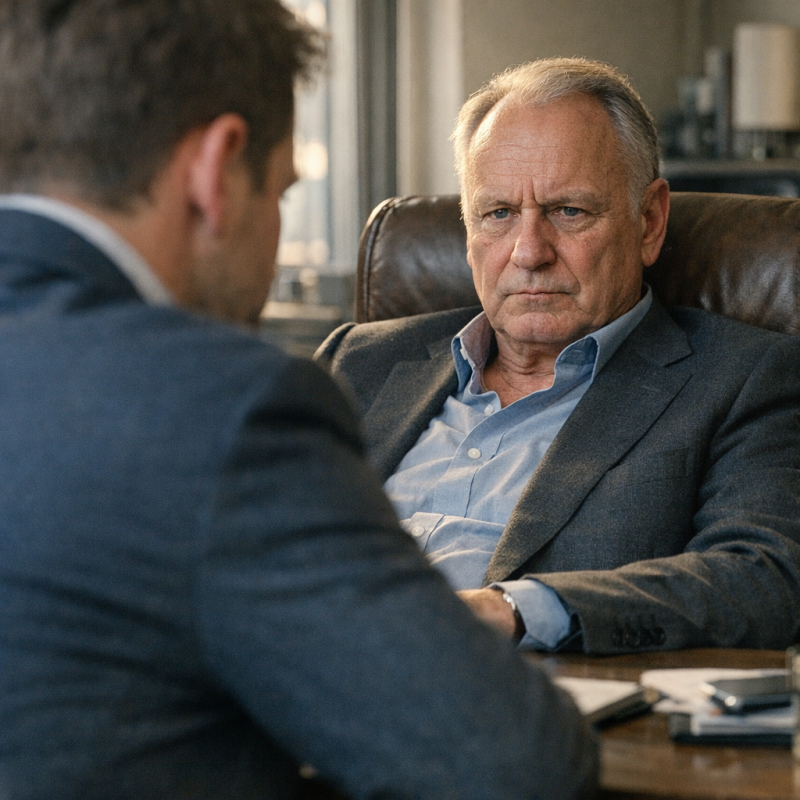 Image by FCT AI
The Bigger Picture
I opened my mouth to respond, but he raised a hand. 'Before you answer, let me be completely transparent about what I'm offering.' He pulled a folder from his desk drawer, slid it across to me. 'The scholarship was never just a scholarship. It was an extended interview.' I stared at the folder, afraid to open it. 'A leadership position opened in my organization six months before that flight. High-level, significant responsibility, overseeing how we treat employees across multiple divisions. I needed someone with genuine integrity, not performed integrity. Someone who'd actually walk the walk when no one was watching.' My hands felt numb as I opened the folder. Job description. Salary figures that made my breath catch. Benefits that seemed almost unreal. 'I spent weeks identifying potential candidates,' he continued. 'People in service industries who consistently demonstrated character under pressure. You were on my shortlist because of recommendations from colleagues who'd flown with you before. But I needed to see for myself.' The papers blurred slightly in my vision. This whole time. Every moment. My breath caught as he continued, 'Everything you've done since that flight has been part of your evaluation—and you've exceeded every expectation.'
 Image by FCT AI
Questions Without Answers
I set the folder down, my hands shaking now. 'I need to know exactly what was staged and what was real.' 'Maya—' 'No.' My voice came out sharper than intended. 'If you want me to even consider this, I need full disclosure. The flight—was Ethan instructed? The training program—were those situations manipulated? The other scholarship recipients—were they all tested too?' Robert's expression shifted, became carefully measured. 'Some of that I can answer. Some I won't.' 'Won't or can't?' 'Won't.' He held my gaze. 'Part of this process requires a level of trust. If I reveal every methodology, every technique, it compromises future assessments. And yes, I plan to continue this approach.' Fury rose in my chest. 'So you're asking me to accept a position built on manipulation, without even knowing the full extent of how I was manipulated?' 'I'm asking you to decide whether the opportunity in front of you is worth accepting, regardless of how unconventional the recruitment was. Whether you can trust that my methods, while unorthodox, are ultimately designed to identify and elevate genuinely good people.' He stood, and I did too. 'Some things,' he said, 'you need to decide whether to trust—or walk away from entirely.'
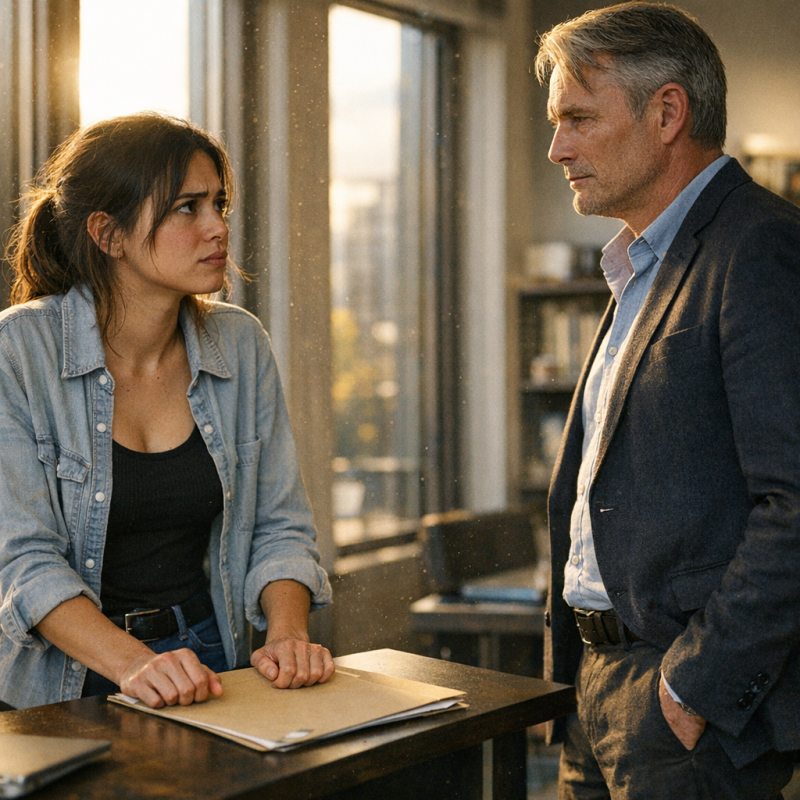 Image by FCT AI
The Full Truth
I turned toward the door, then stopped. 'Before I make any decision, I need to know about Ethan. Was he part of it? Was his behavior on that flight deliberate?' The silence stretched long enough that I knew the answer before he spoke. 'Yes.' The word hit like a punch to the gut. 'I instructed him on how to behave. What to say. When to escalate. He followed the script precisely.' My vision actually blurred for a second. That teenager's contempt, his finger-snapping, his dismissive tone—all of it performed. Deliberately designed to provoke me. 'He was sixteen,' I whispered. 'Old enough to understand what we were doing and why.' Robert's voice remained steady. 'I've been teaching him about character assessment since he was young. About how to identify genuine integrity versus performed courtesy. He understood that we needed to create a situation that would reveal your true nature under pressure.' I thought about Ethan's apology at the training session, his guilty expression, his careful words. 'My son is a good kid,' Robert said quietly, 'and he hated every second of what I asked him to do—but he did it because I taught him that character assessment requires seeing people at their worst moments, not their best.'
 Image by FCT AI
Processing the Betrayal
I made it to the parking garage before the shaking started. Leaned against my car, keys in hand, trying to breathe. The fluorescent lights hummed overhead, casting everything in that sickly yellow-green glow that made me feel like I was underwater. Everything I'd believed about that flight—about my response, about standing up for myself—had been orchestrated. Directed. Robert had written the script, Ethan had performed it, and I'd been the unknowing star of their little morality play. The training program, the job offer, even this conversation—had any of it been real? Or was I still being tested somehow? I wanted to be grateful. This was an incredible opportunity, the kind of career leap people dream about. But I also wanted to drive straight to Marcus's place and rage about the manipulation, the arrogance, the sheer audacity of using a sixteen-year-old kid as a prop in some elaborate character assessment. My phone buzzed with a calendar reminder: 'Decision deadline - 48 hours.' Two days to figure out whether I was flattered or furious, whether this was validation or exploitation. As I walked out, I realized that every choice I made from this point forward would define not just my career—but who I believed I was.
 Image by FCT AI
The Support System
Marcus answered on the second ring. 'You sound weird. What happened?' I told him everything. The whole twisted story spilled out while I sat in my car, watching the garage lights flicker. When I finished, the silence stretched so long I checked to make sure the call hadn't dropped. 'Say something,' I finally managed. 'I'm trying to figure out if I'm more impressed or disturbed,' he admitted. 'That's some next-level psychological manipulation, but also... Maya, he chose you. Out of however many people he's tested, you're the one he wants.' 'Because I passed his sick little experiment.' 'No,' Marcus said firmly. 'Because you responded with integrity when you thought nobody was watching. That matters. The method is super questionable, but the result? That's real.' I rubbed my eyes. 'He used me, Marcus. He used his own son.' 'He did. And now you have to decide if the opportunity is worth working for someone with those methods. But here's the thing—you'd be in a position to change how he does things. That's power.' I hadn't thought about it that way. 'The question isn't whether what he did was right,' Marcus said, 'it's whether you're willing to work for someone who believes it is.'
 Image by FCT AI
The Decision Point
I spent the next morning doing what I always do when I'm overwhelmed: I made a list. Reasons to accept sat on the left side of the page. Career advancement. Financial security. Chance to influence company culture. Validation of my skills and character. On the right: manipulation, ethical concerns, broken trust, working for someone who treats people like test subjects. The columns balanced out almost perfectly, which somehow made everything worse. I added more items. Subtracted others. Reorganized by priority. Nothing helped. Because the real question wasn't on the page at all. It was deeper than pros and cons, bigger than career trajectory. If I accepted, was I endorsing his methods? If I walked away, was I letting pride cost me an opportunity I'd earned—however unconventionally? My phone sat on the table, Marcus's words echoing: You'd be in a position to change things. That assumed Robert would let me. That assumed I had that kind of influence. That assumed I wouldn't slowly become someone who justified elaborate deceptions as 'character assessment.' I made a list of reasons to accept and reasons to walk away, but the truth was simpler and more painful: I had to decide what kind of person I wanted to be.
 Image by FCT AI
Confronting Ethan
I found Ethan in the company coffee shop, hunched over a laptop. He saw me coming and his whole body tensed. 'Can we talk?' I asked. He nodded, closing the laptop like he'd been expecting this. We moved to a corner table. 'I know what your father told me,' I started. 'But I need to hear it from you. What was it like? Playing that role?' He stared at his coffee cup. 'Honestly? Awful. I kept thinking about how you probably dealt with actual entitled creeps all the time, and here I was, adding to it deliberately.' His voice cracked slightly. 'Dad explained it was about character assessment, about seeing how people respond under pressure. He said it was important for the company. But the whole time, I felt like I was becoming exactly the kind of person I hate.' 'Did you want to do it?' 'No. But Dad's been teaching me about business psychology since I was a kid. He believes you can't know someone's true character without stress-testing it. I thought... I thought I was helping identify someone exceptional. I didn't think about what it would feel like for you.' 'I felt like garbage the entire time,' he admitted, 'and if you decide to walk away, I wouldn't blame you—I'd probably respect you more for it.'
 Image by FCT AI
The Counteroffer
I requested another meeting with Robert. His assistant seemed surprised but scheduled it for that afternoon. When I walked into his office, he was standing by the window, hands in his pockets. 'I've made my decision,' I said before he could speak. 'I'll accept the position. But I have conditions.' His eyebrows rose slightly. 'Go on.' 'Your evaluation methods need to change. No more unwitting subjects. If you're going to test people, they deserve informed consent. You can still assess character, but not through deception.' He turned fully toward me. 'That would fundamentally alter the methodology.' 'Good. Because your methodology is ethically questionable at best.' My heart was hammering, but my voice stayed steady. 'You want me for this role because I have integrity. Well, my integrity requires that I work for a company that respects people's autonomy—even during evaluation.' 'You're asking me to compromise the effectiveness of my assessment process.' 'I'm asking you to evolve it. Find new methods. Better ones. Ones that don't require manipulating teenagers or deceiving employees. If you can't do that, then maybe I'm not the right fit after all.' Robert leaned back in his chair, studying me for a long moment, and then he did something I didn't expect—he smiled.
 Image by FCT AI
Negotiating Power
The smile disappeared as quickly as it came. 'You realize what you're asking?' 'I realize what I'm requiring,' I corrected. 'There's a difference.' Robert moved back to his desk, fingers drumming once against the wood. 'My methods have identified exceptional talent for fifteen years. They work precisely because subjects don't know they're being evaluated. Remove that element, and you remove authenticity.' 'You remove deception,' I countered. 'Authenticity and ignorance aren't the same thing. People can demonstrate character while knowing they're being observed—they do it every day.' 'Not the same way.' 'Maybe not. But maybe that's okay. Maybe the kind of character that only shows up when people think nobody's watching isn't the kind you should be selecting for anyway.' His jaw tightened. 'You're lecturing me about selection methodology.' 'I'm negotiating terms of employment.' We stared at each other across his desk. The air felt charged, like right before a thunderstorm. I knew I might be torpedoing the entire opportunity, but I couldn't back down. Not on this. Finally, he exhaled. 'You're either exactly what I thought you were,' he said finally, 'or I completely misjudged you—and I'm not sure which would be worse.'
 Image by FCT AI
The Agreement
Robert sat down slowly. 'You're asking me to question fifteen years of proven methodology.' 'I'm asking you to improve it.' Silence filled the room. Then he pulled out a notepad—actual paper, not a device—and started writing. 'Informed consent protocols. Transparent evaluation criteria. Ethics review board for assessment methods.' He looked up. 'These would be structural changes. Company-wide implications.' 'I know.' 'You'd be responsible for implementing them. For proving they can work without compromising our ability to identify genuine character.' 'I understand.' More writing. 'We'd need to pilot the new approach. Compare results against historical data. If effectiveness drops significantly—' 'Then we reevaluate. Together.' He set down the pen. 'I've spent my career trusting my instincts about people. About methods. Having someone challenge those instincts is... uncomfortable.' 'Good,' I said quietly. 'Comfort is how bad practices become permanent.' Something shifted in his expression. Not quite warmth, but something close to respect. 'My son said you'd stand your ground. I didn't entirely believe him.' 'Your son has good instincts. Probably learned them from someone.' Robert almost smiled. 'You've taught me something I didn't expect to learn,' he said, 'and maybe that's exactly why you're the right person for this role.'
 Image by FCT AI
The Public Announcement
The company-wide email went out the next morning. 'Please join us in congratulating Maya Chen on her appointment as Director of Service Excellence and Training Innovation.' The training room buzzed with whispered conversations when I walked in for the afternoon session. Jordan looked stunned. Grace offered a professional nod that somehow conveyed both approval and warning. Marcus, sitting in the back, gave me a subtle thumbs up. But it was the others—the employees who'd been through Robert's programs, who'd maybe heard rumors about his methods—whose reactions I noticed most. Some looked impressed. Others looked wary. A few seemed to be reassessing me entirely, like I'd just revealed a hidden identity. I understood. I'd gone from being one of them to being part of management. From tested to tester. The weight of that transition settled on my shoulders as I moved to the front of the room. Then I caught movement in my peripheral vision. Claire caught my eye across the room and gave me a small nod—like she'd been waiting to see if I would survive this.
 Image by FCT AI
The First Day
My first day as Director of Service Excellence started with a meeting I'd been planning for weeks. I sat at the head of the conference table—still weird, honestly—and presented my revised evaluation framework to the leadership team. The core principles remained: assess character under pressure, identify genuine service aptitude, maintain high standards. But I'd added something Robert's system had lacked: transparency. Candidates would know they were being evaluated. They'd consent to the process. They'd receive feedback afterward, win or lose. Grace watched me with that unreadable expression she'd perfected. Robert sat quietly in the corner, observing. A few executives looked skeptical, but Marcus nodded along, and Jordan—surprisingly—seemed genuinely interested in the consent protocols. The presentation went longer than I'd planned, fielding questions about implementation timelines and law review. By the time I left the office that evening, my feet ached and my brain felt like mush. I was waiting for the elevator, already mentally planning tomorrow's training session redesign, when I heard footsteps behind me. Ethan stood there, hands in his pockets, looking nothing like the entitled kid who'd snapped his fingers at me months ago. 'Thank you for making him listen,' he said quietly, and I realized this whole thing had changed more than just me.
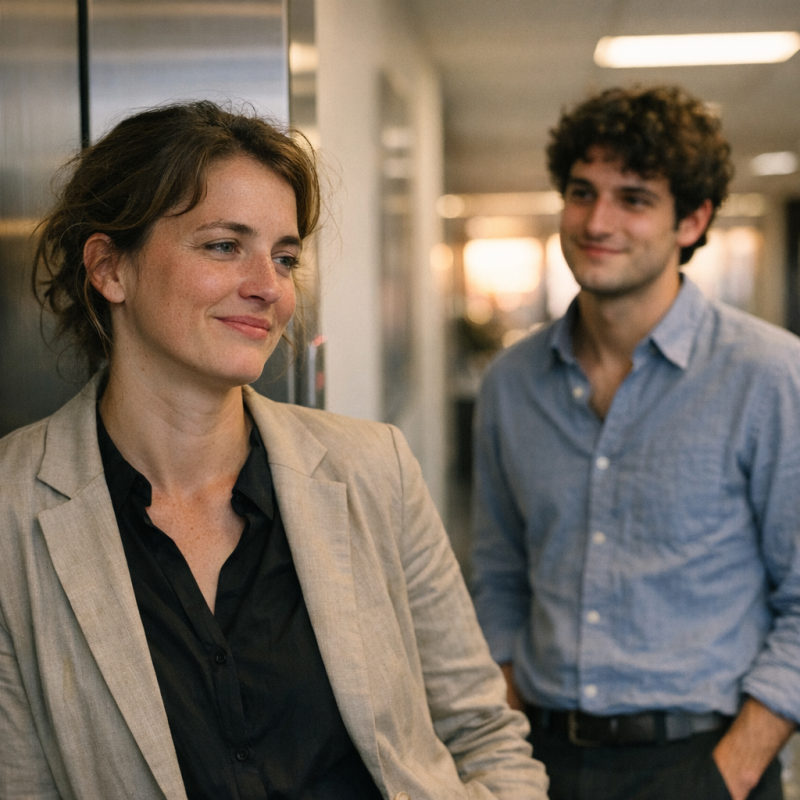 Image by FCT AI
Three Months Later
Three months into the new role, and I still wasn't sure I'd made the right choice some days. The work was exhausting—redesigning training modules, reviewing evaluation metrics, handling pushback from people who liked Robert's old methods just fine, thank you very much. I'd implemented the transparency protocols across all departments. Every evaluation now came with clear expectations, consent forms, and post-assessment debriefings. Some candidates still failed. The standards hadn't changed, just the approach. But now when someone didn't make it through, they understood why. They left with dignity intact, even in rejection. Grace had become an unexpected ally, helping me navigate the political landmines I'd never even known existed. Jordan remained cautiously supportive. Robert checked in occasionally, usually to challenge my assumptions in that particular way of his that made me want to both thank him and throw something at his head. I'd moved into a small apartment closer to headquarters, left my old crew schedule behind entirely. Lena texted sometimes, asking how corporate life was treating me. I missed the plane, if I'm honest. Missed the simplicity of the work, the clear beginning and end of each flight. I still think about that flight sometimes—and I'm still not sure I've completely forgiven what happened—but I know I made the right choice.
 Image by FCT AI
The New System
The official launch of the revised talent evaluation program happened on a Tuesday morning in the main conference hall. I'd spent weeks preparing the presentation, working with the law department to ensure every protocol was airtight, collaborating with HR to train the assessors. The room was packed—executives, department heads, team leads, even some candidates who'd volunteered to participate in the pilot program. I walked them through the new framework: rigorous scenarios designed to reveal character and capability, but with full transparency about the evaluation process. Consent at every stage. Clear criteria. Constructive feedback regardless of outcome. Grace presented the legal safeguards, her delivery sharp and professional as always. The Q&A session ran long, which I took as a good sign. People were engaged, asking real questions instead of just nodding along politely. When it wrapped up, there was actual applause, and I felt something shift in my chest—pride, maybe, or relief, or just the recognition that I'd actually pulled this off. Robert attended the presentation, sitting in the back row like he had during my own training sessions months ago. Afterward, he pulled me aside in the hallway, that slight smile playing at the corners of his mouth, and told me he'd underestimated how much the company needed someone willing to challenge him.
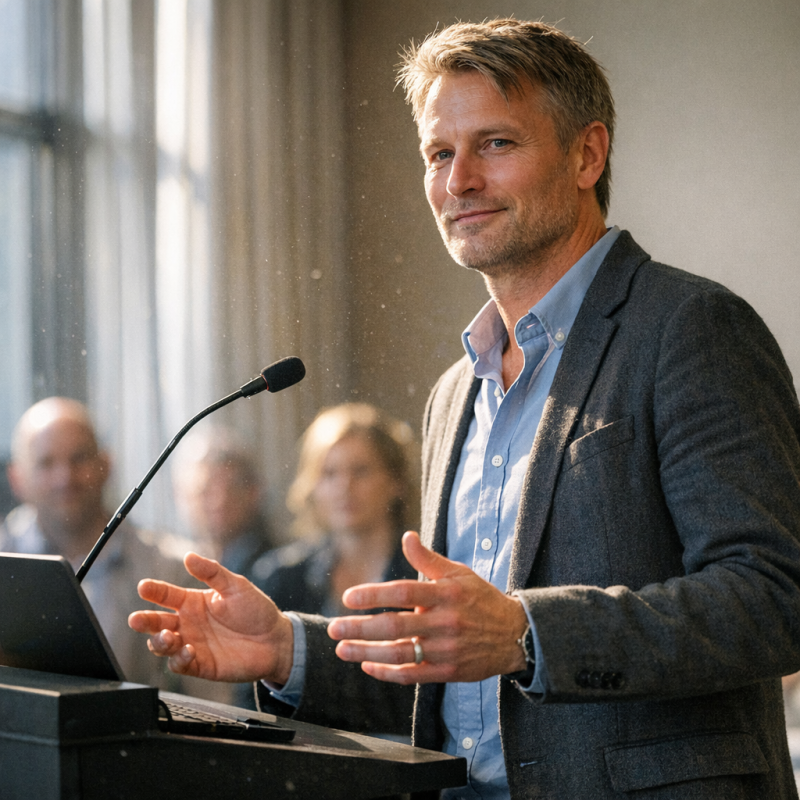 Image by FCT AI
Full Circle
I met Lena and Marcus at the airport coffee shop on a Saturday morning, my first visit back since everything changed. The familiar sounds hit me immediately—the announcements, the rolling suitcases, the organized chaos of people coming and going. Lena looked exactly the same, uniform crisp, smile genuine. Marcus had finally gotten his promotion to lead purser. We caught up over overpriced lattes, and they wanted to hear everything about corporate life. I told them about the new programs, the challenges, the weird adjustment to working in an office instead of at thirty thousand feet. 'Do you miss it?' Lena asked, and I had to think about that. I missed parts of it—the crew, the travel, the tangible sense of completing something every time we landed. But I didn't miss feeling powerless. I didn't miss wondering if the next flight would bring another situation I couldn't control. 'You seem different,' Marcus observed, studying me. 'More settled, maybe. Less... I don't know, coiled?' I laughed at that, because he wasn't wrong. I'd spent so much of my life braced for impact, waiting for the next indignity, the next test. 'You know what I learned from all of this?' I told them. 'That dignity really is something no one can take from you unless you hand it over—and the moment you realize that, everything changes.'
 Image by FCT AI