
The Confirmation Screen
I stared at the confirmation screen on my laptop, the green checkmark mocking me with its cheerfulness. Final mortgage payment: processed. Five years of monthly transfers, of budgeting around that $1,847 recurring charge, of telling myself it was worth it—all done. I should've felt relief, maybe pride. I'd just paid off my parents' house, for God's sake. Instead, my stomach twisted in a way I couldn't explain. The cursor blinked at me, waiting for me to close the window and move on with my life. But I just sat there in my cramped apartment, the one I couldn't afford to upgrade because I'd been sending nearly two grand to Wells Fargo every month. My coffee had gone cold. The street noise from outside sounded muffled, distant. Something felt wrong, deeply wrong, in a way that had nothing to do with the numbers on the screen. I closed my laptop slowly, like I was shutting a casket. I had no idea the real cost would come weeks later, at a family dinner I'd never forget.
 Image by FCT AI
The House That Built Us
The house on Maple Street wasn't fancy—just a modest two-story colonial with beige siding and a crooked mailbox Dad never got around to fixing. But it was ours. I remembered everything about that place: the kitchen where Mom taught me to make her famous lasagna, the basement where Jason and I built elaborate Lego cities, the backyard where Dad tried and failed to grow tomatoes every summer. Thirty years of birthday parties, Thanksgivings, arguments, reconciliations—all of it happened in those 1,800 square feet. When my parents bought it in 1993, I was seven and Jason was three. Dad had just gotten his promotion at the plant, and Mom cried happy tears at the closing. They were so proud. I still remembered Dad carrying Mom over the threshold like newlyweds, both of them laughing. That house represented everything they'd worked for, everything they wanted to give us. It was supposed to be stability, a legacy, proof that they'd made it. It was supposed to be the foundation of our family—I didn't know it would become the wedge that split us apart.
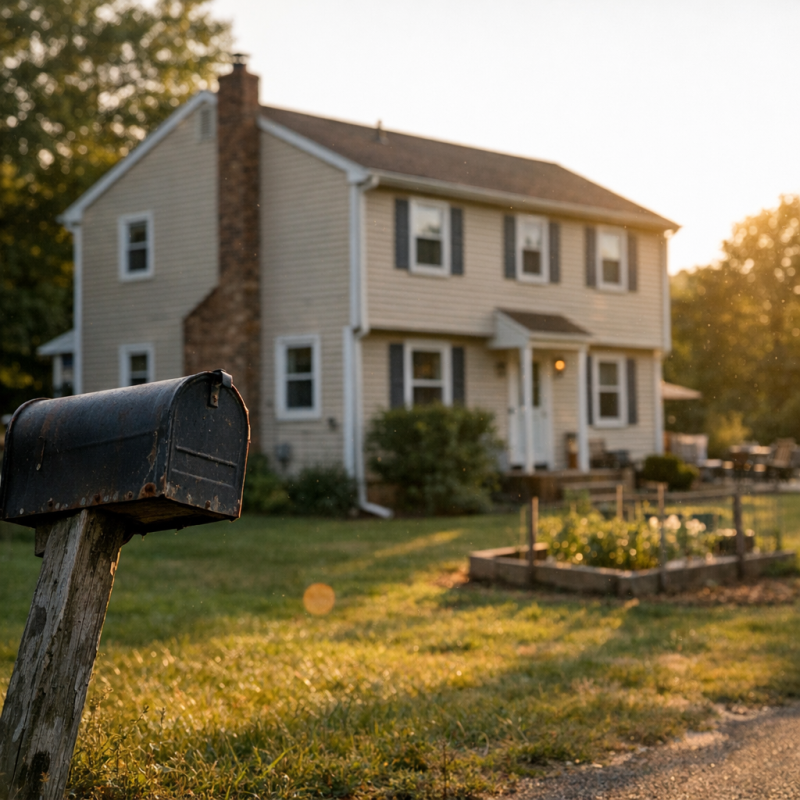 Image by FCT AI
The Responsible One
Somewhere along the way, I became 'the responsible one.' I don't remember auditioning for the role, but it fit me like a second skin. Straight A's, varsity track, college scholarship, corporate job by twenty-three. I paid my bills on time, maintained a retirement account, remembered birthdays without Facebook reminders. Jason, meanwhile, was the free spirit. He dropped out of community college twice, bounced between jobs like he was allergic to routine, moved back home more times than I could count. Where I was spreadsheets and planning, he was spontaneity and 'finding his path.' At family gatherings, relatives would clap me on the shoulder and say things like 'your parents must be so proud,' while Jason got affectionate eye-rolls and 'oh, that Jason' chuckles. I'd smile and accept the praise, feeling a warm satisfaction that I was doing everything right. It felt good to be the kid who had it together, who didn't cause problems, who made things easier instead of harder. Being reliable felt like my identity—until I learned it was just my role in someone else's script.
 Image by FCT AI
Finding Himself
Jason was always 'finding himself.' That's how Mom phrased it, with a gentle smile that excused everything. Fired from the landscaping company? He was 'exploring what resonated with his values.' Living on their couch at twenty-nine? He needed 'space to figure out his next chapter.' Borrowed three grand for a 'business opportunity' that vanished like smoke? Well, entrepreneurship requires risk. Dad would nod along, adding that Jason was 'creative' and 'marched to his own drummer.' They said it with something like pride, as though his inability to hold down a job or pay rent was evidence of a deeper wisdom the rest of us couldn't grasp. I'd sit at the dinner table, listening to them reframe his latest disaster as a learning experience, and I'd just nod. What else could I do? They were my parents. Jason was my brother. Calling it out felt cruel, petty. So I stayed quiet and kept my opinions to myself, even as the pattern repeated year after year. My parents defended every misstep as though Jason's struggle was noble—while I quietly funded the safety net beneath him.
 Image by FCT AI
When the Bills Started Piling Up
Dad's stroke happened on a Tuesday in March. Not a massive one, but enough to derail everything. He survived, but the medical bills and the reality that he couldn't work full-time anymore hit like a secondary catastrophe. Suddenly, the mortgage payments that had always been manageable became impossible. Mom tried to hide it at first, but I could hear the strain in her voice during our weekly calls. She'd mention things casually—skipping the landscaping service, eating out less, maybe postponing the roof repair. Then one Sunday, she called me instead of waiting for my usual check-in. Her voice was thin, stretched. 'We might need to sell,' she said, and then her words caught. She didn't cry exactly, just paused long enough that I could hear her breathing, steadying herself. She started to ask if maybe I could help with a few months, just until Dad's disability came through. But she didn't even finish the sentence. Mom's voice cracked when she mentioned they might lose the house—and I knew before she finished asking that I'd already decided to help.
 Image by FCT AI
Small Contributions
It started small. 'Just a few months,' I told myself. I'd cover the mortgage while Dad recovered, while they got back on their feet. Three months became six. Six became a year. Then two. Suddenly I'd been making that $1,847 payment for five years straight, and nobody ever mentioned it being temporary anymore. It just was. The arrangement was never formalized—no contracts, no written agreements, just an understanding that evolved from emergency to expectation. Mom would call occasionally to thank me, her voice warm with gratitude. Dad would clear his throat and say, 'We'll make it right by you, son.' But nobody ever discussed how, or when, or what 'making it right' actually meant. I didn't push for details because it felt crass, like demanding a receipt for helping your own parents. Sarah started asking questions about my finances around year three, but I brushed them off. This was family. You don't keep ledgers with family. I told myself it was temporary—but five years later, I'd realize 'temporary' was just the lie I needed to keep going.
 Image by FCT AI
Financially Allergic
Jason showed up to Sunday dinner with a story about why his latest gig hadn't worked out. Something about creative differences and uncooperative management. He laughed it off, stretching his legs under Mom's table, helping himself to seconds. 'I'm just financially allergic, you know?' he said, grinning like it was charming. 'Some people are lactose intolerant. I'm paycheck intolerant.' Dad chuckled. Mom shook her head with an indulgent smile. I sat across from him, mentally calculating that month's mortgage payment in my head. $1,847. The cost of Jason's charm, of his 'finding himself' routine that had been running for a decade. I wanted to ask if he'd considered contributing anything, even a hundred bucks a month. The words formed in my throat but stopped there, swallowed back down where all my other frustrations lived. Instead, I took a sip of water and smiled tightly. Everyone laughed at the dinner table—everyone except me.
 Image by FCT AI
Sarah's Question
Sarah waited until we were in the car, halfway home from dinner, before she asked. 'Why are you paying for a house you'll never own?' Her voice was calm, not accusatory, just genuinely confused. I felt my jaw tighten. 'It's my parents' house. I'm helping them.' She was quiet for a moment, then tried again. 'But you've paid off their entire mortgage. Doesn't that mean something? Did they say anything about the will, or equity, or...' I cut her off. 'It's not about that. They needed help. I helped them. That's what family does.' The words came out sharper than I intended. Sarah just looked at me, and I could see something in her expression—not judgment exactly, more like concern. She didn't say anything else, but her silence was louder than an argument. It pressed against me for the rest of the drive, making me grip the steering wheel tighter. I didn't have a good answer then—and her silence told me she knew it too.
 Image by FCT AI
Stay in the Family
Dad said it one afternoon while we were cleaning out the garage, just a casual mention while sorting through old paint cans. 'This house'll stay in the family, you know. Something for you both one day.' He didn't look at me when he said it, just kept stacking boxes. I stopped what I was doing and felt this wave of relief wash over me. See? I thought. This is what it was all for. The 'both' meant Jason and me, obviously—we'd split it, sell it, whatever. But at least my contributions would be acknowledged. At least I'd see something for those five years of sacrifice. I didn't ask him to clarify. Didn't ask what 'something' meant or what 'one day' looked like or how exactly this would work. I just nodded and went back to organizing rusty screwdrivers, letting his words settle over me like a warm blanket. Looking back, I can see how carefully he'd chosen that phrasing. How perfectly vague it was. I heard what I wanted to hear in those words—and that's exactly what they were counting on.
 Image by FCT AI

History's most fascinating stories and darkest secrets, delivered to your inbox daily.
The Uncomfortable Math
Late one night, I couldn't sleep, so I opened up Excel and did something I'd been avoiding. I added up every single payment I'd made over five years. Principal, interest, property taxes, insurance—everything. The number that appeared at the bottom of that column made my stomach drop. It was more than a down payment on a house. It was a new car and a vacation and a thousand dinners out with Sarah. It was years of my life, converted into cells on a spreadsheet, and suddenly it felt obscene to be quantifying it this way. What kind of person tallies up what they've given their parents? What kind of son treats family like a transaction? I closed the laptop feeling sick, but the number stayed burned into my mind. I told myself that love couldn't be measured in dollars, that family wasn't about keeping score. But sitting there in the dark, I couldn't shake the feeling that maybe some things should be counted. I pushed the spreadsheet aside and told myself that family wasn't about spreadsheets—but maybe it should have been.
 Image by FCT AI
Jason's New Venture
Jason cornered me at Mom and Dad's one Sunday, eyes bright with that familiar manic energy. 'I'm getting into crypto consulting,' he said. 'It's the future, man. I've already got three potential clients lined up.' I'd heard versions of this speech a dozen times before. The food truck. The app idea. The pyramid scheme he swore wasn't a pyramid scheme. Each one launched with the same breathless enthusiasm and collapsed with the same casual shrug. 'That sounds great,' I said, the words automatic. He leaned in closer. 'I just need a little capital to get started. Nothing major. Do you believe in me?' The question hung there between us. I looked at my little brother—thirty-three years old, still living in our parents' basement, still chasing the next big thing that would require zero actual work. I wanted to believe in him. Part of me still remembered the kid who used to follow me around, who looked up to me. But that kid was gone. He asked if I believed in him—and I realized I'd stopped believing years ago.
 Image by FCT AI
The Balance Shrinks
I started checking the mortgage balance obsessively, logging into the account every few days just to watch the number shrink. Twenty thousand. Fifteen thousand. Ten thousand. Each payment chipped away at what had once seemed like an impossible mountain. I'd started this journey when the balance was six figures, something abstract and overwhelming. Now I could see the end. I could taste it. Part of me felt this quiet pride—I'd actually done it. I'd saved my parents' house, kept a roof over their heads, been the responsible son. But another part of me, a part that grew louder as the balance dropped, felt something else entirely. Anxiety, maybe. Or dread. Like I was watching sand fall through an hourglass, counting down to something I didn't fully understand. Freedom, I told myself. That's what waited on the other side of that zero balance. I'd get my life back. Sarah and I could finally start planning our future instead of funding someone else's past. Every payment brought me closer to freedom—or so I thought.
 Image by FCT AI
Delayed Dreams
Sarah found the listing on a Sunday morning. A three-bedroom house in a neighborhood we'd walked through a hundred times, imagining ourselves there. The price was almost reasonable, the kind of place we could have afforded three years ago. 'Should I call about it?' she asked, her finger hovering over her phone. We both knew the answer. The mortgage payment I was making for my parents was the exact amount we needed for our own down payment fund. We'd had this conversation before—twice, actually. Each time, I'd promised it was almost over, that we'd start saving once the obligation ended. 'Let's wait,' I said. 'Just one more year.' Sarah set down her phone and nodded. She said she understood. She said she knew it was important to help my family. She even smiled at me, that patient smile I'd seen so many times before. But her eyes told a different story.
 Image by FCT AI
Mom's Gratitude
The card arrived in the mail on a Tuesday, one of those fancy ones with embossed flowers on the front. Inside, Mom had written in her careful cursive about how much my help meant, how I'd 'saved the house,' how she didn't know what they would have done without me. Her words were warm and genuine, the kind of sentiment that should have made me feel good. Tucked inside was a fifty-dollar gift card to Olive Garden. I stood there in my kitchen, reading her words again, trying to make myself feel the gratitude they deserved. She'd taken the time to write this. She was acknowledging what I'd done. That meant something, right? But I'd just paid another two-thousand-dollar mortgage installment three days earlier. Fifty dollars. Unlimited breadsticks. The math didn't compute, but I pushed that thought away immediately. What was I expecting—cash? A medal? This wasn't about repayment. The gesture felt small measured against what I'd given—but I told myself it was the thought that counted.
 Image by FCT AI
Family Dinner Rituals
We sat around the same dining room table where I'd announced my college acceptance, where we'd gathered after Grandma's funeral, where every birthday and holiday and major announcement had unfolded for my entire life. The wood had that familiar worn spot near Dad's chair. Mom served pot roast, same recipe she'd been making for thirty years. Jason was late, as usual, breezing in with apologies and that easy grin that somehow made his lateness acceptable. Everything felt normal. Comfortable, even. We talked about Sarah's job, about Dad's golf game, about Mom's book club. Jason told another story about a friend's startup, his eyes lighting up as he described someone else's success. I ate my mother's pot roast and felt the weight of tradition, of family, of belonging to something bigger than myself. This was what I'd been protecting, I thought. This table, these people, these rituals. The warmth of it all. I didn't know this ritual was about to become the site of my unraveling.
 Image by FCT AI
The Final Month
I scheduled the final payment for the fifteenth of next month. One thousand, eight hundred and forty-three dollars. That's all that stood between me and the end of this chapter. Five years compressed into one last transaction. I stared at the confirmation screen longer than necessary, my cursor hovering over the 'submit' button. This should have felt triumphant. Victorious, even. I'd done something most people couldn't do—paid off an entire mortgage that wasn't even mine. But sitting there in my home office, looking at that final payment amount, I felt none of the relief I'd been expecting. Instead, there was this gnawing sensation in my gut, like standing at the edge of a cliff in fog, unable to see what lay below. Something felt off, though I couldn't articulate what. The end of an obligation should feel like freedom, right? Like setting down something heavy you'd been carrying. One payment stood between me and the end of an obligation that had defined half a decade of my life. I should have felt excited—instead, I felt like I was approaching the edge of something I couldn't see.
 Image by FCT AI
Confirmation
I clicked the button. The screen loaded for maybe three seconds—you know that spinning wheel that makes you wonder if the internet disconnected?—and then: 'Transaction Complete.' Just like that. Five years of automated transfers, budget spreadsheets, sacrificed vacations, and that one time I ate ramen for two weeks straight because I'd miscalculated my monthly cushion. All of it compressed into two words on a banking website that looked like it hadn't been updated since 2009. I sat there waiting to feel something. Relief, maybe. Pride. That sense of accomplishment they talk about in motivational quotes with mountain backgrounds. But what I actually felt was this weird hollowness, like finishing a meal that didn't satisfy you. The confirmation email pinged my phone. I opened it, scanned the details, and felt my stomach tighten for reasons I couldn't explain. Everything was correct. The amount, the account, the date. Perfect. So why did I feel like I'd just made a terrible mistake? The screen said 'transaction complete'—but something inside me whispered that nothing was complete at all.
 Image by FCT AI
The Celebration
I drove over the next evening without calling ahead. Somehow, I knew they'd be home. Mom answered the door with this bright smile that seemed just a touch too rehearsed, like she'd been practicing it. 'Come in, come in!' Inside, there were grocery store flowers in a vase on the dining table and a small cake with 'Congratulations' written in that generic bakery script. Dad stood when I entered, which he never did, and shook my hand. Shook. My. Hand. Like I was a business associate who'd closed a deal. Mom hugged me, but it was quick, performative. Jason sat on the couch scrolling his phone, glanced up, nodded. 'Big day,' Dad said, and his voice had this formal quality I didn't recognize. They asked about the process, the final amount, whether the bank had sent confirmation. Technical questions. Procedural. Nobody said 'thank you' directly. Nobody said 'we couldn't have done this without you.' The conversation felt like debriefing after a project, not celebrating a son who'd fundamentally changed their lives. Dad's handshake felt like a business transaction, and that's when I first wondered if that's all this had ever been.
 Image by FCT AI
Cheap Champagne
Jason showed up late—well, later than me, which meant he'd been told about this little gathering. He carried a bottle of champagne that I recognized from the bottom shelf at the store. Eight bucks, maybe ten. Less than one percent of a single mortgage payment. 'Celebration time!' he announced, grinning like he'd contributed something meaningful. Mom got glasses—the nice crystal ones from their wedding—and Jason made a big show of popping the cork. It barely fizzed. 'To family,' he said, raising his glass. 'To Mom and Dad finally being free and clear.' Everyone clinked glasses. I noticed he said 'Mom and Dad' and not 'to my brother who made this possible.' I smiled and drank the cheap champagne that tasted like sour apples and regret. Jason talked about how great it must feel for them, this weight lifted, this freedom. He used the word 'we' a lot. 'We did it.' 'We got there.' I wanted to ask who exactly 'we' included in his mind, but I didn't. I raised my glass and smiled—but I was starting to wonder who was actually family and who was just playing along.
 Image by FCT AI
Truly Theirs
Mom kept circling back to this phrase throughout the evening: 'The house is truly ours now.' She said it while cutting the cake. Said it again when showing me a crack in the hallway wall they could 'finally afford to fix.' Said it a third time when Dad mentioned maybe updating the kitchen next year. Truly ours. The words started to grate on me in this subtle, insidious way. I'd written sixty checks. Sixty. I'd watched my savings account drain month after month. I'd skipped my friend's destination wedding because I couldn't afford the flight. And somehow, in Mom's narrative, the house was 'truly theirs' as if the bank alone had claimed it, as if no actual person had intervened. I didn't correct her. Didn't say 'you mean the house I paid for?' Didn't point out that without me, they'd have lost it three years ago. I just nodded and ate my cake and felt myself disappearing from the story in real-time. The words stung in a way I couldn't name—like being erased from a story I'd written.
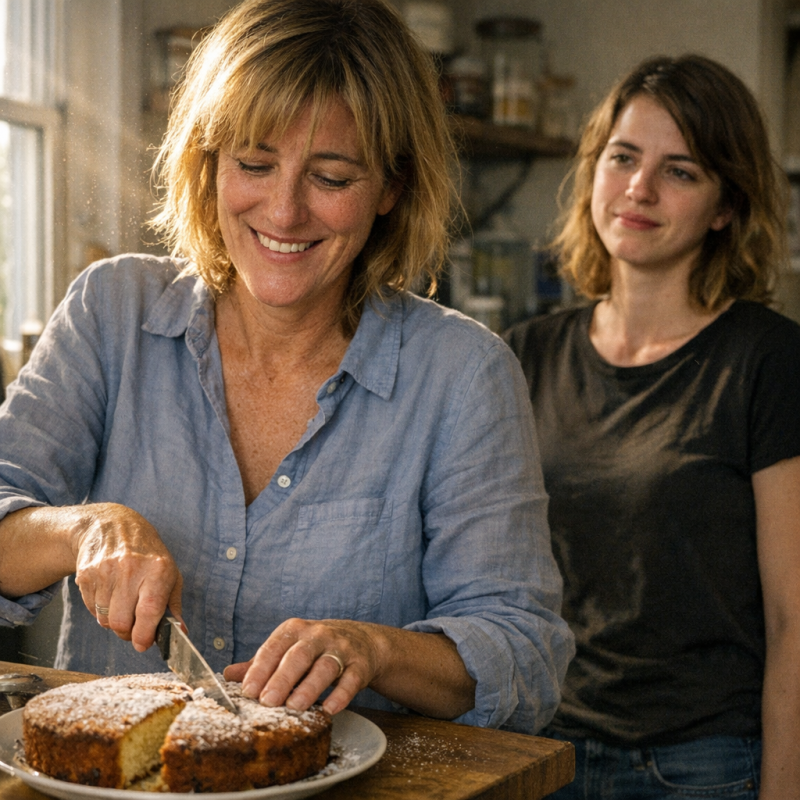 Image by FCT AI
The Invitation
Three weeks passed with minimal contact. Then Mom called on a Tuesday afternoon while I was at work. Not a text. An actual phone call. 'Hi honey, do you have dinner plans this Friday?' Her voice had this careful quality, like she was reading from a script. We usually did casual drop-ins, not formal invitations with advance notice. 'Um, nothing solid. What's up?' 'We'd love to have you over for dinner. Nothing fancy, just family. Six o'clock?' The word 'just' was doing a lot of work in that sentence. Just family. Just dinner. But nothing about this felt 'just' anything. 'Is this about something specific?' I asked. A pause. Too long. 'We'll talk Friday, sweetheart. Just want to see you.' She hung up before I could press further. I stared at my phone, that gnawing sensation back in my gut, stronger now. You know that feeling when someone says 'we need to talk' and you instantly start cataloging everything you might have done wrong? It was like that, except I couldn't think of anything. Something in Mom's voice told me this wasn't about leftovers and small talk.
 Image by FCT AI
The Dinner
Friday arrived with the weight of an execution date. I pulled up to the house at six sharp, noticing Jason's truck already in the driveway. So this wasn't just me. Mom had set the dining room table—not the kitchen counter where we usually ate. The good china. Cloth napkins. The formal setting made my skin prickle. Everyone was already seated when I walked in, like they'd been waiting. Jason wouldn't make eye contact. Mom was overly cheerful, asking about my drive as if I hadn't made it ten thousand times. Dad sat at the head of the table, his jaw set in that way that meant he'd made a decision and was preparing to defend it. We made small talk through the salad course. Weather. Traffic. Someone's neighbor doing renovations. The conversation felt like static, filling space, delaying something. I kept waiting for someone to bring up the real reason I was there, but we pushed through the main course—pot roast—in this bizarre charade of normalcy. Dad cleared his throat in that way he did before bad news, and I braced for impact.
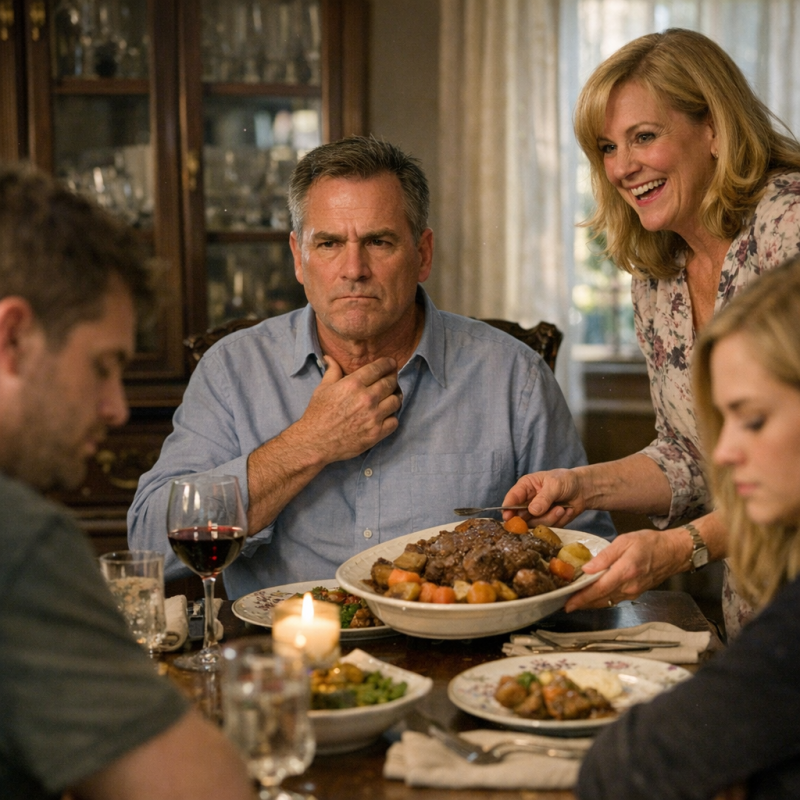 Image by FCT AI
The Will
'We wanted to talk to you about something important,' Dad began, setting down his fork with deliberate precision. 'Your mother and I have been thinking about the future, about being responsible.' He glanced at Mom, who nodded encouragingly. 'We've updated our will. Made some changes to ensure everything's handled properly when we're gone.' My stomach dropped before he even continued. You know how you can sense disaster in the pause between words? 'We wanted you to hear this from us, as a family, so there's no confusion later.' He took a breath. 'The house will go to Jason. Entirely. We've set it up so the title transfers cleanly, no probate complications.' The room tilted. I heard the words but they didn't compute, like someone speaking a language that sounds like English but isn't. The house. The house I'd paid for. The house where I'd mailed sixty checks. Where I'd sacrificed and scrimped and rearranged my entire financial life. Jason sat perfectly still, his eyes fixed on his plate. The house—the one I'd paid for—was going entirely to Jason.
 Image by FCT AI
He Needs Stability
I must have looked confused—no, I definitely looked confused—because Mom jumped in with this soft, reasonable voice that made everything worse. 'Sweetheart, Jason needs stability. He's struggled to find his footing, and we want to give him a foundation to build on.' Struggled. The word hung in the air like a justification for theft. 'You've always been so capable, so responsible. You have your career, your own place, your savings. You've proven you can create stability for yourself.' Dad nodded along. 'This is about fairness, really. Jason needs this in a way you don't.' I sat there processing this logic: I was being punished for competence. For being the son who had his life together. For being the one who'd actually helped them. And my reward? Watching my brother—who'd contributed nothing, who'd actively made their lives harder—inherit the house I'd saved. 'We knew you'd understand,' Mom added, reaching across to pat my hand. 'You've always understood.' Apparently, my stability didn't matter because I'd already proven I could create my own.
 Image by FCT AI
Five Years
I found my voice finally, though it came out quieter than I wanted. 'I paid your mortgage for five years.' The words just sat there on the table between us, undeniable. Math doesn't lie. Five years of payments, sixty months, thousands and thousands of dollars that could have been my retirement, my vacations, my life. Mom and Dad exchanged this look—not surprised, not guilty, just this calm acknowledgment like I'd mentioned the weather. 'We know,' Dad said. 'And we're grateful.' Grateful. That was it. That was the sum total of their response to five years of financial sacrifice. Mom nodded along, her expression soft and understanding, like she was humoring a child who'd just reminded her he'd cleaned his room. 'We really do appreciate everything you've done for us, sweetheart.' The word 'appreciate' felt weightless, meaningless. They'd just quantified my five years of help as something that deserved a thank you card, maybe, but certainly not consideration in their estate planning. Gratitude, apparently, was the currency they thought settled all debts—and it turned out to be worthless.
 Image by FCT AI
Jason's Silence
I turned to Jason then, needing someone else in this room to acknowledge how insane this was. He sat across from me, eyes fixed on the table, shoulders hunched like he was trying to disappear into the chair. He hadn't said a word since they'd dropped the news. Not 'thank you,' not 'I'm sorry,' not even 'wow.' Just silence. His jaw was tight, his hands folded in his lap like a kid waiting for detention to end. I stared at him, willing him to look up, to show some kind of reaction—surprise, guilt, anything human. Nothing. He just kept studying that table like it held the secrets of the universe. And that's when the thought crept in: what if he already knew? What if they'd told him weeks ago, months ago, and this whole dinner was just the formality of telling me? His silence didn't feel like shock. It felt practiced. It felt like someone who'd had time to prepare for this moment, who'd already worked through whatever complicated feelings might exist. His silence felt like complicity—or maybe he'd known all along.
 Image by FCT AI
I Never Asked For This
Finally, Jason spoke. His voice came out defensive, almost whiny. 'I never asked for this.' He still wouldn't look at me, directing his words to the empty space between our parents. For a split second, I felt this flicker of hope—maybe he was about to turn it down, maybe he had some shred of integrity buried under all that entitlement. But then he just sat there, not finishing the thought, not elaborating. Just those five words hanging in the air like they absolved him of everything. 'I never asked for this.' No, he didn't ask. He didn't have to ask. He just coasted through life knowing someone would eventually hand him something, and here we were, proving him right. Asking would have required effort, initiative, some kind of agency. Instead, he'd just existed in his usual state of passive need, and our parents had scrambled to fill it. He didn't ask—he just accepted, which might have been more insulting than asking.
 Image by FCT AI
The Assumption
Mom reached across the table again, this time with both hands like she was offering comfort. 'We thought you would understand, honey. You've always been so understanding.' There it was—the assumption that had apparently guided this entire decision. They hadn't worried about my reaction. They hadn't lost sleep wondering how I'd take the news that my financial sacrifice meant nothing. They'd simply assumed I'd accept it. The confidence in her voice was stunning. Dad nodded his agreement. 'You've never been the type to cause problems. We knew we could count on you to see the bigger picture.' See the bigger picture. Translation: shut up and accept your role as the family ATM and emotional support system. They'd banked on my compliance the same way they'd banked my mortgage checks. My willingness to help, my sense of responsibility, my desire to be the good son—they'd turned all of it. And the most crushing part? They were probably right to be confident. I'd spent thirty-seven years proving I'd swallow whatever they served me. I realized they'd never doubted I'd accept this—and that confidence told me everything.
 Image by FCT AI
Walking Out
I stood up. I don't remember deciding to stand, but suddenly I was on my feet, chair scraping against their dining room floor. 'I need to go.' My voice sounded strange, distant. Mom started to protest, Dad half-rose from his seat, but I was already moving toward the door. I grabbed my jacket from the hook in the hallway—the same hook I'd used since I was a teenager. My hands were shaking so badly I could barely get my arms through the sleeves. I didn't say goodbye. Didn't look back. Just walked out into the cold November night and got into my car. The drive home was a blur. I gripped the steering wheel so tight my knuckles went white, trying to focus on the road instead of the rage. This house I was driving away from—I'd saved it. My money had kept the bank from taking it. And now it belonged to Jason. When I got home, my phone started buzzing. Mom. Dad. Mom again. I turned it off. I didn't answer their calls for three days—and in that silence, I started to think clearly for the first time in years.
 Image by FCT AI
Sarah's Reaction
Sarah knew something was wrong the moment I walked through the door that night. I must have looked like I'd been in an accident. I told her everything—the dinner, the announcement, the five years of payments that apparently meant nothing. I watched her face change as I talked. Confusion shifted to disbelief, then disbelief hardened into something I'd never quite seen from her before: pure, protective rage. 'They're giving Jason the house? The house YOU paid for?' Her voice climbed with each word. 'Are you kidding me?' She paced our living room, hands gesturing wildly, saying all the things I'd been too numb to articulate. She called my parents selfish. She called Jason a parasite. She called the whole situation exactly what it was: theft dressed up as family dynamics. And hearing her fury on my behalf cracked something open in my chest. I wasn't crazy. This wasn't normal. This wasn't okay. She stopped pacing and looked at me directly. 'You need a lawyer,' she said, her voice suddenly calm and clear—and I realized she was right.
 Image by FCT AI
The Missed Calls
On day four, I turned my phone back on. Seventeen missed calls. Eleven voicemails. A dozen text messages. I made myself listen to them, one by one. Mom's voice, worried at first, then slightly annoyed. 'Sweetheart, we need to talk about this. Call us back.' Dad's message was shorter. 'Son, I think you need some time to cool off. Let's talk when you're ready to be reasonable.' Cool off. Like I was a child throwing a tantrum over bedtime. Like five years of financial sacrifice deserved the same response as a teenager slamming a door. The texts were worse. 'We understand you're upset, but this is still your family.' 'Don't let this come between us.' 'We thought you'd be happy for your brother.' Each message carried the same underlying expectation: that I'd calm down, see reason, and accept their decision quietly. The way I'd accepted everything else my entire life. The way I'd accepted putting my own financial future on hold to save their house. They wanted me to accept their decision quietly—the way I'd accepted everything else.
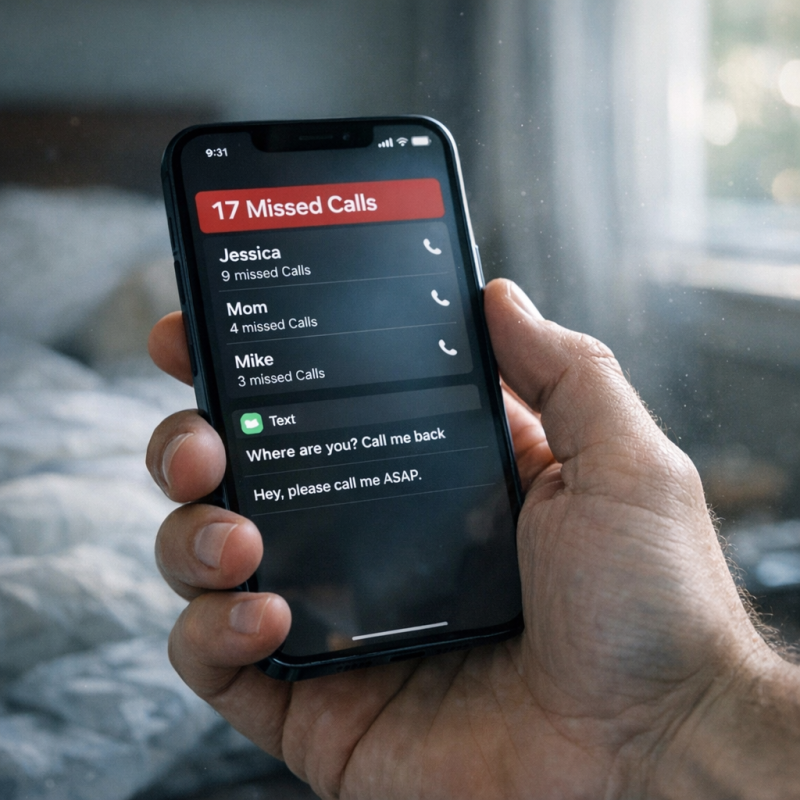 Image by FCT AI
Amy Enters
I found out from a mutual family friend, actually. She mentioned in passing that she'd run into Jason and his girlfriend Amy at the hardware store, buying paint samples. 'For the house,' she'd said brightly, not knowing she was striking a raw nerve deep within me. 'Isn't it wonderful your parents are helping them get settled?' I called Jason. He answered on the third ring, sounding cautious. 'You moved Amy in?' I asked. Silence. Then, defensive: 'We're just doing some work on the place. Getting it ready.' Getting it ready. The house wasn't even his yet—the paperwork hadn't been filed, the estate hadn't been transferred—and he was already playing homeowner with his girlfriend. Painting walls. Planning renovations. Living the future my money had bought him. 'Mom and Dad said it was fine,' he added, like their permission was all that mattered. Like my five years of payments were invisible, erased, irrelevant. I hung up without responding. He was already living the future my money had bought him.
 Image by FCT AI
Research
I became a different person that week. The kind who stays up until 2 AM reading forums and property law websites. I'd search phrases like 'paid parents mortgage can I get money back' and fall down rabbit holes about constructive trusts and unjust enrichment. Most of it was super confusing—dense language that seemed designed to keep regular people like me in the dark. But certain phrases kept appearing. 'Equitable interest.' 'Beneficial ownership.' 'Detrimental reliance.' I didn't fully understand what they meant yet, but they felt like handholds on a cliff face. Like maybe there was a path forward I hadn't seen before. I printed out articles. I took notes in a spiral notebook like I was back in college. My apartment became wallpapered with sticky notes covered in terms I barely comprehended. Sarah texted asking if I was okay—I'd apparently ignored three of her messages. I wasn't okay, but I was something else now. I was learning. The law, I discovered, didn't care about fairness—but it did care about documentation.
 Image by FCT AI
The Records
I created a folder on my laptop labeled 'Mortgage Records.' Then I went hunting. Five years of bank statements downloaded into PDFs. Screenshots of every Venmo and wire transfer. Email confirmations from my bank showing the exact dates and amounts. I found the original conversation where my parents had asked for help—thankfully I'd kept it. There were texts from my mom saying things like 'you're saving our home' and 'we couldn't do this without you.' I'd never thought to preserve them as evidence before. They'd just been... family conversations. Normal expressions of gratitude. Now they were exhibits. I organized everything chronologically in subfolders. Created a spreadsheet calculating the total: $147,000 over sixty months. I even found the thank-you card my parents had sent after the first year of payments. My mother's handwriting: 'You're our angel.' I sat there staring at that card for a long time, feeling something cold and hard settle in my chest. It was all there—proof of everything I'd given and everything they'd taken for granted.
 Image by FCT AI
Marcus Chen
Marcus Chen's office was on the third floor of a converted brownstone downtown. The kind of place that screamed 'established practice' without being obnoxiously fancy. His assistant offered me coffee. I was too nervous to drink it. Marcus was probably fifty, with graying hair and the calm demeanor of someone who'd heard every family horror story imaginable. I explained the situation as factually as I could—the payments, the will, the house going to Jason. He took notes on a yellow notepad, asking clarifying questions without judgment. 'How much in total?' 'Was there any written agreement?' 'Do your parents know you're here?' That last one stung a little, but I answered honestly. No, they didn't. He nodded like he'd expected that. Then he set down his pen and looked at me directly. 'Do you have records of the payments?' he asked. I'd brought my laptop. I opened it and turned the screen toward him, showing the spreadsheet, the organized folders, five years of meticulous documentation. And I watched his expression change when I said yes.
 Image by FCT AI
Equitable Interest
Marcus pulled the laptop closer, scrolling through my records with the focused attention of someone doing mental calculations. Then he sat back. 'This is good,' he said. 'Very good, actually.' He explained something called equitable interest—the principle that if you contribute significantly to property, you might have a claim to it even if your name isn't on the deed. It wasn't about being nice or being family. It was about detrimental reliance. I'd paid money in the reasonable expectation of some benefit, and my parents had accepted those payments knowing what they meant. 'Courts don't like unjust enrichment,' Marcus said. 'Your parents received a hundred and forty-seven thousand dollars from you. They can't just pretend that never happened.' He was careful to manage expectations. This wasn't a slam dunk. Family law was messy. But I had something most people in my situation didn't: documentation. Numbers. A paper trail that told an undeniable story. We could file a claim for equitable interest in the property, or pursue repayment, or both. I might actually have a claim—not because of morality, but because of math.
 Image by FCT AI
Uncle Bill's Call
Uncle Bill called two days later. I almost didn't answer—we weren't particularly close, and I knew why he was reaching out. 'Your mother is beside herself,' he started. No hello, no small talk. 'She says you're going to sue them.' I corrected him. I'd consulted a lawyer. That wasn't the same as actually suing. 'Over a house,' he continued, like I hadn't spoken. 'You're tearing the family apart over money. I never thought you'd be that kind of person.' The accusation hit differently than I expected. Not with hurt, but with curiosity. 'Uncle Bill,' I said slowly. 'Did you know about the will before I did?' Silence. A long, telling silence. 'Did Mom tell you they were giving the house to Jason while I was still paying the mortgage?' I pressed. 'That's not... it wasn't like that,' he stammered. 'They were trying to be fair to both of you.' But his pause had already told me everything. They'd discussed it. The whole family probably knew. And not one of them had thought to give me a heads-up.
 Image by FCT AI
The Decision
I sat at my kitchen table that night with Marcus Chen's business card in front of me. Heavy cream cardstock with raised lettering. I'd been staring at it for twenty minutes, turning it over in my fingers. This was the decision point. I could put the card in a drawer and let this go. Stay the good son. Swallow the loss. Keep the peace. That's what they expected. What they were counting on, really. My whole life I'd been the one who didn't make waves. Who understood. Who sacrificed quietly because that's what responsible people did. And where had it gotten me? My parents had used my reliability against me. Taken my money while planning to give everything to Jason. They'd known what they were doing. Maybe not consciously, maybe not maliciously—but they'd known. I picked up my phone. My hand was steady. I wasn't angry anymore, not in the hot, reactive way I'd been when I first found out. This was something colder. Clearer. I was done being the family's silent martyr. I called my parents and told them we needed to talk—on my terms this time.
 Image by FCT AI
The Phone Call
They answered together—Mom on the house phone, Dad on the extension in his office. That familiar clicking sound of dual receivers. 'We've been hoping you'd call,' my mother started, her voice tight with something between relief and anxiety. I didn't let her get comfortable. 'I consulted a lawyer,' I said. The silence that followed was deafening. Not the pause of people gathering thoughts. The silence of people realizing the game had changed. 'A lawyer?' my father finally said. His voice had this quality I'd never heard before. Small. Uncertain. 'About what?' As if he didn't know. As if the past month hadn't happened. 'About the hundred and forty-seven thousand dollars I paid toward your mortgage,' I said calmly. 'And what happens to that money now that you're giving the house to Jason.' More silence. Then my mother, defensive: 'You can't sue your own parents.' 'I'm not suing anyone,' I replied. 'Yet. But I need you to understand that I have options here. This isn't just about hurt feelings anymore.' For the first time in my life, I heard my father sound scared.
 Image by FCT AI
Reality Sets In
I stayed calm. That was important. I wasn't the emotional one, the unreasonable one. I was stating facts. 'If you want to give the house to Jason, that's your choice,' I said. 'But we need to address the money I contributed. A hundred and forty-seven thousand dollars over five years. That's documented. Every payment.' My father started to say something about family and love not being transactional. I cut him off. 'You made it transactional when you accepted my money while planning to give the house to someone else.' My mother was crying now. I could hear it in her breathing. Part of me felt terrible. But a larger part—the part that had spent five years sacrificing, believing, trusting—felt nothing but cold clarity. 'My lawyer says I likely have an equitable interest claim,' I continued. 'We can work this out between us, or we can let the courts decide. Your choice.' I wasn't yelling. Wasn't accusing. Just explaining reality. No more feelings, no more family guilt—just facts and consequences.
 Image by FCT AI
The Week That Changed Everything
The shift happened fast. Monday, my father called—not texted, called—asking if we could 'have a conversation about all this.' His voice had lost that dismissive edge. Tuesday, my mother left a voicemail saying they wanted to 'work something out that's fair to everyone.' Fair. That word, coming from her mouth. Wednesday, my dad called again, asking what I thought would be reasonable. I didn't answer. Thursday, he emailed, suggesting we meet with a mediator. Friday, my mother texted asking if I'd received the email. Saturday, both of them called within an hour of each other. I watched it all with the detachment of someone observing an experiment. Seven days. That's how long it took for a lawyer's letter to accomplish what five years of loyalty never did—get their attention. I wasn't gloating. Wasn't even particularly satisfied. Just noting the pattern, the data point. They'd ignored me when I had no leverage. Now I had leverage. Suddenly there were new conversations, new proposals, and apologies that sounded nothing like the ones before.
 Image by FCT AI
Patterns Emerging
I started going back through old conversations in my mind. The time my mother cried when I suggested we formalize the payment arrangement—'Don't you trust us?'—delivered with just enough hurt to make me feel guilty for asking. The way my father always changed the subject when I brought up the future of the house, redirecting to my career, my choices, anything else. How they'd never once, in five years, put anything in writing. Not a receipt, not an acknowledgment, not a thank you note that mentioned actual dollar amounts. I'd thought it was just their generation, their discomfort with discussing money. But sitting there, replaying it all with new eyes, I saw different possibilities. Strategic tears. Deliberate vagueness. Emotional responses designed to shut down practical questions. Maybe I was reading too much into it. Maybe grief and disappointment were making me paranoid. Or maybe I'd been too trusting to see what was right in front of me. It felt like watching a magic trick after someone showed you how it was done.
 Image by FCT AI
Jason Reaches Out
Jason's name appeared on my phone on a Tuesday afternoon. I stared at it for three rings before answering. 'Hey,' he said, casual, like we'd spoken yesterday instead of weeks ago. 'Heard things are getting complicated. Thought maybe we should talk.' We. Like we were a team. 'Mom and Dad are pretty upset,' he continued. 'I think we can work something out that makes sense for everyone.' I asked what he had in mind. 'I don't know, man. Maybe there's a way to, like, compensate you for the payments or something. I'm not trying to screw you over here.' Not trying. Interesting phrasing. I asked where this sudden concern was coming from. He got defensive—he'd always cared, always wanted what was fair, didn't appreciate the implication. I noted the date, the timing. He'd known about the house transfer for weeks. Radio silence. Now a lawyer was involved, and suddenly brotherhood mattered again. His concern appeared exactly when it became financially necessary—funny how that works.
 Image by FCT AI
The First Offer
They invited me to dinner. The house I'd helped save. My mother cooked my favorite meal—her lasagna, the one she only made for birthdays. The table was set nicely. Everyone was calm, reasonable. My father did the talking. 'We've been thinking about what's fair,' he said. 'We know you put money into the house. We want to make that right.' He slid a piece of paper across the table. A check. Twenty thousand dollars. 'We know it's not everything,' my mother added quickly, 'but it's what we can manage right now without putting the house at risk.' I looked at the number. Twenty thousand. Out of one hundred and forty-seven thousand. Less than fifteen percent. They watched me like they'd just offered a generous gift. 'We think this is reasonable,' my father said. 'More than reasonable, considering the house was never technically yours.' I folded the check in half. Then in half again. Set it on the table between us. I almost laughed—they were still trying to get a discount on my dignity.
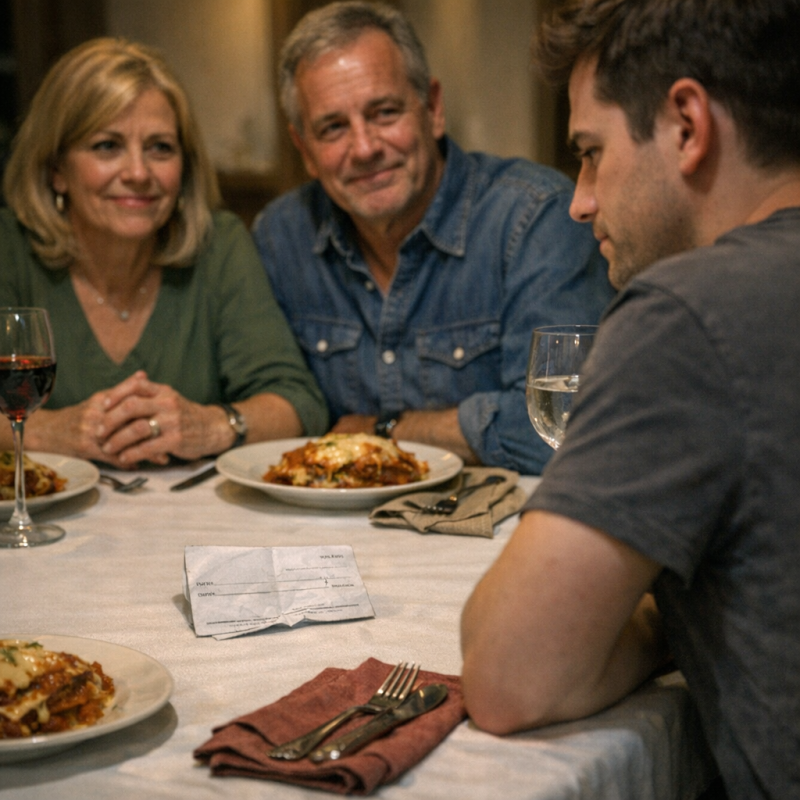 Image by FCT AI
Marcus's Advice
Marcus Chen leaned back in his office chair, the check I'd brought him sitting on the desk between us. 'Insulting,' he said flatly. 'They're hoping you'll take it because pursuing this further is uncomfortable.' He walked me through the numbers. My equitable interest claim was solid. The documented payments, the clear understanding that I was contributing toward ownership. 'We can likely get you fair compensation,' he said. 'Maybe not the full amount with interest, but significantly more than this.' He paused. 'But I need you to understand—if we push this, your relationship with your parents is over. Maybe your brother too. Extended family will take sides. This gets messy.' I asked what he'd do. He smiled slightly. 'I'd burn it down. But I'm a divorce lawyer—I see this stuff all the time. You need to decide if you can live with the consequences.' I thought about the lasagna dinner, the strategic tears, five years of payments. He also warned me that using that leverage would burn bridges—and I realized some bridges deserved to burn.
 Image by FCT AI
The Texts
My phone became a battlefield. Aunt Linda, who I hadn't seen since my cousin's wedding four years ago: 'Your parents are heartbroken. Is money really worth destroying your family?' Uncle Frank: 'I always thought you were the reasonable one. This isn't you.' My cousin Sarah: 'Just take the twenty grand and move on. Life's too short.' Three different relatives sent nearly identical messages about forgiveness, family being forever, not letting lawyers get between us. I noticed they all came within a two-day span. Someone was coordinating. My mother, probably, working the phones, framing the narrative. Poor grieving parents, ungrateful son, lawyers and greed. None of them asked about the hundred and forty-seven thousand. None of them mentioned five years of payments. None of them wondered why Jason wasn't being asked to 'be reasonable.' The pressure was designed to isolate me, make me feel like the problem. And maybe it was working—my hands shook when I saw new messages. But reasonable had gotten me nothing—maybe it was time to try something else.
 Image by FCT AI
Mom's Tears
She was waiting by my apartment door when I got home from work. Eyes red, tissues clutched in her hand. My mother. I hadn't expected this. 'Please,' she said as I unlocked the door. 'Please, can we just talk?' I let her in. She sat on my couch, crying softly, the same way she'd cried when I suggested formalizing the payments. 'You're destroying this family,' she said. 'Your father hasn't slept in days. Jason feels terrible. Everyone's taking sides. This isn't what I wanted.' I asked what she had wanted. 'For everyone to be okay,' she said. 'For Jason to have stability. For you to understand.' I watched her cry. Noticed the timing—evening, when I'd be tired from work. Noticed the language—focusing on everyone's feelings but never addressing the money. Noticed how she positioned herself as the victim of my choices, not the person who'd accepted a hundred and forty-seven thousand dollars while planning to give the house to someone else. I wondered when she'd decided I was the one doing the destroying—and if maybe that had been the plan all along.
 Image by FCT AI
The Document
I was looking for something else entirely. Old tax documents for Marcus, proof of payments. I'd logged into the email account I'd used five years ago, the one I barely checked anymore. And there it was. An email thread between my parents. Subject line: 'Jason and the house.' The date stopped me cold—three months before my final payment. My mother to my father: 'I know we discussed giving the house to both boys, but Jason needs it more. He'll never get stable otherwise.' My father's response: 'What about the payments? Won't he expect something?' Her reply: 'We'll figure that out later. Right now, let's just let him keep helping. We need it.' Keep helping. Let him. They'd known. They'd decided. And they'd kept me paying for three more months, cashing every check, accepting every transfer, knowing exactly what they planned to do. I read it five times. Ten times. The words didn't change. They'd planned this from the beginning, keeping me paying while knowing exactly what they'd do with the house.
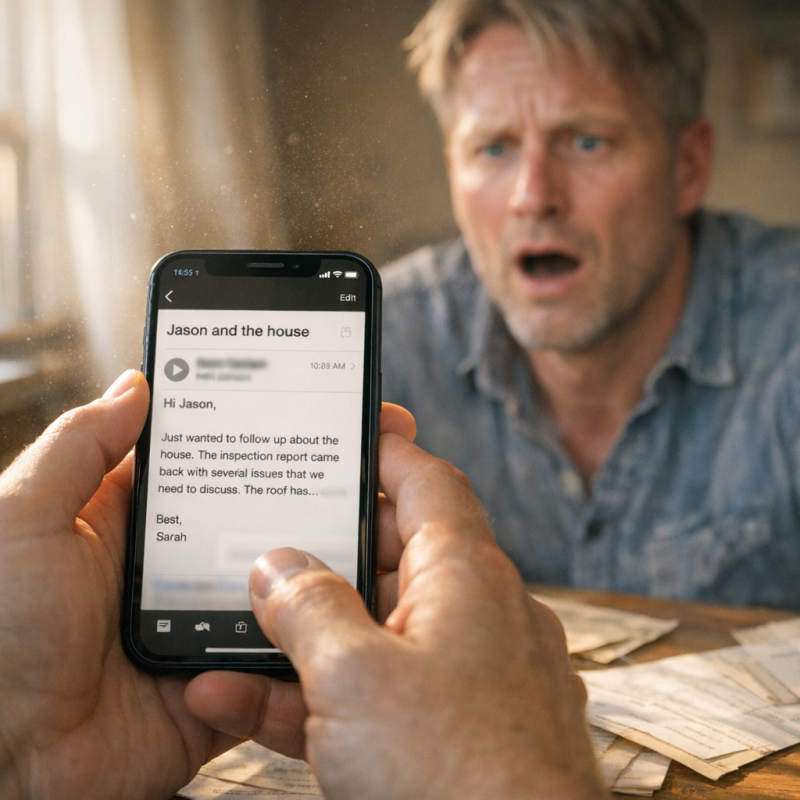 Image by FCT AI
The Confrontation
I called them all to the house. My house, technically—the one I'd paid for. Mom looked nervous when she opened the door. Dad was already sitting at the kitchen table, arms crossed. Jason showed up twenty minutes late, reeking of weed, asking what was so important. I didn't waste time on pleasantries. I opened my laptop, turned it toward them, and let them read the email thread. The one where they'd discussed giving the house to Jason three months before my final payment. The one where Mom wrote 'let's just let him keep helping.' I watched their faces as they read. Jason's expression shifted from confusion to something like recognition—not surprise, but the look of someone realizing they'd been caught. 'Where did you—' my mother started. 'Doesn't matter,' I said. 'What matters is that you knew. You decided. And you kept taking my money anyway.' The silence stretched. Dad cleared his throat, started to speak, stopped. Jason wouldn't meet my eyes. My mother's face went white—not with shame, but with the realization that I'd found proof.
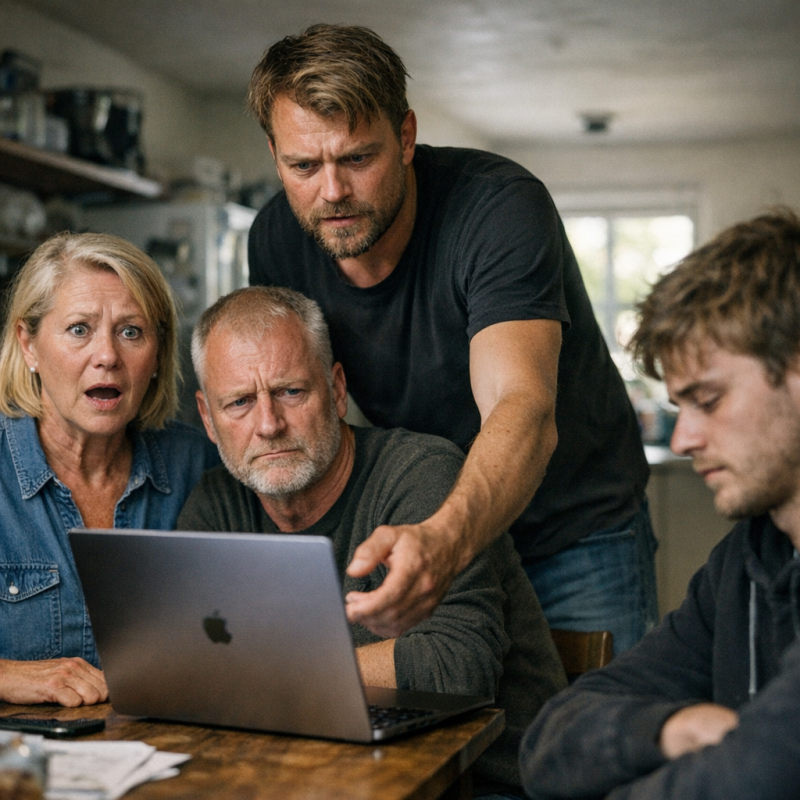 Image by FCT AI
The Admission
My father was the one who finally spoke. 'We thought it was the right thing,' he said, his voice careful. 'Jason needed stability. You were already stable.' I waited. There had to be more. 'You had your career, your life together,' Mom added. 'You didn't need the house the way he did.' The logic was so twisted I almost laughed. 'So you decided I should pay for his stability?' 'We needed help with the mortgage,' Dad said. 'We were grateful for it.' 'But you were always going to give it to him.' It wasn't a question. Dad's silence was answer enough. Then he said it, the thing I'd known but needed to hear: 'We decided years ago that Jason would inherit the house. You didn't need it. You were going to be fine either way.' There it was. They'd exploited my competence against me, punishing success with exclusion.
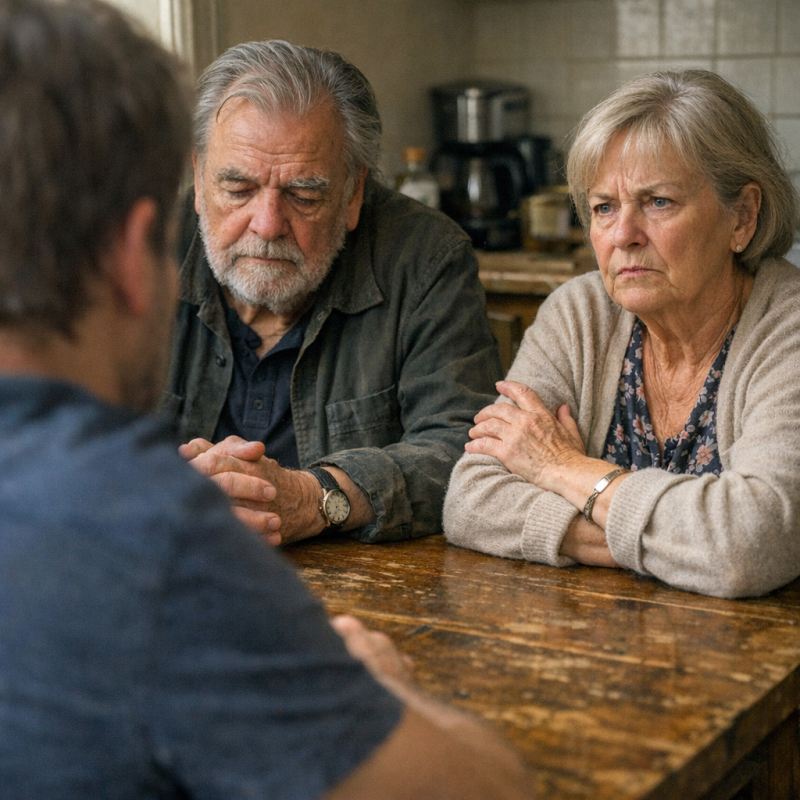 Image by FCT AI
The Ultimatum
I closed my laptop. My hands were steady. 'Here's what's going to happen,' I said. 'You have forty-eight hours to propose a fair settlement. Full reimbursement of every payment I made, with interest. If I don't receive a reasonable offer by Sunday at noon, I'm instructing Marcus to pursue action in court.' Mom's eyes went wide. 'You can't be serious.' 'I've never been more serious about anything in my life.' 'This is family,' Dad said. 'We can work this out.' 'You had five years to work it out,' I said. 'You chose deception instead. Now you get forty-eight hours.' I stood up. Jason was staring at me like I'd grown a second head. 'You're really going to sue Mom and Dad?' 'I'm really going to recover what I'm owed,' I said. 'How you deliver it is up to you.' I walked to the door, turned back. 'Forty-eight hours. The clock starts now.' For once, I wasn't asking—I was telling.
 Image by FCT AI
Jason's Meltdown
Jason called at eleven that night. I almost didn't answer, but Sarah nodded—let him dig his own grave. 'What the heck is wrong with you?' he screamed before I could say hello. 'You're going to sue our parents? Over a house?' 'Over seventy thousand dollars,' I corrected. 'That I paid. For a house you're getting for free.' 'They need me to have stability! I'm finally getting my life together!' The entitlement in his voice was staggering. 'You've been getting your life together for fifteen years, Jason. How's that working out?' 'This is different. This is my future you're taking away.' I felt something cold settle in my chest. 'No,' I said quietly. 'You got my future. You got the house I paid for. You got the support I earned. You got everything handed to you while I got thanked with betrayal.' 'You're being selfish,' he spat. The irony was so thick I could taste it. 'I'm being selfish? That's rich.' 'You have everything already!' 'And you're welcome to earn your own,' I said. I told him he'd gotten my future for free—turnabout seemed fair.
 Image by FCT AI
The Counter-Offer
The email came Saturday morning. Subject: 'Proposal.' My father had written it, but I could hear my mother's voice in every word. They would deed the house to both Jason and me, fifty-fifty ownership. Jason would continue living there. If either of us wanted to sell, we'd split the proceeds. 'We believe this is fair,' the email concluded. 'It gives you both equal stake in your inheritance.' I read it twice, then called Marcus. 'They offered to split it,' I said. 'What do you think?' 'According to the law, it's better than nothing,' he said carefully. 'But is it what you want?' I thought about it. Fifty percent of a house I'd fully funded. Fifty percent partnership with a brother who'd conspired against me. Fifty percent of the lie they'd told for five years. 'No,' I said. 'It's not enough.' 'You sure?' 'I paid one hundred percent, Marcus. Why should I accept fifty?' When I sent the rejection, I kept it simple: 'This doesn't address the fundamental injustice.' I rejected it—not because of greed, but because fifty percent wasn't justice when I'd paid one hundred percent.
 Image by FCT AI
Sarah's Warning
Sarah found me on the balcony that night. She didn't say anything at first, just stood beside me in the dark. Finally: 'Are you sure you want to go this far?' 'What do you mean?' 'Formal litigation. There might be no coming back from that.' I'd been thinking the same thing. Once lawyers got involved, once judges made rulings, there was no pretending it was just a family disagreement. 'I know,' I said. 'But what's the alternative? Accept half of what I paid for? Pretend they didn't betray me?' 'I'm not saying that,' Sarah said carefully. 'I'm asking if you're prepared for what comes after. Your parents might never forgive you.' I laughed, but there was no humor in it. 'They already took everything that mattered. My money, my trust, five years of my life. What exactly am I losing that I haven't already lost?' She was quiet for a moment. Then: 'Your illusions, maybe.' 'Good,' I said. I told her I'd already lost my family—now I was just deciding whether to keep my self-respect.
 Image by FCT AI
Filing The Claim
Marcus filed the claim Monday morning. Equitable interest in the property based on substantial financial contribution to the mortgage. Unjust enrichment. Constructive trust. The terms made it all sound cleaner than it felt. He called me after the paperwork went through. 'You know this is going to get ugly,' he warned. 'It already is ugly,' I said. 'Now it's just official.' My parents would be served within forty-eight hours. Once they had the papers, once they saw the court dates and claims, it would be real in a way it hadn't been before. No more family discussions. No more negotiating over email. Just lawyers and judges and public record. 'You can still pull back,' Marcus said. 'Technically, until they file a response, you could withdraw the claim.' I thought about my mother's email: 'let's just let him keep helping.' I thought about five years of checks they'd cashed while planning to cut me out. 'File it,' I said. The law didn't care about family dynamics—it cared about documentation, and I had plenty.
 Image by FCT AI
The Settlement Offer
The settlement offer came through Marcus three days later. Full reimbursement of all payments I'd made. Seventy-two thousand, four hundred and sixteen dollars. Plus six percent annual interest, compounded. Total: ninety-four thousand, eight hundred and twelve dollars. Payment within ninety days, or the house would be sold and I'd receive my share from the proceeds. 'It's a good offer,' Marcus said. 'More than we might get at trial.' It was everything I'd asked for. Everything I was owed. The number I'd calculated in the middle of the night, the sum of five years of sacrifice. But sitting there, looking at the figure on the page, I felt nothing like triumph. 'They could have offered this from the start,' I said. Marcus was quiet. 'Yes.' 'They could have been honest. Could have said thank you and given me this when they gave Jason the house.' 'Yes,' he said again. 'But they didn't. They only offered it because a lawyer put it in binding terms. Because they were scared of losing in court.' They could have offered this from the start—but that would have required treating me with respect.
 Image by FCT AI
Signing Away
We signed the settlement agreement on a Thursday morning, but not in the same room. Marcus handled it like a high-stakes exchange—my parents signed in their lawyer's office across town, I signed in his. He placed the pages in front of me, already notarized on their end, and handed me a pen. My signature looked shaky. I noticed that. Five documents, each requiring initials and a final signature, formalizing the end of everything. 'This is it,' Marcus said quietly. 'Once this is filed, it's over.' I nodded. My hand didn't stop trembling until the last page. Marcus collected the papers, slid them into a manila folder, and that was that. No handshake with my parents. No final conversation. No moment where anyone said they were sorry or that they wished things had gone differently. Just lawyers and paperwork and the clinical language of settlement agreements. I walked out into the parking lot and sat in my car for twenty minutes, staring at nothing. I'd gotten my money back, every cent I was owed, plus interest. But the cost was everything else.
 Image by FCT AI
The Aftermath
The check cleared on a Tuesday. I checked my account three times that morning, refreshing the banking app like I didn't trust it. But there it was: ninety-four thousand, eight hundred and twelve dollars. Deposited. Confirmed. Mine. I stared at the number for a long time, trying to feel something other than empty. This was supposed to be the win, right? Five years of mortgage payments, returned with interest. Financial justice. The thing I'd fought for. But sitting there at my kitchen table, coffee going cold in front of me, all I could think about was what that number actually represented. Five years of phone calls home. Five years of feeling good about helping. Five years of believing I was building something—security for them, trust between us, proof that I was the son they could count on. And it had all been reduced to a line item in a settlement agreement. A transaction. I'd gotten my money back, sure. But I'd never get back those years, never get back the version of my family that existed before I knew the truth. I'd won, if you want to call it that. But winning felt suspiciously like losing.
 Image by FCT AI
What I Learned
Sarah came home that evening and found me still at the kitchen table, staring at my laptop screen. 'You okay?' she asked. I looked up. 'I've been thinking about what I actually learned from all this.' She sat down across from me, waiting. 'It's not about family or money,' I said. 'Not really. It's about the difference between being good and being respected.' She was quiet, listening. 'I was good. I paid their mortgage. I called every week. I showed up when they needed help. I did everything a good son is supposed to do.' I closed the laptop. 'But they never respected me for it. They just expected it. Being reliable made me useful, not valued. And the second Jason wanted something, all that usefulness didn't matter.' Sarah reached across the table, took my hand. 'So what are you going to do differently?' I thought about that. 'I'm going to stop confusing the two,' I said. 'Stop thinking that being responsible means people will treat me right. Stop waiting for people to value me just because I'm there.' Being the responsible one had made me useful, not valued—and I was done confusing the two.
 Image by FCT AI
Moving Forward
Three weeks later, Sarah and I made an offer on a house. Not my parents' house. Not Jason's house. Ours. A three-bedroom Craftsman with a front porch and a yard that needed work and a mortgage we'd pay ourselves. We signed the purchase agreement on a Saturday morning, and this time my hand didn't shake. 'This feels different,' Sarah said as we walked out of the real estate office. It did. This house was ours because we'd earned it, together, without owing anyone anything. No favors. No obligations. No confusion about whose name would be on the deed or who deserved it more. Just us, building something that actually belonged to us. My phone didn't ring that day. My parents didn't call to congratulate us, didn't ask about the house, didn't acknowledge that their son was buying his first home. A year ago, that silence would have gutted me. I would've called them myself, looking for their approval, their pride, some sign that they cared. But standing there with Sarah, keys to our future in my pocket and no weight of obligation on my shoulders, I realized something that felt like freedom. My parents didn't call to congratulate us, and for the first time, I realized I didn't need them to.
 Image by FCT AI