The Glare
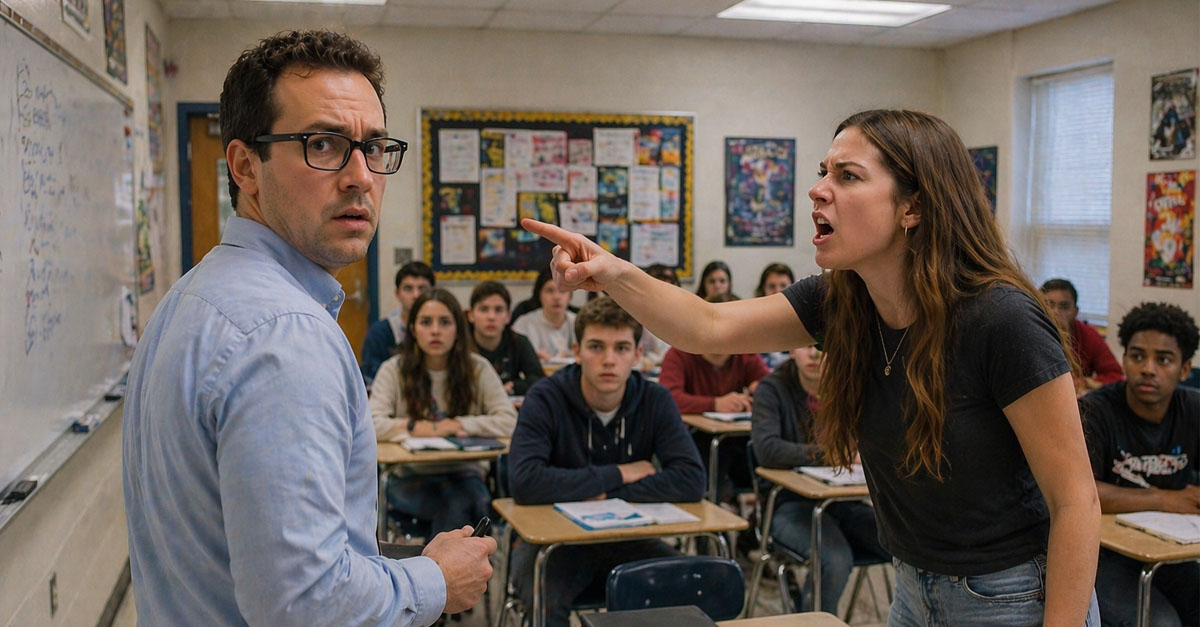
I've done electrical safety presentations at middle schools for six years now, and honestly, most of them blur together. Kids zone out, teachers check their phones, and I go through my PowerPoint on autopilot. But this one was different. I was maybe ten minutes into my spiel about downed power lines—the stay-in-your-car-until-help-arrives bit—when I noticed her. Eighth-grader, dark hair pulled back tight, sitting three rows from the front. She wasn't looking at the slides. She was staring directly at me with this expression I couldn't quite read. Not bored. Not confused. Something sharper. Mr. Callahan, the science teacher who'd invited me, was leaning against the back wall, and I caught his eye, gave him a quick 'is everything okay?' look. He just shrugged. I kept talking, explaining how the ground becomes energized, how rubber tires create a barrier. But she didn't blink. Didn't shift her gaze. Just this unwavering intensity that made my voice sound hollow in my own ears. I thought maybe I had something on my face or she was having some kind of episode. Then she shot up from her chair and shouted at me.
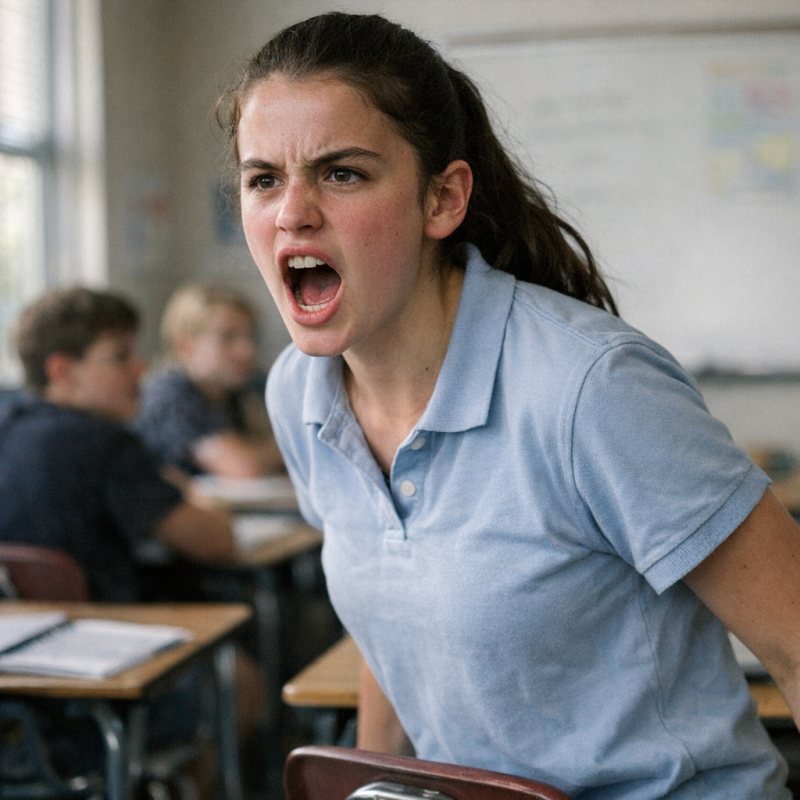 Image by FCT AI
You're a Liar
'That's not true!' Her voice cut through the room like a fire alarm. I froze mid-sentence, my clicker still pointed at the slide. Every head in the class swiveled toward her, then back to me. 'I'm sorry?' I said, trying to keep my voice level and professional. 'What I just said about staying in the car if power lines fall on it—that's wrong. My cousin works in construction and he told me you're supposed to get out immediately.' I felt my eyebrows rise. This wasn't a question. This was a challenge. 'Well, actually, your cousin might have misunderstood,' I started, keeping my tone gentle. 'The safest thing is to stay inside the vehicle until the power company—' 'He didn't misunderstand anything,' she interrupted. 'He works with electricity every single day. He knows more than some guy giving a presentation.' A few students laughed. Not at her. With her. Mr. Callahan straightened up from the wall. I glanced around the room, expecting the other kids to look uncomfortable, maybe embarrassed for her. Instead, several were nodding. One kid in the back called out, 'Yeah, my dad said the same thing.' The room erupted with agreement—suddenly this wasn't just one difficult student.
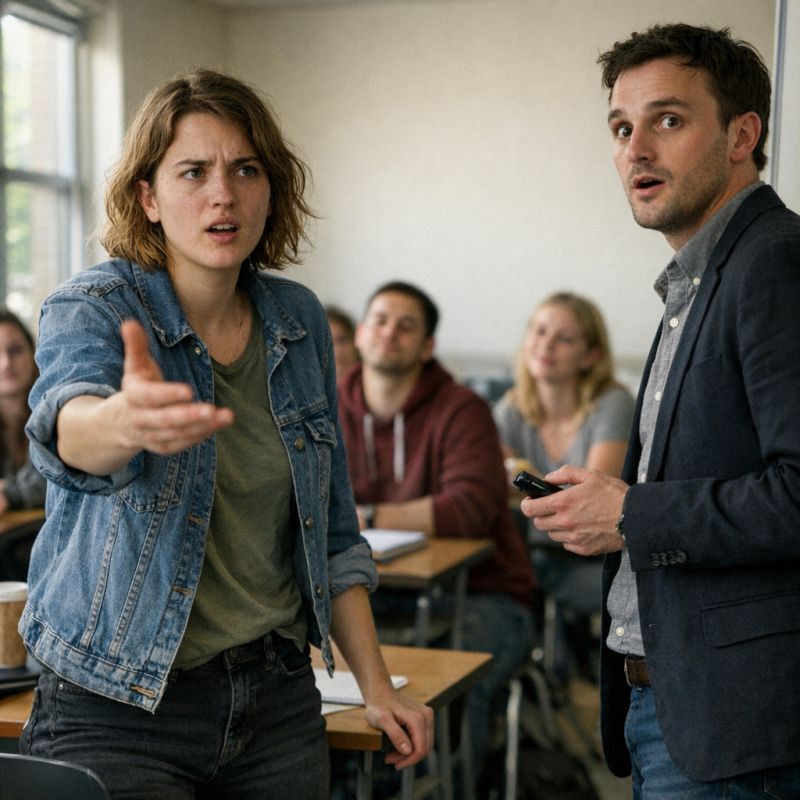 Image by FCT AI
The Cousin Who Built Sheds
I raised both hands, trying to regain control without being condescending. 'Okay, okay. I appreciate everyone's input, but let me ask—what kind of construction does your cousin do?' The girl hesitated for just a fraction of a second. 'He builds things.' 'Like houses? Commercial buildings?' 'Sheds, mostly. And other stuff.' Her voice had lost maybe five percent of its certainty. A quiet kid with glasses—Eric, I think his name tag said—spoke up from the side. 'My uncle's an electrician and he says you should definitely stay in the car. The tires insulate you.' The girl wheeled on him. 'Your uncle probably works on houses. That's completely different from power lines.' 'Actually,' I said carefully, 'the principles are exactly the same. High voltage electricity seeks the path of least resistance to the ground, and—' 'So you're saying my cousin is stupid?' Her jaw was set, her shoulders squared. She was doubling down hard. 'I'm not saying that at all. I'm just clarifying the—' But when I tried to correct her gently, something unexpected happened inside me.
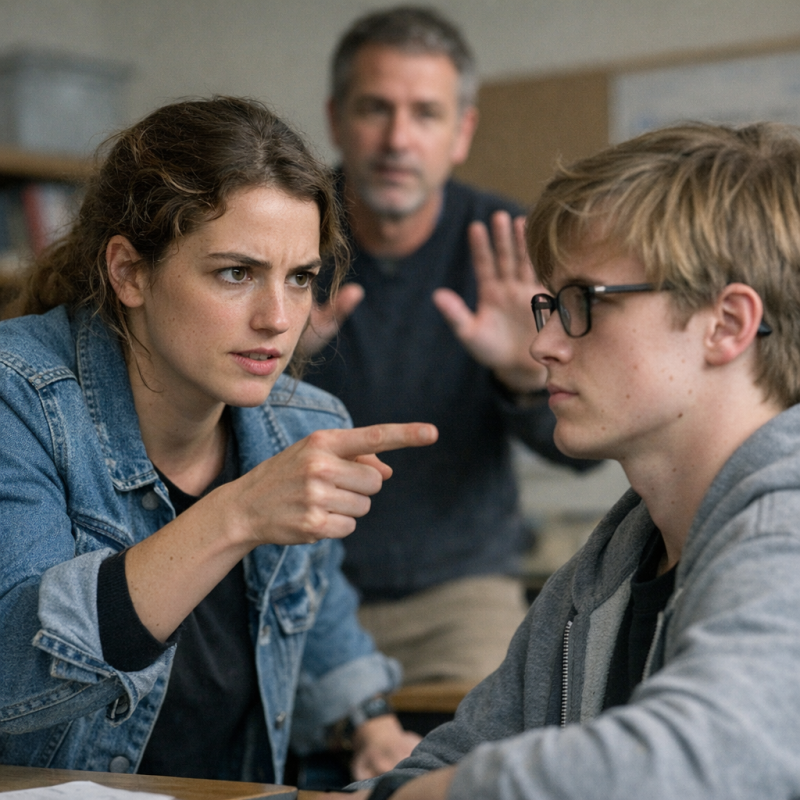 Image by FCT AI
The Moment I Lost It
She crossed her arms and said, with absolute conviction: 'And if someone gets electrocuted, you can pull them away from the wire if you're really careful. You just can't touch the wire itself.' That's when it happened. I tried to hold it back—I really did—but this short, sharp laugh escaped my throat before I could stop it. It wasn't mean-spirited, at least I didn't think so. It was just so absurdly, dangerously wrong that my brain couldn't process it without some kind of release. The sound hung in the air for a moment. Her face went from defiant to something else. Something harder. The other students went completely silent. 'I'm sorry,' I said quickly, raising my hand. 'I didn't mean—' 'You're laughing at me?' Her voice was quiet now, which somehow made it worse. Mr. Callahan pushed off the wall and started moving toward the front. 'Okay, everyone, let's just take a breath here—' But the damage was done. I could see it in her eyes, in the way the other students were now looking at me like I'd kicked a puppy. The class froze, and I realized I'd just made everything exponentially worse.
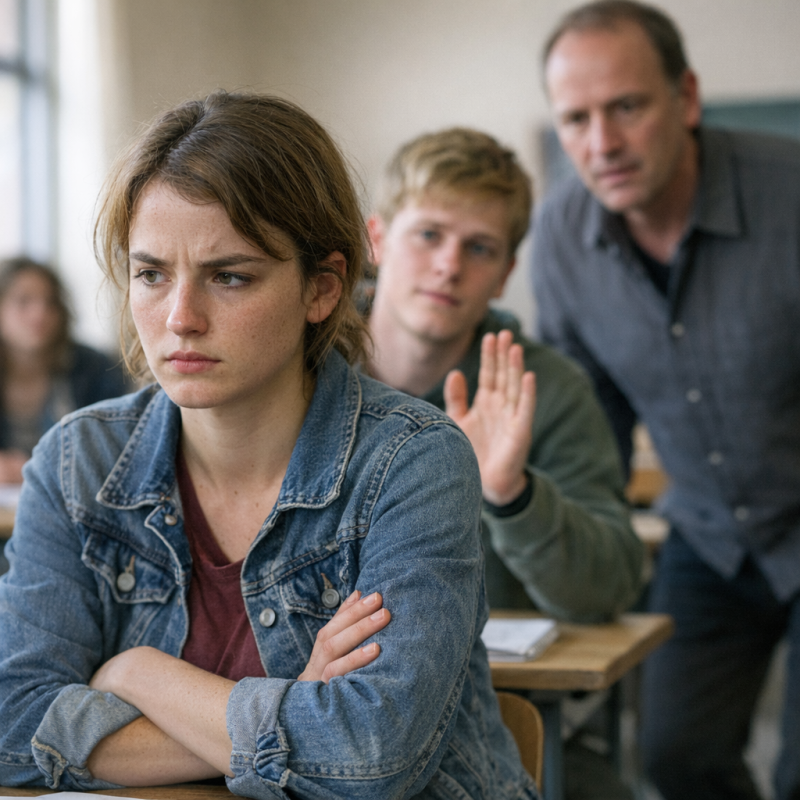 Image by FCT AI
The Report That Followed
Rebecca called me two days later. Not emailed—called. That's how I knew it was serious. 'Daniel, can you come by my office this afternoon? Around three?' Her voice had that careful neutrality that supervisors use when they're about to deliver bad news. I spent the entire drive back to the main office replaying the presentation in my head, trying to figure out what specifically had triggered this. The laugh, obviously. But was that really enough to warrant an in-person meeting? Rebecca's office smelled like coffee and printer ink. She gestured to the chair across from her desk, and I sat down, trying to read her expression. Professional. Concerned. Maybe a little disappointed? 'So,' she said, folding her hands. 'I received a complaint about the presentation you did at Riverside Middle School on Tuesday.' My stomach tightened. 'The girl who challenged me about the power lines.' 'Among other things, yes.' She pulled out a folder—an actual physical folder, which meant someone had taken the time to document this properly. 'The complaint alleges that you were dismissive, condescending, and ultimately mocked a student for asking questions.' 'That's not—I didn't mock her, I just—' Rebecca held up one hand. When she told me who filed it, my stomach dropped.
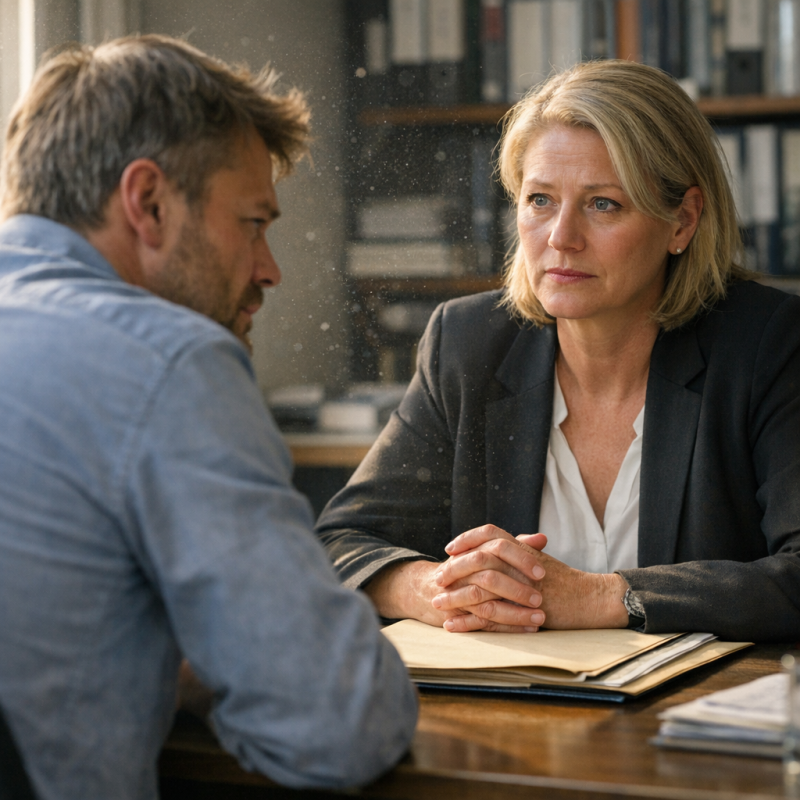 Image by FCT AI
Official Complaint
It wasn't the school. It was the girl's mother. A formal, written complaint sent directly to our organization with copies to the school district and the principal. Rebecca slid the paper across the desk, and I scanned it with growing dread. The language was precise, almost legal. It described me as 'belittling' and 'publicly humiliating' her daughter for 'asking legitimate safety questions.' It mentioned the laugh specifically. Twice. 'This is really serious, Daniel,' Rebecca said quietly. 'We have contracts with these schools. If they think we're sending people who mock students—' 'I wasn't mocking her,' I interrupted, hearing the defensiveness in my own voice. 'She was spreading dangerous misinformation and I tried to correct her, and yeah, I laughed, but it wasn't at her, it was just—' 'It doesn't matter what you intended. It matters what she experienced.' That landed like a punch. Rebecca wasn't wrong. I knew she wasn't wrong. But something about this felt disproportionate. 'What happens now?' I asked. Rebecca leaned back in her chair, and her expression shifted slightly. Not quite sympathy, but something adjacent. But what Rebecca said next made me question everything I thought had happened.
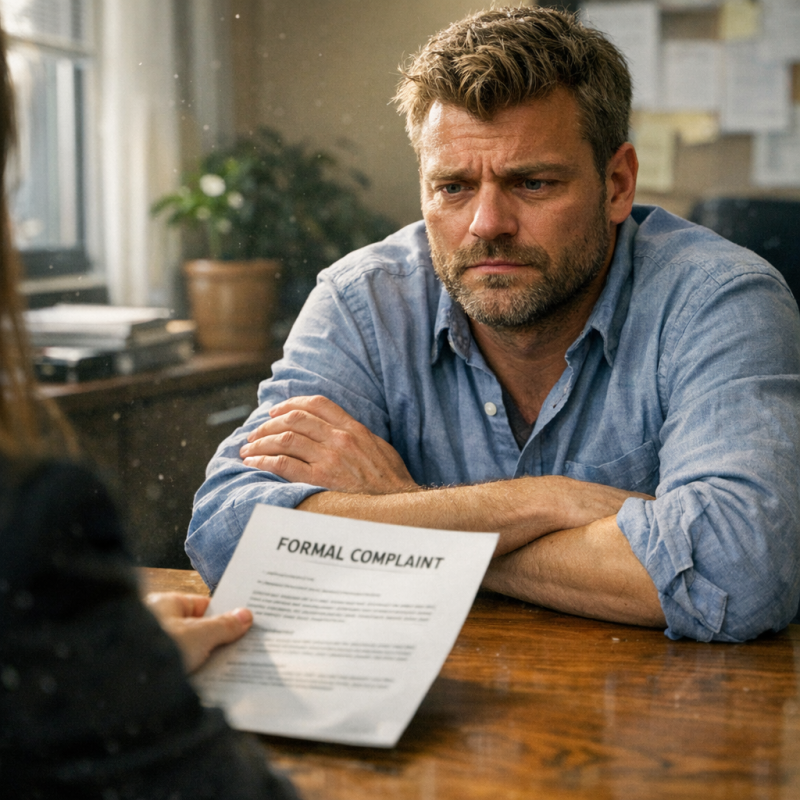 Image by FCT AI
The Principal's Office
Principal Hartman wanted to meet with me directly. That's what Rebecca told me. Not a phone call. An in-person meeting at the school. I drove back to Riverside Middle on Thursday afternoon, my hands tight on the steering wheel. Hartman's office was exactly what you'd expect—motivational posters, a photo of his family, a filing cabinet that looked like it had survived three decades. He was probably in his late fifties, gray at the temples, with the calm, measured demeanor of someone who'd dealt with every kind of school crisis imaginable. 'Mr. Reyes,' he said, shaking my hand. 'Thank you for coming in.' We sat. He didn't waste time with small talk. 'I want you to understand that Maya—that's the student involved—has a history here. We're very aware of it, and we're handling this situation with that context in mind.' I waited for him to elaborate. He didn't. 'What kind of history?' I asked carefully. He pressed his lips together. 'I can't share details. Privacy regulations. But I want you to know that this isn't necessarily about you personally.' That should have been reassuring. Instead, it made everything feel worse. 'So what am I supposed to do?' Hartman's expression was unreadable. He wouldn't tell me what that history was, only that I needed to be careful.
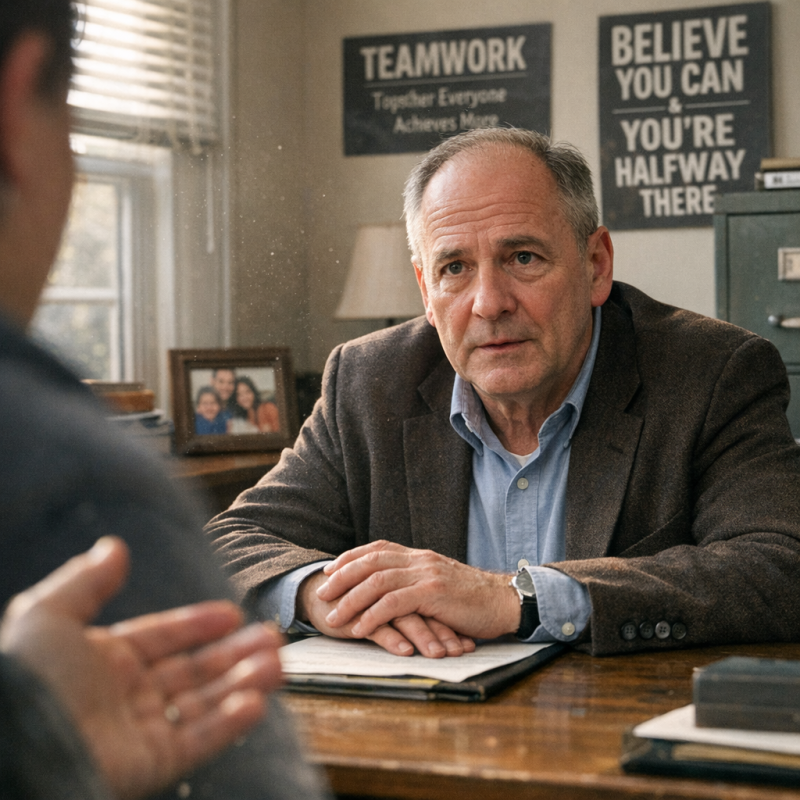 Image by FCT AI
Replaying the Moment
I couldn't let it go. That night, lying in bed, I replayed the entire presentation frame by frame. The way she'd stared at me before saying anything. The precision of her accusations. The cousin who built sheds but somehow knew more about high-voltage electrical safety than someone who'd been doing this for six years. Her immediate, aggressive challenge the moment I mentioned staying in the car. And then that final, absurd claim about pulling electrocuted people away from live wires—so dangerous, so obviously wrong, that I couldn't help but react. Had I been set up? No, that was paranoid. She was fourteen. Kids challenge authority figures all the time. But the complaint from her mother was so formal, so detailed. And Hartman's cryptic warning about her 'history'—what did that even mean? Was she known for making false accusations? For attention-seeking behavior? Or was it something else entirely? I kept circling back to that stare. The intensity of it. Like she'd been waiting for something. The more I thought about it, the more something felt deliberately orchestrated.
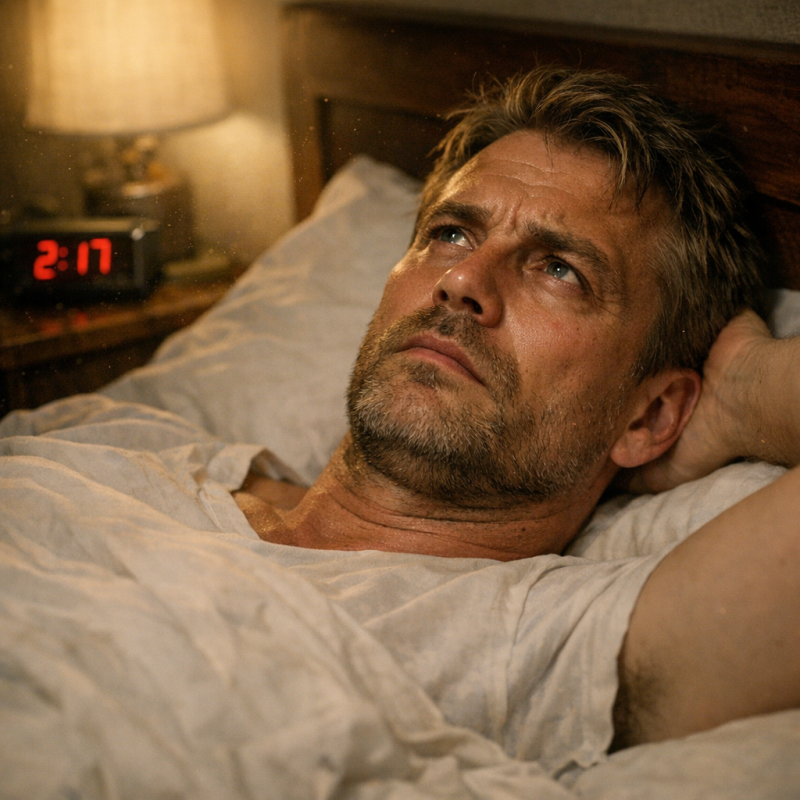 Image by FCT AI
The Second Presentation
A week later, I was back at the school for the second presentation. Different class, different room, same PowerPoint. I'd been assured this group wouldn't include her—they'd specifically scheduled me with the other eighth-grade section. I was ten minutes in, talking about arc flash boundaries, when I felt it. That prickle on the back of your neck when someone's staring at you. I glanced toward the door, still talking, still clicking through slides. Nothing. But the feeling persisted. I paused mid-sentence to take a drink of water, and that's when I saw her. She was standing in the hallway, visible through the narrow window in the door. Just standing there. Watching. Not moving, not pretending to walk past. Her arms were crossed, and even from that distance, I could see the intensity in her expression. The same look from that first presentation. The teacher hadn't noticed. The students were taking notes. Everything was normal except for the girl in the hallway who shouldn't have been there at all. Halfway through, I saw her in the doorway, watching.
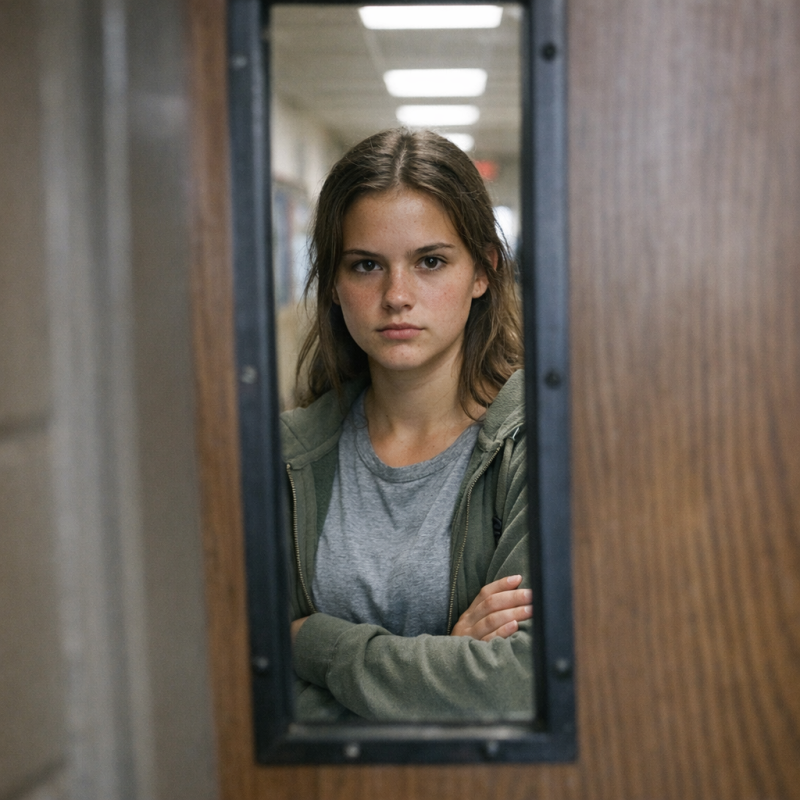 Image by FCT AI

History's most fascinating stories and darkest secrets, delivered to your inbox daily.
Why Are You Here?
I waited until after the presentation. Told the teacher I needed to grab something from my car, then stepped into the hallway. She was still there, leaning against a locker about twenty feet down. 'Can I help you?' I asked, keeping my voice level. She looked at me for a long moment. 'Just observing.' 'This isn't your class.' 'I know.' 'Then why are you here?' She pushed off from the locker and took a few steps toward me. Not threatening, exactly, but deliberate. 'I wanted to see if you'd do it differently this time,' she said. 'Do what differently?' 'The presentation. The safety part.' I felt my jaw tighten. 'I did it the same way because it was correct the first time.' 'Was it?' Her tone wasn't mocking. It was almost... gentle. Like she genuinely wanted to know. 'Yes,' I said firmly. 'It was.' She smiled at me—a strange, sad smile—and said she wanted to make sure I got it right this time.
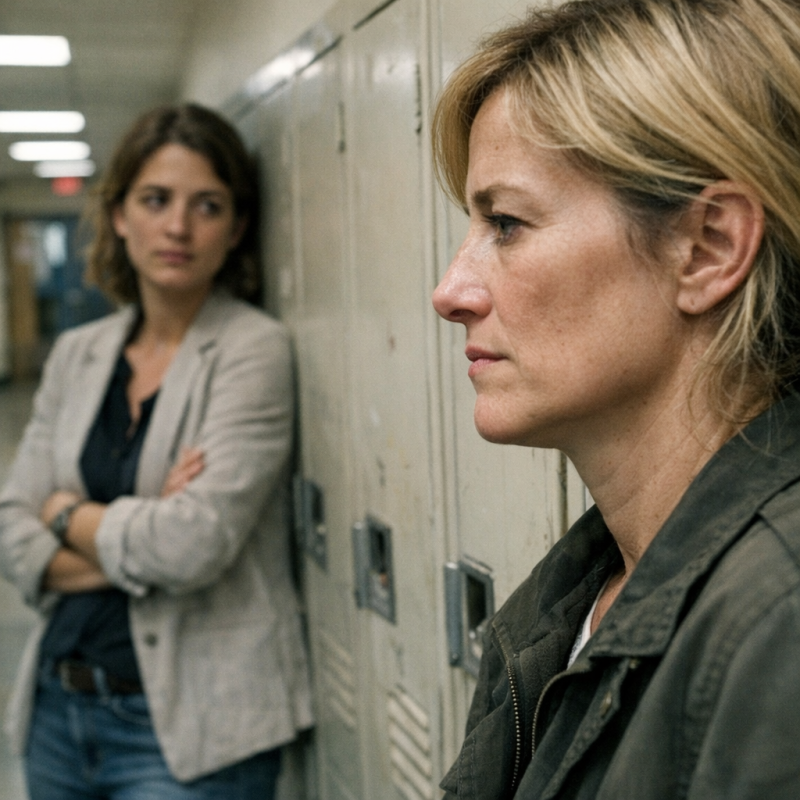 Image by FCT AI
Research Spiral
That night, I did something I probably shouldn't have. I started searching. I didn't have her last name, but the school wasn't huge, and I knew her first name from the formal complaint letter Hartman had mentioned. Maya. I started with the school's website, then moved to local news archives. 'Electrical accident' plus the town name. Then 'electrical safety' and 'school.' Nothing relevant came up at first—just generic safety PSAs and unrelated incidents from years ago. I expanded the search radius. Tried different terms. 'Electrician death.' 'Workplace accident.' 'Power line.' My coffee went cold. The apartment got dark. I didn't turn on the lights. Just kept scrolling, clicking, searching. I told myself I was being ridiculous. That this was invasive and probably violated some kind of privacy norm. But I couldn't stop. Something about the way she'd looked at me. That sad smile. The precision of her accusations. It all felt connected to something bigger. Three hours later, I found an obituary that made my blood run cold.
 Image by FCT AI
The Obituary
Michael Torres, age 39, beloved husband and father, passed away after a workplace accident. He was a licensed electrician for fifteen years. Survived by his wife Carol and daughter. The obituary was from three years ago. The town matched. The age was right for a parent. I read it four times, searching for details the sparse text didn't provide. No mention of how the accident happened. No specifics about the workplace. Just the standard language of grief and loss. I searched the name with 'electrical accident' and found a brief news article. A man had been electrocuted while working on a commercial building. OSHA had investigated. The article mentioned 'improper safety procedures' but didn't elaborate. Was this her father? It had to be. Same town, same timeline, same profession. But the obituary listed the daughter without a name. Just 'daughter.' I couldn't screenshot it, couldn't save it. That felt too invasive. But I couldn't unsee it either. The last name matched, but I couldn't be certain it was connected to her.
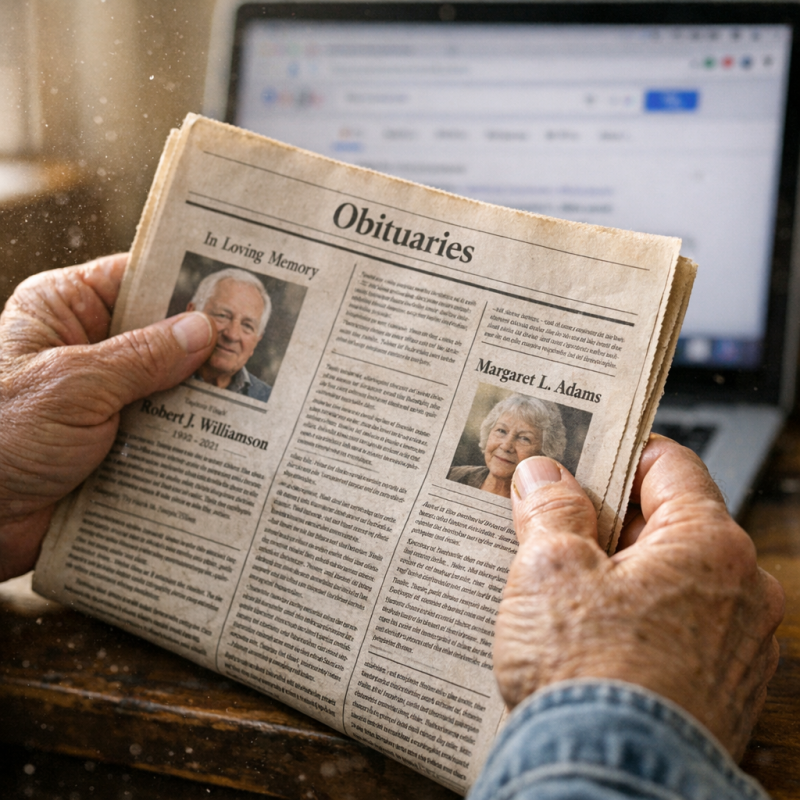 Image by FCT AI
Rebecca's Warning
Rebecca caught me in the break room the next morning. She waited until the other safety coordinator left, then closed the door. 'I heard you've been asking questions,' she said quietly. 'About the student.' I didn't deny it. 'I'm trying to understand what's happening.' 'Daniel, you can't go digging into a minor's personal background without authorization. It's not just inappropriate—it could get you fired.' 'I know. I just...' 'I get it.' She sat down across from me, glancing at the door. 'But there are protocols. Legal boundaries.' I nodded. She was right. Of course she was right. 'That said.' She lowered her voice further. 'I looked into it too.' My head snapped up. 'You did?' 'After the mother's complaint came in, I wanted context. I pulled the file.' She hesitated. 'I can't share details. But what I found...' She trailed off, choosing her words carefully. 'It worried me.' 'Worried you how?' 'Just... be careful. Okay?' But then she admitted she'd looked into it too—and what she found worried her.
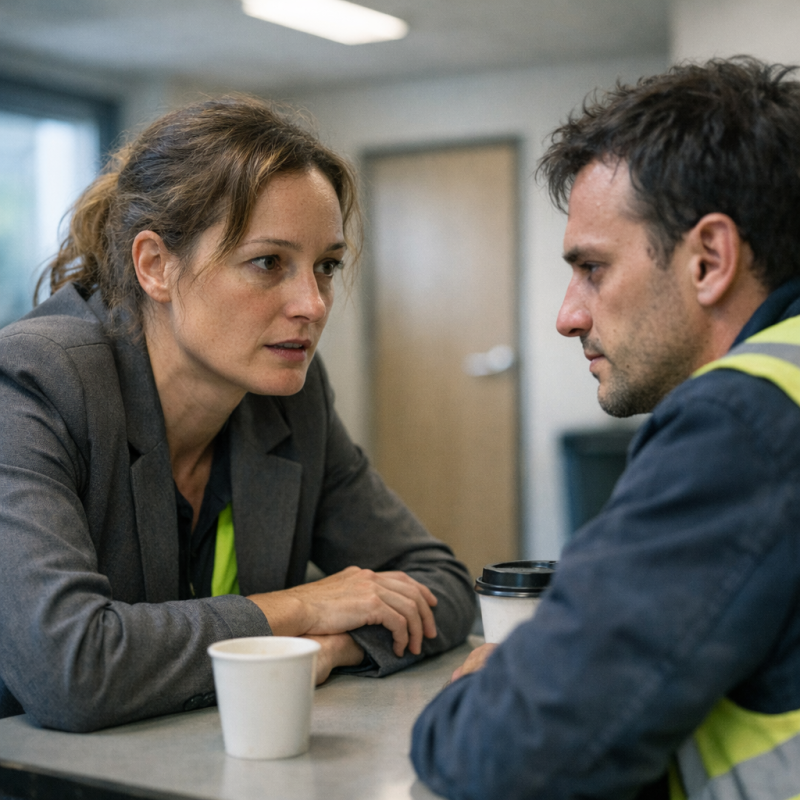 Image by FCT AI
Meeting the Mother
The meeting was scheduled for Tuesday afternoon. Me, Hartman, and Carol Torres. I knew her last name now, though I pretended I didn't. She arrived exactly on time, dressed professionally, her face composed but tight. Hartman did most of the talking. Reviewed the incident, the formal complaint, the steps being taken. I sat there feeling like I was on trial. Carol listened without interrupting, her hands folded on the table in front of her. When Hartman finished, she turned to me. 'Do you understand why this matters?' she asked. Her voice was steady. 'I believe so,' I said carefully. 'I don't think you do.' Not hostile, just... factual. 'I disrupted your daughter's class,' I offered. 'It's more than that.' Hartman shifted uncomfortably. 'Mrs. Torres, I assure you we take this seriously.' She kept her eyes on me. 'My daughter isn't trying to cause trouble. She's trying to prevent it.' I had no idea what that meant. The way she looked at me—like I'd personally betrayed her family—told me this was about more than a disrupted class.
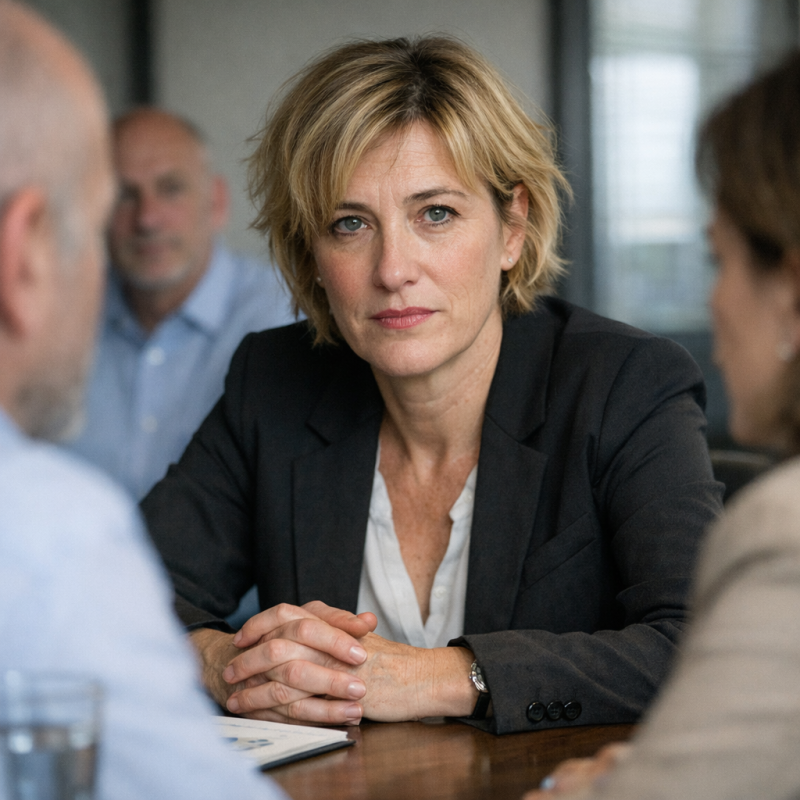 Image by FCT AI
The Formal Apology
Hartman handed me the assignment like a homework sheet. 'A written apology. Professional, sincere, acknowledging the disruption and your reaction.' I took the paper back to my hotel room that night and stared at it. Dear Maya and Mrs. Torres. I'm writing to apologize for... what? Laughing at a student who challenged me? Being dismissive? Teaching incorrect information—except I hadn't. I started over. I regret that my presentation caused distress. Delete. I understand that my response was inappropriate. True, but insufficient. I should have handled the situation with more patience. Closer, but still hollow. The cursor blinked at me. I got up, paced, sat back down. How do you apologize when you don't understand what you're apologizing for? I could acknowledge the disruption. I could express regret about my tone. But the real issue—whatever had driven her to challenge me so aggressively, whatever pain was behind that sad smile—remained a mystery. But when I tried to write it, I realized I still didn't understand what I was actually apologizing for.
 Image by FCT AI
The Third Encounter
I saw her in the parking lot after my third presentation—a make-up session for juniors who'd missed the original. She was walking toward the student lot, backpack slung over one shoulder. I was unlocking my car when she changed direction and headed toward me. My first instinct was to get in the car and leave. Avoid another confrontation. But something made me wait. She stopped about six feet away. We looked at each other for a moment. 'I got your letter,' she said. I nodded. 'I'm sorry for—' 'You don't have to explain it.' Her voice was soft. 'I know you don't understand yet.' 'Understand what?' She reached into her jacket pocket and pulled out a folded piece of paper. Plain notebook paper, folded into a small square. She held it out to me. I hesitated, then took it. 'What is this?' But she was already walking away, back toward the student lot. I called after her, but she didn't turn around. Just kept walking until she disappeared around the corner. She handed me a folded piece of paper and walked away without saying a word.
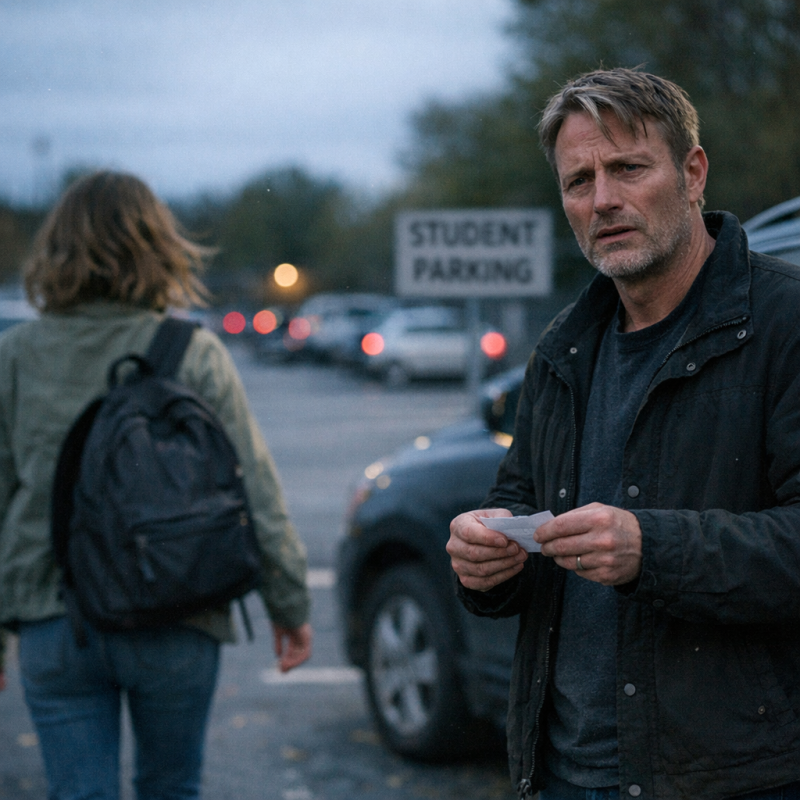 Image by FCT AI
The Note
I unfolded the paper in my car. It was a list—numbered, neat handwriting. Questions. Technical questions about electrical safety. 'How do you calculate the maximum load capacity for a 15-amp circuit?' 'What's the difference between a GFCI and an AFCI breaker, and when is each required?' 'How do you properly ground a subpanel in a detached structure?' There were twelve of them. They weren't basic. They weren't the kind of questions you'd find in a high school physics textbook. They were the kind of questions an electrician would ask. Or someone who'd spent serious time researching electrical code. I sat there staring at the paper, trying to figure out what she wanted from me. Was this some kind of test? A challenge? I thought back to my presentation—the slides about outlet safety and extension cord limits. Basic stuff. Practical for teenagers. But looking at these questions, I realized they were on a completely different level. At the bottom, she'd written: 'These are the questions you should have asked us.'
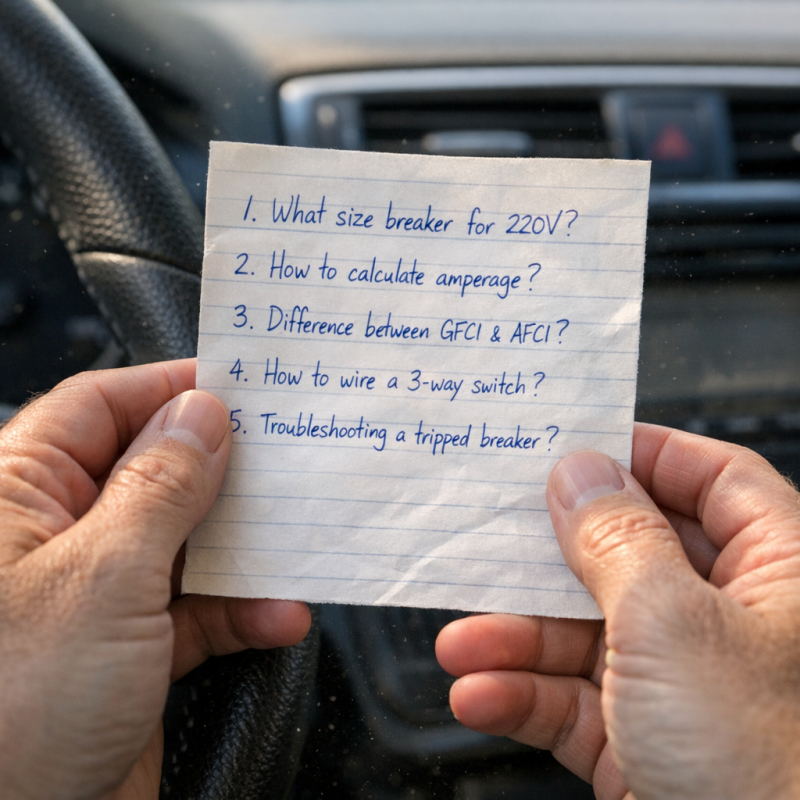 Image by FCT AI
Finding the Cousin
I found Trevor through Maya's aunt—tracked her down on Facebook and sent a message explaining I was following up on some electrical safety questions. She gave me his number. He agreed to meet at a coffee shop near his work site. He showed up in a dusty hoodie, looking tired. I explained who I was, mentioned Maya's name. He nodded. 'Yeah, she's my cousin. Smart kid.' I asked him about the shed he'd built. He confirmed it. Then I asked about the electrical advice he'd supposedly given her—the stuff about bypassing inspectors and running cables through walls without conduit. He set down his coffee. Looked at me like I'd said something insane. 'I never told her any of that,' he said. 'I'm not even licensed. I hired an electrician for the wiring.' I must have looked confused because he kept talking. 'All I did was frame it and put up drywall. The electrical stuff? That was way over my head.' When I asked him about electrical advice, he laughed and said he'd never told her anything like that.
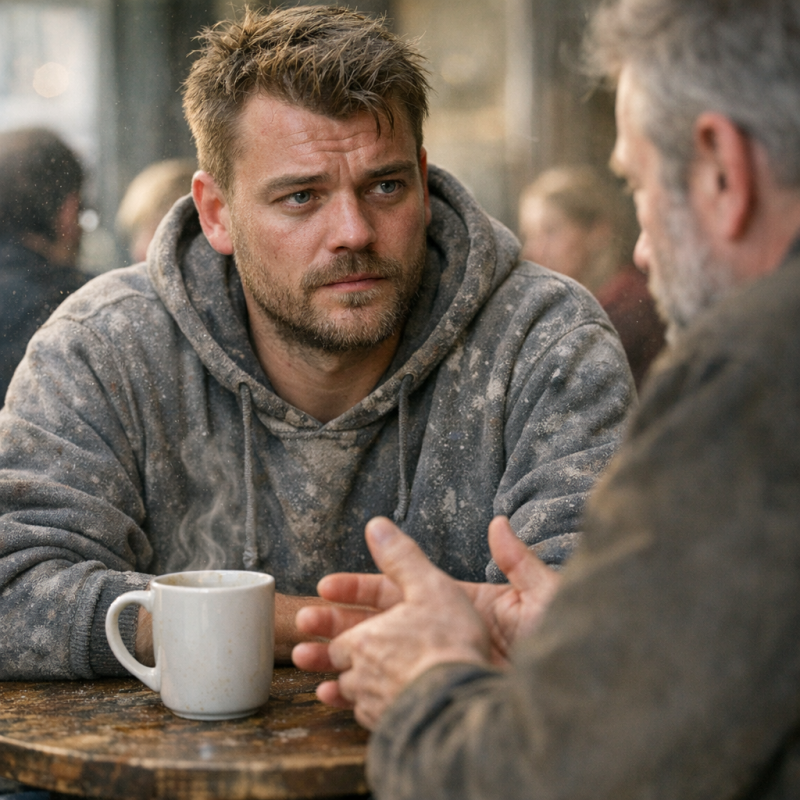 Image by FCT AI
Why Would She Lie?
I drove home trying to make sense of it. She'd cited a source—a specific person, a specific project. And it was all fabricated. But why? If she wanted to disrupt the presentation, there were easier ways. She could have just heckled. Made jokes. Walked out. Instead, she'd constructed this elaborate false authority. She'd researched enough to sound credible. She'd known I wouldn't verify it on the spot. The whole thing felt calculated. But calculated toward what end? I kept circling back to her tone during that first presentation. She hadn't sounded malicious. She'd sounded convinced. And then I remembered the note—those technical questions. She hadn't been trying to show off her own knowledge. She'd been pointing out gaps in mine. Or gaps in what I'd covered. The questions weren't random. They were specific to things that could actually go wrong. Things that could actually hurt someone. Unless she wasn't trying to spread misinformation at all.
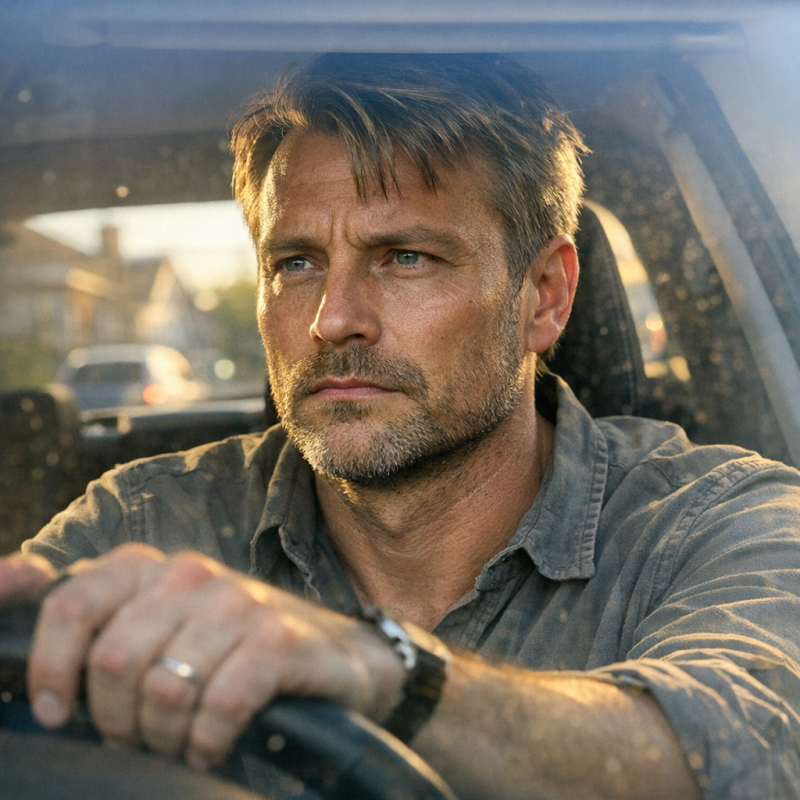 Image by FCT AI
The Pattern I Couldn't Prove
I started asking around. Casual conversations with other presenters who visited the school—fire safety people, a guy who did internet safety talks, a woman from the health department. I didn't mention Maya specifically. Just asked if they'd ever had students challenge them. A few of them paused. 'Yeah, actually,' the fire safety guy said. 'Last year. Kid kept asking why we didn't cover wildfire evacuation protocols.' The health woman nodded. 'I had a student derail my whole talk about nutrition by asking about eating disorders. Really specific questions. I wasn't prepared for it.' Each time, they described a disruption that pushed beyond the standard curriculum. Each time, it had felt deliberate. But when I asked them to describe the students, they all gave different details. Different genders, different grade levels, different contexts. Maybe I was seeing patterns where none existed. Maybe I just wanted there to be a pattern because it made Maya's behavior make sense. But when I asked them about it, they all described different students, different situations.
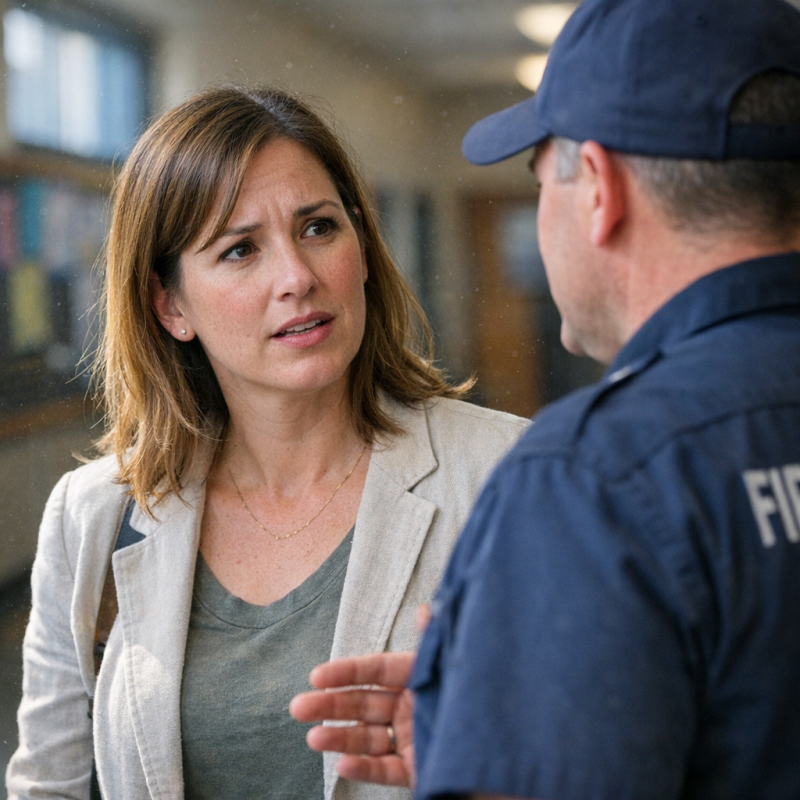 Image by FCT AI
Mr. Callahan's Perspective
I emailed Mr. Callahan. Kept it vague—said I was trying to understand Maya's perspective better. He called me that evening. 'She's complicated,' he said. 'But she's not malicious. I can tell you that much.' I asked if he knew why she'd reacted so strongly to my presentation. He was quiet for a moment. 'I can't give you specifics. Privacy rules. But I can tell you she takes safety seriously. More seriously than most kids her age.' I asked if something had happened to make her that way. Another pause. 'She's dealing with something heavy,' he said. 'Has been for a while. It shapes how she sees the world.' I wanted to press him, but I could tell he'd already said more than he probably should have. We talked for a few more minutes. He mentioned that Maya was one of his top students—focused, engaged, always asking questions that went beyond the curriculum. He told me she was one of his best students—focused, passionate, and dealing with something heavy.
 Image by FCT AI
The Fourth Presentation
The next week, I had a presentation at a different high school across town. Same slides. Same routine. But I felt different walking in. Hyperaware of every student's expression. Watching for raised hands. Listening for skeptical tones. The presentation went smoothly. No one interrupted. No one challenged a single point. The teachers thanked me. Students filed out quietly. I packed up my materials and walked to my car. And the whole time, I felt this low-grade anxiety humming in my chest. Because no one had pushed back. No one had asked a hard question. I'd delivered the exact same information I always did, and everyone had just accepted it. I thought about Maya's note. Those technical questions. The gaps she'd pointed out. Maybe there were gaps. Maybe I'd been skating by on surface-level content for years, and no one had ever called me on it before. This time, there were no interruptions—and somehow that felt worse.
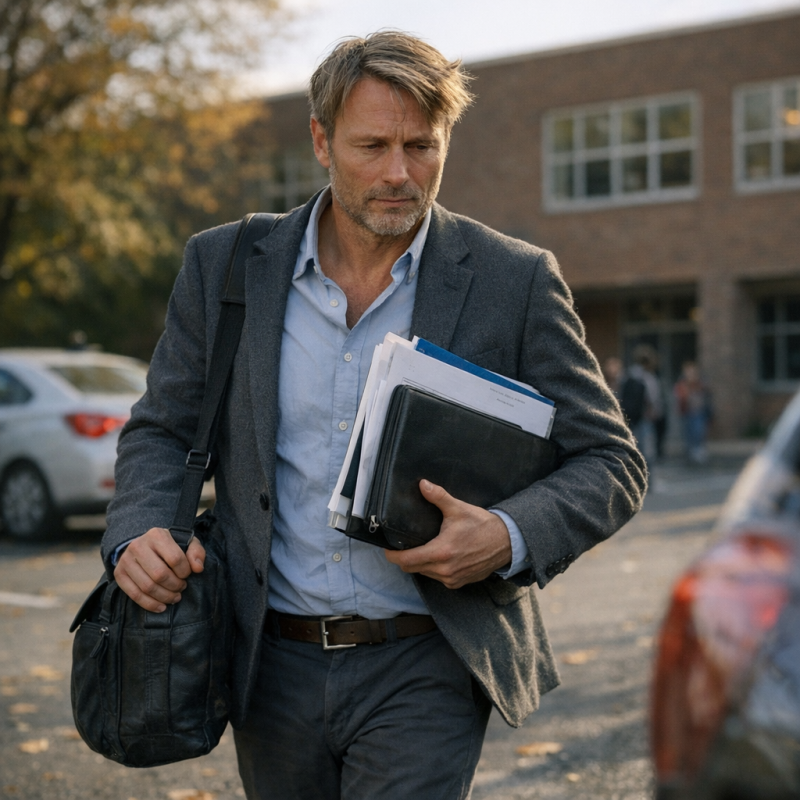 Image by FCT AI
The Counselor's Insight
Ms. Patel reached out a few days later. The school counselor. She'd heard I'd been asking about Maya and wanted to talk. We met in her office after school hours. She was careful with her words. 'I can't give you details,' she said. 'But I wanted you to know that Maya's situation is more complicated than it might seem.' I asked if she was okay. Ms. Patel nodded. 'She's coping. Better than most would, honestly. But she's carrying something that affects how she processes information about safety.' I asked what she meant. 'Grief,' Ms. Patel said simply. 'She's coping with grief.' I waited for her to elaborate, but she didn't. Just looked at me with this expression that was both sympathetic and firm. 'I can't tell you more than that. I probably shouldn't have said even this much. But I thought it might help you understand.' She said Maya was coping with grief—but couldn't tell me how or why.
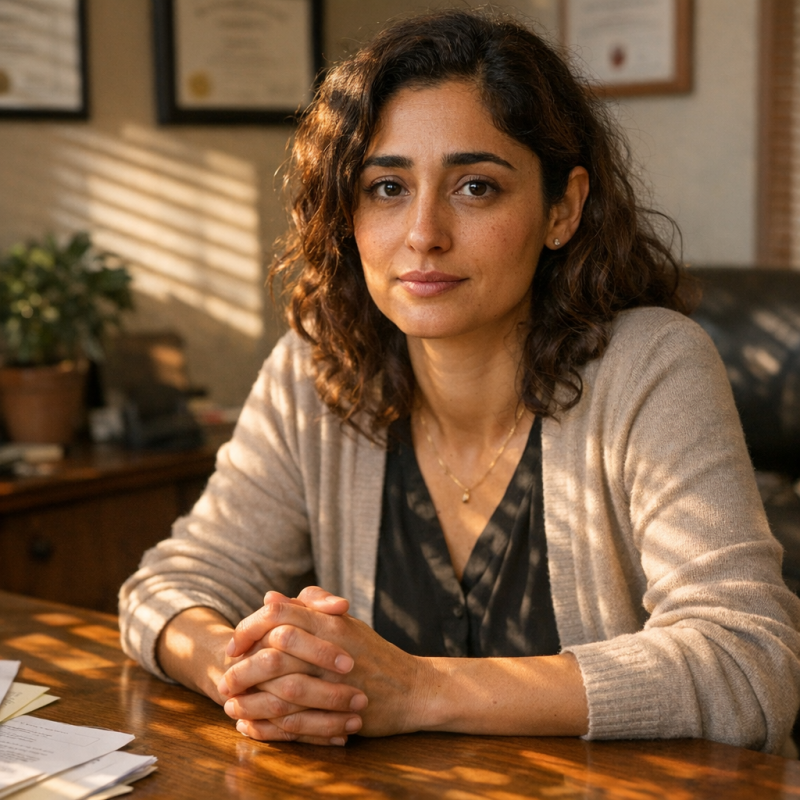 Image by FCT AI
The Anonymous Email
The email came two days later. No subject line. The sender address was a random string of letters and numbers. No message in the body—just a link to a news article. I clicked it. Local news site. Three years old. The headline read: 'Father of Two Dies in Home Electrical Fire.' I scanned the article. David Chen, 42, had been killed when faulty wiring in his garage workshop sparked a fire. The article mentioned that the wiring had been done by a friend, not a licensed electrician. It mentioned that code violations had been found. It mentioned that the fire could have been prevented with proper safety measures. At the bottom of the article, there was a photo. David Chen with his family. Two kids—a young boy and a girl who looked about eleven. I stared at the girl's face. Tried to imagine her three years older. The article didn't name the children. The victim's name was David Chen—and the sender's address was a string of random characters.
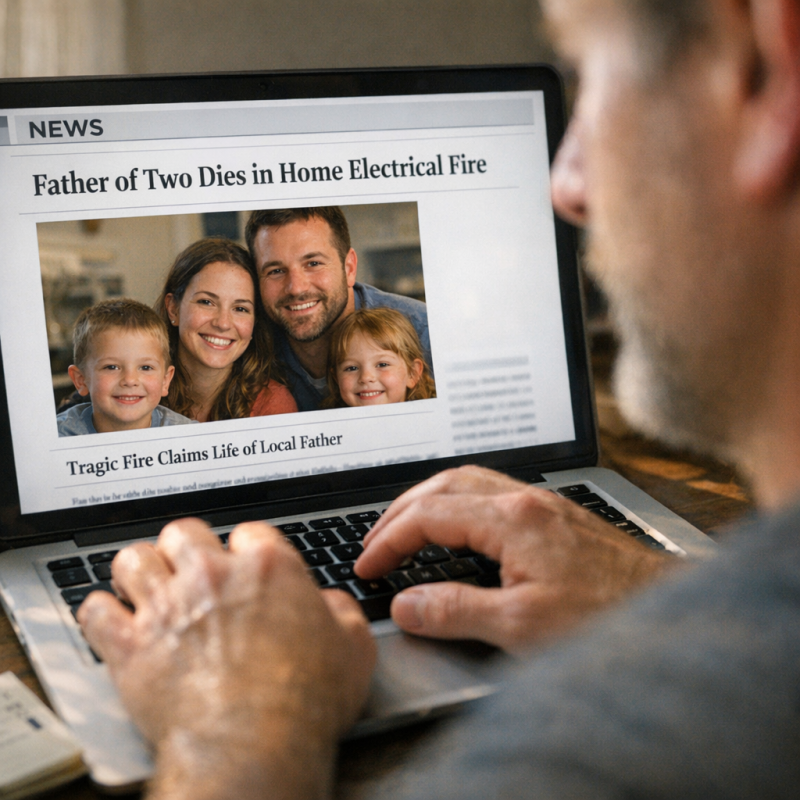 Image by FCT AI
Connecting the Dots
I spent the next hour searching. David Chen. Electrical fire. Three years ago. Cross-referencing Maya's last name from the school records I could access. It took longer than I'd like to admit, but I found the connection. David Chen had been married to Carol Reeves-Chen. Maya's mother. The obituary confirmed it—survived by his wife and two children, names withheld for privacy. The fire investigator's report was linked from another article, public record. I read through the technical details with growing dread. Overloaded circuit. No GFCI protection. Extension cords daisy-chained together in a workspace with sawdust and flammable materials. Every single mistake was something I'd covered in my presentations. Every single one was preventable with basic electrical safety knowledge. The report noted that Chen had done the wiring himself, had told neighbors he 'knew enough to be safe.' He'd been confident. He'd been wrong. And three years later, his daughter had sat in my classroom while I made jokes about people who think they know what they're doing. The article described exactly the kind of mistake I'd been warning students about.
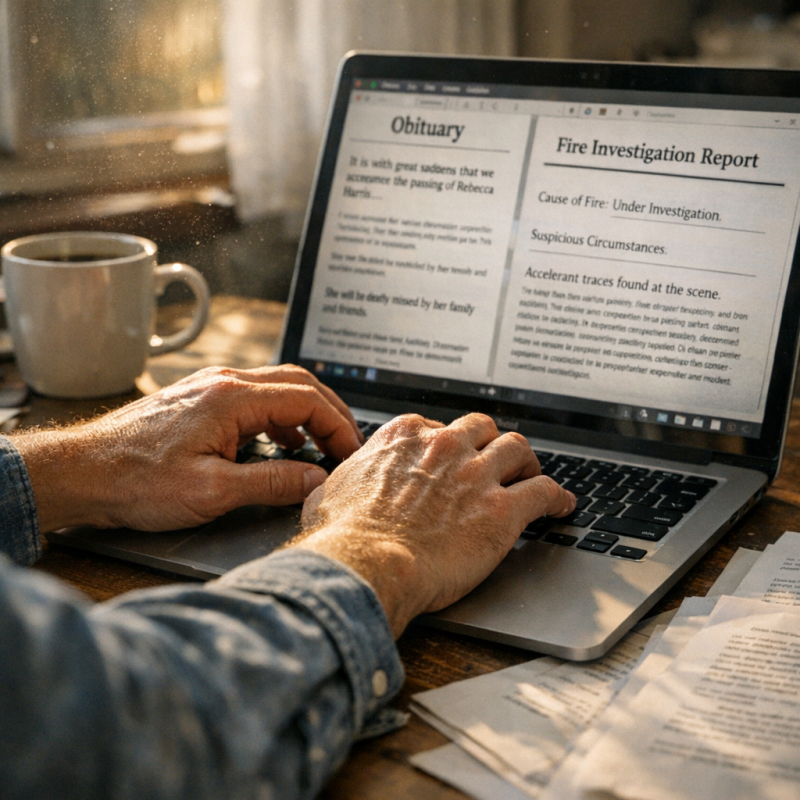 Image by FCT AI
Mike's Theory
I showed Mike the articles the next day during lunch. He read through them in silence, then looked at me with this grim expression. 'Okay, so she's dealing with trauma,' he said. 'That explains the hostility.' He theorized that Maya might be sabotaging safety education out of misplaced anger—that maybe she associated my presentations with her father's death, that hearing about electrical safety forced her to confront what had happened. 'She's lashing out at you because you represent the knowledge her dad didn't have,' Mike said. 'It's classic displacement.' He seemed pretty confident in his assessment. He'd taken a couple psychology courses in college, loved to armchair diagnose situations. And on the surface, his theory made sense. Grief could do strange things to people. Teenagers especially. But I kept thinking about the precision of her questions, the careful research, the strategic timing. The way she'd sent me that article with no explanation, just letting me make the connection myself. Something about Mike's explanation felt fundamentally wrong to me.
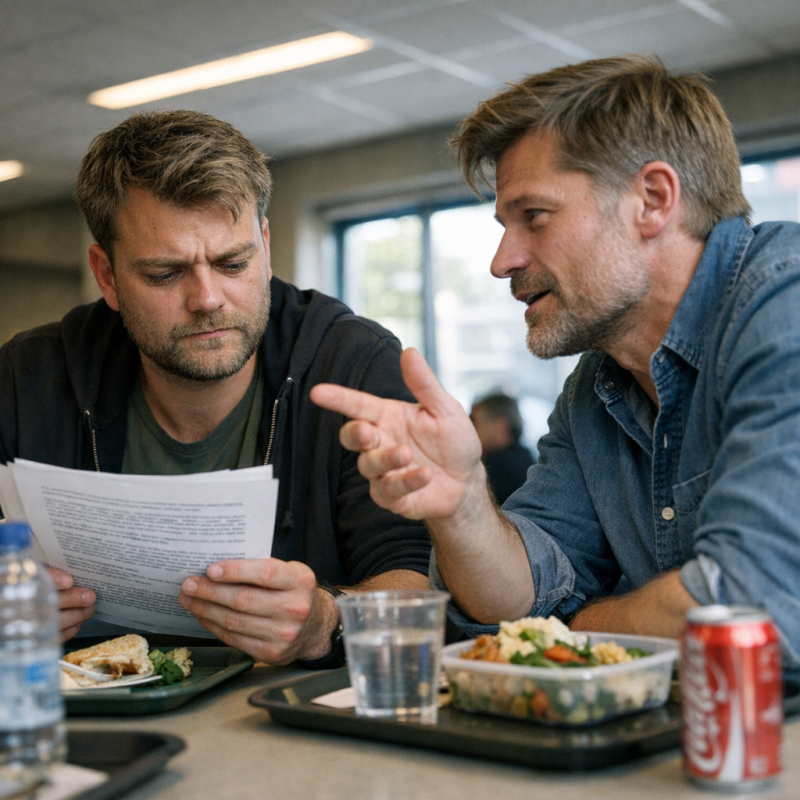 Image by FCT AI
The School Board Meeting
The school board meeting wasn't on my calendar until Principal Hartman called me two days later. They wanted a presentation on the safety education program—enrollment numbers, feedback, future plans. Standard stuff. I showed up with my laptop and a folder of handouts, expecting maybe a dozen people in the conference room. There were forty. Parents, administrators, a couple of local news people in the back. I spotted Maya immediately, sitting in the third row. Her mother was beside her, dressed in business casual, looking composed and official. They both had folders on their laps. Matching folders, actually, like they'd prepared together. My stomach dropped. Hartman introduced me, and I went through my presentation on autopilot. Talked about the program's reach, the positive responses from teachers, the plans to expand to middle schools. I tried not to look at Maya, but I could feel her watching me. When I finished, Hartman opened the floor for questions. Maya and her mother were in the audience—and they'd brought documentation.
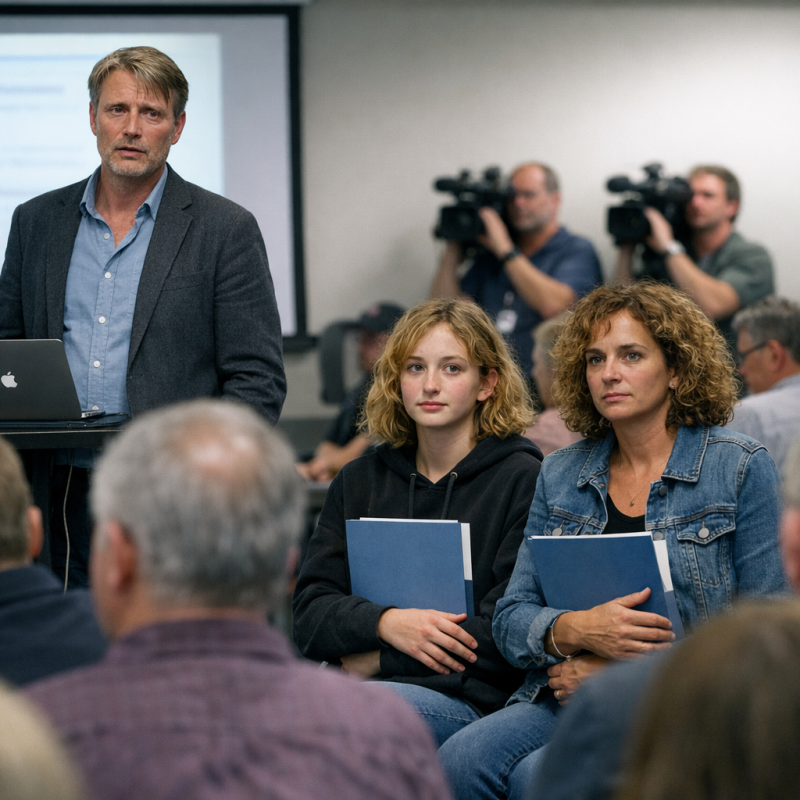 Image by FCT AI
Carol's Testimony
Carol raised her hand first. She introduced herself calmly, mentioned she worked in public health education. Then she talked about her late husband. The room got very quiet. She described the accident without emotion, just facts—what had happened, what could have prevented it, how she'd spent the last three years thinking about electrical safety and education. She praised my program. Said it was reaching students who needed this information. Said I was clearly knowledgeable and dedicated. I started to relax. Then she pulled out her folder. 'But I want to talk about retention,' she said. 'Because knowing something exists isn't the same as remembering it when it matters.' She cited studies on educational effectiveness, memory formation, the way people process safety information. She mentioned that traditional lecture formats have retention rates around twenty percent two weeks after the presentation. She looked directly at me, not unkindly. 'Mr. Brennan is giving students the right information,' she said to the board. 'But we need to talk about whether they'll remember it when it counts.' Everything she said supported my program—until her final sentence shifted the entire room.
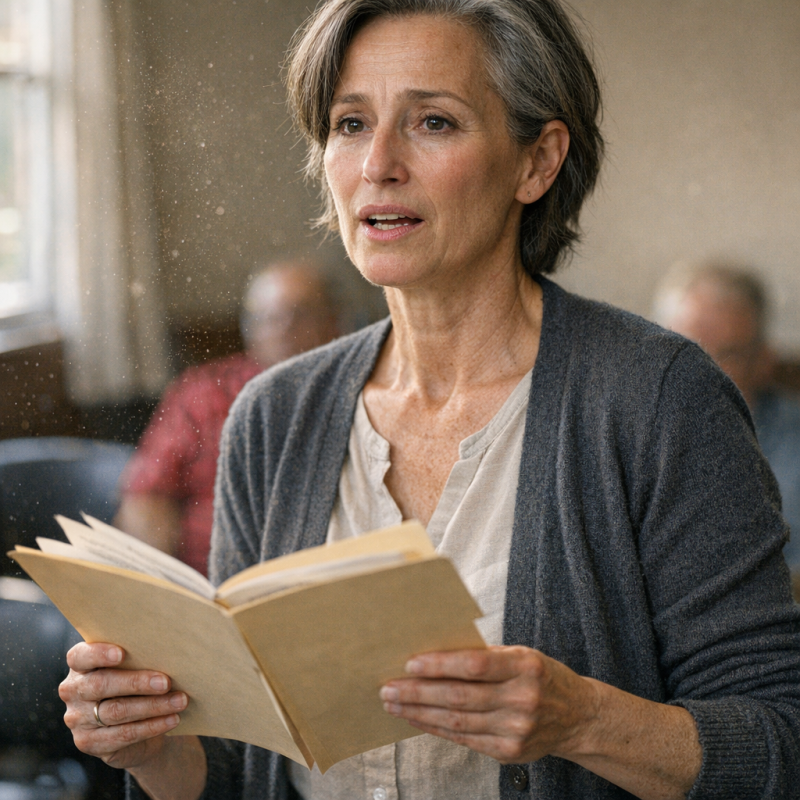 Image by FCT AI
What They Were Really Asking For
Maya opened her folder next. She'd prepared a whole presentation—slides on her laptop, research papers printed and highlighted, case studies from other school districts. She talked about interactive learning, hands-on demonstrations, spaced repetition. She'd found programs in California and Oregon that incorporated actual electrical components, had students identify hazards in photos, used simulation exercises. Their retention rates were significantly higher. She proposed a revised format for my presentations: shorter lectures, more activities, follow-up sessions to reinforce the material. She'd outlined specific modules, estimated costs, even suggested potential community partners who could donate materials. Her mother added implementation details, talked about grant funding for educational improvements. They'd thought of everything. The board members were nodding, taking notes. One asked if I'd be willing to pilot the revised format. Another said it sounded like exactly the kind of innovative approach the district needed. Hartman looked at me expectantly. The board loved it—and they wanted me to implement it.
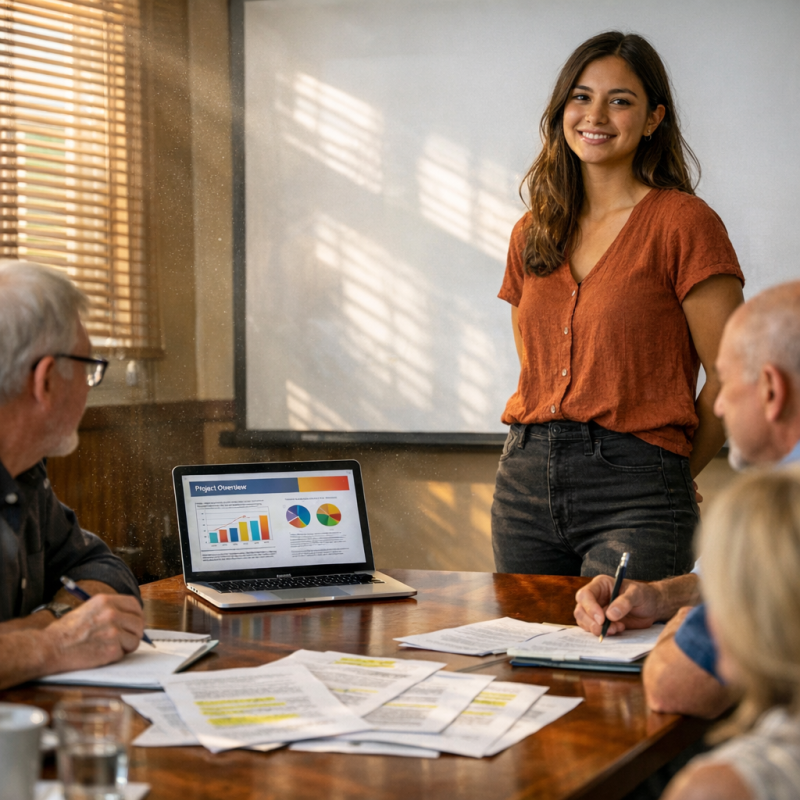 Image by FCT AI
Redesigning the Presentation
I spent the next two weeks basically rebuilding everything from scratch. Maya had emailed me a detailed document—twenty pages of suggestions, research citations, sample activities. I started cutting my slide deck in half, then in thirds. For every concept I'd previously explained, I now had to figure out how to demonstrate it. I ordered supplies: plug analyzers, circuit testers, GFCI outlet samples, damaged extension cords to use as visual aids. I scripted interactive segments where students would identify hazards in photos. I created follow-up materials they could take home. It was exhausting. And humbling. Because the more I worked on it, the more I realized how routine and ineffective my old approach had been. I'd been going through the motions for years, delivering information efficiently but not effectively. I'd measured success by how many presentations I completed, not by whether anyone actually retained what I taught them. Maya had seen that immediately. A fourteen-year-old had diagnosed the fundamental flaw in my entire program within twenty minutes of my first presentation. The more I worked on it, the more I realized how routine and ineffective my old approach had been.
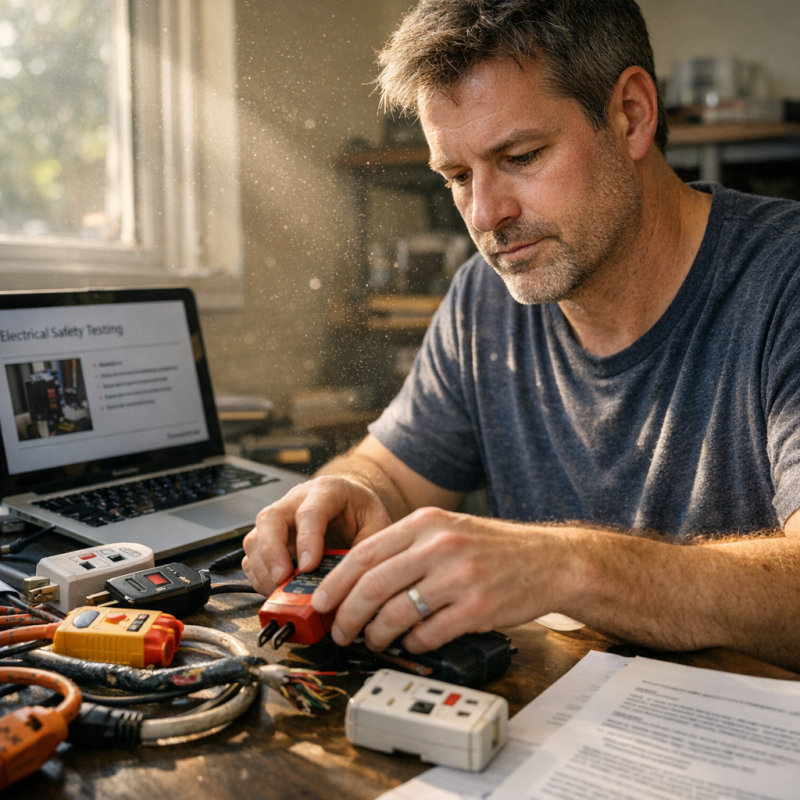 Image by FCT AI
The First New Presentation
The first presentation with the new format was at a community center downtown. Mixed audience—high school students, parents, a few contractors there for continuing education credits. I was nervous in a way I hadn't been in years. The interactive segments felt awkward at first, but people engaged. They asked questions. They actually looked at the outlet testers I passed around. During the hazard identification exercise, a teenager pointed out something in a photo that I'd missed—a power strip partially covered by curtains near a space heater. Someone else noticed moisture stains near an outdoor outlet. They were paying attention. Actually thinking about the material instead of just waiting for me to finish. Afterward, people lingered. Asked follow-up questions. One elderly man came up as I was packing up my supplies. 'I've sat through probably thirty of these safety talks over the years,' he said. 'Required for my job, you know. This is the first one I actually listened to.' He paused. 'First one I'll actually remember.' Afterward, an elderly man thanked me and said it was the first safety talk he'd actually listened to in decades.
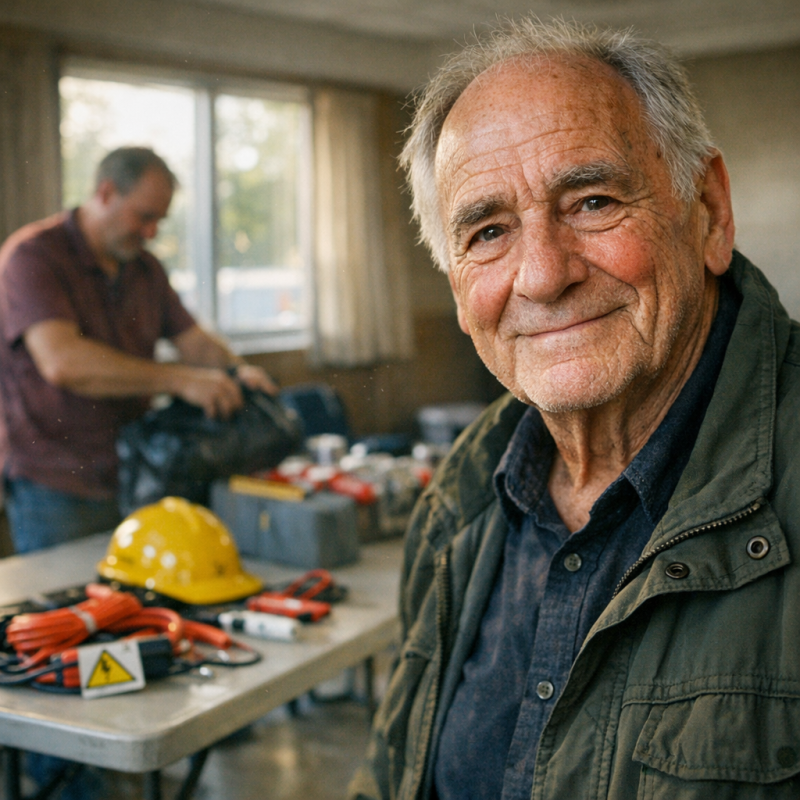 Image by FCT AI
Maya's Next Move
I was three weeks into the revised presentation schedule when I looked up during a school assembly and saw Maya in the auditorium. She wasn't enrolled in this school—she'd come specifically to watch. I'd just finished the interactive segment, was taking questions, when her hand went up. My chest tightened. Here we go again. 'Mr. Brennan,' she said, and I braced myself. 'In your example about the workshop fire, you mentioned that GFCI outlets can prevent electrocution but don't necessarily prevent fires from overloaded circuits. Could you explain more about how to calculate circuit load capacity?' It was a legitimate question. A good question, actually—one that showed she'd been listening carefully to the distinction I'd made. No challenge in her voice. No trap that I could detect. Just genuine curiosity about a technical detail. 'Good question,' I said, and I meant it. I walked through the calculation, used the whiteboard to show the formula. She nodded, took notes. When I finished, she said, 'Thank you.' Just that. Thank you. But this time, her tone was different—curious instead of confrontational.
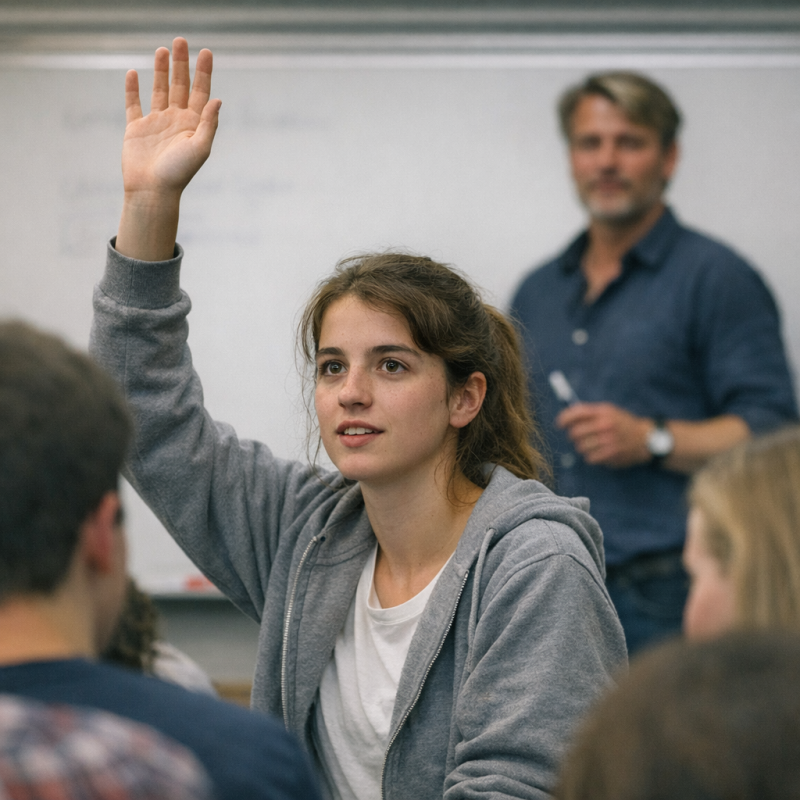 Image by FCT AI
The Question I Couldn't Answer
The following week, Maya showed up at another school. Different auditorium, same concentrated attention in her eyes. During the Q&A, her hand went up again. 'Mr. Brennan,' she said, 'when you talk about arc fault circuit interrupters, you mention they detect arcing—but what's the actual difference between series arcing and parallel arcing in terms of fire risk?' I opened my mouth. Closed it. I knew AFCIs were important, knew they saved lives, had the statistics memorized. But the technical distinction she was asking about? The specific mechanism that differentiated the two types of electrical arcing? I realized I'd been repeating what I'd been told without truly understanding the underlying physics. The room went quiet. Students looked at me expectantly. I could have bluffed my way through it, given a vague answer that sounded authoritative. Six months ago, I would have. Instead, I looked at Maya and said, 'That's an excellent question, and I don't have a complete answer for you right now. But I'm going to research it and get back to you with a proper explanation.' Something shifted in her expression—surprise, maybe, or respect. For the first time, I said 'I don't know—but I'll find out'—and meant it.
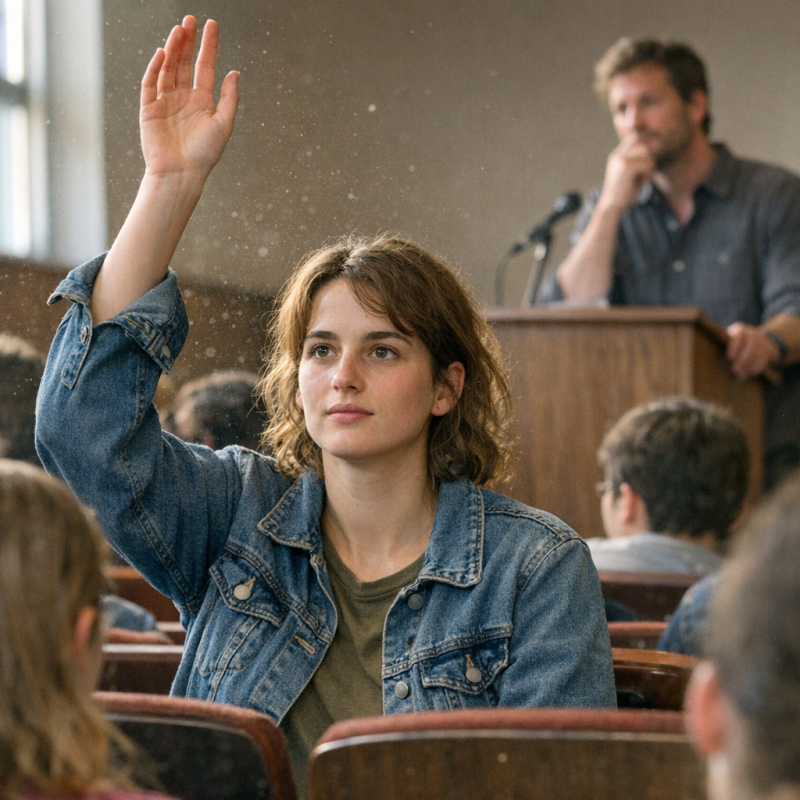 Image by FCT AI
Research Partnership
Two days later, an email appeared in my inbox. The subject line read: 'AFCI Research.' Inside, Maya had compiled a list of technical papers, manufacturer specifications, and electrical engineering journals. She'd organized them by complexity—basic overviews first, then progressively more technical sources. There were annotations in a document she'd attached, highlighting the relevant passages about series versus parallel arcing, explaining the difference in clear, accessible language. It was better research than I would have done myself. More thorough. More thoughtful. She'd even included suggested ways I might explain the concept to students without overwhelming them with jargon. At the top of the email, she'd written: 'I thought these might help. The third source has good diagrams.' Professional. Helpful. No snark, no challenge. Just a fourteen-year-old kid who clearly cared deeply about this subject. I scrolled to the bottom to write a thank-you response. That's when I saw it. Below her signature, separated by a blank line, was a single sentence that made my chest tighten: 'He would have wanted someone to care this much.'
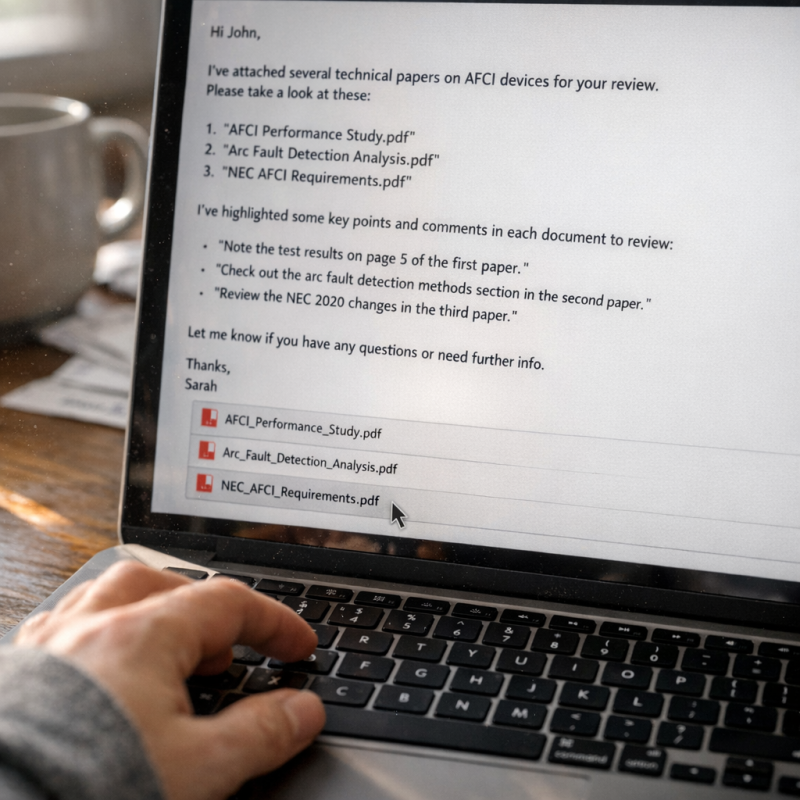 Image by FCT AI
The Accident Report
I'd been avoiding it, if I'm honest. Looking up the details felt invasive somehow, like reading someone's diary. But after that email, I needed to understand. Public records requests aren't difficult when you know what you're looking for, and workplace fatalities get investigated thoroughly. The accident report for David Chen arrived as a PDF three days later. I read it at my kitchen table, late evening, laptop screen glowing in the dim light. Commercial electrical work on a renovation project. An energized panel that should have been locked out. Inadequate personal protective equipment. The language was clinical, bureaucratic—'victim made contact with live conductors' and 'fatal electrical shock.' But between the sterile phrases, I could see what had actually happened. A man, Maya's father, doing his job. A series of small oversights, easily preventable mistakes. The kind of thing my presentations were supposed to prevent. And then, near the end of the report, one line that made me feel sick: 'Contributing factors include lack of awareness of proper safety protocols and insufficient lockout/tagout procedures.' The report cited 'lack of awareness of proper safety protocols' as a contributing factor.
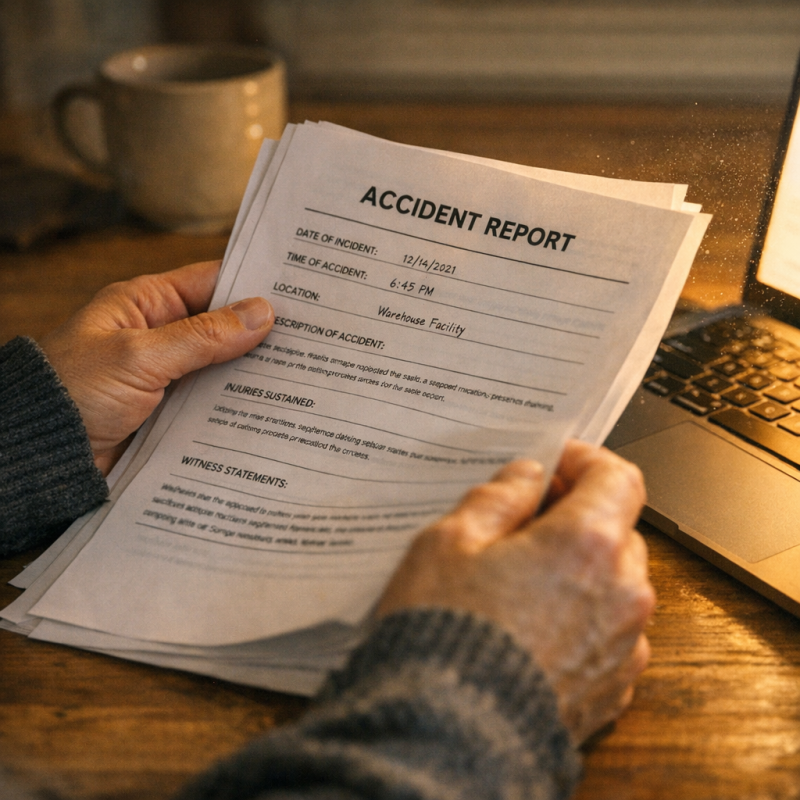 Image by FCT AI
What She Must Have Felt
I kept thinking about that first assembly. The one where Maya had stood up and called me a liar. What must it have been like for her, sitting in that auditorium? Listening to me talk about electrical safety with my casual confidence, my statistics, my generic warnings about things that could happen. Watching me treat her father's death as an abstract possibility instead of a devastating reality. I'd been performing, essentially. Making sure I hit all the required points, kept the students' attention, finished on time. Meanwhile, she'd been sitting there knowing—really knowing—what happens when those protocols fail. She'd lived through the aftermath. The phone call, the hospital, the funeral. Whatever came after. And I'd stood at the front of that room acting like I understood, like my presentations mattered, like I cared. When really, I'd just been going through the motions. No wonder she'd been angry. No wonder she'd wanted to disrupt everything, to make me actually feel something. And suddenly her anger—and her determination—made a kind of terrible sense.
 Image by FCT AI
The Presentation She Wanted
I went back through my notes from all those conversations with Maya. Every question she'd asked, every 'correction' she'd insisted on, every time she'd pushed back on my generic examples. And I started to see a pattern I'd missed before. When she'd wanted me to use specific scenarios instead of vague warnings—that made the dangers concrete, real, easier to remember. When she'd questioned my statistics—that forced me to actually understand the data, not just recite it. When she'd insisted on explaining the 'why' behind each safety rule—that gave students a reason to care, not just a rule to forget. She'd systematically pushed me to make every presentation more emotionally engaging, more memorable, more likely to actually stick with students after they left the auditorium. Every single change she'd suggested had made me a better educator. I'd thought she was trying to embarrass me, to catch me in mistakes, to prove I didn't know what I was talking about. But she hadn't been focused on me at all. She'd been focused on them—on the students who might someday work with electricity, who might face the same choices her father had faced. She hadn't been trying to sabotage me—she'd been trying to save the next person.
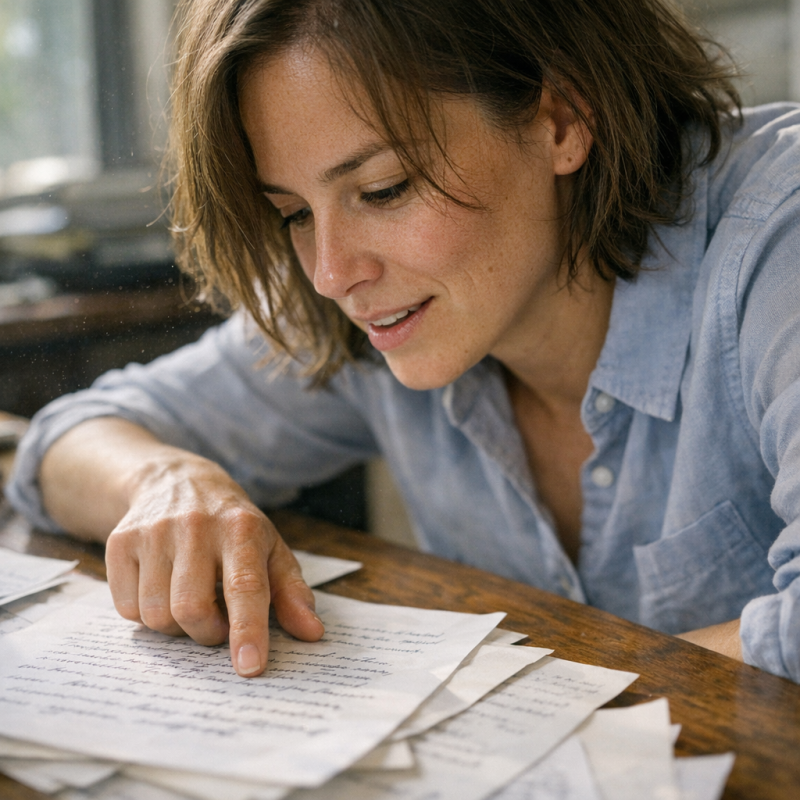 Image by FCT AI
Why Confrontation Works
I fell down a research rabbit hole that night. Educational psychology, memory formation, the neuroscience of learning. Turns out there's solid science behind what makes information stick in people's minds versus what gets forgotten the moment they leave the room. And emotionally charged moments? Those create significantly stronger memory retention than neutral presentation of facts. Conflict, surprise, personal challenge—these things trigger deeper cognitive processing. Students don't remember the smooth presentations. They remember the disruptions, the moments that made them uncomfortable, the times when something unexpected happened. I found study after study confirming it. The research was clear: we remember what makes us feel something. Maya had somehow understood this—or maybe she'd just intuitively known that my forgettable presentations weren't good enough. So she'd created conflict. Made the presentations uncomfortable. Turned each session into an event that students would actually remember weeks or months later when they encountered a dangerous situation. She'd used me, essentially. Made me the antagonist in a drama that would stick in students' minds. Maya had turned my presentation into something unforgettable—by making me part of the conflict.
 Image by FCT AI
Testing the Theory
I needed to know if it had actually worked. So I designed a simple survey and sent it to students who'd attended that first presentation—the chaotic one where Maya had called me a liar. Just basic questions about what they remembered. The responses started coming back within hours, and I sat at my desk reading them with growing astonishment. 'I remember the girl who kept challenging you.' 'You talked about lockout/tagout procedures—I remember because of the argument about whether you'd actually done electrical work.' 'The GFCI demonstration was memorable because someone questioned whether you were qualified to teach it.' Question after question, they could recite the key safety rules. Not because I'd presented them well, but because Maya had made sure the entire experience was impossible to forget. Students from presentations I'd done months earlier often couldn't tell me a single specific safety protocol. But these students? They remembered everything. One wrote: 'Honestly, I remember that presentation better than any other assembly this year. The disruption made it feel important.' Every single one could recite the key safety rules—and most of them mentioned the disruption specifically.
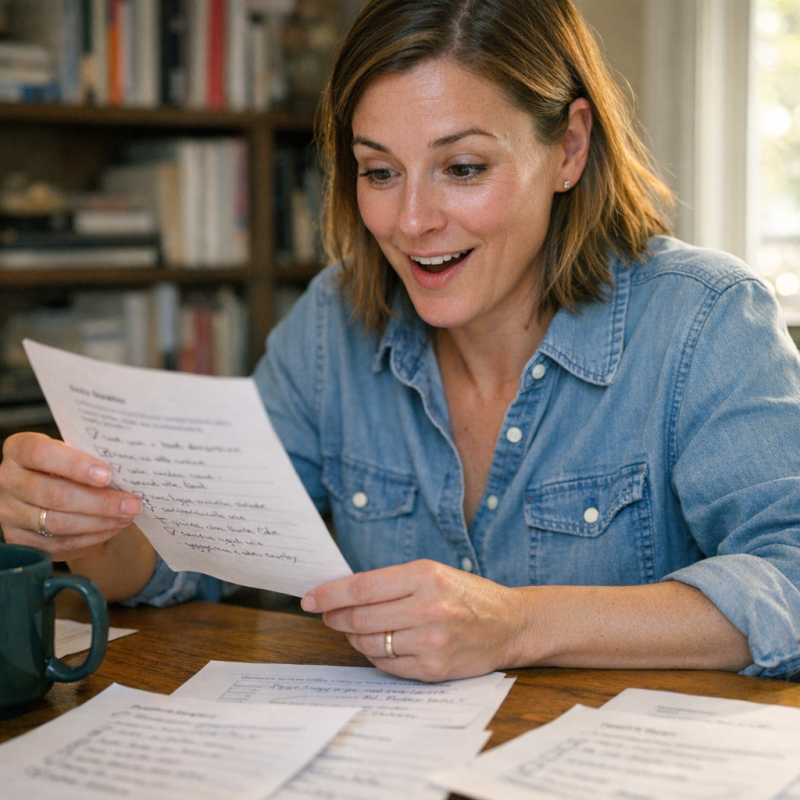 Image by FCT AI
The Question I Needed to Ask
I stared at the survey results for a long time. Then I picked up my phone and called the number Carol had given me months ago. She answered on the second ring. 'Mr. Brennan,' she said, like she'd been expecting this. 'I need to talk to Maya,' I said. 'About everything. About what she's been doing, why she's been doing it. I think I finally understand, but I need to hear it from her.' There was a pause on the other end. Then Carol's voice, quieter now: 'She's been waiting for you to figure it out.' 'What do you mean?' 'Maya told me weeks ago that if you were worth it, you'd eventually understand. That you'd stop being defensive and start seeing what she was actually trying to accomplish.' Another pause. 'She's been very patient with you, Mr. Brennan.' My throat felt tight. 'Can I meet with her? Properly, I mean. Not at a presentation.' 'I think that would be good,' Carol said. 'She has things she wants to tell you. Things she's been waiting to say until you were ready to really listen.' But when I called her mother to request a meeting, Carol said Maya had been waiting for me to figure it out on my own.
 Image by FCT AI
Meeting at the Memorial
The memorial bench was tucked into a corner of the park I'd never noticed before, under a maple tree that probably looked beautiful in autumn. It had a small brass plaque that read 'In Memory of Thomas Chen, 1978-2021, Beloved Father and Friend.' I got there ten minutes early, which felt important somehow, like being on time for a job interview or a first date. But Maya was already sitting there, completely still, wearing a gray hoodie despite the warmth of the day. She had something on her lap—a thick book or manual of some kind. When she heard my footsteps on the path, she looked up, and I saw something in her expression I'd never seen before. Not defiance or anger or even that calculating intelligence. Just exhaustion, maybe, or relief. 'Mr. Brennan,' she said quietly. 'Thanks for coming.' I sat down beside her, leaving a respectful distance between us. Neither of us spoke for a moment. Then she lifted the thing on her lap so I could see the cover. When I arrived, she was already there—and she had her father's old electrical safety manual with her.
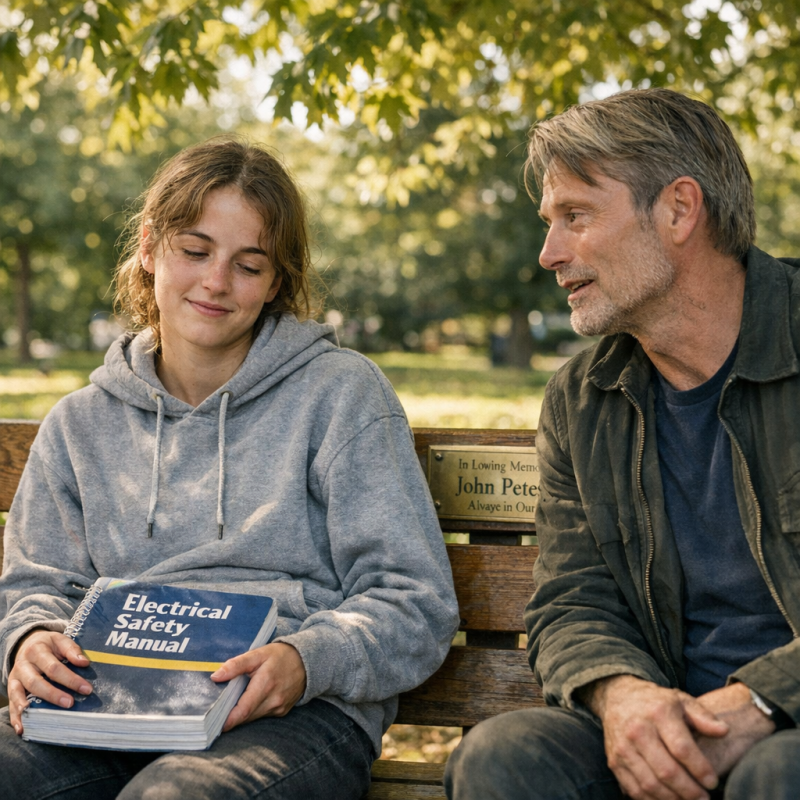 Image by FCT AI
Her Father's Manual
The manual was worn, the kind of worn that comes from actual use, not just sitting on a shelf. The cover was faded blue with white lettering: 'Electrical Safety Standards and Procedures, 2019 Edition.' Maya opened it carefully, like it was something precious and fragile. Every page I could see had handwritten notes in the margins—neat, precise handwriting in blue ink. 'He studied this for work,' Maya said, her voice barely above a whisper. 'He was trying to get his electrician's license. He took it really seriously.' She flipped through the pages slowly, and I could see where her father had underlined passages, drawn arrows, added little exclamation points next to particularly important information. It wasn't just studying—it was someone who genuinely cared about understanding the material. Then she stopped on a page about downed power lines and outdoor hazards. There, in the margin, in that same careful handwriting, was a note that made my chest tighten. On the page about downed power lines, he'd written: 'This stuff could save lives if anyone paid attention.'
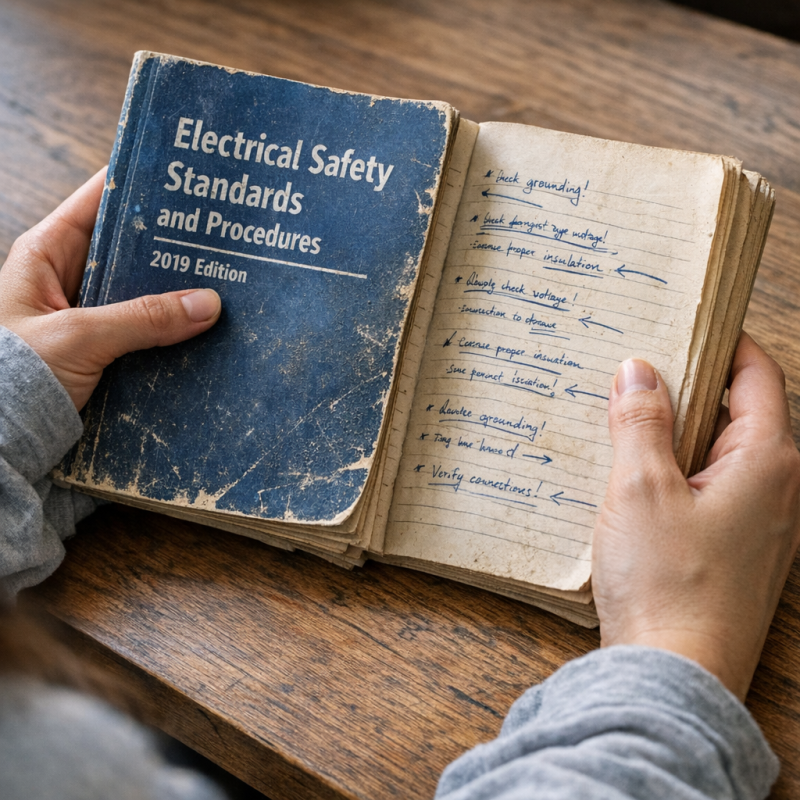 Image by FCT AI
What She'd Been Planning
Maya kept the manual open to that page, her finger resting on her father's words. 'After he passed, I found this in his workshop,' she said. 'I read the whole thing. Every page he'd marked, every note he'd made. And then I started researching.' She looked at me directly now. 'I spent months reading about educational psychology, about how people actually learn and retain information. About what makes teaching effective versus what just feels like teaching.' I realized I'd been holding my breath. 'I learned about emotional arousal and memory formation,' she continued. 'About the difference between passive listening and active engagement. About how conflict and surprise and even embarrassment can make information stick in ways that polite lectures never do.' Her voice was steady, clinical almost, like she was reciting research findings. 'I read studies about workplace safety training and why so much of it fails. Why people sit through presentations and then go out and make the exact same mistakes.' She closed the manual carefully. She'd known exactly what she was doing in that classroom—every word had been deliberate.
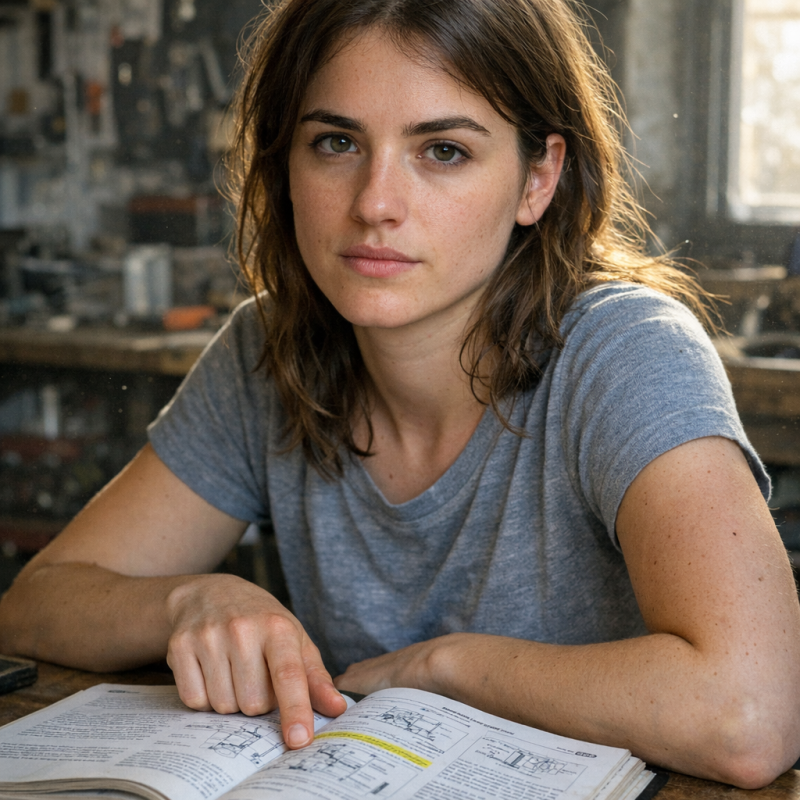 Image by FCT AI
The Cousin Was Fake
I stared at her. 'The cousin,' I said. 'The one building the shed.' Maya's expression didn't change. 'There is no cousin,' she confirmed. 'I made him up. I needed a relatable authority figure—someone the other students would identify with more than a safety expert. Someone who sounded confident but wrong.' She shifted on the bench. 'People remember arguments better than facts. They remember when someone challenges something they thought they knew. If I'd just asked polite questions, you would have answered politely, and everyone would have forgotten everything by the next day.' My mind was racing back through that presentation, seeing it all differently now. 'But if I created controversy,' Maya continued, 'if I made you defend your position, made the other students pick sides, made everyone feel something about electrical safety instead of just hearing about it...' She trailed off. 'That's what I needed. Not agreement. Engagement.' I felt like I'd been running a race I hadn't known I was in. She said real people remember arguments better than lectures—and she'd needed me to argue.
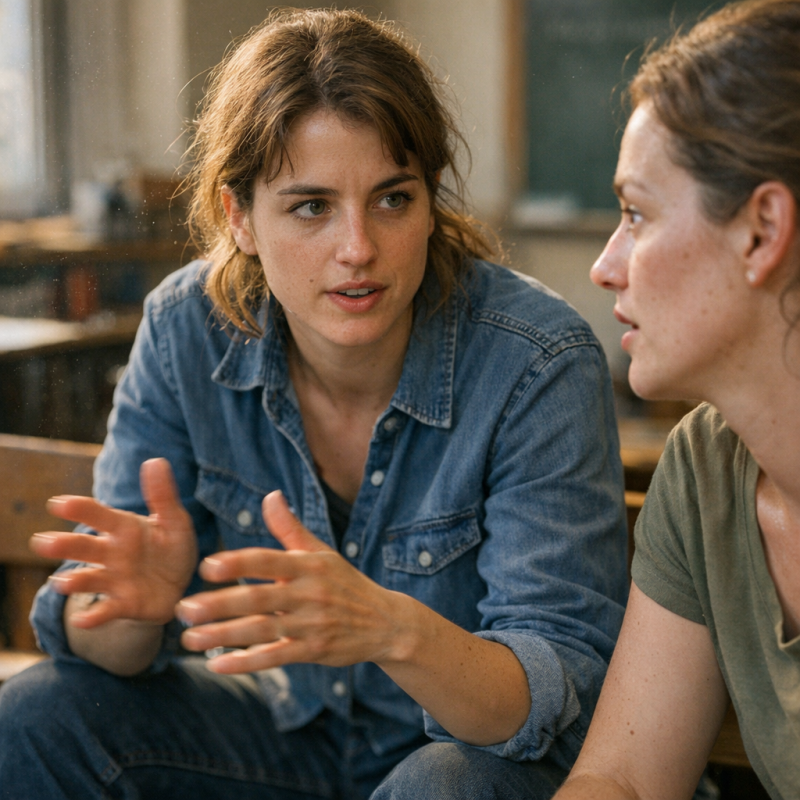 Image by FCT AI
Why She Called Me a Liar
Maya pulled her sleeves down over her hands, like she was cold despite the weather. 'The word liar was calculated too,' she said quietly. 'I'm sorry if it hurt you, but confrontational language creates emotional arousal. When you feel something strong—anger, embarrassment, surprise—your brain pays attention differently. It forms stronger memories.' She looked at the manual again. 'I could have politely disagreed with you. Could have raised my hand and said, 'Actually, I think there might be some additional considerations.' But everyone would have tuned out. You would have given me a nice answer, and we'd have moved on, and nobody would have remembered anything.' Her jaw tightened slightly. 'But if I called you a liar in front of everyone, if I made it uncomfortable and tense and weird—that's when people start paying attention. That's when information actually sticks.' I thought about the survey results, about how many students had remembered the power line discussion specifically. 'You needed us to feel something,' I said slowly. She'd called me a liar because she needed the entire class to feel something—anything—about electrical safety.
 Image by FCT AI
The Statistics She'd Memorized
Maya straightened up on the bench, and suddenly she sounded different—like she was giving a presentation of her own. 'In 2020, there were approximately 126 workplace fatalities from electrical exposure in the United States,' she said. 'Studies show that up to seventy percent of electrical accidents could be prevented with proper training and adherence to safety protocols.' She wasn't reading from anything. This was memorized. 'The most common causes of electrical fatalities are contact with overhead power lines, improper use of extension cords, and failure to de-energize equipment before maintenance. The average age of victims is thirty-four. Many of them had received some form of safety training.' Her voice wavered slightly on that last part. 'Most electrical accidents happen because people either didn't know the correct procedure or they knew it but didn't take it seriously enough in the moment. They thought they'd be careful. They thought they'd be quick. They thought it would probably be fine.' She turned to face me fully. Then she looked at me and said: 'My dad is in those statistics. I don't want anyone else to be.'
 Image by FCT AI
The Night Before the Presentation
I didn't know what to say, so I just listened as Maya kept talking. 'The night before your presentation, I barely slept,' she said. 'I practiced what I'd say, how I'd say it. I timed my interventions—waited until you were confident, until the class was settling into passive listening mode, and then disrupted it.' She gave a small, sad smile. 'I knew I'd have to sound confident enough to be taken seriously but wrong enough that you'd correct me. I had to make you think I was being difficult without making you shut down completely.' The sophistication of it was staggering. 'I even prepared for different responses you might have,' she continued. 'If you'd gotten really angry, I had a backup plan. If you'd dismissed me immediately, I would have pushed harder. I was ready to adapt.' She looked down at her hands. 'And I planned for you to laugh at me, actually. I figured you would—most adults do when teenagers challenge them. And I knew that would make you feel guilty afterward, would make you think about me more, take the whole thing more seriously.' She'd even planned for me to laugh—because she knew I'd feel guilty afterward and take it more seriously.
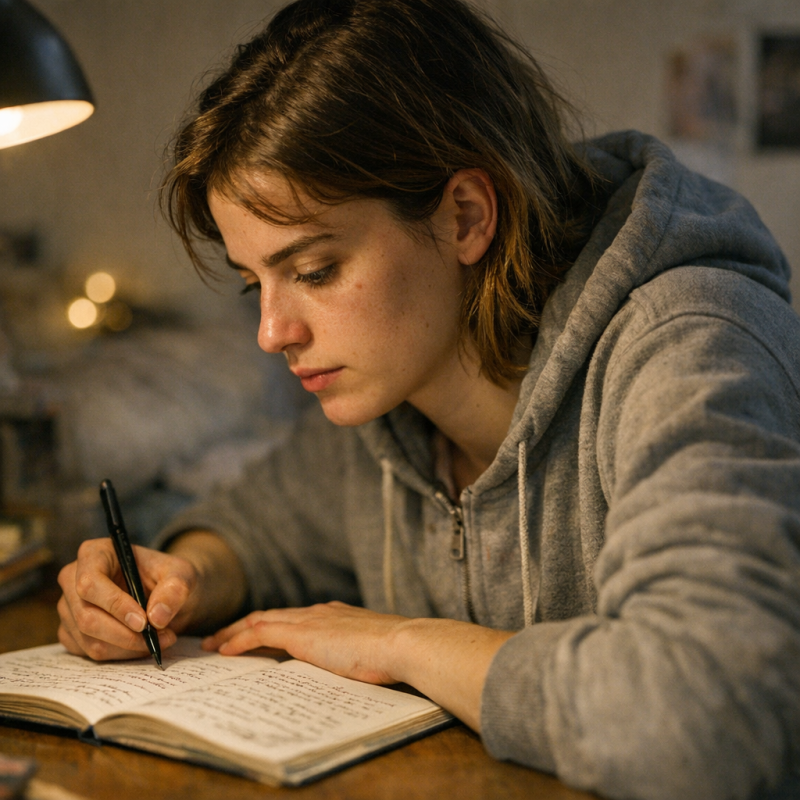 Image by FCT AI
The Real Reason
Maya took a shaky breath, and I realized she was trying not to cry. 'I disrupted your presentation because boring safety training kills people,' she said. 'Because my dad sat through training sessions, probably ones just like yours, and he probably nodded along and thought he understood. But when the moment came, when he was actually standing in that yard with that tree branch and those power lines, the training didn't stick. It wasn't real enough. It wasn't memorable enough. It didn't save him.' Her voice broke slightly. 'After he passed, I read his manual. I saw how much he'd studied, how seriously he'd taken it. And I realized that knowing the information isn't enough. You have to feel it. You have to have it burned into your memory so deeply that even when you're tired or rushed or distracted, you still stop and think.' She looked at me with those steady, heartbroken eyes. 'I forced you to teach my class the way someone should have taught my dad. With passion and conflict and emotion and stakes. The kind of teaching that actually saves lives.' She'd learned about electrical safety from her father's manual after he died, and she'd realized that if someone had taught him the way she'd forced me to teach her class, he might still be alive.
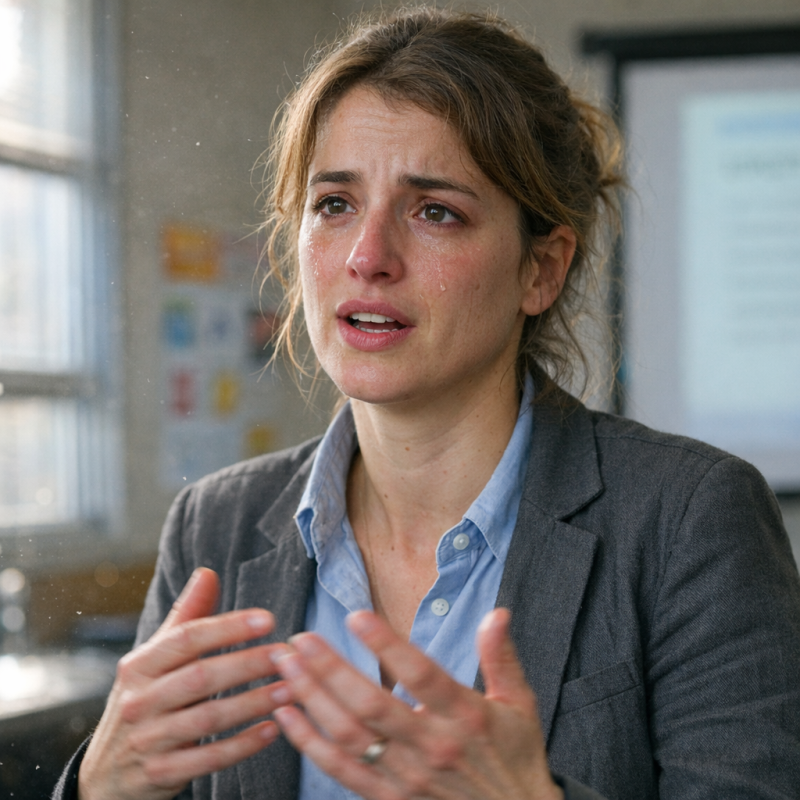 Image by FCT AI
What I Should Have Seen
I sat there for a long moment, just processing everything. Every disruption replayed in my mind with this new lens—not as attacks, but as teaching moments she'd engineered. The interruption about my credentials wasn't to humiliate me; it was to make me prove my expertise in a way students would remember. The dangerous scenario she'd described wasn't to derail my presentation; it was to force me to engage with real consequences instead of abstract statistics. Even calling me a liar and making me defend myself—that had created the exact kind of emotional stakes that burn information into memory. She'd turned my boring, forgettable safety presentation into something visceral and unforgettable, the kind of experience that actually sticks when someone's standing in a dangerous situation. And she'd done it all for a reason I'd never considered. I looked at Maya with completely new eyes, seeing not the antagonist I'd thought she was, but someone far more remarkable. She hadn't been fighting me at all. She'd been fighting for every person who would ever sit through one of my presentations, hoping they'd remember enough to make it home alive.
 Image by FCT AI
Apology Rewritten
I took a breath. 'Maya, I need to apologize to you,' I said. 'But not for the reasons I thought I did.' She looked up at me, uncertain. 'I came here planning to apologize for laughing at you, for not taking you seriously in the moment. And I am sorry for that. But what I'm really sorry for is that I didn't see what you were trying to do. You were teaching me how to be better at the most important part of my job—keeping people safe—and I was so defensive that I completely missed it.' My voice caught slightly. 'You lost your father because training failed him. And instead of letting that destroy you or make you bitter, you turned it into something incredible. You engineered an entire learning experience to make sure other people's parents come home.' I shook my head in amazement. 'That's not the behavior of a problem student. That's heroism, Maya.' She wiped her eyes quickly, nodding. 'I accept your apology,' she said quietly. And just like that, everything between us shifted. I wasn't sorry for laughing anymore—I was sorry for not seeing what she was trying to do from the very beginning.
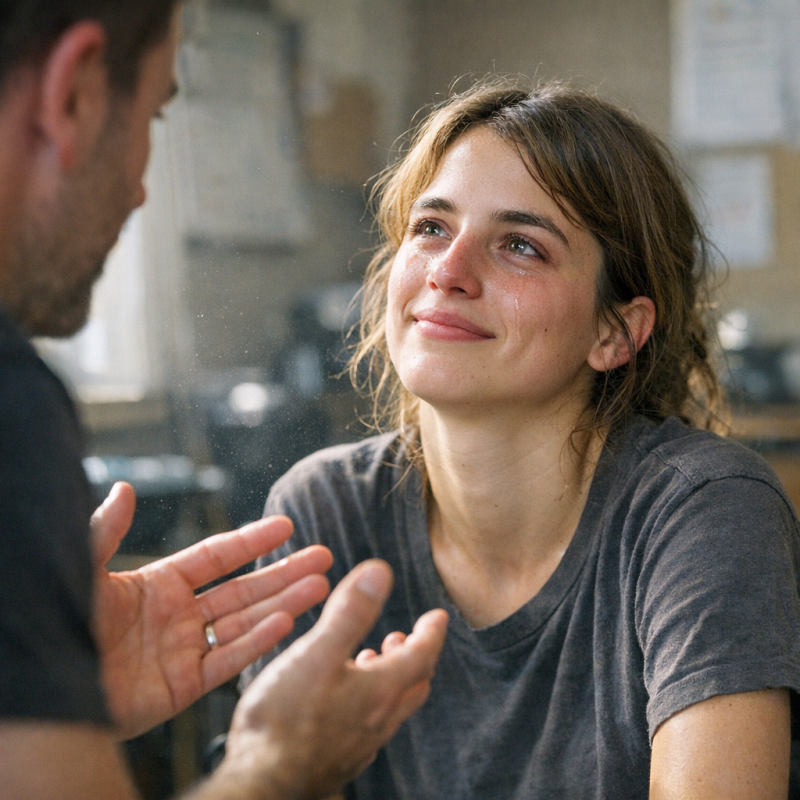 Image by FCT AI
The Presentation We Built Together
An idea hit me right then, and I knew it was the right one. 'Maya, I want to ask you something,' I said. 'I need to rebuild my entire presentation from the ground up. Everything I thought I knew about safety education was wrong—or at least incomplete. And I can't do it without you.' She tilted her head, listening. 'Would you help me create the definitive safety presentation? One that incorporates everything you've taught me about making information stick through emotion and conflict and real stakes?' I could see her considering it carefully. 'We could make something that would have saved your father. Something that could save hundreds of other people's fathers and mothers and kids.' She was quiet for a moment, and I worried she might say no, that I was asking too much. Then she nodded slowly. 'I'll help you,' she said. 'But I have one condition.' Her expression was serious, determined. 'And it's not negotiable.' I agreed before I even knew what she was going to ask. Whatever she wanted, she'd earned it. She agreed—on one condition that would change everything.
 Image by FCT AI
Her One Condition
Maya's condition was simple and devastating: the new presentation had to include her father's story, the real details of what happened and why the training failed him. And she had to be the one to tell it. 'People need to hear it from someone who lived through the aftermath,' she explained. 'From someone who knows what it costs when we treat safety training like a checkbox.' I understood immediately why this mattered. Statistics don't change behavior—stories do. Especially stories told by someone with everything at stake. We spent the next two weeks building the presentation together. I brought the technical expertise; she brought the emotional truth. We structured it around her disruptions, using conflict and questions to engage the audience. And at the heart of it was Maya's five-minute testimony about her father. The first time we delivered it together was to a group of new electrical workers at the training center. I watched the room go completely silent as Maya spoke. She didn't cry or dramatize. She just told the truth, plainly and powerfully. When we delivered the presentation together for the first time, I watched her transform the room completely.
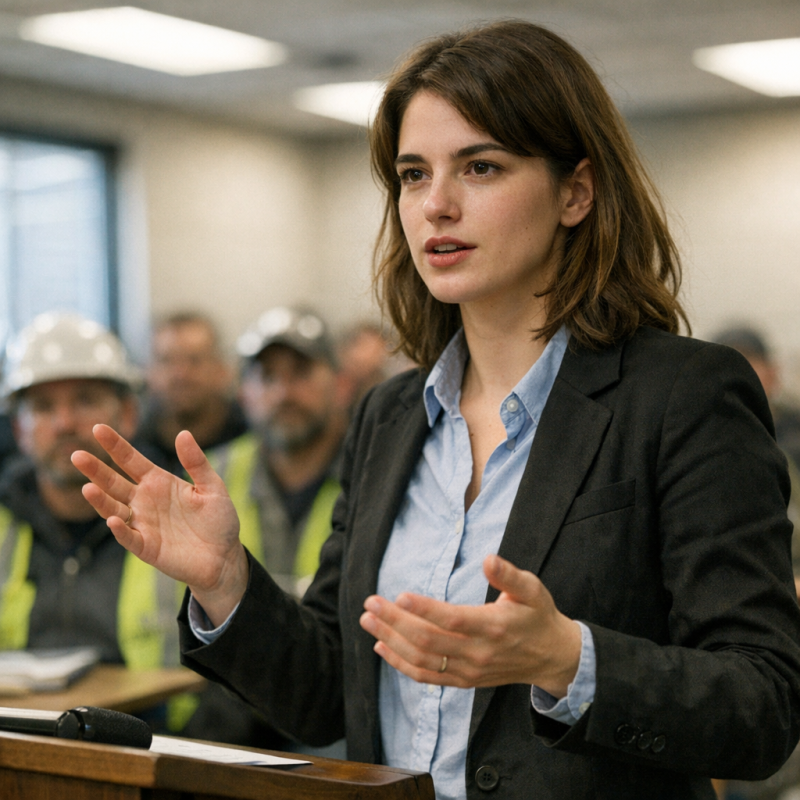 Image by FCT AI
The Room That Listened
The difference was stunning. Every student in that room was leaning forward, fully engaged. When I asked questions, hands shot up. When Maya described her father's accident, you could have heard a pin drop. When we demonstrated proper safety procedures, people took notes without being told. This was the exact kind of memorable, emotional experience Maya had engineered from the beginning—but now it was intentional, refined, and incredibly powerful. The statistics I presented weren't just numbers anymore; they were connected to Maya's story, to real human cost. The safety protocols weren't just rules; they were the difference between her father coming home and the day everything changed. You could see it clicking for people in real time, that shift from abstract knowledge to visceral understanding. After the presentation, three students approached us—not with complaints, but with questions that showed they'd genuinely absorbed the message. One asked about a specific hazard at his workplace. Another wanted to know how to convince coworkers to take safety seriously. The third just said, 'Thank you. I won't forget this.' Afterward, three students approached us with questions that showed they'd genuinely absorbed the message.
 Image by FCT AI
Rebecca's Response
Rebecca attended our third presentation together, sitting quietly in the back. I'd told her about the collaboration with Maya but hadn't explained the full transformation. As Maya delivered her testimony, I watched Rebecca's expression shift from professional observation to genuine emotion. When we finished, the students gave us spontaneous applause—something I'd never experienced in fifteen years of safety training. Rebecca approached us immediately. 'Daniel, Maya—I need to speak with you both,' she said. My stomach dropped for a second, old defensive habits kicking in. But her expression wasn't critical; it was almost reverent. 'I've been overseeing safety education for twelve years,' Rebecca continued. 'I've sat through hundreds of presentations. Most of them are forgotten before students leave the parking lot.' She looked directly at Maya. 'But this? This will save lives. I'm approving this for district-wide implementation immediately. Every safety educator in our program needs to learn this approach.' Then she pulled me aside afterward, her hand on my shoulder. 'This is what safety education should have been all along,' she said quietly.
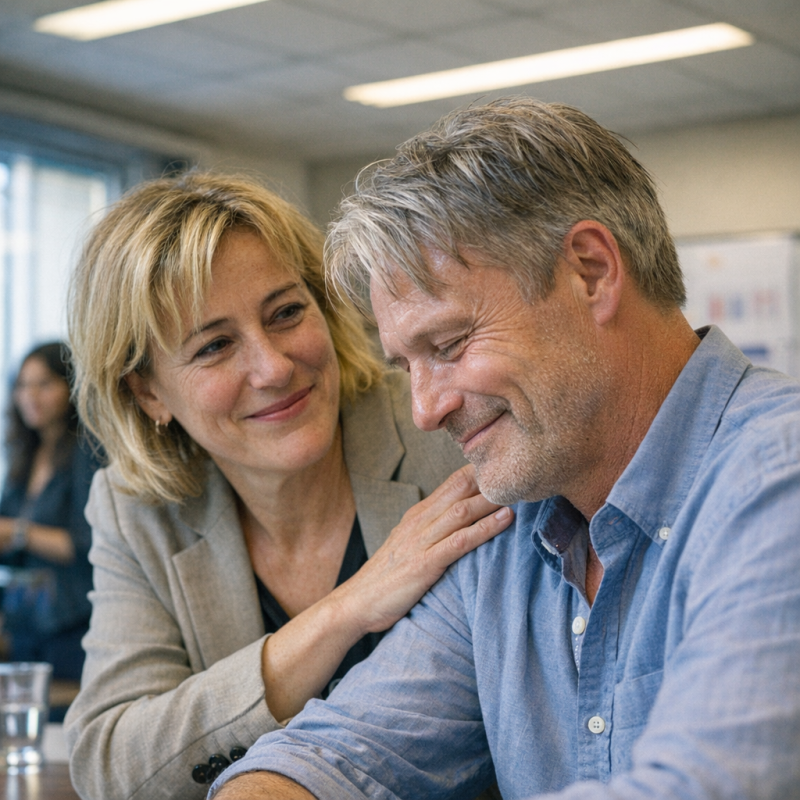 Image by FCT AI
The Complaint Withdrawn
Two days later, Rebecca forwarded me an email from Carol. My stomach clenched when I saw the name, but the subject line read: 'Formal Withdrawal of Complaint.' I opened it carefully. Carol had written a detailed letter to the district explaining that she was withdrawing her complaint entirely and replacing it with a formal commendation. She described attending one of our joint presentations and watching her daughter share her father's story with a room full of strangers. 'My complaint was filed from a place of pain and misunderstanding,' Carol wrote. 'I thought Maya was being harmed, when in reality she was transforming tragedy into purpose. She was doing something I couldn't do—turning our grief into something that might prevent other families from experiencing what we've been through.' The letter went on to praise both of us, but especially Maya's courage and vision. The final line destroyed me: 'My daughter has done what I couldn't—she's made sure her father's death meant something.' In it, she wrote that her daughter had done what she herself couldn't—turn grief into something that saves lives.
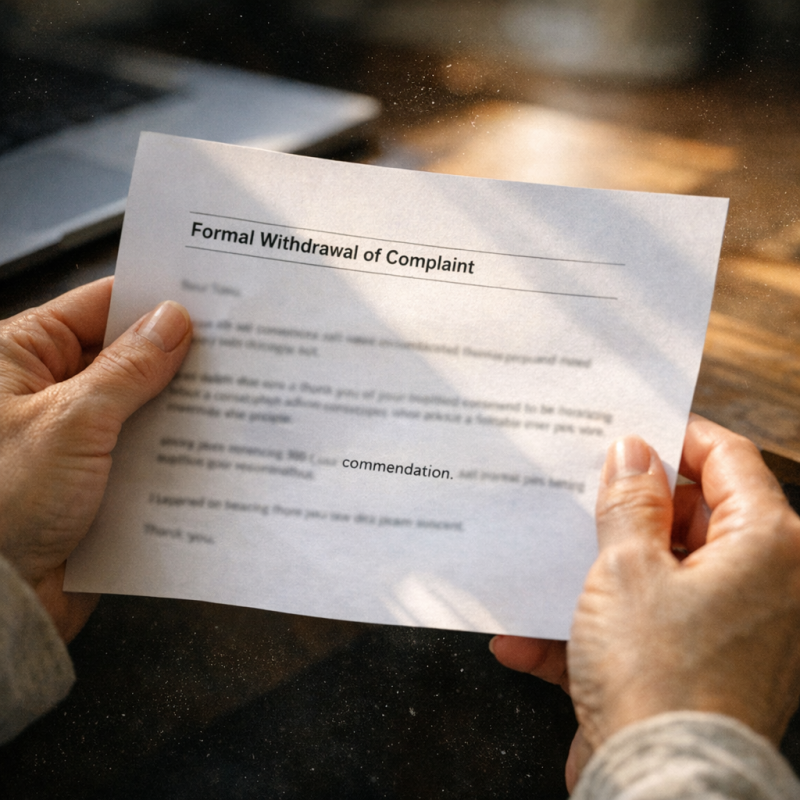 Image by FCT AI
Training Other Educators
With Rebecca's backing, Maya and I started training other safety educators in our methodology. We ran workshops showing them how to build emotional engagement, how to create productive conflict, how to make information stick through storytelling rather than statistics. Maya was incredible at it—she had a way of explaining why traditional training fails that made veteran educators completely rethink their approaches. We trained twelve instructors in the first month. They took our model back to their own programs, adapting it for different industries and contexts. Some worked in construction, others in manufacturing or utilities. Each one promised to report back on the results. Three weeks after our first training session, I got an email from one of the instructors—a guy named Marcus who worked for a manufacturing company. 'I used your approach yesterday,' he wrote. 'One of my students stopped a coworker from bypassing a safety guard this morning. He said the training was so memorable he couldn't not speak up.' Marcus's email ended with one simple line. The first trainer who learned the approach told us it had already prevented an accident at his workplace.
 Image by FCT AI
The Award Maya Didn't Want
The regional safety coalition nominated Maya for their Youth Community Leadership Award three months after we started the training program. She was fourteen years old and had already influenced how twelve organizations approached safety education. When they called to tell her, she asked if the award could be given in her father's name instead. They said no—the award recognized her contributions, not his legacy. So she agreed to accept it, but only if she could say something at the ceremony. I went with Carol, both of us sitting in the audience of the hotel ballroom while Maya stood at the podium in a simple black dress. She talked for seven minutes about why safety training fails, about the difference between information and engagement, about the responsibility educators have to make people care enough to act. Then she said: 'My dad died because someone didn't care enough to double-check their work. I don't want anyone else to lose someone that way.' The room went completely silent. At the ceremony, she gave a speech that made everyone in attendance rethink how they taught safety.
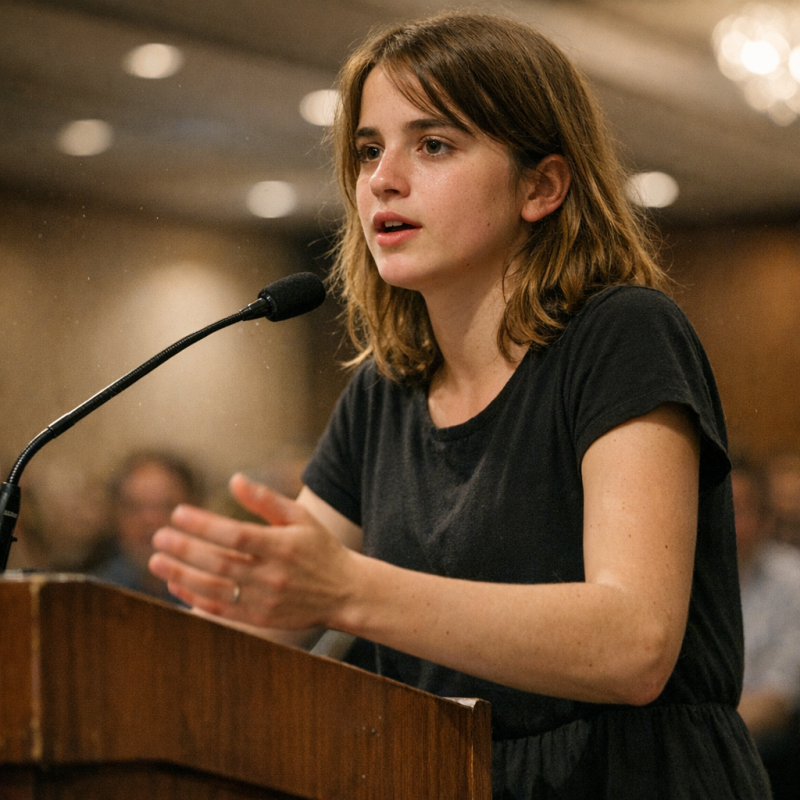 Image by FCT AI
One Year Later
I returned to Mr. Callahan's classroom exactly one year after Maya had called me a liar in front of his students. The room looked the same—same fluorescent lights, same arrangement of desks, same periodic table poster on the back wall. But everything else felt different. I'd kept in touch with Callahan over the months, updating him on what Maya and I were building. He'd been the one to suggest I come back for this follow-up session, to show his new crop of students what we'd developed. I set up my laptop at the front of the room, the same spot where I'd stood when Maya challenged me. The students filed in, chatting and settling into their seats. Then Maya walked through the door. She wasn't in a student desk this time. Callahan had invited her to co-present, to share her perspective on why traditional safety training doesn't work and what we'd built to replace it. This time, Maya sat in the audience as a peer educator—not a student.
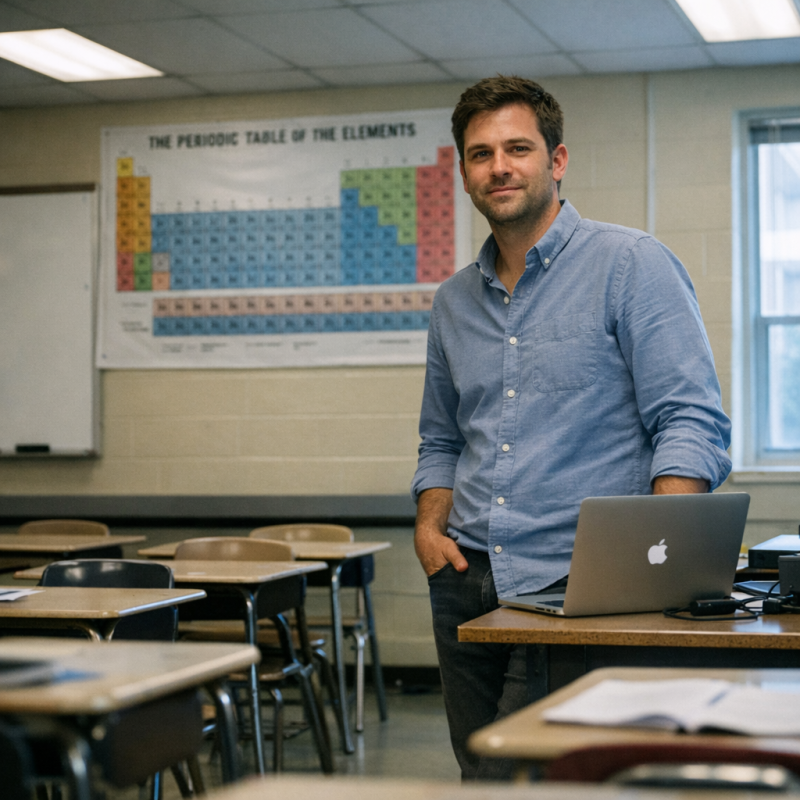 Image by FCT AI
What She Taught Me
Looking back now, I can see exactly what Maya taught me, though it took months to fully understand it. She taught me that passion isn't optional in education—it's the entire foundation. She taught me that being defensive about criticism is just ego protecting itself from growth. She taught me that the people who challenge you hardest are often the ones who believe most deeply in what you could become. I'd spent fifteen years giving the same presentation, thinking competence was enough. Maya showed me that competence without purpose is just going through motions. Every worker I'd trained over those years deserved better than what I'd been giving them—they deserved someone who cared as much about their safety as Maya cared about her father's memory. She was fourteen and grieving, and she still found the strength to demand better from me. That kind of courage changes you if you let it. I realized that being called a liar in front of a classroom was the best thing that ever happened to my career.
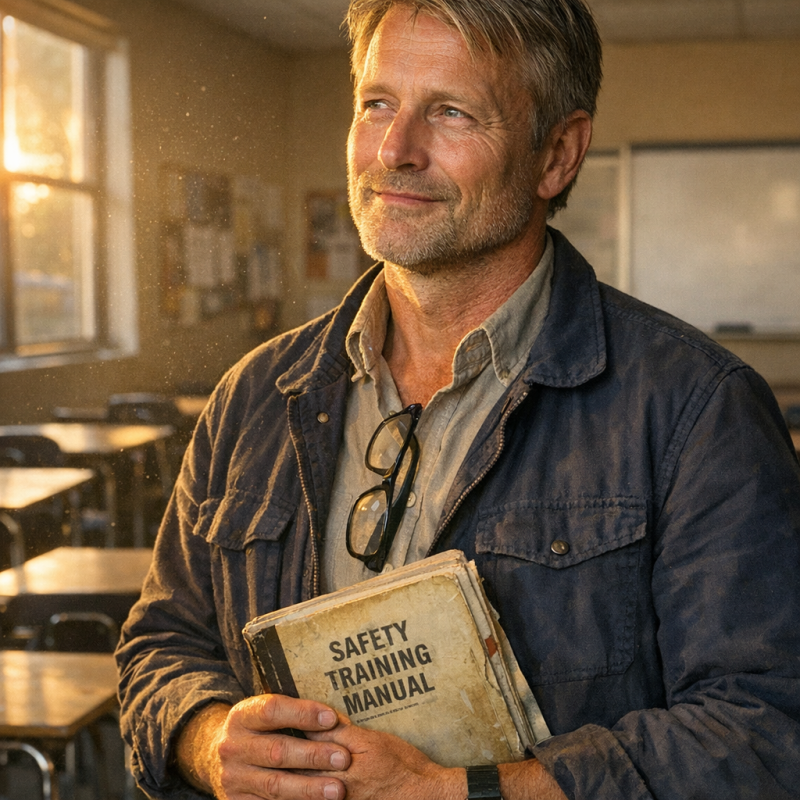 Image by FCT AI
The Day Someone Listened
Six months after Maya's award ceremony, I got a letter from a power company in Oregon. The return address meant nothing to me, but the first line stopped me cold: 'Your presentation saved my life last week.' The worker's name was James. He'd been trained by one of our certified instructors using the methodology Maya and I developed. During a routine maintenance call, he'd noticed something off about an electrical panel—a smell, a slight discoloration on the housing. The old training would've given him procedures to follow. Our training had made him understand why those procedures mattered, what happened to real people when safety failed. He'd remembered Maya's father. He'd shut down the system and called for backup. The panel had been on the verge of catastrophic failure. James wrote: 'I remembered everything because I cared—and I cared because the person teaching me cared.' That's when I understood what Maya had really given me: not just a better presentation, but a better reason to give it.
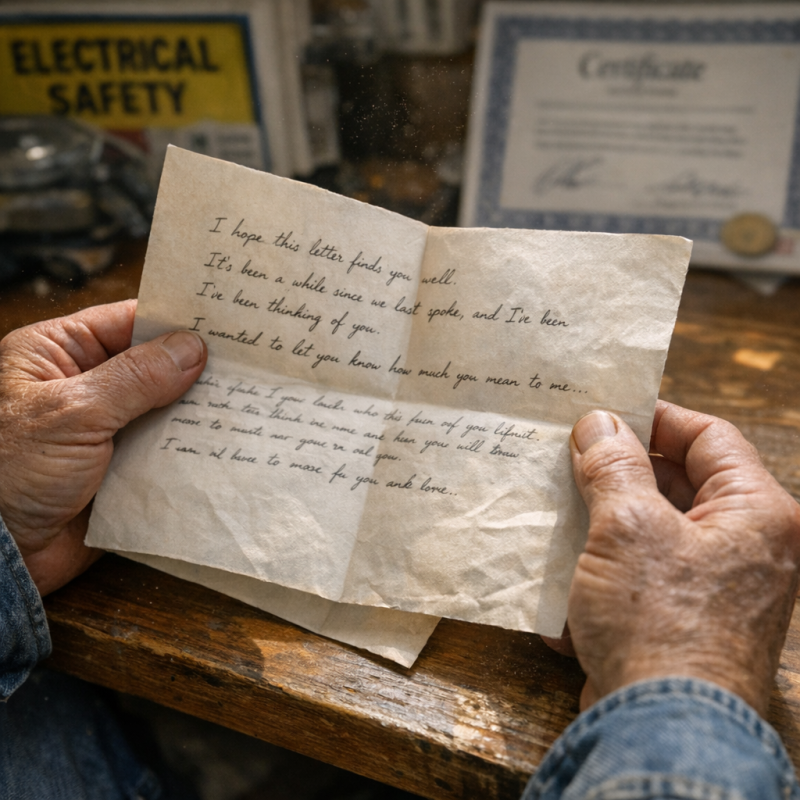 Image by FCT AI