The Number That Wouldn't Change
I sat in my car in the bank parking lot, phone in hand, refreshing my banking app for the fourth time in three minutes. The number stared back at me—$327.82 instead of the $1,827.82 that had been there yesterday morning. I actually laughed the first time I saw it, one of those disbelieving laughs you make when something is so wrong your brain hasn't caught up yet. Had to be a glitch, right? Banks make mistakes all the time. I logged out, logged back in. Same number. I closed the app completely, waited thirty seconds like I was troubleshooting a frozen computer, and opened it again. Still $327.82. My chest started feeling tight. I'm not careless with money—I check my account almost daily, I use the envelope budgeting method, I track every dollar. Fifteen hundred dollars doesn't just vanish. I scrolled down to my transaction history, looking for something, anything that would explain it. And there it was: a transaction from two days ago for exactly $1,500. But the transaction wasn't labeled as a withdrawal—it was labeled as something I'd supposedly authorized myself.
 Image by FCT AI
The Fund I Couldn't Afford To Lose
That fifteen hundred dollars wasn't just money sitting around. It was my car repair fund, built up over four months of skipping lunches out and saying no to weekend trips with friends. My transmission had been slipping for weeks, making this grinding sound every time I shifted into third gear. The mechanic told me it was going to cost at least fourteen hundred to fix, maybe more if they found other issues once they got in there. I'd been so proud of myself for actually having the money saved when something broke, you know? For once in my adult life, I wasn't going to have to put an emergency on a credit card or borrow from my parents. Without that money, I was literally stuck. My car was undrivable for anything beyond short trips around town, and I lived twenty miles from work. I felt this wave of panic wash over me, sitting there in that parking lot. But then I took a breath and reminded myself: this was obviously an error. Banks have insurance for this kind of thing. They have processes. So I did the only thing I could think of—I walked into the bank expecting them to fix it.
 Image by FCT AI
Rachel's Shrug
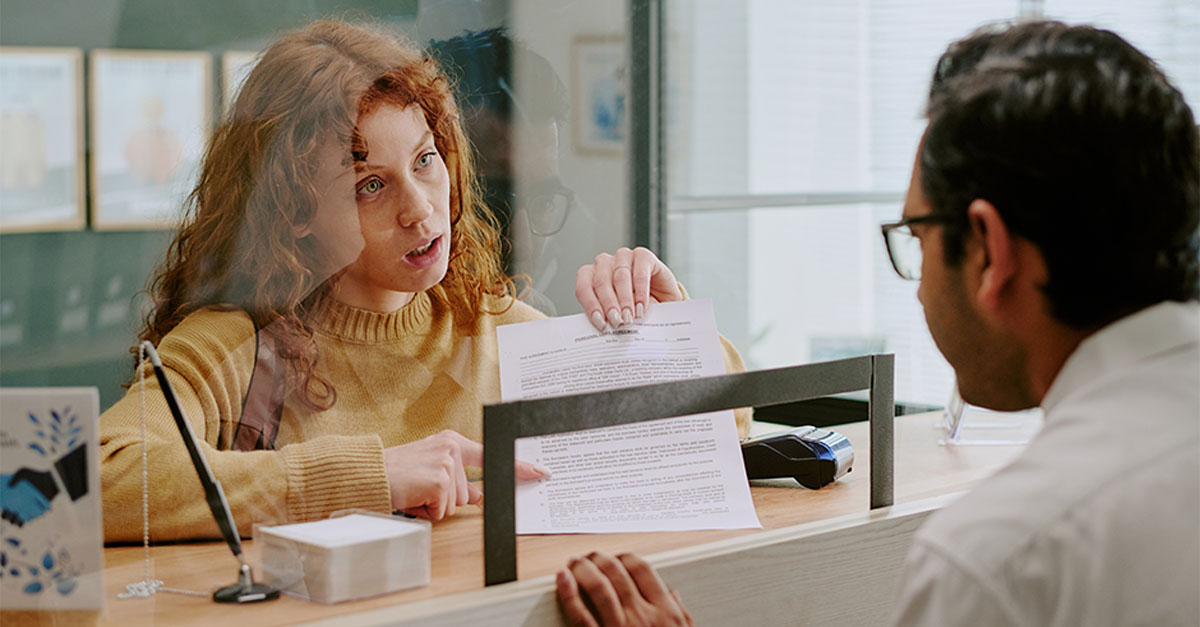
The woman who called me over to her desk wore a name tag that said 'Rachel' in cheerful blue letters. She was younger than me, maybe twenty-eight, with her hair pulled back in one of those effortlessly messy buns that actually takes effort. I explained the situation as calmly as I could, showing her my phone, pointing to the transaction. 'I didn't authorize this. Fifteen hundred dollars is just... gone.' She glanced at my screen for maybe two seconds, then turned to her computer and started typing. Her face didn't change at all. No concern, no surprise, nothing. 'Let me pull up your account,' she said, her tone flat. I watched her eyes move across her monitor, clicking through what I assumed were my records. The silence stretched out. 'Okay,' she finally said, 'I see the transaction here. It shows as authorized.' I blinked. 'Authorized by who? Not by me.' She still wasn't looking at me, just kept her gaze fixed on her screen. 'It was processed through our system. Everything appears to be in order.' When I pressed her, she said something that made my stomach drop: 'It was processed internally.'
 Image by FCT AI
Processed Internally
'Processed internally'—what does that even mean? I asked her to explain, and Rachel sort of shrugged, still not making eye contact. 'It means it went through our internal processing system. It's all legitimate.' I felt like I was talking to a robot. 'But I need to know who authorized it,' I said, trying to keep my voice steady. 'Can you show me? Is there a name, a reference number, something?' She clicked around on her computer for a few seconds, then shook her head. 'I don't have access to those details.' That made no sense. She was literally looking at my account right now. How could she not have access to basic information about a fifteen-hundred-dollar transaction? I leaned forward. 'Rachel, I'm telling you I didn't authorize this. Someone took money out of my account. That's... that's theft.' For the first time, she looked up at me, but her expression was completely blank. 'Sir, I understand you're concerned, but according to our records, this was processed correctly.' The way she said 'our records' made my skin crawl. That's when I felt it shift—from confusion to something sharper. Suspicion.
 Image by FCT AI
The Request For A Manager
I sat back in the chair and crossed my arms. 'I want to speak to a manager.' Rachel's jaw tightened, just barely, but I caught it. 'I can try to help you with this,' she said, her voice taking on this practiced patience that made me want to scream. 'I really think we need a manager,' I repeated, not breaking eye contact this time. She stared at me for a long moment, like she was deciding something. Then she stood up. 'Let me see if someone's available,' she said, walking toward the back offices without another word. I sat there alone at her desk, watching other customers move through the branch, making deposits, cashing checks, doing normal banking things while my fifteen hundred dollars was just... gone. Five minutes passed. Then ten. I started wondering if she'd actually gone to get anyone or if she was just back there hoping I'd give up and leave. My phone buzzed with a text from work asking where I was, and I ignored it. Finally, Rachel emerged from the hallway with a man in a gray suit following behind her. He was older, maybe mid-forties, with perfectly styled hair. When the manager finally came out, he had a smile that didn't quite reach his eyes.
 Image by FCT AI
Greg's Practiced Smile
The manager extended his hand as he approached. 'I'm Greg, branch manager. I understand there's some confusion about a transaction?' His handshake was firm, professional, and somehow made me feel like I was the problem. I went through the whole thing again—the missing fifteen hundred dollars, the transaction I never authorized, Rachel's non-answers. Greg nodded along, hands folded on the desk, making appropriate listening faces. But there was something off about it, something performative. When I finished, he glanced at Rachel's computer screen, then back at me. 'I see the transaction you're referring to. According to our records, this was a legitimate transfer processed through proper channels.' I felt my frustration building. 'But I didn't process it. I didn't authorize it. How is that legitimate?' He gave me this patient smile, the kind you'd give a confused child. 'Sometimes these things can be confusing. Our systems are very secure, Mr. Jordan. If a transaction shows as authorized, it means it went through the proper verification steps.' Rachel stood behind him, arms crossed, watching me. When I said I didn't authorize it, he sighed like I'd just told him something mildly inconvenient.
 Image by FCT AI
The Accusation Of Forgetfulness
Greg leaned back in Rachel's chair, completely at ease. 'Is it possible you authorized this and simply forgot? Perhaps through our online portal? Sometimes people set up automatic transfers or investment deposits and don't remember the specifics.' I actually laughed—I couldn't help it. The suggestion was so absurd. 'I would remember moving fifteen hundred dollars. That's my entire savings right now. I track every transaction.' He held up his hands in this placating gesture. 'I'm not questioning your memory, I'm just trying to understand all possibilities here. Mistakes happen. Maybe you clicked something by accident?' My hands were shaking now, and I pressed them against my thighs to steady them. 'I didn't click anything. I didn't authorize anything. Someone at this bank took my money, and I need you to figure out who and get it back.' The smile stayed on Greg's face, but something hardened in his eyes. 'I understand this is frustrating, but I've reviewed your account and everything appears to be in order. Our security protocols are extremely thorough.' But when I asked what they could do, Greg's smile tightened and he said, 'Nothing.'
 Image by FCT AI
The Wall Of Policy
'Nothing?' I repeated. 'Fifteen hundred dollars disappears from my account and you're telling me there's nothing you can do?' Greg spread his hands. 'Our records show this was a properly authorized transaction. Unless you can provide evidence of fraud—' 'The evidence is that I didn't authorize it!' My voice was getting louder and I didn't care anymore. Other customers were starting to look over. 'Can you at least show me the documentation? Who processed this? What verification was used?' Greg's expression shifted to something harder. 'That information is protected by internal policy. I can't disclose details about our processing procedures.' Rachel nodded along beside him like a backup singer. 'So you can't tell me who took my money, you can't tell me how it was supposedly authorized, and you won't give it back.' I stood up, my chair scraping against the floor. 'This is insane. You realize how insane this sounds, right?' Greg stood too, his professional mask still firmly in place. 'I understand you're upset, but I'm afraid there's nothing more I can do today.' That's when I said it—before I could stop myself: 'You're covering for someone.'
 Image by FCT AI
Disruptive
The moment those words left my mouth, Greg's entire demeanor shifted. The professional mask didn't just slip—it cracked completely. His jaw tightened and his eyes went cold in a way that actually made me take a half-step back. 'I need you to lower your voice,' he said, but it wasn't a request. It was a command. 'You're being disruptive.' Rachel had gone completely still beside him, her fake smile finally gone. I looked around—yeah, people were staring, but so what? My money was gone and they were stonewalling me. 'I'm being disruptive?' I repeated, incredulous. 'I'm the customer here. You took my money.' 'We didn't take anything,' Greg said, his voice dropping lower, more controlled. 'And if you continue making unfounded accusations, we're going to have a problem.' The way he said 'problem' made my stomach drop. This wasn't customer service anymore. This was something else entirely. The word hit harder than I expected—like I was the problem here, not the missing money.
 Image by FCT AI

History's most fascinating stories and darkest secrets, delivered to your inbox daily.
Asked To Leave
Greg stepped back from his desk and gestured toward the door. 'I think it's best if you leave now.' Just like that. Conversation over. I stood there, my mouth literally hanging open, trying to process what was happening. 'Are you serious right now?' I asked. 'You're kicking me out?' 'I'm asking you to leave the premises,' he said, still in that cold, controlled voice. 'If you have further concerns, you can contact our corporate office.' Rachel had already moved to the door, holding it open like a bouncer at a club. Other customers were definitely watching now, some pretending not to, others openly staring. I felt my face get hot. This was insane. I was the victim here, and somehow I was the one being escorted out. I grabbed my phone and my bag, refusing to look at either of them as I walked toward the exit. My hands were shaking—from anger, from humiliation, I couldn't even tell anymore. For a second, I just stood there, stunned—then I laughed, because I didn't know what else to do.
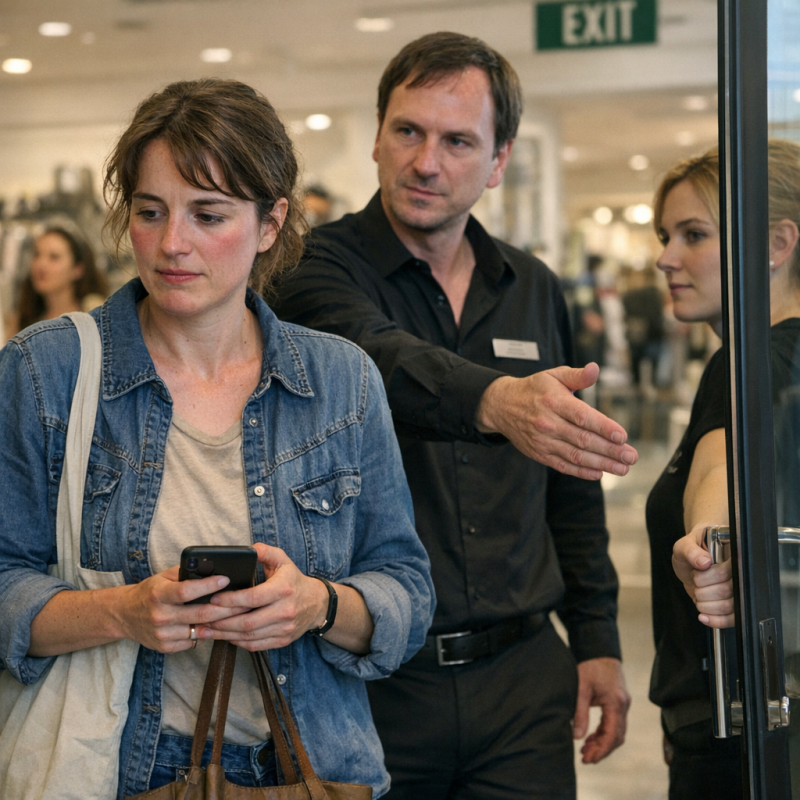 Image by FCT AI
Back In The Car
I sat in my car in the parking lot for probably twenty minutes, just staring at the bank's glass doors. My heart was still racing. I kept replaying the whole conversation in my head, trying to figure out what the hell had just happened. Greg's reaction when I'd accused him—that instant coldness. The way he'd shut down every single question. The fact that he literally threw me out rather than even pretend to help. None of it made sense if this was just a simple banking error. Banks make mistakes all the time, right? They apologize, they investigate, they fix it. They don't get defensive and threaten customers. They don't refuse to show documentation. They definitely don't call you 'disruptive' for asking where your money went. I pulled out my phone and opened my banking app again, staring at that transaction. Withdrawal. Fifteen hundred dollars. Properly authorized, Greg had said. But authorized by who? How? Something about it wasn't just wrong—it was too quick, too defensive.
 Image by FCT AI
The Timestamp
That's when I actually looked at the details—really looked at them, not just the amount. There was a timestamp on the withdrawal: 2:47 PM, three days ago. Tuesday afternoon. I tried to remember where I'd been, what I'd been doing. Tuesday. Tuesday I'd been working from home, same as always. I'd had back-to-back client calls that afternoon, I remembered that much. My mind was racing now, actually focusing instead of just spiraling. If I could prove I wasn't at the bank when this 'properly authorized transaction' supposedly happened, then what? Then it's fraud, plain and simple. Then Greg's stonewalling becomes something else entirely. I opened my work calendar, scrolling back to Tuesday. There—2:30 to 3:15 PM. Client presentation call with the entire marketing team. I'd been on camera the whole time, screen-sharing, presenting the quarterly report. My heart started pounding again, but different this time. Not panic. Something sharper. And then I checked my phone—at that exact time, I'd been on a recorded work call.
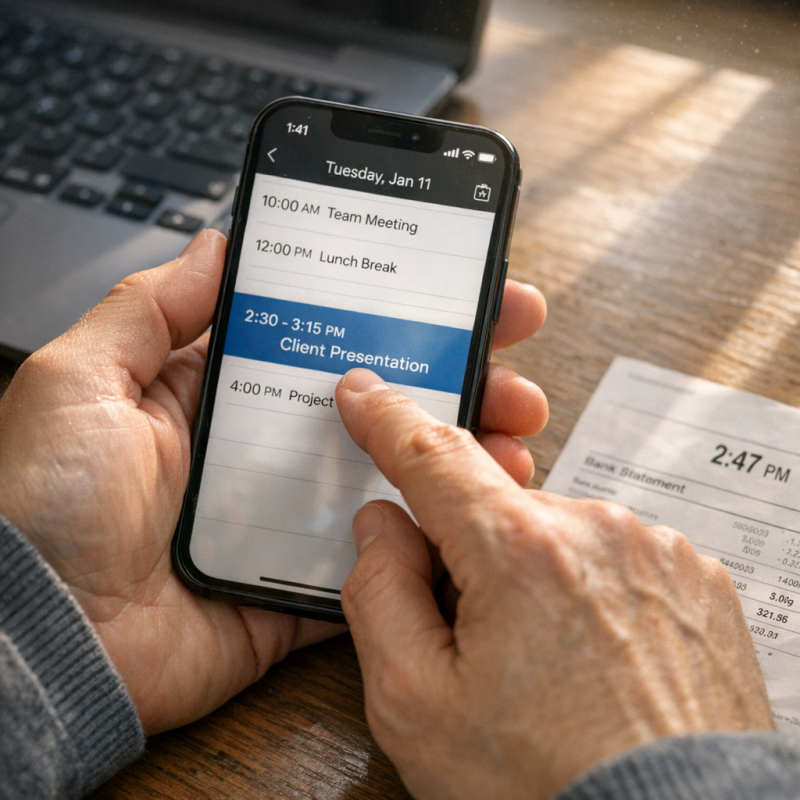 Image by FCT AI
The Proof I Wasn't There
I pulled up my call history to confirm. There it was: Tuesday, 2:30 PM, duration 47 minutes. Video call through our company system, which keeps logs of everything. Attendance records. Chat transcripts. The whole presentation deck with timestamps. I literally had proof—documented, verifiable, corporate-system proof—that I wasn't anywhere near that bank when someone supposedly authorized a fifteen-hundred-dollar withdrawal from my account. My hands weren't shaking anymore. I took a screenshot of the call log, then another of my calendar. Then I opened my laptop right there in the parking lot and logged into our company portal, downloading the meeting attendance record. My name. My login. 2:30 to 3:17 PM. Six other people on the call. I had witnesses. I had documentation. I had everything Greg said I didn't have—evidence of fraud. So why was I still sitting in this parking lot instead of marching back in there? Because Greg had made it clear he wasn't going to help me. He'd made that very clear. That's when the idea hit me—I wasn't going to call corporate. I was going to another branch.
 Image by FCT AI
The Drive Across Town
The nearest other branch was about twenty minutes across town. I'd never been there before—I'd always used the one near my apartment because it was convenient. Now I was grateful for that. No one there would know me. No one there would have any reason to dismiss me before I even started talking. I rehearsed what I was going to say the entire drive. Stay calm. Be clear. Show them the proof first—the transaction, the timestamp, the call logs. Don't accuse anyone of anything. Just present the facts and let them draw their own conclusions. Don't mention Greg by name unless they ask. Don't sound crazy. Don't sound paranoid. Just sound like a reasonable person who's had money stolen from their account. Because that's what I was, right? That's all this was. I pulled into the parking lot of the new branch and sat there for a minute, taking deep breaths. My phone was clutched in my hand, all the screenshots ready to go. This would work. It had to work. When I walked in, I forced myself to stay calm—but my hands were still shaking.
 Image by FCT AI
Linda Listens
The woman at the customer service desk introduced herself as Linda. She was maybe in her early fifties, with short gray hair and reading glasses hanging from a chain around her neck. She smiled when I approached, a real smile, not the plastic Rachel thing. 'How can I help you today?' she asked. I took a breath. 'I need to report fraudulent activity on my account.' I showed her my ID, my account number, explained the missing fifteen hundred dollars. She pulled it up on her computer, nodding, asking clarifying questions. When did I notice it? Had I contacted the bank? What had they told me? I explained about visiting the other branch, about Greg saying it was properly authorized but refusing to show me any documentation. Linda's eyebrows went up slightly at that, but she didn't interrupt. I showed her the timestamp on the transaction, then pulled up my call logs, my calendar, the meeting attendance record. 'I was on a work call when this supposedly happened,' I said. 'I have proof I wasn't there.' Her expression shifted halfway through—not annoyance, not dismissal. Concern.
 Image by FCT AI
The Closed Door
'Can you give me a few minutes?' Linda asked, her tone completely different from Greg's. 'I want to pull some additional information on this transaction. Check a few things on our end.' I nodded, relieved just to have someone actually taking this seriously. She excused herself and disappeared through a door behind the counter, closing it carefully behind her. I sat in one of those uncomfortable waiting chairs, watching other customers come and go. A guy depositing a check. An elderly woman asking about her savings account. Normal bank stuff. Normal problems. I checked my phone. Checked it again. How long had it been? Five minutes? Ten? The door was still closed. I could see shadows moving behind the frosted glass, could hear muffled voices but couldn't make out words. What was she checking? What additional information? My knee bounced anxiously. This was good, right? This meant she was actually investigating instead of just dismissing me. She was gone for what felt like forever—and when she came back, her expression had changed.
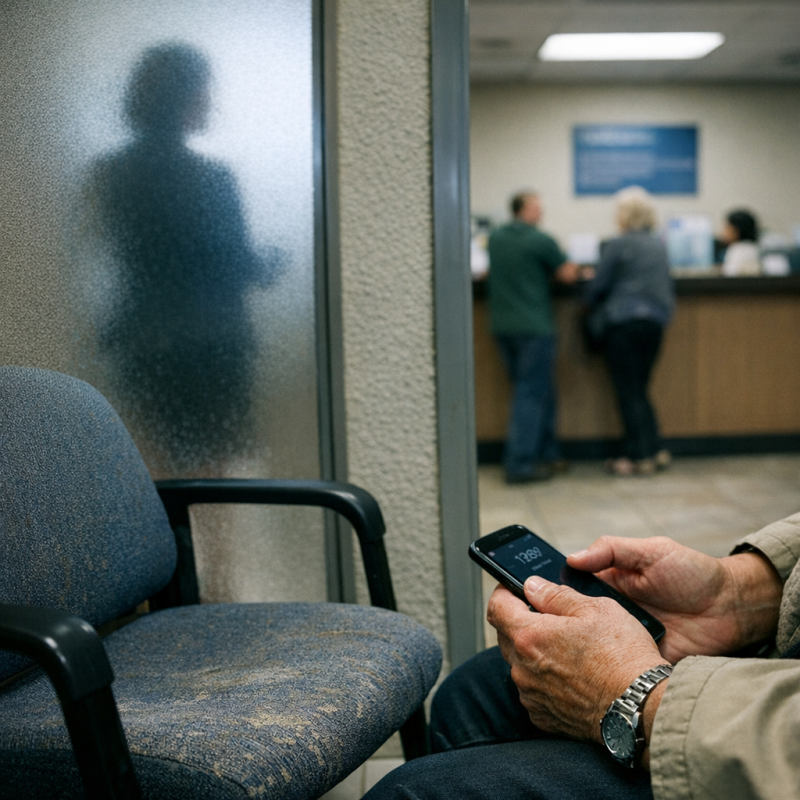 Image by FCT AI
Can You Confirm
She looked at me carefully, like she was weighing something. 'Can you confirm again—absolutely confirm—that you weren't physically present at the branch during that transaction?' I nodded immediately. 'I wasn't even in the same city,' I said. 'I was at work. I have my work badge swipes, security footage probably, coworkers who saw me. Whatever you need.' My voice came out stronger than I felt. I'd been dismissed so many times already that part of me expected her to do the same thing—to find some loophole, some reason this was still somehow my fault. But she didn't look skeptical. She looked... determined. 'Can you actually prove it?' she asked. Not accusatory. Just clarifying. 'Yes,' I said. 'I can prove it.' She nodded slowly, and then she said something I hadn't expected to hear from anyone at that bank. 'I believe you.'
 Image by FCT AI
There's Been A Flag
Linda glanced around the lobby, then leaned in slightly and lowered her voice. 'I need to be careful how I say this,' she said, 'but there's already been a flag on that branch.' I blinked. 'A flag?' She nodded, choosing her words carefully. 'Internal concerns. Compliance has been... monitoring certain activity.' The way she said it—monitoring—made my skin prickle. This wasn't just about me. This wasn't some isolated mistake. 'What kind of activity?' I asked. She hesitated, clearly weighing how much she could say. 'Unauthorized transactions,' she said finally. Her eyes met mine, steady and serious. My stomach dropped. The word hung in the air between us, heavy and ominous. 'What kind of flag?' I asked, my voice barely above a whisper. She hesitated again, glancing toward the closed door behind the counter. 'Internal concerns about unauthorized transactions.'
 Image by FCT AI
Plural
I felt my throat tighten. 'Transactions,' I repeated. 'Plural?' Linda nodded. Just once, but it was enough. My mind started racing. 'You mean... there have been other people? Other customers this happened to?' She didn't say yes outright, but the look on her face told me everything. 'I can't go into specifics,' she said quietly, 'but your case fits a pattern we've been tracking.' A pattern. Not a mistake. Not an accident. A pattern. I thought about Rachel's face when I'd asked her about the transaction—the way she'd looked almost panicked before shutting down completely. I thought about Greg's immediate dismissal, the way he hadn't even pretended to investigate. Everything clicked into place—Rachel's hesitation, Greg shutting it down. They weren't just dismissing me.
 Image by FCT AI
The Calls She Made
Linda picked up the phone right there at her desk. Not the customer service line—some internal number she dialed from memory. She turned slightly away from me, but I could still hear her. 'Hi, it's Linda Chen from the downtown branch. I need to escalate something directly to compliance.' Pause. 'No, not through the standard channel. This is related to the ongoing flag.' My heart was pounding. She made three calls total, each one quieter and more urgent than the last. She used names I didn't recognize, referenced case numbers and incident reports. This wasn't normal customer service protocol. This was something else entirely. At one point she said, 'The customer is here with me now,' and glanced in my direction. I didn't know who she was calling, but the way she spoke—quiet, urgent—told me this was serious.
 Image by FCT AI
Within An Hour
Things moved fast after that. Faster than I ever expected from a bank. Linda stayed with me for another twenty minutes, making notes, asking me to write down exact dates and times. Then her phone rang. She answered, listened, made a few notes. When she hung up, she looked almost relieved. 'Your account will be fully reimbursed by end of business today,' she said. 'The provisional credit is already being processed.' I felt this wave of relief wash over me. Finally. Finally someone was fixing this. I thanked her probably too many times. She walked me to the door, shook my hand, and told me someone from the investigative team might reach out for follow-up. I nodded, assuming that was just standard procedure. But that wasn't the part that mattered—because the next morning, I got another call.
 Image by FCT AI
The Call From Marcus
The number wasn't one I recognized, but the caller ID said it was from the bank. I answered cautiously. 'Ms. Jordan? This is Marcus Reeves from Internal Investigations.' My stomach did a little flip. Internal Investigations sounded serious. Official. He had a calm voice, professional but friendly. 'I wanted to reach out personally to thank you for coming forward and for being so persistent with your case.' Thank me? That caught me off guard. 'I... you're welcome?' I said, not sure what else to say. 'I know this has been frustrating,' he continued, 'but I want you to know that your report, and the evidence you provided, has been incredibly valuable to our ongoing investigation.' Ongoing investigation. There was that phrase again. He actually thanked me—because, he said, my case was the piece they needed.
 Image by FCT AI
The Piece They Needed
I asked him what he meant by that. Marcus paused, like he was choosing his words carefully. 'Your case had clear timing,' he said. 'Documented proof that you weren't at the branch when the transaction occurred. That's different from most of the other complaints we've received.' Other complaints. Plural. Again. 'Most people don't have that kind of concrete evidence,' he continued. 'Security badge records, work schedules. It makes your case... definitive.' I felt this strange mix of validation and dread. Validation that I'd been right to push back. Dread because if there were other complaints—complaints that didn't have proof—how many people had been ignored? How long had this been going on? I started to ask, but he cut me off gently. But he wouldn't say more—not yet. 'We're still investigating,' he said.
 Image by FCT AI
The Wait
So I waited. Days passed. I checked my email obsessively, refreshed my phone messages constantly. Nothing. Marcus had said they'd keep me updated, but I didn't hear anything. The money was back in my account—that part was fixed—but I couldn't shake the feeling that there was more to this story. I kept thinking about what Linda had said. A pattern. A flag. Internal concerns. I tried to go about my normal life. Went to work, met friends for coffee, pretended everything was fine. But every time I walked past a bank branch, my chest tightened. Every time I thought about Rachel's face, or Greg's dismissive tone, I felt this surge of anger mixed with something else. Something darker. I tried to move on, but every time I thought about Rachel and Greg, I felt sick.
 Image by FCT AI
The News Article
I wasn't even looking for it. I was scrolling through my phone one night, probably avoiding sleep, when I saw a headline in the local news feed: 'Local Bank Customers Report Unauthorized Transactions.' My stomach dropped. I clicked it immediately. The article was short, maybe three paragraphs. It mentioned 'several customers' reporting issues with unauthorized withdrawals and transfers. No names, no specifics, just vague language about 'ongoing review' and 'taking customer concerns seriously.' The bank's PR team had clearly gotten to it first. But there was one detail they couldn't scrub away—the branch address. I read it twice to make sure I wasn't imagining things. It was my branch. The exact location where Rachel had processed my transfer, where Greg had tried to shut me down. I felt this weird rush of validation mixed with nausea. So it wasn't just me. Other people had gone through this too. But why was the article so vague? Why weren't they naming anyone or giving real details? The article was vague, almost deliberately so—but I recognized the branch address.
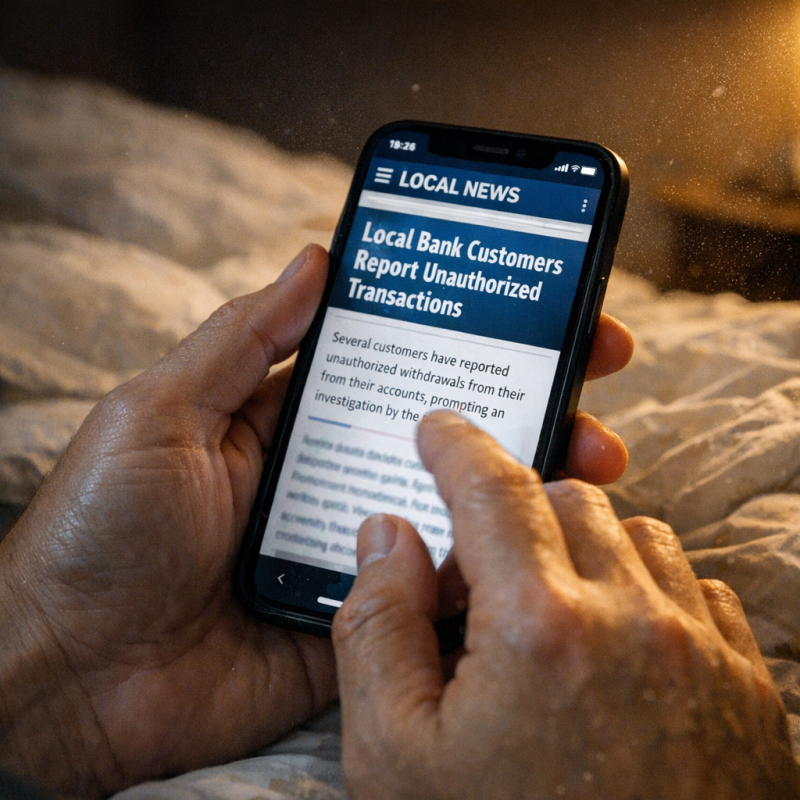 Image by FCT AI
The Comment Section
I scrolled down to the comments section, something I almost never do. But I needed to know if anyone else saw what I was seeing. And there they were. Dozens of comments. Some were the usual internet noise, but several stood out immediately. 'This happened to me too, same branch.' 'They told me it was MY error.' 'I complained three times and got nowhere.' I felt my hands shaking as I kept reading. One person described being told their account had a 'technical glitch' that magically fixed itself after they threatened to go to the media. Another said they'd lost over two thousand dollars and were still fighting to get it back. The details were different, but the pattern was identical—unauthorized transactions, dismissive staff, vague excuses. My experience wasn't unique. It was part of something bigger. Then I saw a comment that made me stop cold. It was buried near the bottom, posted just an hour earlier. 'They kicked me out when I asked too many questions.'
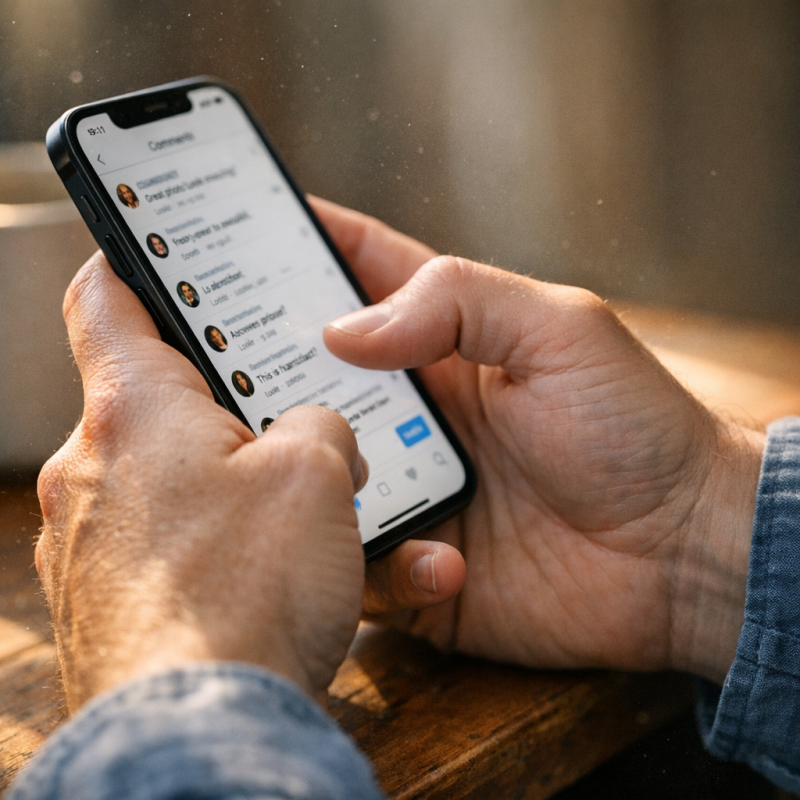 Image by FCT AI
Reaching Out
I stared at that comment for a long time. Should I reach out? I hovered over the username, wondering if I could send a private message, maybe compare stories. But something stopped me. What if it made things worse? What if the bank was monitoring this somehow? It sounds paranoid, I know, but after everything I'd been through, I didn't trust anything anymore. Plus, what would I even say? 'Hey, stranger, I think we both got screwed by the same people'? I took a screenshot of the comment instead, just in case. Then I went back and took screenshots of the others too. Evidence. Proof that I wasn't crazy, that this was real. I spent the next twenty minutes debating whether to respond publicly or stay silent. My thumb hovered over the keyboard. I typed out a reply, then deleted it. Typed again, deleted again. Before I could decide, my phone rang—it was Linda.
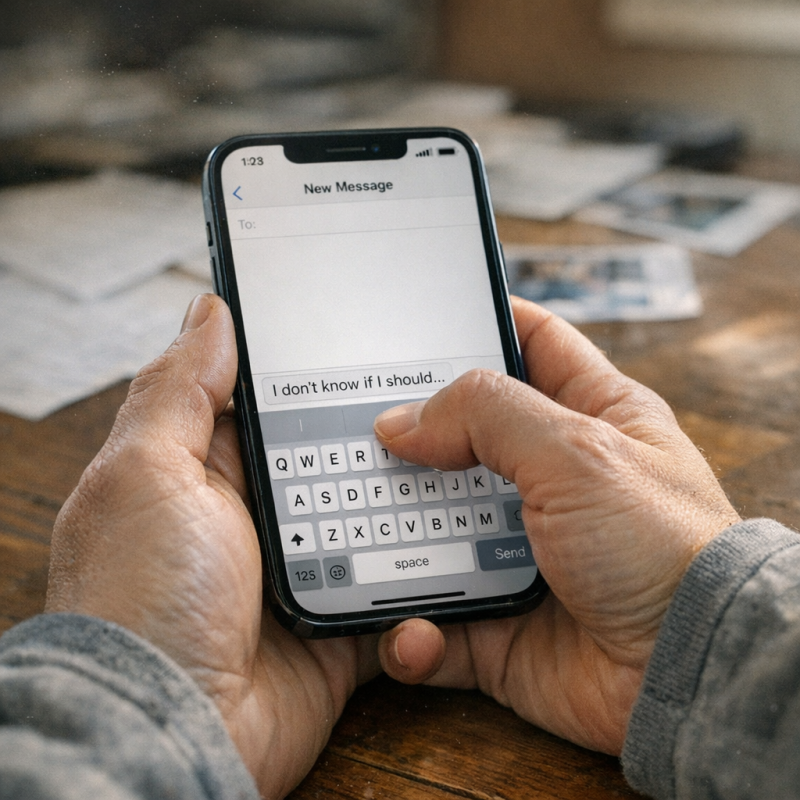 Image by FCT AI
Linda's Warning
I answered immediately. 'Jordan,' Linda said, her voice more serious than I'd ever heard it. 'I wanted to give you a heads-up. The investigation is expanding. They're looking at multiple accounts now, and they may need you to provide a formal statement.' My heart started pounding. 'A statement? Like, official?' 'Yes,' she said. 'You'd be working with the legal team. It's all part of the process.' I felt a strange mix of relief and dread. Relief that things were moving forward, dread at what that meant. 'Okay,' I said slowly. 'I can do that.' There was a pause on the other end, longer than felt comfortable. Then Linda spoke again, her tone shifting to something quieter, almost cautious. 'Jordan, I need you to be careful. This is getting bigger, and not everyone wants this to come out.' I froze. 'What do you mean?' She hesitated. Then she said something that made my blood run cold: 'Be careful. Not everyone wants this to come out.'
 Image by FCT AI
The Formal Statement
Two days later, I got an email from someone named Dana, part of the bank's legal compliance team. She introduced herself professionally, explained that they were conducting a formal internal review, and requested that I provide a written statement detailing everything that had happened. She attached a template with specific sections: dates, times, names, descriptions of conversations, any documentation I had. It felt official in a way that made my chest tighten. I spent hours drafting it. I went through my bank statements again, my emails, my notes from the branch visits. I wrote down every detail I could remember—Rachel's cold tone, Greg's dismissive attitude, the way they both acted like I was the problem. I included the dates Marcus had helped me, the timeline of when the money disappeared and reappeared. I proofread it three times before sending it back. When I hit send, I felt this weird sense of finality. They asked me to include every detail—times, dates, conversations. It felt less like helping and more like building a case.
 Image by FCT AI
The Follow-Up Questions
Dana called me the next day to 'clarify a few points.' It started innocently enough—confirming dates, asking about specific transaction codes. But then her questions got more pointed. 'When you spoke with Greg, how did he respond when you mentioned Rachel's name?' she asked. I told her he got defensive immediately, tried to shut down the conversation. 'And did they seem to communicate with each other during your visit?' I thought back to that moment in the branch, the way Rachel had glanced toward Greg's office, the way he'd appeared so quickly. 'Yeah,' I said. 'It felt coordinated.' Dana was quiet for a moment, and I could hear her typing. 'Would you say their behavior seemed rehearsed? Like they'd handled situations like this before?' My stomach twisted. I hadn't put it in those words, but yes. Absolutely. 'Yeah, I would say that.' Then she asked the question that made everything click into place. When she asked if I thought they were working together, I paused—I hadn't said that out loud yet.
 Image by FCT AI
The Second Victim
Dana's tone shifted slightly after my pause. 'Jordan, I want you to know that your statement has been very helpful. Another customer has come forward with a nearly identical story.' My pulse quickened. 'Identical how?' 'Same branch, same type of unauthorized transfer, same timeline for resolution. And the same employee processed the transaction.' She didn't need to say Rachel's name. I already knew. 'So I'm not the only one,' I said, and it wasn't really a question. 'No, you're not.' There was a weight to her words that made me feel both vindicated and horrified. Someone else had gone through exactly what I had. Maybe more than one person. I felt this surge of anger on their behalf, this need to know more. 'Can I ask...' I hesitated. 'Was Greg involved in that case too?' There was a long pause. Too long. I could hear Dana breathing on the other end, choosing her words carefully. I asked if Greg was involved in that case too. Dana didn't answer directly, but she didn't need to.
 Image by FCT AI
The Email From Marcus
That evening, I got an email from Marcus. The subject line was simple: 'Update.' I opened it immediately. He wrote that the investigation had officially escalated beyond the branch level—corporate compliance was now involved, and they'd brought in external auditors to review the accounts in question. He didn't give specifics, but he said the scope was 'significant' and that my cooperation had been 'instrumental in moving things forward.' I read that line twice. Instrumental. My complaint—the one Greg had tried to dismiss, the one Rachel had acted like was my fault—had actually mattered. I felt this weird swell of pride mixed with exhaustion. I'd pushed back when it would have been easier to walk away, and now something real was happening because of it. Marcus's email was professional, concise, but he ended with a line that stuck with me, one that felt personal despite the formal tone of everything else. He ended the email with a line that stuck with me: 'You did the right thing by not walking away.'
 Image by FCT AI
The Silence From The Branch
After Marcus's email, I expected something—maybe a phone call from the branch, or at least some acknowledgment that things were moving forward. But instead, there was nothing. Radio silence. No emails from Greg, no voicemails, no letters. I checked my inbox obsessively for the next few days, thinking maybe I'd missed something. I hadn't. The branch that had been so quick to reach out when they wanted to dismiss my complaint was now completely quiet. I drove past the location once, just out of curiosity, and it looked normal from the outside. Cars in the parking lot, lights on inside. But knowing what was happening behind those walls made it feel different. Like the whole place was holding its breath. I told myself the silence was probably intentional—maybe they'd been instructed not to contact me directly while the investigation was ongoing. That made sense, right? But still, the lack of communication felt deliberate in a way that made my stomach twist. It was like they'd gone dark, and that silence felt heavier than any response could have.
 Image by FCT AI
The Unexpected Encounter
I wasn't expecting to see anyone from the bank outside of official correspondence, so when I spotted Rachel in the grocery store two days later, I froze mid-aisle. She was near the produce section, holding a bag of apples, and the moment our eyes met, her face went completely pale. She didn't say anything. Didn't wave, didn't smile, didn't even try to pretend we were strangers. She just turned sharply and walked away, moving toward the exit faster than seemed natural. I stood there holding a carton of eggs, feeling this weird rush of adrenaline mixed with confusion. Part of me wanted to call out to her, to ask her what the hell was going on. But something stopped me. The look on her face—it wasn't defiant or guilty in the way I'd imagined. It was raw fear. Like she'd seen something she desperately wanted to avoid. I watched her disappear through the automatic doors, her shoulders hunched like she was trying to make herself smaller. For a split second, I thought about following her—but something in her expression stopped me. She looked terrified.
 Image by FCT AI
The Guilt I Didn't Expect
That encounter stuck with me for days. I kept replaying the way Rachel had looked at me—not angry, not dismissive, but scared. And it made me wonder things I hadn't let myself consider before. What if she hadn't been the mastermind? What if Greg had pressured her into it, manipulated her somehow? She was younger than him, less experienced. Maybe she'd been caught up in something she didn't know how to escape. I felt this uncomfortable twinge of empathy, and I hated it. Because empathy complicated things. It made the whole situation messier, harder to categorize. I wanted to believe in clear villains and clear victims, but Rachel's expression suggested the reality was more tangled than that. I caught myself making excuses for her in my head, imagining scenarios where she'd been coerced or threatened. And then I'd feel guilty for even entertaining those thoughts. She'd still taken my money. She'd still lied. But then I reminded myself—she took my money. Whether she was scared or not didn't change that.
 Image by FCT AI
The Third Complaint
Dana called me on a Thursday afternoon, and I could hear the tension in her voice before she even said why she was reaching out. 'Jordan, I wanted to let you know—there's been another complaint filed. A third one.' I felt my pulse spike. 'Another one?' She confirmed it, explaining that this customer had experienced the same unauthorized transfers, the same dismissive responses when they tried to escalate. But this time, the complaint explicitly named both Rachel and Greg. The customer had kept detailed records—dates, times, transaction numbers. They'd documented everything. Dana said the compliance team was treating it as part of a larger pattern now, not just isolated incidents. I asked her how many complaints she thought there might be in total, and she hesitated before answering. 'We don't know yet. But we're starting to think there could be more that were never reported.' That hit me hard. How many people had just walked away, assuming it was their fault or that nothing could be done? The pattern was undeniable now—but I still didn't know how deep it went.
 Image by FCT AI
The Anonymous Tip
The email came late at night, from an address I didn't recognize—just a string of random letters and numbers. No subject line. I almost deleted it as spam, but something made me open it. The message was short, vague, but pointed: 'You're not the only one who noticed. Some of us have worked at that branch for years and knew something wasn't right. We couldn't say anything. They watch everything.' I stared at the screen, my heart pounding. Someone on the inside was reaching out. Someone who'd seen what was happening and stayed quiet—until now. The email didn't give specifics, didn't name names or offer proof. But it hinted at something bigger, something more organized than just two employees skimming accounts. It suggested complicity, silence, maybe even fear among the staff. I read it three times, trying to parse the meaning between the lines. Whoever sent it was taking a risk just by contacting me. The email ended with: 'They're not the only ones. But you're the first one who fought back.'
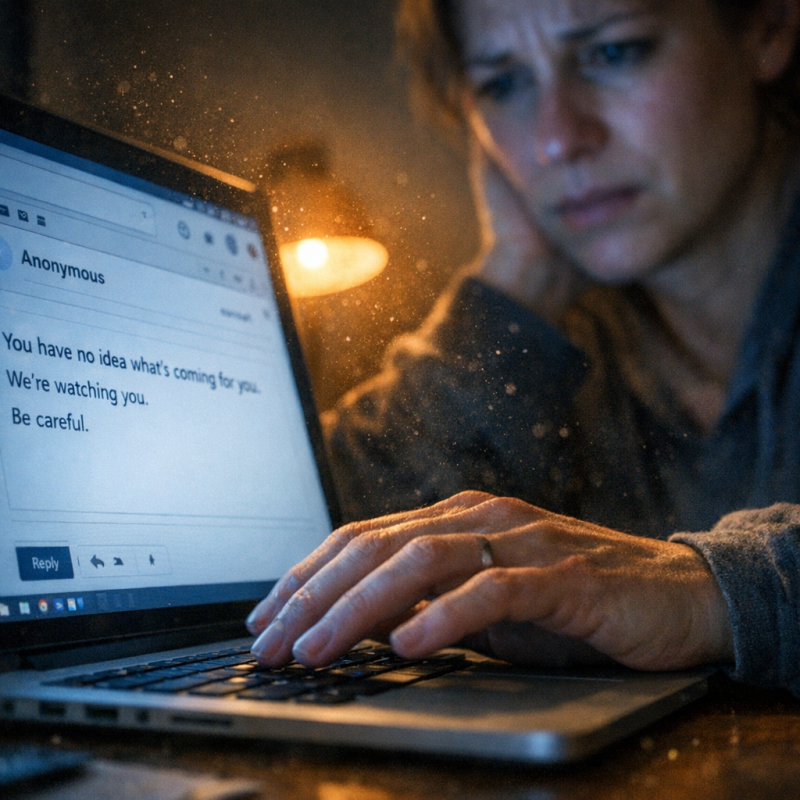 Image by FCT AI
The Decision To Reply
I spent the entire next day debating whether to respond. On one hand, this person clearly had information that could help. On the other hand, I had no idea who they were or what their motives might be. What if it was a setup? What if someone from the branch was trying to bait me into saying something they could use against me? But the more I thought about it, the more I realized I couldn't just ignore it. If there were other people involved, or other victims who'd been silenced, I needed to know. So I drafted a reply, keeping it short and cautious: 'Thank you for reaching out. If you're willing to share more information, I'm listening. You can stay anonymous—I just want to understand what happened.' I read it over a dozen times, tweaking the wording, trying to sound open without seeming desperate. Then I hovered over the send button for what felt like forever, second-guessing everything. Finally, I just did it. I hit send before I could second-guess it, and then I waited.
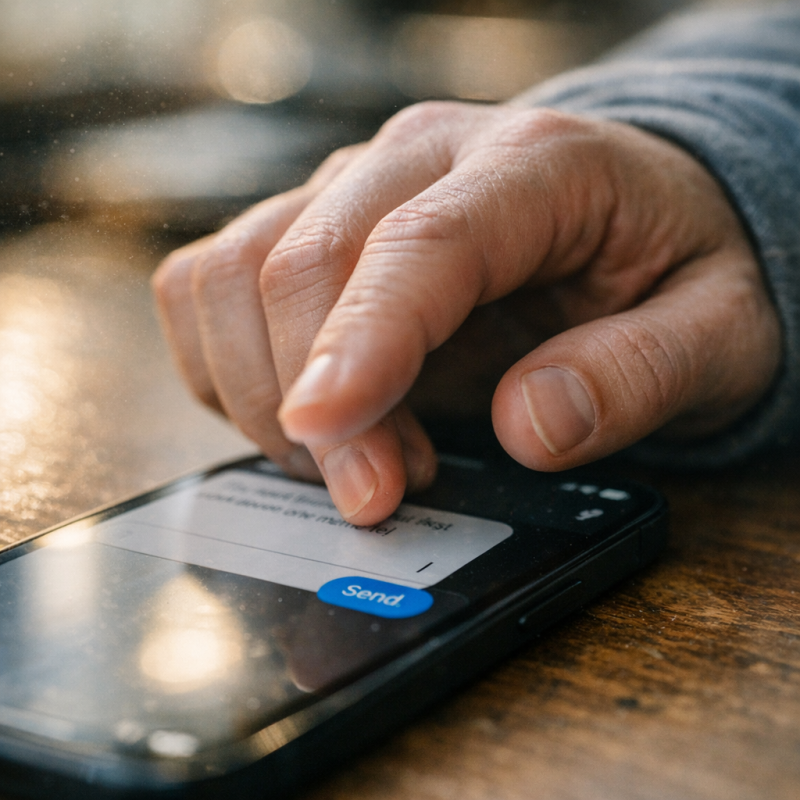 Image by FCT AI
The Reply That Never Came
Days passed. No response. I checked my inbox constantly, refreshing it every few hours like some kind of compulsion. Nothing. The anonymous tipster had gone silent, and I didn't know if that meant they'd gotten cold feet or if something had happened to stop them from reaching out again. Maybe they'd been discovered. Maybe they'd decided the risk wasn't worth it. Either way, the silence felt ominous. I kept thinking about that last line—'You're the first one who fought back'—and wondering what it had cost them just to send that message. By the end of the week, I'd almost given up on hearing from them again. I told myself it didn't matter, that the investigation was moving forward with or without their help. But it did matter. I wanted to know what they knew. I wanted confirmation that I wasn't imagining the scope of this. Then Marcus called and told me something that changed everything: 'We need you to meet with someone.'
 Image by FCT AI
Meeting Mr. Hartley
The meeting was set for Monday morning at a downtown office I'd never been to—corporate headquarters, sterile and imposing. Marcus met me in the lobby and walked me up to a conference room on the twelfth floor. That's where I met Mr. Hartley. He was older, maybe early sixties, with gray hair and the kind of presence that made you sit up straighter without him saying a word. He introduced himself as the senior investigator for the bank's compliance division, and he shook my hand with a firm, measured grip. We sat down across from each other at a long table, and he opened a folder in front of him without any small talk. 'Jordan, I've reviewed your case file extensively,' he said, his voice calm but serious. 'I want you to know that what you reported has triggered a full-scale internal investigation.' I nodded, not sure what to say. He leaned forward slightly, his expression unreadable but intense. He looked at me with an expression I couldn't read and said, 'You have no idea how important your case is.'
 Image by FCT AI
The Scope Of The Investigation
Mr. Hartley didn't waste time. He explained that what started as a simple fraud complaint had exploded into something far bigger. The investigation now involved multiple branches across the city, external auditors brought in from an independent firm, and—this part made my stomach drop—potentially law enforcement. He said they'd uncovered irregularities in transaction records, flagged accounts that matched the same pattern as mine, and identified what he called 'systemic vulnerabilities in oversight protocols.' I tried to keep up, but the words felt heavy, like I was drowning in corporate speak that translated to something much worse than I'd imagined. He mentioned forensic accountants, data analysts combing through months of records, interviews being scheduled. The whole thing sounded massive. I asked the question that had been building in my chest: 'How many people were involved in this?' He paused, and for the first time, his professional mask slipped just slightly. He looked tired. 'We're still trying to figure that out.'
 Image by FCT AI
The Question I Had To Ask
I had to ask it directly. I couldn't keep dancing around the question that had been eating at me since that voicemail, since Greg's office, since everything clicked into a sickening pattern. 'Were Rachel and Greg working together?' I asked, my voice steadier than I felt. Mr. Hartley's expression didn't change much, but he nodded slowly. 'That's one of the primary angles we're investigating,' he said. 'We're looking very closely at the relationship between Ms. Chen and Mr. Patterson, the timeline of their interactions, and how complaints were handled when both were involved.' It felt validating and terrifying at the same time. I wasn't paranoid. I wasn't imagining connections that didn't exist. They were actually looking into it. But then Mr. Hartley closed the folder in front of him and folded his hands on the table. His eyes locked onto mine with an intensity that made my pulse quicken. He leaned forward and said, 'What we need from you now is to testify—formally, on record.'
 Image by FCT AI
The Weight Of Testifying
The drive home felt surreal. Testifying. Formally. On record. Those words kept looping in my head, getting heavier each time. This wasn't just filing a complaint or answering a few questions anymore. This was becoming a witness in what could turn into an official investigation. I thought about what that meant—sitting in a room, maybe being cross-examined, having lawyers dissect every word I said. What if I got something wrong? What if I couldn't remember details clearly enough? What if Rachel and Greg had lawyers who made me look like I was lying or confused? The fear was real, sitting in my chest like a weight. I could say no. I could tell Mr. Hartley I'd done enough, that someone else could carry it from here. I could walk away and try to forget this whole nightmare. But every time I considered it, I thought about that voicemail, about Greg's smug face, about Rachel's fake concern. I thought about the lies, the manipulation, the arrogance. I thought about walking away, about letting someone else carry it—but I couldn't. Not after coming this far.
 Image by FCT AI
The Preparation Session
Dana was back, which honestly made me feel a little less alone in all of this. We met in the same conference room, this time with Mr. Hartley and a stack of documents that looked like they could bury me. They walked me through everything—every interaction with Rachel, every conversation with Greg, the timeline, the voicemail, the branch visit. Dana took notes while Mr. Hartley asked clarifying questions, pushing me to remember exact phrases, specific dates, anything concrete. 'Did Rachel ever mention Greg before the callback?' 'When exactly did you first notice the withdrawal?' 'How did Greg phrase his dismissal of your complaint?' It was exhausting. My brain felt wrung out trying to recall details I'd lived through in a haze of confusion and anger. At one point, Dana stopped writing and looked up at me with this expression I couldn't quite read. She tapped her pen against the table and asked, 'Do you think Greg was protecting Rachel, or was she protecting him?' I opened my mouth to answer, then closed it. I didn't have an answer.
 Image by FCT AI
The Document Sarah Found
Sarah was one of the external auditors, mid-thirties, sharp-eyed and direct. She asked to meet with me separately, said she wanted to show me something the investigation had uncovered. We sat in a smaller office, and she pulled out a printed spreadsheet—rows and rows of data that didn't mean much to me at first. Then she started explaining. Small withdrawals, ranging from fifteen to seventy-five dollars, spread across dozens of accounts over the past six months. Different customers, different branches, but all following the same pattern: unauthorized debits labeled as 'fee adjustments' or 'processing corrections.' She pointed to a column on the right. 'This is the employee ID of who processed each transaction,' she said quietly. I leaned closer, scanning the codes. They were all the same. Rachel's ID, over and over again. Then Sarah flipped to another page—complaint records, all closed without resolution. My throat tightened. Every single one had been processed by Rachel—and every complaint had been dismissed by Greg.
 Image by FCT AI
The Victims I'd Never Met
Sarah left the documents with me. I don't know if I was supposed to read through all of them, but I couldn't stop myself. Case after case, each one a person like me who'd noticed something wrong and tried to fight it. A college student who lost forty dollars and couldn't afford groceries that week. A retiree on a fixed income who called five times before giving up. A single mom who was told the withdrawal was her mistake and that she must have authorized it somehow. The notes were cold, clinical, but I could read the frustration between the lines—the desperation of people who knew they were being robbed but couldn't prove it. Most of the cases were marked 'closed' or 'resolved without reimbursement.' They'd been steamrolled, dismissed, gaslit into doubting themselves. And they didn't have Dana, or Mr. Hartley, or anyone willing to dig deeper. I felt sick reading them, because most of these people never got their money back. They just… gave up.
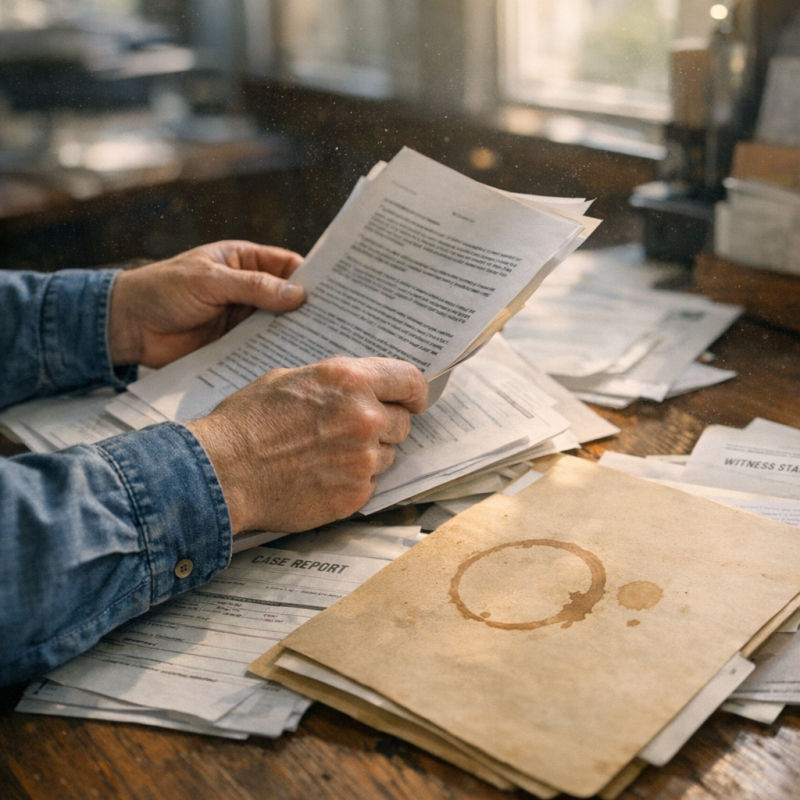 Image by FCT AI
The Night Before
I didn't sleep that night. I lay in bed staring at the ceiling, my mind racing through everything that had happened, trying to piece it all together into something that made sense. How did it start? Was it Rachel's idea, or Greg's? How did they decide who to target? Did they pick people who seemed vulnerable, who wouldn't fight back? Did they laugh about it? The thought made my skin crawl. I kept thinking about that voicemail—Rachel's voice, so calm and reassuring, telling me everything was handled. How many other people had she called with the same script, the same fake empathy? How many times had Greg sat across from someone in his office and shut them down with that condescending tone? The thing that haunted me most was the coordination. They had a system. This wasn't impulsive or sloppy. It was deliberate, calculated, sustained. I kept coming back to one question: How long had they been doing this before someone finally caught them?
 Image by FCT AI
The Truth In The Conference Room
The testimony took place in the same conference room where I'd first met Mr. Hartley, but this time there were more people—Dana, Sarah, two other investigators I didn't recognize, and a stenographer recording everything. Mr. Hartley led the questioning, and I answered as clearly as I could, walking through the entire timeline again. But then he shifted, leaning back in his chair with a gravity that made the room feel smaller. 'Jordan, I want you to understand what you've helped us uncover,' he said slowly. 'Rachel Chen and Greg Patterson were running a coordinated embezzlement scheme for months. They targeted customers who were unlikely to escalate—students, elderly clients, people living paycheck to paycheck. Rachel processed unauthorized withdrawals, small enough to avoid automatic fraud detection. Greg suppressed complaints when they came in, closing cases without investigation.' I felt the air leave my lungs. He kept going, his voice steady but heavy. 'It was systematic. Deliberate. And profitable.' Then he looked at me and said, 'Your case was the first one they couldn't bury. You broke it open.'
 Image by FCT AI
The Reframing
I sat in my car afterward and just thought about everything. Every single moment from the past few months played back in my head, but now it was all different. Rachel's awkwardness when I'd first come in—that wasn't nervousness about helping me. She was panicking because she'd been caught. Greg's dismissiveness, the way he'd brushed me off and acted like I was wasting his time—that wasn't incompetence or laziness. He was actively trying to make me go away. The quick reimbursement after I escalated? They weren't being helpful. They were trying to shut me up before anyone else noticed. Even the way Rachel had avoided eye contact, the way Greg had smirked like I was some annoying customer who didn't understand how things worked. It all made sense now. They'd done this before. They'd gotten away with it before. I thought about all the times I'd doubted myself, wondering if I was overreacting or making too big a deal out of fifty dollars. They'd counted on that. They weren't incompetent. They weren't indifferent. They were acting unlawfully.
 Image by FCT AI
The Testimony
The testimony itself was grueling. I sat across from Mr. Hartley, Dana beside him with her notebook open, and I walked them through every single interaction I'd had with Rachel and Greg. Every date, every conversation, every deflection. Mr. Hartley asked clarifying questions—what exactly had Rachel said when I first came in? Had Greg mentioned any internal processes? Did either of them suggest I drop the complaint? I answered as best I could, my voice steady even though my hands were shaking under the table. Dana took notes the entire time, her expression unreadable. The stenographer's fingers never stopped moving. It felt like hours, though it was probably only ninety minutes. When I finished, I felt completely wrung out, like I'd just confessed something instead of reported it. The room went silent. Mr. Hartley exchanged a glance with Dana, then turned back to me. His expression softened just slightly. When I finished, the room was silent—and then Mr. Hartley said, 'That's exactly what we needed.'
 Image by FCT AI
The Arrest Warrants
Mr. Hartley leaned forward then, folding his hands on the table. 'Jordan, I want you to know that based on the evidence we've gathered—including your testimony today—arrest warrants have been issued for Rachel Chen and Greg Patterson.' I blinked. It felt surreal hearing it said out loud like that. Arrest warrants. Like something from a TV show, not something that happened because I'd noticed fifty dollars missing from my account. 'They'll be charged with embezzlement, fraud, and conspiracy,' he continued. 'The district attorney's office is involved now. This is an official case.' I nodded, not sure what to say. My chest felt tight. 'When...' I started, then cleared my throat. 'When will they be taken into custody?' Mr. Hartley glanced at his watch, and for a second I saw something almost like satisfaction cross his face. He looked back at me. I asked when they'd be taken into custody. He checked his watch. 'About an hour ago.'
 Image by FCT AI
The News Breaks
The story hit the local news that evening. I was at home, still processing everything, when my phone started buzzing. First it was a text from my friend Jenna: 'OMG is this you??' with a link to a news article. The headline read: 'Local Bank Employees Taken into Custody in Embezzlement Scheme.' I clicked through, my heart pounding. They didn't name me, thankfully, but the details were all there—systematic theft targeting vulnerable customers, suppressed complaints, months of coordinated fraud. The article mentioned that a customer's persistence had led to the investigation. I stared at my phone. Then another text came in. And another. Friends, coworkers, even people I hadn't talked to in years who somehow connected the dots. 'Was this your bank?' 'Didn't you have an issue with them?' 'Are you okay?' My social media notifications exploded. Someone had shared the article in a local community group, and people were commenting, sharing their own stories of feeling dismissed by banks. My phone wouldn't stop buzzing—friends, coworkers, even people I hadn't talked to in years.
 Image by FCT AI
The Call From A Reporter
The next morning, I got a call from a number I didn't recognize. I almost didn't answer, but something made me pick up. 'Hi, is this Jordan?' a woman's voice asked. 'My name is Claire Westfield, I'm a reporter with the Tribune. I'm covering the bank embezzlement case, and I was hoping to speak with you.' My stomach dropped. 'How did you get my number?' I asked. 'A source familiar with the investigation,' she said carefully. 'I understand you were the customer who initially reported the discrepancies. I'd love to do an interview—get your perspective on what it took to be heard, how the system failed you initially.' I stood there in my kitchen, phone pressed to my ear, not knowing what to say. Part of me wanted to hang up immediately. But another part—a bigger part than I expected—wanted to talk. Wanted people to know what it had actually been like. I told her I needed to think about it—but part of me wanted people to know what it took to get here.
 Image by FCT AI
The Other Victims Come Forward
After the arrests made the news, something shifted. Within days, more people started coming forward with similar stories. I heard about it first from Dana, who called to update me. 'We've received eight new complaints since the story broke,' she said. 'People who had the same experience you did—small withdrawals they couldn't explain, complaints that went nowhere.' By midweek, that number had doubled. I saw posts on social media from people sharing their stories, emboldened by the news coverage. An elderly man who'd lost seventy-five dollars and been told it was probably a mistake he'd made. A college student who'd had recurring charges she never authorized. A single mom who'd been dismissed when she questioned a missing deposit. They'd all been too scared, too tired, too worn down to keep fighting. But now they saw that it was real. That they hadn't been imagining it. By the end of the week, there were over twenty complaints—twenty people who'd been too scared or tired to fight.
 Image by FCT AI
The Apology From Corporate
A week after the arrests, I received a letter in the mail. Thick, expensive paper in a corporate envelope with the bank's logo embossed on the front. I opened it slowly. 'Dear Valued Customer,' it began. I almost laughed at that. The letter was from the bank's regional director, someone whose name I'd never heard before. It offered a formal apology for the 'unfortunate actions of former employees' and assured me that the bank was 'committed to the highest standards of integrity and customer service.' They outlined new policies being implemented—enhanced fraud detection, revised complaint procedures, mandatory ethics training. It was perfectly written, professionally formatted, probably reviewed by a dozen lawyers before it was sent. I read it twice. Then I folded it carefully and put it back in the envelope. It didn't feel like a real apology. It felt like damage control. Like something designed to protect them, not acknowledge what had actually happened to me and everyone else. It was professional, polished, and completely hollow—but I kept it anyway.
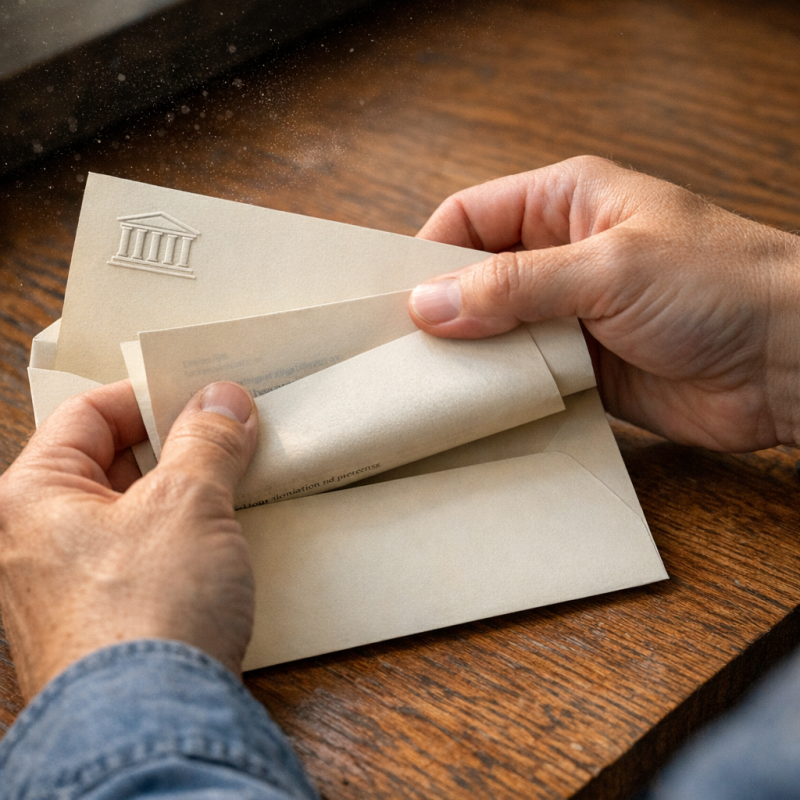 Image by FCT AI
The Settlement Offers
The bank started offering settlements soon after. Dana mentioned it to me during one of our final calls. 'They're reaching out to all the identified victims,' she explained. 'Offering full reimbursement plus additional compensation—usually two to three times the stolen amount—in exchange for signing a release.' I asked what that meant. 'It means you agree not to sue them,' she said simply. The offers went out within days. I heard through the grapevine—some of the other victims had connected online after the news broke—that most people accepted immediately. One woman posted that she'd taken the settlement because she couldn't afford to fight anymore, even though it felt wrong. Another said he just wanted it to be over, wanted to move on and forget the whole thing happened. A college student wrote that the extra money actually helped her pay rent. I read their posts and understood completely. They'd been through enough. They deserved to get something back and close this chapter. Most people took it immediately—they just wanted it to be over. I understood that.
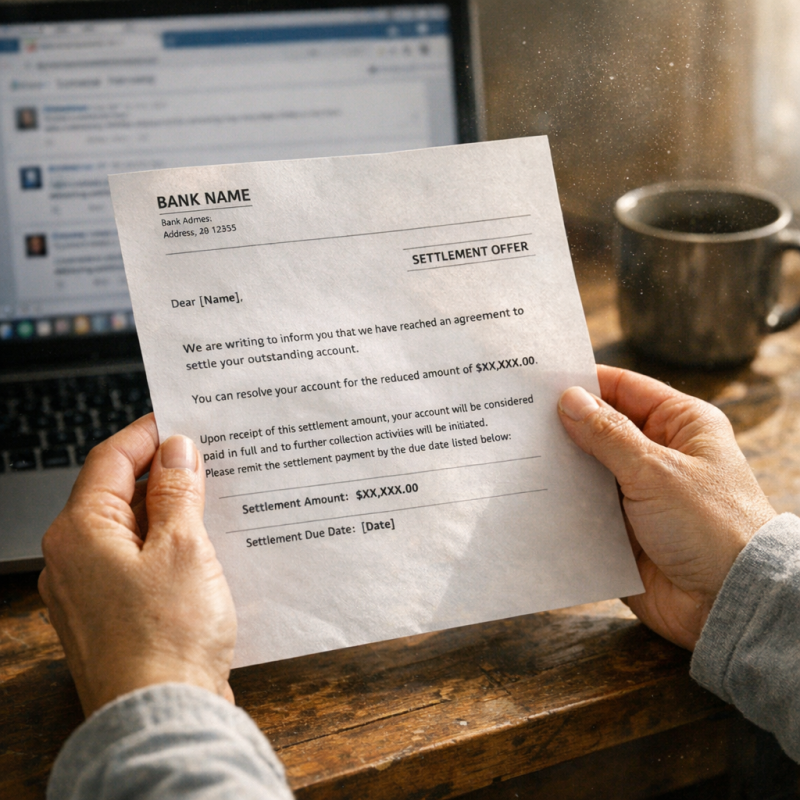 Image by FCT AI
The Trial Date
Dana called me about three weeks after the settlement offers went out. 'I wanted you to hear this from me first,' she said, and I could tell from her voice it was something big. Rachel and Greg were going to trial. The prosecution had enough evidence—thanks to the whistleblower documents and the internal communications—that they were moving forward with charges for both of them. 'It's scheduled for six months from now,' Dana explained. 'They're building the case methodically.' Then she paused. 'They may ask you to testify again. Would you be willing?' I didn't even need to think about it. The first time I'd testified, I'd been scared, unsure what I was walking into. I'd felt small in that room, like my voice didn't matter. But now I knew better. I knew exactly what this was—what they'd done, what they'd tried to cover up, how many people they'd hurt. I told Dana yes without hesitation. I told them I would—because this time, I knew exactly what I was walking into.
 Image by FCT AI
Six Months Later
Six months later, it was over. Rachel was convicted on multiple counts of fraud and embezzlement. Greg was convicted on conspiracy and obstruction charges. I watched the news coverage from my apartment, seeing their faces on the screen as the verdicts were read. The reporter mentioned the scale of the scheme—millions stolen, thousands of victims. They showed footage of people leaving the courthouse, some of them victims I recognized from online forums. One woman was crying, but she was smiling too. The whole thing felt surreal, like watching a movie about someone else's life. I should have felt victorious, maybe. Relieved. But what I actually felt was heavier than that. This had started with $1,500 missing from my account and a branch manager who wouldn't listen. It had turned into something so much bigger than I could have imagined. I sat there on my couch, the TV still playing, and realized I didn't know how to process it all. It was over—but it didn't feel like an ending. It felt like something had just begun.
 Image by FCT AI
The Interview I Finally Gave
A few weeks after the trial ended, a reporter reached out asking if I'd be willing to do an interview. I'd turned down every request before—there had been plenty—but this time felt different. Maybe enough time had passed. Maybe I finally had the distance to talk about it without feeling like I was still in the middle of it. We met at a coffee shop, and she asked me to walk her through the whole story. I told her about the missing $1,500, about Melissa dismissing me, about the spreadsheet I'd built. I told her about the tip line, the investigation, the testimony. She took notes the whole time, nodding. Then she asked what I hoped people would take away from this. I thought about all the people who'd accepted the settlement just to move on. I thought about how close I'd come to giving up myself. The reporter asked me what I'd say to someone in the same position. I didn't hesitate: 'Don't walk away.'
 Image by FCT AI
The $1,500 That Changed Everything
Looking back now, it's wild to think how it all started. One missing transaction. $1,500 I needed for a car repair. I was just trying to figure out where my money went, and everyone kept telling me I was wrong—that I'd made a mistake, that I was confused, that I should let it go. But I didn't. I couldn't. And that one moment of refusing to accept their dismissal unraveled an entire operation. It exposed people who thought they were untouchable. It helped thousands of victims get their money back. Sometimes I still think about that day in the branch when Melissa looked at me like I was wasting her time. I think about how easy it would have been to just walk away, embarrassed and defeated. But I didn't. And that made all the difference. I got my car fixed eventually. But more than that, I got proof that one person refusing to give up can actually matter.
 Image by FCT AI