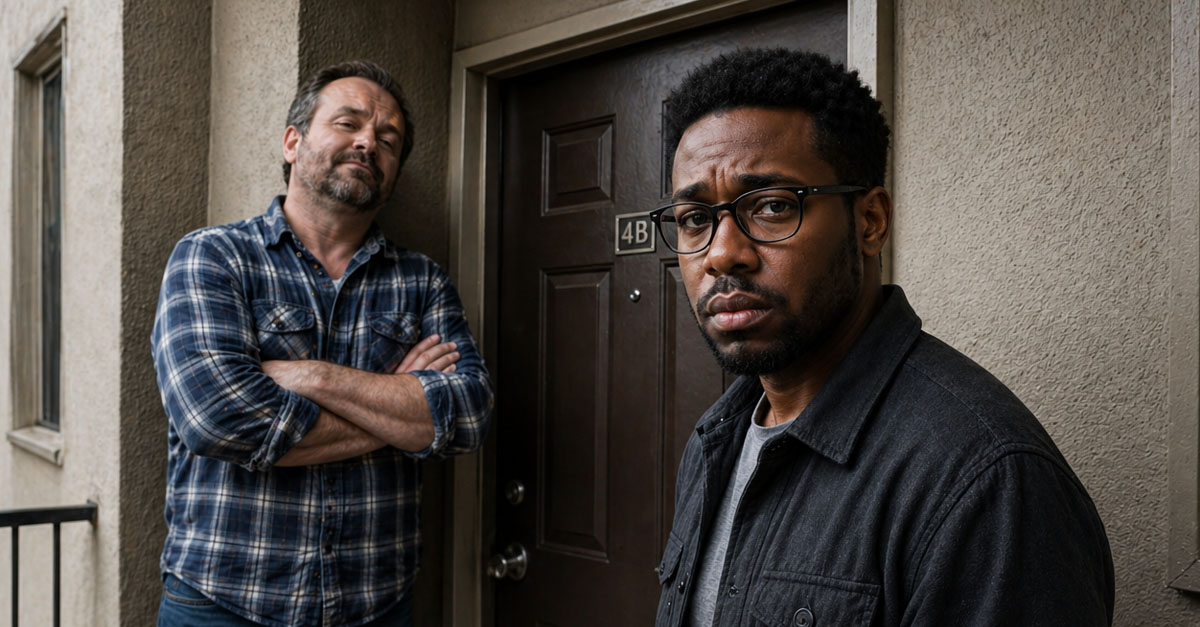
The Call
The phone rang at 5:47 AM, which is never good. I stared at the ceiling for two rings before I reached for it, already knowing somewhere deep in my gut that whatever was coming would change everything. The voice on the other end was polite, professional, detached—someone from the coroner's office calling to inform me that my father had passed in his apartment sometime the previous evening. Heart failure, they said. I remember nodding even though they couldn't see me, like my body knew what to do even when my brain had gone completely blank. They needed me to identify him, to make arrangements, to handle all the things you're supposed to handle when someone dies. I said yes to everything without really processing any of it. When had I last spoken to him? Six months ago? Maybe longer? We'd exchanged texts on his birthday, the kind of brief, cordial messages that don't really say anything at all. Now he was gone, and all those conversations we'd never have felt suddenly, crushingly permanent. I hung up and realized I had no idea what came next.
 Image by FCT AI
The Distance Between Us
My father and I hadn't always been strangers. There was a before—before my mother passed seven years ago, before he retreated into himself, before the silence became easier than trying to bridge the gap between us. He'd moved to that small apartment in Queens afterward, downsizing from the house I grew up in, and something about that move felt like he was closing a door I wasn't invited through. I'd visit occasionally at first, but the conversations grew stilted, surface-level. He seemed fine, or at least functional, and I told myself that was enough. I had my own life, my own struggles. The distance grew until it felt almost normal. But now, sitting in my kitchen with cold coffee in front of me, I felt the weight of all those missed calls I hadn't returned, all those invitations I'd declined. He deserved better than to be found alone like that. The least I could do was go to his apartment, gather his things, maybe find some piece of him I'd forgotten. I decided to visit the apartment that afternoon, expecting closure—I had no idea what I was walking into.
 Image by FCT AI
The Lobby Ambush
The building was one of those mid-century brick affairs that looked tired, the kind of place that had seen better decades. I'd been there maybe twice before, and even then only briefly. The lobby smelled like cleaning products trying to mask something mustier underneath. I was heading toward the elevator when a man in a too-tight polo shirt intercepted me. 'Daniel Kessler?' he asked, like he'd been waiting. I nodded. 'Vincent Harlow. I manage the property. Sorry for your loss.' The sympathy lasted about three seconds before he got to business. 'Before you access the apartment, we need to settle your father's outstanding rent. Two months, plus late fees. Comes to thirty-two hundred.' I actually laughed because I thought he was joking. He wasn't. 'I just want to get his things,' I said. He shook his head firmly. 'Property access requires account settlement. Company policy.' I argued, my voice getting louder than I intended, but he just stood there like a wall, repeating the same lines. Eventually I left, my hands shaking with anger. As I walked away, I couldn't shake the feeling that something about this was very wrong.
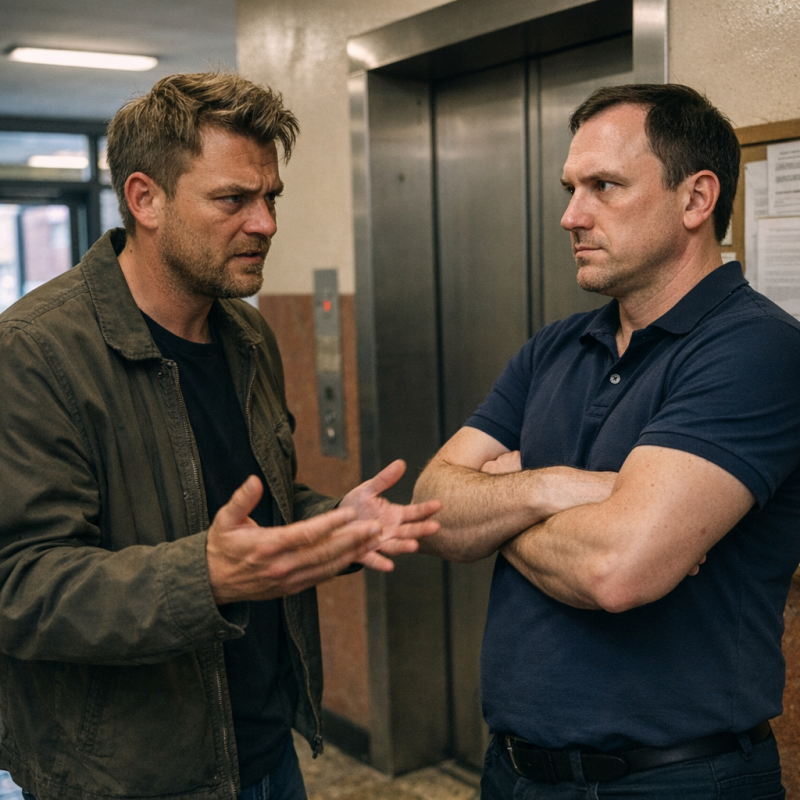 Image by FCT AI
The Fine Print
I spent that evening tearing through every email I could access from my father's account—I still had the password from when I'd helped him set up two-factor authentication years ago. Most of it was junk, pharmacy reminders, and forwards from old colleagues, but I was looking for anything about the apartment, the rent, some explanation for why they were blocking me. My father had been meticulous about bills his whole life; the idea that he'd just stopped paying didn't make sense. I found the lease agreement buried in a folder labeled 'Queens Apt,' scanned through it twice trying to understand the terms. Then I started finding the emails. Correspondence with the management company, polite at first, then increasingly tense. My father questioning charges, asking for itemized statements, citing tenant law. Their responses were vague, bureaucratic, always circling back to amounts owed without really explaining why. He'd disputed something three months ago, claimed they were adding fees that weren't in the lease. Then I saw the phrase 'outstanding balance' in an email from three months ago—with an amount that made no sense.
 Image by FCT AI
Rachel's Reaction
I called Rachel around nine that night, knowing I was probably waking her kids but needing to hear someone else say this was as insane as it felt. My sister and I weren't especially close—geography and life had pulled us in different directions—but she picked up on the second ring. 'Dad died,' I said, no preamble, because I still didn't know how else to say it. She went quiet, and I heard her step outside, the sound of a door closing. 'When?' she asked, her voice tight. I told her everything: the call, the apartment, the landlord blocking access unless I paid thousands of dollars I wasn't even sure were legitimately owed. I expected shock, maybe grief, but what I got was something sharper. 'That doesn't sound legal,' she said. 'Did they give you anything in writing?' I admitted they hadn't. She asked a few more questions, her tone shifting into something analytical, protective. I could hear her thinking it through, and honestly, it was a relief to not be alone in this. Rachel went silent for a long moment, then said: 'Don't pay him anything. Not yet.'
 Image by FCT AI
The First Call to Management
The next morning I called the management company directly, hoping to reach someone above Harlow who might actually be reasonable. The number on their website led to an automated system with about fifteen different options, none of which seemed right. I pressed zero repeatedly, that universal trick for reaching a human, but it just looped me back to the main menu. Eventually I chose 'billing inquiries' and got a voicemail box. I left a message explaining the situation—my father's death, the access issue, the disputed charges—trying to sound calm and professional even though I wanted to scream. Then I waited. And waited. I called back two hours later and left another message. By the afternoon I'd tried four different extensions, each one leading to another voicemail, another promise that my call was important to them. No one called back that day, or the next. The silence felt deliberate, like they were hoping I'd just give up and pay to make the problem go away. After the fourth automated message, I realized no one was going to call me back.
 Image by FCT AI
Paul Morrison's Script
On day three, I finally got a human voice. Paul Morrison from 'tenant relations,' he said, his tone friendly in that practiced customer-service way that immediately set my teeth on edge. I explained everything again—my father's death, the access denial, the confusing charges. He made sympathetic noises, let me finish, then delivered exactly the same line Harlow had given me. 'Unfortunately, before we can grant access to the unit, the account needs to be brought current. It's company policy for liability reasons.' I asked what liability. He said something vague about property protection and legal protocols. I asked for an itemized statement of what was owed. He said he'd have someone send it but couldn't guarantee when. I asked if they could at least let me get my father's personal items, things with no monetary value. 'I understand this is difficult,' he said, 'but policy applies to all access.' The words came out smooth, rehearsed, like he'd given this speech a hundred times before. His tone was so rehearsed, so smooth, that I started to wonder how many times he'd had this exact conversation.
 Image by FCT AI
The Legal Question
That night I did what anyone does when they don't know what else to do: I googled everything. 'Tenant death responsibilities,' 'estate debt liability,' 'landlord blocking access after death.' I went down rabbit holes on legal advice forums, read through tenant rights websites for New York, clicked through pages of results until my eyes burned. And here's what I kept finding, over and over, in slightly different words but the same essential truth: unless you'd co-signed the lease or were legally responsible for the debt in some other way, a family member generally isn't personally liable for a deceased person's unpaid rent. The landlord could file a claim against the estate, sure, but they couldn't just demand I pay out of my own pocket. They definitely couldn't hold his belongings hostage as leverage. Every article I read made me angrier because it meant Harlow and Morrison knew this, had to know this, and were counting on me not knowing. I printed out three different legal summaries and highlighted the relevant sections. One phrase kept appearing in every article: 'you are not personally liable for a deceased relative's debts.'
 Image by FCT AI
The Sleepless Night
I didn't sleep that night. I just lay there in the dark, replaying Morrison's voice in my head—that flat, administrative tone when he told me I needed to pay first. Like he was explaining a policy about late library books, not demanding money to let me see my father's things. Every time I closed my eyes, I saw that smug expression on Harlow's face when I'd walked out. They knew what they were doing. They had to know. And the worst part? There was nothing I could do about it at two in the morning. I couldn't call anyone, couldn't barge in there, couldn't even distract myself because every thought circled back to the same place. My father had lived in that building for six years. He'd paid his rent, maybe not perfectly, but he'd tried. And now he was gone, and these people were treating his life like collateral in some game I didn't even know I was playing. The clock glowed 3:47 AM. Then 4:23. Then 5:16. I watched the numbers change and felt completely, utterly powerless. Somewhere in the building across town, my father's belongings sat untouched, and I couldn't reach them.
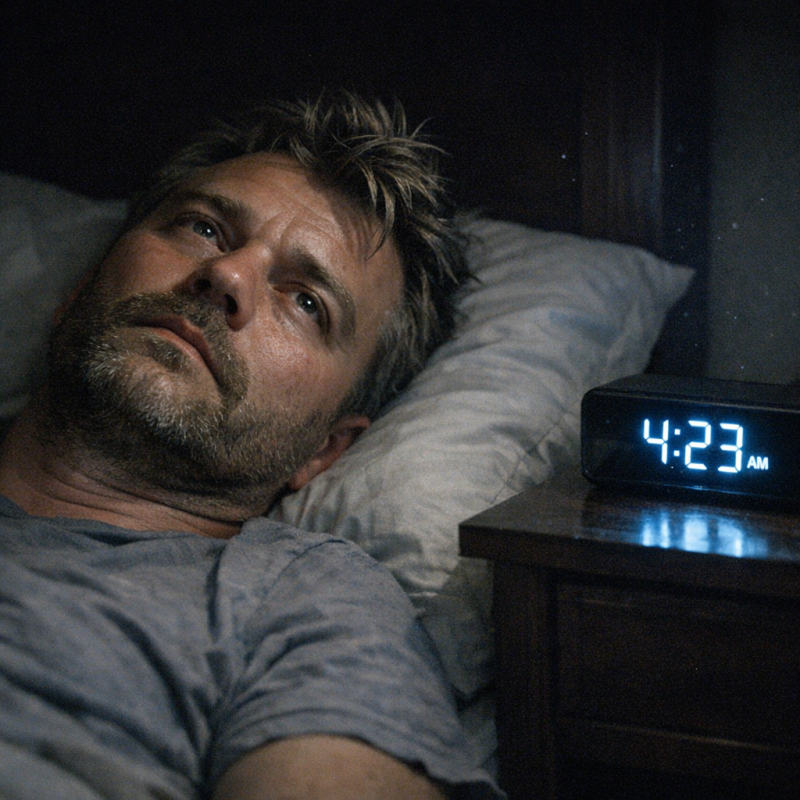 Image by FCT AI

History's most fascinating stories and darkest secrets, delivered to your inbox daily.
The Second Visit
Two days later, I went back to the building. Not to fight, not to argue—I'd learned that lesson. I just wanted to see the place again, maybe catch Morrison or Harlow when they weren't expecting me. I don't know what I thought I'd accomplish, honestly. I parked across the street and watched the entrance for a while, feeling slightly ridiculous. A few residents came and went. A delivery guy buzzed in. Nothing unusual. Then I crossed the street and stood in the small lobby, pretending to check my phone while I observed. The place looked tired in the daylight—scuffed floors, flickering hallway lights I could see through the interior door window. I noticed things I'd missed before in my grief-fog: water stains on the ceiling tiles, a broken intercom panel. I started walking up the stairwell, just to third floor where Dad had lived, just to stand near his door for a minute. Maybe that sounds morbid. Maybe it was. But I needed to feel close to him somehow, and this was all I had. That's when I saw the elderly woman on the third floor, watching me from her doorway.
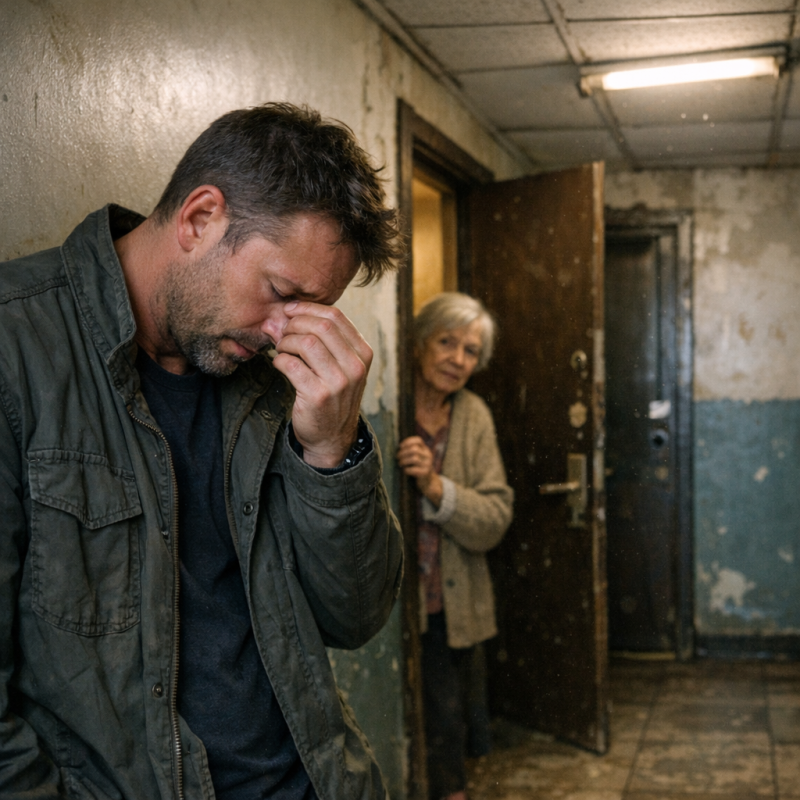 Image by FCT AI
Mrs. Kelley's Hesitation
She had white hair pulled back in a neat bun and suspicious eyes that softened when I explained who I was. 'Oh, Greg's son,' she said, and her whole face changed. 'I'm so sorry, honey. He was a good man.' Her name was Mrs. Kelley, and she'd lived two doors down from my father for four years. We talked in the hallway for a few minutes—her telling me stories about Dad helping her carry groceries, him always saying hello. Then her expression shifted, became more guarded. 'He'd been having problems with management,' she said quietly. 'Toward the end. They weren't... they weren't treating him right.' I asked what she meant. She glanced toward the stairwell, like she was checking if anyone could hear. 'Maintenance requests ignored. Fees showing up for things that didn't make sense. He tried to fight it, you know. He was documenting everything.' My pulse quickened. 'Did other tenants have problems too?' I asked. She looked both ways down the hall before whispering: 'He wasn't the only one.'
 Image by FCT AI
The Old Emails
That night I went deeper into Dad's email account. Past the recent messages, into the folders he'd created, the ones labeled 'Building' and 'Complaints' and 'Records.' What I found made my stomach turn. Months of correspondence. Dozens of emails to the management company about broken fixtures, leaking pipes, a radiator that didn't work all winter. Each one polite at first, then increasingly frustrated as responses either never came or dismissed his concerns. There were threats too, thinly veiled in corporate language—implications that 'repeated complaints' might affect his lease renewal, suggestions that he was being 'difficult.' I read one exchange where Dad had asked for a rent reduction because his heat hadn't worked for three weeks in January, and Morrison had responded with a lecture about 'lease obligations.' But what really got me was the pattern I started seeing. My father wasn't just complaining. He was methodical. He forwarded himself copies. He noted dates and times. He took screenshots. In one email, my dad wrote: 'I'm documenting everything'—and I realized he'd known this would matter someday.
 Image by FCT AI
The Heating Complaint
One complaint stood out. It was from last December, a detailed email thread about the heating system breaking down during that brutal cold snap we'd had. Dad described how his apartment had been fifty-eight degrees for a week, how he'd called the emergency maintenance line four times, how he'd been sleeping in his coat and using the oven to stay warm. He'd attached photos—I could see his breath visible in his own living room. Morrison's response was brief: 'Maintenance has been notified. Please be patient.' That was it. No apology, no timeline, nothing. Dad followed up three more times. The heat was eventually fixed, but only after two weeks. And then, reading through the thread, I noticed something that made my chest tighten. Dad had sent a formal complaint to the property management company's main office, documenting the whole situation and Morrison's non-response. He'd threatened to report them to the city. The date on the final follow-up was two weeks before the first late fee appeared on his account.
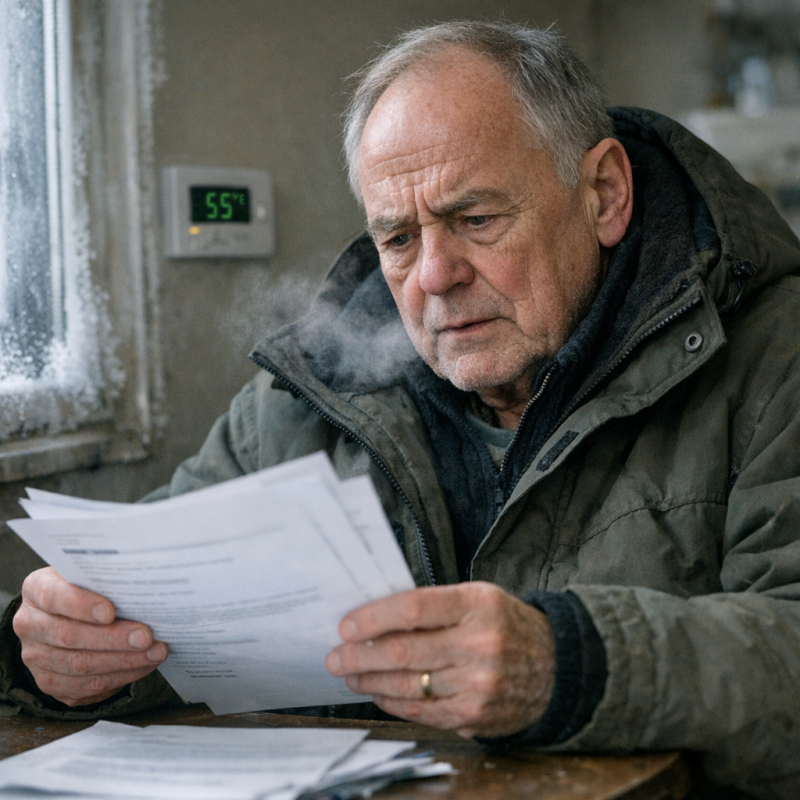 Image by FCT AI
Rachel's Doubt
I called Rachel that evening and walked her through everything I'd found. The emails, the pattern, the timing of the fees after Dad had complained. I could hear the concern in her voice, but also something else—caution. 'Danny, I know this looks suspicious,' she said carefully. 'But you have to consider that maybe it's just incompetence. These property management companies are notoriously disorganized. They lose paperwork, they're understaffed, they don't communicate between departments.' I wanted to argue, but she kept going. 'I'm not saying don't investigate. I'm saying don't assume malice when it could just be spectacular incompetence. You'll drive yourself crazy seeing conspiracy everywhere.' She had a point. I knew she did. 'Just promise me you'll stay objective,' she said before we hung up. 'Don't let your anger cloud your judgment.' I promised. I meant it when I said it. But after we hung up, I kept thinking: incompetence doesn't usually come with such perfect timing.
 Image by FCT AI
The Photos
The next day I found the photos folder on Dad's laptop. It was buried in his documents, labeled simply 'Apartment Issues 2022-2023.' Inside were dozens of images, each one dated and captioned. I clicked through them slowly, my throat getting tighter with each one. A ceiling in the bathroom with brown water stains spreading like a map. The kitchen sink with a steady drip Dad had noted as 'Day 47—still not fixed.' Black mold creeping up the corner of his bedroom wall. A broken window lock he'd reported as a security concern. The radiator that had failed, captured from multiple angles like crime scene photos. Each image was timestamped. Each had a brief description. Some had measurements—he'd actually measured the spread of the water damage over weeks. This wasn't just someone complaining. This was someone building a case, creating a record that couldn't be dismissed or ignored. I felt this weird mix of sadness and pride looking at them. Each photo was timestamped and labeled, like evidence in a case he'd been building alone.
 Image by FCT AI
The Ignored Requests
I made a spreadsheet. I know that sounds obsessive, but I needed to see it clearly. On one side, every maintenance request Dad had submitted—I pulled them from his sent emails, from his photos, from notes he'd kept. On the other side, every fee and charge that had appeared on his rent account. I counted seventeen maintenance requests over eight months. Seventeen. Only three had been fully addressed, and those were minor things—a loose doorknob, a burned-out hallway bulb, stuff they couldn't really ignore. The rest? Either ignored completely or 'resolved' with responses like 'unable to replicate issue.' But here's what made my hands shake as I filled in the dates: almost every time Dad escalated a complaint or sent it to the corporate office, a new fee appeared within days or weeks. Late fee after the heating complaint went corporate. 'Administrative fee' after he'd pushed back on a previous charge. 'Lease violation penalty' after he'd documented the mold problem. Maybe Rachel was right. Maybe it was coincidence. And every unanswered request seemed to correspond with a new fee on his account.
 Image by FCT AI
The Third Attempt
I called again the next morning, armed this time. I had my spreadsheet open, dates highlighted, specific charge codes written down. When someone finally answered—a different woman, not Janine—I went straight in. 'I need clarification on charge code A-47, dated March 12th,' I said, trying to sound calm and official. 'My father never received documentation for this fee.' She put me on hold. Muzak played. I waited, pen ready, notepad open. When she came back, her voice had that scripted quality people get when they're reading from a screen. 'Sir, I'm showing that charge as an administrative processing fee related to—' And then nothing. Silence. Not hold music. Just dead air. I pulled the phone away, checked the screen. Call disconnected. Okay, fine. Technical glitch. These things happen. I called back immediately. It rang. And rang. And rang. Voicemail. I called again. Same thing. Four more times over the next hour, different results each time—busy signal, voicemail, endless ringing. They were screening me now. I could feel it. The line went dead before I could finish my sentence—and when I called back, no one answered.
 Image by FCT AI
The Internet Search
That's when I turned to Google. I typed in the management company's name plus 'reviews' and started reading. You know how sometimes you hope you're wrong? I wasn't wrong. Page after page of complaints. One-star ratings. Former tenants describing the exact same pattern—unexpected fees, ignored maintenance, hostile responses to pushback. Someone had named their landlord 'a professional extortionist.' Another called the building 'uninhabitable.' I found reviews mentioning the mold, the heating issues, even that intercom. But what really got me were the comments about timing. 'They wait until you're vulnerable,' one person wrote. 'Death, job loss, illness—that's when they strike.' My coffee had gone cold beside me, but I kept scrolling. The details were too specific, too consistent. These weren't just disgruntled tenants exaggerating. This was corroboration. Pattern recognition. I felt validated and sick at the same time. Then I saw it, posted six months ago by someone with the username TenantAdvocate2023. Just one line, no elaboration. One review from six months ago simply said: 'They prey on the vulnerable. Document everything.'
 Image by FCT AI
Sandra Chen's Office
Sandra Chen's office was smaller than I expected, tucked above a Thai restaurant in a neighborhood I'd driven through a hundred times but never really noticed. She was maybe fifty, with reading glasses on a beaded chain and a desk covered in organized chaos—color-coded folders, sticky notes, three different coffee mugs. I showed her everything. The spreadsheet. The emails. The denied access to the apartment. She listened without interrupting, occasionally making notes on a yellow legal pad. When I finished, she was quiet for a moment, tapping her pen against her lips. 'Okay,' she finally said. 'Let's start with what's clearly illegal. Denying you access to your father's belongings without a court order? That's conversion, possibly theft. The fees without proper documentation? Potential fraud. The retaliation after complaints? Violation of tenant protection statutes.' She said it so matter-of-factly, like she was reading a grocery list. For the first time in weeks, I felt like I wasn't crazy. She leaned back in her chair and said: 'We need to get his refusal to grant access in writing.'
 Image by FCT AI
The Legal Letter
We drafted the email together, Sandra typing while I paced behind her chair. It was surgical in its precision. Reference to California Civil Code Section 1950.5. Explicit mention of my rights as sole heir and executor. A formal demand for written justification of the access denial and itemized documentation of all disputed charges. 'The key,' Sandra explained, 'is not to sound angry. Just factual. We're building a paper trail.' She had me read it over three times, tweaking phrases. 'Request' became 'demand.' 'Hope to hear' became 'expect response within 48 hours per statute requirements.' She copied herself and another attorney at her firm. 'Always CC someone,' she said. 'Makes them nervous.' When we were satisfied, she moved the cursor to the send button and looked at me. 'Ready?' I nodded. She clicked. The whoosh sound felt monumental. We sent it at 3:47 PM—and then we waited.
 Image by FCT AI
The Long Night
I couldn't stop checking my phone. Every few minutes, I'd refresh my email, watch the inbox stay empty, then put the phone down and promise myself I'd wait at least an hour. I'd make it maybe ten minutes. Rachel texted around seven asking if I wanted to grab dinner. I said I was waiting to hear back about something important. She didn't press. By nine, I was lying on my couch, phone on my chest, email app open. The TV was on but I wasn't watching it. Just light and noise to fill the apartment. I kept running through scenarios. Maybe they'd respond with an apology and immediate access. Maybe they'd lawyer up and this would turn into a real fight. Maybe they'd ignore it entirely, and Sandra would have to escalate. At ten-thirty, I checked my spam folder. Nothing. At eleven, I checked again. My eyes were burning from screen time, but I couldn't look away. At 11:58 PM, my phone buzzed—but it was just spam.
 Image by FCT AI
The Reversal
The email arrived at 8:47 AM, subject line 'RE: Formal Request - Estate of Robert Chen.' I was still in bed, had just grabbed my phone out of habit, and there it was. My heart actually jumped. I opened it. And I had to read it twice to believe what I was seeing. 'Dear Mr. Chen, We sincerely apologize for any miscommunication regarding access to apartment 4C. There appears to have been a clerical error in our records. You are welcome to schedule an appointment at your earliest convenience. We have availability tomorrow at 2 PM if that works for you. Please confirm. Regards, Property Management Services.' That was it. No mention of the fees. No justification for the previous denial. No reference to Sandra's legal citations. Just—whoops, our bad, come on over. I screenshot the email and sent it to Sandra before I even got out of bed. The entire tone had changed—no demands, no conditions, just an appointment time for the next day.
 Image by FCT AI
Sandra's Warning
Sandra called me back within twenty minutes. 'Did you confirm the appointment yet?' she asked. I told her no, I wanted to talk to her first. 'Good,' she said. 'Confirm it, but I want you to do something for me. Photograph everything. I mean everything. The condition of the apartment, any damage, any repairs that were or weren't done. Take videos with timestamps. Document the mold, the heating system, whatever you find.' She was in full attorney mode now, talking faster. 'And if they try to be present during your visit, that's fine, but don't sign anything without running it by me first. No settlement offers, no liability waivers, nothing.' I was scribbling notes on the back of an envelope. 'You think they'll try something?' I asked. She paused. 'I think they wouldn't have stonewalled you for weeks and then completely reversed course in twelve hours unless they're worried about something. Before hanging up, she added: 'They backed down too fast. That means they know something we don't—yet.'
 Image by FCT AI
The Threshold
The hallway smelled the same. Old carpet, someone's cooking from three doors down, that weird metallic scent that all apartment buildings seem to have. I stood outside 4C with the key in my hand—they'd left it in an envelope at the front desk, no eye contact from the building manager when I picked it up. The silence behind the door felt enormous. I'd been fighting so hard to get here, so focused on access and fees and legal strategies, that I hadn't let myself think about what it would actually feel like. To walk into the space where Dad had spent his last months. To see his things. His coffee mug probably still in the sink. His jacket probably still on the hook. I put the key in the lock. It turned smoothly. The door swung open onto darkness—curtains drawn, stale air, absolute quiet. My chest tightened. This was where he'd been sick. Where he'd struggled. Where he'd been alone. I stepped inside, and for a moment, I forgot why I was really there.
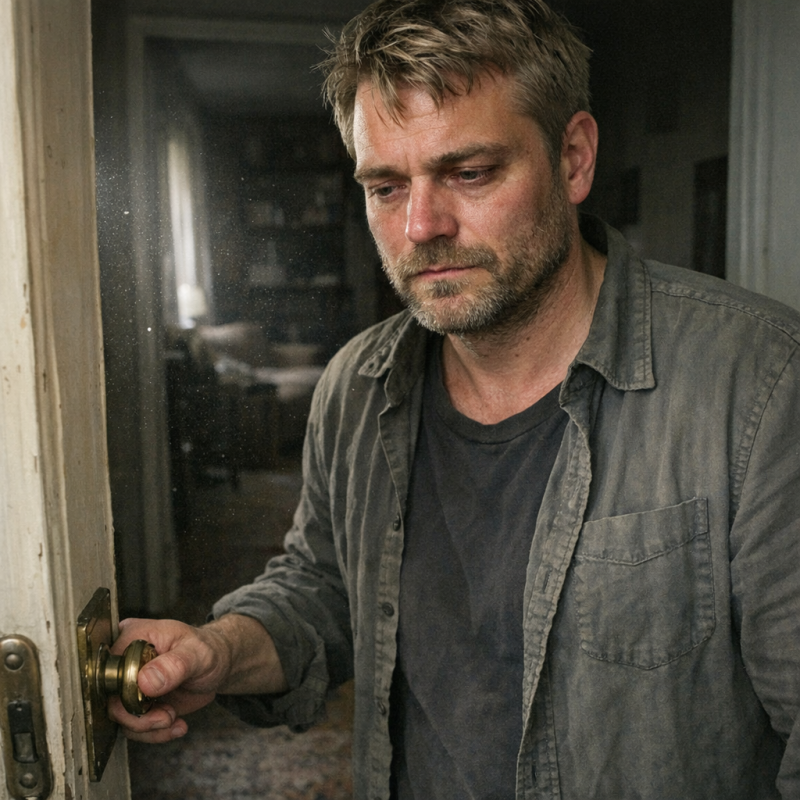 Image by FCT AI
The Untouched Life
I moved through the apartment like I was in a museum. Dad's coffee mug sat in the dish rack, washed and waiting. His reading glasses were folded on the armrest of the couch, next to a library book still marked with a receipt as a bookmark. His jacket hung on the hook by the door—the brown one he'd worn for twenty years, the elbows worn smooth. Everything was exactly as he'd left it, frozen in that last ordinary morning before everything went wrong. I touched the spine of the book. A thriller he'd never get to finish. The weight in my chest made it hard to breathe. This was his life, reduced to objects that didn't know he was gone. I wanted to sit down and just exist in his space for a while, to feel close to him again. But I couldn't afford that luxury. I'd paid for access, and I had a purpose. Then I saw the filing cabinet in the corner, and I remembered what I'd come to find.
 Image by FCT AI
The Organized Mind
The filing cabinet wasn't locked. I pulled open the top drawer and immediately recognized my father's system—everything labeled, chronological, meticulous. Utility bills in one folder, medical correspondence in another, tax documents organized by year. It was so perfectly Dad that I almost smiled. He'd been an engineer, and it showed in everything he touched. The second drawer held building-related documents: his lease, move-in inspection reports, receipts for rent payments going back years. Every piece of paper had a date written in the corner in his small, precise handwriting. I pulled out the maintenance requests—there were dozens, each one photocopied before he'd submitted it, each one with notes about when he'd followed up and what response he'd received. He'd documented everything. Not just casually, but systematically, like someone building a record. And in the back, a folder labeled simply: 'Building Management—Disputes.'
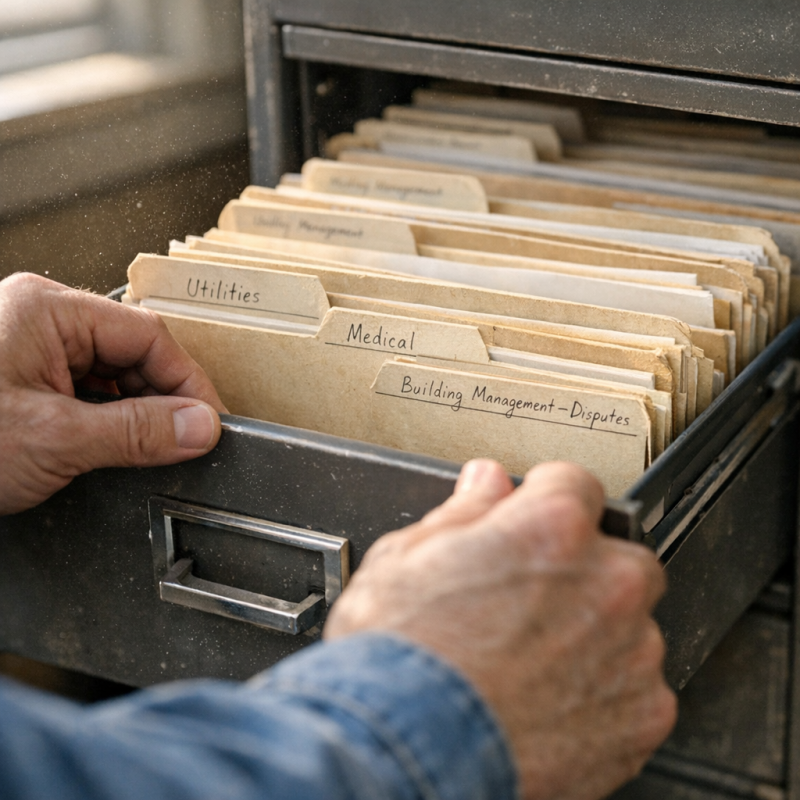 Image by FCT AI
The Dispute File
I lifted the disputes folder out carefully, like it might fall apart. Inside were photocopies of every complaint he'd filed, every email he'd sent, every photo he'd taken of problems in the apartment. Water damage timestamps. Mold growth documented in a series of dated pictures. Copies of certified mail receipts proving he'd sent formal notices. There were even printouts of relevant tenant law statutes with sections highlighted in yellow. My father had been building a legal case, piece by piece, while he was sick. While he was dying. Instead of resting, instead of focusing on his health, he'd been fighting this battle alone. The organization was overwhelming—evidence logs, communication timelines, response tracking. Everything you'd need to prove a pattern of negligence. My throat tightened with grief and something else. Pride, maybe. Anger, definitely. My father had been building a case—and at the bottom of the folder was a notice I hadn't seen before.
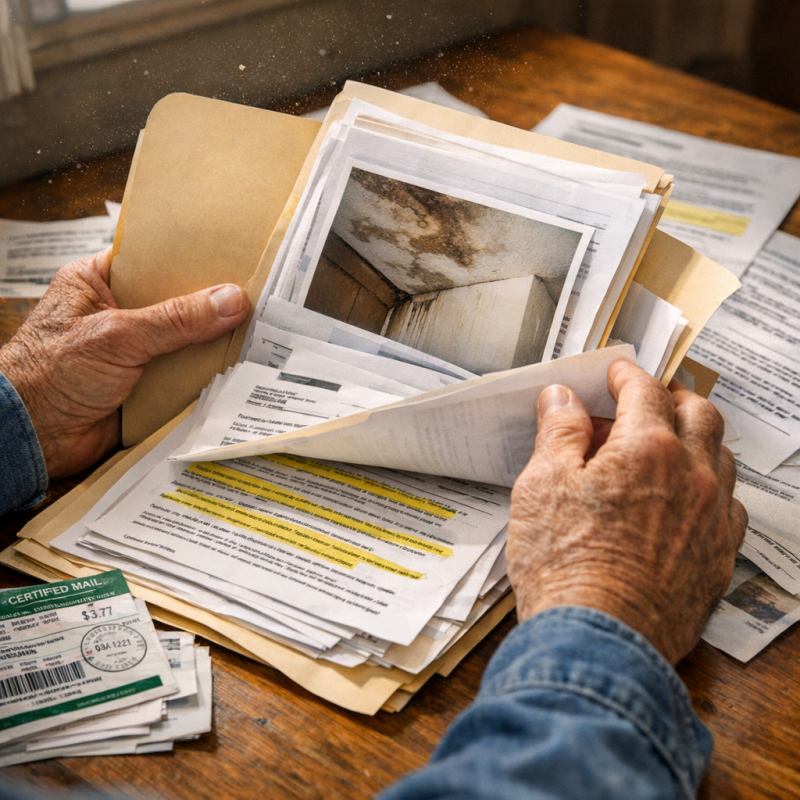 Image by FCT AI
Marcus Webb's Name
It was a printed email exchange, the pages stapled together. The sender's name caught my eye: Marcus Webb. The subject line read: 'RE: Building conditions and landlord response.' I skimmed the first email—Marcus describing problems in his unit that sounded identical to what Dad had faced. Leaks, mold, requests ignored. My father had replied with detailed advice, sharing what he'd learned about tenant rights and documentation strategies. They'd compared notes like soldiers sharing intelligence. 'Have you tried filing a formal complaint with the housing authority?' my father had written. Marcus's response was discouraged: 'I'm worried about retaliation. My mother is sick, and I can't risk them making things worse.' There were four more emails in the thread, spanning two months. They'd been supporting each other, building cases together. The final email from Marcus said: 'I gave up and moved out. I hope you have better luck.'
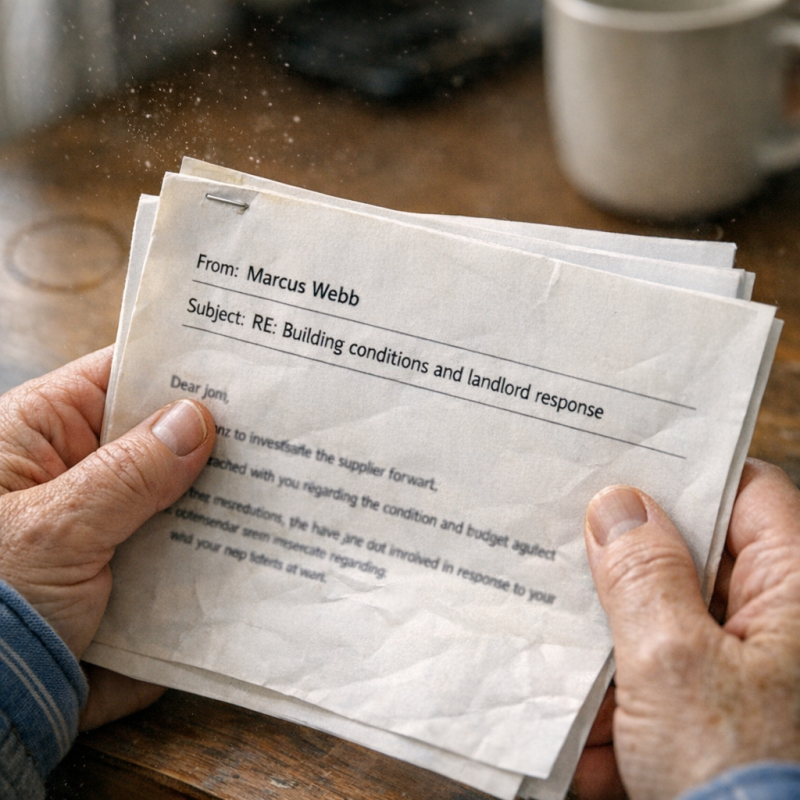 Image by FCT AI
Finding Marcus
I stared at Marcus Webb's email address at the top of the printout. It was a long shot—the exchange was from over a year ago—but I pulled out my phone and composed a message anyway. I explained who I was, how I'd found his contact information in my father's files, what had happened after Dad passed. I asked if he'd be willing to talk. I hit send before I could overthink it. Twenty minutes later, my phone rang. Unknown number. I answered. 'This is Marcus Webb,' a voice said. He sounded tired, maybe early forties. 'I got your email. I'm sorry about your father—he seemed like a good man.' I thanked him, then explained the situation. The fees they'd demanded. The threats. The pressure to pay quickly before I could access the apartment. There was a long pause on the other end. Then Marcus's first words were: 'How much did they try to charge you?'
 Image by FCT AI
Marcus's Story
Marcus went quiet when I told him the amount. Then he said, 'They charged me almost the same. Called it estate liability for damages and unpaid fees.' His mother had passed in the building two years ago. Within days, the landlord had contacted him with similar claims—damages, cleaning costs, administrative fees. They'd pressured him to pay immediately to avoid 'legal complications' and to get access to her belongings. 'I was a mess,' Marcus said. 'I couldn't think straight. My mom had just passed, and they were sending me invoices and talking about lawyers. I just wanted her things. I wanted to say goodbye.' So he'd paid. Almost four thousand dollars, drained from his savings while he was planning a funeral. Later, when the grief fog lifted, he'd started questioning it. He'd tried to get documentation, tried to understand what he'd actually paid for. They'd stonewalled him. He said: 'I paid it because I couldn't handle fighting while I was grieving—and I've regretted it ever since.'
 Image by FCT AI
The Pattern Emerges
I asked Marcus if he knew whether this had happened to anyone else. He was quiet for a moment, and I could hear him breathing on the other end of the line. 'I asked around afterward,' he said. 'When I started realizing something wasn't right. I found at least two other families in different buildings the same company manages. Same story—someone dies, suddenly there are fees and threats and pressure to pay before you can access the apartment.' One family had paid. Another had fought and eventually gotten access but said the harassment made an unbearable time even worse. None of them had reported it officially. Marcus said they'd all felt the same way he did: isolated, unsure, emotionally destroyed. 'You think you're crazy,' he said. 'You think maybe you're just bitter because you're grieving, and you don't want to believe your landlord could be that predatory.' When I asked if he reported it, Marcus went quiet, then said: 'Who would believe me?'
 Image by FCT AI
Rachel's Turn
I called Rachel the moment I got off the phone with Marcus. She answered on the second ring, and I didn't even say hello—I just started talking. I told her about the filing cabinet, about Marcus Webb, about the other families he'd mentioned. About the pattern that was becoming impossible to ignore. For once, Rachel didn't interrupt. She didn't tell me I was overthinking or getting paranoid. She just listened. When I finally stopped, there was a long silence. Then she said, 'Daniel, I'm sorry. I should have taken this seriously from the beginning.' Her voice cracked a little. 'I just wanted to get through it, you know? I didn't want to think about Dad being taken advantage of.' I understood. It was easier to pay and move on than to confront the possibility that someone had exploited our grief. But we couldn't ignore it anymore. Rachel said: 'We need to find out how many people he's done this to.'
 Image by FCT AI
The Formal Dispute Notice
I sat at my kitchen table with the formal dispute notice spread out in front of me, reading it three times to make sure I understood what I was seeing. My dad had filed this eight months before he passed—a detailed challenge to what he called 'unauthorized and unsubstantiated charges.' The document listed specific amounts: late fees he claimed weren't owed because rent had been paid on time, maintenance charges for repairs that were never performed, and cleaning fees for common areas he'd documented as still being filthy. Every single charge matched exactly what Harlow had demanded from me after Dad passed. The same amounts. The same fake justifications. I felt my hands start to shake. The dispute was marked 'pending resolution'—which meant the hearing had never happened. My father had passed while waiting for his day in court. And Vincent Harlow, knowing the charges were being contested, knowing they weren't legally established, had turned around and tried to collect them from me anyway. From his grieving son who didn't know any better. The dispute was still pending when my dad passed—which meant the landlord had tried to collect money that wasn't even legally owed yet.
 Image by FCT AI
Sandra's Assessment
I called Sandra Chen and asked if I could bring everything to her office. She cleared her afternoon schedule. When I arrived, I spread out the filing cabinet documents, the dispute notice, the receipts, and my notes across her conference table like I was laying out evidence at a crime scene. Sandra worked through each page methodically, making notes on a legal pad, occasionally stopping to shake her head or mutter something under her breath. I sat there trying not to fidget, watching her face for reactions. After forty minutes, she set down her pen and looked at me with an expression I couldn't quite read—anger mixed with something like recognition. 'Daniel,' she said carefully, 'what you're showing me goes beyond a civil dispute. If he knowingly collected contested charges from you after your father's death, and if he's done this to other families in similar circumstances, we're not just talking about one bad landlord.' She tapped the stack of papers. She looked up from the documents and said: 'This isn't just one bad landlord—this might be a criminal operation.'
 Image by FCT AI
The Second Neighbor
I went back to my dad's building that afternoon, determined to talk to more residents. I knocked on doors until a woman in her seventies answered—Mrs. Kim, who'd lived there for fifteen years. She recognized me from the hallway and let me in cautiously. When I explained what I'd found, her whole demeanor changed. She sat me down and told me about three different neighbors who'd complained about bogus charges over the years. One had been threatened with eviction over 'lease violations' that appeared out of nowhere. Another had paid thousands in made-up fees rather than risk losing their apartment. 'The management company knows exactly who to pressure,' she said, glancing toward the door like someone might be listening. 'Single parents. Elderly people. Anyone who can't afford to move or hire lawyers.' She leaned closer, her voice dropping even lower. I could see genuine fear in her eyes—not just worry, but the kind of fear that comes from watching a pattern repeat itself. She whispered: 'People who fight back get evicted. People who don't fight pay.'
 Image by FCT AI
The Online Search Deepens
That night I couldn't sleep, so I started searching public records online. Court databases. Small claims filings. Business registrations. I found the management company's name attached to dozens of cases over the past five years. Most were listed as 'settled'—which I was starting to understand meant people had paid rather than fight. But some had gone to court. I clicked through case after case, reading summaries and judgments. A lot of them involved disputed fees, unauthorized charges, deposit disputes. Standard landlord-tenant stuff, maybe, except for the sheer volume. Then I saw something that made my stomach drop. Two cases from different years, different plaintiffs, both involving disputes over estate settlements. The case descriptions were brief, but they both mentioned the same phrase: 'deceased tenant.' I stared at my screen, my coffee going cold beside me. These weren't random disputes. There was a pattern here—a deliberate pattern. Most were settled quietly—but two mentioned 'deceased tenant' in the case descriptions.
 Image by FCT AI
The Landlord's Silence
I decided it was time to contact Vincent Harlow directly. I'd been dealing with the management office, but now I wanted answers from the top. I called the main office number and asked to speak with him. They said he wasn't available. I left a message. Then another. Then I sent an email laying out my concerns in carefully worded language—nothing accusatory, just questions about the disputed charges and my father's case. No response. I called again the next day and the day after that. Each time I got the same receptionist telling me Mr. Harlow would return my call. He never did. I sent two more emails, each one more direct than the last, asking for clarification about the charges he'd demanded after my dad's death. Radio silence. It wasn't like he was busy and forgot—his office acknowledged my messages. He was actively choosing not to respond. And the more he avoided me, the more convinced I became that he knew exactly what I'd found. His silence felt deliberate, like he knew exactly what I was uncovering.
 Image by FCT AI
The Building Inspection Records
I remembered Marcus mentioning building code violations, so I requested inspection records from the city. It took a week to get them, but when they arrived, they painted a damning picture. Over the past six years, my dad's building had been cited for dozens of violations: inadequate heating, water damage not addressed, electrical issues, pest infestations. Standard maintenance stuff that should've been handled immediately. But here's what got me: I cross-referenced the violation dates with the documents from my dad's filing cabinet. Every single time the building got cited for a violation, tenant complaints spiked. And within weeks of those complaints, new fees appeared on rent statements. 'Administrative processing fees.' 'Building improvement assessments.' 'Maintenance surcharges.' The violations were never actually fixed—the tenants were just charged more money. It was like Harlow was monetizing his own negligence. Each violation report was followed by tenant complaints—and each complaint was followed by fee increases.
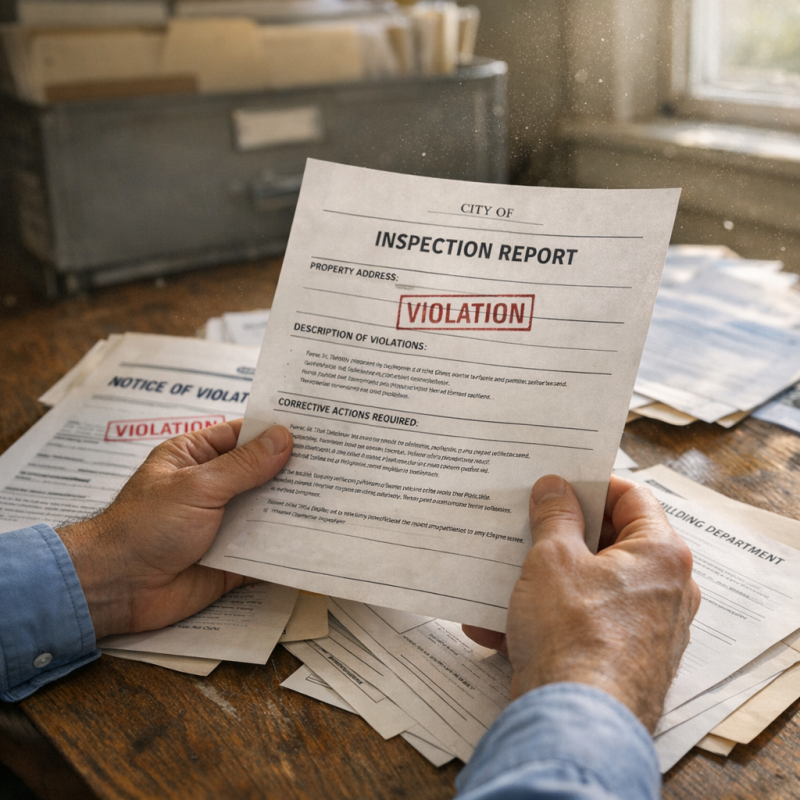 Image by FCT AI
Rachel's Research
Rachel called me that evening, excited in a way I hadn't heard since before Dad passed. 'I've been doing my own research,' she said. 'Harlow's company doesn't just manage Dad's building—they own six properties across the city.' She'd found the business registration records and started searching for complaints associated with each address. Same patterns everywhere: disputed fees, maintenance issues ignored, aggressive collection tactics. She'd even found online reviews that told similar stories, though most were vague—people afraid to give details. Then she found something else. 'There's a tenant rights forum,' she said. 'Someone posted about Harlow's company last year.' She sent me the link while we were still on the phone. I clicked through and read the anonymous post, my heart pounding harder with each sentence. The person described exactly what we'd been discovering—the pattern of charges, the pressure tactics, the way complaints were handled. She sent me a link to a tenant rights forum where someone had posted: 'They target people who won't fight back.'
 Image by FCT AI
The Advocate's Name
Sandra called me the next morning with a proposition. 'I've been thinking about your case,' she said. 'There's someone you need to meet.' Her name was Elena Torres, a tenant rights advocate who'd been working in the city for over a decade. Sandra had reached out to her and mentioned what we'd found. Elena wanted to talk. We met at a coffee shop downtown. Elena was younger than I expected, maybe early forties, with an intensity that reminded me of investigative journalists in movies. She'd brought her own files—a thick binder of complaints, news clippings, and legal documents. 'I've been tracking this management company for three years,' she said. 'But every time I get close to building a case, people drop out. They're scared, or they settle, or they just give up.' She looked at me directly, assessing. 'What you have—the documentation, the timeline, the pattern—it's exactly what I've needed. But going public means facing legal pushback. It means time and stress.' She paused. The advocate said she'd been waiting for someone willing to go public—and asked if I was ready.
 Image by FCT AI
The Police Report
Sandra told me it was time to make this official. 'You need to go to the police,' she said. 'Not just for you, but for everyone who comes after.' So I filed a report with the fraud division, expecting maybe a form, a case number, nothing more. Instead, they assigned me Detective Sarah Martinez. She was sharp, mid-forties, with the kind of direct eye contact that made you feel like she was cataloging everything you said. We met in a small interview room at the precinct, and I walked her through everything—the rent demands, the fake lease, the pattern we'd documented. I brought copies of everything. The notebook. The spreadsheets. Marcus's story. She took notes methodically, asked clarifying questions, and I started to feel like maybe, finally, someone with actual authority was taking this seriously. When I finished, she set down her pen and looked at me with an expression I couldn't quite read. It wasn't surprise, exactly. More like confirmation. Detective Martinez listened to everything, then said: 'You're not the first person to tell me about this landlord.'
 Image by FCT AI
The Detective's Question
Detective Martinez asked me to walk through the timeline again, but this time she wanted specifics. 'When exactly did he first contact you after your father passed?' she asked. 'What were his exact words when he demanded payment?' She wanted to know about the fake lease—how he'd presented it, whether he'd seemed prepared, if he'd mentioned other tenants. The questions felt strategic, like she was fitting pieces into a puzzle she'd already started assembling. I realized she wasn't just investigating my case. She was building something bigger. 'How many others have reported him?' I asked. She didn't answer directly. 'Enough that I'm paying attention,' she said. 'But most people don't have what you have. Most people just pay and walk away because they're grieving and exhausted.' She made notes about Dad's documentation, asking which tenants he'd spoken with, how far back his records went. Before I left, she asked: 'How much documentation did your father leave behind?'—like she knew it would matter.
 Image by FCT AI
The Medical Examiner's Call
Three days later, I got a call from a number I didn't recognize. It was Dr. Elizabeth Warren, the medical examiner who'd signed my father's death certificate. I almost didn't answer. 'Mr. Chen, I have a few questions about your father's living situation,' she said. Her voice was clinical, professional, but there was something underneath it—a carefulness that made my stomach tighten. She asked about the apartment. How long had Dad lived there? Had I noticed any problems with the building? Any complaints he'd made? I told her about the mold, the broken heater, the complaints that never got fixed. She went quiet for a moment, and I could hear her writing. Then she started asking more specific questions—about ventilation, about dampness, about the winter months. She asked if the heating had been working properly in winter—and I realized she was looking for something specific.
 Image by FCT AI
The Health Connection
I couldn't let it go. Dr. Warren's questions kept circling in my head, so I went back through Dad's papers, looking for anything medical. I found his prescription records, doctor's visit summaries, things I'd skimmed before without really seeing. And there it was—a series of visits to a pulmonologist starting about eighteen months before he passed. Respiratory issues. Persistent cough. Inflammation. The doctor's notes mentioned environmental factors, recommended the patient improve living conditions, reduce exposure to mold and dampness. I cross-referenced the dates with Dad's notebook. The medical visits started three months after his first complaint about the black mold spreading in the bathroom. They escalated right alongside his unanswered maintenance requests. I sat there at my kitchen table, staring at the timeline I'd laid out, feeling sick. The apartment hadn't just been neglected. It had been making him ill. The dates matched perfectly—and I started to wonder if the apartment hadn't just been my father's home, but part of what killed him.
 Image by FCT AI
Marcus's Revelation
I called Marcus again. We'd been in touch periodically since our first meeting, but this time I needed to ask him something specific. 'Your mother,' I said. 'When she passed—did she have any health problems related to the apartment?' There was a long pause on the other end. Then Marcus told me his mother had developed severe respiratory issues in her last year. The doctors had said it was just age, just her lungs giving out, but she'd been healthy before. The decline had started after the building's ventilation system broke and never got properly repaired. 'She kept complaining about the air quality,' Marcus said. 'She'd call the landlord's office, file complaints, and nothing would happen. I thought it was just them being lazy.' His voice got quieter. 'I kept telling her I'd help her move, but she didn't want to leave. And then it was too late.' Marcus said quietly: 'I always wondered if she'd still be alive if I'd fought harder to get things fixed.'
 Image by FCT AI
The Building Code Violations
I went to the city's Department of Buildings and pulled the official violation reports for Dad's building and the three others in Harlow's portfolio that we'd identified. What I found made my hands shake. Pages and pages of code violations, spanning years. Inadequate ventilation. Mold remediation required but not completed. Heating system failures. Fire safety violations. Every single issue that affected tenant health and safety had been documented, cited, and fined—minimal fines that Harlow apparently just paid as the cost of doing business. But what hit me hardest were the notes in the margins. Deaths. There were at least four recorded deaths of elderly tenants across these buildings in the past five years, all from respiratory or cardiac issues. The reports noted the deaths only because they'd triggered additional inspections. Every violation had been reported, documented, and then ignored—and people had died in those apartments.
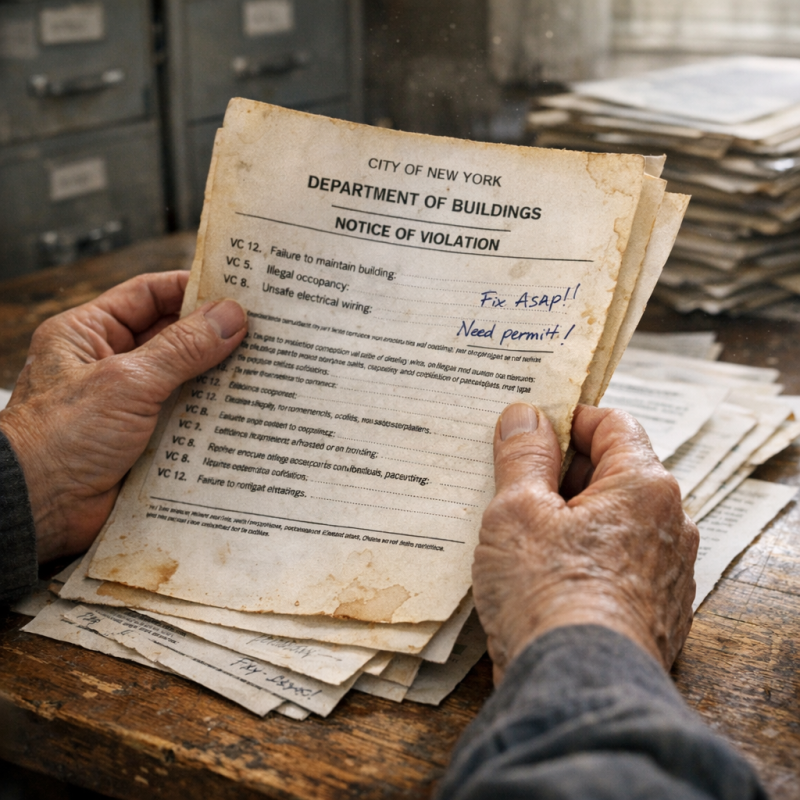 Image by FCT AI
The Final Piece
Detective Martinez called and asked me to come to her office. Her tone was different—not casual, not routine. 'I need to show you something,' she said. I drove to the precinct feeling like I was heading toward something I couldn't quite see yet. When I arrived, she led me to a small conference room instead of the interview room we'd used before. The table was covered with files, photographs, documents. It looked like a war room. 'Sit down,' she said, and I did, feeling the weight of whatever was coming. She'd been working this case longer than I'd known, I realized. This wasn't just about me or my father. She'd been building something comprehensive, and now she was ready to show me what she'd found. She spread a series of files across her desk, each one labeled with a different name, and said: 'Your father wasn't an isolated case.'
 Image by FCT AI
The System
Detective Martinez walked me through the files, one by one. Twenty-three families. Twenty-three people who'd died in Harlow's properties over the past seven years, and in every single case, he'd approached the grieving families with the same playbook. Fake lease clauses. Rent demands for months after death. Security deposit forfeitures. He'd been targeting people at their most vulnerable—people who were too exhausted, too grief-stricken to fight back. Most had paid. Some had tried to resist but gave up when he threatened legal action. The amounts varied, but the tactic was identical. It was a system. A deliberate, calculated system of exploitation. 'He knows exactly what he's doing,' Martinez said. 'He preys on grief. On the fact that most people just want to bury their loved ones and move on without a legal battle.' She tapped my father's file. 'But your father was documenting everything. He was building this case before he passed.' She said: 'He's done this to at least twenty-three families that we know of—and your father was building the case that's finally going to stop him.'
 Image by FCT AI
The Evidence Web
Martinez spread out a timeline on the conference table—a visual web connecting my father's documentation to cases going back five years. 'Your father wasn't just recording his own experience,' she explained. 'He was cross-referencing obituaries, property records, court filings. He found patterns no one else was looking for.' She pointed to highlighted sections where my father had noted similar language in different lease violations, identical timeframes for rent demands, even the same legal letterhead used across years. He'd created a system to track Harlow's system. 'This is prosecutorial gold,' Martinez said. 'Everything's dated, sourced, verified. He knew exactly what evidence would hold up in court.' I stared at the meticulous handwriting, the careful annotations. Then I saw it—a Post-it note tucked into the back of the folder, yellow and slightly faded. Four words in my father's neat script: 'For the next family.' My throat tightened. 'He knew,' I said quietly. Martinez nodded. 'He knew he might not live to see this through, so he made sure someone else could finish it.' Among the files was a note in my father's handwriting: 'For the next family'—and I realized he'd known he might not live to see this through.
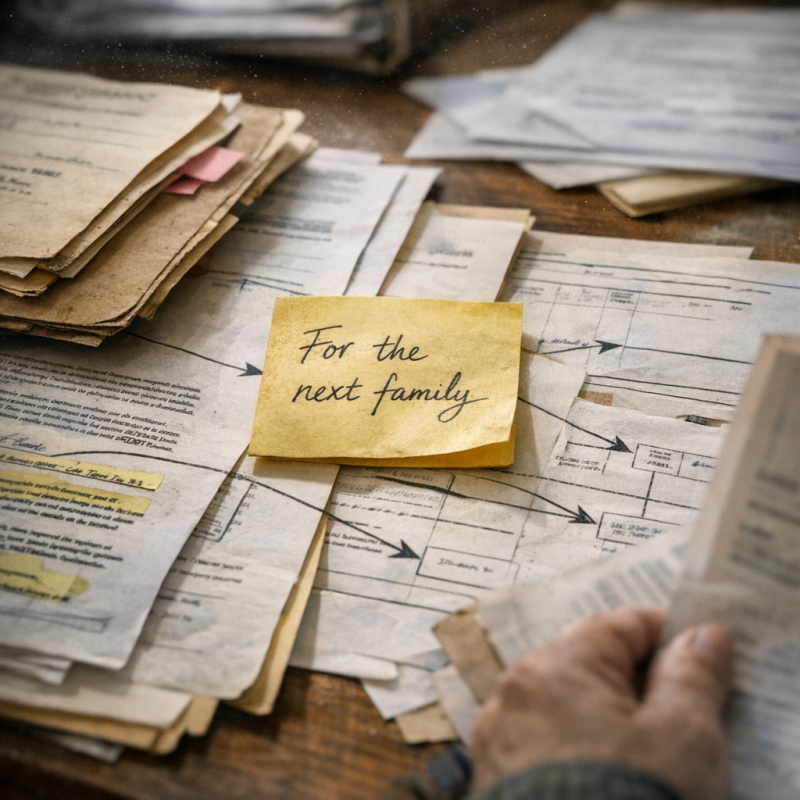 Image by FCT AI
The Other Families
Martinez pulled out a second folder—victim statements and financial records from the other families. She read them aloud, one after another. The Johnsons, who paid $4,200 in fabricated rent after their mother died of cancer. The Patels, threatened with eviction proceedings while planning their father's funeral. The Washingtons, who emptied their savings account to cover 'damages' that never existed. Each story followed the same cruel script: grief, confusion, intimidation, payment. 'Most people just wanted it to end,' Martinez said. 'They were exhausted. They couldn't fight.' Then she showed me the Ramirez file. They'd lost their family home—actually lost it—trying to pay off debts Harlow claimed their grandmother owed. They'd taken out a second mortgage, fallen behind, and the bank foreclosed. All because of lies. 'They're homeless now,' Martinez said quietly. 'Living with relatives in another state.' I felt something shift inside me, something beyond anger. This wasn't about enforcing contracts or business practices. This was about a man who saw grieving families and thought: opportunity. One family had lost their home trying to cover fabricated debts—and I understood then that this wasn't just about money, it was about cruelty.
 Image by FCT AI
The Confrontation Setup
Sandra arrived at the precinct an hour later, carrying a leather briefcase that looked ready for war. She shook Martinez's hand, then mine, with the focused intensity of someone about to do what they were born for. 'We're setting up a formal meeting with Harlow and his attorney,' Sandra explained. 'Detective Martinez will present the criminal evidence. I'll handle the civil claims on behalf of multiple families.' Martinez added: 'We want you there, Daniel. As a witness, yes, but also as a representative of what he's done. He needs to see that you didn't disappear.' My stomach knotted. The thought of sitting across from Harlow again, of being in the same room with him—it brought back that humiliation in the lobby, that powerlessness. But this was different. I wouldn't be alone. I wouldn't be vulnerable. I'd be surrounded by people who knew exactly what he was. 'When?' I asked. 'Tomorrow afternoon,' Sandra said. 'His lawyer agreed to a meeting before we proceed with formal charges. He thinks he can negotiate.' She smiled slightly. 'He's wrong.' I agreed to face him, knowing that this time, I wouldn't be alone and powerless in that lobby.
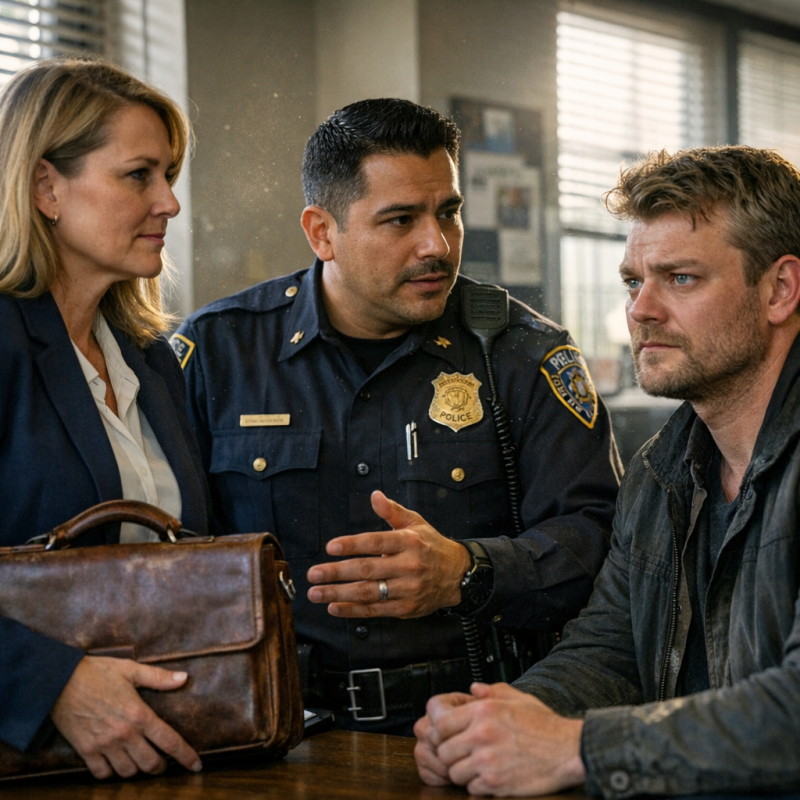 Image by FCT AI
The Meeting Room
The meeting room was smaller than I expected—a plain conference space with gray walls and a table that looked like it came from an office supply catalog. Harlow sat on the far side, his lawyer beside him, both in expensive suits that probably cost more than my monthly rent. When I walked in behind Martinez and Sandra, Harlow's eyes found me immediately. I saw recognition. Then confusion. Then something that looked like concern. He hadn't expected me here. He'd probably assumed I'd crawled away after paying him, just like all the others. His lawyer started to speak, but Martinez cut him off. 'This is a formal interview regarding multiple fraud allegations,' she said, placing a recording device on the table. 'Mr. Harlow, you're not under arrest, but you have the right to counsel, which you've exercised.' She gestured to the lawyer. 'Anything discussed here may be used in criminal proceedings.' I watched Harlow's face. The smug confidence from the lobby was gone. His jaw tightened. His hands, folded on the table, pressed together slightly too hard. For the first time, Vincent Harlow looked uncertain—and I felt something in my chest unlock.
 Image by FCT AI
The Denial
Harlow's lawyer spoke first, his voice smooth and practiced. 'My client categorically denies any wrongdoing. Mr. Harlow operates multiple properties in accordance with Massachusetts tenant law. Lease agreements are enforced as written, nothing more.' Harlow nodded along, his expression carefully neutral. 'I run a business,' he said. 'When tenants pass away, their estates remain responsible for contractual obligations. That's standard practice.' Martinez didn't react. She just pulled out a folder—my father's folder—and set it on the table. 'Let's talk about Gregory Chen,' she said. 'Lease signed in 2019. Tenant died in February of this year. You demanded three months' additional rent, citing a clause that doesn't exist in Massachusetts law.' Harlow's lawyer jumped in. 'Lease agreements can include—' 'Not those terms,' Sandra interrupted. 'Not legally.' She slid a document across the table. 'Here's the state statute. Here's the lease. They don't match.' Harlow shifted in his chair. 'There may have been a miscommunication,' he started, but Martinez held up a hand. Then Detective Martinez opened a folder and said: 'Let's talk about the other twenty-two families, Mr. Harlow.'
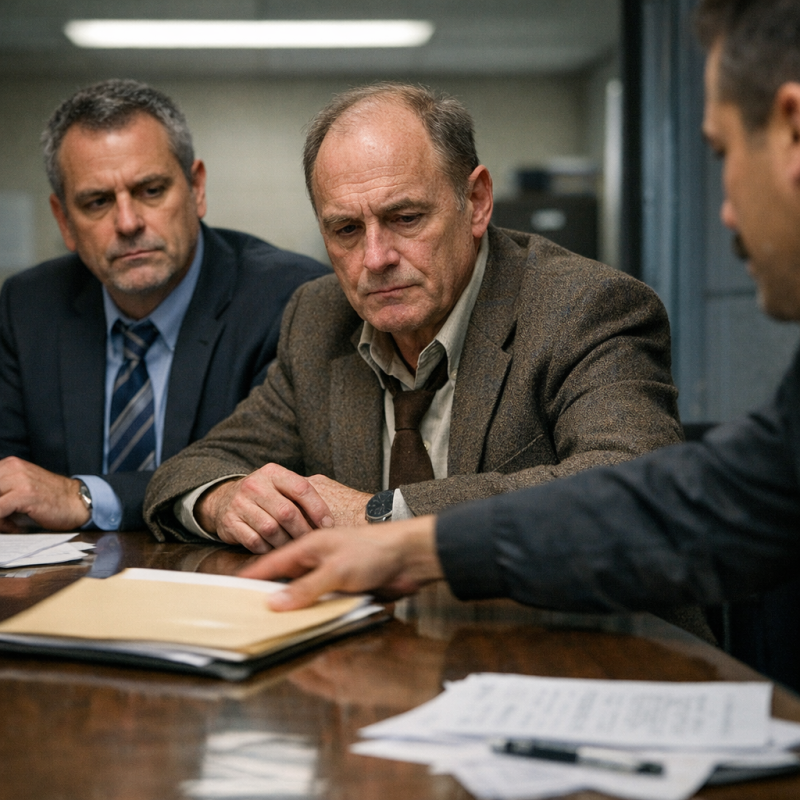 Image by FCT AI
The Evidence Presented
Martinez laid out the files one by one, each labeled with a family name and date. She spoke methodically, without emotion, just facts. The Johnsons—lease violation notice sent four days after death. The Patels—rent demand including fabricated cleaning fees. The Washingtons—security deposit forfeiture based on damages that were never photographed or documented. She presented bank records showing payments. Copies of threatening letters. Testimonies from families describing identical intimidation tactics. 'Twenty-three cases over seven years,' Martinez said. 'Same properties. Same lease clauses. Same timeline. Same threats.' Sandra added the civil documentation—proof that Harlow had used the same attorney-signed letters across different cases, sometimes with only the names changed. 'This isn't business practice,' Sandra said. 'This is systematic fraud targeting vulnerable populations.' Harlow's face had gone rigid. His lawyer leaned close, whispering urgently in his ear. I watched Harlow's expression shift—the careful neutrality cracking into something that looked like panic. The lawyer whispered again, more insistent this time. Harlow's lawyer whispered something urgent in his ear, and I watched the landlord's face drain of color.
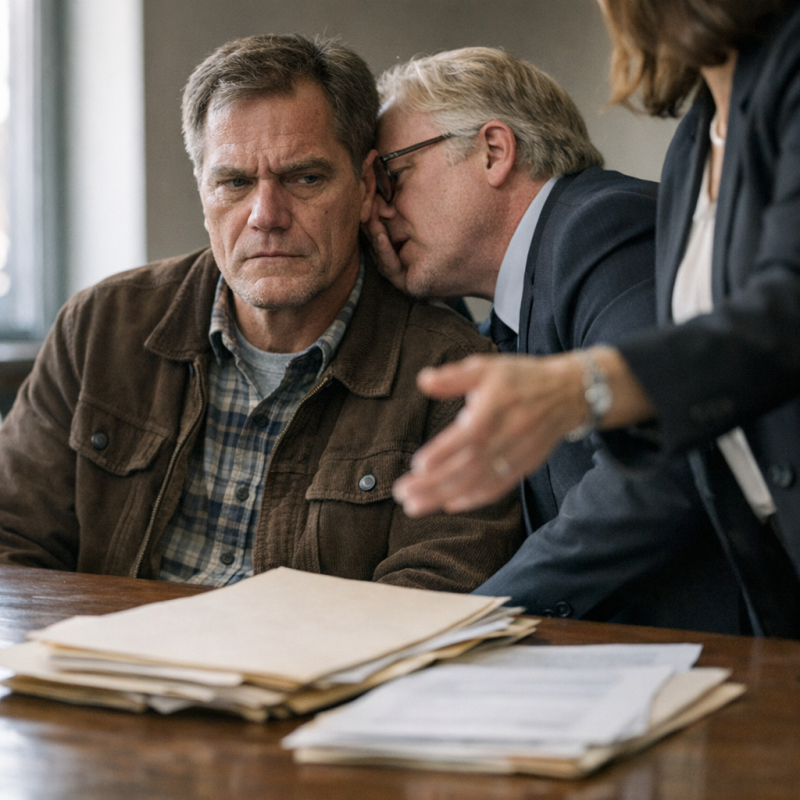 Image by FCT AI
The Admission
The lawyer straightened up and cleared his throat. 'Obviously, my client would be willing to discuss settlement arrangements with the affected parties. Perhaps we can reach an agreement that—' 'No,' Sandra said flatly. The lawyer blinked. 'Excuse me?' 'We're not here to settle,' Martinez added. 'We're here to inform Mr. Harlow of the criminal investigation and to document his response.' I saw Harlow's hands tighten on the table edge. His lawyer tried again: 'If there were misunderstandings in how certain lease terms were applied, my client is prepared to make financial adjustments to—' 'This isn't a misunderstanding,' I said, surprising myself. My voice came out steady. 'You knew exactly what you were doing. You've been doing it for years.' Harlow's eyes met mine, and I didn't look away. The lawyer shifted tactics. 'What are you looking for here? What outcome?' Sandra leaned across the table, her expression cold and professional. 'We're not negotiating. We're documenting.' The silence that followed felt like standing at the edge of something irreversible. Sandra leaned across the table and said: 'We're not negotiating. We're documenting.'
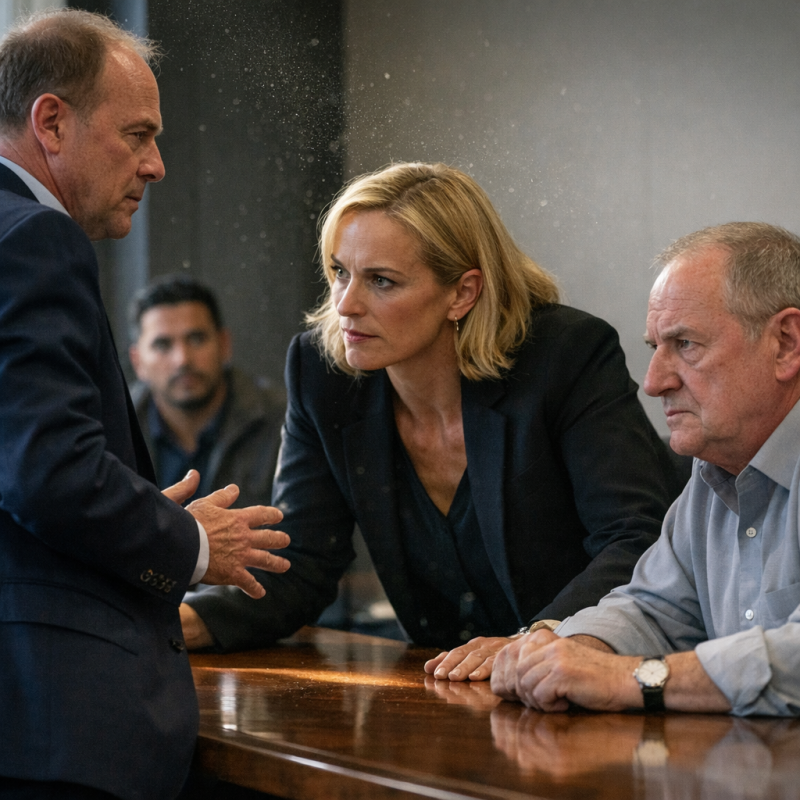 Image by FCT AI
The Criminal Charges
Martinez pulled out another folder—this one stamped with official seals. 'Mr. Harlow, I'm formally informing you that the District Attorney's office is filing criminal fraud charges related to twenty-three separate incidents of lease fraud and theft by deception. You'll be served within forty-eight hours.' Harlow's face went completely blank. His lawyer started talking rapidly about procedural objections, about needing time to review, about constitutional rights. Martinez ignored him. 'Additionally,' Sandra said, 'I'm filing a class action civil suit on behalf of fourteen families seeking restitution, damages, and legal fees. The Commonwealth is also pursuing asset seizure related to properties where fraud occurred.' The lawyer was gathering papers frantically now, stuffing them into his briefcase. Harlow just sat there, staring at the table. We stood to leave. Martinez collected her files. Sandra closed her briefcase with a decisive click. As I turned toward the door, I looked back one last time. Harlow was still sitting there, diminished somehow, no longer the man who'd stood in that lobby and made me feel small. As we stood to leave, I looked back at Harlow and thought: my father did this—he stopped you.
 Image by FCT AI
The Press Conference
Marcus organized the press conference on the steps of City Hall, and honestly, I wasn't prepared for the turnout. There were cameras, reporters with notepads, a whole crowd of people I didn't know. He'd gathered seven other families who'd dealt with similar situations—people who'd been pushed around, overcharged, threatened. We stood together while Marcus explained the pattern of exploitation, the systematic abuse. When it was my turn to speak, my hands were shaking. I talked about Dad, about finding those documents, about how he'd been fighting this while I wasn't even there. A woman from Channel 5 asked what I wanted people to know. I looked at all those cameras, at the other victims nodding beside me, and I thought about Dad sitting at that kitchen table, documenting everything, building this case even when he was sick. I thought about how small I'd felt in that lobby, and how Harlow had probably made dozens of other people feel the same way. My voice was steady when I answered. When the reporter asked what I wanted people to know, I said: 'My father died fighting this—and now the fight is finished.'
 Image by FCT AI
The Settlement Offers
The settlement offers came through Sandra's office less than a week later. The management company wanted to make everything go away quietly—refunds, damages, legal fees, confidentiality agreements. Sandra laid out the paperwork on her desk and walked me through the numbers. They were offering a substantial amount, more than I'd expected. 'It's damage control,' she said, tapping the contract with her pen. 'They know the publicity is killing them.' I read through the terms carefully, remembering everything Dad had taught me about reading the fine print. The confidentiality clause was aggressive—they didn't want anyone talking to the press again. I looked up at Sandra and asked the question that mattered most: would accepting this prevent Harlow from facing criminal prosecution? She shook her head. 'The DA's case is completely separate. Criminal charges proceed regardless of civil settlements.' I sat back in my chair, thinking about what Dad would want, what was actually right here. I had one condition before I'd sign anything. Sandra advised me that accepting wouldn't prevent criminal prosecution—and I agreed to settle on one condition.
 Image by FCT AI
The Memorial
The memorial wasn't anything fancy—just a small gathering at the community center near Dad's building. But people came. Rachel helped me organize it, and Marcus brought some of the families from the press conference. Mrs. Kelley from down the hall showed up with flowers, and I realized I'd barely spoken to her since that first day. People shared stories about Dad that I'd never heard—how he'd helped someone file a maintenance complaint, how he'd shared his groceries when someone was short on cash. I hadn't known any of this. I'd been so focused on the legal fight that I'd forgotten Dad had just been living his life, being himself, helping people because that's who he was. Standing there listening, I felt this strange mixture of grief and gratitude. I'd been angry at him for so long—for being distant, for the drinking, for dying before we could fix things. But these people saw something in him I'd lost sight of. After everyone spoke, Mrs. Kelley came up to me, her eyes gentle behind her glasses. Mrs. Kelley placed a hand on my shoulder and said: 'He would be so proud of you'—and I believed her.
 Image by FCT AI
The Final Document
I went back to Dad's apartment one final time before the lease officially ended. The boxes were gone, the furniture donated, everything cleared out. It looked bigger when it was empty, sadder somehow. I was doing a last sweep of the closet when I found it—a sealed envelope tucked into the back of the dispute file, my name written on the front in Dad's shaky handwriting. My hands trembled as I opened it. The letter was short, dated two months before he passed. He wrote about the fight with Harlow, about all the documentation he'd gathered. He wrote that he knew he was running out of time. And then, in those final lines, he said things we'd never managed to say out loud—about regrets, about love, about hoping I'd understand someday why he'd fought so hard for what was right, even when everything else was falling apart. I read it three times, tears blurring the words. The last line read: 'If you're reading this, it means I didn't finish what I started. Please finish it for me. And know that I love you'—and I whispered to the empty room: 'It's done, Dad. It's done.'
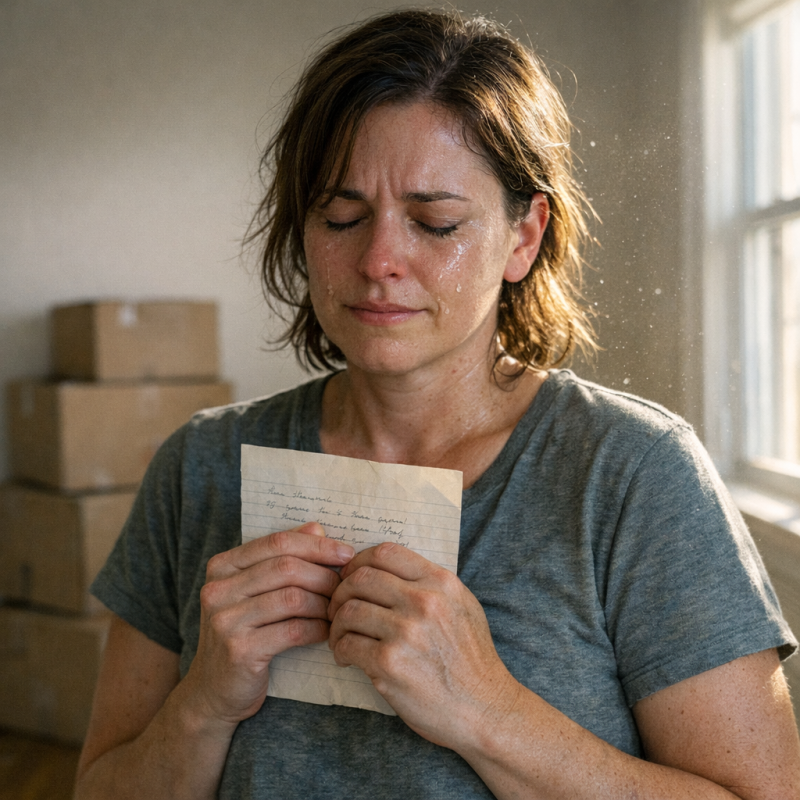 Image by FCT AI